The Open Journal of Occupational Therapy
Volume 2
Issue 4Fall 2014 Article 6
10-1-2014
The Role of Reusable Learning Objects in
Occupational Therapy Entry-Level Education
Bryan M. GeeIdaho State University, [email protected]
Jane Strickland
Idaho State University, [email protected]
Lisa Salazar
Idaho State University, [email protected]
Follow this and additional works at:https://scholarworks.wmich.edu/ojot
Part of theCurriculum and Instruction Commons, and theOccupational Therapy Commons
This document has been accepted for inclusion in The Open Journal of Occupational Therapy by the editors. Free, open access is provided by ScholarWorks at WMU. For more information, please [email protected].
Recommended Citation
The Role of Reusable Learning Objects in Occupational Therapy
Entry-Level Education
Abstract
Out of early research, Cisco Systems (1999) have built an impressive foundation that advocates for reusable learning objects (RLOs). As the need for online methods for delivering both formal and informal educational content has increased, the prospect of greater influence through carefully constructed RLOs has grown. RLOs are any digital resource that can be used and reused to enhance online learning. RLOs typically are small, discrete, self-contained digital objects that may be sequenced, combined, and used within a variety of instructional activities. RLOs have been implemented in nursing, pharmacy, and physician assistant programs. However, there is a lack of literature regarding RLOs in
occupational therapy education. An attitudinal survey was administered to occupational therapy students after they had used an RLO focused on goal writing. Student preferences toward RLO content, instructional design, and eLearning were generally positive. Nearly three-quarters of the students who responded to the survey indicated that the RLO presented was beneficial. All respondents noted that they would use the RLO for future occupational therapy courses. It is argued that incorporating RLOs offers a cost-effective, efficient learning tool, and also adds credibility to the given curriculum program as being innovative with instructing occupational-therapy related concepts.
Keywords
hybrid education, instructional tools, blended learning, online teaching tool, allied health education
Credentials Display
Bryan M. Gee, PhD(c), MEd, OTR/L, BCP Jane Strickland, Ed.D
Lisa Salazar, Ph.D.(c), M.Ed., MPH
Copyright transfer agreements are not obtained by The Open Journal of Occupational Therapy (OJOT). Reprint permission for this Topics in Education should be obtained from the corresponding author(s). Click hereto view our open access statement regarding user rights and distribution of this Topics in Education. DOI: 10.15453/2168-6408.1108
For several years, occupational therapy (OT) educators have been employing diverse eLearning instructional technologies, from hybrid courses (a combination of online and face-to-face instruction) to exclusively online offerings (Jedlicka, Brown, Bunch, & Jaffe, 2002). Furthermore, other allied health professions, such as pharmacy, nursing, physician assistant, speech language pathology, and physical therapy, have also used eLearning
instructional technology as a part of their entry-level programs (Blake, 2010; Lymn, Bath-Hextall, & Wharrad, 2008; Windle, McCormic, Dandrea, & Wharrad, 2011).
The current culture in higher education is shaped by increased student enrollment, challenging student-faculty ratios (Aycock, Garnham, & Kaleta, 2002), and reduced faculty numbers (Public Sector Consultants Inc., 2008), along with an emphasis on cost-effective instructional technologies (Sung & Huang, 2009) and a need to respond to learner type (millennial or generation Y) (Skiba & Barton, 2006). This culture is a springboard for the OT profession to develop and disseminate OT-specific Reusable Learning Objects (RLOs) and modules related to topics that are durable and germane to the profession, including, but not limited to, OT
theories, Occupational Therapy Practice Framework, and assessment and evaluation measures. Many have argued that RLOs and modules could be developed and housed in a repository, which is then made available to OT educational programs on a freeware or subscription-based framework. Instructors and students could then use and reuse the materials.
Of interest is that nursing, pharmacy, and
physician assistant programs in the United Kingdom have been using RLOs in response to shifts in discipline-wide curriculum practices that limit the time and exposure given to some topics (Lymn et al., 2008; Windle et al., 2011). It has been noted that “eLearning makes sense” in that it provides an opportunity to target students more effectively beyond normal constraints, is accessible at any time and in any place, and is easily accommodated alongside full-time coursework as well as clinical training (Delf, 2013). Currently, there is a paucity of information regarding the use of RLOs in OT entry-level education as mechanisms to enhance face-to-face instruction or hybrid instruction in the United States.
Purpose
The purpose of this article is to provide OT educators with the following information: (a) the background of RLOs in education and training, (b) the foundational concepts surrounding RLOs, (c) the value of implementing RLOs into OT academic coursework, and (d) students’ attitudes regarding the use of a RLO embedded in a Master of Occupational Therapy (MOT) curriculum.
Background
Early research and development by educational pioneers Cisco Systems (1999;
Gibbons, Nelson, & Richards, 2000; Wiley, 2002) has resulted in an impressive foundation that advocates for creating, documenting, and sharing RLOs. As the number of methods for delivering both formal and informal online educational content has increased, the prospect of greater influence over the delivery of this content through stable and carefully constructed RLOs has grown.
In general, learning objects (LOs) have been described as “digital entities deliverable over the internet” (Wiley, 2002, p. 6), while reusable learning objects—RLOs—have been described as “any digital resource that can be used and reused to support learning” (Wiley, 2002, p. 6) and as
“discrete units of learning” (Lymn et al., 2008, p. 2). RLOs typically are small, discrete, self-contained digital objects that may be sequenced, combined, and used within a variety of instructional activities (Wiley, 2002), including integration into formal lectures or as stand-alone objects for
remediation or background knowledge development (Lymn et al., 2008). While classroom teachers have created and shared educational handouts,
manipulatives, and other “objects” with their peers, RLOs afford even greater transportability beyond the confines of place and time. This capability has been recognized across wide ranges of grade levels, subject matter content, and professional practice fields.
RLOs have been implemented as instructional tools as a part of, or adjunctive to, nursing,
pharmacy, and physician assistant formal education programs (Lymn et al., 2008; Windle et al., 2011), but there is a lack of published literature
documenting the implementation of RLOs into the broader rehabilitation sciences for entry-level education, especially in OT.
As with any curriculum, there is always the need to improve how instruction is developed, delivered, and evaluated; OT entry-level education is no different. This reality becomes even more important as the complexity of the content changes and increases in depth and rigor. This can be
particularly daunting for OT educators experiencing demands for increased enrollment and a growing emphasis on delivering online classes to meet the preferred choice of students. The incorporation of RLOs into a blended or hybrid course provides information to students, enables them to study on their own with or without the direct input of the OT educator, develops the students’ level of
understanding through aligning media to intended learning outcomes, and helps the students develop and apply an understanding of the new concepts (Ellis, Goodyear, Prosser, & O’Hara, 2006). RLOs allow students to go back and review the provided instruction or content multiple times, potentially raising both the students’ comfort levels and their comprehension of the content.
In addition to the need to improve instruction, a secondary problem is the changing learning preferences and instructional needs of today’s cohort of learners. As new learners are comfortable with a variety of technology (Web 2.0 applications among others) as a part of their non-educational lives, it would seem appropriate to include these technology tools in the formal education of OT professionals. Instructional contexts that include items such as learning management systems, wikis, blogs, shared documents, social interaction sites, discussion forums, and chat streams are being explored across the spectrum of curricula from K-12 to post-secondary and advanced degree
environments. While the success rates are mixed, there does appear to be possibilities from these various contexts in which the RLO could be the centering focus of instruction.
instructors experience during clinical simulations in the classroom is training OT students to write concise, measurable therapeutic goals for diverse populations, settings, and conditions. This need is greatest prior to their placement in the clinical setting as level II fieldwork students. Furthermore, it is likely that OT is not the only allied health discipline dealing with these instructional
challenges; other entry-level training programs may also be facing the same instructional issues. With many similarities being found in the entry-level education of allied health professionals, the incorporation of RLOs offers an opportunity to stretch availability and educational budgets across the disciplines. Therefore, the remainder of this article will delineate the key attributes of RLOs, and then frame these in the context of practical
application in OT education. That being said, additional research is needed to investigate further the instructional challenges in the allied health professions and the potential use and application of RLOs as a proposed solution.
Reusable Learning Object Characteristics
RLOs typically are designed and developed absent of specific pedagogy, meaning they are not grounded in or driven by a specific learning theory (e.g., behaviorism, information processing,
constructivism) (Merrill, 2009; Wiley, 2002). By developing RLOs absent of a specific learning theory, the instructional designer or educator is free to arrange and sequence RLOs based on
instructional objectives, as opposed to being constrained by external contingencies. This also allows the curriculum specialist to “frame” the context for the RLO in multiple formats.
RLO Scenario for OT Entry-Level Education
A RLO should be designed in alignment with a single instructional objective (Lymn et al., 2008; South & Monson, 2000; Windle et al., 2011). While there is debate concerning the granularity of a RLO, there is no doubt that relating it to a single instructional objective provides greater opportunity for reuse in a variety of contexts. The following instructional objective better illustrates this
contention: By the end of this instructional activity, the learner will be able to identify the six
components of a COAST style therapeutic goal.
This objective lends itself well to demonstrating the RLO concept because it offers guidance to creating a specific learning activity upon which to construct the RLO.
Learning activity. The instructional objective illustrated above has a distinct task the learner is expected to achieve. Identification is the primary task; however, through this action, it can be assumed the learner should also be able to define the components of the therapeutic goal being examined, and then logically order them to determine if any are missing. For example, the learner must identify the key parts of a COAST therapeutic goal (Client, Occupation, Assistance Level, Specific Condition, & Timeline [Sames, 2009]). The learner must also determine which of the key aspects of the therapeutic goal may be missing.
The RLO for the objective. The objective used for this example is relatively concrete and is at the lower end of Bloom’s Taxonomy of Learning (knowledge, comprehension, analysis) (Bloom,
1956). Even so, the RLO will have two major parts: (a) identifying the elements and (b) problem-solving to determine if these elements are contained in the therapeutic goal. The instructional designer would determine the media format for presenting the elements (e.g., PowerPoint slideshow, animation sequence, video with audio, mnemonic with graphics for typography). This, then, becomes the RLO.
Because the RLO is considered granular (i.e., there is no context within the RLO content; all measurement and pedagogical strategies are outside of the RLO), OT instructors would determine how to insert the RLO into a larger course framework. The first assumption is that the RLO is embedded within a foundational-level OT course. However, because the information is central to the OT
academic program, one instructor may elect to take the same RLO and use it as an advanced organizer for content that builds on this fundamental
knowledge, while another instructor could simply include the RLO within a review before the OT student is placed in a field-practice setting. Beyond this, if the RLO content is applicable to other rehabilitation disciplines (e.g., physical therapy, speech language pathology), then those programs could utilize the same RLO by attaching it to whatever context and measurement is appropriate for that particular learning event.
Assessment measure. Just as with other interventions that an occupational therapist may employ, a RLO may be looked upon as an
instructional intervention to enhance learning. That being said, in order to ascertain if learning has occurred and whether or not the minimum threshold
of the instructional objective has been met, a
measurement of performance should be taken (Ally, 2004).
In order to ensure the RLO includes the basic characteristics of being stand-alone (granular) and reusable, it may be considered best practice to embed the assessment piece within the actual RLO. The assessment measure can take several forms in alignment with how the RLO is packaged and delivered (e.g., Microsoft PowerPoint, Adobe
Captivate, Articulate). Even though assessment may be a part of the RLO, it is important to recognize the evaluation would be only for the actual content within the RLO. Doing so provides flexibility for the instructor, who may attach
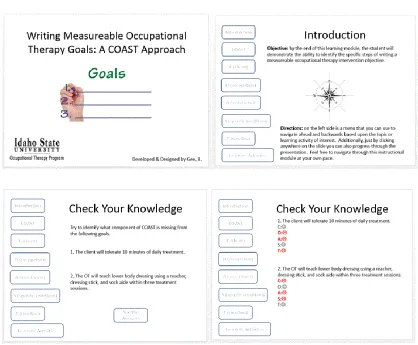
external assessments (perhaps more comprehensive testing that goes beyond the single RLO and toward expanded content, such as topics covered on a midterm or final examination). Again, this allows the RLO to be reused depending on the nature of the targeted learner, an external entity, or learning management system to determine the level of performance (Figure 1).
In the example, the instructional designer or educator designed the RLO in Microsoft
PowerPoint and embedded a multiple-choice self-quiz to assess whether the learner is able to
case, the assessment was not formally tracked but allowed the student to check their knowledge through case study review. This aligns with the premise that granularity should be maintained
whenever possible, which further supports the transportability of the RLO within and among various instructional methods, course levels, and, perhaps, even disciplines.
Figure 1. RLO screen shots demonstrate an embedded assessment measure that can be reused based upon the nature of the targeted learner, an external entity, or a learning management system.
Reusable information object. When a RLO is deconstructed–broken into its component parts– an instructional designer or OT educator will discover that it is comprised of smaller, valuable artifacts. These smaller parts are identified as reusable information objects (RIOs), which can represent text, video clips, still images (photos, diagrams, and tables), animation, and audio clips. Merrill (2009), however, cautioned that RIOs are not considered instruction. For instruction to occur, an instructional objective must be established, not
unlike a planned learning activity that introduces (frames) and then summarizes and assesses the content being addressed. It is recommended that a RLO consist of not more than seven, plus or minus two, RIOs (Northrup, 2007).
The RIOs that would be contained within the therapeutic goal of the example RLO presented in this article are text (e.g., the COAST goal
procedures that may be obtained from texts or articles), an animated mnemonic (e.g., images of the five components; text “flying in” to represent the
order; a video of a case study that would prompt the justification for the goal, such as a therapist
summarizing the results of an OT evaluation and recommending the necessity of skilled services; an audio clip defining and expanding upon the
definitions of the COAST acronym; a script of the text in the video). A number of these RIOs were assembled to present the entire RLO, which then represented the instructional objective: By the end of this instructional activity, the learner will be able
to identify the five components of a COAST style
therapeutic goal.
Granularity–sequencing. Granularity has been typically defined as the RLO’s instructional basis (Wiley, 2002). The RLO’s discreteness (its ability to be a separate and distinct entity outside of other learning objects and instructional activities) dictates how it may be repurposed into diverse instructional contexts, as well as the complexity to which it can evolve (Grunwald & Reddy, 2007; Harvey, 2005).
In the OT entry-level education example, the RLO was designed and developed for reuse across several courses, learning modules, or instructional activities within the academic program in order to ensure a return on the investment. Furthermore, there may be instructional goals around which the RLOs would be developed in order to ensure applicability to general OT entry-level education, which would not be exclusive to any given OT education program’s curricular focus or theme. Therefore, the RLO for goal writing was specific enough to transmit and reinforce the concept of how to write a COAST-style goal, but not so specific that it could not be reused in multiple
courses (e.g., physical dysfunction, neurological rehabilitation, pediatrics). Again, it was used as either a primary instructional resource or adjunctive artifact for students to refer back to later within their given curricular sequence.
Framing. RLOs are shaped by the way in which they are placed in the instructional content, a method called framing. For instance, a RLO that presents content on a polynomial could be used as originally intended, for basic knowledge and
understanding in an eighth grade mathematics class. It could also be repositioned as review content for a higher-level algebra course, perhaps as a reminder to the learner of the prerequisite information of a polynomial. Still, another educator could place the polynomial RLO in a unit that expanded on the learning toward the manipulation of polynomials.
The RLO in the example centered on
identifying the components of a COAST therapeutic goal. The RLO was used to support instruction in a first-year OT course but was later used in an array of courses or instructional modules in the OT curriculum (physical disabilities,
neuro-rehabilitation, pediatrics, psychosocial dysfunction). As indicated earlier, the framing indicates the
context within which the learning occurs. The beauty of a reusable piece of content is that it can conform to a number of educational environments. As a more learner-centered approach is accepted in learning formats from early education through post-secondary terminal degrees, the demand for
repurposed content will increase.
Stringing. Stringing is a concept
instructional tools and resources (Metros & Bennett, 2002). This sequencing should be based on
individual learner needs, as well as the instructional goals of a given instructional problem, module, or course. A RLO should be aligned with a single instructional, behavioral, or learning objective (South & Monson, 2000). The RLO’s effectiveness and usability is dependent upon when and where it is placed within a given sequence of instruction.
The nature of instruction may change depending upon how the RLOs are strung within the subject matter content, instructional activities, or
expectations for complexity and maturity of the targeted learners (Metros & Bennett, 2002).
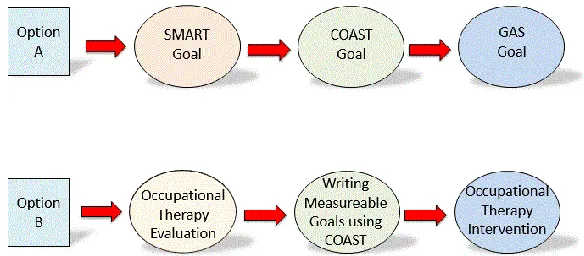
Figure 2 provides a graphical depiction of how stringing that leads to several outcomes may occur.
Figure 2. An example of stringing of the COAST goal in a set of learning contexts.
In regard to the RLO related to writing a therapeutic goal, the RLO was strung with relatable instructional content and learning activities, which are similar to the content of the RLO and are appropriately sequenced. In a course that focuses on the evaluation and treatment of individuals with neurological dysfunction, the RLO was strung just after a module that focused on evaluation
procedures and prior to instruction that taught intervention approaches and strategies for the targeted population and cluster of conditions. That being said, however, there are locations within an instructional sequence where the RLO may not fit as well, or may be inappropriate based upon the framing, objectives of the course, or module and/or learning needs.
Combinability–scope. An additional asset of
a RLO may lie within its ability to be combined with other learning objects, instructional activities, and assessment tools (e.g., framing the RLO within the larger instructional context). Taking into account granularity, if the RLO is discrete enough, it may be combined with other RLOs, which would then increase the scope of the instruction of a given lesson, module, or academic course. The RLO could also assume a different position in an
instructional plan depending on curricular goals and the learners’ needs.
Caution, however, is warranted. Wiley (2002) pointed this out with his atom metaphor.
Specifically, atoms may be combined with other atoms to make larger and/or different elements. Some atoms, however, should not be combined with others, as the outcome may either have no value or
may result in unfavorable (possibly even unsafe) consequences. Though this might seem extreme, there likely are instructional tools and strategies that when combined do not necessarily turn out well and result in the absence of learning or confusion for the learner. This potentially may occur with RLOs; thus, it is the responsibility of the instructional designer to ensure that the RLOs really can and/or should be combined.
By examining the RLO example contained in this article (i.e., COAST within a therapeutic goal) and thinking about a weeklong instructional module focusing on the evaluation, intervention, and
discharge within the OT process, the RLO was combined with a face-to-face lecture/PowerPoint presentation, readings, and a case study. The instructor’s choice of pedagogical approach was honored while the content of the RLO was
protected. This allowed for flexibility in regard to the targeted learner group’s characteristics and the instructor’s preferred teaching style and media interface elements.
RAID
RAID (reusability, accessibility,
interoperability, durability) represents four key concepts that separate and define RLOs from the other instructional tools that an instructional
designer might employ as part of their instructional plan and delivery process (Northrup, 2007). Each of these will be examined below.
Reusability. Reusability is the hallmark characteristic of a learning object. The ability of a RLO to be inserted into multiple instructional contexts, over and over, is the key of the appeal and cost effectiveness of a RLO (Northrup, 2007;
Wiley, 2002; Wiley, 2009).
The reusability of a RLO is contingent upon its size and scope. The larger the size and scope, the more difficult it may be to reuse; the smaller the size and scope, the easier it may be for an
instructional designer to include the RLO within other instructional contexts (Harvey, 2005). A number of organizations that have established metadata tagging systems for learning objects that support this tenant (Metros & Bennett, 2002). Without such cataloging, learning object
repositories would remain closed; this, again, would discount the principle of being reusable. While the field continues to debate the numbers and types of tags that should be associated with learning objects, there is no doubt that without these processes, it would be difficult to locate and contextualize learning objects both within and across disciplines.
One of the primary aims of the RLO focusing on writing a therapeutic goal was to have a RLO that could be reused in more than one instructional module or course. In this case, instructors used it as a part of four courses in the OT curriculum.
Accessibility. There are two types of
accessibility of a RLO. The first is accessibility by the individual user, specifically ensuring that the RLO is in line with industry and government guidelines. The guidelines espoused in section 508 of the 1973 Rehabilitation Act (U.S. Department of Education, 1998) require that federal agencies who use electronic information ensure that it can be procured, developed, maintained, and accessible by all individuals with disabilities.
508 of the American Disabilities Act mandate; however, these have been broadened with universal design principles and applied to digital instruction and information (World Wide Web Consortium, 2008). Generally speaking, there is design and delivery software available that naturally lends itself to the universal accessibility of the learner (e.g., Adobe, Articulate, Microsoft). Hence, the RLO for identifying the components of writing a therapeutic goal should be developed with all learners in mind, including those with auditory, visual, and motor impairments, as well as those with different cultural backgrounds or differing learning styles, in order to make the content accessible to as large of an
audience as possible.
The second type of accessibility targets that of the educator and instructional designer. This is afforded through the use of repositories in which interested parties can access and use the RLOs for the design of instruction in varying contexts (Burgstahler, Corrigan, & McCarter, 2004). Cataloging of the RLOs is achieved with “meta-tags.” As Northrup (2007) indicated, in order to use any tool, one must know where the tool box is and for what the tool may be used. As more RLOs are created, labeled, and stored, having access to them affords the likelihood that they will be used again and again by different instructors and learners.
Specifically, the RLO that has been discussed in this article was presented and used during the first-year OT curriculum, but reused by instructors during therapeutic intervention courses for students in their second and third years.
Interoperability. RLOs that an instructional designer or educator develops should be created so
that they may be used across multiple instructional and virtual contexts. Specifically, can designers and educators use them in diverse learning management systems? Additionally, can a user access them using diverse delivery and operating systems? Using technology that works well with other types of technology will ensure that the RLOs can be arranged and incorporated under different types of learning management and operating systems. The importance of this will grow as “bringing your own device” becomes more prevalent in educational and clinical situations.
Durability. Finally, durability is a concept that helps ensure that the RLO may be reusable, meaning that the subject matter of the RLO needs to be examined for currency, accuracy, and
appropriateness. As with any eLearning
technology, there is typically a front-end investment of time and financial resources; thus, the educator or instructional designer needs to develop RLOs that will give the most return on the investment. The goal-writing RLO would fall into the category of having durability as the relevancy of the content would last more than a year or two. In this case, the RLO of writing COAST goals is a concept related to OT practice that has durability in that writing measurable, client-centered goals is directly tied to reimbursement for services rendered. The next section of this article will review a pilot
implementation of a RLO for goal writing with graduate students in an entry-level OT program.
Student Perceptions of COAST RLO
A pilot study was conducted in order to capture OT students’ perceptions of a RLO embedded in OT courses in a small OT program
located in a rural part of the Western United States. An attitudinal survey that included four
demographic questions and nine construct questions was developed to ascertain the OT students’
perceptions regarding a pilot RLO related to using COAST to write measurable intervention goals. The nine attitudinal questions were designed around a four-point Likert style format (strongly agree, agree, disagree, and strongly disagree). A four-point Likert style format was used to force the participants to eliminate a neutral option in assessing their attitudes (Dillman, Smyth, & Christian, 2009; Portney & Watkins, 2009). The results of the pilot study were approved by the Institutional Review Board at Idaho State University, study #4102.
Data Collection
The survey was available to potential participants within SurveyMonkey® for 30 days. All responses were kept anonymous and were not connected to the respondents’ contact information.
Data Analysis
The responses within SurveyMonkey® were downloaded into a Microsoft Excel (2010)
spreadsheet and organized by data type and content. The data in the Excel spreadsheet did not contain any specific identifying information beyond the anonymous demographic information provided by the respondents. The data were analyzed
descriptively using Microsoft Excel (2010).
Results
The survey was sent out to the first, second, and third year OT students (N = 39). A total of 15 students completed the entire survey for a response rate of 38%. Of those who responded, five students
were in their first year, three students were in their second year, and seven students were in their third year of a graduate, entry-level OT program in the United States.
Students’ Attitudes Toward the RLO Content
When the students were asked if the RLO met their needs of writing measurable goals, fourteen of the fifteen students replied. Twenty-nine percent (4) strongly agreed, 64% (9) agreed, 7% (1) disagreed, and 0% strongly disagreed. When the students were asked if they would use the RLO as a resource during their level II clinical rotation, fourteen of the fifteen students replied. Twenty-nine percent (4) strongly agreed, 64% (9) agreed, 7% (1) disagreed, and 0% strongly disagreed. In response to a question asking the students if they would like to use the RLO for future OT
intervention-based courses in the OT program, 47% (7) agreed, 53% (8) strongly agreed, and 0%
disagreed or strongly disagreed. The students reported that the average number of times they reused the RLO was 2.8 times during the semester with a minimum of two and a maximum of six occasions where they reviewed it within the learning management system. Additionally, it is difficult to determine how many times the RLO was reused given that it could be downloaded by the students and reviewed outside of the learning management system.
Students’ Attitudes Toward RLO Instructional
Design
When asked if they experienced ease with the navigation buttons to help navigate through the RLO, 27% (4) strongly agreed, 73% (11) agreed, and 0% disagreed or strongly disagreed. When the students were asked if there was the right amount of text on each slide within the RLO, 27% (4) strongly agreed, 73% (11) agreed, and 0% disagreed or strongly disagreed. In response to a question asking if they felt the sequencing of the content supported their learning, 21% (4) strongly agreed, 72% (10) agreed, 7% (1) disagreed, and 0% strongly disagreed.
Student Preferences Toward eLearning
When the students were asked if they would prefer learning about goal-writing related topics through online instruction in addition to reading books, blogs, or websites, 20% (3) strongly agreed, 40% (6) agreed, 40% (6) disagreed, and 0%
strongly disagreed. When the students were then asked if they would prefer to learn about OT-related concepts using the same type of delivery format in other face-to-face courses, fourteen of the fifteen students responded. Twenty-eight percent (4) strongly agreed, 29% (4) agreed, 43% (6) disagreed, and 0% strongly disagreed.
Discussion
It is reasonable to say that the findings of this pilot study were promising. Nearly three-quarters of the students who responded to the survey (70%) indicated that the module was beneficial and not only met their needs of writing measurable goals but would also be a usable resource for their level II clinical rotations. Furthermore, all of the responders noted that they
would like to use the RLO for future intervention-based courses.
What may be the most promising and notable outcome, however, is the fact that the students used the RLO exactly as it was intended, as an on-demand resource to raise student comfort levels with the information and increase their comprehension of the content without any
restrictions on the number of times they accessed the information or the hours of availability. In this case, the students accessed the RLO module between two and six times in the learning
management system. However, again, due to the availability for the module to be downloaded for free and repeated use, there is no way to
acknowledge exactly how many times the students referred back to the material. This level of access to the materials by the students does, however,
indirectly speak to the level of personal
responsibility the students assumed toward their educational goals. By recognizing and using the RLO access, it demonstrates that some of the students are actively “learning how to learn” (Vaughan, 2007). This level of maturation can serve to prepare the students for their clinical experiences.
Unfortunately, we can only speculate why those students who did not participate in the survey chose not to complete the survey; we have no hard evidence that would suggest that they had a
negative experience with the online RLO. Based on the access statistics provided by the learning
management system, however, it is likely that these non-responders did not access the RLO materials beyond the classroom use and thus chose not to
complete a survey about that experience. Based on the responses of those who did access the RLO materials and who completed the survey following that access, the results are definitive toward a positive experience. As such, based on the responses given by those students who chose to participate, there was a strong preference toward the use of RLOs. Of course, additional research is needed to see if these preferences could be generalized across the larger learner population.
Additionally, as faculty members become stretched thin with campus commitments and growing student-faculty ratios, the incorporation of RLOs can, and do, provide an unrestricted virtual form of assistance to the student learner when they need it, even if face-to-face consultation is not easily managed. Faculty members who have incorporated blended teaching approaches (RLOs and face-to-face) have reported high levels of satisfaction due to enhanced interaction with students, increased student engagement, the
flexibility of the teaching and learning environment, and the perpetual desire toward continuous
improvement that educational technology provides (Aycock et al., 2002).
Summary
The primary intent of this article was to inform OT educators of the characteristics, roles, and potential applications of RLOs as a part of entry-level OT education. As noted earlier, now more than ever, faculty members are faced with more administrative tasks, an increasing application of technology in the classroom, and larger class numbers. The use of RLOs may reduce the time spent reviewing materials and teaching foundational
skills, and allow educators to use their expertise on the advanced content and skills necessary for
generalist entry-level practice. Furthermore, the use of RLOs may afford the opportunity to increase the consistency of the content in a course taught by multiple instructors and to reinforce previous learning across a curriculum or between programs where bases of knowledge are common. Thus, incorporating RLOs and other technology-based resources offers not only a cost-effective, efficient learning tool, but also an element that offers credibility to the program as being up-to-date with learning and OT-related concepts.
While the RLO is not meant to replace the insight and expertise an instructor could provide, this virtual tutoring or support could potentially have a positive impact on the educational learning experience, thus strengthening the student’s comprehension and increasing their confidence in executing clinical tasks and OT-related concepts. RLOs, given an adequate amount of front-end investment from instructional designers and subject matter experts, may provide OT educators with additional tools to facilitate and/or remediate knowledge related to OT practice.
With easy access, RLOs can be built into tutorials, learning communities, training
References
Ally, M. (2004). Designing effective learning objects. In R. McGreal (Ed.), Online education using learning objects (pp. 76-86). London: Routlege
Falmer.
Aycock, A., Garnham, C., & Kaleta, R. (2002). Lessons learned from the hybrid course project. Teaching with Technology Today, 8(6). Retrieved May 15, 2014, from http://www.uwsa.edu/ttt/articles/garnham2.htm
Blake, H. (2010). Computer-based learning objects in healthcare: The student
experience. International Journal of Nursing Education Scholarship, 7(1), 1-15.
http://dx.doi.org/10.2202/1548-923x.1939
Bloom, B. (1956). Taxonomy of educational objectives, book I: Cognitive domain. White Plains, NY: Longman.
Burgstahler, S., Corrigan, B., & McCarter, J. (2004). Making distance learning courses accessible to students andinstructors with disabilities: A case study. TheInternet and
Higher Education, 7(3), 233-246. http://dx.doi.org/10.1016/j.iheduc.2004.06.004
Cisco Systems. (1999). Reusable learning object strategy. Retrieved from
portal.omv.lu.se/publicfiles/ovriga001/kuba/rlo_strategy4.pdf
Delf, P. (2013). Designing effective eLearning for healthcare professionals. Radiography, 19(4),
315-320. http://dx.doi.org/10.1016/j.radi.2013.06.002
Dillman, D. A., Smyth, J. D., & Christian, L. M. (2008). Internet, mail, and mixed-mode surveys:
The tailored design method. Hoboken, NJ: Wiley & Sons, Inc.
Ellis, R. A., Goodyear, P., Prosser, M., & O’Hara, A. (2006). How and what university students
learn through online and face-to-face discussion: Conceptions, intentions and approaches.
Journal of Computer Assisted Learning, 22(4), 244–256.
http://dx.doi.org/10.1111/j.1365-2729.2006.00173.x
Gibbons, S., Nelson, J., & Richards, R. (2000). The nature and origin of instructional
objects. In D. A. Wiley (Ed.), The instructional use of learning objects: Online Version. Retrieved from http://reusability.org/read/chapters/gibbons.doc
Grunwald, S., & Reddy, K. (2007). Concept guide on reusable learning objects with application to soil, water, and environmental sciences. Retrieved from
http://oerasia.org/OERResources/4.pdf.
Harvey, B. (2005, July). Learning objects and instructional design. International Review of Research in Open and Distance Learning, 6(2). Retrieved from
http://www.irrodl.org/index.php/irrodl/article/view/227/310
Jedlicka, J., Brown, S., Bunch, A., & Jaffe, L. (2002). A comparison of distance
education instructional methods in occupational therapy. Journal of Allied Health, 31(4), 247-251.
Lymn, J., Bath-Hextall, F., & Wharrad, H. (2008). Pharmacology education for nurse prescribing students—a lesson in reusable learning objects. BMC Nursing, 7(2), 1-10.
http://dx.doi.org/10.1186/1472-6955-7-2
Merrill, D. (2009). First principles of instruction. In C. M. Reigeluth & A. Carr-
Chellman (Eds.), Instructional design theories and models: Building a common knowledge base (Vol. III). New York, NY: Routledge.
Metros, S., & Bennett, K. (2002). Learning objects in higher education. Boulder, CO: Educause Center for Applied Research.
Northrup, P. (2007). Learning objects for instruction: Design and evaluation. Hershey,
PA: Information Science Publishing.
Portney, L., & Watkins, M. (2009). Foundations of clinical research: Applications to practice
(3rd ed.). Upper Saddle River, NJ: Pearson/Prentice Hall.
Public Sector Consultants, Inc. (2008). Strategies to address shortages in the health professions.
Retrieved from
http://www.michigan.gov/documents/healthcareworkforcecenter/shortagestrategies08_23
9085_7.pdf
Sames, K. (2009). Documenting occupational therapy practice (2nd ed.). Upper Saddle River, NJ: Pearson/Prentice Hall.
Skiba, D. J., & Barton, A. J. (2006). Adapting your teaching to accommodate the net generation of learners. Online Journal of Issues in Nursing, 11(2). Retrieved from
http://www.nursingworld.org/mainmenucategories/anamarketplace/anaperiodicals/ojin/ta bleofcontents/volume112006/no2may06/tpc30_416076.aspx
objects: Online version. Retrieved from http://reusability.org/read/chapters/south.doc
Sung, D., & Huang, S. (2009). Technical university faculty’s use of technology and perceptions
regarding instructional impact. International Journal of Instructional Technology and
Distance Learning, 6(12), 3-20.
U.S. Department of Education. (2004). The Rehabilitation Act. Retrieved from
http://www2.ed.gov/policy/speced/reg/narrative.html
Vaughan, N. (2007). Perspectives on blended learning in higher education. International Journal on E-Learning, 6(1), 81-94.
Wiley, D. (2002). The instructional use of learning objects. AIT/AECT: Bloomington, Indiana.
Wiley, D. (2009). Learning objects and instructional theory. In C. M. Reigeluth & A. Carr-Chellman (Eds.), Instructional design theories and models: Building a common knowledge base (Vol. III). New York, NY: Routledge.
Windle, R., McCormick, D., Dandrea, J., & Wharrad, H. (2011). The characteristics of reusable learning objects that enhance learning: A case-study in health-science education. British Journal of Educational Technology, 42(5), 811-823.
http://dx.doi.org/10.1111/j.1467-8535.2010.01108.x
World Wide Web Consortium (2008). Web content accessibility guidelines 2.0. Retrieved February 28, 2012, from http://www.w3.org/TR/WCAG20/