C O N T E X T A N D C O M M U N I C AT I O N
P R O F I L I N G F O R I O T S E C U R I T Y A N D P R I VA C Y:
T E C H N I Q U E S A N D A P P L I C AT I O N S
Vom Fachbereich Informatik
der Technischen Universität Darmstadt
zur Erlangung des Grades
Doktor-Ingenieur (Dr.-Ing.)
genehmigte
Dissertation
von M.Sc. Markus Miettinen
aus Helsinki, Finnland
Erstgutachter: Prof. Dr.-Ing. Ahmad-Reza Sadeghi
Zweitgutachter: Prof. N. Asokan, PhD
Markus Miettinen: Context and communication profiling for IoT security and privacy: techniques and applications
Darmstadt, Technische Universität Darmstadt
Jahr der Veröffentlichung der Dissertation auf TUprints: 2019 URN: urn:nbn:de:tuda-tuprints-83742
Tag der mündlichen Prüfung: 12.12.2018 Version 1.0
Veröffentlicht unter CC-BY-SA 4.0International
Omistettu Tuulalle, jota ilman tämän väitöskirjan laatiminen ja siihen liittyvä tutkimustyö eivät olisi olleet mahdollisia.
A B S T R A C T
During the last decade, two major technological changes have pro-foundly changed the way in which users consume and interact with on-line services and applications. The first of these has been the success of mobile computing, in particular that of smartphones, the primary end device used by many users for access to the Internet and various applications. The other change is the emergence of the so-called Internet of Things (IoT), denoting a technological transition in which everyday objects like household appliances that tradition-ally have been seen as stand-alone devices, are given network con-nectivity by introducing digital communication capabilities to those devices. The topic of this dissertation is related to a core challenge that the emergence of these technologies is introducing: how to effect-ively manage the security and privacy settings of users and devices in a user-friendly manner in an environment in which an ever-growing number of heterogeneous devices live and co-exist with each other?
In particular we study approaches for utilising profiling of contex-tual parameters and device communications in order to make auton-omous security decisions with the goal of striking a better balance between a system’s security on one hand, and, its usability on the other. We introduce four distinct novel approaches utilising profiling for this end. First, we introduceConXsense, a system demonstrating the use of user-specific longitudinal profiling of contextual inform-ation for modelling the usage context of mobile computing devices. Based on thisConXsensecan probabilistically automate security policy decisions affecting security settings of the device. Further we de-velop an approach utilising the similarity of contextual parameters observed with on-board sensors of co-located devices to construct
proofs of presence that are resilient to context-guessing attacks by ad-versaries that seek to fool a device into believing the adversary is co-located with it, even though it is in reality not. We then extend this approach to a context-based key evolution approachthat allows IoT devices that are co-present in the same physical environment like the same room to use passively observed context measurements to iter-atively authenticate their co-presence and thus gradually establish con-fidence in the other device being part of the same trust domain, e.g., the set of IoT devices in a user’s home. We further analyse the relev-ant constraints that need to be taken into account to ensure security and usability of context-based authentication. In the final part of this dissertation we extend the profiling approach to network communica-tions ofIoTdevices and utilise it to realise the design of theIoTSentinel
net-works. We show that by monitoring the inherent network traffic of IoT devices during their initial set-up, we can automatically identify the type of device newly added to the network. The device-type in-formation is then used by IoTSentinel to adapt traffic filtering rules automatically to provide isolation of devices that are potentially vul-nerable to known attacks, thereby protecting the device itself and the rest of the network from threats arising from possible compromise of vulnerable devices.
Z U S A M M E N FA S S U N G
In den letzten zehn Jahren haben zwei wichtige technologische Ver-änderungen die Art mit der digitale Onlineangebote konsumiert und Onlineservices benutzt werden, grundlegend verändert. Zum einen hat der große Erfolg von mobilen Endgeräten, insbesondere der von Smartphones dazu geführt, dass mittlerweile mobile Geräte für vie-le Nutzer das hauptsächliche Medium sind, mit dem sie sich mit dem Internet verbinden und verschiedene Anwendungen benutzen. Die andere große Veränderung ist der anhaltende Siegeszug des so-genannten Internets der Dinge (Internet of Things, IoT), einem techno-logischen Trend, bei dem Alltagsgegenstände im Haushalt, die typi-scherweise bisher nicht vernetzt waren, mit einer Netzwerkverbin-dung und computergesteuerten intelligenten Funktionalitäten ausge-stattet werden. Das tragende Thema dieser Dissertation fokussiert sich auf die Herausforderungen, die durch das Aufkommen dieser neuen Technologietrends verursacht werden, und zwar der Frage, wie man die Sicherheits- und Privatheitseinstellungen von Anwen-dungen und Geräten in einer effizienten und benutzerfreundlichen Art in einer Umgebung mit immer mehr sehr unterschiedlichen Ge-räten handhaben kann.
Insbesondere untersuchen wir verschiedene Ansätze zur Profilie-rung von Kontextparametern und Kommunikationsmustern von Ge-räten mit deren Hilfe autonome Entscheidungen über Sicherheits-einstellungen getroffen werden können. Hierbei ist es unser Ziel, eine bessere Balance zwischen der Sicherheit des Systems einerseits, und seiner einfachen Handhabung durch Nutzer andererseits zu finden. Um auf dieses Ziel zuzuarbeiten, stellen wir vier verschiedene neue Profilierungsansätze vor. Zum einen präsentieren wirConXsense, ein System welches demonstriert, wie nutzerspezifische Langzeitprofile von kontextuellen Informationen die von mobilen Geräten mit ihren Kontextsensoren erfasst werden, dazu benutzt werden können, um die Nutzungssituationen, in denen mobile Endgeräte eingesetzt wer-den, zu modellieren. Darauf basierend kann ConXsense das Treffen von Entscheidungen über sicherheits- und privatheitsrelevante Ein-stellungen mithilfe eines probabilistischen Vorhersagemodells auto-matisieren. Weiterhin entwickeln wir einen Ansatz, der die Ähnlich-keit von kontextuellen Parametern, die Geräte die in unmittelbarer Nähe voneinander platziert sind, mit ihren Kontextsensoren erfassen, ausnutzt, um einen Präsenzbeweis (Proof-of-Presence, PoP) zu erstellen. Zudem zeigen wir, wie diese Präsenzbeweise erstellt und ausgewer-tet werden müssen, um widerstandsfähig gegen Angriffe zu sein, in denen ein Angreifer versucht, durch verfälschte Präsenzbeweise ein Gerät zu dem Glauben zu verleiten, dass der Angreifer in der
un-mittelbaren Nähe des Geräts ist, obwohl dies in Wirklichkeit nicht der Fall ist. Im Anschluss erweitern wir diesen Ansatz in einen kon-textbasierten Schlüsselevolutionsansatz, der es IoT-Geräten, die in der selben physischen Umgebung wie z. B. im selben Zimmer platziert sind, erlaubt, ihre passiv erfassten Kontextmessungen zu benutzen, um iterativ die Präsenz des anderen Gerätes in der selben Umgebung zu authentifizieren. Hierdurch können Geräte nach und nach die Zugehö-rigkeit des anderen Gerätes in der selben administrativen Gruppe von Geräten, z. B. der Gruppe der IoT-Geräte im Smart Home eines Nut-zers, authentifizieren. Hinsichtlich dieses kontextbasierten Authenti-fizierungsansatzes analysieren wir relevante Faktoren und Randbe-dingungen die berücksichtigt werden müssen, um die Sicherheit und Benutzerfreundlichkeit des Ansatzes sicherzustellen.
Im letzten Abschnitt dieser Dissertation erweitern wir unseren Pro-filierungsansatz auf die Netzwerkkommunikationen vonIoT-Geräten. Wir benutzen dies um das Design vonIoTSentinel, einem System für die autonome Verwaltung von Sicherheitseinstellungen in IoT -Netz-werken zu realisieren. Im Rahmen dieser Arbeit können wir zeigen, dass die charakteristischen Kommunikationsmuster von IoT-Geräten während ihrer erstmaligen Installation im Netzwerk dazu benutzt werden können, um denTyp eines IoT-Gerätes automatisch zu identifizie-ren, sobald es in das Netzwerk hinzugefügt wird. Diese Information wird wiederum vonIoTSentineldazu benutzt, um automatisch Regeln zum Filtern von Netzwerkkommunikationen zu erstellen, sodass Ge-rätetypen, die bekannte Sicherheitsmängel aufweisen und deshalb po-tenziell für Angriffe anfällig sind, von anderen Geräten im Netzwerk isoliert werden können. Dies dient zum einen dazu, Angriffen vor-zubeugen, die versuchen das betroffene Gerät zu kompromittieren, und zum anderen auch dazu, den Rest des Netzwerks vor möglichen Gefährdungen durch möglicherweise erfolgreich infizierte Geräte zu schützen.
T I I V I S T E L M Ä
Kaksi merkittävää teknologista murrosta ovat kuluneen vuosikymme-nen aikana muuttaneet merkittävästi tapaa, jolla käyttäjät kuluttavat verkkopalveluita ja käyttävät verkossa olevia järjestelmiä. Mobiilin tie-tojenkäsittelyn, erityisesti älypuhelimien suuri menestys on johtanut siihen, että yhä useampi käyttäjä käyttää internetiä ja erilaisia sovel-luksia pääasiassa älypuhelimen avulla. Toinen merkittävä uudistus liittyy esineiden internetin (Internet of Things, IoT) yleistymiseen. Tällä tarkoitetaan arkisten laitteiden kuten kodinkoneiden, jotka perintei-sesti eivät ole olleet yhdistetty verkkoon, varustamista verkkoyhtey-dellä ja tietokoneohjatulla älykäällä toiminnallisuudella. Tämän väi-töskirjan aihe keskittyy erääseen keskeisimmistä haasteista, joka näi-hin teknologisiin murroksiin liittyy: kysymykseen siitä, kuinka hal-lita käyttäjien ja laitteiden turva- ja yksityisyysasetuksia ympäristös-sä, jossa on yhä enemmän erilaisia ja erittäin monipuolisia toistensa kanssa vuorovaikutuksessa olevia laitteita.
Tässä työssä tutkimme erityisesti lähestymistapoja, jotka hyödyntä-vät laitteiden ympäristöstään havainnoimien kontekstiparametrien ja tietoliikenteen profilointia autonomisten tietoturvapäätösten tekemi-sessä. Tavoitteenamme on löytää parempi tasapaino toisaalta järjestel-män tietoturvan tason ja toisaalta järjesteljärjestel-män käytettävyyden ja käyt-täjäystävällisyyden välillä. Tämän saavuttamiseksi esittelemme neljä erilaista profilointiin perustuvaa menetelmää. Esittelemme ConXsen-se-nimisen järjestelmän, joka demonstroi pitkäaikaisen käyttäjäkoh-taisen kontekstitiedon profiloinnin käyttöä mobiililaitteen käyttökon-tekstin mallintamisessa. Tämän mallinnuksen perusteella ConXsense -järjestelmä kykenee probabilistisesti tekemään automaattisia tietotur-vapolitiikkoihin liittyviä päätöksiä, jotka vaikuttavat mobiililaitteen tietoturva- ja yksityisyysasetuksiin. Seuraavaksi kehitämme konteks-tin profilointiin perustuvan menetelmän, joka hyödyntää samassa ti-lassa sijaitsevien laitteiden kontekstisensoreillaan tekemien mittaus-ten samankaltaisuutta kontekstiperustaismittaus-tenläsnäolotodisteiden (Proof-of-Presence) toteuttamisessa. Osoitamme, kuinka nämä läsnäolotodis-teet pitää laatia, jotta ne olisivat vastustuskykyisiä sellaisia hyökkäyk-siä vastaan, joissa hyökkääjä pyrkii harhauttamaan laitetta uskomaan hyökkääjän olevan läsnä samassa tilassa laitteen kanssa, vaikka tämä on tosiasiassa muualla. Tämän jälkeen sovellamme samankaltaista kontekstin profilointimenetelmää kontekstiperustaisessa todennusavain-ten kehitysmenetelmässä (key evolution approach), jonka avulla samassa fyysisessä tilassa, kuten esimerkiksi samassa huoneessa, sijaitsevat
IoT-laitteet voivat iteratiivisesti todentaa toistensa läsnäolon samassa tilassa hyödyntämällä passiivisesti havainnoituja kontekstiparametre-ja. Näin menettelemällä laitteet voivat asteittain kasvattaa
luottamus-taan siihen, että toinen laite sijaitsee samassa tilassa ja kuuluu siten samaan luotettujen laitteiden ryhmään, kuten esimerkiksi käyttäjän kotona sijaitsevien IoT-laitteiden muodostamaan ryhmään. Esittele-määmme menetelmään liittyen analysoimme relevantteja rajoitteita, jotka pitää ottaa huomioon varmistaaksemme saavutettavan toden-nuksen riittävän vastustuskyvyn hyökkäyksiä vastaan sekä käytettä-vyyden käyttäjien kannalta. Väitöskirjan viimeisessä osiossa laajen-namme profilointimenetelmien käytön IoT-laitteiden laitekohtaiseen tietoliikenteeseen. SuunnittelemmeIoTSentinel-järjestelmän, jonka tar-koituksena on mahdollistaa IoT-laitteisiin liittyvien verkkoasetusten automaattinen mukauttaminen lähiverkoissa. Esitämme kuinka tark-kailemalla ja profiloimalla IoT-laitteen tietoliikennettä sitä verkkoon asennettaessa voimme automaattisesti tunnistaa asennettavan laitteen tyypin.IoTSentinel-järjestelmä hyödyntää tietoa laitteen tyypistä mu-kauttaakseen automaattisesti laitteeseen sovellettavia tietoliikenteen suodatussääntöjä. Sääntöjen avulla järjestelmä kykenee muun muas-sa eristämään sellaiset laitteet, joiden tiedetään olevan haavoittuvaisia tietoturvahyökkäyksille. Näin menettelemällä pyritään toisaalta suo-jaamaan haavoittuvaista laitetta laitteen haavoittuvaisuutta hyödyntä-mään pyrkiviltä tietoturvahyökkäyksiltä ja toisaalta suojaamaan myös muita verkossa sijaitsevia laitteita siinä tapauksessa, että hyökkää-jä onnistuu menestyksekkäästi hyökkäämään haavoittuvaista laitetta vastaan ja kaappaamaan sen hallintaansa käyttääkseen sitä hyökkäyk-siin muita laitteita vastaan.
A C K N O W L E D G E M E N T S – D A N K S A G U N G – K I I T O K S E T
I would like to thank my advisor Prof. Ahmad-Reza Sadeghi for his support in pursuing the research for this thesis and providing an excellent opportunity to work in a team of highly talented researchers in the security field. During the past years I have yhad the possibility to learn a lot about the practice of security research at the highest level.
I would also like to express my warmest gratitude to my co-advisor Prof. Asokan, who has been a reliable mentor and source for enthu-siasm for a long time even before I had the opportunity to join aca-demia. Prof. Asokan’s advice and generous support have been an invaluable resource for me during most of my researcher career.
Warm thanks also to all my fellow co-authors Thien Duc Nguyen, Dr. Samuel Marchal, Dr.-Ing. Stephan Heuser, Wiebke Kronz, Majid Sobhani, Tommaso Frassetto, Ibbad Hafeez, Jon Rios and Sudha Yel-lapantula with whom I have had the privilege to work on interesting research questions and discuss particular issues and technical prob-lems. I would also extend my thanks to Prof. Farinaz Koushanfar and Prof. Sasu Tarkoma for their contributions to the research work underlying this dissertation.
A special thanks goes also to all the members of the System Secur-ity Lab at Technische Universität Darmstadt with which I have had the pleasure to work during the recent years.
Ein warmes Dankeschön geht auch an alle Freunde und Bekannte, die mich während meiner Laufbahn mit Rat und Tat unterstützt und ermutigt haben. Ohne das Umfeld guter Freunde und positiver Teil-habe an meinem Leben hätte ich wohl nicht die Kraft gehabt, mich den Herausforderungen der Wissenschaft und des Lebens im weite-ren Sinne zu stellen, die für das Durchfühweite-ren der Forschungsarbeit für diese Dissertation erforderlich waren.
Sydämelliset kiitokseni kaikille ystäville, kollegoille ja yhteistyö-kumppaneille, joiden tuen ja neuvojen avulla minulla on riittänyt us-koa ja mielenkiintoa omistautua tämän väitöskirjan vaatimalle tut-kimustyölle ja ratkoa siihen liittyviä tieteellisiä ja toisanaan hyvin-kin käytännöllisiä haasteita. Aivan erityisen kiitoksen haluan myös lausua vanhemmilleni, isovanhemmilleni sekä veljilleni ja sukulaisil-leni, joiden ansiosta olen aina saanut nauttia luottavaisesta ja kan-nustavasta ilmapiiristä, jonka pohjalta on ollut helppo tarttua uusiin haasteisiin ja heittäytyä elämän vietäväksi niin kotona kuin kaukana ulkomaillakin. Ilman perhepiiristä saatua luottamusta ja positiivista
elämänasennetta olisi moni projekti ja ajatus jäänyt syntymättä ja nii-nollen tähän väitöskirjaankin johtanut elämänpolku kulkematta.
Lopuksi haluan kiittää perhettäni, vaimoani Tuulaa sekä poikiam-me Anttia ja Eeroa. Ilman teidän kannustustanne ja tukeanne sekä ymmärrystänne isän ja miehen välillä ehkä liiankin syvälliselle up-poutumiselle työhön ei tämä tutkimus olisi ollut mahdollista toteut-taa. Olen hyvin kiitollinen ja iloinen siitä, että minulla on ollut onni ja ilo elää kanssanne koko tämän pitkän prosessin ajan.
C O N T E N T S
1 i n t r o d u c t i o n 1
1.1 Challenges . . . 2
1.1.1 Context-Aware Access Control . . . 2
1.1.2 Context-Based Proofs-of-Presence . . . 2
1.1.3 Context-Based Authentication . . . 3
1.1.4 Security Management of IoT Devices . . . 4
1.2 The Goal of this Dissertation . . . 4
1.3 Overview of Contributions . . . 5
1.3.1 Context-Aware Access Control Framework . . . 5
1.3.2 Resilient Context-Based Proofs-of-Presence . . . 5
1.3.3 Context-Based Authentication . . . 5
1.3.4 Device Profiling for IoT Security Management . 6 1.4 Related Publications . . . 6
1.5 Contributions of the Author . . . 7
1.5.1 Context-Aware Access Control Framework . . . 7
1.5.2 Resilient Context-Based Proofs-of-Presence . . . 8
1.5.3 Context-Based Authentication . . . 8
1.5.4 Device Profiling for IoT Security Management . 9 2 c o n t e x t p r o f i l i n g f o r au t o m at i n g s e c u r i t y a n d p r i va c y p o l i c y d e c i s i o n s 10 2.1 Problem Description . . . 10
2.1.1 Challenges with Straightforward Approaches . 11 2.1.2 Goal Setting . . . 12
2.1.3 Definition of the Term Context . . . 12
2.1.4 User Perceptions of Context . . . 12
2.1.5 Use Cases . . . 13
2.1.6 Adversary Model . . . 14
2.2 System Design . . . 15
2.3 Context Model . . . 16
2.3.1 Profiling Locations and Places . . . 16
2.3.2 Profiling the Social Context . . . 21
2.3.3 Context Features . . . 22 2.4 Evaluation . . . 22 2.4.1 Data Collection . . . 22 2.4.2 Dataset . . . 25 2.4.3 Context Classification . . . 25 2.5 Enforcement . . . 28 2.6 Related Work . . . 29
2.6.1 Use of Contextual Data for User Profiling . . . . 29
c o n t e n t s xiii
2.6.3 Context-Based Access Control Enforcement in
Mobile Systems . . . 30
2.6.4 Usable Access Control . . . 31
2.6.5 Context Identification . . . 32
2.6.6 Context-Aware Policy Adaptation . . . 33
2.7 Summary and Conclusions . . . 33
3 c o n t e x t p r o f i l i n g f o r r e s i l i e n t p r o o f s o f p r e s e n c e 36 3.1 Problem Description . . . 36
3.1.1 Proofs-of-Presence . . . 37
3.1.2 Context Guessing Attacks . . . 38
3.1.3 Goals and Contributions . . . 39
3.2 Background . . . 39
3.2.1 Use of WiFi for Proximity Verification . . . 39
3.2.2 Multi-Modal Proximity Verification . . . 40
3.3 Context-Based Proofs-of-Presence . . . 41
3.3.1 Context Features . . . 41
3.4 Context Guessing Attacks . . . 42
3.4.1 Adversary Model . . . 43
3.4.2 Context Guessing . . . 43
3.4.3 Susceptibility of PoPs to Context-Guessing At-tacks . . . 44
3.5 Hardening Context-Based Proofs-of-Presence . . . 48
3.5.1 Surprisal Filtering . . . 49
3.5.2 Longitudinal Ambient Modalities . . . 51
3.6 Evaluation . . . 53
3.6.1 Performance of Surprisal Filtering . . . 53
3.7 Discussion . . . 55
3.7.1 Impact of Context Entropy . . . 55
3.7.2 Privacy Considerations . . . 56
3.8 Related Work . . . 57
3.8.1 Beaconing-Based approaches . . . 57
3.8.2 Proofs-of-Presence Based on Context . . . 58
3.8.3 Distance-Bounding Approaches . . . 59
3.9 Summary and Conclusion . . . 59
4 c o n t e x t-b a s e d au t h e n t i c at i o n o f i o t d e v i c e s 61 4.1 Background . . . 62
4.1.1 Key Pre-Sharing . . . 62
4.1.2 Demonstrative Authentication . . . 63
4.1.3 Context-Based Pairing Approaches . . . 64
4.1.4 Problem Description . . . 66
4.1.5 IoT Device Pairing Scenario . . . 66
4.1.6 Wearable Device On-Boarding Scenario . . . 67
4.2 Adversary Model . . . 67
4.2.1 Adversaries in IoT Pairing . . . 67 4.2.2 Adversaries in Wearable Device On-Boarding . 68
c o n t e n t s xiv
4.3 System Design . . . 69
4.3.1 Goals and Requirements . . . 69
4.3.2 Solution Intuition . . . 70
4.3.3 Context-Based Key Evolution . . . 70
4.4 Context Fingerprinting . . . 75 4.4.1 Context Measurements . . . 76 4.4.2 Context Quantisation . . . 76 4.5 Evaluation . . . 78 4.5.1 Evaluation Metrics . . . 78 4.5.2 Experiment Set-Up . . . 79 4.5.3 Datasets . . . 81 4.5.4 Fingerprint Similarity . . . 82 4.5.5 Fingerprint Entropy . . . 85 4.6 Security Analysis . . . 88 4.6.1 Entropy Analysis . . . 89 4.6.2 Authentication Performance . . . 92 4.7 Related Work . . . 94
4.7.1 Key Pre-Sharing Schemes . . . 94
4.7.2 Context-Based Schemes . . . 97
4.8 Summary and Conclusion . . . 99
5 s e c u r i t y m a na g e m e n t i n i o t b a s e d o n d e v i c e p r o -f i l i n g 101 5.1 Problem Description . . . 102
5.1.1 Insufficience of Software Patching . . . 102
5.1.2 Need for Brownfield Solutions . . . 103
5.1.3 Goal and Contributions . . . 103
5.2 Adversary Model . . . 104 5.2.1 Adversary Goals . . . 104 5.2.2 Assumptions . . . 105 5.3 System Design . . . 105 5.3.1 System Components . . . 106 5.3.2 Device Fingerprinting . . . 107 5.3.3 Device-Type Identification . . . 108 5.3.4 Vulnerability Assessment . . . 109 5.3.5 Enforcement . . . 110 5.4 Evaluation . . . 112 5.4.1 Experiment Set-Up . . . 112 5.4.2 Prototype Implementation . . . 116 5.5 Security Analysis . . . 120 5.5.1 Masquerading Adversary . . . 120
5.5.2 Impact of Device Mis-Classification . . . 123
5.5.3 Attacks AgainstIoTSentinelComponents . . . . 124
5.5.4 Data Poisoning Attacks . . . 125
5.6 Related Work . . . 128
5.6.1 Device Fingerprinting . . . 128
c o n t e n t s xv
5.6.3 Device Authentication in IoT . . . 131
5.6.4 Run-Time Security Enforcement . . . 132
5.6.5 Commercial IoT Security Solutions . . . 132
5.7 Summary and Conclusion . . . 133
6 d i s c u s s i o n a n d c o n c l u s i o n 135 6.1 Summary of Dissertation . . . 135
6.1.1 Context Profiling for Policy Adaptation . . . 135
6.1.2 Context-Based Proofs-of-Presence . . . 136
6.1.3 Context-Based Authentication . . . 136
6.1.4 IoT Security Management Based on Communic-ations Profiling . . . 137
6.2 Future Research Directions . . . 138
6.2.1 Communicating Inferred Security and Privacy Settings to Users . . . 138
6.2.2 Practical Considerations for Context-Based Au-thentication . . . 138
6.2.3 Extension of Device-Type Identification to On-Line Device Behaviour . . . 139
6.2.4 Enhanced Notions of Device Types . . . 139 6.2.5 Augmenting Proactive with Reactive Defences . 139
7 a b o u t t h e au t h o r 140
L I S T O F F I G U R E S
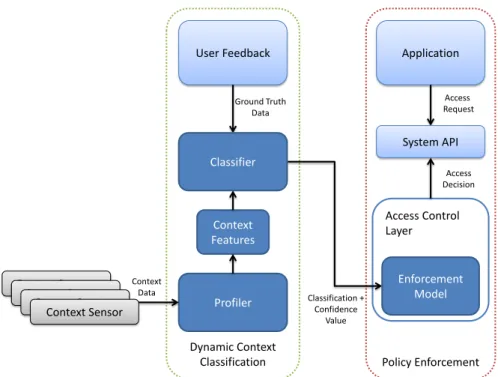
Figure2.1 The structure of theConXsensesystem . . . 16
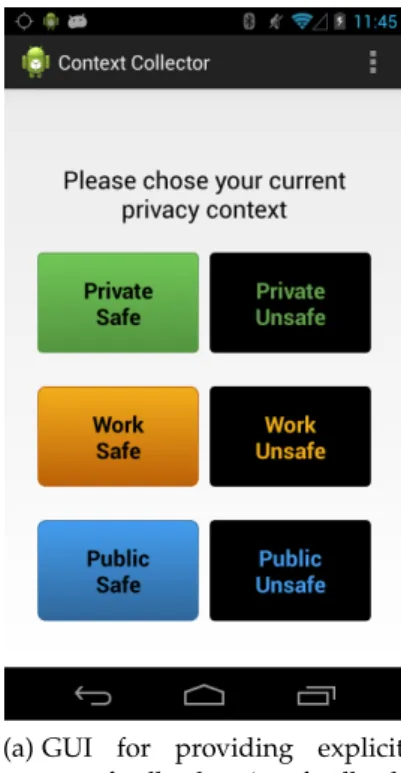
Figure2.2 GUI of the Context Collector app used for col-lecting ground truth information about the risk of device misuse and privacy sensitivity of the context. ’Safe’ indicates a context with low risk of device misuse, whereas ’Unsafe’ indicates high risk. ’Private’ and ’Work’ indicate con-texts with high privacy sensitivity, and ’Pub-lic’ indicates a context not considered sensitive from a privacy point of view. . . 24
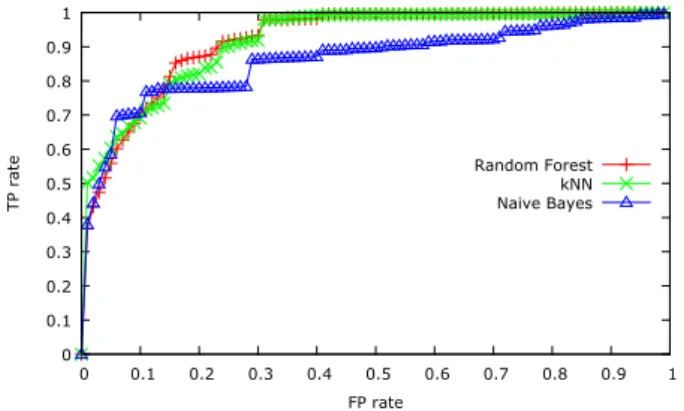
Figure2.3 Average ROC curves showing performance of classifying contexts with a low risk of device misuse, considering those users who provided at least five ground truth feedbacks per context class. . . 26
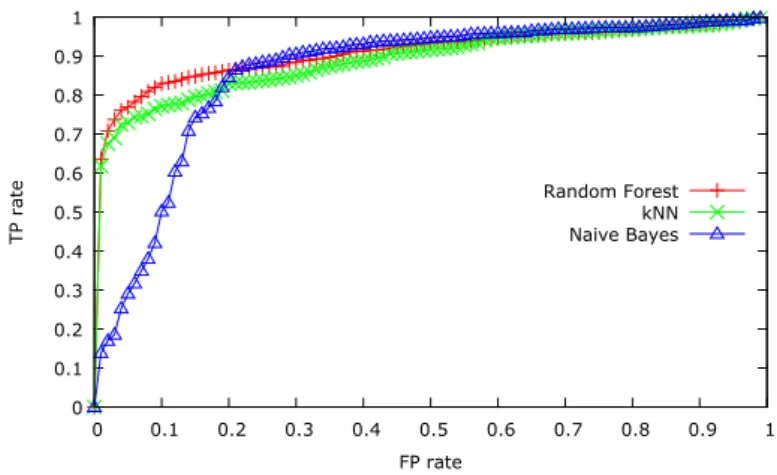
Figure2.4 Receiver Operating Characteristic (ROC) curves of classifier performance in identifying public contexts in which sensory malware protection can be relaxed. . . 27
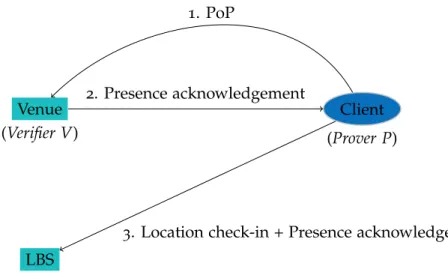
Figure3.1 Verification of check-ins in location-based ser-vices (LBS) . . . 37
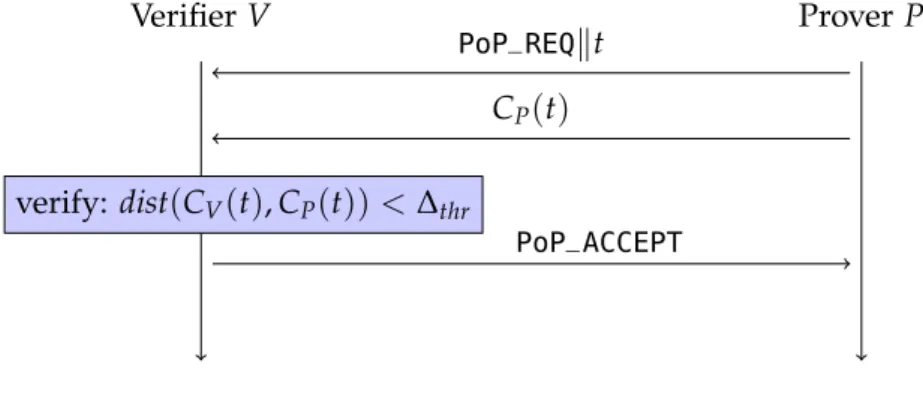
Figure3.2 Context-based proof-of-presence . . . 42
Figure3.3 Adversary model . . . 43
Figure4.1 IoT device pairing scenario . . . 66
Figure4.2 Context-Based Key Evolution . . . 74
Figure4.3 Fraction of1-bits in and entropy of 60-bit fin-gerprints with window size d = 120 s in the office setting of experiment1 during different times of day . . . 87
Figure4.4 Bitrate of fingerprint extraction during differ-ent times of day in experimdiffer-ent2utilising peak-based list encoding . . . 87
Figure4.5 FAR vs. FRR for error-correction levels 5 %, 8 %, 10 %, 12 % and 15 % for different finger-print lengths . . . 95
Figure4.6 Number of required authentication iterations to reach authentication strength corresponding to adversary success probabilityPmax=2−20 . 96 Figure5.1 TheIoTSentineladversary model . . . 104
Figure5.3 Security policy enforcement with IoTSentinel isolation levels . . . 111
Figure5.4 Typical set-up process of WiFi-based wireless IoT devices . . . 113
Figure5.5 Overview of theIoTSentinelprototype design . 117
Figure5.6 Time required for fingerprint extraction, com-pression and device-type identification for dif-ferent device types (1: Fitbit Aria, 2: Edimax Plug 1101W, 3: Edimax Plug 2101W, 4: Ednet Gateway,5:TP-Link Plug HS100,6:TP-Link Plug HS110) . . . 119
L I S T O F TA B L E S
Table2.1 Context features derived based on the context model . . . 23
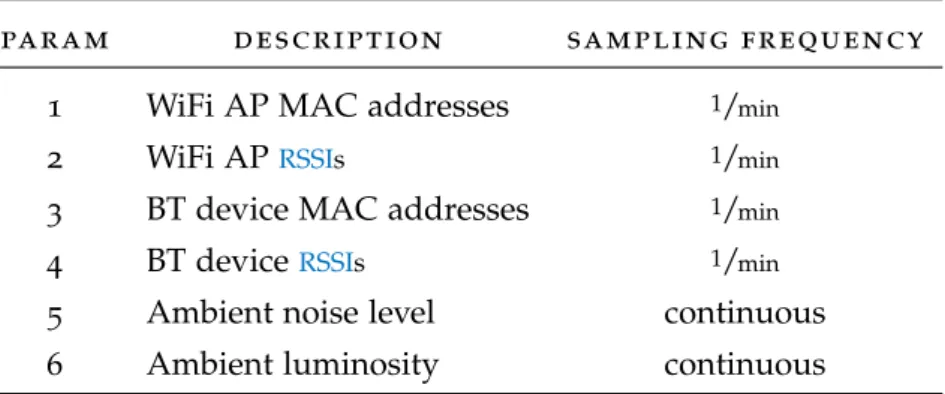
Table3.1 Features used for context-basedPoPs . . . 42
Table3.2 Measured context parameters in the ConXPoP dataset . . . 46
Table3.3 Co-location classifier FPR on benign datasets . 47
Table3.4 FPR of the co-location classifier in view of con-text-guessing attacks . . . 48
Table3.5 Additional feature for luminosity and audio measurements . . . 53
Table3.6 Improvement in FPR when surprisal filtering is applied on theConXPoPattack datasets . . . 54
Table3.7 Performance of PoPs utilizing audio and lu-minosity modalities . . . 55
Table4.1 Set-up of IoT scenario experiments . . . 80
Table4.2 Average fingerprint similarity between the co-located and adversary devices in the IoT scen-ario experiment1 . . . 83
Table4.3 Error-correction levels and minimum required min-entropy He∞(W)of used fingerprints wto obtain He∞(W|P) ≥ 20 bits needed for an au-thentication strength of Pmax = 2−20 in
differ-ent experimdiffer-ental settings. The last two colums show the average entropy rates of fingerprints and the corresponding minimum bit length|w|
of fingerprintwto reachPmax. . . 91
Table4.4 Required time to extract required minimum-length fingerprints during active times of the day . . . 91
Table5.1 IoT devices and their connectivity technologies 114
A C R O N Y M S
6LoWPAN IPv6over Low-Power Wireless Personal Area Networks
ANN artificial neural network
AP access point
ATM automated teller machine
BLE Bluetooth Low Energy
CERT computer emergency response team
CoI Context of Interest
ConUCON context-aware usage control
CVE Common Vulnerabilities and Exposures
DDoS distributed denial of service
DNS Domain Name System
ECC error-correcting code
EKE Encrypted Key Exchange
FAR false accept rate
FM frequency modulation FNR false negative rate
FPR false positive rate
FRR false reject rate
GPS Global Positioning System
GRBAC Generalized Role-Based Access Control
HTTPS Hypertext Transfer Protocol Secure
a c r o n y m s xix
IBC Identity-Based Cryptography
ICMP Internet Control Message Protocol
IP Internet Protocol
IoT Internet of Things
IoTSS IoT Security Service
IoTSSP IoT Security Service Provider
JSON JavaScript Object Notation
KDC key distribution centre
kNN k-Nearest-Neighbours
LBS Location-Based Service
LHL Leftover Hash Lemma
MAC Medium Access Control
NAT Network Address Translation
NFC Near-Field Communication
NIC network interface card
NIST National Institute of Standards and Technology
NVD National Vulnerability Database
OSN On-line Social Network
OS Operating System
OVS Open vSwitch
PAKE password-based key exchange
PC personal computer
PDoS permanent denial of service
PIN Personal Identification Number
PoP Proof-of-Presence
PTK Pairwise Transient Key
QR Quick Response
RBAC Role-Based Access Control
a c r o n y m s xx
ROC Receiver Operating Characteristic
RS Reed-Solomon
RSSI Received Signal Strength Indication
RF Radio Frequency
SDN software-defined networking
SGW Security Gateway
SOHO Small Office, Home Office
SSID Service Set Identifier
TCP Transmission Control Protocol
TLS Transport Layer Security
TPR true positive rate
TSF Time Synchronization Function
UI user interface
USOM User Space Object Manager
WPA2 WiFi Protected Access2
WSN wireless sensor network
1
I N T R O D U C T I O NDuring the past decade the way in which people connect to the In-ternet has profoundly changed as smartphones have taken over the role as the most prevalent platform for connecting to and consum-ing Internet content [136]. Whereas in the first wave of the broader
adoption of Internet connectivity desktop computers with fixed Inter-net connections played the main role, the advent of smartphones led to a significant increase in the number of Internet-connected nodes. Subsequently, a major boost in the increase of network connectivity is driven by the so-called Internet of Things (IoT). The term IoT de-notes a recent trend in which devices and appliances that tradition-ally have not been connected to the Internet are increasingly being equipped with smart functionalities and wireless and/or wired con-nectivity, enabling these devices to be connected toIPnetworks, allow-ing them to be remotely monitored and controlled. It is forecast that the adoption ofIoTin the forthcoming years will boost the amount of Internet-connected devices, reaching an estimated total of 20.4 billion connectedIoTdevices in the year2020[43].
In the era of desktop computers there were only a few Internet-connected devices with a fairly limited set of application programmes in a typical household, making management of relevant security and privacy settings of the systems feasible (although not easy to perform for regular non-technical persons). Due to this limited connectivity, also the privacy exposure of users and their home environment to external on-line threats was much more limited than in a contempor-ary IoT smart home, where potentially dozens of Internet-connected devices actively sensing their environment are connected to the local network of the smart home.
The adoption of IoT has consequently led to a drastic increase in the exposure of users’ potentially sensitive private information to various security and privacy threats. Modern households might be equipped with dozens of devices with network connectivity that have a rich set of context sensors to sense their surroundings in order to react to the user’s actions or adapt their behaviour to environmental condi-tions. In addition, users typically carry with them one or more smart devices with tens of different applications and apps, each of them possibly having separate sets of configurable settings and security policies. The profound changes that the emergence of smartphones andIoThave had on computing platforms have brought forward new challenges with regard how these systems can be made easily usable by users while at the same time making sure they do not compromise
1.1 c h a l l e n g e s 2
the security of the system or the privacy of user data being processed by them.
1.1 c h a l l e n g e s
1.1.1 Context-Aware Access Control
To protect the security and privacy of users, effective access control mechanisms have to be employed in order to limit privacy exposure according to the preferences of each user. However, as mobile and
IoTsystems intensively interact with their surroundings and provide context-dependent functionalities, also the access control mechanisms need to take the context into account in their decision-making process. A number of works have therefore addressed the problem of context-aware access control [26, 27] and approaches for allowing users to
specify context-dependent access control policies [56, 118, 68].
Ap-proaches for implementing context-aware access control on mobile operating systems have also been proposed [5,24,117].
While fine-grained access control policies can be used to realize such controls, their use raises practical usability problems, as the number of policies to be specified, managed, and updated easily grows to be very large. The required effort for doing this easily be-comes unreasonably high so that users are not willing to invest the time required for setting up and managing their personal policy sets. In addition, regular users seldom are capable of fully understanding complex security policies and their full privacy ramifications, thereby raising the risk that users make errors in configuring their policies, potentially leading to unwanted privacy compromise. To encounter this challenge a number of works [115,53, 47] have therefore started
to seek ways in which instead of defining a multitude of very fine-grained security and privacy policies, contextual information is used to learn and automatically adapt, e. g., authentication requirements based on the context history of the user. This work follows a similar approach: we want to profile and learn about the contextual factors pertinent to the particular use case and utilise this information in adapting security policies or make authentication decisions.
1.1.2 Context-Based Proofs-of-Presence
The prevalence of novel contextual sensors in widely-used smart-phone models has enabled the introduction of entirely new classes of applications that utilise context information in various ways. Among the most used contextual factors is undoubtedly the location of the user, widely available through the use of Global Positioning Sys-tem (GPS) sensors, or, network triangulation. This has led to the emer-gence of numerous Location-Based Services (LBSs). However, as all
1.1 c h a l l e n g e s 3
widely-used positioning technologies rely on the mobile client per-forming the positioning operation, it is not possible for other entities to verify the correctness of location claims made by clients, opening up the possibility for a wide range of location cheating attacks. To en-counter such attacks a number of proximity verification approaches have been proposed utilising, e. g., WiFi Received Signal Strength In-dication (RSSI) measurements [143], or observing packet header field
values on WiFi networks [100].
Also context-based approaches for proximity verification utilising ambient contextual modalities like sound and luminosity sensed dir-ectly from the environment have been studied [140, 131]. However,
these works consider only a non-adversarial setting related to relay attackprevention in zero-interaction authentication (ZIA) use cases, in
which both parties, theprovermaking a location claim and theverifier
verifying it are trusted. This leaves the question open whether con-textual information can be used for reliable proofs-of-presence also in settings in which the prover is not trusted.
1.1.3 Context-Based Authentication
As discussed above, the increasing number of devices in IoT envir-onments like smart homes containing dozens of installedIoTdevices poses challenges with regard to how the security of individual devices is managed. One particular problem is how to manage the authen-tication of individual devices while providing effective separation between the trust domains of individual users. Conventional ap-proaches like, e. g., PIN code-based Bluetooth authentication relying on manual authentication between devices faces usability challenges and is error-prone, as users need to separately perform authentication with each of the (potentially numerous)IoTdevices. Key pre-sharing-based approaches [35, 23, 76, 139] mainly developed for wireless
sensor networks (WSNs) on the other hand fail to provide effective separation between the trust domains of adjacent users’ smart homes. Other approaches seek to utilise the proximity of devices to each other to enable co-location based authentication by using context-based information sensed from the ambient environment of the de-vices as an authenticator. These schemes are based on either sensing WiFiRSSIvalues [143] or fluctuations in the Radio Frequency (RF
)-en-vironment [82]. They have, however, the drawback that their security
properties are lacking, or, they are limited to relatively short distances between to-be-paired devices, making their use in real-world IoT set-tings impractical.
Other contextual modalities like ambient audio have more desir-able properties for realising practical context-based authentication, as it allows authentication over longer distances. To this end, an authen-tication scheme has been presented [124] that is based on using
error-1.2 t h e g oa l o f t h i s d i s s e r tat i o n 4
correcting codes to enable audio fingerprinting-based key agreement between two peers located in the same audio environment. However, this scheme fails to address all relevant factors affecting the security of the scheme that are needed to quantify the strength of the resulting authentication secret.
1.1.4 Security Management of IoT Devices
In addition to the security challenges mentioned above, the difficulty of effective security management in IoTenvironments is exacerbated by the fact that the IoT device market has become very fragmented, as hundreds of new device manufacturers are bringing new devices to the market. Many of these manufacturers have little experience in building secure network-connected systems and utilize therefore flawed security designs in their products. On the other hand, many manufacturers are also driven by the desire to bring their products to the market quickly, not leaving enough time to do proper secur-ity testing of their product implementations. Both aforementioned reasons lead to a situation in which it is not only possible, but likely that devices with security vulnerabilities are present in users’ smart homes. Identifying such devices before they are compromised by po-tential attackers and taking appropriate countermeasures to contain the security threat that such devices represent is therefore of high importance.
1.2 t h e g oa l o f t h i s d i s s e r tat i o n
The goal of this work is to demonstrate how appropriate context and communications profiling approaches can be used to address the challenges enumerated above in order to provide building blocks for realising more autonomous security decision making in end-user sys-tems. In particular, we target personal mobile devices andIoTdevices in smart home settings. Our aim is to make security and privacy management of the increasingly complex and diverse computing en-vironment feasible for regular end-users in the future. In this disser-tation we demonstrate how by appropriately profiling information obtained through contextual sensors of devices and their communic-ation behaviour, many security decisions can be automated in a way that makes it easier for regular users to handle the vast complexity of contemporary systems comprising numerous IoT devices and apps. The concrete solutions proposed in this dissertation are related to the automated and context-based adaptation of security and privacy policies of personal mobile devices (Chapter2), context-based
proto-cols for proximity verification (Chapter3) and co-presence
authentic-ation (Chapter4), as well as the use of communications profiling for
1.3 ov e r v i e w o f c o n t r i b u t i o n s 5
1.3 ov e r v i e w o f c o n t r i b u t i o n s
1.3.1 Context-Aware Access Control Framework
We present the design of ConXsense, a novel context-aware frame-work for dynamic adjustment of security- and privacy-relevant en-forcement decisions on mobile systems. The framework is based on profiling contexts and persons with which the mobile device user in-teracts with regard to their familiarity. It derives from this profile information features characterising the context which can be used by a machine learning-based classification model to provide predictions about security-relevant properties like the privacy sensitivity of the context and its associated risk of device misuse. Our empirical eval-uation based on real-world contextual data demonstrates the effect-iveness of the proposed approach in protecting users against threats arising from device theft or misuse, and, privacy leakage by so-called
sensory malware.
1.3.2 Resilient Context-Based Proofs-of-Presence
We empirically analyse a scheme for context-based Proofs-of-Presence (PoPs) that is derived from approaches used in earlier approaches [140, 131] based on real-world context data and demonstrate the
feasibil-ity of so-called context-guessing attacks. In such attacks a malicious prover uses profiled information about a target context in which the verifier of aPoP scheme is located to forge PoPs that the verifier will erroneously accept as genuine Proofs-of-Presence. We then develop an approach utilising context profiling to estimate thesurprisal associ-ated with individualPoPsand using this information to filter outPoPs
that are at risk of being too easy to guess by an adversarial prover. Based on our evaluation data we demonstrate the effectiveness of this
surprisal filtering approach in protecting against context-guessing at-tacks. Finally, we introduce an extension to thePoPapproach utilising longitudinal context measurements based on luminosity and audio and demonstrate how such measurements can be used to makePoPs
more resilient to context guessing in most cases. 1.3.3 Context-Based Authentication
Based on a context-based key exchange approach presented in earlier work [124], we develop acontext-based key evolution approachthat aims
at gradually increasing the confidence of pairing principals in the au-thenticity of their counterpart. The approach relies on the fact that only devices that are persistently present in the same context will be able to successfully complete a number of authentication itera-tions which is required to establish a sufficiently strong
authentica-1.4 r e l at e d p u b l i c at i o n s 6
tion between the pairing parties. We also present a rigorous analysis of the factors that affect the security of context-based authentication. In particular, we quantify the effects that entropy losses incurred by the use of error-correcting codes and the inherent entropy rate present in the context have on the security of the scheme and evaluate it em-pirically based on contextual measurement data from real-worldIoT
settings.
1.3.4 Device Profiling for IoT Security Management
We present the design ofIoTSentinel, a framework that aims at provid-ing a brownfieldsecurity management solution for networks contain-ing IoT devices with security vulnerabilities. IoTSentinel is based on profiling the communications ofIoTdevices that are newly added to the network and using this for identifying their device type. This is required for identifying devices with known security vulnerabilities in order to enforce appropriate traffic filtering measures with which 1) compromise of vulnerable devices can be mitigated, and,2) in case vulnerable devices are compromised, the rest of the network can be protected against potential attacks utilising the compromised device. We evaluate the effectiveness of IoTSentinel based on empirical data collected from a large set of real-world IoT devices and demonstrate that it can be successfully used for managing threats arising from security vulnerabilities present in IoT devices. We also present the design of a prototype system demonstrating the core functionalities ofIoTSentinel.
1.4 r e l at e d p u b l i c at i o n s
This dissertation is based on several previously published papers as listed below. A full list of all published works of the author of this dissertation is given in chapter7.
Chapter2
Markus Miettinen, Stephan Heuser, Wiebke Kronz, Ahmad-Reza Sadeghi and N. Asokan. ”ConXsense – Context Profiling and Clas-sification for Context-Aware Access Control”. In: Proceedings of the
9th ACM Symposium on Information, Computer and Communications Se-curity (ASIACCS2014). ACM. Kyoto, Japan, June2014. doi: 10.1145/ 2590296.2590337
1.5 c o n t r i b u t i o n s o f t h e au t h o r 7 Chapter3
Markus Miettinen, N. Asokan, Farinaz Koushanfar, Thien Duc Nguyen, Jon Rios, Ahmad-Reza Sadeghi, Majid Sobhani and Sudha Yellapantula. ”I know where you are: Proofs of Presence resilient to malicious provers”. In: 10th ACM Symposium on Information, Com-puter and Communications Security (ASIACCS 2015). Apr. 2015. doi: 10.1145/2714576.2714634
Chapter4
Markus Miettinen, N. Asokan, Thien Duc Nguyen, Ahmad-Reza Sadeghi and Majid Sobhani. ”Context-Based Zero-Interaction Pair-ing and Key Evolution for Advanced Personal Devices”. In: Proc. ACM Conference on Computer and Communications Security. Scottsdale, AZ, USA: ACM, Nov.2014. doi: 10.1145/2660267.2660334
Markus Miettinen, Thien Duc Nguyen, N. Asokan and Ahmad-Reza Sadeghi. ”Revisiting Context-Based Pairing in IoT”. in: Proceedings of the55th Design Automation Conference (DAC). ACM, June 2018. doi: 10.1145/3195970.3196106
Chapter5
Markus Miettinen, Samuel Marchal, Ibbad Hafeez, N. Asokan, Ahmad-Reza Sadeghi and Sasu Tarkoma. ”IoT Sentinel: Automated Device-Type Identification for Security Enforcement in IoT”. in: Proc.
37th IEEE International Conference on Distributed Computing Systems (ICDCS2017). June2017. doi: 10.1109/ICDCS.2017.283
Markus Miettinen, Samuel Marchal, Ibbad Hafeez, Tommaso Frassetto, N. Asokan, Ahmad-Reza Sadeghi and Sasu Tarkoma. ”IoT Sentinel Demo: Automated Device-Type Identification for Security Enforcement in IoT”. in: Proc. 37th IEEE International Conference on Distributed Computing Systems (ICDCS2017). Atlanta, GA, USA: IEEE, June2017. doi: 10.1109/ICDCS.2017.284
1.5 c o n t r i b u t i o n s o f t h e au t h o r
The contributions of this dissertation were produced in collaborative research projects where the author had a central leading role. The individual contributions can be detailed as follows.
1.5.1 Context-Aware Access Control Framework
The author led the project and designed the context features used for the context classification models and co-designed the overall frame-work with other project participants. He participated in the require-ments gathering and design of the user survey, which was realised in practice and evaluated by co-author Wiebke Kronz. The author
spe-1.5 c o n t r i b u t i o n s o f t h e au t h o r 8
cified the requirements for the data collection software used in col-lecting evaluation data, organised the data collection campaign and performed the evaluation of the data. The enforcement framework for realising dynamic adaptation of locking time-outs and access to context sensors was contributed by co-author Stephan Heuser. All co-authors participated in writing the paper manuscript [90].
1.5.2 Resilient Context-Based Proofs-of-Presence
The author led the project and co-designed theConXPoPframework. He provided the requirements for the data collection software used for collecting evaluation data, implemented by co-authors Duc Thien Nguyen, Majid Sobhani and Jon Rios and planned and supervised the data collection campaign for acquiring evaluation data in col-laboration with co-authors. The author formalised the concept of context-guessing attacks and devised the use of surprisal filtering for mitigating such attacks. He also co-designed the longitudinal context features used for hardening proofs of presence and co-implemented the data analysis and evaluation of the framework together with Duc Thien Nguyen and Majid Sobhani. The author was responsible for authoring the major part of the paper manuscript [88].
1.5.3 Context-Based Authentication
The author led the projects related to the underlying papers [89,94]
and co-designed the context-based key evolution framework intro-duced in the first paper related to this topic [89]. The author
co-designed the context fingerprinting approach used in [89] together
with Thien Duc Nguyen and Majid Sobhani and contributed require-ments for the data collection software, which was realised by Thien Duc Nguyen and Majid Sobhani. The author organised and real-ised the analysis and evaluation of the collected contextual data to-gether with the aforementioned co-authors. The author was respons-ible for writing a major part of the first paper’s [89] manuscript. In
the second paper, the author co-designed the context-based authen-tication approach and co-developed the formalisation of the relevant factors affecting the security of the context-based pairing approach. The improved fingerprinting approach based on peak detection was developed by Thien Duc Nguyen incorporating some initial contribu-tions from the author. The data collection and evaluation was realised by Thien Duc Nguyen in collaboration with the author. The author was responsible for authoring a major part of the paper [94].
1.5 c o n t r i b u t i o n s o f t h e au t h o r 9
1.5.4 Device Profiling for IoT Security Management
The author co-led the project and was responsible for setting up the data collection infrastructure and planning and conducting data col-lection experiments on IoT devices. The author co-designed the over-all architecture with other co-authors. Samuel Marchal designed and implemented the machine learning components for device identific-ation. Ibbad Hafeez implemented the SDN-based isolation solution. All co-authors contributed to the writing of the manuscript [92]. In
addition, Tommaso Frassetto supported the implementation of the demonstrator solution [93] forIoTSentinel.
2
C O N T E X T P R O F I L I N G F O R A U T O M AT I N GS E C U R I T Y A N D P R I VA C Y P O L I C Y D E C I S I O N S
The emergence of appified smartphone platforms like Google’s An-droid, Apple’s iOS and Microsoft’s Windows Phone has led to a rapid growth in the number and complexity of different security and pri-vacy settings that are required for controlling smartphones and ap-plications installed therein. Not only have the smartphones them-selves numerous settings that need to be configured, but users also need to consider numerous settings related to the permissions and data sharing by apps that they have installed on their smartphone. Predominant solutions for specifying and maintaining security and privacy settings that reflect the desires of the user are based on manu-ally pre-defined policies. Due to their increasing number and com-plexity, it is, however, becoming increasingly difficult for users to maintain their policy sets in a meaningful way. The goal of this work is therefore to develop a novel framework for automating security and privacy policy decision making by utilising contextual informa-tion that mobile devices can sense with their sensors from the context in order to allow the system to automatically learn and adjust policies based on the contextual situation in which the user is located.
2.1 p r o b l e m d e s c r i p t i o n
Configuring and maintaining such large sets of security policies is laborious and requires a considerable amount of expertise and under-standing to perform correctly. In many cases, users are not willing to spend substantial amounts of time required to go through and adjust security settings to match their personal preferences. This can result in policies being inadequately configured so that the security and pri-vacy settings of systems and apps do not reflect the true preferences of users. Also, in many cases regular users may not fully understand the detailed consequences of particular policy configurations for their privacy, resulting in erroneous settings that do not reflect the actual preferences of the user with regard to their privacy. A study by Sadeh
et al.[118] concerning location sharing policies revealed that users
of-ten have great difficulties in defining accurate access control policies. In this study, they investigated the ability of users to define policies for controlling the disclosure of their location to other users and user groups like friends, colleagues, etc., and found that the accuracy of location disclosure rules defined by users was initially only 59%. The accuracy increased to 65% after the users were given the chance to
2.1 p r o b l e m d e s c r i p t i o n 11
modify their rules after reviewing them based on concrete examples of enforcement decisions resulting from applying the initially-defined rules. In another study by Bauer et al. [9], in which the user
under-standing of data sharing consent dialogues of popular single-sign on services like Google, Facebook and Google+ were studied, the au-thors found that themajorityof users did not fully understand which of their data items would actually be shared with a third-party web-site by the single-sign-on service when the user used it to log in to the third-party-website. This was in spite of the fact that the users were shown an explicit consent dialogue informing them about which data items would be shared by the service. Both above results show that defining, maintaining and understanding the meaning of access con-trol policies is a challenging and likely too laborious and difficult task to be successfully handled by regular users.
What makes the situation even more challenging is that some policy enforcement decisions should be dependent on the context, i. e., the situation and environment in which the user is located at a particular point in time. Capturing all relevant contexts with pre-defined access control rules increases the complexity of the policy set and thus the work required to set up and maintain it even more. It is also question-able, whether it is even possible to enumerate and define all relevant contextual settings in which access control decisions need to be made beforehand.
2.1.1 Challenges with Straightforward Approaches
One way to ease the burden of users is to design systems so that they use sets ofdefault policiesdesigned by security experts. User involve-ment would then only be limited to making a selection of what set of default policies to apply. While being an easy choice to users, this ap-proach, however, also has its problems. For one, default policies can never capture the fine-grained personal preferences that users may have, as they are by necessity generalisations and therefore not able to capture all concrete contexts and situations of a user’s life. Thus they are limited to using ‘reasonable defaults’, thereby potentially res-ulting in settings that do not reflect the true desires of users. On the other hand, understanding the full implications of particular default security policies may not be easy for regular users. Security settings and policies being highly abstract concepts, it is possible that users do not fully understand the consequences that their selected default policies may have, e. g., on the privacy of certain user data. This may result in situations where the actually enforced settings do not corres-pond to what the users think they do, thereby putting user privacy at risk. This is particularly problematic if policy settings are not as strict the user thinks they are, potentially leading to unwanted disclosure of inappropriate or embarrassing information about the user.
2.1 p r o b l e m d e s c r i p t i o n 12
2.1.2 Goal Setting
Given the above challenges that contemporary approaches for access control on mobile appified platforms are facing, it is clear that better methods are required for managing the security and privacy settings of users. In this work, therefore, we proposeConXsense, a system that uses profiling of longitudinal observations of the user’s behaviour and context together with limited user feedback to automaticallylearn
appropriate policy settings for the user to be used in particular situ-ations. This allows ConXsenseto realise usable, user-friendly but also
accurate access control. In particular, the envisaged system shall be able to:
• capture relevant features of the users surroundings, i. e., the con-textthat influence the users’ perceptions on desired access con-trol enforcement decisions,
• autonomously learn relevant places and environments in the user’s life, so-calledContexts of Interest (CoIs)in order to associate policy decisions with them,
• learn, using minimal user feedback, the desired access control policy decisions to be applied in a particular context.
2.1.3 Definition of the Term Context
In this work, we define the termcontext to mean the combination of any ambient physical properties of the surrounding environment that a device can sense with its on-board sensors at a particular point in time. Context can therefore refer to information about the device’s position, surrounding other (wireless) devices, as well as direct phys-ical properties of the environment, like, e. g., illumination, audio ob-servations, temperature, humidity, etc. In our approach we seek to utilize information obtained by profiling a device’s context over time to build a machine-learning based context model that allows a device to make automated decisions about access control policy enforcement in particular contexts that the device is in.
2.1.4 User Perceptions of Context
In an on-line user survey [90], we investigated more than one
hun-dred active smartphone users’ perceptions and concerns related to security and privacy issues arising from their smartphone use. The survey sought to identify which contextual factors play a role in users’ perceptions with regard to security and privacy. In this survey, two main concerns could be identified, one related to the threat ofdevice misuse and the other related to concerns of privacy exposure, i. e., the
2.1 p r o b l e m d e s c r i p t i o n 13
fear that private or sensitive information about the context is dis-closed to unauthorised parties.
The survey revealed that a number of factors primarily influence users’ perceptions about these concerns. For one, the presence of other persons and their familiarity to the user were seen as the main factors influencing the perceived risk of device misuse, whereas the familiarity of the place or location as such was the main factor influ-encing the perceived privacy exposure in particular situations. These findings motivated our selection of primary use cases for ConXsense
(as detailed below in Sect. 2.1.5) and also informed the design of the
context model by guiding its construction so that it could model both the familiarity of places users often visited, as well as the presence and familiarity of other persons in specific situations, as explained in detail in Sect.2.3.
2.1.5 Use Cases
Motivated by the results of the survey, we selected two prominent use cases that are related to the prime concerns of mobile device users: the fear that their device is misused by third parties, and, the un-authorised disclosure of potentially sensitive contextual information about the user by unauthorised, potentially malicious applications on the user’s mobile device. We selected two concrete use cases focusing on these concerns.
2.1.5.1 Use Case 1: Protection Against Misuse Using a Context-Aware Device Lock
Mobile devices like smartphones and tablets are increasingly used for access to sensitive information like financial or banking data, per-sonal messaging, on-line shopping, etc. However, reports have shown that many users do not sufficiently protect their devices using protec-tion mechanisms like device locks [21, 132], even though these are
readily available on most smartphones and provide effective protec-tion against many threats related to device misuse. This may be due to the fact that device locks are perceived as relatively inconvenient to use, as they require the user to type in an unlocking code sev-eral times a day, and alternative solutions like the use of fingerprint scanners for user authentication have only recently started to become widely available on smartphones also in other than the highest price segments.
To reduce the user burden of using device locking for protecting their device against misuse, we adopt the approach first introduced by Gupta et al. [47], in which observed context information is used
to dynamically adapt the locking time-out of the device lock. By profiling contextual data we develop a model for estimating therisk
2.1 p r o b l e m d e s c r i p t i o n 14
of device misuseand use it to decide on how quickly the device should lock itself in particular contexts in case it is not used.
2.1.5.2 Protection Against Sensory Malware
The termsensory malwaredenotes a class of malicious applications for smartphones. The goal of these malware apps is to use the on-board sensors of the targeted user’s smartphone to harvest potentially sens-itive information from the user’s context. This allows an adversary controlling the sensory malware to aggregate detailed profiles about the user, her behaviour and the environment she routinely lives in. Sensory malware are typically Trojans, i. e., applications with hidden malicious functionality purporting to be a benign app, so that users can be fooled into installing the application on their smartphone.
Notable examples of sensory malware include applications like
Stealthy Video Capturer [145], (Sp)iPhone [81], Soundcomber [122] and
PlaceRaider [138]. Stealthy Video Capturer utilises the camera on
the victim’s smartphone to capture video images and secretly send them to the adversary, whereas (Sp)iPhone utilises the smartphone’s accelerometer to decode vibrations from a nearby keyboard the vic-tim user is typing on to discover the text entered. Soundcomber on the other hand monitors the microphone of the victim’s smartphone and uses audio analysis and speech recognition to recover sensitive information like PIN codes or credit card numbers from the victim user’s spoken interactions with, e. g., her bank. PlaceRaider utilises the smartphone’s gyroscope sensor and camera to harvest sets of im-ages that the adversary can use in reconstructing a 3D model of the victim’s surroundings.
In order to protect smartphone users against the threat posed by sensory malware, we adopt an approach in which we limit the access of applications to the contextual sensors of the mobile device in such contexts that are sensitive from a privacy point of view, e. g., a the user’s home or workplace. We seek to do this without impacting the legitimate use of the smartphone unnecessarily and therefore do not limit access to sensors in contexts that are not considered privacy-sensitive, e. g., in public places.
2.1.6 Adversary Model
In use case 1 concerning protection against device misuse, the ad-versary is a person in vicinity of the mobile device of the user having potentially physical access to the user’s device. The adversary may be malicious, like a thief, honest-but-curious, e. g., a colleague or sib-ling of the user, or, ‘clueless’ like a small child. The protection goal in this use case is to minimize the risk that the adversary has access to applications and data on the mobile device of the user. We do this by dynamically adjusting the locking time-out based on the risk of
2.2 s y s t e m d e s i g n 15
device misuse in the context. We seek to do so while striking a bal-ance between maximising protection on one hand, and, minimising user inconvenience caused by having to frequently enter a device un-lockingPINor password even in low-risk contexts, on the other hand.
In use case2the adversary is an application that is installed on the user’s mobile device. We assume that the application has obtained all necessary permissions for access to contextual sensors of the device during its installation. The application may be a malicious Trojan Horse, i. e., sensory malware, or, merely a benign but overly intrusive application. Our goal is to prevent or limit the access of the adversary to contextual sensors of the device in contexts with high privacy ex-posure, i. e., contexts containing information that the user would want to protect from the adversary. This information may be eitherprivate, concerning the user personally, or, confidential, i. e., other sensitive information not necessarily directly related to the user herself. Typ-ical examples of contexts with high privacy exposure are the user’s home containing private information pertaining to the user, or, her workplace with potentially confidential information in the context.
2.2 s y s t e m d e s i g n
TheConXsensesystem is designed to make context-dependent access control decisions based on contextual parameters that a mobile device can observe with its on-board sensors. It utilises machine learning-based classifiers to make predictions about the risk of device misuse and the privacy sensitivity of particular contexts. The classification models are gradually learnt based on ground truth information that the user provides about her security and privacy preferences in par-ticular contexts.
The structure of theConXsensesystem is shown in Fig.2.1. Access
control decisions are based on observations of the context obtained by context sensors. The observations are fed to a Profilerthat calculates features describing the context. Profileraggregates profiles of relevant objects (like significant places of the user or other devices that the user encounters) according to the context model described in detail in Sect. 2.3. Profilerperiodically uses incoming observations and the
aggregated profiles to generate context features representing relevant properties of the context at each point in time. The definition of the context features is provided in Sect.2.3.3.
Context features are forwarded to the Classifier component, which uses them together with ground truth feedback obtained from the user to train and update classification models. The user feedback can be generated either through explicit input like interactions with the device UI, or, implicitly by monitoring the user’s actions. Once the classification models have been trained, Classifier uses them to
2.3 c o n t e x t m o d e l 16 Policy Enforcement Dynamic Context Classification Profiler Context Sensors Access Control Layer Context Data Classification + Confidence Value Application Access Request Access Decision User Feedback System API Ground Truth Data Context Features Classifier Enforcement Model Context Sensors Context Sensors Context Sensor
Figure2.1: The structure of theConXsensesystem
provide predictions about a context’s security and privacy-relevant properties based on new incoming features from the current context. The classifier predictions along with their associated confidence val-ues are forwarded to theAccess Control Layer, which takes them into account when making decisions about applications’ access requests to various functionalities of the System API in accordance with its specific enforcement model.
2.3 c o n t e x t m o d e l
TheConXsensecontext model focuses on modelling the surroundings of a mobile device in terms of its location or place in which it is located, as well as the social context, i. e., the persons in proximity, and their familiarity to the user. This is because these factors were deemed the most decisive ones influencing the perceptions of users with regard to the risk of device misuse and privacy exposure (cf. Sect.2.1.4). The model is used for profiling the user’s typical contexts
as well as deriving context features used in classifying the current context with regard to these properties.
2.3.1 Profiling Locations and Places
A core concept of the ConXsensecontext model are the so-called Con-texts of Interest (CoIs). They represent places that the user visits of-ten and spends a considerable amount of time in. Typical CoIs for
2.3 c o n t e x t m o d e l 17
a user could be, e. g., her home, workplace, grocery store, etc. The
ConXsense context model considers two different kinds of CoI: GPS -based and WiFi-based CoIs. The former correspond to geographical areas determined by their location co-ordinates, and the latter are defined by a characteristic set of WiFi access points usually observed in a specific place. GPS-based CoIs are good in capturing significant places of the user in outdoor areas, whereas WiFi-based CoIs cover also urban indoor areas, where typically GPS reception may not be possible but WiFi access points are available. By using a combination of both CoI types, most significant places that users typically visit can be detected and identified. In the following, we provide a formal definition for both CoI types.
2.3.1.1 GPS-based CoIs
Our concept of GPS-based CoIs is based on the notion of stay points
and stay regions, originally introduced by Zheng et al. [149] and
de-veloped by Montoliu et al. [96]. The identification and detection
of GPS-based CoIs is based on positioning measurements using the Global Positioning System (GPS). The mobile device measures its position periodically using its GPS sensor. The sequence of meas-urements is divided into GPS stay points, i. e., subsequences of posi-tioning measurements representing the user’s visits to distinct places, during which the user stays within a specific distance ofrspfrom the
position of the first GPS measurement in the subsequence. A visit is considered a stay point, if the visit’s duration is longer than a minimal duration tminsp and does not contain observation gaps lasting longer
than a specified maximum gap lengthtgapsp.
Definition1(GPS stay point) A stay point sp = (m0,m1,m2, . . . ,mn) is a longest subsequence of positioning measurements mi = (lati,loni)such that
∀i∈ {1, 2, . . . ,n}:dist(m0,mi)≤rsp, t(mi)−t(mi−1)≤tgapsp, t(mn)−t(m0)≥ tminsp,
(2.1)
where dist(mi,mj) denotes the geographical distance between positioning measurements mi and mj, t(m)the time stamp of positioning measurement m and lati and loni, respectively, the latitude and longitude readings of a position measurement.
A stay point’s position is defined as the average position of the measurements belonging to the stay point.
Definition2(Position of stay point) The position possp= (latsp,lonsp) of stay point sp = (m0,m1,m2, . . . ,mn) is defined as the average of all position measurements mi = (lati,loni)belonging to the stay point, i.e.,
∀mi = (lati,loni)∈sp: latsp = ∑ n i=0lati n ; lonsp= ∑n i=0loni n ( 2.2)