Supporting Academic Language Development in Elementary Science: A Classroom Teaching Experiment
A DISSERTATION SUBMITTED TO THE FACULTY OF THE GRADUATE SCHOOL OF THE UNIVERSITY OF MINNESOTA BY
Karl Gerhard Jung
IN PARTIAL FULFILLMENT OF THE REQUIREMENTS FOR THE DEGREE OF DOCTOR OF PHILOSOPY
Dr. Bhaskar Upadhyay Dr. Julie C. Brown
Acknowledgements
First and foremost, I would like to thank Mr. Mills. Your willingness to engage in our coaching partnership, support my work, and for allowing me to spend a significant amount of time in your classroom over the past three years are what made this work possible. Your perspectives on the work we were doing, the energy you brought to the work, and your willingness to try out any, and all ideas we developed through the partnership have shown me the value in doing research work that directly involves classroom teachers and has reinforced my desire to continue engaging in scholarship that places teachers, and what is happening for them in their classrooms, at the center of my work. Thank you.
Second, I must thank my co-advisors, Drs. Bhaskar Upadhyay and Julie Brown. You both have pushed me so far over the past four years and without your guidance and support I would not be the scholar I am today. Your feedback throughout the dissertation process has pushed me to think, rethink, and rethink again what I was doing and writing, and has been a huge part of this research. Bhaskar, thank you for the thought provoking conversations and for always pushing me to think about the work I am doing in new and different ways. Julie, thank you for the guidance you have given me about what it takes to be a scholar and a researcher, and for being a steadying force when things were not going well.
To my other two committee members, Drs. Gillian Roehrig and Susan Ranney, thank you both for your support. Gill, I’m not sure I would have been able to navigate the entire graduate student experience without your constant willingness to engage in
impromptu advising meetings, even when you are not my advisor. Susan, thank you for helping me learn and grow as a teacher educator interested in academic language. The guidance you have provided about how to think about and conceptualize academic language has been invaluable.
I would be remiss if I did not thank Marty Davis. Marty, for whatever you did to help push my IRB through, thank you. This study would not have been possible were it not for your support, and the support of the district.
To my colleagues in the STEM program and across C&I, thank you for the engaging conversations, support, laughs and fun nights singing karaoke over the past 4 years. You have helped me survive all the classes, presentations, conferences, and papers, and made my time here enjoyable. Specifically, thank you to Emily Dare, Josh Ellis, Justin McFadden, Lisa Ortmann, Beth Ring, and Caleb Zillmer.
Finally, thank you to my family. Your love and support over the last four years have been invaluable in helping me survive being a full-time student and in completing my Ph.D. Thank you for the constant reminders to “get back to writing!” while also relaxing with me at family dinners, holidays and camping trips. You helped bring some balance to my life during my program and I feel very lucky to have been living so close to you all while completing this work.
Dedication
For my loving wife, Megan; Thank you for everything you have done for us over the last four years. I would not be here today if it were not for your continued love, support and friendship. This work would not mean nearly as much to me if you hadn’t been there to share in the journey. I love you and look forward to where our journey takes us next.
Abstract
Academic language is the language that students must engage in while
participating in the teaching and learning that takes place in school (Schleppegrell, 2012) and science as a content area presents specific challenges and opportunities for students to engage with language (Buxton & Lee, 2014; Gee, 2005). In order for students to engage authentically and fully in the science learning that will take place in their classrooms, it is important that they develop their abilities to use science academic language (National Research Council, 2012). For this to occur, teachers must provide support to their students in developing the science academic language they will encounter in their classrooms. Unfortunately, this type of support remains a challenge for many teachers (Baecher, Farnsworth, & Ediger, 2014; Bigelow, 2010; Fisher & Frey, 2010) and teachers must receive professional development that supports their abilities to provide instruction that supports and scaffolds students’ science academic language use and development.
This study investigates an elementary science teacher’s engagement in an
instructional coaching partnership to explore how that teacher planned and implemented scaffolds for science academic language. Using a theoretical framework that combines the literature on scaffolding (Bunch, Walqui, & Kibler, 2015; Gibbons, 2015; Sharpe, 2001/2006) and instructional coaching (Knight, 2007/2009), this study sought to understand how an elementary science teacher plans and implements scaffolds for science academic language, and the resources that assisted the teacher in planning those scaffolds. The overarching goal of this work is to understand how elementary science teachers can scaffold language in their classroom, and how they can be supported in that
work. Using a classroom teaching experiment methodology (Cobb, 2000) and constructivist grounded theory methods (Charmaz, 2014) for analysis, this study examined coaching conversations and classroom instruction to identify and understand what scaffolds are planned and implemented, and how that planning and implementation occurred through an instructional coaching partnership.
Findings from this study showed the elementary science teacher planned and implemented a number of scaffolds for science academic language, focusing primarily on the use of sentence starters as a scaffolding strategy. The findings also indicated that the instructional coaching partnership played a vital role as the main resource that assisted the planning of scaffolds. These findings provide insights into the types of scaffolds that elementary science teachers can implement to scaffold science academic language, and the role that instructional coaching can play in supporting teachers as they work to provide instruction that scaffolds their students’ language use and development.
Table of Contents Acknowledgements i Dedication ii Abstract iii List of Tables x List of Figures xi Chapter 1: Introduction 1 Purpose 3
Overview of the Following Chapters 4
Chapter 2: Literature Review 6
Academic Language 6
Teacher Development in Supporting Academic Language 18 Professional development for science teacher knowledge and
practice in supporting academic language 19
Theoretical Framework 23
Scaffolding science academic language. 23
Coaching and reflective practice. 26
Instructional coaching and reflective practice 26 Coaching to support academic language knowledge and skills 29 Using an Instructional Coaching Partnership to Support Teacher Use
of Scaffolds for Science Academic Language 31
Purpose 32
Research Questions 32
Research Design 33
Classroom teaching experiment 33
Context of the Study 36
Participant and selection criteria 36
Design of the Classroom Teaching Experiment 39
Data Sources 47
Coaching conversations 47
Classroom instruction 48
Coaching conversation and classroom instruction artifacts 48
Reflective journal 49
Data Analysis 49
Method for retrospective analysis 49
Operationalized definitions of “actions” and “processes” in planning 50
Procedures for analyzing Mr. Mills’ planning 51
Procedures for analyzing the resources that assisted Mr. Mills 55 Procedures for analyzing Mr. Mills’ implementation 56
Researcher’s Background, Role, and Subjectivity 58
Researcher’s role 58
Trustworthiness 62
Chapter 4: Findings 65
science teacher engage in while planning instruction that scaffolds
science academic language? 65
Actions. 65
Inventory of scaffolds planned through the coaching
conversations 66
Trends in Mr. Mills’ planning of scaffolds 67 Mr. Mills planned scaffolds to support student understanding of how they were expected to structure their responses 69 Mr. Mills planned scaffolds to support student vocabulary
use and development 73
Processes. 77
Articulating language expectations before planning
specific scaffolds 77
Discussion of ideas that did not translate into actions 82 Including language modifications on lesson plans to
provide to a teaching assistant 83
Differentiating scaffolds for students 85 Reflection on academic language and scaffolds 86 Frustrations with academic language 87
Student use of the scaffolds 89
Applying to new situations 92
Resources that assisted Mr. Mills’ planning of scaffolds for
science academic language 94
The coaching partnership: Underlying structure and procedures 95 Utilization of the partnership principles created opportunities for Mr. Mills to plan and implement scaffolds for science
Utilization of partnership principles to create
opportunities to discuss academic language 97 Utilization of partnership principles created an
opportunity for Mr. Mills to observe the use of
sentence starters 102
Research Question 2: What actions and processes does an elementary science teacher engage in while implementing instruction that scaffolds
science academic language? 105
Actions. 105
Inventory of scaffolds implemented during the teaching
experiment 106
Trends in Mr. Mills’ implementation of scaffolds 108 Strict adherence to the planned scaffolds 109 Use of point-of-need scaffolds to support in-the-moment
language use 111
Explicit point-of-need scaffolds 112
Implicit point-of-need scaffolds 115
Processes. 118
Evolving expectations of the use of scaffolds by students 118 Scaffolds were implemented to support specific and
discrete language 121
Chapter 5: Discussion, Conclusions, Implications, and Future Research 127
Conclusions 127
Planning 128
Implementation 131
Challenges 134
Difficulty providing coaching that supported Mr. Mills in planning scaffolds that were different than sentence starters
to support science academic language 136
Implications 139
Highlighting connections between science and language 139 Coaching partnerships for scaffolding science academic language 141
Limitations 142 Generalizability 142 No student data 143 Future Research 143 Closing Remarks 145 References 147
APPENDIX A: Example of Iterative Process of Classroom Teaching Experiment 156
APPENDIX B: Example of Coaching Conversation 161
APPENDIX C: Example of Classroom Instruction 162
APPENDIX D: Example of Coaching and Instruction Artifacts 164
APPENDIX E: Example of Reflective Journal 166
APPENDIX F: Initial to Focus Codes for Planning 168
APPENDIX G: Codes Identified as Resources 170
APPENDIX H: Episode by Episode Initial Analysis 171
APPENDIX I: Initial to Focus Codes for Implementation 177
APPENDIX K: Inquiry Prompts in Science to Promote Common Language 180
List of Tables
Table 2.1 Linguistic components of Academic Language from Scarcella (2003) 10 Table 2.2 Mode contiuum of elementary science language.
(Modified from Gibbons, 2003) 13
Table 2.2 Language Associated with the Science and Engineering Practices
from Lee et al. (2013) 16
Table 2.3 Knight’s (2007) Partnership Principles 27
Table 3.1 Design of Classroom Teaching Experiment Coaching Sessions 41 Table 3.2 Research Design: Questions, Data Sources, and Analysis 47 Table 3.3 Sorting of Planning Codes to Move from Initial to Focused Codes 53
Table 3.4 Example of Episode by Episode Analysis 56
Table 3.5 Sorting of Implementation Codes to Move from Initial to Focused Codes 58 Table 4.1 Inventory of Scaffolds Planned Through the Coaching Conversations 66
Table 4.2 Knight's (2007) Partnership Principles 95
Table 4.3 Inventory of Scaffolds Implemented in Mr. Mills’ 5th Grade Class
List of Figures
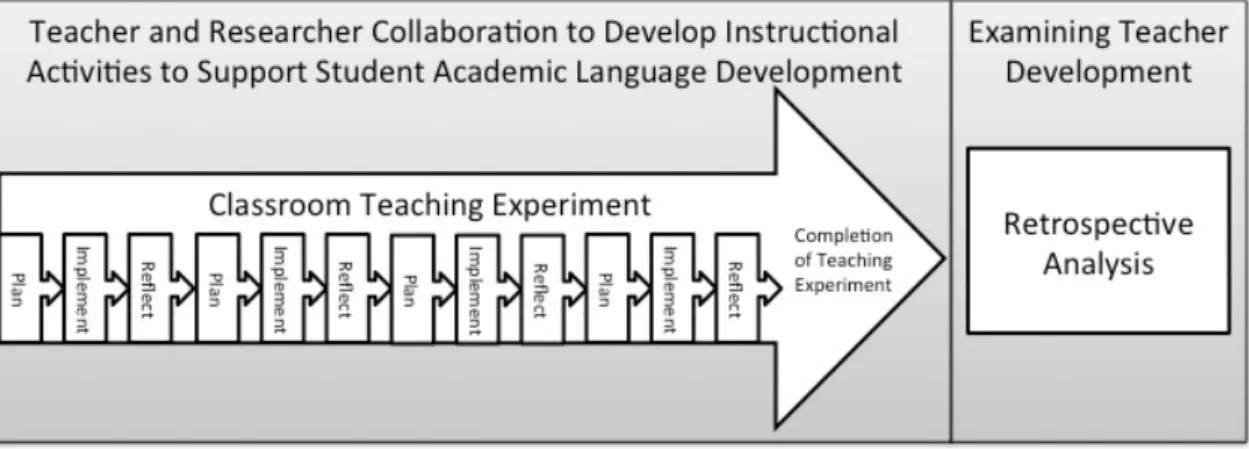
Figure 3.1. Model of classroom teaching experiment performed in this study. 35 Figure 4.1. Sentence starters provided during bird beak activity to support
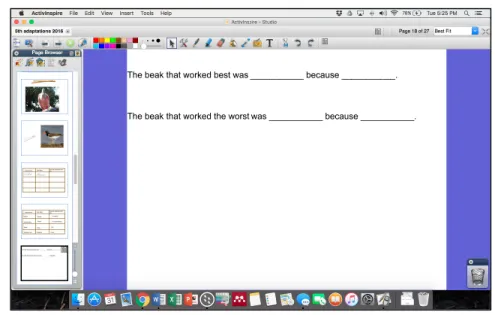
student responses. 71
Figure 4.2. Prediction sentence starters included on the student worksheet to
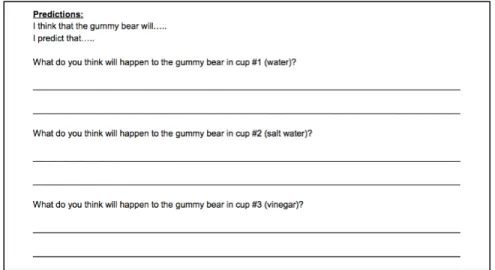
scaffold responses. 72
Figure 4.3. Realia word bank to scaffold students’ labeled diagrams of their
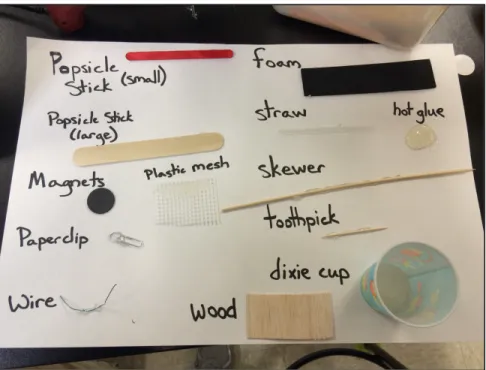
mining tools. 75
Figure 4.4. Promethean slide created to clarify the meaning of “structures”
and “functions.” 76
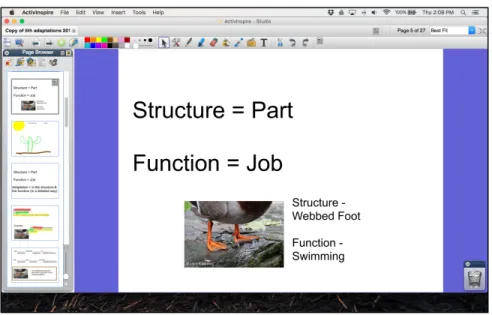
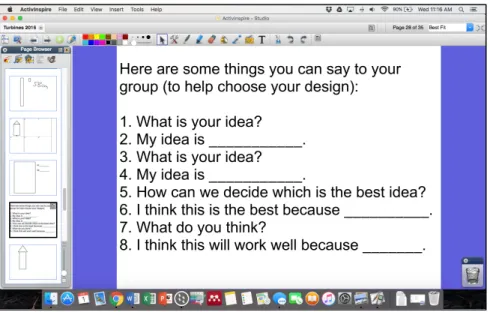
Figure 4.5. Sentence starters planned to scaffold student design conversations. 110 Figure 4.6. Point-of-need sentence starters provided during mining tools lesson. 114 Figure 4.7. Adaptations sentence starters to scaffold student responses. 122 Figure 4.8. Actual sentence starters provided to 5th grade Language Academy
Chapter 1:Introduction
The development of the Next Generation Science Standards (NGSS) has increased the depth of science learning that is expected from students, with students needing to make connections across the science and engineering practices, and use those practices when learning the crosscutting concepts and disciplinary core ideas (Buxton & Lee, 2014). This increased depth will be more cognitively demanding on students as the NGSS expects all students to develop the knowledge and thinking skills within the standards (Buxton & Lee, 2014). With this increased depth in science learning, there will also be an increase in the language demands needed when engaging with the science content and practices in the NGSS (Lee, Miller, & Januszyk, 2014). Students will need to read complex science texts, write in a range of formats that are specific to science, and engage in oral discussions in which they present arguments that are supported with evidence and reasoning (Lee, Quinn, & Valdes, 2013). In order for students to fully and authentically participate in learning the science content and practices, it is important that they are supported in developing the types of language used in science (National
Research Council [NRC], 2012).
However, for many students using language in the science classroom to read, write, and talk about science concepts means that students must use language in ways that are different from how they use language in other settings. The ways that students are asked to read, write and speak in the science classroom includes unique structures for describing and explaining relationships, procedures, or abstract ideas, that differ from everyday language, while simultaneously requiring a high number of technical and specialized vocabulary terms (Zwiers, 2014). In the most recent science education reform
report, A Framework for K-12 Science Education: Practices, Crosscutting Concepts, and Core Ideas [hereafter referred to as The Framework] ( NRC, 2012), from which the NGSS were developed, the NRC acknowledges the important role that language plays in student learning of science:
Any education in science and engineering needs to develop students’ ability to read and produce domain-specific text. As such, every science or engineering lesson is in part a language lesson, particularly reading and producing the genres of texts that are intrinsic to science and engineering. (p. 76)
Students need opportunities to practice and develop their abilities in reading, writing, and speaking the language needed to communicate scientific reasoning and understanding. They must develop understanding of not only the technical terms that are highly
prevalent in science content, but also the academic language that is frequently not a part of students’ everyday language (NRC, 2012).
Academic language includes the language that is used in schools for teaching and learning (Schleppegrell, 2004), is functional for accomplishing tasks in schools (Anstrom et al., 2010; Schleppegrell, 2012), and varies across different subjects and content areas (Zwiers, 2014). It has been shown to emerge in students at a very young age (Scheele, Leseman, Mayo, & Elbers, 2012), and students from low-socio-economic backgrounds, English language learners (ELLs), and students of color often face the biggest differences between their home and everyday language and the language used in schools (Delpit, 2006; Michaels, 1981). In contrast, native English speakers and middle- to upper-socioeconomic classes are often unintentionally schooled into the ways in which language is used in classrooms (Gee, 2008). Therefore, it is important that elementary
teachers support all of their students in developing the academic language needed for science learning, and do so in ways that build off the linguistic resources the students bring to the classroom (Lee & Fradd, 1998).
The focus on academic language is increasing in today’s classrooms, teacher preparation programs, and standards (Ranney, 2012), however it remains an area of challenge for many teachers (Baecher, Farnsworth, & Ediger, 2014; Bigelow, 2010; Fisher & Frey, 2010). Teachers may struggle to make their language expectations clear to their students, may not be aware of the implicit expectations they have for language, or face challenges in understanding student ideas when those ideas are presented in language that differs from the expected language use (Schleppegrell, 2012). For in-service teachers, it is particularly important that they receive professional development opportunities to continue the development of their knowledge and skills related to academic language as our schools are becoming increasingly diverse, with growing populations of ELLs in our schools (Buxton & Lee, 2014; DiCerbo, Anstrom, Baker, & Rivera, 2014). The research examining the effect of professional development programs on teachers’ knowledge and skills related to academic language is limited, with even fewer studies examining the development of science teachers (Buxton & Lee, 2014; DiCerbo et al., 2014). Therefore, a study that examines the development of an elementary science teacher in his ability to plan and implement academic language instructional activities is warranted.
Purpose
This study explores the ways in which an elementary science teacher engages with the process of planning and implementing academic language supports, while
participating in an instructional coaching partnership. It seeks to provide insights into the following areas: 1) The process of planning scaffolds for science academic language by an elementary science classroom teacher, 2) The ways in which planned scaffolds for science academic language are implemented, and 3) The types of resources that assist an elementary science teacher in successfully planning scaffolds for science academic language.
Research Questions
This qualitative research study aims to answer the following questions related to the planning and implementation of academic language instructional materials and supports, to explore the experience of the classroom teacher:
1) What actions and processes does an elementary science teacher engage in while planning instruction that scaffolds science academic language?
a. What resources assisted the teacher in planning scaffolds for science academic language?
2) What actions and processes does an elementary science teacher engage in while implementing instruction that scaffolds science academic language?
Overview of the Following Chapters
Chapter 2 provides a review of the relevant literature which has guided this study, and focuses on academic language, academic language in science classrooms, teacher development in supporting academic language, and professional development for science teachers that has focused on academic language. It will also present the theoretical framework that guided this study, describing both scaffolding of science academic
methodology that was used in this study, by first describing the research design, context and participant. It then describes the data collected for this study and the qualitative methods used for analysis. Chapter 4 explains the findings of the study, which present the actions and processes engaged in through a teacher’s planning and implementing of scaffolds for science academic language, and the resources that assisted that teacher’s planning of scaffolds. The final chapter, Chapter 5, summarizes the findings by
discussing conclusions, challenges and implications of this work before suggesting how the findings can be extended into future research directions.
Chapter 2:Literature Review
This chapter provides a review of the literature that lays the foundation for the study. I begin by presenting some of the different conceptions of academic language, followed by a focus on the specifics of science academic language. I then discuss the different ways in which professional development designed to build teacher knowledge and skills around academic language has occurred both in education broadly, as well as specifically for science teachers. Following this review of the literature I present the theoretical framework that guided this study. This framework draws on the concept of scaffolding (Bunch, Walqui, & Kibler, 2015; Gibbons, 2015; Sharpe, 2001) and posits that instructional coaching partnerships (Knight, 2007/2009) can support teachers in developing scaffolds that will support students in using and developing science academic language.
Academic Language
Broadly speaking, academic language is the language of schooling and includes the ways in which teachers and students read, write and speak in classrooms
(Schleppegrell, 2004). This language is functional for accomplishing tasks in schools, and includes features not found in everyday, conversational language (Schleppegrell, 2012). Academic language varies across classroom settings and disciplines, and extends beyond the classroom as students will use it throughout their lives to “describe complex ideas, higher-order thinking processes, and abstract concepts” (Zwiers, 2014, p. 22). However, a number of scholars (Anstrom et al., 2010; DiCerbo et al., 2014; Ranney, 2012) have noted that academic language (also referred to as academic English) is conceptualized, defined and operationalized in a number of different ways. In the following sections I
present three ways in which academic language has been conceptualized and defined which have guided my understanding of academic language in elementary classrooms.
One of the first definitions of academic language came out of the work of Jim Cummins. In his work, he distinguished between the language students use in their everyday conversations and the language they use when engaging in school (Cummins, 1980). Cummins (1980) called the everyday language students used Basic Interpersonal Conversation Skills (BICS), and referred to the language students used in schools as Cognitive Academic Language Proficiency (CALP). BICS was thought of as more of a social language, in which students would rely heavily on contextual cues and short back-and-forth interpersonal interactions when sharing ideas. CALP on the other hand, was defined as language that was more cognitively demanding and relied much less on the short back-and-forth interpersonal interactions that provide contextual clues, with students instead taking longer turns to expand on an idea (DiCerbo et al., 2014).
Cummins (2000) then modified this notion of BICS and CALP to present a four-quadrant model of language. In this model, language falls in one of four categories: 1) language that is high in context but at a low level of cognitive demand (e.g., ordering food at a restaurant), 2) language that is high in context and at a high level of cognitive demand (e.g., participating in a discussion about the science concepts while engaging in a lab activity), 3) language that is low in context and at a low level of cognitive demand (e.g., reading a letter/email from a friend or family member), and 4) language that is low in context but at a high level of cognitive demand (e.g., taking a standardized science content test). Categories #1 and #3 (ordering food and reading an email) would be more
characteristic of BICS, whereas categories #2 and #4 (a science discussion and taking a standardized test) would be more characteristic of CALP.
A second conceptualization of academic language came from Dutro and Moran (2003). In this model, Dutro and Moran advocated that teachers analyze and examine the language demands on their students to provide instructional activities and supports that help their students in developing language. They posit that teachers should use
knowledge of their students when examining the language their students will need in the lessons, and then identify opportunities for meaningful, contextualized language
development to increase proficiency. Dutro and Moran (2003) noted that vocabulary and language forms (described below) should be frontloaded to support students in
comprehending and producing the language necessary, and that teachers should
maximize teachable moments to build on the language students are using within lessons. Dutro and Moran (2003) identified three components which they believe teachers should focus on when planning instruction: function, form and fluency. They defined functions as the tasks or purposes for which language is used, and note that students need instruction into how to use language for different purposes. Language functions can include “navigating written text, asking and answering informational and clarifying questions, relating information, comparing and contrasting, explaining cause and effect, drawing conclusions, summarizing, evaluating, justifying, persuading, and conducting research” (Dutro & Moran, 2003, p. 233). As students progress in their learning, the language the students use with different functions will increase in complexity. For example, with the function of describing, as a student might begin with simple one-word statements (e.g. “brown” or “bear”), progress into simple complete sentences (“The bear
is brown.”), and finally moving into more complex statements (“The brown bear has thick fur and sharp claws.”) (Dutro & Moran, 2003, p. 234).
Forms are defined as the grammatical and syntactic features of language that are necessary for students to engage in reading, writing and speaking. These forms are the tools that allow students to structure language into complex ideas and includes items such as parts of speech, verb tenses, pronouns, conjunctions and sentence structures (Dutro & Moran, 2003). Dutro and Moran (2003) noted that a strong understanding of form allows students to make sense of the language they encounter in schools and participate fully in content as proficient speakers, readers, and writers. Dutro and Moran (2003) referred to fluency as the ease and automaticity with which students are able to comprehend and produce academic language functions and forms. They believe that fluency is developed “through focused and deliberate engagement with a range of uses of language” (Dutro & Moran, 2003, p. 242).
The third conceptualization of academic language was presented by Scarcella (2003). In this framework, Scarcella (2003) presented a broader view of academic language, and focused on three main dimensions: the linguistic dimension, the cognitive dimension, and the sociocultural/psychological dimension. The linguistic dimension of the framework includes the reading, writing, speaking and listening skills that students need in order to engage with academic language. This dimension, which is similar to Dutro and Moran’s (2003) notion of functions, forms, and fluency, consists of multiple components, including: phonological, lexical, grammatical, sociolinguistic, and discourse (Scarcella, 2003). Table 2.1 provides a brief overview of each of these components and
the linguistic features of academic language necessary for academic language proficiency.
Table 2.1
Linguistic components of Academic Language from Scarcella (2003) Component Linguistic features
Phonological Knowledge of the phonological features of academic language, including stress, intonation, and sound patterns.
Lexical Knowledge of general words used across disciplines and in everyday situations, technical words used in specific subject areas, nontechnical words used across subject areas.
Grammatical Knowledge of grammatical features, both from everyday language, as well as the grammatical structures that are specific to academic language and different subject areas.
Sociolinguistic Knowledge of language functions beyond those commonly used in everyday language such as cause and effect, hypothesizing, generalizing, comparing, contrasting, and evaluating.
Discourse Knowledge of how to use linguistic forms and meanings to communicate clearly and in ways that are specific to different subject areas.
Engaging with academic language requires more than just the linguistic
dimension and components, but also requires cognition. Thus, the second dimension of Scarcella’s (2003) framework, the cognitive dimension, focused on student knowledge, higher order thinking, critical literacy skills, and the cognitive and metalinguistic
strategies that students need when engaging with academic language. As students engage in academic language, they use their prior knowledge to make sense of information and “fill gaps in communication or interpret ambiguous messages” (Scarcella, 2003, p. 22). Using and developing higher order thinking and critical literacy skills are central to engaging with and developing academic language as students will need to interpret, evaluate, and synthesize information when listening and reading, or combine information to formulate clear and convincing arguments and ideas when writing and speaking
(Scarcella, 2003). Finally, within the cognitive dimension of the framework, Scarcella (2003) called for a need to teach cognitive and metalinguistic strategies that can support students in effectively communicating, in overcoming instances where communication breaks down, and in editing and revising their language use to allow for improved communication and performance.
The third dimension of Scarcella’s (2003) framework examined the
sociocultural/psychological aspects of academic language. Academic language, and the ways in which language is used in school settings, comes not only out of the specific linguistic forms and cognitive resources, but also from the social practices that are associated with schools and different subject areas that drive how language is used (Scarcella, 2003). Scarcella (2003) connects academic language to Vygotsky’s
(1978/1986) work on the role of social interaction in cognitive development, noting that “academic English is created by individuals within a speech community and is shared and changed by these individuals” (Scarcella, 2003, p. 29). As such, if students are to acquire academic language they will need to also acquire the norms, beliefs, values, attitudes, and conventions that are associated with the specific contexts in which academic language is being used. For example, when engaging in a science investigation, there are certain ways that students might be expected to share their reasoning for why something happened, by including “references to evidence and…distinguish[ing] evidence from opinion” (NRC, 2012, p. 73), which will require students to use technical vocabulary terms and highly specific language.
These three frameworks have guided my understanding of academic language, and its use and development in elementary classrooms by highlighting the multiple
components present in academic language and how students engage with those multiple components in the classroom. Specifically, these frameworks have highlighted the unique ways in which students are expected to engage with and use language in the different content areas, and that for many students these unique ways of using language present challenges. The following section addresses the literature around the unique ways in which academic language is used in science, and the challenges that this science academic language can present to students.
Academic language in science. Academic language exists across the subject areas found in schools but perhaps no subject places higher demands for its use than science. As Gee (2005) notes:
No domain represents academic sorts of language better than science. Science makes demands on students to use language, orally and in print, as well as other sorts of symbol systems, that epitomize the sorts of representational systems and practices that are at the heart of school success. (p.19)
Science and language are inextricably linked (Lemke, 1990), with science teaching and learning requiring students to describe relationships, comparisons, cause and effect, hypotheses and procedures using very explicit language and a high number of technical terms (Zwiers, 2014). At the same time, reading within science classrooms requires that students navigate very dense text that include features such as passive voice and
nominalizations which are frequently not found in everyday conversations (Zwiers, 2014). In addition to the linguistic features of science language, participating in science classrooms also includes the “dispositions, behaviors, critical language arts skills, higher
order thinking, and metalinguistic knowledge needed to understand scientific concepts” (Tong et al., 2014, p. 2084).
The academic language used in science classrooms can be very challenging for students as it often differs significantly from the ways in which they use language in everyday situations (Gee, 2008). In everyday situations, interactions frequently include a high amount of back and forth between speakers with shorter turns and truncated
language, in which speakers are co-constructing meaning through shared experience (Gee, 2005). Academic language on the other hand, often times requires students to take longer turns, expanding on a single idea, and to describe things that are not immediately in front of them. Lemke (1990) notes that this can be particularly prevalent in science and causes oral language to more closely resemble written language, with a high level of explicitness and technical vocabulary that many students do not know. Gibbons’ (2003) work on mode continuums highlights how elementary science language changes as the students produce language away from the immediate context. She presents an example of students engaging with an activity to determine what metals a magnet attracts. As
students progress from discussing in a small group to writing an encyclopedia entry, the students’ language includes more information, becomes more lexically dense, and more impersonal (Gibbons ,2003). Table 2.2 provides this continuum of elementary science language.
Table 2.2
Mode contiuum of elementary science language.(Modified from Gibbons, 2003, p. 252)
Context Text
Small group discussion “Look it’s making them move. Those don’t stick.” Student sharing with teacher “We found out the pins stuck on the magnet.”
Student encyclopedia entry “Magnetic attraction occurs only between ferrous metals.”
While it is important for students to be building on the language they bring to schools, Gee (2008) notes that everyday language can at times create challenges within the science classroom. He presents the following example of two students discussing what occurred in an experiment examining what makes things rust:
Jill: But if we didn't put the metal things on there, it wouldn’t be all rusty. Philip: But if we didn’t but the water on there, it wouldn’t be all rusty. (Gee, 2008, p. 57)
In this example, the students have both used the same everyday phrase “all rusty”, however the students are communicating two very different ideas. Jill is referring to how the rust has come off the bottle caps (“metal things”) and onto the plate, whereas Philip is referring to how the water caused the bottle cap to become rusted (Gee, 2008). Gee (2008) notes that it is important for teachers to understand the distinctions between everyday language and science academic language so they can support students in acquiring the academic language needed to engage with the content and clearly communicate their thinking and understanding.
As students engage with science content and acquire the academic language needed for that content, the language that teachers use in their classrooms will play a vital role in both the students’ content and language learning. Butler, Stevens, and Lord (2007) sought to characterize the oral academic language that was used by elementary teachers within elementary classrooms by analyzing teacher talk during 4th and 5th grade science lessons. In their analysis, Bailey et al. (2007) identified four language functions used by
the elementary teachers that were highly prevalent within the science lessons: explanation, description, comparison and assessment. These functions were found throughout instruction and were used to communicate specific science content
information and introduce new vocabulary terms to the students (Bailey et al., 2007). As an example, Bailey et al. (2007) found that explanation was used by the teachers to “demonstrate scientific relationships, make scientific concepts understandable, and give reasons for scientific theories and experiments” (p.119). They provide the following example of how one teacher used this language function when talking to the students to demonstrate scientific relationships: “Does it have a mutualistic relationship? The clown fish will actually protect the sea anemone. That’s a mutualistic relationship” (p.119). Bailey et al. (2007) found that students were required to attend to multiple functions during lessons, and concluded that it would be important for teachers to use “effective communicative strategies for teaching/reinforcing academic language” (p.125).
Lee, Quinn, and Valdés (2013) examined connections between the science and engineering practices laid out in A Framework for K-12 Science Education (NRC, 2012), and the language that students would be required to use to engage with those practices. Their analysis focused on four of the eight specific science and engineering practices: developing and using models, constructing explanations and designing solutions, engaging in argument from evidence, and obtaining, evaluating, and communicating information as they felt these practices were interrelated, language intensive, the least familiar for science teachers, and required classroom discourse and norms that are common across science disciplines (Lee et al., 2013). In analyzing these science and engineering practices, Lee et al. (2013) found that each of these practices included
receptive (listening/reading) and productive (speaking/writing) language that students would be required to use while engaging with each practice. Table 2.2 provides an overview of each practice, and the receptive and productive language that Lee et al. (2013) found through their analysis.
Table 2.3
Language Associated with the Science and Engineering Practices from Lee et al. (2013) Science and
engineering practice
Receptive language Productive language
Develop and use models
Comprehend others’ oral and written descriptions, discussions, and
justifications of models of phenomena or systems.
Interpret the meaning of models presented in texts and diagrams.
Communicate (orally and in writing) ideas, concepts, and information related to a model for a phenomenon or system.
Label diagrams of a model and make lists of parts.
Describe a model using oral and/or written language as well as illustrations.
Describe how a model relates to a phenomenon or system.
Discuss limitations of a model. Ask questions about others’ models. Develop
explanations and design solutions
Comprehend questions and critiques. Comprehend explanations offered by others.
Comprehend explanations offered by texts.
Coordinate texts and representations.
Communicate (orally and in writing) ideas, concepts, and information related to an explanation of a phenomenon or system (natural or designed).
Provide information needed by listeners or readers.
Respond to questions by amplifying explanation.
Respond to critiques by countering with further explanation or by accepting as needing further thought. Critique or support explanations or designs offered by others.
Engage in argument from evidence
Comprehend arguments made by others orally.
Comprehend arguments made by others in writing.
Communicate (orally and in writing) ideas, concepts, and information related to the formation, defense, and critique of arguments.
Structure and order written or verbal arguments for a position.
Select and present key evidence to support or refute claims.
Question or critique arguments of others. Obtain, evaluate, and communicate scientific information
Read or listen to obtain scientific information from diverse sources including lab or equipment manuals, oral and written presentations of other students, Internet materials, textbooks, science-oriented trade books, and science press articles.
Listen to and understand questions or ideas of others.
Communicate (orally and in writing) ideas, concepts, and information related to scientific information. Present information, explanations, or arguments to others.
Formulate clarification questions about scientific information. Provide summaries of appropriate information obtained for a specific purpose or audience.
Discuss the quality of scientific information obtained from text sources based on investigating the scientific reputation of the source, and comparing information from multiple sources.
The authors note that these practices will be language intensive for students, presenting both language demands and challenges, and that teachers will play an important role “to encourage and support language use and development in the service of making sense of science” (Lee et al., 2013, p. 231). This analysis highlights the important role that language plays in the science classroom, and underscores the importance of teachers’ supporting this language, and the present study sought to build on this research by understanding how an elementary science teacher scaffolded the language his students encountered in the classroom.
Teacher Development in Supporting Academic Language
In order for students to develop the academic language necessary to participate in school and in science classrooms, teachers must provide instruction that supports this development. Unfortunately, providing this type of support is an area in which many teachers often struggle (Schleppegrell, 2012). Many teachers struggle to see and
articulate the language demands of their lessons, failing to make explicit to their students the language the students are expected to use (Schleppegrell, 2004/2012). Fillmore and Snow (2002) contend that teachers must understand how language works in order to be able to select learning materials and activities that will provide students with
opportunities for language development, and receive education and professional
development to support this understanding. Professional development opportunities that focuses on academic language can support teachers in this understanding, however, Buxton and Lee (2014) note that “despite the growing awareness of the need to address issues of linguistic diversity, including the needs of ELs [English learners], limited progress has been made in preparing teachers to succeed in today’s culturally and linguistically diverse classrooms” (p.215).
While supporting academic language is becoming an increasing part of pre-service teacher preparation programs, in-pre-service teachers must participate in professional development in order to develop their abilities to support their students in academic language development (Téllez & Waxman, 2004). Research has shown that professional development for in-service teachers on academic language needs to balance knowledge development and practical application (Aguirre-Munoz, Parks, Benner, Amabisca, & Boscardin, 2006; DiCerbo et al., 2014; O’Hara, Pritchard, Huang, & Pella, 2013). These
programs should support teachers in developing their knowledge and understanding of academic language, to allow them to identify ways to support their students in its use (DiCerbo et al., 2014; O’Hara et al., 2013), while also focusing on specific, practical strategies that can be implemented within the specific content areas that teachers are teaching (Aguirre-Munoz et al., 2006; O’Hara et al., 2013; Townsend, 2015). The following section will review the literature on professional development focused on developing science teachers’ knowledge and practice for supporting academic language.
Professional development for science teacher knowledge and practice in supporting academic language. In their chapter on “English Learners in Science Education” from the Handbook of Research on Science Education, Buxton and Lee (2014) note that “A limited number of studies have addressed professional development efforts to help in-service teachers effectively integrate science learning with English language development” (p.216), with few examining the ways in which science teachers engage in planning and implementing supports for academic language in science
classrooms. While this study does not directly evaluate the effectiveness of instructional coaching as a professional development approach for supporting teachers’ integration of science and language instruction, it does add to this literature by examining how an elementary science teacher plans and implements scaffolds for science academic language while engaging in an instructional coaching partnership.
Three studies have examined the effects of professional development on science teacher language supports. The study by Hart and Lee (2003) examined the impact of an instructional intervention on the beliefs and practices of elementary teachers in regards to integrating English language development and literacy with science instruction. In this
study, they worked with fifty-three 3rd and 4th grade teachers over the course of one school year, during which time the teachers implemented two instructional units that were developed specifically for the project, as well as participated in four workshops focused on engaging students in inquiry science while integrating English language and literacy (Hart & Lee, 2003). Of these four workshops, the second workshop focused most explicitly on supporting language and literacy into specific science lessons. In this
workshop, the project personnel and teachers focused on, and examined, different strategies for reading and writing development in science, which included writing paragraphs to describe scientific processes, writing narrative stories based on science concepts, and strategies for engaging in whole group, small group, and individual science reading. Linguistic scaffolding was another topic that was covered significantly in this workshop. This included ways for teachers to adjust the level of their verbal, written, graphic and gestural communication to allow for enhanced scientific understanding by their students (Hart & Lee, 2003). Following these discussions of different strategies for language and literacy integration, the teachers examined the second instructional unit to identify specific areas and ways that language and literacy activities could be
incorporated into science instruction.
To examine how teacher practices changed as a result of the professional development workshops, observations of the teachers were completed twice for each teacher, once in the fall and once in the spring. Observations were completed using a 5-point Likert observation scale that was designed by the project to examine the following three criteria (“Conventions of Language and Literacy” was not numerically rated but used to guide the descriptions of the classrooms):
1. Reading and Writing in the Context of Science—To what extent does the teacher promote literacy (reading and writing) activities in the science lesson?
2. Linguistic Scaffolding to Enhance Science Meaning—To what extent does the teacher tailor his or her communication (verbal, gestural, written, graphic) to enhance students’ understanding of science?
3. Conventions of Language and Literacy—To what extent does the teacher monitor students’ use of grammatical and graphic conventions to enhance students’ use of standard English (oral and written)? (Hart & Lee, 2003, p. 486)
The ratings between the fall and spring observations were analyzed using dependent t- tests and Cohen’s d effect sizes. The results of the analysis showed no statistically significant change in the reading and writing practices of the teachers. However, there was a statistically significant increase in the amount of linguistic scaffolding that the teachers provided to their students (Hart & Lee, 2003), indicating that professional
development which includes a focus on linguistic scaffolding in science can influence use of scaffolds by elementary teachers.
Studies conducted by Lee and colleagues (Lee et al., 2016; Lee & Maerten-Rivera, 2012) expanded on the work of Hart and Lee (2003) examining teacher
development after participating in longitudinal professional development. Both studies examined teacher development of knowledge and practices in teaching science to ELL students after participation in a multiyear professional development, in which teachers engaged in workshops that focused on inquiry science teaching and English language development practices. In both cases, teachers completed a questionnaire to self-report their teaching practices. The questionnaire used by Lee and Maerten-Rivera (2012) asked
teachers to report their teaching practices related to 1) teacher knowledge of science content, 2) teaching practices to promote scientific understanding, 3) teaching practices to promote scientific inquiry, and 4) teaching practices to support English language
development. Following this study, Lee et al. (2016) used a refined version of this
questionnaire that examined teaching practices related to 1) promoting students’ scientific understanding, 2) promoting students’ scientific inquiry, 3) supporting language
development, and 4) incorporating ELLs home language. In both cases, the researchers found that over the course of participation in the professional development there was statistically significant positive changes in English language development (Lee & Maerten-Rivera, 2012) and supporting language development (Lee et al., 2016).
Overall, the understanding of the ways in which professional development
programs can increase teachers’ knowledge and skills in supporting academic language is just beginning. As DiCerbo et al. (2014) note, “Research on professional development in AE [academic English] is in its infancy” (p.472) but that engaging in high-quality
professional development can improve teachers’ knowledge and skills. There is also a limited amount of research that looks specifically at academic language development in the elementary science contexts with mainstream teachers (Buxton & Lee, 2014). DiCerbo et al. (2014) and Buxton and Lee (2014) call for continued research on professional development that supports teachers’ academic language knowledge and skills, and this study aimed to add to this body of research by examining how an elementary science teacher developed his abilities to plan for and support academic language through engaging in an instructional coaching professional development.
Theoretical Framework
All elementary students will engage with academic language from the beginning of their time at school and in science classrooms. In order for students to be successful in using and developing the science academic language necessary to engage with the science and engineering practices, teachers must provide instruction that supports students’ language (Buxton & Lee, 2014). If elementary teachers are to provide this instruction, they must connect what they know about science, language, and the language their students bring to the classroom. The research presented here focuses on an
elementary science teacher for this reason, to understand how his knowledge and practice is applied and developed to support student language use. The theoretical perspective that guided this study combines the concept of scaffolding with Knight’s (2007) instructional coaching partnerships and York-Barr, Sommers, Ghere, and Montie’s (2006) work on reflective practice. In the sections below, I present each of these perspectives and describe how they were combined to guide this study.
Scaffolding science academic language. If students are to use the science academic language found in elementary classrooms, it is important that they are supported in developing this language through the instruction they receive in the classroom. One means to support this development is through the use of scaffolds. Scaffolding is a common concept discussed in educational settings, and has been widely applied and researched in the teaching and learning of academic language with English language learners (Sharpe, 2006). This study is not focused specifically on supporting English language learners, however, the findings from the work that has been done in ELL settings are informative for the teaching of academic language to all students in
elementary classrooms. As discussed above, academic language poses challenge to a broader range of students in today’s classrooms, all of whom need support in using and developing science academic language.
The basic premise of scaffolding language is much like how scaffolding is used in at a construction site; a temporary structure is setup to allow someone to reach something they would not otherwise be able to reach. Similarly, for students learning academic language, teachers can provide scaffolds that support students in the language they are using and learning each day in the classroom, language they might otherwise struggle to use (Gibbons, 2015). The basis for scaffolding comes from Vygotsky’s (1978/1986) “zone of proximal development” (ZPD), which posits that a learner can, with the support of a more knowledgeable other, achieve learning that they would not otherwise be able to attain. Vygotsky defined ZPD as:
It is the distance between the actual developmental level as determined by independent problem solving and the level of potential development as
determined through problem solving under adult guidance or in collaboration with more capable peers. (Vygotsky, 1978, p. 86)
Much like the scaffolds used at a construction site, the scaffolds provided to support science academic language development should be temporary, with the support being gradually removed as students gain independence with the language (Zwiers, 2014). Supports must be provided to students that scaffold not only the language of that moment, but also provide skills and learning that will be useful in the future in
Scaffolds for academic language can take one of two forms, designed-in or point-of-need (Sharpe, 2001). Designed-in scaffolds are those scaffolds that teachers prepare prior to the beginning of their lessons, and provide support for the language that teachers know their students will engage with during the lessons (Sharpe, 2006). These scaffolds are developed during the design of units and lessons, and take into account teachers’ goals, their understanding of the language demands in their lessons, and their knowledge of their students (Sharpe, 2006). In contrast to these designed-in scaffolds, teachers will also need to provide point-of-need scaffolds (Sharpe, 2001). No matter how purposefully and thoughtfully a lesson is designed, opportunities “will arise for the teacher to take the students along a particular path in their thinking which helps them establish key concepts or ideas” (Sharpe, 2001, p. 36). In these moments, teachers can use a variety of strategies, such as questioning, recasting, relating student ideas to previous experiences, and
multimodal strategies, that will support the students in developing their understanding, while also supporting their use and development of academic language (Sharpe, 2006). In order for point-of-need scaffolds to be provided to students, it is contingent upon teachers to identify both the moment in which students need support, as well as a strategy that can be applied to support that in the moment language use.
In order for elementary science teachers to successfully design-in scaffolds, as well as identify opportunities to provide point-of-need scaffolds, it is important that they have knowledge of science academic language as well as skills and strategies they can utilize to scaffold science academic language. If in-service teachers are to develop their knowledge and skills in supporting academic language, it will likely come through engaging in professional development experiences, and instructional coaching and
reflective practice partnerships may serve as a means to provide this professional development for in-service teachers.
Coaching and reflective practice. Coaching is one approach that may be able to provide the type of focused professional development that can support elementary science teachers in developing their knowledge and skills in academic language, as coaching has been shown to impact teacher attitudes, teacher practice, teacher efficacy, and student achievement (Cornett & Knight, 2009). This study used a blend of
instructional coaching and reflective practice to do just this, and thus an examination of coaching is warranted. The following sections define and examine the features of instructional coaching, the ways it has been used in science classrooms, and explore the opportunities it presents in supporting elementary science teachers in developing their knowledge and skills in academic language.
Instructional coaching and reflective practice. Instructional coaching is a practice in which a teacher engages with an instructional coach to focus on improving instruction and incorporating research-based instructional strategies (Knight, 2007). Coaches bring expertise to the partnership to support the teacher in developing instructional practices (Teemant, 2014) however the goal is not for the instructional coach to enter the classroom and tell the teacher what he/she must do. Instructional coaching is built on partnership and is characterized by seven principles: equality, choice, voice, dialogue, reflection, praxis, and reciprocity (Knight, 2007). Without maintaining these partnership principles, instructional coaches may create spaces in which the teachers they work with are resistant to the ideas and perspectives the coaches bring to
their work. Table 2.3 provides an overview of these seven partnership principles and how I have defined them for the purposes of this study.
Table 2.4
Knight’s (2007) Partnership Principles Partnership
Principle
Overview of principle
Equality “Instructional coaches and teachers are equal partners” (p.40). Instructional coaches and teachers must engage in their work as equals. Each person’s beliefs, thoughts and views should be held in equal standing, with no one person’s ideas being more important or valued. This does not mean that coaches and teachers need to have equal knowledge or skills, but that both the opinions and points of view of each are worth hearing while engaging in their work together.
Choice “Teachers should have choice regarding what and how they learn” (p. 41). In an instructional coaching partnership, one person does not make decisions for the other. Because each partner is equal, choices and decisions are reached collaboratively. True partners also make the choice to engage in the work together, and teachers should have choice of what skills and strategies they choose to implement. Coaches can use their knowledge to provide multiple potential skills and strategies that teachers can choose from. Voice “Professional learning should empower and respect the voices of teachers” (p. 43). Both
instructional coaches and teachers engaging in partnerships must be free to speak their mind, and share their perspectives and points of view. Coaches must value the opinions of the teachers they collaborate with, even when they disagree with those teachers. Doing so allows teachers to know they are free to share their perspectives on the content being learned and the instructional strategies being discussed.
Dialogue “Professional learning should enable authentic dialogue” (p. 46). While engaging in conversations that encourage each to speak their minds, instructional coaches and teachers must also listen authentically and fully to completely understand what the other is saying. Instructional coaches must listen more than they talk, and avoid manipulating the conversation toward certain perspectives. Dialogue is meant to open up discussion and ideas, and allow coaches and teachers to think and learn together.
Reflection “Reflection is an integral part of professional learning” (p. 47). As teachers engage in partnership work, one of the most important aspects will be how those teachers choose to make sense of the information they are learning. Teachers need time to reflect on and consider the choices they are provided, and be free to accept, reject or modify those choices. Instructional coaches can support this reflection by providing time and space for the teachers they work with to reflect on ideas before adopting them.
Praxis “Teachers should apply their learning to their real-life practice as they are learning” (p. 49). Instructional coaching partnerships should be centered around the opportunity for teachers to put the ideas they are discussing and learning into practice. Teachers need to have the opportunity to reconstruct and use the learning as they see most useful, and therefore instructional coaches and the teachers they work with focus most on how to apply the ideas in the classroom.
Reciprocity “Instructional coaches should expect to get as much as they give” (p. 50). Engaging in instructional coaching partnerships should allow the coach to learn along with the teachers, gaining insights into the teacher’s practice, and the strengths and weaknesses of the ideas
being applied. In this space, instructional coaches must believe that the knowledge and expertise of the teacher are as valuable as their own, and have faith that the teacher will find new and useful ways to apply the ideas that were the focus of their partnership.
In an instructional coaching partnership, the coach and the teacher maintain these principles by engaging as equal partners, focusing on topics of the teacher’s choice while encouraging the teacher to be open and honest about their opinions on content being learned (Knight, 2009). During coaching sessions the coach and the teacher engage in conversation around the content and reflect on, and consider how, to use different ideas within their specific classroom (Knight, 2007). A goal of instructional coaching settings is for the coach to learn alongside the teacher, learning about the strengths and weakness of different instructional strategies when implemented in different classrooms and gaining new perspectives on teaching strategies when seen and learned by the teacher (Knight, 2009).
Reflective practice between partners, as developed by York-Barr, Sommers, Ghere, and Montie (2006), draws many parallels with instructional coaching. This process involves “two or three people (dyads or triads) who collaboratively engage in a reflective learning process focused on improving educational practice” (p. 108). The ultimate goal is the enhancement of student learning opportunities and these
conversations are built on the ideas of adult learning. Namely, that development should be “relevant to and embedded in practice, supported by collaboration among peers, and approached as a continuous and intentional process” (York-Barr et al., 2006, p. 120). When engaging in reflective practice, coaches need to be focused on creating
constructive conversations that allow for the generation of ideas, problem solving, and examining of issues and events from different perspectives (York-Barr et al., 2006).
Coaching to support academic language knowledge and skills. As research on professional development around academic language is still in its infancy, there are few studies examine coaching models that explicitly support teacher development of science academic language knowledge and skills. Therefore, it is necessary to draw on studies that examine coaching as a means to support teachers who work with English language learners and broader conceptions of English language development. Teemant (2014) examined the effects of coaching for urban elementary teachers that focused on five research based practices: joint productive activity, language and literacy development, contextualization, challenging activities, and instructional conversation. The participating teachers engaged in a 30-hour workshop that focused on the five practices, followed by seven coaching sessions during the school year that involved a pre-observation meeting, observation, and post-observation meeting. This mixed methods study found that teachers showed statistically significant growth in the five practices, and that teachers valued the individualized support the coaching provided, the focus the coaching placed on student learning, and the changes that the coaching led to in their practice (Teemant, 2014).
Russell (2015) examined the ways in which a novice high school teacher learned to meet the instructional needs of English learners (ELs) through engaging with an instructional coach. This study focused on a first-year biology teacher who was coached by another teacher who served as both an ELL teacher and the EL facilitator for the school, preparing and facilitating teacher professional learning to meet the needs of ELs in mainstream classrooms. The author’s analysis illuminated five key findings about the ways in which the teacher and coach interacted in this partnership to support the learning of EL students. First, the EL facilitator acted as a guide through the coaching cycle,
setting the focus and agenda for the meeting in order to address both the needs of the ELs as well as the needs of the teacher. Second, the EL facilitator served as a resource to the teacher, by providing a wide array of instructional strategies, practices, ideas and supports that could be used within the content classroom. Third, the observations that were completed by the EL facilitator allowed for the constant focus on the needs of individual ELs within the classroom by both the EL facilitator and the teacher, which in turn allowed for the EL facilitator to focus the teacher on the needs of specific students. Fourth, the engagement of the teacher with the EL facilitator in the coaching sessions mitigated the feelings of tension between needing to slow down to meet the needs of ELs and speed up to meet the needs of more proficient English speakers. Finally, the
instructional coaching allowed for the teacher to connect with resources and practices from across the schools community, which Russell (2015) notes could possibly increase the consistency of opportunities for learning presented to the ELs.
Taken together, these studies highlight the potential benefits that instructional coaching can play in supporting teachers in developing their knowledge and abilities in supporting academic language development. Teemant’s (2014) qualitative findings showed that teachers value the support that coaches provide and the ways in which those coaching partnerships can be used to focus on practice and knowledge development. Russell’s (2015) findings complements above conclusions by showing how a coaching partnership can be leveraged to help teachers in providing instruction that supports the language learning of students. Buxton and Lee (2014) call for research that provides a “better understanding of how to support teachers in bringing together instructional strategies for rigorous academic content learning with English language development”
(p.219). This study sought to add to this understanding by examining the ways in which an elementary science teacher engages in an instructional coaching partnership focused on planning and implementing scaffolds for science academic language.
Using an Instructional Coaching Partnership to Support Teacher Use of Scaffolds for Science Academic Language
If students are to access the academic language necessary to engage in science content and practices, then it is important that they are supported in using and developing this language during their learning. For this to happen, teachers must identify ways to make the language their students need to be using transparent (Schleppegrell, 2004), and provide scaffolds to their students that help in their development (Dutro & Moran, 2003). With the increasing focus on academic language in schools (Ranney, 2012) it will be incumbent on professional development to support in-service teachers in growing their practices in supporting and scaffolding science academic language. Instructional coaching partnerships (Knight, 2007) provide one possible means for this professional development, and may provide the support that elementary science teachers need to identify, plan and implement scaffolds for science academic language. This study explores this possibility and examines how a teacher engages in planning and implementing scaffolds for science academic language while participating in an
instructional coaching partnership. The following chapter describes the methodology of this study, including the research design, participant and context, methods of data collection, and the analytical process used to interpret the data.
Chapter 3: Methodology
The following chapter outlines this study’s research design. After briefly restating the purpose of this research, the methodology is described, followed by detailed
explanations of the participant selection, data sources and collection, and data analysis procedures. A discussion of how trustworthiness was established concludes the chapter. Purpose
This study aimed to explore and understand:
1) The process of planning scaffolds for science academic language by an elementary science classroom teacher while participating in an instructional coaching partnership.
2) The ways in which planned scaffolds for science academic language are implemented.
3) The types of resources that assist an elementary science teacher in successfully planning scaffolds for science academic language.
Research Questions
To explore the experience of the classroom teacher, this qualitative research study aimed to answer the following questions related to the planning and implementation of science academic language instruction:
1) What actions and processes does an elementary science teacher engage in while planning instruction that scaffolds science academic language?
a. What resources assisted the teacher in planning scaffolds for science academic language?