Digital Commons @ ACU
Digital Commons @ ACU
Electronic Theses and Dissertations Electronic Theses and Dissertations
11-2019
A Program Evaluation of Mentoring: How Does It Affect Teacher
A Program Evaluation of Mentoring: How Does It Affect Teacher
Attrition
Attrition
Jo-Lynette CraytonFollow this and additional works at: https://digitalcommons.acu.edu/etd
Recommended Citation Recommended Citation
Crayton, Jo-Lynette, "A Program Evaluation of Mentoring: How Does It Affect Teacher Attrition" (2019). Digital Commons @ ACU, Electronic Theses and Dissertations. Paper 168.
This is brought to you for free and open access by the Electronic Theses and Dissertations at Digital Commons @ ACU. It has been accepted for inclusion in Electronic Theses and Dissertations by an authorized administrator of Digital Commons @ ACU.
fulfillment of the requirements for the degree
Doctor of Education in Organizational Leadership
Dr. Joey Cope, Dean of the College of Graduate and Professional Studies
Date: November 5, 2019
Dissertation Committee:
Dr. Irma Harper, Chair
Dr. Simone Elias
School of Educational Leadership
A Program Evaluation of Mentoring: How Does It Affect Teacher Attrition?
A dissertation submitted in partial satisfaction Of requirements of the degree of
Doctor of Education in Organizational Leadership
by
Jo-Lynette Crayton November 2019
Dedication
This dissertation is dedicated to the Hawkins and Crayton families and my friends. You support, uplift, and inspire me to be better for you, others, and myself every day. Thank you for everything, especially for just being you.
Acknowledgments
I want to take this opportunity to thank my family. To my deceased father and the most amazing mother alive, thank you for always teaching us to work hard to create options for our future. I appreciate all the lessons taught and learned, which helped make me into the person I am today. Your perseverance, high expectations, dedication, and sacrifice provided examples of excellence I happily followed. I am nothing without your love and influence. To my brothers, Gregg and Eric, thank you for always encouraging me to excel, believing in me, and for always being there. To my husband, Frank, you simply are the best man I know. You have always selflessly given of yourself for our family. Thank you for assuming additional responsibilities to allow me to complete this degree. I am forever grateful for your presence in my life. To my children, Kristoff and Kennedi, thank you for reminding me every day how blessed I am to be chosen as your mother. Remember to embrace your uniqueness, dream big, be kind, and never let anyone prevent you from accomplishing your goals.
To Dr. Irma Harper, my dissertation chair, every interaction with you reminds me that clouds have silver linings. You pushed me to improve constantly and influenced me positively throughout this entire process. From asking questions that helped me gain clarity to offering suggestions for improvement while honoring my vision, you have encouraged me. We connected because it was destined. I am eternally grateful for your leadership and support. To my
committee, Dr. Simone Elias and Dr. Scott Strawn, thank you for knowing how to extend my thinking and always pushing me to create a better product.
© Copyright by Jo-Lynette Crayton (2019) All Rights Reserved
The problem addressed in this study was teacher attrition. The purpose of this qualitative
research was to conduct a program evaluation of the mentoring program in a large urban district in Texas. The research conducted was through questionnaires derived from the teacher
questionnaire of the National Teacher and Principal Survey 2015–2016 School Year and in-depth interviews of both novice teachers and mentors. Findings indicated that connectedness,
modeling, and collaborative conversations were critical to the success of novice teachers. Additional findings indicated that training, classroom observations, and monthly meetings were the most effective components of the Study Independent School District (SISD, pseudonym) mentoring program. For novice teachers, it was concluded that SISD should strive to
purposefully embed training on all SISD classroom management modules into new teacher inductions and ensure novice teachers have opportunities to observe other teachers, be observed, and engage in honest, constructive conversations that provide meaningful feedback about areas of improvement. For mentors, it was recommend eliminating or restructuring one of the mentor training sessions, adding ongoing coaching professional development, and increasing
expectations for campus mentor coordinators to provide additional support to teachers. For both participant groups, frequent check-in meetings with novice teachers and mentors was suggested to assist with immediate needs and proactively address potential future concerns.
Keywords: teacher attrition, novice teacher, mentor, program evaluation, novice teacher support
Dedication ... i
Acknowledgments... ii
Abstract ... iv
List of Figures ... vii
Chapter 1: Introduction ...1
Teacher Attrition ...1
Support for New Teachers ...2
Large Urban Districts ...4
Positionality Statement ...6
Statement of the Problem ...6
Purpose of the Study ...7
Research Questions ...8
Definition of Key Terms ...9
Summary ...10
Chapter 2: Literature Review ...11
Theoretical Framework ...12
Teacher Attrition ...18
Solutions to Teacher Attrition ...22
Induction Programs ...24
Induction in SISD ...28
Mentoring ...30
Mentoring in SISD ...31
Summary ...34
Chapter 3: Research Method ...35
Research Design and Method ...36
Population ...37 Sample Population ...39 Materials/Instruments ...40 Data Collection ...42 Data Analysis ...43 Ethical Considerations ...47 Assumptions ...48 Limitations ...48 Delimitations ...48
Chapter 4: Results ...50
Summary of Research Focus and Processes ...50
Presentation of Findings ...52
Emerging Themes ...79
Summary ...85
Chapter 5: Discussion, Conclusions, and Recommendations ...86
Interpretation of the Findings...87
Implications...97
Limitations ...99
Recommendations for Action and Further Study ...100
Researcher’s Reflections ...101
Conclusion ...102
References ...104
Appendix A: Novice Teacher Questionnaire and Interview Questions ...120
Appendix B: Mentor Teacher Questionnaire and Interview Questions ...122
Appendix C: Coding Matrix ...124
Appendix D: IRB Approval ...132
Appendix E: School District Approval ...133
Appendix F: Permission to Reprint Figure 1 ...134
Appendix G: Permission to Reprint Figure 6 ...135
Figure 1. A diagram showing the likelihood of replacing a high-performing teacher with a
teacher of similar quality. ... 5
Figure 2. A diagram illustrating Maslow’s hierarchy of needs. ... 13
Figure 3. A second diagram illustrating Maslow’s hierarchy of needs. ... 14
Figure 4. A bar graph showing beginning teacher attrition is a serious problem.. ... 20
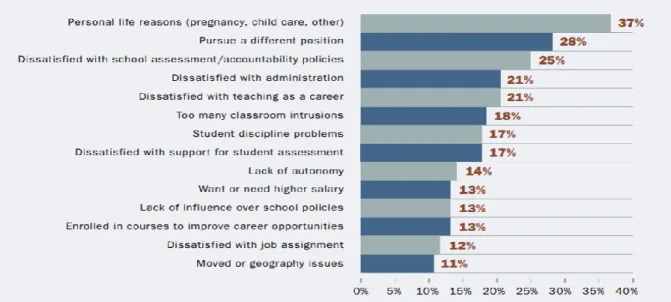
Figure 5. A frequency chart showing reasons why teachers leave. ... 21
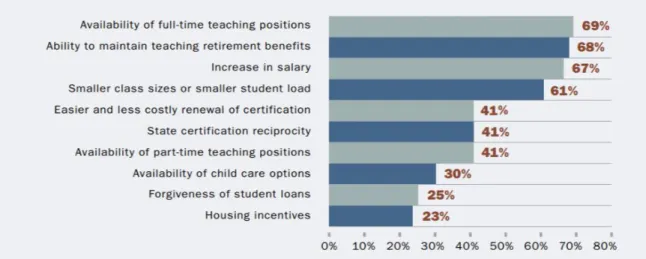
Figure 6. A frequency chart showing stated reasons that would bring leavers back.. ... 22
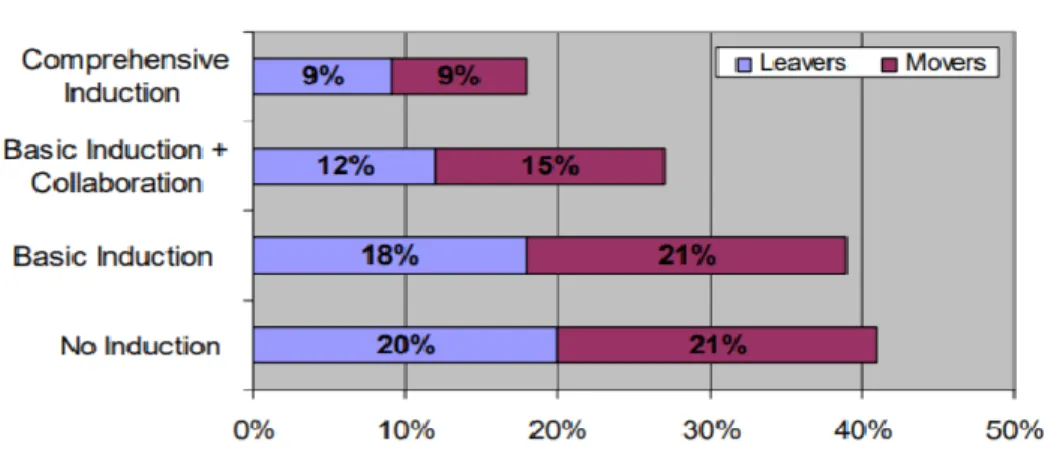
Figure 7. A bar graph showing comprehensive induction has the potential to cut new teacher turnover rates in half. ... 28
Figure 8. A line graph comparing beginning-of-year percentages to end-of-year percentages of mentors rating novice teachers as not at all prepared. ... 90
Figure 9. A line graph comparing beginning-of-year percentages versus end-of-year percentages of mentors rating novice teachers as somewhat prepared. ... 92
Figure 10. A line graph comparing beginning-of-year percentages versus end-of-year percentages of mentors rating novice teachers as well prepared. ... 93
Figure 11. A line graph comparing beginning-of-year percentages to end-of-year percentages of mentors rating novice teachers as very well prepared. ... 95
Chapter 1: Introduction
Education is the foundation of all other professions. Doctors, attorneys, engineers, pilots, servicemen and women, farmers, software designers, chief executive officers, and professional athletes have all received instruction, inspiration, or motivation from teachers. According to Börü (2018), motivation stimulates people to change their behavior and make an effort to sustain their endeavors to accomplish determined goals. Those who enter the education profession are motivated or inspired to teach for one reason or another. Some, however, are not motivated or inspired enough to stay, and they leave despite an increase in the need for teachers, an increase in the number of teachers leaving the classroom, and a decrease in the number of high school
graduates interested in becoming teachers (Podolsky, Kini, Bishop, & Darling-Hammond, 2016). Retaining effective teachers in the classroom is crucial to the success of school districts. Teachers strive to balance delivering content adequately and all other expectations of the job with managing, motivating, and connecting with all students. “When they do not experience success, nearly 50% of beginning teachers in the United States exit the profession within the first five years, while 17% do not finish their first full year of teaching” (Wong, 2004, as cited in Muller, Gorrow, & Fiala, 2011, p. 545), which negatively affects districts, schools, communities, the economy, the nation, and democracy.
Teacher Attrition
Teacher attrition is problematic and refers to the need to prevent good teachers from leaving the profession (Kelchtermans, 2017). Kutsyuruba, Walker, and Godden (2017) reported that teacher attrition crosses international borders: The United Kingdom, Australia, United States, and other countries have been affected. As Long et al. (2012) stated, “Early career
teacher attrition is a matter of economic, social, and educational concern in many countries” (p. 7). Avalos and Valenzuela (2016) stated,
Several pieces of research have reported on early-career teacher attrition in Francophone Belgium, Norway, Australia, England, and the US. There are also school principals that report low to medium levels of teacher stability in Brazil, Argentina, Peru, Paraguay, and Chile. (p. 279)
Furthermore, Reeves and Lowenhaupt (2016) indicated teacher attrition remains one of the most elusive problems in education systems (p. 176).
Teacher attrition is troublesome for several reasons. First, teacher stability is critical to providing high-quality education for all students. Second, it is costly to replace teachers once hired and trained (Campbell, 2017). Third, schools with economically disadvantaged students suffer more from teacher attrition than economically advantaged schools because these students depend on education to improve their quality of life (Bryk, Sebring, Allensworth, Luppescu, & Easton, 2010).
Support for New Teachers
Teaching can be rewarding and overwhelming. The national concern with quality education and teacher retention has led to efforts to increase support for novice teachers. In recent years, support, guidance, and orientation programs for new teachers has increased (Campbell, 2017) because the demands of teaching are strenuous for all teachers, especially those new to the profession. Kardos and Johnson (2010) indicated that it is important to
acknowledge and support new teachers because their initial experiences affect their perception of success and decision about whether or not they leave or remain in education. States and districts initiate varying levels of interventions to support new teachers, and one level of this support is induction programs.
Induction programs are defined as posthire in-service training programs completed during the first few years of employment to provide additional support and foster skill
acquisition among teachers and administrators (California County Superintendents Educational Services Association [CCSESA], 2016, p. 3). Induction programs are critical to the success of new teachers. Ingersoll and Strong (2011) indicated,
The theory behind induction holds that teaching is complex work, that pre-employment teacher preparation is rarely sufficient to provide all of the knowledge and skill necessary to successful teaching, and that a significant portion can be acquired only while on the job. (pp. 202–203)
Districts create various support programs to improve the performance and retention of beginning teachers (Ingersoll & Strong, 2011, p. 203). Teacher induction can refer to a variety of different types of activities for new teachers such as orientations sessions, developmental workshops, faculty collaborative periods, meetings with supervisors, extra classroom assistance, reduced workloads, and especially mentoring (Ingersoll & Strong, 2001, p. 203). Furthermore, the most effective induction programs include opportunities for novice teachers to observe expert teachers and receive feedback, mentoring, and coaching from experienced teachers who teach the same subject area or work on the same grade level as the novice teacher (Ingersoll, 2012, p. 50).
Mentoring. Many professions utilize mentoring to supportnew employees. “Mentoring is a common strategy for transformative professional, professional, personal, and organizational development. By creating a supportive culture, mentoring can provide the environment for transformative learning to occur” (Campbell, 2017, p. 9). Fletcher (2007) indicated mentoring, as
a two-way process, can be a learning tool for both the mentor and the mentee and can become a transformative relationship for all individuals involved.
Mentoring in education began in the 1980s, and school systems across the world continue to utilize mentoring to assist in solving problems leading to teacher turnover (Rowland, 2016, p.
7). A. Hobson and Malderez (2013) defined mentoring as a one-to-one relationship between a relatively inexperienced teacher (the mentee) and a relatively experienced one (the mentor) that supports the mentee’s learning and development as a teacher and integration into and acceptance by the cultures of the school and the profession (p. 2). A. Hobson and Malderez stated,
In the process of mentoring, a mentor may adopt a number of supportive roles or stances, including those of educator (which involves, for example, listening, coaching and
creating appropriate opportunities for the mentee’s professional learning), model (inspiring, demonstrating and making visible aspects of being a teacher), acculturator (helping the mentee into full membership of the particular professional culture), sponsor (“opening doors” and introducing the mentee to the “right people”), and provider of psychological support (providing the mentee with a safe place to release emotions or “let off steam”). (p. 2)
Although mentoring and induction programs have become widely available in the United States over the past two decades, there is variability in programs (Ingersoll, 2012, p. 51). In some instances, lower proportions of new teachers in low-income schools have official mentors during their first year than their counterparts who began teaching in high-income schools (Kardos & Johnson, 2010, p. 24). In other instances, mentoring provided opportunities to discuss issues or concerns, suggestions to improve practice, teaching challenges and solutions, and goals and ways to achieve them (Glazerman et al., 2010, p. 78) through both formal and informal collaboration among teachers (Akiba, 2012, p. 4).
Large Urban Districts
Teacher attrition affects communities. Teacher attrition causes instability, especially in urban areas, where it is difficult to replace high-quality teachers (TNTP, 2012). Low-performing high-needs schools, particularly in urban areas, experience higher rates of teacher turnover than higher-achieving suburban schools (Morettini, 2016, p. 259). When schools replace high-performing teachers, it is a challenge to recruit other teachers of the same caliber. Figure 1 depicts the likelihood of replacing a high performer with a teacher of similar quality (TNTP,
2012). According to Henson, Stephens, Hall, and McCampbell (2015), large urban districts continually search for teachers to replace the ones who left (the revolving door effect). As a result, it becomes expensive to the school districts trying to replace teachers each year.
Figure 1. A diagram showing the likelihood of replacing a high-performing teacher with a teacher of similar quality. Adapted from “The Irreplaceables: Understanding the Real Retention Crisis in America’s Urban Schools,” by TNTP, 2012,
(https://files.eric.ed.gov/fulltext/ED533959.pdf), p. 4. Copyright 2012 by TNTP. Adapted with permission.
Study Independent School District (SISD), a pseudonym, is a large urban school in Texas that serves roughly 44,000 students in 32 elementary schools, 11 middle schools, 4 high
schools, 1 early college high school, 1 career center, 2 alternative schools, and several
specialized campuses (Texas Education Agency, 2017). The student population is 35% African American, 30% Hispanic, 24% White, 2% Asian, and 9% other (Texas Education Agency, 2017). Federally connected students comprise 39% of the population; English language learners, 9%; special education students, 11%; and economically disadvantaged students, 55%. SISD strives to hire high-quality teachers and assigns all inexperienced teachers a mentor (SISD, 2018). However, the district hires roughly 400–500 teachers yearly; therefore, an evaluation of the mentoring program would provide the district with information regarding the effectiveness of the program from the novice teacher and mentor perspectives.
The demographics of SISD present unique challenges in regard to the attrition of teachers. On average, SISD hires 400 to 500 new teachers each year (Texas Education Agency, 2017). Understanding that a strong induction program is essential to help remedy the teacher rate, this district created an induction program. As noted by Kane and Francis (2013), “Induction programs, including orientation, mentoring and opportunities for professional development have become favored policy initiatives for many school systems internationally” (p. 364). In addition
to other layers of support through induction, SISD assigns mentors to help novice teachers succeed and meet the needs of a diverse student population.
Positionality Statement
Some of the teacher attrition in SISD is voluntary, and some of the attrition in SISD is involuntary. Existing research on support programs for novice teachers makes further research into the effectiveness of the SISD mentoring program and its impact on teacher attrition relevant and necessary.As the researcher conducting this study, I am disclosing my positionality as a district-level administrator in SISD. While my positionality as an insider benefits the study due to my understanding of the organization, my interest in the research’s benefit to the organization
requires that I disclose my position for transparency (Herr & Anderson, 2015).
Statement of the Problem
Teacher attrition rates are problematic and rising, especially in Texas. SISD is one of the 75 fastest-growing districts along a major highway corridor (Texas Education Agency, 2017) , and serves one of the largest armored military installations in the United States. Because of the connection to the military, SISD’s student mobility rate in 2016–2017 was approximately 28%, and the staff turnover rate was approximately 17%, which exceeded the state average by more than 1% (Texas Education Agency, 2017).
Concerns about teacher attrition are not new. Roughly one-third of U.S. teachers exit the profession within the first 3 years of teaching (Ingersoll, 2012, p. 49), and nearly 50% of new teachers leave after 5 years (Watlington, Shockley, Guglielmino, & Felsher, 2010, p. 23). SISD’s percentage of beginning teachers in 2016–2017 was approximately 11%, which exceeded the state average by 3%. Furthermore, SISD’s teacher turnover rate exceeded the state’s by 0.2– 3.1% in the 5-year period prior to this study (Texas Education Agency, 2017).
SISD developed a formal mentoring program to combat teacher attrition. The district assigns mentors to all novice teachers and offers other support to novice teachers through an induction program. Korver and Tillema (2014) indicated mentoring could be a highly powerful learning environment to promote learning because of its close and direct interaction between one who teaches and one who learns. SISD has never formally evaluated its mentoring program to determine effectiveness according to the perspective of past participants. The research would provide district administrators in SISD with insight from mentors and novice teachers on changes needed to improve the mentoring program, which could reduce the teacher attrition rates.
Purpose of the Study
The purpose of this evaluation of the mentoring program at SISD was to provide insight into mentors’ and novice teachers’ perceptions so district officials can use the research to determine the program’s effectiveness and consider changes that might aid in reducing teacher attrition. Through this action research, I determined how novice teachers and mentors in SISD perceived the effectiveness of the current mentoring program.
I interviewed participants on a voluntary basis, and they shared information about the formal mentoring program in SISD, mentoring activities in SISD, barriers to implementing the
formal mentoring program, and possible solutions to the barriers of implementation. Participants included novice teachers with less than 3 years teaching experience from the following groups: (a) elementary school teachers, (b) general education teachers, (c) special education teachers, and (d) male and female teachers. Other participants included mentor teachers from the following groups: (a) elementary school teachers, (b) general education teachers, (c) special education teachers, and (d) male and female teachers in the program. This population provided a rich source of data from varied perspectives.
The data collection for the study consisted of interviews of 10 novice teachers and 10 mentors in a neutral location. I developed an interview guide for the data collection phase. The questions specifically addressed the components of the mentoring program in SISD. The interviews were electronic interviews via GoToMeeting, which increased the flexibility for interviewees and lasted about 30 minutes. I recorded interviews to aid in transcription. The mentoring program in SISD deserved further study because until district administrators solicit input from current teachers and mentors, they cannot learn about suggestions to improve the program.
Research Questions
Q1. What impact does the SISD mentoring program have on novice teachers from the perspective of novice teachers?
Q2. What impact does the SISD mentoring program have on novice teachers from the perspective of mentors?
Definition of Key Terms
Formal mentoring. A process when a school, district, or state assigns a mentor to provide support to a novice teacher following a prescribed program or procedure (Desimone et al., 2014, p. 88).
Induction. Various programs of training and support that states, districts, or schools provide for beginning teachers (Ingersoll & Strong, 2011).
Informal mentoring. Mentoring not formally assigned by a set policy or practice. Novice teachers obtain mentoring from others; people whom the novice teacher chooses to go to for help (Desimone et al., 2014, p. 88).
Mentor. In this study, an experienced teacher who provided support to the novice teacher through the mentoring program. A mentor engages in mediation with mentees and provides coaching, guiding, advocacy, counseling, help, protection, feedback, and information that they would otherwise not have (Kutsyuruba, 2012, p. 238).
Mentoring. A one-to-one relationship between a relatively inexperienced teacher (mentee/novice) and a relatively experienced one (mentor) that aims to support the mentee’s learning and development as a teacher and integration into and acceptance by the cultures of the school and the profession (A. Hobson & Malderez, 2013, p. 2). Mentoring involves a nurturing relationship in which the mentor provides guidance, serves as a role model or advisor, and helps novices develop teaching behaviors and strategies (L. Hobson, Harris, Buckner-Manley, & Smith, 2012, p. 69).
Novice teacher. In this study, a beginning, inexperienced teacher who participated in the mentoring program within the past 3 years (Ingersoll & Strong, 2011).
Teacher attrition. The loss of teachers because of other career opportunities or other reasons (Parks, 2017).
Teacher retention. The extent to which various factors affect teachers remaining in the profession (Parks, 2017).
Summary
Teachers thrive when they are equipped to face the multifaceted challenges of today’s
learners. Students thrive when teachers are engaging and deliver a viable curriculum. When they do not feel supported, “more than one-third of teachers leave the profession within the first five years” (Callahan, 2016, p. 6). Teacher attrition in SISD is a concern because its percentage of
beginning teachers in 2016–2017 was approximately 11%, which exceeded the state average by 3%. Furthermore, SISD’s teacher turnover rate exceeded the state’s by 0.2–3.1% over the past 5 years (Texas Education Agency, 2017). Providing a more rigorous induction experience for novice teachers in SISD could improve teacher attrition. Gathering information from novice and mentor teachers about the mentoring program provides district officials with suggestions on ways to create a more robust mentoring program for inexperienced teachers in SISD.
Chapter 2 is a literature review. It provides a historical perspective of teacher attrition, the economic implications associated with hiring new teachers, and the various forms of support that districts implement to help new teachers. In Chapter 2, I also review SISD’s induction program. Furthermore, I discuss the role mentors play in the development of novice teachers and provide critical details about the components of the mentoring program in SISD.
Chapter 2: Literature Review
Teacher attrition rates among beginning teachers is a persistent problem, especially in SISD, a large urban school district in central Texas. SISD is one of the 75 fastest-growing districts along a major highway, serving a large military installation. It had more than 50% of its student population classified as economically disadvantaged and had rising staff mobility rates (SISD, 2018). Over the past 5 years, SISD’s teacher turnover rate exceeded the state’s by between 0.2% and 3.1% (Texas Education Agency, 2017). SISD designed a mentoring program to support novice teachers, but the district has never formally evaluated the mentoring program. Evaluating the program from the perspectives of novice teachers and mentors provides district officials with information about the overall effectiveness and helps determine which components of the mentoring program need adjustments.
SISD attempts to combat teacher attrition by offering support through its induction program. One key component of the SISD induction program is mentoring. The purpose of this action research study was to evaluate SISD’s mentoring program from the perspective of past participants. The study provides district administrators with insight from mentors and novice teachers on the effectiveness of the mentoring program and also recommends changes to improve the program, which could reduce the district’s teacher attrition woes.
The distance-learning portal of theAbilene Christian University (ACU) library provided most of the resources for this study. Searches of scholarly articles in the library databases included the keywords effects of mentoring, evaluating mentoring programs, formal mentoring,
induction, informal mentoring, mentor(s), mentoring, mentoring new teachers, mentoring programs, mentoring relationships, supporting new teachers, teacher attrition, teacher retention,and teacher turnover. A thorough search was conducted of OneSearch, ProQuest
Dissertations and Theses, and ScienceDirect for scholarly articles, research reports, and texts related to the key terms. References within the identifiedscholarly articles provided access to additional research. I collected relevant work from prominent researchers in the field on teacher attrition, why teachers leave the profession and what might bring them back, and various forms of support districts have created to support new teachers, particularly induction and mentoring programs. I focused on the mentoring program in SISD, which district officials created to help novice teachers confront the many challenges they face in education, especially during the first few years of employment. Most articles were less than 10 years old, except those needed to provide historical context.
This chapter is organized as follows: theoretical framework, history of teacher attrition, and how it affects the profession in the 21st century. It includes existing studies on beginning teacher attrition, why teachers leave the profession, what might bring teachers back into the profession, and the celebrations and concerns about induction programs. Because SISD has never formally evaluated the mentoring program, the chapter highlights the need for this proposed study. The study’s method of research is discussed at length in Chapter 3.
Theoretical Framework
The first component of the theoretical framework for this study focuses on Maslow’s
hierarchy of needs. Maslow (1943, 1954) postulated that people’s motivations are driven by needs, and some needs are more important than others (McLeod, 2018, p. 1). Initially, Maslow (1943) stated that the lowest level of needs must be met before progressing on to meet higher-level needs. Later, Maslow clarified that satisfying a need was not an “all-or-none” phenomenon and explained that earlier writings might have given “the false impression that a need must be satisfied 100% before the next need emerges” (Maslow, 1987, p. 69).
Maslow’s (1943) original hierarchy was a five-stage model often divided into deficiency
needs (lowest four tiers) and being (growth) needs (highest tier), as shown in Figure 2 (McLeod, 2018). When deprived, deficiency needs arise, which motivates people. The longer those needs are not met, one’s motivation to meet those needs increases (McLeod, 2018). For example, a
person gets hungrier the longer she goes without food. When she eats, that need is satisfied, and she can then move toward meeting the next set of needs she has yet to satisfy. Being (growth) needs, however, do not stem from a lack of something but rather from a desire to grow as a person (McLeod, 2018, p. 2). Once being (growth) needs have been met, one may be able to reach what Maslow (1943) called self-actualization—the ultimate level for his hierarchy of needs (McLeod, 2018, p. 2).
Figure 2. A diagram illustratingMaslow’s hierarchy of needs. Adapted from “Maslow’s
Hierarchy of Needs,” by S. McLeod, 2018 (https://www.simplypsychology.org/maslow.html). In the public domain.
The two lowest tiers on the hierarchy (physiological needs and safety needs) refer to basic needs, as shown in Figure 3. Physiological needs, the lowest tier on the hierarchy, are the biological requirements for human survival (e.g., air, water, food, shelter, sleep, clothing, and
reproduction). Safety needs are the second tier on the hierarchy. Maslow, Frager, and Cox (1970) indicated humans have a desire for their needs to be satisfied, including security, order, and stability. Basic needs on the hierarchy relate to teacher attrition because teachers seek jobs to earn wages and provide food and shelter for themselves and their families. Furthermore, educators cannot thrive when they do not feel safe.
Figure 3. A second diagram illustrating Maslow’s hierarchy of needs. Adapted from “Maslow’s Hierarchy of Needs,” by S. McLeod, 2018 (https://www.simplypsychology.org/maslow.html). In the public domain.
Teachers not feeling safe in schools is understudied and has reached a significant level (Reddy, Espelage, Andermann, Kanrich, & McMahon, 2018). Most scholars view school
violence and teacher victimization specifically as a systematic phenomenon (e.g., Andermann et al., 2018; Espelage et al., 2013; McMahon et al., 2014; Reddy et al., 2013). The 2014 Indicators of School Crime and Safety Report (Reddy et al., 2018) indicated that in 2011–2012, students
threatened approximately 9% of kindergarten through 12th-grade educators and
paraprofessionals (352,000) in the United States, an increase from 2003–2004 (252,800) and 2007–2008 (289,900; Zhang, Musu-Gillette, Morgan, & Robers, 2015). Unfortunately, teachers are concerned about their safety in schools. When teachers feel unsafe, attendance wains, and they do not perform adequately, which could ultimately lead to increased teacher attrition rates.
The third and fourth tiers on the hierarchy (belongingness and love and esteem needs) refer to psychological needs in Figure 3. Belongingness and love needs, the third tier on the hierarchy, are about connecting with others: relationships, belonging to a group, caring,
companionship, recognition, friendliness, and appreciation. Esteem needs, the fourth tier on the hierarchy, are about feelings of accomplishment that Maslow classified into two categories: esteem for oneself and the desire for reputation or respect from others (e.g., status, prestige; McLeod, 2018). Psychological needs relate to teacher attrition because “professionals are more
likely to remain in their profession if they are given support and shown gratitude” (Blasé, Blasé, & Du, 2008). Novice teachers need ongoing feedback, support, and reassurance from colleagues. Brock and Grady (2001) explained new teachers are more likely to have a positive teaching experience when they work in structured environments and faculty members collaborate well. However, if novice teachers start their careers in an unstructured environment, they are more likely to experience a less positive climate and even isolation (Lambeth, 2012, p. 1), which could lead to attrition.
The fifth tier on the hierarchy (self-actualization) refers to self-fulfillment needs in Figure 3. Self-actualization needs relate to the desire “to become everything one is capable of
becoming” (Maslow, 1987, p. 64). According to Maslow (1962), individuals achieve
world entirely for what it is and there are feelings of euphoria, joy, and wonder. Maslow (1943) stated,
Self-actualization refers to the person’s desire for self-fulfillment, namely, to the tendency for him to become actualized in what he is potentially. The specific form that these needs will take will vary greatly from person to person. In one individual it may take the form of the desire to be an ideal mother, in another it may be expressed
athletically, and in still another, it may be expressed in painting pictures or in inventions. (pp. 382–383)
I used Maslow’s (1943) theory for my research because it relates to human needs and
how needs affect motivations. Maslow (1943) made significant contributions to education, especially since he considered the physical, emotional, social, and intellectual qualities of individuals and their impact on learning. Maslow et al. (1970) suggested when teachers meet students’ basic needs and show them that they are valued and respected in the classroom, they can reach their full potential; however, the same holds for novice teachers. When novice teachers’ basic needs are met, they receive ongoing support, and they learn in collaborative
environments, they are more likely to remain in the profession. However, when novice teachers’ basic needs go unmet, they can become disenfranchised and leave the profession, which causes teacher attrition rates to increase.
The second theoretical framework for this study focuses on Kirby and Grissmer’s (1993)
teacher attrition theory. The theory “helps explain what patterns one would expect in teacher attrition and turnover, and why some teacher attrition may be inevitable” (Kirby & Grissmer, 1993, p. 6). Kirby and Grissmer (1993) formulated four possibilities for teacher attrition. The first relates to the human capital approach. The fundamental tenet of the human capital theory of occupational choice is that “individuals assess the net monetary and nonmonetary benefits from different occupations and make systematic decisions throughout their career to enter, stay, or leave an occupation” (Kirby & Grissmer, 1993, p. 10).
Monetary benefits (income in the profession, promotion opportunities, value of benefits, etc.) and nonmonetary benefits (working conditions, compatibility of hours and schedules with family and leisure time, support of peers and leaders, learning attitudes of students, and parental support, etc.) contribute to an individual’s decision to remain in or leave a job (Kirby &
Grissmer, 1993). Employees accumulate two types of capital: specific and generic. Employees can transfer generic capital to other occupations easily, whereas specific capital is relevant to the current position (Kirby & Grissmer, 1993). Specific capital (home ownership, specialized
knowledge, seniority, and investing in the retirement system) affects an individual’s decision to
remain in a profession more than generic capital because the longer the individual stays in a job, the more human capital he accumulates. Kirby and Grissmer stated,
This is one of the main reasons why moves are much more likely early in the career rather than mid-career because the greater amounts of specific capital that one
accumulates with age or experiences tend to act as barriers to leaving the occupation. (pp. 10–11)
Kirby and Grissmer’s (1993) second possibility for teacher attrition postulates that early
attrition could result from both leaders and novice teachers gaining new information about the other and the costs and benefits of the position. One can portray a job using two classes of attributes: what potential hires can observe without actually experiencing the job (inspection characteristics) and what is evident only after experience on the job (specific characteristics; Kirby & Grissmer, 1993, p. 12). This possibility relates to teacher attrition because what teachers experience in the classroom differs from what they learn in teacher preparation programs.
Novice teachers must quickly learn how to balance teaching with dealing with students, parents, administrators, and colleagues. Additionally, the amount of required juggling of planning time, implementing curriculum and instruction, determining curriculum pacing, administering formal and informal assessments, motivating students to achieve, and enforcing student discipline
(Ingersoll & Strong, 2011; Roehrig, Bohn, Turner, & Presley, 2008) tends to overwhelm novice teachers, which causes some to leave the profession.
Kirby and Grissmer’s (1993) third possibility for teacher attrition connects to human
capital and postulates that teachers initially decide to accept a teaching job based on the existing structure of their family and choice of residential location. A change in either of these statuses will force the teacher to reevaluate the decision and could affect attrition rates. “The likelihood of changes in family status or residence tends to be fairly high for individuals in the early career stage” (Kirby & Grissmer, 1993, p. 10).
Kirby and Grissmer’s (1993) fourth possibility for teacher attrition is called involuntary
attrition because it is initiated by the employer or due to circumstances beyond the teacher’s control such as illness, death, reduction in force, and so on. Because this research was about teachers voluntarily choosing to leave the profession, involuntary attrition would not have been appropriate to include.
Teacher Attrition
Teacher attrition is the loss of teachers who leave the field of teaching or transfer to other schools in search of improved working conditions (Alliance for Excellent Education [AEE], 2014) and in this analysis was the extent to which teachers gradually leave the teaching force for other career opportunities or other reasons. Concerns about teacher attrition are not new.
Research in the 1970s and early 1980s indicated teacher attrition was a problem (Croasmun, Hampton, & Herrmann, 1999, p. 1). Croasmun et al. (1999) further contended,
Charters (1970), Mark and Anderson (1978), and Murnane (1981) recorded that 25% of those with teaching certificates never began teaching or left teaching within a few years. Murnane (1981) noted that in the early 1970's there was a .33 probability that a first-year teacher would leave the profession, whereas in the late 1960s the study predicted the leave rate at a .16 probability in the first three years. (p. 2)
Furthermore, the 1987–1988 Schools and Staffing Survey and 1988–1989 Teacher Follow-up Survey indicated attrition rates for the teaching profession were 5.6% in public schools and 12.7% in private schools (Croasmun et al., 1999, p. 2).
Attrition rates did not improve in the 1990s because the 1990–1991 Schools and Staffing Survey indicated jobs available because of attrition in special education were 49.2%, jobs available because of attrition in general education were 75.8%, and expansion of the teaching force only accounted for 19.5% of available teaching jobs (Boe, Cook, Bobbitt, & Weber, 1995). Croasmun et al. (1999) reported first-year teachers were 2.5 times more likely to leave the profession than their more experienced counterparts, 40–50% of beginning teachers would leave during the first 7 years of their career, and in excess of two-thirds of those would do so in the first 4 years of teaching.
The magnitude of teachers leaving the profession in the 21st century is still problematic for school leaders and researchers. Figure 4 depicts the teacher attrition rates in the early 2000s (National Commission on Teaching and America’s Future, 2003).
Figure 4. A bar graph showing beginning teacher attrition is a serious problem. Reprinted from
No Dream Denied: A Pledge to America’s Children, by the National Commission on Teaching
and America’s Future, 2003, p. 10. Copyright 2008 by the American Psychological Association. Goldring, Taie, and Riddles (2014) defined “stayers” as teachers who remained at the same school, “movers” as teachers who moved to a different school, and “leavers” as teachers
who left the profession. Of the 3,377,900 public school teachers surveyed in 2011–2012, 84% remained at the same school (stayers), 8% moved to a different school (movers), and 8% left the profession (leavers; Goldring et al., 2014). In 2016–2017 in the state of Texas, the staff turnover rate was 16.4%. Unfortunately, SISD’s staff turnover rate was 17.5%, which exceeded the state by 1.1% (Texas Education Agency, 2017).
As shown in Figure 5, Podolsky et al. (2016) identified various reasons why teachers leave the profession, the most significant reasons being personal life experiences such as pregnancy and childcare and the desire to pursue a different position. Teacher attrition has serious implications for schools, students, and the country’s future because it affects more than half a million teachers annually (Suriano, Ohlson, Norton, & Durham, 2018, p. 127). The
“teacher is the change agent, who plays a fundamental role in nation-building” (Manzar-Abbass,
collect data on why teachers left the profession but also consider identifying creative ways to entice teachers to return.
Figure 5. A frequency chart showing reasons why teachers leave. Adapted from Solving the Teacher Shortage: How to Attract and Retain Excellent Educators, by Podolsky et al., 2016 (retrieved from https://learningpolicyinstitute.org/sites/default/files/product-files/
Solving_Teacher_Shortage_Attract_Retain_Educators_BRIEF.pdf). CC BY-NC 4.0. Figure 6 identifies the conditions under which those who left would consider before returning to the profession. The main reasons are the availability of a full-time teaching position and the ability to retain teaching retirement benefits. The cost of teacher attrition grows each year. In the early 2000s, the National Commission on Teaching and America’s Future (2003)
estimated the United States spent $7.34 billion to hire, recruit, and train replacement teachers. Years later, the cost has increased: “For example, one study found that replacing teachers who leave—which can cost in today’s dollars as much as $20,000 per teacher in a large urban district—produces a national price tag of $8.5 billion a year” (Podolsky et al., 2016, p. 1).
not immune to the epidemic (DiSchiano, 2017). According to a report conducted by the AEE (2014), Texas teacher attrition is among the most expensive in the nation, with costs soaring above $235 million statewide (Callahan, 2016, p. 6). While SISD had not identified the cost for replacing teachers, the cost for recruiting exceeds $100,000, the cost for new teacher induction exceeds $10,000, and the cost for professional development for new teachers exceeds $100,000 (SISD, 2018).
Figure 6. A frequency chart showing stated reasons that would bring leavers back. Adapted from
Solving the Teacher Shortage: How to Attract and Retain Excellent Educators, by Podolsky et al., 2016 (retrieved from
https://learningpolicyinstitute.org/sites/default/files/product-files/Solving_Teacher_Shortage
_Attract_Retain_Educators_BRIEF.pdf). CC BY-NC 4.0.
Solutions to Teacher Attrition
States and districts have utilized two approaches to help overcome the possibility of teacher staffing shortages: recruiting novice teachers from alternative licensing programs and through emergency teaching licensure programs (e.g., Teach for America) and mentoring and
induction programs to reduce the rates at which teachers leave the profession, especially early in their new careers (Kang & Berliner, 2012, p. 268).
The intent of the alternative route to teacher certification was to address teacher shortages while simultaneously ensuring a high-quality teacher for every student (Lewis-Spector, 2016). Alternative routes to teacher certification allow individuals with a bachelor’s degree to teach without going through a college campus-based teacher education program (Alternative Teaching Certification, 2018, para. 4). According to Feistritzer (2011) from the National Center for
Education Information more than 250,000 teachers have certified through alternative routes since the mid-1980s, when alternative programs started (Alternative Certification, 2018, para. 5). By 2006, nearly 19% of individuals completing teacher preparation programs did so through
alternative certification programs (Lewis-Spector, 2016). Furthermore, by 2010, “nearly 40% of new hires nationwide entered teaching through the alternate route” (Feistritzer, 2011, p. 22).
The intent of comprehensive induction programs was to help beginning teachers cope with the intellectual and emotional complexity of classroom instruction (Kang & Berliner, 2012, p. 269). The past two decades revealed a large increase in the number of states, districts, and schools offering support, guidance, and orientation programs (Ingersoll, 2012, p. 51). The percentage of beginning teachers who report that they participated in some type of induction program in their first year of teaching has steadily increased in recent decades—from about 50% in 1990 to 91% by 2008 (Ingersoll, 2012, pp. 49–50). In a quantitative study, Smith and Ingersoll (2004) considered many variables that might influence induction program results, such as
teacher and school characteristics, and concluded that induction programs have some positive influence on beginning teachers’ retention, especially those that used mentors from the same
Induction Programs
The structure of the school isolates teachers from colleagues, which makes it difficult for novice teachers to feel success. Ingersoll (2012) indicated,
This isolation can be especially difficult for newcomers, who, upon accepting a position in a school, are frequently left to succeed or fail on their own within the confines of their classrooms—often likened to a “lost at sea” or “sink or swim” experience. (p. 47) New teachers want more than a job: They want to experience success, contribute to a group, and make a difference (Wong, 2004, p. 50); therefore, it is incumbent upon leaders to provide beginning teachers with programs that meet their collective and individual learning needs. According to Wong (2004), “Induction is a process—a comprehensive, coherent, and sustained professional development process—that is organized by a school district to train, support, and retain new teachers and seamlessly progresses them into a lifelong learning program” (p. 42).
Induction programs were created to help new teachers cope with the practicalities of teaching, of managing groups of students, and of adjusting to the school environment (Smith & Ingersoll, 2004, p. 706). Participation in teacher induction programs has increased substantially over the past two decades (Ingersoll, 2012). Before 1980, one state mandated an induction program (Feiman-Nemser, Carver, Schwille, & Yusko, 1999). Roughly half of the new teachers participated in induction in the 1990–1991 academic year (Ingersoll, 2012); in 2003, 80% of beginning teachers in the United States engaged in some form of a teacher induction program, and the number of beginning teachers in the United States participating in induction increased to more than 90% by 2007–2008 (Smith & Ingersoll, 2004). Barlin, Osta, Burn, and Goldrick (2012) stated,
As of 2010–2011, 27 states required all new teachers to participate in some form of induction or mentorship program, 15 states had established formal induction program standards, and 11 states required induction and mentorship for all first- and second-year teachers. (p. 7)
Howe (2006) indicated several multinational studies (Bracey, 2003; Britton, Raizen, Paine, & Huntley, 2000; Moskowitz & Stephens, 1997) underscored the importance of providing effective teacher induction to national agendas. Despite a growing knowledge base of effective induction activities, several induction mandates often lack human resources and materials necessary to support effective teacher induction programs (Himsel, 2017). According to the New Teacher Center (2014), only 18 states offered some form of funding dedicated to the purpose of developing, implementing, or sustaining teacher induction programs.
Induction programs evolved because of the increase in the number of beginning teachers in public schools and focus on the instructional, professional, and personal needs of the
beginning teacher (Joerger & Bremer, 2001, p. 4). Huling-Austin (1990) indicated effective teacher induction programs have five major goals:
• to improve teaching performance,
• to increase the retention of promising teachers,
• to promote the personal and professional well-being of beginning teachers by improving their attitudes towards themselves and the profession,
• to satisfy mandated requirements related to induction and certification, and • to transmit the culture of the system. (p. 539)
The National Education Association (NEA) Foundation listed the basic orientation model, instructional practice model, and the school transformational model as the three types of induction models outlined by teacher preparation expert Barry Sweeny, and all three models vary in their intensity and incorporation of program components (CCSESA, 2016). The basic
orientation model introduces teachers to general district policies, and it may provide professional development or a mentor to the novice teacher. The instructional practice model links induction with local and state teaching standards, using skilled mentors to assist the novice teacher. It may last for 2 or more years and provide teachers with continued opportunities for in-depth
professional learning. The school transformational model is relatively uncommon because it “weaves attributes of both the orientation and instructional practice models into a system promoting continuous improvement in student learning” (CCSESA, 2016, p. 6). Not only do
novice teachers engage in school reform with this model, but their professional growth connects to student learning goals and teachers work collaboratively in all aspects of their job (“Using Data to Improve Teacher Induction Programs,” 2002).
Curran and Goldrick (2002) indicated components of effective induction programs and policies include promoting universal participation for new teachers, using experienced teachers as mentors, mentor training, release time or reduced teaching loads for beginning teachers and mentors, stable earmarking funding, providing clear standards, and having a subject-specific focus (p. 10). Wong (2004) explained that the most successful induction programs, however, include:
• An initial four or five days of training before school begins • Ongoing systematic training over the course of two or three years
• Strong administrative participation in, and support of, the overall induction process • A mentoring component
• Study groups in which new teachers network and support one another • A structure for modeling effective teaching during in-service and mentoring • Numerous opportunities for inductees to visit demonstration classrooms taught by
successful veteran teachers. (p. 48)
The goal of induction programs is to improve the performance and retention of beginning teachers—that is, to both enhance and prevent the loss of teachers’ human capital with the ultimate aim of improving the growth and learning of students (Ingersoll & Strong, 2011, p. 203). Induction theorists also identified teacher socialization, adjustment, development, and assessment as objectives and emphases of induction programs (Feiman-Nemser, 2001; Ganser, 2002), but induction programs vary. Some induction programs are designed to help newcomers
develop into successful teachers, and others are designed to identify those who will not (Ingersoll & Strong, 2011).
Some researchers expressed opposing views about the correlation between induction programs and teacher attrition. Glazerman et al. (2010) reported on a 2004 study of a large-scale evaluation of comprehensive teacher induction to determine whether augmenting the services districts usually provide to beginning teachers with a more comprehensive program improves teacher and student outcomes. On the one hand, Glazerman et al. (2010) indicated
comprehensive induction programs did not show any positive impact on classroom practices, student achievement, or teacher retention in the first 2 years. On the other hand, Smith and Ingersoll (2004) examined data from the Schools and Staffing Survey (SASS) from the 1990s to determine attrition/retention trends, concluding that induction programs have some positive influence on beginning teachers’ retention, especially those who use mentors from the same field
and those that participate in collective induction activities.
Induction programs provided professional development and other ongoing support structures for novice teachers, but unfortunately, 100% of teachers do not participate in such programs. Figure 7 compares the turnover percentages of beginning teachers who did or did not participate in induction.
Figure 7. A bar graph showing comprehensive induction has the potential to cut new teacher turnover rates in half. Reprinted from “What Are the Effects of Induction and Mentoring on Beginning Teacher Turnover?” by T. Smith and R. Ingersoll, 2004, American Educational Research Journal, 41, p. 705. Copyright 2004 by American Educational Research Journal. Reprinted with permission.
Without carefully thought-out professional development programs, school districts will not have effective teachers who can produce student achievement results (Wong, 2004, p. 47). Leaders must nurture and support novice teachers, and induction programs are a way for districts to send a message to teachers that they are valued, needed, and worthy of investing in so they can succeed and stay (Breaux & Wong, 2003).
Induction in SISD
Comprehensive induction programs provide teachers opportunities to succeed. Effective teacher induction programs vary according to cultural, social, and economic contexts of states and districts. Podolsky et al. (2016) stated,
The most effective induction programs include mentoring, coaching, and feedback from experienced teachers in the same subject area or grade level as the novice teacher; the opportunity for novice teachers to observe expert teachers; orientation sessions, retreats, and seminars for novice teachers; and reduced workloads and extra classroom assistance for novice teachers. (p. 6)
SISD’s induction began with an initial orientation called District Awareness. All new teachers, professional staff, and new administrators, mentors, campus instructional specialists (campus
mentor coordinators), principals, and district officials gathered to welcome new employees to the district and explained how all schools and departments work together to support improving student achievement. The superintendent shared information about the history of the district, usually recognizing a retired teacher who continued to influence the community; a keynote speaker encouraged new employees; and Teachers of the Year provided words of encouragement (SISD, 2018).
Teachers then reported to professional development sessions according to grade level or subject area. District and campus instructional specialists and teacher leaders facilitated learning sessions on the importance of relationship building, effective classroom management strategies, and legal requirements of special programs such as Special Education, 504, Response to
Intervention (RtI), Language Proficiency Assessment Committee (LPAC), and so on. Pedagogical sessions included information on research-based instructional strategies, state standards (Texas Essential Knowledge and Skills [TEKS]), and the district’s curriculum
management system.
SISD conducted exit conferences with employees who separated from the district, and teachers indicated the need for feedback and intervention on a routine basis to help them
understand the intricacies of teaching. Opportunities for experts and neophytes to learn together in a supportive environment promoting time for collaboration, reflection, and gradual
acculturation into the profession of teaching are common attributes among successful induction programs (Howe, 2006, p. 288). A good mentor can increase a mentee’s chances for success by helping the mentee set and attain goals, introducing him or her to career advancement
(Caldwell-Freeman, 2003, as cited in Lipscomb & An, 2010, p. 1002); therefore, mentoring was a critical component of SISD’s induction program (SISD, 2018).
Mentoring
Mentoring dates back to many centuries. The term “mentor” came from the mythological character, Mentor, who King Odysseus entrusted with the responsibility of guiding and teaching his son, Telemachus, to become a competent successor to the kingdom (Sanfey, Hollands, & Gantt, 2013, p. 214). Socrates and Plato, and Plato and Aristotle were other notable mentoring relationships that defined how the support from the mentor set the example and guided the protégé to develop into a successful individual in his or her respect (Campbell, 2017).
Education incorporated mentoring in the United States in the mid-1800s (Odell &
Huling, 2000). The model evolved in the 1920s when most states required teacher education and underwent significant changes in the 1950s. According to Odell and Huling (2000), the practice of mentoring beginning teachers emerged in the 1980s and continues until today. Over the past two decades, mentoring has become the dominant form of teacher induction (Certo & Fox, 2002).
Many organizations implemented mentoring programs to support new employees, but educators, especially novice teachers, need ongoing support to meet the demands of the profession. In some professions, new employees were often interns in training and engaged in limited experiences under expert supervision. In education, however, new teachers had full teaching responsibilities from the first day of employment, must attend classes in their spare time, and often have limited expert supervision (Croasmun et al., 1999).
Veteran teachers mentored beginning teachers. Korver and Tillema (2014) indicated mentoring could be a highly influential learning environment to promote learning because of its
close and direct interaction between one who “teaches” and one who “learns.”Mentoring was
the personal guidance provided, usually by seasoned veterans, to beginning teachers in schools (Ingersoll & Strong, 2011, p. 203), and have become a dominant form of teacher induction (Britton, Paine, Raizen, & Pimm, 2003; Fideler & Haskelkorn, 1999; A. Hobson, Ashby, Malderez, & Tomlinson, 2009; Strong, 2009, as cited in Ingersoll & Strong, 2011, p. 203). Mentoring programs vary in duration and intensity from highly structured programs with frequent meetings over multiple years to one meeting between the protégé and mentor at the beginning of the school year (Campbell, 2017, p. 20). SISD’s mentoring program did not maintain formal mentor/protégé relationships over several years, but it was structured, focused on professional development, and grounded in collaboration (SISD, 2018).
Mentoring in SISD
SISD attempted to support new teachers and combat teacher attrition by assigning mentors to novice teachers through its induction program. Principals assigned mentors to all inexperienced teachers and “buddies” to experienced teachers who were new to the district in an
attempt to ensure teachers received ongoing job-embedded support (SISD, 2018). New teacher mentoring involves facilitation of instructional improvement wherein a mentor works with a novice, or less experienced teacher, cooperatively and in a nonevaluative manner to improve instruction (Kutsyuruba, 2012). Mentors are critical to the success of the mentee, and the fundamental responsibility of a good mentor is to help the mentee make sense of his or her own experiences (Lipscomb & An, 2010).
SISD officials designed its mentoring program to help eliminate feelings of isolation and struggles with transitions through a partnership with an experienced colleague that provided
guidance and support (SISD, 2018). Principals collaborated with campus instructional specialists in SISD to select mentors using the following criteria:
• Demonstrates leadership qualities
• Easily establishes relationships with students and teachers • Has a clear understanding of the district’s direction • Is interested in what is best for kids
• Is committed to mentoring and spending time to help new teachers • Is a good communicator, collaborative and collegial
• Learns continuously. (SISD, 2018)
First-time SISD mentors attended trainings titled “Initial Mentor Training” and
“Leadership for Mentors.” Mentors attended both training sessions and began the mentor-protégé
relationship as soon as possible. Returning mentors attended a “Mentor Networking” training every other year to remain abreast of current trends, and in both cases, mentors were required to submit verification of attendance to the campus mentor coordinator to receive the stipend.
Mentoring relationships are unique to the needs and personality of the mentor and protégé. One of the most important aspects to the success of the relationship is the first meeting between the mentor and the protégé, which sets the tone for the entire relationship to follow. In this first meeting, both parties take the time to get to know each other, share information about their backgrounds, and establish a foundation of trust (Lipscomb & An, 2010). Before the first day of school, mentors and protégés complete and discuss the mentor/first-year teacher
questionnaire. Mentors also engage protégés in conversations about who's who on campus, things to expect on the first day of school, how to address parents, planning for substitutes, tasks to complete on the daily checklist, and emergency plans.
During the first 2 months of school, mentors observe the protégé's classroom and
protégés observe the mentor’s classroom. In subsequent months, mentors and protégés alternate
preobservation conference. The conference is for both to discuss characteristics of effective classroom management, lesson plans, differentiation techniques, how to praise appropriate behavior and address inappropriate behavior, and plans for interventions. Protégés follow the mentor’s example and provide the same information to the mentor during the preobservation
conference. After observations, mentors and protégés engage in collegial conversations about celebrations and areas of improvement needed to strengthen instructional delivery.
Mentor challenges. Mentoring is beneficial to both the mentor and the protégé, but it also has its challenges. If a grade level has several new teachers and one returning teacher, the burden of mentoring more than one beginning teacher can be challenging. Not feeling confident and competent enough in the mentoring role or lacking significant teaching experience can also be challenging for a mentor (Jaspers, Meijer, Prins, & Wubbels, 2014). Remaining
nonevaluative, not having the same common planning time or enough time to meet during the school day, and how carefully mentors are selected (voluntary or semimandatory assignment) are issues for programs (Ingersoll & Strong, 2011).
Novice teacher challenges. Beginning teachers enter the profession with high hopes of positively influencing every student with whom they interact. Too often, beginning teachers become quickly overwhelmed by the long hours, challenges with classroom management and varied learning abilities of students, excessive paperwork, demanding parents, and increasing accountability standards. Sometimes they feel unprepared and unsupported to teach in
challenging situations (AEE, 2008), which leads to teacher attrition. Therefore, continued research on the type of support provided during the induction phase is necessary to help novice teachers stay and continue to grow.
Summary
Teacher attrition is problematic, and SISD attempts to reduce teacher shortages with its induction program. Teacher turnover (30%) is higher than for other professionals, such as pharmacists (14%), engineers (6%), nurses (19%), lawyers (19%), architects (23%), and police (28%; Ingersoll & Perda, 2014; Riggs, 2013 as cited in Rumschlag, 2017, p. 22). Unfortunately, students pay the highest price for teacher turnover because beginning teachers are, on average, less effective than more experienced teachers (Bressman, Winter, & Efron, 2018).
Teacher turnover negatively affects a school’s teaching force. If the goal is to retain new
teachers, districts must introduce them to the profession humanely in ways that engender self-esteem, competence, collegiality, and professional stature (Shulman & Colbert, 1989). SISD provides multiple layers of support to beginning teachers, but is it enough? Sparks et al. (2017) indicated district leaders should carefully evaluate the current mentoring program for perceived satisfaction and effectiveness when developing and improving a program. Because SISD has never formally evaluated its mentoring program to determine effectiveness according to the perspective of past participants, this research is necessary. The district needs insight from participants on changes needed to improve the mentoring program, which could reduce the teacher turnover rate in SISD.
Chapter 3: Research Method
Teacher attrition rates are problematic and rising. Approximately one-third of U.S. teachers exit the profession within the first 3 years of teaching, and nearly 50% of new teachers leave after 5 years (Watlington et al., 2010). SISD, one of the 75 fastest-growing districts in Texas along a major highway corridor (Texas Education Agency, 2017), is experiencing the same problems with teacher attrition as other districts around the United States and in other countries. SISD’s percentage of beginning teachers in 2016–2017 was 10.9%, which exceeded the state average by 3.1% (Texas Education Agency, 2017).
SISD (2018) attempts to combat teacher attrition by assigning mentors to novice
teachers; yet the district hires 400–500 new teachers each year and has never formally evaluated the mentoring program. The purpose of this proposed qualitative study was to evaluate the SISD mentoring program so district officials could use the research to determine which components meet the needs of novice teachers and which need revisions to aid in reducing teacher attrition.
In this chapter, I explain how through this research I evaluate the effectiveness of the mentoring program in SISD according to the perspective of novice and mentor teachers. The central research questions that guided the research were as follows: (a) What impact does the SISD mentoring program have on novice teachers from the perspective of novice teachers? and (b) What impact does the SISD mentoring program have on novice teachers from the perspective of mentors? This chapter includes the following subsections: (a) research design and method, (b) population, (c) sample, (d) materials/instruments, (e) data collection and analysis procedures, (f) ethical considerations, (g) assumptions, (h) limitations, (i) delimitations, and (j) summary.