THE “WATER-SPECIFIC PPP RISK MODEL”
Ibrahim Mohsen Korayem
Submitted for the Degree of Doctor of Philosophy
Heriot-Watt University
School of Energy, Geoscience, Infrastructure and Society
June 2017
The copyright in this thesis is owned by the author. Any quotation from the
thesis or use of any of the information contained in it must acknowledge this
thesis as the source of the quotation or information.
i ABSTRACT
Risk assessment is one of the key success factors of public-private partnerships (PPP) water projects. Factors such as utility condition problems, unsustainable increase in water supply requirements, socio-technical issues and changes in government policies can cause such capital-intensive projects to overrun planned budget and schedule allocations. Where the project is a commercial asset, delayed completion time and cost overruns usually have significant impact on the profitability of the project as well as the estimated returns on investment over the operational phase of the project. Understanding the specific risks involved in PPP water projects can be very crucial in designing containment measures to deal with their likely impact on the projects. Through the combination of review of literature and questionnaires, different risk elements in PPP water projects were first identified. The identified elements were then rated and prioritized using the Analytical Network Process (ANP) to demonstrate the complex interactions among those risks and to establish the most salient Value-for-Money (VFM) variables on PPP water projects. The outcome of this research is an innovative ANP-based model known as the “Water-Specific PPP Risk Model” that offers a platform to incorporate tangible and intangible risk variables into a risk assessment process in water infrastructure projects.
ii DEDICATION
To
My Father and Mother, so that you are proud My Wife and Kids, with love
iii
ACKNOWLEDGEMENTS
The author would like to express his sincere gratitude and thanks to Prof. Stephen Ogunlana for his support, encouragement, and patience throughout the course of this research. Special appreciation is also extended to Dr. Prince Boateng, who without his support and guidance, the trip would have been much harder. I am also grateful for Prof. Ammar Kaka, who initially accepted me in the program. I would like also to thank Dr. Adekunle Oyegoke for his efforts.
I would like to extend my deep appreciation to my father “Mohsen Korayem” and my mother “Mervat Salama” for their continuous support and to all my family, colleagues and friends for their contributions, comments, and support.
v
Table of Contents
ABSTRACT ... i DEDICATION ...ii ACKNOWLEDGEMENTS ... iii 1 CHAPTER 1: INTRODUCTION ... 1 1.1 Outliers ... 1 1.2 Research Background ... 3 1.3 Problem Statement ... 5 1.4 Research Hypotheses ... 61.5 Research Aim and Objectives ... 6
1.6 Research Design ... 7
1.7 Thesis Structure ... 10
1.8 Research Limitations... 11
2 CHAPTER 2: WATER PUBLIC-PRIVATE PARTNERSHIPS ... 13
2.1 Introduction ... 13
2.2 The Special Features of Water Infrastructure... 13
2.3 Water Public-Private Partnerships ... 14
- Water PPP Market in the World ... 17
- Water PPP in Well-established Markets ... 17
- Water PPP in Emerging Markets ... 17
- Water PPP in the United Kingdom ... 17
2.4 Drop in Water PPP Projects & High Rate of Project Cancellation/Distressing ... 19
2.5 Critical Review of Literature ... 21
2.5.1 Proponents versus Opponents of Private Sector Involvement in the Water Sector ... 21
2.5.2 Drop in the Investment in Water PPP ... 24
2.5.3 Concluding Remarks ... 24
2.6 Summary ... 25
3 CHAPTER 3: RISK ASSESSMENT IN WATER PUBLIC-PRIVATE PARTNERSHIPS ... 27
3.1 Introduction ... 27
3.2 Risk Management in Public-Private Partnerships ... 27
3.3 Risk Assessment in Public-Private Partnerships Projects ... 30
3.3.1 Risk Identification ... 30
3.3.2 Risk Evaluation ... 32
3.3.3 Risk Treatment ... 34
3.4 PPP Risk Categories... 34
3.5 Risk Assessment in Water Public-Private Partnerships ... 37
vi
3.5.2 Industry Practice ... 38
- Example: Assessment of City of Regina Wastewater Treatment Plant Expansion ... 39
3.6 Critical Review of Literature ... 45
3.7 Summary ... 46
4 CHAPTER 4: RESEARCH METHODOLOGY ... 49
4.1 Introduction ... 49
4.2 Research Paradigms ... 49
4.3 Philosophy of Research in Construction Management and Economics ... 50
4.4 Research Methods ... 51
4.5 Research Strategy ... 54
4.6 Research Questions ... 54
4.7 Research Strategy for Each Research Question ... 59
4.8 Selected Research Methods... 60
4.8.1 Questionnaire Survey ... 60
4.8.2 The Analytical Network Process (ANP) ... 61
4.9 Summary ... 68
5 CHAPTER 5: WATER–SPECIFIC PPP RISKS ... 70
5.1 Introduction ... 70
5.2 Identification of Risks associated with Water Public-Private Partnerships... 70
5.3 Description of Identified Water-Specific Risks ... 74
5.3.1 Facility Records... 74
5.3.2 Asset Condition ... 74
- Uncertainty of Value of Assets ... 74
- Uncertainty of Cost of Maintenance... 75
5.3.3 Unsustainable Expansion ... 76
- Potential increase in served population ... 76
- Potential increase in usage ... 76
- Increase in resources to meet environmental guidelines ... 76
5.3.4 Impact from Inter-dependent Facilities ... 77
- Improper planning of inter-related projects ... 77
- Uncontrolled performance of inter-related projects ... 78
5.3.5 Commercial and/or Legal Regulations ... 78
- Overly complicated commercial model ... 78
- Potential excessive increase in tariff structure ... 79
- Enforcement of right to water resources ... 79
- Significant change in current billing practice ... 80
- Potential change in currency exchange rates... 80
5.3.6 Mis-management of Stakeholders ... 81
vii
- Potential disruption to current local businesses ... 82
- Under-performance of local partner ... 82
5.4 Reasons for Cancellation of Water PPP Projects ... 83
5.5 Summary of Water-Specific PPP Risks ... 86
5.6 Questionnaire Survey ... 86
5.6.1 Professional Background of Respondents ... 88
5.6.2 Standardized Quantitative Results and Analysis ... 89
5.7 Summary ... 92
6 CHAPTER 6: INTRODUCING THE “WATER-SPECIFIC PPP RISK MODEL” ... 93
6.1 Introduction ... 93
6.2 ANP Model Construction (Hierarchic Structure) ... 93
6.3 Establishing the Pairwise Comparison Matrices ... 95
6.4 Pairwise Comparison ... 97
6.5 Consistency test ... 100
6.6 The Super Matrix Calculation ... 102
6.7 Risk Ratings Mode ... 107
6.8 Risk Priority Index (RPI) as a Project Ranking Method of all Risks ... 107
6.9 Commentary on Risk Prioritization Results ... 108
6.10 The “Water-Specific PPP Risk Model” ... 110
6.10.1 How to use the model? ... 111
6.11 Data Validation ... 113
6.11.1 Review of Comments made by the “Validation Team” ... 116
6.12 Summary ... 119
7 CHAPTER 7: CONCLUSIONS AND RECOMMENDATIONS ... 121
7.1 Introduction ... 121
7.2 Review of Research Objectives ... 122
7.3 Conclusion ... 127
7.4 Long Term Impact of the New Methodology ... 128
7.5 Contribution to Knowledge ... 129
7.6 Limitations of the Findings ... 130
7.7 Recommendations for Further Research ... 131
7.8 Summary ... 132
viii
List of Tables
Table 2.1: Types of Public-Private Partnership Contracts ... 15
Table 3.1: Screening Criteria ... 39
Table 3.2: Ten Largest Quantified Project Risks ... 42
Table 3.3: Preliminary Value for Money Estimates ... 43
Table 3.4:Impact of PPP Canada Contribution on VFM ... 44
Table 4.1: Research Design Paradigms ... 50
Table 4.2: The Characteristics of Research Paradigms ... 52
Table 4.3: Qualitative and Quantitative Techniques ... 53
Table 4.4: Matching of Research Question Type and Research Strategy ... 54
Table 4.5: Research Questions ... 55
Table 4.6: Fundamental Scale of Pairwise Judgment and Pair wiser Criteria ... 64
Table 4.7: Formation of Super Matrix and its Sub-Matrix ... 66
Table 4.8: Likelihood Rating ... 68
Table 5.1: Summary of Water-Specific PPP Risks Identified through Literature Review ... 71
Table 5.2: Summary of identified Reasons for Cancellation of Water PPP Projects ... 84
Table 5.3: Summary of identified Water-Specific PPP Risks ... 86
Table 5.4: Professional Background of Respondents ... 89
Table 5.5: Summary of Respondents’ Mean Scores of Risk Significance of Water-Specific PPP Risk Categories ... 90
Table 5.6: Summary of Respondents’ Mean Scores of Risk Significance of Water-PPP Risk Elements ... 91
Table 6.1: Identified Risk Elements associated with Water PPP Projects ... 94
Table 6.2: Fundamental Scale of Pairwise Judgment and Pairwise Criteria ... 97
Table 6.3: Pairwise Comparison Data ... 99
Table 6.4: The Average random Index ... 102
Table 6.5: Unweighted Super Matrix for Risk Elements associated with Water PPP Projects ... 103
Table 6.6: Weighted Super Matrix for Risk Elements associated with Water PPP Projects ... 104
Table 6.7: Limiting Super Matrix for Risk Elements associated with Water PPP Projects ... 105
Table 6.8: Results of ANP Priorities for Risks ... 106
Table 6.9: ANP Model Input Data ... 107
ix
List of Figures
Figure 1.1: Private Participation in Water Infrastructure between 2000 and 2015 ... 5
Figure 1.2: Percentage of Cancelled/Distressed Projects between 1990 and 2015... 6
Figure 1.3: Research Plan ... 9
Figure 2.1: Private Participation in the Water Sector, between 1990 and 2015. ... 18
Figure 2.2: Types of PPPs in the Water Sector between 1990 and 2015. ... 19
Figure 2.3: Private Participation in Water Infrastructure between 2000 and 2015 ... 20
Figure 2.4: Percentage of Cancelled/Distressed Projects per Sector, ... 21
Figure 3.1: Risk-sharing Extent for Government and Private Sectors ... 28
Figure 3.2: Risk Allocation in PPP Procurement ... 28
Figure 3.3: Risk Allocation Framework ... 29
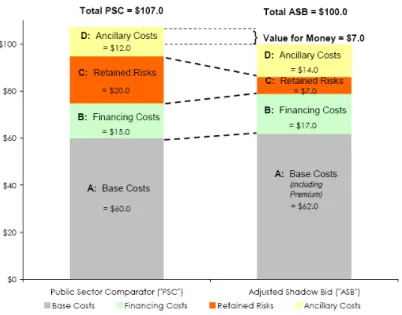
Figure 3.4: Illustrative Example of Value for Money Assessment ... 38
Figure 3.5: Results of Qualitative Risk Assessment - Total Risk Scores ... 41
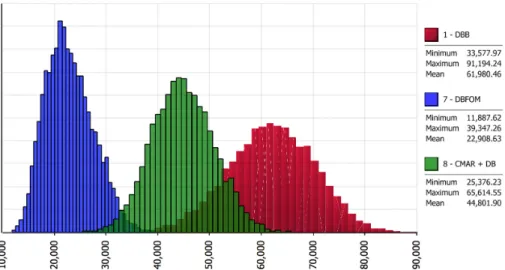
Figure 3.6: Total Project Risk Costs for Each Delivery Model ... 43
Figure 3.7: Total Risk-Adjusted Project Cost Estimates ... 44
Figure 3.8: VFM From City's Perspective for DBFOM Model (Expected Value of Risk) ... 45
Figure 4.1: ANP Network Model for Risk Prioritization ... 63
Figure 5.1: Questionnaire Survey Introductory Page ... 87
Figure 6.1: General ANP Network Structure ... 94
Figure 6.2: ANP Network Structure ... 95
Figure 6.3: Calculation Process for the CR Method ... 100
Figure 6.4: The “Water-Specific PPP Risk Model” ... 110
Figure 7.1: Research Process ... 121
1
1
CHAPTER 1: INTRODUCTION
1.1
Outliers
(1)
Canadian hockey is a meritocracy. Thousands of Canadian boys begin to play the sport at the “novice” level, before they were even in kindergarten. From that point on, there are leagues for every age class, and at each of those levels, the players are sifted and sorted and evaluated, with the most talented separated and groomed for the next level. By the time players reach their mid-teens, the very best of the best have been channelled into an elite league known as Major Junior A, which is the top of the pyramid. And if your Major Junior team plays for the Memorial Cup, that means you are at the very top of the top of the pyramid.
In the mid-1980s, a Canadian psychologist named Roger Barnsley was watching a game in the Major A hockey league with his family when his wife made an observation that an incredible number of the players were born in January, February, and March. Barnsley was astonished when he went home that night and looked up the birth dates of as many professional hockey players as he could find as he saw the same pattern his wife noted. More players were born in January than in any other month, and by an overwhelming margin. The second most frequent birth month? February. The third? March. Barnsley looked at the composition of the National Hockey League. Same story. The more he looked, the more he came to believe that this is a fact for Canadian hockey.
The explanation for this is quite simple, it has nothing to do with astrology, nor is there something magical about the first three months of the year. It is simply that in Canada the eligibility cut-off for age-class hockey is January 1st. A boy who turns ten on January 2nd, then could be playing alongside someone who doesn’t turn ten until the end of the year, and – at that age – a twelve month gap in age represents an enormous difference in physical maturity. When coaches are making the selection, they are tending to pick the bigger and more coordinated players who have had the benefit of extra months of maturity. A selected player will get better coaching, and his team mates are better, and he plays more games and practices two or three times than he would have otherwise. In the
2
beginning, this advantage is not so much but at the age of thirteen of fourteen, with the benefit of better coaching and all the extra practice under his belt, he really is better, so he’s the one more likely to make it to the Major Junior A League, and from there into the big leagues. - Malcolm Galdwell in his book “Outliers”.
(2)
In 1985, Maco authorities (China) signed a concession contract with a private company. The quantity and quality of water greatly improved. Ten years later the city’s gross domestic product had tripled. Maco today has one of the highest living standards anywhere in Asia. Even though the improvement in water distribution is not the main reason for the economic miracle, it is unlikely that such impressive development would have been possible without it. - Fredrik Segerfeldt in his book “Water for Sale”.
(3)
By the end of 1993, the government of Peru had spent $3.4 billion on nine public sector large-scale water projects. Although several of the projects had been completed decades earlier, they had achieved only 6.6 percent of anticipated outcome in terms of creating new land for farming, and not one single kilowatt-hour of electricity had been generated. The cost of irrigated farmland created came to between $10,000 and $56,000 per hectare, whereas normal irrigable land in the same region costs $3,000. It would be not just a pity but quite outrageous if millions of people were to starve, fall ill, and die through water shortages brought about by the strident propaganda of vested interests and powerfully ideological movements with quite different ends in view. – Karen Bakker in her book “Privatizing Water”.
(4)
“The (World) Bank once had a quite different approach to public works: it was an enthusiastic financier of monumental projects, and would typically lend the money to build large dams. Many of the dams were spectacular failures, delivering few, if any, benefits (except to politicians and construction firms) while displacing millions of people and leaving behind environmental destruction and public debts. The Bank is now getting
3
out of the dam business and into water privatization” – William Finnegan of the New Yorker.
(5)
According to proponents, private sector participation in the urban water supply sector displayed an impressive increase, both in terms of numbers of projects and investment. However, this data is disputed, and the World Bank has been accused of providing greatly overestimated statistics in private sector participation. In any case, the observation is not universally true, as the level of private sector activity was spatially variable. Concession contracts were rare in regions where overall investment was lowest. The lowest income regions and countries tend to be disproportionately under-funded compared to middle-income countries. – Karen Bakker in her book “Privatizing Water”.
The above noted examples confirm that the determination of a single “answer” for any single “question” is nearly impossible. Different views leads to different answers for the same question, and without a common base of comparison, any answers could only end-up being considered as outliers.
1.2
Research Background
The water sector has many characteristics that makes it challenging for private sector involvement. This includes a large fixed cost in its capital investment that has no alternative use (irreversible). Such high fixed cost of water systems lead to economics of scale that contribute to conditions of natural monopoly. Also, given the sensitivity of the water sector to public, the governments are typically heavily involved in regulating water services, which increases the regulatory and political risks to private companies undertaking this type of investment.
In the early 1990s, market-driven approaches for water resources management started to gain acceptance. Privatization and decentralization have become the main reform policies of the major international organizations (World Bank, International Monetary Fund, Organization for Economic Cooperation and Development). Water became recognized as an economic good, i.e., a commodity that should be priced at its cost of provision
4
(including environmental externalities) and its true value to society (Ouyahia, 2006). The number of people served to some extent by the private sector was 5% of the world’s population in 1999, increased to 10% in 2006, and 11% in 2008, and reached by 2012 approximately 14% of the world’s population, with around 960 million people being served (Pinsent Masons Water Yearbook 2012-2013). The water PPP market includes well-established markets like: United Kingdom, United States, France, Italy, Spain and Germany. Emerging markets includes mainly China, beside Brazil, India and Russia. However, the attraction of water infrastructure to investment is considered to be low when compared to other types of infrastructure. As of 2005, privatization in water infrastructure attracted only 5% of the investment commitments in developing countries (Izaguirre and Hunt, 2005).
The heated debate on the usefulness of private participation in the water sector is far from being settled. The proponents and opponents typically support their claims with figures that should strengthen each party’s arguments. A critical review of the most common assumptions/allegations made by each party is discussed in this thesis. In general, the proponents of water privatization have always linked the poor political condition in some countries to the deficiency in water supply management especially in third world countries. This is a very general assumption that ignores the fact that the same political bodies will be responsible in engaging private sector parties in new water PPP projects. On the other side, the opponents have put most of their efforts opposing the concept of water privatization disregarding the currently known operation and management deficiencies under the public scheme.
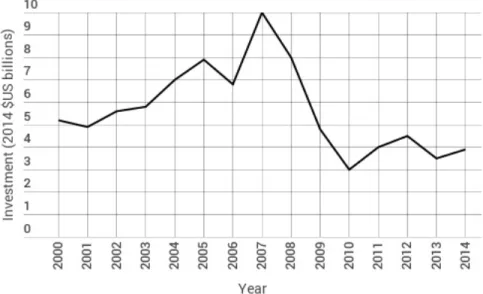
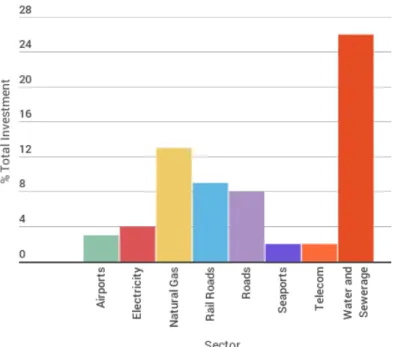
The literature review showed a severe drop in investment in water PPP between 2008 and 2009 with a minor rebound rate. Also, the cancellation rate of water PPP projects is about 26% compared to 4% in electricity, 3% in telecom, and 13% in Natural Gas. This has added to a heated debate between proponents and opponents of private participation in water infrastructure.
Studying the risk assessment of Water-specific PPP remains very limited, where the risk identification is generally based on using generic lists of risks. For risk evaluation, the
5
research work is generally adopts simple to fairly complex techniques that is not being utilized in industry practice.
1.3
Problem Statement
The heated debate over private participation remains far from being settled. Both proponents and opponents of water privatization support their claims with figures that should strengthen each party’s argument. However, in the lack of a common base of comparative analysis, each party’s arguments are not indicative and could only be considered as outliers.
The case was clearly summarized by Karen Bakker (2010):
“Most of the debate has been centered on the relative merits of the public and private sector in managing large-scale reticulated water-supply networks. Unbiased research is rare; an examination of comparative performance is often influenced by ideological commitments. It is thus somewhat predictable that proponents and opponents of water privatization rarely agree on research strategies.”
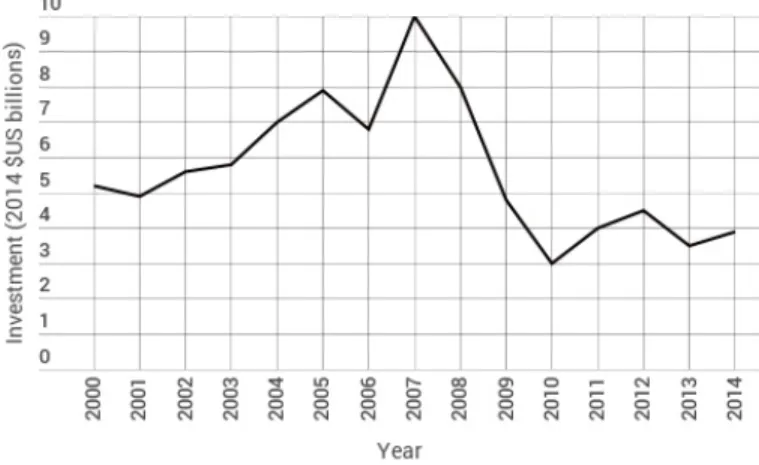
Further to the above, the research on water infrastructure remains short of addressing the severe drop in the number of water PPP projects since 2008, where only a minor rebound in amount of investment occurred since then.
Figure 1.1: Private Participation in Water Infrastructure between 2000 and 2015 Source: World Bank Group (2015b).
6
This is in addition to the high percentage of cancelled/distressed projects in the water sector in comparison to other infrastructure sectors, with a percentage of approximately 26% of the total investment made in this sector by 2015, compared to 4% in electricity, 2% in telecom, and 13% in Natural Gas. The statistics of cancelled/distressed of various infrastructure sectors is presented in Figure 1.2, where the gap between the water sector and other sectors can be clearly observed.
Figure 1.2: Percentage of Cancelled/Distressed Projects between 1990 and 2015.
Source: World Bank (2015a).
1.4
Research Hypotheses
Private sector involvement in water infrastructure is still a controversial issue, with a relatively weak record in the Water sector in comparison to other infrastructure sectors. In practice, the Government’s decision to proceed with Public-Private Partnerships is dependent on proving the value for this procurement model over the traditional procurement mechanism, through a process known as “Value-for-Money analysis”. As such, it is foreseen that adopting an improved risk assessment model dor new Water PPP projects would allow for a better evaluation of potential Water PPP projects.
1.5
Research Aim and Objectives
The study aims to develop a new risk assessment model for Water PPP projects that specifically addresses the risks associated with Water PPP projects, and through an
7
analytical model, it would allow for comprehensive and proactive risk management of Water PPP Projects. The model, which is utilizing the Analytical Network Process (ANP) methodology, will be useful to governmental agencies for the assessment of risks effectively, efficiently and equitably, which will allow for a more reliable “Value-for-Money” analysis, which deals with the evaluation of new PPP projects.
To achieve the research aim, the following objectives were developed:
Objective One: To identify and describe the significant risks associated with water PPP Projects with respect to cost and analyze the main reasons for projects’ cancelation.
Objective Two: To analyze the interactions among the water-specific risks Objective Three: To assess the severity of the identified Water-Specific risks
Objective Four: To develop a new model for the assessment of water-specific PPP risks
1.6
Research Design
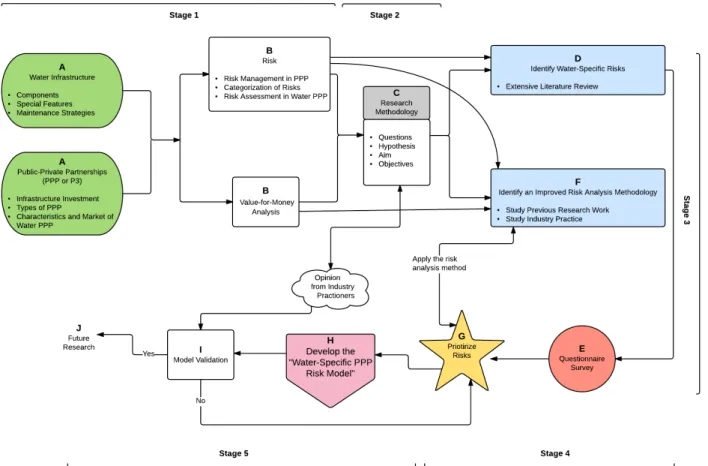
As shown in Figure 1.3, the research started by conducting a comprehensive literature review (Stage 1) on Water Public-Private Partnerships (task A: Chapter 2), and Risk in Water Public-Private Partnerships (task B: Chapter 3). At the end of stage 1, the research gap was identified.
In stage 2 (Chapter 4: Research Methodology), the research gap (i.e. problem) was defined, the research questions were formulated, and the research objectives were formed, and the research design was completed (task C).
In stage 3, the research objectives were tackled. This includes the identification of the Water-Specific PPP Risks (task D: Chapter 5), and a questionnaire survey was issued to assess the severity of the identified risks (task E: Chapter 5).
In stage 4, an improved risk analysis methodology was proposed (task F: Chapter 6), and based on the outcome of the questionnaire survey; the identified water-Specific PPP risks were prioritized (task G: Chapter 6).
8
In stage 5, the “Water-Specific PPP Risk Model” was developed (task H: Chapter 6) and the validation of the proposed model was undertaken (task I: Chapter 6). Finally, the conclusion and recommendations of the research was made, along with the recommendations for future research (task J: Chapter 7).
9
10
1.7
Thesis Structure
The thesis comprises five stages that are represented in 7 chapters. A brief introduction of each chapter is given under this section in order to outline the logical progression of the thesis.
Chapter 1 introduces the topic and provides a brief overview of the thesis including a background to the subject, the research problem, aim and objectives, and the research design.
Chapters 2 and 3 form the literature review.
- Chapter 2 introduces the special features of water infrastructure, the background of Water Public-Private Partnerships and its various forms along with some market statistics, and concludes with a critical review of literature.
- Chapter 3 presents the principles of risk management in Public-Private Partnerships, along with a review of research and industry practice with respect to water infrastructure. The chapter concludes with a critical review of literature.
Chapter 4 outlines the research methodology adopted for the research. It involves the systematic approach procedures upon which the research is based, the data is collected and interpreted, and the findings are evaluated.
Chapter 5 presents the identified water-specific PPP risks along with an assessment of the main failure cases in the water PPP sector. The chapter introduces the setup and conclusion of the questionnaire survey, undertaken to assess the severity of the identified risks.
Chapter 6 presents the development of the substantive Analytic Network Process (ANP) model for the prioritization of the identified risks. The chapter provides the calculation of the “Risk Priority Index, (RPI)” as a project ranking method for identified risks. The chapter introduces the developed “Water-Specific PPP Risk Model” along with the validation results.
11
Chapter 7 The chapter provides a review of the original research objectives and the extent at which they were achieved, where the main conclusions are to be presented and the limitations of the research to be acknowledged, with recommendations for further research.
1.8
Research Limitations
- This study particularly concentrated on the drinking water component, which may include raw water collection, transportation, and treatment or could be limited to water distribution to the consumers (private houses, industrial, commercial, or institution establishments). The risk profile would vary depending on the project scope. Such differentiation was not feasible in this research but could be considered as a future research prospective.
- The risks elements considered in this research are those directly relevant to the Water PPP planning and subsequent operation and maintenance. Other potential common PPP risks covering the social, construction, political aspects of the project should also be considered for a successful PPP, however are considered beyond the scope of this research. Such demarcation should be reflected on the developed Water-Specific PPP Risk Model.
- As with all survey based research there are bound to be limitations, which need to be acknowledged. Readers are therefore reminded of the potential effect of sampling, unsystematic (i.e. random) and measurement errors and their likely impact on the data collected, analysis undertaken and the conclusions drawn. The demographic profile of the respondents suggests that they have reasonable involvement and direct professional experience, which should accord some reasonable credibility to the quality of responses received.
It is also important to acknowledge the relatively small sample size used for the study. However, this should not nullify the conclusions drawn, given that the relevant variation statistics showed a reasonable deviation.
12
- Furthermore, the researcher still lacked some real data to demonstrate the validity of the risk model developed by the proposed approach. Due to confidentiality reasons, it was not possible for public sector officials and contractors to disclose real data. It is therefore recommended, for future research, to test the model using real data.
13
2
CHAPTER 2: WATER PUBLIC-PRIVATE PARTNERSHIPS
2.1
Introduction
This chapter initiates the literature review of this research by presenting the specific features of the water sector and defining the term “Public-Private Partnerships (PPP or P3)” and its various forms. This chapter also provides the background of PPP in the water sector with an overview of the water PPP market worldwide.
The chapter concludes with a critical review of literature addressing the debate on the suitability of PPP for the water sector along with an analysis of the main water PPP market statistics.
2.2 The Special Features of Water Infrastructure
The water sector has many characteristics that makes it challenging for private sector involvement, as noted under this section.
- Capital Investment
The fixed cost associated with water infrastructure components like water distribution systems and storage / treatment plants is considered high when compared to other types of infrastructure. Besides, the water sector assets are mostly with no alternative use (i.e. irreversible). According to Armstrong et al. (1994), fixed costs of water infrastructure in England and Wales represent 80 percent of total cost. Another feature of water infrastructure is that 70-80 percent of the water infrastructure assets are underground (Infrastructure Canada, 2004) where uncertainty about the condition of assets (like underground pipelines) may discourage potential investors (Rees, 1998) or be a source of a potential claim after the contract is awarded (Penelope and Cowen, 1997).
- Natural Monopoly
Unlike other infrastructure sectors, the high fixed costs of water systems lead to economics of scale that contribute to conditions of natural monopoly (Ouyahia, 2006)
14
With the exception of construction, transportation, treatment and distribution of water are all normally spatial monopolies.
- Health and Safety Regulations
Given the sensitivity of the water sector to public, the governments are typically heavily involved in regulating water services, which increases the regulatory and political risks on private companies undertaking this type of investment.
2.3 Water Public-Private Partnerships
Hardcastle et al. (2003) defines Public-Private Partnerships (abbreviated as PPP or P3) as:
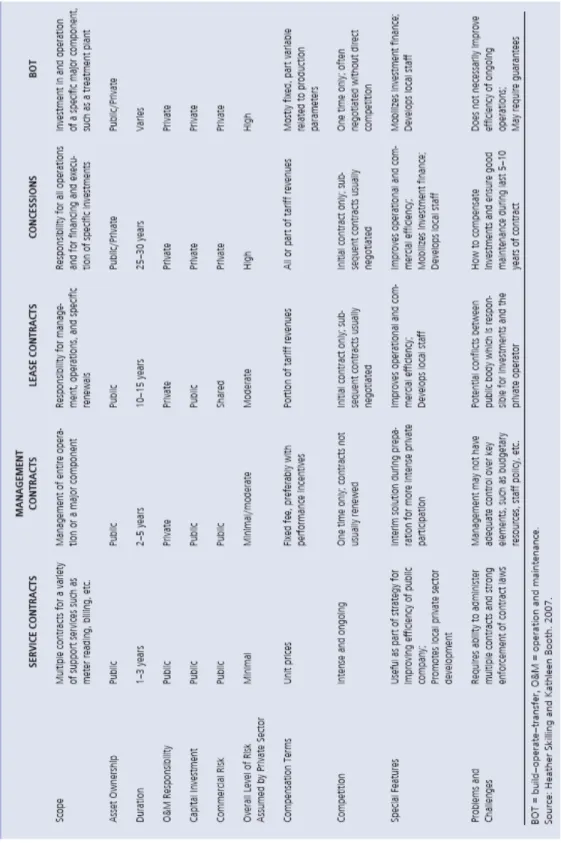
“Any contractual arrangement between a public sector agency and a for-profit private sector concern, whereby resources and risks are shared for the purpose of delivery of a public service or development of public infrastructure”. The forms of PPP would differ in the magnitude to which they move ownership, finance, and accountability out of the public sector into private hands. A list of the main forms of PPP is presented in Table 2.1.
In the early 1990s, market-driven approaches for water resources management started to gain acceptance. Privatization and decentralization have become the main reform policies of the major international organizations (World Bank, International Monetary Fund, Organization for Economic Cooperation and Development). PPP has been introduced as the most common scheme of project development.
In 1992, 500 participants including experts representing 100 countries and 80 international, inter-governmental and non-governmental organizations attended the International Conference on Water and the Environment (ICWE) in Dublin, Ireland. At its closing session, the conference adopted the Dublin Statement.
15
Table 2.1: Types of Public-Private Partnership Contracts
16
The Dublin Statement adopted four guiding principles to provide the framework for future actions (Ouyahia, 2006):
- Principle No.1: Fresh water is a finite and vulnerable resource, essential to sustain life, development and the environment.
- Principle No.2: Water development and management should be based on a participatory approach, involving users, planners and policy-makers at all levels. - Principle No.3: Women play a central part in the provision, management and
safeguarding of water.
- Principle No. 4: Water has an economic value in all its competing uses and should be recognized as an economic good.
The “Dublin principles” were reiterated during the United Nations Conference on Environment and Development in Rio, 1992, where market-driven approaches for water resources management gained further acceptance. Water was recognized as an economic good, i.e., a commodity that should be priced at its cost of provision (including environmental externalities) and its true value to society (Ouyahia, 2006). Since that time, the heated debate over the success of this approach never stopped.
For developing countries, the United Nations in its year 2000 Millennium Declaration, set eight goals for development, called the Millennium Development Goals (MDGs). These goals set an ambitious agenda for improving the human condition by 2015. In support of these goals, the Millennium Project was launched to recommend the best strategies for achieving the MDGs.
Even in developed countries, the appropriate roles of the public and private sectors were also questioned. The current system dominated by public provision was perceived as inefficient and the private sector was introduced as a way of bringing innovative approaches, efficient management and cutting the cost of public subsidies or redirecting them to the poor. This radical change in public policy has occurred worldwide and for all infrastructure sectors (Ouyahia, 2006). Decentralization policies and decline in government subsidies are occurring at a time when infrastructure needs to be renewed, whereas for developing countries and transitional economies the main challenge is investment in new infrastructure.
17 - Water PPP Market in the World
The number of people served to some extent by the private sector was 5% of the world’s population in 1999, increased to 10% in 2006, and 11% in 2008, and reached by 2012 approximately 14% of the world’s population, with around 960 million people being served (Pinsent Masons Water Yearbook 2012-2013).
- Water PPP in Well-established Markets
There are six markets with an extensive private sector presence: United States, where a survey conducted in 1995 by the United States Environmental Protection Agency (EPA) found that 28,500 privately owned water systems served approximately 14 percent of the U.S. population (Brubaker, 2003). France where the private sector share was estimated at approximately 79% in 2005, Italy where 11% of the market was served by the private sector and semi-private companies in 1987; Spain where the private sector share was estimated at approximately 46% in 2005; Germany with approximately 8% of the market through long term, and England & Wales (Pinsent Masons Water Yearbook 2012-2013).
- Water PPP in Emerging Markets
China has been seen as a large market of interest and it is considered as the single most important driver. Brazil, India, and Russia have been the main drivers of the market in recent years, and the pace of growth in China appears to be accelerating. Over the past decade, they have accounted for 70% of the global market, chiefly driven by China’s need to modernize its infrastructure (Pinsent Masons Water Yearbook 2012-2013).
- Water PPP in the United Kingdom
Water privatization started in 1989 by the government of Margaret Thatcher, which privatized the ten previously public regional water and sewerage companies in England and Wales through the sale of assets. At the same time the economic regulatory agency OFWAT was created. The Environment Agency was set responsible for environmental regulations, and the Drinking Water Inspectorate for regulating drinking water quality in the United Kingdom.
18
However, the attraction of water infrastructure to investment is considered to be low when compared to other types of infrastructure. As of 2005, privatization in water infrastructure attracted only 5% of the investment commitments in developing countries (Izaguirre and Hunt, 2005).
Below are some further statistics of private sector participation in water projects (World Bank 2016):
• Number of countries with private participation 64
• Projects reaching financial closure 906
• Total investment ($ Billion) 85
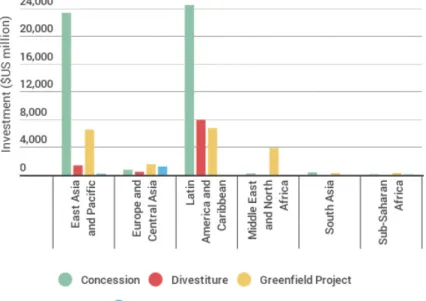
• Region with largest investment: Latin America and the Caribbean 49%
(Note: While China is considered as the largest market, the “East Asia and Pacific” comes second with respect to investment by region for private sector participation in the water sector)
Figure 2.1: Private Participation in the Water Sector, between 1990 and 2015. Source: World Bank (2015a).
• By 2012, almost 60 percent of projects were treatment plants, while the remaining 40 percent were for utilities (World Bank, 2013).
• Local operators were noted of increasingly being key sponsors of private water projects in developing countries as foreign private sponsors continue to reduce their participation. Out of the new 35 projects in 2009, 26 projects were entirely
19
implemented by local private consortia. The share of water projects with at least one foreign sponsor dropped from 48% in 2007 to 26% in 2009 (World Bank, 2015b).
• Type of PPP with largest share in investment: Concession 62%
Refer to Figure 2.2 for statistics of types of PPP implemented in the water sector:
Figure 2.2: Types of PPPs in the Water Sector between 1990 and 2015.
Source: World Bank (2015a).
2.4 Drop in Water PPP Projects & High Rate of Project Cancellation/Distressing According to the World Bank data, a severe drop in the number of water PPP projects occurred between 2008 and 2009 where the number of new projects with private participation that reached financial or contractual closure in 2009 declined by 46% compared to 2008. Annual investment commitments fell by 31% within the same period. To an extent, the drop has occurred across all infrastructure sectors due to the 2008 financial crisis; however, it remains as a prolonged feature in the Water sector.
20
As shown in Figure 2.3 below, the same trend continued in 2010 and slightly improved
since then.
Figure 2.3: Private Participation in Water Infrastructure between 2000 and 2015 Source: World Bank Group (2015b).
Further to the above, by 2015, the percentage of cancelled/distressed projects in the water sector was highly increasing other infrastructure sector, with a percentage of approximately 26% of the total investment made in this sector, compared to 4% in electricity, 2% in telecom, and 13% in Natural Gas. Reasons for cancelling/distressing of these contracts varied between cited underinvestment by the concessionaire, disagreement on tariff adjustments, or because the provincial government created a new state-owned water utility to operate the services. The statistics of cancelled/distressed of various sectors is presented in Figure 2.4, where the gap between the water sector and other sectors can be clearly observed.
21
Figure 2.4: Percentage of Cancelled/Distressed Projects per Sector, for the period between 1990 and 2015.Source: World Bank (2015a).
2.5 Critical Review of Literature
2.5.1 Proponents versus Opponents of Private Sector Involvement in the Water Sector The proponents and opponents typically supported their claims with figures that should strengthen each party’s arguments. A critical review of the most common assumptions/allegations made by each party is presented under this section.
The proponents of water privatization have always linked the poor political condition in some countries to the deficiency in water supply management especially in third world countries. This is a very general assumption that ignores the fact that the same political bodies will be responsible in engaging private sector parties in new water PPP projects, which in fact imposes a risk to new PPPs. Fall et al. (2009) reported mixed cases of success and failure in water PPP in Africa due to the different setups. Fall (2009) noted that clarity of sector policies is a key to successful PPPs. Even in developed countries, like in the case of Atlanta (USA), Brubaker (2003) reported how the governmental changes represented by the change of the mayor, has impacted the progress of its water PPP project. As such, the assumption that the mis-management of political governments of water resources would only change if we switch to engaging the private sector is not
22
always valid. Also, the assumption that private corporations will endeavour to lower their prices to gain more costumers is not always valid as this over-simplifies the issue. In Atlanta, the private investor, upon appointment, reported to the city a backlog of between 4,000 and 7,000 outstanding requests for service, some of which were three years old (Hardie, 1999). A construction boom in the service area created additional demands. This
unexpected factor among others has caused the project to fail. After a certain point, the increase in water supply may require additional resources (facilities, equipment, services, etc…) to maintain the same level of service, which will result in additional cost to the private corporation. The claimed success of water PPP projects in some developed countries cannot be considered as a proof of the success of the same PPP scheme elsewhere, especially in developing countries where the socio-political conditions may significantly vary. Several experiences available in literature confirm the special nature of each project; several controversial cases have been reported by Segerfeldt (2005) and Bakker (2003).
The assumption that poor people are ready to pay more for an improved service does not explain the social and political tension that water privatization face in first world countries like in USA and Canada.
On the operation side, the assumption that the engagement of the private sector will lead to an immediate improvement to the service is not valid. Water spillage from pipes is a common source of under-performance due to the aging infrastructure where available records of previous maintenance activities is sometime missing or is not accurate. This was noted by Brubaker (2003) in the case studies of Atlanta, USA and Halifax, Canada. Even with the availability of such records, the rehabilitation/maintenance of water pipes is facing limited budget allowances. The engagement of the private sector is not foreseen to change things radically in this regard. The assumption that private corporations will have the tendency to handle water with care is not always accurate given that the private sector is engaged in a pre-determined contract value over a certain period of time with a pre-agreed level of performance. The increase of water supply may lead to increased effort (and cost) to comply with the operation contract requirements.
Assuming that private sector will allow for more investment in research and development is not always accurate. A relatively large amount of research is taking place in
23
developing improved strategies for water pipe maintenance and rehabilitation; however, governments mostly fund such research.
The assumption that users, under the free water-pricing model, will have the option to seek an alternative in case of improper service is clearly not valid given the monopolistic nature of the water sector. For instance, in England and Wales, water companies remained monopolies even after privatization (Ouyahia, 2006) Also, the assumption that private entities will seek an improvement to their service for an increased use and earnings is not always accurate. The additional use of resources can lead to additional investment in facilities so as to handle such increase and maintain the operation contract requirements.
The proponents typically ignored the necessity of developing a water policy based on available resources and target achievements with respect to water access and quality. The arrangement and coordination of new proposed projects should follow such policy.
It was noted that the allegations sometimes made against building major infrastructure facilities (like dams) are generally unsubstantiated. As an example, the allegations made by Segerfeldt (2005) that the World Bank has led to many spectacular failures by investing in major public works like large dams is not substantiated. Building dams, like other engineering projects, should have the associated engineering studies starting from preliminary design till detailed design to allow for the proper assessment, analysis, and subsequent execution. Moreover, the reference by Segerfeldt (2005) to a major public works failure like in the Soviet Union that took place during the 1950s does not offer a scientifically acceptable basis for evaluation.
Linking a proper water policy to market-driven policies is not valid. In Chile, private ownership was introduced where landowners were given the right to own water and sell it at freely determined prices, where the model was proved to be successful (Segerfeldt (2005). However, the success of such model in Chile does not necessarily guarantee that the same model is valid elsewhere, as engineering requirements beside political and social conditions should be studied on a case-by-case basis. In any case, local residents are not expected to handle the overall planning of water supply but rather it should be by responsible organizations.
24
On the other side, the opponents have put most of their efforts opposing the concept of water privatization disregarding the occurring operation and management deficiencies under the current public scheme. Brubaker (2003) considers that many municipal utilities are ill-equipped to deal with new challenges in the industry and lack the necessary expertise at all levels. In-depth research on the matter is very limited.
Bakker (2010) offers the most notable effort towards a more rational assessment of the situation. Bakker’s analysis came from a different starting point of the debate, through focusing on issues of governance, where many issues are common between public and private parties. However, Bakker generally implied a shared responsibility between the public and private sectors for the current on-going deficiencies in this sector. This ignores the fact that the majority of the services at its current conditions are being offered by the public sector with its known deficiencies.
2.5.2 Drop in the Investment in Water PPP
The research work addressing the drop in water PPP projects and its high cancellation rate is limited to industry reports / publications which are mostly driven by the ideological commitments of the authors or at least limited to the cases in-hand. There is a need for an overall review of PPP as a procurement scheme, where the reasons for such drop are to be assessed and delineated by industry experts to a list of risks associated with water PPP.
2.5.3 Concluding Remarks
The heated debate over water privatization remains far from being settled. Both proponents and opponents of water privatization are supporting their claims with figures that should strengthen each party’s argument. However, in the lack of a common base of comparative analysis, these arguments remain not conclusive of any facts. This is accompanied by a severe drop in the number of Water PPP projects since 2008 and a high cancellation rate in comparison to other infrastructure sectors. Research addressing reasons for the drop or for the high risk associated with this sector remains very limited and where it exists, is mostly driven by the ideological backgrounds of the authors.
25
This situation was clearly described by Bakker (2010):
“Most of the debate has centered on the relative merits of the public and private sector in managing large-scale reticulated water-supply networks. Unbiased research is rare; an examination of comparative performance is often influenced by ideological commitments. It is thus somewhat predictable that proponents and opponents of water privatization rarely agree on research strategies.”
Research on this matter is not expected to resolve this debate, since there is no single answer for any single question. Instead, the motivation for a research on this subject should aim to seek an improved risk assessment methodology of water PPP projects.
2.6
Summary
This chapter presented the specific nature of the water sector, which includes its intensive capital investment, natural monopoly, and the sensitivity of the associated health and safety regulations.
The chapter also presented a definition of PPP as a contractual arrangement between a public sector agency and a for-profit private sector concern, presenting the various forms for such partnership.
PPP in the water sector was noticeably advanced in the early 1990s, as market-driven approaches for water resources management started to gain acceptance. Privatization and decentralization have become the main reform policies of the major international organizations (World Bank, International Monetary Fund, Organization for Economic Cooperation and Development). At the closing session of the International Conference on Water and the Environment (ICWE) held in Dublin, Ireland in 1992, the conference statement included a guideline that “Water has an economic value in all its competing uses and should be recognized as an economic good”. PPP have been introduced as the most common scheme of project development.
The number of people served to some extent by the private sector was 5% of the world’s population in 1999, increased to 10% in 2006, and 11% in 2008, and reached approximately 14% of the world’s population, with around 960 million people being
26
served (Pinsent Masons Water Yearbook 2012-2013). However, such numbers should be considered in conjunction with a severe drop in investment in water PPP between 2008 and 2009 with a minor rebound rate. Also, the cancellation rate of water PPP projects is about 26% compared to 4% in electricity, 3% in telecom, and 13% in Natural Gas. This has added to a heated debate between proponents and opponents of private participation in water infrastructure, a debate that is far from being settled. This chapter concluded with a critical review of literature as it was noted that proponents and opponents of water privatization were mostly driven by ideological commitments. The researcher analyzed the arguments made by both sides and suggested that research on this matter can allow for an improved risk assessment methodology of water PPP projects.
27
3
CHAPTER 3: RISK ASSESSMENT IN WATER
PUBLIC-PRIVATE PARTNERSHIPS
3.1
Introduction
In chapter two, the debate over private sector involvement in water assets management was highlighted, where the assessment of the suitability of this procurement scheme for the water sector was observed to be mostly driven by ideological commitments rather than applying proper research basis. This is accompanied with severe drop in the number of water PPP projects was highlighted, which implies the risky nature of the water sector.
This chapter discusses the risk in water PPP. For which, it explores the concept of risk management in PPP in general, and the risk assessment methods, in research, and in industry practice.
3.2
Risk Management in Public-Private Partnerships
PPPs are risk-sharing investments in the provision of public goods and services (EIB, 2005). How risk is shared between the parties is central to the PPP arrangement (Chapman, 1997). An array of documents has been published with the aim of providing guidance for practitioners undertaking the Risk Management process.
A fundamental principle is that risks should be allocated to the party that is best able to manage the risk in a cost-effective manner, as pointed-out by Grimsey and Lewis (2002). The risk allocation in PPP projects is fundamentally different to that in traditional projects as the latter include finance and operational risks to the private party. Zou et al. (2008) describes the different types of construction contracts and their risk-sharing extent for government and private sectors as shown in Figure 3.1.
28
Figure 3.1: Risk-sharing Extent for Government and Private Sectors
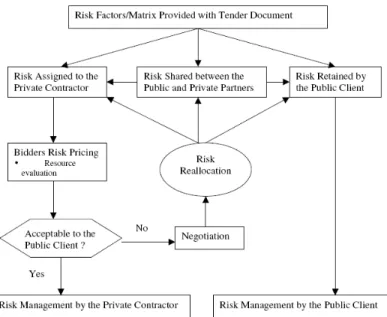
A systematic risk management allows early detection of risks and in turn responses by stakeholders (Broome and Perry 2002; Akbiyikli and Eaton 2004)). Ng and Loosemore (2007) highlighted the drawbacks of inappropriate risk allocation and proposed a respective framework. Li et al. (2005) presented a process of negotiation (Figure 3.2) for risk allocation, which combines the approach, proposed by Al-Bahar and Crandall (1990) with the principle of risk sharing in PPP/PFI procurement supported by Grant (1996) and HM Treasury (2000).
Figure 3.2: Risk Allocation in PPP Procurement Proposed by Li et al. 2005
29
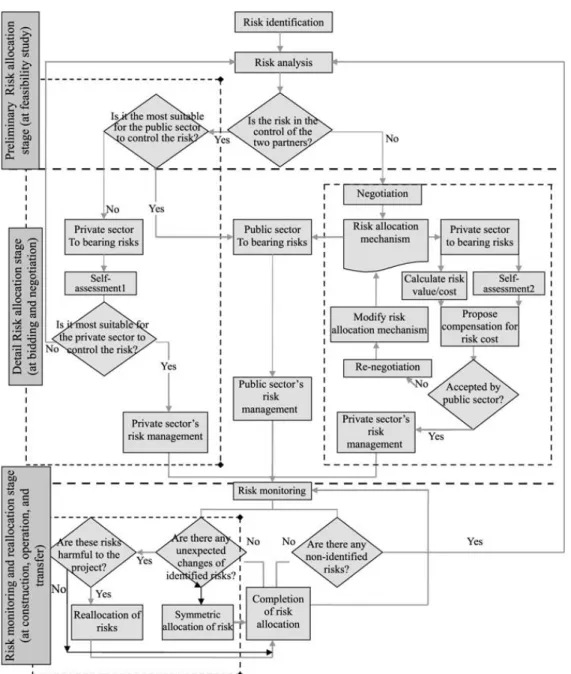
Wang et al. (2000) stated that proper assessment of project risks can only be achieved from a life cycle perspective starting at the feasibility study stage and carried-out right through the operation and transfer stages with continuous monitoring. Zou et al. (2008) studied several case studies through the life cycle of these projects, and proposed the framework shown in Figure 3.3.
Figure 3.3: Risk Allocation Framework Proposed by Zou et al. 2008
30
3.3
Risk Assessment in Public-Private Partnerships Projects
A systematic process of risk management can be divided into risk identification, risk evaluation and risk treatment, where risk treatment can be further divided into four actions: Risk retention, reduction, transfer, or avoidance (Berkeley et al., 1991; Flanagan and Norman, 1993).
3.3.1 Risk Identification
The most logical approach to identify risks in research work was to conduct a literature review where previous studies were used to identify potential risks. Voleker et al. (2008) conducted a literature review to identify the political risk perception in Indonesian power projects. Jin and Doloi (2008) conducted a literature review to identify “Environment risks” in their research on the interpretation of risk allocation mechanism in PPP. Chan et al. (2011) studied the risk assessment and allocation of PPP Projects in China at which a total of 34 risk factors were identified after conducting an extensive literature review. Wang et al. (2000) conducted a study to identify and evaluate the critical political and force majeure risks associated with China’s BOT projects, which included identifying the critical risks through a comprehensive literature review.
Some researchers used a “quantitative content analysis” to identify risks in previous literature. The quantitative content analysis extends the approach of the qualitative form to yield numerical values of the categorized data (frequencies, ratings, ranking, etc.), which may be subject to statistical analyses. Xu et al. (2010) used this technique by conducting the comprehensive literature review and content analysis, a total of 34 risk factors for PPP projects were identified.
Some researchers used pre-determined existing lists to identify risks. UNIDO (1996) developed a checklist classifying risks under two major categories (general/country risks and specific project risks). Political risks, commercial risks and legal risks are classified in the first category, whereas construction/completion risks and operating risks fall into the second category.
Case studies have also been used as an effective approach to investigate PPP applications to capture specific project features, gain detailed understanding of its implementation, and
31
draw useful implications. Stager (1996) summarized the problems during the execution of a Finance-Design-Build highway project in Turkey. Ng and Loosemore (2007) presented a review of risk allocation in PPP projects and a case study of the controversial $920 million New Southern Railway project in Sydney, Australia. It mainly analyzed the rationale behind decisions about risk distributions between public and private sectors and their consequences. Zheng (2010) studied the first PPP application in Taiwan’s wastewater treatment sector which presented a study of the tender process, concession agreement, financial structure, payment mechanism, and risk management. Gupta and Sravat (1998) concluded the significant risks in an Indian power project as development and construction risk, operation and maintenance risk, fuel supply and transportation risk, foreign exchange risk, non-payment risk and regulatory risk occurred, with the political risk of local government. Singh and Kalidindi (2006) studied through a case study, the “Annuity Model” which is a traffic risk-neutral PPP model built to overcome the traffic revenue risk that was identified as one of the most critical risks impacting the commercial success of the Indian road projects procured through PPP mode. Lam (1999) studied previous projects that ran into daunting risks resulting in their cancellation, serious delay and cost overruns in attempt to draw lessons from them. Songer et al. (1997) studied through a case study the risk of revenue-dependent infrastructure projects.
Questionnaire surveys have been typically the research method used for risk evaluation and/or allocation while in some cases generated additional risks that should be considered. Wang et al. (1999) carried out an international survey among project sponsors, developers, consultants, lawyers, lenders, investors and contractors about critical risks concerned. Akintoye et al. (1998) carried out research on risk assessment/prioritization for private finance initiative (PFI) projects in the UK. The study noted that every party put the risks related to his line as the most significant.
Questionnaire survey dominated most of the research work (Chan et al. 2011, Wang et al.
2000, Jin and Doloi 2008, Roumboutsos et al. 2008, Akintoye et al. 1998, Wang et al.
2004).
Voelker et al. (2008) conducted unstructured interviews to confirm/update the findings of the initial literature review.
32
Xu et al. (2010) developed a risk assessment model for PPP projects in China, where the concept was adopted from a previous research, where the risks were identified in stages; first through a comprehensive literature review and more risks were identified at a subsequent two-round Delphi questionnaire survey.
3.3.2 Risk Evaluation
For the most part, decision-makers tend to concentrate on single values of outcomes, such as profit, which have been calculated from single value estimates and variables (Flanagan and Norman, 1993). This approach is not suitable for construction projects that would include low and high risks, where the decision maker should be able to evaluate each and every risk that is identified for his project.
Qualitative: Using qualitative techniques, the negative outcome of an activity is expressed in terms of probability or likelihood, and impact or consequence. These are done subjectively, where the likelihood of occurrence and level of impact of risks can be assessed as low, moderate or high (Akintoye et al. 2000, DELG, 2000). Qualitative analysis can be considered for an initial screening of project risks, or when a quick assessment is desired.
Semi-Quantitative: Semi-quantitative assessment attributes numerical values to impact, probability, or frequency. Normally, the probability is assessed subjectively as in qualitative assessment, but the impact of a risk is assessed quantitatively in monetary terms (Akintoye et al., 2000).
Quantitative: The assessments are done in numeric terms, by pricing the consequence using a monetary unit. Of these techniques, those considered to be of most relevance to the construction industry are listed as (Akintoye et al. 2000, DELG, 2000).
- Sensitivity Analysis
This is the simplest form of risk analysis. It seeks to assess the effect on a project by changing a single variable within it (Flanagan and Norman, 1993). In practice, this analysis is applied only to variables that are particularly important in terms of cost, time or economic return, or to the project as a whole. The technique has several weaknesses
33
(Woodward, 1995), such as: the variables are treated individually, which makes it difficult to assess their importance in combination, and that these is no indication in the severity diagram of the anticipated probability of occurrence. Sensitivity has been brought to be inferior to simulation for the very reason that probabilities are not used (Woodward, 1995).
- Probability Analysis
This is a more sophisticated form of risk analysis that overcomes the limitations noted in sensitivity analysis by specifying a probability distribution for each variable and then considering situations where any, or all, of them can change their initial values at the same time (Reutlinger et al., 1970; Flanagan and Norman, 1993). Probability analysis has been deemed to be useful where there is a history of outcomes that can be aggregated to produce objective probabilities. When there is no historical data, it becomes highly subjective (Tweeds, 1996).
- The Monte Carlo Simulation
The Monte Carlo simulation is used to study the effect of the variability of input factors on an outcome (Newton, 1992). It consists of simulation by means of random numbers. It provides an extremely powerful method of incorporating probabilistic data. The Monte Carlo simulation will require sets of random numbers to be generated for use in testing various options. Simulation makes the assumption that parameters subject to uncertainty can be described by probability distributions (Flanagan and Norman, 1993).
- Decision Tree Analysis
A decision tree is a means of setting out problems that are characterized by a series of decisions. It shows a sequence of decisions and the expected outcomes under each possible set of circumstances. The stochastic decision tree approach provides another method of analysing decision problems over time. It combines the logic of decision tree analysis with the Monte Carlo simulation approach used in risk analysis. Obviously the accuracy of the “Decision Tree Analysis” method depends upon the accuracy of the expected outcome and the probabilities.
34 3.3.3 Risk Treatment
Risk treatment can be divided into four categories: avoidance, reduction, transfer, and retention, as described below:
• Risk avoidance requires altering the project original plan so as to avoid a certain activity that carries a very high risk.
• Risk reduction: Applying certain methods that reduce the probability of a risk occurring, or reducing the severity of the impact of a risk on the outcome of the project.
• Risk transfer: When selecting to move the ownership of a certain risk to another party. This may include moving the risk to a third part through a contract agreement
• Risk retention: Accepting to carry the responsibility for certain risks in the project which cannot be avoided or transferred.
3.4
PPP Risk Categories
Some researchers categorized risks in construction projects broadly into general groups (i.e. internal and external) while others classified risks in more details: political risks, financial risks, market risks, intellectual property risks, safety risks, etc. (Songer et al., 1997). Relevant to PPP, UNIDO (1996) developed a checklist classifying risks under two major categories (general/country risks and specific project risks). At which, political risks, commercial risks and legal risks are classified in the first category, whereas construction/completion risks and operating risks fall into the second category. Standard and Poor’s considers several broad areas that can potentially affect a PPP project’s creditworthiness. These are credit risk of the public sector entity, construction risks, revenue structure, operating risk, financial, and legal structure.
Similarly, Grimsey and Lewis (2007) identified six areas of risk associated with PPP projects, namely; public risk; asset risk, operating risk, sponsor risk, financial risk and default risk. Tiong et al. (1992) cited that BOT projects could be divided into five phases, namely `Pre-investment’, `Implementation’, `Construction’, `Operations’ and `Transfer’. A series of risks involved in a certain phase of BOT was summarised by