INTERPROFESSIONAL
COLLABORATION: HOW IS IT CREATED
AND SUSTAINED IN INTERMEDIATE
CARE?
Anita J. Mottram
A thesis submitted to the University of Huddersfield in
partial fulfilment of the requirements for the degree of
Doctor of Philosophy
The University of Huddersfield
1 Copyright statement
i. The author of this thesis (including any appendices and/or schedules to this thesis) owns any copyright in it (the
“Copyright”) and she has given The University of Huddersfield
the right to use such copyright for any administrative, promotional, educational and/or teaching purposes.
ii. Copies of this thesis, either in full or in extracts, may be made only in accordance with the regulations of the University Library. Details of these regulations may be obtained from the Librarian. This page must form part of any such copies made.
iii. The ownership of any patents, designs, trademarks and any and all other intellectual property rights except for the Copyright (the
“Intellectual Property Rights”) and any reproductions of copyright
works, for example graphs and tables (“Reproductions”), which
may be described in this thesis, may not be owned by the author and may be owned by third parties. Such Intellectual Property Rights and Reproductions cannot and must not be made
available for use without the prior written permission of the owner(s) of the relevant Intellectual Property Rights and/or Reproductions.
2 Abstract
The perceived value of interprofessional collaboration, in the provision of services, has continued to be prominent in the United Kingdom’s
contemporary health and social care policy, however, there has been limited empirical evidence of how the interpersonal elements of this are created and sustained within operational teams.
This qualitative research provides important insight into the experiences of National Health Service (NHS) staff working in the specialist area of Intermediate Care. It ascertains their perception of the presence of
interprofessional collaboration within their respective services, the impact that this had on the staff within them and the factors that had affected its evolution.
Semi-structured interviews were undertaken during 2014 and 2015 to collect and analyse data from clinical staff working in five intermediate care services and a Constructivist Grounded Theory approach was utilised to abstract themes from the data obtained.
The findings offer an original contribution to knowledge through determining that the presence of adversity in the workplace was a
significant factor in creating and sustaining interprofessional collaboration within the services in this study. A strong, collective identity for their respective social groups was formulated by the participants through situated learning, with a greater emphasis placed on interpersonal relationships, rather than interprofessional competencies.
Theorising the findings, the participants interacted in their contextualised settings, communicating with each other to attain and maintain
consensus, applying coping strategies to manage the internal and external stressors affecting them. By working dynamically in this way,
consistency of meanings, behaviours and culture were negotiated, offering an assurance of stability and order within settings that were frequently affected by change. These four components were labelled the
4Cs of Interprofessional Collaboration.
The strength of these components was evident, even though an exercise to explore the constituent elements of the participants’ services
discovered that all of the participants perceived the construction of their respective services differently, reinforcing the presence of subjective, multiple realities.
The results of this study offer an improved recognition that creating and sustaining interprofessional collaboration is a process in constant flux to manage the internal and external stressors affecting it. It requires
proactive action, mutual engagement, “Facilitating Interaction” and negotiation between individuals, to develop shared mental models.
3
Participants worked flexibly within defined parameters of practice maintaining Dynamic Consistency in order to achieve this.
4 Table of Contents Copyright statement 1 Abstract 2 Table of Contents 4 List of tables 13 List of figures 14
Dedications and Acknowledgements 15
List of abbreviations 16
List of appendices 17
Chapter 1: Introduction 18
Introduction 18
1.1 Background to the study 18
1.2 The rationale for intermediate care 20
1.3 Personal reflection 22
1.4 Research aims 22
1.5 Research questions 23
1.6 The study population 23
1.7 Composition of the thesis 24
5
Chapter 2: Situating the study 27
Introduction 27
2.1 Literature reviews within Grounded Theory studies 27 2.2 Definitions of interprofessional collaboration 29
2.3 Search tools and data bases 32
2.4 Introduction to the literature 33
2.5 The historical development of professionals 37
2.5.1 Shaping the professional 37
2.5.2 Emergence of the interprofessional team 39 2.6 Political drivers encouraging collaboration 42
2.7 Development of intermediate care 49
2.8 Summary 51
Chapter 3: Methodology 53
Introduction 53
3.1 Determining the methodology 53
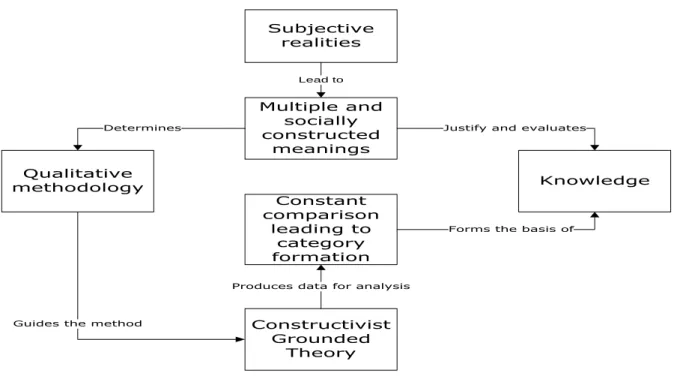
3.1.1 A Constructivist paradigm 55
3.2 Considering the theoretical perspective 58
3.2.1 Background to Symbolic Interactionism 59
3.3 The development of Grounded Theory 61
3.3.1 Development of theory 62
6
3.3.3 Comparison of Classic and Straussian Grounded 64 Theory
3.4 Constructivist Grounded Theory 67
3.4.1 Comparing Constructivist Grounded Theory and 67 phenomenology
3.4.2 Constructivist Grounded Theory within this study 69
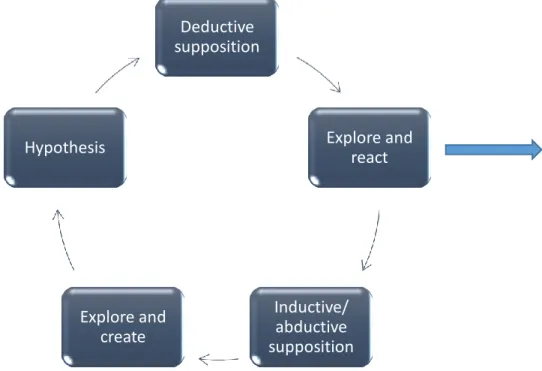
3.5 Induction v deduction v abduction 72
3.6 Summary 75
Chapter 4: Research methods 77
Introduction 77
4.1 Ethical considerations 77
4.1.1 Impact on the participants 78
4.1.2 Impact on the study process 80
4.1.3 The approval process 81
4.2 Sampling 81
4.2.1 The research settings 81
4.2.2 Access to and recruitment of the participants 82
4.2.3 Theoretical sampling 84
4.2.3.1 Contextual settings 88
4.2.4 Demography of the participants interviewed 93
7
4.3.1 Interviewing 94
4.3.2 Devising the interview guide 96
4.3.3 Pilot study experiences 97
4.3.4 Pictor 98
4.3.5 Team Circles – a comparison of team construction 99
4.3.6 Undertaking the interviews 100
4.4 Recording the participation 104
4.4.1 Use of audio recording 104
4.4.2 Producing field notes 105
4.4.3 Transcribing the interviews 105
4.5 Analysing the data 106
4.5.1 Initial coding of the data 107
4.5.2 Focused coding 110
4.5.3 Writing memos 113
4.5.4 Theoretical saturation 114
4.6 Summary 116
Chapter 5: Presentation of the themes 117
Introduction 117
5.1 Team Circles: composition of the teams 118
5.2 Developing the categories 122
8
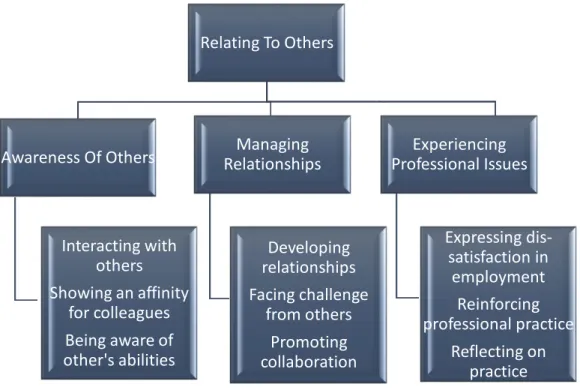
5.2.2 Constructing “Relating To Others” 128 5.2.2.1 “Awareness Of Others” 129
5.2.2.1a Interacting with others 130
5.2.2.1b Showing an affinity for colleagues 132 5.2.2.1c Being aware of other’s abilities 135
5.2.2.2 “Managing Relationships” 136
5.2.2.2a Developing relationships 137
5.2.2.2b Facing challenges from others 138
5.2.2.2c Promoting collaboration 141
5.2.2.3 “Experiencing Professional Issues” 143 5.2.2.3a Expressing dis-satisfaction in employment 144 5.2.2.3b Reinforcing professional practice 147
5.2.2.3c Reflecting on practice 148
5.2.3 “Acknowledging Systemic Functions” 150
5.2.3.1 “Administering Change” 152
5.2.3.1a Changing the service 152
5.2.3.1b Reviewing processes 155
5.2.3.1c Impacting on infrastructure 156 5.2.3.2 “Undertaking Interventions” 158 5.2.3.2a Managing the episode of care 159
5.2.3.2b Learning whilst doing 162
9
Chapter 6: Discussion of the findings 166
Introduction 166
Sub-chapter 6a: Theorising collaboration 168
Introduction 168
6a.1 Theory generation in Grounded Theory studies 169
6a.2 Developing the theory within this study 170
6a.2.1 Constructing the theory 170
6a.2.1.1 Communication 172
6a.2.1.2 Coping strategies 173
6a.2.1.3 Consensus 173
6a.2.1.4 Consistency 174
6a.2.2 The construction of Dynamic Consistency 175
6a.2.3 The Grounded Theory 176
6a.3 Identifying links to Blumer’s premises 179
6a.4 Social Identity Approach 181
6a.5 Summary 184
Sub-chapter 6b: Communicating to achieve consensus 186
Introduction 186
6b.1 Social processes 187
10
6b.2 Interacting with others - revisited 191
6b.2.1 Promoting collaboration through team meetings 194
6b.2.2 Negotiating positions 197
6b.2.3 Showing an affinity for colleagues - revisited 201 6b.2.4 Developing interpersonal relationships 205
6b.2.5 Developing commonalities 208
6b.2.6 Creation of social order in teams 213
6b.3 Summary 215
Sub-chapter 6c: Developing coping strategies to facilitate
collaboration 216
Introduction 216
6c.1 Recognising the need for coping strategies 217
6c.2 Managing change 220
6c.3 Emotional resilience 223
6c.3.1 Working through adversity 226
6c.3.2 Facing challenge from others 229
6c.3.3 Mutual consideration of others 232
6c.4 Summary 234
Sub-chapter 6d: Achieving consistency in collaboration 235
11
6d.1 Dynamic Consistency 235
6d.2 Interprofessional education 238
6d.2.1 Reinforcing professional practice through learning 240 together
6d.3 Professionalism 244
6d.3.1 Professional socialisation 246
6d.3.2 Constructing identities 251
6d.4 Promoting consistency in collaboration 256
6d.5 Unconscious collaboration 258
6d.6 Summary 259
Chapter 7: Research conclusion, recommendations and
limitations 261
Introduction 261
7.1 Revisiting the research aims 261
7.2 Criteria for assessing the study 263
7.2.1 Credibility of the study 265
7.2.2 Originality of the study 265
7.2.3 Resonance of the study 266
7.2.4 Usefulness of the study 267
7.3 Contribution to extant knowledge 267
12
7.5 Recommendations 275
7.5.1 Recommendations for further study 275 7.5.2 Recommendations for the field of practice 277
7.6 Limitations of the study 279
7.7 Summary 281
Reference List 282
13 List of tables
Page
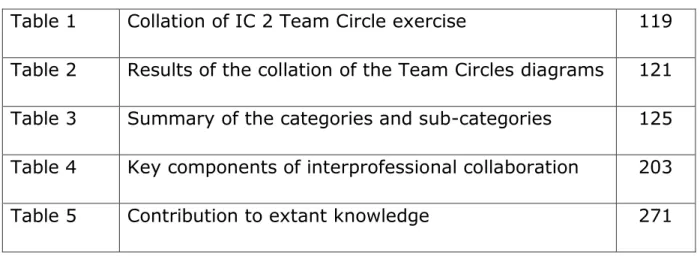
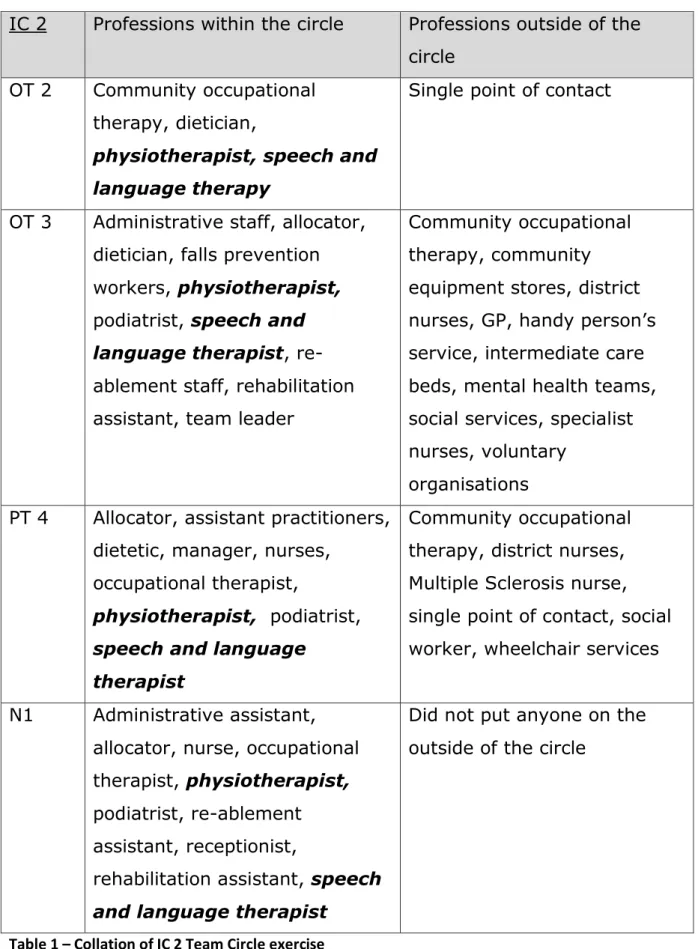
Table 1 Collation of IC 2 Team Circle exercise 119
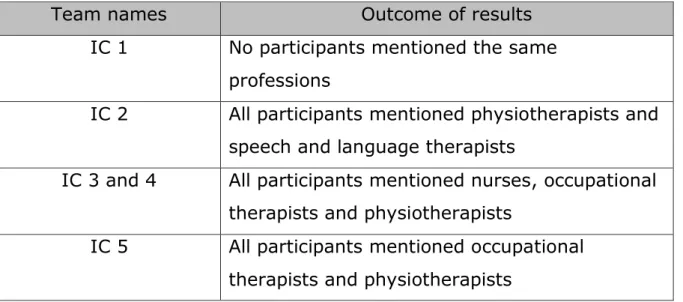
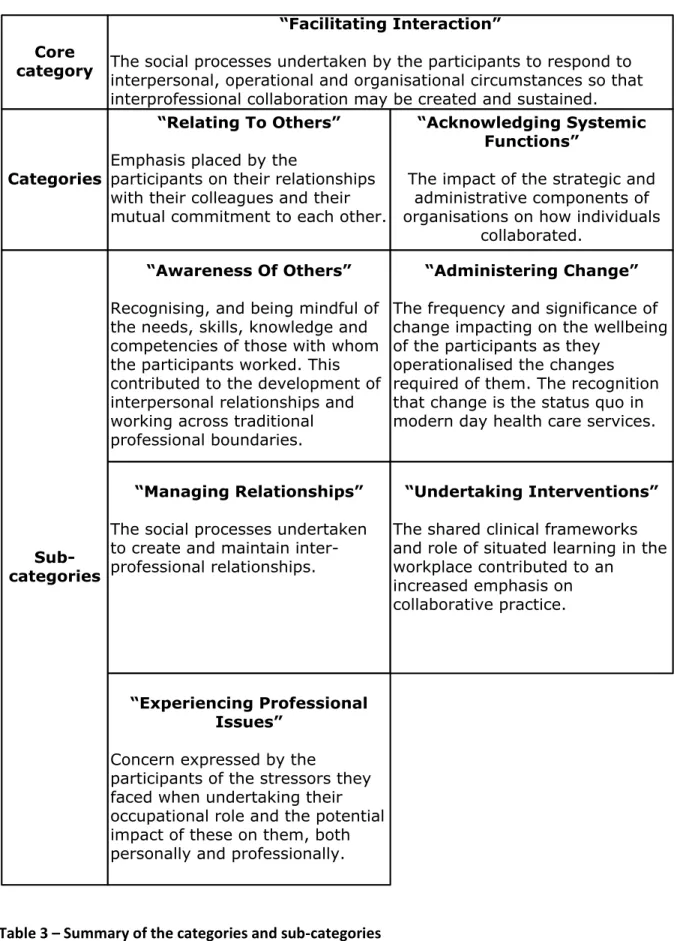
Table 2 Results of the collation of the Team Circles diagrams 121 Table 3 Summary of the categories and sub-categories 125 Table 4 Key components of interprofessional collaboration 203
14 List of figures
Page
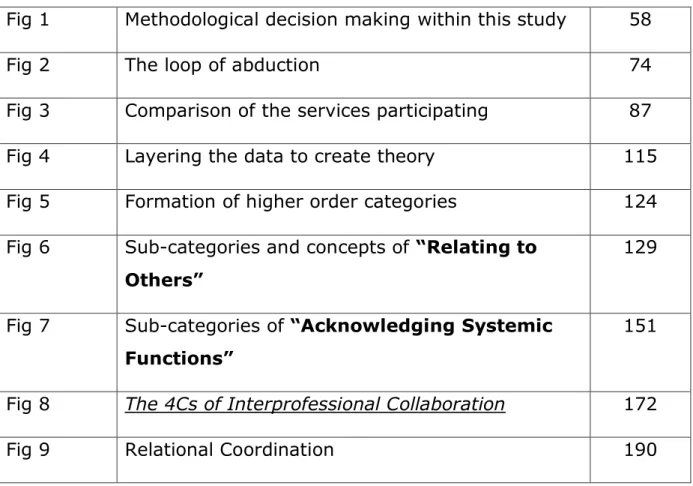
Fig 1 Methodological decision making within this study 58
Fig 2 The loop of abduction 74
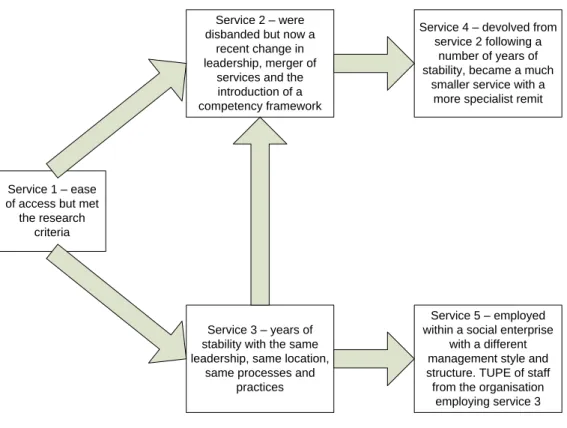
Fig 3 Comparison of the services participating 87
Fig 4 Layering the data to create theory 115
Fig 5 Formation of higher order categories 124
Fig 6 Sub-categories and concepts of “Relating to Others”
129
Fig 7 Sub-categories of “Acknowledging Systemic Functions”
151
Fig 8 The 4Cs of Interprofessional Collaboration 172
15 Dedications and Acknowledgments
This study has been a rollercoaster journey, bringing with it a multitude of emotions, but also a requirement to undertake a feat of endurance, the likes of which I had not truly appreciated at the start!
Many people have contributed to helping me stay the course and I am grateful to them all.
Thanks must especially go to my supervisors Dr Catherine O’Halloran, Dr Suzanne Smith and in the very later stages, Dr Christine Rhodes for their guidance, critical appraisals and honest opinions!
Between them they combined to recognise when to offer praise and when to firmly direct me away from the quagmire I was heading into.
I also wish to offer sincere thanks to the team leaders and staff of the NHS Trusts who participated in my research interviews. At a time when capacity was clearly limited in your respective services, so many of you gave up your clinical time readily to assist me and help direct the study. Thanks also to Andrew Archer, my long-suffering colleague, for providing me with technical IT advice when I was struggling, for assisting me in my attempts to visually represent my findings and for keeping me smiling! I would also like to thank my dad for proof reading the thesis, and for trying to explain to me what he thought I had written. I was particularly impressed by his ability to quote English language rules of correct
grammar and punctuation from his school days of 65 years ago!
To my husband, Shaun, we got there in the end. I have been touched by how proud you are of what I have achieved and thank you for occupying yourself whilst I was busy ploughing through piles of paper or tapping away on the computer. We can now make plans for the rest of our lives.
16 List of Abbreviations
CAIPE Centre for the Advancement of Interprofessional Education
CCG/s Clinical Commissioning Group/s
DH Department of Health
GP General Practitioner
HCPC Health and Care Professions Council
IC Intermediate Care
IPE Interprofessional education
N Nurse
NHS National Health Service
NSF National Service Framework
OT Occupational Therapist
PT Physiotherapist
PhD Doctor of Philosophy
REC Research Ethics Committee
SCT Social Categorization Theory
SIT Social Identity Theory
UK United Kingdom
17 Appendices
Appendix Title Page number
1 Ethical Approval 309
2 Research Participant Information Sheet 314
3 Sensitizing Concepts 317
4 Interview guide 318
5 Team Circle Diagram 320
6 Consent Form 321
7 Transcribing Guidance 323
8 Locating the Categories Diagram 326
9 Extract of a transcribed interview 327
10 Results of the Team Circle Exercise 337
11 List of codes 342
12 Stressors articulated by the participants 347
18 Chapter 1 – Introduction
Introduction
The purpose of this chapter is to introduce this exploratory, qualitative study into the presence of interprofessional collaboration, within the contextual setting of intermediate care services. This chapter will present an overview of the rationale for the study, highlighting the background to the research issue within a legislative context and the chosen setting. The research aims and questions, plus the criteria for participation in the study will be clarified and this chapter will subsequently conclude with an overview of the composition of this thesis.
1.1 Background to the study
The value of interprofessional collaboration was noted historically within the Beveridge Report of 1942 (Day 2006), which documented the
founding principles of the welfare state. However, the legislative
framework advocating for greater integrated services within health and social care services gathered momentum after the Alma Ata declaration (WHO 1978). The documented doctrines acknowledged that
interprofessional collaboration was essential to ensure the success of primary health care, advocating that the creation of this is promoted across a variety of sectors. This offered particular relevance for the development of the diverse contextual and professional settings for intermediate care services, due to their positioning within the primary care sector.
Supplementing the declaration, increasing political demands and
expectations, within contemporary health and social care policies in the UK from the late 20th Century onwards, have placed significant emphasis
on encouraging integrated working. These policies acted as external drivers, within a legislative framework, to encourage workforce and
service re-design with the expectation of improved collaborative practices. In order to respond to these demands, attempts to re-organise services
19
brought with them unprecedented and often apparently relentless
organisational change, impacting on those required to operationalise the transformation.
Despite this, encouraging the development of collaborative practice has continued, with the National Collaboration for Integrated Care and Support, more recently, emphasising the need for it in their 2013
document, “Integrated Care and Support: Our Shared Commitment”. This document reinforced the challenge of working collaboratively across all organisations and sectors, to provide services that were developed seamlessly around the needs of individuals to support them within their own homes. The aim was to try and overcome the institutional divides between sectors and organisations.
However, whilst this was the intent and in spite of these legislative
drivers, evidence of achieving greater integrated practice remains elusive. The more recent NHS “Five Year Forward View” document (NHS England 2014) reinforced that the traditional divide between health services has remained largely unchanged since the onset of the NHS. The authors of this, as per previous government documentation, once again advocated the value of interprofessional collaboration highlighting that barriers needed to be broken down to enable the development of co-ordinated services for the benefit of service users.
Given the emphasis placed on the development of interprofessional collaboration legislatively, it may be argued that there has been limited empirical evidence to support the effectiveness of its presence within services (Wilby 2005, Hudson 2002, Irvine et al 2002). Supporting this, Pollard, Sellman and Senior (2005) note that due to the number of
variables inherent in interprofessional collaboration, for example, different professionals, professions, teams and organisations, then it is difficult to prove that collaborative practice actually improves the provision of
20
This recognition had contributed to the emphasis in many extant empirical studies of objective, quantitative approaches to measuring performance indicators and outcomes when exploring interprofessional collaboration, or intermediate care services. The focus, instead, within these studies was on financial performance indicators relating to quantitative outcomes such as a reduction in length of stay within acute hospitals or a reduction in hospital admissions.
In contrast, during the process of formulating the research proposal for this study, a gap in knowledge base within the literature became evident. This indicated that a lack of attention had previously been applied to the interpersonal characteristics of interprofessional working (Caldwell and Atwal 2003, Rout et al 2010), and how the relationships that emerge from this are created and sustained. The human element of this sparked
interest for me and the decision was made to explore this aspect of interprofessional collaboration further, within the contextual setting of intermediate care.
The significance of this study to the field of interprofessional collaboration is therefore that it has contributed to closing the gap of knowledge
through investigating the experiences of individuals working within these settings. It has considered the meaning that participants apply to their perception of the presence of interprofessional collaboration within their services and the impact of this on their interactions and relationships with their colleagues.
The rationale for determining intermediate care as the setting within which this has been investigated is highlighted below.
1.2 The rationale for intermediate care
The term intermediate care was defined in Local Authority and
Department of Health (DH) circulars (2001a) and subsequently reinforced in Standard 3 of the National Service Framework for Older People (DH
21
2001b), as a service designed to encourage and facilitate client’s
independence through working across professional and organisational health and social care boundaries.
The remit of intermediate care services is to provide short term rehabilitation programmes for service users who have experienced a change in their normal functional abilities, either due to a physical or psychological condition. By enabling individuals to attain, or maintain their optimum level of function, the intent was to prevent unnecessary hospital admission, facilitation of timely discharge from hospital or the prevention of premature admission to long term care (DH 2001a, DH 2009).
In order to achieve this there is an expectation that, within intermediate care services, staff members will overlap roles and work in new ways (Nancarrow 2004) when providing clinical interventions for service users. To undertake these interventions and work across traditional boundaries, the services required professionals to work in a more integrated and co-ordinated way to that of traditional health care services, utilising shared competencies, processes and practices when doing so.
Whilst it is acknowledged that previous studies have taken place exploring interprofessional collaboration in other settings, due to the enhanced emphasis on integrated and seamless practice within this particular type of service, intermediate care was deemed to be a particularly valuable context within which to generate rich data to answer the research questions.
In addition, whilst intermediate care is a service offering a specific type of rehabilitative intervention, it is present in mainstream health services therefore providing the opportunity to access a sufficiently large pool of potential participants.
22
1.3 Personal reflection
My personal interest in the phenomenon of collaborative practice developed from reflecting on my own professional experience as an Occupational Therapist (OT) working within intermediate care teams. During the 1980’s, OTs were socialised to work solely within our
professional competencies and certainly, initially upon qualifying, I found that the professional barriers between the different clinicians remained high in terms of segregation of roles, responsibilities and duties.
With the national legislative framework, since the late 1980s, driving the expectation of increasingly collaborative practice, the implications of this was that services were re-designed, with the workforce obliged to work in different ways to that traditionally expected of them. Whilst some
challenged this change to practice, others, myself included, considered it created professional development opportunities for staff. There were opportunities to embrace the diversity of the different professions and to encourage interprofessional interactions between colleagues, to enhance core skills through sharing competencies, knowledge, information and experiences.
However, whilst organisationally the performance outcomes that this different style of working achieved was recognised at a strategic level, with hindsight, there was little consideration as to how this had impacted on interpersonal relationships and become embedded in everyday
practices. This recognition encouraged further exploration of the experiences of individuals working within intermediate care settings. 1.4 Research aims
As already mentioned, with an identified gap in research relating to the interpersonal elements of interprofessional relationships in intermediate care, the overarching aims of the study were to explore the meanings that professionals placed on their experience of reality in relation to this
23
aspect and how they constructed and re-constructed this during the process of developing and maintaining these relationships.
Working on this basis, the main aims of the study were formulated as: 1. To explore the development of interprofessional relationships in
intermediate care teams in the North of England to establish how some teams work collaboratively and others do not.
2. To generate theory identifying the factors required to create and sustain interprofessional working.
1.5 Research questions
For the purposes of this study the following research questions were addressed:
1. What are the factors contributing to the development of interprofessional collaboration in intermediate care teams?
2. How does interprofessional collaboration in intermediate care teams present?
3. How do teams maintain interprofessional practices?
3.1 What factors can occur that can de-stabilise intermediate care teams?
1.6 The study population
The data upon which this study is based comprises an interpretation of the perceptions and experiences of participants to investigate the
presence of interprofessional collaboration. It was therefore determined that practitioners currently working in operational roles within
intermediate care services were deemed to be able to offer the most useful comparable data to achieve this. These provided the primary
24
source of information, obtained through the use of semi-structured interviews.
The inclusion criteria for participation were that the participants were clinically active in the service and that they belonged to the professions of nursing, occupational therapy and physiotherapy. The significance of these three professions was based on evidence, within intermediate care literature, that these professions are noted to make up the core of
intermediate care teams (DH 2009) and therefore they are relevant to provide a valuable source of data.
1.7 Composition of the thesis
This section provides an overview of how the remaining chapters in this thesis are constructed:
Chapter 2 contextualises the study by offering a preliminary review of the literature sourced at the outset. It highlights concepts and the
identification of the gap in knowledge relating to the interpersonal context of the creation of collaboration within teams. It reviews the development of the interprofessional arena taking into consideration the political
context and developments that have taken place in the UK since the 1980s. This chapter reinforces the emphasis previously placed in
literature on the performance outcomes of interventions of intermediate care services, in contrast to how interpersonal relationships are created and sustained.
It will also position the study by providing a definition of interprofessional collaboration for use within it and examine the literature in relation to the development of interprofessional teams. The preliminary discussion of the literature will provide the baseline upon which to compare the findings of this study later in the thesis.
Chapter 3 provides a rationale for why an exploratory, qualitative
25
provide insight into the subjective experiences of the participants. A discussion of Constructivist Grounded Theory and a rationale for choosing it and excluding alternatives is documented. An overview of the
emergence of this from other versions of Grounded Theory will be briefly explored along with the philosophical position in which the study is
situated and the analytical techniques utilised within this. Consideration will be given to the ontological and epistemological assumptions which led to deciding on this methodological framework and which subsequently influenced the development of the study.
Chapter 4 summarises the methods undertaken during the application of the study, providing insight into the design and the rationale for why semi-structured interviews became the method of choice. A brief
consideration of why other methods were included or excluded will take place. This chapter documents the developmental stages of the study, considering ethical issues, a risk assessment for myself as well as the participants and also the very practical issues of how to recruit and interview participants. The use of memos and field notes will also be discussed as this chapter is a practical overview of actions undertaken. Chapter 5 offers the data analysis that took place within this study. This is presented in a logical account, using extracts from transcripts to illustrate the findings. It summarises the abstraction of data with the themes
exhibited in a visual format for exploration and analysis in the following chapters.
Sub-chapters 6a-d discuss the findings from the study, within the context of contemporary literature and consider the impact of the findings on the development of interprofessional relationships. The significance of how these relationships have developed and the influence of internal and
external stressors on them are key sections of these chapters. A summary of the component elements of interprofessional collaboration will also be discussed here. Consideration will be given to the close interplay between
26
interpersonal, environmental, organisational and strategic aspects of interprofessional collaboration and the emotional resilience displayed by participants as they manage these competing factors, creating a strong collective identity in doing so. These factors will become evident in the presentation of theory which highlights the role that internal and external stressors play in generating interprofessional collaboration and the
maintenance of order and stability within teams.
Chapter 7 draws the thesis to a close. It considers the implications of the research, the possible recommendations for practice but also for future study. In order to maintain an element of objectivity this chapter also considers the potential limitations of this study and applies Charmaz’s
evaluative criteria (2014) to demonstrate the governance of the study. 1.8 Summary
Whilst this chapter has provided an overview of the rationale for
undertaking the study to ascertain the experiences of individuals working collaboratively within an intermediate care setting, the following chapter will provide an analysis of the literature available at the commencement and which framed the conceptual foundation for the research.
27 Chapter 2 – Situating the study
Introduction
In chapter one the focus of the study was identified as an exploration of interprofessional collaboration within the contextual setting of
intermediate care services. To provide insight into how this topic was determined, this chapter will offer consideration of the preliminary review of the literature undertaken prior to, and upon commencing the study. This situates the political drivers, the historical emergence of
interprofessional collaboration and the impact that this has had personally and professionally on practitioners.
Furthermore, this chapter will also recognise the wide-ranging variety of terminology and definitions used in relation to the concept of
interprofessional collaboration. It will suggest that this has contributed to a lack of clarity and inconsistency in application and meaning, leading to ambiguity in developing the field of interprofessional practice.
In addition, to provide insight into the contextual setting of intermediate care, the political development and definition of criteria for these services will also be discussed, illustrating why this was chosen as a setting within which to explore interprofessional collaboration further.
But first, a brief discussion of the role of literature within Grounded
Theory studies, offering an explanation as to why a more comprehensive literature review was not undertaken until the study was progressing. 2.1 Literature reviews within Grounded Theory studies
Unlike other methodologies, which require a review of the literature at the early stage of studies to formulate a hypothesis (Walls, Parahoo and
Fleming 2010), within the variants of grounded Theory there is perceived to be divergence in terms of when to undertake a literature review.
28
Whilst Glaser suggests that an extensive review of the literature “violates
the basic premise of Grounded Theory” (Glaser and Holton 2004, p. 8),
his perspective may be argued to have been misconstrued by some authors to mean that an early review of any literature can lead to a restriction of theoretical discovery (Walls, Parahoo and Fleming 2010, Lempert 2007) through the potential for forcing the data into pre-established categories.
This perception may be due to the emphasis that Glaser had placed on reinforcing that within Classic Grounded Theory the theory emerges from the data rather than being directed by extant literature or theory, or the
researcher’s preconceptions during analysis (Cutcliffe 2000, Glaser and
Holton 2004, Holton 2008, Dey 2011, Holton 2011, Ramalho et al 2015). In contrast, an early review of the literature is supported by Corbin and Strauss (2015) who highlight that it would aid with stimulating theoretical sensitivity and supplementary validity (McGhee, Marland and Atkinson 2007), by assisting in the determination of what is pertinent to the research questions. Given that researchers require a baseline level of knowledge in order to complete a research proposal prior to commencing a study, it is difficult to contemplate not undertaking at least a cursory review of the literature, at the outset, in order to, pragmatically, attain this.
Indeed, Strauss and Corbin challenged researchers not to abstain from the literature suggesting that they should maintain an “open mind” rather
than an empty one (Kenny and Fovine 2014, p. 4). Despite the
documentation of Glaser’s apparent reservations in terms of access to the
literature, this is a concept that Strauss and he had previously recognised and appreciated. They had accepted that researchers do enter studies with certain preconceptions and familiarity of their topic and not as a tabula rasa (Glaser and Strauss 1967), unable to erase the knowledge
29
they had gained about the topic prior to commencing the research (Glaser and Strauss 1967).
I therefore made the decision to undertake a preliminary review of the phenomenon of interprofessional collaboration, and the context of intermediate care services prior to commencing data collection and analysis to assist in determining what aspect of the phenomenon to
explore. However, I delayed a more detailed exploration of extant studies until after the first few interviews had taken place, in order to “avoid importing preconceived ideas and imposing them on your work” Charmaz
(2014, p. 306).
In following this process, within the context of this study, what quickly became evident, upon preliminary exploration of the literature, was the identification that there was a lack of consistency in how interprofessional collaboration is defined, whilst recognising that commonalities between the definitions noted were detectable. To offer lucidity, the following section will document the definition of interprofessional collaboration that was applied within this study.
2. 2 Definitions of interprofessional collaboration
The phrase interprofessional collaboration is a term that is used generically to encompass a wide range of interactions and interpersonal relationships between different practitioners from different professions (Petri 2010, Oelke, Thurston and Arthur 2013). There is however, a lack of clarity and consistency in how it is applied (Suter et al 2009, Thistlethwaite, Jackson and Moran 2013).
In reviewing the literature for this section, numerous, slightly different definitions of interprofessional collaboration were derived from extant studies. Reflecting upon these and the multitude of variability and the ambiguity in definition between authors, this reinforced the complexity of
30
interprofessional collaboration as a challenging and socially constructed concept to explore.
In order to clarify how interprofessional collaboration was construed within this study, it was determined that there was a need for a definition that would indicate the meaning applied by myself, as author, to this concept. This will follow shortly, following consideration of the application of meaning by others.
Perreault and Careau (2012, p.256) suggest that interprofessional collaboration “may be seen as a manifestation of intensive interactions
between professionals” typified by the characteristics of a common goal, shared purpose and vision (Day 2006, Hammick et al 2009). Within the literature an often-repeated definition is that of the WHO (2010, p. 36)
who reported that “collaboration occurs when two or more individuals
from different backgrounds, with complementary skills, interact to create a shared understanding that none had previously possessed or could have
come to on their own”.
This implies the development of synergy which was noted as a recurring theme within the literature, offering the suggestion that through
collaboration, professionals become interdependent, working flexibly across professional and organisational boundaries and undertaking collective decision making to achieve more together, than if they acted independently (Bronstein 2003). Hudson (2002, p. 16) concurs,
reinforcing “that socialisation to an immediate work group can override
professional or hierarchical differences amongst staff” to contribute to
achieving integrated practice.
By working in this way, an assumption emerges that an enhancement of individual skills and competencies would be attained, with many studies perceiving that this would improve the outcome of service provision.
31
is noted that there was limited mention of the potential interpersonal impact of this way of working on practitioners.
Frost (2005, p. 6) was one author who did highlight the importance of interpersonal relationships though, recommending that the success of integrated working is dependent on the interaction between individuals to
implement and operationalise them in “real life situations”.
This is a pertinent point as it is these relationships between individuals and the emphasis on interdependencies that D’Amour et al (2005) also identified needed to be better understood in a human process context, due to the limited conceptualisation of the effects of collaboration.
D’Amour, in conjunction with Oandasan (2005), added the label
interprofessionality to the collaborative debate, proposing this as a new concept to encompass the processes which contribute to bridging the gap between interprofessional education and collaborative practice.
This term was added to the plethora already in use within the field of interprofessional collaboration with the recognition of a continuum of collaborative practice (Perreault and Careau 2012). This ranged from two or more professions working in parallel practice at one end of the
spectrum as a multi-disciplinary team, through to full team integration at the alternate end, has contributed to continued differences in
interpretation and definition of this phenomenon.
The implication of this variety in terminology has resulted in confusion which has been perceived to impede the conceptualisation of collaboration within studies (Xyrichis and Lowton 2008, Leathard 2009 and Reeves et al 2011 cited in Perreault and Careau).
Reflecting upon the existing definitions reviewed within the literature, none resonated with my own personal experience of interprofessional collaboration and my interest in it. For clarity of my own understanding and that of the reader, the following was therefore devised as a unique
32
definition for this study to articulate how inter-professional collaboration is framed by the author:
Interprofessional collaboration occurs when professionals from two or more different disciplines, organisations and/or agencies, are working together for mutual benefit and achieve a common purpose by functioning in an integrated, interdependent way across professional boundaries, competencies and paradigms.
This definition comprises a personal perception of the most pertinent characteristics of extant definitions of interprofessional collaboration that were relevant to my subjective reality of working in an intermediate care setting (Billups 2001, Mickan and Rodger 2005, Day 2006, Hammick et al 2009, McCallin and McCallin 2009, Petri 2010, WHO 2010, Nancarrow et al 2013). Content from these authors were subsequently amalgamated into the above definition that was considered to be the most relevant for this study and enhanced by my own interpretations.
The contextual setting of intermediate care has been deliberately
excluded from this definition in order to increase the definition’s relevance for use in other settings, recognising that realities are subjective and multiple (Perreault and Careau 2012). To summarise, the definition aims to encompass cohesive working where there are no, or limited barriers or divisions and where individuals work together as part of a social group depending on the needs of their situation.
2.3 Search tools and data bases
To seek out relevant literature, at the early and later stages of the study, a search of electronic data bases was instigated on the NHS Evidence website as the primary source. The databases searched were AMED, BNI, CINAHL, EMBASE, Health Business Elite, HMIC, Medline, and PsycINFO using the inclusion criteria of research based articles and systematic or
33
literature review papers on interprofessional collaboration in intermediate care services within the United Kingdom.
Despite the political emphasis within the UK on interprofessional
collaboration, a limited number of studies were identified which related to this within the context of intermediate care, and this continued to be the case as the study progressed. The opportunity to compare studies that had previously taken place within this setting was therefore limited. Having noted that this was considered to be a limitation of the previous research in this particular setting, it did, however, offer assurance that the gap in knowledge identified at the start of the study was still relevant. There were, though, studies into interprofessional collaboration within other settings that could be used for comparison.
Whilst an extensive literature review was not undertaken at the outset, the following section provides a synopsis of the preliminary literature considered that was identified as being of relevance to the phenomenon under exploration in this study.
2.4 Introduction to the literature
Ramalho et al (2015) highlights that within Grounded Theory, the existing literature comprises an additional form of data to assist with the analytical strategies of the study. It also provided assistance at an earlier stage of the study, when decisions were required to determine the area of
interprofessional collaboration to explore.
From the available literature it was identified that there was an
acknowledged lack of clear understanding of the antecedents necessary for collaborative practice to be developed and maintained, or the effects of these on the practitioners and service (Elston and Holloway 2001, Freeth 2001, Hudson 2002, Webster 2002, King and Ross 2004, Baxter and Brumfitt 2008, Nancarrow 2004, D’Amour et al 2005, Petri 2010,
34
Reeves 2010, Rout et al 2010, Cameron 2011, Croker, Trede and Higgs 2012, Nancarrow et al 2013).
The volume of authors who had highlighted these as a gap in knowledge base was sufficiently significant to indicate the value of exploring these areas further.
In contrast, a significant emphasis, within studies sourced, was instead placed at either an inter-organisational level, or on performance oriented outcomes of service delivery. Hudson (2002) and Cameron (2011)
proffered a pertinent point by articulating, what they both perceived to be an assumption, by those developing policies, that interpersonal
relationships would automatically develop following the establishment of interagency processes. Hudson hypothesized that this perception was maintained in spite of the inherent historically established divisions of labour that emerged due to increasing specialisation of roles and fragmentation of knowledge during the 20th century.
Indeed, where interpersonal relationships between professions were discussed in the literature, they were often portrayed in a negative capacity, suggesting that there was limited success in achieving positive relations. Some of the barriers to achieving these were reported as differences in professional socialisation and identity, role conflict,
mistrust, lack of clear objectives for the team and lack of organisational support (Barr et al 1999, Hudson 2002, Irvine 2002, Xyrichis and Lowton 2008, Cameron 2011).
The resultant negativity these barriers created contributed to substantial evidence of pessimism in relation to the development of interprofessional collaboration, although a more optimistic perspective was also offered by some studies with collaboration demonstrated as present within services and suggested to be effective. Characteristics that were identified as contributing to this included mutual respect and trust, flexibility, good communication, which, along with professional socialisation, enabled
35
professional differences to be overcome by groups of individuals working collectively (Hudson 2002).
This perspective was supported by the findings of an exploratory research study by Nancarrow (2004) which offered some similarities to that
reported in this thesis. Her study also utilised semi-structured interviews to explore the experiences of individual role boundaries of participants working within intermediate care settings, recognising the value of integrated working and cohesion between individuals when doing so. Positively, the findings in Nancarrow’s study identified close working
relationships and role overlap between therapy professions within the team, but, in contrast to this, noted that nursing staff allied themselves to more of a medical model with occasional disagreements occurring
between professionals (Nancarrow 2004). When these did occur,
Nancarrow identified that participants reported that they were able to be overcome through listening to others and through an increased awareness
of their own and other’s roles (Nancarrow 2004).
This offered assurance that even if disagreements did arise within services, this did not necessarily derail interprofessional collaboration between individuals who had attained this stage of professional
development.
This study by Nancarrow and also a later systematic literature review by Rout et al (2010) provided the impetus in determining the topic to explore within the study reported in this thesis. Rout et al focused on
interprofessional collaboration in the field of intermediate care, reviewing research published between the years of 2000 to 2006. This review was significant in highlighting that there was no published research article, at the time of its publication, that either focused on the interactions within intermediate care, to develop interprofessional practice or on “the
36
The findings of Rout’s review recognised previous studies had emphasised the quantitative outcomes of intermediate care provision, a conclusion also reached independently by myself. In addition to the lack of emphasis on interpersonal components, Rout also highlighted that, in spite of the intent of this type of service to improve the provision of interventions outside of a hospital environment, there was still “a lack of evidence to
support intermediate care”, offering further assurance of an opportunity
to enhance the existing knowledge base further through this research. Based on the available literature at the commencement of this study
interprofessional collaboration, and intermediate care itself, may therefore be perceived to be viewed pessimistically (Hudson 2002) and with scope for improvement to meet the demand and the legislative political drivers that services were expected to respond to.
These drivers, in the form of UK health and social care policies, were significant in number and published from the latter end of the 20th
Century onwards. Based on their content it may be concluded that their aim was to improve the quality of care provided and increase efficiency of performance, requiring organisations to re-design their practices and processes in doing so. However, based on the preliminary literature review, evidence of their effectiveness in achieving these outcomes is elusive, with the observation that, within their content, limited
consideration appears to have been given to how these changes affected the staff involved who were required to change their practice to work in a more integrated way (Irvine et al 2002).
Changes to the notion of what constitutes a “professional” has therefore continued as services are reviewed and are re-designed, often requiring practitioners to work differently to the way assimilated as part of their occupational and professional socialisation. To gain an appreciation of how this has evolved an overview of the development of the concept of the
37
professional will now be provided, offering the background to its historical emergence.
2.5 The historical development of professionals
In their paper, which focused on deconstructing collaborative practice, Thistlethwaite, Jackson and Moran, (2013, p. 52), suggest the word
“collaboration” as originating from Latin and indicating “Working with the
enemy, working with each other, working together”. Even though many empirical studies have suggested the presence of conflict within and
between service providers, collaborative practice, is today, still considered an aspiration for professional practice in contemporary health and social care services. It may also be maintained that the notion of working with friend or foe is still a relevant definition, based on some of the responses obtained from the participants in this study!
Whilst the concept of professionalism developed during the 19th century
(Abbott, 1988), the historical background to this can be construed as commencing with the establishment of craft guilds in the 16th century
(Reeves, Macmillan and Van Soeren 2010, Green 2014). Similar to modern day professional regulatory bodies, these guilds managed the access to the cognitive and practical tools required to become an endorsed member of a particular profession.
2.5.1 Shaping the professional
The acceptance into certain professions still continues to be restricted today through a regulatory framework. Abbott (1988) and Green (2014) report that entry can only be obtained through the attendance of specific training, the possession of specialist knowledge and adoption of a code of ethics, thereby encouraging participation to be compounded by exclusivity rules that prevent access to those who do not meet the criteria for
38
The impact of this is that, historically, each profession has developed
separately, claiming a body of “core knowledge” unique to themselves (D’Amour and Oandasan 2009, p. 9), sometimes without seemingly recognising the extent of overlap between themselves and other
professions (Irvine et al 2002). However, the legislative drivers at the end of the 20th century to promote collaborative working has necessitated a review of these uni-professional practices by advocating for a breakdown of professional boundaries to promote greater collaboration and
integration between professions and organisations (D’Amour and Oandasan 2009) to improve service provision.
Although expectation has been placed on operational staff to achieve this, it may be argued that due to the requirements of their professional and regulatory bodies, (Thistlethwaite, Jackson and Moran, 2013), these practitioners have to overcome the obstacle of maintaining accountability of practice to these, whilst working in as holistic a way as possible, across traditional professional boundaries, to provide their clinical interventions, as required by their organisations.
To work collaboratively across professions in a way expected by
legislative frameworks is considered by Sheehan et al (2007) to create a challenge for those socialised into their specific profession’s cultures. This is defined by Hall (2005, p. 188) as “the social heritage of a community”
comprising “values, beliefs, attitudes, customs and behaviours” that are
shared between the members of the profession.
The development of professional roles has therefore been perceived to rely on social interactions between individuals, from different professions, to form the baseline for collaborative working. This enables staff to be equipped with skills to work jointly with colleagues, whilst respecting their values and beliefs in the process (WHO 2010), to create cohesive
39
2.5.2 Emergence of the interprofessional team
Sheehan, Robertson and Ormond (2007) suggest that within health care since the 1960s there has been an emphasis placed on the development of team work. The lack of consistency in how this development has taken place has resulted in a range of terminology related to team oriented models with diverse conceptualisation of the phenomenon of
interprofessional collaboration (D’Amour et al 2005), along a spectrum of practice.
Whilst, the terms multi and inter, (either disciplinary or professional) are often used interchangeably within literature and refer to different types of teams (Leathard 2003, Faulkner Schofield and Amodeo 1999, Scholes and Vaughan 2002, D’Amour et al 2005, Xychris and Lowton 2008, Nancarrow 2013 et al), more recently the prefix transdisciplinary or transprofessional has also been added. This has contributed to further confusion in
attributing meaning to the concept of collaborative practice.
To seek clarity in relation to these, from perusal of the literature, multi-disciplinary practice was perceived to relate to a group of practitioners working alongside each other, but remaining within their independent professional groupings when contributing to the episode of care (Scholes and Vaughan 2002, Sheehan, Robertson and Ormond 2007, Bihari
Axelsson and Axelsson 2009).
Interprofessional collaboration, in contrast, was perceived to be indicative of a more integrated range of interactions and practice, putting
professional paradigms and identities to one side (Soothill, Mackay and Webb 1995, Sheehan, Robertson and Ormond 2007). This implied a willingness to work across traditional professional boundaries.
The addition to the literature of the term trans-professional has not eased the situation as it occasionally appears to be used interchangeably with interprofessional. However, the main difference evident was that whilst
40
the former term has also been applied within services working across traditional boundaries, there was the recognition of the enhancement of a greater sharing of knowledge, skills and competencies in the latter
(Sheehan, Robertson and Ormond 2007). The goal of trans-professional practice has therefore been identified as the attainment of integrated, unified practice (Webster 2002), with a high degree of collaboration. As the participants within this study all belonged to defined health professions, regulated by codes of professional conduct, the phrase interprofessional was determined to be appropriate to use within this study. This was in contrast to the broader term of interdisciplinary which is indicative of ALL colleagues, irrespective of their occupational role (Nancarrow et al 2013)
Although the paragraphs above offer an elementary synopsis of
differences between the different terminologies, it is recognised that due to the existence of the different author’s subjective realities, within the literature, these team models are defined imprecisely and may resonate differently in different contexts. This reinforces that, historically, this variability of terminology has led to a lack of consistency of application within the field of interprofessional collaboration.
In support of this perception, the situation was reported in 2011 by Reeves as still not resolved due to the lack of a uniform definition of
interprofessional collaboration and multiple perspectives, impacting on the evidence base. To add to the ambiguity further, the different models were also noted to be prominent at different times, depending on the political rhetoric of the era.
Like Reeves, Nancarrow et al (2013) also reinforced the effect of the absence of a uniform definition and the different terminologies used to describe the relationships between the professionals involved. She
41
professional socialisation to enable clinicians to work across professional boundaries.
However, realistically to do so, would require the demonstration of trust and respect of colleagues, leading to the development of a more equitable horizontal structure (Greenwell 1995). It was considered that this would enhance the understanding between professionals of their roles and
responsibilities (Mickan and Rodger 2005, Day 2006, Centre of Workforce Intelligence 2013) and also offer greater recognition of areas of overlap and similarities between them whilst working towards a shared goal. It is therefore contended that collaboration does not just automatically occur, instead requiring the proactive implementation of social processes, clarification of roles and responsibilities and negotiation through
transparent lines of communication (Thistlethwaite, Jackson and Moran 2013). This helps to ensure that there are clear parameters for how the different members of the team will work together, taking into
consideration the diversity of skills and paradigms (Robinson and Cottrell 2005) of the different professions.
To assist with this, confirmation of expected behaviours can help in the development of core values of being interprofessional, which Hammick et al (2009) notes as comprising respect, confidence in the knowledge of yourself and others, a willingness to work with others, approachability and a caring attitude to those with whom you work.
In order to develop these, there does need to be the recognition that for professions to progress to these stages, it may require professionals to work differently. To develop equity of provision in this way would require interaction and negotiation and contrasts with the historical provision previously noted, whereby individual professions had developed
separately, some with greater authority and status attributed to them than others.
42
In spite of the political rhetoric promoting these different ways of working, there is therefore still a lack of evidence to suggest that the introduction of integrated structures leads to service improvement and to effective interprofessional practice (Mickan and Rodger 2005, Sheehan 2007, The Centre for Workforce Intelligence 2013).
The legislative framework of political policy drivers in relation to
collaboration have been noted above and have led to the introduction of changes within services which ultimately have altered the ways of
working expected of those employed within health and social care practice. This framework will now be explored further.
2.6 Political drivers encouraging collaboration
Xyrchis and Lowton (2008) comment that as far back as 1920 the then Ministry of Health recommended that the provision of community health care would best be met through teams working in primary care. The post war period, however, was characterised by service delivery at a
uni-professional level with some pockets of integrated practice (Pollard, Sellman and Senior 2005).
More recently, the WHO (2010, p. 7) has also presented a vision for interprofessional collaboration in education and practice settings
suggesting that this would be a desirable state as it “strengthens health
systems and improves health outcomes” through the process of staff from
different professions working together.
Therefore, nearly 100 years after the Ministry of Health’s original
recommendation, integrated practice is a philosophy that it is suggested has not yet been achieved fully. It is still being pursued, with the Centre for Workforce Intelligence (2013) advocating for this by encouraging policymakers to recognise the need for better co-ordinated services to meet the needs of health service users.
43
In order to meet the challenge of developing greater integrated working, numerous government policies may be perceived as drivers towards collaborative practice. It is accepted though that, on their own, they are not sufficient to achieve this (Barrett and Keeping 2005).
The intent of the legislative framework within the UK was to develop innovative ideas for workforce re-design across professional boundaries, encouraging flexibility in working, whilst also improving performance quality and maximising resources to achieve value for money (Irvine et al 2002, Mickan and Rodger 2005, Cameron 2011). However, Gittell (2008) recognised that in doing so this not only placed pressure on organisations to reduce costs, but also contributed to increased levels of stress for the staff who were expected to work differently to achieve this. Tensions may therefore be perceived to proliferate between the role of the
commissioners and the health and social care organisations, but also between the strategic managers and the operational staff in relation to the implementation of policies (Hoyle 2014) and changes to services. When considering the provision of clinical interventions through this process, there is also the appreciation of an increasing complexity of the needs, within contemporary services, of the service users. As a result, it is suggested that it is not possible for these to be met comprehensively by one provider or profession (Freeth 2001, Irvine 2002, Hall 2005, Wackerhausen 2009, Reeves, MacMillan and Van Soeren 2010), thereby reinforcing the need for the development of integrated practices.
A recent emphasis placed legislatively on the interpersonal element of how individuals work together, was in contrast to the more performance focused earlier Modernization Agenda. This had made the assumption that integrated partnership working across professional boundaries would energise people and would lead to a more innovative and effective use of resources as well as improving the quality of patient care through
44
2002, Irvine et al 2002, Bainbridge et al 2010, Cameron 2011). Taylor and Kelly (2006) highlight that prior to the 1980s professionals were able to interpret policies using their own discretion and that their professional expertise went largely unchallenged. However, there has been greater emphasis, within policies over the last forty years, in making professionals more accountable for their actions through the introduction of a “plethora
of controls and audits” (Taylor and Kelly 2006, p. 632).
Although Masterson (2001, p. 334) had previously evidenced that there was limited cross boundary working between professionals to achieve the requirements of the policies, the pressures placed upon organisations due to the emphasis of the legislative drivers on interprofessional
collaboration may be suggested to be a difficult one for practitioners to reject (King and Ross 2004), leaving them with no option but to practice in this way, if they do not already do so.
As a result, those who were in this position, may consider changes to working practices as a challenge, with Hudson (2002) concurring that the move to collaborative practice has not necessarily been perceived
positively. He reported the presence of the concept of pessimism to describe the process of attempting to develop collaboration that had taken place between some professional groups.
To demonstrate the presence of interprofessional collaboration within the legislative framework, the following offers a brief synopsis of the political drivers that were key contributors to this. Each offered specific
encouragement and expectations in relation to the development of collaborative practice, and enhanced previous policies.
Changes highlighted in “Working for patients” (DH 1989) became
legislation in the NHS and Community Care Act (DH 1990), which gave prominence to improved collaboration between professionals and
organisations, forming the foundation for modern day community care services by introducing the internal market (Day 2006).
45
The internal market was subsequently replaced in the White Paper “The New NHS, Modern-Dependable” (DH 1997). This introduced a system of integrated working with the aim of further breaking down organisational and professional barriers, to enable greater joint working between health and social care organisations across defined geographical areas through the introduction of Primary Care Groups (Elston and Holloway 2001). The perception was that interprofessional collaboration and greater integrated care would contribute to achieving this.
Primary Care Groups later developed into Primary Care Trusts and were a forerunner for the existing Clinical Commissioning groups, whose impact on strategic decision making was recognised by many participants within this study as having a significant contribution to the development of their services due to the frequency of re-design requested by them.
Aiming to improve quality standards, performance related measures were introduced in the NHS Plan (DH 2000) and NSF for Older People (DH 2001b). These continued the theme of advocating the benefits of
partnership and collaboration between professions in order to improve the outcomes of patient care with the intent to redesign the service around the needs of the patient (Finch 2000). To achieve the required
performance outcomes the NSF promoted the development of integrated services within joint commissioning arrangements with the aim of
ensuring high quality services for older people (DH 2001b). Standard 3 of the NSF promoted the role of intermediate care within this, setting the scene for collaboration within this type of service.
More recent policy documents including the Health and Social Care Act (DH 2012) and Five Year Forward Review (NHS England 2014) have also placed emphasis on the Integration Agenda and in developing integrated partnership working that was patient focused, requiring the Clinical
Commissioning Groups to “promote joined up services” (Centre for
46
development of new structures and models of practice to break down existing boundaries, as intervention was expected to be more person centred and seamless. This repeated the philosophies documented in previous policies.
Currently the Better Care Fund is the “only mandatory policy to facilitate
integration” (DH 2017, p. 5) between public sector bodies, encouraging
them to work seamlessly together to ensure a more efficient use of resources. The emphasis within this policy framework was on providing proactive care to maintain individuals within their own home, rather than requiring input from health and social care services.
Recognising the significance of the emphasis within the Better Care Fund to the study of interprofessional collaboration within this thesis, what is of particular relevance are the four metrics it proposes to measure
performance by. These are; Delayed transfers of care, Non-elective admissions to hospital, Admissions to residential and care homes and Effectiveness of re-ablement. Section 2.7 will reinforce that these were key components of the original intermediate care criteria advocated by the Department of Health (2001a) and in standard three of the NSF for Older People (DH 2001b). This therefore reinforces the continued
significance of intermediate care as a service working within the remit of
the UK government’s Integration Agenda.
Whilst earlier documents had encouraged the emergence of integrated practice, there was later recognition of the need to review the training needs of staff to increase their skills to work more flexibly (NHS England 2014), to achieve the requirements of these policies and papers and deliver the new ways of working to support greater integration between health and social care services (Skills for Health 2017). The WHO (2010 p. 7) summarised this suggesting that “A collaborative practice-ready health worker is someone who has learned how to work in an