Mechanisms, contexts and outcomes of
interprofessional education in a
student-run interprofessional clinic - a realist
evaluation approach to developing
programme theory
Barbara Maxwell
A thesis submitted in fulfilment of the requirements
of Bournemouth University for the degree of
Doctor of Philosophy
April 2018
Copyright Statement
This copy of the thesis has been supplied on condition that anyone who
consults it is understood to recognise that its copyright rests with its author
and due acknowledgement must always be made of the use of any material
contained in, or derived from, this thesis.
Abstract
Mechanisms, contexts and outcomes of interprofessional education in
a student-run interprofessional clinic - a realist evaluation approach
to developing programme theory
Barbara Maxwell
Background: Interprofessional student-run clinics (SRCs) serve as valuable settings for interprofessional education but there is a lack of understanding of how these clinics work or the processes and outcomes of interprofessional education within them.
Aims: This study addresses this knowledge gap through a realist evaluation of a SRC, developing programme theories that identify and explain participant outcomes.
Method: Using a qualitative approach and a single-case study design, clinic documentation were analysed and realist semi-structured interviews conducted with 25 key stakeholders (student leaders, volunteers, and faculty clinicians) within one SRC that ran between June 2015 and February 2016. An analytic induction and framework analysis connected threads of key contexts-mechanisms, and outcomes.
Findings: Twenty-four programme theories emerged that explained student and patient experiences. Exposure to different forms and durations of interprofessional work framed three main clinic learning experiences with diverse student outcomes. Equal status among students, facilitated by psychological safety and a shared novice identity, had positive effects. Perceived student inequality, fostered by limited interprofessional engagement and role modelling of hierarchy and professional dominance by faculty clinicians, were negative. Patient contact ensured that students valued their experiences and service colocation facilitated better quality, more holistic, integrated care, and positive patient and system-level outcomes.
Discussion and conclusions: A realist approach was successful in uncovering how the interprofessional SRC works and the developed programme theories have potential to support the development and evaluation of SRCs. It is recommended that training be provided for faculty and student leaders on fostering equal status, psychological safety, co-development of interprofessional and professional identities, and role modelling behaviours that can enhance collaborative behaviours. Engineering service integration and colocation is key to achieving positive patient and system outcomes.
List of Contents
Chapter 1: Introduction and Background Introduction
1.1 Background 1.2 Study aims
1.3 The need for the study 1.4 Thesis overview 1 1 2 3 3 Chapter 2: Literature Review
Introduction
2.1 Interprofessional collaborative practice
2.1.1. Outcomes of interprofessional collaborative practice 2.1.2. Barriers to the implementation of collaborative practice 2.2 Interprofessional Education
2.2.1. Theory use within interprofessional education What is theory, and how is it used?
Theory use in interprofessional education
Reviews of theory use in interprofessional education 2.2.2. Interprofessional learning activities
2.2.3. Different forms of interprofessional work
2.2.4. Addressing the impact of interprofessional education Outcomes of interprofessional education
Examining the evidence for the outcomes of interprofessional education
Summary of key findings of systematic, narrative, parallel and scoping reviews
Issues raised by these reviews 2.3 Student-run clinics
2.3.1. Search strategy
2.3.2. Emergence of medical student-run clinics
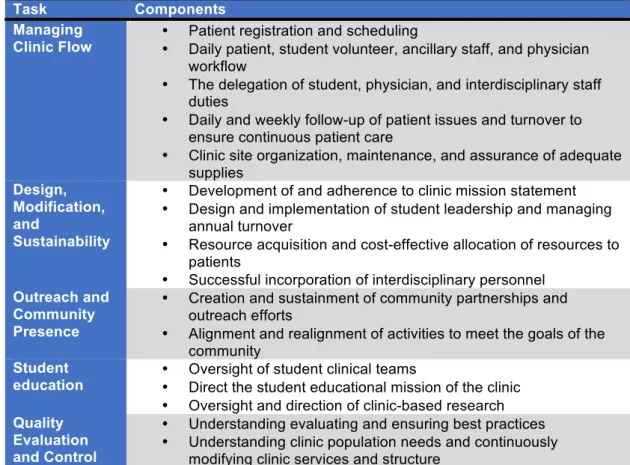
2.3.3. Structure and function of medical student-run clinics 2.3.4. Management of medical student-run clinics
2.3.5. Medical student-run clinic leadership models 2.3.6. Outcomes of medical student-run clinics
Student outcomes Patient outcomes System-level outcomes
Faculty/ clinical preceptor outcomes 2.4 Interprofessional student-run clinics
5 5 5 7 7 8 8 10 10 11 14 15 16 18 19 19 20 24 24 26 27 31 32 32 32 35 39 41 42
2.4.1. Transformation of medical SRCs to interprofessional SRCs in the United States
2.4.2. Theoretical underpinning of interprofessional SRCs 2.4.3. Stated interprofessional aims and objectives of interprofessional SRCs
2.4.4. Interprofessional activities occurring within interprofessional SRCs
2.4.5. Clinic roles within interprofessional SRCs 2.4.6. Clinic management in interprofessional SRCs
2.4.7. Commonly identified problems and issues for interprofessional SRCs
2.4.8. A review of the evidence for outcomes of interprofessional SRCs
Questionnaires and surveys Qualitative interview studies Cohort studies
Mixed method studies Cost analysis studies 2.5 Chapter summary 2.5.1 Research Questions 42 43 44 45 46 46 46 47 47 49 49 50 50 51 51 Chapter 3: Methodology and Methods
Introduction
3.1 Ontological, epistemological and methodological stance 3.1.1. Ontological stance (what is reality?)
3.1.2. Epistemology (how do you know something?) 3.1.3. Realist evaluation
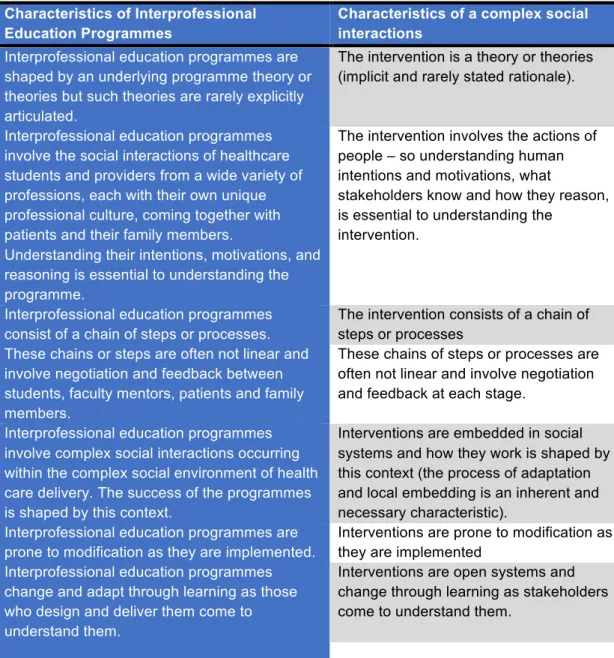
3.1.4. IPE as a complex social intervention 3.1.5. Realist evaluation and theory
Mechanisms Contexts Outcomes
Theory building in realist evaluation – CMO theories 3.1.6. Methodology (how do you go about finding out?) 3.2 Study methods
3.2.1. Rationale for a qualitative approach 3.2.2. Rationale for a single case design 3.3 Design of the inquiry
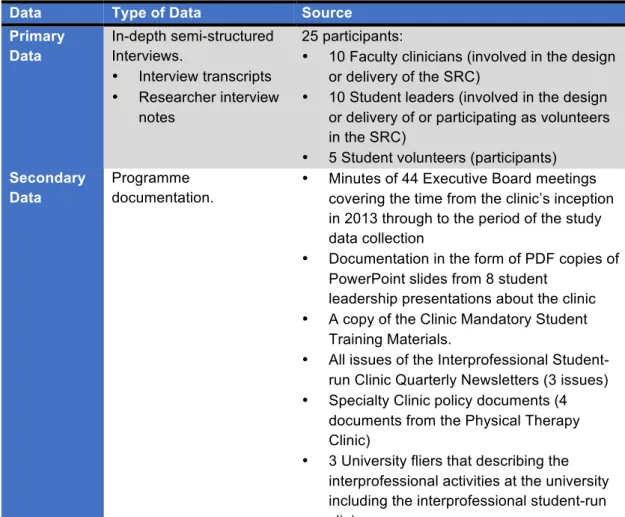
3.3.1. Case site selection 3.3.2. Data collection
3.3.3. Theory development interviews
53 53 53 53 54 55 56 57 58 59 59 59 60 61 61 62 63 63 63 68
3.3.4. Data analysis
3.4 Addressing trustworthiness in the study 3.4.1. Credibility 3.4.2. Transferability 3.4.3. Dependability 3.4.4. Confirmability 3.5. Ethical considerations 3.6. Chapter summary 70 76 76 78 78 78 79 81 Chapter 4: The Case
Introduction
4.1 The study participants 4.1.1. Faculty clinicians 4.1.2. Students
4.2. Context
4.2.1. Community setting 4.2.2. Institutional setting
4.3 The interprofessional student-run clinic 4.3.1. Origins of the clinic
4.3.2. Clinic purpose 4.3.3. Clinic description
4.3.4. Theory used in the design of the clinic 4.3.5. Clinic model
4.3.6. Expected student outcomes
4.3.7. Different interprofessional opportunities for students in the clinic 4.4 Chapter summary 82 82 82 82 83 84 84 85 85 85 86 86 87 88 90 90 94 Chapter 5: Findings Introduction
5.1. Programme theories that seek to explain how the interprofessional primary care team works for students
5.2. Programme theories that seek to explain how the interprofessional student leadership team works for students
5.3. Programme theories that seek to explain how the specialty clinics work 5.4. Faculty clinician and student programme theories that seek to explain how the interprofessional student-run clinic works for patients
5.5. Key study findings 5.6. Chapter summary 95 95 96 113 124 135 153 160 Chapter 6: Discussion Introduction
6.1. Discussion of key finding 1
161 161 161
6.1.1. Recommendations 6.2. Discussion of key finding 2
6.2.1. Potential to develop equal status through a shared ‘novice’ identity
6.2.2. Perceived inequality of students in the specialty clinics as a threat to professional identity
6.2.3. Psychological safety 6.2.4. Recommendations 6.3. Discussion of key finding 3
6.3.1. Recommendations 6.4. Discussion of key finding 4
6.4.1. Recommendations
6.5. Reflection on the use of a realist approach to uncovering programme theory
6.6. Conclusions, limitations, recommendations for interprofessional student-run clinics and IPE, and future recommendations
6.6.1. Recommendations for the development and delivery of interprofessional student-run clinics
6.6.2. Study limitations
6.6.3. Suggestions for future research 6.6.4. Conclusions 6.7. Reflection 163 163 165 168 169 172 173 175 176 180 180 182 182 184 186 187 188 References 193 Appendices
Appendix 1: Summary of systematic, narrative, parallel and scoping reviews of IPE Appendix 2: Search strategy terms, and data extraction sheets
Appendix 3: Publications relating to interprofessional student-run clinics – by author, year of publication and national context
Appendix 4: Study information sheet and informed consent Appendix 5: Interview guide
226 232 234 235 241
List of figures and tables
Figures
Figure 1: The argument for IPE 8
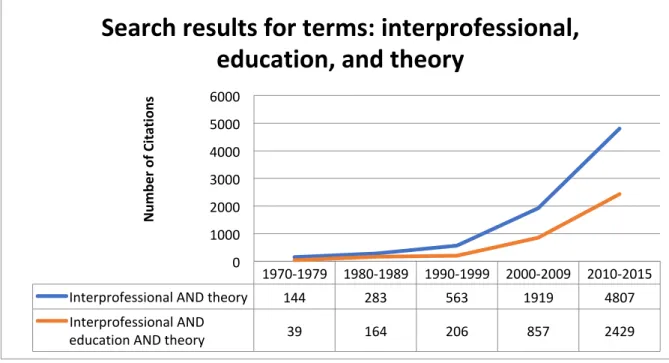
Figure 2: Search terms interprofessional, education, and theory: Number of articles
by years 9
Figure 3: Showing the data analysis and framework development process 75 Figure 4: Flow diagram showing CMO theories 1 and 2, which seek to explain how
contexts and reasoning shape the outcomes for first-time student volunteers in the IP primary care team
98
Figure 5: Flow diagram showing CMO theory 3 and 4 which seek to explain the experiences of volunteers who repeatedly participate in the IP primary care teams and how elements of the context are theorised to shape their reasoning and resultant outcomes
105
Figure 6: Showing the highly interconnected team components identified in the student leadership CMO theories
156
Tables
Table 1: Reviews of theory use in IPE and IPCP 12
Table 2: Tuckman and Jensen’s stages of group development 16 Table 3: The modified Kirkpatrick typology addressing IPE outcomes 18 Table 4: Common challenges in conducting reviews of the IPE literature 21
Table 5: Inclusion and exclusion criteria. 25
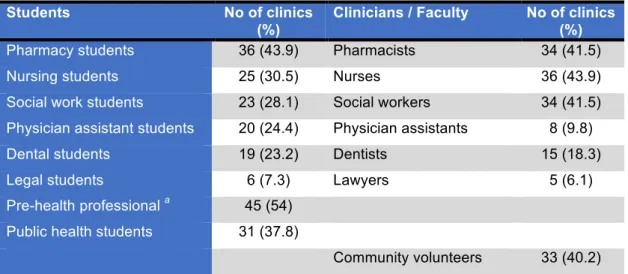
Table 6: Reported interprofessional partners at SRCs (adapted Smith et al. 2014) 30 Table 7: SRC administrative tasks (adapted from Meah et al. 2009) 31
Table 8: The outcomes of SRCs 33
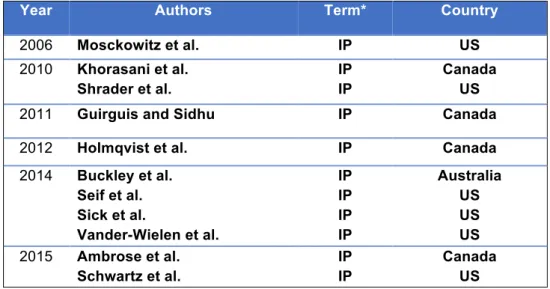
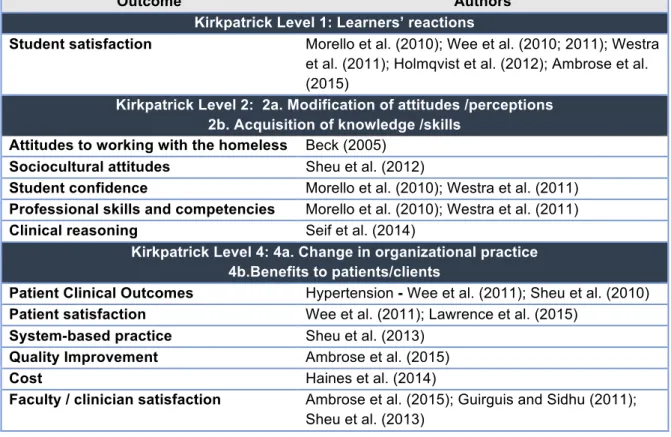
Table 9: Retrieved articles that clearly met the definition of IPE 42 Table 10: Outcomes for IP SRCs classified by the modified Kirkpatrick typology 48 Table 11: Characteristics of complex social Interactions and their representation in
IPE
57
Table 12: Site inclusion and exclusion criteria 63
Table 13: Study data sources 64
Table 14: Three interview stages of data collection and analysis 69
Table 15: Study participants 83
Table 16: Executive Officers Board roles 92
Table 17: Panel committees 92
Table 18: CMO Theories for the interprofessional primary care team 97 Table 19: CMO Theories for the student leadership team 115
Table 20: Specialty clinic CMO theories 125 Table 21: Categories and outcomes identified for patients by faculty clinicians and
students
135 Table 22: Faculty clinician and student CMO theories related to patients 136 Table 23: The identified outcomes for the interprofessional student-run clinic,
classified according to the Modified Kirkpatrick typology
154 Table 24: Representation of four colocation dimensions within the interprofessional
SRC
177
Boxes
Box 1: IP primary care team CMO theory 1 99
Box 2: IP primary care team CMO theory 2 101
Box 3: IP primary care team CMO theory 3 104
Box 4: IP primary care team CMO theory 4 109
Box 5: IP primary care team CMO theory 5 111
Box 6: Student leadership CMO theory 1 113
Box 7: Student leadership CMO theory 2 116
Box 8: Student leadership CMO theory 3 117
Box 9: Student leadership CMO theory 4 119
Box 10: Student leadership CMO theory 5 121
Box 11: Student leadership CMO theory 6 122
Box 12: Specialty clinic CMO theory 1 126
Box 13: Specialty clinic CMO theory 2 128
Box 14: Specialty clinic CMO theory 3 129
Box 15: Specialty clinic CMO theory 4 131
Box 16: Specialty clinic CMO theory 5 133
Box 17: Patient CMO theory 1 137
Box 18: Patient CMO theory 2 139
Box 19: Patient CMO Theory 3 142
Box 20: Patient CMO theory 4 145
Box 21: Patient CMO Theory 5 146
Box 22: Patient CMO theory 6 147
Box 23: Patient CMO theory 7 149
Acknowledgments
Significant thanks go to Dr Sarah Hean and Dr Elizabeth Rosser, who have diligently served in the roles of research supervisor, mentor, cheerleader, intellectual stimulant, motivator, and so much more. Their stellar work has added significantly to my learning, to the fun of the journey, and to the ultimate quality of this work. I cannot thank you both enough. To all those wonderful individuals who helped to make the data collection possible, to the faculty, students, and clinicians at the interprofessional student-run clinic, and especially the amazing site gatekeeper, a huge thank you. Without the generous donation of your time and ideas, this study would not have come to fruition. You breathed life into the data and opened a window for me to view the work that you do.
To my wonderful family, what can I say, other than I promise not to put you through this again? To Philip, my loving and supportive husband, who still brings me cups of tea to keep me awake at my desk, 30 years after first doing this when I was doing my first degree. Who encourages me to "get it done" in his own inimitable style, thanks honey, I love you more than I could ever say. To my children, Lauren and Bryson, thanks for your love and support.
Definitions
Interprofessional education
“When students from two or more professions learn about, from, and with, each other to enable effective collaboration, and improve health outcomes” (World Health Organization 2010, p.7).
Interprofessional collaborative practice
“When multiple health workers from different professional backgrounds work together with patients, families, carers, and communities to deliver the highest quality of care" (World Health Organisation 2010, p.7).
Medical student-run clinic
“A health care delivery programme in which medical students take primary
responsibility for logistics and operation management during clinic hours and which is capable of prescribing disease-specific treatment to patients” (Simpson and Long 2007, p.353).
Interprofessional student-run clinic
“Interprofessional community service-learning initiatives where students plan and deliver clinical and health promotion services, with the assistance of licensed healthcare professionals” (Holmqvist et al. 2012, p.264).
Chapter 1: Introduction and
background
Introduction
This chapter is intended to orientate the reader to the thesis topic and structure. It provides an explanation of the origins of the study, including why this topic was selected, and why it was of particular interest to the researcher. It also aims to contextualize the study by
providing preliminary background information to place the study within the context of current work in the field of interprofessional education and interprofessional student-run clinics. In so doing it identifies how this study makes an original contribution to the literature. It presents the study aims and outlines the research approach used in addressing these. It also provides an overview of the thesis chapters to assist the reader with navigation of the thesis and to provide a view of both the whole and its parts.While the study presents an international perspective on the literature it is important to note that the author was educated in the UK but currently works in the US. Her current interest in the US setting is reflected in the focus of this study. Having observed the delivery of clinical interprofessional education (IPE) through student-run clinics (SRCs) within the United States (US) and the expansion of this approach to other nations, has fostered a desire to investigate this setting more thoroughly, hence the direction of this thesis.
1.1. Background
Interprofessional education has been proposed as an important factor in preparing a future healthcare workforce with the necessary knowledge, skills, attitudes, and behaviours to engage in interprofessional collaborative practice, which is argued to be necessary if we are to meet the increasingly complex needs of patients. For pre-professional healthcare
students, IPE is most commonly delivered in a classroom setting or through simulation. In the US professional programmes have struggled to find interprofessional clinical placements for students. While clinical interprofessional programmes have been established in hospitals and outpatient settings (Kent et al. 2017; Jacobsen and Lindqvist 2009), few studies have provided an in-depth examination of the design and development of interprofessional education within clinical settings. Reeves (2005) study described the development and design of an inpatient-training ward in the United Kingdom (UK) modelled on Sanden and Walhstrom’s (1996) description of the Linkoping training ward in Sweden.
In the US, attention has focussed on the student-run clinic as a possible location for clinical IPE (Beck, 2005; Sick et al. 2014). Medical student-run clinics (SRC) emerged in the US in
the 1960’s as an approach to providing free primary care services for the uninsured and medically underserved. They also provided early clinical exposure for medical students. These clinics have proliferated since their inception with over 200 medical SRCs currently operating in the US and they are also being established in other countries (Holmqvist et al. 2012; Buckley et al. 2014; Smith et al. 2014). Since 2000 these clinics have been
increasingly advocated as possible locations for IPE. Medical SRCs have been transforming to include a wider range of professions, and some clinics are now identifying themselves as interprofessional SRCs. They are staffed and managed by students from different
professions and typically involve patient assessment and care planning by an
interprofessional team of students (Meah et al. 2009). Functioning as free clinics they sit outside the US insurance reimbursement system removing a major barrier to
interprofessional collaborative practice within the US.
Despite the suggestion that these clinics offer a potential setting for IPE (Sick et al, 2014), very little is known about if, or how, they work, or about the processes or outcomes of IPE within this setting (Shrader et al. 2010). The literature on interprofessional SRCs is very limited, the tendency is to describe the clinics but provide limited insight into outcomes beyond student self-reported outcomes. The connection between the programme inputs and outcomes is rarely articulated. This study hopes to address this knowledge gap through the in-depth exploration of a student-run interprofessional clinic. Focussing on identifying the clinic’s processes and outcomes and developing programme theories that seek to explain how the clinic works for its various participants. This study adopts a realist evaluation approach to theory development addressing the questions of what works, for whom, in what circumstances, in which respects and why? Connecting the different aspects of the
interprofessional intervention to the outcomes for different clinic participants, examining the mechanisms by which such outcomes are produced, and identifying how contextual factors within the clinic shape this pattern of outcomes.
1.2. Study aims and research questions
The aims of this study are:
A. To gain insight into if, and how, an interprofessional student-run clinic, offering interprofessional education for pre-qualification healthcare students, works. B. To develop programme theories (hypotheses) identifying the outcomes for
participants and making sense of how these outcomes are produced. The study addresses two key research questions associated with these aims. For interprofessional education for healthcare professional students in a student-run interprofessional clinic:
2. How did the clinic play out in practice? What worked, for whom, in which circumstances, in what respects, and why?
1.3. Need for the study
While they are proposed to be potent sites for interprofessional clinical learning student-run clinics have received very little attention in the literature. This study makes two important and original contributions to the interprofessional education literature. It provides a rare and in-depth examination of an interprofessional student-run clinic, and the use of a realist evaluation approach provides new ways of thinking about how interprofessional SRCs work. The study arose from the interests and observations of the researcher and key issues identified within the literature for interprofessional education and student-run clinics. The researcher has observed the proliferation of student-run clinics within the US along with increasing interest and development of these clinics globally. They are promoted as important sites for interprofessional education yet they represent something of a black box issue. The literature on interprofessional SRCs is limited and there is a lack of
understanding of if or how interprofessional education may work within these clinics. The researcher was also challenged by the limited capacity of relevant systematic reviews, in particular, reviews of randomized control trials, to increase understanding of how
interprofessional educational programmes for pre-professional healthcare students may work. There was also an awareness of repeated calls for new approaches to examining and evaluating interprofessional programmes that have the capacity to embrace its complex nature.
The use of a realist evaluation approach provides new ways of thinking about the design, delivery, and evaluation of interprofessional SRCs. Uncovering the programme theories for an interprofessional SRC offers the potential to explain how the interprofessional aspects of the clinic work for its various participants, and how contextual elements within the clinic shape its outcomes by changing the reasoning of its participants. This approach provides insight into the various aspects of an interprofessional intervention connecting these to its outcomes. It also connects the programmes inputs to its outputs through a detailed
examination of the mechanisms and contexts of the IPE programme. Providing a description of the processes involved, the processes by which programme outcomes are achieved are not commonly addressed in the research relating to IPE endeavours.
1.4. Thesis overview
This thesis is presented in 6 chapters, this being the first. Chapter two presents the literature review, which commences with the presentation of important information regarding
interprofessional education (IPE) and interprofessional collaborative practice (IPCP). It then reviews the literature addressing student-run clinics and interprofessional student-run clinics.
Chapter three presents the study methodology, beginning with the adopted ontological, epistemological and methodological stance of empirical realism. It describes and provides justifications for, the selected qualitative study methods of a case study, qualitative semi-structured interviews and document analysis. It also identifies the steps taken to increase the trustworthiness of the study findings and address the ethical considerations inherent to the study.
Chapter four presents the case, the student-run interprofessional clinic, describing its context, structure, and function, and describing the study participants. It sets the context for the study findings presented in chapter five. With the aim of deepening insight and
understanding of the interprofessional student-run clinic, chapter six takes a deeper dive into four key study findings. Discussing them with respect to the literature in the field and examining them through the lenses of sociological and psychosocial theories. It also makes recommendations for practice based upon these key study findings and includes a
discussion of the application of the realist approach to uncovering programme theory within this study and addresses the wider implications for this approach within interprofessional education. The chapter concludes with the presentation of the study limitations,
recommendations for the development and delivery of interprofessional student-run clinics, suggestions for future research, a reflection on the process of conducting this study and concluding remarks.
Chapter 2: Literature Review
Introduction
This chapter draws together the pertinent literature related to this study and is presented in five sections. The first two sections review the literature for interprofessional collaborative practice (IPCP) and interprofessional education (IPE). Providing some key definitions and describing the logical argument for how IPE is expected to produce healthcare professional graduates who are prepared to engage in interprofessional collaborative practice. It
describes the application of theory in the field, the nature of IPE activities, and examines the evidence regarding the outcomes of both IPE and IPCP. In so doing, it identifies concerns that arise when attempting to evaluate IPE using traditional approaches. It goes on to address some of these issues with respect to the complex nature of IPE endeavours and suggests that IPE be viewed as a complex social interaction proposing the need for new approaches to IPE evaluation.
Commencing with a description of the literature search strategy section 2.3 presents the results of a review of the literature pertaining to medical student-run clinics (SRCs), the precursors for interprofessional SRCs. It examines the evolution of SRCs as a care delivery model for uninsured, or underinsured individuals, and a venue for early clinical experience, predominantly for medical students, across the US. It presents the common clinic features, theoretical underpinning, management structure, and outcomes of SRCs for students, patients, clinician and faculty supervisors, and system-level outcomes. Section 2.4 specifically addresses the literature pertaining to interprofessional student-run clinics (IP SRCs), describing the transformation of medical student-run clinics into interprofessional SRCs that are suggested to serve as clinical, real world, experiential, interprofessional learning settings. It describes the specific form and function of interprofessional SRCs, their theoretical underpinnings, and the evidence regarding their outcomes.
SECTION 2.1. Interprofessional collaborative
practice
It has been evident for some time that collaboration between health professionals plays an important role in providing high-quality healthcare, and in mitigating errors (Barker 1964; Fendall 1972). Teams of health professionals engaging in interprofessional collaborative practice (IPCP) are believed to understand how to optimize the unique skills of each professional member to improve care, enhancing care quality, thereby reducing errors and improving patient outcomes (Barr et al. 2011).
As the complexity of patient needs has increased collaboration has become a more emergent issue (Cooper et al. 2004). Advances in healthcare delivery and medical
technologies have increased life expectancy and survival rates from life-threatening events, with individuals living longer with more complex health needs (Cooper et al. 2004; McAlister et al. 2004; Frenk et al. 2010). In the US this has been compounded by the changing demographics of the US population, which has seen a shift to an increasing proportion of the population being older persons (Thistlethwaite 2012). Increasingly complex care
requires healthcare providers to work collaboratively to ensure the delivery of safe, effective, high-quality care (Barr et al. 2011). Historically focused on the provision of acute care, the US healthcare system must change if it is to meet the increasingly complex needs of its aging population (Thistlethwaite 2012).
Patient safety has been a significant driving force for IPCP in the US. The Institute of Medicine’s reports To Err is Human (Kohn et al. 2000), and Crossing The Quality Chasm (IOM 2001) identified failures in communication and collaboration as significant contributors to errors, which Makary and Daniel (2016) identified as the third leading cause of death in the US (if recorded in the same manner as other causes of death). This is not only a US phenomenon, for example in the UK the need for collaboration has been highlighted in high profile public enquiries e.g. the public inquiry into the deaths of children at the Bristol Royal Infirmary (Department of Health 2001). Such public inquiries demonstrated that poor collaboration between health and social care teams negatively impacts care continuity and can lead to serious errors. The Department of Health (DH) and other UK health and social care regulatory bodies responded to these concerns by introducing national benchmarks to enhance IPCP and reforming health and social care professionals’ training to include IPE (Oandasan and Reeves 2005; Thistlethwaite and Moran 2010). Similarly in Canada, the Canadian Adverse Events Study (Baker 2004) highlighted the need to develop and support of IPCP prompting Health Canada to provide significant infusion of government funds to develop IPCP and IPE initiatives across Canada (Canadian Interprofessional Health Collaborative 2008).
Unlike the UK and Canada, which both had government mandates to introduce IPCP and IPE the US has seen few attempts to push IPCP at the national level. Lacking a national health system to support implementation, attempts have been locally based and subject to sporadic federal funding shored up by the support of philanthropic organizations (e.g. The Josiah Macy Foundation, The Robert Wood Johnson Foundation). The largest investment into creating a national agenda for collaborative practice came with the establishment of the United States National Centre for Interprofessional Practice and Education at the University of Minnesota in 2012. Funded by a public, private partnership, the centre is tasked with leading IPE and IPCP in the US, providing evidence and resources to guide the nation with
a focus on achieving the Triple Aim of enhancing the client’s experience of healthcare, improving population health and reducing the overall cost of care (Brandt et al 2014; Berwick et al. 2008).
2.1.1 Outcomes of interprofessional collaborative practice
The many and varied benefits of IPCP have been articulated in the literature with reports of positive impact at the individual, health service, and societal levels (Reeves et al. 2008). These have included reduced mortality (West et al. 2006; Mickan et al. 2010) reduction in suicide in individuals with suicidal ideation (Jackson et al. 1993) improved patient safety, reduction in clinical errors and complications (Hallin et al. 2009; Morey et al. 2002) reduced length of hospital stay, reduced hospital admissions (Hammick et al. 2007) increased efficiency with reduced cost of care (Mickan 2005; Lemieux-Charles and McGuire, 2006) and improved access to and coordination of health services (Lemieux-Charles and McGuire 2006). Greater patient satisfaction and compliance with care recommendations have also been recognized for some time (Bellin and Geiger 1970; Baldwin et al. 1980). The impact of IPCP are particularly evident for individuals with complex and long-term conditions
(McAlister et al. 2004; Holland et al. 2005; Interprofessional Health Collaborative 2009). Studies with older populations with complex needs have demonstrated lower mortality rate, fewer hospitalizations, reduced length of stay, more discharges to home, fewer drug prescriptions, greater satisfaction for patients and caregivers, improved morale and functional status, along with lower direct costs (Calland et al. 2011). System-wide improvements have also been evident as collaborative team-based care has been
introduced as an approach to continuous quality improvement with a demonstrated impact on the procedures and processes of care delivery (Parenti et al. 1994; Turley et al. 1994). Cost-benefit and cost-effectiveness have been suggested although few long-term studies have been undertaken to address this (Baldwin 2007; Brandt et al. 2014).
2.1.2. Barriers to the implementation of IPCP
Despite recognition of the importance of IPCP and demonstration of positive impact on care the implementation of IPCP remains problematic. Baldwin (2007) suggests that such efforts are continuously hampered by professional territorialism and system inertia. A lack of understanding of the roles each profession plays in patient care, perceptions of boundary infringements, the adoption of defensive stances regarding scope of practice issues, limited and ineffective communication in practice, and a lack of practice models that provide appropriate opportunities to engage in well-coordinated teamwork, have been suggested as factors that perpetuate this tribalism and inertia (Hughes 1988; Reeves 2005; Barr 2015). In the US there has been difficulty gaining sufficient traction for system-wide
implementation. Frenk et al. (2010) stressed the need for transformation of both the US healthcare and health education systems if collaborative interprofessional practice is to become a reality in the US.
2.2. Interprofessional education
IPE has been proposed as a route to creating future healthcare providers who are prepared to work collaboratively. Traditional education models for health professional students provide limited opportunities for students from different professional programmes to interact and do not prepare them with the necessary knowledge, skills, attitudes and behaviours for collaborative practice (Frenk et al. 2010; Barr 2012). Furthermore, they have been
suggested to reinforce stereotypical perceptions of other professions, facilitate professional tribalism, and foster a hierarchical mentality (Baldwin 2007). In contrast, IPE provides opportunities for different professions to actively engage together. Learning about, from, and with each other and focussing on developing the specific knowledge, skills, attitudes, and behaviours necessary for effective collaborative practice. The expectation is that healthcare professionals who participate in IPE will be suitably prepared to engage collaboratively on entering the workforce. Such collaborative practice is expected to positively impact both care quality and patient outcomes (Hammick et al. 2007; WHO 2010; Barr et al. 2011). This argument is represented in Figure 1.
Figure 1: The argument for IPE
It is important to note that IPE has been advocated for both students training to enter their profession (pre-registration or pre-licensure) and for working clinicians (post-professional). Indeed IPE is regarded as a learning continuum extending from pre-licensure and
throughout a health professional’s career (D’Amour and Oandasan 2005; Brandt et al. 2014).
2.2.1 Theory use within IPE
Often referred to as being atheoretical, descriptive and anecdotal, IPE has been frequently criticised for lacking theory (Freeth et al. 2002; Barr et al. 2005; Clark 2006; Reeves et al. 2011). One could argue that this is no longer the case as a diverse range of theories from a wide variety of academic fields including, anthropology, education, organizational
management, psychology, sociology, and team science, have been applied to IPE (Reeves et al. 2009; Hean et al. 2009).
Early attempts to identify a single overarching theory for IPE proved to be a fruitless endeavour, unsurprising given its complex nature. It is a humanistic endeavour heavily dependent upon human relationships, it is multifaceted addressing a wide range of concepts
Interprofessional education Collaborative practice-ready health workforce Collaborative practice Improved care quality & patient
in variable contexts, involving changes at the level of the individual, the group or team, and the system. Recognizing the complexity of IPE and the multifaceted aspects that can be examined, the field has engaged in some significant poaching from the wealth of theories available from other academies (e.g. social interaction theories, adult learning theories, systems theory). The current interest in theory is clearly evident when conducting a literature search on the topic. A search performed in Medline, PubMed, CINAHL, PsychINFO, ERIC using the terms interprofessional, education, and theory, revealed an exponential growth in interprofessional publications with an interest in theory from 2000-2017, and a significant upturn in publications after 2010 (see Figure 2).
Figure 2: Search terms interprofessional, education, and theory: Number of articles by years
In examining the retrieved articles it is clear that in the 1970’s and 80s, when IPE was in its infancy, the articles reported on how theory was used by different professions. As the field has matured the direct application of theory to IPE and practice has become increasingly evident, and the variety of theories applied has significantly expanded. Early theories were reflective of the evolving educational approaches of the time with a focus on adult learning theories e.g. Kolb Learning Cycle used by Parsell et al. (1998). As attention turned to working in teams, social theories addressing interaction in groups became evident e.g. Contact theory used by Carpenter and Hewstone (1996) and Parsell et al. (1998). Since 2010, there has been an almost three-fold increase in the volume of publications (283% rise) for IPE and theory. However, this does not mean that such theories have been
1970-1979 1980-1989 1990-1999 2000-2009 2010-2015 Interprofessional AND theory 144 283 563 1919 4807 Interprofessional AND
education AND theory 39 164 206 857 2429
0 1000 2000 3000 4000 5000 6000 Num be r of C itations
Search results for terms: interprofessional,
education, and theory
judiciously and effectively applied. For example, in a scoping review by Reeves et al. (2011) the retrieved studies made such limited use of theory that they were unable to include theory in their interprofessional framework. To understand how theory can be effectively applied requires examining the nature of theory.
2.2.1.1. Theory, what is it and how is it used?
Jary and Jary (2000) describe theory as a set of propositions or hypotheses connected or linked through a rational argument. Colyer et al. (2005) state that such arguments must be based upon coherent, generalizable, and transferrable principles that are applicable continuously. Theory provides a practical means to explain, predict and summarize our observations and knowledge (Clarke 2006), propose explanations and provides testable propositions and hypotheses (Meleis 1997; Reeves et al. 2007). Theories may be implicit or explicit. Implicit theories also referred to as ‘armchair' or ‘lay' theories, are generated from personal constructions about particular phenomena. Merton (1968), classified explicit theories based upon their scope as, macro or grand theory, mid-range theory, and micro or practice theory. Grand theory is regarded as rather non-specific, being constructed from concepts that are relatively abstract and difficult to operationalize, as a consequence grand theories are difficult to empirically test. Mid-range theories address specific phenomena involving a limited number of concepts related to a small range of specific contexts. A micro or practice theory has the narrowest scope being focussed on specific phenomena and contexts.
2.2.1.2. Theory use in IPE
With specific regard to IPE, it is widely asserted that careful consideration of the application of appropriate theory is necessary to move the field beyond the descriptive categorization of concepts to the development of propositions that can be empirically tested (Barr et al. 2005; D’Amour et al. 2005; Craddock et al. 2013; Hean et al. 2013). Theory can play a valuable role in the design and evaluation of interprofessional interventions (Hean et al. 2009; Hean et al. 2012). It has been argued that theory application can assist the articulation and understanding of interprofessional educational practice and support the design and evaluation of IPE curriculum (Clark 2006; Reeves et al. 2007; Hean et al. 2009). Clark (2006, p.578) suggests that theory can assist IPE instructional practice through addressing the questions of: what does it mean to “learn to do” interprofessional collaboration and how can educators best facilitate the achievement of these learning outcomes? To answer these two critical questions requires identifying major concepts that can guide course and
programme structures, establish appropriate roles for students and faculty in the educational process, articulate learning objectives and effective methods for achieving them, and measure programme impacts and outcomes. Clarke (2006) suggests that the explicit use of appropriate theory can go a long way to addressing these issues. Theory has also been suggested as an approach to bridging the academic-practice gap. Consider that
theory is generated from our observations in practice, leading to the development of theoretical propositions, which are then confirmed or rejected by our observations in practice (Hean et al. 2012). As such theory can inform the development of practice, just as practice can inform theory. It has also been argued that theory can aid practitioners in reflecting upon their practice, facilitating second-order reflection, by which practitioners critically examining their practice by taking an external reflective viewpoint (Wackerhausen 2009; Hean et al. 2012). Theory has also been suggested to aid IPE facilitators to help students understand the rationale behind collaborative practice (Hean et al. 2009; Hean et al. 2012).
Theory is therefore proposed to help explain IPE, develop and evaluate interprofessional interventions, and connect education to practice. However, within the current IPE literature, theory is predominantly used in an implicit manner and it is argued that theory must be more explicitly used if the field is to progress. The theoretical underpinnings of IPE programmes should be explicitly described, as should the propositions addressed by the interprofessional intervention, such clear articulation should aid the selection and application of appropriate evaluation tools (Clarke 2006; Reeves et al. 2007).
This explicit theoretical connection between design, delivery, and evaluation, which is the focus of this study, is absent in much of the IPE literature. This study aims to identify the programme theory by connecting the various components of an interprofessional student-run clinic, addressing both the outcomes and the processes by which they are achieved. In so doing, this study is expected to achieve the recommendation previously described by Clark (2006). The programme theories will be expressed as propositions capable of empirical testing, as proposed by Hean et al. (2013). In effect making explicit that which is implicit.
2.2.1.2. Reviews of theory use in interprofessional education
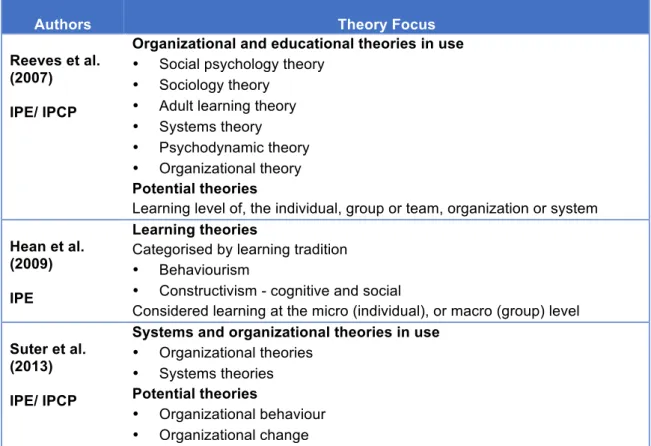
As the range of identified theories has expanded, several authors (Reeves et al. 2007; Hean et al. 2009; Suter et al 2013) have attempted to review theory use in IPE. The theoretical focus for these reviews of both IPE and IPCP are presented in Table 1.
Reeves et al. (2007) conducted a scoping review addressing the use of organizational and educational theories for IPE and IPCP, categorising current theories in use including, social psychology, sociology, adult learning, systems, psychodynamics, and organizational theories. New educational and organizational theories that may have potential use in IPCP and IPE were categorized according to their focus on the individual, the team or group, or the system or organization. Suter et al. (2013) presented a sub-set of the findings from this review focussed on systems and organizational theories.
Authors Theory Focus Reeves et al.
(2007) IPE/ IPCP
Organizational and educational theories in use
• Social psychology theory • Sociology theory
• Adult learning theory • Systems theory • Psychodynamic theory • Organizational theory
Potential theories
Learning level of, the individual, group or team, organization or system Hean et al.
(2009) IPE
Learning theories
Categorised by learning tradition
• Behaviourism
• Constructivism - cognitive and social
Considered learning at the micro (individual), or macro (group) level Suter et al.
(2013) IPE/ IPCP
Systems and organizational theories in use
• Organizational theories • Systems theories
Potential theories
• Organizational behaviour • Organizational change
Table 1: Reviews of theory use in IPE and IPCP
Hean et al.’s (2009) review addressed learning theories that could assist the design or evaluation of IPE curriculum. Their aim was to provide assistance to practitioners in the field who may be overwhelmed by the plethora of available theories. They provided a framework to aid educators in the selection and application of learning theories to the development and/or evaluation of IPE. Learning theories were identified as belonging to two broad learning traditions, behaviourism, and constructivism. Behaviourist approaches focussed on outcomes expressed as behaviour and interprofessional competencies. Such theories are concerned with the outcomes of individual learners and view learning as a consequence of the learner’s experience of their own behaviours and how their behaviours are modified in response to their actions and activities. This approach, with its focus on individual student outcomes, is common in uni-professional learning and appears to have carried over into IPE, as evidenced by the focus on outcomes rather than processes of learning within the literature. Clark (2006) speaks to this preference in his discussion of what a theory of IPE might look like. He suggests that curriculum developers have relied upon what they know from their uni-professional educational experience and such approaches fail to take the social nature of IPE into consideration. This is an important omission, as this social aspect of learning is a key factor that differentiates interprofessional learning from uni-professional learning.
In contrast to behaviourism, with its focus on outcomes, constructivism focuses on the learning process. Within the constructivist tradition Hean et al. (2009) subcategorized learning theories as cognitive constructivism or socio-constructivism. Cognitive
constructivism is interested in the learner’s experiences of the process. Key aspects are, how students create cognitive structures, problem-solve, develop higher order skills, and the level to which students are self-directed and actively engaged in their learning process. Socio-constructivism is concerned with the social aspects of learning. Focussing on the context of learning, involving the social encounters students experience and how students construct new knowledge and meaning through such collaborative encounters (Dewey 1966; Atherton 2009). This approach supports the need to address the social nature of interprofessional learning highlighted by Clark (2006).
The reviews by both Reeves et al. (2007) and Hean et al. (2009) address whether theory was used to address learning at the level of the individual (micro level), or group (macro level). The macro level could be argued to be particularly appropriate in interprofessional learning, given the interactive and social nature of such endeavours. While Hean et al.’s (2009) review identified learning theories from different learning traditions and highlighted some that may have utility in IPE curriculum development and evaluation; they found few examples of the explicit application of these theories within IPE curricular development or evaluation.
Each of these authors stressed the need for a toolbox approach to the selection of theory especially given the large range of potential theories available. Several additional authors have presented a range of considerations when selecting a theory or theories (Colyer et al. 2006; Clark 2006; Hean et al. 2012; Barr 2013; Clark 2013), which are listed below.
• Consider how theory may assist in both curricular design and evaluation
• Reflect upon the learning traditions and experiences of curricular designers that may
influence theory selection
• Consider the dimension or dimensions of IPE on which the activity is focussed on
addressing.
• Consider if the IP intervention is concerned with change at the level of the individual, the
group, or the system/organization (micro or macro level).
• Consider the context and select a theory or theories based on their ability to increase
understanding of IPE within a particular context
• Select the tool or tools that are the best fit for the task at hand • Consider the use of multiple theories.
While it is clear that a range of possible theories and suggestions for their selection are available to IPE designers, it is evident within the literature that the judicious application of such theory to IPE design is not the norm.
2.2.2. Interprofessional learning activities
Active student engagement is argued to be an essential component of IPE (Barr 1996, 2002; Hammick 1998; Reeves 2005; WHO 2010; Thistlethwaite 2012). The World Health Organisations Framework for Action on Interprofessional Education and Collaborative Practice suggests that IPE is most effective when it uses the principles of adult learning, the learning involves participant interaction, and uses learning methods that are reflective of the reality of student’s experiences in practice (WHO 2010).
A wide variety of interprofessional learning activities including, workshops, seminars, simulations, didactic courses, and clinical placements or fieldwork experiences, are evident in the literature (Hallin et al. 2009). Learning activities vary considerably, in the contextual setting (e.g. education or practice, hospital or primary care, acute or long-term care), participant population (e.g. pre-licensure or post-licensure), professional mix, timing (e.g. timing within the pre-licensure curriculum), duration (hours to months), and intended outcomes (Tunstall-Pedoe et al. 2003; Pollard et al. 2005; McIlwaine et al. 2007; Haller et al. 2008).
Reeves et al. (2011) conducted a scoping review aimed at providing conceptual clarity to interprofessional activities within the education and practice settings, by developing a theoretically based and empirically tested interprofessional framework. They examined how interprofessional activities were conceptualized, implemented, and assessed. Identifying three intervention types, interprofessional education (IPE), interprofessional practice (IPP), and interprofessional organization (IPO). IPE involved interventions that occur when two or more professions learn interactively to improve collaboration and the quality of care. IPP included activities or procedures incorporated into regular practice to improve collaboration and the quality of care. IPO involved changes at the organizational level (e.g. space, staffing, policy) to enhance collaboration and care quality (Reeves et al. 2011, p.169). Their framework addressed the participants, intervention type, objectives, and outcomes
(intermediate, patient, and system). Despite a surge in publication of information regarding interprofessional activities, they described the area as continuing to be plagued by poor conceptualization.
The focus of this thesis is on pre-licensure IPE and in this area, they identified activities including simulation, seminars, workshops and courses, and placement or fieldwork experiences. Reeves et al. (2011) estimated one-third of IPE activities for pre-licensure students involve clinical placement experiences. The setting for this research study, the student-run interprofessional clinic, was not addressed by any of the included studies. This unique setting may be worth close attention as it may have the capacity to address IPE, IPP and IPO components for pre-licensure students as it is located within practice, and the students are responsible for both care delivery and clinic management. Such settings may
also provide opportunities to engage in systems-based learning (Colbert et al. 2010; Sheu et al. 2013). Reeves et al. (2011) describe IPO interventions as typically involving health professionals at a single site who collaborate together to change policies, culture, working practices, and physical space with an intention to improve process and outcomes. This argument will become more evident as the nature, purpose, and outcomes of student-run clinics are presented in sections 2.3 and 2.4.
2.2.3 Different forms of interprofessional work
Interprofessional education involves students working together in teams. Various models and taxonomies have identified key factors involved in teamwork (Sundstrom et al. 1990; Mohrman et al. 1995; Pritchard 1995; Cohen and Bailey 1997; Headrick et al. 1998; Reeves et al 2010). These include a shared team identity, clear goals, and roles, interdependence of team members, integration of work, shared responsibility, and the predictability, urgency and complexity of team tasks. Reeves et al. (2010) specifically addressed these
characteristics with respect to interprofessional work. Presenting these factors on a continuum identifying different forms of interprofessional work. These were networking, coordination, collaboration, and teamwork. Networking was represented at the lower end of the continuum involving participation in ad hoc groups, with flexible membership, as participants come and go, as their specific skills or expertise are needed. They engage in predictable non-urgent tasks and the arrangements for networks are typically informal (Ovretveit 1997). Shared goals, interdependence, or team identity are not emphasised. Interprofessional coordination is more formally organised than networking, as it requires more frequent communication amongst care providers to ensure the provision of coordinated care. According to Gittell et al. (2000), such communication needs to be frequent, timely and accurate. Shared identity, integration, and interdependence are not emphasised but it does require some shared accountability and clarity regarding both the roles and goals of participation.
Reeves et al. (2010) described interprofessional collaboration as requiring shared accountability and interdependence for the tasks participants are undertaking, tasks that tend to be predictable and non-urgent. While the clarity of roles and goals is seen as necessary, there is less emphasis on a shared team identity or the integration of team members, than would be the case in interprofessional teamwork. Delva et al. (2008), suggest this type of work is highly typical of work within primary care settings.
Teamwork involves the development of a shared team identity, clarity with respect to team roles, tasks and goals, high levels of interdependence and team integration, and shared accountability and responsibility. Team tasks tend to involve higher stakes, be more complex, unpredictable, and be more urgent (Reeves et al. 2010)
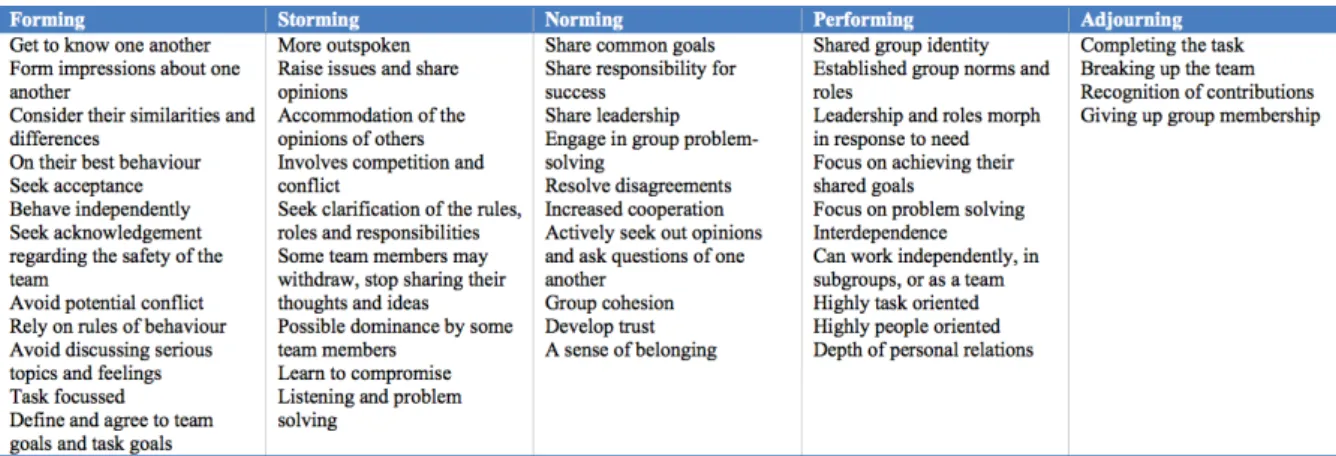
A team has been defined as: “two or more individuals with specified roles interacting adaptively, interdependently, and dynamically towards a common and valued goal” (Salas et al. 2009, p. 561-562). Tuckman and Jensen’s (1977) model of group development describes several progressive stages thought to be involved in forming new teams: forming, storming, norming, performing and adjourning. The common characteristics of these various stages are presented in Table 2.
Table 2: Tuckman and Jensen’s stages of group development
Tuckman and Jensen’s model (1977) used a robust process in its development, including an extensive review of studies on group work and it has been extensively used within the team science literature. It is important to note that while this model is widely used its validity has not been fully evaluated and it has been criticised for providing an overly simplistic description of group development (Poole and Roth 1989; Buchanan and Huczynski 1997; Rickards and Moger 2000). However, a comparison of models addressing the stages of group or team formation by Jacques (1998) revealed a high degree of agreement with the stages identified by Tuckman and Jensen.
2.2.4. Addressing the impact of interprofessional education
The IPE literature demonstrates the use of a wide range of terms to describe the impact of IPE activities. These include learning outcomes, learning objectives (Charles et al. 2004), competencies (Freeth and Reeves 2004), and capabilities (Gordon and Walsh 2005). With regards to the terminology used to describe the end goal of IP learning, Thistlethwaite and Moran (2010) found the term learning objective used most commonly to identify what the programme was expected to achieve. Competencies, capabilities, and outcomes were used to describe what the programme participants were expected to achieve.A debate is evident within the field regarding the use of the terms competencies or capabilities. Capability refers to the extent to which individuals can adapt to change, generate new knowledge, and continue to improve their performance (Fraser and
and identify what an individual knows or can do. Interprofessional frameworks within the UK and Australia use the language of capabilities (Curtin University 2011) while frameworks from Canada and the US use the language of competencies (Canadian Interprofessional Health Collaborative (CIHC) 2010; IPEC 2011).
Competencies have been used for some time in health professional education in the US. Competency-based education focuses on defining what graduates are expected to be able to do in practice, as opposed to what they should know or demonstrate in training
(capacities) (Thistlethwaite et al. 2014). In 2001, the US Institute of Medicine suggested that system redesign, in particular, developing effective teams, was essential to achieve care that was patient centred, safe, timely, effective, efficient, and equitable (Institute of Medicine (IOM 2001). Two years later they identified, patient-centred care, interdisciplinary teamwork, evidence-based practice, quality improvement, and informatics, as core competencies for all health professions education (IOM 2003). In response, health professional educational organizations within the US began (to various degrees) to implement changes in policy and accreditation standards to focus on teamwork training for health professional students (Cronenwett et al. 2007, 2009). While these efforts involved the development of standards for individual professions they did not set common standards across professions. However, it does suggest that health professional educational organizations were embracing the need for interprofessional collaboration and team training by implementing requirements for educational programmes to integrate these competencies into their curricula.
The Interprofessional Education Consortium (IPEC), an interprofessional organization formed by six US national professional organisations (dentistry, nursing, osteopathic medicine, medicine, pharmacy, and public health) drew this work together in the production of shared core competencies for collaboration (IPEC 2011). Through consensus working on IPE and IPCP definitions, teamwork and team-based care, agreement on competency definitions, and reference to existing US and global frameworks, models, and competency domains, IPEC developed a set of core competencies for IPCP (IPEC 2011). The four identified competency domains were: interprofessional teamwork and team-based practice, interprofessional communication practices, roles and responsibilities for collaborative practice, and values and ethics for interprofessional practice. The publication of these competencies resulted in their widespread adoption by a range of professions across the US, and an associated focus on the collaborative competencies within professional accreditation standards. Additional professional organisations (allied health professions, occupational therapy, optometry, physical therapy, physician assistants, podiatric medicine, psychology, social work, and veterinary medicine) clamoured to join IPEC, which has now expanded to include 15 professional organizations. The IPEC competencies have now been widely adopted across the US and are increasingly referred to in the objectives and
2.2.4.1. Outcomes of IPE
A review by Thistlethwaite and Moran (2010) attempted to identify key learning outcomes of IPE that promote interprofessional practice. Their review, addressing pre and
post-professional IPE, identified six prevalent outcome themes, teamwork, roles and responsibilities, communication, learning/reflection, the patient, and ethics/attitudes. Teamwork was the most commonly described outcome. Reeves et al. (2011) presented a combined set of learning objectives for pre-licensure and post-licensure IPE within their previously described framework. These included teamwork, communication, role
understanding, collaboration, leadership, interdisciplinary understanding/care/interaction, cooperation, interagency working, interprofessional working/practice/approach, relationship skills, and coordination. Specific intermediary outcomes for pre-licensure IPE were identified as, reactions, attitudes, awareness, knowledge, skills, and practice. No patient or system outcomes were identified for pre-licensure IPE within this framework.
Several classifications and typologies have been applied to IPE outcomes, the most common being Kirkpatrick’s Typology of Educational Outcomes (Kirkpatrick, 1994). Kirkpatrick’s work addressed the educational outcomes of workplace learning identifying four outcome levels, reactions, learning, behaviour, and results. Several authors have adapted this typology to fit certain circumstances, for example, Praslova (2010), adapted the typology to more closely reflect learning in the context of higher education. Of most relevance to IPE is the modified Kirkpatrick of Barr et al. (2000), who modified the typology to focus on the outcomes of IPE (see Table 3). This typology has been widely used in the literature to classify IPE outcomes.
Modified Kirkpatrick (Barr et al, 2000)
Level 1: Learners’ reactions – Includes learner satisfaction and views of the learning experience
Level 2a: Modification of attitudes /perceptions – Addresses outcomes that pertain to changes in reciprocal attitudes towards patients, their condition, circumstances, care, and treatment, or perceptions between participant groups.
Level 2b: Acquisition of knowledge /skills - Knowledge of concepts, procedures, and principles of IP collaboration, Skills thinking problem/solving, psychomotor and social skills linked to collaboration.
Level 3: Changes in behaviour – Behavioural change transferred from learning environment to the workplace prompted by modifications in attitudes or perceptions, or applying new knowledge in practice.
Level 4a: Change in organizational practice - Changes in the organization or delivery of care attributed to the educational programme.
Level 4b: Benefits to patients/clients –Improvements in the health and well being of patients/ clients as a direct result of the educational programme.
2.2.4.2. Examining the evidence for the outcomes of interprofessional
education
A series of systematic reviews, narrative reviews, parallel reviews and scoping reviews have examined IPE from the 1990’s to the present (summarised in Appendix 1). Following the trajectory of these studies provides valuable information on the attempts of the research community to evaluate the impact of IPE, and raises many questions. They catalogue the discourse in the field and the issues that have arisen as many authors have attempted to answer the question, “ does it work?”
Reflecting on the framework developed by Reeves et al. (2011) these reviews have addressed both pre-licensure and post-professional learners, including various
combinations of outcomes related to IPE, IPP, and IPO. This section focuses on IPE for pre-licensure students and attempts to present the data regarding this particular topic. However, some overlap may be evident as pre-licensure and post-professional IPE are commonly discussed within the same review (e.g. Barr et al. 2000; Freeth et al. 2002; Zwarenstein et al. 2005; Hammick et al 2007; Reeves et al. 2010a, 2011, 2013, Brandt et al. 2014). Several reviews have focussed solely on pre-licensure IPE (Cooper et al. 2001; Zwarenstein et al. 2001; Davidson et al. 2008; Abu-Rish et al. 2012; Olson and Bialocerkowski 2014) and several have targeted only post-professional IPE (Zwarenstein et al. 1999; Reeves et al. 2010b). Reviews have varied in purpose, population, setting, methodological inclusion criteria, outcomes of interest, and quality assessment and review approaches, yielding varied results.
2.2.4.3. Summary of key findings of systematic, narrative, parallel and
scoping reviews
For pre-licensure IPE self-reported learner outcomes were the norm (Cooper et al. 2001; Freeth et al. 2002; Hammick et al. 2007; Davidson et al. 2008) with the modified Kirkpatrick typology commonly used to classify study outcomes (Hammick et al. 2007; Davidson et al. 2008). IPE was reported as being generally well received by learners with high ratings on satisfaction with the IPE activities or programmes (Cooper et al. 2001; Hammick et al. 2007; Davidson et al. 2008; Reeves et al. 2010a). Positive impact on knowledge and skill
acquisition was evident (Cooper et al. 2001; Hammick et al. 2007; Davidson et al. 2008) with Reeves et al. (2010a) specifically identifying a positive impact on the knowledge and skills for collaborative working. Positive impacts on perceptions and attitudes were also identified in several reviews (Cooper et al. 2001; Freeth et al. 2002; Davidson et al. 2008) with Hammick et al. (2007) highlighting how evidence for changes in attitudes and
perceptions towards others in the care team was less evident than for knowledge and skill acquisition.
Zwarenstein’s (2001; 2005) reviews which focussed on patient and system level outcomes failed to retrieve any pre-professional articles for inclusion. The limited retrieval of papers may have resulted from the methodological criterion used for inclusion (randomized controlled trials, controlled before and after studies, interrupted time series and case-controlled time series), which may have excluded studies with potential to add insight to this topic. Two later reviews by Reeves et al. (2010a, updated in 2013) addressing both pre-licensure and post-professional IPE reported some evidence that IPE can improve the delivery of services and make a positive impact on care, however, these changes were noted in relation to only post-professional IPE. Post-professional IPE showed statistically significant and clinically relevant changes in patient outcomes (Zwarenstein et al. 2005; Reeves et al 2010a, 2013), professional practice (Reeves 2001, 2010a), and system level changes including process change (Zwarenstein et al. 2005; Reeves et al. 2013). Focussing on only pre-licensure studies Cooper et al. (2001) suggests that effects of IPE on
professional practice were only minimally discernable.
In summary, there is some evidence of the impact of pre-qualification IPE on knowledge and skills, based largely on self-reported outcomes, with more limited evidence of changes in attitudes and behaviours, and minimal evidence of changes in system/organization or patient outcomes. The outcomes of pre-qualification IPE are often not made explicit, focusing on self-reported intermediary outcomes (student attitudes and satisfaction) rather than those pertaining to the impact of such training when students engage in patient care or join the healthcare workforce (patient and systems outcomes) (Rodger and Hoffman 2010; Reeves et al. 2011). Therefore a study examining the impact of student participation in an interprofessional student-run clinic involving students engaging in patient care in a clinical setting is argued to be likely to provide valuable information regarding learner, patient and system outcomes. As such this study may assist in illuminating how IPE impacts students and may lend insight into patient and system level processes and outcomes.
2.3.4.4. Issues raised by these reviews
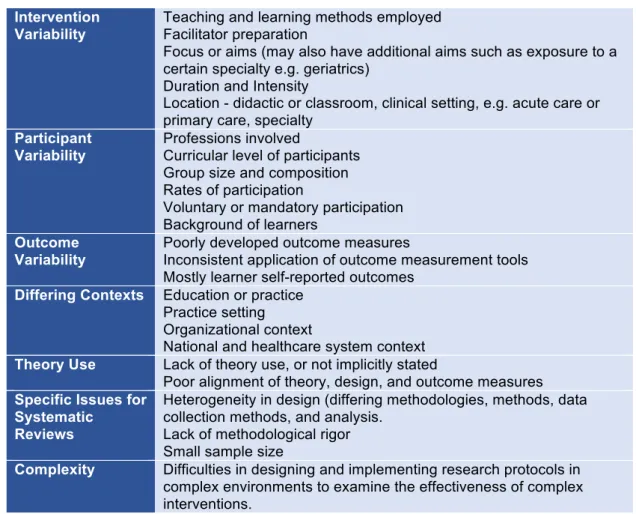
The authors of the reviews discussed in the previous section identified several important methodological challenges, which are summarized in Table 4.
Methodological quality
The identified concerns include the lack of methodological rigour in study design and
concerns regarding the quality of evaluations (Cooper et al 2001; Reeves et al 2010a; Olson and Bialocerkowski 2014). Many papers are descriptive in nature providing limited
information regarding programme structure, teaching and learning methods, evaluation process or outcomes (Reeves 2001; Freeth et al. 2002). Reviewers consistently report an over-reliance on self-reported outcomes, poorly developed outcome measures (Cooper et al, 2001) and inconsistency in the use of outcome measurement tools (Davidson et al. 2008; Reeves et al. 2010a).