Research Review
Computer Science
2009-‐2014
February, 2016
Published under the authority of the Boards of nine participating Universities by: De Onderzoekerij Vondellaan 58 2332 AH Leiden The Netherlands Phone: +31 6 24 81 21 76 E-‐mail: [email protected] Internet: www.onderzoekerij.nl
Contents
PREFACE ... 6
1. INTRODUCTION ... 7
1.1 THE SCOPE OF THE ASSESSMENT ... 7
1.2 THE REVIEW COMMITTEE ... 7
1.3 PROCEDURES FOLLOWED BY THE COMMITTEE ... 8
1.4 COMMENTS ON THE PROCESS ... 8
2. GENERAL OBSERVATIONS AND RECOMMENDATIONS ... 10
2.1 EVOLUTION OF THE COMPUTER SCIENCE RESEARCH FIELD ... 10
2.2 OVERALL STATUS AND DEVELOPMENTS OF COMPUTER SCIENCE RESEARCH IN THE NETHERLANDS ... 10
2.3 HUMAN RESOURCES / ORGANISATIONAL STRUCTURE ... 12
2.4 PHD EDUCATION, GRADUATE SCHOOLS, LOCAL AND NATIONAL ... 13
2.5 RESEARCH INTEGRITY ... 13
3. ASSESSMENT OF THE INSTITUTE – UNIVERSITY OF AMSTERDAM AND VU UNIVERSITY AMSTERDAM ... 15
3.1 RESEARCH AREA ... 16
3.2 RESEARCH QUALITY ... 16
3.3 RELEVANCE TO SOCIETY ... 19
3.4 VIABILITY ... 21
3.5 PHD PROGRAMMES ... 22
3.6 RESEARCH INTEGRITY ... 23
3.7 SUMMARY AND RECOMMENDATIONS ... 23
4. ASSESSMENT OF THE INSTITUTE – TU DELFT ... 26
4.1 RESEARCH AREA ... 27
4.2 RESEARCH QUALITY ... 27
4.3 RELEVANCE TO SOCIETY ... 28
4.4 VIABILITY ... 29
4.5 PHD PROGRAMMES ... 30
4.6 RESEARCH INTEGRITY ... 31
4.7 SUMMARY AND RECOMMENDATIONS ... 32
5. ASSESSMENT OF THE INSTITUTE – TU EINDHOVEN ... 33
5.1 RESEARCH AREA ... 34
5.2 RESEARCH QUALITY ... 34
5.3 RELEVANCE TO SOCIETY ... 35
5.4 VIABILITY ... 35
5.5 PHD PROGRAMMES ... 36
5.6 RESEARCH INTEGRITY ... 37
5.7 SUMMARY AND RECOMMENDATIONS ... 37
6. ASSESSMENT OF THE INSTITUTE – UNIVERSITY OF TWENTE ... 39
6.1 RESEARCH AREA ... 40
6.2 RESEARCH QUALITY ... 40
6.3 RELEVANCE TO SOCIETY ... 41
6.4 VIABILITY ... 42
6.5 PHD PROGRAMMES ... 42
6.6 RESEARCH INTEGRITY ... 43
7. ASSESSMENT OF THE INSTITUTE – UNIVERSITY OF LEIDEN ... 44
7.1 RESEARCH AREA ... 45
7.2 RESEARCH QUALITY ... 45
7.3 RELEVANCE TO SOCIETY ... 46
7.4 VIABILITY ... 47
7.5 PHD PROGRAMMES ... 47
7.6 RESEARCH INTEGRITY ... 48
7.7 SUMMARY AND RECOMMENDATIONS ... 48
8. ASSESSMENT OF THE INSTITUTE –UTRECHT UNIVERSITY ... 50
8.1 RESEARCH AREA ... 51
8.2 RESEARCH QUALITY ... 51
8.3 RELEVANCE TO SOCIETY ... 52
8.4 VIABILITY ... 53
8.5 PHD PROGRAMMES ... 54
8.6 RESEARCH INTEGRITY ... 54
8.7 SUMMARY AND RECOMMENDATIONS ... 55
9. ASSESSMENT OF THE INSTITUTE – UNIVERSITY OF GRONINGEN ... 57
9.1 RESEARCH AREA ... 58
9.2 RESEARCH QUALITY ... 58
9.3 RELEVANCE TO SOCIETY ... 59
9.4 VIABILITY ... 60
9.5 PHD PROGRAMMES ... 62
9.6 RESEARCH INTEGRITY ... 62
9.7 SUMMARY AND RECOMMENDATIONS ... 62
10. ASSESSMENT OF THE INSTITUTE – RADBOUD UNIVERSITY ... 64
10.1 RESEARCH AREA ... 65
10.2 RESEARCH QUALITY ... 65
10.3 RELEVANCE TO SOCIETY ... 66
10.4 VIABILITY ... 66
10.5 PHD PROGRAMMES ... 67
10.6 RESEARCH INTEGRITY ... 68
10.7 SUMMARY AND RECOMMENDATIONS ... 68
11. ASSESSMENT OF THE RESEARCH SCHOOLS – GENERAL CONCLUSIONS ... 70
12. ASSESSMENT OF THE RESEARCH SCHOOLS – ASCI ... 72
13. ASSESSMENT OF THE RESEARCH SCHOOLS – IPA ... 73
14. ASSESSMENT OF THE RESEARCH SCHOOLS – SIKS ... 74
APPENDIX A: CURRICULA VITAE OF THE COMMITTEE MEMBERS ... 75
APPENDIX B: PROGRAMME OF THE SITE VISIT ... 78
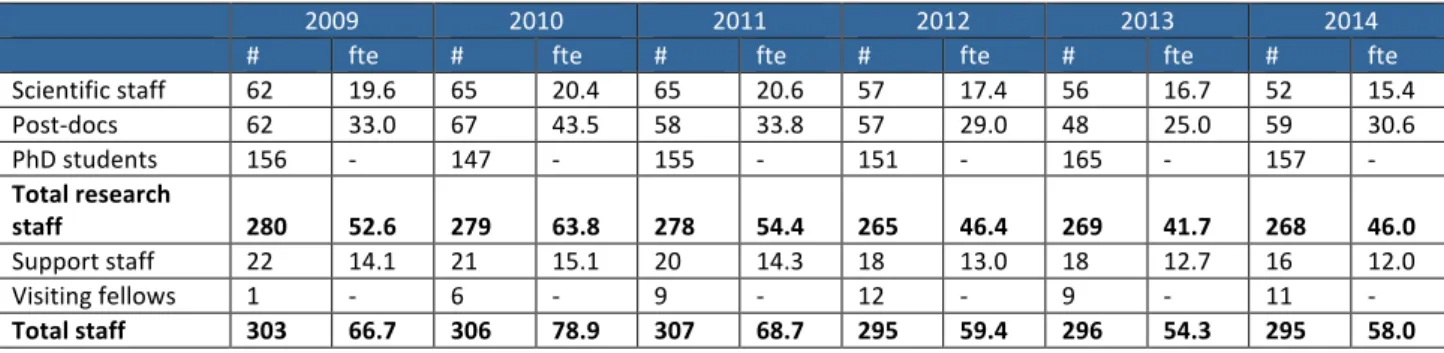
APPENDIX C.1: QUANTITATIVE DATA – UNIVERSITY OF AMSTERDAM ... 84
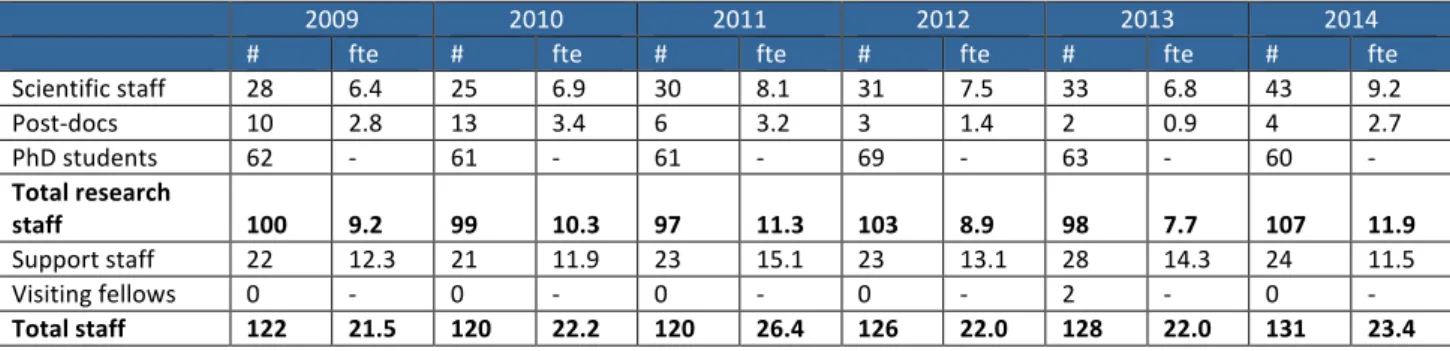
APPENDIX C.2: QUANTITATIVE DATA – VU UNIVERSITY AMSTERDAM ... 85
APPENDIX C.3: QUANTITATIVE DATA – TU DELFT ... 86
APPENDIX C.4: QUANTITATIVE DATA – TU EINDHOVEN ... 88
APPENDIX C.5: QUANTITATIVE DATA – UNIVERSITY OF TWENTE ... 89
APPENDIX C.7: QUANTITATIVE DATA – UTRECHT UNIVERSITY ... 91
APPENDIX C.8: QUANTITATIVE DATA – UNIVERSITY OF GRONINGEN ... 92
APPENDIX C.9: QUANTITATIVE DATA – RADBOUD UNIVERSITY ... 94
APPENDIX C.10: QUANTITATIVE DATA – RESEARCH SCHOOLS ... 95
APPENDIX D: EXPLANATION OF THE SEP SCORES ... 97
Preface
Computer science is a fascinating field, which is evolving at a fast pace. It is exciting in itself, but in addition the technology based on this science has a disruptive effect on all aspects of our society as well as on other fields of scientific research. Many aspects of information and communication technology develop at an exponential rate and this fact creates many new research challenges for the field of computer science. This field is both interesting and very important. Therefore assessing the quality of computer science research on a national scale in the Netherlands was a challenging, but also a very interesting task.
Many people, staff members of computer science departments, staff members of national graduate schools as well as the members and the secretary of the review committee have worked very hard to perform this quality assessment of computer science research in The Netherlands over the period 2009 -‐ 2014. I sincerely thank all people involved in this difficult task for their dedication as well as for the pleasant and informative interaction during the site visit.
The result of all this work is presented in this report. I am very pleased that the main
conclusion of the review committee is that computer science research in the Netherlands is of a very high quality, broad and with high impact in international perspective. The
committee was pleased to note an increase in collaboration on a national level. We have identified research of top quality in several places, but at the same time we have not shun our criticism. All our critical remarks are meant to be constructive and we hope our recommendations will contribute to further growth and prosperity of the field.
Gerard van Oortmerssen
1. Introduction
1.1 The scope of the assessment
The quality assessment of research in computer science is part of an assessment system as specified in the Standard Evaluation Protocol For Public Research Organisations of 2015 by the Association of Universities in The Netherlands (VSNU), the Netherlands Organisation for Scientific Research (NWO), and the Royal Netherlands Academy of Arts and Sciences
(KNAW).
The review committee was asked to perform an external review of the research in Computer Science of nine universities and three research schools in the Netherlands. The main
objective was to assess the quality and relevance to society of the research conducted by Dutch departments of Informatics and Computer Science between 2009 and 2014 as well as their strategic targets and the extent to which they are equipped to achieve them.
Three main criteria are considered in the assessment: research quality, relevance to society, and viability. In addition to the criteria above, the assessment also considers two further aspects: PhD programmes and research integrity. International trends and developments in science and society were taken into account in the analysis.
This report describes findings, conclusions and recommendations of this external assessment of Computer Science.
1.2 The Review Committee
The boards of the nine participating universities have appointed the following members of the committee for the research review:
• Prof. dr. Gerard van Oortmerssen (chair) • Prof. dr. Christel Baier
• Dr. Mary Czerwinski • Prof. dr. Xiaohui Liu • Prof. dr. Bashar Nuseibeh • Prof. dr. Lothar Thiele • Prof. dr. Wolfgang Wahlster
More detailed information about the members of the committee can be found in Appendix A. The Board has appointed dr. Annemarie Venemans as the committee secretary.
All members of the committee signed a declaration and disclosure form to safeguard that the panel members judge without bias, personal preference or personal interest, and the judgment is made without undue influence from the institute, the programmes or other stakeholders. Any existing professional relationships between committee members and programmes under review were reported. The committee concluded that there was no risk in terms of bias or undue influence.
1.3 Procedures followed by the Committee
The committee received detailed documentation consisting of the following parts:
• Self-‐evaluation report of the unit under review, including all the information required by the Standard Evaluation Protocol (SEP) with appendices;
• Copies of key publications.
Prior to the committee meeting, each research unit was assigned to two reviewers, who independently formulated a preliminary assessment. The final assessments were made by the entire committee, based on the documentation provided by the institute, the key publications and the interviews with the management and with the leaders of the programmes. The interviews took place on 7 November – 10 November 2015. After the interviews the committee discussed the scores. The drafts for the assessment report were finalised through email exchanges. The final version was presented to the research units for comments concerning factual inaccuracies.
The assessments were carried out in accordance with the guidelines as formulated in the new protocol SEP 2015 -‐ 2021 which differs substantially from the protocol used in the previous assessment, SEP 2003 -‐ 2009. In particular, the categories and scores are different and therefore cannot be compared with the scores in the Assessment Report Computer Science 2002 -‐ 2008. The major changes in the SEP protocol presented a challenge to the assessment committee.
The committee decided that the scores should be interpreted according to the description of the meaning of the four numerical scores. In case of research quality, the gap between scores two and three seems to be too large. The committee is of the opinion that every department it assessed conducts internationally recognised research. Therefore, it graded research, which is good rather than very good also with a two.
The committee would like to emphasise that the scores are only one element in the assessment and should be considered in combination with the qualitative evaluation, the context as well as the differences between subfields of computer science.
1.4 Comments on the process
The basic point of departure for this assessment was, similar to the previous one, to be a national assessment, in which all computer science research at a university was considered as one single unit, irrespective of the administrative organisation. In practice, a unit often consists of several departments, groups or sections. Sometimes a unit may even be a collection of computer science research groups across several departments, while some universities have computer scientists working in (virtual) institutes, which are
multidisciplinary in nature. It is important to note that a national assessment requires a uniform basis: comparable granularity of organisational units and self-‐assessment reports of equal size and detail. Also it is worth mentioning that there are a few universities which did not participate in the assessment, but which have some computer science researchers embedded in various non-‐computer science departments.
The downside of a national assessment such as this is the number of assessments the
committee has had to make within a short period of time. On reflection, the committee feels that there should have been more time available for internal deliberations and reporting during the site visit. Furthermore, as the assessment was on the institution level, it was hard to consider all relevant research in great depth, given the type of information required from the institutions. In general, there appears to be more emphasis on the research strategy and organisational aspects than on content in the SEP.
With respect to the concept “unit” it should also be remarked that an organisational unit in computer science often does not include all the relevant research that is carried out at a university. The committee observed that at several universities well-‐known researchers specialising in fields like logic and computational linguistics, who are considered as computer scientists by their international peers, were not included in the present assessments because of their positioning within the university organisation.
Most universities obviously put a lot of effort into the writing of their self-‐assessment reports. In many of the documents the committee missed the spark of exciting research and a clear vision for the future. This may have been due to understandable report length limits, but could indicate a need to better promote and publicise the range and depth of activities.
2. General observations and recommendations
2.1 Evolution of the Computer Science Research Field
Computer science is a relatively young field, which has changed the world and our daily lives in an unprecedented way. This change is set to continue and even accelerating. In addition to its impact on our society, the field itself is evolving continually and its scope is widening. New topics continue to emerge, with recent examples including data science, machine learning and the internet of things.
As computer science has changed business and society as a whole, the field itself is also changing academic research and driving science in many other disciplines. Because of its dual importance for society as well as for scientific research, computer science and ICT are often regarded as providing enabling technology. This is unwise, because it may result in neglecting the importance of investing in computer science itself.
The extremely fast evolution of computer science and the technologies (ICT) built on its groundbreaking results present challenges to the field. During the present assessment several of these challenges were visible. As an example, one of the self-‐evaluation reports mentions as a threat:”….research is increasingly taken over by big and rich industrial players (Google, Facebook, Yahoo!, Microsoft) and developed at a much faster rate than at
universities”. Another example is multidisciplinary research, which may blur the boundaries of computer science, because computer scientists collaborate with experts in mathematics, electrical engineering, social and life sciences, and the humanities. Here the challenge is to identify multidisciplinary research questions that provide opportunities for high quality scientific research in both computer science as well as in the other disciplines. During the site visits, the committee has heard several examples of multidisciplinary projects that indeed had such a character.
2.2 Overall status and developments of computer science research in the Netherlands
From the early years of computer science as a discipline, the Netherlands has had a strong position with high quality researchers, often with high international impact. Results of Dutch computer science research have led to products with worldwide applications. Examples are the computer language Python, algorithms for digital coding of compact discs and algorithms for car navigation systems. Dutch computer scientists have also made major contributions to the development of WiFi and Bluetooth, as well as the Web Ontology Language OWL.
In the previous national assessment of Computer Science 2002 – 2008, the assessment committee noted the following general conclusion on the health of the field: “In general, computer science in the Netherlands is a vibrant enterprise. As a country, the Netherlands remains among the top nations in computer science research, and in the absolute top in a number of sub-‐areas.” Following this positive general conclusion about the health of the field, the committee warned that the discipline of computer science in the Netherlands was under siege, due to declining funding.
The present committee is pleased to conclude that the overall assessment of the quality of Dutch computer science research made by the previous committee is still valid. This
conclusion is also supported by a recent Canadian study, which shows that computer science as a whole in the Netherlands is broad and has a high impact, a position which is close to that of the USA and UK1.
The committee has seen various positive developments over the past period. The new generation of staff and PhD students is very motivated and of high quality. There is increased collaboration, among computer scientists within units, within universities with other
disciplines, but also among computer scientists from different universities. Examples of such cooperation are, for instance, the national graduate schools, the institute NIRICT of the three Technical Universities, the large research programme COMMIT and the participation in EIT Digital.
The COMMIT programme was a five year, public-‐private partnership project with a total of more than 100 partners and a budget of 100 million euros, half of which was funded by the national proceeds of natural gas exploitation. The programme not only stimulated
collaboration between researchers and companies and societal organisations, but was also extremely beneficial for community building of computer scientists on a national scale.
The committee recommends that this aspect of collaboration should also receive special attention in future assessments: monitoring the external networks and interaction, including this as an item to judge the viability of units and giving clear assessment and
recommendations on the complete system of research in addition to that of individual units.
Where the previous assessment committee recommended that the field should organise itself and collectively advocate for computer science with the national funding agencies, the present committee is pleased to conclude that indeed the field has organised itself in IPN and participates in the national ICT team for the Top Sectors. It is important to strive for recognition of computer science as an important area for science, economy and society.
On the downside, the committee is concerned, because the research capacity is under pressure and is not keeping pace with the growing importance of computer science, both for science in general and for society. There are several causes for this concern:
• A significant growth in the number of students results in increased educational obligations for existing staff; although more students lead to more funding, there is a time delay of sometimes several years so that overloading of staff is inevitable. The demand for computer scientists and data scientists is expected to grow further in the near future;
• Available sources of government funding declined and emphasis shifted from fundamental to more applied research;
1 Sack JR, Bauer M, Condon A, Dudek G, Frappier M. Computer Science Research in Canada: Strengths, Challenges and Recommendations. Prepared by the NSERC Computer Science Liaison Committee
• The government policy for stimulation of innovation focuses on the so-‐called “top sectors” in industry, and ICT is wrongly not considered to be a top sector;
• Since the COMMIT programme is in its final stage and funding for follow-‐on activities is unclear, there is concern about maintaining much-‐needed momentum;
• Shifts in available sources of funding and decreasing success rates lead to increased time needed for writing proposals;
• While so-‐called valorisation activities and collaboration with industrial and societal partners have greatly increased, thanks to projects like COMMIT, this development has resulted in less room for more foundational and “long-‐term” research. A healthy balance should be restored.
The viability of the field is at risk, since funding is decreasing while the need for research is increasing and the number of students will grow further in the near future. The committee therefore recommends making strong representations towards university boards and government in order to increase funding for computer science research.
2.3 Human Resources / organisational structure
One problem in the Dutch academic system is regarding the official status of assistant and associate professors. The interviews revealed that assistant and associate professors are not completely independent and, for example, they may not play the role of the official primary supervisor for their PhD students. It would be advisable that the Dutch universities work together towards the necessary legislation changes. The committee strongly recommends that associate professors should have the right to supervise and promote their own PhD candidates (like in most other countries around the world) so that these positions become more attractive for talented staff from abroad.
The committee commends the increased use of tenure-‐track positions, which have a reported success rate of 80%. However, there should be a starter kit funding package for assistant professors like in the Junior Research Groups (2 additional FTEs for 5 years) of DFG in Germany, so that they can concentrate on internationally highly competitive research and position themselves as leaders in the field.
In general, the staff are young and of high quality. Diversity, however, is a point of concern, both in terms of gender as well as of nationality. There is fierce international competition for the best talents. Globalisation is a process, which also affects universities and this aspect should be reflected in the staff composition as well.
Another point of concern is the high workload of staff. Universities should anticipate further growth in the number of students in computer science instead of lagging behind with respect to recruitment of staff.
The increasing importance of multidisciplinary research presents challenges with respect to talent development, organisation and management. In addition to specialised computer scientists there is a need for academic staff, who are both deep in their scientific discipline but can also connect to other disciplines and application domains. Some of the reviewed research units have addressed this issue and talk about staff with a T-‐profile.
With respect to embedding multidisciplinary research, the committee observed that some universities have already created multi-‐disciplinary network organisations. The committee applauds these initiatives.
The committee realises that, compared to mono-‐disciplinary research, multidisciplinary research is more complex and challenging, and where the outlets of top quality research projects are still limited. In order to facilitate and stimulate multidisciplinary research, more effort seems to be needed, also with respect to funding, peer review processes, and venues for sharing results. Involvement of computer science in multidisciplinary research
contributes to the success and visibility of other sciences. It is very important to foster the importance of fundamental research in computer science and pay due attention to the visibility and importance of computer science.
2.4 PhD education, Graduate Schools, Local and National
PhD education in computer science is of high quality in the Netherlands. There are local and national graduate schools which are complementary: local schools provide training in general research skills whereas the national schools offer specialised advanced courses in computer science. The system of national schools has some clear additional benefits. For students they are not only a source of knowledge, but also a platform that allows them to build a social network in their research field. Since the staff of these schools consists of volunteers from different universities, the schools are also a meeting place for researchers, thus stimulating collaboration.
Although the official time to complete a PhD is four years there are only a few students able to meet this requirement. Typically, about sixty percent of students will have finished within five years. The average graduation time in computer science is considerably longer than in most other European countries. A systematic investigation of the cause might provide useful insights. For example, is there a correlation between the funding scheme and the duration of the PhD completion? These insights might help to establish guidelines for the computer-‐ science departments of all Dutch universities with the general goal to shorten the graduation time, while maintaining high quality standards.
2.5 Research Integrity
All universities comply with the national VSNU guidelines on research integrity, and most universities have extended these with their own specific guidelines, advisory committees and procedures. In many cases, research integrity is also integrated in the educational program of PhD students.
Integrity is more than conducting academic research in an honest and methodologically correct way. Computer science research increasingly concerns topics with inherent ethical dimensions, be it privacy, security, or potentially negative effects that results may have on society. These issues need to be properly addressed, and it is good to note that most, if not all, of the units that have been assessed indicated that they do pay good attention to these issues.
The existence of formal procedures can be checked easily, but it is much more difficult to assess the extent to which integrity is part of the lived reality. The committee recommends research integrity as well as ethical aspects of computer science research to be an integral part of the culture of computer science research units; this could be achieved not only by procedures and compulsory courses for PhD students, but especially by discussing these aspects in the context of everyday life at a research group.
3. Assessment of the institute – University of Amsterdam and VU
University Amsterdam
Assessments UvA: Research quality: 2 Relevance to society: 1
Viability: 2 (jointly with VUA)
Assessments VuA: Research quality: 2 Relevance to society: 1
Viability: 2 (jointly with UvA)
3.1 Research area UvA
The informatics institute at UvA focuses on research in three main areas: information, complexity and system engineering. The institute consists of seven research groups:
• Machine learning • Collaborative networks
• Information language processing systems • Intelligent sensory information systems • Computational science
• System and network engineering • Theory of computer science
According to the self-‐evaluation report, the vision of the informatics institute of UvA is (1) to create impact from concept to application, (2) to create high quality by setting high
standards and (3) to create contact by being inspired in society. The focus of the institute matches with the university-‐wide research priority areas on communication and
information. Besides connections to other institutes of UvA, the institute is well connected with the local industry, the computer science department of VUA and the software-‐
engineering, database and information-‐retrieval groups at the research institute CWI. There is also a close connection to TNO that provides an excellent basis to bring research into application. The collaboration with CWI, TNO and other associated organisations is formally documented by the appointment of senior staff members of the organisations as part-‐time professors at UvA. The future research agenda is aligned to the merge with the department for compartment of computer science at VUA. Based on the current strengths of the
informatics institute of UvA, the emphasis for the research groups at UvA after the merger with the computer science department of VUA will be on data science, computer vision and machine learning.
VUA
The VUA department of computer science is concerned with understanding the foundations, the mechanisms, and the technologies for developing and deploying advanced information-‐ processing systems. The research at the computer science department VUA can be grouped into six research themes: Artificial Intelligence, Bioinformatics, Computer Systems,
Information Management and Software Engineering, Knowledge Web & Media, and Theoretical Computer Science.
Strategy of the department is collaborative, linking knowledge from many fields within and outside computer science. One of the initiatives beyond the department that aim at a strong interdisciplinary outreach and impact is the establishment of the Network Institute, the VUA interdisciplinary research collaboration concerned with the Networked World that also includes the faculties of Humanities, of Economics and Business, and of Social Sciences.
3.2 Research quality UVA
The overall impression of the research quality is very positive. It was a bit unfortunate that the self-‐evaluation report of UvA falls short on a presentation of the scientific highlights that
have been achieved in the evaluation period. During the site visit in Amersfoort, it turned out that the main strengths of the informatics institute are the research areas information retrieval, computational science, computer networks and computer vision, and more recently machine learning.
The informatics institute at UvA has a long-‐standing high reputation. Its international visibility is clear from the fact that several institute members have high level appointments in scientific committees, including the current chair of the informatics section of Academia Europae and the editor-‐in-‐chiefs for the Elsevier’s “Journal of Computational Science” and “Future Generation of Computing Systems” and ACM Transactions on Information systems. During the evaluation period 2009-‐2014, two members of the institute received prestigious awards for their outstanding research work in databases and computational sciences. The institute was very successful by acquiring personal research grants of NWO (four VENI grants, five VIDI grants and two VICI grants) and two ERC starting grants. Furthermore, several institute members received best paper awards and other prizes illustrating the recognition of the work by individual institute members for the society.
The self-‐evaluation report contains a citation analysis in terms of tables with the h-‐indices and number of publications and a comparison to the University of Edinburgh (the latter together with the computer science department of VUA). Although the committee finds that the index-‐based analysis should not be overestimated, it agrees that the result of this
analysis can be seen as a further indication for the high scientific impact and the potential of many junior researchers at the informatics institute at UvA. According to the appendix of the self-‐evaluation report, the committee finds the research output in terms of the number of published journal articles, peer-‐reviewed conference papers, books, book chapters and completed PhD theses very good for all groups and stable over the evaluation period. Besides the personal research grants mentioned above, the institute participated in more than thirty EU-‐FP7 projects and already acquired nine grants in H2020. The institute also received funding for PhD students from Russia, US and the COMMIT-‐programme.
The management of UvA (and later VUA) reported on the plan to complement the expertise of the theory group by a new professor for algorithms and complexity theory. This is highly appreciated. The newly established recruitment procedure and tenure-‐track system has been praised by the committee and should be continued. A further development of the tenure-‐track system to increase the independency of junior researchers would be highly desirable.
VUA
The overarching research theme can be described as in the self-‐evaluation report: “We live in a Connected World, where networked computing devices outnumber humans.“ The committee sees that several world-‐leading research groups within the department contribute to this focus on the “Networked World”. This holds notably for the scientific research related to the semantic web, to computer systems and to the theory of computer science.
A further central role in the scientific outreach of the department has the internally and externally highly recognised research group on security, a major aspect in the connected
world. This success is also due to the new generation of very talented young researchers that joined the department in recent years. Another very strong pillar of the international recognition of the computer science department is the research in “Internet of Things (IoT)” that integrates several important research domains such as collecting, communicating and processing massive amount of streaming data, privacy, and machine learning. Only a small percentage of the staff can be considered to underperform in terms of international scientific recognition.
From the provided citation analysis it gets obvious that research quality (if measured through citations) has a high priority in comparison to quantity (if measured by the number of publications). It is internationally recognised that the research culture at the computer science department of the VUA is focused on (cross-‐disciplinary) collaborations and quality above quantity. The committee applauds this.
Part of the academic reputation and outreach can be evaluated by looking at the
involvement of the department in international and especially European research activities. The research is not only well aligned with the current research agenda, but research staff also contributed to the definition of the current and future focus areas of the EU (FP7, H2020). According to the self-‐evaluation report, the department contributed and
coordinated a considerable number of EU projects and coordination actions. However, the department is not yet visible in major European strategic groups such as the EiT. It can be expected that the situation improves after the planned merge with the informatics institute of the UvA.
The self-‐evaluation report contains a detailed comparison between the combined CS department at VUA and the informatics institute at UvA with a major UK university, namely Edinburgh. Whereas the committee agrees to some of the observations, there are doubts that the statistics based on h-‐index and several compensating factors provides the means for a substantiated comparison. Nevertheless, the committee is convinced that the resulting assessment is correct: The combined computer science research effort of VU and UvA can be considered to be internationally leading in several areas.
A major factor for a sustainable high teaching and research quality is the hiring policy of a department as well as the embedding of new staff members. At the computer science department of VUA, hiring appears to be mainly based on the quality of the candidate, openings are relatively broad. The committee agrees with this policy. There are major improvements how new scientists are welcomed and guided: New hires are well embedded into the department and undergo special training and mentoring programmes.
In terms of the structural and hierarchical organisation, the CS department can be
considered to be closer to the flat American model than to the traditional European one. Newly elected assistant professors are still dependent on full professors in terms of resources, i.e., they do not lead an independent group yet. On the other hand, the staff members we talked to appear to be highly satisfied with the current model. It would be highly welcome if these movements towards a more flat hierarchical structure are supported by the possibility to officially supervise PhD students. Unfortunately, the Dutch educational system doesn’t allow assistant and associate professors to award PhD theses.
Not so much in the self–evaluation report, but certainly during the interviews, the committee learned about the specific culture of high solidarity, joining efforts and
communication. Staff involved is aware of the specificity of the institute’s culture that binds them together and of the positive impact it has on the quality of their work. In general, staff members and students are highly proud of the group spirit in the department.
As has been described in the self-‐evaluation report and in the interviews with the
management, the department faced a dramatic decline in facilities and support between 2009 and 2014. This situation was due to a decision of the university to cut the support structures without installing a proper replacement system. It appears that the management of the department did its best to overcome and compensate for this critical situation.
In terms of research funding, it is reported that the direct funding declined by almost a factor of three over the whole period 2009-‐2014. This development was compensated by an increase in externally acquired funding by a factor six. Due to this fact, the department appears to be financially healthy despite the on-‐going budget cuts.
Such an increase in external funding requires a major investment of the staff for proposal writing, reporting and project administration. In addition, the number of students has grown substantially in recent years leading to an increasing teaching effort. As a consequence, staff members observe a decreasing time left for research. This situation is a reason for concern because staff members should be given the opportunity to establish themselves as
internationally leading researchers in their field.
3.3 Relevance to society UvA
There is ample evidence of the relevance of the research to society. The report lists a number of software products that have been developed in the evaluation period. This as well as the numerous industrial cooperations and awards from non-‐academic institutions (including the ICT personality award 2012, the Innovation award from the Ministry for Economic Affairs) as well as international conferences with a broad scope (such as the WorldComp award 2009) yield a clear evidence that the scientific work of the institute has received a lot of attention beyond specific research communities and a high impact for the society. Furthermore, several institute members are members of the advisory boards in industry and societal bodies.
Compared to other computer science departments, the number of spin-‐off companies is moderate. The management explained that the creation of spin-‐off companies did not fit with the traditional culture of UvA so far. However, the potential has been recognised and the management provides now more support in this direction and therefore expects more spin-‐off companies in the future. A clear success was the creation of the spin-‐off Euvision and the sale of this company to Qualcomm in 2014.
VUA
In general, the department concentrates on specific emerging computational challenges on the sciences and in society. Their research subjects are well matched to understand better our changing society, especially in terms of past and future changes due to ICT systems that connect and interact with people and organisations. The strong collaboration with other sciences provides evidence that it is not only the goal to improve our understanding of this development but also to influence it for our mutual benefit.
A major result of this focus on the “Networked World” is the establishment of the “Network Institute”, an interdisciplinary research collaboration concerned with the Networked World. The institute includes the impact of networks on issues related to security and privacy. Its cross-‐disciplinary character is apparent as it also includes the faculties of Humanities, of Economics and Business, and of Social Sciences. There are also other recent initiatives that show the dedication of the department towards collaboration with scientists and other experts in various domains: the Amsterdam Data Science initiative (ADS) as well as the Amsterdam Academic Alliance Data Science programme (AAA-‐DS). The committee applauds the leading role of the CS department in many Dutch integrative centres and initiatives.
Also worth mentioning is the world leading work that originated from a branch of cognitive computing in collaboration with IBM Research. This is the idea of augmenting the human’s intelligence with systems that learn through interaction and assist, with widespread applications in teaching and human-‐machine interfaces.
One of the major traditions and great successes of the computer science department at VUA is the concentration on tools and open software in order to increase the societal use and impact of their research work. Impressive examples are the distributed programming software IBIS (about 60,000 downloads), the operating system MINIX (more than 3 Million hits to the website and 600,000 downloads) and the programming language SWI prolog (150,000 downloads per year), the whole-‐system taint analysis solution Argos (12.000 downloads), the semantic data integration platform for drug discovery OpenPHACTS (147 Million hits from 500 organisations between March 2013 and December 2014 from
academic and commercial users such as GSK, AstraZeneca, Entagen and Johnson&Johnson) and the multiple sequence alignment tool Praline (used 100,000 times so far). This success of the research in terms of impact is simply impressive.
Besides these research results that are used by hundred thousands of users worldwide, there is also more regional impact, e.g. through the development of the Distributed ASCI Supercomputer (DAS) that has been used for over 100 PhD theses (about 40 theses in 2009-‐ 2014).
The department has extensive collaboration with industry and applied research such as Google, Microsoft, Amazion, Symantec, Philips, Yahoo, SAP, IBM, CISCI, INFOSYS as well as local industry. But as has been outlined above, the department strongly believes in the concept of open software, and it is extremely successful in this respect. As a consequence, there was no special focus on the generation of spin-‐off companies. There are a lot of users that potentially can or have been valorising the research results. It can be expected that the anticipated merger with the informatics institute of UvA will push also this aspect of
3.4 Viability UvA and VUA
The committee clearly endorses the courageous step for merging the informatics institute at UvA and the computer science department of VUA. The joint department has the potential to become one of the few worldwide leading institutes for Computer Science.
The merger is an initiative of the computer science departments of UvA and VUA and a reaction to the changing internal and external environment. Therefore, the department shows an impressive ability to react to this kind of challenges.
This joint effort will strengthen the computer science in the Amsterdam area substantially. This development provides great opportunities for the future in terms of education, research and impact. The two research units have already a long history in hiring in a complementary manner and the merger would be an administrative confirmation what is going on anyway. The corresponding opportunities are related to attracting better talent by getting the best European students instead of fighting over them, merging various research lines, and joining the educational programme. The management has been guiding this process and it appears that at the staff and PhD student level, the major changes ahead are well accepted and the unavoidable difficulties in the transition phase are known. The management has been governing the process very well while being aware of the corresponding threats such as the future financial situation and the merger of the different accounting systems and policies, the fact that they will be considered as two entities in EU funding schemes, and merging the different cultures. The management does not expect a growth in computer science in terms of funding from universities and external funding. This is in sharp contrast to other countries such as Germany and should be considered a major threat.
One major additional challenge is the increasing competition for new staff members and faculty. Whereas the self-‐evaluation report was somehow short on this most important aspect, the interviews show the general awareness. In particular, there is hiring going on worldwide in the general area of big data and data science; almost every university is
expanding in this area and there will be a fierce competition. The corresponding processes at UvA and VUA changed substantially in recent years. For example, new tenure trackers are evaluated and supervised by externals, many of them are international and/or have
substantial international experience. Whereas the future hiring strategy is well adapted for the joint department, there are several decisions necessary in the near future concerning the importance of areas such as theory, security and privacy, interfaces, autonomous
systems and robotics. It is recommended to reconsider these areas and carefully weigh their value in comparison to the anticipated expansion areas.
The future strategy is mainly related to the foundation of the joint computer science department in Amsterdam. There will be six big clusters and across these clusters three major research themes (data & decisions, performance & security, socio-‐technical systems). The research strategy is clear and realistic. In terms of embedding the current strengths and activities of UvA and VUA, the committee understood well the clusters and themes where they will fit in. The themes are orthogonal and all groups at UvA and VUA have their home in one of the three areas, and complementary but related areas are combined. On the other
hand, some more effort may be necessary to make the current research strengths of both the VUA visible in the overall research strategy of the new structure. There may be a risk of fragmentation and dilution. A good step in this direction is the merger of the network institute of VUA with the sister organisation at UvA.
3.5 PhD programmes UvA
UvA has a well-‐structured evaluation procedure with evaluation moments after 9, 18, 24 and 36 months and an institute-‐wide evaluation at the end of the first year. PhD students are encouraged to participate in the events of the national research schools. Additionally, there are university-‐wide soft skill and career training courses as well as courses on start-‐ups. In total the PhD students have to achieve 30 EC but are free to choose the courses according to their individual preferences and demands. The PhD students are also involved in educational tasks of the bachelor or master programme.
Given the positive feedback by the doctoral students, the supervision concept and the offer on scientific and training courses seem to cover all demands of the doctoral students. More than 40% of the doctoral students need more than five years until finishing their PhD thesis. To shorten the time until finishing the PhD thesis the institute at UvA has recently relaxed the requirements on publications. The impact of this strategy should be evaluated in the near future and other potential measures should be discussed with colleagues from the VUA. In the interview, the PhD students expressed their concern that only flexible workspaces will be available for doctoral students in the new building.
VUA
It appeared that the PhD students are very well embedded and integrated into the teaching and research structure of the department. The formal proposal document serves as a good roadmap for them in terms of planning their research.
In terms of education, Phd students are required to earn 30 EC, which they can compose with a high degree of freedom. Surprisingly, there are almost no mandatory courses for PhD students. It may be worthwhile to consider such a core for the education in subjects that are important to all of them. In the department there is no local graduate school; there are courses on various subjects like writing and presentation, but they are not compulsory. Some PhD students follow the national graduate schools, on an individual basis.
In general, the research questions of the PhD students align very well with the (externally funded) research projects they actually work on. Nevertheless, the time for finishing the PhD thesis appears to be too long. It is recommended to carefully analyse the corresponding reasons and to take measures that lead to a substantial shortening.
Traditionally, PhD theses in the area of computer science in the Netherlands have a high reputation in terms of their scientific quality. This is as well true in the department at VUA, which graduates about sixteen theses per year. The committee welcomes the concept of the “innovation PhD” scheme that supports a full PhD scholarship of high quality projects if