PHD SCIENTIFIC DAYS
2015
___________________________________
9-10 April 2015
Semmelweis University
NET Building
INTRODUCTION
It is a great pleasure for me to welcome participants of the PhD Scientific Days 2015 Conference. This event provides an opportunity for PhD students from each of the seven Doctoral Schools of Semmelweis University to network and present their latest research and clinical findings during the 7 oral presentation and 2 poster sessions. The primary objective of the conference is that PhD students and candidates should present and discuss their doctoral research in a professional enviroment. It is expected that participants will benefit from questions and intellectual advice related to their presentations and they will widen and strengthen professional relationships. In the frame of the program of the PhD Scientific Days 2015 Conference, professors András Matolcsy and Zoltán Papp, holders of ”Excellent PhD Supervisor Award”, and a guest speaker, Dr Gábor Zacher have been invited to give plenary lectures.
The event is open to graduate and postgaduate students, peers, junior and senior faculty members from Semmelweis University and from other universities.
I eagerly look forward to welcoming you at the PhD Scientific Days 2015 Conference and promise you a pleasant and professionally rewarding time.
Dr. Károly Rácz
SCIENTIFIC PROGRAM
9. APRIL 2015 (THURSDAY)09.00 – 09.30 Opening Ceremony
Dr. Ágoston Szél, rector of Semmelweis University
Dr. Károly Rácz, head of the Doctoral Council, Semmelweis University
09.30 – 09.50 "Excellent PhD Supervisor" Award recipient:
Dr. Zoltán Papp, professor
Research ethical challenges during my scientific curriculum”
09.50 – 10.10 ”Excellent PhD Supervisor” Award recipient:
Dr. András Matolcsy, professor
Milestones in the career of a scientist 10.10 – 10.40 Coffee break
10.40 – 13.00 Oral presentations: E-I/1 – E-I/13 (Mental Health Sciences)
13.00 – 14.00 Lunch
14.00 – 14.20 Invited lecture:
Dr. Gábor Zacher
Rabszolgától az alphahímig: szakmánk kor-és kórtörténete
14.20 – 16.00 Oral presentations: E-II/1 – E-II/10 (Molecular Medicine)
14.20 – 16.40 Poster presentation: P-I/1 – P-I/13 (Mental Health Sciences)
16.00 – 16.30 Coffee break
16.30 – 17:40 Oral presentations: E-III/1 – E-III/7 (Dentistry)
10. APRIL 2015 (FRIDAY)
08.30 – 10.40 Oral presentations: E-IV/1 – E-IV/13 (Clinical medicine)
10.40 – 11.10 Coffee break
11.10 – 13.00 Oral presentations:(Oncology) E-V/1 – E-V/11
13.00 – 14.00 Lunch
14.00 – 16.00 Oral presentations:(Clinical medicine: Cardiology, Gastroenterology) E-VI/1 – E-VI/12 15.00 – 17.30 Poster presentations:(Varied) P-II/1 – P-II/16
16.00 – 17.00 Coffee break
6
TABLE OF CONTENTS
E/I - MENTAL HEALTH SCIENCES
oral presentationsChairpersons: Dr. István Bitter, Dr. Róbert Bódizs, Dr. Beáta Dávid (Pethesné) E/I-1 MENTAL HEALTH OUTCOMES OF PARENTS AND CHILDREN LIVING IN
LARGE FAMILIES
Csaba Bálity, Bálint Duráczky
21
E/I-2 CHILDREN OF THE 1989 TRANSITION: CHILDBEARING INTENTIONS
Veronika Bóné, Beáta Dávid
22
E/I-3 POSTTRAUMATIC STRESS DISORDER SYMPTOM STRUCTURE IN A SAMPLE OF RWANDANS WITH GENOCIDAL TRAUMA
Kinga E. Fodor, Richard Neugebauer
23
E/I-4 THE „COST OF CARING” FOR SERIOUSLY ILL PATIENTS – COMPASSION FATIGUE OR SATISFACTION
Adrienne Kegye, Edit Révay, Ágnes Zana, Katalin Hegedűs
24
E/I-5 ASSOCIATIONS BETWEEN PATTERNS OF ADULT ATTACHMENT, RELIGIOUSNESS AND RELATIONSHIP SATISFACTION
Csilla Lakatos, Tamás Martos, Katalin Horváth-Szabó
25
E/I-6 VITAL EXHAUSTION, COPING STRATEGIES AND THE QUALITY OF MARITAL RELATIONSHIP RELATED TO INFERTILITY STRESS
Enikő Lakatos, Réka Cserepes, Gábor Szabó, Piroska Balog
26
E/I-7 ‘BONDING’ OR ‘BRIDGING’? – SOCIAL CAPITAL OF ROMA UNIVERSITY STUDENTS
Ágnes Lukács, Beáta Dávid
27
E/I-8 SOCRATES’ DEMON ‘IN THE MIRROR OF DEATH’
Ferenc Mújdricza
28
E/I-9 INVESTIGATION OF THE PSYCHOLOGICAL ASPECTS OF DRY EYE DISEASE
Ildikó Szakáts, Margit Sebestyén, Emma Birkás, György Purebl
29
E/I-10 THE ROLE OF INTERPARENTAL CONFLICTS IN CHILDREN’S ANXIETY AND DEPRESSIVE SYMPTOMS
Mária Szepes, Piroska Balog
30
E/I-11 READING DISABILITY SPECTRUM EARLY AND LATE RECOGNITION SUBTRESHOLD AND FULL COMORBIDITY
Krisztina Törő, Judit Balázs
31
E/I-12 CHALLENGES FOR CARERS OF ELDERLY FAMILY MEMBERS
Anett Mária Tróbert
32
E/I-13 INDIVIDUAL AND SOCIAL-LEVEL PSYCHOLOGICAL FACTORS IN THE BACKGROUND OF HUNGARIAN HIGH SCHOOL STUDENTS’ HEALTH RISK BEHAVIORS
Szabolcs Varga, Bettina Pikó
E/II - MOLECULAR MEDICINE
oral presentations Chairpersons: Dr. László Tretter, Dr. Barna VásárhelyiE/II-1 SYNDECAN-1 IN LIVER FIBROSIS AND REGENERATION
Eszter Regős 37
E/II-2 THE EFFECT OF GENETICALLY ABLATING THE ATP-FORMING SUBUNIT OF SUCCINYL-COA LIGASE ON MITOCHONDRIAL BIOENGERETIC PARAMETERS
Dóra Ravasz, Gergely Kacsó
38
E/II-3 YAP1 IN THE HIPPO PATHWAY INFLUENCES THE RISK OF ASTHMA
Lili E. Fodor, Ildikó Ungvári, Ágnes F. Semsei, Orsolya Lautner-Csorba, András Bikov, Csaba Szalai
39
E/II-4 ACTIVATION OF ATMPK9 THROUGH AUTOPHOSPHORYLATION INDEPENDENTLY OF THE CANONICAL MAPK CASCADES
Szilvia K. Nagy, Zsuzsanna Darula, Brigitta M. Kállai, László Bögre, Gábor Bánhegyi, Katalin F. Medzihradszky, Gábor V. Horváth, Tamás Mészáros
40
E/II-5 NUCLEASE RESISTANT OLIGONUCLEOTIDE RECEPTOR FOR TROPONIN DIAGNOSTICS
Zsuzsanna Szeitner, Anna Doleschall, Gergely Lautner, Katalin Keltai, Róbert Gyurcsányi, Tamás Mészáros
41
E/II-6 LIVER METABOLIC ALTERATIONS INFLUENCE PXE-LIKE PHENOTYPE
Borbála Vető, Caroline Bacquet, Hugues de Boussac, Attila Horváth, Endre Barta, Dávid Jónás, László Buday, Bálint L. Bálint, László Nagy, András Váradi, Tamás Arányi
42
E/II-7 EVIDENCE FOR THE CYTOSOLIC LOCATION OF NAD(P)H CYTOCHROME B5 OXIDOREDUCTASE
Veronika Zámbó, Éva Kereszturi, Mónika Tóth, Gábor Lotz, Miklós Csala
43
E/II-8 THE ROLE OF Β-ARRESTINS IN THE HETEROLOG REGULATION OF TYPE 1 ANGIOTENSIN RECEPTOR
András Tóth, Dávid Laczkó
44
E/II-9 INCREASED ACTIVATION OF POLY(ADP-RIBOSE)POLYMERASE IN PAEDIATRIC PATIENTS WITH CROHN’S DISEASE
Nóra Judit Béres, Gergő Szabó, Rita Benkő, Katalin Borka, Apor Veres-Székely, Szabolcs Heininger, Attila Szabó, Ádám Vannay, Gábor Veres, Eszter M. Horváth
45
E/II-10 LOCAL MUCOSA INSTRUCTS MURINE CD8+ RESIDENT MEMORY T CELLS TO DEVELOPUNIQUE PHENOTYPES MEETING LOCAL NEEDS
Nikolett Lupsa, Barbara Érsek, Péter Pócza, Eszter Sarzsinszky, Anett Tóth, Bence Bagita, András Bencsik, Hargita Hegyesi, András Matolcsy, Edit Buzás, Zoltán Pós
8
E/III - DENTISTRY
oral presentationsChairpersons: Dr. Péter Hermann, Dr. Gábor Varga
E/III-1 EFFECTS OF (-)-DEPRENYL ON HUMAN DENTAL PULP STEM CELLS
Krisztián Benedek Csomó
49
E/III-2 A NEW PRECLINICAL MODEL OF BONE REMODELING AROUND TITANIUM IMPLANTS
Sándor Farkasdi, Gergely Hriczó-Koperdak, Róbert Rácz, Tamás Harangozó, Szilvia Koncz, Beáta Kerémi, David Pammer, Bence Szabó, Csaba Dobó-Nagy, Frederic Cuisinier, Wu Gang, Gábor Varga
50
E/III-3 TOOTH-DERIVED STEM CELL CULTURING ON AMINO-ACID BASED HYDROGELS
Orsolya Hegedűs
51
E/III-4 EFFECTS OF CHLORHEXIDINE CONTAINING VARNISH ON ORAL AND DENTAL HEALTH IN HIGH RISK PATIENTS
Lídia Lipták, Adrienn Káldy, Nóra Bársony, Krisztina Szabó, Sándor Márton, Gábor Nagy, Melinda Madléna
52
E/III-5 INVESTIGATION OF RELATIONSHIPS BETWEEN ORAL MICROBIAL AND DENTAL CONDITIONS AND ORAL CANCER
Károly Mensch, Júlia Pongrácz
53
E/III-6 VASCULAR TOPOGRAPHIC AND DEPTH OF FIELD INVESTIGATIONS BY TRANSPARENT, TRUE 3D MICROSCOPY OF GINGIVA AND SUBMANDIBULAR SALIVARY GLAND
Izabella Nagy, Beáta Kerémi, Milán Gyurkovics, Edit Komarek, Csaba Korom, Gábor Varga, István Stuber, Zsolt Lohinai
54
E/III-7 FUNCTIONAL MEASUREMENTS OF ION-TRANSPORTERS INVOLVED IN PH REGULATION OF AMELOBLAST CELLS
Róbert Rácz, Erzsébet Bori
E/IV - CLINICAL MEDICINE I.
oral presentations Chairpersons: Dr. Anikó Somogyi, Dr. László KopperE/IV-1 EVALUATION OF THICKNESS AND OPTICAL PROPERTY CHANGES OF THE MACULA LUTEA IN PATIENTS WITH MULTIPLE SCLEROSIS
Boglárka Enikő Varga, Erika Tátrai, Wei Gao, Kornélia Lenke Laurik, Magdolna Simó, Gábor Márk Somfai, Zoltán Zsolt Nagy, Delia Cabrera DeBuc
59
E/IV-2 EFFECTS OF INTERVAL TRAINING AND PROBIOTIC SUPPLEMENTATION ON COGNITIVE FUNCTION IN A TRANSGENIC MICE MODEL OF ALZHEIMER’S DISEASE
Dóra Ábrahám, Klára Felszeghy, János Fehér, Zsolt Radák
60
E/IV-3 RESPONSE TO SOCIAL CHALLENGES: THE ROLE OF 2-ARACHIDONOYLGLYCEROL SIGNALING
Zoltán Balogh, Zoltán Kristóf Varga, Manó Aliczki, József Haller
61
E/IV-4 COMPARISONS OF INTRINSIC AND ASSOCIATIVE CONNECTIONS OF THE PRIMATE SOMATOSENSORY CORTEX
Emese Pálfi, Mária Ashaber, László Zalányi, Cory Palmer, Robert Friedman, Orsolya Kántor, Anna W. Roe, László Négyessy
62
E/IV-5 SCREENING OF MONOGENIC AUTISM FORMS IN HUNGARIAN COHORT USING THE NEXT GENERATION SEQUENCING (NGS)
Ágnes Noémi Varga, Klára Pentelényi, Péter Balicza, Viven Hársfalvi, Viktória Reményi, Csilla Prekop, Szilvia Magyarósi, Judit Mária Molnár
63
E/IV-6 ELEVATED LEVELS OF POTENTIALLY MEN1-TARGETING MICRORNAS IN SPORADIC COMPARED TO MEN-1 SYNDROME ASSOCIATED PRIMARY HYPERPARATHYROIDISM
Vince Kornél Grolmusz, Katalin Borka, Katalin Balogh, Anna Szentpéteri, Csaba Dékány, András Kiss, Miklós Tóth, Anikó Somogyi, János Horányi, Károly Rácz, Attila Patócs
64
E/IV-7 PROSPECTIVE INVESTIGATION OF GENETIC ALTERATIONS IN SAMPLES COLLECTED BY FINE NEEDLE BIOPSY FROM THYROID NODULES IN HUNGARY
Csaba Halászlaki, Bálint Tóbiás, Bernadett Balla, János Kósa P., János Horányi, Eszter Bölöny, Zsolt Nagy, Gábor Speer, Balázs Járay, Eszter Székely, Roland Istók, Zsuzsanna Putz, Péter Lakatos, István Takács
65
E/IV-8 GLUCOCORTICOID RECEPTOR AND HSD11B1 GENE POLYMORPHISMS MAY INFLUENCE THE THERAPEUTICAL DOSAGE AND THERAPY-ASSOCIATED MORBIDITIES IN PATIENTS WITH ADDISON’S DISEASE
Ágnes Molnár, Annamária Kövesdi, Nikolette Szücs, Miklós Tóth, Péter Igaz, Károly Rácz, Attila Patócs
66
E/IV-9 GENE AND PROTEIN EXPRESSION PATTERN OF CYTOKINES IN DISC HERNIATION DEPEND ON TIME OF SYMPTOMS
Árpád Bozsódi, Áron Lazáry, Péter Pál Varga
67
E/IV-10 COMPARISON OF AIRWAY AND SYSTEMIC MALONDIALDEHYDE LEVELS FOR ASSESSMENT OF OXIDATIVE STRESS IN CYSTIC FIBROSIS
Orsolya Drozdovszky, Imre Barta, Krisztina Kelemen, Balázs Antus
10
Orsolya Dóra Ács, Bálint Péterfia, Péter Hollósi, Irén Haltrich, Ágnes Sallai, Andrea Luczay, Dóra Török, Ilona Kovalszky, Karin Buiting, Bernhard Horsthemke, György Fekete, András Szabó
E/IV-12 SURGICAL SITE INFECTION AFTER PRIMARY DEGENERATIVE LUMBAR SPINE SURGERIES AND ITS EFFECT ON LONG-TERM OUTCOME
István Klemencsics, Áron Lázáry, Zsolt Szövérfi, Árpád Bozsódi, Péter Éltes, Péter Pál Varga
70
E/IV-13 COMPARISON OF INTRACYTOPLASMIC SPERM INJECTION (ICSI) AND CONVENTIONAL IN VITRO FERTILIZATION (IVF) OUTCOMES IN VIEW TO SEMEN QUALITY
Ádám Lehner, Zita Kaszás, Ákos Murber, János Rigó Jr, János Urbancsek, Péter Fancsovits
E/V - ONCOLOGY
oral presentationsChairpersons: Dr. Ilona Kovalszky, Dr. András Kiss
E/V-1 DIGITAL IMAGE-ANALYSIS PROCESSES TO DETERMINE KI-67 PROLIFERATION INDEX IN BREAST CANCER
Balázs Ács, Zsuzsanna Bodor
75
E/V-2 THE PROGNOSTIC IMPACT OF TERT PROMOTER MUTATION AND POLYMORPHISM IN MALIGNANT PLEURAL MESOTHELIOMA
Ágnes Bilecz, Christine Pirker, Mir Ali Reza Hoda, Bahil Ghanim, Thomas Klikovits, Ildikó Szirtes, Balázs Döme, Rajiv Kumar, Walter Berger, Balázs Hegedűs
76
E/V-3 ALTERATION OF BIOENERGETIC PATHWAYS DETECTED BY MASS
SPECTROMETRIC METHODS AND MTOR ACTIVITY RELATED PROTEINS IN TUMOR CELLS
Zoltán Hujber, András Jeney, Júlia Oláh, Anna Sebestyén, Ágnes Márk, Noémi Nagy, Gézáné Csorba, Gábor Petővári, Károly Vékey, Norbert Szoboszlai
77
E/V-4 CONVERGENCE OF SOMATIC MUTATIONS WITHIN THE JAK-STAT SIGNALLING PATHWAY IN A NOVEL RUNX1-MUTATED PEDIGREE
Péter Attila Király, Kiran Tawana
78
E/V-5 THE ROLE OF CD49D EXPRESSION IN CHRONIC LYMPHOCYTIC LEUKEMIA CELLS
Csilla Kriston, Márk Plander, Ágnes Márk, Orsolya Szabó, András Matolcsy, Gábor Barna
79
E/V-6 MTOR INHIBITOR TREATMENT REDUCES THE PROLIFERATION IN HL CELL LINES WITH CONSTITUTIVELY ACTIVE NOTCH1
Noémi Nagy, Ágnes Márk, Zoltán Hujber, Anna Molnár; Mónika Tóth, Titanilla Dankó, Gábor Petővári, Melinda Hajdu, Péter Attila Király, László Kopper, Anna Sebestyén
80
E/V-7 THE INFLUENCE OF GLIVEC ON LIVER REGENERATION IN MOUSE
András Rókusz
81
E/V-8 FDG-PET/CT AND DIFFERENT RESPONSE CRITERIA AFTER PRIMARY SYSTEMIC THERAPY IN BREAST CANCER
Tímea Tőkés, Gyöngyvér Szentmártoni, Kornélia Kajáry, Zsolt Lengyel, Tamás Györke, László Torgyík, Krisztián Somlai, Anna-Mária Tőkés, Janina Kulka, Magdolna Dank
82
E/V-9 EFFECTIVENESS OF 9-CIS RETINOIC ACID AND MITOTANE COMBINATION IN AN ADRENOCORTICAL CANCER XENOGRAFT MODEL
Zoltán Nagy, Kornélia Baghy, Ilona Kovalszky, Pál Perge, Peter M. Szabó, Attila Patócs, Károly Rácz, Péter Igaz
83
E/V-10 IMPACT OF GRIA1 POLYMORPHISMS ON ASPARAGINASE
HYPERSENSITIVITY IN PEDIATRIC ACUTE LYMPHOBLASTIC LEUKEMIA
Nóra Kutszegi, Ágnes Félné Semsei, Viktória Nagy, Judit Sági, András Gézsi, Katalin Csordás, Krisztina Míta Gábor, Zsuzsanna Jakab, Orsolya Lautner-Csorba, Csaba Szalai, Gábor Kovács, Dániel Erdélyi
84
12
E/VI - CLINICAL MEDICINE II. - CARDIOLOGY, GASTROENTEROLOGY
oral presentations
Chairpersons: Dr. Dávid Becker, Dr. László Herszényi
E/VI-1 GENE POLYMORPHISMS AS RISK FACTORS FOR PREDICTING THE CARDIOVASCULAR MANIFESTATIONS IN MARFAN SYNDROME
Kálmán Benke, Bence Ágg, Bálint Szilveszter, Balázs Odler,Gábor Mátyás, Tamás Radovits, István Hartyánszky, Miklós Pólos, Pál Maurovich-Horvat, Béla Merkely, Zoltán Szabolcs
89
E/VI-2 THE ROLE OF THE WHITE BLOOD CELLS IN THE RESYNCHRONIZATION THERAPY OF CHRONIC HEART FAILURE
András Mihály Boros, Péter Perge, Zsigmond Jenei, Zsolt Bagyura, Endre Zima, Levente Molnár, Astrid Apor, Dávid Becker, László Gellér, Zoltán Prohászka, Béla Merkely, Gábor Széplaki
90
E/VI-3 ENVIRONMENTAL OR GENETIC EFFECTS INFLUENCE THE MORPHOLOGY OF THE AORTIC ROOT? A CLASSICAL TWIN STUDY
Csilla Celeng, Tamás Horváth, Bálint Szilveszter, Ádám Levente Jermendy, Attila Kovács, Ádám Domonkos Tárnoki, Dávid László Tárnoki, György Jermendy, Béla Merkely, Pál Maurovich-Horvat
91
E/VI-4 THE ROLE OF FRAILITY IN THE RISK STRATIFICATION FOR CARDIOVASCULAR SURGERY
Enikő Holndonner-Kirst, Dániel J. Lex
92
E/VI-5 BLOOD LOSS REDUCING EFFICACY OF A NEW, SYNTHETIC APROTININ-ANALOGUE IN A CANINE MODEL OF CARDIOPULMONARY BYPASS
Balázs Tamás Németh, Csaba Mátyás, Attila Oláh, Henriett Biró, Christiane Miesel-Gröschel, Gergő Merkely, Tamás Radovits, Béla Merkely, Gábor Szabó
93
E/VI-6 THE EFFECTS OF THE CARDIAC RESYNCHRONIZATION THERAPY IN PATIENTS WITH MITRAL REGURGITATION OF VARIOUS SEVERITY
Péter Perge, Csilla Liptai, Ágnes Schneider, Astrid Apor, Klaudia Viven Nagy, Levente Molnár, Endre Zima, László Gellér, Gábor Széplaki, Béla Merkely
94
E/VI-7 LEFT ATRIAL THROMBUS DETECTION BEFORE CARDIOVERSION: CT VERSUS TEE
Bálint Szilveszter, Gyöngyi Major, Attila Kovács, Szabina Pataki, Kálmán Benke, Márton Kolossváry, Hajnalka Vágó, Astrid Apor, László Szidonya, Béla Merkely, Pál Maurovich-Horvat
95
E/VI-8 ACCELERATED TREATMENT STRATEGY IN INFLAMMATORY BOWEL
DISEASES; IS IT ASSOCIATED WITH A CHANGE IN THE DISEASE COURSE?
Petra Anna Golovics, Zsuzsanna Végh
96
E/VI-9 HETEROGENEOUS EFFECTS OF OVER-EXPRESSION OF GRß IN COLONIC MUCOSAL CELL LINE PARTLY REFLECTS ALTERATIONS FOUND IN IBD
Zsolt Nagy, Bence Ács, Henriett Butz,Karolina Feldman,Péter M. Szabó, István
Likó,Károly Rácz, Attila Patócs
97
E/VI-10 LOW INCIDENCE OF VENOUS THROMBOEMBOLISM IN INFLAMMATORY BOWEL DISEASES: PREVALENCE AND PREDICTORS FROM A POPULATION-BASED INCEPTION COHORT
Zsuzsanna Végh, Petra Anna Golovics
E/VI-11 INVESTIGATING THE UNDERLYING MECHANISM OF REMOTE ISCHEMIC PERCONDITIONING: THE NEURAL HYPOTHESIS
Zoltán Czigány, Zsolt Turóczi, Dénes Kleiner, Gábor Lotz, André Homeyer, László Harsányi, Attila Szijártó
99
E/VI-12 ALTERATIONS IN SEGMENTAL LIVER FUNCTION AFTER PORTAL VEIN LIGATION - AN EXPERIMENTAL STUDY
András Fülöp, Gábor Lotz, László Harsányi, Attila Szijártó
14
E/VII - PHARMACEUTICAL SCIENCES
oral presentationsChairpersons: Dr. György Stampf, Dr. Norbert Szoboszlai, Dr. Tamás Tábi
E/VII-1 DETERMINATION AND QUANTIFICATION OF 2’-O-FUCOSYLLACTOSE AND 3-O -FUCOSYLLACTOSE IN HUMAN MILK BY GC-MS
Réka Balogh, Szabolcs Szarka, Szabolcs Béni
103
E/VII-2 SYNTHESIS OF NOVEL FUNCTIONALIZED NEOFLAVANS AND THEIR ANALOGS VIA ELECTROPHILIC RING CLOSURE FROM MESYLATES
András Darcsi, Szabolcs Béni
104
E/VII-3 ANALYSIS OF NMDA MODULATORS WITH CE-LIF IN DIFFERENT BIOLOGICAL SAMPLES
Tamás Jakó, István Vincze, Fruzsina Bagaméry, Gergely Zachar, Tamás Tábi, András Csillag, Éva Szökő
105
E/VII-4 AMORPHOUS FAMOTIDINE STABILIZED IN ELECTROSPUN POLYMER FIBERS AS A MODEL OF ODW FORMULATION FOR ACTIVE AGENTS WITH POOR
INTRAORAL SOLUBILITY
Attila Marosi, Zsombor Kristóf Nagy, Olivér Ács, Dénes Janke, Lászlóné Tóth, Zsófia Szalay, Balázs Németh, Zoltán Kazsu, Béla Noszál, György Marosi, Ádám Demeter
106
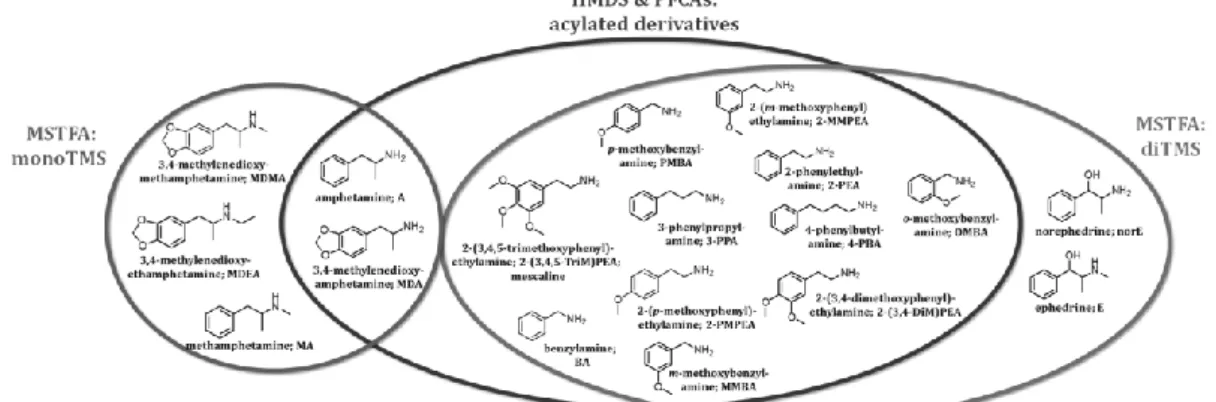
E/VII-5 QUANTITATIVE SILYLATION SPECIATIONS OF PRIMARY PHENYLALKYL AMINES, INCLUDING MESCALINE, AMPHETAMINE AND
3,4-METHYLENEDIOXY-AMPHETAMINE, PRIOR TO THEIR ANALYSIS BY GAS CHROMATOGRAPHY-MASS SPECTROMETRY
Borbála Molnár, Blanka Fodor, Imre Boldizsár, Ibolya Molnár-Perl
107
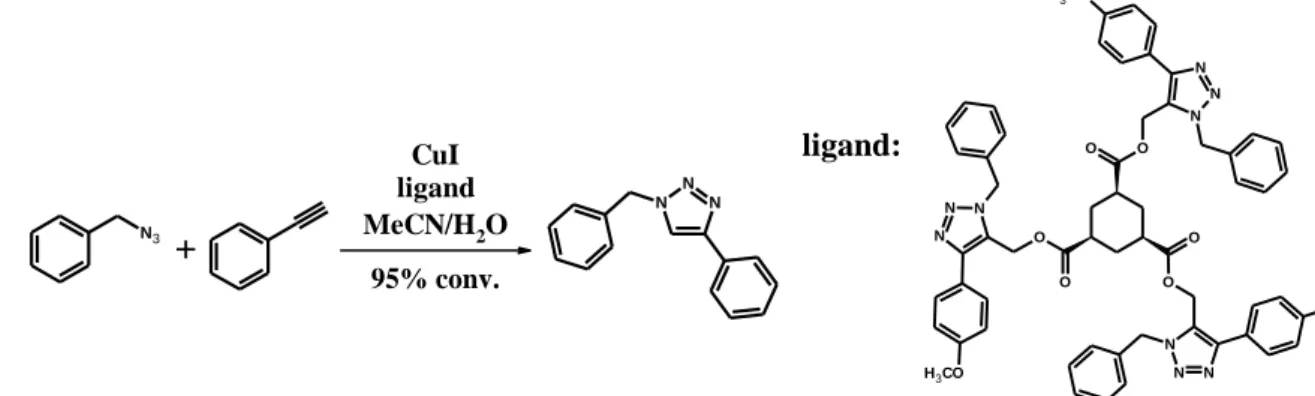
E/VII-6 SYNTHESIS AND CHARACTERIZATION OF NOVEL C3 SYMMETRIC TRIPODAL
TRIAZOLES
Gábor Neumajer, Gergő Tóth, Attila Marosi, Szabolcs Béni, Béla Noszál
108
E/VII-7 PREPARATION AND STABILITY STUDY OF CARVEDILOL LOADED
HYDROXYPROPYL CELLULOSE MICROFIBERS AND THEIR FORMULATION TO ORODISPERSIBLE TABLETS FOR IN VITRO DISSOLUTION ENHANCEMENT
Péter Szabó, Romána Zelkó
109
E/VII-8 MOUSE MODELS FOR TESTING DRUGS IN DIFFERENT SENSORINEURAL HEARING LOSS FORMS
Judit Szepesy, Viktória Humli, Gábor Polony, Réka Andó, Máté Aller, Tamás Horváth, Tamás Dienes, Andrea Harnos, László Tamás, E. Sylvester Vizi, Tibor Zelles
110
E/VII-9 SITE- AND SPECIES-SPECIFIC HYDROLYSIS RATES OF COCAINE
Levente Szőcs, Béla Noszál 111
E/VII-10 PROTECTIVE EFFECT OF RESVERATROL ON SERUM DEPRIVATION INDUCED CASPASE ACTIVATION IN NON-TRANSFORMED CELLS
Zsófia Ulakcsai, Fruzsina Bagaméry, István Vincze, Éva Szökő, Tamás Tábi
112
E/VII-11 APPLICATION OF MITSUNOBU REACTION FOR THE SYNTHSES OF 6β-ACYLAMINOMORPHINAN COMPOUNDS
Ákos Urai, Péter Horváth, Sándor Hosztafi, Béla Noszál
113
E/VII-12 COMPARABLE EVALUATION OF RP-HPLC, SFC, UPC2 TECHNIQUES IN THE
PARTHENOLIDE ANALYSIS OF TANACETUM PARTHENIUM L. SUPERCRITICAL EXTRACTS
Krisztina Végh, Ágnes Alberti, Anita Tóth, Ágnes Kéry
114
E/VII-13 NEW IN VITRO PERMEABILITY TEST FOR TRANSDERMAL AND LOCAL THERAPEUTIC PATCHES
Gábor Vizserálek, Bálint Sinkó, Krisztina Takács-Novák
P/I - MENTAL HEALTH SCIENCES
poster presentationsChairpersons: Dr. György Bagdy, Dr, Katalin Hegedüs, Dr. Zsuzsa Széman
P/I-1 VISUALLY IMPAIRED CHILD IN THE FAMILY: CHARACTERISTICS OF FAMILY FUNCTIONING IN FAMILIES RAISING VISUALLY IMPAIRED CHILDREN
Erika Kiss
119
P/I-2 ELEMENTARY SENSORY DEFICITS IN SCHIZOPHRENIA INDEXED BY IMPAIRED VISUAL MISMATCH NEGATIVITY
Kinga Farkas, Gábor Stefanics, Csilla Marosi, Gábor Csukly
120
P/I-3 THE EFFECTS OF FOLATE PATHWAY GENES MTHFR AND MTHFD1L ON DEPRESSIVE RUMINATION IN TWO EUROPEAN WHITE POPULATIONS
Nóra Eszlári, Dávid Kovács, Péter Petschner, Dorottya Pap, Rebecca Elliott, Ian Muir Anderson, John Francis William Deakin, György Bagdy, Gabriella Juhász
121
P/I-4 THE EXPERIENCES OF BREAST CANCER PATIENS AND THE ROLE OF PURPOSE IN COPING – A QUALITATIVE ANALYSIS
Judit Désfalvi, Tamás Martos
122
P/I-5 STUDY OF SOCIAL CAPITAL AND SELECTION OF UNIVERSITY
PROFESSIONAL RELATIONSHIP AT SEMMELWEIS UNIVERSITY FOUR FACULTIES
Mariann Dinyane Szabó
123
P/I-6 RELATIONSHIP BETWEEN BURNOUT AND ORGANIZATIONAL FACTORS AMONG HUNGARIAN UNIVERSITY HOSPITAL PHYSICIANS, THE HOUPE STUDY
Anikó Nistor, Katalin Nistor, Lise Tevik Løvseth, Ann Fridner, Szilvia Ádám
124
P/I-7 IMPROVEMENT OF THE CONSENSUS RORSCHACH TEST’S PROCESSOMETRIC EVALUATION SYSTEM
Rita Tóth-Vajna, Tamás Martos
125
P/I-8 FACIAL EMOTION EXPRESSION DURING A FACIAL EMOTION RECOGNITION TASK IN A CLINICAL SAMPLE OF ADOLESCENTS WITH PEER PROBLEMS
Péter Vida, Nikoletta Áspán, Dóra Szentiványi, Lili Olga Horváth, Ágnes Keresztény, Mónika Miklósi, Judit Balázs, József Halász
126
P/I-9 SCREENING OF AMNESTIC MILD COGNITIVE IMPAIRMENT
Sirály Enikő, Fodor Zsuzsa, Szabó Ádám, Kovács Vivienne, Csibri Éva, Hidasi Zoltán, Salacz Pál, Csukly Gábor
127
P/I-10 GENDER DIFFERENCES - ADOLESCENTS KNOWLEDGE ABOUT MEDICINE AND MEDICINE USE
Máté A. Balázs, Bettina F. Pikó
128
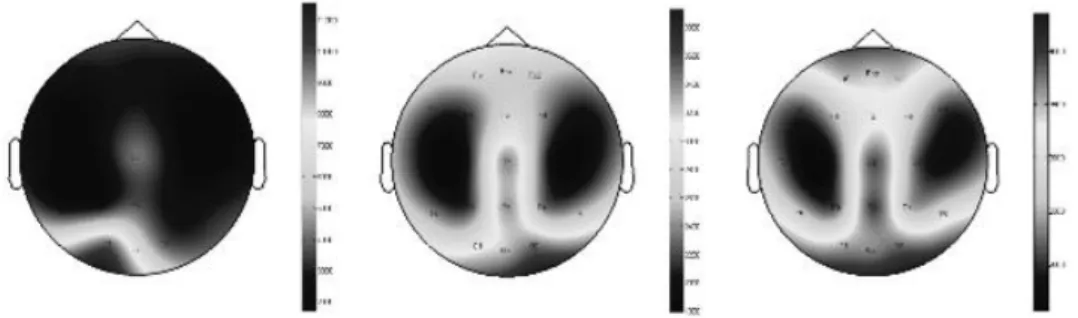
P/I-11 THE TOPOGRAPHICAL DISTRIBUTION OF DELTA POWER: CAN THE CAUDO-ROSTRAL SHIFT OF BRAIN MATURATION BE SPOTTED IN THE AGE RANGE OF 4 TO 8 YEARS?
Sára Szakadát, Piroska Sándor, Róbert Bódizs
129
P/I-12 FACTORS OF THERAPY CHOICE: A MEDICAL ANTHROPOLOGICAL ANALYSIS OF INTERACTING BIOMEDICAL AND ALTERNATIVE EXPLANATORY MODELS OF ILLNESS
Szilvia Zörgő
16
P/II - VARIED POSTERS
poster presentationsChairpersons: Dr. Zoltán Benyó, Dr. Attila Szabó
P/II-1 DISCRIMINATING COLON CANCER SUBTYPES BASED ON MICROARRAY GENE EXPRESSION
Zsófia Sztupinszki, Balázs Györffy
135
P/II-2 EFFECTS OF TARGETED THERAPY ON INTRATUMOR HETEROGENEITY IN RENAL CELL CARCINOMA PATIENTS
Pongor Lőrinc Sándor, Sztupinszki Zsófia, Győrffy Balázs
136
P/II-3 ENDODERM DERIVED SONIC HEDGEHOG REGULATE THE EXTRACELLULAR MATRIX PATTERNING DURING ENTERIC NERVOUS SYSTEM DEVELOPMENT
Csilla Barad
137
P/II-4 SODIUM GLUCOSE COTRANSPORTERS AS NEW TARGETS OF RAAS INHIBITORS IN DIABETIC NEPHROPATHY
Dóra B. Balogh, Judit Hodrea, Lilla Lénárt, Sándor Kőszegi, Renáta Gellai, Edgar Szkibinszkij, Ádám Vannay, László J. Wagner, Attila J. Szabó, Andrea Fekete
138
P/II-5 THE ROLE OF BRAIN-DERIVED NEUROTROPHIC FACTOR (BDNF) IN DIABETES ASSOCIATED NEPHROPATHY AND COMORBID DEPRESSION
Lilla Lénárt, Judit Hodrea, Sándor Kőszegi, Renáta Gellai, Adrienn Barczi, Dóra B. Balogh, Edgar Szkibinszkij, Dóra Zelena, Ádám Vannay, László Wagner, Attila J. Szabó, Andrea Fekete
139
P/II-6 SPINAL CORD INJURY INCREASES LOCAL NORADRENALINE RELEASE IN THE RAT
Zoltán Borbély, Krisztián Benedek Csomó
140
P/II-7 ONE MUTATION, TWO PHENOTYPES: A SINGLE NONSENSE MUTATION OF THE CTSC GENE CAUSES TWO CLINICALLY DISTINCT PHENOTYPES
Adrienn Sulák, Katalin Farkas, Kornélia Tripolszki, Nikoletta Nagy, Márta Széll
141
P/II-8 EFFECT OF ENKEPHALIN-CONOTOXIN HYBRID PEPTIDES ON OPIOID RECEPTORS
Reza Samavati, Ferenc Zádor, Adriano Mollica, Anna Borsodi, Sándor Benyhe
142
P/II-9 STRUCTURE CHANGES OF ENTERIC NERVOUS SYSTEM IN ANIMAL MODEL OF ULCERATIVE COLITIS
Dmitry Khochanskiy, Olga Makarova
143
P/II-10 DEVELOPMENT OF 3D TISSUE CULTURING METHOD FOR INVESTIGATION OF CIRCULATING TUMOR CELLS
Csilla Kurdi, Viktória Temesfői, Tamás Kőszegi
144
P/II-11 IN VIVO AND IN VITRO STUDY ABOUT THE ANTIFUNGAL ISOTHIOCYANATES OF HORSERADISH
Regina Bertóti
145
P/II-12 THE EFFECTS OF ANGIOTENSIN II ON THE NMDA RECEPTORS IN TWO BRAIN STRUCTURES
Adrienn Hanuska
146
P/II-13 FIBRINOGENESIS AND FIBRINOLYSIS FOLLOWED WITH NANO-THROMBELASTOGRAPHY
Tímea Feller, Miklós S.Z. Kellermayer, Balázs Kiss
P/II-14 CLINICOPATHOLOGICAL ANALYSIS OF PREGNANCY ASSOCIATED MELANOMAS
Melinda Fábián
148
P/II-15 HEALTHCARE-ASSOCIATED INFECTIONS AND ANTIMICROBIAL USE IN LONG-TERM CARE FACILITIES – HUNGARY, 2013
Rita Szabó
149
P/II-16 ATTACHMENT ANXIETY AS PREDICTOR OF RISK FOR EATING DISORDERS ON A REPRESENTATIVE HUNGARIAN ADULT SAMPLE
Tamás Dömötör Szalai, Edit Czeglédi
150
AUTHORS AND TITLES OF ABSTRACTS
(Listed under the corresponding Doctoral Schools)
E/I
MENTAL HEALTH SCIENCES
ORAL PRESENTATIONS
Chairpersons:
E/I-1
MENTAL HEALTH OUTCOMES OF PARENTS AND CHILDREN LIVING
IN LARGE FAMILIES
Csaba Bálity1, Bálint Duráczky2
1 Faculty of Health and Public Services, Semmelweis University, Budapest 2 Corvinus University of Budapest, Budapest
The important effect of family background and social support on well-being and other mental health outcomes has long been known. The majority of studies exploring the issue, assume the differences between each family, but ignore the pattern of well-being outcomes within families. Our research aims not only to reveal, how some characteristics of families effect the well-being of its members, but also the importance of roles fulfilled by the individual members of a family.
Data were collected from 600 randomly selected member families of the National Association of Large Families (NOE), in a manner that both parents and children at the age of 15 or above and still living in the household were asked. The total number of the respondents was 1717. We applied the five items of WHO well-being index (WBI-5), the self-assessment of happiness, satisfaction with life, and several explanatory variables like family size or birth order. To test the hypothesis that families are not homogeneous in the terms of the dependent variables studied, multilevel analysis was applied. Our results confirmed the presumption that significant differences can be detected among members of the family. These differences are largely explained by the role fulfilled by the individual in the family.
Doctoral School: Mental Health Sciences
Program: Sociological and mental health approaches to resources for individuals and communities Supervisor: Beáta Dávid
22
E/I-2
CHILDREN OF THE 1989 TRANSITION: CHILDBEARING INTENTIONS
Veronika Bóné1, Beáta Dávid1,2
1 Institute of Mental Health, Semmelweis University, Budapest 2 Hungarian Academy of Science, Budapest
In 1989 the Sociological Institute initiated a longitudinal panel study among parents expecting their first child in the southern region of the Budapest agglomeration in Hungary. In the first phase of the study, 300 pregnant women were asked to fill out standardized questionnaires. In the second phase, the families were revisited 3-13 months after giving birth. Then altogether 193 families (both mothers and fathers) filled out the questionnaires plus 50 in-depth mother interviews were made. Since 2011 the Hungarian Scientific Research Fund has been funding a research to continue this special family panel data, to follow up the life history of the families taking part in the research 20 years before. In the current research, we have interviewed members from 117 families (mothers, fathers and the grown-up children) and through their different perspectives we tried to reveal and explain the socio-demographic and personal factors behind the life course decisions. Since in the last few decades Hungary has been facing a permanent decline in its fertility figures, it seems particularly important to reveal those significant factors that might influence the childbearing intentions of the youth.
63% of the grown-up children (N=84) are planning to have a family with 2 children, 16% of them envisage 3 or more, 18% would be content with 1 child, and 3% would remain childless. The aim of our presentation is to explain the influencing factors behind their childbearing decisions by analysing their childhood data and using the scales of Parental Bonding Instrument, Purpose in Life Test, and Relationship Questionnaire.
Doctoral School: Mental Health Sciences
Program: Sociological and mental health approaches to resources for individuals and communities Supervisor: Beata Dávid, Szabolcs Török
E/I-3
POSTTRAUMATIC STRESS DISORDER SYMPTOM STRUCTURE IN A
SAMPLE OF RWANDANS WITH GENOCIDAL TRAUMA
Kinga E. Fodor1, Richard Neugebauer2,3
1 Department of Psychiatry and Psychotherapy, Faculty of Medicine,
Semmelweis University, Budapest
2 Department of Psychiatry, Columbia University Medical Center, New York, USA 3 New York State Psychiatric Institute, New York, USA
The latent structure of posttraumatic stress disorder has been predominantly studied in Euro-American populations. Only a few confirmatory factor analytic (CFA) studies investigated PTSD symptom structure in sub-Saharan Africa. We compared alternative models of DSM-IV PTSD factor structure with CFA in a sample of Rwandan adults. DSM-IV PTSD symptoms were assessed with the Posttraumatic Stress Disorder Checklist – Civilian version. A cluster random survey was conducted and interviews were held in Rwandan households. The sample comprised 465 Rwandan adults who experienced some sort of genocidal trauma during the 1994 genocide. The five competing models were the DSM-IV, the emotional numbing, the dysphoria, the aroused intrusion, and the dysphoric arousal models. Models were further tested for convergent validity and gender differences. The emotional numbing, dysphoria, and dysphoric arousal models all had good fit indices and fit the data significantly better than the DSM-IV and the aroused intrusion model. There were gender differences in PTSD factors. Results suggest that the latent structure of DSM-IV PTSD symptoms in Rwanda are comparable to that found in Euro-American samples.
Doctoral School: Mental Health Sciences Program: Psychiatry
Supervisor: István Bitter
24
E/I-4
THE „COST OF CARING” FOR SERIOUSLY ILL PATIENTS –
COMPASSION FATIGUE OR SATISFACTION
Adrienne Kegye1, Edit Révay2, Ágnes Zana1, Katalin Hegedűs1
1 Institute of Behavioural Sciences, Semmelweis University, Budapest 2 Department of Sociology, Sapientia College of Theology, Budapest
Background: The aim of the research launched in 2013 is to assess the mental and physical conditions of hospice workers, examine working factors, monitor burnout and coping mechanisms and develop the current educational and workplace supporting systems by using the relevant data. As the related literary sources show– according to research findings – it is a fairly new element to study the relation between burnout, compassion satisfaction and compassion fatigue originating from working with severely ill patients.
Methods: The base of the online questionnaire was the Hungarostudy 2013 Questionnaire (Kopp M, Székely A, Susánszky É), completed with particular questions about hospice care.
Results: The questionnaire was sent to 87 hospice services. Altogether 187 were completed and sent back. Respondents’ ages varied between 23 and 76; 163 women and 24 men. 41.7 % work in home care and 55.1 % are nurses. 57.2 % work ten or more hours daily, 45.5 % work at more than one workplaces. Many are overweight, only 42.7 % do sports regularly. 75.1 % claimed that their work requires more and more efforts. They mainly reported fatigue and acute pain rather than chronic illnesses. Despite all that, most of them were satisfied with their hospice work (96%), their supervisory support (90.7%), and their personal relationships (93.8%), however, 40.2% were unsatisfied with their financial situation.
Summary: We met several personal and professional surviving strategies for compassion fatigue, which enable work not only to endanger, but also to strengthen job-satisfaction and the workers’ well-being. However, our early research findings show that people working in Hungarian hospice services with professional calling, with increased mental and physical burden, and struggling with subsistence problems are in particular danger of burnout. At the same time, people caring for severely ill patients rarely apply or are unaware of methods to prevent burnout.
Doctoral School: Mental Health Sciences Program: Mental Health Sciences Supervisor: Hegedűs Katalin E-mail: [email protected]
E/I-5
ASSOCIATIONS BETWEEN PATTERNS OF ADULT ATTACHMENT,
RELIGIOUSNESS AND RELATIONSHIP SATISFACTION
Csilla Lakatos, Tamás Martos, Katalin Horváth-Szabó
Institute of Mental Health, Semmelweis University, Budapest
Introduction: The majority of recent authors agree that adult attachment is one of the crucial concepts for explaining adult romantic relationships, couples’ satisfaction, relationship trust, degree of intimacy and well-being of partners.
In the past decades research evidence also showed that mother-and-child attachment experiences are connected to the personal relationship to God and thus it forms the basis ofreligious faith.
Finally, a series of studies evidenced connection between religiousness and the functioning of marriage relationship. Religious couples usually show higher stability and relationship satisfaction level, whereas lower occurrence of physical abuse and divorce.
Aims: Classification of the relationship pattern types of couples from the sample group through cluster analysis. Presentation of the correlation between types of attachment displayed within the relationship, religious characteristics and the relationship satisfaction
Methods:In the study we implemented cross-sectional data assessment in a sample of 270 heterosexual couples (aged 18-65) from Budapest and surrounding areas.
Couples were asked to complete the Hungarian version of the Relationship Assessment Scale – RAS-H (Martos et al, 2014) and Relationship Scales Questionnaire – RSQ (Bartholomew, Horowitz, 1991) Attachment to God Inventory – AGI (Beck&MacDonald, 2004) Satisfaction With Life Scale – SWLS-H (Martos et al, 2014).
Results: Using cluster analysis on attachment dimensions, five types of relationships could be identified in the couples: secure woman – secure man, anxious-avoidant woman – secure man, anxious woman – secure man, anxious woman – avoidant man, secure woman – anxious- avoidant man. Furthermore, couples with different types of relationships showed significant differences in relationship satisfaction, satisfaction with life and religious characteristics.
Conclusion: The presented evidence corroborates that the adult attachment framework possesses strong explanatory power for a better understanding of the functioning of romantic relationships.
Doctoral School: Mental Health Sciences
Program: Sociological and mental health approaches to resources for individuals and communities Supervisor: Tamás Martos
26
E/I-6
VITAL EXHAUSTION, COPING STRATEGIES AND THE QUALITY OF
MARITAL RELATIONSHIP RELATED TO INFERTILITY STRESS
Enikő Lakatos1,2, Réka Cserepes3, Gábor Szabó4, Piroska Balog1
1 Institute of Behavioral Sciences, Semmelweis University, Budapest
2 Mental Health Sciences Doctoral School, Semmelweis University, Budapest
3 Institut für Medizinische Psychologie, Karls-Ruprecht Universität, Heidelberg, Germany 4 Budapest College of Communication and Business, Budapest
Introduction: Infertility is a life-changing experience that often carries unexpected stressors and potential
stigmatization. Vital exhaustion has been defined as a clinical syndrome characterized by loss of energy, increased irritability and general demoralization and has been linked mainly with heart diseases. Even though infertility is a chronic stressor, based on our knowledge, vital exhaustion - as an indicator of chronic stress - has not been studied yet among infertile patients. The aim of this study was to analyze within the same regression model the independent effects of vital exhaustion, the quality of marital relationship and that of different coping strategies in predicting infertility stress.
Methods: Across-sectional study was conducted involving 195 Hungarian infertile women, who were recruited both online and from clinical settings. Among socio-demographic and health characteristics, infertility related stress (Fertility Problem Inventory), vital exhaustion (shortened Maastricht Questionnaire), the quality of marital relationship (Shortened Marital Stress Scale), and coping strategies (Shortened Ways of Coping) have been measured. Pearson’s correlation coefficients and standardized betas from stepwise linear regression model were added.
Results: Vital exhaustion (r= 0,510 p<0,001) has the strongest positive correlation with infertility-related stress. Marital stress (r= 0,337 p<0,001) and coping strategies were slightly related to the infertility stress (Cognitive reappraisal r= -0,188, p=0,008 Stress reduction r= 0,361, p<0,001 and Problem analysis r= ns., Passive avoidance r= 0,145 p=0,042). In the stepwise multiple regression analyses we found that vital exhaustion (ß= 0,381 p<0,001), marital stress (ß= 0,195 p=0,002) and stress reduction (ß= 0,186 p=0,004) had predictive effect for infertility stress.
Conclusion: Vital exhaustion, marital stress and coping strategies correlated with increased infertility stress should be identified and targeted in interventions designed for women undergoing infertility treatments.
Doctoral School: Menthal Health Sciences Program: Menthal Health Sciences Supervisor: Balog Piroska
E/I-7
‘BONDING’ OR ‘BRIDGING’? – SOCIAL CAPITAL OF ROMA
UNIVERSITY STUDENTS
Ágnes Lukács, Beáta Dávid
Institute of Mental Health, Semmelweis University, Budapest
Since 2011 the research-team of the Institute of Mental Health (Semmelweis University) is conducting a longitudinal research to follow up the students of Christian Roma Colleges. Besides the changes on Roma identity, norms and mental health status, the research focuses on the personal network composition and structure of these Roma university students.
The main purpose of the social network analysis is to measure how embedded Roma university students are in their social environment, which relations are related to mobility and integration.
To map the students’ personal network composition we use contact diary, whereby we observe size, consistency and homogeneity of the networks, plus we measure tie strength. For the network structure analysis we use Egocentric Network Study Software (McCarty 2007).
Analyzing the results of the first two waves (76 egocentric networks) we see that students often find themselves in a social vacuum: struggling between being part of the minority or majority, in other words it is a struggle of the past and present. The socio-demographical background of Roma university students is a mostly low-educated and ethnically homogeneous environment; whereas the host (present) milieu is predominantly composed by non-Roma intelligentsia.
Roma university students have to reconsider their formal “binding” and “bonding” ties which provided them protection formerly, meanwhile they acquire several new “bridging” ties at the university.
For successful coping Roma College students possess and choose different supportive techniques and resources; they activate their personal network relying on “bonding” or “bridging” kind of relations. Our expectation is that the equilibrium between these different kind of ties and groups has an impact on coping strategies and identity-formation, too.
Keywords: Roma integration, mobility, personal network, social capital Doctoral school: Mental Health Science
Program: Sociological and Mental Health Approaches to Resources for Individuals and Communities Supervisor: Beáta Dávid
28
E/I-8
SOCRATES’ DEMON ‘IN THE MIRROR OF DEATH’
Ferenc Mújdricza
Institute of Mental Health, Semmelweis University, Budapest
My research is on the possible relationship between fear of death and social trust on social theory background. The first stage aims to trace the most important ideas of Western thanatology from the Ancient Greeks till present times. In this paper I present the results of my investigations concerning the Socratic-Platonic philosophy of death and its relationship with the concept of Socrates’ ironyelaborated by Hegel and Kierkegaard. The Platonic theory on death is based on the Orphism and the philosophies of Pythagoras and of Empedocles, however it is not only much more elaborated but it is in the axis of his entire philosophy not just a marginal topic. Socrates’ irony is related to his divine ‘daimonion’ that gave him, according to Kierkegaard, only negative, destructive suggestions. Socrates became an ‘incomplete oracle’ lacking the positive intuition of the real oracles, but he became the first individual freed from the burden of the polis society by following this demon. By contrast, I found that Socrates’ irony could be viewed as a strategy to veil his positive demon. I call it ‘The Feint of Socrates’ because if he really wanted to have the most freedom possible (as Hegel and Kierkegaard state it), he had to avoid to become an oracle. Oracles had the greatest internal subjective freedom but they had no external freedom because their society made a fortune-telling tool of them. If we look at his dialogues on death, we find that Socrates seems to have had the positive demon as well, but he never let it speak until he had to face death itself. We can watch the fusion of the ironic philosopher with the repressed intuitive oracle in the face of death through the collectivist law-worshipping sentences of the Crito and the vision-like passages on death of the Phaedo.
Doctoral School: Mental Health Sciences
Program: Sociological and Mental Health Aspects of Individual and Community Resources Supervisor: Endre Nagy
E/I-9
INVESTIGATION OF THE PSYCHOLOGICAL ASPECTS OF
DRY EYE DISEASE
Ildikó Szakáts1, Margit Sebestyén1, Emma Birkás2, György Purebl2
1 Department of Ophthalmology, St. Pantaleon Hospital, Dunaújváros 2 Institute of Behavioral Sciences Semmelweis University, Budapest
Purpose: To investigate the psychological characteristics of patients with dry eye symptoms and/or dry eye disease and to analyse the correlations between these psychological aspects, the severity of ocular surface symptoms and the objective parameters of dry eye.
Methods: Participants completed the following questionnaires: Ocular Surface Disease Index (OSDI), Shortened Health Anxiety Inventory, Shortened Beck Depression Inventory, Beck Anxiety Inventory. Participants underwent ophthalmic examination and the following objective tests for dry eye disease were carried out: tear osmolarity, tear film break-up time (TBUT), ocular surface staining, Schirmer 1 test and meibomian gland dysfunction assessment.
Results: Of the 84 participants enrolled, 56 were symptomatic and 28 asymptomatic, based on the OSDI score. By the objective parameters, 48/56 (85.7%) in the symptomatic group and 23/28 (82.1%) in the asymptomatic group were diagnosed with dry eye disease. In terms of the objective parameters, except for TBUT, there were no statistically significant differences between the symptomatic and asymptomatic groups (p>0.108), or between the subgroups with objectively proven dry eye (p>0.233). The results of the psychological questionnaires were significantly worse in the symptomatic group (p<0.01) and the symptomatic subgroup with objective dry eye (p<0.05), than in the asymptomatic groups. In the overall study population the scores of the psychological questionnaires demonstrated significant positive correlations with the OSDI scores (r>0.306, p<0.01).
Conclusions: These results support the role of underlying psychological disturbances in dry eye disease, and may serve as an explanation for the lack of correlation between subjective symptoms and objective signs of the disease.
Doctoral school: Mental Health Sciences Program: Mental Health Sciences Supervisor: György Purebl
30
E/I-10
THE ROLE OF INTERPARENTAL CONFLICTS IN CHILDREN’S
ANXIETY AND DEPRESSIVE SYMPTOMS
Mária Szepes, Piroska Balog
Insitute of Behavioural Sciences, Semmelweis University, Budapest
Background: It is well-known that interparental conflicts are related with children’s anxiety and depressive symptoms but the mechanisms of these phenomena are less understood. Our aim was to assess the main aspects of these mechanisms.
Methods: 336 parent-child pairs participated in this cross-sectional questionnaire study. Children (ages 9-12 years) completed Children’s Perception of Interparental Conflict Scale, anxiety (STAI-C) and depression (CDI) scales. Demographical data were elicited from parents. In logistic regression analysis, adjusted for demographic variables (age, gender, family income), the effects of interparental conflicts on prognosis of anxiety and depression were examined, odds ratios (OR) and 95% confidence intervals were added.
Findings: We found that independently of age, gender, family income and how frequently and intensely their parents dispute, those children have anxiety disorders whose parents solve their conflicts poorly (OR=1,27 (1,07-1,51)) and those children who feel threatened (OR=1,23 (1,10-1,38)) and blame themselves (OR=1,26 (1,01-1,57)) for their parents’ conflicts. In regard to depression, independently of age, family income and the interparental conflict properties, boys are less prone to depression (OR=0,29 (0,11- 0,80)) and those children who are not able cope with their parents’ conflicts (OR= 1,24 (1,04-1,48)) are more prone to depression.
Discussion: Our analysis shows that independently of demographic variables, those children are at higher risk of having anxiety symptoms who experience poor conflict solution, feel threatened, and have greater self-blame. In the case of depression the low coping efficacy means greater risk.
Doctoral School: Mental Health Sciences Program: Mental Health Sciences Supervisor: Piroska Balog
E/I-11
READING DISABILITY SPECTRUM EARLY AND LATE RECOGNITION
SUBTRESHOLD AND FULL COMORBIDITY
Krisztina Törő1,2, Judit Balázs3,4
1 School of Ph.D. Studies, Semmelweis University, Budapest
2 Department of Children and Family Services, Vecsés City Local Government, Vecsés 3 Institute of Psychology, Eötvös Loránd University, Budapest
4 Vadaskert Child and Adolescent Psychiatry Hospital, Budapest
Background/Aims: Several studies have reported high comorbidity for reading disability (RD) and psychiatric disorders. The aim of this study was to investigate the comorbidity of subthreshold and full psychiatric disorders with RD and comparing sub-groups based on age of recognition of RD (early RD; late RD).
Methods: We analyzed data from 130 children with RD and 82 typically developing children aged 7-18 years. RD was assessed with the Dyslexia Differential Diagnosis, Maastricht, Hungarian standard Test. Psychiatric diagnoses were based on the Mini International Neuropsychiatric Interview Kid. Chi-squared tests were used for group comparisons of the prevalence of sub-threshold and full disorders.
Results: A higher proportion of children in the RD group were assessed as having internalizing or externalizing disorders than in the control group (χ2(2)=10.894 p=.004 Cramer’s V=.227). When subthreshold and full diagnoses
were considered together the prevalence of internalizing but not externalizing pathology was higher in the RD group than the control group (χ2(2)=25.053 p<.001 Cramer’s V=.334 and χ2(2)=.247 p=.620, respectively). The
prevalence of internalizing pathology was similar in the early and late RD sub-groups (χ2(2)=1.256 p=.262), but
externalizing pathology was more common in the late RD sub-group (χ2(2)=11.007 p<.001 Cramer’s V=.313).
When subthreshold and full diagnoses were considered together mood disorder and externalizing pathology were more prevalent in the late RD sub-group than the early RD sub-group (χ2(2)=12.676 p<.001 Cramer’s V=.336 and
χ2(2)=18.788 p<.001 Cramer’s V=.409, respectively).
Conclusions: This study demonstrated that early recognition of RD may play a role in determining comorbid psychopathology and should therefore be an educational and clinical priority. Clinicians should routinely screen children with RD for comorbid disorders including subthreshold pathology.
Doctoral School: Menthal Health Sciences
Program: Clinical Psychology and Psychiatry Supervisor: Judit Balázs
32
E/I-12
CHALLENGES FOR CARERS OF ELDERLY FAMILY MEMBERS
Anett Mária Tróbert
Institute of Mental Health, Semmelweis University, Budapest
Ageing raises many health and social challenges as the increase in the average life span is not bringing a comparable increase in healthy life expectancy. Due to financing difficulties, more and more informal carers are appearing in eldercare in a growing number of countries and the role of family members is also increasing. Family helpers bear a heavy burden that has a significant impact on all dimensions of their lives. The research aims on the one hand to investigate the life quality of these helpers and the burden they bear. The worldwide problem of ageing is one of the main driving forces behind current innovative solutions in social care. Analysis of the results of the research can also help to develop infocommunication tools for prevention. The paper will discuss the first phase of the research: the experience gained from depth interviews in preparation for the survey by questionnaire.
Doctoral School: Mental Health Sciences
Program: Sociological and mental health approaches to resources for individuals and communities Supervisor: Zsuzsa Széman
E/I-13
INDIVIDUAL AND SOCIAL-LEVEL PSYCHOLOGICAL FACTORS IN
THE BACKGROUND OF HUNGARIAN HIGH SCHOOL STUDENTS’
HEALTH RISK BEHAVIORS
Szabolcs Varga1, Bettina Pikó2
1 Institute of Behavioural Sciences, Semmelweis University, Budapest 2 Department of Behavioural Sciences, University of Szeged, Szeged
Background: Health risk behaviors of adults usually originate in adolescence. Thus, it is highly important to study and understand these behaviors in this age group.
Aims: To examine the correlation between social- and individual-level psychological factors and health risk behaviors (cigarette and alcohol use) among Hungarian adolescents.
Methods: Our sample contains adolescents from 22 classes of three high schools, which were selected randomly. Altogether, 501 (33,9% boys, 65,9% girls; mean age = 16,37) high school students were surveyed. The participation was anonymous and voluntary. Among individual-level psychological variables, frequency of psychosomatic symptoms, shyness, loneliness, self-esteem, need to belong, and competitiveness were included. Individual, best friend’s and peer group’s smoking and alcohol use were also measured.
Results: According to our results, primary determinants of Hungarian students’ risk behaviors are the social-level factors. Among individual-level variables, self-esteem, competitiveness and psychosomatic symptoms correlated with higher level of smoking and alcohol use. On the other hand, shyness and loneliness were inversely related to these risk behaviors.
Conclusions: In a peer group, which supports risk behaviors, several dimensions of psychological well-being can correlate with higher level of alcohol use and smoking. Therefore, it is important that prevention should focus on the norms of the high school class as well. We think that health promotion cannot work effectively without the involvement of the whole high school class and society.
Doctoral School: Mental Health Sciences Program: Mental Health Sciences Supervisor: Bettina Pikó
E/II
MOLECULAR MEDICINE
ORAL PRESENTATIONS
Chairpersons:
Dr. László Tretter
Dr. Barna Vásárhelyi
E/II-1
SYNDECAN-1 IN LIVER FIBROSIS AND REGENERATION
Eszter Regős
1st Department of Pathology and Experimental Cancer Research, Semmelweis University,
Budapest
Aims: Syndecan-1 is a transmembrane proteoglycan, participating in various pathological conditions including inflammation, carcinogenesis and regeneration. Physiologically syndecan-1 appears on the basolateral surface of hepatocytes. As syndecan-1 expression increases during fibrosis, we aimed to understand its role by inducing liver fibrosis and regeneration in wild type (WT) and trangenic mice, overexpressing human syndecan-1 (SynTG) in their liver.
Materials and Methods: We examined the overexpression and localization of human syndecan-1 by immunohistochemistry. Plasma level of shedded syndecan-1 was measured by ELISA. Liver fibrosis was induced by thioacetamid (TA). The percentage of accumulated connective tissue was determined by morphometrical analysis. Activated myofibroblasts were detected using αSMA immunostaining. Connective tissue degradation was measured by gelatinase and caseinase assays. We detected TIMP-1 gene expression using qRT-PCR. Signaling pathways were examined by Western-blot. Binding of syndecan-1 to TGFβ, the main mediator of fibrosis was tested by dot-blot. Expression of TIEG, the early response gene of TGFβ, was analyzed by qRT-PCR.
Results: Production of the recombinant protein was stable in SynTG animals. Without experimental challenge, overexpression of syndecan-1 did not cause any pathological condition. When exposed to TA, development of liver fibrosis was slower in SynTG mice compared to WT. However, after TA withdrawal, transgenic animals exhibited slower regeneration than that of wild type. Gelatinase assay proved attenuated activation of MMP-2 and 9 in SynTG animals interfering with connective tissue degradation. Various signaling pathways were found activated in fibrosis, most of them with lower activity in transgenic animals. By dot-blot analysis we proved that the shedded syndecan-1 directly binds TGFβ1.
Conclusion: Syndecan-1 overexpression modifies the accumulation and degradation of connective tissue in liver fibrosis and regeneration in part by binding and inactivating TGFβ and downstream signaling pathways.
Doctoral School: Pathological Medicine Program: Oncology
Supervisor: Ilona Kovalszky, Kornélia Baghy E-mail: [email protected]
38
E/II-2
THE EFFECT OF GENETICALLY ABLATING THE ATP-FORMING
SUBUNIT OF SUCCINYL-COA LIGASE ON MITOCHONDRIAL
BIOENGERETIC PARAMETERS
Dóra Ravasz, Gergely Kacsó
Department of Medical Biochemistry, Semmelweis University, Budapest
The citric acid cycle enzyme succinyl-CoA ligase catalyzes the reversible conversion of succinyl-CoA, phosphate and ADP or GDP to succinate, CoASH, and ATP or GTP in the mitochondrial matrix. This reaction - termed mitochondrial substrate-level phosphorylation - can produce high-energy phosphate intermediates in the absence of oxygen. Succinyl-CoA ligase is a heterodimeric enzyme, composed of an invariant alpha-subunit and a substrate-specific beta-subunit. The alpha-subunit is encoded by SUCLG1, the beta-subunit is encoded by either SUCLA2 or SUCLG2, resulting in either an ATP- or a GTP-forming enzyme.
As shown by our previous work, substrate-level phosphorylation plays an important role in preventing extramitochondrial ATP consumption of mitochondria during respiratory inhibition.
Here we investigated whether a reduction in succinyl-CoA ligase activity affects mitochondrial substrate-level phosphorylation. SUCLA2 +/- herterozygote mice were generated; liver, heart and brain mitochondria were isolated from wild type and SUCLA2 +/- heterozygote littermates of 3, 6 and 12 month- old mice. Western blot analysis showed an approximately 50% decrease in the ATP-forming beta-subunit expression in the mitochondria of SUCLA2 +/- heterozygote mice. Oxygen consumption and mitochondrial membrane potential were measured, in an experimental protocol that is suitable for identifying mitochondria as extramitochondrial ATP consumers during respiratory inhibition.
Our results show that genetic ablation of the ATP-forming subunit of succinyl-CoA ligase does not turn mitochondria into extramitochondrial ATP consumers during impaired respiration. This was likely due to a compensatory upregulation of the genetically unmodified GTP-forming subunit in the examined tissues, as it was revealed by western blot analysis. Furrhermore, the rate limiting factor of substrate-level phosphorylation is succinyl-CoA provision by the alpha-ketoglutarate dehydrogenase complex. Thus it could be possible that a decrease in the expression of succinyl-CoA ligase ATP-forming subunit may not lead to significant changes in the ATP-producing capacity of substrate-level phosphorylation, if sufficient succinyl-CoA is available.
Doctoral School: „János Szentágothai” Neurosciences Program: Functional Neurosciences
Supervisor: Christos Chinopoulos
E/II-3
YAP1 IN THE HIPPO PATHWAY INFLUENCES THE RISK OF ASTHMA
Lili E. Fodor¹, Ildikó Ungvári¹, Ágnes F. Semsei¹, Orsolya Lautner-Csorba¹, András Bikov³, Csaba Szalai¹,²
¹ Department of Genetics, Cell-and Immunobiology, Semmelweis University, Budapest ² Heim Pal Children’s Hospital, Budapest
³ Department of Pulmonology, Semmelweis University, Budapest
Asthma is an inflammatory disorder of the lungs. The main aim of this study was to identify new asthma susceptibility genes within the Hippo pathway. The Hippo pathway is responsible for organ size control, and is an important pathway that mediates survival and apoptosis of immune cells that play a role in asthma.
The expression of seven genes in the Hippo pathway was studied on RNA isolated from induced sputum of twenty asthmatics and twelve non-asthmatics. TaqMan gene expression assays were used in order to find a new gene to play a role in asthma. Furthermore, fourteen, single nucleotide polymorphisms (SNPs) in the promoter region of
YAP1 were genotyped on 525 asthmatics and 710 controls using KASPar genotyping, in order to find a susceptibility allele within this gene.
As a result, YAP1 gene expression levels were found to be significantly different between the two groups studied (p=0.033), hence indicating YAP1 as a novel gene in the Hippo pathway to play a role in asthma susceptibility. Additionally, correlation studies showed a significant positive correlation between YAP1 mRNA level and sputum bronchial epithelial cell percentages (r=-0,515, P=0,012), which confirms the role of YAP1 gene in asthmatic progress. Additionally, other studied genes have shown significant result with sputum eosinophils, or neutrophils. During the genotyping studies of asthma susceptibility and several asthma endophenotypes SNP rs2846836 showed a significant association with exercise-induced asthma (OR=2,076 [1,256-3,431], P=0,004, power=0,83). Furthermore, SNP rs11225138 showed a significant difference between GINA 1-2 and GINA 3 statuses in a dominant model (OR=2,8 [1,40-5,57], P=0,003, power=0,827).
To conclude, in this study a new gene was identified within the Hippo pathway that may play a role in asthma contributing to the existing knowledge on the pathogenesis of asthma.
Doctoral School: Molecular Medicine
Program: Basis of Human Molecular Genetics and Gene Diagnostics Supervisor: Csaba Szalai
40
A B
E/II-4
ACTIVATION OF ATMPK9 THROUGH AUTOPHOSPHORYLATION
INDEPENDENTLY OF THE CANONICAL MAPK CASCADES
Szilvia K. Nagy1, Zsuzsanna Darula2, Brigitta M. Kállai1, László Bögre3, Gábor Bánhegyi1,
Katalin F. Medzihradszky2, Gábor V. Horváth4, Tamás Mészáros1
1 Department of Medical Chemistry, Molecular Biology and Pathobiochemistry, Semmelweis
University, Budapest
2 Proteomics Research Group, Biological Research Center of the Hungarian Academy of
Sciences, Szeged
3 School of Biological Sciences, Centre for Systems and Synthetic Biology, Royal Holloway,
University of London, Egham, Surrey, UK
4 Institute of Plant Biology, Biological Research Centre of the Hungarian Academy of Sciences,
Szeged
Mitogen activated protein kinases (MAPKs) are part of a three-tiered signal transduction modules in eukaryotes, wherein MAPKs are activated by bisphosphorylation in their TXY motif of the T loop by the pertinent dual-specificity MAPK kinases (MAPKKs). In contrast to this canonical activation mechanism, atypical MAPKs are elicited in a MAPKK independent manner. AtMPK9, a representative of unique, plant MAPK family, possesses a TDY phosphoacceptor site, a long C-terminal extension, lack the common MAPKK binding docking motif, and its activation mechanism awaits for depiction.
Aim: Our aim was to characterize the regulation of AtMPK9 activity by using in vitro translation and protoplast protein overexpressing systems.
Result: We present in vitro and in vivo data that AtMPK9 is activated independently of any upstream MAPKKs, but it is activated through autophosphorylation. We mapped the autophosphorylation sites by mass spectrometry to the TDY motif and to the C-terminal regulatory extension. We mutated the phosphoacceptor sites on the TDY, which confirmed the requirement for bisphorylation at this site for full kinase activity. Next, we demonstrated that the kinase inactive mutant form of AtMPK9 is not transphosphorylated on the TDY site when mixed with an active AtMPK9 implying intramolecular autocatalytic phosphorylation. Furthermore, we show that in vivo AtMPK9 is activated by salt and is regulated by okadaic acid-sensitive phosphatases. We conclude that the plant AtMPK9 shows similarities in terms of activation mechanism to mammalian atypical MAPKs, ERK7/8.
Doctoral School: Molecular Medicine Program: Pathobiochemistry Supervisor: Tamás Mészáros E-mail:
[email protected] Figure 1. – Regulation mechanism of AtMPK9 (A) and identified phospohorylation sites (B)