Gender and computer programming:
Teaching and learning strategies designed to increase the
engagement of girls
_________________________________________________________________
Thesis submitted for the Degree of Educational Doctorate
By
Terence McAdams
Institute of Education
Oct 2018
Author’s Declaration
‘I confirm that this is my own work and the use of all material from other sources has been properly and fully acknowledged.’
A proof-reader has not assisted me with this thesis!
Signed:
___________________________ Terence McAdams, Oct 2018
Abstract
The purpose of this research was to examine why so many girls decided to stop studying computer programming when they transition from middle school to senior school. This thesis examined ability and gender attitudes towards computer programming in middle school students at an International school in South Korea. In this study, 194 students in Year 8 and Year 9 in single-sex classes were taught Python and HTML5/CSS using a variety of teaching and learning strategies including tutorials, problem-based learning, tasks that included visual design, game-based learning, and storytelling. At the year-end, participants were given a computer programming assessment, with girls, relative to boys, demonstrating significantly greater computer programming ability. There was no difference between genders in the most-able programmers.
Student opinions were gathered from questionnaires and group interviews. Findings showed that there was a gender difference in preferred learning strategies, with girls enjoying computer programming incorporating visual design, storytelling, and problem-based projects more than the boys. Further, there was no significant gender difference in enjoyment, confidence, or anxiety after a year of programming using the various teaching and learning strategies.
Boys and girls did not differ in their reasons for choosing to study a subject from the following list (parents’ opinions; friends’ opinions; teachers’ opinions; useful life skills; lesson enjoyment; career/university skills; role models). The biggest influencing factor for both genders was lesson enjoyment and the opinion of friends was the least influential factor. The findings indicated that if computer programming is taught using the preferred teaching and learning strategies more girls are likely to choose to continue studying computer programming. In this study, the number of Year 9 girls choosing to continue studying computer programming increased from 5 girls in the first year (13% of the total) to 17 girls (38% of the total).
Acknowledgements
Sincere appreciation goes to the teaching staff at the University of Reading, Institute of Education; particularly my thesis supervisors, Dr. Natthapoj Vincent Trakulphadetkrai and Dr. Daisy Powell, and the programme director, Dr. Carol Fuller. Their professionalism, dedication and knowledge have made this process a thoroughly enjoyable experience on so many different levels.
Having never expected to continue in education beyond the age of 16, I would like to thank my friend and former colleague, Denise, for persuading me to enrol on this programme. I have enjoyed studying education with you immensely.
This research would not have been possible with the support of the students and staff at the school where I conducted this research.
Lastly, and most importantly, I wish to acknowledge the support of my wife, Chryssy, who has demonstrated unshakable faith in this undertaking. She has put up with me sitting at the computer for innumerable hours, while only half-listening to her.
Table of Contents Author’s Declaration ...2 Abstract ...3 Acknowledgements ...4 Chapter 1 Introduction 1.1 Introduction ...13
1.2 History of computing programming in English-curriculum schools ...17
1.3 Context ...20
1.4 Structure of the thesis ...22
Chapter 2 Literature Review 2.1 Introduction ...24
2.2 Role of computer programming in modern society ...24
2.3 The effects of gender, social class and ethnicity on students’ career aspirations ...26
2.4 Nature of computer programming ...28
2.4.1 Suitable programming languages for novices ...29
2.4 Intrinsic factors that may influence the number of female computer programmers ...34
2.4.1 Sex and gender differences in computer programming ...35
2.4.2 Gender differences in engagement in computer programming ...39
2.4.3 Gender differences in computer programming confidence ...41
2.4.4 Perception of computer scientists ...43
2.5 Extrinsic factors that may influence the number of female computer programmers ...45
2.5.1 A lack of female role models ...45
2.5.2 Intimidating environment for females ...48
2.5.3 Influence of single sex classes in choosing to study Computer Science ...51
2.6 Strategies for learning to program ...52
2.6.1 Self-instructional tutorials ...53 2.6.2 Problem-based learning (PBL) ...55 2.6.3 Storytelling ...57 2.6.4 Visual design ...58 2.6.5 Game-based learning ...59 2.6.6 Diagrammatic learning ...61
2.6.7 Collaborative learning and cooperative learning ...64
2.7 Summary and research questions ...65
Chapter 3 Methodology and Methods 3.1 Introduction ...67
3.2 Research Approach ...67
3.2.1 Ontology and epistemology ...68
3.2.2 Theoretical perspective ...70
3.2.3 Methodology ...71
3.2.4 Mixed Methods ...72
3.2.5 Concerns with gender research ...74
3.3 Participants ...75
3.3.1 Participants prior experience of computer programming ...76
3.3.2 Sampling ...77
3.3.3 Timeline for delivery of the teaching strategies and data collection ...79
3.3.4 Curriculum content ...81
3.3.5 Teaching and learning pedagogies ...82
3.3.5.1 Strategy 1 – Self-instructional tutorials ...83
3.3.5.2 Strategy 2 - Storytelling ...84
3.3.5.3 Strategy 3 – Visual design ...85
3.4 Data collection ...86
3.4.1 Data collection - Research Question 1 (‘Is there a significant gender difference in computer programming ability?’) ...87
3.4.1.1 HTML/CSS assessment ...88
3.4.1.2 Python assessment ...88
3.4.1.3 Marking the programming assessment ...89
3.4.2 Data collection - Research Question 2 (‘Are there any intrinsic factors that affect girls choosing to study computer programming in Year 10?’) ...90
3.4.2.1 Computer Programming Anxiety and Confidence (CPCA) Questionnaire ...91
3.4.2.2 Student Perceptions of Computer Science (SPCS) Questionnaire ...92
3.4.3 Data collection - Research Question 3 (‘Are there any extrinsic factors that affect girls choosing to study computer programming in Year 10?’) ...94
3.4.4 Data collection - Research Question 4 (‘Is there a significant gender difference in
the preferred learning styles’) ...96
3.4.4.1 Preferred Computer Programming Learning Style (PCPLS) Questionnaire ...96
3.4.4.2 Group interviews ...97
3.5 Data analysis ...98
3.5.1 Data analysis - Research Question 1 (‘Is there a significant gender difference in computer programming ability?’) ...98
3.5.2 Data analysis - Research Question 2 (‘Are there any intrinsic factors that affect girls choosing to study computer programming in Year 10?’) ...100
3.5.3 Data analysis - Research Question 3 (‘Are there any extrinsic factors that affect girls choosing to study computer programming in Year 10?’) ...103
3.5.3.1 Qualitative data ...103
3.5.4 Data analysis - Research Question 4 (‘Is there a significant gender difference in the preferred learning styles’) ...105
3.6 Ethical considerations ...105
3.7 Summary ...107
Chapter 4 Quantitative Findings 4.1 Introduction ...108
4.2 Quantitative Results - Research Question 1 (‘Is there a significant gender difference in computer programming ability?’) ...108
4.2.1 Gender difference in overall programming ability ...109
4.2.2 Gender differences in programming ability in the most able programmers ...110
4.2.3 Gender differences in programming ability in the students that successfully complete the extension task, ‘The Rainfall Problem’ ...111
4.3 Quantitative Results - Research Question 2 (‘Are there any intrinsic factors that affect girls choosing to study computer programming in Year 10?’) ...111
4.3.1 Computer programming confidence and anxiety ...112
4.3.1.1 One-way ANOVA on programming confidence and anxiety ...113
4.3.1.2 Confidence to complete tasks and study computer science at university ...115
4.3.2 Computer programming enjoyment ...116
4.3.2.1 Computer gaming enjoyment ...118
4.3.3 Computer programming difficulty ...120
4.3.4 Perceptions of computer programming ...121
4.4 Quantitative Results – Research Question 3 (‘Are there any extrinsic factors that affect girls choosing to study computer programming in Year 10?’) ...123
4.4.1 Results from Influences on IGCSE Choices (IIC) Questionnaire ...123
4.5 Quantitative Results – Research Question 4 (‘Is there a significant gender difference in the preferred learning styles for computer programming’) ...125
4.51 Results from the Preferred Computer Programming Learning Style (PCPLS) Questionnaire ...125
4.6 Summary ...128
Chapter 5 Qualitative Findings 5.1 Introduction ...129
5.2 Qualitative Results - Research Question 1 (‘Is there a significant gender difference in computer programming ability?’) ...131
5.3 Qualitative Results - Research Question 2 (‘Are there any intrinsic that affect girls choosing to study computer programming in Year 10?’) ...132
5.3.1 Computer programming confidence and anxiety ...133
5.3.2 Computer programming enjoyment ...133
5.3.3 Computer programming difficulty ...135
5.3.4 Future plans ...135
5.3.5 Perceptions of computer programming ...136
5.4 Qualitative Results - Research Question 3 (‘Are there any extrinsic factors that affect girls choosing to study computer programming in Year 10?’) ...138
5.4.1 Influence of teachers ...138
5.4.2 Influence of parents ...139
5.4.3 Influence of role models ...140
5.4.4 Influence of friends ...141
5.4.5 Influence of future careers ...141
5.4.6 Other influencing factors ...141
5.5 Qualitative Results – Research Question 4 (‘Is there a significant gender difference in the preferred learning styles for computer programming?’) ...142
5.5.1 Self-instructional tutorials ...144
5.5.2 Problem-based learning / Project-based learning ...144
5.5.4 Working independently or in groups ...145
5.5.5 Computer programming with storytelling ...146
5.5.6 Game-based learning ...146
5.5.7 Combination of learning strategies ...147
5.6 Summary ...147
Chapter 6 Discussion 6.1 Introduction ...148
6.2 Discussion - Research Question 1 (‘Is there a significant gender difference in computer programming ability?’) ...148
6.2.1 Potential confounding factors that might influence the test results ...150
6.2.1.1 Pre-existing programming knowledge ...150
6.2.1.2 External support through Academies and Tutors ...151
6.2.1.3 More than one teacher delivering the curriculum ...151
6.2.1.4 Deliberately trying to increase the number of Computer Science girls ...152
6.2.1.5 Class size ...152
6.3 Discussion - Research Question 2 (‘Are there any intrinsic that affect girls choosing to study computer programming in Year 10?’) ...152
6.3.1 Computer programming confidence and anxiety ...152
6.3.2 Computer programming enjoyment ...154
6.3.2.1 Computer gaming enjoyment ...155
6.3.3 Computer programming difficulty ...155
6.3.4 Future plans ...156
6.3.5 Perceptions of computer programmers ...156
6.4 Discussion - Research Question 3 (‘Are there any extrinsic factors that affect girls choosing to study computer programming in Year 10?’) ...157
6.4.1 Influence of teachers ...158
6.4.2 Influence of parents ...158
6.4.3 Influence of role models ...159
6.4.4 Influence of friends ...160
6.5 Discussion – Research Question 4 (‘Is there a significant gender difference in the preferred learning styles for computer programming?’) ...160
6.5.1 Self-instructional tutorials ...161
6.5.3 Computer programming with visual design ...162
6.5.4 Working independently or in groups ...162
6.5.5 Computer programming with storytelling ...162
6.5.6 Game-based learning ...163
6.5.7 Combination of learning strategies ...163
Chapter 7 Conclusions 7.1 Introduction ...164
7.2 Key Findings ...164
7.2.1 Key findings concerning Research Question 1 (‘Is there a significant gender difference in computer programming ability?’) ...164
7.2.2 Key findings concerning Research Question 2 (‘Are there any intrinsic factors that affect girls choosing to study computer programming in Year 10?’) ...165
7.2.3 Key findings concerning Research Question 3 (‘Are there any extrinsic factors that affect girls choosing to study computer programming in Year 10?’) ...166
7.2.4 Key findings concerning Research Question 4 (‘Is there a significant gender difference in the preferred learning styles for computer programming?’) ...166
7.3 Potential limitations of the current research ...167
7.4 Implications for schools ...168
7.5 Implications for further research ...169
7.6 Summary ...170
References ...171
Appendices Appendix A: Programming task (Microsoft Visual Basic 2010) ...235
Appendix B: Ethics documentation ...237
Appendix C: Tutorial for learning JavaScript programming through short tasks ...266
Appendix D: Tutorial for learning Python through short tasks ...268
Appendix E: Task for learning computer programming through flowcharts ...270
Appendix F: Tutorial for learning Python programming through storytelling ...272
Appendix G: Tutorial for learning JavaScript programming through storytelling ...274
Appendix H: Tutorial for learning Python Turtle programming with visual design ...279
Appendix J: Using Tkinter to add a Graphical User Interface (GUI) ...284
Appendix K: Programming test (HTML5/CSS and Python) ...286
Appendix L: Computer Programming Confidence and Anxiety (CPCA) Questionnaire ...299
Appendix M: Student Perceptions of Computer Science (SPCS) Questionnaire ...303
Appendix N: Influences on IGCSE Choices (IIC) Questionnaire ...306
Appendix O: Preferred Computer Programming Learning Style (PCPLS) Questionnaire ...310
Appendix P: Semi-structured questions for the group interviews ...313
Appendix Q: Lichtman’s Stage 1 - Initial comments ...315
Appendix R: Group interviews and emerging themes ...316
Appendix S: Emerging Themes ...342
Appendix T: Word Tree for the word ‘parent’ ...343
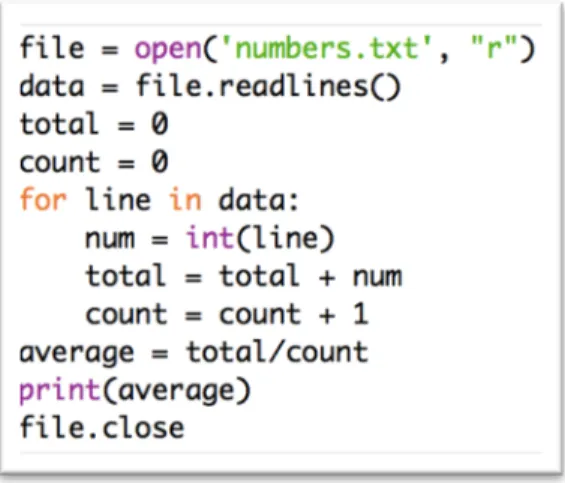
List of Figures Figure 2.1 Example of the ‘Rainfall Problem’ algorithm shown in Python ...54
Figure 2.2 Example of error diagnostics in Python ...62
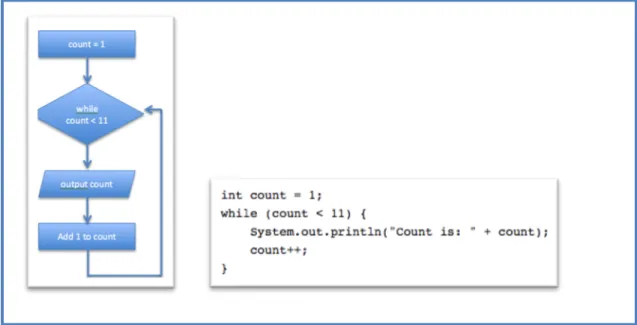
Figure 2.3 Example of an algorithm shown as a flowchart diagram and in Java ...62
Figure 3.1 Spreadsheet validation for marking the programming assessment ...90
Figure 4.1 Chart showing Girls’ and Boys’ Test Scores, relative to a normal distribution ...109
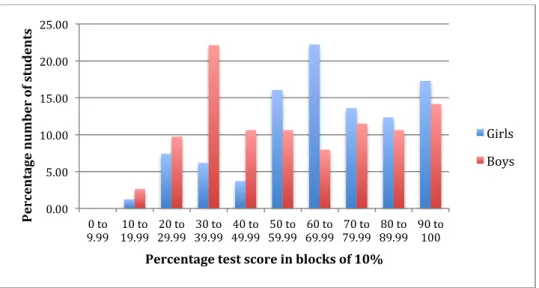
Figure 4.2 Bar chart showing Girls’ and Boys’ Test Scores segmented into groups of 10% ....111
Figure 4.3 Chart showing mean scores of confidence by gender (scale of 1 – 7) and the higher the number the less the confidence ...113
Figure 4.4 Chart showing mean scores of anxiety by gender (scale of 1 – 7) and the higher the number the less the anxiety ...115
Figure 4.5 Participants’ computer gaming minutes per week ...119
Figure 4.6 Participants’ responses to the preferred game genre ...120
Figure 4.7 Factors that influence participants’ IGCSE choices ...123
List of Tables Table 2.1 Types of high-level computer programming languages ...29
Table 3.1 Timeline of teaching pedagogies ...80
Table 4.1 Girls’ and Boys’ Intelligent Quotient (IQ) Scores and Test Scores ...109 Table 4.2 Responses to the Computer Programming Confidence and Anxiety
Questionnaire ...112 Table 4.3 Responses to the Influences on IGCSE Choices Questionnaire ...124 Table 4.4 Preferred programming learning style responses showing the mean, standard
deviation, skewness z value, kurtosis z value, Levene’s test of homogeneity of variances, and results from a one-way ANOVA and Mann-Whitney U-test ...126 Table 5.1 Interviewed students by pseudonym and what subjects they took for IGCSE ...129 Table 5.2 Narrative interviews analysed using Lichtman’s thematic coding ...130 Table 5.3 Frequency of common themes from Question 4 on the Student Perceptions of
Computer Science Questionnaire ...136 Table 5.4 Frequency of common themes from Question 5 on the Student Perceptions of
Computer Science Questionnaire ...137 Table 5.5 Learning strategies mentioned in question 11 on the Influences on IGCSE
Choices Questionnaire ...143 Table 5.6 Strategies for improving learning from question 11 on the Influences on IGCSE
Chapter 1 Introduction
1.1 Introduction
Computer programming is widely considered to be an important skill in modern society (Ensmenger, 2012; García-Peñalvo, 2016; Garner, 2002; Major, 2010; Robins, Rountree, & Rountree, 2003), especially because it provides numerous employment opportunities (Hill, 2016). Recently, this has been recognised by the governments of numerous countries (e.g. Finland, Japan, South Korea, United Kingdom (UK), United States (US)), with public primary and secondary schools now providing compulsory programming classes (Guo, 2017). However, for the purpose of this thesis, the focus will be on the UK, the US, and South Korea. The rationale for this decision is that the participants in this study are South Korean middle school students who study at an English-curriculum school designed to prepare them for UK and US universities.
The social issue of increasing the number of females in Computer Science has been researched a great deal over the past 35 years. Misa (2011) in his extensive historical review of women in computing identified five ‘explanatory factors’ that underpin most interventions and experiments on why there is a gender imbalance in Computer Science. They are: 1) an intimidating computing classroom or workplace; 2) the computing curriculum content focusing on male-preferred topics; 3) a lack of positive role models and mentoring in the classroom; 4) a lack of peer support; 5) the culture of computing is masculine, and throughout its history practices have created an ‘outsider’ position for women and girls. Yet despite a range of research approaches, the problem remains unresolved.
There are numerous employment opportunities in computer programming (Nager & Atkinson, 2016), yet few women are in a position to take advantage of these opportunities and are the largest underrepresented group in Computer Science (Mitchell, 2013). Specifically, only around one in ten (13%) UK computer programmers and software developers (the largest group of IT specialists) are women (BCS, 2015). This is unlikely to change in the near future, with the Joint Council for Qualifications (JCQ) reporting that 90.2% of A-level Computing students in 2016 were male, with females only representing 9.8% of the 6,242 candidates (JCQ, 2016a). This statistic suggests that there has not been enough done to increase the number of girls choosing to study A-level Computing.
Over the past few years, researchers have continued to investigate the reasons for the gender disparity in computer programming and looked at ways to overcome potential barriers (e.g. Ashcraft, 2014; Beaubouef & Zhang, 2011; Bock, Taylor, Phillips, & Sun, 2013; Cheryan, Drury, & Vichayapai, 2012; Lewis, Anderson, & Yasuhara, 2016). However, strategies for increasing the number of females in Computer Science has met with little success and according to the Harvey Mudd University president, Maria Klawe, the number of women applying to study Computer Science in the US is actually declining (Klawe, 2016).
The gender disparity in US universities is troubling, with women representing just 29% of the 2016 Computer Science bachelor’s degree graduates (National Science Foundation, 2017). In the UK, the percentage of women graduating in 2017 with Computer Science degrees was just 15% (WISE Campaign, n.d.). In South Korea, a country characterised by high researcher densities and technological sophistication, as few as 18% of researchers are women (UNESCO, 2017). Although the focus of this research is on the above three countries it is worth mentioning that this is a global issue. In a worldwide survey, the Programme for International Student Assessment (PISA) reported that women only represent 20% of computing graduates in the Organisation for Economic Cooperation and Development (OECD) member countries (OECD, 2015). Nor does it look like this might change, with PISA reporting that less than 5% of girls contemplated a career in engineering and computing (OECD, 2015). These statistics are extremely concerning, not least because it is the moral responsibility of educators to ensure that all demographic groups are given equal opportunities.
The problem of encouraging girls to consider careers in STEM subjects is even more pronounced in South Korea because only 52.7% of working-age South Korean women (aged 15 and older) are in paid employment, compared to 74.7% of working-age South Korean men (Draudt, 2016). Since 2007, when the South Korean government introduced an elective Computer Science curriculum called ‘Informatics’, the number of school children studying computer programming has remained low, with the percentage of students of both genders who took these classes dwindled to just 5% (Choi, An, & Lee, 2015).
Research on the underrepresentation of women in Science, Technology, Engineering and Mathematics (STEM) disciplines has been controversial with some variation with the STEM
disciplines. For example, female graduates are well represented in biological studies and in 2016, represented 57% of the graduates from U.S. universities but only 29% in Computer Science (National Science Foundation, 2017). There are several competing theories of sociocultural and neurobiological causation for the underrepresentation of women in certain STEM fields (e.g. Garcia-Retamero, & López-Zafra, 2006; Legewie & DiPrete, 2012; Reilly, Neumann, & Andrews, 2016; Xu, 2008). One of the challenges for researchers is to separate the socialisation influences of parents from biological preferences (Leaper, 2013) but that is not always possible or desirable (Eagly & Wood, 2013). Moreover, it is beyond the scope of this research to assess neurobiological aspects of programming.
One sociocultural predictor is the type of societal culture, and given that Korea is a Confucian-influenced society, where women are considered subordinate to men (Lim & Meier, 2011), there is potential gender-bias in the computing industry. Teo (2006) found that students in Singapore, another Confucian-influenced society that scores highly in the PISA rankings (OECD, 2015), reported no statistically significant sex differences in computer attitudes, although male students revealed a more positive attitude towards computers than their female counterparts. Certainly, sociocultural norms in South Korea require consideration in this case study. By encouraging women to train in Engineering and Computer Science should help improve their position in the labour market (Silim & Crosse, 2014). This gender balance in the workplace is fundamental to economic advancement (Kabeer & Natali, 2013). Economic policies in South Korea have been developed to lower discrimination in the labour market and in a computer simulation, it was predicted that the planned changes would contribute positively to the participation of females in the workplace and provide per capita income growth (Kim, Lee, & Shin, 2014).
Many people are familiar with the idiom of “closing the stable door after the horse has bolted” meaning that sometimes it is too late to fix something after the problem has occurred. Over 15 years ago, it was argued that the battle to encourage females to apply for Computer Science undergraduate courses was lost before they reached the age to apply for university (Carter & Jenkins, 2001) and little has changed since. Many girls decide against continuing with STEM subjects when they are still in high school, thereby reducing the talent pool well before they have considered a particular career (Silim & Crosse, 2014). It seems reasonable to suggest that many of the unsuccessful attempts in addressing the under-representation of females in Computer Science occur too late and that a positive exposure to programming at a
much younger age may help close the technological gender gap (Metz, 2007). DeClue, Kimball, Lu, and Cain (2011) concur with this perspective and recommend that interest in computing must be fostered early if the number of Computer Science graduates is to increase. Moreover, Lee (2015) in a study with 4,680 grade 12 participants in the United States reported that students who took more units in Computer Science courses in secondary institutions were more likely to pursue STEM majors at a university level.
There are a number of proponents (e.g. Hubwieser, 2012; Rushkoff & Purvis, 2011) who suggested that computer programming should be made a compulsory subject. Rushkoff and Purvis (2011) outline three key reasons. Firstly, a young person will develop confidence in using technology that is ubiquitous in work, social life, and the home. Secondly, there are significant cognitive benefits of learning to program (e.g. Park, Hyun, & Heuilan, 2015), which led Liao and Bright (1991), in a meta-analysis on sixty-five existing studies, to conclude that students with computer programming experiences scored about sixteen percentile points higher on a variety of cognitive-ability tests than students who did not have prior programming experiences. Writing a programming solution requires the programmer to solve a problem, often using abstract thinking and thus promotes cognition (Wing, 2006). Thirdly, Computer Science has enormous growth potential and brings numerous job opportunities (Nager & Atkinson, 2016).
In 2013, the Computing curriculum (Gov.UK, 2013a) was introduced and it is now a compulsory subject in the England, Wales, and Northern Ireland public school system in both primary and secondary schools. From 2018, computer programming will be a compulsory subject in South Korean state schools (Cho & Huh, 2017). However, in many English-curriculum International schools students can choose not to study Computer Science. In Year 9, secondary school students are required to make a decision of what to study in their International General Certificate of Secondary Education (IGCSE) qualifications and few girls, relative to boys, choose to study Computer Science (JCQ, 2016b). If a student decides not to study a subject when transitioning from Year 9 to Year 10, they reduce the likelihood of pursuing it at a later point in their life (Cleaves, 2005). Consequently, ceasing to study Computer Science in Year 9 increases the likelihood of never developing important career and life skills.
Female students studying at an English-curriculum International school should be given the same opportunities to study Computer Science as their male equivalents. Thus, the purpose of the current study is to investigate the Computer Science abilities and perceptions of Years 8 and 9 school students (12 – 14 years old) and explain what factors might influence their choosing IGCSE Computer Science in a selective, English-curriculum, independent school located in South Korea. Integral to this research is the desire to shed light on the reasons why girls, relative to boys, do not pursue Computer Science. From this, practical strategies will be formulated to encourage the continued participation of girls, which may, ultimately, help to address the gender imbalance in the Computer Science industry. This has the potential to improve the technology-based systems created by diversifying the views of the designers and by helping to fill the projected shortfall of computer-related jobs (Babes-Vroman et al., 2017; Kelleher, 2006). This gender diversity leads to a broader representation of preferences (Azmat, 2014) and evidence strongly suggests that collaborating teams, irrespective of gender, are increasingly producing the majority of recent scientific innovations (Wuchy, Jones, & Uzzi, 2007) and that group collaboration is greatly improved by the presence of women (Woolley, Chabris, Pentland, Hashmi, & Malone, 2010).
1.2 History of computer programming in English-curriculum schools
Prior to discussing the history of computer programming in English-curriculum schools, the meaning of several terms, specifically computer science, computing, computational thinking,
programming, and coding should be explained. These terms are not synonymous and defining them can help to clarify these concepts in the context of this research.
The two terms of computing and computer science are sometimes used interchangeably and this may cause confusion. The UK organisation, Computing at School, who provides computing resources for UK schools, suggests that computing is “concerned with how computers and computer systems work and how they are designed and programmed” (Berry, 2013, p. 4). However, this definition is not entirely helpful because it could be argued that it describes computer science rather than computing.
The computing programmes, developed by the National Curriculum in England, clarify these two terms more effectively. They use the terminology, computing, to describe the curriculum and states that the key stage 3 (Years 7, 8, and 9) and key stage 4 (Years 10 and 11) curriculum has computer science at its core (Gov.UK, 2013b). This indicates that computer
science is a subset of computing and this can be seen in the four aims of the curriculum. The first aim is to ensure pupils “can understand and apply the fundamental principles and concepts of computer science, including abstraction, logic, algorithms and data representation” (Gov.UK, 2013b, p. 1). The second aim also relates to computer science and equips pupils to use computational thinking. The third aim is not computer science and prepares pupils to evaluate and apply information communication technology (ICT). The last of the four aims is to ensure that pupils are responsible, competent, confident and creative users of ICT. To summarise, the term computing also includes the use of ICT and computer science is a subset of computing.
The expression computational thinking fits under the umbrella term computerscience and is defined as “aspects of designing systems, solving problems, and understanding human behaviours” (Wing, 2006, p. 6). Wing argued that understanding the world from a computational perspective develops a particular lens to problem comprehension and assists in finding appropriate solutions. Therefore, computational thinking is a way of solving a problem by thinking of it in terms of a computer programming language. Computing programming is more than just coding because it requires the use of computational thinking (Lye & Koh, 2014). Thus, coding can be considered the act of writing programming codes that may, or may not, utilise computational thinking. Now that a clear distinction between the terms computing, computer science, computational thinking, programming, and coding has been established, we can look at the history of computing programming in English-curriculum schools.
In the 1980s, learning computer programming was considered to be a key educational requirement and an important part of the English-curriculum. It was postulated that by teaching the computer to think, a self-realisation process would occur and children would better understand how they themselves think (Papert, 1980). Essentially, children would develop computational thinking skills and be able to visualise a problem and solve it using computer programming tools.
After the initial excitement, the significance of computer programming diminished in the 1990s and instead of becoming the core subject that many academics were advocating (Mayer, Dyck, & Vilberg, 1986), Information Technology (IT) and Information Communication Technology (ICT) gradually replaced it in the English Curriculum (Esteves,
Fonseca, Morgado & Martins, 2010; Jenkins, 1998). There are many possible explanations for this change. At the time, there was limited evidence of transferable skills from the LOGO programming language (Pea & Kurland, 1984; Khayrallah & Van Den Meiraker, 1987), although more recent research refutes this and evidences increased creativity and problem-solving skills (e.g. Jang & Lew, 2011; Pardamean, Evelin, & Honni, 2011). Moreover, there was the need to learn the seemingly endless and useful software applications that could be used to enhance learning in most, if not all, of national curriculum subjects (Cox et. al, 2015). Computer programming has become a key skill that is as important as reading and writing (Prensky, 2008) and so a new national computing curriculum was introduced in England in September 2013. This curriculum has made is computing a compulsory subject in all public primary and secondary schools (Gov.UK, 2013a). This change in policy has increased girls’ exposure to computer programming, a discipline that was not previously available.
This initiative has become global and the 2016 Digital Citizenship Standards for students, created by International Society for Technology in Education (ISTE) now include computational thinking, or the ability to use algorithmic thinking to develop a sequence of steps to create and test automated solutions (International Society for Technology in Education, 2016). Further, the Council of International Schools (CIS), a non-profit organisation committed to high-quality international education, now requires evidence of how students’ digital citizenship is attained as one of their accreditation standards (CIS, 2016). This means that an International school, the setting of this study, cannot gain accreditation to this member-community organisation without embedding digital citizenship standards, which include the requirement to teach computer programming. Not all International schools apply for accreditation, and even in an accredited school, students may choose not to continue studying this subject after receiving a basic introduction.
Implementing a new computing curriculum is a challenging prospect and to do so effectively requires suitably qualified computing teachers. One of the government-funded initiatives was to develop the knowledge and expertise of in-service teachers through the Computing At School Master Teacher programme (Sentence, Humphreys, & Dorling, 2014). Master Teachers are experienced teachers who work with around 40 other teachers in their local area, supporting their teaching of the computing curriculum (Smith et al., 2015). Despite evidence of positive outcomes from this programme (Boylan & Willis, 2015), a Royal Society review
reported that the majority of computing teachers did not have adequate training and were unprepared (Royal Society, 2017). Specifically, the Royal Society survey reported that only 44% of secondary school teachers felt confident only teaching the parts of the curriculum where there was less of a computer science focus.
The state of the computing curriculum in England is fragile and the recommendation of the Royal Society review is that its sustainability is dependent upon swift and coordinated action by governments, industry, and non-profit organisations (Royal Society, 2017). The review went on to report that the government met only 68% of the recruitment target for computing teachers and that this has been an influential factor in many of the difficulties experienced by schools. Since this current study examines a range of learning strategies for teaching computer programming to novices, it will provide an additional insight into ways that the current computing curriculum can be delivered.
1.3 Context
I have taught Computing at Key Stage 5 (16-18 years of age) since 1996 and one of the greatest challenges has been to introduce computer programming to complete novices who were not given the opportunity to study computing programming in secondary school. In sixteen years of teaching post-16 students, every A-level computing class that I have taught was male-dominated with an average of two or three girls in each group of fifteen to twenty students. Since September 2013, I have been employed by The International School of London (pseudonym), an independent, English-speaking, English-curriculum international school on a South Korean island off the coast of the South Korean mainland. I was employed with the directive to introduce Computer Science at Key Stage 2 (ages 7-11) and Key Stage 3 (ages 11-14) and develop the subject so that IGCSE Computer Science and International Baccalaureate (IB) Computer Science can be introduced to the school curriculum.
The School was opened in 2011 to provide an English-immersed education to South Korean students. Classes are mixed-gender in the Junior School (Year 1 to Year 6, inclusively); single-gender in Year 7 through to Year 11, inclusively; and mixed-gender in Year 12 and Year 13. The overwhelming majority of the students will graduate and move to the USA and UK to study at University. This is common practice in South Korea with 63,710 South Koreans being educated abroad in 2014/2015 (Institute of International Education, 2015).
When the School first opened in 2011, it ran classes of Information Communication Technology (ICT) in the Middle School and Junior School, and students learned how to use software applications, including Excel, Adobe Dreamweaver, and Adobe Photoshop. They did not learn any computer programming until I was appointed to create a new curriculum. Moreover, the students that had studied in South Korean state schools had not learned computer programming since ‘Informatics’, as Computer Science is called in the South Korean state schooling system, is rarely taught in Middle School (Choi, An, & Lee, 2015). One of the challenges faced in teaching South Korean students, who have come from the state schooling system, is that they have become accustomed to learning by rote (UNESCO Bangkok, 2017). This could be described as a knowledge-based curriculum as opposed to a competency-based curriculum and has had little room for collaboration. In fact, students in state schools compete with each other and receive a ranking in their class and year group. Therefore, getting students to work with their peers and share knowledge was a challenge in the first year of teaching Computer Science.
In that first year, the subject was introduced to Years 5 through 9, inclusively. Each group was given one lesson of 40 minutes per week, so it was decided to incorporate computer programming only and leave the other computing science topics until Year 10. For the first 8 weeks, students were introduced to computer programming through Scratch, the Massachusetts Institute of Technology (MIT) developed visual programming environment designed to facilitate concepts of computational thinking in a fun and simplified approach (Meerbaum-Salant, Armoni, & Ben-Ari, 2013). The expression ‘computational thinking’ refers to the thought processes involved in formulating a solution to a problem in a way that utilises the rapid processing capabilities of computers (Wing, 2006). After this introductory period, Microsoft Visual Basic 2010 Express was taught to transition the students from an introductory learning language to a commercial application. Microsoft Visual Basic is a computer programming development tool for building Microsoft Windows and Web applications (Petroutsos, 2008), but it supports the novice programmer by using a graphical user interface (GUI) and has a simplistic programming syntax.
In each lesson, students were required to implement a small sample program by typing the sample programming code into the editor, then test and debug the program until it worked. Once the students had a working program they were then required to adapt it to solve several
tasks of increasing difficulty (see Appendix A for an example). Additionally, students were asked to complete 40 minutes of homework each week by working through the JavaScript problems available on the online website, ‘Code Academy’. It was impractical to give the students homework in Microsoft Visual Basic since it only runs on Windows personal computers (PCs) and the boarding houses only had iMacs. This grounding in JavaScript not only reinforced key concepts such as selection, sequence, and iteration, it also prepared the students for learning JavaScript in the following school year. Thus, the students had some exposure to computer programming, if only through simple problem-solving exercises. At the end of the first year, three key points stood out. Firstly, there seemed to be no difference in the programming test scores between boys and girls; secondly, Year 7 girls’ average score was better than Year 7 boys’, Year 8 boys’ and Year 9 girls’, which indicated that the age of the students had little bearing on programming ability; thirdly, only 5 girls (13% of the Year 9 cohort) compared to 34 boys (52% of the Year 9 cohort) chose to continue with Computer Science at IGCSE. This gender imbalance is typical of UK schools also, with 48,219 boys (80%), compared to 12,302 girls (20%) completing their GCSE Computing in 2016 (JCQ, 2016b).
A combination of the factors discussed above has provided a unique opportunity to research novice programming at a secondary school and design a curriculum that will encourage more female students to study Computer Science.
1.4 Structure of the thesis
Following on from the introduction, Chapter 2 (Literature Review) looks at the position of Computer Science in English-curriculum schools, establishes what is a programming language, and outlines why all students should learn to program a computer, taking into consideration the current career opportunities in Computer Science. Further, this chapter includes an overview of the current literature in order to understand the influence of gender on learning to program a computer and considers why so few girls, relative to boys, choose not to continue with their formal education in Computer Science. The relevant theories are divided into two discrete categories: intrinsic motivators and extrinsic motivators. The intrinsic motivators are further sub-divided into neurobiological sex differences, computer programming ability, computer programming engagement, and computer programming confidence. The extrinsic motivators are further sub-divided into a consideration of role
models, an intimidating environment for females, and the influence of single sex-classes. Finally, this chapter examines the literature on the strategies for learning to program a computer and considers problem-based learning, diagrammatic learning, collaborative and cooperative learning, programming with a storytelling and/or art perspective before finally considering game-based learning.
Chapter 3 (Methodology and Methods) focuses on the research design and outlines the ontology, epistemology, methodology, and methods used by the author. Following this, participants’ characteristics and sampling strategies are outlined, the collection and analysis of data explained, and the ethical considerations relating to this case study discussed.
Chapter 4 (Quantitative findings) presents the quantitative empirical data and focuses on the following areas relating to the research questions: i) gender difference in computer programming ability; ii) intrinsic influencing factors affecting optional subject selection; iii) extrinsic influencing factors affecting optional subject selection; iv) preferred method of learning to program.
Chapter 5 (Qualitative Findings) presents the qualitative data and focuses on the following areas relating to the research questions: i) gender difference in computer programming ability; ii) intrinsic influencing factors affecting optional subject selection; iii) extrinsic influencing factors affecting optional subject selection; iv) preferred method of learning to program.
Chapter 6 (Discussion) presents a discussion of the main findings that have emerged. These points are viewed in relation to the key theoretical ideas that relate to gender and education. Finally, Chapter 7 (Conclusion) provides a summary of the findings, outlines what conclusions can be drawn from them and makes recommendations for future research, as well as implications for policy and practice.
Chapter 2 Literature Review
2.1 Introduction
Fundamental to the purpose of this study is to consider why so few middle school girls, relative to middle school boys, choose to study computer programming in senior school. Knowing how children of both genders develop their skills while at school and what factors, including intangibles such as behaviour and self-confidence, influence their choices about their future education and career pathways is crucial (OECD, 2015). This chapter reviews the available literature, focusing predominately on the past 12 years. The structure of the chapter will begin with establishing the role of computer programming in modern society, then considers the effects of gender, social class, and ethnicity on students’ career aspirations, before exploring the nature of computer programming, and reviewing of the history of computer programming in the UK Curriculum. Following on from this is a review of the existing research on both intrinsic and extrinsic gender factors that may affect learning to program a computer. Further, a critical discussion of some of the key learning strategies designed to increase female participation in computer programming is presented, and finally, the research questions are outlined.
2.2 Role of computer programming in modern society
Computer Science is a discipline that combines and blends science, engineering, mathematics, and art (Denning, 2005) and although computer programming is an integral part, Computer Science is much broader than just this field (Denning, 2009). The Association of Computing Machinery (ACM) describes Computer Science as a discipline that covers three overarching categories: 1) designing and developing software; 2) developing effective ways to solve problems that incorporate computers; and 3) providing more effective ways of using computers in areas such as robotics, computer vision, or digital forensics (ACM, n.d.). Arguably, the most appropriate strategy for accessing the different dimensions of Computer Science is through programming, because not only is it central to the subject, it is also a window into the related areas outlined above. In agreement with Tucker et al. (2003), programming is as necessary to the study of Computer Science, as literacy is to the study of literature.
To develop computational thinking, a student must learn the principles of computer programming, and there are a number of fundamental reasons why all students should be
given the opportunity to learn this discipline: firstly, it is beneficial to the learner in terms of their educational development; secondly, it enables them to live within a world suffused with technology; thirdly, it provides future career opportunities; and fourthly, it is beneficial to society and in particular the technology industry. The last point is emphasised by job market analytics that claims roughly half of U.S. jobs in the top income quartile are in occupations that require applicants to have some computer coding knowledge (Hill, 2016). Opportunities in the U.S. job market has worldwide ramifications since computer programmers can work from anywhere in the world and it is common practice to outsource internationally (U.S. Bureau of Labor Statistics, n.d.).
It is commonly reported that teaching programming to children has positive impacts on their higher-level thinking skills and problem-solving abilities. From a historical perspective, a number of the studies in the 1980s reported an increase in cognition (Mayer & Fay, 1987; Mayer et al., 1986; Lehrer, Randle, & Sancilio, 1989; Papert, 1980). However, empirical evidence linking improved cognition in computer programmers was slow to emerge (Denner, Werner, & Ortiz, 2012), although the self-perceptions of students studying computer programming reveal that they believe their thinking skills have developed (Kalelioğlu, 2015). If all boys and girls are given the opportunity to learn to program a computer then it should be a question of how to maximise aspects of teaching programming so that students, particularly girls, are less likely to be discouraged when learning computer programming (Kaplan, 2010). Perhaps just as relevant to this study is which programming language will most likely engage novice programmers, especially girls.
There is an increasing shortage of graduates in Science, Technology, Engineering, and Mathematics or STEM as it is commonly called (Olson & Riordan, 2012) and this is concerning, especially as this is an essential part of the economies of many countries (Meeker & Wu, 2013; Robnett & Leaper, 2013; Rothwell, 2013; Schäfer et al., 2013). Of these four disciplines, it would appear that technology and in particular computer programming is being given extreme levels of importance by the U.S. (Obama, 2016), U.K. (Cameron, 2014), and South Korean (Korea Herald, 2014) governments. Since software development projects often employ overseas programmers (U.S. Bureau of Labor Statistics, n.d.) these steps to increase the number of programmers are internationally relevant.
In an effort to embed computer programming into the school education system, the then President Barrack Obama pledged four billion US dollars into increasing the number of students with access to Computer Science classes. He explained that Computer Science in the new economy is not an optional skill and should sit alongside the three ‘R’s,’ of reading, writing, and arithmetic (Obama, 2016). From a similar standpoint, the then UK Prime Minister, David Cameron, stated that mathematics, science, and computer coding should be a priority for schools since this would impact on the country’s economic future (Cameron, 2014). A similar strategy in trying to educate children in the art of computer programming is being employed in the UK with all Year 7 students being given a BBC Micro Bit, a stripped down computer similar to a Raspberry Pi, alongside tutorials on how to program this device (Rocks, 2015). In 2018, a new software education curriculum was introduced to South Korean state schools with the requirement that computer programming is taught to students for a minimum of 17 hours per year (Cho & Huh, 2017).
Educating students on how to program a computer may provide them with future opportunities in a highly lucrative field. In a survey conducted by Looksharp, a marketplace for internships and entry-level jobs, the results from 50,000 U.S. college students and recent graduates identified Computer Science followed by engineering as the majors with the highest starting salaries (Parcells, 2015). The rationale given for the high starting salary was the disparity between actual graduates and available jobs.
Encouraging more girls to choose Computer Science in high school is likely to increase the numbers choosing this option at university. If a student opts out of Computer Science in high school they are unlikely to opt back in at university, since they will lack many of the necessary core skills. In turn, if the number of female Computer Science graduates increases, then this is likely to help address the Computer Science/engineering job shortage.
2.3 The effects of gender, social class, and ethnicity on students’ career aspirations Definitions of social class have evolved over the past 40 years. Structural approaches to measure social class are typically conducted through indicators of social economic status such as income, occupation, and education (Wyatt-Nichol, Brown, & Haynes, 2011). Findings from the BBC’s 2011 Great British Class Survey, the largest survey on social class conducted in the U.K., identified seven classes that they differentiated by wealth (Savage et al., 2013). For the purposes of this research, the terms social class and social economic status
will be used interchangeably. Since social class is the strongest predictor of educational achievement in the U.K. (Perry & Francis, 2010), any investigations into educational gender differences should be viewed through a lens that includes this factor.
Social class, ethnicity, and gender, and their interactions on the career aspirations of young people has received some attention from academics. In an effort untangle the influences of race/ethnicity, social economic status, and gender on career ambitions of over 22,000 U.S. Grade 8 and Grade 10 children, Howard et al. (2010) analysed data from an online career information system database. Their analysis revealed significant effects for gender and gender-ethnicity interaction for occupations that had been classified as prestigious and for those occupations that had extensive educational requirements. They discovered a clear gender difference in preferences for 16 of the top 20 occupational choices. Boys considered computer programmer, computer engineer, and mechanical engineer in their selections whereas girls did not include any career that related to Computer Science or engineering. Instead, girls selected the professions of acting, fashion design, cosmetology, veterinarian, photography, dancing, psychology, and elementary school teacher. Most importantly, there were no interactions between ‘social economic status and gender’ or ‘ethnicity and gender’ when analysing Computer Science-related career aspirations. Thus, the gender difference in computer-related professions was not influenced by social economic status or ethnicity. Of the OECD member countries, South Korea has the highest gender pay gap, with women earning 63% of what men earn (OECD, 2017). Further, only 56.2% of women in South Korea are in gainful employment (Son, 2017). What makes this gender disparity so surprising is that South Korea is one of the top performing countries in terms of girls’ academic performance (OECD, 2017). Although it appears that there is a lack of opportunity for young women in South Korea, the employment rate of Korean women in their 20s exceeds men (Statistic Korea, 2013). However, this figure declines abruptly once women turn 30 years of age (Statistic Korea, 2013). Since 30 years is the mean age of marriage in South Korea many newly married women leave their jobs to bring up their child and their opportunities to return to their professions are limited (Kim, O’Brien, & Kim, 2016). Thus, young Korean women face societal pressure to either pursue a professional career or to get married and dedicate their life to their family (Kim & Lowry, 2005). This cultural influence complicates any gender-based research in Korea.
The South Korean gender disparity also applies to degrees awarded in Computer Science and mathematics, despite the fact that girls outperformed boys in mathematics in the PISA 2015 assessments (OECD, 2017). In an effort to ascertain whether gender differences in science-related career aspirations were influenced by social economic status and other factors, Shin et al. (2015) analysed the PISA data of 15-year old Korean students. They found that gender differences in social economic status did exist. Although they found that the boys’ parents had higher a higher social economic status they attributed this to the Confucian tradition of wealthier parents reproducing until they had a son. Shin et al. (2015) also found that gender differences in science-related career aspirations were influenced by girls lower self-belief and that their parents’ perceived science to be of lower importance for their daughters.
It can be seen by these extensive studies in the U.S. and South Korea that there is a gender disparity in science-based career aspirations. In the U.S., there is no evidence that social economic status influences the gender disparity. Conversely, in South Korea, social economic status is one of the factors that influence science career aspirations but it is not the only factor.
2.4 Nature of computer programming
Computer programming is a set of coded instructions, essential to perform a series of operations on computers (Hoare, 1969). These coded instructions can be categorised into three overarching types of programming languages: Machine Languages, Assembly Languages, and High-level Languages (Deitel & Deitel, 2014). A machine language consists of binary numbers only and is the only set of programmable instructions that a computer can directly understand (Dale & Lewis, 2016). Assembly languages are more understandable to programmers than machines languages because they use letters, rather than binary numbers, for their operation codes (Opcodes). However, assembly languages require a translator called an assembler to convert the short mnemonic letter codes to each machine language instruction (Dale & Lewis, 2016). For example, LDA #5 would be an example of an assembly instruction that loads, or transfers, the number 5 from one memory location to a temporary memory location called an accumulator. This is far more meaningful to programmers than a machine code equivalent, which would resemble “1011100100001001”. Assembly languages and machine languages are classified as low-level languages and require a detailed understanding of computer architecture (Brookshear & Brylow, 2015).
Relative to assembly languages, high-level programming languages are much closer to natural language and contain instructions that are easier to understand. Computer programming in a high-level language can be described as the act of assembling abstract symbols in a particular sequence to control the computational actions of the computer (Kelleher & Pausch, 2005). Research studies on computer programming with novices, usually, if not always, incorporate a high-level language rather than machine languages or assembly languages. This research focuses on the pedagogical strategies to teach high-level languages to middle school children.
The strengths of high-level languages lie in their abstraction over complex hardware operations, which lead to greater security, higher reliability, and reduced development costs (Frampton et al., 2009). Essentially, this means that the novice programmer does not need to be concerned with details of how hardware operations function because the translator (the software program that converts a high-level language to machine language [Dale & Lewis, 2016]) will take care of the complex hardware operations. This translator takes the form of an interpreter or a compiler with the former providing superior error diagnostics and the latter producing an executable file, one that is in binary and does not require the original program to run (Dale & Lewis, 2016).
2.4.1 Suitable programming languages for novices
There are thousands of computer programming languages (Kaplan, 2010) and to illustrate the range available, table 2.1 categorises a few of the more popular ones by their use. These categories include visual and block-based languages, simplistic syntax languages, general-purpose languages, web development languages, mobile device languages, and database development languages.
Table 2.1
Types of high-level computer programming languages
Language Description Visual and block-based languages
Scratch Scratch and other block-based languages (e.g. App Inventor and Alice) incorporate colourful visual blocks to avoid the distraction of syntax while supporting the implementation of complex projects (Rizvi, Humphries,
Major, Jones, & Lauzun, 2011).
LOGO Logic Oriented Graphic Oriented (LOGO) was created to teach geometric theory by controlling a robotic turtle’s movements (An & Park, 2011). Today, it is incorporated into the Python programming language as Turtle. Simplistic-syntax languages
BASIC Beginner’s All Purpose Symbolic Instruction Code (BASIC) was developed in 1963 by John Kemeny and Thomas Kurtz (Kelleher & Pausch, 2005). More recently BASIC has evolved into the Microsoft Visual Basic.NET framework, which includes a Graphic User Interface (GUI), drag and drop objects, and detailed error diagnostics.
Ruby Released in 1995, Ruby not only uses a simple syntax but is also a general-purpose interpreted, object-oriented programming language (Thomas, Fowler, & Hunt, 2013).
Python Released in 1990, Python uses a simple syntax but is a general-purpose, interpreted, programming language created by Guido Van Rossum (Paulson, 2007). It was reported to be the most commonly used computer programming language in 2015, with 31.2% of the coding population (Devsaran, 2015).
General-purpose languages
Java Java is a general-purpose, compiled, object-oriented programming language (Kelleher & Pausch, 2005) developed in 1995 by Sun Microsystems.
C C is also a general-purpose, compiled programming language with its later versions, C# and C++ supporting object-oriented programming (OOP). As a compiled language the translator checks the typing in the compilation stage before the program starts executing (Paulson, 2007).
Web development languages
JavaScript JavaScript is interpreted by the web browser and is used in conjunction with HTML and CSS. The latest versions allowing developers to create dynamic content without using third-party plug-ins (i.e. programs written in other languages) and importing them (Anthes, 2012).
PHP Hypertext Pre-Processor (PHP) was developed in the mid-90s to create dynamic web pages that are interpreted by a server before the web page is transmitted to the client’s computer (Tatroe, MacIntyre, & Lerdorf, 2013). Mobile device languages
Java for Android
Java for Android is a variation of the Java programming language, but for mobile apps to run on the Android platform.
Objective C To develop apps on the iPhone and iPad, Apple developed an object-oriented variation of the C programming language called Objective-C (Yan, Becker, & Hecker, 2011).
Swift Swift was introduced in 2014 as a superior language to Objective C (Williams, 2014). Since then, Swift made the top 10 in the monthly TIOBE index ranking of popular programming languages (Hein, 2017).
Database development languages
SQL The standard language for communication with a database management system is Structure Query Language, commonly referred to as SQL (Tale, 2016). This language is used in conjunction with other programming languages so is incorporated with mobile apps and web development applications. Most applications that stores data in a database format will incorporate SQL
As can be seen in table 2.1, there are a variety of different uses for programming languages with the majority of studies on novice programming utilising block-based languages or simplistic syntax languages. The former is designed to reduce the need to remember syntax by dragging blocks and the latter is designed to reduce the number of instruction sets and unnecessary syntax (Kemeny & Kurtz, 1980). Simplistic syntax languages still require users to memorise programming commands and to type these commands in a particular order. Programming robots and circuit boards is another strategy that has been employed to teach programming to novices. Whilst robotic programming has been very effective in promoting programming to children, it does not have broad appeal (Kelleher & Pausch, 2005) and is an expensive solution not available to all schools.
As outlined above, there are numerous programming options available. Thus, the decision as to what is the best introduction to computer programming for novices needs to be considered carefully. Further, there are be features of programming languages that girls may find particularly engaging and this should, therefore, be an additional consideration.
The National Curriculum in England (Gov.UK, 2013c) does not recommend a particular programming language to teach to novices. However, a popular off-the-shelf curriculum, called ‘Switched on Computing’ embeds Scratch, App Inventor, and LOGO in Years 3 through to 6 (RisingStars-uk, n.d.). The UK organisation that developed this curriculum,
Rising Stars, claim that their programme is taught in 6,000 UK and International schools, so it seems reasonable that most primary schools will use highly visual programming languages. There are several studies (e.g. Denner et al., 2012; Fowler, Fristoe, & MacLaurin, 2012; Stolee & Fristoe, 2011) that have considered the use of highly visual children’s programming languages to motivate children to learn computer programming concepts. However, only a few studies have considered whether these introductory languages are effective at preparing beginners for the rigours of learning a text-based computer programming language (Dorling & White, 2015). The concept of mediated transfer (Perkins & Salomon, 1992), where the learner applies knowledge learned in one context to another, applies in this case. The introductory language should have suitable features to teach the foundational concepts of computer programming in order to support the transition to commercially used programming languages (Kaplan, 2010). Scratch was designed with this purpose in mind and research carried out by Maloney, Peppler, Kafai, Resnick, and Rusk (2008) noted that children (ages 8 – 18 years) were able to learn some computer programming concepts, even when the learning was self-driven and unstructured.
A study conducted in Israel by Meerbaum-Salant, Armoni, and Ben-Ari (2013) assessed how effectively Grade 9 (age 14 – 15 years) boys and girls could systematically learn computer programming concepts using Scratch, also reported that many students could successfully learn important concepts of Computer Science. They stated that there were some difficulties with certain programming concepts, including initialisation, variables, and concurrency, but suggested that these problems would be overcome by modifying the pedagogical process. This study used a constructionist approach that advocates student-centric discovery learning where students use some information they already know to acquire more knowledge (Alesandrini & Larson, 2002). This meant that the students’ learning was structured through making computer program projects that covered particular Computer Science concepts. Although originally intended for an audience younger than university students, Scratch has been used as an introduction to computer programming concepts at university (e.g. Malan & Leitner, 2007). In a study designed to assess the usefulness of Scratch at transitioning students to the powerful, text-based programming languages, Java and C, but with undergraduate students instead of middle school children, Wolz, Leitner, Malan, and Maloney (2009) found that starting with Scratch helped students learn computer