to Support Insight and Creative Problem Solving
Eric Luchian,
BFA, MFASchool of Computing and Communications
Lancaster University
A thesis submitted for the degree of Doctor of Philosophy
Reviewer:
Day of the defence:
This written thesis, including the portfolio of created visual analogies in static and multimedia formats (i.e., www.luchian.info), results entirely from my own work except where jointly authored (see Appendix 14-18) in publications as follows:
1. Luchian, E., & Sas, C. (2019). Erroneous Features in Freehand Sketching: Opportunities to Generate Visual Analogies. Proceedings of the 23rd World Multi-Conference on Systemics, Cybernetics and Informatics: WMSCI 2019. 1, pp. 86-92. Orlando, USA: IIIS.
2. Luchian, E., & Sas, C. (2011). Image Schemata in Animated Metaphors for Insight Problem Solving. C&C ’11 Proceedings of the 8th ACM conference on Creativity and Cognition (pp. 369-370). Atlanta, USA: ACM.
3. Luchian, E. (2011). Develop and Evaluate Visual Analogies to Support Insight and Creative Problem Solving. Proceedings of the DESIRE'11 Conference on Creativity and Innovation in Design (pp. 433-434). Eindhoven, The Netherlands: ACM.
4. Sas, C., Luchian, E., & Ball, L. (2010). Investigating Visual Analogies for Visual Insight Problems. Proceedings of the 1st DESIRE Network Conference on Creativity and Innovation in Design (pp. 90-100). Aarhus, Denmark: ACM. I hereby declare that work from this thesis has not been offered previously for any other degree or diploma to this or any other university, and to the best of my knowledge and belief, contains no material written or published by another person, except where due reference has been made in the text.
Signature:
I would like to thank Dr. Corina Sas, Professor in Human-Computer Interaction and Digital Health and my Ph.D supervisor for the patient guidance, encouragement and advice she has provided throughout my doctoral studies. Thank you also to all scholars in the School of Computing & Communications at Lancaster University for your support, wisdom and smiles when I needed them the most in this journey.
Many thanks to the entire supervisory team of the DESIRE network: Professor Linden Ball, Professor Bo T. Christensen, and Professor Alan Dix.
Thank you also to invited speakers and my fellow researchers from the DESIRE network for those late-night discussions and debates on design and creativity issues at our summer school gatherings.
Above all, I wish to thank my wonderful wife, who never had doubts that I would complete the journey, for her unconditional love and support.
This work was part of the DESIRE network and supported by the Initial Training Network “Marie Curie Actions”, funded by the FP7 People Programme (PITN-GA-215446) entitled “DESIRE: Creative Design for Innovation in Science and Technology”.
Contents ... v
List of Figures ... x
List of Tables ... xii
List of Appendices ... xiii
Abstract ... xiv
1 Introduction ... 1
1.1 Overview ... 2
1.2 Motivation and Aims ... 2
1.2.1 Motivation ... 2
1.2.2 Aims of the Research ... 3
1.3 Research Question and Objectives ... 3
1.4 Research Methodology and Methods Used ... 4
1.4.1 The Use of ‘I’ and ‘We’ in the Thesis ... 4
1.5 Main Contributions ... 4
1.6 Thesis Structure ... 5
1.6.1 Chapter One - Introduction ... 5
1.6.2 Chapter Two - Literature Review: Part I - Analogy and Problem Solving in the Context of Creativity ... 5
1.6.3 Chapter Three – Literature Review: Part II - Visual Analogies: Static and Dynamic ... 6
1.6.4 Chapter Four – Research Methodology and Methods Used ... 6
1.6.5 Chapters Five through Eight – The 8-Coin Problem Experiments ... 6
1.6.6 Chapter Nine – Solving the Cheap Necklace Problem with Animated Visual Analogies ... 6
1.6.7 Chapter Ten – Sketching as a Generative Tool for Visual Analogy ... 6
1.6.8 Chapter Eleven – General Discussion ... 7
1.6.9 Chapter Twelve – Conclusion ... 7
2 Analogy and Problem Solving in the Context of Creativity ... 8
2.1 The Interdisciplinary Approach ... 8
2.1.1 Conceptualization of Creativity ... 8
2.1.2 Visual Analogies and Problem Solving in the Context of Creativity ... 11
2.2 Theories of Creativity ... 13
2.2.1 The Creative Cognition Approach ... 13
2.2.1.1 Geneplore Model ... 14
2.2.1.2 Embodied Cognition Theory ... 15
2.2.2 Componential Theories of Creativity ... 17
2.2.2.1 Amabile’s Approach ... 18
2.2.2.2 Csíkszentmihályi’s - A Systems View of Creativity ... 21
2.2.2.3 Woodman and Schoenfeldt - The Interactionist Model ... 23
2.2.2.4 Sternberg and Lubart – The Investment Approach ... 24
2.3.1 Theories and Approaches to Problem Solving ... 27
2.3.1.1 Gestalt Psychology Approach ... 27
2.3.1.2 Associative Theory ... 28
2.3.1.3 Information Processing Theory ... 28
2.3.1.4 Theory of Hints ... 29
2.3.2 Processes in Problem Solving ... 30
2.3.3 Strategies in Problem Solving ... 33
2.3.4 Insight Problems ... 36
2.3.5 Creative Problems ... 43
2.4 The Role of Analogy in Problem Solving ... 45
2.4.1 Structure-Mapping Theory ... 47
3 Visual Analogies: Static and Dynamic ... 48
3.1 Visual Analogy and Problem Solving ... 48
3.1.1 Visual Analogy in Insight Problem Solving ... 49
3.1.2 Visual Analogy in Creative Problem Solving ... 50
3.2 Static Versus Animated Visual Analogy ... 51
3.3 Visual Analogy Representation ... 54
3.3.1 Pictorial Properties of Visual Analogy ... 54
3.3.2 Scale and Multiple Psychologies of Space ... 55
3.4 Making Analogies ... 56
3.4.1 Generating Visual Analogies ... 57
3.4.1 Sketching as a Thinking-Act Tool ... 59
3.4.2 Selecting an Environmental Stimulus ... 60
3.4.3 Methods to Generate Analogies ... 61
3.5 Evaluating Visual Analogy Relations ... 63
3.6 Applying Elements and Principles of Art and Design in Analogy-Making ... 67
4 Research Methodology and Methods Used ... 70
4.1 Overview of the Methods Used ... 70
4.2 Practice-related Research ... 71
4.2.1 Different Types of Practice-related Research ... 72
4.3 Practice-led Research ... 73
4.3.1 Practice-led Research in Other Disciplines ... 74
4.3.2 Documentation ... 75
4.3.2.1 Diary Method for Capturing the Generation of Visual Analogies and for Reflecting on this Generation Process ... 75
4.3.2.2 Expert Selection of Most Promising Analogies ... 76
4.4 Experimental Method ... 77
5 Depth and Problem Insights Representation in Visual Analogy ... 79
5.1 Chapter Overview ... 79
5.1.1 Experiment 1: Rationale and Research Questions ... 80
5.2 Method ... 80
5.2.1 Participants ... 80
5.2.2 Materials ... 80
5.2.2.1 Stimuli - Development of Visual Analogies ... 81
5.2.2.2 Materials ... 97
5.2.3 Study Design ... 99
5.4 Discussion ... 106
5.4.1 Observations During the Experiment ... 108
5.5 Conclusion ... 109
6 Static Versus Dynamic and Realistic Versus Schematic Visual Analogy ... 110
6.1 Chapter Overview ... 110
6.1.1 Experiment 2: Rationale and Research Questions ... 110
6.2 Method ... 111
6.2.1 Participants ... 111
6.2.2 Materials ... 111
6.2.2.1 Stimuli – Development of Visual Analogies ... 112
6.2.2.2 Materials ... 131 6.2.2.3 Apparatus ... 131 6.2.3 Study Design ... 132 6.2.4 Procedure ... 134 6.3 Results ... 137 6.4 Discussion ... 138 6.5 Conclusion ... 142
7 Representation of Integrated Problem Insights in Visual Analogy ... 144
7.1 Chapter Overview ... 144
7.1.1 Experiment 3: Rationale and Research Questions ... 145
7.2 Method ... 145
7.2.1 Participants ... 145
7.2.2 Materials ... 145
7.2.2.1 Stimuli - Development of Visual Analogies ... 145
7.2.2.2 Materials and Apparatus ... 147
7.2.3 Study Design ... 148
7.2.4 Procedure ... 149
7.3 Results ... 150
7.4 Discussion ... 154
7.5 Conclusion ... 156
8 Visual Analogy Represented from a Three-Dimensional Perspective ... 157
8.1 Chapter Overview ... 157
8.1.1 Experiment 4: Rationale and Research Questions ... 157
8.2 Method ... 159
8.2.1 Participants ... 159
8.2.2 Materials ... 159
8.2.2.1 Stimuli – Development of Visual Analogies ... 159
8.2.2.2 Materials ... 176 8.2.2.3 Apparatus ... 176 8.2.3 Study Design ... 176 8.2.4 Procedure ... 178 8.3 Results ... 181 8.4 Discussion ... 184 8.5 Conclusion ... 186
Analogies ... 188
9.1 Chapter Overview ... 188
9.1.1 Experiment 5: Rationale and Research Questions ... 189
9.2 Method ... 190
9.2.1 Participants ... 190
9.2.2 Materials ... 191
9.2.2.1 Stimuli – Development of Visual Analogies ... 191
9.2.2.2 Materials ... 217 9.2.2.3 Apparatus ... 218 9.2.3 Study Design ... 218 9.2.4 Procedure ... 220 9.3 Results ... 224 9.4 Discussion ... 227 9.5 Conclusion ... 230
10 Sketching as a Generative Tool for Visual Analogy ... 232
10.1 Overview ... 232
10.2 Methods and Data Sources ... 232
10.2.1 Procedure ... 234
10.2.2 Coding Scheme ... 234
10.2.3 Categorization ... 235
10.3 Summary on observed data ... 238
10.4 Discussions ... 239
10.5 Conclusion and Future Work ... 244
11 General Discussion ... 246
11.1 Revisiting the Thesis’ Research Questions ... 246
11.2 Analysis of Success Rate and Helpfulness of Visual Analogies in Insight Problem Solving Across the Five Experiments ... 256
11.3 Additional Analyses Across the Five Experimental Studies ... 258
11.3.1 Feelings of Warmth Self-Ratings and Number of Made Attempts ... 258
11.3.2 Visualiser and Verbaliser Cognitive Styles ... 262
11.3.3 Preferences for Key Elements in Visual Analogy ... 265
11.4 Demographic Data ... 268
11.5 The Practice of Designing Visual Analogies ... 272
11.5.1 Guidelines for Developing Effective Visual Analogies for Problem Solving ... 275
12 Conclusion ... 279
12.1 Thesis Contribution ... 280
12.1.1 A Richer Understanding of the Qualities of Effective Visual Analogies for Insight Problem Solving ... 280
12.1.1.1 The Use of Image Schemas in Visual Analogy Representation Can Be a Powerful Strategy in Analogical Reasoning and Computational Systems ... 280
12.1.1.2 Dynamic Visual Analogies Can Be More Effective in Problem Solving than Static Ones. ... 282
12.1.1.3 Adding Pictorial Cues to the Depth of the Visual Elements Used in an Analogy Representation Increases the Success Rate in Insight Problem Solving ... 283
12.1.2 The Portfolio of Visual Analogies for Visual Insight Problem
Solving ... 284
12.1.3 Guidelines for Developing Effective Visual Analogies for Insight Problems ... 285
12.2 Reliability, Validity, Generalisability and Limitations ... 286
12.2.1 The Reliability of this Research ... 286
12.2.2 The Validity of this Research ... 287
12.2.3 The Generalisability of the Findings ... 288
12.2.4 The Limitations of this Research ... 289
12.3 Future Work ... 290
13 Bibliography ... 292
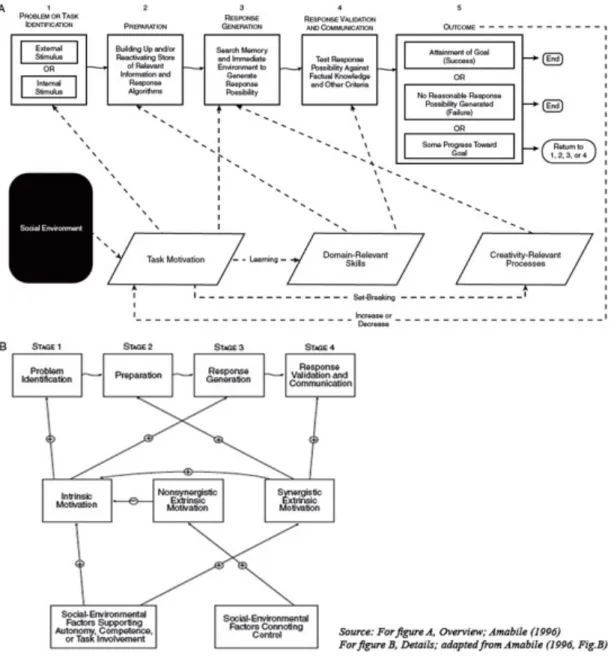
Figure 2.1 Amabile’s (1996) componential model of creativity ... 19
Figure 2.2 A Systems View of Creativity (Csíkszentmihályi, 2014) ... 22
Figure 2.3 The cheap necklace problem ... 39
Figure 2.4 A hint used in cheap necklace problem by Fioratou (2005) ... 42
Figure 3.1 Bridging analogy for “Wheel Problem” from Clement’s (2008) book .. 66
Figure 5.1 The triangle ... 83
Figure 5.2 The square ... 84
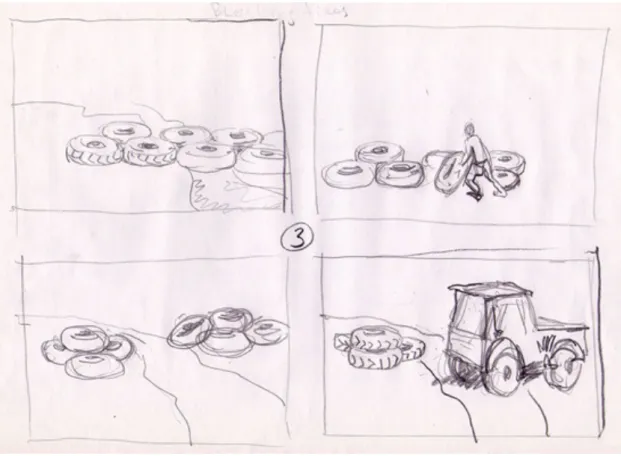
Figure 5.3 Car tyres ... 86
Figure 5.4 Flower arrangement (Version 1) ... 87
Figure 5.5 Flower arrangement (Version 2) ... 88
Figure 5.6 Washing dishes ... 89
Figure 5.7 Chairs ... 90
Figure 5.8 Cutting cucumbers ... 91
Figure 5.9 Flower pots ... 92
Figure 5.10 Octagon decomposition ... 92
Figure 5.11 Laying bricks ... 93
Figure 5.12 8-coin problem solution ... 94
Figure 5.13 Initial configuration of the coins ... 97
Figure 5.14 Layout of the room for experimental study ... 102
Figure 5.15 Room setting with coins in the initial configuration ... 102
Figure 6.1 Lottery machine ... 115
Figure 6.2 Billiard game ... 116
Figure 6.3 Stacking buckets ... 118
Figure 6.4 Photography session (V 1) ... 119
Figure 6.5 Photography session (V 2 – Naïve style) ... 119
Figure 6.6 Parking lot ... 120
Figure 6.7 Paper cutting design ... 120
Figure 6.8 Wooden bench ... 121
Figure 6.9 Roofing (two houses) ... 121
Figure 6.10 Cutting logs ... 122
Figure 6.11 Loaves of bread ... 122
Figure 6.12 Decorative shelves ... 123
Figure 6.13 Children’s playground ... 124
Figure 6.14 Photography session animation in schematic and realistic format ... 127
Figure 6.15 Billiard game animation in schematic and realistic format ... 128
Figure 6.16 The layout of the room for experimental studies 2, 3, 4, and 5 ... 135
Figure 7.1 Plot of the results for the type of insights between IVs ... 152
Figure 7.2 Plot of the results for the order of schema between IVs ... 153
Figure 8.1 Ziggurat pyramid ... 161
Figure 8.2 The caterpillar 1 ... 162
Figure 8.3 Family vacation ... 163
Figure 8.4 Egyptian construction site (left) & Footballers (right) ... 165
Figure 8.7 The caterpillar 2 ... 168
Figure 8.8 Future city ... 169
Figure 8.9 Cupcakes ... 170
Figure 8.10 Old and new tube maps ... 170
Figure 8.11 Bird’s nest ... 171
Figure 8.12 Playing cards ... 172
Figure 8.13 The end shots of animations capturing the action schemas ... 175
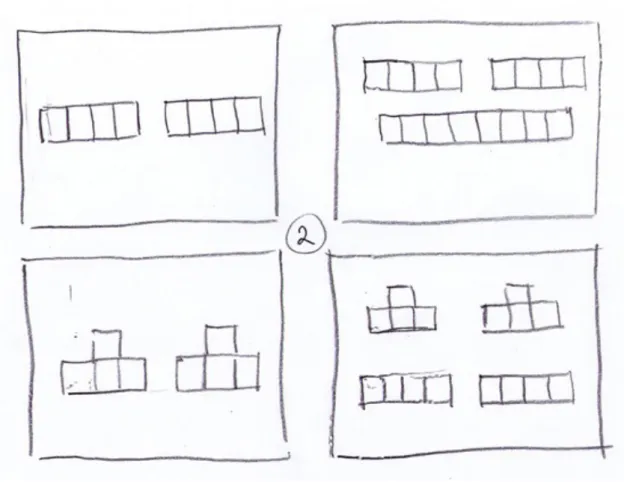
Figure 9.1 Understanding the problem / Sketch 1 ... 192
Figure 9.2 Understanding the problem / Sketch 2 ... 193
Figure 9.3 Understanding the problem / Sketch 3 ... 194
Figure 9.4 Understanding the problem / Sketch 4 ... 195
Figure 9.5 Understanding the problem / Sketch 5 ... 196
Figure 9.6 Generating ideas / Hora – round dance ... 198
Figure 9.7 Generating ideas / Wrench tool set ... 199
Figure 9.8 Generating ideas / Hand bracelet making ... 200
Figure 9.9 Generating ideas / Quilt making ... 201
Figure 9.10 Generating ideas / Flower buckets arrangement ... 202
Figure 9.11 Generating ideas / Log bench ... 204
Figure 9.12 Generating ideas / Pattern design ... 205
Figure 9.13 Generating ideas / Car safety highway emergency sign ... 207
Figure 9.14 Generating ideas / Three extended tables ... 208
Figure 9.15 Generating ideas / Clock and bicycle chain rings ... 209
Figure 9.16 Generating ideas / More concepts ... 210
Figure 9.17 Generating ideas / Christmas dance ... 212
Figure 9.18 Schemas of selected analogies ... 213
Figure 10.1 Categories, subcategories and codes ... 235
Figure 10.2 Between overall categories of static and dynamic studies ... 238
Figure 10.3 Between subcategories of static and dynamic studies ... 240
Figure 10.4 Overall Ambiguity/Variety statements ... 242
Figure 10.5 Overall Emphasis/Visual Effect statements ... 243
Figure 11.1 Solution rate progress curve from Experiments 1 to 5 ... 247
Figure 11.2 Hint Helpfulness vs. Problem Solvers ... 257
Figure 11.3 Feelings of warmth progress curve from Experiment 1 to 5 ... 261
Figure 11.4 Feeling of warmth self-ratings progress curve ... 262
Figure 11.5 Visual style effect on solution rate for problem solving tasks ... 264
Figure 11.6 Graph for visual elements preferences in solvers ... 267
Figure 11.7 Plot of mean scores for solvers by age and gender ... 270
Figure 11.8 Plot of mean scores for Solvers by Region and Age ... 271
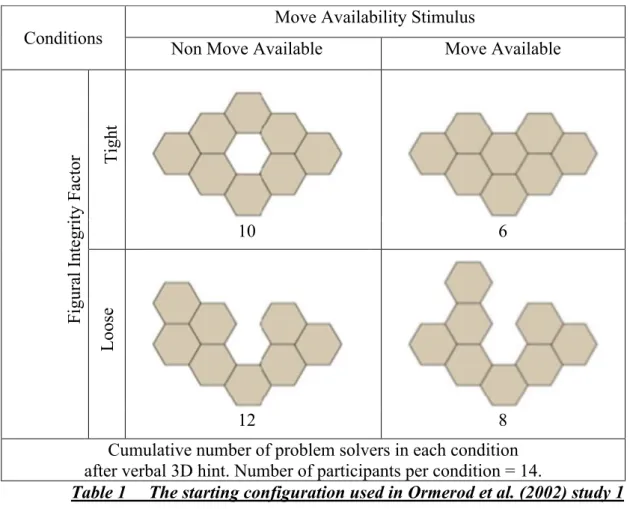
Table 1 The starting configuration used in Ormerod et al. (2002) study 1 ... 37
Table 2 Pyramid concept (from above) ... 83
Table 3 The constructed visual analogies vary with respect to both aspects ... 98
Table 4 Design / Experiment 1 ... 100
Table 5 Number of problem solvers in each condition after the visual hints ... 105
Table 6 Success rates for using hints to facilitate incubation effect ... 106
Table 7 Discrete animation layouts ... 130
Table 8 Design / Experiment 2 ... 132
Table 9 Number of participants who solved the problem ... 137
Table 10 Design / Experiment 3 ... 148
Table 11 Results / Experiment 3 ... 151
Table 12 Type of hints between subjects result for the experiment ... 153
Table 13 Design / Experiment 4 (Perspective condition) ... 177
Table 14 Design / Experiment 4 (Items number condition) ... 177
Table 15 Participants’ successful solution rate in the 8-coin problem in Exp. 4 ... 182
Table 16 The results for Time (within-subjects) factor ... 183
Table 17 Chart of provided hints to groups and subgroups / Experiment 5 ... 219
Table 18 Results / Experiment 5 ... 224
Table 19 Marginal means for ‘Number of Hints’ category for Experiment 5 ... 225
Table 20 Plot for Number of provided hints and solution rate per image schema .. 226
Table 21 The results / Experiments 4 and 5 ... 227
Table 22 Solution rate in the CNP by the type of families of schemas ... 230
Table 23 Thesis research question(s), practitioner’s practice and findings ... 252
Table 24 Self-rating for feelings of warmth and number of attempts made ... 259
Appendix 14-1 Announcement ... 315
Appendix 14-2 List of experts in analogy and analogical reasoning ... 316
Appendix 14-3 Participant Information Sheet – Part I ... 317
Appendix 14-4 Participant Information Sheet – Part II & Consent Form ... 318
Appendix 14-5 Instructional sheet for control group (Experiment 1) ... 319
Appendix 14-6 Instructional sheet for conditional groups (Experiment 1) ... 320
Appendix 14-7 The template used to record the feelings of warmth ... 321
Appendix 14-8 Santa Barbara Learning Style Questionnaire (SBLSQ V. 1.0) ... 322
Appendix 14-9 Survey of participant demographic data ... 323
Appendix 14-10 Survey of helpfulness of provided visual material ... 324
Appendix 14-11 Brainstorming sketches for visual cues (1.1) ... 324
Appendix 14-12 Reflection-on-action questionnaire ... 325
Appendix 14-13 Example of answers to reflection-on-action questionnaire ... 326
Appendix 14-14 Cheap necklace problem instructions for the control group ... 327
Appendix 14-15 Cheap necklace problem instructions for treatment group 1 ... 328
Appendix 14-16 Cheap necklace problem instructions for treatment group 2 ... 329
Appendix 14-17 Cheap necklace problem instructions for treatment group 3 ... 330
The primary aim of this thesis is to gain a richer understanding of visual analogies for insight problem solving, and, in particular, how they can be better developed to ensure their effectiveness as hints. While much work has explored the role of visual analogies in problem solving and their facilitative role, only a few studies have analysed how they could be designed. This thesis employs a mixed method consisting of a practice-led approach for studying how visual analogies can be designed and developed and an experimental research approach for testing their effectiveness as hints for solving visual insight problems.
The thesis’ aim, therefore, is achieved through the following objectives:
1. To explore analogy in research literature in order to identify and integrate theories and methods for the development of visual analogies,
2. To design and develop a set of successful visual analogies to support analogical transfer in visual insight problems, and
3. To evaluate these sets of visual analogies and their effectiveness for visual insight problem solving.
Key findings indicate the value of embodied schema, of point of view for presenting the visual analogies, their pictorial depth, and how the insights are integrated within cue-based visual analogies.
The main contributions of this thesis include:
a) A richer understanding of the qualities of effective visual analogies for insight problem solving: leveraging image schemata drawing from embodied cognition, animations rather than static images, secondary depth cues such as light and shadows, gradient, and atmospheric perspective, and if more than one insight is needed for solving the problem, then all such insights should be supported by visual analogies.
b) A portfolio of two-dimensional and three-dimensional, static and dynamic visual analogies for two perceptual insight problems, i.e. the 8-coin and the
cheap necklace problems. The portfolio will experimentally measure the importance of surface, structural aspect, functions and relations of the
key elements of visual analogies are introduced and discussed in greater detail in the literature review chapters.
c) Guidelines for designing effective visual analogies for perceptual insight problems.
The research identifies the following theoretical and practical implications:
• Designers may benefit from the outcomes of this study and from the mixed research approaches that aid the investigation into the visual representational aspects of their practice.
• Researchers may benefit from the integration of practice-led and experimental research methods.
• Students may benefit from the implementation of visual analogies in the curriculum.
The study suggests that multimedia, human-computer interaction, and software engineer designers need to be aware of the nature of the visual representations used in their work and how, and why, these visual materials can help people solve problems, learn, facilitate interactivity, comprehend information, and explain new concepts.
1
Introduction
Most research on analogies has focused on verbal or text-based analogies, and less on the exploration of visual ones. Researchers and psychologists have taken for granted that there is a path leading to the development of human reasoning. Early childhood reasoning is primarily based on similarity, while rule-based reasoning, that helps people gain skills to form abstract concepts and use symbolic representation, is ingrained in adulthood. Similarity is associated with figurative qualities, and thus is largely visual. In his writings about the nature of mental visual imagery, Fodor (2008) stated that children think in pictures, while adults, in words. According to Kaufmann (1988), linguistic reasoning is used in problems that are familiar; however, for new problems, the use of imagery is more helpful because it involves fewer constraints from rules. Gentner and Medina (1998) proposed an integration of these two systems of reasoning, demonstrating that both are important in problem solving: one based on rules and the other on similarity. This is because they have shown that similarity-based reasoning is a powerful tool in insight problem solving. Indeed, visual analogies may be of particular interest as it is not only surface similarity that can be carried over to a new concept, but structural similarity, and in many cases, superficial similarity as well (Goldschmidt G. , 1995).
We argue that visual analogies have an advantage over verbal and text-based ones as they can be found and extracted directly from environmental sources as opposed to the other types that need to be inferred. An example of identifying clues to find a solution for an everyday problem is described below.
I rented a small flat in an old building close to the university, and after just a week of living there, I discovered that the showerhead was coming away from the wall. Upon taking a closer look at it, I noticed that the top mating bolt had become loose; it was rusty and worn-out and could no longer support the weight of the showerhead. As a result, the showerhead had slid to the slippery side of the shower walls, and was hanging only by the bottom bolt. It was a very old showerhead model, and I could not find the necessary pieces to repair it properly. For about a week, I was holding the showerhead in place with one hand while taking showers. One day, I went outside and saw an electric pole, all rotten and broken at the bottom, hanging in the air and being supported
only by the electrical cables… and then, I had an “aha" moment. I went back to the flat, unscrewed the functioning bolt from the bottom of the showerhead tube, and fixed it at the top. Then, I threaded the rusted bolt and punched it in the loose hole at the bottom—that was the best that I could do at that point. It made no sense to have the faulty bolt supporting the weight of the entire showerhead.
As someone with a considerable amount of professional experience in visual art as a practitioner, my curiosity about visual metaphors and analogies intensified with each new piece of art created, and it is this curiosity that also motivated the work presented in this thesis.
1.1
Overview
The chapter starts with the motivation for and aims of the study, the rationale, research questions, and the summary of methods used in the research, and continues with the scope and summaries of the work. It concludes with contributions and the organisation of this thesis.
1.2
Motivation and Aims
“The scientific man does not aim at an immediate result. He does not expect that his advanced ideas will be readily taken up. His work is like that of the planter – for the future. His duty is to lay the foundation for
those who are to come, and point the way. He lives and labors and hopes.” Nikola Tesla (1934)
1.2.1 Motivation
Analogies are powerful cognitive tools, supporting perception, decision-making, problem solving, and creativity. The analogy is one of the most common methods of explaining unknown concepts and new ideas. It allows the retrieval of previously un-retrieved relevant information or schemas (Yaniv & Meyer, 1987; Langley & Jones, 1988; Dreistadt, 1969; Olton & Johnson, 1976; Gick & Holyoak, 1980) whose activation can sensitise the problem solver to chance encounters with related stimuli (Seifert, Meyer, Davidson, Patalano, & Yaniv, 1995).
The use of analogy in reasoning and problem solving has been much investigated, mostly in educational psychology, and science education, instructional design, and computational modelling (Paivio, Rogers, & Smythe, 1968), while the focus on visual
hints for problem solving has been less explored or their exploration has been restricted mostly to their facilitative role (Höffler & Leutner, 2007). Pressley (1977) states in his studies that pictures are better than words, as they engage multiple representations and associations with external knowledge, encouraging a more elaborate encoding than words (Paivio A. , 1971; Paivio, Rogers, & Smythe, 1968). The superiority of memory for pictures over words (Pressley, 1977; Reznick, 1977) starts in childhood and is maintained into adulthood (Kogan, Connor, Gross, & Fava, 1980), hence providing additional rationale for the value of exploring visual analogies as clues for solving insight problems.
This thesis extends prior work on visual analogies for insight problems by focusing not only on whether such analogies work, but also on what types of visual analogies are facilitative and why.
1.2.2 Aims of the Research
The main aim of this thesis is to gain a richer understanding of visual analogies for insight problem solving, and in particular, how they can be better developed to ensure their effectiveness as hints.
1.3
Research Question and Objectives
The main question asked by this thesis is: How can we design effective visual analogies that are able to facilitate solutions for visual insight problems? In order to address the research question, this thesis is divided into three research objectives:
1. To explore analogy in the research literature to identify and integral theories, and methods for the development of visual analogies,
2. To design and develop a set of successful visual analogies to support analogical transfer in visual insight problems, and
3. To evaluate these sets of visual analogies and their effectiveness for visual insight problem solving.
The focus of this thesis is on the development of a portfolio of visual analogies that are able to ensure analogical transfer. Creating, reflecting on, and evaluating these visual analogies in two perceptual insight problems have led to a better understanding of how they are formed and how they can inspire designers in their search for creative products.
1.4
Research Methodology and Methods Used
The thesis is based on the integration of practice-led research, and experimental methods, which are described in the Methodology chapter (see Chapter 4: Research Methodology and Methods Used). The choice of the methodology is based on the research question and design of the study.
1.4.1 The Use of ‘I’ and ‘We’ in the Thesis
Before moving on to the next section of the chapter that sketches the scope of the thesis, I will explain why I decided to use the pronoun “I” in some parts of the research instead of the customary academic “We”. In attempting to document the creative process while generating visual analogies, either while looking for concepts, doodling, sketching, animating or refining them without any collaborators, participants, or authorities, I have found that using the narrative mode of writing (Bruner, 1986) is more appropriate and natural as it pertains to my personal experience. In contrast to the logical-scientific mode that takes the form of arguments (Britton, 1993), my notes (Schön, 1983), in the form of diaries and answers to questions in the generation stage of visual analogy development, are intended to capture the verisimilitude of my actions and document my thoughts during the creative act in terms of how I think at that moment. There is still debate, often quite controversial, on which mode of writing to use and where to use it. For example, French philosopher Simone Weil in her book Gravity and Grace (1997, p. 72) stated “we is a sign of the collectivity, whose ersatz force conceals the true vulnerability of the individual”. Based on this view, writing the notes in “close-to-the-self” vocabulary may reduce the load to the memory and help the researcher to focus on solving the problem instead of formulating constraints around it.
1.5
Main Contributions
The thesis aims to make several key contributions, consisting of:
a) A richer understanding of the qualities of effective visual analogies for insight problem solving: leveraging image schemata drawing from embodied cognition, animations rather than static images, secondary pictorial depth cues such as light and shadows, gradient, and atmospheric perspective, and visual insights needed for solving the problem that are supported by the visual analogies.
cheap necklace problems. The portfolio will experimentally measure the importance of surface, structural aspect, functions and relations of the components that form visual analogies for insight problem solving.
c) Guidelines for designing effective visual analogies for perceptual insight problems.
1.6
Thesis Structure
The thesis consists of twelve chapters. Chapter One introduces the topic of the research and theoretically sets the scene for the entire thesis. Chapters Two and Three include the literature review and background to the topic. Chapter Four describes the methodology and methods used in this thesis. Chapters Five through Eight document the visual analogy development practice along with diaries on created visual analogies and report on their effectiveness after being tested in a series of laboratory experiments with the focus on the solving process for the 8-coin problem. Chapter Nine describes the visual analogy development process and the created analogies for another insight problem, the cheap necklace problem, and reports the results of the impact of these hints on participants’ performance by testing them in the laboratory. Chapter Ten reports the results of the study based on the researcher’s documentation of the creative process in the generation stage. Chapters Eleven and Twelve include a general discussion on this thesis and concluding notes. In the following subsections, the content of each of the twelve chapters is described in greater detail.
1.6.1 Chapter One - Introduction
This chapter introduces the topic, motivations for the choice of topic and the aims of the research. The chapter also outlines the research question and objectives, overview of the research methodology and scope of the thesis as well as summarising the contributions and structure of the thesis.
1.6.2 Chapter Two - Literature Review: Part I - Analogy and Problem
Solving in the Context of Creativity
This chapter includes a comprehensive literature survey of fields related to this research, including the role of analogy and problem solving in the context of creativity. The chapter attempts to investigate the similarities and differences in the use of analogy and problem solving processes between a variety of fields and domains as mechanisms of
and tools for creativity. Ultimately, the chapter seeks to examine an integration of these similarities and commonalities of analogy and problem solving applications.
1.6.3 Chapter Three – Literature Review: Part II - Visual Analogies: Static
and Dynamic
This chapter involves a comprehensive literature survey of fields related to the use of visual analogies and their impact on human creative activities, creative processes, creative products, problem solving, and learning. The chapter narrows its focus on visual analogy as a tool for creativity and how visual analogy is developed.
1.6.4 Chapter Four – Research Methodology and Methods Used
This chapter introduces the methodology and methods used in this thesis. To generate and create the visual analogies for problem solving for this thesis, the practice-led method along with documentation of the process was used, and to test and evaluate them, the experimental method was used.
1.6.5 Chapters Five through Eight – The 8-Coin Problem Experiments
These chapters outline the rationale, research questions, and methods for each of the four designed experiments. Sets of visual analogies for each study were developed and their effectiveness in the process of solving the 8-coin problem was tested. The results were analysed, reported, and discussed, and each chapter ends with concluding remarks.
1.6.6 Chapter Nine – Solving the Cheap Necklace Problem with Animated
Visual Analogies
This chapter introduces the design experiment, outlines the rationale, research questions, and method for the study involving another notorious insight problem—the
cheap necklace problem. visual analogies are developed and tested in the laboratory setting for their effectiveness in the process of solving the cheap necklace problem, and the results are reported and discussed.
1.6.7 Chapter Ten – Sketching as a Generative Tool for Visual Analogy
This describes the study of how visual analogies is developed by using an experiential research method based on the author’s structured reports on his practice to generate visual analogies. The chapter also introduces the design process, materials and tools used in the study, reports on the results, a discussion of the findings, and makes concluding notes in its final sections.
1.6.8 Chapter Eleven – General Discussion
The discussion chapter explores the extent to which the aims and objectives were achieved, and the research questions are addressed. The chapter also analyses the findings in relation to other works on visual analogy development processes and potential applications. Furthermore, it proposes guidelines for developing effective visual analogies for insight and creative problem solving.
1.6.9 Chapter Twelve – Conclusion
We reflect on the contributions of this thesis in the light of the research hypotheses outlined in Chapters Four through Nine, as well, on the proposed guidelines for developing effective visual analogies for insight and creative problem solving outlined in Chapter Ten.
2
Analogy and Problem Solving in the Context of
Creativity
“We must be clear that when it comes to atoms, language can be used only as in poetry. The poet, too, is not nearly so concerned with describing facts as with creating images and establishing mental connections.” Niels Bohr (Baggott, 2011, p. 47)
2.1
The Interdisciplinary Approach
The link between analogy, problem solving, and creativity has always been a central concept in cognitive science. Scholars from many different fields such as psychology (Bonnardel, 1999; Ball, Ormerod, & Morley, 2004; Catrambone, Craig, & Nersessian, 2006; Christensen, 2005; Casakin & Goldschmidt, 1999; Dreistadt, 1969), philosophy (Moravcsik, 2000), the arts (Arnheim, 1997; Finke, 1990; Patherbridge, 2010), linguistics (Chiu & Shu, 2007; Ashworth, 2003; Blevins & Blevins, 2009), artificial intelligence (Holyoak & Thagard, 1989; Hall, 1989), social sciences (Dunbar, 2004), neuroscience (Eysenck H. J., 1993; Ramachandran, 1988), and computing (Ohlsson S. , 1992; Newell, Shaw J, & Simon, 1958; Gero, 2000) provide complementary perspectives for investigating analogy and problem solving. In this context, analogies are considered tools for thought (Tversky, Morrison, & Betancourt, 2002; Lakoff & Johnson, 1980; Larkin & Simon, 1987; Goel, 1995), explanation (Novick L. R., 1988; Tversky B. , 2011; Van Gog, Paas, Marcus, Ayres, & Sweller, 2009; Gross & Do, 1995; Gentner, 1989) and communication (Kristensen & Gabrielsen, 2013; Kristensen, 2004; Patherbridge, 2010; Potter & Faulconer, 1975; Eisenberg, 1984) and can enable a thinker to interpret the source concept and make decisions.
In order to see the relationship between these three constructs, it is necessary to define them and ascertain the distinctions between them and their relatedness.
2.1.1 Conceptualization of Creativity
Creativity is a complex topic of study, and it is difficult to define. It involves processes and traits, including imagination, open-mindedness and tolerance of uncertainty, mastery of relevant skills, perseverance, ambition, flexibility, curiosity, willingness to
experiment, and the ability to draw analogies (Bonnardel, 1999; Blanchette & Dunbar, 2001; Tversky B. , 2011). For example, a high intelligence score does not guarantee that an individual will be capable of producing a creative outcome, but this condition is necessary (Eysenck H. J., 1993) for a creative person, and so, must be tightly connected with creativity. Eysenck also proposes the use of two different terms for creativity: one that defines personality and one that defines the product by its “originality”. As a result, creativity is understood and interpreted by many people in many different ways (Isaksen, Puccio, & Treffinger, 1993). One could regard creativity as being similar to a computer brain phenomenon, based on the idea that things are made from matter and are mechanically deterministic, continuous, objective and local. Organismic theorists state that in addition to the mechanism, the purposiveness and discontinuity in the development of an organism should be added to the mechanistic view. Idealists, on the other hand, believe that consciousness has primacy and not matter, so creativity is, essentially, subjective. The fourth view is that of the quantum theory of creativity (Goswami A. , 1999); this represents the newest of the four concepts and takes into account the needs of all previous views in terms of defining creativity.
There are many issues that hamper the definition of creativity, for example: differences between lexical and contextual meaning; differences between individual and societal creativity; or general and domain-specific contexts among other issues. Consequently, one overriding definition is inadequate, but rather, it is most appropriate to recognise creativity as an act that leads to a new idea, new thought or a new product. Accordingly to Goswami (1999, pp. 492-493), there are two kinds of creativity: fundamental creativity, which is “the creation of a new product of value in a new context of meaning” and situational creativity, which “involves a product of value based on the perception of new meaning in an old context or a combination of contexts”.
A popular definition adopted by creativity researchers describes creativity as “the ability to produce work that is novel (i.e., original, unexpected), high in quality, and appropriate (i.e., useful, meets task constraints)” (Sternberg, Kaufman, & Pretz, 2002, p. 1). Since the beginning of human history, people have “created” things; in many cases this involved the production of something new by a person with “divine power”. It was only in the 19th century that the term “creative” was widely attributed to art disciplines. Masters of the arts, music, and poetry were more frequently mentioned and referred to in literature as creative people, and it appears that the first examination of creativity
may be linked to the 1869 publication of Galton’s Hereditary Genius: An Inquiry into Its Law and Consequences. By the beginning of the 20th century, the philosopher Henri-Louis Bergson had developed an organismic model of life’s creative processes, stating that the “reality” of life is “productive of effects in which it expands and transcends its own being” (2002, p. 192). Since then, as research into creativity has begun to expand rapidly, the number of definitions which have been used for creativity has increased, as well. In his investigations on this subject, Taylor (1959) found that there are over a hundred definitions of creativity, and that all of them point at three aspects: genius, giftedness and creativity (Taylor & Getzels, 2007). Different labels are attributed, including uniqueness, novelty, discovery, effectiveness, and product usefulness, but in one form or another, originality is deemed to be essential. Creative things have to be both original and effective (Runco, 2007). For example, children may express creativity in original works of art or through a product that is not as fit, apt or effective as in the case of a product that is selected and accepted for “inclusion into the relevant domain” (Csíkszentmihályi, 1996, p. 28) or field. The problem in terms of the effectiveness and usefulness of the artwork of children may be explained by the effect of aesthetic qualities of balance, order, and expression (Arnheim, 1997) rather than functionality. The concept of aesthetic effectiveness and usefulness of a product is obvious in the creative arts. Words and the defined meanings of creativity simply indicate ways to understand it rather than limiting our interpretations. In light of this diversity of definitions and terms, Csikszentmihalyi (1996), in his “The Systems Model”, attempts to answer this question in terms of the impact of creativity on culture or science, which changes some aspects of it. Rather than focusing on what creativity is, he turns to when
creativity happens: “Creativity is any act, idea, or product that changes an existing domain, or that transforms an existing domain into a new one”(1996, p. 28).
Based on current studies, it is best to regard creativity as a multifaceted occurrence, rather than as a unitary construct of a single definition. Despite all the attempts to define and interpret the term, it does appear, however, that there are common agreements on a few of the basic concepts of what creativity means, whether for “little c” (everyday) creativity or “Capital C” creativity (Csíkszentmihályi, 1996). Many psychologists, artists, educators, and creativity researchers have come to the consensus that creativity is a complex, interactive network of paramount importance (Gruber, 1989; Csíkszentmihályi, 1996; Sternberg R. J., 1999) comprised of relationships between
people, processes, and products (Kristensen, 2004; Florida, 2003) in social and cultural contexts. Interest in the study of creativity has increased considerably over the last four decades, with different models or approaches drawing attention to some crucial aspects of the creative process.
2.1.2 Visual Analogies and Problem Solving in the Context of Creativity
Creativity, visual analogy and problem solving have a strong, dependable relationship (Finke, 1990; Finke, Ward, & Smith, 1992; Gentner, 1986; Bonnardel, 1999; Sternberg R. J., 1999). A creative product or a creative activity, for the most part, is actualised by the desire to solve a detected problem in an earlier product or event. To proceed with the solving process, one needs tools to achieve the set goals, and visual analogy represents one of the most effective means of finding solutions (Benyus, 1997; Bonnardel, 1999; Eryildiz & Mezini, 2012). For example, in her book, Stafford (1999) describes the problem the architect Douglas Cardinal (Boddy & Cardinal, 1989) faced when drawing up a plan for a museum; in addition, she describes the visual analogies that the architect used to find solutions for the design of the building. The future architecture of the National Museum of the American Indian (2017) required a combination of modern and indigenous styles in order to give visitors the sense and spirit of Native America. As the project progressed, we read that Cardinal’s
“work tables are ringed by photographs of cryptic petroglyphs from the Southwest, carved sandstone canyons, the indigenous abstraction of Anasazi cliff dwellings, and rugged Alpine escarpments”. “These natural masterpieces serve as potent reminders of how to conjoin ancient landscape with modern city, looming rock outcrop with concrete monument,”
continues Stafford (1999, p. 52).
Most theories of creativity have evolved around problem solving (Simon H. A., 1996) and strategies for framing the ill-defined (Mumford, Reiter-Palmon, & Redmond, 1994; Schunn, McGregor, & Saner, 2005) or wicked (a mix of well- and ill-defined) (Buchanan, 1992; Coyne, 2005; Farrell & Hooker, 2013) problems into smaller sub-problems for analysis.
A known approach to solving these types of problems, including insight ones (Chronicle, MacGregor, & Ormerod, 2004; Chu, Dewald, & Chronicle, 2007; Dominowski & Dallob, 1995; Luchian & Sas, 2011), is through analogy (Bonnardel, 2000; Sas, Luchian, & Ball, 2010) and this entails a search for similar past problems
and their solutions (Carbonell, 1982). Casakin and Goldschmidt (2000) offered empirical evidence indicating that in the design process, primarily, novices benefit from using visual analogy and that it is the most valuable type of reasoning for understanding concepts and exploring their potential when paired with previously acquired knowledge. A large part of these problems pertains to factors other than product qualities or functional efficiencies. Many art practitioners concentrate on finding new types of expression or on product aesthetics where the problem is often indistinct. According to classifications found within the definition of creativity, the activities of creative people and the purposes of creative products should be measured to a greater extent, such as in terms of emotions and aesthetics. For example, in “found art” masterpieces, the display of simple objects in an exhibition space calls for aesthetic appreciation and engagement with viewers. However, in engineering and science, the intentions are usually quite clear – to explain an event, to develop a more efficient product, or to solve a problem.
Problem solving is the cognitive process that aims to move from a given state to a goal state (Mayer R. E., 1999; Christensen & Schunn, 2005; Gick & Holyoak, 1980). Many investigators believe that creativity is a distinct form of problem solving (Newell, Shaw J, & Simon, 1958) and that these terms refer to the same mental phenomena (Guilford, 1964). Creativity, design, analogy and problem solving are inseparably connected with each other (Gero, 2000). In a design process, when people are trying to transform existing situations into preferred outcomes, problem solving is explained as the activity of finding design solutions for a purpose (Simon H. A., 1974). Thus, the process of designing is perceived as a process of rational problem solving. In complex situations (i.e. building construction) where both the existing situation and the target goal lack clarity, people may break the problem down into a manageable hierarchy of simpler sub-problems.
Problem solving is a process that uses operators or moves to achieve a goal, consequently, allowing creative products to be discovered. The relationship between problem solving, analogy, creativity, and creative thinking is critical in the process of discovery and invention (Weisberg & Alba, 1982). Robert Weisberg explained that creative thinking begins with what is already known based on an analogy with the current problem.
Another addition to supporting creativity is introduced by Bonnardel (2000, p. 505) who argues that analogy-making “is one of the mechanisms that contribute to the emergence of new ideas”.
A set of theories of creativity related to our studies, and to visual analogy development and problem solving, their relevant categories and their interactions, in particular, is discussed in more detail in the following section.
2.2
Theories of Creativity
Creativity is investigated in terms of the nature of existent theories due to its complexity and dynamism. Several theories tend to describe the nature of creativity through mechanisms and processes, and others seek an explanation of human behaviour. Many other researchers emphasise particular aspects of creativity in their studies in terms of the expression of creative talent, personality, creative thinking, or investigating the environment.
These theories have frequently been categorised in several reviews by providing a general framework for studying creativity. One of the earliest classifications of theories on creativity was developed by Gowan (1972) who suggests that they should be divided into five major groups: “1) cognitive, rational, and semantic; 2) personality and environmental factors; 3) mental health and psychological adjustment; 4) psychoanalytic and neopsychoanalytic and 5) psychedelic”. In this thesis, we focus on the cognitive, rational, and semantic group of classifications for creativity, especially the cognitive and componential models, as they are pertinent to the mixed nature of our research.
Our study is concerned with the nature of practice-led mixed with experimental research, as well, human cognitive abilities such as perception, memory, and analogical reasoning, thus involving investigations across artistic and scientific fields of inquiry.
2.2.1 The Creative Cognition Approach
Creative cognition deals with the processes that take place in the head of a creator; it is much more than creative thinking. Many different processes, such as mental model construction, analogy, problem solving, conceptual expansion and design-by-analogy (popular in arts and design) and others, represent a series of operators believed to be involved in the cycle of human cognitive simulation. As Ward, Smith, & Vaid (1997) state: “Creativity may even better be thought of as the entire system by which processes
operate on structures to produce outcomes that are novel but nevertheless rooted in existing knowledge.”
The core of creative cognition consists of three subsystems: problem solving that is able to draw inferences for planning to attain particular goals, a memory system that searches for ways to identify information relevant to the problem, and an inductive system (e.g., analogy) that generates and restructures new ideas to be stored in memory with the scope of increasing effectiveness in problem solving. These three systems are dependent in conjunction with one other. They consistently interact, aiming to identify in the memory available analogies that might be applied to the target problem. While some researchers (Holyoak & Thagard, 1989; Johnson-Laird, Legrenzi, & Legrenzi, 1972), when reflecting on the imperfections in the correspondences and mapping of realistic visual analogies in the source with ones in the target, suggest that the analogy be abandoned from the subsystem, Gentner (1989, p. 199) insists that “our mental experience is full of moments in which a current situation reminds us of some prior experience stored in memory” leading to a shift in the “way we think about one or both situations”.
In the creative task of generating novel and useful products (Csíkszentmihályi, 1996, p. 27),most creativity theorists include both generative and analytical processes which are more often referred to as divergent and convergent. It is worthwhile exploring some creative cognition models, as their main core is imagery and connections with research in psychology and other cognitive areas.
2.2.1.1 Geneplore Model
As its name suggests, the Geneplore Model (Finke, Ward, & Smith, 1992) consists of two processing phases: a generative phase followed by an explorative one. In the generative stage, one constructs mental representations named by authors’ preinventive structures, which contain a variety of properties encouraging creative discovery. The generated preinventive structures features are used in the exploratory stage through analysis and interpretation of their meaning and validity in different ways which attempt to externalise an original product. The newly generated structures are regenerated and modified throughout the explorative stage until a satisfactory resolution is reached. If the explorations are unsuccessful, then the initial preinventive structure is abandoned and a new one is generated or an old version that may be more promising is modified
are cases when the creative discovery can occur in a short time, without repeating the generation and exploration stages multiple times. However, cycling between these phases facilitates the expansion of conceptual possibilities in the search for the creative product and the introduction of product constraints. Depending on the nature of the task, the product constraints can be imposed at any time during either of these phases. Although, the proposed geneplore model (Finke, Ward, & Smith, 1992), which provides an explicit account of the cognitive processes and structures by combining original experiments with work in cognitive psychology, is praised by Robert J. Sternberg, John Richardson, Jonathan Schooler and other researchers, Stuart Sutherland (1993) criticises particular aspects of the Geneplore generative phase as being too similar to the previous concept specialization model (Cohen & Murphy, 1984) and structure-mapping theory (Gentner, 1983). In this model, Sutherland continues, it is not clearly explained whether the exploratory stage happens at a conscious or unconscious level. In spite of the mixed opinions on the geneplore model, we find the theory useful, especially in the generative phase of the analogy development process, as it imitates the processes of work of some studio artists.
Another aspect that is related to our research is that the model includes in its cycle a product constraints component (e.g., pottery, furniture), thus resembling the evaluation stage of the visual analogy development process. These processes typically involve the generation cycle for an idea or subject for future artwork. The artist usually doodles, sketches the first idea on paper, bearing in mind the need to expand it, explores that idea and then evaluates it by enforcing the problem constraints. If the solution appears unsatisfactory, s/he goes back to generating a new idea or modifying an old one thus entering the cycle again.
2.2.1.2 Embodied Cognition Theory
Embodied cognition theory (Johnson M. , 1987) proposes that meaning and cognition are deeply rooted in physical, embodied existence, contrasting with the information-processing view of the mind. According embodied cognition theory, cognition emerges from the dynamic interaction of patterns of responding to perceptions and preparing for sensorial-motor actions, rather than through mere manipulation of internal representations of the outside world by an internal processor. A central construct in this theory is image schemas (Lakoff & Johnson, 1999), which are dynamic, multimodal
and non-propositional patterns of direct experiences acquired through the recurrent interaction of the human body with the world through movement in space and object manipulation. Particularly important is that image schema can be found not just in speech, but also in gestures accompanying speech (Roth & Lawless, 2002). Such pre-conceptual, spatially structured representations are usually unconsciously employed (Rennie & Fergus, 2006) and directly relevant in perceiving and comprehending visual images. Lakoff and Johnson (1980), and later, Johnson (1987), discussed a subset of these schemas and diagrammed a few of them. These schemas include categories such as space (i.e., up-down, front-back, contact, verticality, proximity); containment (i.e., container, in-out, surface); locomotion (i.e., path-goal); force group (i.e., attraction, resistance, compulsion, blockage); balance (i.e., axis, point, equilibrium); unity-multiplicity (i.e., merging, splitting, part-whole) etc. The particular schemas are different to mental images; they resemble abstract analogue representations derived from a real experience that forms the first concepts which emerge in the human mind as opposed to the imagined ones which often include more detailed imagery recalled from visual memory. Mandler and Cánovas (2014) claim that because of their formation in conjunction with the physical world and psychological development during early childhood, image schemas are emergent and they are not innate knowledge structures. The container of an image schema consists of three basic structural elements: interior,
boundary and exterior (Lakoff, 1993) and is often formed from the experiences accumulated by multiple perceptual channels. Each schema represents only the properties that are shared with the concept of its container.
Although these image schemas can be seen as essential components in constructing metaphorical and abstract thought, they occur in clusters and can become internally complex. Later, Mandler and Cánovas (2014) took up the theory and defined its terms much more clearly by describing the types of schemas and procedures involved in the cognitive structure of meaning construction. The concept is in line with Koestler’s (1964) Theory of Bisociation and Fauconnier & Turner’s (1998) Theory of Conceptual Blending, which asserts that novel concepts are born from a selection of blended known information. The three different substructures proposed by Mandler and Cánovas to form the cognitive structure of meaning are:
• Spatial primitives – the first primitive concepts allowing us to sense what we perceive: PATH, CONTAINER, THING, SCALE, MOTION, etc.
• Image schemas – abstract structures of events forming relationships by using spatial primitives: PATH to THING, CONTAINER in MOTION, etc.
• Schematic integration – conceptual structures that include non-spatial elements (i.e., feelings, emotions) in the model: PATH to THING to PLEASURE, CONTAINER in MOTION to NOISE, etc.
Although there is plausible research attempting to organise the structure of image schema families and their interconnections beyond a detailed description of procedures, the embodied cognition theory is not without criticism. Some scholars (Hedblom, Kutz, & Neuhaus, 2015) find that the theory still lacks explanations of how to add or remove the overlapped parts capturing the same basic schema from an integrated family; there is also a question about how change is normally captured over time in these schemas. Being motivated by the use of primitive schematic 2D and 3D representations found in static images and time-based media, we believe that the embodied cognition theory (Lakoff & Johnson, 1980), as redefined by Mandler and Cánovas (2014), integrated with the concept of structure-mapping theory (Gentner, 1983) can be of great benefit in our study. To elaborate, most of these image schemas are formed from relationships of spatial primitives such as long or wide rectangles, squares, circles, triangles and such like; hence, they include a variety of shapes organised in space evoking happiness, sadness, calmness, and other feelings, which are embodied in our bodies and minds. For example, Kristensen (2004) talks about the spaces where creativity takes place as “scaffoldings”,suggesting that these structures instil sensory impressions on the human body and support the process of imagination, concept transformation and acceptance of new ideas. Without a doubt, the author, in his research, referred to physical spaces for creativity, while we intend to capture these kinds of spaces in our constructed visual analogies. The kind of creative spaces captured in visual analogies might help people to retrieve the feelings they have had when performing certain activities (e.g., dancing, design making).
2.2.2 Componential Theories of Creativity
In contrast to creative cognition approaches that are based on stage-by-stage advancement, componential models do not require such linear dependency on stages to progress. These theories indicate the adoption of multiple “components” in creativity, when attempting to assess it more holistically and in-context including the process, product, creator or all of these factors. They allow for interaction between their
components, which might include motivation (Amabile, 1983), knowledge, intelligence, cognitive style (Mayer & Massa, 2003; Massa & Mayer, 2006), personality and personality behaviour (Csíkszentmihályi, 1996), environmental (Dodds, Smith, & Ward, 2002; Eryildiz & Mezini, 2012; Christensen & Schunn, 2009) and situational context (Kirsh, 2009; Chun & Jiang, 1998), and cultural and societal influences (Csíkszentmihályi, 1988) in addition to the creative process (Wallas, 1926; Finke, Ward, & Smith, 1992) as the main component in the cognitive models. Finally, creativity involves more than the sum of an individual’s perception in terms of each component or element. Without some components like knowledge and skills, it is not possible for creativity to occur; some components (e.g., motivation) could contribute to both its fruition or act in a negative way, all depending on the interactive relationships with other components (e.g., environment). At the same time, certain components (e.g., intelligence and affect), at high levels, could greatly enhance creativity. Despite the similarities and differences among componential theories of creativity, there is a consensus that this confluence of components is pertinent to knowledge, skills, personality, motivation, environment, and many other little things.
2.2.2.1 Amabile’s Approach
Most current componential models of creativity take into account the latest developments and investigations in behavioural and social sciences. Inclusion of personality traits such as openness, flexibility, spontaneity, persistence, motivation and hard work, as well as the environment, culture and social factors are often the subjects of such studies, to investigate the links between creativity and personality, creativity and creative products. Componential theory of creativity proposed by Teresa Amabile is rooted in the following definition of creativity: “the production of ideas or outcomes that are both novel and appropriate to some goal” (2013, p. 134). A central argument in the theory is that creativity cannot occur without stimuli; thus, motivation should be considered a major instigator in terms of initiating an idea, solving a problem or undertaking a task. Her model includes three major components: 1) domain-relevant skills – high expertise in the domain or field; 2) creativity-relevant processes – cognitive and creative thinking processes; and 3) task motivation – a) the intrinsic motivation to engage in a creative task as “within-individual components” and b) the social environment – the surrounding conditions as the “outside component”.
While philosophers, art historians and social scientists have explored inspiration and motivation in highly creative people for centuries, psychology was the first field to consider its linkage with creativity (Collins & Amabile, 1999). There was mutual consent that creative behaviour was associated with a spiritual purpose (Patherbridge, 2010), passion (Arnheim, 1974; Finke, Ward, & Smith, 1992), hard work (Csíkszentmihályi, 1996), and persistence (Newell, Shaw J, & Simon, 1958). These traits are described in meticulously detailed studies; however, what produced this level of motivation remains unclear.
For example, when Picasso was asked how he found solutions to the problems which presented when he was creating a painting, he just replied: “I do not seek, I find”. To the same question, James Rosenquist (2009) responded similarly, stating: “In my work, I do not solve problems, I create new original ones.” These kinds of statements seem to hint at the ways artists are inspired to work, whether it is their personal techniques, scopes or beliefs, or individual traits that motivate them. Prior research had shown that factors from the environment could affect individuals’ performance on creativity tests and personalities (Barron & Harrington, 1981).
Along with the results of her own and colleagues’ studies, Amabile (1983) gathered overwhelming evidence to support the idea that motivation is a new and important component in the proposed theory. In this original version, she emphasises intrinsic motivation that implicitly motivates individuals due to certain internal factors like enjoyment in working on such a task or finding personal ways of searching for novel solutions. In her paper, she also introduces extrinsic motivators (external factors) such as the expectation of a reward from doing a task, knowing that the person or person’s work will be evaluated, being exposed to competition, and other similar factors.
Although her contribution is plausible, the original model was criticised due to its lack of detail about the relationships between intrinsic and extrinsic motivators, especially those factors in the environment that can be obstacles to or stimulants for intrinsic motivation and creativity. To refer to James Rosenquist (2009) again, as an example, in an interview, he once told a reporter that, initially, his motivation had been driven by money and that he knew there would be money in his work because he could draw and paint almost anything perfectly; however, it was only when he was making a living from his paintings that he started to look at other “bigger things”. Here, Rosenquist, as well as other pop artists (e.g., Andy Warhol, Roy Lichtenstein) in their notes (Warhol & Hackett, 2009; Berman & Gallery, 2003), seem to suggest that extrinsic motivation such as commissioned work is rarely creative, compared to the work produced as a result of intrinsic motivation, where the individual gains his/her independence and is ready to undertake a project that is interesting, appealing and satisfying.
After a series of reports by first-rate scholars in psychology, art and management that demonstrated that creativity could be influenced by an array of environmental factors, Amabile made serious revisions (1988; 1996) to her original model (1983) by including