The ‘Telling Stories’ Project:
A case series study of narrative interaction between
children who use speech generating devices and their
educational staff
Philippa Bailey
Submitted for the degree of
Doctor of Philosophy
University of East Anglia
School of Health Sciences
June 2013
© This copy of the thesis has been supplied on condition that anyone who consults it is understood to recognise that its copyright rests with the author and that use of any information derived there from must be in accordance with current UK Copyright Law. In addition, any quotation or extract must include full attribution.
“Great stories happen to those who can tell them.”
– Ira Glass
Abstract
Story-telling is important to child language development and plays a critical role within the English National Curriculum. Children who use Augmentative and Alternative Communication (AAC) have limited opportunities to develop narrative compared to their typically developing peers. The current study aimed to explore narrative construction in communicative dyads comprising an aided speaker (AS) and natural speaker (NS).
A case series design was employed to investigate narrative interactions of children who use AAC with a familiar member of teaching staff. The sample comprised four children, two with cerebral palsy, one with autistic spectrum disorder and one with a genetic condition. Data collection took place at the school attended by each participant. Video capture was used to record one personal and one fictional narrative in four separate data collection sessions with each dyad. Data were transcribed using standard orthography. Three dependent variables were investigated: communicative modality, linguistic move-type and linguistic complexity. A subsidiary study was completed to test the reliability of Momentary Time Sampling in coding interactional data.
The findings revealed multimodal contributions from both interlocutors. Speech was the dominant modality for all NS participants. Communicative modality use was more varied for the AS. NS participants assumed a more dominant, initiating role. Analysis highlighted patterns of frequent directives, such as instructions and w-question and yes/no question employed by the NS followed by AS responses during narrative interaction. However, some miscommunication between interlocutors was also recorded.
Narrative interaction was found to follow the educational initiation-response-feedback framework, although there was evidence of the AS and NS working together to construct narrative. Implications include the need for NS scaffolding within education to support AS access to narrative language. The case series serves to illustrate some of the challenges associated with narrative production for children who use AAC and the associated relevance of the NS’ role.
Contents
Abstract...
List of Tables and Figures... Acknowledgements...
3
8 13
Chapter One – Introduction... 15
1.1 Overview... 1.2 The ‘Technology’ of AAC... 1.2.1 What is AAC?... 1.2.2 AAC usage... 1.3 Legislation and Government Policy... 1.3.1 Disability and education... 1.3.2 Communication and the National Curriculum... 1.4 Teaching-Learning Pedagogies...
1.4.1 Within mainstream education... 1.4.2 Within special education... 1.5 Research Aims... 15 16 16 17 18 18 19 20 20 23 26
Chapter Two – Literature Review………... 28
2.1 Introduction... 2.2 Language acquisition... 2.2.1 Language Acquisition: TD Children... 2.2.2 Language Acquisition: Children with developmental Disorders... 2.2.3 Language Acquisition: Children who use AAC... 2.2.4 Aided Speaker Interaction... 2.3 Narrative... 2.3.1 What is narrative?... 2.3.2 Narrative Acquisition: TD Children... 2.3.3 Narrative Acquisition: Children with Complex Communication Needs.. 2.4 Structured Literature Review... 2.4.1 Search Protocol and Procedure... 2.4.2 Critical Appraisal of Papers... 2.4.3 Areas for Further Research... 2.5 Research Questions... 2.6 Summary... 28 29 29 32 37 41 44 44 45 46 48 48 50 60 61 62
Chapter Three – Methodology... 63
3.1 Introduction... 3.2 Study Design... 3.3 Ethical Considerations... 3.4 Recruitment...
3.4.1 Sampling... 3.4.2 Recruitment Strategy and Challenges... 3.5 Dependent Variables...
3.5.1 Linguistic Move Type... 3.5.2 Linguistic Complexity... 3.5.3 Communicative Modality... 3.6 Development of instrumentation... 3.6.1 Development of Coding Structures... 3.6.2 Pilot Study... 3.6.3 Further Development of Instrumentation……….
63 63 64 68 68 70 72 72 73 74 75 75 78 83
3.7.1 Setting... 3.7.2 Participant Demographics... 3.7.3 Data Collection Materials... 3.7.4 Recording Medium... 3.7.5 Data Collection Procedure... 3.8 Data Sampling... 3.8.1 Camera Reactivity... 3.8.2 Camera Reactivity and the Present Study... 3.9 Data Analysis... 3.9.1 Transcription and Linguistic Move Type... 3.9.2 Linguistic Complexity... 3.9.3 MTS and Communicative Modality... 3.9.4 Integrated Profile of Narrative Construction... 3.10 Reliability... 3.11 Statistical Analysis... 3.12 Summary... 89 90 92 94 94 97 97 98 99 99 99 101 102 103 106 107
Chapter Four – MTS Reliability Study... 108
4.1 Introduction... 4.2 Background... 4.2.1 Momentary Time Sampling... 4.2.2 Interaction and Communication Behaviours... 4.2.3 Study Aims... 4.3 Methodology... 4.3.1 Procedure ... 4.3.2 Data Analysis... 4.4 Findings... 4.5 Discussion... 4.6 Limitations and Conclusions...
108 108 108 111 113 114 114 116 116 119 121
Chapter Five – Findings... 123
5.1 Introduction... 5.2 Construction of Narrative... 5.2.1 Participant ‘B’... 5.2.2 Participant ‘S’... 5.2.3 Participant ‘J’... 5.2.4 Participant ‘O’... 5.4 Summary... 123 123 124 144 162 181 197
Chapter Six – Discussion... 200
6.1 Introduction... 6.2 Person... 6.3 Person and Context... 6.4 Person and Assistive Technology... 6.5 Person and Activities... 6.6 Summary... 6.7 Limitations... 6.8 Implications... 6.8.1 Person and Assistive Technology... 6.8.2 Person and Activities... 6.8.3 Person and Context... 6.8.4 Summary……….. 6.9 Future Research... 200 202 208 218 225 229 230 234 234 236 237 239 239
Chapter Seven – Summary and Conclusions... 242
7.1 Summary of Study ... 7.2 Conclusions...
242 244
Appendices... 247
A1. Current Key Stage 1 Speaking and Listening and New Spoken Language Attainment Criteria... A2. P Levels... B1. Information Sheet for Parents/Carers... B2. Information Sheet for Teaching Staff... B3. Accessible Information Sheet for AS Participants... B4. Parent/Carer Consent Form... B5. Teaching Staff Consent Form... B6. Recruitment Poster... B7. NS Participant Demographics... B8. AS Participant Demographics... B9. Transcription Conventions………. B10. NS Cue Card for Data Collection Sessions... B11. Linguistic Move-Types Codes and Definitions... B12. Communicative Modality Codes and Definitions... B13. Fictional Stimuli Information and Comparison... B14. Vocabulary Sheets... B15. Linguistic move-type Coding Guidance Sheet and Rules... B16. Communicative Modality Coding Guidance Sheet and Rules...
Participant B
C1. Narrative Transcripts... C1.1 Fictional Narrative – Session 1... C1.2 Personal Narrative – Session 1... C1.3 Fictional Narrative – Session 2... C1.4 Personal Narrative – Session 2... C1.5 Fictional Narrative – Session 3... C1.6 Personal Narrative – Session 3... C1.7 Fictional Narrative – Session 4... C1.8 Personal Narrative – Session 4... C2. Frequency table for all Data Collection sessions – Linguistic Move-Types... C3. Frequency table for all Data Collection sessions – Communicative Modality...
Participant S
C4. Narrative Transcripts... C4.1 Fictional Narrative - Session 1... C4.2 Personal Narrative - Session 1... C4.3 Fictional Narrative - Session 2... C4.4 Personal Narrative - Session 2... C4.5 Fictional Narrative - Session 3... C4.6 Personal Narrative - Session 3... C4.7 Fictional Narrative - Session 4... C5. Frequency table for all Data Collection sessions - Linguistic Move-Types... C6. Measures of Linguistic Complexity... C7. Frequency table for all Data Collection sessions – Communicative Modality…...
Participant J
C8. Transcripts... C8.1 Fictional Narrative - Session 1... C8.2 Personal Narrative - Session 1... C8.3 Fictional Narrative - Session 2... C8.4 Personal Narrative - Session 2... C8.5 Fictional Narrative - Session 3... C8.6 Personal Narrative - Session 3... C8.7 Fictional Narrative - Session 4... C8.8 Personal Narrative - Session 4... C9. Frequency table for all Data Collection sessions – Linguistic Move-Types….... C10. Measures of Linguistic Complexity...
247 250 252 255 259 263 265 267 268 269 271 272 273 278 283 284 291 292 293 293 293 298 303 306 312 318 325 330 340 341 342 342 342 346 362 377 386 398 405 425 426 427 428 428 428 434 438 443 446 452 455 461 464 465
Participant O
C.12 Transcripts... C12.1 Fictional Narrative - Session 1... C12.2 Personal Narrative - Session 1... C12.3 Fictional Narrative - Session 2... C12.4 Personal Narrative - Session 2... C12.5 Fictional Narrative - Session 3... C12.6 Personal Narrative - Session 3... C12.7 Fictional Narrative - Session 4... C12.8 Personal Narrative - Session 4... C.13 Frequency table for all Data Collection sessions – Linguistic Move-Types... C.14 Measures of Linguistic Complexity... C.15 Frequency table for all Data Collection sessions - Communicative Modality…. D.1 Spreadsheet of Session Outcomes... E.1 Dissemination of Research...
467 467 467 473 477 480 486 489 491 494 497 498 499 500 502 Table of Abbreviations... 503 References... 505
Tables and Figures
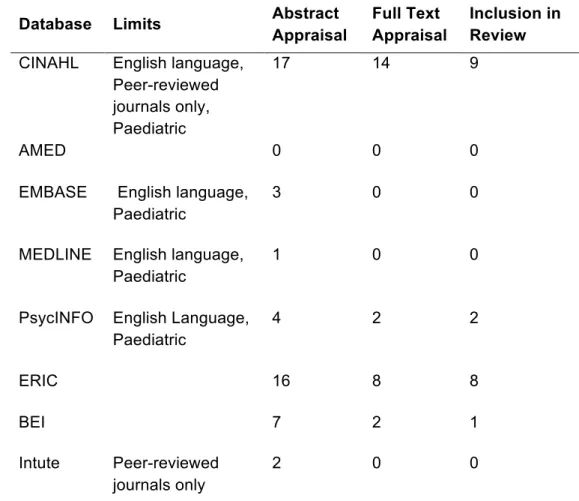
Table 2.4.1a Table 2.4.1b Table 2.4.2a
Database search outcomes, inception to January 2012... Rationale for citation exclusions following abstract appraisal. Summary of papers included following structured literature search... 49 50 51 Table 3.4.1a Table 3.4.1b Figure 3.4.2a Table 3.6.1a Table 3.6.1b Table 3.6.2a Table 3.6.2b Table 3.6.3a Table 3.6.3b Figure 3.7.1a Table 3.7.2a Table 3.7.2b Table 3.7.3a Table 3.10a
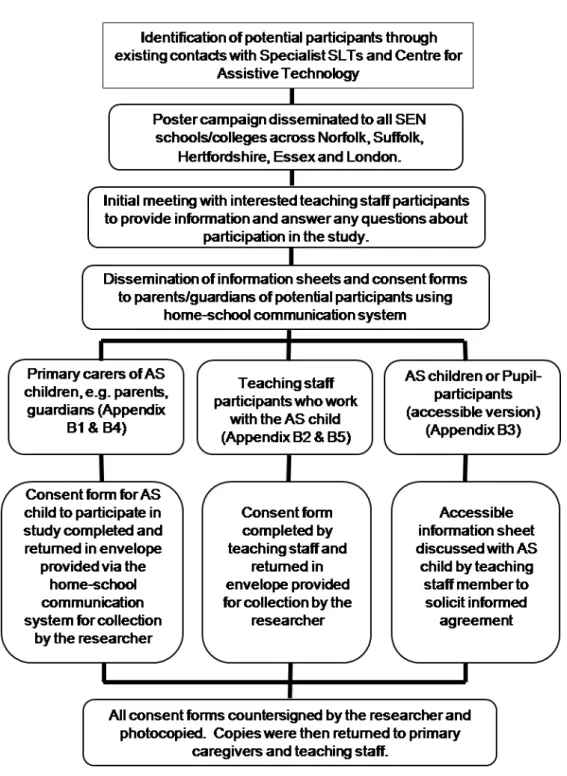
Initial inclusion criteria for recruitment to the study... Revised inclusion criteria for recruitment to the study... Recruitment pathways for AS and NS participants... Original Stirling et al (2001) linguistic move codes and definitions... Initial communicative modality draft coding structure... Frequency and proportional use of each communicative modality for each participant... Frequency of linguistic move types used and total move types for each participant...
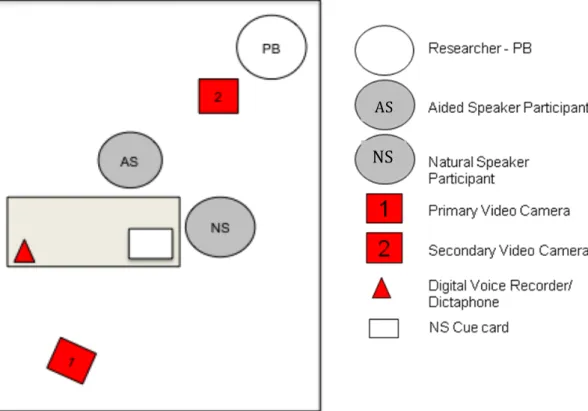
Final linguistic move-type codes and abbreviations... Final version of communicative modality coding structure... Research environment set-up as tested via proof of concept Summary table of AS participant demographics... Summary table of NS participant demographics... Order of stimuli for each data collection session... Cohen’s Kappa Co-efficient reliability figures for communicative modality and linguistic move-type outcome measures... 69 69 71 76 77 81 82 86 88 89 91 91 93 104 Table 4.4a Figure 4.4a Table 4.4b Table 5.2.1a
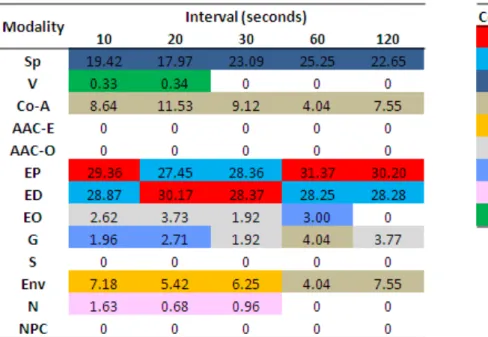
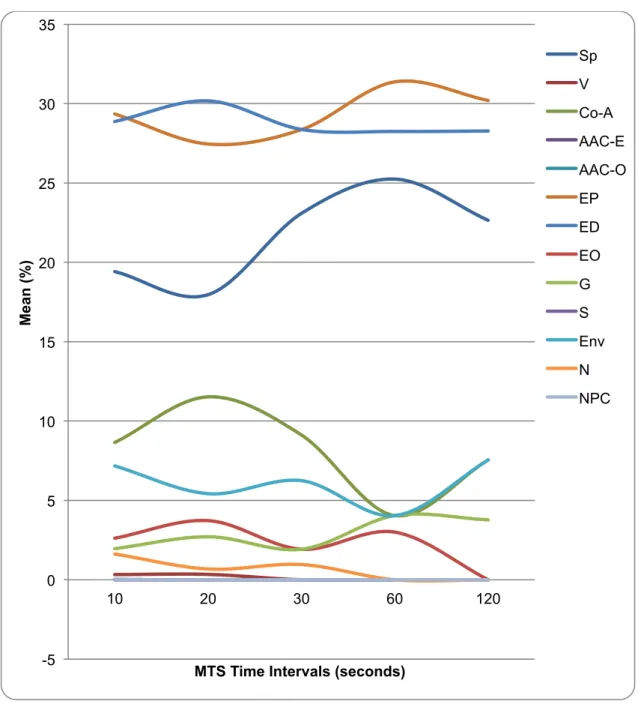
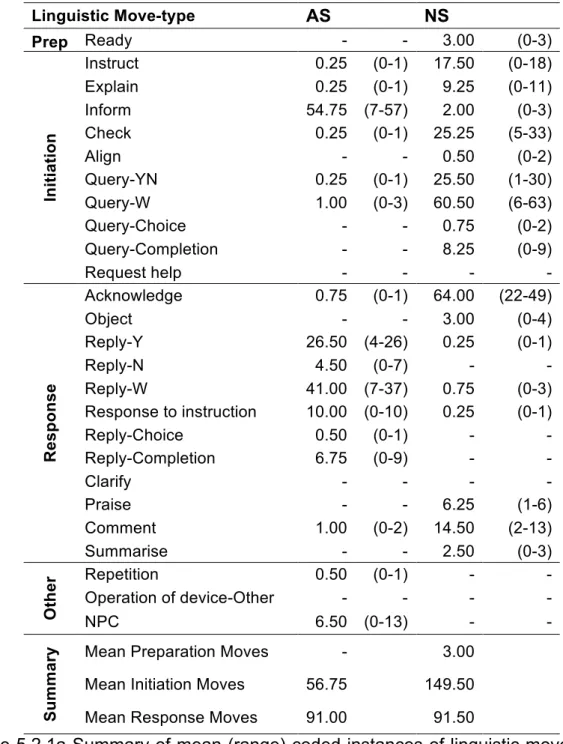
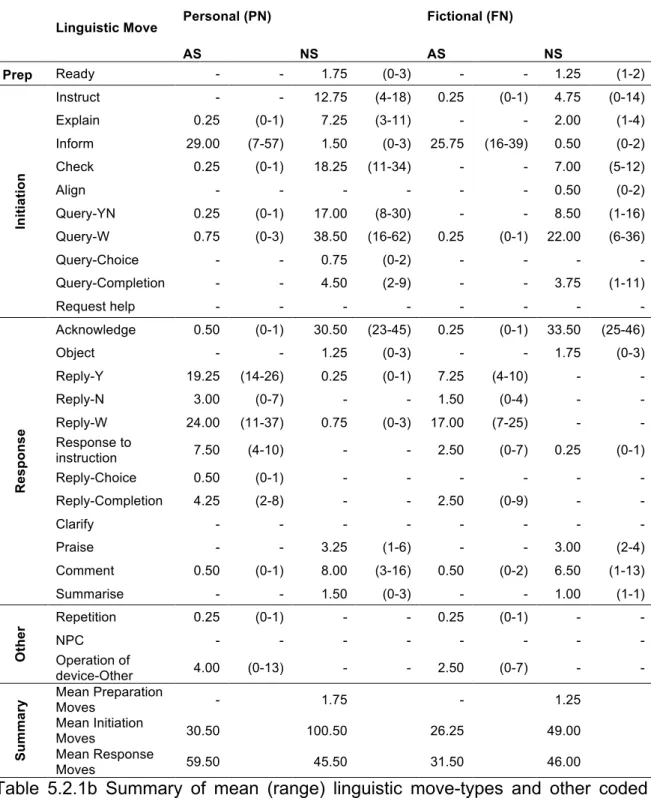
Mean distribution of Coded Communicative instances (%) according to communicative modality, rank ordered by colour... Line graph depicting spread of communicative modality use (%) across time intervals (seconds)... Cohen’s kappa co-efficient scores for inter-rater reliability across MTS intervals... Summary of mean (range) coded instances of linguistic
117
118
Excerpt 5.2.1a Transcription example showing NS’ predominant use of initiation moves………. 127 Figure 5.2.1a Table 5.2.1b Figure 5.2.1b Excerpt 5.2.1b Table 5.2.1c Figure 5.2.1c Excerpt 5.2.1c Table 5.2.1d Figure 5.2.1d Excerpt 5.2.1d Excerpt 5.2.1e Excerpt 5.2.1f Excerpt 5.2.1g Excerpt 5.2.1h Table 5.2.2a Figure 5.2.2a Excerpt 5.2.2a
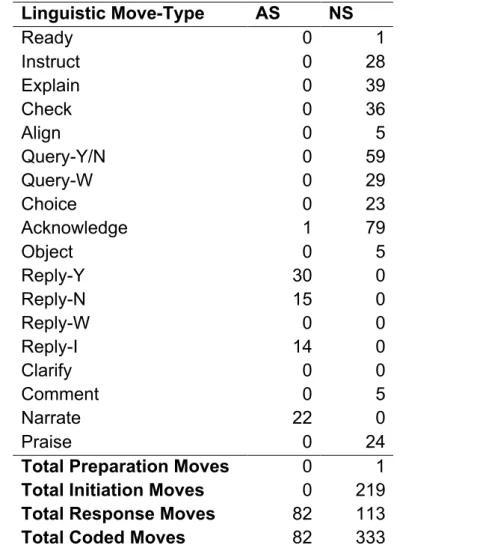
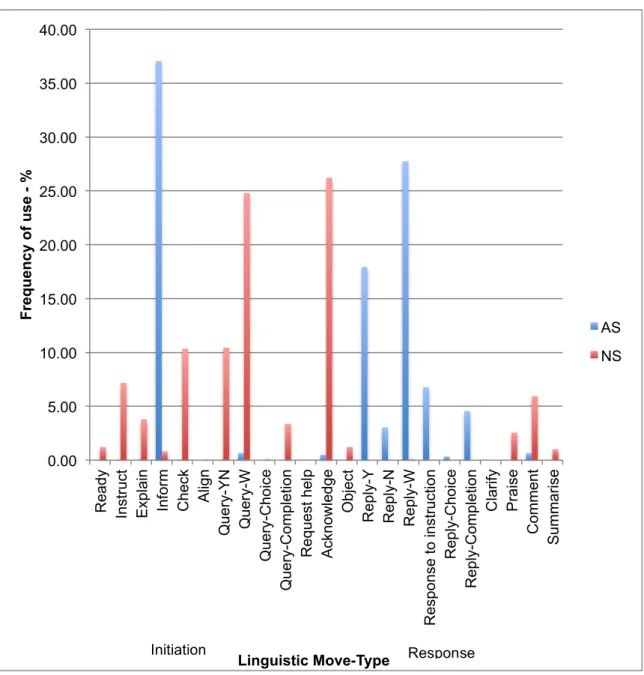
Distribution of linguistic move-types (%) across four data collection sessions - Participant B... Summary of mean (range) linguistic move-types and other coded categories according to narrative condition – Participant B... Distribution of linguistic move-types between narrative conditions for both interlocutors – Participant B……….. Transcription example showing NS frequent use of QYN and C query-type moves………. Summary of mean (range) and percentage coded instances of each communicative modality and other coded categories – Participant B... Distribution of communicative modalities according to interlocutor – % - Participant B..………
Transcription example of Participant B’s continued use of speech during narrative construction………
Summary of mean (range) coded instances for each communicative modality and other coded categories according to narrative condition – Participant B... Distribution of communicative modalities according to interlocutor and narrative condition – Participant B………
Use of ‘eye gaze-person by the NS and AS during personal narrative construction – Participant B………
NS use of gesture in conjunction with ‘instruct’ (I) move-types – Participant B………... Transcription example showing AS and NS use of pointing during fictional narrative construction – Participant B…………. Use of co-operative gesture by both interlocutors under the personal narrative condition – Participant B………. Example of NS initiated co-operative gesture under the personal narrative condition – Participant B………. Summary of mean (range) coded instances of linguistic move-types and other coded categories – Participant S... Distribution of linguistic move-types (%) across three completed data collection sessions – Participant S... Transcription example showing NS use of ‘comment’ moves in response to pause and technical difficulty during narrative interaction – Participant S………... 128 129 130 131 133 134 135 136 137 139 140 141 142 143 145 146 147
Table 5.2.2b Figure 5.2.2b Table 5.2.2c Excerpt 5.2.2b Table 5.2.2d Figure 5.2.2c Excerpt 5.2.2c Table 5.2.2e Figure 5.2.2d Excerpt 5.2.2d Excerpt 5.2.2e Excerpt 5.2.2f Excerpt 5.2.2g Table 5.2.3a Figure 5.2.3a Excerpt 5.2.3a Table 5.2.3b
Summary of mean (range) coded instances of linguistic move-types and other coded categories according to narrative condition – Participant S... Distribution of linguistic move-types by narrative condition for both interlocutors – Participant S………... Summary of mean (range) measures of linguistic complexity across four data collection sessions – Participant S... AS fictional narrative contribution, showing high frequency of content word use – Participant S………... Summary of mean (range) coded instances of communicative modalities and other coded categories – Participant S... Distribution of communicative modalities according to
interlocutor – % - Participant S…... Transcription example of AS and NS high frequency eye-gaze use during narrative construction – Participant S……….. Summary of mean (range) coded instances of each
communicative modality and other coded categories
according to narrative condition – Participant S... Distribution of communicative modalities according to
interlocutor and narrative condition - % - Participant S……….. Transcription example showing AS uses of ‘eye gaze-person’ with ‘RH’ and ‘RY’ linguistic move-types – Participant S………
Use of hand gesture and ‘eye gaze-person’ in conjunction with the initiation-response pair ‘query-choice’ (QCH) – ‘reply-choice’ (RCH) – Participant S………. Transcription example highlighting the co-occurrence of NS pointing gesture with different linguistic move-types –
Participant S……….. Transcription example of NS AAC device use during narrative construction – Participnat S………
Summary of mean (range) coded instances of linguistic move-types and other coded categories– Participant J... Distribution of linguistic move-types (%) across all data collection sessions – Participant J………. Transcription example showing Participant J’s use of ‘check’ questions prior to ‘AAC-encoding’………. Summary of mean (range) coded instances of linguistic move-types and other coded categories according to
narrative condition – Participant J... 148 149 151 151 152 153 154 155 156 158 159 160 161 163 164 165 167
Excerpt 5.2.3b Table 5.2.3c Excerpt 5.2.3c Table 5.2.3d Figure 5.2.3c Excerpt 5.2.3d Table 5.2.3e Figure 5.2.3d Excerpt 5.2.3e Excerpt 5.2.3f Excerpt 5.2.3g Table 5.2.4a Figure 5.2.4a Excerpt 5.2.4a Table 5.2.4b Figure 5.2.4b Table 5.2.4c
and narrative condition - % - Participant J………
Transcription example showing NS high frequency use of W-questions (QW) and instructions (I) under the fictional
narrative condition – Participant J……….. Summary of mean (range) measures of linguistic complexity across four data collection sessions – Participant J... Transcription example highlighting AS sole use of content words to provide narrative information – Participant J…………
Summary of mean (range) coded instances of each communicative modality and other coded categories –
Participant J………... Distribution of communicative modalities according to interlocutor (%) – Participant J... Transcription example showing the multiple communicative modalities employed by both interlocutors during narrative construction – Participant J………. Summary of mean (range) coded instances of communicative modalities and other coded categories according to narrative condition – Participant J………... Distribution of communicative modalities according to
interlocutor and narrative condition - % - Participant J………... NS use of pointing towards the AAC device and fictional narrative stimulus – Participant J………... Transcription example showing AS use of ‘environmental reference’ and ‘eye gaze-person’ in conjunction with linguistic move-types – Participant J……….. NS and AS use of Makaton signing in conjunction with
linguistic move-types – Participant J………. Summary of mean (range) coded instances of linguistic move-types and other coded categories– Participant O... Distribution of linguistic move-types (%) across all data
collection sessions – Participant O…...………. Transcription example showing ‘query’ and ‘acknowledge’ moves employed by the NS – Participant O………
Summary of mean (range) coded instances of linguistic move-types and other coded categories according to
narrative condition – Participant O... Distribution of linguistic move-types according to interlocutor and narrative condition - % - Participant O………
Summary of mean (range) measures of linguistic complexity across four data collection sessions – Participant O...
168 169 170 170 172 173 174 175 176 178 179 180 182 183 184 185 186 188
Excerpt 5.2.4b Table 5.2.4d Figure 5.2.4c Excerpt 5.2.4c Table 5.2.4e Figure 5.2.4d Excerpt 5.2.4d Excerpt 5.2.4e
Transcription example showing AS predominant use of content words and NS modelling of function word use – Participant O……….. Summary of mean (range) coded instances of communicative modalities and other coded categories – Participant O... Distribution of communicative modalities according to interlocutor (%) – Participant O... Transcription example of eye gaze use by both interlocutors within multimodal communication – Participant O………….…. Summary of mean (range) coded instances of communicative modalities and other coded categories according to narrative condition – Participant O………..………... Distribution of communicative modalities according to
interlocutor and narrative condition - % - Participant O..……... Transcription example showing AS and NS use of pointing gesture in conjunction with specific linguistic move-types – Participant O………..………... NS and AS use of gesture and Makaton signing in
conjunction with a range of linguistic move-types – Participant O……….. 188 190 190 191 192 193 195 196 Figure 6.1a Venn diagram showing the combination of salient features
from the CAT (Hersh & Johnson, 2008) and MPT model
Acknowledgements
There are a large number of people that have played significant roles in supporting me to complete this thesis and to all of them I am extremely grateful.
Considerable thanks must go to the participants of the study and their supportive parents without whom this work would not have been possible. The willingness of the teaching staff to give up their time, to work with student participants before, during and after data collection sessions was remarkable and for that I am very appreciative.
I have been privileged to work with the fantastic supervisory team of Dr Karen Bunning, Dr Jan Mcallister and Dr Zoe Butterfint who have provided continuous support, advice and encouragement. Their wealth of knowledge has provided valuable insight to the study and the supportive challenges they have made of my work has allowed me to develop my skills as a researcher. Particular thanks go to Karen Bunning whose endless time and patience has been pivotal in enabling me to complete this study whilst continuing to pursue a clinical career.
A number of people within the School of Allied Health Professions have offered their knowledge and support throughout the research process. In particular, the technical support department of Mike Stevens, Rich Williams, Matt Ladd, Richard Humphries and Dean Buckfield, who have provided considerable help with the video editing and technical aspects of this study. I also wish to thank UEA for the financial support I received through a UEA studentship, which provided three years PhD tuition fees and a maintenance grant.
I would like to thank my fellow PGR students, who kindly motivated, encouraged and provided articles, advice and biscuits. The peer support offered by all of those I have studied with, during the lows as well as the highs, has been fundamental to me continuing and finally reaching the end of my PhD journey.
Towards the end of my research I was fortunate enough to work as a Speech and Language Therapist at Treloar School and College. The encouragement I was given by my colleagues was incredible and ensured I continued writing up my research whilst working there. The wealth of knowledge within the team provided invaluable clinical insight to the discussion and clinical implications of my findings. I am very grateful for their continued support even after ending my employment at the college.
I am very grateful to Parmiter’s School who kindly provided access to an office to work in during the final write-up stage of this study; ensuring I maintained my focus and finished the thesis.
To my friends, who have offered unwavering support and haven’t given up on me despite the length of this journey. Thank you for making sure that I have laughed through the inevitable lows and properly celebrated the successes along the way. In particular, this PhD would not have been completed without the continuous encouragement of Niki. Thank you for your unrelenting motivation and back-up. To Martin, thank you for supporting me at the end of the journey and ensuring I was always looking forwards to the next part.
And finally, I am especially grateful to my family who have offered endless support, advice, encouragement and a home throughout this process. To my parents, who have supported every decision I have made, always believed in my ability to complete this work and ensured I had the same belief in myself. Special thanks must also go to Mum for proof reading the whole thesis, an unenviable task.
Chapter One
Introduction
1.1 Overview
This study examined the narrative interactions of individuals who use Augmentative and Alternative Communication (AAC) with familiar educational staff. This chapter explores the context within which the aims of the current study are grounded. The theoretical background is provided by Scherer’s (1993) Matching Person and Technology (MPT) model. The MPT model identifies three salient areas for the successful use of AAC: the environment experienced by the user (milieu), the individual characteristics of the person using the technology (person) and the assistive technology in use (technology) (Scherer, 1993). More recently, Hersh and Johnson (2008) have developed the Comprehensive Assistive Technology (CAT) model, which extends the concepts introduced in the MPT model. Similarly, it identifies the individual, context and technology, with the addition of activity. These models provide the infrastructure of the following two chapters. The more specific person/individual characteristics of language development and narrative acquisition are addressed in Chapter Two (p.28). The current chapter focuses on the AAC technology in use and the milieu for narrative production. The ‘technology’ area covers AAC, contextual features and prevalence of usage. Following this, the wider milieu of Government legislation in England and Wales regarding education and the inclusion of individuals with special educational needs and disabilities (SEND) is examined, with particular reference to the National Curriculum of England, Wales and Northern Ireland. The underlying pedagogies of teaching-learning are reviewed in relation to the child who uses AAC. Finally, against this context, the aims of the current study are articulated.
1.2 The ‘Technology’ of AAC
1.2.1 What is AAC?AAC is any form of communication that is used to support or replace spoken communication (Von Tetzchner and Martinsen, 2000). It incorporates a range of communication techniques and physical devices or systems. AAC is typically divided into unaided and aided methods. Unaided methods invoke the use of the body’s natural gestural systems, as seen in manual signing (e.g. British Sign Language). Aided methods, are defined by the introduction of an artificial object or thing. They range from the low or soft technology options to high technology (Von Tetzchner and Martinsen, 2000). A low technology device might involve the use of symbols and pictures displayed in a communication book or board. A high technology (high-tech) device might display symbols on a tablet computer that provides a digitised speech output (Von Tetzchner and Martinsen, 2000).
Individuals who use AAC span a wide age range and include those with various developmental and medical conditions (Beukelman and Mirenda, 2005). Typically, these are children, adolescents and adults who are unable to communicate effectively through speech, which may be variously associated with conditions such as autistic spectrum condition, learning disability, cerebral palsy and developmental apraxia of speech (RCSLT, 2006). The current study focuses on young people who use high-tech AAC devices.
The software and hardware systems available in AAC devices are considered critical factors in the resultant communication process (Stuart, 2000, Soto, Hartmann and Wilkins, 2006). High-tech AAC comes in a range of formats, from handheld devices to wheelchair mounted aids, but most contain a similar software package enabling communication through digitised voice output (Von Tetzchner and Martinsen, 2000). More recently, high-tech AAC has moved towards the use of Windows-enabled computer aids. These devices enable dual operation of Windows programs and communication software, the former allowing the facility for e-mail and internet access thereby providing greater potential for independence.
Commercially available AAC devices usually reflect the newest technology available, which also tend to provide increased functionality for the individual who uses AAC. However, the most advanced devices are often the most expensive, potentially limiting universal access (Higginbotham, Shane, Russell and Caves, 2007b). Even the most technologically-advanced devices still limit the user to the ready programmed vocabulary, syntax options and overall capacity (Romski, Rose, Lauren and Roger, 2005, Murray and Goldbart, 2006). Furthermore, there is a tension between the development of AAC technology and the research evidence demonstrating effective usage (Williamson, 2002). For example, Higginbotham et al. (2007b) recognised that innovations in AAC were mainly technological in type. The validity and functional potential of modern communication aids have been acknowledged, whilst also recognising the limited research evidence-base underpinning technological developments being made (Stuart, 2000, Beukelman and Mirenda, 2005).
1.2.2 AAC usage
Currently there is little published information regarding the number of people who use AAC. By reviewing data from both the United States of America (USA) and United Kingdom (UK), the Royal College of Speech and Language Therapists (2006) estimated that a range of 0.3-1.4% of the total population require the use of some form of AAC system. Communication Matters (www.communicationmatters.org.uk), the UK chapter of the International Society for Augmentative and Alternative Communication (ISAAC: www.isaac-online.org), suggest that there are an estimated 365,000 people who use AAC in the UK; approximately 0.59% of the general population (CommunicationMatters, 2009). Within the population of school age children, Blackstone (1990) estimated 0.2-0.6% require the use of AAC. This is supported by Norwich and Grove (1997) who, through a survey of special and mainstream schools in eleven London Boroughs, estimated that in excess of 10% of statemented children (0.3% of the school population) are in need of AAC systems. Previously, it had been suggested that these figures may well be conservative (RCSLT, 2006). However, most recent estimations of AAC requirement within the UK remains at 0.5% according to Enderby, Judge, Creer and John (2013). This equals approximately 529 per one hundred thousand of the population.
1.3 Legislation and Government Policy
1.3.1 Disability and educationThere is a raft of U.K. government legislation and policies designed with the specific aims of encouraging and supporting ‘inclusion’ in education. It exists to counteract the vulnerabilities frequently experienced by people living and growing up with disabilities (Chappel, 1998). For example, in the past, without improved access and opportunity in education, children with SEND often under-achieved academically and became marginalised in society (Finkelstein, 1993). The Special Educational Needs and Disability Act (DfES, 2001) was the first piece of legislation to specify that children with disabilities must not be placed at any ‘substantial disadvantage’ in comparison to their non-disabled peers. As a result, institutions are required to ensure provisions such as auxiliary aids and support services are in place to prevent any such disadvantage (Bunning, 2004). This was further supported by one of the most fundamental papers relating to disability, the 1995 Disability Discrimination Act, which was later updated in 2005 (DfEE, 2005). This act sets out the ways in which people with disabilities must not be discriminated against, within employment, education and everyday life. In relation to the young people included in the current study, the section relating to education is the most relevant.
The Disability Discrimination Act (DfEE, 2005) also states that pupils with a disability must not be discriminated against or experience disadvantage due to their SEND. Schools must provide detailed plans of how they will increase access to the curriculum for pupils with SEND (DfEE, 2005). Access to the curriculum was highlighted by the government-commissioned, review of children with communication needs in England and Wales led by John Bercow (2007-8). The final report highlighted the critical nature of communication as a human right and an essential life skill that is central to all social interaction (Bercow, 2008). One of the principal recommendations was the removal of the perceived barriers to the National Curriculum for children with SEND, such as the impact of a communication impairment on the development of literacy skills (Bercow, 2008). Increased support for individuals with communication difficulties was also identified as a priority. Further to this, the Every Child Matters charter developed as part of the 2004 Children Act (DfCSF, 2004) created five principles, including
and secondary school to ensure the continued achievement of all children (DfCSF, 2004). As a consequence of The Human Rights Act (DfEE, 1998), which came into force in October 2000, it is also now possible for individuals to make legal challenges against breaches of any of the above Acts through the courts (Swain, French and Cameron, 1993).
One fundamental need stressed in all of the above legislation is the opportunity for any child to achieve their academic potential, with no limitations imposed by their SEND.
1.3.2 Communication and the National Curriculum
The National Curriculum of England, Wales and Northern Ireland is described as a ‘curriculum for all’. It provides guidance on the design and delivery of subjects at the various stages of statutory education and includes adjustments to enable access for students with SEND (QCDA, 1999). For children with SEND who are working towards the National Curriculum, but are below the first academic attainment level of Key Stage 1, P Scales are used to measure and record achievement (Qualifications and Curriculum Authority, 2007). Both the National Curriculum and P scales include sections within English relating to ‘Speaking and Listening’. Narrative, as the focus of the current study, is represented at P scale 7, which includes the use of phrases with up to three key words (using speech, signs or symbols) to communicate simple ideas, events or stories (Qualifications and Curriculum Authority, 2007). The National Curriculum for England has been re-written and was re-published in September 2013. Changes to the curriculum are to be taught in schools from September 2015. At Key stage 1 in the existing curriculum, students are expected to tell both real and imagined stories, read aloud, describe experiences and talk to a range of people including peers, teachers and other adults (QCDA, 1999). Within narrative language, children are expected to identify and describe characters, events and settings in fiction, and to use knowledge of sequence and story language when retelling stories and predicting events (QCDA, 1999). The new National Curriculum has removed speaking and listening criteria at each Key stage, and instead provides an overview of attainment in ‘spoken language’ to be reached during academic years two to six (DfE, 2013). These attainments include the child being able to give well-structured descriptions, explanations and narratives for
different purposes, including the expression of feelings (DfE, 2013). Despite the new curriculum for English reducing the areas of attainment for ‘spoken language’ the emphasis on a child’s knowledge and use of different forms of narrative is still present. The existing National Curriculum was in use throughout this study and therefore is the predominant point of reference. Comments regarding the implications of the new curriculum for English, in relation to the findings of this study, are made in Chapter Six. The current P Scales and Key stage 1 criteria for attainment in English are provided alongside the new ‘spoken language’ criteria as a reference in appendices A.1 and A.2.
For a child who uses AAC, educational attainment is likely to be more challenging than for their typically developing (TD) peers who are able to use speech. Although the Bercow Report (Bercow, 2008) emphasised the need to remove such barriers to the curriculum for children with SEND, the optimal route for achieving this has yet to be established.
Not only does narrative appear as a medium for attainment of key learning objectives at the various Key Stages, but also is implicit in the recommended teaching-learning pedagogy that currently drives classroom practice. This is discussed in the following section.
1.4 Teaching-Learning Pedagogies
1.4.1 Within mainstream educationClassroom discourse differs from conversational interaction (Musumeci, 1996). The authoritative role of the teacher and the function of classroom interaction in relation to educational goals are factors of influence (Walsh, 2006). Walsh (2006) identified four principal features of classroom discourse, that were the teachers’ responsibility: control of the patterns of communication, employment of elicitation techniques, use of repair strategies and the modification of their own speech to facilitate learning. The most commonly identified pattern of interaction observed in classrooms is the Initiation, Response, Feedback (IRF) sequence first defined by Sinclair and Coulthard (1975). This framework has also been referred to as the Initiation, Response, Evaluation (IRE) Framework (Hardman, 2008).
The IRF framework consists of three moves: teacher initiation, often a question; student response, usually an answer to the question; teacher follow-up or feedback. The teacher therefore makes two moves to every single move by the student, taking two thirds of all communicative moves within the interaction. Walsh (2006) identified four reasons why the IRF framework was so frequently used in classroom discourse. Firstly, the question and answer sequence is seen as appropriate to the roles occupied by teacher and student. Secondly, the power relationship between teacher and student lends itself to the teacher initiating and taking the majority of moves. Thirdly, provision of feedback enables positive reinforcement, facilitating learning. Fourthly, the succinct nature of IRF interaction is efficient in extracting responses from students and therefore works to the teachers’ time constraints (Walsh, 2006). Although the IRF helps to manage a class and maintain the attention of students, it may be seen as constraining the opportunity for learning through discussion, as advocated by Barnes (2008). However, recent studies have shown effective use of the IRF framework as an effective learning tool that can lead to developed discussion (Alexander, 2004).
The IRF sequence is most frequently initiated by a teacher-led question. Different types of question serve a number of different purposes within the classroom. For example, questions may be used to denote turns, aid clarity of information being given, provide opportunity for involvement or even impose participation (Walsh, 2006). Therefore, depending on the pedagogic goal, different types of question will be the most appropriate. Walsh (2006) suggested that whether a question produced a communicative response from the student was secondary to whether it served its purpose in facilitating the student to achieve the pedagogic goal. The use of questions in classroom discourse is different to conversational interaction. Questions within the classroom serve to encourage involvement in contrast to conversational questions, predominantly used to elicit information (Walsh, 2006). In order to enable students to achieve their academic goals, teachers must therefore have a good understanding of different types of question and how to employ them successfully (Nunn, 1999).
Through observation of primary level literacy hour, Hardman, Smith and Wall (2005) found that the majority of classroom interactions involved a high frequency of closed type questions, used to guide students to the required response. Teachers employed few open questions or strategies to encourage
children to elaborate and develop their answers. Student turns were very short, approximately five seconds, and initiating questions were very rare. Furthermore, at key stage four and above, teachers continued to control the interaction with considerable recitation and explanation and few initiations from students (Hardman and Mroz, 1999). This suggests the teacher’s authoritative role and pedagogic goals may lead to high levels of questioning, restricting student initiation across academic levels. This was further corroborated by Walsh (2006) who identified that ‘why’ questions produced the longest responses from students but were also the type of question used least by teachers. In contrast to the findings of Hardman and Mroz (1999), teachers’ use of ‘why’ questions was, however, suggested to increase with the students’ age and academic level (Walsh, 2006).
The teachers’ secondary role within the IRF framework is the provision of feedback following the students’ response. Hardman (2008) suggested that the way in which the follow up move was employed within the IRF framework could determine the resulting student participation and engagement. However, Walsh (2006) proposed that teacher use of the feedback move could become ritualistic, with limited thought being given to the instant feedback provided. The majority of feedback within classroom discourse is often short, evaluative and not informative, for example, ‘good’ (Alexander, 2004). This traditional feedback suggests that the teacher expects a known answer from the students and does not encourage dialogic classroom interaction (Alexander, 2004). In relation to this, Nystrand, Gamoran, Kachur and Prendergast (1997) stated that when teachers focused on the evaluations they provided to student responses, they were more likely to use strategies to encourage further development of the student’s answer, in contrast to the traditional minimal feedback response. For example, teachers used the students’ answers in order to form another question. This type of ‘high-level’ evaluation was said to encourage further student-led ideas and discussion as students felt their responses had an influence on the discourse. As a result, teaching may become a more dialogic process, as advocated by Hardman (2008).
Whatever the pattern of discourse employed by the teacher, language is integral to the educational process. The way in which teachers use their own language to convey information is also known to be significant (Walsh, 2006). An
speech when interacting with their class: simplification of vocabulary and phrases, use of basic grammatical structures, reduction in the speed of speech and increased facial expression and gesture. The importance of speech within the classroom was recognised by Barnes (2008) who stated that in relation to the constructivist principles of learning, ‘talk’ is often the most straight forward way of understanding and taking in new knowledge. The constructivist theory suggests that learning occurs as we make sense of what happens in relation to the construction of our own world (Barnes, 2008). New ideas are learnt by relating these to our existing view of the world and working out how these may or may not fit together with our current understanding. This process of learning requires flexibility in the development of understanding through consistently challenging what we know and how it constructs our world. For this reason, Barnes (2008) identifies talking through new ideas with teachers and peers as the easiest format in which to do this. The constructivist theory, therefore, advocates an interactive teaching style within a social process (Barnes, 2008). Thus, within the teaching– learning pedagogy of constructivism there is a place for narrative, which can be employed in interaction as a means of assimilating information and constructing understanding (Barnes, 2008).
Children with communication difficulties may have a limited ability to use speech for constructing and demonstrating their own understanding of educational matter, affecting their construction of learning. This is viewed against an educational context where the tripart IRF/IRE sequence is in frequent use. It is possible that the teaching-learning pedagogies employed by teachers of children with communication difficulties may differ from those identified within a mainstream classroom and demonstrate adaptation to the child’s presenting needs. The following section examines the interactions that occur between teachers and students within the SEND classroom.
1.4.2 Within special education
Limitations to participation in classroom interaction and communication present a number of difficulties for children with SEND. For example, recognised limitations in attention and responding are likely to make social participation within the classroom difficult (Berry, 2006). Modifications to teacher communication within the SEND classroom have been observed in multiple research studies.
Research by Berry (2006) observed multiple simplifications applied to language during teacher interactions with pupils with learning difficulties. Berry’s (2006) observation of two inclusive, mainstream classrooms revealed teacher use of specific facilitation strategies, such as modelling the student’s response back, error corrections and directing strategies, in which teachers ensured student attention and provided clear, simplified information and activity instructions. Teachers were also observed simplifying questions into choices in order to encourage participation of the students with learning difficulties (Berry, 2006).
Together with the increase in modifications to teacher language, use of the tripart IRF framework has been recognised in SEND classroom discourse. In a preliminary study of English lessons within two SEND classes, Bunning and Ellis (2010) found teachers made significantly more initiation and follow-up moves and students produced significantly more response moves during interaction. This suggests use of the Sinclair and Coulthard (1975) IRF framework of classroom discourse due to the significant difference in teacher initiation and feedback moves in contrast to AS responses. Teacher initiations were predominantly questions, although a high number of informative moves were also recorded (Bunning and Ellis, 2010). The questions used were thought to be influenced by the pedagogic goals of the teacher, as identified in studies of mainstream classroom discourse (Walsh, 2006). Teachers were found to address initiations primarily to the whole class before identifying a particular individual to provide a response (Bunning and Ellis, 2010). This again reflects the majority of mainstream learning-based interaction, which is predominantly whole-class centred (Baines, Rubie‐Davies and Blatchford, 2009). However, it has also been suggested that SEND classrooms may support a higher level of dyadic learning opportunities, due to the presence of specialist support assistants (Stough and Palmer, 2003).
A proportion of students within the SEND classroom setting experience communication difficulties, resulting in the need for extra assistance in order to access the curriculum (Frederickson and Cline, 2002). This highlights the high level of versatility required by teaching staff to enable interactions in a class of pupils with a large variety of communication ability (Wright, Newton, Clarke, Donlan, Lister and Cherguit, 2006, Detheridge, 1997). Possible strategies range from simplifying language and speech to supporting the use of high-tech AAC
students learn through ‘talk’ and discussion of a subject to develop new understanding. For students with SEND, communication difficulties therefore introduce added complexity in participating in this learning process. Use of a wide range of communicative modalities is one approach to supporting access to teaching-learning for all students. Bunning and Ellis (2010) found that teachers and students used gesture and sign with similar frequency. A more recent study from Bunning, Smith, Kennedy & Greenham (2013) recorded significantly higher use of initiation and follow-up moves by teachers during classroom interaction with students with severe to profound and multiple intellectual difficulties. Teachers showed a tendency to use ‘requestives’ as initiations, i.e. question type moves. Despite their severely restricted communication skills, the students produced significantly more response moves than their teachers (Bunning et al., 2013). This provides further evidence of the IRF framework in use within the SEND classroom. Although teachers clearly controlled the classroom interactions, they also used scaffolding techniques. They adapted their use of communicative modalities to reflect those of the students in order to support their early communication skills (Bunning et al., 2013).
For students who use AAC devices, little research has been conducted on their experience of classroom discourse. However, the complex nature of aided speaker (AS) interaction means that the successful use of AAC depends on the conversation partner as much as the user (Murphy, Markova, Collins and Moodie, 1996). Within education, teaching staff are the most prominent conversation partners. To access the learning process described by Barnes (2008), students using AAC need similar opportunities to contribute to classroom discourse as their peers. Teacher-pupil interactions have been specifically identified as highly significant for the language development of children who use AAC (Smith, 1994, Millar, 2001). In a qualitative study of four teachers’ views on student success with AAC usage, Smith (1994) found that AAC was identified as an important modality for communication within the classroom. Although, in the same study Smith (1994) observed that some teachers used restrictive interaction strategies allowing the children who use AAC minimal control, and imposing limitations on conversation style. This highlights the link between communication success and the interaction style used by the Natural Speaker (NS) when communicating with an individual who uses AAC. However, this is still a considerably under-researched field and further investigation of teacher NS and student AS
interaction is needed to establish the existing patterns of classroom interaction for these learners.
Teacher attitudes and their level of confidence in communicating with students who use AAC have also been recognised as factors in their interactions with AS students (Millar, 2001, Soto, 1997). In a survey of SEND teachers, Soto (1997) found that interacting with children who use AAC had a negative effect on some teacher’s feelings of self-efficacy and confidence due to their limited training and experience with these type of students. Millar (2001) highlighted the importance of training for staff supporting children who use AAC to ensure they feel able to effectively support the interaction. A lack of confidence in interacting with a student who uses AAC may affect the teacher’s willingness to attempt communication and reduce the resulting opportunities available for the student’s social participation (Beukelman and Mirenda, 2005, Waller and O'Mara, 2003, Soto, Yu and Henneberry, 2007).
In summary, examination of teaching-learning pedagogies, particularly in relation to children with SEND suggests common use of a tripart IRF pattern of interaction. This reflects the classroom discourse of mainstream environments, although some additional teacher strategies have also been identified in order to support learners with SEND (Berry, 2006). Considering the important role teachers play in classroom discourse and the resulting learning process, it is surprising that teacher interaction styles with children who use AAC has been identified as a relatively neglected area of study (Ockjean and Hupp, 2007)
1.5 Research Aims
The introduction to the AAC, ‘technology’, and educational contexts or ‘milieu’ of the current study has identified several areas for possible research. Technological developments within the field of AAC currently occur at a fast pace, at which rate it is not possible to form the research evidence-base supporting these advancements. Access to the National Curriculum of England, Wales and Northern Ireland and interactive learning for children who use AAC provides an important context for children of school age. In particular, the ‘Speaking and Listening’ goals within the National Curriculum and P Levels present a number of
identified theme for many of the National Curriculum targets. The current study, therefore, aims to investigate the narrative interaction between young people who use electronic, aided communication and their natural speaking, teaching staff.
Chapter Two
Literature Review
2.1 Introduction
This chapter provides both a broad search and a more structured review of the existing literature relating to AAC and narrative construction. Two types of search were completed due to the relatively small field of AAC interaction research. The first section focuses on the wider topic areas of language acquisition, patterns of interaction and narrative acquisition for both TD children and those with complex communication needs. The second section provides a structured review of the existing literature in the field of narrative production by children who use AAC. Details of the search strategy and exclusion criteria employed are given. The identified studies are then critiqued and gaps in the existing literature are discussed. The research questions for the current study are then introduced.
References were identified using structured review and keyword searching of the databases CINAHL, AMED, EMBASE, ERIC, Intute, BEI, MEDLINE and PsycINFO. These databases were searched separately from the date of inception (September 2008) to January 2012. The selection of these databases was made to ensure a comprehensive range of references was found in relation to allied health professions, medicine, psychology and education. To ensure research was current and remained relevant, a limit of 1980 was put on publication date. However, an exception to this was made for some seminal papers relating to theories of language acquisition, which were included to provide a theoretical context for language development. Journals including “Augmentative and Alternative Communication”, “Technology and Disability”, “International Journal of Language & Communication Disorders” and “British Journal of Special Education” were thoroughly reviewed independently to ensure keyword searching did not
2.2 Language Acquisition
2.2.1 Language Acquisition: TD Children
A range of theories have been developed in order to capture language acquisition and development, all of which have made variable contributions to wider understanding of the subject. Before considering how language development is affected by communication impairment or the use of an AAC device, it is important to consider how language is expected to develop. The backdrop of language acquisition for the current study was informed by the main theories that have been developed to explain the process of communication development. The following section aims to highlight these main theories and identify the relevance of emergentism to those with physical and communication difficulties. This is necessary when reflecting on the influence and interaction between the individual with SEND and the developmental environment.
There are two major theoretical approaches to language acquisition within which a variety of proposals have been made. Language acquisition is generally theorised under the approaches of Universal Grammar or Usage/Input based (Ambridge and Lieven, 2011). A Universal Grammar approach assumes an innately specified general grammar that is applicable to all world languages. The theories of nativism are considered Universal Grammar approaches to language acquisition, assuming some innate ability as the foundation for development (Ambridge and Lieven, 2011). In contrast, usage or input-based theory, incorporating constructivist, sociopragmatic and emergentist approaches, identifies the environment and adult model a child receives as the principal factor in development. These approaches assume no innate knowledge of grammar (Ambridge and Lieven, 2011).
One of the earliest input-based theories of language acquisition is the Behaviourist theory. Behaviourists state that language is a form of learned behaviour, modified by the environment (Skinner, 1957) and identify language as no different from any other behaviour learnt by a child. Behaviourists acknowledge that some internal mechanisms, such as neurological processes, are central to language acquisition. However, they do not accept that this includes internal structures such as innate grammars (Bohannon III and Bonvillian, 2009). The
emphasis is on the environment, specifically the communication partner, suggesting language is learnt through modelling by a parent, imitation from the child, practice and reinforcement. This theory does however have several limitations. For example, it cannot account for developmental processes such as over-generalisation of grammar. Behaviourist theory also cannot explain how deaf babies, despite hearing no sound, babble during the first year of life. These limitations led to the emergence of theories that also incorporate an element of development that depends on the individual.
The nativist theory, for example, proposes that the ability to acquire language is innate, and suggests the general structure and process of language acquisition is universal across native languages (Allen and Seidenberg, 1999). Chomsky introduced the idea of an innate device – the Language Acquisition Device, which was said to provide the universal phrase structure rules of language (Chomsky, 1957). Transformational rules, which are the rules that define the non universal aspects of any language such as the form of negatives or questions, are then learnt through linguistic input. However, this theory fails to recognise the importance of environmental and cognitive development on language acquisition. The main rules regarding phrase structure and transformational rules are also based on completely developed adult language, which cannot fully explain some child language processes.
Sociolinguistic theory focuses on the underlying communicative function of language as opposed to structure or form (Owens, 2008). It develops the Behaviourist model further by providing a transactional model of language development, whereby the child learns the rules of dialogue through interaction with a parent. Mothers interpret a child’s earliest behaviours as meaningful, which gives the child confirmation of their communication attempts from the very earliest stages of development (Bruner, 1975). As language develops, the child produces first utterances, which are purely functional. As these utterances develop, the parent alters their own speech, which in turn continues the child’s development. However, this theory still does not entirely acknowledge any innate ability within the child, again failing to explain a deaf baby’s ability to babble.
predominant factors in the child’s language acquisition. Constructivists argue that as opposed to developing through innate knowledge of a series of learnt formal rules, a child uses analogies of previously experienced language or words to construct the grammar required (Ambridge and Lieven, 2011). The processes required for sentence formation are therefore developed through a child’s generalisation. These proposals formed from child generalisation as part of language acquisition may be termed emergentist proposals (Ambridge and Lieven, 2011).
Emergentism is one of the most recent theories of language acquisition and pulls together the prominent factors from past theories to explain the process of language development. Emergentism replaces ideas of rule learning and cognitive structures with the suggestion that language emerges from the interaction of cognitive processes (Allen and Seidenberg, 1999). It is also now believed that a form of innate structure within the brain is necessary for a child to develop language. However, this is not thought to be a Language Acquisition Device as suggested by Chomsky (1957), but the structure of the brain that affects the way in which information is processed. Emergentism also supports the idea that the language input received by a child from their developmental environment is the foundation for their cognitive processing, which in turn facilitates the acquisition of language. This is now a widely accepted model, acknowledging language is acquired through an innate process supported by the input of the linguistic environment.
Review of the main theories highlights the complexity of language acquisition and the role of both the individual and their environment. When a developmental disorder or social difficulties are also introduced as a factor, the development of language may be disrupted. This leads to a highly complicated process when we consider children with complex communication needs associated with a developmental condition. The following section examines the existing literature regarding how a developmental disability can affect the process of language acquisition.
2.2.2 Language Acquisition: Children with Developmental Disorders
This section discusses the communication difficulties associated with two developmental disorders: cerebral palsy (CP) and Autistic Spectrum Conditions (ASC). These conditions are central to the review as they are directly relevant to the sample in the current study. Due to the cognitive demands of the research task, narrative production, it was expected that a primarily motor condition such as CP would form the ‘typical user’ of this study.
CP is a chronic disorder of movement and posture due to non-progressive pathological processes of the developing brain (Aicardi and Bax, 1992). Within Western countries, current prevalence data suggests that CP affects between 2 and 2.5 births per 1000 (Scherzer, 2000). Approximately 60% of these children are likely to experience co-occurring communication difficulties (Murray and Goldbart, 2009a). As a predominantly motor condition, CP often limits the production of intelligible speech and recognisable gesture or facial expression (Pennington, 2008). In a review of CP and communication, Pennington (2008) identified dysarthria as a common co-morbid condition in children with CP due to the co-ordination of respiration, phonation and nasality required in speech production. The limited ability to use gesture may also influence language development, as early intentional communication such as reaching for a desired object is likely to be affected. Presence of physical disability also restricts activities, such as exploring the environment through play and joint attention, both recognised precursors to speech and language (Sutton, Soto and Blockberger, 2002, Pennington, 2008). A child’s physical exploration of the environment through reaching, grabbing and moving towards desired objects is a form of non-verbal communication during pre-non-verbal development. This in turn generates interaction with a caregiver, as they react by providing a verbal response to the TD child’s actions. If a child’s ability to explore the physical environment is limited, this may therefore lead to decreased linguistic input from caregivers, as their opportunity to communicate through grabbing and manipulation of objects is restricted.
The interactions of children with CP are affected by the environment, in particular the role played by significant people in the child’s life. Nearly thirty years
(1985a, b & c). These drew attention to the interactions of children with CP and their primary caregivers. Eight children with congenital physical disability were videotaped in twenty-minute play interactions with primary caregivers. In the first paper from this research Light et al (1985a) identified that primary caregivers took more than twice the communicative turns than their children. Caregivers saw silence as a breakdown in communication and would often fill pauses that lasted any longer than one to two seconds. Primary caregivers often took control of the interactions creating an asymmetry between interlocutors. Communication was found to be transactional, with both conversation partners being influenced by the information and input conveyed by the other person (Light et al., 1985a). The transactional nature of the interaction highlighted the importance of the communication partner, influencing the ongoing communication of the AS. The dominant role of caregivers observed may further restrict language acquisition and development for children with CP, as they were limited in their opportunity to initiate and control interaction.
The second paper from the Light, Collier and Parnes (1985b) study examined the communicative function of turns taken. The child participants’ recorded turns were principally confirmations or denials demonstrating the tendency of parent-child interaction with non-speaking children to follow a question-answer format. Primary caregivers took the role of repairing any breakdowns that occurred during the interaction (Light et al., 1985b). The question-answer format provides little opportunity for the individual who uses AAC to develop more complex linguistic structures and grammar. By predominantly producing confirmations or denials, aided communicators fall into a more passive respondent role in the interaction.
Light, Collier and Parnes (1985c) also examined the communicative modalities employed within the interactions. All children were found to employ multiple communicative modalities, including vocalisation, eye gaze, gesture and use of a communication board. This may have produced more time efficient communication for the aided speaker, especially when confirmations and denials were the main response types recorded. Light et al (1985c) stated that developing communication for non-speaking children involves learning to function competently in an environment dominated by spoken language. This is another constraint on the development of language for individuals with CP. This research
has been highly influential within the field, and the methods of data collection, measurement and analysis used were shown to be reliable with good consideration of potential confounders. The research environment was well managed with all data collected in a familiar setting. All participants were used to being videotaped, limiting the possibility of reactivity to the cameras.
Pennington and McConachie (1999) extended this area of research by investigating the interactions of twenty mother-child pairs with the child having CP affecting all four limbs. During ten minute play interactions the mother was found to take a directive and more dominant role. The interaction was characterised by maternal initiation and child response, placing the child in a more passive role than the mother. This is in direct contrast to that of typically developing children who are known to become more equal partners in communication from an early age (Pennington and McConachie, 1999). These findings were later corroborated in a similar study of forty mother-child pairings, during which over half of the mothers’ interactional turns were initiations (Pennington and McConachie, 2001).
The studies discussed above highlight the asymmetrical nature of interaction between children with CP and their parents. The linguistic environment is therefore different for a child with CP to that of the TD child. The child with CP has reduced opportunity to initiate and therefore receive feedback from the caregiver, essential in the acquisition of language. In Emergentist theory it is acknowledged that the linguistic environment impacts directly on both language acquisition and resulting language development. The interaction style of caregivers towards children with CP is therefore likely to impact significantly on their language acquisition. The directive and initiating role of the primary caregivers may also limit the opportunity for children with CP to develop more complex linguistic structures (Light et al., 1985b).
The observed limitations to opportunity and developmental stimuli experienced by children with CP are highly significant as many have verbal cognition within the normal range (Sigurdardottir and Vik, 2011). In a study of 152 Icelandic children aged four to six years with congenital CP, Sigurdardottir and Vik (2011) found almost half of participants had verbal cognition within the normal range. A quarter of the group classified with severe dysarthria had normal