Analysis of rainwater quality: Towards sustainable
rainwater management in urban environments -
Sostaqua Project
Étude de la qualité des eaux de pluie. Vers une gestion
durable des eaux de pluie en milieu urbain - Projet Sostaqua
Anna Llopart-Mascaró*, Rubén Ruiz*, Montse Martínez*, Pere
Malgrat*, Marta Rusiñol*, Alicia Gil*, Joaquin Suárez**, Jerónimo
Puertas**, Héctor del Rio**, Miquel Paraira***, Pedro Rubio***
* Clavegueram de Barcelona (CLABSA), Acer 16, 08038 Barcelona, Spain ([email protected]; [email protected]; [email protected])
** Grupo de Enxeñaría da Auga e do Medio Ambiente (GEAMA), Universidade da Coruña (UdC), Campus de Elviña, s/n 15071 A Coruña, Spain
*** Aigües de Barcelona (AGBAR), General Batet, 5-7 08028 Barcelona, Spain
RÉSUMÉ
L’obtention de données concernant la pollution présente dans différentes phases du cycle de l’eau de pluie en milieu urbain, peut fournir aux autorités compétentes et aux structures chargées de l’assainissement des informations précieuses susceptibles de les aider dans le traitement avancé des eaux de pluie. Le projet «SOSTAQUA-L3 Gestion durable des eaux de pluie» a pour objectif d’identifier les avantages d’une gestion durable ainsi que des utilisations potentielles des eaux de pluie en milieu urbain, tout en analysant les modalités de collecte, de stockage et de traitement. Dans ce contexte, les campagnes d’échantillonnage s’attachent à réunir des données sur la présence d’agents polluants et sur leur degré de concentration dans les eaux de pluie. Différents points ont été identifiés au long du cycle de l’eau de pluie en milieu urbain afin d’y effectuer des analyses. L’eau de pluie collectée en ces points va de l’eau pure à de l’eau extrêmement polluée (contact avec les eaux usées), en passant par : l’eau de pluie pure en milieu urbain, l’eau en provenance du ruissellement des toits, du ruissellement de surface, l’eau récupérée par des systèmes alternatifs d'assainissement, l’eau du réseau d’égouts séparatif ou unitaire, ou encore dans les réservoirs d'orage. La présence de microorganismes, de matières solides, de nutriments, de matières organiques et de métaux est examinée. En fonction des niveaux de qualité correspondant à chacun des points de collecte de l’eau, sont proposées différentes stratégies de gestion. Une approche des meilleures techniques alternatives, des systèmes de drainage et de traitement locaux est alors envisagée pour des usages potentiels.
ABSTRACT
Acquiring knowledge of the pollution present at different points of the urban rainwater cycle can provide competent authorities and urban drainage managers with valuable information for the purpose of advanced rainwater management. The aim of the “SOSTAQUA-L3 Sustainable Rainwater Management” project is to identify sustainable management benefits, and potential urban uses for rainwater, as well as, in accordance, to analyze how to collect, store and treat the rainwater.
In this context, sampling campaigns focus on enhancing data on both pollutant occurrence and the significance of concentrations in rainwater. Different points have been identified in the urban rainwater cycle, so that they can be analysed. Rainwater collected at these points ranges from pure rainwater to extremely polluted stormwater (where it comes into contact with wastewater) and includes: pure urban rainwater, roof runoff, surface runoff, rainwater resulting from urban SUDS, storm sewers, combined sewers and storm tanks. Analytical results on microbiological pollution, solids, nutrients, organic matter and heavy metals are discussed. Depending on the resulting quality found at each of the collecting points, rainwater management strategies are suggested. An approach regarding BMP, urban SUDS and on-site treatment is included, together with a description of the potential end uses.
KEYWORDS
1 INTRODUCTION
The problem of water scarcity, together with increasing environmental awareness, the development of more stringent regulations on water quality and use and the need for sustainable approaches in water management related activities have increased the potential for alternative water resources. In this framework, the analysis of alternative water resources, such as rainwater, is becoming increasingly popular as a sustainable source of water with a reduced impact on the environment. Likewise, in urban contexts, with impervious and compact cities and with high percentages of developed areas, rain events can cause additional problems related to both flooding and the massive discharge of polluted stormwater into receiving waters.
In this context, sustainable management of the urban rainwater cycle must take into account both the prevention of stormwater overflows and the recovery of part of this stormwater (rainwater harvesting techniques) as an alternative water supply for a number of applications within the urban water cycle (irrigation, street cleaning, car washing, fire fighting, etc.). On the one hand this approach minimizes the demands on drinking water for urban or industrial uses that do not require a high water quality level and, on the other, the amount of stormwater that enters the sewer system.
When dealing with rainwater applications, there are two key aspects that must be taken into account: water quality requirements and potential uses. The quality standards are usually fixed according to the potential uses of the water, particularly with regard to the analysis of potential health risks. This means that a specific water source will require a specific level of treatment, depending on potential use. Therefore it is extremely necessary, first of all, to know the initial quality of each water resource, in order to subsequently assess potential uses or destinations, and to evaluate the required level of treatment, the most appropriate storage and the requirements regarding distribution, always taking environmental and economic issues into account.
In a European context, there are currently no European or national normative specifically defining quality standards for rainwater uses. Some approaches do exist in countries such as France (Décret du 2 juillet 2008) or the UK (BS 815, 2009), where some standards have been proposed, although these are merely guidelines and are particularly focused on the domestic uses of rainwater. In Spain, the reference approach is Royal Decree (RD) 1620/2007, which establishes quality standards and the possible uses for reclaimed water. The threshold values established for urban uses in RD 1620/2007 have been taken as the reference standards for the present study.
Regarding the management of overflows during rainy weather, the European Environmental Policy includes, among its fundamental principles, the conservation, protection and improvement of water quality and the rational utilization of natural resources. Additionally, the aim of the Urban Waste Water Treatment Directive (UWWTD 91/271/EEC) is to reduce the levels of surface water pollution due to urban wastewater. This directive applies to domestic wastewater, stormwater and industrial wastewater. It accepts that avoiding runoff overflows during heavy rainfall is unworkable while also establishing that some management practices need to be implemented to reduce the impact of this runoff. Therefore, and according to this legal framework, it seems clear that some management practices will have to be implemented to reduce the impact of stormwater runoff that, particularly in urban catchment surfaces, is assumed to contain a lot of pollutants.
The results presented in this paper belong to the water quality study of the urban rainwater cycle, framed within the SOSTAQUA Project (2007-2010), an R&D&I project being undertaken in Spain and financed by the CDTI (Centro para el Desarrollo Tecnológico Industrial), which is headed by AGBAR. The goal of the project is the analysis of technological developments aimed at a self-sustainable urban water cycle and it includes 4 main topics: water, waste, energy and health & environment. Regarding the water issue, the work on Sustainable Rainwater Management (L3) is being led by CLABSA, with the collaboration of three other partners (GEAMA-UdC, Laboratorio AGBAR and EMUASA).
2 OBJECTIVE
The main goal of this Sustainable Rainwater Management study is to identify the potential management benefits and urban uses of rainwater, as well as to analyse how to collect, store, treat or distribute rainwater in order to meet water quality requirements while, always ensuring people’s health. The first phase of the project is aimed at evaluating the quality of the resource at all of the identified collection points within the urban rainwater cycle: from pure urban rainwater, roof runoff, surface runoff or SUDS (Sustainable Urban Drainage Systems) to rainwater in storm sewers, combined sewers and
storm tanks. Various sampling sites within Barcelona (NE Spain), Santiago de Compostela and A Coruña (NW Spain) have been analysed. The objective of these campaigns is to acquire knowledge of rainwater quality, including the analysis of the occurrence of certain pollutants and their specific concentration, even if they are only present at trace levels. The final goal is to aim the subsequent phases of the project towards the definition of several rainwater management possibilities (potential uses, best available practices and techniques to collect rainwater, treatment requirements, etc.) within an urban context and depending on the different stages of the urban rainwater cycle.
Methodologies for sampling campaigns, along with preliminary results for the most relevant pollutants (18 out of the 90 analysed parameters within the whole study) and the first conclusions regarding the sustainable rainwater management approach are presented.
3 THE URBAN RAINWATER CYCLE
There are several potential rainwater catchment points in the urban environment, and each catchment point involves a specific pollution, representing advantageous and disadvantageous potentials for each one of the water’s intended uses. This means that within the urban rainwater cycle a downstream collection point will supposedly gather a higher volume of rainwater but with poorer quality due to the incorporation of pollutants, first of all, from the roof runoff, subsequently from the surface runoff and, finally, from contact with wastewater. This will definitively restrict use and increase the need for specific management (collection, treatment, etc.).
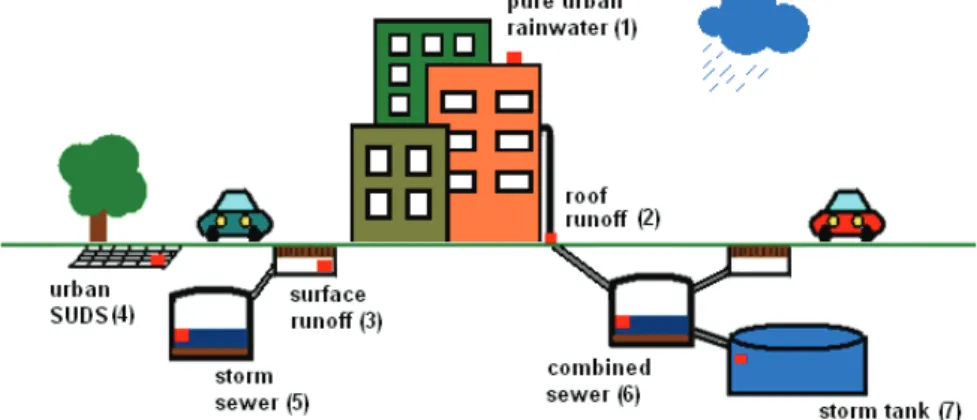
In the present study, the urban rainwater cycle comprises each of the points through which rainwater flows before returning to the receiving environment or to the wastewater treatment plant (WWTP) (see Figure 1). In terms of the discussion of results, these points have been grouped into 3 main categories depending on expected quality. The first category includes those points that apparently involve the collection of better quality of water: pure urban rainwater (1) and roof runoff (2). A second category involves a medium water quality, because of surface runoff (3); this category also includes the analysis of surface runoff treated by urban SUDS (4). The third and last category includes both separate sewers (specifically those that collect stormwater runoff) (5) as well as those points where rainwater runoff comes into contact with wastewater, as in the case of combined sewers (6) or storm tanks (7).
Figure 1: Catchment points identified within an urban rainwater cycle
4 THE SAMPLING CAMPAIGNS
The study includes several sampling campaigns, which were carried out during different rain events, for the purpose of detecting the presence of pollutants at the different catchment points that have been identified for the urban rainwater cycle. The different catchment points were distributed in three Spanish cities: Barcelona, Santiago de Compostela and A Coruña (see table 2).
The list of parameters that have been taken into account in the present study are summarized along with the analytical methods in Table 1. The selection of parameters was made in accordance with the set of parameters proposed by RD 1620/2007, concerning reclaimed water reuse for urban uses. Accordingly, Escherichia coli (E.coli) and Intestinal Nematodes (IN) have been selected as microbiological indicators, along with Suspended Solids (SS) and Turbidity as solids indicators. As well as this regulation, the measurement of Total Solids (TS) completes the characterization of the solids.
Some standard parameters were also analysed, for the purpose of acquiring a general view of rainwater quality. These parameters include: pH, Conductivity (Cond.), organic matter measurements such as Total Organic Carbon (TOC) and Chemical Oxygen Demand (COD), and nutrient values, such as Total Nitrogen (N total) and Total Phosphorus (P total).
In addition, heavy metals identified as dangerous substances by Annex IV of Spanish RD 907/2007, concerning Hydrological Planning, were also included. This RD is also referenced in RD 1620/2007 and, at the same time, it is based on several regulations related to dangerous substances (Ministerial Order 13/11/1987, RD 995/2000 or European Decision 2455/2001/CE). Accordingly, the heavy metals that were taken into account are: Cadmium (Cd), Copper (Cu), Chromium (Cr), Nickel (Ni), Lead (Pb), Zinc (Zn) and Mercury (Hg).
Parameter Analytical methods LQ Parameter Analytical methods LQ
E. coli (NMP/100ml) Colilert® - N total (mg/l) Kjeldahl (distillation-titration) 2 IN (eggs/10l) Microscopy 1 P total (mg/l) Wet digestion -Espectrophotometry 0.1 pH (upH) Potentiometric - Cd (mg/l) ICP-AES 0.01
Cond. 20ºC (S/cm) Electrometric 3 Cu (mg/l) ICP-AES 0.1 SS (mg/l) Gravimetric 2 Cr (mg/l) ICP-AES 0.02
TS (mg/l) Electrometric 2 Ni (mg/l) ICP-AES 0.03
Turbidity(NTU) Nephelometric 0.2 Pb (mg/l) ICP-AES 0.2 TOC (mg/l) Catalyzed Combustion 2 Zn (mg/l) ICP-AES 0.2
COD (mgO2/l) Titrimetric 30 Hg (µg/l) Atomic fluorescence 0.05
Table 1: Analytical methods and limits of quantification (LQ)
Detailed protocols for sampling, the handling of samples, preservation and conditioning were established before starting the study. Special care was taken with regard to the definition of a significant rain event (sufficient intensity plus minimum volume for a measurable runoff). Accordingly, rain gauges were installed at all of the catchment points. Of equal importance was to gather a good representation of a wide variety of storms. This was accomplished by the analysis of several rainfalls (>40 rain events were analysed), taking place in different seasons, of different intensities, with different lengths of preceding dry periods, and even with different surrounding urban area conditions (residential, commercial or industrial areas, different traffic intensities, different land uses, etc.).
Catchment points City Sampling device Additional equipment for data collection
Pure urban rainwater (1) Barcelona Accumulative sampler Rain gauge Roof runoff (2) Barcelona Accumulative sampler Rain gauge Surface runoff (3) Barcelona Accumulative sampler Rain gauge Urban SUDS (4) Barcelona Accumulative sampler Rain gauge & Flow meter Storm sewer (5) A Coruña Automatic sampler Rain gauge & Flow meter Combined sewer (6) Barcelona Automatic sampler Rain gauge & Flow meter Santiago de Compostela Automatic sampler Rain gauge & Flow meter Storm tanks (7) Barcelona Automatic sampler Rain gauge & Water level sensor
Table 2: Catchment points, related cities, samplings and equipments
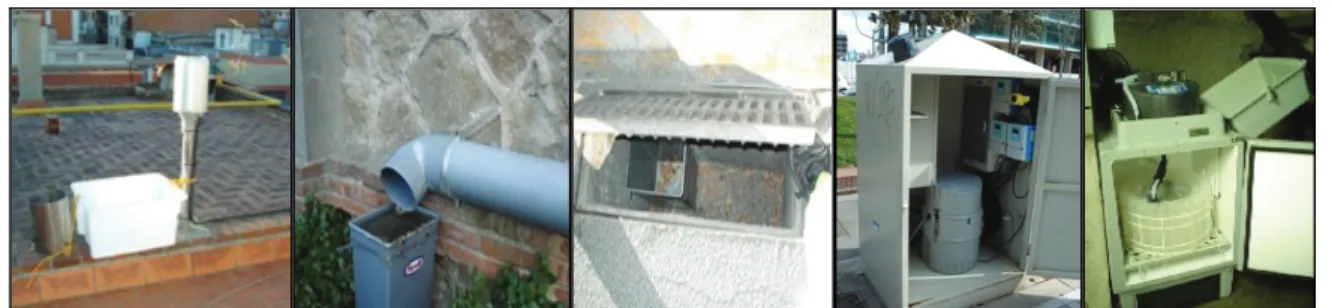
Figure 2: Some of the sampling devices used in the study (left to right): First to third: Accumulative sampler located on roof next to rain gauge (pure urban rainwater); on roof drainage (roof runoff point) and at sewer inlet
(surface runoff point). Fourth and fifth: Automatic samplers at sewers and storm tank.
Two types of samplers have been considered. On one hand, accumulative samplers were used to collect all of the precipitation falling at a specific location, especially to detect the presence of certain pollutants while, on the other hand, automatic samplers were also used to study the evolution of
different pollutants throughout a rain event. Moreover, in sewers, where the concentration of pollutants is calculated in relation to the flow, flow meters were also installed. Finally, within the retention tanks, level sensors were used to indicate when the tanks were full, which allowed automatic sampler to start the sampling process. The sampling devices and additional equipments related to each catchment point are summarized in table 2.
5 RESULTS
5.1 Pure urban rainwater and roof runoff
Generally speaking, pure rainfall is considered not to be significantly polluted, although this usually depends on the location, industrial density, traffic intensity, prevailing winds, season, previous dry periods, etc. The rain can acquire most of the particles and contaminants present in the atmosphere, such as solids, traces of heavy metals, pesticides, etc. (Meera and Mansoor, 2006). On roofs, atmospheric depositions, along with animal faeces or vegetal waste are usually detected. This contamination increases during long dry periods and also depends on the surrounding environment (nearby building sites, traffic, industries…). Moreover roof runoff can also be influenced by the materials used for the roof, its slope, exposure, etc.
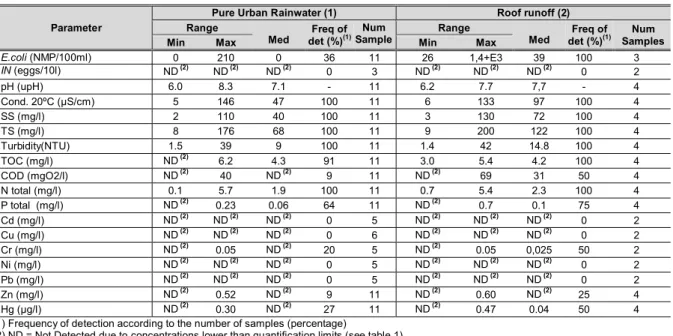
Pure urban rainwater (1) and roof runoff (2) catchment points are located in the city of Barcelona. It is a compact city, with a high density population of about 1.6 million inhabitants (about 16,000 inhabitants/km2). Like most urban cities, the atmosphere of Barcelona is polluted as a result of incomplete combustion, coming particularly from its high traffic intensity, but also from heating, industries, etc.Pure urban rainwater sampling points are distributed at different locations to cover the full possible spectrum of rain patterns: city centre (combining residential and commercial land uses and high traffic intensity), mixed areas (both industrial and residential land uses) and green areas. Roof runoff points are located within the city centre and in mixed areas. Roof materials are mainly tile (roof and floor tile). The results of the sampling campaigns at these points are shown in table 3.
Parameter
Pure Urban Rainwater (1) Roof runoff (2) Range
Med det (%)Freq of (1)SampleNum Range Med det (%)Freq of (1) Samples Num
Min Max Min Max
E.coli (NMP/100ml) 0 210 0 36 11 26 1,4+E3 39 100 3 IN (eggs/10l) ND (2) ND (2) ND(2) 0 3 ND(2) ND(2) ND (2) 0 2 pH (upH) 6.0 8.3 7.1 - 11 6.2 7.7 7,7 - 4 Cond. 20ºC (µS/cm) 5 146 47 100 11 6 133 97 100 4 SS (mg/l) 2 110 40 100 11 3 130 72 100 4 TS (mg/l) 8 176 68 100 11 9 200 122 100 4 Turbidity(NTU) 1.5 39 9 100 11 1.4 42 14.8 100 4 TOC (mg/l) ND (2) 6.2 4.3 91 11 3.0 5.4 4.2 100 4 COD (mgO2/l) ND (2) 40 ND(2) 9 11 ND(2) 69 31 50 4 N total (mg/l) 0.1 5.7 1.9 100 11 0.7 5.4 2.3 100 4 P total (mg/l) ND (2) 0.23 0.06 64 11 ND(2) 0.7 0.1 75 4 Cd (mg/l) ND (2) ND (2) ND(2) 0 5 ND(2) ND(2) ND (2) 0 2 Cu (mg/l) ND (2) ND (2) ND(2) 0 6 ND(2) ND(2) ND (2) 0 2 Cr (mg/l) ND (2) 0.05 ND(2) 20 5 ND(2) 0.05 0,025 50 2 Ni (mg/l) ND (2) ND (2) ND(2) 0 5 ND(2) ND(2) ND (2) 0 2 Pb (mg/l) ND (2) ND (2) ND(2) 0 5 ND(2) ND(2) ND (2) 0 2 Zn (mg/l) ND (2) 0.52 ND(2) 9 11 ND(2) 0.60 ND (2) 25 4 Hg (µg/l) ND (2) 0.30 ND(2) 27 11 ND(2) 0.47 0.04 50 4 (1) Frequency of detection according to the number of samples (percentage)
(2) ND = Not Detected due to concentrations lower than quantification limits (see table 1)
Table 3: Rainwater pollutants concentration in Pure Urban Rainwater and Roof Runoff points
The microbiological contamination detected is basically due to animal waste occurring during the preceding dry period. Whereas in pure rainwater E.coli presence scarcely exceeded the threshold value established by the RD 1620/2007 for urban uses (200 NMP/100ml), in roof runoff its concentration significantly increased, highlighting the runoff of microbiological pollutants on the roof surface. At pure urban rainwater points E.coli is only detected in 36% of cases, as against 100% of roof runoff points. Intestinal nematodes (IN) were not detected in any case.
With regard to solids, in some cases SS and turbidity exceed the RD 1620/2007 thresholds (20 mg/l and 10 NTU, respectively). Their concentration specifically increases in rain events that follow long dry periods, as well as due to small rain events. In general, the sampling locations, within pure urban rainwater points, that present the highest concentration of solids are those that are closest to industrial
estates. A significant difference between the solids detected in pure urban rainwater and at roof runoff points is noticeable, insofar as the median concentration of solids in roof runoff is approximately twice as high as it is for pure rainwater.
The only metals detected are Cr, Zn and Hg, which can proceed from atmospheric contamination due to both urban traffic (particularly Cr and Zn) and from industrial activities (all of them).
As a reference, the general recommended thresholds for other parameters, such as pH, conductivity, nitrogen or phosphorus (6.5-8upH, 3000µS/cm, 30 mg/l, 15 mg/l respectively), established by the Barcelona City Council, for the irrigation of public gardens rarely exceed in neither points. Organic matter contents (measured in terms of COD and TOC) are also compatible with urban water uses. The first flush effect has a massive influence on roof runoff, due to the contamination that will have settled on the roof during the previous dry period and due to products resulting from the weathering and corrosion of roof covers (Zinder et al., 1998). In terms of preventive measures, the appropriate maintenance of roof surfaces and roof gutter systems could reduce the amount of contamination entering rainwater tanks as a result of roof runoff. Furthermore, the first flush of pure urban rainwater is also polluted because of all of the atmospheric pollution that it picks up. In fact the rainfall pollution concentrations will vary, depending on the intensity and volume of the rain, as atmospheric particles are washed out.
The separation of the first flush from collection would reduce most pollutants from both roof runoff and pure urban rainwater. In fact, most rainwater storage tanks incorporate first flush water diverters, which divert approximately the first 2 mm of rainwater runoff (Meera & Mansoor, 2006).
On the whole, it can be concluded that the urban usage of rainwater in a city like Barcelona could be feasible by separating the first flush. On the other hand, we must also take into account that the high level of atmospheric pollution (directly polluting rainwater) will not permit the direct use of rainwater for most restrictive uses. Nevertheless, threshold quality standards could be achieved by including appropriate treatment methodologies. The cost-benefit assessment of including these treatments, will definitely determine rainwater viability.
5.2 Surface runoff and urban SUDS
There are a great many pollutant sources in urban surface runoff: atmospheric pollution (combustion, industries, etc.), animal waste (nutrients, bacteria, viruses), road traffic (heavy metals, oils and lubricants), pavement erosion, roof corrosion (heavy metals), parks and green areas (fertilisers, pesticides, herbicides), erosion of open areas and public works, etc. (Puertas et al., 2008). The main pollutants are associated with sediments. Sediments are principally inorganic and not reactive. However, most of the pollutants are linked to the finest and to reactive fractions, which could interact and increase oxygen demand, nutrients, toxicity of pesticides, heavy metals loads, etc. For example, in a study elaborated by Sartor & Boyd (1972), it was determined that particles measuring less than 43 µm, correspond to only 6% of the particles accumulated in surface runoff; involve 50% of metals. To reduce the high pollution level of surface runoff there are a wide range of sustainable drainage systems or techniques (SUDS) that will allow for the total contaminant load of surface runoff pollution to be considerably reduced. SUDS involves different kinds of techniques, such as wetlands, retention points, infiltration trenches, green roofs, etc., which involve different degree of treatment by filtration, sedimentation, biodegradation or absorption of the pollutants. In general, SUDS involve a big footprint, although some of them have been specifically conceived for urban areas and can, for example, be located in densely populated areas, even in streets.
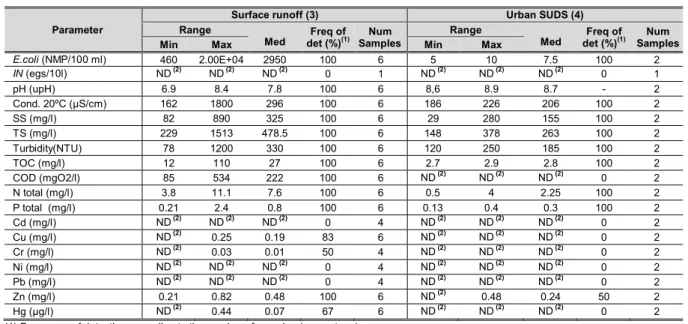
As an example of SUDS catchment (4), an infiltration trench/filter located in Barcelona was selected. SUDS based on infiltration trench/filter drains permits the temporary storage of stormwater runoff and allows it to slowly infiltrate into the ground. This is a feasible technique for densely populated areas. The pollutant removal in an infiltration trench/filter is specifically focused on the removal of solids, heavy metals and nutrients (CIRIA, 2007). Therefore, this kind of SUDS in urban areas will usually allow for the reduction of pollution that is associated with surface runoff, as well as contributing to the preservation of hydrological balance in the basin. To characterise surface runoff pollutants in an urban area (3), different inlets in the streets of the city of Barcelona were selected. Most of these are located in the city centre and are associated with different densities of road traffic. One of them was additionally placed in the same area as the SUDS catchment point. The analytical results of sampling campaigns are shown in table 4.
Parameter
Surface runoff (3) Urban SUDS (4)
Range
Med det (%)Freq of (1) SamplesNum Range Med det (%)Freq of (1) SamplesNum
Min Max Min Max
E.coli (NMP/100 ml) 460 2.00E+04 2950 100 6 5 10 7.5 100 2 IN (egs/10l) ND(2) ND (2) ND(2) 0 1 ND(2) ND(2) ND (2) 0 1 pH (upH) 6.9 8.4 7.8 100 6 8,6 8.9 8.7 - 2 Cond. 20ºC (µS/cm) 162 1800 296 100 6 186 226 206 100 2 SS (mg/l) 82 890 325 100 6 29 280 155 100 2 TS (mg/l) 229 1513 478.5 100 6 148 378 263 100 2 Turbidity(NTU) 78 1200 330 100 6 120 250 185 100 2 TOC (mg/l) 12 110 27 100 6 2.7 2.9 2.8 100 2 COD (mgO2/l) 85 534 222 100 6 ND(2) ND(2) ND (2) 0 2 N total (mg/l) 3.8 11.1 7.6 100 6 0.5 4 2.25 100 2 P total (mg/l) 0.21 2.4 0.8 100 6 0.13 0.4 0.3 100 2 Cd (mg/l) ND(2) ND (2) ND(2) 0 4 ND(2) ND(2) ND (2) 0 2 Cu (mg/l) ND(2) 0.25 0.19 83 6 ND(2) ND(2) ND (2) 0 2 Cr (mg/l) ND(2) 0.03 0.01 50 4 ND(2) ND(2) ND (2) 0 2 Ni (mg/l) ND(2) ND (2) ND(2) 0 4 ND(2) ND(2) ND (2) 0 2 Pb (mg/l) ND(2) ND (2) ND(2) 0 4 ND(2) ND(2) ND (2) 0 2 Zn (mg/l) 0.21 0.82 0.48 100 6 ND(2) 0.48 0.24 50 2 Hg (µg/l) ND(2) 0.44 0.07 67 6 ND(2) ND(2) ND (2) 0 2
(1) Frequency of detection according to the number of samples (percentage)
(2) ND = Not Detected due to concentrations lower than quantification limits (see table 1)
Table 4: Stormwater pollutants concentration in Surface Runoff and Urban SUDS points
The length of the dry period, the land uses, the traffic intensity and the cleaning conditions of the streets are factors that really affected analytical measurements in both catchment points. In general, the results confirm the reduction of pollutants at the SUDS catchment point, in comparison with simple surface runoff points.
The occurrence of solids (ST, SS) and turbidity concentrations detected in surface runoff are those that would be expected in an urban area, bearing in mind some of the reference bibliography (Burton and Pitt, 2002 or Suárez et al., 1998). However in urban SUDS a higher than expected concentration was discovered. This fact can be associated to earthworks located in the area right next to the SUDS, which not only affected the SUDS, but also the surface runoff point located in the same area. However, solids decontamination due to the infiltration trench (comparing SUDS measurements and surface runoff in this area) is higher than 80%. Then the infiltration trench can be considered as an efficient process, in terms of solids reduction.
The maximum concentration of E.coli found at surface runoff points shows the significance of animal waste in the streets. In the urban SUDS point this concentration is really much lower. However, IN are not detected in any case. Not particularly high concentrations of nutrients at surface runoff points (nitrogen and phosphorus) are detected. Organic matter concentrations (TOC and COD) at surface runoff points are considered as usual in urban areas. At urban SUDS points a considerable reduction in both nutrients and organic matter has been detected. The pH measurement is higher at urban SUDS points than at surface runoff points. This could be due to ground materials (with a high load of silica) that can basify the water. The conductivity is within the usual range, except in one of the surface runoff samples.
The concentration of metals present in surface runoff increases according to increases in imperviousness and traffic density. Most of the bibliography concerning surface runoff shows a high concentration of heavy metals associated with road runoff. For example, studies about different soil uses (Burton & Pitt, 2002 or Novotny & Chesters, 1981) show that the concentration of most heavy metals on motorways was considerably higher than for other land uses, such as residential or commercial. The most commonly analysed metals associated in this paper with traffic are: Cd, Cu, Cr, Pb and Zn, given off by car brakes, tires, engines, chassis and fumes. The last two metals mentioned (Pb and Zn) being the ones that are supposedly most abundant due to road traffic (Christensen & Guinn, 1979). However, due to increasingly more restrictive regulations in developed countries with regard to Pb, the concentration of this metal is progressively decreasing; to the extent that, in the streets of Barcelona, Pb is not detected (<0,2mg/l). In fact, the metals most associated with traffic that were detected in Barcelona surface runoff were Cu, Cr and Zn, which are also associated with industrial activities. Besides, Hg is also detected in surface runoff, which is commonly used in industrial processes. In urban SUDS, only Zn was detected in one sample. This means that the feasibility of the infiltration trench/filter for a reduction in the concentration of metals is confirmed. Generally, the solubility of metals is less than 10%, which means that most of the detected metals were not found in the water fraction but were associated with the solid fractions.
In conclusion, it can be said that when runoff water enters the sewer inlets the amount of pollutants is usually high. Best management practices (BMP) as with source control measures (street cleaning and trash control measures) are necessary to prevent pollutants from entering the sewer. Techniques such as SUDS, which capture storm water flows before they reach the sewer or the ground water (depending on each case), are very interesting in terms of reducing the level of pollution discharged into the environment.
A specific design of urban SUDS for each particular case, associated with their correct maintenance, could contribute, during storm events, to a reduction in the polluted runoff flowing into the sewers, and even to the occurrence of sewer overflows, by means of reducing stormwater entering to the sewers. Furthermore, this could also contribute to maintaining urban aquifer balances. Moreover, taking into account not particularly stringent treatment technologies, the water coming from SUDS could also be collected and stored and applied to not restrictive urban uses.
5.3 Storm sewer, combined sewer and retention tank
When surface stormwater runoff enters the sewer system, it is already polluted. In storm sewers, mixing with sediments, already present in these networks means that the stormwater becomes even more polluted. Furthermore, in combined networks, contact with wastewater converts stormwater quality into diluted wastewater quality. In this section, stormwater is analysed in: storm sewers basins, combined sewers basins and combined storm tanks.
The storm sewer basin (5) that has been analysed is located in A Coruña. It has a surface area of about 32 Ha and land use is residential. In the case of combined sewers (6) the results given are the average for the two different basins: one combined basin is located in Santiago de Compostela, which is about 19.3 Ha, with both residential and commercial land uses, while the other is a large urban basin located in Barcelona, about 1207.8 Ha, featuring a combination of residential, commercial and industrial land uses. Finally, the quality in the retention tank point (7) was analysed by means of different samplers located in three different tanks in Barcelona. In sewer points, the pollutants concentration is calculated by taking into account the sewer flow at each instant of the sampling. Sewer data’s detailed represents the Storm-event Average Concentration (SAC). Moreover, in contrast to other locations, the metals quantification limit in sewers is lower (in combined sewer, only Santiago de Compostela heavy metals are taken into account). See the results in table 5.
Parameter
Storm sewer (5) Combined network (sewer + facilities associated) Combined sewer (6) Storm tank (7) Range (SMC) Med (SAC) Freq of det (%)(1) Num Sam ples Range (SMC) Med (SAC) Freq of det (%)(1) Num Sam ples Range
Med of det Freq (%)(1)
Num Sam ples
Min Max Min Max Min Max
E.coli (NMP/100 ml) - - - 2,0E+06 1,2E+08 6.4E+06 100 9 1,4E+6 7.3E+7 1.3E+7 100 6 IN (egs/10l) - - - - ND (2) 420 71.5 50 4 pH (upH) 6.1 7.0 6.9 100 7 6,1 8,2 7,0 100 19 6.4 7.7 7,0 100 6 Cond. 20ºC (µS/cm) 135 223 183 100 7 222 1314 457 100 19 306 744 624 100 6 SS (mg/l) 21 71 46 100 6 263 2174 555 100 19 152 2800 850 100 6 TS (mg/l) 111 193 139 100 6 444 2573 793 100 19 508 3197 1167 100 6 Turbidity(NTU) 9 28 21 100 7 114 1128 284 100 19 101 990 465 100 6 TOC (mg/l) 3.2 7.0 4.9 100 5 12 388 47 100 19 16 150 47 100 6 COD (mgO2/l) 29 68 38 100 7 339 3063 764 100 19 226 1899 971 100 6 N total (mg/l) 1.5 4.6 1.9 100 7 18 118 40 100 19 22 62 44 100 6 P total (mg/l) 0.2 0.5 0.2 100 6 4 20 7 100 19 3 15 8 100 6
Cd (mg/l) 7,0E-05 3,9E-04 1,8E-04 100 4 6.7E-05 2.5E-04 1,8E-04 100 5 ND (2) ND (2) ND (2)
0 6
Cu (mg/l) 0,02 0.04 0.03 100 4 0.02 1.99 0.38 100 9 ND (2) 0.25 ND (2)
33 6
Cr (mg/l) 2,2E-03 3,0E-03 2,7E-03 100 4 3.2E-03 0.01 0.01 100 7 ND (2) 0.05 ND (2)
33 6
Ni (mg/l) 2,5E-03 3,7E-03 2,9E-03 100 4 4.8E-03 0.02 0.01 100 9 ND (2) 0.08 ND (2)
33 6 Pb (mg/l) 0.01 0.01 0.01 100 4 3.6E-03 0.19 0.09 100 9 ND (2) ND (2) ND (2) 0 6 Zn (mg/l) 0.06 0.07 0.07 100 4 0.02 0.39 0.23 100 9 ND (2) 1.65 0,17 50 6 Hg (µg/l) 0.02 0,28 0,10 100 4 0.30 1.44 0.66 100 5 ND (2) ND (2) ND (2) 0 6
(1) Frequency of detection according to the number of samples (percentage)
(2) ND = Not Detected because of concentration lower than limit of quantification (see table 1)
Table 5: Stormwater pollutants concentration points in Storm Sewer, Combined Sewer and Storm Tank (located in combined sewage)
During a storm event, in basins smaller than 100 Ha and with an impervious area >80%, with a specific morphology, the pollutant concentration peak (pollutogram) in sewers usually occurs before the flow peak (hydrogram) (Lee et al., 2000), so it exists a first-flush phenomenon (see the first graph
in figure 3). This is not so usual in big basins (see the second graph in figure 3). In storm tanks, the behavior of pollutants during the retention period has also been analysed, with results showing that, in approximately two hours, at least 80% of most of the pollutants have settled (see figure 4).
0 50 100 150 200 250 0 100 200 300 400 500 600 700 800 900 1000 21:40 21:55 22:10 22:25 22:40 22:55 23:10 23:25 F lo w (L /s ) S T a n d S S ( m g /L ) T u rb id it y (N T U ) SS ST Tubidity Flow
Figure 3: Hydrograms and SS, ST and turbidity pollutograms. First graph: A Coruña basin. Second graph: Barcelona basin (both rain events of June 2009).
Figure 4: Sedimentation process in retention tank (rain event in July 2009)
E.coli and IN were both measured in combined networks and the resulting values are similar to those of wastewater concentrations. As a result of interaction with wastewater, nutrients and organic matter are obviously higher in combined sewers and combined storm tanks than they are in storm sewers. Conductivity and pH values fall within the usual range.
On the other hand, the results of this study show that concentrations of solids in combined sewer basins are far higher than they are in storm sewer basin. In storm sewers the solids come particularly from surface stormwater runoff, but also from the sediments placed during the dry time and during the descent of the hydrogram associated to the rainstorms. The storm basin that has been analysed is characterised by residential land use, which usually involves lower concentrations of solids than in the case of commercial or industrial land uses. Besides land use, other factors such as surface and network maintenance or the type of inlets also come into play, which could have an additional direct effect on the pollution of sewers. In combined sewers, into the source of solids, as well as the ones mentioned for storm sewers, it has to be added the solids coming from wastewater. Nevertheless, most authors confirm that in combined sewers, most of the pollution that is mobilized has its origin in the re-suspension of sediments that settled in the networks (Puertas et al., 2008 and Chebbo & Gromaire, 2004).
Given the lower quantification limits for the measurements of metals in sewers, in comparison with the limits for storm tank concentrations, in sewers metals are detected in 100% of the analysed samples. The origins of these heavy metals could lie in a complex mixture of diffuse sources (Gaspery et al., 2008). Besides, the concentrations of metals analysed in combined sewers are a little higher, in comparison with storm sewer concentrations. However, the main source of heavy metals is due to surface runoff from roads, while wastewater contains only a small amount (Brombach et al., 2004). Therefore, these differences between the metals concentrations in the two kinds of sewers could be due to differences in traffic intensities, which are related to the different land uses. Finally, comparisons between concentrations of metals in storm sewers and surface runoff points (see table 4 and 5) show that, Cu and Zn are higher for surface runoff, mainly due for the more intense traffic that characterises the surface runoff point. This fact shows the influence of stormwater runoff in streets in terms of metal concentrations.
As established by the European Directive UWWTD 91/271/EEC, some management practices have to be implemented in order to prevent pollution in the receiving waters. There are different techniques that can improve the quality of water sewage overflows through on-site water treatment technologies.
These techniques can be classified as debris removal techniques, to remove suspended solids and a fraction of the organic material (i.e. screens, sieves, traps, containment systems); filtration/absorption technologies; high rate treatment techniques, such as lamellar decanters; and advanced treatments such as disinfection techniques.
Location constraints and investment and operational costs make it difficult to recommend a general solution for the treatment of sewer overflows. Usually, the most cost-effective solution will probably be a combination of many alternatives: storage, treatment and best management practices (BMP).
6 CONCLUSION AND FUTURE PROSPECTS
The acquisition of knowledge (within the SOSTAQUA-L3 project framework) concerning the quality of water at different collection points within the rainwater cycle could constitute a basis for providing the competent authorities and urban drainage managers with valuable information for the performance of advanced rainwater management.
Taking into account the first stages of the urban rainwater cycle (pure urban rainwater and roof runoff points), the rainwater use could be made possible without the need for stringent treatments. If only first flush removal was applied (this involves the removal of the most polluted fraction of rainwater) the rainwater could be directly used for non-potable usages. After surface runoff the rainwater in urbanised areas acquires pollution. Some sustainable techniques such as SUDS could be implemented in cities to reduce the pollution entering sewers, as well as to improve groundwater recharging in impervious areas, or even to collect, store and apply the rainwater to urban uses that are not subject to particularly harsh restrictions. Finally, when the stormwater enters the sewer, it is not always possible to store and treat the full volume of the water and, consequently, polluted overflows can occur, affecting receiving waters. To prevent such overflows, the use of BMP (including SUDS) and other treatment technologies could be implemented.
In subsequent phases of the SOSTAQUA-L3 project, more detailed water quality data and issues related to rainwater collection, storage and sustainable treatments (including centralised and decentralised treatments) will be analysed in order to identify the potential and most feasible urban uses for rainwater, along with the best sustainable rainwater management practices.
LIST OF REFERENCES
Brombach, H., Weib, G. and Fuch, S. (2004). Combined or separate sewer systems? A critical comparison using a new database on urban runoff pollution. Novatech 2004, Lyon.
Burton, G.A. and Pitt, R.E. (2002). Stormwater Effects Handbook: A toolbox for watershed managers, scientists and engineers. Lewis Publishers, CRC Press Co., Florida.
Chebbo, G. and Gromaire, M.C. (2004). Contribution of different sources to the pollution of wet weather flows in combined sewers. Journal of hydrology 299, 312-323.
Christensen, E.R. and Guinn, V.P. (1979). Zinc from automobile tires in urban runoff. Journal of the Environmental Engineering Division, 165-168.
CIRIA (2007). The SUDS manual. Construction Industry Research & Information Association, C697, London. Gasperi, J., Garnaud, S., Rocher, V. and Moilleron, R. (2008). Priority pollutants in wastewater and combined
sewer overflow. Science of the Total Environment 407, 263-272.
Lee, J.H. and Bank, K.W. (2000). Characterisation of urban stormwater runoff. Water Research. 34(6):1773–1780 Meera, V. and Mansoor, M. (2006). Water quality of rooftop rainwater harvesting systems: a review. Journal of
Water Supply: Research and Technology-AQUA, 55.4, 257-268.
Mostafa, M.G. and Shafiuzzaman, S.M. (2008). Potential use of monsoon rainwater for drinking purpose in Bangladesh, Proceedings from the IWA World Water Congress and Exhibition 2008, Vienna, Austria.
Novotny, V. and Chesters, G. (1981) Handbook of nonpoint pollutions: Sources and Management. Environmental Engineering Series. Van Nostrand Reinhold, New York.
Puertas, J., Suárez, J. and Anta, J. (2008) Gestión de las aguas pluviales. Implicaciones en el diseño de los sistemas de saneamiento y drenaje urbano. Monografias CEDEX.
Sartor, J.D. and Boyd, G.B. (1972). Water pollution aspects of street surface contaminants. Office of research and monitoring, U.S. Environmental Protection Agency. NTIS. Washington D.C. EPA-R2-72-081.
Suárez, J., Puertas, J., Jácome, A., Díaz-Fierros T., F. and Díaz-Fierros V., F. (1998). Reboses del alcantarillado en Santiago de Compostela. Su incidencia en la calidad del agua del río Sar. Tecnología del Agua 182, 33-48. Zinder, B., Shuman, T. and Waltvogel, A. (1998). Aerosol and hydrometer concentration and their chemical
composition during winter precipitation along a mountain slope II. Enhancement of below-cloud scavenging in a stably stratified atmosphere. Atmospheric Environment 22(12), 2741-2750.