ODU Digital Commons
ODU Digital Commons
Computational Modeling and Simulation
Engineering Theses & Dissertations Computational Modeling and Simulation Engineering Fall 2019
Modeling Social Learning: An Agent-Based Approach
Modeling Social Learning: An Agent-Based Approach
Erika G. Ardiles CruzOld Dominion University, [email protected]
Follow this and additional works at: https://digitalcommons.odu.edu/msve_etds
Part of the Computer Engineering Commons, and the Social Psychology Commons
Recommended Citation Recommended Citation
Ardiles Cruz, Erika G.. "Modeling Social Learning: An Agent-Based Approach" (2019). Doctor of Philosophy (PhD), Dissertation, Modeling Simul & Visual Engineering, Old Dominion University, DOI: 10.25776/
ppbs-8751
https://digitalcommons.odu.edu/msve_etds/53
This Dissertation is brought to you for free and open access by the Computational Modeling and Simulation Engineering at ODU Digital Commons. It has been accepted for inclusion in Computational Modeling and
Simulation Engineering Theses & Dissertations by an authorized administrator of ODU Digital Commons. For more information, please contact [email protected].
by
Erika G. Ardiles Cruz
B.S. December 1998, Universidad San Antonio Abad
A Dissertation Submitted to the Faculty of Old Dominion University in Partial Fulfillment of the
Requirements for the Degree of DOCTOR OF PHILOSOPHY MODELING AND SIMULATION
OLD DOMINION UNIVERSITY December 2019
Approved by:
John Sokolowski (Director) Roland Mielke (Member) Bryan Paine (Member)
ABSTRACT
MODELING SOCIAL LEARNING: AN AGENT-BASED APPROACH Erika G. Ardiles Cruz
Old Dominion University, 2019 Director: Dr. John Sokolowski
Learning is the process of acquiring or modifying knowledge, behavior, or skills. The ability to learn is inherent to humans, animals, and plants, and even machines are provided with algorithms that could mimic in a restricted way the processes of learning. Humans learn from the time they are born until they die because of a continuous process of interaction between them and their environment. Behavioral Psychology Theories and Social Learning Theories study behavior learned from the environment and social interactions through stimulus-response. Some computer approaches to modeling human behavior attempted to represent the learning and decision-making processes using agent-based models.
This dissertation develops a computer model for social learning that allows agents to exhibit behavior learned through social interactions and their environment. The use of an agent-based model allows representing a complex human system in a computer environment. Behavioral Psychology Theories and Social Learning Theories provide the explanatory theoretical framework. The learning processes are implemented using the Rescorla-Wagner Model. The learning structure is implemented using an adaptation of Agent Zero. The decision-making process is implemented using a threshold equation. A use case in youth gang homicides is developed, calibrated, validated, and used for policing and decision making through simulation of multiple case scenarios. The simulation results show the model accuracy in representing
learning and decision-making processes similar to those exhibited in the complex human system represented.
This thesis is dedicated to Marco, Diego, and Piero, for they unconditional love and support all these years.
ACKNOWLEDGMENTS
Many people have contributed to the successful completion of this dissertation. I am grateful to my advisor Dr. John Sokolowski, who provided me with valuable advice and guidance during all the years that took the competition of this research. I am thankful to each member of my committee for their valuable time, guidance, and feedback. I want to express my gratitude to Dr. Timothy Kroecker for his unconditional support, guidance, and funding since I joined the Centers of Excellence in Cybersecurity Program from the Air Force Research Laboratory Rome NY. I am very thankful to the working staff at the Batten College of Engineering and Technology, who received me as a college and friend, and to whom I thank for the most welcoming and pleasant work environment. A special thanks to Dr. Anthony Dean and Dr. Khan Intekharuddin for all their support, guidance, and for providing me funding. Finally, I want to thank my family for the unconditional love and support, for which I will always be grateful.
Many institutions had provided me with funding during the years that took the completion of this research. I want to thank the Virginia Modelling Analysis and Simulation Center for granting me a three years scholarship. I want to thank the Air Force Research Laboratory Rome NY, the Griffiss Institute, and the Information Institute at Rome NY, for granting me with internships, assistantships, and fellowships. I want to thank the Batten College of Engineering Technology for providing me assistantship for two years.
NOMENCLATURE
SLA Social Learning Agent
( )
i
D t Definitions attribute of i th− SLA in time t
( )
i
A t Association attribute of i th− SLA in time t
( )
i
O t Observation attribute of i th− SLA in time t
( )
i
R t Reinforcement attribute of i th− SLA in time t
( )
i
L t Social Learning attribute of i th− SLA in time t
( )
i
M t Motivated? attribute of i th− SLA in time t ( )
i
P t Position attribute of i th− SLA in time t ( )
i
x t x component attribute of i th− SLA in time t
( )
i
y t y component attribute of i th− SLA in time t Si Cellular Automaton State
LV Local Vision SN Social Network GA Gang Affiliation SZ Social Network Size p Grid’s Number of patches τ SLA’s Threshold
TABLE OF CONTENTS Page LIST OF TABLES ... ix LIST OF FIGURES ...x Chapter 1. INTRODUCTION ...1 1.1 THESIS STATEMENT ...1 1.2 PROBLEM STATEMENT ...1 1.3 MOTIVATION ...3 1.4 APPROACH ...10 1.5 CONTRIBUTIONS ...14 1.6 DISSERTATION ORGANIZATION ...14 2. LITERATURE REVIEW ...16 2.1 BEHAVIORAL PSYCHOLOGY ...16
2.2 SOCIAL LEARNING THEORY ...26
2.3 AGENT-BASED MODELING AND SIMULATION ...36
2.4 SUMMARY OF THE STATE-OF-THE-ART ...46
3. METHODOLOGY ...50
3.1 LEARNING COMPONENT ...51
3.2 LOCAL COMPONENT ...59
3.3 SOCIAL COMPONENT ...63
3.4 BEHAVIOR COMPONENT ...63
4. VALIDATION AND RESULTS ...67
4.1 USE CASE ...67
4.2 CALIBRATION ...86
4.3 VALIDATION ...99
4.4 POLICING AND DECISION MARKING ...113
5. CONCLUSIONS...119 5.1 CONCLUSIONS ...120 5.2 RECOMMENDATIONS ...124 5.3 FUTURE WORK ...125 REFERENCES ...132 VITA ...140
LIST OF TABLES
Table Page
1. Environment Settings. ... 75 2. Confidence Intervals for the Number of Homicides. ... 107
LIST OF FIGURES
Figure Page
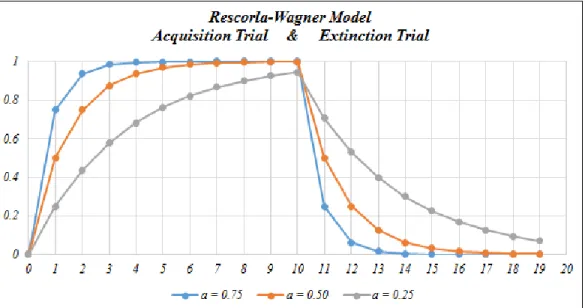
1. Rescorla-Wagner Model for acquisition and extinction of response. ... 20
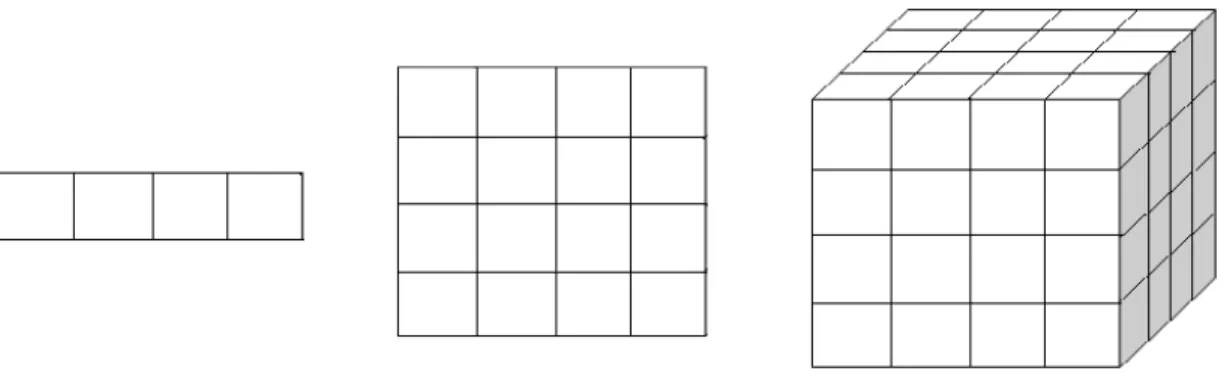
2. Cellular Automaton Grids, from left to right one, two, and three dimensions. ... 37
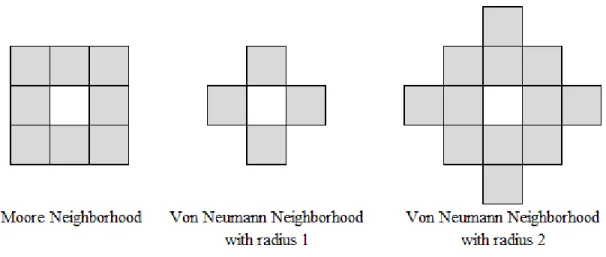
3. Cellular Automaton Neighborhoods. ... 38
4. Social Learning Structure: Attributes and Behavior, where (D) Definitions, (A) Association, (O) Observation, and (R) Reinforcement. ... 51
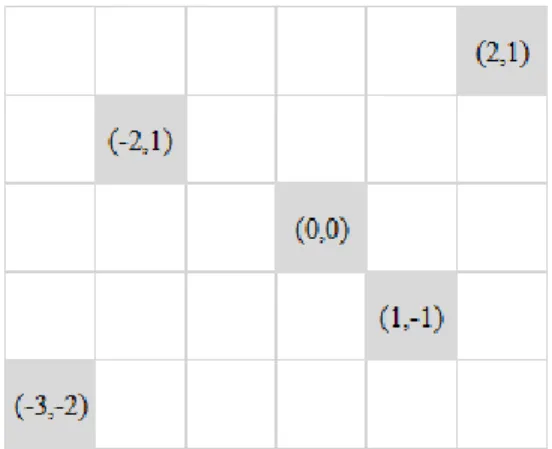
5. Position P = (x, y) in the grid. ... 60
6. One-dimension Local Vision. ... 61
7. Two-dimension Local Vision. ... 61
8. Cellular Automaton States. ... 62
9 Finite State Machine. ... 62
10. Behavior Rule Exhibit Behavior. ... 65
11. Von Neumann Neighborhood Local Vision. ... 76
12. Wolfram’s Elementary Cellular Automata Local Vision. ... 77
13. Transition Diagram for the Cellular Automaton. ... 78
14. Behavior Rule Move. ... 81
15. Behavior Rule Exhibit Behavior. ... 84
16. Method Go. ... 86
17. Surface Response for the LHS - Northside Computer Environment. ... 88
18. Surface Response for the BFED - Northside Computer Environment. ... 89
19. Surface Response for the LHC and BFED - Northside Computer Environment. ... 90
20. Interpolation - Northside Computer Environment. ... 91
21. Surface Response for the LHC - Hill District Computer Environment. ... 92
22. Surface Response for the BFED - Hill District Computer Environment. ... 93
23. Surface Response for the LHC and BFED - Hill District Computer Environment. ... 93
24. Interpolation - Hill District Computer Environment. ... 94
25. Surface Response for the LHC - Southside Computer Environment. ... 95
26. Surface Response for the BFED - Southside Computer Environment. ... 96
27. Surface Response for the LHC and BFED - Southside Computer Environment. ... 96
28. Interpolation - Southside Computer Environment. ... 97
29. Confidence Interval - Northside Computer Environment. ... 104
30. Confidence Interval - Hill District Computer Environment. ... 105
31. Confidence Interval - Southside Computer Environment. ... 106
32. Learning over Time – Northside Computer Environment. ... 109
33. Learning over Time – Hill District Computer Environment. ... 110
34. Learning over Time – Southside Computer Environment. ... 112
35. Number of Homicides per Gang Association – Northside Computer Environment. ... 115
36. Number of Homicides per Gang Association – Hill District Computer Environment. ... 116
37. Number of Homicides per Gang Association – Southside Computer Environment. ... 117
CHAPTER 1 INTRODUCTION
1.1 Thesis Statement
Agent-Based Modeling can be used to develop a model of social learning agents able to exhibit behavior learned from social interactions and the environment using Behavioral Psychology Theories and Social Learning Theory of Crime as an explanatory framework and an adaptation of Agent Zero for modeling human behavior. For calibration, validation, and policing
and decision-making, a use case is developed for representing Youth Gang Homicides1.
1.2 Problem Statement
Learning is the process of acquiring or modifying knowledge, behavior, or skills. The ability to learn is inherent to humans, animals, and plants, and even machines are provided with algorithms that could mimic in a restricted way the processes of learning. Humans learn from the time they are born until they die because of a continuous process of interactions with their environment. The processes of learning are studied in many sciences such as pedagogy, psychology, and neurology.
Behavioral Psychology studies observable stimulus-response behavior learned from the environment. In 1913, John Watson set the assumptions and methodology for behavioral analysis [1]. Watson stated that all behavior is learned from the environment. Watson also stated that Behavioral Psychology should be seen as a science to study observable behavior that could be scientifically measured, and the theory should be supported by empirical data obtained through observation and measurement of behavior.
The learning and decision-making problem for representing human behavior had been widely studied. Some theoretical approaches to modeling human behavior are rational choice, threshold equations, planned behavior theory, and game theory, among others. Some computer approaches attempted to represent the learning and decision-making processes using agent-based models. Agent-Based Models (ABM) allow representing multiple agents interacting with each other within a computer environment, while the result of this micro behavior is the emergence of group or aggregated behavior [2-4]. Among these models, the Schelling’s Segregation Model shows that relative mild preference of neighbors from the same race could lead to high levels of segregation [5]. Axelrod’s Dissemination of Culture Model studies the process of cultural diffusion under the assumption that people are more likely to interact with others who share similar cultural attributes [6]. Miller and Page’s Standing Ovation Problem assesses an audience’s decision to stand and applaud or not after a performance [7]. Epstein’s Civil Violence Model assesses the decision to become active and join a riot or not [8]. Epstein’s Agent Zero Model represents individual behavior in groups by modeling three behavioral components emotional, rational, and social [9]. Ardiles-Cruz et al. developed an Insider Threat ABM [10] that represents the disposition of employees to commit a threat based on previous behavior.
This dissertation develops a computer agent-based model of social learning agents able to exhibit behavior learned from the environment and social interactions. The explanatory framework will be developed using Behavioral Psychology Theories and Social Learning Theories. We propose to model human behavior using an adaptation of Epstein’s Agent Zero Structure for representing individual behavior in groups in an agent-based computer environment. The model should consider the processes of stimuli-response that lead to learning, the individual’s decision-making process that determines whether or not to exhibit the learned
behavior, and the development of a use case that allows us to measure the emergence of behavior.
1.3 Motivation
This section contains a survey on Behavioral Psychology Theories, Social Learning Theories, and computer agent-based models of human behavior. These theories will be the explanatory theoretical framework for our proposed model.
1.3.1 Behavioral Psychology
Behavioral Psychology studies observable stimulus-response behavior learned from the environment. In 1913, John Watson set the assumptions and methodology for behavioral analysis [1]. Watson stated that all behavior is learned from the environment. This assumption emphasizes the role of environmental factors for exhibiting a behavior while nearly excluding inherited factors. Watson also stated that Behavioral Psychology should be seen as a science to study observable behavior that could be scientifically measured, and the theory should be supported by empirical data obtained through observation and measurement of behavior. Watson experimented with animals by measuring behavior that was the result of stimulus-response trials, under the assumption that there is little difference between learning that takes place in humans and learning that takes place in animals. While an advantage of Behavioral Psychology is its ability to define behavior clearly and measure changes in behavior by introducing stimuli-response measurable events, its main criticism is that it only provides a partial model of human behavior. Essential factors like emotions, expectations, and motivations are not considered.
In 1903, Ivan Pavlov developed the theory of Classical Conditioning. Classical conditioning assumes that animals (as well as humans) learn by the association between stimulus and responses. Classical conditioning is the process of learning that occurs when a non-conditioned stimulus elicits a response that was caused initially by a non-conditioned stimulus. Classical conditioning is non-conscious instinctual learning. Pavlov experimented with conditioning salivation in dogs. Garcia experimented with food aversion conditioning [11], Öhman and Mineka experimented with fear conditioning [12]. Gorn, McSweeney and Bierley, Stuart, Shimp, and Engle researched strategies to influence consumer behavior [13-15]. Also, classical conditioning was applied to heart rate conditioning [16-18] and eye-blink conditioning in animals [19, 20].
Operant conditioning is a type of learning in which consequences influence behavior. Thorndike taught cats to push a lever to get a reward. These experiments lead to his famous Law of Effect. Thorndike’s Law of Effect states that responses that produce a satisfying response become more likely to occur again. Skinner developed operant conditioning based on Thorndike’s Law of Effect. Skinner coined the term operant conditioning meaning changing of behavior using reinforcement given after the desired response. Skinner taught rats to press a lever to get food or to avoid an electrical current. Applications of operant conditioning can be found in behavior shaping and behavior modification therapies [21, 22], token economy [23-25], and educational applications [26-28], among others.
Observational learning involves changes in behavior and knowledge as a result of observing and imitating others. Many of the things we do are because we observed others. Examples include dietary choices, clothing style, holiday traditions, and music preferences, among others. Socially transmitting behavior is the primary way that adaptive behavior spreads
within a population. Bandura et al. [29] performed the Bobo Doll Experiments to show that children learn social behavior such as aggression through the process of observational learning. Observational learning [30] was used in animals for learning behavior such as ants, honeybees, chimpanzees [31-35]; for motor skills acquisition [36, 37]; to analyze the effects of media violence and aggressive models [38-40] among others. Later, Bandura [41] renamed the theory Social Learning. The theory adds to the ideas of classical conditioning and operant conditioning, two observational learning and mediational processes.
1.3.2 Social Learning
Social Learning Theory of Crime and Deviant Behavior states that individuals learn criminal behavior from their environment and through imitation. In 1947, Sutherland presented his Differential Association Theory of Crime to explain the development of criminal behavior as the result of interactions with others, mainly in primary groups. Social Learning Theory of criminal and deviant behavior is an integration of Sutherland’s sociological theory of differential association with behavioral principles from psychology. It was originally presented by Robert Burgess and Ronald Akers [42] as differential association-reinforcement, and later renamed Social Learning Theory of Criminal and Deviant Behavior [43] by Akers. The theory states that “the probability that persons engage in criminal and deviant behavior is increased and the probability of them conforming to the norm is decreased when they differentially associate with others who commit criminal behavior and expose definitions favorable to it (differential association), in-person or symbolically are relatively more exposed to salient criminal/deviant models (imitation), define it as desirable or justified in a situation discriminative for the behavior (definitions), and have received in the past and anticipate in the current or future situation
relatively greater reward than punishment for the behavior (differential reinforcement)” [43]. Although it refers to all aspects of the learning process, the theory relies mainly on four principal explanatory concepts: differential association, definitions, differential reinforcement, and imitation. Later Akers added Social Structure to the theory. It proposes that variations in one or more of the dimensions of social structure produce variations in the magnitude, direction, and patterning of the social learning variables
• Differential Association: Differential association was proposed by Edwin Sutherland to explain criminal behavior as the result of interactions with other people, mainly in primary groups. The theory includes a theoretical framework with nine propositions explaining criminal behavior as the result of learning from social processes of association with crime-oriented people.
• Definitions: The concept of definitions represents the individual’s own beliefs and attitudes to a certain behavior. Definitions could be positive or neutral towards committing crimes.
• Differential Reinforcement: Burges and Akers proposed differential reinforcement as Differential Association-Reinforcement. Burgess and Akers proposed that the mechanisms of learning criminal and deviant behavior are those of learning in psychological behaviorism and fused them with Sutherland’s theory. The learning processes added to the theory were operant conditioning developed by Skinner (learning by reinforcement) and observational learning developed by Bandura.
• Imitation: Bandura developed observational learning. Observational learning states that people learn much of their attitudes and behavior from observing and later imitating.
• Social Structure: Finally, Akers expanded and renamed the theory Social Learning Theory. One concept Akers added to the theory was social structure. Sutherland found that conflict
and disorganization were the cause of differences in the group or societal crime rates. Akers’ SLT proposes that variations in one or more of the dimensions of social structure produce variations in the magnitude, direction, and patterning of the SLT variables.
The theory performed well on the major criteria by which a theory could be judged, such as logical consistency, scope, parsimony, testability, empirical validity, and usefulness. Models to test the Social Learning Theory were developed with descriptive and inferential statistical analysis, linear regression models, multivariate regression models, or logistic regression models, assuming linear relationships between explanatory variables and the predictor variable while the correlation measures this fit. The theory was tested in samples across the US and South Korea on teenagers, middle-aged adults, and the elderly for crimes such as marijuana and alcohol delinquency, cigarette smoking, drug abuse, property crimes, and violence. The criticism of SLT is that it appears to be tautological, meaning that the variables and measures used to test its validity are true by definition. Another criticism of the theory is that individuals may engage in criminal activity without being taught; then they associate with individuals with attitudes and behavior like their own. Most recent studies point to the occurrence of both causal processes: criminal associations cause more crime and committing crime causes more criminal associations, but the differential association theory has accounted only for half of the process.
More recent models of social learning were developed using non-linear approaches such as system dynamics, hot spots analysis, agent-based models, multi-agent systems, social networks analysis, in an effort to account for the characteristics inherent to social complex systems.
1.3.3 Modeling Human Behavior
Learning is the process of acquiring or modifying knowledge, behavior, or skills. The ability to learn is inherent to humans, animals, and plants, and even machines are provided with algorithms that could mimic in a restricted way the processes of learning. Humans learn from the time they are born until they die because of a continuous process of interaction with the environment. The processes of learning are studied in many sciences such as pedagogy, psychology, and neurology, among others.
The learning and decision-making problem for representing human behavior has been widely studied. Some approaches to modeling human behavior are rational choice, threshold equations, Behavioral Psychology, and planned behavior, among others. Rational Choice assumes that people rationalize their decisions by maximizing rewards and minimizing risks. Behavioral Psychology assumes that all behavior is learned from the environment by the association between stimuli-response. Threshold Equations are used to model the occurrence of behavior when a threshold is reached. The theory of planned behavior states that the attitude towards behavior, subjective norms, and behavioral control together shape an individual’s intentions and behavior.
Models of human behavior developed in an agent-based computer environment allow representing behavior exhibited by agents as the result of social interactions of agents placed in a computer environment. ABMs allow representing multiple heterogeneous individuals within a computer environment. ABMs provide these individuals with a decision-making algorithm based on events that provide the stimuli-response mechanisms to learn from the environment, their local and spatial information, and their social network connections. Among these models, the Schelling’s Segregation Model [5] shows that relative mild preference of neighbors from the
same race could lead to high levels of segregation. This model represents the agent’s choice of moving to another random position if they have below a threshold number of neighboring agents of this same type. Axelrod’s Dissemination of Culture Model [6] studies the process of cultural diffusion under the assumption that people are more likely to interact with others who share similar cultural attributes. Miller and Page’s Standing Ovation Problem [7] assesses an audience’s decision to stand and applaud or not after a performance. Epstein’s Civil Violence Model [8] assesses the decision to become active and join a rebellion or not. Epstein’s Agent Zero Model [9] represents individual behavior in groups by modeling three behavior components: emotional, rational, and social. Ardiles-Cruz et al. developed an Insider Threat ABM [10] that represents the disposition of employees to commit a threat based on precursors of behavior such as initial predisposition, access to the system, skills, and level of disgruntlement.
1.3.4 Summary
Behavioral Psychology Theories provide a theoretical framework for explaining how individuals learn and exhibit behavior. They were developed mainly using animals for testing and in a few cases using humans. These models lack the time component because they were developed based on the number of trials.
The current approaches to modeling social learning from the criminology point of view are statistical. These models use regression and correlation analysis, multi regression analysis, logistic regression, t-tests, or independent samples t-tests to test the significance of the variables statistically. These approaches do not account for non-linear relationships, heterogeneous populations, and social network connections.
Human behavior was represented using optimization of risks/rewards (rational choice), threshold equations, or game theory using an agent-based environment. These approaches lack the learning processes that lead to exhibiting a behavior while they are focused on the decision-making processes.
This dissertation develops a computer agent-based model of social learning Agents (SLA) able to exhibit behavior learned from the environment and social interactions. The model considers the processes of stimuli-response that lead to learning, the individual’s decision-making process to whether or not to exhibit the learned behavior, and the development of a use case that allows measuring the emergence of behavior. The research question is will agents be able to exhibit behavior learned from social interactions and the environment? We hypothesize that, over time, agents will be able to exhibit the learned behavior. To represent this model of SLAs, we propose to model human behavior using an adaptation of Epstein’s Agent Zero Structure. The explanatory framework will be developed using Behavioral Psychology Theories and Social Learning Theories. The use case will represent Youth Gang Homicides. The model will be set using demographic data from the city of Pittsburgh, PA. The occurrence of homicides will be represented using a micro definition of crime proposed by routine activity. The process of calibration, verification and validation, and policing and decision-making analysis will be performed using aggregated homicide data from the city of Pittsburgh, PA.
1.4 Approach
This dissertation uses an ABMS approach. ABM represents the individuals’ characteristics or attributes, social network, and interactions in a multi-agent computer environment, while simulation provides a way to run different case scenarios to test which
factors have the highest impact on the outcome. This modeling approach started with the concept of a self-replicating cellular automaton, game theory, discrete event simulation, and multi-agent modeling. While there is no universal definition of an agent, according to Wooldridge and Jennings [44] a weak definition of an agent is a hardware or software computer system that has the properties of: autonomy (control over their actions), social ability (allows communication with other agents), reactivity (response to changes in the environment), and pro-activeness (goal-directed behavior by taking the initiative). ABMs represent complex adaptive multi-agent social systems by modeling agents and their interactions with each other and their environment, while the evolution of the system shows the emergence of social structures and group behavior. Simulation provides a way to test the impact of different strategies on a complex system while gaining practical insight into which factors have the highest degree of influence on the outcome [2, 4, 45-47].
The use of ABMs in this dissertation is supported by the next characteristics that social complex human systems exhibit and an ABMS allow representing:
• Agents: Agents represent individuals. Agents have attributes and behavior rules. Behavior rules allow updating attributes based on time and the occurrence of events in the environment. Agents could have a mechanism to represent decision-making processes.
• Heterogeneity: ABMs could represent diversity across the population using random numbers and probability distributions.
• Environment: Agents are contained within a virtual environment represented by squared cells within which they could interact and from which they could collect information.
• Agent’s Vision and Mobility: Agents have protocols for movement and interaction with other agents within their limited neighborhood vision. These protocols allow communication,
sharing resources, movement, and contention for space, responses to the environmental inputs, ability to recognize and distinguish the traits of other agents, among others.
• Social Network: Agents can be connected with weighted directed links. These links represent social network connections with other agents and the weight represents the strength of the connection.
• Proactiveness: Agents will be able to react to stimuli from their environment.
• Learning and Adaptation: As a result of the agent's interactions, agents will update attributes and decisions. Agents will adapt to their environment based on the information about their own past experiences, their local neighborhood, or their social network.
• Emergent Phenomena: All complex systems exhibit the emergence of social structures and group behavior as the result of local interactions between agents with each other and their environments.
• Simulation: The use of simulation provides a way of testing different case scenarios in the environment.
The following list describes the main steps of the research method for this research: (1) Social Learning Structure. Development and implementation of a social learning structure
able to replicate the SL processes that lead to exhibiting a behavior learned from social interactions and the environment. This social learning structure will have four components: the learning component (the agents’ attributes that represent the level of learning acquired), the local component (the limited part of the environment that agents are able to see), the social component (the social network connections to other agents), and the behavior component (the behavior rules to update attributes). The social learning structure also includes a decision-making algorithm to assess the readiness of SLAs to exhibit a behavior.
(2) Use Case. A use case will be developed for representing Youth Gang Homicides. This step includes the definition of the agents and environment, the model calibration, the model verification and validation, and the policing and decision- making analysis. These steps are listed below.
a. Agents and Environment. The environment will be represented as a squared grid of cells. Each cell could host agents that move within the grid with a random walk. The occurrence of homicides will be represented using a micro definition of crime proposed by routine activity. The environment and agents’ parameters will be set using demographic data from the city of Pittsburg, PA.
b. Calibration: The calibration of the model will allow us to analyze the surface response for the number of homicides and tune parameters. To achieve this goal, we will use aggregated homicides rates data from the city of Pittsburgh, PA, specifically the number of homicides per year.
c. Verification and Validation: For the process of verification and validation, the developed model will be set using demographic data for the represented neighborhoods in the city of Pittsburgh, PA. For the conceptualization of the model, we will use grounded theories for learning and decision-making. The fitness between the model and the real system will be performed using aggregated homicide rates from the city of Pittsburgh, PA, specifically the number of homicides per year.
d. Policing and Decision-Making: The constructed and validated model will be used for analyzing interventions aimed at homicide reduction.
1.5 Contributions
The main contribution of this dissertation to the field of modeling and simulation is to develop a model of social learning able to replicate the learning processes that lead to behavior. The behavior will be learned from social interactions and the environment. To model this structure, we propose to join Behavioral Psychology Theories and Social Learning Theories with Agent-Based Modeling. An adaptation of Agent Zero will be used for representing the learning component and the decision-making processes. Finally, the Rescorla-Wagner Model for acquisition and extinction of response will be used to represent the processes of learning a behavior.
Another contribution of this dissertation is to develop a use case representing Youth Gang Homicides. We propose to use the social learning structure developed to represent social learning processes in our SLAs. A micro behavior rule definition of crime from the routine activity theory will be used to represent the occurrence of homicides. To set inputs and parameters, we propose to use demographic data from the city of Pittsburgh, PA. From the modeling and simulation perspective, this use case allows performing the calibration and verification and validation of the model using aggregated demographic and crime data from the city of Pittsburgh, PA and exploring the agents and environment configurations that lead to the emergence of behavior. From the criminology perspective, this use case provides a simulation tool to explore the differences in crime rates that arise from different neighborhoods and to explore the correlation between the number of gang members and the number of homicides.
1.6 Dissertation Organization
Chapter 2. Literature Review. Surveys Behavioral Psychology Theories, Social Learning Theories, and Agent-Based Modeling and Simulation. This research focuses on the development
and evolution of Behavioral Psychology Theories, Social Learning Theory and the impact that Behavioral Psychology Theories had in its development, and Agent-Based Modeling and Simulation for representing human behavior. The most relevant mathematical, computational and statistical models will be described in detail.
Chapter 3. Methodology. This section proposes a model of social learning in an agent-based environment by developing a social learning structure agent-based on four components for representing human behavior: the learning component, the local component, the social component, and the behavior component. The behavior component allows dynamically updating SLA’s attributes (learning component) based on social interactions (social component) and the environment (local component) as time evolves and events occur.
Chapter 4. Validation and Results. This section develops a use case to represent Youth Gang Homicides for the city of Pittsburgh PA. This section includes the calibration of the model using sensitivity analysis, the validation of the model by constructing confidence intervals to test the model outputs and collected aggregated homicides data from the city of Pittsburgh, PA, and testing the patterns of learning that agents’ exhibit. The last component of this chapter is the policing and decision-making analysis for gang violence reduction.
Chapter 5. Conclusions and Recommendations. This section concludes with a summary of the research results found in chapters 3 and 4, discusses the limitations of the research and proposes possible future work to expand this dissertation.
CHAPTER 2 LITERATURE REVIEW
This section provides research on Behavioral Psychology Theories, Social Learning Theory, and agent-based models for representing complex multi-agent social systems.
2.1 Behavioral Psychology
Behavioral Psychology studies observable stimulus-response behavior learned from the environment. In 1913, John Watson set the assumptions and methodology for behavioral analysis [1]. These assumptions are:
• All behavior is learned from the environment. This assumption emphasizes the role of
environmental factors for exhibiting a behavior while nearly excluding inherited factors.
• Behavioral Psychology studies observable behavior that could be scientifically measured.
• Behavioral Psychology should be considered as a science in which the theory should be
supported by empirical data obtained through observation and measurement of behavior.
• There is little difference between learning that takes place in humans and learning that takes
place in animals; therefore, research can be done in animals as well as in humans.
• Behavior is the result of stimulus-response.
Watson also stated that the mind is a tabula rasa or a blank slate at birth.
While an advantage of Behavioral Psychology is its ability to define behavior clearly and measure changes in behavior by introducing stimuli-response measurable events, its main criticism is that it only provides a partial model of human behavior. Important factors like emotions, expectations, and motivations are not considered.
The main theories researched in this section are classical conditioning, operant conditioning, and cognitive and observational learning.
2.1.1 Classical Conditioning
In 1903, Ivan Pavlov developed the concept classical conditioning. Classical conditioning sometimes is referred to as Pavlovian conditioning. Classical conditioning assumes that learning is the result of the association between stimuli and responses. Classical conditioning is the process of learning that occurs when a non-conditioned stimulus elicits a response that was caused originally by a conditioned stimulus. Classical conditioning is non-conscious instinctual learning.
Pavlov experimented with conditioning salivation in dogs while ringing a bell. A dog was hooked to a mechanism that measured the amount of salivation. A tone sounded just before the dog was given meat powder. By repeating the experiment several times, eventually, conditioning occurred, and the dog salivated just to the bell alone. Of course, the dog salivated instinctively in response to the food, but it also learned to salivate to the sound of the bell that preceded the food. Pavlov used this relatively simple experiment as a model for describing much of the automatic non-conscious learning that occurs in everyday life.
Pavlov identified four basic components in his classical conditioning model. The
unconditioned stimulus (UCS) is the stimulus that naturally and instinctively elicits the target
response, which in this case, is the meat powder. The conditioned stimulus (CS) is the stimulus
that comes to elicit the target response. In Pavlov’s experiment was the ringing bell. The
unconditioned response (UCR) occurs because of the unconditioned stimulus and conditioned response (CR) occurs in response to the conditioned stimulus. In Pavlov’s experiment, they were
both salivations, but the unconditioned response is salivation in response to the meat powder, and the conditioned response is salivation in response to the tone.
Watson proposed that classical conditioning was able to explain all aspects of human psychology; everything from speech to emotional responses were patterns of stimulus-response (Psychology as the behaviorists view it, 1913). Watson denied the existence of the mind or consciousness. He believed that an individual’s differences in behavior were due to different experiences of learning.
In 1920, Watson and Rainer experimented with phobias in humans with the famous
though ethically dubious Little Albert Experiment. Little Albert was a 9-month infant who was
tested on his reactions to various stimuli. He was shown a rat, a rabbit, a monkey, and different masks, and he showed no fear of any of these stimuli. However, what caused him to fear and burst into tears was a hammer that struck a steel bar behind his head. When Little Albert was 11-months, a rat was presented to him, and seconds later, a hammer was stuck against a steel bar. This experiment was repeated seven times over a seven-week period, and each time Little Albert burst into tears. After the stimulus-response trials, Little Albert burst into tears when he saw the rat, whether the bar was hit or not, and he tried to crawl away. Watson and Rained found that Little Albert developed phobias of objects with shared characteristics with the rat; they called
this process generalization. A few weeks after the experiment, they noticed that the fear was less
marked; they called this process extinction. Watson and Rainer’s Little Albert Experiment
showed that classical conditioning can be applied not only to animals but also to humans.
Classically conditioned responses may be reliable and strong if the CS and UCS have a long history of being paired together. However, CR may diminish over time if the stimuli is no longer present or it may occur with new stimuli with which the response has never been paired.
These processes are known as acquisition, extinction, spontaneous recovery, and generalization.
Acquisition is the initial phase of learning, in which a response is established; a critical part of
the acquisition is the predictability of the occurrence of CS and US. Extinction is the loss or
weakening of a conditioned response when the CS and the US are no longer paired. Spontaneous
Recovery is the reoccurrence of the extinguished conditioned response after the extinction phase again because of pairing CS and US. Generalization is when the response that originally occurs to a specific stimulus occurs to a similar stimulus.
In any case where the individuals have learned to respond automatically to some stimulus with fear, joy, excitement, or anticipation, they have become classically conditioned, and the learning is automatic and non-conscious. Garcia experimented with food aversion conditioning [11], Öhman and Mineka experimented with fear conditioning [12], Gorn, McSweeney and Bierley, Stuart, Shimp, and Engle researched strategies to influence consumer behavior [13-15]. Also, classical conditioning was applied to heart rate conditioning [16-18] and eye-blink conditioning in animals [19, 20].
Rescorla-Wagner Model
In 1972, Rescorla and Wagner [48] presented a mathematical model that intended to account for several well-known phenomena of classical conditioning, including the acquisition and extinction of the conditioned response, the spontaneous recovery process, the conditioned inhibition, and conditioning to a compound CS (overshadowing and blocking).
The mathematical equations 1 and 2 describe the learning curves for the strength of the
association that is tied to external stimuli.
V
i represents the strength of association on stimuli i1
(
)
i iV
αβ λ
V
−∆ =
−
(1) and 1 i iV V
=
−+ ∆
V
(2) where:α
Acquisition rate parameter associated with the conditioned stimuli.β Acquisition rate parameter associated with the unconditioned stimuli.
λ maximum value for V.
For the acquisition trial, the maximum value that
V
i can reach is λ =1, while for theextinction trial the minimum value that
V
i can reach is λ =0. Figure 1 below shows theacquisition and extinction trials for different acquisition rates (α =0.75, α =0.50, α =0.25)
calculated using equations 1 and 2.
The Rescorla-Wagner model has been successful in modeling the acquisition and extinction of response processes through stimuli-response trials. However, the model has failed many tests in research conducted over the years. Consequently, other models and adaptations have offered alternative proposals for modeling classical conditioning [49-51]. These newer alternatives have had successes and difficulties; however, at the moment, there is no entirely satisfactory theory that can handle all the data and experiments on classical conditioning. The Rescorla-Wagner model served to stimulate a considerable amount of research on classical conditioning designed to evaluate the model and test its implications. In this sense, the model has been successful, even if eventually it began to show its weaknesses.
It is important to notice that the Rescorla-Wagner model was not designed to account for some features of classical conditioning, and it was considered as a starting point toward a more inclusive theory. A significant parameter left out of the model is time. All changes take place as a function of trials. Although trials follow themselves in time, parameters such as the length of CS presentation, the time between UCS presentations, or the duration of a trace interval are not explicitly included in the Rescorla-Wagner model. As these factors have substantial effects on the course of conditioning, their absence from the model was always a limitation.
2.1.2 Operant Conditioning
Operant Conditioning is a type of learning in which consequences influence behavior. The term operant is used because the individual operates on the environment before consequences occur. In contrast with classical conditioning that affects reflexive or automatic responses, operant conditioning involves voluntary actions that depend on the individual’s unique history with consequences.
In 1095, Thorndike’s work lead to the development of operant conditioning. Thorndike experimented with cats using a puzzle box. A cat was put into a box, encouraged to escape by pressing a lever to open the box, and reaching a scrap of fish placed outside. In successive trials, cats would learn that pressing the lever had favorable consequences and adopted this behavior, becoming increasingly quick at pressing the lever. Based on these experiments, Thorndike proposed his Law of Effect, which states that any behavior followed by pleasant consequences is likely to be repeated, and any behavior followed by unpleasant consequences is likely to be stopped.
Skinner developed operant conditioning based on Thorndike’s Law of Effect. In 1938, Skinner coined the term operant conditioning meaning changing of behavior using reinforcement given after the desired response. He identified three types of responses or operants that can
follow behavior. Neutral Operants, that are responses from the environment that neither increase
nor decrease the probability of behavior been repeated. Reinforcers that are responses from the
environment that increase the probability of a behavior being repeated. Punishers that are
responses from the environment that decrease the probability of behavior been repeated.
Skinner showed positive reinforcement (strengthening a behavior by providing positive
consequences) by placing a hungry rat into a box. The box contained a lever. If, as the rat moved along the box, it accidentally pressed the lever, a food pellet immediately would drop into a container next to the lever. The rats quickly learned to press the lever to get the food. The consequence of receiving the food ensured that the rats would repeat the action.
Skinner showed negative reinforcement (strengthening a behavior by removal of a
negative consequence) by placing a rat in a box and subjecting it to electric current. As the rat moved along the box, it would accidentally press the lever, and the electric current immediately
was switched off. The rats quickly learned to press the lever to escape the electric current. The consequence of escaping the electric current ensured that the rats would repeat the action.
Punishment is an aversive event designed to weaken or eliminate a response. There are many problems while using punishments such as the behavior is not forgotten, it is suppressed and will return when the punishment is no longer present, causes increased aggression, creates
fear that could lead to undesirable behaviors, among others. Positive Punishment is a process in
which a behavior decreases because it adds or increases a stimulus. Negative Punishment is a
process in which a behavior decreases because it removes or diminishes a stimulus.
Applications of operant conditioning can be found in behavior shaping and behavior modification therapies [21, 22], token economy [23-25], educational applications [26-28], among others.
Schedules of Reinforcement
Schedules of Reinforcement are patterns of reinforcement. Behaviorists discovered that different schedules of reinforcement have different effects on the speed of learning and
extinction. Continuous Reinforcement means that reinforcement is given every time that the
behavior is exhibited. Fixed Ratio Reinforcement means that reinforcement is given after the
behavior occurs a given number of times. Fixed Interval Reinforcement means that
reinforcement is given after a fixed time interval, assuming that the behavior is exhibited at least
once. Variable Ratio Reinforcement means that the reinforcement is given after an unpredictable
number of times. Variable Interval Reinforcement means that the reinforcement is given after an
that the slowest rate of extinction is obtained with variable ratio reinforcement and the quickest rate of extinction is obtained with continuous reinforcement.
2.1.3 Observational Learning
Observational Learning involves changes in behavior and knowledge as a result of observation and imitation of others. Many of the things we do are because we observed others, for example, dietary choices, clothing style, holiday traditions, music preferences. Socially transmitting behavior is the primary way that adaptive behavior spreads within a population [52].
Bandura, Ross, and Ross [29] performed the Bobo Doll Experiment to show that children
learn social behavior such as aggression through the process of observational learning. They
tested 36 boys and 36 girls from the Stanford University Nursery School between 3 to 6 years old. Twenty-four of the children (12 boys and 12 girls) were exposed to an aggressive model (the adult model behaved aggressively towards the Bobo Doll). Twenty-four children (12 boys and 12 girls) were exposed to a non-aggressive model (the adult model ignored the Bobo Doll). Finally, 24 children (12 boys and 12 girls) were not exposed to a model (control group). The test for delayed imitation was done in a separate playing room in which each child separately was placed with aggressive and non-aggressive toys. Each child was 20 minutes in the playing room while the behavior was recorded. The results showed that children who observed the aggressive model imitated more aggressive responses than the children who observed the non-aggressive model. Boys were more likely to imitate same-sex models than girls, and boys imitated more physically aggressive acts than girls.
Observational Learning involves changes in behavior as a result of watching others.
teachers, and they may imitate the behavior they have observed. Several processes make it more likely that a child imitates behavior. First, the child is more likely to attend and imitate those people perceived like himself or herself. It is more likely that children imitate behavior exhibited by models of the same gender. Second, if a child imitates a behavior and the consequences are rewarding, the child is likely to continue performing the behavior. Third, the child will also observe what happens to other people imitating behavior when deciding whether to copy
someone’s actions. This process is called vicarious reinforcement.
Mediational Processes are a bridge between traditional learning theory and the cognitive approach. According to Bandura [30, 53] observational learning occurs because of cognitive processes. Individuals do not automatically observe the behavior and imitate it. There is some thought prior to imitation. These processes are called Mediational Processes. The mediational
processes are attention, retention, reproduction, and motivation. Attention is the extent to which
an individual is exposed to or notices the behavior. Retention is how well the behavior is
remembered. Reproduction is the individual’s ability to perform the behavior. Motivation is the
will to perform the behavior. If perceived rewards outweigh perceived punishments, then the behavior is more likely to be repeated. Cognitive and observational learning provide a more comprehensive explanation of human learning by including the role of mediational processes. However, it cannot explain how humans develop thoughts and feelings. Later, Bandura renamed the theory Social Cognitive Theory [54], but the theory continues having the criticism that behavior is the result of an interaction between biology and the environment.
Observational learning was used in animals such as ants, honeybees, and chimpanzees [31-35], for learning behavior for motor skills acquisition [36, 37] and to analyze the effects of media violence and aggressive models [38-40].
2.2 Social Learning Theory
SLT is an integration of Sutherland’s sociological theory of differential association with behavioral principles from psychology. Robert Burgess and Ronald Akers originally presented the theory as differential association-reinforcement [42], and later it was presented as SLT by Akers [43, 55]. Although it refers to all aspects of the learning process, the theory relies mainly on four principal explanatory concepts: differential association, definitions, differential reinforcement, and imitation.
The central proposition of the SLT of criminal and deviant behavior provided by Akers states that “the probability that persons engage in criminal and deviant behavior is increased and the probability of them conforming to the norm is decreased when they differentially associate with others who commit criminal behavior and expose definitions favorable to it (differential association), in-person or symbolically are relatively more exposed to salient criminal/deviant models (imitation), define it as desirable or justified in a situation discriminative for the behavior (definitions), and have received in the past and anticipate in the current or future situation relatively greater reward than punishment for the behavior (differential reinforcement)” [43, 55].
The theory performs well in the major criteria by which a theory is judged, such as logical consistency, scope, parsimony, testability, empirical validity, and usefulness. Abundant research was developed using SLT as a theoretical framework for explaining criminal and deviant behavior using descriptive and inferential statistical analysis, linear regression models, multivariate regression models, and logistic regression models supporting the main assumption of SLT: individuals learn criminal behavior through interactions with other people. The theory was tested in samples across the US and South Korea on teenagers, middle-aged adults, and the
elderly, supporting the model assumptions in crimes such as marijuana and alcohol delinquency, cigarette smoking, drug abuse, property crimes, and violence among others. Akers tested the theory finding that deviant behavior was the result of the combination of differential association, differential reinforcement, and imitation, and these variables combined accounted for 68% of the variance in marijuana use and 55% of the variance in alcohol use by adolescents [43]. Akers tested Social Learning Theory, social bonding, and anomie theory with survey data on adolescent drug use [56]. Akers and Lee found age-related variations in social learning in marijuana use and a weaker relationship for the similar hypothesis using social bonding variables [57]. Lee, Akers, and Borg found a substantial relationship between age and substance abuse (alcohol and marijuana) by adolescents using the SLT variable’s differential peer association, differential reinforcement, definitions favorable and unfavorable to substance use, and imitation [58]. Krohn et al. [59] found that the theory was more effective in accounting for maintenance or cessation of cigarette smoking than in explaining initiation. Chappell and Piquero found that factors of SLT, such as peer association, attitudes, reinforcement, and modeling, were predictors of police misconduct [60]. Jang tested age varying effects of attachment to parents, commitment to school, and association with delinquent peers on delinquency [61]. Rogers found that criminal computer behavior was predicted by differential association and moral disengagement, and differential reinforcement had a lower effect on the explanatory variable [62]. Skinner and Fream found that differential association, differential reinforcement and punishments, definitions, and sources of imitation are significantly related to computer crime using a multiple regression model and data from 581 university students [63]. Jennings et al. found that there is a strong degree of overlap between dating violence perpetration and victimization, and Social Learning Theory and self-control theory cannot explain away the overlap [64].
The main explanatory concepts the theory relies on are differential association, definitions, differential reinforcement, and imitation. These explanatory concepts are explained below.
2.2.1 Differential Association
Between 1939 and 1947, Edwin Sutherland developed and proposed differential association to explain the development of criminal behavior as the result of interactions with others mainly in primary groups [65]. Sutherland proposed his theory with nine statements each one accompanied by a comment. These nine statements are as follows:
1. Criminal behavior is learned.
2. Criminal behavior is learned in interaction with other persons in a process of communication.
3. The principal part of the learning of criminal behavior occurs within intimate personal
groups.
4. When criminal behavior is learned, the learning includes (a) techniques of committing the
crime, which are sometimes very complicated, sometimes simple; (b) the specific direction of motives, drives, rationalizations, and attitudes.
5. The specific direction of motives and drives is learned from definitions of the legal codes as
favorable or unfavorable.
6. A person becomes delinquent because of an excess of definitions favorable to violation of the
law over definitions unfavorable to violation of the law.
7. Differential associations may vary in frequency, duration, priority, and intensity.
8. The process of learning criminal behavior by association with criminal and anti-criminal
9. While criminal behavior is an expression of general needs and values, it is not explained by those needs and values, since non-criminal behavior is an expression of the same needs and values.
The first principle states that criminal behavior is learned, while the second and third refer to learning in primary groups. The fourth principle refers to the content of learning. The fifth and sixth refer to the definitions favorable or unfavorable to the law. The sixth principle was identified by Sutherland as the main principle of differential association. It proposes that people commit crimes because they have learned definitions favorable to violating the law in excess of the definitions unfavorable to violating it. The seventh principle refers to frequency, duration, priority, and intensity.
Sutherland used the dominant theory of learning in his era: classical conditioning primarily developed by Ivan Pavlov. Classical conditioning assumes that people learn through associations between stimuli and response, and over time they learn to associate stimuli with responses.
In the cultural context of the development of Sutherland’s theory, most academics and
others in the early 20th century believed that something was wrong with individuals who
committed crimes (low IQ, body type, biology). Sutherland’s theory suggested something completely different for the time: that a normal person when exposed to attitudes favorable to crime, will learn criminal behavior, and the mechanisms of learning criminal behavior are the same as the ones for most everyday behaviors -- social interactions in primary groups such as family, friends, teachers, peers, and coworkers.
Research on Sutherland’s differential association theory is wide and supports criminal behavior as a result of socialization processes. Matsueda and Heimer showed that the effect of
broken homes and attachment to parents and peers are mediated by the learning of definitions of delinquency [66]. Tittle, Burke, and Jackson developed a theoretical model for Sutherland’s theory and tested it with six different crimes finding that differential association plays a substantial role in criminal behavior [67]. Thornberry stated that whenever the links to attachment to parents, commitment to school, and belief in conventional values are attenuated, there is substantially increased potential for delinquent behavior. His research also represented relations with delinquent peers, delinquent values, and delinquent behavior to form a causal loop that leads to increasing delinquency [68]. Ploeger found that association between employment and some forms of delinquency, especially alcohol and drug use was correlated to differential association with delinquent peers [69].
In 1960, Cressey conducted an exhaustive review of the criticisms on the differential association theory. He argued that much of the criticism was due to misunderstandings from the critics. About the argument that not everyone that had contact with criminals becomes a criminal, he argued that the theory refers to the ratio between favorable and unfavorable contacts by individuals that lead to a lower or higher likelihood to learn criminal or deviant behavior. About the critiques on associations with criminals as a category of persons, he argues that the theory hypothesizes that the effect on an individual’s behavior comes from contacts with patterns of definitions regardless of the person presenting them, and more significant than exposure is the frequency, duration, priority, and intensity. Cressey found two weaknesses in the theory: the lack of clarification and operationalization of the concept of definitions, and how to measure the ratio between definitions favorable and unfavorable to the law and the lack of specification of the learning processes involved. These two points became the focus of his efforts to revise or reformulate the theory.
In 1956, Glaser proposed differential identification as a reconceptualization of Sutherland’s theory. He proposed that individuals could identify with real or imaginary persons from whom criminal behavior seems acceptable. These individuals may be close friends, distant reference groups, or people or characters presented in the mass media.
2.2.2 Definitions
SLT identified or incorporated four dimensions of definitions: beliefs, attitudes, justifications or rationalizations and orientations. Donald Cressey was the first to made clarifications, modifications, and extensions to the concept of definitions. Cressey recognized that the statements in Sutherland’s theory were ambiguous about the relationship between definitions and the concepts of rationalizations and attitudes. Cressey studied violations of financial trust, categorizing rationalizations and attitudes as subtypes of definitions favorable to crime. He found that none of the convicted embezzlers in his study committed the crime until they had reached the point of rationalizing it as justified or excusable [70]. Cressey also studied compulsive crimes, finding that rationalizations can be learned as definitions justifying or excusing the offense. Although Cressey did not propose a new theory nor a modification on the differential association theory, he found rationalizations to be forms of the operationalization of definitions favorable to crime [71].
Sykes and Matza found several techniques of neutralization learned by adolescents as justification for delinquent behavior. They found that criminals are still committed to the dominant social order and hold conventional beliefs and values. However, they vacillate or drift between complete conformity and complete nonconformity to justify and rationalize a behavior they know is wrong to alleviate their guilt. The techniques of neutralization they found were the
denial of responsibility, the denial of injury, the denial of the victim, the condemnation of the condemners, and the appeal to higher loyalties [72].
Hartung proposed that definitions justifying crime could be learned in contact with specifically deviant subcultures or from the acceptable excuses or justifications already present in the general culture.
2.2.3 Differential Reinforcement
Differential Association-Reinforcement was developed by Burgess and Akers [42] in an effort to specify the learning processes and enhance the conceptualization and testability of Sutherland’s theory. They stated that the basic mechanisms of learning criminal and deviant behavior are identified by the principles of learning in psychological behaviorism and fused them with Sutherland’s theory. The learning mechanisms added to the theory were operant conditioning (influence of reinforcements and punishments on behavior) developed by Skinner and observational learning developed by Bandura. The theory was formulated as seven statements listed as follows:
1. Criminal behavior is learned according to the principles of operant conditioning.
2. Criminal behavior is learned both in nonsocial situations that are reinforcing or
discriminative and through that social interaction in which the behavior of other persons is reinforcing or discriminative for criminal behavior.
3. The principal part of the learning of criminal behavior occurs in those groups that comprise
4. The learning of criminal behavior, including specific techniques, attitudes, and avoidance procedures, is a function of effective and available reinforcers, and the existing reinforcement contingencies.
5. The specific class of behaviors which are learned, and their frequency of occurrence are a
function of the reinforcers which are effective and available and the rules and norms by which these reinforcers are applied.
6. Criminal behavior is a function of norms which are discriminative for criminal behavior, the
learning of which takes place when such behavior is more highly reinforced than noncriminal behavior.
7. The strength of criminal behavior is a direct function of the amount, frequency, and
probability of its reinforcement.
2.2.4 Imitation
Bandura developed observational learning. Observational learning states that people learn much of their attitudes and behavior from observing, modeling, and imitation. Bandura experimented with the Bobo doll in a controlled environment. He demonstrated that children could learn through observation of adults’ violent behavior and then mimic this behavior. Bandura also proposed that observational learning occurs because of cognitive processes. Individuals do not automatically observe the behavior and imitate it. There is some thought before imitation. These processes are called Mediational Processes. The mediational processes
are attention, retention, reproduction, and motivation. Attention is the extent to which an
individual is exposed to or notices the behavior. Retention is how well the behavior is
the will to perform the behavior. If perceived rewards outweigh perceived punishments, then the behavior is more likely to be imitated [30, 53, 54].
2.2.5 Social Structure
Sutherland’s original theory had a structural dimension called differential social organization. The original differential association theory included statements referred to as concepts of conflict and disorganization. However, the final version of the theory included the nine statements referred to in differential association theory, while the statements referred to the differential social organization were retained separately in comments. Sutherland found that the concepts of conflict and disorganization were the cause of differences in the group or societal crime rates.
Akers’ SLT, in addition to all social learning variables, includes four dimensions of
social structure [55]. Differential social organization is identified as integral and aggregated
measures of demographic, social, and cultural characteristics of societies. Differential location in
the social structure is identified as the relative position of collective groups, social roles, and individuals, indicated by age, gender, race, class, and other sociodemographic and
socioeconomic attributes, indicators, and characteristics. Theoretically defined structural
variables is identified as abstract conceptual categories of criminogenic social structural factors or variables such as anomie, social disorganization, conflict, inequality, or patriarchy.
Differential social location occurs in primary, secondary, and reference groups. The model proposes that variations in one or more of the dimensions of social structure produce variations in the magnitude, direction, and patterning of the social learning variables.
2.2.6 Criticism to the Theory
Differential Association was developed in the early 20th century when the common
assumption was that there was something wrong with individuals who committed crimes (low IQ, body type). Between 1,939 and 1947, Sutherland proposed differential association theory of crime, stating that people learn criminal behavior through social interactions with other people, mainly in primary groups. His theory proposes that individuals make associations between stimuli and responses, and over time they learn to associate certain stimuli with a developed response. Sutherland used the most dominant theory of learning of his era as a basis for his theory, classical conditioning of learning developed by Ivan Pavlo