EDUCATORS’ PERCEPTIONS REGARDING COMMON CORE STATE STANDARDS AND PROFESSIONAL DEVELOPMENT
By Christine Anne Hipsher Liberty University
A Dissertation Presented in Partial Fulfillment Of the Requirements for the Degree
Doctor of Education
Liberty University February, 2014
2
EDUCATORS’ PERCEPTIONS REGARDING COMMON CORE STATE STANDARDS AND PROFESSIONAL DEVELOPMENT
By Christine Anne Hipsher
A Dissertation Presented in Partial Fulfillment Of the Requirements for the Degree
Doctor of Education
Liberty University, Lynchburg, VA February, 2014
APPROVED BY:
Billie Jean Holubz, Ed.D., Committee Chair
Frederick A. Milacci, Ed.D., Committee Member Ansley Daniel, Ph.D., Committee Member
Scott B. Watson, Ph.D., Associate Dean, Advanced Programs
3
EDUCATORS’ PERCEPTIONS REGARDING COMMON CORE STATE STANDARDS AND PROFESSIONAL DEVELOPMENT
ABSTRACT
The purpose of this multiple case study was to explore the impact of the implementation of the Common Core State Standards in Georgia K-12 on the professional development needs of educators. Across the United States the enactment of a Common Core State Standards went into effect. The primary goal of the Common Core State Standards movement was to clarify
standards. Accordingly, this study reviewed Social Learning Theory and Constructivism. The research questions in this study examined the types of support educators requested. The research conducted in this multiple case study analyzed teachers’ perceptions about the implementation of the CCSS and effective professional development practices. Data was collected over a period of a couple months, and transcripts of interviews, focus groups, and reflective journals were
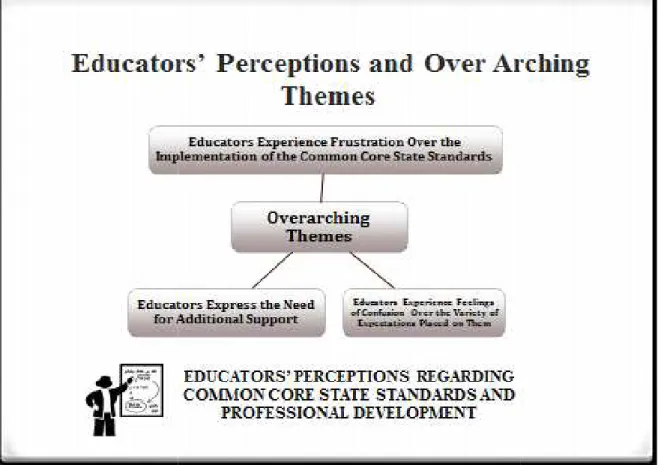
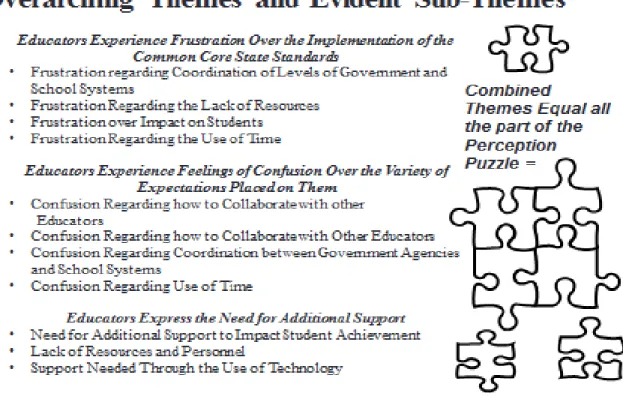
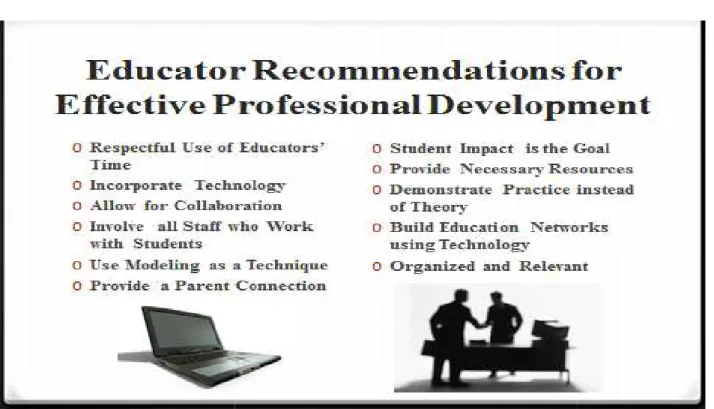
analyzed using theme analysis. The overarching themes identified in the study included the frustration that educators felt throughout the implementation year, and the additional support they would like to receive. Recommendations for effective professional development practices included the incorporation of technological resources, opportunities for professional
collaboration, respectful use of educators’ time, a home school connection, inclusion of all staff working with students in professional development, and a focus on supporting students
academically. All information shared with educators was expected to be organized and relevant. The results of this study indicated a need for additional professional development instruction and research.
Keywords: Common Core State Standards, professional development, rigor, relevance, objectives, perception, Social Learning Theory, Constructivism
4
Dedication & Acknowledgements
What an incredible journey this has been! The last few years have been full of emotion and determination. I am so grateful for the opportunity to pursue my Doctorate of Education at Liberty University. Through faith, love and commitment I understand that this accomplishment has been possible. It is through the love of my family and my faith that this accomplishment can be realized. “Love is patient, love is kind. It does not envy, it does not boast, it is not proud. It is not rude, it is not self-seeking, it is not easily angered, it keeps no record of wrongs. Love does not delight in evil but rejoices with the truth. It always protects, always trusts, always hopes, always perseveres. Love never fails” (I Corinthians 13:4–8a, NIV).
The first person I think of to thank is of course my husband, Andy. His dedication to our success is ever-present in our lives. His support of my education and love for me has been one of the main reasons I could take the time to pursue such a fantastic goal. Throughout the last several years, we have run a business together, raised two amazing daughters, and faced many challenges head on. I look forward to the next chapter. Thank you for your love, humor and support. I will always appreciate your pursuit of a successful and happy future for our family.
My beautiful, smart Andrea has always inspired me! Andrea’s love of learning, reading, and literary skill has always encouraged me. What a gift you have been in my life, always learning, growing, and inspiring me intellectually. I am forever grateful for your humor and encouragement. You are such a bright light in my life. Wonderful opportunities are on the horizon for you. I am looking forward to seeing you excel in all you do.
Victoria Grace, you are a joy! You have given me the peace and inspiration to keep going even in the face of very challenging times. I have always been able to share my hopes and dreams with you, and you have brought a sense of purpose and peace to me. Thank you for all
5
your energy, effort, and conversation. The world awaits your gifts! I am so proud of you. My dear friend, Carolyn, you have been so supportive of me. I cannot imagine going through the last several years without your friendship and guidance. Every time I speak to you, I smile, and you bring me so much positive energy and inspiration. I appreciate you more than you will ever know. I am looking forward to whatever projects we take on together in the future.
Mom and Dad, I want to express my appreciation for all of the opportunities you
provided me growing up. My love for learning and pursuit of my educational goals were fueled by my experiences at The Galloway School, Berry College, and Oglethorpe University. I will be forever grateful for your commitment to my education and your willingness to provide such wonderful educational opportunities to me, which have encouraged me every day to be a lifelong learner. I love you.
I am so appreciative of my administration. Dr. Moore and Mrs. Cole were a source of encouragement, and provided me with support throughout this challenging process. I am so grateful for their willingness to support my research as I reached out to principals and our school district. I know that without that support, this process would have been much more difficult. I am so grateful to have the opportunity to work and grow professionally at such a wonderful school.
I knew from the beginning of my qualitative research class, Dr. Holubz was a source of knowledge and support for me. I know her communication and time was always above and beyond. I am so appreciative of the time I was able to work closely with her. Dr. Frederick Milacci, Dr. Michael Hixon and Dr. Ansley Daniels have been a wealth of knowledge and support. I cannot imagine a better team to help guide me through this process.
6
the dissertation process will always be important to reflect upon, both professionally and personally. I have to say it again, what a wonderful journey this has been.
7
TABLE OF CONTENTS
ABSTRACT ...3
Dedication & Acknowledgements ...4
List of Tables ...10
List of Figures ...11
List of Abbreviations ...12
CHAPTER ONE: INTRODUCTION ...13
Background ...13 Situation to Self………..15 Problem Statement ...16 Purpose Statement ...16 Significance of Study ...17 Research Questions ...18 Research Plan ...19
Delimitations and Limitations ...20
Summary ...21
CHAPTER TWO: LITERATURE REVIEW ...23
Introduction ...23
Theoretical Framework ...24
Historical Background ...25
Summary ...44
CHAPTER THREE: METHODOLOGY ...46
8
Research Questions ...49
Participants ...50
Setting ...51
The Role of the Researcher ...51
Data Collection ...51
Trustworthiness………..57
Ethical Considerations ...60
CHAPTER FOUR: FINDINGS ...61
Introduction ...61
Overview of Participants ...63
Overview of Participants Profiles ...65
Graphics Related to Themes……….………..69
Discussion of Themes……….………70
Theme One: Educators Experience Frustration Over the Implementation of the Common Core State Standards………...……….…………..70
Theme Two: Educators Experience Feelings of Confusion Over the Variety of Expectations Placed on Them………79
Theme Three: Educators Express the Need for Additional Support………..94
CHAPTER FIVE: DISCUSSION ...109
Introduction ...109
Summary of Findings ...109
Research Questions and Analysis……….……110
9
Recommendations for Professional Development ...126
Limitations and Recommendations...130
Recommendations for Future Research………131
Conclusion ...132
REFERENCES ...134
APPENDICES ...140
Appendix A: Procedures ...143
Appendix B: Interview Questions ...144
Appendix C: Focus Group Questions ...146
Appendix D: Participant Criteria Checklist ...147
Appendix E: Withdraw from Research Form ...148
Appendix F: Interview/Focus Group Script ...149
Appendix G: Invitation to Participate ...150
Appendix H: Informed Consent ...151
10 List of Tables
11 List of Figures
Figure 4.1: Overarching Themes.………..69 Figure 4.2: Evident Subthemes………..69 Figure 5.1: Responsibilities Placed on Educators………130 Figure 5.2: Educators’ Recommendations for Effective Professional Development...130
12
List of Abbreviations Bring Your Own Device; technology initiative (BYOD) Criterion Referenced Competency Test (CRCT)
Common Core State Standards (CCSS) Common Core Standards (CCS) Department of Education (DOE) Georgia Performance Standards (GPS) Early Intervention Program (EIP)
English Second Language Learner (ESOL) English Language Learners (ELL)
Individualized Education Plan (IEP) Iowa Test of Basic Skills (ITBS)
National Board Certified Teacher (NBCT) Teacher edition of textbook (TE)
13
CHAPTER ONE: INTRODUCTION Background
In this study, I addressed select educators’ perceptions regarding effective professional development practices. The implementation of the Common Core State Standards indicated a potential adjustment for all educators across the state of Georgia as systems shifted from the Georgia Performance Standards to the Common Core State Standards. The research within this study is important in extending the body of knowledge on effective professional development practices in relation to the Common Core State Standards. I specifically studied educators who were successfully implementing the curriculum change to the Common Core State Standards. According to Tienkin (2010), “Evidence-based or data driven decision making has been at the forefront of education rhetoric for the past15 years” (p. 2). Findings within this study are applicable to other school systems across the state and country.
The adoption of the Common Core State Standards as a national movement was intended to unify learning objectives nationally. Historically, states have functioned independently of each other in regards to curriculum planning. In an effort to improve students’ success nationally and America’s competitive edge globally, examining and reevaluating the need for a national core curriculum became necessary. According to Kern (2011),
The George H. W. Bush administration initiated the notion of the U.S. national academic standards in 1989; the Clinton administration’s education policymaking continued the pendulum swing toward national standards; then the George W. Bush administration’s No Child Left Behind Act caused the pendulum to swing so far away from a national consensus that by 2004 both conservatives and progressives agreed to examine national standards as a way to improve student achievement in American schools. (p. 90)
14
States, under the direction of their individual constitutions, have the authority to implement curriculum and educational programs independently of each other. Unity of educational
programs was needed as a method of increasing student achievement, college preparedness and career readiness (Porter, McMaken, Hwang, & Yang, 2011). The Common Core State Standards were designed to improve students’ preparation for both college and a career. According to Griffith (2011), educators must be equipped to implement the standards effectively with students. Unification of educational goals from state to state has the potential to improve both educational objectives, communication among educators, and student achievement (Phillips & Wong, 2010).
Past research findings indicated a need to examine effective and practical ways to guide educators through the implementation process of the new standards and professional
development programs. According to Porter et al. (2011), the Common Core State Standards are an effort to unify academic guidelines across the United States, especially in the language arts and math. Investigation of ways to guide educators through this process is important in making this shift smoother for educators. Sweeping changes across the curriculum are intended to increase relevance and rigor within the curriculum. The implementation of the new standards has potential to increase real world problem solving skills for students. Additionally, the standards have application for students beyond the classroom.
My goal was to benefit educators within the district. In addition, my research findings show application to other districts nationally. The present findings could indicate a path to including a forum for sharing instructional ideals, professional development programs, and materials via professional learning communities and the Internet. While much research has been done regarding the development of the standards, little research is currently available on the implementation of the Standards in each state or how information has been disseminated
15
throughout different educational systems. I sought to fill the current gap by conducting research regarding the implementation of the Common Core State Standards and professional
development.
Teachers constantly work toward developing themselves professionally. According to Chalmers and Keown (2006), professional development involves individual teachers evaluating and applying the knowledge they know to be purposeful for their students. Evaluating the impact of the new standards regarding these aspects of teacher development was important. The process of participating in this study allowed teachers to be a part of research regarding the implementation of the Common Core State Standards and contribute to the body of research that existed on effective professional development practices.
Teacher perceptions and attitudes also play an integral role implementing the new standards, and are the primary impetus for change. Ediger (2011) emphasized that educators must have a positive attitude toward the curriculum shift in order to adequately meet the needs of students. My close examination of teacher perceptions about effective practices would help guide districts’ decisions as to what professional development programs are meaningful and worthwhile to educators, while implementing the Common Core State Standards.
Situation to Self
In an effort to better serve the students whom I teach and the professionals whom I train, I have an interest in the process of learning from a constructivist viewpoint. Individuals scaffold learning through shared experiences and collaboration (Ash, 2011). As the field of education is ever evolving, continuing to study how students learn and how to prepare educators to meet the needs of the diverse learners in their classrooms is essential. Research related to effective professional development formats and instruction is crucial in meeting the needs of educators.
16
The implementation of the Common Core State Standards is an event that has impacted all educators in Georgia. The need for teachers to understand the new standards and improve instructional practices indicates that the implementation of these standards is a relevant topic for research. The connection between my interests in the implementation Common Core State Standards and effective professional development fully aligned with this study.
Problem Statement
Current Common Core State Standards research indicates that two problems are present (Bomer & Maloch, 2011). Because the Common Core State Standards are new across the nation and require specific instructional skills and strategies to reach the depth of knowledge
appropriate for students, training for teachers is crucial. Griffith (2011) explained that teachers must be prepared to implement the standards effectively in their classrooms and make the standards applicable for students in the real world. Research was necessary to ascertain whether or not teachers felt that they were equipped to implement Common Core Standards. If teachers felt that additional training and/or support was needed in implementing Common Core
Standards, the type of professional development opportunities educators sought raised another vital issue. Opportunities and environments for collaboration among teams, schools, districts, and states within the nation would be a goal for the field of education in general. According to Conley (2011), educators had the opportunity to analyze and evaluate the components of the standards and the value the standards would have for students. An effort to coordinate the perceived needs of educators had potential to lead to the encouragement of best professional development practices, collaboration and increased student achievement.
Purpose Statement
17
academic school year impacted educators across the country as well as their need for
professional development (Marcoux, 2012). The purpose of this qualitative case study was to understand the perceptions select educators had toward professional development in relationship to the implementation of the Common Core State Standards in Georgia (Phillips & Wong, 2010). The implementation of the Common Core State Standards indicated specific professional
development needs of educators within this system based on the data collected from participants. I examined the educators’ perceptions regarding effective professional development practices and investigated the best practices and collaboration techniques through a constructivist
viewpoint. I sought to shed light on the perceptions educators had in regards to the professional development opportunities during the implementation of the Common Core State Standards (Creswell, 2007).
Significance of the Study
Findings of this study indicated valuable information for the district about methods of professional development for educators within the district. The implementation of the standards statewide made professional development an important issue. A great deal of research had been conducted on professional development (Beach, 2011); however, no significant research existed on professional development practices specifically related to the Common Core State Standards. Researchers had addressed effective professional development practices rather than addressing how to handle the challenge of a curriculum shift by 45 of the 50 states in the nation (Phillips & Wong, 2010). According to Anderson (2011) adult learners are professionals who are
responsible for developing a culture of lifelong learning. I addressed the concerns educators had regarding the implementation of the new Common Core State Standards in an effort to aid in the development of effective professional development practices.
18
Research Questions The following three questions were explored in the study: Research Question One
What, if any, support did educators request in regards to the implementation of the new Common Core State Standards?
Educators needed a voice in the process of developing professional development programs in order to ensure the perceived needs of teachers were being met (Lewin, 2010). I worked to identify the means of support that educators may have wanted.
Research Question Two
What, if any, reactions did educators have in regards to the curriculum shift from the Georgia Performance Standards to the Common Core State Standards?
Implementation of the Common Core State Standards was a complex endeavor incorporating the time and talents of a vast group of educators and administrators. An
understanding of the concerns that educators face allows for thoughtful planning. Phillips and Wong (2010) note that “[t]he Common Core will become useful to teachers and policy makers only when it is part of a larger system of next generation assessments that track how much students know and how well they know it” (p. 39). Addressing the concerns of educators allowed this study to show insight into needs for professional development.
Research Question Three
What, if any, methods would educators like to utilize in order to collaborate and share resources?
The manner in which educators share information within the district aids in the unification of these educators regarding a common goal. The foundation of collaboration is
19
based on effective professional development practices. Research Plan
The study was a qualitative multiple case study conducted by collecting and synthesizing responses from 14 teachers who taught in both regular and special education classrooms. The teachers selected to participate in the study were teaching in classrooms representative of others within district A. District A represents a large suburban metropolitan school system in Atlanta, Georgia. According to Yin (2009), case study is used to contribute to the body of knowledge in a group or an organization. A case study was determined to be a suitable research design for this study.
Reflective journaling was utilized in this research. Participants in the study from both non-Title I and Title I schools kept an electronic journal on their computers. Participants recorded in the form of journal entries their reflections and thoughts on topics related to the implementation of the Common Core State Standards. Teachers needed to feel comfortable to experiment with instructional strategies, reflect and refine instructional practices to best meet the needs of their students (Chalmers & Keown, 2006). Journaling allowed educators to privately record observations they had during data collection.
Focus groups were incorporated into the data collection procedures. Focus groups were a form of interviewing, and the communication between participants allowed for the collection of information from multiple participants at one time. The participants had the opportunity to discuss and exchange ideas during the interview session. The participants from the focus groups were all intermediate elementary educators working in grades two through five. Participants were selected based on specific participation criteria, which are outlined in Chapter Three. All communication was recorded and transcribed. According to Yin (2009), focus groups are an
20
effective way to explore individuals’ knowledge on a topic and why they feel that way. Educators nationally were focused on the common goal of positively influencing students and guiding them toward their academic goals (Williams, Tabernick, & Krivak, 2009). Focus groups allowed participants to collaboratively share their viewpoints on topics related to the Common Core State Standards.
Field interviews were also conducted so that participants had ample opportunity to personally share ideas, concerns, and resources relating to instruction at their content level. The focus of the study was the perceived professional development needs of educators in District A in relationship to the implementation of the new Common Core State Standards. The
conclusions of the study were based on theme analysis of results from journals, field interviews, and focus groups. All of the results were reported in the study and were communicated to the district for planning purposes.
Delimitations and Limitations Delimitations
The educators who participated in the study were all teachers in District A. All of the teachers that participated in this study received similar professional development training within the district. Additionally, participants are both regular classroom teachers and special education teachers. The participating teachers went through a selection process in District A and were required to be effectively implementing the Common Core State Standards in their classrooms. To be eligible to participate in the study, teachers must have had at least five years of teaching experience in Georgia during which time they implemented the Georgia Performance Standards and Common Core State Standards. The group of schools in this district included varied
demographic and socioeconomic levels. I did not conduct any research within my own school, or with colleagues with whom I work or for whom I supervise. The course of the study was
21
limited to the initial year of implementation of the new standards because the most representative perceived professional development needs of educators was expected to occur during this period of adjustment (Mathis, 2010).
Limitations
One possible limitation of the study was the influence that other factors could have posed in the responses made by educators. I emphasized to the participants that there were no correct responses, and information gathering was for analytical purposes only. The participants were required to spend several sessions working with me. Educators participating in the study voluntarily shared information and their time. Responses provided from the participants in journals, focus groups, or interviews did not influence the educators’ performance evaluations.
The geographical location may have been a limitation regarding transferability of results. The findings may not be as applicable in a rural or urban setting based on the needs of student populations specific to these location types. The study was open to individuals of both genders. Participants included 2 males and 12 females. Yin (2009) contended that it is important that researchers integrate real world events in data collection which participants did not have control over. This lack of control was an additional limitation in using a multiple case study design.
Summary
The purpose of this multiple case study was to examine teachers’ perceptions in regards to professional development and the implementation of the Common Core State Standards. Constructivism and Social Learning Theory served as the theoretical foundation for the study. Educators stated they needed to have valuable resources and training as they began the process of implementing the new Common Core State Standards in order to positively impact students and increase student achievement. Educators were an integral part of the process and current
22
research. Therefore, a qualitative multiple case study allowed for the analysis of themes and patterns to be evaluated in relationship to participant perspectives on professional development and the implementation of the Common Core State Standards. Yin (2009) stated that a case study addressed many forms of evidence which could include artifacts, interviews, documents and observations. I worked to provide useful results based on the method of qualitative research and theme analysis. I specifically sought to determine if educators required additional support with implementing the standards, what reactions educators had in regards to implementing the Common Core State Standards, and what methods educators preferred in order to collaborate with each other. The following literature review shows the current research on effective professional development practices as well as the development of the Common Core State Standards.
23
CHAPTER TWO: LITERATURE REVIEW Introduction
According to Ash (2011), the Common Core State Standards are a set of internationally benchmarked learning objectives intended to better prepare students for college or a career. The implementation of the Common Core State Standards in Georgia schools during the 2012-2013 school year had the potential to be a significant undertaking for educators. A gap in the literature indicated a need for professional development for educators. According to Conley (2011), an implied goal of the standards is to increase expectations for student performance as well as the development of common national assessments. Specifically, to express to teachers what the goals of the standards and assessments were. Additionally, an important goal is to challenge American students to remain competitive with other school systems globally.
A need existed to evaluate the impact of the Common Core State Standards on student progress, students’ mastery of objectives, and development of future assessments. Conley (2011) states that the Common Core State Standards are intended to be a rigorous, sequential, and increasingly complex set of internationally benchmarked learning objectives. A goal of the new standards is to identify the common skills and concepts that all students should understand and be able to do (Finkelstein et al., 2013).
Nationally, educators encountered a lack of information on effective professional development and communication practices. Bomer and Maloch (2011) contend that educators are aware that the Common Core State Standards have dramatically changed what they are required to teach and what students must be able to do by the end of each academic year. Educators have to develop new and effective means to share and develop effective instruction as well as strategies to share with new teachers best practices (Cogan, Schmidt, & Houang, 2013).
24
Theoretical Framework
Conley’s (2011) research indicated that greater attention is paid to the cognitive process of how students learn and process information. For example, Constructivism and Social
Learning Theory are mentioned throughout research and are relevant because they indicate how individuals construct knowledge (Calkins, Ehrenworth, & Lehman, 2012). Regarding
Constructivism, Porter et al. (2011) explained social constructs that show how students acquire new information as opportunities to collaborate with each other and best connect to relevance in their daily lives. Bandura, Watson, Freud and Vygotsky are leading theorists in the field of Social Learning Theory (Miller, 2011). Regarding Social Learning Theory, Miller (2011) stated that social learning theorists emphasize how students construct knowledge and scaffold new learning on what they already understand about the world based on their experiences. Altogether, these theories are relevant to investigating Common Core State Standards implementation because the new standards not only focus on what is taught, but also on how educators teach and accommodate the cognitive development of students (Fosnot, 2005).
Constructivism provided the theoretical basis for this study, as it is a framework for how students learn and process information. Anderson (2011) states, “Vygotsky’s (1986) framework for guided participation provides a structured learning environment in which the learner is initially supported using a ‘scaffolding’ framework” (p. 49). Vygotsky emphasizes the role of the teachers, which is applicable to adult learners (Anderson, 2011). Vygotsky’s scaffolding framework ensures that the learning taking place has future value for students to build new knowledge. Vygotsky’s perspective of constructivism has an emphasis on logical thinking and purposeful application of knowledge (Anderson, 2011). Focus on the process in which adults learn is also an important perspective as consideration was given to how best implement the new
25
standards (Anderson, 2011). Vygotsky (as cited in Miller, 2011) concluded that cognitive growth is a result of interaction with other members of society through a progression of leveled instruction. In a constructivist environment, every member is responsible for his or her own learning and for supporting the learning of others (Anderson, 2011).
The sociocultural and constructivist approachesto learning have also been emphasized in research (i.e., Miller, 2011). For instance, Miller states that teaching and learning must take into account the child’s zone of proximal development. Miller’s (2011) statement indicates that both child and adult students are influenced by the environment in which they learn. The
development of learning environments that support the scaffolding of knowledge will allow for students to internalize and apply new skills (Miller, 2011). Research has indicated that the implementation of the new Common Core State Standards is a complicated process involving staff development, assessment redesign, and resource adoption (Conley, 2011). Not only do educators reflect on what students are learning with the new standards, but they will examine how they learn (Conley, 2011). Sociocultural Theory indicates an understanding that individuals learn by making connections relating to their experiences and cultural influences (Miller, 2011). According to Porter et al. (2011), The Common Core State Standards are precise in the
requirements for students in both math and language arts. The Common Core State Standards (Heiten, 2013) are specific to what students should learn and how they will demonstrate proficiency of their understanding.
Historical Background
The origin of the Common Core State Standards movement is rooted in the desire to reform educational practices in the United States (Calkins et al., 2012). Historically, there has been a push to develop a national curriculum. For example, in 1959 Dwight Eisenhower worked
26
to establish a national set of learning standards. However, the implementation of a national curriculum is considered by some to be a threat to states’ rights, and in turn can be considered unconstitutional (Ginn, 2010). The responsibility has fallen on the states to align their academic objectives and to determine a core curriculum that will enable American students to be globally competitive (Porter et al., 2011). The Common Core of Academic Standards is identified as skills that are “Real world reflecting the knowledge and skills that our young people need for success in college and careers” (Bray, 2011, p. 6). The need for American children to be globally competitive has ignited an academic push for these children to catch up with their international peers (Tienken, 2010).
Despite this academic push, the underlying assumptions of current research indicate that American children have fallen behind in their level of preparedness for both college and career (Tienken, 2010). According to Kern (2011), both conservatives and progressives were motivated to explore the use of a set of national standards as a means of improving American students’ performance academically. The root of the Common Core State Standards’ historical
development had grown out of presidential administrations’ legislations over the last century to reform educational practices. In an effort to benefit this development, “Race to the Top”
initiatives are a driving force behind the development of the new curriculum (Porter et al., 2011). According to Porter et al. (2011), the Common Core State Standards are a state driven effort to unify academic performance expectations for students K-12.
College and Career Readiness
Not all students are suited for a college experience. According to Griffith (2010), college and career readiness is identified as the ability to succeed as college freshman or entry level job positions. The Common Core State Standards also include standards that are essential for career
27
readiness (Calkins et al., 2012). Not only do citizens of the United States need to be
academically sound, but they also need to have the communication and reasoning skills to be an effective member of the work force (Bray, 2011). The primary objectives of the new standards are on problem solving and real world skills which give students the relevance they need for increased academic performance and understanding (Ginn, 2011). Research findings indicate that increased rigor is one of these objectives (Conley, 2011; Riddile, 2012). Researchers have also analyzed gaps within curriculum (Bomer & Maloch, 2011). Further, Calkins et al. (2012) identify increased text complexity and problem solving opportunities as essential components of effective standards.
The four key factors identified in the Common Core State Standards include the following:
(1) Set standards high enough to inspire and reflect on our nation’s ambitions for students’ achievement. (2) Provide a coherent and conceptual framework, beyond policy documents, to give work credibility. (3) Establish a research base for the standards. (4) Build opportunities for input from teachers. (Kern, 2011, p. 90) The pendulum is always swinging in education, and standard practice is always subject to change. However, the core principles of the standards outlined are constant throughout the research.
While there are numerous benefits to the standards’ implementation, there are also challenges that exist with the implementation of the new standards. For instance, Bomer and Maloch (2011) state that the implementation of the Common Core State Standards will equalize regional and socioeconomic differences for students. Additionally, challenges exist regarding the development of the standards and the evidence that may or may not exist in their defense.
28
Bomer and Maloch (2011) assert that teachers understand that there is a great deal to learn about implementing the new standards. Educators need to proceed with caution as they enter this new world of curriculum implementation. Heiten (2013) adds that, according to the Gates
Foundation Survey (2013), more than three quarters of elementary teachers were enthusiastic about the Common Core State Standards. There is still professional development work that needs to be accomplished in order to achieve the lofty goals of the standards.
Research findings indicate common themes presenting potential challenges, including increased problem solving skills, rigor, and real world applications of knowledge (Riddile, 2012). Research has further indicated that meeting the needs of subpopulations of students is another existing challenge. Daggett and Gendron (2010) identify subpopulations of students as groups with unique needs and typically below-average performance (2010). Students with impoverished lifestyles and students with Individualized Education Programs (IEP) need great attention in order to decrease the achievement gap that exists. Additionally, gifted students have been seen as the competitive future of the American economy, though these students are another subgroup that needs proper guidance in order to develop their skills and strengths and to
demonstrate leadership (Griffith, 2011). The subgroup of special education students with an IEP also requires special considerations with the implementation of the Common Core State
Standards. Kaufman and Ring (2011) stated that educators should utilize “Scaffold instruction as necessary, but avoid providing unneeded assistance” (p.54). The Common Core State Standards are intended to give students the real world skills they need to be competitive in a global
economy. Veteran as well as new teachers have a great deal to learn about the implementation of this complex set of academic standards with students, and reading instruction (Heibert, 2012). Educators in turn needed extensive support with this transition to the Common Core State
29 Standards.
Decisions regarding the effectiveness of the standards are evaluated based on nationally standardized assessments such as the American College Testing (ACT) and the Scholastic Assessment Test (SAT). Additionally, there will be new assessments designed that can be used nationally to measure both student achievement and college readiness, such as the PARRC assessment currently under development (Partnership for Assessment of Readiness for College and Careers [PARRC], 2012). Many standardized assessments are used to measure student achievement and college readiness. Overall, research indicates that the gap both internationally and among subgroups is vast (Gilroy, 2011). Further research will provide valuable information on the content areas that need additional focus (Gilroy, 2011).
Another factor in the new standards mentioned throughout the research is increased rigor (i.e., Riddile, 2012). For instance, Riddile (2012) indicated that a rigor matrix is used to
determine student proficiency across the curriculum based on the levels of Bloom’s Taxonomy. Riddile, (2012) explained that understanding how students process information is essential. Professional development provides an opportunity for educators to learn more about meeting the needs of students. Additionally, Conley (2011) defined rigor as an acceleration of content and performance expectations. Finally, Porter et al. (2011) asserted that students are expected to increase problem solving skills and exhibit real world application of content that they are learning in the classroom. Increased rigor appeared to be a common goal of researchers in relation to the implementation of the Common Core State Standards.
Educational reform and increased student achievement takes time to implement. According to Conley (2011), through the process of careful planning, educators will better prepare a greater number of students for both college and career by focusing on a common set of
30
educational principles. Conley (2011) outlined the overarching principles, including engaging students in instruction, offering challenging opportunities, Socratic questioning techniques, problem solving, increasing text analysis, and improving writing skills. According to Conley (2011), the brain is an amazing organ that can constantly refine, gain, and sort knowledge into useful categories of information. The Common Core Standards are designed to challenge and develop higher order thinking skills (Conley, 2011). The science behind the development of the specific core standards entails building and relating schema through the use of mathematics and language arts content.
Conley (2011) identified five key cognitive strategies that determine if a student is prepared for either college or a career. He asserted that problem formation, in which individuals generate hypotheses and reflect before solving a problem, is a key skill for students or
employees. Also, he contended that the abilities to research, interpret information, and
communicate effectively are crucial skills for individuals to master in order to be effective and productive members of society. Conley (2011) indicated that due to the challenging nature of the new curriculum, students demonstrated improved problem solving skills. The goal of the new standards is to better prepare individuals for higher education, the work force, and international competition through improving these key strategies (Kern, 2011).
Approaches to Professional Development for Educators
Conley (2011) explored the readiness of states to take on the challenge of implementing the new curriculum. Educating teachers and administrators about the new standards is a daunting task; however, this effort has been embraced by 45 out of 50 states (Ginn, 2010). Professional development is as crucial component of both the acceptance and effectiveness of the standards implementation (Guskey, 2002). Collaboration through technology is reported as a means for
31
educators to support each other through the transition. Ash’s (2011) findings indicate that innovative online resources such as YouTube, Facebook, Twitter, and Four Square should be utilized for educators to post and share effective instructional methods and lessons.
The Common Core State Standardsare clear in design, have central goals, and are few in number (Calkins et al., 2012). Educators face the challenge of consistency across grade levels and disciplines as intellectual development occurs over time and across all subjects in the curriculum (Calkins et al., 2012). The process of breaking down the standards in both content and practice will allow educators the opportunity to reflect on best practices. According to Conley (2011), schools should embrace the process and opportunity to redesign curriculum and engage students in challenging and relevant academic tasks. The change in curriculum was inevitable, and investigation into how educators manage the change is crucial. The Common Core is here to stay, and it is designed to accomplish the goal of equalizing the curriculum and expectations for all American students (Locke, 2012).
Professional development in relationship to the development of the Common Core State Standards (CCSS) is the next important step once the standards are implemented. According to Ash (2011), as educators become more familiar with the CCSS, more technological and print resources will become available. Educators’ attitudes and viewpoints about professional development is a key component related to the types of opportunities offered to teachers. Ash (2011) further stated that currently the focus of educators has been on the development of curriculum materials, and the next stage will be professional development. The need for unity and alignment among schools, states, and systems is a driving force in the development of innovative ways to connect these individuals and organizations. Examples of creative
32
mobile applications, and social media sites all with the objective of aligning and planning the instruction for the standards (School Improvement Network, 2011). Collaboration is a reoccurring theme presented in the research. Kaufman and Ring (2011), believe that this was positive for collaboration results because a variety of opportunities and resources inspired
educators. Nagel (2013) asserted in regards to effective professional development, it should be a process conducted over a period of time rather than in one day workshops. Additionally,
mentoring and coaching methods are considered the most effective manner of disseminating new information to educators.
Implications for the Implementation of the Common Core
According to Joyce and Showers (2011), the ‘pathway’ for the implementation of the Common Core State Standards must include a thorough understanding of the standards, an available resource bank, and teacher participation. Teachers must be invested in the professional development being offered, which is why evaluating effective professional development
practices is essential (Joyce & Showers, 2011). Collaboration among both students and educators is identified as an essential component of professional development. Teachers must receive guidance in both what the standards encompass and effective teaching strategies (Conley, 2011). Ash (2011) reported that a weakness in the educational system is a lack of opportunities for educators to share resources and collaborate. My study serves to provide information on student achievement and teacher collaboration. In an attempt to fill the gaps and increase continuity among schools, districts, states, nationally and internationally, educators are faced with the task of how to teach and share with each other the best practices available (Herbert & Rubin, 2012).
33
collaboration. Cooper (2002) stated that professional development should focus on the needs and prior knowledge of educators, with the primary objective being the improvement of student achievement. Effective means for educators to support each other through the process allowed for the sharing of resources and the probability of increased quality of student performance (Joyce & Showers, 2011). Bray (2011) asserts that it is important to understand that there are multiple ways for students to accomplish the goals of the standards. The need for effective means of instruction and professional development opportunities is crucial.
The curriculum shift is best seen as an opportunity to both unify standards nationally as well as unify educators for the common goal of benefiting students (Calkins et al., 2012). Cooper (2002) identified professional development as all categories of training, including in-services, workshops, staff development, and individual professional development. Professional development is an essential element for educators in allowing them the opportunity to share ideas and hone their instructional skills. Kern (2011) stated, the Common Core State Standards were crucial for bringing about real progress and change within the educational system that will benefit all students. The curriculum shift overall gives educators a common purpose and plan for their instruction.
Professional development can take on many forms, including collaboration among teams, mentoring, whole group staff development, district and online methods for communication. Goals of effective professional development include the use of quality materials, modeling, and relevant instruction (Williams et al., 2009). Educators must also collaborate not only on
instructional techniques, but assessment methods. According to Ash, the implementation of the Common Core State Standards is a rich opportunity to collaborate across states, and develop instructional materials and common assessments. Educators must implement technological tools
34
and a professional willingness to communicate with each other to share resources and ideas. Gilles, Wang, Smith, and Johnson (2013) further explain that professional development training should focus on literacy skills across the curriculum with all educators that work with students.
Research indicates that adopting the standards is considered an easy step in the process, whereas nationally implementing the standards will be a challenging step (Ginn, 2010). Ginn (2010) asserted that the implementation of the new standards will take several years, and will involve professional development as well as new student resources. The curriculum change is an important shift in thinking of educators needing to have a more focused and defined educational plan to meet the needs of students. The alignment of state standards across the nation will pose considerable challenges as school systems work to develop common assessments that are nationally normed and to adopt textbook materials that are applicable (Porter et al., 2011). Gulamhussein (2013) added that professional development cannot just be about surface
knowledge or exposing teachers to one shot opportunities for information, but it must be ongoing and provide opportunities for support and resources.
Professional development is the cornerstone of an effective curriculum shift. The alignment of states, districts, and individual schools’ goals was a daunting task. According to Guskey (2002), proper attention to detail, planning and organization are essential for effective professional development practices. The implementation process of the new standards was met with a critical eye from educators. Tienken (2010) further asserted that education has become increasingly data driven, and professional development should not only focus on educator training, but on administrator training as well. A gap in the literature has indicated the need for evidence of effective professional development practices. Williams et al. (2009) indicated that there is a need for designing and implementing professional development that further develops
35
the content knowledge and teaching strategies associated with the Common Core Curriculum. Implications for Common Core State Standards Instruction
Professional development is the foundation for implementing Common Core instruction. According to Riddile (2012), “Teachers have to know and understand what motivates students” (p. 41). The instruction of the new standards requires a combination of approaches such as guided groups, whole class, and individualized instruction. Educators will need resources and materials in order be prepared for this instruction. Additionally, teachers have to have the freedom and authority to make decisions in their classrooms. Owocki (2012) advised that educators understand that they have the authority to interpret the standards and go beyond in order to push students to excellence. She further asserted that educators should push students for excellence. Differentiated instruction would allow educators to meet the individual levels of all student ability levels and subgroups. Assessment of students’ needs and ability levels will be an on-going process for teachers (Owocki, 2012).
Effective classrooms are defined as ones that have a foundation of literacy-based instruction using a variety of text genres. Increased time during language blocks would be necessary for reading and writing instruction and practice (Cunningham & Allington, 2011). Literacy instruction emphasizes meaningful methods of communication. Teaching tasks should be meaningful across the curriculum and involve a connection to reading and writing instruction (Owocki, 2012). Educators should plan for opportunities for both explicit instruction and opportunities for student practice, collaboration and sharing. Science and social studies instruction still play an important role in the school day, but are an integrated part of the language arts instruction (Cunningham & Allington, 2011).
36
complex tasks. Conley (2011) indicated that educators should carefully analyze the interactions of individuals, and utilize a variety of mediums to present information including multimedia and visuals. In addition, students are expected to incorporate technology as an integral part of the classroom. Mathematics instruction would combine increased rigor, problem solving,
conferencing, and verbalization of understanding by students. Ediger (2011) asserted that learning experiences should be planned based on best practices and research-based activities to create an optimal learning environment. The emphasis in mathematics instruction involves an increased depth of instruction with fewer standards, focusing on student mastery or skills and real world applications of the components of standards. Riddile (2012) highlighted that the Common Core State Standards focus on problem skills, increased rigor and students’ abilities to verbalize their learning. The goal of the Common Core State standards is not for students to learn information for a finite period of time, but rather to have the ability to apply their understanding in preparation for college and career purposes (Ginn, 2010). Riddile (2012) asserts that students would have a greater understanding of academic concepts in all subject areas across the curriculum. Students need a safe and structured environment to put into practice the Common Core State Standards.
The standards outlined for mathematical practice include the expectation that all students should reason quantitatively and abstractly. Students should construct mathematical arguments and regularly critique the work of their peers (Conley, 2011). Additionally, students are
expected to model in mathematics and express their understanding and reasoning verbally and in writing (Conley, 2011). Students are expected to perform abstractly and not just accurately demonstrate computation skills.
37
Common Core curriculum influences the professional development needs of educators in Georgia. Literature has indicated a need for the further investigation of professional
development opportunities and teacher viewpoints associated with the curriculum shift. Riddile (2012) states that students must be able to defend their thinking and debate with classmates in an educational environment in which risk-taking is encouraged. Educators need to reframe their thinking in many cases regarding their approach to traditional instruction and be given the tools and resources to meet the needs of their students (Weiner, 2013).
Professional Development Needs
The implementation of the Common Core State Standards requires coordination among educators, schools, districts, and states in order to achieve continuity among expectations and practices. According to Conley (2011),
As educators begin to translate the Common Core State Standards into practice, they have an opportunity to think about what is important. The standards lay out a road map of major ideas, concepts, knowledge and skills. The common assessments will measure a wider range of student learning than current tests do if schools take advantage of this opportunity. (p. 18)
Further, Chalmers and Keown (2006) discussed that professional development activities shape the decisions and activities that educators make in the classroom. The purpose of professional development programs is to bring about change and continual growth in an organization. Wiener (2013) asserted that professional learning should be engaging, meaningful, and incorporate intellectually exciting activities for professionals which in turn establish meaning to the learner. Teachers want and need direct application to their professional lives. Professional development that does not indicate practical or useful ideas will not be utilized in the classroom. Johnson
38 (2006) noted that,
Research findings suggest most teachers are not implementing reform and others who are attempting implementation are not doing it well. Many teachers in public schools have little knowledge of what inquiry is and have been reluctant to implement standards based instruction in their practice (p. 155).
Focused trainings need to take place in order for educators to properly implement the new Common Core State Standards with their students. Further, professional development meant to bring educators together is important, even if these educators do not teach at the same schools. According to Locke (2012), online resources could aid educators in reaching these goals.
According to Santos, Darling-Hammond, and Cheuk (2012), professional development should be designed to unify educators and meet the needs of students.
Research findings indicate a need for increased rigor and relevance regarding
professional development (i.e., Johnson, 2006). Educators need to have a clear picture of what the instructional expectations are in order to bring those skills to the classroom. According to Johnson (2006), research indicated that any successful educational reform initiatives must have the support of teachers. Lack of skill in key areas was an impediment to effective professional development implementation. Johnson (2006) stated that teachers must teach constructively, and acquire content knowledge in order to bring about reform. Professional development plays a vital role in meeting the needs of teachers.
Addressing the changing landscape of instructional methods is also important with professional development. Many modalities exist to share information, including social media outlets, and synchronous and asynchronous online classroom formats. Kaufman and Ring (2011) stated that positive interactions and relationships improved teachers’ confidence and leadership
39
abilities. Individual states can develop the training programs and criteria for professional
development initiatives in relation to the common Core State Standards. Further, Johnson (2006) asserted that changing instructional practices is a multifaceted process. Leadership is the key to bringing about change.
Research has indicated that educators should consider innovative and creative ways to implement a professional development program that encourages follow through and
collaboration. According to Guskey (2009), effective use of time, focus and organization makes professional development more purposeful. Additionally, Locke (2012) indicated that utilizing the internet is an efficient way to achieve collaboration relating to professional development. Specifically, he stated that updated technological resources would be an essential element to effective professional development practice and training. Research has overall indicated that a common goal of collaboration exists to improve professional development, and that current technology is a tool that educators can use to reach this goal.
Technology affords opportunities to connect professional development to other districts and states, therefore connecting educators and ideas. Ash (2011) asserted that technology helped to bridge the gaps between states in relation to resources, understanding and assessment
development. As a result, the Common Core State Standards could help to unify not only what is taught, but also how the standards will be taught to students through technology.
Effective Professional Development Practices
Effective professional development practices need to be research-based (Guskey, 2009). Cano (2006) indicated that effective professional development is an ongoing process throughout an educator’s career and had a significant impact on student performance. Professional
40
objectives. Guskey (2009) advised that educators have the right and responsibility to have high expectations of training consultants and demand research based evidence of the effectiveness of their programs. The development of these standards should be done with a critical eye.
As professional development is created, trainers need to understand that purposeful activities must have direct application in the classroom. Griffith (2010) asserted that educators need professional development that is focused on new lesson plans, assessments and
interpretation of the standards. Further, Bomer and Maloch (2011) indicated that educators would have to be familiar with the language of the standards and research based practices. Effort is needed by academic leaders to relate the theory behind the new standards in order to relate theory and practice. According to Morris (2012), “the Common Core as an accepted framework across so many systems of education creates a new level of necessity for accompanying
curriculum, teaching materials, and professional development” (p. 8). Resources and training would allow for a smoother implementation process of the Common Core State Standards.
Other criticisms are focused on the validity of the Common Core State Standards (Kern, 2011). Therefore, educators should approach professional development with an educated and informed perspective, which includes both the strengths and weaknesses of all reform
movements. Educators have the right to form opinions and draw conclusions about their students (Cogan et al., 2013). Tienken (2010) stated:
Developing coherent education and social policy is difficult. The CCSS presents itself as a neat and clean solution, easily manageable and easy to discuss. Unfortunately, the real world is messy and much more complex. We cannot eliminate the complexity of
educating all students by putting forth superficial ideas (p. 6).
41
collection is an important component of assessing the effectiveness of the standards over its first several years of implementation, and to establish that professional development activities reflect the rigor of the Common Core State Standards (Weiner, 2013).
Professional development should take place over extended periods of time. Life-long learning is the process of learning as an ongoing process for personal and professional
advancement. Learning for both students and educators is an ongoing process, and not an event that occurs in isolation at specific times. According to Ferguson (2006), “The teacher survey suggested that professional development fails not primarily because the ideas do not work when implemented or because the teachers reject the approaches outright, but the ideas are not
implemented” (p. 49). The value of the professional development must be evident and applicable.
The Common Core State Standards have become an instrumental part of planning, and educators are required to understand, implement, and assess the value of the standards. According to Guskey (2009), educators need time and opportunity to develop their skills, to analyze student work, and refine teaching practices. Therefore, the professional development related to the implementation of the Common Core State Standards requires a greater level of responsibility. This movement will be at the local, district, state and national levels. Further, Cano (2006) asserted that leadership is an essential component of effective professional
development practices and the focus was on teacher preparation and practice. Strong leadership has also been identified as an important element in the improvement of professional development programs that have a lasting impact on organizations.
Research has indicated that most professional development programs are site-based; however, most teachers just give minimal effort towards implementation because they do not see
42
the program as a permanent part of their schools. Specifically, Guskey (2009) stated, educators’ and trainers’ goals should be focused on student performance and effective teaching practices. Quality professional development brings about change and growth for the professionals and the students involved in the program.
Professional Development and Collaboration
The Common Core State Standards are the catalyst for sweeping professional development movements. Locke (2012) asserted,
Like it or not, the Common Core is here. The new set of standards for math and English language arts is designed to get students across the country on the same page as they prepare for college or beyond. It’s an ambitious undertaking, and now is the time to start thinking about how it will affect your district (p.47).
Collaborative and extended professional development programs are integral parts of the implementation of the Common Core State Standards. Opportunities for collaboration and mentorship between teachers with different amounts of experience are also important in
professional development. As mentioned previously, “Vygotsky’s (1986) framework of guided participation provides a structured environment in which the learner is initially supported using a ‘scaffolding’ framework. The scaffold describes steps involved in learning, gives a purpose to learning” (Anderson, 2011, p. 48). Teachers would need opportunities to collaborate and construct knowledge of effective instructional practices.
According to Bray (2011), educators have a great deal to share and learn from each other, which in turn benefits all students. Further, Porter et al. (2011) asserted that “to deliver the promise of the common standards, the standards must address the problem of a curriculum that is ‘a mile wide and an inch deep.’ These standards are a substantial answer to that challenge” (p.
43
103). The standards gave the curriculum a deeper focus. Rather than exploring many standards shallowly, the new standards require students to go deeper and demonstrate proficiency
(Finkelstein et al., 2013).
Professional learning communities are another reoccurring theme throughout the literature. For instance, Cano (2006) made the following statement regarding learning communities:
Professional development is most effective when it takes place in vibrant learning communities. These learning communities take various forms, but all value ongoing learning by teachers and students. They foster collegiality and problem solving, and they emphasize continuous improvement in classrooms (p.2).
Unification of school leaders of a variety of experience levels allows for rich discussion and collaboration of ideas. Cano (2006) explained that learning communities were generally a great practice and a low cost method of effectively disseminating information among groups of educators.
Clear expectations and learning goals are essential elements of what is considered effective professional development. Henkin, Harmon, Pate, and Moorman (2009) stated that educators need to form learning communities to help and learn from each other. Further, Guskey (2009) asserted that collaborative planning and problem solving helped to develop a sense of community and shared purpose. Effectiveness is based on the application of the skills learned through ongoing instructional strategies with students. Additionally, strong school leadership is an essential element of the implementation of any professional development program. Guskey (2009) stated that “strong leadership has played a crucial role in every successful improvement effort” (p.46). Leadership at both the administrative and teacher team level is crucial for support,
44
collaboration, and accomplishment of the standards’ objectives.
Ediger (2011) asserted that experienced teachers had attitudes of positive self-efficacy and personal growth. Also, a respectful relationship between the administration, staff, and fellow teachers is crucial for the collaboration that must take place to share ideas and grow professionally. Ash (2011) indicated that the implementation of the standards was a
revolutionary change that presented students with progressive, complex, and challenging tasks. The Common Core State Standards are not just a professional development opportunity, but are also an educational reform revolution.
Summary
The compilation of research contained in the literature view indicated the need for additional research on the topic of teachers’ perceptions of professional development in relationship to the implementation of the Common Core State Standards with students. The conceptual framework of Constructivism and Social Learning theory provided the foundation of how both students and adults learn and scaffold knowledge through the incorporation of
challenging learning tasks and collaboration (Anderson, 2011). The objective of any
professional development program is the potential success of the students and the professional growth of educators. According to Conley (2011), if school embraced the challenge of the standard, the outcome will be students who are better prepared for a successful college experience or the real world problem solving involved in a career. The Common Core State Standards require students to “demonstrate understanding” through the application of knowledge rather than the repeating of facts (Porter et al., 2011, p.104). Educators have a responsibility to learn new modalities for meeting the needs of all their students in all sub groups (Porter et. al., 2011).
45
Additional research would help to summarize and identify the teachers’ voices. As Cano (2006) stated, effective professional development has four elements: strong learning
communities, proper resources, clear expectations, and vibrant leadership. Therefore, according to Heiten (2013), although the Common Core State Standards are overall intended to have beneficial results for both students and educators, there will inevitably be a learning curve. The research conducted in this study intended to provide insight into teachers’ perceptions on professional development and the Common Core State Standards.