Calhoun: The NPS Institutional Archive
Theses and Dissertations Thesis and Dissertation Collection
2016-09
How do microfinance programs contribute to
poverty reduction?
Khan, Tayiaba H.
Monterey, California: Naval Postgraduate School
NAVAL
POSTGRADUATE
SCHOOL
MONTEREY, CALIFORNIA
THESIS
Approved for public release. Distribution is unlimited. HOW DO MICROFINANCE PROGRAMS CONTRIBUTE
TO POVERTY REDUCTION?
by
Tayiaba H. Khan September 2016
Thesis Advisor: Naazneen Barma
REPORT DOCUMENTATION PAGE Form Approved OMB No. 0704-0188
Public reporting burden for this collection of information is estimated to average 1 hour per response, including the time for reviewing instruction, searching existing data sources, gathering and maintaining the data needed, and completing and reviewing the collection of information. Send comments regarding this burden estimate or any other aspect of this collection of information, including suggestions for reducing this burden, to Washington headquarters Services, Directorate for Information Operations and Reports, 1215 Jefferson Davis Highway, Suite 1204, Arlington, VA 22202-4302, and to the Office of Management and Budget, Paperwork Reduction Project (0704-0188) Washington, DC 20503.
1. AGENCY USE ONLY
(Leave blank)
2. REPORT DATE September 2016
3. REPORT TYPE AND DATES COVERED
Master’s thesis
4. TITLE AND SUBTITLE
HOW DO MICROFINANCE PROGRAMS CONTRIBUTE TO POVERTY REDUCTION?
5. FUNDING NUMBERS
6. AUTHOR(S) Tayiaba H. Khan
7. PERFORMING ORGANIZATION NAME(S) AND ADDRESS(ES)
Naval Postgraduate School Monterey, CA 93943-5000
8. PERFORMING
ORGANIZATION REPORT NUMBER
9. SPONSORING /MONITORING AGENCY NAME(S) AND ADDRESS(ES)
N/A
10. SPONSORING / MONITORING AGENCY REPORT NUMBER
11. SUPPLEMENTARY NOTES The views expressed in this thesis are those of the author and do not reflect the official policy or position of the Department of Defense or the U.S. Government. IRB number ____N/A____.
12a. DISTRIBUTION / AVAILABILITY STATEMENT Approved for public release. Distribution is unlimited.
12b. DISTRIBUTION CODE 13. ABSTRACT (maximum 200 words)
The purpose of this thesis is to address if microfinance institutions (MFIs) facilitate poverty reduction in Bangladesh. The research begins with an overview of the historical, institutional, and political underpinnings of poverty in Bangladesh and then surveys quantitative findings to determine the extent to which the rural poor’s income can be augmented. Resources furnishing this analysis include panel data drawn from MFI borrowers in randomly selected villages that have branches serviced by Grameen Bank, Association for Social Advancement (ASA), and Bangladesh Rural Advancement Committee (BRAC). In addition, by addressing development indicators, microcredit’s non-economic outcomes—or spillover effects—are also measured, including literacy and infant mortality. In order to address MFIs’ more difficult-to-measure spillover effects, this thesis also treats the notions of civil society and women’s empowerment as relevant areas that pertain to poverty mitigation.
14. SUBJECT TERMS
microcredit, microfinance, poverty reduction, Bangladesh, property rights, women’s empowerment, social trust, rural poverty
15. NUMBER OF PAGES 109 16. PRICE CODE 17. SECURITY CLASSIFICATION OF REPORT Unclassified 18. SECURITY CLASSIFICATION OF THIS PAGE Unclassified 19. SECURITY CLASSIFICATION OF ABSTRACT Unclassified 20. LIMITATION OF ABSTRACT UU
NSN 7540-01-280-5500 Standard Form 298 (Rev. 2-89)
Approved for public release. Distribution is unlimited.
HOW DO MICROFINANCE PROGRAMS CONTRIBUTE TO POVERTY REDUCTION?
Tayiaba H. Khan
Civilian, Department of the Navy B.S., Santa Clara University, 2006 Submitted in partial fulfillment of the
requirements for the degree of
MASTER OF ARTS IN SECURITY STUDIES
(MIDDLE EAST, SOUTH ASIA, SUB-SAHARAN AFRICA)
from the
NAVAL POSTGRADUATE SCHOOL September 2016
Approved by: Naazneen Barma Thesis Advisor
Anshu N. Chatterjee Second Reader
Mohammed Hafez
ABSTRACT
The purpose of this thesis is to address if microfinance institutions (MFIs) facilitate poverty reduction in Bangladesh. The research begins with an overview of the historical, institutional, and political underpinnings of poverty in Bangladesh and then surveys quantitative findings to determine the extent to which the rural poor’s income can be augmented. Resources furnishing this analysis include panel data drawn from MFI borrowers in randomly selected villages that have branches serviced by Grameen Bank, Association for Social Advancement (ASA), and Bangladesh Rural Advancement Committee (BRAC). In addition, by addressing development indicators, microcredit’s non-economic outcomes—or spillover effects—are also measured, including literacy and infant mortality. In order to address MFIs’ more difficult-to-measure spillover effects, this thesis also treats the notions of civil society and women’s empowerment as relevant areas that pertain to poverty mitigation.
TABLE OF CONTENTS
I. INTRODUCTION...1
A. RESEARCH QUESTION ...2
B. THESIS STATEMENT ...3
II. LITERATURE REVIEW ...5
A. DEFINING “MICROFINANCING” ...5
B. INNOVATION ...8
C. DEVELOPMENT AGENDA ...10
D. CHALLENGES ...13
E. CHAPTER SUMMARY ...14
III. RESEARCH OVERVIEW AND HYPOTHESIS ...17
A. MICROFINANCE THEORY ASSESSMENT ...17
B. RESEARCH DESIGN ...18
C. CHAPTER SUMMARY ...19
IV. THE ECONOMIC IMPACT OF PRE-COLONIAL BRITISH INSTITUTIONS ...21
A. WHY BANGLADESH IS POOR TODAY ...21
B. INTRODUCING LANDHOLDING POLICIES AND RESOURCE EXTRACTION IN BANGLADESH ...23
1. Background on Landholding Policies ...24
2. Landlord-Based Systems of Tax Extraction ...25
C. COMMERCIALIZATION OF INDIA’S MARKETS: ADMINISTRATIVE FAILURES ...30
D. COLONIAL RESOURCE EXTRACTION ...31
E. ECONOMIC CHALLENGES BEFORE AND AFTER INDEPENDENCE...34
F. BANGLADESH’S INDEPENDENCE AND ONWARD: THE EFFECTS OF CORRUPTION AND EXTERNAL FACTORS ...38
G. GEOGRAPHICAL CHALLENGES ...43
H. CONCLUSION ...43
V. POVERTY REDUCTION AND OTHER OUTCOMES OF MICROFINANCE PROGRAMS IN BANGLADESH ...47
A. MICROFINANCE BACKGROUND ...47
B. MICROFINANCE: THE INTENT AND THOSE IT SERVES ...48
2. Microfinance Allows the Poor to Save Money: Explained
by Behavioral Economics ...56
3. Other Economic Outcomes of Microfinance: Consumption Raising and Smoothing ...58
4. Assessment of the Economic Impact of Micro-Lending on Poverty Reduction at the Village Level ...59
C. NON-ECONOMIC SPILLOVER EFFECTS OF MICROFINANCE: SOCIAL DEVELOPMENT ...60
1. Political Impact and Self-Efficacy ...60
2. Social Capital ...63
D. ASSESSMENT OF MICROFINANCE INSTITUTIONS’ INFLUENCE ON SOCIAL CAPITAL AND DEVELOPMENT ...68
E. WOMEN’S EMPOWERMENT ...68
F. ASSESSMENT OF MICROFINANCE INSTITUTIONS AFFECTING WOMEN’S EMPOWERMENT ...71
G. INNOVATIVE FEATURES THAT ALLOW MICROLOANS TO BE SUCCESSFUL ...71
1. Targeting Female Borrowers ...71
2. Joint Lending ...73
H. ASSESSMENT ON THE EFFECTS OF TARGETING FEMALES IN POVERTY ALLEVIATION ...74
I. CONCLUSION ...74
VI. RESEARCH CONCLUSION ...77
A. HYPOTHESIS ASSESSMENT ...77
B. HOW MICROFINANCE INSTITUTIONS ADDRESS BANGLADESH’S HISTORICAL LEGACIES ...78
C. MICROFINANCE INSTITUTIONS AND POVERTY ALLEVIATION IN THE DEVELOPING WORLD: MECHANISMS THAT WORK BEST ...80
D. CONCLUSION ...84
LIST OF REFERENCES ...87
LIST OF FIGURES
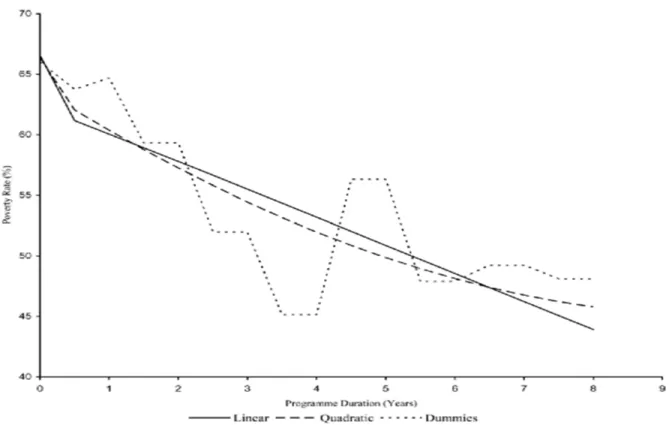
Figure 1. Growth in Grameen Bank Membership, 1967–2007. ...49 Figure 2. Program Duration and Objective Poverty. ...55 Figure 3. Female Membership of Grameen Bank. ...73
LIST OF TABLES
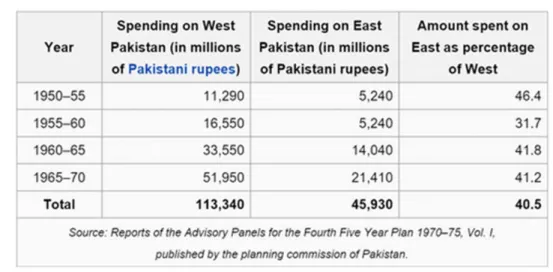
Table 1. Level of Development Disparity within Pakistan in the 1960s. ...35 Table 2. Overall Decline in per Capita Income in Pakistan under Ayub
Regime, 1959–1960 ...36 Table 3. Distribution of Poverty Status of Program Households and
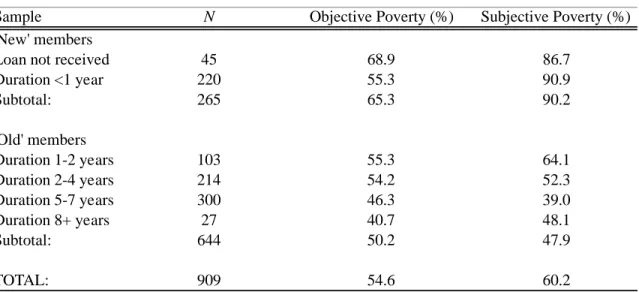
Comparison by Membership Duration (Bangladesh). ...53 Table 4. Objective and Subjective Poverty Rates. ...54
LIST OF ACRONYMS AND ABBREVIATIONS
AL Awami League
ASA Association for Social Advancement BNP Bangladesh Nationalist Party
BRAC Bangladesh Rural Advancement Committee MFI Microfinance Institution
ACKNOWLEDGMENTS
I wish to thank my mentors, Dr. Naazneen Barma and Dr. Anshu Chatterjee. Their teachings, patience, encouragement, and guidance will always be appreciated, and I look forward to applying the insight and wisdom they have shared with me in future development work.
In addition, I have been blessed to be a part of a wonderful team, the Cebrowski Institute, of which Alison Kerr, Sue Higgins, Warren Yu, and Cecelia Davis have taught and supported me throughout my years on the team. In addition, colleague Ann Gallenson has supported and encouraged me to compile far-reaching concepts into something tangible. I thank these individuals for their daily inspiration and for the opportunities they have encouraged me to follow.
Lastly, I would like to thank my family, including my mother, father, sister, Rabia, and brothers, Armaghan and Almizan. They have always believed in me and have been amazingly supportive. Developing this thesis has led me to better understand various aspects of my South Asian heritage and the legacies that shaped the lives of my parents. I am grateful for the sacrifices they have made on our family’s behalf—I hope I am able to pass the good work on.
I.
INTRODUCTION
Over the past two to three decades, microfinance—the provision of loans and other financial services to those, typically the poor, who lack access to traditional financial intermediaries—has become a major form of assistance through which development agencies have attempted to aid poor nations, especially with the goal of raising millions above the poverty line. The concept of microfinance was pioneered in Bangladesh by Muhammad Yunus, who created the Grameen Bank in 1976 in order to create credit opportunity for the poor.1 Since then, there have been hundreds of similar “Grameen-like” banks established. Despite having had a great deal of this and other forms of developmental assistance, Bangladesh continues to face high levels of poverty and other developmental challenges. In fact, one-third of Bangladesh’s population continues to live in extreme poverty.2 As a response to the nation’s poverty level and the lack of opportunity available for its poor, 686 microfinance institutions now exist within the country.3 Given this setting, this thesis addresses if microfinance loans lead to a reduction in poverty and, if so, under what conditions.
This thesis uses the terms microfinance and microcredit interchangeably, and examines “microentrepreneurs,” who come from low-income households.4 The topic is addressed by surveying outcomes on poverty reduction and further determining which variables condition the effects of microfinance on poverty reduction. This is done by looking at case studies that track the income of borrowers and non-borrowers within the village level in Bangladesh.
1 David Lewis, Bangladesh: Politics, Economy and Civil Society (Cambridge: Cambridge University Press, 2011) 115.
2 Ibid., 158.
3 Microcredit Regulatory Authority, “List of Licensed MFIs as of March 01, 2016,” accessed March 23, 2016, http://www.mra.gov.bd/images/Licensed_NGO_MFIs/licenced250216en.pdf.
4 Grameen Bank for Small Business RSS, “What Is Microcredit,” last modified March 2, 2012,
A. RESEARCH QUESTION
The primary research question is:
How do microfinance programs contribute to poverty reduction?
The impact of microfinance on poverty reduction is a significant area of study, particularly for development practitioners and academics interested in the aggregate effect of such programs on poverty reduction. Despite being a major element of development practice for decades, there is still much to be learned about the extent to which microfinance programs actually reduce levels of poverty across different economic classes—and under what conditions this occurs.
Daniel Lewis argues that “Bangladesh is at a crossroads of sorts, and faces a number of pressing dilemmas,” including its poverty level.5 The outcome of Bangladeshi development schemes is important for practitioners to study because it may enable them to better address specific development needs. Tracking the outcomes and possible spillover effects of specific types of microlending programs provide a lens through which progress can be measured. For example, we can analyze if there are any positive gender-related outcomes that may contribute to expanding the rights and role of women, which in turn, perhaps indirectly, encourages poverty reduction. By contrast, we can also seek to find if there are any unintended effects of mobilizing microloan programs within particular communities of the low-income population. A study of microlending offers an opportunity to consider how to increase the quality of life of the world’s poorest. In turn, more prosperous societies in which human security is guaranteed tend to be more secure and less violent, thus creating indirect connections to broader international security concerns.
5 Lewis, Bangladesh, 9.
B. THESIS STATEMENT
This thesis contends that microcredit can alleviate symptoms of poverty. Research to support this claim includes how microcredit programs augment income levels for poor rural households while in the non-economic spillover effects of microcredit will be analyzed.
Microfinance is a significant research topic for policy makers and academics to consider, as the bourgeoning microcredit market is helping to reimagine ways financial tools and instruments can couple with social and development programs in the developing world. An overview of the origins of microfinance demonstrates that the poor lack sufficient opportunity to raise themselves out of poverty, and advocates such as Dr. Muhammad Yunus believe that microcredit programs offer hope to those poor.
II.
LITERATURE REVIEW
This chapter reviews current literature on microfinance as a form of poverty alleviation. The focus is to draw attention to the breadth of views regarding how microfinance can and cannot be used—for example, is it a development tool, or is it a way to reform social constructs?—and, if these hold true, to determine if there is a link to poverty reduction.
A. DEFINING “MICROFINANCING”
Addressing the outcomes of microfinance on poverty reduction requires first defining what it is. One widely used definition suggests that microfinance is made of “small scale transactions in credit savings designed to meet the needs of small and medium-scale producers and businesses.”6 Then there are structural mechanisms to consider, in which the main characteristics of microloan schemes can vary. The course of this thesis will also delve beyond this definition, addressing several other attributes of microcredit—such as that it is a tool that allows for savings and insurance, it is a form of empowerment, and borrowers are taught valuable skills and knowledge.
Thus, microfinance was intended as a means to allow the poor to help themselves, with particular focus on financial credit services. One reason the poor living in Bangladesh have not been able to secure loans has been that they do not have acceptable collateral, as well as for the fact that the costs associated with vetting poor loan candidates (who often live in the rural outskirts) are too high to make lending to the poor profitable.7 Thus, since the 1970s, the poor in Bangladesh gained greater access to credit because of the creation of microfinance programs.8
6 Shahidur R. Khandker, “Microfinance and Poverty: Evidence Using Panel Data from Bangladesh,”
The World Bank Economic Review 19 no. 2 (Oxford University Press, 2005): 263, http://www.jstor.org/stable/40282216.
7 Lewis, Bangladesh, 115.
8 Niels Hermes and Robert Lensink, “The Empirics of Microfinance: What Do We Know?” The Economic Journal 117 no. 517 (2007), F1, http://www.jstor.org/stable/4625473.
Poverty, or those living within poverty, is defined as those living with incomes of less than one dollar a day.9 To begin addressing what poverty is, I address Banerjee’s and Duflo’s discussion of poverty, as some critics believe poverty cannot be reduced because of the notion of the “poverty trap.” Economists such as Jeff Sachs argue that “the poor are poor because they are poor.”10 He contends that this may be circumstantial, such as being landlocked geographically, or because of bad luck. As a response to these conditions, he states the poor need a “big push” (economically speaking) that will enable them towards a more profitable future.11 However, within the literature of poverty traps, other critics such as William Easterly believe poor individuals need to search for their own solutions, while aid is only a corrupting influence. In addition, the free markets and incentives will compel the poor to be creative in solving their problems.12 He further cites the phenomenon of poor countries becoming rich and vice versa. Thus, if the conditions of poverty can be altered, then the notion of a poverty trap is not feasible.13 Microfinance, then, is a concept that may bridge these two schools of thought.
There are a handful of possible causal factors that contribute to microfinance lowering levels of poverty; the goal of this thesis is to explore which mechanisms of microfinance institutions affect different elements of poverty reduction outcomes. A great deal has been written about this topic and this thesis synthesizes state of the art literature, applying it specifically to Bangladesh to assess Bangladesh’s experience with microlending. For example, Authors Abhijit Banerjee and Esther Duflo discuss what microfinance is in order to demonstrate the parameters of how, and under what circumstances, microlending programs can be used to facilitate poverty reduction. To do this, they examine the nature of microfinance, both its different applications and intentions. In addition, the authors give examples of saving behavior to explain
9 Ibid., 462.
10 Abhijit Banerjee and Esther Duflo, Poor Economics: A Radical Rethinking of the Way to Fight Global Poverty (New York: Public Affairs, 2011) 9.
11Banerjee and Duflo, Poor Economics, 9. 12 Ibid., 4.
mechanisms that allow certain borrowers to be successful while other borrowers are not able to utilize lending programs.14
Banerjee and his collaborators address the conditions under which microloans are effective. One theory Banerjee suggests is the fact that microloans are effective in facilitating increased income for small business owners who already have income, as the additional loan funding contributes to the ability to build assets.15 However, this conflicts with Lewis’s discussion that only the core poor benefit from microcredit, and there is insignificant change for those who had income generation capacity.16 Another strand of thought includes that targeting of participants contributes to levels of success. For example, a third theory around microfinance states that targeting women leads to higher success rates than solely targeting men.
Research on these questions includes a number of quantitative studies, which this thesis utilizes. Economists Shahidur Khandker and M. Jahangir Chowdhury point to the income creating aspects of microloan programs; further illustrating the impact of increased income on consumption and household well-being. Khandker contends that microloans, as forms of poverty interventions, help the poor access self-employment opportunities and thus generate increased levels of income.17 Meanwhile, Armendariz and Morduch demonstrate that the poor are motivated to invest borrowed credit in their business, growing the potential that microfinance institutions (MFIs) offer.18
Further findings illustrate the effect of microfinance programs in creating an interdependent network of responsibility, which indirectly has a push and pull effect on
14Banerjee and Duflo, Poor Economics, 9.
15Abhijit Banerjee et al., The Miracle of Microfinance? Evidence from a Randomized Evaluation
(Cambridge: National Bureau of Economic Research, 2013), http://economics.mit.edu/files/5993. 16 Lewis, Bangladesh, 115.
17 Khandker, “Microfinance and Poverty,” 266; M. Jahangir Alam Chowdhury, “Poverty and Microfinance: An Investigation into the Role of Microcredit in Reducing the Poverty Level of borrowing Households in Bangladesh and the Philippines,” The Whitehead Journal of Diplomacy and International Relations (2008) 28–30, 34.
18 Beatriz Armendariz and Jonathan Morduch, The Economics of Microfinance, Second Edition (Cambridge: The MIT Press, 2010) 145.
borrowers.19 The outcome of this effect is increased participation that facilitates repayment and therefore leads to increased access to credit and services, which may facilitate poverty reduction. However, there are academics, including Beatriz Armendariz and Jonathan Morduch, who question the role of microcredit as being limited to an intervention tool: they believe it can serve a broader role towards economic development. They contend that small scale lending reduces the inefficiency in production and consumption that are the result of imperfect credit markets. By reviewing how the poor save and build-up assets, the authors examine how microfinance organizations contradict institutional deficiencies. In addition, the authors address challenges that microfinance groups face with regards to delivering financial products at costs that the poor and providers can both afford. In turn, these challenges have been addressed by innovative payment schemes, which will be addressed in Chapter III.
Furthermore, Armendariz and Morduch believe microfinance is successful in reducing poverty because of two main features. First, microfinance is an innovative tool within the credit market. Secondly, microfinance serves as a development agenda.20 This research aligns with the views of Sayantan Bera, who contends that the lending products have transitioned from credit intervention towards “livelihood finance.” He asserts that it is this transitional process that has allowed microfinance to be able to adapt and thus lend to positive effects for the poor.21
B. INNOVATION
The innovation aspect of Armendariz and Morduch’s discussion is relevant to this thesis because it focuses on how microfinance has overcome market failures in order to reach the poor. While state-run banks have failed in providing credit access to the poor— which in effect has exacerbated poverty levels—microfinance has created innovative ways to reduce costs associated with lending. Because these costs have been lowered,
19 Shahidur Khandker,Review of The Economics of Microfinance: Economic Development and Cultural Change 56, no.2 (University of Chicago Press, 2008) doi:10.1086/523604.
20Khandker, Review of The Economics of Microfinance, 484.
21 Sayantan Bera, “Programme Design and Impact Assessments: ‘Success’ of Microfinance in Perspective,” Economic and Political Weekly 43, no. 32 (2008): 77, http://www.jstor.org/stable/40277833.
microfinance has catered to the needs of the poor to a greater extent than formal banks. In addition, savings and insurance programs offered to the poor through microfinance programs are an outcome of this innovation. This innovation then, enables microcredit lenders to reach and help more people living in poverty, and nuances tied to changing shifting behavior may set the stage for long-term poverty reduction.22 Bera affirms that microfinance serves those with limited or no assets, and it also serves the income poor. In addition, this target market is made of informal networks that rely on social ties and cultural proximity. As a consequence, there is less likelihood of issues with information and enforcement. This then culminates into a joint liability structure, which relies on social trust. The Grameen Bank attributes its successful repayment record on the fact that this self-selection process bypasses adverse selection problems. In addition, this selection process results in peer monitoring that does away with moral hazard issues.23
Supporting the notion that microcredit is successful because it is innovative are studies that reflect upon the conception that, by fostering a creative market for lending tools, commercial banks too are now entering the microlending sector. Hermes and Lensink believe this entry will generate a more competitive lending market. They also argue, while on one hand, that this will lead to reduced lending to the poor, it may mean more income levels can participate in lending schemes. In turn, this may improve overall financial sustenance.24 To support these claims, they associate the availability of credit access to increased incomes in Bangladesh, which allows for a rise in investments that will allow for greater income potential.25
The joint liability feature of microfinance is another innovative design that allows small scale lending to be successful in reducing poverty. However, some analysts believe the effectiveness of programs goes beyond just this element. Bera believes the resultant incentive mechanism that is derived from joint liability is what drives success, not the
22Ibid.,485.
23 Bera, “Programme Design and Impact Assessments,” 79. 24 Hermes and Lensink, “Impact of Microfinance,” 462. 25Ibid.,463.
joint liability feature alone.26 In order to verify this claim, Bera suggests using impact evaluation methodologies. He narrows his assessment to the relationship between high repayment rates and outcomes.27 Niels Hermes and Robert Lensink also address the incentive mechanism of joint liability. They contend that incentive mechanisms are social outcomes that arise out of joint lending. When a group of borrowers are jointly responsible for repayment of a loan, individuals are inclined to monitor one another. If a person is suspected of being a high-risk borrower, they are kicked out of the group, which has direct communal consequences. Individuals’ desire to avoid the shaming element of this phenomenon is what contributes to microfinance being an effective program.28
Bera also discusses incentive structures. In practice, microfinance lenders employ an array of incentive mechanisms that are designed to ensure repayment and sustainability. These include “sequential financing,” “progressive lending,” “contingent renewal,” and “regular repayment schedules.” An ability of these features to help facilitate poverty reduction is the fact that they can be applied in non-homogenous urban populations as well as rural communities.29
C. DEVELOPMENT AGENDA
Authors Armendariz and Morduch further contend that even more significant than the financial spectrum of microfinance to reduce poverty is its development agenda.30 While formal banks do not reach the poor, they certainly do not reach the core poor, moderately poor, or poor women. Microfinance, thus, has a development aspect, because its targeting mechanism allows for prospective borrowers to be more responsible in how they utilize credit and repay loans. In turn, the joint lending mechanism activates good behavior, especially within female-based borrowing groups, as they are more vulnerable or susceptible to social pressures.31 Another way microfinance resonates with the poor to
26 Bera, “Programme Design and Impact Assessments,” 77. 27Ibid.,79.
28 Hermes and Lensink, “Impact of Microfinance,” 463. 29 Bera, “Programme Design and Impact Assessments,” 80. 30Khandker, Review of The Economics of Microfinance, 485. 31 Bera, “Programme Design and Impact Assessments,” 79.
contribute to development is the way in which it inculcates social trust. Under this context, because joint lending is an explicit communal process, it has become an instrument for building social capital. This is possible because of the creation of horizontal networks, where forms of reciprocity are shared; further enabling individuals to trust one another. As a consequence, this trust element becomes embedded into the village network. In order to maintain this trust, the structure of microfinance involves participants having to interact repeatedly with their associates, developing social trust and thereby replacing individual norms with shared norms.32 Armendariz and Morduch further allude to microfinance as a tool that mobilizes savings and serves as an insurance against income and consumption risks. Goals they address out of this include lowering vulnerability, hedging risk, and accomplishing greater levels of efficiency. These attributes, then, are ways poverty reduction can be enhanced through microfinance.33
Other authors also consider the development aspect of microfinance within poor households. Pitt and Khandker consider the effects of group-based credit programs on labor supply and schooling.34 The study finds that credit programs have a wider effect on the behavior of women, who—through increased empowerment- are more likely to spend on investments related to their household (such as education) than are men. They also agree with the notion that social pressure establishes conditions conducive for poverty reduction.35 Furthermore, after studying consumption habits, the authors further agree women are better suited to partake in microlending programs than are men.36
An attempt can be made to correlate this suitability to the role of empowerment, which Dr. Abdul Basher undertakes in his study of the spillover effects of microcredit. Basher articulates the possibility that microcredit programs have effect on non-economic activities, thereby having a spillover effect on aspects that may contribute to poverty
32 Bayulgen, “Muhammad Yunus, Grameen Bank and the Nobel Peace Prize” 533. 33 Khandker, Review of The Economics of Microfinance, 485.
34 Mark Pitt and Shahidur R. Khandker, “The Impact of Group‐based Credit Programs on Poor Households in Bangladesh: Does the Gender of Participants Matter?” Journal of Political Economy 106, no. 5 (University of Chicago Press, 1998): 958, doi:10.1086/250037.
35 Ibid., 962. 36 Ibid., 958.
reduction. For example, the paper studies the phenomenon of participants of lending programs having reduced rates of fertility. As a result, it may be assessed that smaller family sizes reduce the economic footprint of a household. Basher also acknowledges the empowerment of women through microcredit programs and he addresses the gap in literature that describes how female borrowers are empowered. It is common for analysts to describe such achievement on the basis of changing economic behavior, such as the ability to spend more on food. Instead, Basher seeks to study empowerment by means of non-economic activities, such as the ability to contest social values.
Other analysts have also found that gender-based targeting of microloan programs has a positive influence on poverty reduction. For example, Khandker reports of instances of women who acquire small loans experience improved levels of household and individual welfare, referring to the occurrence of “consumption smoothing” lending to increased quality of life.37
Meanwhile, Khandker offers a critique to the effects of income generation, stating that even if its effects on household income are positive, because microfinance only reaches about a quarter of the population within Bangladesh, only about 1% of the population will be lifted out of poverty.38 To this point, authors Armendariz and Morduch ultimately find that available research does not lend to the fact that microfinance can provide substantial gains for borrowers. However, the Grameen bank, along with other World Bank sponsored programs, would disagree. Their findings demonstrate that microfinance can serve as a valuable tool in decreasing poverty rates, empowering women, and facilitating other features of development.39
Oksan Bayulgen offers yet another dimension, reflecting on ways in which microfinance contributes to activating the poor and thereby empowers them towards action that helps them help themselves out of poverty. He argues that the link between microcredit and empowerment of the poor is self-efficacy and social capital. He accepts
37 Khandker, “Microfinance and Poverty,” 276. 38 Ibid., 266.
that these are fostered through the lending structure of group-based programs, where borrowers share the responsibility of loan repayment. Along this line, then, capital is shown to be used more effectively, when applied towards education and improving human capacity.40 While there are disagreements about the actual outcome of micro-financing on societal constructs, what is generally believed is that microfinance services can lead to individual instances of empowerment. According to Bayulgen, this is possible by fostering the development of entrepreneurial programs, which in effect can lead to increased income that remains within the control of women. Another positive outcome is that such increased income, then, will have spill-over effects that can include increased health, nutrition, higher rates of literacy, better housing conditions and lower rates of mortality of women and their children.
Bayulgen’s discussion supports the notion that microfinance is a development agenda which creates the conditions for empowerment. First, he argues that microfinance allows for perceived self-efficacy, which is defined as the “belief in one’s own efforts to control desired outcomes, as opposed to luck or influence of others.”41 Secondly, political empowerment is facilitated by the ability of microfinance to lead to public good delivery within society. This notion aligns with Dean Karlan and Jacob Appel’s view that for microcredit systems to work effectively, social capital and communal interactions are required. In particular, group lending dynamics benefit from these mechanisms.42 Thus, because of its ability to deliver public goods, microfinance is able to contribute to forms of poverty reduction.
D. CHALLENGES
Other authors doubt the ability of microcredit to significantly curtail poverty. While others have already cited that banks deliberately do not service the poorest, some critics further argue that the poorest deliberately choose not to partake in microfinance programs. These reasons include that the poor lack confidence, or they deem the loans to
40 Bayulgen, “Muhammad Yunus, Grameen Bank and the Nobel Peace Prize,” 531. 41 Ibid., 533.
42 Bayulgen, “Muhammad Yunus, Grameen Bank and the Nobel Peace Prize,” 534; Dean Karlan and Jacob Appel, More than Good Intentions (New York: Penguin Group, 2011), 107, 119, 138.
be high-risk. In this view, the core poor—the poorest of the poor—are too risk averse to be able to invest in their future. In other instances, other members of their respective borrowing community perceive the core poor as high risk. In other instances, staff of lending institutions may choose to exclude the core poor for the same reason.43
There are challenges that microfinance structures face as well, which limit how well it can be implemented to reduce poverty. Kalpana points to the instance of poor villages reverting to self-protection measures of evicting members who are close to defaulting. Creating a perception of “bad-risks” within a village is an outcome that hinders microfinance programs to work effectively.44 Kalpana further demonstrates that this is due to the structural mechanisms of loan programs, of which the hard repayment deadlines do not take into consideration stress events that limit the ability of borrowers to pay loans on time.45
Similarly, Lewis raises concerns that MFIs, as large as they have become, are running parallel efforts to the government of Bangladesh, thereby weakening the state’s ability to serve the poor. He also points to the fact that individuals are not receiving loans at every poverty level; and among those who are, only those categorized as “extremely poor” are able to generate increased levels of income, not the “moderately poor.”46 The question of whether this intervention can reduce rates of growth, and thereby escalate rates of poverty47 is an area of future research in its own right.
E. CHAPTER SUMMARY
Advocates of microfinance believe that the income generation and savings aspect of microfinance can marginally alleviate poverty, while making it easier for the poor to endure income shocks. Furthermore, progressive payment functions augment the earning capacity over a period of time. In addition, the social aspects of microcredit programs
43 Hermes and Lensink, “Impact of Microfinance,” 463.
44 K. Kalpana,“Shifting Trajectories in Microfinance Discourse,” Economic and Political Weekly 40, no. 51 (2005):5403, http://www.jstor.org/stable/4417553.
45 Ibid., 5401.
46 Lewis, Bangladesh, 119. 47 Ibid.,110.
complement economic reform—through links between increased household income, and increased education and healthcare access for children of borrowers. Meanwhile, innovative features such as joint lending help to build socially progressive environments, while offering women economic opportunity’s that cater to their cultural environment. There are, however, risks tied to microlending, as—like commercial loans—they are a form of debt, and MFI programs are functioning independent of central regulation, at times duplicating Bangladesh’s government’s efforts.
III.
RESEARCH OVERVIEW AND HYPOTHESIS
This chapter briefly reviews significant arguments of microfinance that question its effectiveness at poverty alleviation. Meanwhile, the research design is explained in order to set boundaries as to how information was collected, while the arguments are then assessed in Chapter V to determine if microcredit is successful in mitigating poverty.
A. MICROFINANCE THEORY ASSESSMENT
This thesis considers three major implications about microfinance. The first assessment addresses Khandkar, Pitt and Chowdhury’s argument that microcredit is effective in alleviating moderate poverty. In turn, another argument addressed is that only poor borrowers benefit, because they are going from “nothing to something.” From this angle, it is examined if there are other beneficiaries of MFIs that exist beyond the core poor. Finally, the third argument addressed includes that pre-conceived conditions allow for microcredit to work most effectively, which includes targeting mechanisms. This possibility leads the thesis to consider how microloans are reaching women, and includes an assessment of whether women borrowing in comparison to men serves as a variable in household poverty reduction.
Gender based targeting is a variable relevant to consider because of inherent cultural and social dynamics that affect debt. Women tend to face greater constraints when selecting investments, and are more easily influenced by peer pressure. This dynamic, however, has meant that women are more likely to repay loans, leading the success of their loans to be more likely, and in turn, allowing women to borrow greater amounts. Moreover, when compared to men, the lifestyles of rural women are less mobile, which means the proximity they maintain within their communities makes monitoring easier. This lower rate of mobility also reduces instances of default, as fear of social sanction is more prevalent amongst women than men.48
Relatedly, individual empowerment is analyzed with regards to financial empowerment as well as political empowerment. In addition, this research seeks to
establish if there is a relationship between microfinance borrowing, investing and savings. Because microfinance options have introduced flexible savings options, households are able to accumulate assets at a greater level. Not only that, but seasonal consumption needs are smoothed out, while larger expenditures are made possible and borrowers are able to protect themselves against shocks. In this way, the deposit feature of microfinance schemes makes poverty reduction possible, and is a feature that is arguably just as valuable as credit services.49 Thus, the savings mechanism is a variable within microfinance that reduces risk, further lending to lower rates of poverty.
The individual empowerment assessment begins by considering the influence of microfinance on political economic development, and its impact on political empowerment. The World Bank defines empowerment as “the process of increasing the assets and capabilities of individuals or groups to make purposive choices and to transform those choices into desired actions and outcomes.”50 Bayulgen has made the argument that microcredit can increase the level of political empowerment that is felt by borrowers; under the World Bank’s framework, he contends that political empowerment provides the poor with information to make political decisions along with the agency to act on this information. As a result, the politically empowered poor are more equipped to influence the course of their livelihoods, along with the communal decisions that affect their community.51
B. RESEARCH DESIGN
This research aims to deliver insight into microfinance mechanisms that contribute to poverty reduction in Bangladesh.To accomplish this,the research design is a single country case study of Bangladesh. In order to adjudicate among the competing hypotheses mentioned above, the research focuses on three major microfinance programs in Bangladesh: Grameen Bank, the Association for Social Advancement (ASA), and Bangladesh Rural Advancement Committee (BRAC). These groups have been selected
49 Ibid., 80.
50 Bayulgen, “Muhammad Yunus, Grameen Bank and the Nobel Peace Prize,” 532. 51 Ibid., 532.
because they are amongst the largest microcredit providers within Bangladesh.52 The success rates of these different programs vary, while the types of clients and means of targeting also vary. Thus, these programs will be treated as a whole, in order to allow impacts to be measured in a way that can determine if microfinance is a successful tool in poverty reduction.
In order to conduct a relevant survey, research was furnished using academic reports, journals and articles that have been published by leading scholars within the microcredit field. For this reason, the thesis especially considers research by current MIT Poverty Lab directors Abhijit Banerjee and Esther Duflow, and the work of Dean Karlan and Jacob Appel, who have conducted field reports on microfinance in Bangladesh, citing specific case studies within village environments. Their case studies are compared against quantitative panel data from World Bank analysts and economists to provide context for various theoretical explanations expressed in Chapter V.
In addition, the thesis draws from scholarly review of historical property rights to survey legacies that shaped Bangladesh’s current economic position. The intent of drawing on those findings is to introduce how MFIs can play an intermediary role in addressing the needs of Bangladesh’s poor. Factors of MFI influence that are examined include development indicators, such as literacy and infant mortality. In addition, this research seeks to establish intermediate mechanisms: for example, are levels of consumption smoothing linked to changes of objective or subjective poverty? Moreover, non-economic outcomes are measured by applying quantitative data that supports qualitative anecdotes.
C. CHAPTER SUMMARY
The section discussed which of the microfinance arguments are addressed in this thesis. The goal of the research analysis is to assess the overall outcomes of program participation in order to find how poverty rates can—if at all—be affected. In addition, mechanisms that help explain those outcomes are also addressed.
52 Lewis, Bangladesh, 110.
IV.
THE ECONOMIC IMPACT OF PRE-COLONIAL BRITISH
INSTITUTIONS
Chapter IV of this thesis begins by explaining why Bangladesh is poor, building on legacies that have contributed to entrenching the nation into its current state of poverty. This background information is pertinent because it provides insight into how microfinance can be tailored to improve economic standing. Chapter V includes definitions of microfinance and draws a boundary of how poverty reduction is being measured. Chapter V is further comprised of a thorough survey of the literature on microfinance which lays out more fully how and why microfinance works or does not work to reduce poverty. This constitutes a survey of empirical outcomes of programs run by the three major MFI’s in Bangladesh. Furthermore, causal relationships are discussed to highlight the conditions under which microfinance may be more productive. Chapter VI then highlights real-life qualitative examples in order to contextualize broader information about the development trajectory of other countries that are following in Bangladesh’s footsteps through use of MFIs. Finally, Chapter VI takes stock of the findings of comparative research and evaluates which of the hypotheses appears most supported by the evidence, as well as assesses which facet of MFIs’ operations appear most significant.
A. WHY BANGLADESH IS POOR TODAY
Chapter I introduced the level of poverty Bangladesh is facing, emphasizing the fact that half of its population lives below the World Bank’s poverty threshold, while one-third of its population lives in extreme poverty. Illustrating the significance of the poverty level is the Economist Intelligence Unit’s (EIU) ranking of Bangladesh as the 106th country, out of 160 others countries, in its “quality of life” index, making Bangladesh the lowest ranked South Asian country. The EIU arrived at this rank by taking into account Bangladesh’s “income poverty, life expectancy, levels of corruption and the condition of the country’s institutions.”53 This chapter, then, considers the
symbiotic relationship between these factors and how they contribute to Bangladesh’s poverty.
Contributing to Bangladesh’s income poverty is the fact that Bangladesh’s economy is based on an agrarian structure, employing roughly 60% of the labor force and making up almost 25% of the nation’s GDP.54 The agrarian population is significant for this study because 75% of Bangladesh’s population lives in rural areas; with per-head income levels one of the lowest in the world, it is their poverty level that contributes to Bangladesh’s poverty as a whole. Moreover, with regards to Bangladesh’s institutions, village level institutions continue to play a significant role in the daily lives of the rural population, creating challenges for state institutions in reaching the poor.55 This relationship between village institutions and Bengali citizens, however, highlights the capacity at which microfinance programs can fill the absence of the state’s capacity in alleviating rural poverty levels.
In order to provide the contextual background against which to address poverty reduction through micro-finance initiatives in Bangladesh today, this chapter study looks at the causes of poverty and the unequal distribution of wealth in South Asia writ large. In addition, historical factors that have contributed to Bangladesh’s corruption and its link to rural poverty levels—including land appropriation, productivity challenges, and resource extraction—are addressed. One key feature of this section illustrates Daniel Lewis’s assertion that “land has been the key structural asset that has…defined social class” within Bangladesh; further serving as a key reason why those without land remain poor.56 In order to address factors contributing to Bangladesh’s poverty, three key time periods are examined. The first examination includes the time period during the colonial rule of the British Raj, the second time frame considers Bangladesh during its existence as East Pakistan. The last background section then examines Bangladesh post-independence.
54 Ibid., 21.
55 Ibid. 56 Ibid., 14.
B. INTRODUCING LANDHOLDING POLICIES AND RESOURCE EXTRACTION IN BANGLADESH
Abhijit Banerjee and Lakshmi Iyer address the conditions that set poverty trends in motion, arguing that historical institutions shaped long-term effects on the economic performance of Bangladesh. The authors draw a correlation between the existence of particular historical property rights under the nineteenth century British Raj, and modern economic and development outcomes.57 Substantiating this connection to Bangladesh’s current economy, is Lewis’ finding that “by the 1980s, landholding census data indicated that at least half of Bangladesh’s rural households were now identified as “functionally landless,” reflecting the loss of landholdings as a result of forced sale or because of land fragmentation.58 Banerjee and Iyer’s study finds that historically landlord-held areas have experienced lower distribution rates of public goods as well as reduced levels of agricultural productivity, leading to instances of increased poverty. Furthermore, the authors find that the existence of particular institutions within the Bengal Presidency of India led to explicit administrative policy choices, which have indirectly affected present day economic outcomes of pre-colonial states.59 The following section will consider how these outcomes set the conditions for poverty within Bangladesh today. By understanding the causes of poverty, we can then better determine how to facilitate economic development through microfinance.
Banerjee and Iyer measure how tenure systems within pre-colonial India and colonial-India differ across districts in order to demonstrate the correlation between property rights and the lack of economic and public development within colonial India. They find that there is a measurable relationship between economic performance and development of a region, and the type of tenure system used during the regions colonial rule as compared to pre-colonial rule.60 This examination is relevant because it addresses
57 Abhijit Banerjee and Lakshmi Iyer, “History, Institutions and Economic Performance: The Legacy of Colonial Land Tenure Systems in India,” Massachusetts Institute of Technology Department of Economics Working Paper Series, 02–27 (June 2002): 3, http://economics.mit.edu/files/511.
58 Lewis, Bangladesh, 15.
59 Banerjee and Iyer, “History, Institutions and Economic Performance,” i. 60 Ibid., 5.
how lack of economic development in modern Bangladesh is an inheritance of colonial rule. Thus, in order to convey Banerjee and Iyer’s findings, the following sections analyze outcomes of pre-colonial land policy in comparison with colonial land policy.61
In addition to land distribution policies, Bangladesh’s poverty can also be tied to legacies of resource extraction. To support this claim, Hamza Alavi argues that Britain’s plundering and interference of India’s medieval62 cotton industry devastated India’s long term economic prospects, while manifesting into a one-sided dependence on an “import substitution strategy” of industrialization.63 In addition, Hamza Alavi and S. Zaidi argue that commercialization of India’s agriculture—an outcome stemming from Britain’s desire to monopolize India’s cotton market—also contributed to destabilizing India’s economic structure.64 The outcome of these practices was the extraction of resources, disruption of India as the region’s premier supplier of cotton, and destruction of India’s self-sufficiency.65 Land-holding policies and resource extraction are not mutually exclusive toward contributing to Bangladesh’s poverty—both have shaped Bangladesh’s economic prospects.
1. Background on Landholding Policies
The area that constitutes modern day Bangladesh was subject to British rule between 1757 and 1947 and formed part of Pakistan until Bangladeshi independence in 1971. The British colonial government secured significant amounts of revenue by extracting land tax throughout different regions. While in some instances, tax collection was a continuation of pre-colonial practices, other areas were introduced to this concept during the Raj.66 Supplementing this process of the tax collection was industrialization of
61 Ibid., 5.
62 Hamza Alavi and John Harriss, Sociology of “Developing Societies” South Asia (New York: Monthly Review Press, 1989), 6.
63 Ibid., 10.
64 Alavi and Harriss, Sociology of “Developing Societies” South Asia, 13; S. Akbar Zaidi, Issues in Pakistan’s Economy: A Political Economy Perspective, Third ed. (Karachi: Oxford University Press, 2015), 18.
65 Ibid., 6–7.
sectors that the Raj thought were profitable. Thus, the British regime began development campaigns in India through the English East India Company. While these trade networks led to the building of factories, the profits further enabled successful military campaigns. Consequently, battles during the 1700s included the capture of Bengal Presidency, which resulted in expanded political control of the Raj, and the expansion of Britain’s institutions, which included its tax collection practices.67
In these taxed areas, local landlords were made responsible for collecting payments from the peasantry. In systems that contrasted with this landlord-based system, such as individual-based systems, it was the British government that was responsible for extracting revenue from agricultural cultivators. Another type of system included the village-based system, where the entire community endured the burden of taxes.68 Out of these models, it was the landlord-based system that institutionalized tax collection, fostering the regime’s ability to expand in other administrative dimensions. By 1841, 60% of the British regimes revenue was collected through “land revenue systems” or “land tenure systems,” both systems referring to the practice of collecting revenue from the peasant class. Those responsible for land tax were the implicit holders of the property rights of the respective land (also known as zamindari).69
The landlord-based system led to a monopoly of economic and political power because this system distributed the wealth of Bangladesh away from the peasant class and into the hands of the zamindars.70 Thus, the following section will focus on the zamindari landlord based system because it is a significant cause of poverty within Bangladesh.
2. Landlord-Based Systems of Tax Extraction
The landlord system was effective for the British in that it capitalized on the use of property right titles. In turn, these titles served as a vehicle that allowed the landlord-based system to effectively eliminate the need for the British administration to have
67 Ibid., 6.
68 Banerjee,and Iyer, “History, Institutions and Economic Performance,” 4. 69 Ibid., 7.
contact with the peasant class. For instance, in Bengal, landlords were made responsible for extracting taxes, and in some areas, the Colonial regime mandated the permanence of these revenue commitments, as evidenced by the “Permanent Settlement” act of 1793.71 However, there was flexibility in other areas, where temporary settlements were enacted. For these regions, “the revenue was fixed for a certain number of years, after which it was subject to revision.”72 In effect, the landlord-based system required less administrative oversight in present day Bangladesh. For this reason, investment in production and development of infrastructure seldom took place. This pattern continued, as the costs associated with making adjustments to the tax collection mechanism sustained the longevity of the landlord system.73
The existence of landlord based systems led to a handful of economic outcomes. One such consequence was the creation of unequal distribution of wealth, which was the result of the absence of judiciary protection that set a ceiling to the amount landlords could extract from the cultivating class, thus landlords were ideally “position[ed] to appropriate most of the gains in productivity.”74 Relatedly, colonial powers created laws that granted landlords judicial support in coercing payments in order to extract the maximum amount of rent from the peasant class.75 With laws and historical extraction practices in their favor, landlords during the nineteenth century—a major period of increased economic productivity—grew wealthier while peasants stayed poor, causing the rate of inequality to increase.76 Furthermore, this hierarchy of authority became entrenched by the fact that zamindari-owned land was very fertile, which led to the creation of rent significant enough to entrench a “landlord-tenant-laborer hierarchy.”77
71 Banerjee and Iyer, “History, Institutions and Economic Performance,” 7; Ratna Ray and Rajat Ray, Zamindars and Jotedars: A Study of Rural Politics in Bengal, Modern Asian Studies, Vol. 9, No. 1
(Cambridge University Press, 1975): 82. 72 Ibid., 7.
73 Banerjee and Iyer, “History, Institutions and Economic Performance,” 9. 74 Ibid., 12.
75 Ibid., 13. 76 Ibid., 13. 77 Ibid., 12.
The historical distribution of wealth and power in present day Bangladesh is significant because it determined the size of the peasantry that could accumulate enough capital to be able to invest and further increase productivity. Meanwhile, the distribution of wealth created an imbalance between those who cultivated land for their own use, versus those who cultivated land for others. Under this context, the latter group experienced incentive problems, as ownership and gains belonged to another party. As a consequence, agricultural investment and productivity within this group declined. In turn, this outcome led to diverging interests between the elite and peasantry within Bangladesh, with the elites supporting political programs that safeguarded their land-holding rights while peasants focused on land reform.78 Out of these opposing interests, peasant property became endangered because the poor felt their land would be expropriated, which discouraged them from investing in their land.79 Thus, because peasant property rights were poorly protected, Bangladesh’s peasants had lower rates of productivity, and experienced a decline in their economic performance.
The nature of political power during the British administration serves as another institutionalized element that affected economic outcomes in Bangladesh. In turn, the asymmetric balance of power between the landed elite and poor established an environment that weakened social trust. Moreover, with the zamindar and peasant interests misaligned, it is conceivable that the poor minimally concentrated their political support towards long-term platforms that offered public goods; and it is these goods— such as schools, electricity and running water—that would have allowed for advanced development of Bangladesh. Instead, the poor allied behind political promises of land reforms, as these platforms addressed more immediate concerns of the peasant population. The zamindari structure, however, presented a series of administrative layers that prevented the grievances of the poor from being heard by the British administration. Thus, the landed elite did not augment living conditions within rural villages, as their
78 Ibid., 14.
own stakes were limited. In this way, the institutionalized hierarchy of political power prevented development within Bangladesh.80
By comparison, non-landlord areas did experience levels of development. This can be explained by the fact that—unlike the fixed revenue commitments of the landlord based system found in many parts Bangladesh—the British administration could raise rents in non-landlord areas, thus providing an incentive to ensure productivity. For this reason, the state established “irrigation, railways, schools and other infrastructure. [In] this context…almost all canals constructed by the British were in non-landlord areas.”81
This assessment is supported by empirical data collected by Banerjee and Iyer, who find that between 1891–1946, “while non-landlord controlled Madras and Punjab showed the greatest increase” of agricultural investment and productivity, the landlord based system of the Bengal Presidency experienced a decline in gross agricultural output.82 Correlating to this study, Punjab also experienced increased government sponsored development, resulting in an expansion of irrigated areas.83 The institutionalized land based systems, then, led to particular economic outcomes, with areas that had greater amounts of landlord control effectively having less productivity, which inherently resulted in a relative decline in development. On the other hand, in areas where the British administration felt they could extract greater rents, (non-landlord based systems) peasants were more productive and therefore successful. Over time, these differences persisted, even after the landlord class was abolished in Bangladesh.84
Further borrowing from studies conducted by Banerjee and Iyer, they find that landlord areas with pre-colonial roots have had less investment in human capital than non-landlord areas. This trend has continued past the end of colonial rule, with empirical data showing that even in 1981, 21% of landlord areas still had fewer primary schools, “while the gap in middle school and high school availability are 60% and 43%
80 Ibid., 14. 81 Ibid., 15.
82 Banerjee and Iyer, “History, Institutions and Economic Performance,”18. 83 Ibid., 19.
respectively.”85 Meanwhile, while less than 2% of all villages have direct access to primary health facilities, the presence of such centers in non-landlord area is 37% higher than landlord areas.86
In addition, these differences have translated into a lack of human capital accumulation within landlord or former landlord-based systems. The same study finds that literacy rates are between 5 to 16 percentage points higher in non-landlord areas. The economic and health outcomes in these areas can also be considered under the context of infant mortality rates: the study demonstrated that landlord system areas have 40–70% greater rates of infant mortality, indicating a relationship between institutionalized property rights and development indicators.87
In their conclusion, Banerjee and Iyer contend that, above the incentive structure of the state and inequity with regards to private investment, it was the political environment that played the most significant role towards shaping current outcomes of Bangladesh. They suggest policy—as demonstrated earlier with regards to political platforms that centered on land reform—as drivers of the conditions that have allowed for the lack of development of infrastructure, absence of public goods, and the unavailability of health facilities.88 In turn, the democratic process within Bangladesh has continued to reflect a higher demand for redistribution of land and less attention has been paid to the delivery of public goods.89 Bangladesh’s history has articulated this political character in the example of class conflict in West Bengal, where landlord areas have experienced statistically higher incidents of crime tied to class conflict.90
Land tax systems under the British were also responsible for commercializing India’s agricultural sector, a phenomenon that led to multiple negative repercussions. These outcomes included a decline in self-sufficiency, loss of income of the poor,
85 Ibid., 23. 86 Ibid., 23. 87 Ibid., 23.
88 Banerjee and Iyer, “History, Institutions and Economic Performance,” 24. 89 Ibid., 25, 26.
increased levels of rural debt, and loss of land. This next section then, will examine the British-led policies that led to these outcomes.
C. COMMERCIALIZATION OF INDIA’S MARKETS: ADMINISTRATIVE FAILURES
Upon implementation of its land tenure system, the British also introduced the concept of commercial agriculture and monetary tax, which had to be paid regularly and on-time. The obligation of the tax required producers to relinquish their harvest, which was initially intended for village-wide use. To make payments on time, producers sold their harvest in the market. This process led to the emergence of a commercial agricultural market, devastating the self-sufficiency of villages as well as interfering with cropping patterns.91
When revenue from commercial sales fell short of the tax obligation, landowning peasants sought loans from money-lenders, while others were forced to sell their land. If payment was not made, the British installed a civil system that ensured the forced extraction of the land.92 Stemming from the commercialization of agriculture, this trend entailed the services of both zamindars and jotedars.93While the role of zamindars has been addressed, the function of jotedars is also relevant towards understanding Bangladesh’s socio-economic make-up
Jotedars were those within the village community that owned land, but also lent-out grain or money to peasants within the community. These well-to-do villagers developed a rural credit mechanism in which small farmers became “more indebted than the whole value of their stock.”94 In turn, borrowing peasants became beholden to the jotedars until (or, if at all) their loans were paid. This debt-based relationship fueled the political and economic power of jotedars; however, it was the commercialization of the agricultural industry that entrenched the indebted croppers and peasants into poverty.
91 Zaidi, Issues in Pakistan’s Economy, 18. 92 Ibid., 18.
93 Ibid., 18.