Faculty Handbook
WELCOME TO WAIKATO
In 2014, the University of Waikato celebrated 50 years of teaching and research excellence. From very modest beginnings in 1964, the University of Waikato is now one of the world’s leading universities, and the university of choice for more than 12,000 students annually.
In 2015, the University enters a new era with the appointment of our fifth Vice-Chancellor following the retirement of Professor Roy Crawford who held the position for 10 years.
Moving forward, we are constantly developing our campus to further enhance the learning environment of our students. This is evident with the construction of the new multi-million dollar Law and Management building, which will create a trio of iconic campus facilities including the Gallagher Academy of Performing Arts and the Student Centre.
Research is our lifeblood at the University and we punch above our weight in research commercialisation. The University is one of New Zealand’s major research organisations, playing a key role in the local economy and making a significant contribution to the national innovation system. We have six research institutes, and postgraduate students who are continually contributing to regional, national and global research.
Businesses and organisations today need innovative people and the University of Waikato is dedicated to graduating outstanding students who are committed to “making a difference”.
To prepare students for the job market we provide work experience while they study, and many courses have components that mirror real-life situations so they are prepared for the challenges they face in the workplace.
The University of Waikato provides a dynamic, culturally diverse and inspiring environment for our student population so that when you leave this university you will be well prepared for the challenges that lie ahead.
WELCOME TO COMPUTING & MATHEMATICAL SCIENCES
We strive to challenge our students and are proud to see them emerge with qualifications that assist them along the path they have planned for their future.
Our aim is to prepare you for a wide variety of careers, equipping you with the skills for academic and professional success. We offer three and four-year degree undergraduate programmes that are professionally oriented, based on strong theoretical foundations. Our papers and qualifications are relevant and up-to-date in what is a rapidly changing technological and social environment. World-class research underpins unique collaborations within our Faculty, across campus, and with the wider world. These collaborations bring together creative minds, unique technologies, and degree structures tailored to your interests and skills.
A qualification in computer science, mathematics, statistics, or computer graphic design can open many doors. Both in New Zealand and overseas, our former students are using their training to assume leadership roles in educational institutions and industry.
We welcome all of our potential new students, and look forward to seeing them complete their studies and go on to future success in their careers.
Professor Geoff Holmes
CONTENTS
SECTION 1 – UNDERGRADUATE STUDY INFORMATION
2015 Important Dates 5
Contacts 6
Equal Education Opportunity (EEDO) 7
Overview of Qualifications 7
Conjoint Degrees 9
Bachelor of Teaching/Bachelor of Science (BTchg/BSc) 9 Bachelor of Science/Bachelor of Management Studies (BSc/BMS) 9
General Entry Requirements (Bachelors Degrees) 11
General Information for International Students 14
GRADUATE STUDY INFORMATION
Graduate and Postgraduate Qualifications 15 Graduate Fees 24 Sources of Funding 25 Contact Details for Graduate and Postgraduate Study 27
SECTION 2 – COMPUTER GRAPHIC DESIGN UNDERGRADUATE STUDY INFORMATION
Computer Graphic Design – Introduction 28
Computer Graphic Design Staff 29
Entry Requirements for the BCGD 30
BCGD Portfolio Submission 30
BCGD Programme 31
Computer Graphic Design Papers 32
GRADUATE STUDY INFORMATION
Computer Graphic Design Graduate Study – Introduction 39
Graduate Papers 40
Research Directions and Sample Publications 42
CONTENTS
SECTION 3 – COMPUTER SCIENCE UNDERGRADUATE STUDY INFORMATION
Computer Science – Introduction 44
Computer Science Staff 45
Bachelor of Computing and Mathematical Sciences (BCMS/BCMS(Hons)) 47
Bachelor of Science (BSc/BSc(Hons)) 50
Specialisation in Applied Computing 52
Focus Areas in Computer Science 54
Artificial Intelligence 54
Computer Technology 55
Data Mining 57
Games and Multimedia 58
Information Systems 59
Interaction Design 61
Internet Applications 62
Networks 63
Software Development 64
Bachelor of Engineering (Honours) (BE(Hons)) 65
Computer Science Papers 69
GRADUATE STUDY INFORMATION
Computer Science Graduate Study – Introduction 91
Research Directions and Sample Publications 92
Graduate Theses 102
SECTION 4 – MATHEMATICS
UNDERGRADUATE STUDY INFORMATION
Mathematics – Introduction 106
Mathematics Staff 107
Bachelor of Science (BSc/BSc(Hons)) 108
Bachelor of Computing and Mathematical Sciences (BCMS(Hons)) 110
Specialisations 111
BSc Major in Mathematics with Specialisation in Economics 111 BSc Major in Mathematics with Specialisation in Finance 112 BCMS(Hons) Major in Mathematics with Specialisation in Economics 113 BCMS(Hons) Major in Mathematics with Specialisation in Finance 114
CONTENTS
GRADUATE STUDY INFORMATION
Mathematics Graduate Study – Introduction 132 Research Directions and Sample Publications 133 Graduate Theses 145
SECTION 5 – STATISTICS
UNDERGRADUATE STUDY INFORMATION
Statistics – Introduction 146
Statistics Career Opportunities 147
Statistics Staff 148
Bachelor of Science (BSc/BSc(Hons)) 149
Specialisation in Economics 151
Specialisation in Databases 152
Statistics Papers 153
GRADUATE STUDY INFORMATION
Statistics Graduate Study – Introduction 159 Graduate Papers 160 Research Directions and Sample Publications 162
Graduate Theses 167
SECTION 6 – FURTHER INFORMATION
Scholarships, Awards and Prizes 168
The Library 174
Conditions of Use of FCMS Computer Labs 175
Campus Map 177
The information contained in this handbook is correct at the time of printing (August 2014). However, it is subject to a continuous process of review and improvement. A new handbook is produced in August/September every year and students should use the latest handbook available. The University’s document of authority for information contained in this handbook is the
UNDERGRADUATE STUDY INFORMATION | SECTION 1
2015 IMPORTANT DATES
NZ Secondary
School Dates Week Starting University Teaching Periods Holidays and Other Important Dates
1 29 Dec 14 1-2 January New Year’s Day Observed 2 5 Jan 15 (Semester S) startsSummer School 1 5 January University reopens 3 12 Jan 15
4 19 Jan 15
5 26 Jan 15 26 January Auckland Anniversary Day Term 1 starts 6 2 Feb 15 6 February Waitangi Day
7 9 Feb 15
8 16 Feb 15 Examinations begin 9 23 Feb 15 Enrolment 10 2 Mar 15 A Semester starts 11 9 Mar 15
12 16 Mar 15 13 23 Mar 15
Term 1 ends 14 30 Mar 15 3 April Good Friday 15 6 Apr 15 Teaching Recess 6, 7 April Easter Monday, Holiday 16 13 Apr 15 Teaching Recess
Term 2 starts 17 20 Apr 15 A Semester cont. 25 April ANZAC Day 18 27 Apr 15
19 4 May 15 20 11 May 15 21 18 May 15 22 25 May 15
23 1 Jun 15 1 June Queen’s Birthday 24 8 Jun 15 Study Week
25 15 Jun 15 Examinations 26 22 Jun 15 Examinations Term 2 ends 27 29 Jun 15 Teaching Recess
28 6 Jul 15 Enrolment 29 13 Jul 15 B Semester starts Term 3 starts 30 20 Jul 15
31 27 Jul 15 32 3 Aug 15 33 10 Aug 15 34 17 Aug 15
35 24 Aug 15 Teaching Recess 36 31 Aug 15 Teaching Recess 37 7 Sep 15 B Semester cont.
38 14 Sep 15 Kīngitanga Day (TBA) Term 3 ends 39 21 Sep 15
40 28 Sep 15 41 5 Oct 15 Term 4 starts 42 12 Oct 15
43 19 Oct 15 Study Week
44 26 Oct 15 Examinations 26 October Labour Day 45 2 Nov 15 Examinations
46 9 Nov 15 Summer School 2 (Semester T) starts 47 16 Nov 15
48 23 Nov 15 49 30 Nov15 50 7 Dec 15 Term 4 ends 51 14 Dec 15
52 21 Dec 15 25 December Christmas Day 53 28 Dec 15 26 December Boxing Day
SECTION 1 | UNDERGRADUATE STUDY INFORMATION
DEAN: PROFESSOR GEOFF HOLMES
BSc(Hons) PhD S’ton
DEPUTY DEAN: ASSOCIATE PROFESSOR STEPHEN JOE
BSc(Hons) MSc Massey PhD NSW
ASSOCIATE DEAN – RESEARCH: DR DAVID NICHOLS
BSc(Hons) PhD Lancaster PGCertTT Waik CEng MBCS CITP
ASSOCIATE DEAN– SOFTWARE ENGINEERING: PROFESSOR STEVE REEVES
BSc(Hons) PhD Birm FBCS ITCP FNZCS
ASSOCIATE DEAN – ACADEMIC: DR ANNIKA HINZE
Dipl.Math.Techn. TU Berlin PhD FU Berlin PGCertTT Waik
FACULTY OFFICE FG.G.04
This is the first stop for advice on degree planning and enrolment queries. Room: FG.G.04
Phone: +64 7 838 4322 Fax: +64 7 838 4155 Email: [email protected]
FACULTY REGISTRAR : TBA
Room: FG.G.05 Phone: +64 7 838 4322 Email:
TECHNICAL SUPPORT MANAGER : MIKE VALLABH
BCMS(Hons) Waikato Room: G.G.11 Phone: +64 7 838 4959 Email: [email protected]
Faculty website: www.cms.waikato.ac.nz
DEPARTMENT OFFICES
Through these offices you can contact the lecturers and co-ordinators for each of your papers.
DEPARTMENT OF COMPUTER SCIENCE
Room: G.1.21 Phone: +64 7 838 4021 Fax: +64 7 858 5095 Email: [email protected] Web: www.cs.waikato.ac.nz DEPARTMENT OF STATISTICS Room: G.2.18 Phone: +64 7 838 4038 Fax: +64 7 838 4155 Email: [email protected] Web: www.stats.waikato.ac.nz DEPARTMENT OF MATHEMATICS Room: G.3.19 Phone: +64 7 838 4713 Fax: +64 7 838 4666 Email: [email protected] Web: www.math.waikato.ac.nz
COMPUTER GRAPHIC DESIGN
Room: G.1.21 Phone: +64 7 838 4021 Fax: +64 7 858 5095 Email: [email protected] Web: www.cgd.waikato.ac.nz
CONTACTS
UNDERGRADUATE STUDY INFORMATION | SECTION 1
The Faculty of Computing & Mathematical Sciences is firmly committed to the principle of equal opportunities for all.
It is University policy to provide equal opportunities in both education and employment for all people regardless of factors that are irrelevant to their abilities, thereby deriving benefit from the overall pool of talent that exists in New Zealand society and contributing to its enrichment.
The Faculty is also committed to a policy of selection and appointment on the basis of merit. The interpretation of merit is comprehensive, and includes a diverse range of areas of experience and personal qualities as well as formal qualifications.
We seek a higher proportion of both Māori and people with disabilities in all areas of University life, and a more equal representation of genders, particularly at graduate level. There is recognition, too, that socio-economic situation and ethnic origins significantly affect access to university study. The University actively encourages participation from under-represented groups through student recruitment policies and student support services.
OVERVIEW OF QUALIFICATIONS
The Faculty of Computing & Mathematical Sciences offers the following undergraduate degrees: 1. BACHELOR OF COMPUTING AND MATHEMATICAL SCIENCES (BCMS AND BCMS(Hons)) 2. BACHELOR OF SCIENCE (BSc AND BSc(Hons))
3. BACHELOR OF ENGINEERING (HONOURS) (BE(Hons))
4. BACHELOR OF COMPUTER GRAPHIC DESIGN (BCGD AND BCGD(Hons))
Students interested in general degrees in Computer Science,Mathematics or Statistics should apply for either the BCMS or the BSc.
BACHELOR OF COMPUTING AND MATHEMATICAL SCIENCES (BCMS/BCMS(Hons))
Four-year degree with majors in:
Computer Science Page 47
Mathematics Page 110
May be awarded with honours.
BACHELOR OF SCIENCE (BSC/BSC(HONS))
Three-year degree with majors in:
Computer Science Page 50
Mathematics Page 108
Statistics Page 149
For those who achieve a high standard in the BSc, it is possible to complete the BSc(Hons) graduate qualification with a fourth year of study.
SECTION 1 | UNDERGRADUATE STUDY INFORMATION
OVERVIEW OF QUALIFICATIONS
Transfers between the BSc and BCMS are easy and common. The advantage of the BCMS is access to an honours qualification and the higher level specialisation available in the fourth year.
Students interested in a professional engineering qualification in Software Engineering should apply for the BE(Hons).
BACHELOR OF ENGINEERING (HONOURS) (BE(Hons)) Page 65
Four-year degree
Software Engineering (other programmes are available through the Faculty of Science & Engineering)
Students interested in Computer Graphic Design should apply for the BCGD.
BACHELOR OF COMPUTER GRAPHIC DESIGN (BCGD/BCGD(Hons)) Page 30
Three-year degree
For those who achieve a high standard in the BCGD, it is possible to complete the BCGD(Hons) graduate qualification with a fourth year of study.
OTHER UNDERGRADUATE QUALIFICATIONS
Undergraduate Certificate in Science (Cert(Sc)) Undergraduate Diploma in Science (Dip(Sc))
The Certificate and Diploma are available for students mainly interested in Computer Science, Mathematics or Statistics.
Conjoint degrees such as Bachelor of Science/Bachelor of Management Studies (BSc/BMS) For information about this conjoint degree please see page 9.
Regulations for all these qualifications can be found in the University of Waikato Calendar or on the following website: http://calendar.waikato.ac.nz/regulations/index.html
OPPORTUNITIES FOR HIGH ACHIEVERS
The Faculty assists high achieving school leavers wishing to study at Waikato by offering:
» Challenge exams which, if passed, provide credit for key papers in computer science, mathematics and statistics, and earn direct entry to 200 level papers;
» First year scholarships through the Computer Science Scholarship Exam and also for an outstanding Statistics, Mathematics and Computer Graphic Design student (see pages 168-173);
» Prizes awarded by the Dean for the top 10 students in Levels 100, 200 and 300;
» Opportunities for excellent undergraduates to work during the summer in research labs; and » Summer School papers to assist those wanting to accelerate their progress through a degree.
UNDERGRADUATE STUDY INFORMATION | SECTION 1
CONJOINT DEGREES
The Conjoint degree programme is a qualification that involves the completion of two degrees concurrently. Two examples are detailed below. For more information see the University Calendar.
BACHELOR OF TEACHING/BACHELOR OF SCIENCE (BTchg/BSc)
The professionally oriented BTchg degree enables students to become skilled and reflective teachers in New Zealand schools and build content knowledge in specific areas of the New Zealand Curriculum. This programme is normally completed over four and a half years of full-time study and is available for secondary and primary teaching. Conjoint degree programmes are only available in Hamilton.
BACHELOR OF SCIENCE/BACHELOR OF MANAGEMENT STUDIES (BSc/BMS)
There is a need for BSc graduates with entrepreneurial and commercial skills and for managers with a firm understanding of how science works. Combining the study of innovation, technology and mathematics with management disciplines will give graduates increased employment opportunities and additional skills to succeed in the workplace. The Bachelor of Management Studies honours programme may be included in this degree.
DEGREE LENGTH
The BSc/BMS and the BSc/BCMS(Hons) requires about five and a half years of full-time study. REQUIREMENTS
You will need to pass 640 points over approximately five and a half years and the conjoint degree is usually available only within a major subject. A summary is shown on the following page.
Numbers indicate points required:
= 15 points 15
SECTION 1 | UNDERGRADUATE STUDY INFORMATION
CONJOINT DEGREES
BACHELOR OF SCIENCE/BACHELOR OF MANAGEMENT STUDIES (BSc/BMS)
MANAGEMENT
100 LEVEL
STMG191 ACCT101 MKTG151 ECON100 STAT160 MSYS111
Management Honours replace 400 level and 40 points of 300 level papers with:
HRMG241 FINA201 ECON200 MNGT221 MCOM200 20
STMG391 20 20 20 20 XXXX499 20 20 XXXX599 30 30 200 LEVEL 300 LEVEL 400 LEVEL 500 LEVEL
SCIENCE
100 LEVEL SCIENCE MAJOR 15 SCIENCE MAJOR 15 15 15 15 15 200 LEVEL SCIENCE MAJOR 20 SCIENCE MAJOR 20 SCIENCE MAJOR 20 20 20 20 300 LEVEL SCIENCE MAJOR 20 SCIENCE MAJOR 20 SCIENCE MAJOR 20UNDERGRADUATE STUDY INFORMATION | SECTION 1
GENERAL ENTRY REQUIREMENTS (BACHELORS DEGREES)
There are several ways you can gain admission to study at the University of Waikato: University Entrance, Admission at Entrance Level or with Credit from Previous Study, Discretionary Entrance and Special Admission.
If you gain University Entrance you are eligible to apply to enrol in the BCMS and BSc without any additional requirements. Note however, that for most students MATH102 Introduction to Algebra and STAT121 Introduction to Statistical Methods, are strongly recommended papers. Students who do not have an adequate background in mathematics will be required to enrol in preparation papers.
The BCGD and the BE(Hons) have additional entry requirements (check the undergraduate degree information on pages 30 and 66 in this handbook for additional information).
NCEA UNIVERSITY ENTRANCE
Univ
er
sity Entr
ance
Numeracy Level 1 or higher
10 credits from specified achievement standards available through a range of subjects OR
from a package of three numeracy unit standards (26623, 26626, 26627 – all three required)
Literacy Level 2 or higher
5 reading credits AND
5 writing credits from the specified list The credits can come from a range of subjects.
For more information go to www.waikato.ac.nz/go/UEliteracy
Level 3 or higher 42 credits 14 credits in
one approved subject one approved subject14 credits in one approved subject14 credits in Achieve NCEA Level 3 Certificate
SECTION 1 | UNDERGRADUATE STUDY INFORMATION
GENERAL ENTRY REQUIREMENTS (BACHELORS DEGREES)
UNIVERSITY ENTRANCE FROM BURSARYThree C grades or higher in the New Zealand University Entrance Bursaries and Scholarships examinations (NZUEBS) plus Higher School Certificate (HSC).
ADMISSION AT ENTRANCE LEVEL OR WITH CREDIT FROM PREVIOUS STUDY
New Zealand citizens and permanent residents who have studied overseas at secondary school or at tertiary level (in New Zealand or overseas) should apply for Admission at Entrance level. We will assess your study to determine whether it is an acceptable equivalent to the New Zealand University Entrance qualification. Students who successfully complete the Certificate of University Preparation are eligible for admission at Entrance Level.
DISCRETIONARY ENTRANCE
Students under 20 without University Entrance: If you are 16 years of age or over and a New Zealand citizen or permanent resident, you may be eligible to apply for Discretionary Entrance.
Students are assessed on the basis of their academic background and an adviser’s recommendation. If you are still at school, or have left school recently, your school principal must be your adviser. If you have left school please contact the Student Recruitment Officer at the University. Email [email protected] or phone 0800 WAIKATO (0800 924 528).
UNDERGRADUATE STUDY INFORMATION | SECTION 1
GENERAL ENTRY REQUIREMENTS (BACHELORS DEGREES)
SPECIAL ADMISSION
Students aged 20 and over: If you left school without University Entrance and will be 20 years of age or over by the first day of the semester in which you are applying to enrol, you may apply for special admission.
Factors considered when granting special admission are: any other relevant study you might have undertaken; your general life experience and preparedness for university study; and if you have successfully completed a bridging course.
Members of the Faculty staff are available by appointment to discuss special admission.
ENGLISH LANGUAGE REQUIREMENTS FOR UNDERGRADUATE STUDY
All students whose application for admission is on the basis of study completed overseas where the medium of instruction is not English, are required to provide evidence of a satisfactory level of competence in the English Language. A TOEFL iBT score of 79-80 (with a writing score of 20) or an IELTS score of 6.0 (with at least 6.0 in the writing band) or above is considered to be evidence of such competence. Other evidence is considered on a case-by-case basis.
Undergraduate students with an IELTS score of less than 7.0 or 100 in TOEFL iBT will be required to enrol in (and pass) the paper ESLA101 Academic Writing and Research in their first semester of enrolment. International students seeking admission via the University of Waikato Pathways College may be accepted on the basis of a B grade or higher at level 7 of the Pathways College English Language programme. A higher standard of English will be required of students wishing to enter graduate study programmes.
All international students should apply through Student and Academic Services.
THE STUDENT CENTRE
The Student Information Centre, the University of Waikato, Private Bag 3105, Hamilton 3240, New Zealand Phone: +64 7 838 4007 or 0800 WAIKATO (0800 924 528)
Fax: +64 7 838 4370
SECTION 1 | UNDERGRADUATE STUDY INFORMATION
GENERAL INFORMATION FOR INTERNATIONAL STUDENTS
Under the Ministry of Education’s Code of Practice for the Pastoral Care of International Students there are statutory requirements in regards to the information we must include in our publications. These are: CODE
The University of Waikato has agreed to observe and be bound by the Code of Practice for the Pastoral Care of International Students. Copies of the Code are available from the New Zealand Ministry of Education website at www.minedu.govt.nz/international
IMMIGRATION
Full details of immigration requirements, advice on rights to employment in New Zealand while studying, and reporting requirements are available from Immigration New Zealand, and can be viewed on their website at www.immigration.govt.nz
ELIGIBILITY FOR HEALTH SERVICES
Most international students are not entitled to publicly funded health services while in New Zealand. If you receive medical treatment during your visit, you may be liable for the full costs of that treatment. Full details on entitlements to publicly funded health services are available through the Ministry of Health, and can be viewed on their website at www.moh.govt.nz
ACCIDENT INSURANCE
The Accident Compensation Corporation provides accident insurance for all New Zealand citizens, residents and temporary visitors to New Zealand, but you may still be liable for all other medical and related costs. Further information can be viewed on the ACC website at www.acc.co.nz
MEDICAL AND TRAVEL INSURANCE
International students (including group students) must have appropriate and current medical and travel insurance while in New Zealand.
GRADUATE STUDY INFORMATION | SECTION 1
The Faculty of Computing & Mathematical Sciences offers the following graduate and postgraduate qualifications:
» Bachelor of Science with Honours (BSc(Hons)) » Graduate Certificate (GradCert)
» Graduate Diploma (GradDip) » Postgraduate Certificate (PGCert) » Postgraduate Diploma (PGDip)
» Master of Computer Graphic Design (MCGD) » Master of Cyber Security (MCS)
» Master of Science (Research)(MSc(Research)) » Master of Science (MSc)
» Master of Philosophy (MPhil) » Doctor of Philosophy (PhD)
Most graduate programmes require candidates to have completed a bachelors degree with a major in the relevant subject (computer science, computer graphic design, software engineering, mathematics, or statistics).
ENGLISH LANGUAGE REQUIREMENTS FOR GRADUATE AND POSTGRADUATE STUDY You are required to meet the English language requirements for admission into Graduate and Postgraduate qualifications. You are required to achieve an IELTS (academic stream) overall score of 6.5 with at least 6.0 in the writing band OR successfully complete the University of Waikato Pathways College English Language level 8 with a B grade or higher.
What follows is a brief description of each qualification. Precise details of the regulations can be found in the University of Waikato Calendar.
SECTION 1 | GRADUATE STUDY INFORMATION
BACHELOR OF SCIENCE WITH HONOURS (BSc(Hons))
The BSc(Hons) is a one-year graduate qualification available to students who have completed a BSc at the University of Waikato, and who have reached a high standard in their major subject.
Intending candidates for the degree should discuss these requirements with the Graduate Adviser of the relevant department.
STRUCTURE
The programme of study consists of 120 points at 500 level, including a dissertation equivalent to 30 points. The degree will be awarded with First Class Honours, Second Class Honours (first division), Second Class Honours (second division) or Third Class Honours. It will not be awarded without Honours – a failure to reach the required level for Honours means that the degree as a whole is failed.
BSc(Hons) ENTRY REQUIREMENTS
Each subject has its own entry and programme requirements for the degree. For 2015 these are: » Computer Science: Candidates will require an average grade of A- in at least 80 points at 300 level in
Computer Science.
» Mathematics: Candidates will require a major in Mathematics in the BSc degree with an average grade of B in 80 points in 300 level Mathematics. There are no special paper requirements other than those implied by the BSc(Hons) degree regulations.
» Statistics: Candidates will require B+ grades or better in at least 60 points in 300 level Statistics in the BSc and must have passed the prerequisites for the 500 level papers they wish to enrol in.
GRADUATE CERTIFICATES AND DIPLOMAS
The Graduate Certificate (GradCert) is a qualification for graduates with at least a bachelors degree in any subject. The normal minimal time for completion of the GradCert is one semester. You will need to pass 60 points at 100 level or above, including at least 40 points at 300 level or above. At least 40 points must be in your subject area, Computer Science, Computer Graphic Design, Mathematics, or Statistics.
The Graduate Diploma (GradDip) is a qualification for graduates with at least a bachelors degree in any related subject. The normal minimal time for completion of the GradDip is one year. You will need to pass 120 points at 100 level or above, including at least 80 points at 300 level or above. At least 80 points must be in your subject area.
GRADUATE STUDY INFORMATION | SECTION 1
You should design your programme in consultation with one of the Certificate/Diploma Advisers in the relevant department. This can be done via email or phone for students outside of the local area. Once your programme has been discussed with the relevant adviser, you will need to submit it to the Faculty Office for formal approval by the Dean.
To enrol for a Graduate Certificate or Diploma you need to enrol by the relevant deadline. Applications received after the deadline will still be considered. Online application is available at www.waikato.ac.nz or email [email protected]
POSTGRADUATE CERTIFICATES AND DIPLOMAS
The Postgraduate Certificate (PGCert) is a qualification for graduates with at least a bachelors degree in a related subject, Computer Science, Mathematics, or Statistics. The normal minimal time for completion of the PGCert is one semester. You will need to pass 60 points at 500 level in your subject area, Computer Science, Mathematics, or Statistics.
The Postgraduate Diploma (PGDip) is a qualification for graduates with at least a bachelors degree in a related subject, Computer Science, Computer Graphic Design, Mathematics, or Statistics. The Postgraduate Diploma programme is well-suited for those who are not able to commit the two years required for an MSc. It normally takes one year of full-time study, but can also be taken part-time over an extended period. You will need to pass 120 points at 500 level with at least 90 points in your subject area, Computer Science, Computer Graphic Design, Mathematics, or Statistics.
You should design your programme in consultation with one of the Certificate/Diploma Advisers in the relevant department. This can be done via email or phone for students outside of the local area. Once your programme has been discussed with the relevant Adviser, you will need to submit it to the Faculty Office for formal approval by the Dean.
To enrol for a Postgraduate Certificate or Diploma, you need to enrol by the relevant deadline. Applications received after the deadline will still be considered. Online application is available at www.waikato.ac.nz or email [email protected]
THE STUDENT CENTRE
The Student Information Centre, the University of Waikato, Private Bag 3105, Hamilton 3240, New Zealand Phone: +64 7 838 4007 or 0800 WAIKATO (0800 924 528)
Fax: +64 7 838 4370 Email: [email protected]
SECTION 1 | GRADUATE STUDY INFORMATION
MASTER OF COMPUTER GRAPHIC DESIGN (MCGD)
The MCGD is a one-year degree that stresses graphic design theory and original research. The MCGD is an opportunity to plan, develop and carry out a large scale design thesis realisation based on original research, collaboration with peers, members of the professional design industry and academic communities, in order to advance the body of design knowledge.
MCGD research is represented by both a written thesis and an exhibited design realisation. The written thesis and thesis realisation are two expressions of the same research and are thus assessed as a single unit. This arrangement reflects the symbiotic link between theory and practice in this discipline.
There is no option to take a written only or a realisation only MCGD. There is an option to take an approved taught paper alongside your research.
To enrol in the MCGD you must have completed the Bachelor of Computer Graphic Design (Honours) or equivalent. Contact CGD staff for help choosing a supervisor, topic and writing your proposal. Enrolment in the MCGD can be completed online at www.waikato.ac.nz or email [email protected]
MASTER OF CYBER SECURITY (MCS)
The MCS introduces students to the frontiers of knowledge and trains them in the relevant techniques of cyber security. Students will gain an advanced understanding and knowledge of cyber security from the point of view of preventative security, detection of security breaches, and offensive security (such as computer system penetration testing). At the same time, students will gain an advanced understanding and knowledge of cloud computing technologies, computer infrastructure, legal aspects of cyber security and a capacity to think innovatively and be able to use research-led knowledge to advance professional practice. The MCS is normally an 18-month postgraduate degree building on the computer science major at undergraduate level. Very able students and those who already have an honours degree or a postgraduate diploma may be able to complete it in 12 months, subject to the Dean’s approval. For admission to the MCS, students will need to have completed a relevant bachelors degree or postgraduate diploma, normally in Computer Science or in Computer Engineering. They will need an average of at least a B+ in their 300 level or higher Computer Science papers (or equivalent subject).
If you are entering with a three-year bachelors degree, the MCS consists of 180 points of 500 level papers made up of 120 points of 500 level taught papers and a 60-point dissertation. If you have an honours degree or a postgraduate diploma and have done study equivalent to 15 points of the compulsory papers, you will require a total of 120 points for the qualification including a 60-point dissertation. Dissertations may be co-supervised with relevant IT or security institutions in New Zealand. For the MCS, very capable students may opt for a research-intensive 90-point thesis as an alternative to the 60-point dissertation, subject to the Dean’s approval.
You will need to discuss and plan your actual programme of study – that is, the papers you are going to take and the area of cyber security in which you plan to write a dissertation – with the Graduate Adviser from the Department of Computer Science. We will go over your entire proposed programme of study with you. The outcome of the discussion will be recorded on a programme form, which is different from the University enrolment form. If you cannot come to the University in person, we can discuss your proposed programme by email or on the phone.
GRADUATE STUDY INFORMATION | SECTION 1
THE STUDENT CENTRE
The Student Information Centre, the University of Waikato, Private Bag 3105, Hamilton 3240, New Zealand Phone: +64 7 838 4007 or 0800 WAIKATO (0800 924 528)
Fax: +64 7 838 4370 Email: [email protected]
To enrol for a MCS degree, you can apply online by going to www.waikato.ac.nz/enrol or visit iWaikato. Once your supervisor, proposal and optional taught paper have been decided you can go ahead and enrol online. MASTER OF SCIENCE (MSc(Research))
To enrol in an MSc(Research) you must have completed (or almost completed) a bachelors degree with a major in the relevant subject (software engineering, computer science, mathematics, or statistics) and attained good enough grades for advanced study. If you have a bachelors degree in a non relevant subject, and then complete an appropriate Graduate Diploma, you may be accepted into an MSc(Research). The MSc(Research) is a two-year degree, consisting of 240 points at 500 level. The normal pattern is to gain 120 points in the first year, then complete a 120 point thesis in the second. The thesis must comprise a satisfactory record of research undertaken by the candidate, or a satisfactory critical survey of knowledge in the approved field of study. It must show competence in the appropriate method of research and/or an adequate knowledge of the field of study; exhibit independence of approach or presentation; be satisfactory in literary presentation; and include full reference to the literature.
The degree may be awarded with or without honours. To be eligible for honours, you must complete the requirements of the degree and submit your thesis in no more than two years of full-time study (or the equivalent for part-time enrolment).
If you have a BCMS(Hons), BSc(Hons) or PGDip you may be eligible to enter a one year MSc(Research) requiring 120 points. In Computer Science, the normal route to enrol in an MSc is to substitute a Postgraduate Diploma (PGDip) for the first year of MSc(Research) study.
You will need to discuss the choice of your actual programme of study – that is, the papers you are going to take and the area in which you plan to write a thesis – with the Adviser from the relevant department. We will go over your entire proposed graduate programme with you, not just the papers you plan to take in the first year. The outcome of the discussion will be recorded on a programme form, which is different from the University enrolment form. If you cannot come to the University in person, we can discuss your proposed programme by email or on the phone.
To enrol for an MSc(Research) degree, you can enrol online by going to www.waikato.ac.nz/enrol or visit iWaikato.
SECTION 1 | GRADUATE STUDY INFORMATION
GRADUATE AND POSTGRADUATE QUALIFICATIONS
MASTER OF SCIENCE (MSc)To enrol in an MSc you must have completed (or almost completed) a bachelors degree with a major in the relevant subject (software engineering, computer science, mathematics, or statistics) and attained good enough grades for advanced study. If you have a bachelors degree in a non relevant subject, and then complete an appropriate Graduate Diploma, you may be accepted into an MSc. The degree may be awarded with or without honours.
If you have a BCMS(Hons), BSc(Hons) or PGDip you may be eligible to enter directly into the second year of the MSc.
You will need to discuss the choice of your actual programme of study – that is, the papers you are going to take and the area in which you plan to write a thesis – with the Adviser from the relevant department. We will go over your entire proposed graduate programme with you, not just the papers you plan to take in the first year. The outcome of the discussion will be recorded on a programme form, which is different from the University enrolment form. If you cannot come to the University in person, we can discuss your proposed programme by email or on the phone.
The degree normally requires 180 points and is completed over an 18 month period. The degree consists of taught papers and a research component which could include research methods papers and/or a dissertation. To enrol for an MSc degree, you can enrol online by going to www.waikato.ac.nz/enrol or visit iWaikato.
MASTER OF BUSINESS AND MANAGEMENT
Our specially designed qualification for graduate students who want to successfully enter today’s fast-changing international corporate environment.
While the MBA builds on management experience, the MBM provides comprehensive training in management that will complement your undergraduate degree from any discipline. The MBM will give you the skills and knowledge required for a wide range of management and leadership roles in a modern economy.
Planner – Master of Business and Management (MBM)
PAR T ONE EXLD531 Decisions and Supply Chain Managament 10 points EXLD532 Economics for managing 10 points EXLD535 Research Project 25 points EXLD508 Business and Environ- mental Sustainability 7.5 points EXLD533 Strategic Management 10 points EXLD536 Action Learning Project 20 points EXLD517 Organisational Culture, Crisis and Risk 7.5 points EXLD534 Marketing Strategically 10 points EXLD549 Finance and Financial Markets 10 points EXLD520 Financial Analysis and Performance 10 points EXLD545 International Business: Cultures and Markets 10 points EXLD550 Entrepreneur-ship and Innovation 10 points EXLD519 Personnel and Human Resource Management 15 points EXLD548 Commercial Law and Corporate Governance 10 points EXLD551 Sustaining Authentic Leadership 10 points PAR T TW O
GRADUATE STUDY INFORMATION | SECTION 1
GRADUATE AND POSTGRADUATE QUALIFICATIONS
The MBM is designed to ensure that your learning experience is challenging and rewarding. Significant emphasis is placed on reflective learning, creative problem-solving and leadership in an international context. LEARNING GOALS
The Waikato Management School has set learning goals and objectives as part of its continuous improvement activity. These goals are expressions of the expected outcomes for graduates who undertake our programmes. These goals are expressed in the Overview – Programmes of Study and Learning Goals section.
DEGREE REQUIREMENTS
The completion requirements for this degree are dependent upon your admission criteria. If your admission was based upon having a bachelors degree then you must:
» Pass 240 points at 500 level as prescribed in the planner
» Pass all papers and achieve at least a B+ grade average over Part One (see note below).
Note(s): If a B+ grade average is not achieved then you may be eligible to graduate with a Postgraduate Diploma in Management, but you will not be permitted to continue with the MBM.
If you fail any paper then you may be required to undertake additional assessment to improve your grade to a pass on one occasion only. If you fail more than once then you will not be permitted to proceed with the degree. DISTINCTION
If you achieve at least an A grade point average for your papers you may be awarded the MBM with distinction.
CONTACT DETAILS
You can find out more about Corporate & Executive Education on our website: www.execed.ac.nz
CORPORATE & EXECUTIVE EDUCATION
Waikato Management School, the University of Waikato, Private Bag 3105, Hamilton 3240, New Zealand Phone: +64 7 838 4198 or 0800 800 891
Fax: +64 7 838 4675 Email: [email protected]
SECTION 1 | GRADUATE STUDY INFORMATION
If you are not a Waikato University student, you will need a combined application and enrolment form. The Faculty Office can provide this form, or you may request one from the Admissions Office by writing or telephoning The Student Information Centre (see below for details).
THE STUDENT CENTRE
The Student Information Centre, the University of Waikato, Private Bag 3105, Hamilton 3240, New Zealand Phone: +64 7 838 4007 or 0800 WAIKATO (0800 924 528)
Fax: +64 7 838 4370 Email: [email protected]
If you need any help in filling in the required information on your prior education and experience, or are not sure what documentation you need to supply with the form, please contact The Student Information Centre. Once your programme of study has been decided, and the Departmental programme form and the University enrolment forms are filled in, please leave them with the Faculty of Computing & Mathematical Sciences Office. We will then send your enrolment application through the appropriate University channels.
DOCTOR OF PHILOSOPHY (PhD)
To enrol for a PhD you normally need an honours degree with first or second-class honours (first division). A PhD involves advanced study and research under the direction of a supervisor for at least three years (full-time). You write a thesis on an original investigation relating to some branch of your chosen subject (computer science, mathematics or statistics).
Although the PhD does not normally involve coursework, you may be required to take up to two preliminary papers. More details on the PhD regulations and general guidelines can be found in the Higher Degrees Handbook which can be obtained from the Postgraduate Studies Office, or online in PDF format from the website.
Enrolment of all new candidates for the PhD approved by the Postgraduate Studies Committee is conditional for an initial period of six months. Confirmation of enrolment by the Postgraduate Studies Committee after the initial period of six months is subject to the submission by the candidate of:
» An acceptable research plan, and
» A formal presentation to a Confirmed Enrolment Panel, and
» A report by the supervisors recommending confirmation of enrolment, and
» Evidence of ethical approval or a statement confirming that it is not required, in accordance with the Ethical Conduct in Human Research and Related Activities Regulations 2008.
Visit: www.waikato.ac.nz/sasd/postgraduate
GRADUATE STUDY INFORMATION | SECTION 1
MASTER OF PHILOSOPHY (MPhil)
To enrol for a MPhil you normally need an honours degree with first or second-class (first division) honours in a relevant subject (software engineering, computer science, mathematics or statistics). Like the PhD, this is a research degree, but of more limited scope, and the aim is to complete in one year (full-time). As with the PhD, you first choose a supervisor, topic, write a proposal and apply to the Postgraduate Studies Committee (PSC). You may be required to take up to two preliminary papers.
It is sometimes possible to transfer from an MPhil to a PhD, usually after one year, provided you have made good progress. An application and expanded research proposal must be submitted to the PSC.
ENROLLING IN A PHD OR MPHIL
To enrol for a PhD or MPhil degree programme, you should begin by discussing your application with the Adviser from the relevant subject department. If you live outside Hamilton this initial discussion can be by phone or email. You will be referred to members of staff who are potential supervisors in the area in which you wish to work. You can help in this process by examining the research interests of members of the Department and looking for ideas about likely supervisors.
The next step is discussion with potential supervisors about project areas. You can contact them by phone or email. It is always a good idea to consult widely at first, with more than one potential supervisor, and to consider a variety of possible research topics, though eventually you must settle on a particular supervisor and project area. More information about research interests and likely supervisors is contained in the Computer Science, Mathematics and Statistics Department sections of this handbook, and online:
Department of Computer Science: www.cs.waikato.ac.nz
Department of Mathematics: www.math.waikato.ac.nz
Department of Statistics: www.stats.waikato.ac.nz
Research students are normally supervised by a panel of two or three supervisors, one of whom – the one with whom you have set up the research topic – is designated “chief supervisor”. This scheme provides breadth of coverage and some insurance against a supervisor’s absence or illness. Your chief supervisor will arrange the other member(s) for your supervisory panel, and will discuss the choice with you.
SECTION 1 | GRADUATE STUDY INFORMATION
The next step is to fill out an application form for the PhD/MPhil degree. This is an application to the Postgraduate Studies Committee for registration. It will include a synopsis of the research project you intend to tackle. Your chief supervisor will help you to come up with a suitable description of the proposed research. Once the Postgraduate Studies Committee has approved your admission to the programme, you must then fill in a standard University of Waikato enrolment form so that the Academic Services Division can record the necessary information. For more information about the formal side of the registration process, please contact the Postgraduate Studies Administrator.
POSTGRADUATE STUDIES ADMINISTRATOR
Postgraduate Studies Office, the University of Waikato, Private Bag 3105, Hamilton 3240, New Zealand Phone: +64 7 838 4466 Extn: 6337
Fax: +64 7 838 4130 Email: [email protected]
Web: www.waikato.ac.nz/sasd/postgraduate
GRADUATE FEES
University fees are reviewed annually and information on current fees is available on the website. Visit: www.waikato.ac.nz/sasd/enrolment/fees.shtml
For overseas students, in addition to tuition fees, you will also need sufficient funds to cover your living expenses in New Zealand for the duration of your programme.
New international PhD students are eligible for domestic fees for their PhD studies. Conditions apply. For more information see the Postgraduate Studies Office website:
www.waikato.ac.nz/sasd/postgraduate
GRADUATE STUDY INFORMATION | SECTION 1
SOURCES OF FUNDING
GENERAL FUNDING SOURCESHere are a few of the most common sources of funding available for postgraduate study.
For a more complete list, consult the website: www.waikato.ac.nz/scholarships
NEW ZEALAND CITIZENS AND PEOPLE WITH PERMANENT RESIDENCE
For New Zealand citizens and people with permanent residence, the following sources of funding may be available:
University of Waikato Masters Research Scholarships: These awards provide one year of funding for students commencing the second or final year of a full-time masters degree at the University of Waikato. The awards are made on academic merit and the minimum average grade required for application is an A- (75%).
Application forms are available from the Scholarships website: www.waikato.ac.nz/scholarships
University of Waikato Doctoral Scholarships: These awards provide three years of funding for students undertaking a full-time Doctoral degree at the University of Waikato.
The awards are made on academic merit and the minimum average grade required for application is an A- (75%). Application forms are available from the Scholarships website: www.waikato.ac.nz/scholarships All New Zealand universities have copies of the Universities New Zealand Scholarships Handbook and you should arrange to see a copy if you would like detailed information on the wide variety of scholarships and awards available nationally, or visit UNZ website: www.universities.ac.nz
OVERSEAS STUDENTS
International (non-New Zealand resident) students can apply for a “New Zealand Scholarship” funded by the New Zealand Government or for scholarships funded by their own country. A very limited number of Computer Science Department Scholarships may also be available.
To apply for a New Zealand scholarship visit:
www.newzealandeducated.com/scholarships/homepage.html
To apply for a Computer Science Department scholarship send your CV and the research area you wish to work in to [email protected]
Note(s): Computer Science Department scholarships will normally only be awarded to top students working in already established Computer Science Department research areas (see pages 91-101).
University of Waikato International Doctoral Scholarships: These awards provide three years of funding for students undertaking a full-time Doctoral degree at the University of Waikato.
The awards are made on academic merit and the minimum average grade required for application is an A- (75%). Application forms are available from the Scholarships website: www.waikato.ac.nz/scholarships
SECTION 1 | GRADUATE STUDY INFORMATION
If you live in one of the 60 member countries involved in the Commonwealth Scholarship and Fellowship Plan, you may apply in your own country for a Commonwealth Scholarship to be taken up at the University of Waikato. If you do have a scholarship, or other funds, that will allow you to cover the cost of your education, then we encourage you to apply to enter our graduate programme.
COMPUTER SCIENCE DEPARTMENT SCHOLARSHIPS
The Computer Science Department awards graduate student funding packages to selected students. These are allocated on a competitive basis and the number of scholarships varies from year to year depending on available funding.
COMPUTER SCIENCE DEPARTMENT GRADUATE ASSISTANTSHIPS
Selected students may receive Graduate Assistantships. Again, these are allocated on a competitive basis. A graduate assistant receives $7,125 per year for a total of 256 hours work.
SCHOLARSHIPS OFFICE
The Scholarships Office is located in the Gateway and provides advice and administration services and information about available scholarships.
SCHOLARSHIPS OFFICE
The University of Waikato, Private Bag 3105, Hamilton 3240, New Zealand Phone: +64 7 838 4489
Fax: +64 7 838 4600 Email: [email protected] Web: www.waikato.ac.nz/scholarships
OTHER SOURCES OF INFORMATION
The University of Waikato Calendar is available from libraries and on the website at:
http://calendar.waikato.ac.nz
GRADUATE STUDY INFORMATION | SECTION 1
COMPUTER SCIENCE/COMPUTER GRAPHIC DESIGN
Department of Computer Science, the University of Waikato, Private Bag 3105, Hamilton 3240, New Zealand Phone: +64 7 838 4021
Fax: +64 7 858 5095 Email: [email protected] Web: www.cs.waikato.ac.nz
MATHEMATICS
Department of Mathematics, the University of Waikato, Private Bag 3105, Hamilton 3240, New Zealand Phone: +64 7 838 4713
Fax: +64 7 838 4666 Email: [email protected] Web: www.math.waikato.ac.nz
STATISTICS
Department of Statistics, the University of Waikato, Private Bag 3105, Hamilton 3240, New Zealand Phone: +64 7 838 4038
Fax: +64 7 838 4155 Email: [email protected] Web: www.stats.waikato.ac.nz
COMPUTING & MATHEMATICAL SCIENCES
Faculty of Computing & Mathematical Sciences, the University of Waikato, Private Bag 3105, Hamilton 3240, New Zealand Phone: +64 7 838 4322
Fax: +64 7 838 4155 Email: [email protected] Web: www.cms.waikato.ac.nz
POSTGRADUATE STUDIES OFFICE
The Postgraduate Studies Office is part of the Student and Academic Services Division of the University and provides advice and integrated administrative services to research postgraduate students throughout the University. The office also provides information, guidance and advice on enrolment procedures, fees and thesis submission dates.
THE POSTGRADUATE STUDIES OFFICE
The Postgraduate Studies Office, the University of Waikato, Private Bag 3105, Hamilton 3240, New Zealand Phone: +64 7 838 4466 Extn: 6337
Fax: +64 7 838 4130 Email: [email protected]
Web: www.waikato.ac.nz/sasd/postgraduate
SECTION 2 | COMPUTER GRAPHIC DESIGN
In line with new international developments in computer graphic design education, the Bachelor of Computer Graphic Design at Waikato encourages students to reach beyond the boundaries of traditional graphic design and explore the huge potential of the digital environment.
The Bachelor of Computer Graphic Design combines highly creative design and visual communication papers with computer programming papers from our Computer Science department. The intention is to empower a new generation of designers with the ability to redefine the boundaries of graphic design by working across mediums and linking powerful visual communication with effective, innovative use of technology.
This style of qualification is in increasing demand both within New Zealand and internationally. This follows the now widespread use of computers in the design profession, and the enormous growth of the internet, the world wide web, and electronic commerce, entertainment, education and interactivity. The qualification meets the ever-increasing demand for high quality cross media design expertise. The structure of the programme has been developed in collaboration with the design industry, with an eye to both international and local markets seeking students with on and offline media experience.
In the first year, students have the opportunity to develop a firm foundation in the core elements and principles of design, in both two and three dimensions. They also learn essential techniques that will assist them in broadening their visual and verbal skills. The second year offers motion graphics and the chance to explore the relationship between visual communication and screen-based technologies. By the time students enter the third year they are ready to push the boundaries of visual communication, taking on the more professional challenges of internship as well as complex, cross media projects.
CAREER OPPORTUNITIES
The skills students will gain from this programme can lead to work in a variety of areas including: » Advertising and Branding
» Computer Games » Computer Illustration » Interactive Media » Motion Graphics
» Multimedia Content Creator » Television Production » User Experience
» Web Design and Development.
COMPUTER GRAPHIC DESIGN | SECTION 2
SENIOR LECTURERS
Tomás García Ferrari
Specialist in Communication Design Theory UBA Argentina
Email: [email protected] Typography, interaction design, design thinking, complexity.
Keith Soo
DipMM NAFA BCGD(Hons) MCGD UCOL/Waik Email: [email protected]
Motion graphics; interactive and web media; graphic design.
LECTURERS
Simon Laing
BCGD(Hons) MCGD UCOL/Waik Email: [email protected] Interactive media; graphic design.
Claire Timpany
BCGD(Hons) MCGD UCOL/Waik Email: [email protected]
Publication and interaction design, typography.
Emmanuel Turner
PGDipCGD Wang MCGD UCOL/Waik Email: [email protected] Internet design; technology and culture.
Nicholas Vanderschantz
BCGD(Hons) MCGD UCOL/Waik Email: [email protected]
Typography in learning and education; photography; internet design.
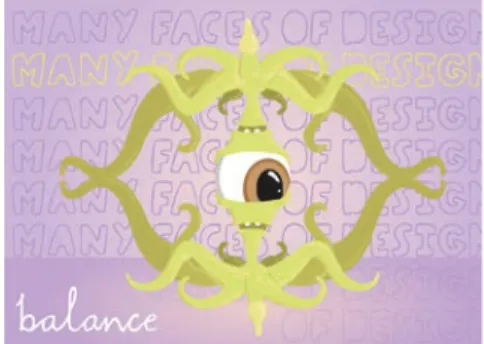
Artwork: Jessamy Topping, First Year BCGD work. Poster describing the principle of balance in graphic design.
Artwork: Joshua Herbes, First Year BCGD work. Poster describing the principle of balance in graphic design.
SECTION 2 | COMPUTER GRAPHIC DESIGN
ENTRY REQUIREMENTS FOR THE BCGD
If you have University Entrance you are eligible to apply for this degree. Ideal NCEA subject credits would include Art (Design, Painting, Photography, Sculpture or Printmaking), or Graphics and Design. Because of the computer programming component in the degree, if you do not have at least 14 credits in NCEA Level 2 Mathematics you may be offered a supporting mathematics paper. A good standard of English is also important.
A selection process applies and you must submit 10 portfolio pieces. Submit your portfolio with your application form. The portfolio pieces are submitted to demonstrate your creative and visual communication abilities. You may be required to attend an interview in Hamilton with CGD teaching staff.
Each application will be considered on a case-by-case basis. If necessary we can give you advice on suitable bridging courses.
BCGD PORTFOLIO SUBMISSION
BCGD applicants are required to submit a portfolio on A3 paper with their enrolment application. We will not be evaluating your design abilities as these skills will be taught during the degree. We are interested in seeing your creative ideas, originality, curiosity and imagination, and how you implement this within your creative visual work.
The portfolio of creative work (10 items) should include finished pieces and pieces still under development. We would like to see work in progress or work developed during planning a project as well as finished work to help us understand your creative-thinking process.
The items might include: » Drawings » Computer-generated images » Sketches » Photography » Websites » Animation » Painting » Sculpture » Fashion » Digital story-telling » Etc.
You can submit your portfolio as printed copies of work, as digital files or a combination of both.
Please do not submit originals. Original pieces can be photographed and submitted as digital files on a CD or DVD, with individual works clearly labelled.
Each of the 10 pieces should be accompanied by a short (100 word max.) description of the work and its purpose and process of production.
Please send your portfolio to: Receptionist, The Faculty of Computing & Mathematical Sciences, the University of Waikato, Private Bag 3105, Hamilton 3240.
COMPUTER GRAPHIC DESIGN | SECTION 2
100 LEVEL
CGRD141 Design 1 (15 points) CGRD142 Design 2 (15 points)
CGRD151 A History of Visual Communication (15 points)
CGRD171 Design Processes and the Construction of Meaning (15 points) COMP103 Introduction to Computer Science 1 (15 points)
COMP125 Visual Computing (15 points) COMP126 Computing Media (15 points) Plus one 100 level elective paper.
200 LEVEL
CGRD241 Computer Graphic Design 1 (20 points) CGRD242 Computer Graphic Design 2 (20 points) CGRD252 Studies in Visual Communication (20 points)
Plus 40 points from:
COMP223 Information Discovery (20 points) COMP233 Internet Applications (20 points) COMP258 Programming Usable Systems (20 points) COMP278 Interactive Computing (20 points) Plus one 200 level elective paper.
300 LEVEL
CGRD343 Computer Graphic Design 3 (20 points) CGRD344 Computer Graphic Design 4 (20 points) CGRD350 Intern Project (20 points)
CGRD360 Degree Project (20 points)
Plus 20 points from:
COMP324 Interactive Multimedia Systems (20 points) COMP325 Human-Computer Interaction (20 points) COMP333 Web Applications Development (20 points COMP336 Graphics and Computer Games (20 points) Plus one 300 level elective paper.
SECTION 2 | COMPUTER GRAPHIC DESIGN
COMPUTER GRAPHIC DESIGN PAPERS
Computer Graphic Design papers provide specialised professional education in computer graphic design, a creative process that utilises art and technology to communicate ideas. The papers offered comprise a core of basic design material and skills, together with contemporary computer software understanding and experience and a context of design history and liberal arts. The specified programme for the BCGD comprises 360 points.
100 LEVEL PAPERS
CGRD141-15A (HAM) Design 1
15 points
This paper explores topics related to creativity using basic elements and principles of design to raise students’ aesthetic awareness and develop their critical judgement. The process also teaches students to look at, see and interpret their environment in original ways. Students will work in both traditional and digital media. Corequisite Paper(s) COMP125.
Restricted Paper(s) CGRD161.
Assessment Internal assessment/Final examination ratio 1:0. CGRD142-15B (HAM) Design 2
15 points
This paper follows closely from CGRD141 by allowing students to apply their learning in set projects and assignments. The emphasis is on process, creativity and developing confidence and personal expression. The paper also provides an introduction to typography.
Corequisite Paper(s) COMP126. Prerequisite Paper(s) CGRD141. Restricted Paper(s) CGRD161.
Assessment Internal assessment/Final examination ratio 1:0.
Note(s): This paper is only available to BCGD students.
CGRD151-15B (HAM) A History of Visual Communication
15 points
Students consider the role of visual communication design in society and culture, from the evolution of writing to the revolutions of 20th century modernism, through the study of visual images and critical theory. Required Book P. Meggs, and J. Alston Puris, Megg’s History of Graphic Design, (J. Wiley & Sons) Ellen
Lupton, Abbott Miller, Design Writing Research: writing on graphic design, Phaidon, 1999. Assessment Internal assessment/Final examination ratio: 1:0.
COMPUTER GRAPHIC DESIGN | SECTION 2
CGRD171-15B (HAM) Design Processes and the Construction of Meaning
15 points
This paper will develop students’ knowledge of the design process in order to analyse and create meaningful experiences.
Assessment Internal assessment/Final examination ratio 1:0.
COMP103-15A (HAM) & 15B (HAM) Introduction to Computer Science 1
15 points
This paper introduces computer programming in C# – the exciting challenge of creating software and designing artificial worlds within the computer. It also covers concepts such as the internals of the home computer, the history and future of computers, how computers are changing society, and current research and challenges in computing.
Assessment Internal assessment/Final examination ratio 2:1 or 1:2, whichever works in your favour. The practical programme must be completed to the satisfaction of the co-ordinator for the paper.
COMP125-15A (HAM) Visual Computing
15 points
This paper enables students to perform basic computing operations and to operate software packages for the manipulation of visual images and text for use in print and screen-based applications. Students will be introduced to basic computing concepts and provided with software tutorials and related exercises. Assessment Internal assessment/Final examination ratio 1:0.
COMP126-15B (HAM) Computing Media
15 points
In this paper students will create multimedia web content using appropriate software packages. Web design concepts will be introduced for the effective use of text, images and sounds. Students will be introduced to relevant computing concepts and provided with software tutorials and related exercises.
Assessment Internal assessment/Final examination ratio 1:0.
SECTION 2 | COMPUTER GRAPHIC DESIGN
COMPUTER GRAPHIC DESIGN PAPERS – 200 LEVEL
200 LEVEL PAPERSCGRD224-15A (HAM) Visual Design for Interactive Media
20 points
This paper is a practical study of computer graphic design principles; covering topics such as graphic design techniques, typography, colour, digital images, designing for computer displays and the web.
Prerequisite Paper(s) One of CGRD161 or COMP104 or COMP126. Restricted Paper(s) COMP224 and CGRD241.
Assessment Internal assessment/Final examination ratio 1:0. CGRD241-15A (HAM) Computer Graphic Design 1
20 points
This paper challenges students to combine their typographic skills and their knowledge of principles of design in order to practically solve design problems. A combination of exercises and assignments involving research and basic visual communication using type and image will synthesise these design skills. Throughout the paper the arrangement of typography is treated formally and expressively within specified guidelines.
Prerequisite Paper(s) CGRD142.
Assessment Internal assessment/Final examination ratio 1:0.
Note(s): This paper is only available to BCGD students.
CGRD242-15B (HAM) Computer Graphic Design 2
20 points
This paper will enable students to experiment with the application of design principles and research to problem-solving exercises and assignments and synthesise design skills with computer-based applications. It will enable students to operate with skill and expertise the range of software that will be required for completion of assignments and be aware of hardware structure and the functions of its components in relation to specific hardware.
Prerequisite Paper(s) CGRD241 and COMP126.
Assessment Internal assessment/Final examination ratio 1:0.
COMPUTER GRAPHIC DESIGN | SECTION 2
CGRD252-15A (HAM) Studies in Visual Communication
20 points
In this paper students explore critical themes in visual communication design from the 1960s onwards. Topics are variable and may include New Zealand identity; propaganda design; new media and new models of communication.
Prerequisite Paper(s) CGRD151 or CGRD161. Restricted Paper(s) CGRD353.
Required Books P. Meggs, and J. Alston Puris, Megg’s History of Graphic Design, (J. Wiley & Sons). Ellen Lupton, Abbott Miller, Design Writing Research: writing on graphic design, Phaidon, 1999.
Assessment Internal assessment/Final examination ratio 1:0.
COMP223-15A (HAM) & 15B (HAM) & 15S (HAM) Information Discovery
20 points
This paper can be taken as a follow on to COMP123 The Computing Experience or directly by students with prior experience at using computers. The paper provides an opportunity to widen your experience of computer software. It is based on an intensive laboratory programme, where you are able to tailor the paper to your own needs and interests by selecting an appropriate set of modules.
Modules include: video editing, information presentation, exploitation of information sources, computer game construction, animation and 3D modelling. Please note that module availability may vary depending on resources.
Prerequisite Paper(s) No prerequisite papers but assumes prior experience at using computers. Assessment Internal assessment/Final examination ratio 1:0.
COMP233-15B (HAM) Internet Applications
20 points
This paper provides a broad overview of the principles and technologies used in Internet Applications, with practical experience of client-side and server-side programming.
Topics covered include:
» Web page creation and styling using HTML and CSS
» Protocols and standards supporting Internet Applications design and security issues » Client-side and server-side programming, with practical work in JavaScript and PHP » Database-driven web applications.
Prerequisite Paper(s) COMP103.
Assessment Internal assessment/Final examination ratio 2:1.