The Role of Work Life Balance on Employee Commitment and
Turnover Intentions: A Study of Tertiary Institution Workers
Millicent Amponsah1* Kwame Owusu-Ansah Owusu Afram2
1. Faculty of IT Business, Ghana Technology University College, PMB 100, Accra-North, Ghana
2. Human Resource Department, Ghana Technology University College PMB 100, Accra-North, Ghana
* E-mail of the corresponding author: [email protected]/[email protected]
Abstract
This paper investigates whether the practice of Work Life Balance (WLB) within an organization can serve as a means of committing employees and discourage their intentions of quitting. The study further explores the factors of work life balance practices that should be implemented through policy to enhance employee commitment and reduce turnover intentions. The study sampled one hundred and thirty five (135) employees from a tertiary institution in Ghana. Quantitative data was collected through the administering of questionnaires and data was analyzed using SPSS. Findings indicate that although WLB has a strong and negative relationship with employee turnover intentions, it does not contribute to employee commitment. It was also observed that among the WLB practices, schedule flexibility has a stronger impact on employee turnover intentions. The study focused on employees in the tertiary education sector and thus the research findings cannot be generalized across the educational sector nor other economic sectors in Ghana.
Management should focus on practicing work life balance in their organizations so as to ensure better commitment in organizational activities and also to prevent employees from quitting. Further, managers should try to continue improving the conditions of work for their employees since it significantly discourages employee from quitting. The study makes a significant contribution to the concept of WLB and its direct impact on employee outcomes.
Keywords Work Life Balance (WLB), Employee turnover intentions (TI), Employee commitment (EC),
Schedule flexibility (SF), Job autonomy (JA), Manager support (MS).
1. Introduction
In today’s working environment, greater job satisfaction (experiencing greater work life balance) makes the worker behave in a favorable way (Rife et al. 2015). Though employers look up to workers for commitment and lower turnover, the employer’s ability to promote healthy work life balance for workers entreat workers to act favorably (Hofmann & Stokburger-Sauer 2017). The role of the employer in creating a work life balance culture and designing policies to support work life balance initiatives cannot be over emphasized. In modern era of technology-oriented organizations and the search and use of convenience, organizations have begun providing workers with helpful strategies to balance their work and non-work roles (Rife et al. 2015).
Work life balance signifies the extent to which a worker experiences feeling fulfilled and having the needs met in both work and non-work facet of life (McCarthy et al. 2013). Most workers are of the view that the employer is capable in supporting the work and non-work activities. However, workers feel pressured for work when work life balance programs are inadequate (Kamau et al. 2013). More so, the provision of such benefits of work life balance is not enough, according to the SIOP 2015 report the organization must support the provision of benefits with policies (Rife et al. 2015). Work life balance as widely researched has become popular for its advantageous outcome to the employer and worker such as role conflict, low work stress and depression, job satisfaction, family satisfaction, employee commitment and low turnover intentions among others (McCarthy et al. 2013; Opie & Henn 2013; Kamau et al. 2013). Encouraging work life balance may attract competent workers, help reduce discipline and absenteeism, promote career growth, and increase the employer’s chance in the competitive market (Baral & Bhargava 2011; Poulose & Susdarsan 2014). A number of work life balance programs drive workers affective commitment and reduce turnover intentions (Lazǎr et al. 2010). The worker has been viewed as the more important asset to the employer, and therefore the employer develops ways to retain the worker and also enhance on the commitment to deliver (Tsai & Wu 2010; Kaur 2013). In order to win the competitive market, the focus should be on the worker. Research has been conducted on areas of reducing turnover (McCarthy et al. 2013).
A worker is faced with a competing demand of work and home responsibilities, and the challenge of managing these responsibilities. Workers therefore sometimes withdraw their work duties for family responsibilities or are
improvement of implementing such policies that will support the worker in his or her commitment and also reduce turnover intentions, this article examines the role of work life balance practices. The employer can implement various work life balance practices that may support the worker with their work and family responsibilities, gain improvement in their well-being, and benefit the organization through increase work commitment and turnover intentions. Research conducted in the area of work life balance has continuously highlighted on the benefits of work life balance practices to the organization (McCarthy et al. 2013); Poulose & Susdarsan, 2014; (Rife et al. 2015).
However, many employers who offer work life balance practices do not support the practice with documented policies, thereby making it not a core strategic facet. It is explored that the practices of work life balance has been on humanitarian grounds by the employer. Offering such work life benefits is not enough, the employer and the organization must stand behind the practices by creating a culture as such and designing policies that support the practice (Rife et al. 2015). Thus, this study explore the factors of work life balance practices that should be implemented through policy to enhance work commitment and reduce turnover intentions in a tertiary institutions of Ghana, West Africa. This is an important issue worth exploring considering the benefits that organizations incur when they focus on their employees. The aim of this paper is therefore to cover the above-mentioned gaps in the WLB research agenda by examining: the effect of WLB on turnover intentions and employee commitment; the factors of WLB that have more effect on employee turnover intentions and employee commitment.
2. Literature Review, Theoretical and Conceptual Framework
2.1 Work Life Balance (WLB)
Work life balance (WLB), sometimes also called the work family conflict (Boswell & Olson-Buchanan 2007; Wootton 2011) has been growing in concern amongst academics and practitioners and is at the core of issues crucial to human resource development (Shuck & Rocco 2014). Balancing the demands of the workplace and a personal life is an important issue across industries (Mohanty & Mohanty 2014). According to Lowe (2007) the meeting of interesting trends in the early 21st century has enabled employers to rethink their human resource strategies. This as such have led many businesses to inculcate work life balance strategies in their overall business policy (Mohanty & Mohanty 2014).
The term work life balance has now evolved to encompass not only what can be described as “family-friendly policies” but including those policies which take into account the wide implications of family responsibilities. According to Redmond, Valiulis & Drew (2006), work life balance pertains to policies such as flexible work arrangement that bestow upon the employees working provisions that will be able to strike a balance in both responsibilities at work and at home (Mohanty & Mohanty 2014). For Clarke et al (2004), WLB is defined is a satisfactory level of involvement or fit between the multiple roles in a person’s life, and it linked with the concept of equilibrium, that maintain an overall sense of harmony in life. WLB is the mutual relationship of work and family (Saeed et al. 2013). Again, Adams and Jex (1999) argued that WLB emerged when increased attention was given by researchers seeking to investigate the clash that can arise when an individual's work interferes with his/her family role and vice versa (Mee Choo et al. 2016).
Following World War II, early talk about work and family clashes gained legitimacy when women started to flood into the workforce (Saeed et al. 2013). The concept of WLB further ignited when women were struggling to balance their dual roles of wives and mothers on one hand and as professional career women on the other (Suifan et al. 2016). On the face of it, according to Moore (2007) WLB was seen as women's issue. Nevertheless, not only did the dual family and work responsibilities take a toll on women, men too were suffering when work and career aspirations took priority over family, friends, social affairs and leisure activities (Suifan et al. 2016).
One of the most vital factors determining the success of organizations are the work life policies and are defined as the base intensity indicators of an organization. Providing balanced time to work and family responsibilities go in the favor of employees and the organization as well (Saeed et al. 2013). The main focus of such work life policies is to provide flexible work timings and reducing the rate of employees leaving the organization (Noorziah Mohd Salleh et al. 2015; Javed et al. 2014). Subsequently, the importance of the work life policies appears in the form of reduced job stress and the productive work environment and this ultimately leads to the success of organizations (Ahmad & Omar 2012). This according to Peterson (2004) is quite like a two way
communication where organizations provides the best friendly and autonomous environment to their employees and this in turn will make employees more satisfied, productive and loyal to their jobs (Javed et al. 2014).
Extant literature show that WLB can be categorized into formal and informal (Ahmad & Omar 2012; Suifan et al. 2016; Field et al. 2002). The formal WLB practices consist of Schedule flexibility whist the informal practices consist of job autonomy and manager support (Oludayo et al. 2018; Ahmad & Omar 2012; Javed et al. 2014; Baral & Bhargava 2011). Schedule flexibility also known as 'flextime' represents a formal WLB dimension and refers to the flexibility granted to employees in choosing their starting and finishing times usually around a band of core hours where each employee must be present (Oludayo et al. 2018; Ahmad & Omar 2012; Mee Choo et al. 2016). Job autonomy represents a key informal WLB practice and refers to the degree of freedom and discretion provided to employees to schedule work and choose the appropriate procedures to use in carrying out the job (Suifan et al. 2016; Oludayo et al. 2018) whilst manager support represents another key informal WLB practice and refers to the degree managers support and understand their subordinates with regard to personal and family life issues. Manager's support is expected to considerably improve satisfaction among employees (Suifan et al. 2016). Based on the reviewed literature, this study identified the formal WLB practice as schedule flexibility and the informal practices as job autonomy and manager support as the main elements of WLB.
2.2 Work Life Balance (WLB) and Turnover Intentions (TI)
The issue of employee turnover is one of the more frequently examined in the field of management because of its negative influences on organizational climate and performance (Kamau et al. 2013; Sheppard 2016). In relation to this, Hom (2011) opines that how and why people quit jobs has intrigued practitioners and scholars. Nonetheless, in the 21st century, turnover continues to draw attention globally (Sheppard 2016). For Saeed et al (2013), turnover is considered as the disjointing of employees from the company or the organization (Saeed et al. 2013). Many organizations are giving much importance to find out the impact and reasons why employees leave the organization. Many factors are involved in the turnover of employees and one of it is the issue of balancing work and family that organizations need to concentrate on. Turnover and its intentions are considered an important issue in organizations (Saeed et al. 2013), hence, it has become critical by reducing its rate by introducing employee friendly policies in the organization (Ueda 2012). The role of work life balance has a direct relation in employee’s decision to stay or leave the organization (Nwagbara & Akanji 2012).
A study conducted in Japan by Yanadoria and Katob (2010) examining the way in which Japanese firms implement policies that support work–family balance, finds a significant links between the employee support policies in place and the levels of female employee turnover (Equations & Functions 2012). Similarly, Long (2012) argue that the intentions of employees quitting a job will be strengthened when inter role conflict will decrease their job satisfaction (Javed et al. 2014). To add to this Javed (2014) emphasized that employee turnover rate will be negatively affected by the perceived and the actual services rendered by employees to the organization towards accomplishment of specific job. Thus, the higher levels of job stress will deprive employees of their creative ideas and also reduce the organizational and job enrichment and empowerment (Javed et al. 2014).
In a study to bring out the relationship between WLB and employee retention by (Mee Choo et al. 2016) revealed that there is a significant positive relationship between WLB and employee retention. Thus, this means that the WLB policies of organizations can make employees to stay or have the intentions to leave. This findings is no different from that of Oosthuizen and Munro (2016); In their study among 79 information technology employees, it was revealed that WLB have an influence on the intentions of employees leaving the organization (Oosthuizen et al. 2016). Based on the reviewed literature on the link between WLB and Turnover, we hypothesized:
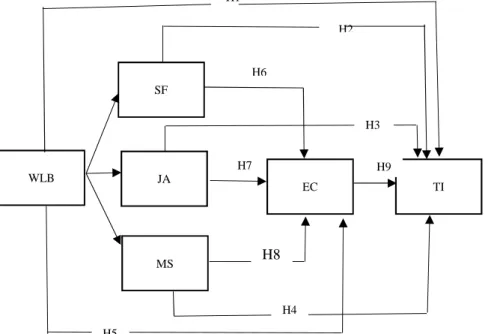
H1: There is a significant negative relationship between WLB and turnover intention
2.3 Schedule Flexibility (SF), Job Autonomy (JA), Manager Support (MS) and Turnover Intentions (TI)
Work Life Balance are categorized into formal and informal. The formal WLB practices consist of Schedule flexibility whist the informal consist job autonomy and manager support (Ahmad & Omar 2012; Oludayo et al. 2018); Suifan et al. 2016; Koubova & Buchko 2013). Informal initiatives/support (job autonomy and manager support) is the support given by family members, colleagues and supervisors to decrease the load and or stress of work-life interface and which is not part of written rules and regulations (Oludayo et al. 2018). Studies shows that the informal support is generally more acceptable than the informal support. According to Thompson,
Beauvais & Lyness (1999), informal support from the organization was operational as the organization’s positive attitude toward combining work and family life such as the family-responsive culture (Mee Choo et al. 2016). According to Taghrid et al. (2016), the informal WLB practices (managerial support and job autonomy) had the most significant effect and are the determinants of turnover intentions (Oludayo et al. 2018). Anderson (2002) is also with the assertion that informal practices are superior to formal WLB practices (Ahmad & Omar 2012). Hammer (2005) also opined the superiority of the informal practices over the formal as it gives the employee better balance across all aspects of life (Oludayo et al. 2018; Ahmad & Omar 2012).
In a study by Suifan, Abdallah and Diab (2016), which aimed at investigating the effects of work-life balance (WLB) practices more specifically, using schedule flexibility, manager support and job autonomy on work-life conflict and turnover intentions among medical staffs in a private hospital at Jordan. The study revealed that manager support was the only WLB practice that had a significant negative direct effect on turnover intentions (Suifan et al. 2016). However, the study further revealed that Job autonomy had a negative indirect effect on turnover intentions through work-life conflict. Schedule flexibility had insignificant effect on turnover intentions. Thus, this study shows that manager support and job autonomy had the most significant effect and are the determinants of turnover intentions. This findings concurs with that of the findings of Ahmad and Omar's (2012) who argued in favour of informal WLB practices (Ahmad & Omar 2012). Their article presents a model which examines the mechanism through which informal support, provided by organizations to help employees manage work and family roles, affects employees’ job performance using the conservation of resources theory, social exchange theory and related studies.
Using a stratified and simple random technique to select 339 respondents across the top five commercial banks in Lagos State, Nigeria, in a study to ascertain the extent to which work-life balance initiative predicts employee behavioral outcomes by Oludayo et al, (2018), findings showed that organizations’ readiness to make work arrangement more flexible will likely affect rub-off on the employees’ level of satisfaction and their intention to stay (Oludayo et al. 2018). Again, Kröll and Nüesch (2017) noted that flexible work practices is central in building acceptable and appropriate workplace attitudes that will help in achieving the strategic goals organizations more especially in this highly competitive business environment that is regarded by the evolvement of sophisticated technology (Kröll & Nüesch 2017).
In their study, to enhance the understanding of the potential benefits of flexibility for employee health and well-being (Casey & Grzywacz 2008). The results from longitudinal data obtained from a large multinational company showed that increased flexibility was associated with decreased sickness absence and work-related impairment and improved job commitment and this in turn reduce the intentions of employee leaving the organization. In another study by Jang et al. (2011), “the interaction effects of scheduling control and work–life balance programs on job satisfaction and mental health”, the results add to the evidence regarding the positive relationship between the availability of scheduling control and work–life balance policies on the one hand, and job satisfaction and mental wellbeing which later affects turnover intentions (Jang et al. 2011).
Furthermore, a study by Annink & den Dulk (2012) titled “Autonomy: the panacea for self-employed women's work-life balance” which aimed to increase our knowledge of the work-life balance (WLB) of self-employed workers in the Netherlands, found out that autonomy is an important resource, allowing women to combine their work more easily with childcare, household duties, and social and personal life (Annink & den Dulk 2012). Based on this reasoning from existing literature, we hypothesized that:
H2: There is a significant negative relationship between schedule flexibility and turnover intention
H3: There is a significant negative relationship between job autonomy and turnover intention
H4: There is a significant negative relationship between manager support and turnover intention
2.4 Work Life Balance (WLB) and Employee Commitment (EC)
According to Beloor, Nanjundeswaraswamy and Swamy (2017), employees who are committed to their organizations generally feel connected with their organization, feel that they fit in and, feel they understand the goals of the organization. Usually such employees tend to be more determined in their work, show relatively high productivity and are more proactive in offering their support. In their research, employee commitment is defined as the employees’ decision to stay with a firm regardless of the organizational climate or the change there in. According to the researcher, commitment conveys the significance of a relationship between partners and their will to proceed with the relationship in the future. However when employees sense uncertainty, their will to continue working for the firm dissolves (Beloor et al. 2017).
Several studies have brought out the nexus between WLB and employee commitment. For instance, Nwagbara & Akanji (2012) studies, analyzed the impact of work-life balance on the commitment and motivation of Nigerian Women Employees. This study concluded that motivation and commitment are basic elements needed for organizations to perform better as well as for Nigerian female employees to be incentivized for better organizational commitment and productivity, thus, WLB in organizations influences the commitment levels in employees (Nwagbara & Akanji 2012). Another study which was aimed at investigating the relationship between work-life balance and organizational commitment, in SANGI Foundation, Pakistan concluded that there is a significant relationship exists between work life balance and organizational commitment (Ali Ch. et al. 2014). More so, a study by Chahenza (2017) which adopted a descriptive research design examine the effect of work-life balance on employee commitment at Toyota Kenya Limited found out that flexible work schedules and flexibility to work in another location were very important to them. The study established that the respondents disagreed that work-life balance programs are poorly communicated to all employees. The study further revealed that the respondents were in agreement to a great extent that they tell their friends the goodness of their organization.
Ali Ch. et al. (2014) analyzed the relationship between WLB and organizational commitment in Pakistan. According to the results, the study found a significant relationship between WLB and commitment in organizations. Again, Otieno (2014) who investigated the influence of WLB on job satisfaction and commitment of women employees at the Commercial banks in Kisumu City, Kenya, WLB has a positive influence on employee commitment and satisfaction. In view of this, the study recommended that banks should come up with work life policies since the results are positive and yields higher commitment levels from the employees. Based on this reasoning from existing literature, we hypothesized that:
H5: There is a significant positive relationship between WLB and employee commitment
2.5 Schedule Flexibility (SF), Job Autonomy (JA), Manager Support (MS) and Employee Commitment (EC)
A study by Mee Choo et al. (2016) examining the relationship between flexible working arrangements and organizational commitment and work-family conflict revealed that a flexible working arrangement was significantly and positively related to organizational commitment. Oludayo et al. (2018) also agree to this inference that flexible working arrangement does impacts positively on organizational commitment and review literature that ratifies these findings, as concluded that flexible work creates favorable impacts on employee’s well-being and reducing work–family conflict.
Another study by Ng et al. (2006) in the Southeastern of the United States also concluded in their findings that schedule flexibility have a positive relationship with commitment. Another study on "Perceived organizational support and organizational commitment: The moderating effect of locus of control and work autonomy", also showed that work autonomy plays a role in the relationship between perceived organizational support and affective commitment (Aubé et al. 2007). It was also found that whenever organizations support their employees, there is always a good commitment on the path of the employees.
Further, in their study to explore alternative relationships between perceived supervisor support and employee outcomes in the form of attitudes, thus, affective commitment and turnover intention and work performance among 331 employees from a Norwegian telecommunications organizations suggests that line managers are of vital importance in implementing developmental HR practices, either because they influence how such practices are perceived by employees, which, in turn, affects employee affective commitment and intentions to leave the organization (Shahzadi et al. 2014). Joseph (2015) also attest to this that manager leadership fosters employee commitment in organizations. Based on this reasoning from existing literature, we hypothesized that:
H6: There is a significant positive relationship between Schedule flexibility and employee commitment
H7: There is a significant positive relationship between Job autonomy and employee commitment
H8: There is a significant positive relationship between Manager support and employee commitment
2.6 Work Life Balance (WLB), Turnover Intentions (TI) and Employee Commitment (EC)
According to Brown et al. (2011), high employee commitment towards organization increases the job satisfaction among employees, job performance, overall productivity, sales and also high employee commitment decreases employee turnover, intention to leave and absenteeism. Also, Beloor et al. (2017)study reveals that organizational factors like dependability, social processes and organizational climate enhance individual factors to employee commitment. According to Brown et al. (2011) high employee commitment towards organization
H1
increases the job satisfaction among employees, job performance, overall productivity, sales and also high employee commitment decreases employee turnover, intention to leave and absenteeism.
Further studies by Munir et al. (2012) on ‘mediating the effects of work–life conflict between transformational leadership and health‐care workers’ job satisfaction and psychological wellbeing’ concluded that managers who reported higher levels of organizational commitment were less likely to intend to leave the company like lower career consequences and greater managerial support (work-family balance, more family-friendly time expectations, and fewer career consequences for using work-family benefits).
A study by Zin (2004) on professional engineers in Malaysia indicates that an individual’s perception of quality of work life has a significant influence in explaining his organizational commitment, which may affect his turnover intention towards the organization. A similar study on auditors by Fayyazi and Aslani (2015) also indicates that there is a significant relationship between quality of work life towards organizational commitment and turnover intentions. Employee commitment is therefore important because high levels of commitment through good WLB practices by organizations will lead to several favorable organizational outcome like the intentions of employees leaving the organization. Thus, we hypothesized that:
H9: Employee commitment will have a negative relationship on turnover intentions
H2 WLB MS JA SF TI EC H3 H4 H5 H6 H7 H8 H9
3. Methodology
3.1 Research method and design
The study employed a cross sectional survey design and a quantitative method to collect data. A survey design allows the collection of primary data at a single point in time and generalization of research findings obtained from a small group to the wider group (Devetak 2014). Again, a cross sectional survey produces a “snapshot” of a population at a particular point in time (Bukchin & Cohen 2013). The study also adopted the quantitative method to collect data. Bhattacherjee (2012) indicated that quantitative methods ensure objectivity in interpretation of responses through a standardized measure. Similarly, Dudwick et al. (2006) emphasized that quantitative approaches ensure accuracy and prediction of outcomes, testing and validating constructed theories of how a phenomenon occurs.
3.2 Population, Sample Size and Sampling Selection
The target population of the study is comprised of employee from the tertiary institutions in Ghana. The target population was thus, employees of Ghana Technology University College comprising both faculty and administrative staff. Convenience sampling technique was used to select employees from the university. Convenience sampling technique was used to select employees who were willing to participate in the study. In view of this, a sample size of 135 respondents was used for the study. Accordingly, Dillman (2003) emphasized that a sample size more than hundred (100) is sufficient to provide a fair representation of the study population.
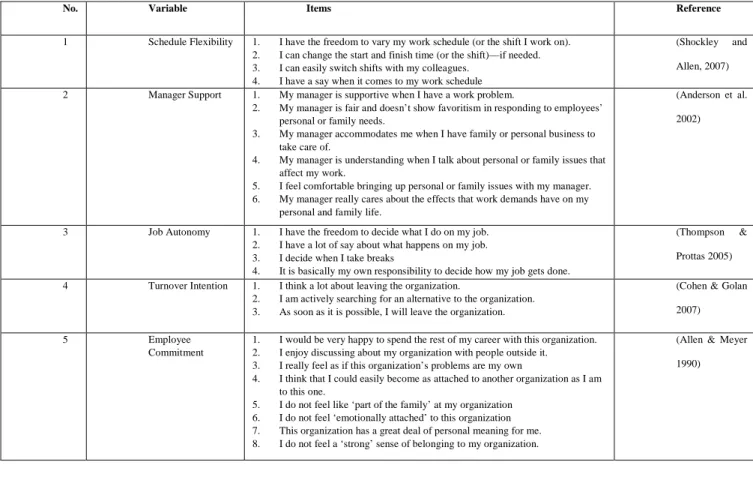
The measurement used for this study were adopted from published literature. Work Life Balance is measured using three items, schedule flexibility, job autonomy and manager support. Schedule flexibility was adopted from Shockley and Allen (2007) based on the measure developed by Hyland (2000). For manager support and job autonomy, Anderson et al. (2002) scale and Thompson & Prottas (2005) scale were used, respectively. The scale of the study is shown in Table 2 below. All the questions were answered on a five-point Likert scale ranging from 1 “strongly disagree” to 5 “strongly agree”. Cohen and Golan (2007) scale for turnover intention was adapted to measure employee retention. This is a three item on a five-point likert scale ranging from 1 “strongly disagree” to 5 “strongly agree. Employee Commitment was measured using the original scale of employee commitment by Allen and Meyer (1990).
Data coding and analysis were done through the statistical tool and computer software Statistical Package for the Social Sciences “SPSS. A simple linear regression analysis was used. The test was conducted to check the extent to which the variables simultaneously change or co-vary, as well as, understand the simple association and causality between them
3.3 Reliability Analysis
Overall Cronbach’s alpha of WLB questionnaire items are 0.772. This shows that all the 25 items are reliable and valid to measure the effects of work life balance on turnover intentions and employee commitment found in Table 1 below.
Table 1: Reliability analysis
Scale
Items
Cronbach’s Alpha
Schedule Flexibility
4
0.736
Manager Support
6
0.929
Job Autonomy
4
0.736
Turnover Intentions
3
0.953
Table 2: Scale of Measurement
3.4 Data Analysis
3.4.1 Profile of Respondents
Personal and demographic information of the respondents is presented in Table 3 below. Table 3: Profile of Respondents
No. Variable Items Reference
1 Schedule Flexibility 1. I have the freedom to vary my work schedule (or the shift I work on). 2. I can change the start and finish time (or the shift)—if needed. 3. I can easily switch shifts with my colleagues.
4. I have a say when it comes to my work schedule
(Shockley and Allen, 2007)
2 Manager Support 1. My manager is supportive when I have a work problem.
2. My manager is fair and doesn’t show favoritism in responding to employees’ personal or family needs.
3. My manager accommodates me when I have family or personal business to take care of.
4. My manager is understanding when I talk about personal or family issues that affect my work.
5. I feel comfortable bringing up personal or family issues with my manager. 6. My manager really cares about the effects that work demands have on my
personal and family life.
(Anderson et al. 2002)
3 Job Autonomy 1. I have the freedom to decide what I do on my job.
2. I have a lot of say about what happens on my job. 3. I decide when I take breaks
4. It is basically my own responsibility to decide how my job gets done.
(Thompson & Prottas 2005) 4 Turnover Intention 1. I think a lot about leaving the organization.
2. I am actively searching for an alternative to the organization. 3. As soon as it is possible, I will leave the organization.
(Cohen & Golan 2007)
5 Employee
Commitment
1. I would be very happy to spend the rest of my career with this organization. 2. I enjoy discussing about my organization with people outside it. 3. I really feel as if this organization’s problems are my own
4. I think that I could easily become as attached to another organization as I am to this one.
5. I do not feel like ‘part of the family’ at my organization 6. I do not feel ‘emotionally attached’ to this organization 7. This organization has a great deal of personal meaning for me. 8. I do not feel a ‘strong’ sense of belonging to my organization.
(Allen & Meyer 1990)
Variable Category Frequency Percentage
Gender Male Female 79 55 58.5 40.7 Age 20 – 29 30 – 39 40 – 49 50 – 59 21 93 17 2 15.6 68.9 12.6 1.5
Educational Level First degree
Postgraduate degree
56 79
41.5 58.5
Length of work Less than 3years
3years – less than 6 years 6years – less than 9years 9years & above
18 86 23 8 13.3 63.7 17.0 5.9
Staff Category Administrative
Academic
94 39
69.6 28.9
3.4.2 Work Life Balance (WLB) and Turnover intention (TI)
The regression results of the study confirm that there is a significant negative relationship between WLB and turnover intention (Beta= -0.415) and (p<0.01) as shown in Table 4. According to these results, WLB has an inverse relationship with turnover intention of employees. Thus, it can be inferred that, WLB practices in an organization have an influence on employee’s intention of leaving the organization. In other words, employees’ intention to leave an organization depends on the WLB practices that organizations undertake. Therefore, the results, support H1 which states that “there is a significant negative relationship between WLB and turnover
intention”.
Table 4: WLB & TI
Coefficientsa
Model Standardized
Coefficients
T Sig. 95.0% Confidence Interval for B
Beta Lower Bound Upper Bound
1
(Constant) 25.341 .000 53.577 62.658
TI -.415 -5.018 .000 -1.621 -.704
Source: Field survey, 2018
3.4.3 Schedule flexibility and Turnover intention
According to the results, there is a significant negative relationship between schedule flexibility and turnover
intention, in the regression analysis results as shown in Table 5 (Beta= -0.353; p<0.01) and this supports H2. This shows that schedule flexibility has an inverse relationship with employee turnover intention.
Table 5: SF & TI
Coefficientsa
Model Standardized
Coefficients
T Sig. 95.0% Confidence Interval for B
Beta Lower Bound Upper Bound
1
(Constant) 20.432 .000 14.400 17.487
TI -.353 -4.312 .000 -.499 -.185
a. Dependent Variable: schfex
Source: Field survey, 2018
3.4.4 Job autonomy and Turnover intention
Regression analysis results confirms that there is a significant negative relationship between job autonomy and
turnover intention as shown in Table 6 with (Beta= -0.277) and (p<0.01). The results suggest that there is an
inverse relationship between job autonomy and employee turnover intention. Hence, the result of the study support H3.
Table 6: JA & TI
Coefficientsa
Model Standardized
Coefficients
t Sig. 95.0% Confidence Interval for B
Beta Lower Bound Upper Bound
1
(Constant) 19.856 .000 14.983 18.299
TI -.277 -3.294 .001 -.449 -.112
a. Dependent Variable: JobAuto
Source: Field survey, 2018
Manager support and Turnover intention
According to the findings, there is a significant negative relationship between manager support and turnover
intention as shown in the Table 7 with (Beta= -0.216) and (p=0.01). The results suggest that there is an inverse
relationship between manager support and employee turnover intention and thus, the result of the study support
H4.
Table 7: MS & TI
Coefficientsa
Model Standardized
Coefficients
t Sig. 95.0% Confidence Interval for B
Beta Lower Bound Upper Bound
1
(Constant) 16.039 .000 21.132 27.081
TI -.216 -2.473 .015 -.683 -.076
a. Dependent Variable: Mansup
Source: Field survey, 2018
3.4.5 Work Life Balance and Employee commitment
The regression results of the study confirms the hypothesis, there is a positive relationship between WLB and employee commitment as shown in Table 8 with (Beta= 0.175) and (p>0.01) and this results is not significant. Thus, H5 which stated that “there is a significant positive relationship between WLB and employee commitment was not supported. This means that when organizations balance the work life of their employees, it does not have any effect on their commitment level.
Table 8: WLB & EC
Coefficientsa
Model Standardized
Coefficients
t Sig. 95.0% Confidence Interval for B
Beta Lower Bound Upper Bound
1
(Constant) 8.908 .000 30.165 47.413
EC .175 1.920 .057 -.011 .731
a. Dependent Variable: WLB
3.4.6 Schedule flexibility and Employee commitment
Regression analysis results confirms that there is a significant positive relationship between Schedule flexibility
and employee commitment as shown in Table 9 with (Beta= 0.413) and (p<0.01). Hence the results suggest that
there is a direct relationship between schedule flexibility and employee commitment. The results of the study support H6.
Table 9: SF & EC
Coefficientsa
Model Standardized
Coefficients
t Sig. 95.0% Confidence Interval for B
Beta Lower Bound Upper Bound
1
(Constant) 4.587 .000 3.432 8.638
EC .413 5.105 .000 .176 .400
a. Dependent Variable: schfex
Source: Field survey, 2018
3.4.7 Job autonomy and Employee commitment
The regression results confirms the hypothesis, there is a significant positive relationship between Job autonomy
and employee commitment (Beta= 0.268) and (p<0.01) as shown in Table 10 below. The results shows that there
is a direct relationship between job autonomy and employee commitment. The results of the study support H7.
3.4.8 Manager support and Employee commitment
The regression analysis conducted shows a negative relationship between Manager Support and employee commitment (Beta= -0.026) and (p=0.775) as shown in Table 11 below. This results shows that there is an inverse relationship between Manager Support and employee commitment. The results of the study does not support H8 which states that “There is a significant positive relationship between Manager Support and
employee commitment”.
Table 10: JA & EC
Coefficientsa
Model Standardized
Coefficients
t Sig. 95.0% Confidence Interval for B
Beta Lower Bound Upper Bound
1
(Constant) 6.345 .000 6.550 12.487
EC .268 3.140 .002 .074 .328
a. Dependent Variable: JobAuto
Table 11: MS & EC
Coefficientsa
Model Standardized
Coefficients
t Sig. 95.0% Confidence Interval for B
Beta Lower Bound Upper Bound
1
(Constant) 7.728 .000 15.733 26.570
EC -.026 -.287 .775 -.267 .200
a. Dependent Variable: Mansup
Source: Field survey, 2018
3.4.9 Employee commitment and Turnover intention
According to the study, there is a negative relationship between Employee commitment and Turnover intention (Beta= -0.097) and (p=0.270). The results suggest that there is an inverse relationship between employee commitment and employee turnover intention. The result of the study support H9 showed in Table 12 below.
Table 12: EC & TI
Coefficientsa
Model Standardized
Coefficients
t Sig. 95.0% Confidence Interval for B
Beta Lower Bound Upper Bound
1
(Constant) 20.454 .000 21.783 26.448
TI -.097 -1.108 .270 -.367 .104
a. Dependent Variable: EC
Source: Field survey, 2018
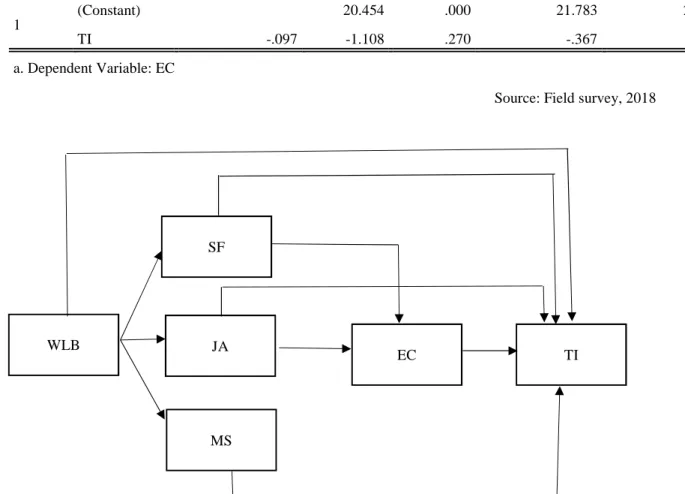
Figure 2: Structural Model Results WLB MS JA SF TI EC
4. Discussions
The purpose of this study was to examine the effect of Work life Balance (WLB) on turnover intentions and employee commitment, investigate the factors of WLB that have more effect on employee turnover intentions and employee commitment and also to look at the link between employee commitment and turnover intentions. It was revealed that WLB practices in an organization have an influence on employee’s intention of leaving the organization. Thus, employees’ intention to leave an organization depends on the WLB practices that organizations undertake. These findings seem to be consistent with that of a study by Yanadoria and Katob (2010) on the way Japanese firms implement policies that support work–family balance which found a significant links between the employee support policies in place and the levels of female employee turnover. Similar to this findings is the findings of Javed (2014) who emphasized that employee turnover rate will be negatively affected by the perceived and the actual services rendered by employees to the organization towards accomplishment of specific job.
Again, the findings indicated that all constructs of WLB (schedule flexibility, job autonomy and manager support), impacts negatively on employee turnover. These findings further revealed that schedule flexibility having a beta value of (0.353) impacted more on employee’s intention to leave the organization than job autonomy (Beta = 0.277) and manager support (Beta = 0.216). With regards to the factors of WLB that affects employee turnover more, the findings concur with Oludayo et al, (2018) findings. Their findings showed that organizations’ readiness to make work arrangement more flexible will likely affect rub-off on the employees’ level of satisfaction and their intention to stay. Again, Nuesch (2017) noted that flexible work practices is central in building acceptable and appropriate workplace attitudes that will help in achieving the strategic goals organizations more especially in this highly competitive business environment that is regarded by the evolvement of sophisticated technology which is in line with our findings. On the other hand, the findings was in contrast with a study by Suifan, Abdallah and Diab (2016), which aimed at investigating the effects of WLB practices (schedule flexibility, manager support and job autonomy) on work-life conflict and turnover intentions among medical staffs in a private hospital at Jordan. The study revealed that manager Support was the only WLB practice that had a significant negative direct effect on turnover intentions. This findings is also in disparity with that of the findings of Ahmad and Omar's (2012) who argued in favour of informal WLB (job autonomy and manager support) practices.
According to results, when organizations balance the work life of their employees, it does not have any effect on their commitment level and this does not support Ch, Kundi, Qureshi and Akhtar (2014) findings that there is a significant relationship between WLB and commitment in organizations. On the other hand, when employees enjoy some work schedule flexibility and autonomy, they become commitment. Specifically, it was showed that work flexibility affects employee commitment more. These results are in congruence with a study by Chahenza (2017), which found out that flexible work schedules and flexibility to work in another location are very important for employees to stay longer. The findings of the study is also related to that of Choo and Asaari (2016) that a flexible working arrangement is significantly and positively related to organizational commitment. On the contrary, the findings discovered that manager support does not significantly relate to employee commitment and this does not support the findings of Wallace et al (2013) who attest that manager leadership fosters employee commitment in organizations.
It was also revealed that there is a negative relationship between employee commitment and turnover intentions. In other words, when employees get commitment to their work, their intentions of leaving the organizations become less and then again when the commitment level of employees is low they are more likely to leave the organization. This our findings is consistent with Brown, et al (2011) and Igella (2014) that high employee commitment decreases employee turnover intentions.
5. Conclusion and Implications
The issue of Work Life Balance (WLB) and its effects on employees’ work related attitudes and behaviour (that is commitment and turnover intentions) has indeed been acknowledged in literature especially in the western world. This issue has not received much attention in developing countries like Ghana particularly in the education sector. It is partly to fill this gap of this notion that this study was conducted to examine the relationship that exists between WLB and employee commitment and turnover intentions in the Ghanaian educational sector.
It was revealed that WLB practices in an organization have an influence on employee’s intention of leaving the organization. Thus, WLB practice within organizations can be a tool to discourage employees from the intentions of leaving the organization. On the other hand, it was revealed that the practice of WLB does not
necessarily promote employee commitment. It was also observed that schedule flexibility impacted more on employee’s commitment and their intention to leave the organization than job autonomy and manager support. In addition there is strong evidence from the findings that when employees get commitment to their work, they are likely to remain in their organization, hence they will not be thinking of leaving the organization.
From the foregoing, we recommend that, management should focus on practicing work life balance in their organizations so as to ensure better commitment in organizational activities and also to prevent employees from quitting. Further, we recommend that managers should try to continue improving the conditions of work for their employees since it significantly discourages employee from quitting. Managers can do this by ensuring good supervisor-employee working relationships, work flexibility, manager support and autonomy.
It was realized that WLB practices within organizations serve as tools for discouraging turnover intentions. This means that organizations are likely to gain the commitment and support of their employees which in turn increases firm performance. Based on this, we recommend that the practices of WLB more especially schedule flexibility should be clearly integrated as part of firm’s corporate and business-level strategies. This will help organizations to devote much time to them.
6. Limitations and Future Research
This study adopted a cross sectional research approach, where data was collected from respondents at a snapshot and thus such responses may be influenced by pertaining conditions of the individual at that particular point in time. We recommend the use of different approaches such as longitudinal research which may provide significant differences in the findings.
The study also focused on employees in the tertiary educational sector and thus the research findings cannot be generalized across the educational sector in Ghana. It would therefore be insightful for future studies to replicate this study in other sectors such as the hospitality, telecommunications, mining, financial, construction, health, etc. in order to gain a better understanding of how Work life balance affects employee turnover intentions and commitment in different sectors.
The study adopted a quantitative approach where questionnaires were used for data collection. Future studies can consider using a mixed method approach where both questionnaires and interviews can be used to collect data. Studies (Aina, 2002; Okpara and Wynn, 2008; Creswell and Plano-Clark, 2007; Tashakkori and Teddie, 2003) have shown that quantitative and qualitative approaches have their own particular weaknesses or biases, thus, it is ideal to use multiple methods, which supplement each other to counteract bias and generate more adequate and balanced data.
References
Ahmad, A. & Omar, Z., 2012. Effects of Informal Work-Family Support on Job Performance: Mediating Roles of Work-Family Conflict and Job Satisfaction. Journal of International Management Studies, 7(2), pp.202–206.
Ali Ch., G.A. et al., 2014. Relationship between Work-Life Balance & Organizational Commitment. Research
on Humanities and Social Science, 4(5), pp.1–7.
Allen, N.J. & Meyer, J.P., 1990. The measurement and antecedents of affective, continuance and normative commitment to the organization. Journal of Occupational Psychology, 63(1), pp.1–18.
Anderson, S.E., Coffey, B.S. & Byerly, R.T., 2002. Formal organizational initiatives and informal workplace practices: Links to work-family conflict and job-related outcomes. Journal of Management, 28(6), pp.787– 810.
Annink, A. & den Dulk, L., 2012. Autonomy: The panacea for self-employed women’s work-life balance?
Community, Work and Family, 15(4), pp.383–402.
Aubé, C., Rousseau, V. & Morin, E.M., 2007. Perceived organizational support and organizational commitment: The moderating effect of locus of control and work autonomy. Journal of Managerial Psychology, 22(5), pp.479–495.
Baral, R.; & Bhargava, S., 2011. HR interventions for work-life balance: evidences from organisations in India.
International Journal of Business, Management and Social Sciences, Vol. 2(No. 1), pp.33–42.
Beloor, V., Nanjundeswaraswamy, T.S. & Swamy, D.R., 2017. Employee Commitment and Quality of Work Life – A Literature Review. The International Journal of Indian Psychology, 4(2), pp.175–188. Bhattacherjee, A., 2012. Social Science Research: principles, methods, and practices,
Boswell, W.R. & Olson-Buchanan, J.B., 2007. The use of communication technologies after hours: The role of work attitudes and work-life conflict. Journal of Management, 33(4), pp.592–610.
Brown, S. et al., 2011. Workplace performance, worker commitment, and loyalty. Journal of Economics and
Management Strategy, 20(3), pp.925–955.
Bukchin, Y. & Cohen, Y., 2013. Minimising throughput loss in assembly lines due to absenteeism and turnover via work-sharing. International Journal of Production Research, 51(20), pp.6140–6151.
Casey, P.R. & Grzywacz, J.G., 2008. Employee health and well-being: The role of flexibility and work-family balance. The Psychologist-Manager Journal, 11(1), pp.31–47.
Chahenza, M., 2017. Work life balance and its effect on employee commitment-A Case study of Toyota Kenya. Cohen, A. & Golan, R., 2007. Predicting absenteeism and turnover intentions by past absenteeism and work
attitudes: An empirical examination of female employees in long term nursing care facilities. Career
Development International, 12, pp.416–432.
Devetak, R., 2014. A rival enlightenment? critical international theory in historical mode. International Theory, 6(3), pp.417–453.
Dillman, D.A., 2003. Procedures for Conducting Government-Sponsored Establishment Surveys: Comparisons
of the Total Design Method (TDM), A Traditional Cost-Compensation Model, and Tailored Design,
Dudwick, N. et al., 2006. Analyzing social capital in context: A guide to using qualitative methods and data. The
International bank of reconstruction and Development/ The World Bank, p.52.
Equations, F. & Functions, G., 2012. Proceeding of the. , 2016(November), pp.1–6.
Fayyazi, M. & Aslani, F., 2015. The Impact of Work-Life Balance on Employees’ Job Satisfaction and Turnover Intention; the Moderating Role of Continuance Commitment. International Letters of Social and
Humanistic Sciences, 51(im), pp.33–41.
Field, A. et al., 2002. Career Choice and Development. Canadian Journal of Sociology/Cahiers canadiens de
sociologie, 12(4), p.779.
Hofmann, V. & Stokburger-Sauer, N.E., 2017. The impact of emotional labor on employees’ work-life balance perception and commitment: A study in the hospitality industry. International Journal of Hospitality
Management, 65, pp.47–58.
Hyland, M.M., 2000. Flexibility in work arrangements: How availability, preferences and use affect business outcomes. Dissertation Abstracts International Section A: Humanities and Social Sciences, 60(10–A), p.3716.
Jang, S.J., Park, R. & Zippay, A., 2011. The interaction effects of scheduling control and work-life balance programs on job satisfaction and mental health. International Journal of Social Welfare, 20(2), pp.135– 143.
Javed, M. et al., 2014. Effect of Role Conflict, Work Life Balance and Job Stress on Turnover Intention: Evidence from Pakistan. J. Basic. Appl. Sci. Res, 4((3)), pp.125–133.
Joseph, Y., 2015. A Study done in order to Explore the Relationship between Employee Commitment , Organisational Flexibility and Work-Life Balance in a Call Centre. , (September), pp.1–68.
Kamau, J.M., Muleke, V. & Obino, S., 2013. Work-Life Balance Practices on Employee Job Performance at Eco Bank Kenya. European Journal of Business and Management, 5(25), pp.2222–2839.
Kaur, B., 2013. Antecedents of Turnover Intentions : A Literature Review. Global Journal of Management and
Business Studies, 3(10), pp.1219–1230.
Koubova, V. & Buchko, A.A., 2013. Life-work balance: Emotional intelligence as a crucial component of achieving both personal life and work performance. Management Research Review, 36(7), pp.700–719. Kröll, C. & Nüesch, S., 2017. The effects of flexible work practices on employee attitudes: evidence from a
large-scale panel study in Germany. The International Journal of Human Resource Management, 5192(March), pp.1–21.
Lazǎr, I., Osoian, C. & Raţiu, P., 2010. The role of work-life balance practices in order to improve organizational performance. European Research Studies Journal, 13(1), pp.201–213.
McCarthy, A. et al., 2013. Employee work-life balance outcomes in Ireland: A multilevel investigation of supervisory support and perceived organizational support. International Journal of Human Resource
Management, 24(6), pp.1257–1276.
Mee Choo, J.L., Desa, N.M. & Abu Hassan Asaari, M.H., 2016. Flexible Working Arrangement toward Organizational Commitment and Work-Family Conflict. Studies in Asian Social Science, 3(1), pp.21–36. Mohanty, D.K. & Mohanty, S., 2014. An Empirical Study on the Employee Perception on Work-Life Balance in
Hotel Industry with Special Reference to Odisha. Journal of Tourism and Hospitality Management, 2(2), pp.65–81.
Munir, F. et al., 2012. Mediating the effects of work-life conflict between transformational leadership and health-care workers’ job satisfaction and psychological wellbeing. Journal of Nursing Management, 20(4), pp.512–521.
Ng, T.W.H. et al., 2006. Effects of management communication, opportunity for learning, and work schedule flexibility on organizational commitment. Journal of Vocational Behavior, 68(3), pp.474–489.
Noorziah Mohd Salleh, Abdul Kadir Hj Rosline & Dg Kamisah Ag Budin, 2015. Human resource management role & skills shortages in Malaysian organizations. Open Journal of Social Sciences, 3(March), pp.219– 226.
Nwagbara, U. & Akanji, B.O., 2012. The Impact of Work-Life Balance on the Commitment and Motivation of Nigerian Women Employees. International Journal of Academic Research in Business & Social Sciences, 2(July), pp.38–47.
Oludayo, O. et al., 2018. Work-Life Balance Initiative As a Predictor of Employees ’ Behavioural Outcomes. , 17(1).
Oosthuizen, R.M., Coetzee, M. & Munro, Z., 2016. Work-life balance, job satisfaction and turnover intention amongst information technology employees. , 20, pp.446–467.
Opie, T.J. & Henn, C.M., 2013. Work-family conflict and work engagement among mothers: Conscientiousness and neuroticism as moderators. SA Journal of Industrial Psychology, 39(1).
Otieno, P., 2014. The Influence of Work Life Balance on Job Satisfaction and Commitment of Women Employees at the Commercial Banks in Kisumu City, Kenya. International Research Journal of Finance
and Economics, 2(1), pp.7–10.
Poulose, S. & Susdarsan, N., 2014. Work- Life Balance : A Conceptual Review. International Journal of
Advances in Management and Economics, 3(2), pp.1–17.
Rife, A. a, Hamilton, B.A. & Hall, R.J., 2015. Work-life balance. SIOP White Paper Series, pp.4–9. Saeed, R. et al., 2013. Work-life balance and stress with the turnover rate of the employees. World Applied
Sciences Journal, 26(6), pp.834–839.
Shahzadi, I. et al., 2014. Impact of Employee Motivation on Employee Performance. European Journal of
Business and ManagementOnline), 6(23), pp.2222–2839.
Sheppard, G., 2016. Work-Life Balance Programs to Improve Employee Performance.
Shockley, K.M. & Allen, T.D., 2007. When flexibility helps: Another look at the availability of flexible work arrangements and work-family conflict. Journal of Vocational Behavior, 71(3), pp.479–493.
Shuck, B. & Rocco, T., 2014. Human resource development and employee engagement. In Employee
Engagement in Theory and Practice.
Suifan, T., Abdallah, A. B., & Diab, H., 2016. The Influence of Work Life Balance on Turnover Intention in Private Hospitals : The Mediating Role of Work Life Conflict. European Journal of Business and
Management, 8(20), pp.126–139.
Thompson, C. a & Prottas, D.J., 2005. Relationships among organizational family support, job autonomy, perceived control, and employee well-being. Journal of Occupational Health Psychology, 11(1), pp.100– 118.
Tsai, Y. & Wu, S.W., 2010. The relationships between organisational citizenship behaviour, job satisfaction and turnover intention. Journal of Clinical Nursing, 19(23–24), pp.3564–3574.
Ueda, Y., 2012. The Relationship between Work-life Balance Programs and Employee Satisfaction: Gender Differences in the Moderating Effect of Annual Income. Journal of Business Administration Research, 1(1), pp.65–75.
Wootton, D., 2011. Julie B. Olson-Buchanan and Wendy R. Boswell (2009). Mistreatment in the Workplace: Prevention and Resolution for Managers and Organizations. Hoboken, NJ: Wiley-Blackwell. 224 pages.
Human Resource Management, 50(1), pp.163–165.
Zin, R.M., 2004. Perception Of Professional Engineers Toward Quality Of Worklife And Organizational Commitment A Case Study. Gadjah Mada International Journal of Business, 6(3), pp.323–334.