Assessing Efficiency in Public Organizations: The Role of the Internal Audit Function
A Dissertation submitted to the Graduate School Valdosta State University
in partial fulfillment of requirements for the degree of
DOCTOR OF PUBLIC ADMINISTRATION
in Public Administration
in the Department of Political Science of the College of Arts and Sciences
May 2017
Chijioke Horace Nwachukwu
M.A.S.S, Florida A&M University, 1996 B.Sc., Florida A&M University, 1993
© Copyright 2017 Chijioke Horace Nwachukwu All Rights Reserved
i ABSTRACT
The growth and evolution of the Internal Audit Function (IAF) into
management’s partner in navigating the risks and opportunities of today’s global political economy cannot be understated. Internal auditors play a critical role in assessing,
identifying, and helping management mitigate the many risks that may hinder an organization from achieving its objectives. With divergent skills and a focus on adding and preserving value, IAF has been an independent adviser to management on everything from fast changing technology and new markets to compliance with global regulations.
The intent of this study is to review the impact of IAF on public organizations. It aims to use quantitative information to contribute to the literature on the effect of the internal audit on the efficiency of programs and processes within organizations. Previous studies have mostly concentrated on the qualitative persuasion of measurement, but this study will also include quantitative information as a means of deepening the
understanding of the political, social, and most importantly the financial benefits that accrue to public organizations as a result of audit recommendations made by IAF. Quantitative acceptance and implementation percentages, as well as projected savings that accrue from IAF’s recommendation, were used to calculate the IAF’s financial effect on public organizations.
ii
The information contained in this study explains the importance of IAF and supports the hypothesis that IAF has a positive impact on the efficiency and effectiveness of organizational activities and on the reduction of fraudulent activities through the financial and operational savings attributable to IAF recommendations. The statistical analysis will show that IAF activities have a positive correlation with the increased efficiency of public organizations.
iii TABLE OF CONTENTS Chapter I. INTRODUCTION ...1 Problem Statement ...7 Purpose of Study ...11 Theory ...15
Chapter II. LITERATURE REVIEW ...21
History and Evolution of Internal Audit Function ...22
Legislative Changes and Non-Binding Pronouncements That Have Impacted the Salience of IAF ...27
Other Factors and Current Events That Highlight the Importance of IAF ...33
Difference between Internal and External Auditing ...36
Value of Internal Auditing in the Public Sector...39
Theoretical Dispute: Audit and Auditability ...49
IAF’s Impact on Efficiency in the Public Sector ...53
Assurance Services ...55
Risk Identification and Assessment ...58
Role of IAF in Fraud Prevention, Detection, and Investigation ...61
Internal Controls ...62
Consulting or Non-Audit Services ...63
Chapter III. METHODOLOGY ...66
Research Design...68
Data Source ...68
iv Analytical Procedures ...73 Regression Analysis ...76 Hypothesis I ...77 Hypothesis 2...80 Hypothesis 3...84
Chapter IV. RESULTS ...89
Findings for Hypothesis 1 ...89
Findings for Hypothesis 2 ...89
Findings for Hypothesis 3 ...90
Chapter V. CONCLUSION ...92
Limitations ...93
Ethical Concerns ...94
v
LIST OF TABLES
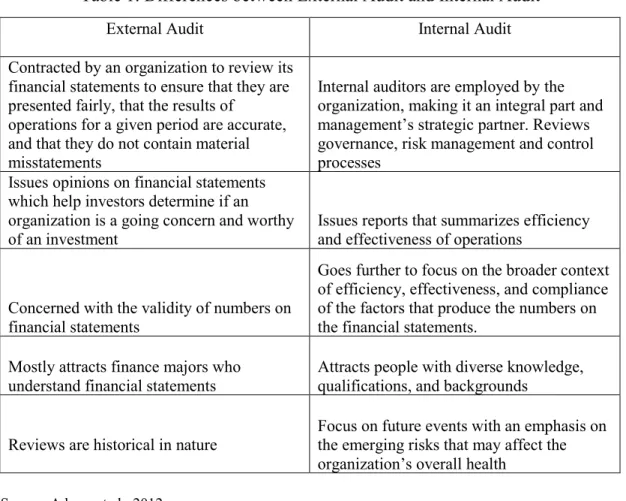
Table 1: Differences between External Audit and Internal Audit ... 38
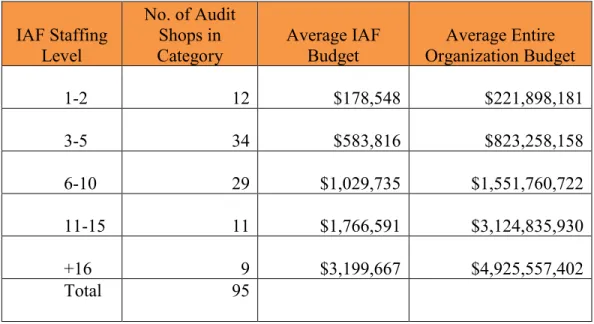
Table 2: Average Funds expended on IAF by Public Organizations (n = 95) ... 48
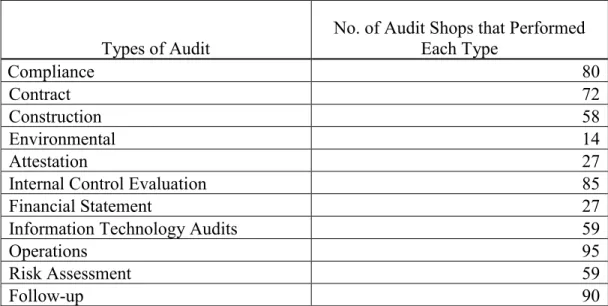
Table 3: Assurance Services Provided by Surveyed Organizations ... 57
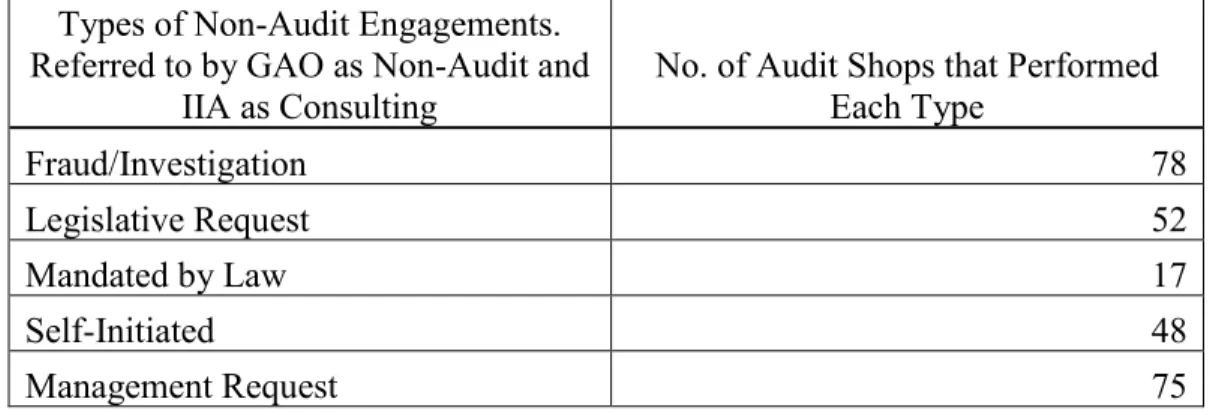
Table 4: Non-Audit Services Provided by Surveyed Organizations ... 65
Table 5: Staffing Levels of Responding Organizations ... 70
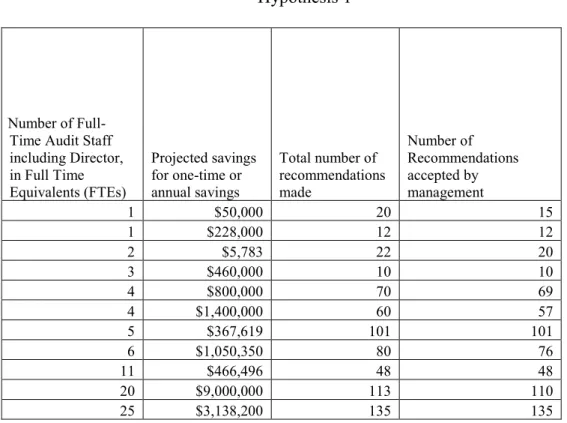
Table 6: Recommendations with Attributable Savings/Revenue Enhancements for Hypothesis 1... 79
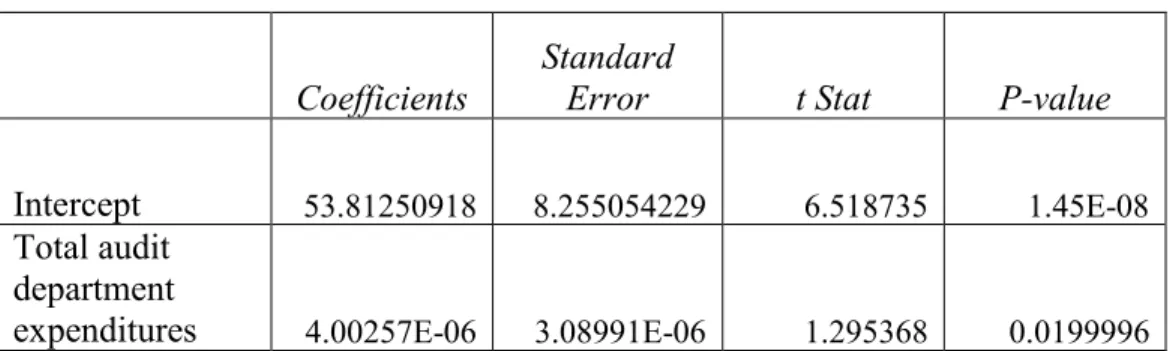
Table 7: Regression Statistics for Hypothesis 2 ... 81
Table 8: P-Value for Hypothesis 2... 81
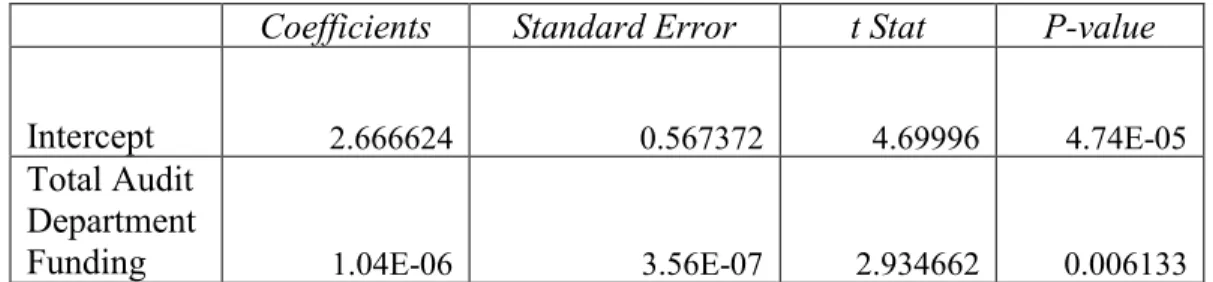
Table 9: Regression Statistics for Hypothesis 3 ... 85
vi
LIST OF GRAPHS
Graph 1: Independence of IAF ... 46
Graph 2: Assurance Activities Conducted by Respondents ... 58
Graph 3: Risk Assessment Factors Considered by Responding Organizations ... 60
Graph 4: Non-Audit Services Provided by Respondents ... 65
Graph 5: Relationship between Number of Recommendations Accepted by Management and Total Projected Dollar Savings for Hypothesis 1 ... 79
Graph 6: Audit Department Expenditure Line Fit Plot for Hypothesis 2 ... 82
Graph 7: Normal Probability Plot for Hypothesis 2 ... 83
Graph 8: Total Audit Department Expenditure Residual Plot for Hypothesis 2 ... 84
Graph 9: Total Audit Department Funding Line Fit Plot for Hypothesis 3 ... 86
Graph 10: Graph 10: Normal Probability Plot for Hypothesis 3 ... 87
vii
INDEX OF TERMS
Accountability Obligation to explain, justify and take responsibility for conduct Add Value Audit work that helps management improve the business operations Agency Theory The theory that attempts to explain the relationship between agents and principal Agent Entity or person delegated to use and control the resources of a principal
Internal Audit
Employed by the organization to conduct assurance and consulting activity designed to add value and improve an organization's operations.
External Audit Contracted by organization solely to report on the fair presentation of the financial statements
Assurance
An objective examination of evidence for the purpose of providing an independent assessment on governance, risk management, and control processes for the organization.
Chief Audit
Executive Person responsible for managing the internal audit activity of an organization Compliance Adherence to policies, plans, procedures, laws, regulations, contracts, or any other requirements
Consulting
Advisory and related client service activities intended to add value and improve an organization’s governance, risk management and control processes
Control Action taken by management to manage risk and improve the likelihood that objectives and goals will be achieved Efficiency
Engagement The optimal use of resources to produce intended results IAF assignment, task or review activity
Fraud Any illegal act characterized by deceit, concealment, or violation of trust Governance The combination of processes and structures implemented to inform, direct, manage and monitor the activities of the organization Independence Freedom from conditions that threaten the ability of IAF to carry out its responsibilities in an unbiased manner Internal Audit
Function Provides independent, objective assurance and consulting services to an organization
Linear Regression
Use of the values from an existing data set consisting of
measurements of the values of two variables, X and Y, to develop a model that is useful for predicting the value of the dependent variable, Y for given values of X
Management Persons charged with controlling and making decisions for an organization Principal Owner of the resources who delegates control to an agent Qualitative Data that can be observed but not measured
Quantitative Data that can be measured
viii Risk Management
Process of identifying, assessing, managing and controlling risks to provide reasonable assurance regarding the achievement of
organizational goals
Standards
Pronouncements promulgated by a professional body that delineates the attributes and requirements for members of the profession on the execution of their responsibilities
ix
ACKNOWLEDGEMENTS
Thanks to the most high for bringing me to this point of this journey and what a journey it has been! From a kid who alighted an airplane in a foreign country with only a backpack and a dream, I have come to the place I am today.
I want to recognize the late Mr. Charles Anderson who was not only a personal friend but also my IAF mentor. I also want to thank my work family at the Osceola County Office of Commission Auditor for putting up with me and especially Damiana Pache who dared me to venture down this path.
Thanks to the Association of Local Government Auditors for working with me in collecting the data for this study. Niki Raggi and Andrew Keegan – you rock!
To all my friends, too many to mention, who cheered me on, you guys are the best; and finally,
I cannot say enough about my entire family for sticking with me through it all. Words cannot adequately convey the love I have for you.
My wife, IK: you are the best,
My kids: thanks for sharing me with VSU for the last three years,
x DEDICATION
This study is dedicated to my parents, the late Mrs. Lucy Elekwuizu Nwachukwu and the late Mr. Chukwuemeka Ezekiel Nwachukwu who instilled in me and my siblings the thirst for knowledge.
1 Chapter I INTRODUCTION
The public sector performs complex tasks in an economic climate that require the public sector to do more with less (Bouvard et al., 2011, p. 1). Coupled with a global marketplace that consists of breathtaking changes, rapidly changing information
technology, knowledge based economy and niche markets (Osborne & Gaebler, 1993, p. 15) it is imperative that institutional flexibility, responsiveness, adaptability, and most importantly accountability be adopted in all projects and processes if efficiency is to be achieved.
In order to fully appreciate the importance of effectiveness in the public sector, it is necessary to consider the concept of publicness and the significant role public
organizations play in everyday life. Public organizations (Bozeman & Bretschneider, 1994, p. 199) are described as those charged with operating in the interest of the public or with responsibilities to provide goods and services with public goods characteristics. While this may suffice for the theoretical explanation of the differences between public and private organizations, practice does not provide an empirical test of the delineation. Bozeman (2011, p. 365) argued that the publicness and privateness of organizations are constrained by political and economic authorities which makes it difficult to solely identify with one category. Both exercise and are constrained by political and economic authorities to an extent, but public organizations possess the presence of democratic accountability, production of collective goods, and due process. The difficulty of
2
measuring the publicness of organizations is highlighted in the intermingling of activities provided by both private and public organizations, which requires public funding and control (Bozeman, 2004, p. 30). Provision of public goods and services through contracts with private organizations further convolute the delineation of public and private
organizations. Although Bozeman and Bretschneider (1994), Bozeman (2013) and Rainey, Backoff, and Levine (1976) all identify with the ambiguity of classifying
publicness in organizations because of the overlap in their purposes and design, this paper will consider the three dimensions of ownership, funding, and control, as a determinant of publicness and will analyze data gathered from organizations that exhibit those
characteristics. Some scholars, according to Rainey (1983, p. 213) theorize that
ownership and funding by government, control by a number of external entities, and the pressures of accountability are tantamount to publicness of an organization. The legal and formal environments (Bozeman & Bretschneider, 1994, p. 200), as it relates to the
autonomy and flexibility of the organizations are also factors to be considered when trying to determine if an organization is private or public. Organizations that have their purposes and activities (Rainey et al., 1976, p. 238) defined by law; are subject to hierarchical and bureaucratic external control (Rainey, 1983, p. 209); and are influenced by political fluctuations are largely considered public.
The management of the public sector has an effect on everyday life without regard to age, sex, ethnicity, religion, or location. Because of this, it is important that the services the public sector provides are delivered effectively and efficiently. Bartlett (2009, p. 7) posits that “combining efficiency (doing things right) with effectiveness (doing the right things) is a duty for every government.” Unlike the business sector that
3
can generate its income stream from sale of goods and services in the marketplace (Mikesell, 2014, p. 2), the nature and value of the goods and services provided by the public sector is such that it cannot be captured in a voluntary sales transaction. This paper discusses and analyzes how IAF in the public sector has evolved to become an important function in ensuring the equitable production and distribution of public goods. It
measures the effect of IAF on the efficiency of public organizations in delivering public goods.
IAF plays a very important role by ensuring that public sector government fulfils the charge thrust upon it as the guardian of citizen’s trust and funds. IAF’s independent and unbiased assessment of public resources assist management in making strategic organizational decisions geared towards the achievement of organizational goals. With the crisis of confidence abundant in today’s public sector (Mueller et al., 2015, p. 1172), IAF serves to promote accountability and integrity, ensure the efficiency and
effectiveness of operations and processes, and reassure citizens and stakeholders that the public sector is still the institution that can be trusted to deliver essential goods and services to the public (Goodson et al., 2012, p. 14).
Efficiency is the ability to accomplish a task with a focus on maximization of time, resources, and effort. The measurement of efficiency (Chote, Emmerson, & Simpson, 2006 p. 106) is determined by the relationship between input and output. To achieve efficiency, it is desirable for organizations to produce the maximum possible output with the least input. An argument can be made that there is no defined
measurement for efficiency in the public sector except to ensure that the outcome of programs produces satisfaction for the citizens. According to Bartlett (2009, p. 7), it is a
4
poor use of public resources if government programs are fiscally efficient but do not achieve their desired outcomes of solving the problems of the citizens. The indicators and variables examined and calculated in order to determine efficiency in the public sector are fundamentally different from that of the private sector. For starters, the private
sector’s operations are aimed at controlling resources, making a profit, and increasing the value of the firm through investments (Mikesell, 2014, p. 2). Conversely, public
organization’s functions are directed at providing satisfaction for the citizens with income generated through government’s coercive powers (Goodson, Mory, & Lapointe, 2012, p. 9) of taxation. The concept of public goods is not new. Adam Smith recognized the need for the provision of public goods when he postulated that the …
duty of the sovereign or commonwealth is that of erecting and maintaining those public institutions and those public works, which, though they may be in the highest degree advantageous to a great society, are, however, of such a nature that the profit could never repay the expense to any
individual or small number of individuals, and which it therefore cannot be expected that any individual or small number of individuals should erect or maintain. The performance of this duty requires, too, very
different degrees of expense in the different periods of society. (1776. Bk. V, Part III, v. 1.69)
It is important that the government form and control certain programs in the interest of the public. Anomaly (2015, p. 112) describes public goods as those provided by government, which otherwise would have been difficult or impossible to attain if individuals are left to their own devices.
5
As more of these public organization functions are influenced by market mechanisms and private organizations move to provide more public goods, it is often debated whether the line has been blurred (Rainey et al., 1976, p. 234). The defining factor still remains that even when the private sector engages in the provision of public goods, it does so with a goal of turning a profit through contracts with the public sector. The two main characteristics of public goods are non-rivalrous and non-exclusion (Anomaly, 2015, p. 109). The producers of the goods or service cannot exclude beneficiaries and the use of said goods and services by one person does not reduce the benefits of the same good or service by another. This means that everybody in a
jurisdiction receives the same services without extra cost. Mikesell (2014, p. 2) uses the example of a fire department that responds to jurisdictional emergencies for no extra cost whether it involved one or ten people, and the example of a mosquito control service provided to everyone in an area regardless of whether they live there or if they paid for the services, to illustrate the characteristics of non-rivalry and non-exclusion.
The role of the public sector in the private markets is necessary to maintain a functionally efficient private sector. Without the regulatory framework installed by government to encourage accountability and deter fraud, the marketplace will be chaotic. Governments have to use coercive powers (Goodson et al., 2012, p. 9) like taxes and fees to raise the revenue to pay for these goods and services. Through these contributions to the public coffers, the citizen becomes a stakeholder in the affairs of the state and expects competent representation characterized by integrity and accountability (Rainey et al, 1976, p. 239).
6
The public sector is the government’s representative entrusted with the
deliverance of these goods and services and safeguarding the people’s assets and trust. The objective of public sector governance (Goodson et al., 2012, p. 5) is to combine processes and structure which direct, manage, and monitor activities that lead to the effective and efficient delivery of public goods and services. The public sector is the keeper of the people’s trust and funds. Citizens stake their trust in their government believing that it will provide them with public goods and services when and if needed.
The Institute of Internal Auditing (IIA) is a global guidance-setting body that promulgates International Professional Practices Framework (IPPF), the standards
followed by the majority of internal auditors around the world. It defines internal auditing as “an independent, objective assurance and consulting activity designed to add value and improve an organization's operations. It helps an organization accomplish its objectives by bringing a systematic, disciplined approach to evaluate and improve the effectiveness of risk management, control, and governance processes.” (IPPF, 2013, p. 1) This
definition suggests that IAF is not only concerned with historical reviews but is proactively invested in ensuring that control, risk management, and governance is strategically aligned with the objectives of the organization. It not only promotes a systematic risk management approach, it is also invested in adding value to the whole organization. The demands, challenges, and opportunities that attend today’s global political and economic arena accentuate the criticality of robust risk management,
effective internal controls, and overall good corporate governance (Aikins, 2012. p. 196). Through the provision of assurance to management that risks and opportunities are evaluated appropriately, IAF helps to instill confidence in public organizations (Goodson
7
et al., 2012, p. 5). An exposition of the crucial contributions of these professionals through discussions, analysis, and measurements is therefore warranted through a study like this. These contributions, however, do not preclude a review of the theoretical disputes that has attended IAF. Some of the disputes surrounding IAF that will be
discussed in this paper include the reasons for the current pervasiveness of audits and the lack of criteria for measuring the success or failure of the profession. Power (1994b, p. 6), observed that a combination of lack of trust and the public’s perception of audit as an influential model of administrative control may help explain the demand for more of IAF’s services. This study will attempt to proffer a balanced view of IAF, discuss why it has increasingly become management’s partner in the achievement of organizational goals, and encourage a compromise between its criticism and contributions.
Problem Statement
This study intends to review the impact of IAF on efficiency of programs and processes within public organizations. The aim is to use quantitative data to determine if controls recommended by internal audits have positively impacted the attainment of organizational objectives. These impacts will in turn validate whether or not internal audits contribute to the efficiency and effectiveness of programs and processes within public organizations. To the extent possible, the literature review will be used to
showcase the salience, visibility, and influence the profession has had on the attainment of organizational objectives.
In light of the salience of IAF and in fulfillment of IIA Standard 1300 (IPPF, 2013, p. 22) which require the Chief Audit Executive (CAE) to develop programs that assess the efficiency and efficiency of IAF and identify opportunities for improvement,
8
the aim of this study is to advance the research on the relevant metrics needed to accomplish this objective. Researchers have used different indicators and methods to measure the value of IAF to organizations. According to Chen and Lin (2011, p. 19) the methods range from assessment, through customer surveys from audited departments, recommendations accepted and implemented, the number of management requests for internal assurance or consulting project, and reliance by the external auditors on IAF’s work. A survey conducted by the IIA’s Common Body of Knowledge (CBOK) (2006, p. 197) concluded that 51.4% of respondent organizations measure the value of IAF by the number of recommendations accepted and implemented. Another survey conducted in 2010 (CBOK, 2014, p. 42) showed that the top three (3) methods adopted by IAF to evaluate performance has shifted to the percentage of audit plan completed,
surveys/feedback from the board, audit committees and senior management, and the customer/auditee surveys. The survey theorized that although neither of the results from the three (3) methodologies offered the best assessment of IAF, they were commonly used because their criteria were rather easy to measure. This ease of measurement helps explain the shift in assessment methods that occurred between the two surveys.
A shortcoming of using the percentage of audit plan completed as a measurement for efficiency is that the method does not allow for flexibility to adapt to changing risks and opportunities. Surveys of boards and senior management seem to be too broad, especially since the questions are often open-ended and information solicited does not clearly illustrate the value of IAF in public organizations. This study’s measurement of recommendations made by IAF and accepted by management does not in any way minimize other factors that influence efficiency in public organizations.
9
This study will utilize secondary data obtained from the Association of Local Government Auditors (ALGA), an organization committed to enhancing public sector auditing through education, advocacy, and training. Its membership is composed of auditors from cities, counties, school districts, water districts, tribal organizations, and other local government entities around the world (ALGA, n.d.). This study is especially important because it provides the opportunity to utilize the data collected by ALGA to shed light on both the concept and theory of IAF’s contribution in the public sector.
The data was gathered as part of a benchmarking and best practices survey for participant auditors (ALGA, 2013, p. 12). This data includes information that ALGA elicited from survey respondents on organizational structure, activities, resources, fraud audits and investigation and the financial impact of audit recommendations from various types of assurance and consulting activities conducted by IAF. The Data Source section of Chapter 3 will discuss ALGA’s collection technique and analyze the sufficiency of the data.
The hypotheses for the study are as follows: H1:
IAF has a positive impact on the efficiency and effectiveness of organizational activities and the reduction of fraudulent activities through the financial and operational savings attributable to IAF recommendations.
H0: (Null Hypothesis):
IAF has no impact on the efficiency and effectiveness of organizational activities and the reduction of fraudulent activities through the financial and operational savings attributable to IAF recommendations.
10 H2:
Increase in IAF funding will result in more efficiency of processes and operations within public organizations.
H0 (Null Hypothesis):
An increase in IAF funding will have no effect on the efficiency of public organizations.
H3:
The more funds organizations invest in IAF, the more likely they are to prevent and/or detect fraud.
H0: (Null Hypothesis):
The amount of funds invested in IAF does not affect the detection and reporting of fraud in organizations.
For Hypothesis 1, a regression analysis will determine if there is a correlation between the recommendations for improvement made by IAF and projected dollar savings, and efficiency in programs and processes within the public sector. The dependent variable is Total Projected Dollar Savings (TPDS), while the Number of Recommendations Made (NRM) and the Number of Recommendations Accepted (NRA) are the independent variables.
For Hypothesis 2, a regression analysis will determine if there is a correlation between the funding for IAF and projected dollar savings in an attempt to show how additional funding can contribute to efficiency in the public sector. The dependent variable is Total Projected Dollar Savings (TPDS), while the Audit Department Funding (ADF) is the independent variable.
11
For Hypothesis 3, a regression analysis will determine if there is a correlation between the funds expended on IAF and the number of fraud audits and investigations completed during the survey time period. This measurement will assume that prevention and detection is attributable to the number of fraud audits and investigations completed during a given period. Fraud audits serve as both a prevention and detection tool through its search for inadequacies in management controls. Management also engage IAF in a consulting capacity to investigate fraud. The dependent variable is Number of Fraud Audits Completed (NFAC), and the independent variable is the Total Audit Department Funding (TADF).
While understanding that correlation is not causation, the information gleaned from the quantitative analysis is important to support the discussion of the critical roles IAF plays in enhancing efficiency within public organizations. Because of the nature of goods delivered by the public sector, efficiency measurement is not dependent on profit margins (Goodwin, 2004, p. 641) but by resource management and the effect it has on the lives of citizens. Savings and revenue enhancements constitute a significant portion of the efficiency measurement in the public sector.
This data collection, research design, hypothesis and data analysis will be discussed further in Chapter 3 in conjunction with statistical modelling, data definition, and data relationships.
Purpose of Study
The purpose of this study is to examine the value internal auditors deliver to management. This will be accomplished through an analysis of IAF’s contribution to efficiency optimization within organizations. The analysis will be supported by a
12
quantification of the financial effects of IAF activities within public organizations. This approach will be used to argue for or against how much, if any, IAF has contributed to the efficiency of programs and processes in the public sector. The general public (Adams et al., 2012; Mautz, 1966, p. 153) has traditionally associated the audit function with simply ensuring compliance and accuracy of financial statements. While this function falls under the audit umbrella (Protiviti, 2003, p. 8), it is mainly conducted by external auditors. External auditors, according to Moeller and Brinks, (2009, p. 3); Trenerry (1999); and Adams et al. (2012, pp. 9-12) are contracted by an organization to review its financial statements to ensure that they are presented fairly, that the results of operations for a given period are accurate, and that they do not contain material misstatements that may influence the decisions of financial statement users. In contrast, both Adams et al. (2012, p. 9) and IIA (March, 2015) describe IAF as an integral part of an organization with responsibilities to assist management identify risk and opportunities, evaluate controls, and add value to the entire organization.
Mautz, (1966, p. 153) posited that the internal audit and its effect on the overall health of an organization can sometimes be lost or ignored because the general public has often lumped the discipline together with external auditing, accounting, ethics, law, or finance. Also with the public’s appetite for good governance, it is easy for an
organizational risk approach to be muddled with legal and compliance issues (Chambers, 2012). The general public (Pickett, 2005. p. 121; Chambers, 2012; and Moeller & Brinks, 2009, p. 7) often confuse the duties and roles of external auditors and ethics officers with those of internal auditors. This confusion belies the contributions IAF makes in providing good governance in the maze of organizational functions. This study will attempt to
13
untangle the web, and hopefully, shed some light on the true goals and purposes of the profession.
In this current environment of greater fiscal accountability and competition for scarce resources (Aikins, 2012, p. 196), it is not uncommon for the public to demand accountability. Auditors, according to Goodson et al. (2012, p. 14) are an essential element in accountability which in turn lead to strong governance in the public sector. They provide an independent assessment of stewardship of public resources (Lapointe, 2008). One of the better ways to demonstrate the value of IAF (Soh & Martinov-Bennie, 2011, p. 608) is to measure the organizational cost savings and revenue enhancements attributable to IAF. With political and public demands (Bouvard et al., 2011), alongside tightening resources, the public sector has been called upon to do more with less. The public servant is answerable to all citizens and the objective is the delivery of public goods and services with little or no consideration for profit or loss. Cels, De Jong, and Nauta (2007, pp. 6-11) postulated that making changes which may improve service delivery in a bureaucratic environment is viewed as destructive, hard to account for, non-rewarding, and at odds with both bureaucratic structure and culture. While the private sector can try and fail a thousand times in their bid to create or innovate service delivery or the manufacture of new goods with a goal of turning a profit, public organizations tend to be more methodical and less adventurous in spending public funds because of the transparency and scrutiny that attends the organization (Rainey et al., 1976, p. 239). Although the formal structure of accountability and control inherent in the public sector may not always be suitable for entrepreneurship, risk taking, and imagination, IAF has stood in the gap to assist management improve performance while still holding that fiscal
14
line. Most public sector successes are not measured in dollars and cents but by the citizens' continued satisfaction and confidence in their government (Goodwin, 2004, p. 641), making it rather hard to provide empirical evidence of truth or falsity of the claim that government resources are utilized efficiently and effectively. Until the popularity and prevalence of quantification methods, i.e., performance measurement, balanced
scorecard, social return on investment and so forth, a priori knowledge has been brought in to serve as the primary determinant of success for most government initiatives. Like most government processes, IAF (Aikins, 2012, p. 197) may have fallen into the routine of performing daily activities and ignoring measuring its impact on the achievement of organizational goals.
Because there has been limited measurement of the relationship between IAF activities (Aikins, 2012, p. 198) and their impact on the achievement of organizational objectives (Soh & Martinov-Bennie, 2011, p. 608), it is relatively easy to condemn the profession’s work as an oversight function (Goodson et al., 2012, p. 5) that only reviews processes after the fact to determine whether organizations are doing what they are supposed to do. With that perception, the profession receives attention only when management controls fail or when non-compliance of rules and regulation expose
organizations to fines, lawsuits, and public ridicule (Pickett, 2010, p. 369). The challenge here is how to determine if IAF is actually achieving its objectives and to ensure that resources are allocated accordingly, especially in these times when public sector activities are trending towards a result-based paradigm. In other words, what calculable results do public agencies expect to receive from their investment in IAF? The global phenomenon
15
for accountability has resulted in the measurement and evaluation of all processes in the public sector and IAF is no exception.
There is no better time to demonstrate the Return on Investment (ROI) of IAF to the public organization. IAF activities include audits and investigations that enable public organization to save cost, enhance revenue, deter fraud, and reduce/avoid fines. Its ROI (Hudak & Wallack, 2015, p. 8) is calculated from questioned costs, recommendations for better use of funds, and other administrative savings. The inherent challenge to
calculating ROI is the inability to quantify intangible contributions that accrue to organizations as a result of the work conducted by IAF. The functions of public
organizations are directed at providing satisfaction, with low priority to profitability and cost factors, so a true appreciation of both the social and financial efficiency
contributions of IAF to the public sector will be helpful to understand its achievements. Monetary value cannot be assigned to the social impact of some IAF contributions such as fraud deterrence and/or compliance to laws and rules, due to the presence of IAF in an organization.
Theory
To develop an understanding of IAF and its expanding (Soh & Martinov-Bennie, 2011, p. 606) role in the public sector, it is very important to consider the auditing profession as a whole and IAF in particular. Auditing and the work of IAF can play an indispensable role for both the citizenry and administrators if public organizations are to operate within the framework of budgets, rules, requirements and objectives. IAF’s activities can help to ensure accountability and that public funds are used for the effective functioning of government.
16
The Agency Theory will serve as the philosophical orientation of this study because it informs the framework for understanding the relationship between factors that affect efficiency in the public sector. To ensure efficiency, an organization must be able to monitor its programs and processes and also ensure that there is an alignment of interests between the principals and agents. Both factors constitute the focus of agency theory. The theory describes the relationships between the principal and agent and is important in depicting the relevance of IAF in the public sector. An agency relationship arises when the owner of the resources referred to as the principal delegate decision making powers to an agent to use and control those resources (Adams, 1994, p. 8; Eisenhardt, 1989, p. 58). The theory assumes that both parties will be motivated by self-interest and that the agent, in the course of duty, will become more knowledgeable about the process than the principal (Eisenhardt, 1989, p. 63). It is only logical that a
development of an oversight mechanism will help resolve the concerns that arise from information asymmetry and behaviors that benefit self-interest.
Factors like the principal/agent relationship (Goodson et al., 2012 p. 13), that exist between public administrators acting as agents, and citizens acting as the principal which requires accountability for public resources, has given rise to IAF. Aikins (2012, p. 199) postulates that the principal/agent relationship assumes that both parties will utilize their positions to maximize their wealth if given the opportunity. Aikins goes further to theorize that the agent will have custody of resources and access to more information since he is tasked with representation. Given the misalignment, the principal therefore will want to be reasonably assured that the agent is using the resources and information for the principal's best interest, hence the need for a monitoring mechanism. IAF provides
17
the accountability that attempts to resolve the difficulty of the principal/agent relationship.
This study takes the position that systematic empirical investigation will help demonstrate the effect of IAF exerts on efficiency in the relationship between the principal and agent. Although many researchers have argued against the use of
quantification and statistics (Shore & Wright, February, 2015a, p. 24), as a barometer for efficiency in public sector, other scholars (Adams et al., 2012, p. 13) counter that this view is myopic and does not take into account IAF’s deeper dive into the broader context of efficiency and effectiveness. Shore and Wright (2015a, p. 24) suggested that society’s preoccupation with numbers, indicators, algorithms and audits has rendered their results unquestionable and may in turn have produced a negative effect because of the
overreliance on them for decision making. Shore and Wright (2015b, p. 425) also posited that although auditing and other performance measurement are not new concepts, today’s overdependence on them may sometimes have a negative effect. The resultant effect of this overreliance is that organizations may get overly occupied with audit results, to the point where all operations and values are changed to only those that can be measured.
The agency theory is also relevant when the knowledge distance between the public and the bureaucrat is put in perspective. Because public sector operations are remote and physically removed from the citizens, oversight by auditors allows the citizen on the outside (Shore & Wright, February, 2015, p. 23) access to how public resources are utilized.
In order to support good governance, public sector auditors have to play a central role in fostering trust that the information asymmetry between the principal and agent is
18
not abused or misused. Goodson et al. (2012, p. 9) posits that good governance includes setting directions through the establishment of policies to guide an organization;
articulating clear ethical values, objectives, and strategies; implementing internal control; creating oversight, and maintaining a vision. As part of the effort to restore and foster the trust, it is of vital importance that IAF shows how much it has impacted the efficiency of public sector programs. According to Maali, (2013, p. 16), the most compelling
measurement is the financial impact achieved by implementing audit recommendations. Soh and Martinov-Bennie (2011, p. 608) also theorized that a quantification of cost savings and revenue enhancement attributable to recommendations is important in order to denote the value and relevance of IAF in the public sector. Moreover, measuring the financial impact of IAF’s recommendations is important in determining if they are meeting their oversight objectives and adding value to an organization and improving organizational operations.
Agency theory emphasizes separation of ownership and control, and the audit profession has emerged as the medium to resolve the inherent mistrust between the parties. IAF has come to be regarded as the independent validator of failure or success of processes and projects in the public sector. IAF has continually evolved from just being a watchdog with a tunnel focus on compliance (Goodson et al., 2012, p. 14) to skilled management partners who bring expertise to the improvement of management and control systems. IAF has grown from just monitoring controls of inputs to evaluating outputs and outcomes (Waring & Morgan, 2007, p. 323). Most employees in an organization have a negative connotation of IAF, believing that auditors only come around to dig up dirt or to stir up trouble (Chambers, 2012; IIA, Singapore, 2014, p.
11-19
12). This could not be further from the truth (Ramamoorti, 2003, pp. 4-8) because internal auditors perform a variety of functions within the organization. The IIA, South Africa website (n.d.) asserts IAF is the unit that challenges current organizational
practices through an evaluation of risk and controls; champions best practices through an analysis of organizational operations, and adds value through their partnership with management in the identification of opportunities. This study hopes to influence the salience of IAF and bring public administrators to the realization that that the end result of an audit or consulting engagement can mean something tangible to the entire
organization.
The importance of the internal audit function in today's business cannot be over-emphasized (IIA CBOK, 2006, p. 25). Assisting the public sector in controlling risks and uncertainties, and taking advantage of opportunities to achieve the organization's goals and objectives, is a value-adding role of IAF (Ramamoorti, 2013, p. 14). With the
amplification of globalization and its effect on both public and private industries, the role of IAF (Williams, 2002, p. 6) is vital to ensure good decision making, accountability, and better management of organizational risks.
In order to achieve a state of efficiency in the principal/agent relationship, (Adams, 1994, p. 8) which ensures that neither party can enhance their wealth at the expense of the other, the traditional internal audit staff requires transformation from being a "detective" who relies on historical financial data to a knowledge-driven, business focused, and technologically aware risk assurance manager who can design effective controls that will prevent the occurrence of unwanted events and mitigate risk in the case of an incident or accident. The paradigm has shifted from the historical backward-looking
20
approach (Kagermann et al., 2008, pp. 4-5) in which audits only identified exceptions in organizational activities that may have been overtaken by events, to a more proactive approach where auditors identify and understand the future trends (Pickett, 2005, p. 53) while working with management to prepare for it.
For a full appreciation of IAF’s contributions to the efficiency of organizations and how much it impacts the attainment of objectives, it is necessary to discuss some published information on the both IAF and efficiency. The next chapter will inform the consumer of this study about the history of the profession, its distinction from other professions that have erroneously been confused with it, factors that have influenced its salience, and the quantitative contributions of IAF. Using logical and empirical
information, it will move the needle in the knowledge of how IAF helps the public administrator gain and maintain the trust and confidence of the citizen while working with management optimize efficiency in the organization.
21 Chapter II
LITERATURE REVIEW
This chapter will review and analyze selected research critical to the understanding of IAF’s position, role, and responsibility in an organization,
management’s expectation of IAF, and how it all affects the efficiency of programs and processes within the public organization. It will apply a scholarly interpretation to the subject of efficiency in the public sector and how internal audits contribute to its achievement. Also, it will try to connect the relationship of citizen’s trust in the public sector to the work performed by internal auditors.
IAF’s scope has expanded tremendously since its inception (Ramamoorti, 2003, p. 10; Teck-Heang & Ali, 2008, p. 10; Hickman, 2012). Acting as an independent assurer that controls exist and are working as they should (IIA Singapore, 2014, pp. 3-21), IAF’s focus spans a variety of organizational functions including internal controls, governance structure, operational efficiency and effectiveness, and fraud risk management (Pickett, 2005, pp. 3-6). From this position, it apparent that audit organizations remain in constant contact with and engage management to understand the overall objective and be able to identify risks, challenges, and opportunities.
The current emphasis on increasing public sector productivity, performance, and accountability (Bartlett, 2009, p. 13) lends itself to innovative, cutting edge skills of turning policy into practice with minimal fiscal input. Public sector bureaucrats are expected to do more with less (Bouvard et al., 2011, p. 1) and IAF, like other
22
organizational units, is expected demonstrate its value to the organizations (Soh & Martinov-Bennie, 2011, p. 608) not only by the way it runs its operations (PWC, 2014) but also by capturing and reporting its contributions to the organization. As business topography grows more complex (Ramamoorti, 2003, p. 9), the risk involved in conducting business has become more complicated, requiring IAF to provide the expertise that helps organizations manage these risks effectively (Chambers &
McDonalds, 2013, p. 3). PWC's State of the Internal Audit Professions (2014, p. 1) study concluded that IAF is now challenged to help organizations protect itself from risks ranging from globalization to cybercrime. Surveys conducted to support the study showed that more than 70% of board members want IAF to get involved in technology, security, reputational, and big data and business analytics risks. A historical exposition will enhance the comprehension of the evolution of the profession into a proactive management partner. To understand how IAF can influence an organization, it is
necessary to discuss the history, roles, the distinction between audit typologies, and audit methodology.
History and Evolution of Internal Audit Function
The origin of auditing goes back to times scarcely less remote than that of accounting. Whenever the advance of civilization brought about the necessity of one man being entrusted to some extent with the property of another, the advisability of some kind of check upon the fidelity of the former would become apparent. (Brown, 1905, p. 74)
The history of IAF can be traced back to whenever civilization afforded man the opportunity to own enough things to entrust some of them to the care of another man
23
(Goodson et al., 2012, p. 13). Semblance of formal record keeping and the attendant audit can be traced to the early organizations of business and government in the Near East, Greece, and the city–states of Italy (Teck-Heang & Ali, 2008, p. 2). According to Ramamoorti, (2003, p. 3) the concern that corrupt officials may be inclined to
compromise the finances of the state or that errors and inaccuracies may occur as a result of incompetence led to the creation of oversight through a system of check and balances. The checks applied to ensure the safety of property in another person’s hands can be paralleled to internal controls designed and implemented in today’s organizations. Although it was not as systematic and structured, the objective was the same: an independent verification in order to reduce fraud and abuse of assets.
The advent of the industrial revolution ushered in a more structured auditing process through the passage by the United Kingdom (UK) parliament of the Joint Stock Companies Act of 1844 (Watts & Zimmerman, 1983, p. 626). This Act formalized the position and duties of auditors in organizations and granted them the authority to inspect their books of account and the books of registry (Teck-Heang & Ali, 2008, p. 3). As businesses were organized and grew in size and scope the necessity for verification of accounting information needed for business decisions became more imperative.
Management also needed the means to review and evaluate the efficiency of processes in order to determine if they are in line with organizational objectives. This void was filled by the internal audit function, which brought a systematic method to accomplish the task. Growth also introduced complexity into businesses, which in turn created opportunities for fraud and misuse of assets, and management required means to evaluate not only accounting information but also the honesty of employees (Ramamoorti, 2003, p. 3).
24
IAF’s capability to understand and respond to organizational changes (Chambers & McDonald, 2013, p. 4) coupled with the analytical abilities of individual internal auditors qualifies it to assume the responsibility of collecting and interpreting information within the organization to ensure effective and efficient operations.
The establishment, growth, and evolution of the contemporary internal auditing profession is closely intertwined with the history of the Institute of Internal Auditors (IIA). Inaugurated in New York in 1941, (Ramamoorti, 2003, p. 2) the IIA has developed into the primary international professional body dedicated to the development of the practice of internal auditing. According to Kim et al. (2012, p. 4), the membership has since grown to over 175,000 with branches in 190 countries.
Arguably, the two main contributors to the rise of internal auditing as a profession in the United States are Lawrence Sawyer and Victor Z. Brink. In addition to being one of the founding members of the IIA, Victor Brink played a key role in the issuance of the first Statement of Responsibilities of the Internal Auditor published in 1947
(Ramamoorti, 2003, p. 5). These statements expanded the duties of the internal auditor from a narrow focus on financial and accounting to include evaluation of organizational operations. His contributions include research, consulting and publishing some of the most influential books and articles on internal auditing.
Widely regarded as the godfather of modern internal auditing (Pickett, 2005, p. 3), Dr. Lawrence B. Sawyer authored The Practice of Modern Internal Auditor which is considered the most authoritative book in the discipline. Renamed Sawyer’s Internal Auditing it has become the commonly referenced book amongst practicing internal auditors. His vision and articulation of the profession is chronicled in the awards that are
25
named for him. He advanced some of the major attributes of internal auditing such as independence, professional proficiency, the scope of work, the performance of the audit and management of the internal audit department (Cohen & Sayag, 2010, p. 296).
The influence and recognition of IAF has been remarkable considering that it is a very young profession. The tremendous growth of the profession and management’s desire to have IAF involved in different facets of the organization (Moeller & Brinks, (2009, p. 8) has spawned auditors with diverse backgrounds, including a large proportion who did not major in accounting. Auditors get the chance to specialize in specific areas and industries. It is not uncommon therefore to see internal auditors with specialties in oil and gas, healthcare, information technology, government, and non-profit organizations (Chambers, 2012).
Through the years, auditing standards have been designed to assist practitioners with understanding and the ability to discern the concepts essential in executing their responsibilities. The U.S. Government Accountability Office (GAO) and the IIA are recognized nationally and internationally as leaders in promoting high quality audit work through the issuance of professional auditing standards (Kim et al., 2012, p. 3). The Government Audit Standards (GAS) is promulgated by the GAO while the IPPF is issued by the IIA. The International Organization of Supreme Audit Organization (INTOSAI) also publish standards that are used by most countries outside of the United States (Blegvad, 2007). Although these standards are not mandatory, they serve as ‘best practices’ to provide guidance for internal auditors in the course of their work.
The GAO was established by the Accounting and Budgeting Act of 1921 (Kim et al., 2012, p. 3) which transferred auditing, accounting, and claims function and
26
responsibilities from the Treasury Department to the new agency. Situated in the legislative branch of the U.S. government, it is independent of the executive arm with functional and administrative reporting to Congress. In 1972, working with the Government Auditing Standards Task Force, GAO issued the first edition of the Standards for Audit of Governmental, Program, Activities and Functions (GAO, n.d., Chapter 6). Nicknamed the Yellow Book for its bright yellow cover, it was later renamed the Government Auditing Standard (GAS) and has become the most recognized guideline for conducting public sector audits (Kearney, Fernandez, Green & Zavada, 2013, p. 8). It has been updated six times since it was first published, most recently in 2011.
The IIA issued its first standards for the professional practice of internal auditing in 1978. In 1998, the Institute’s Governing Board appointed the guidance task force to review the continued applicability and relevance of the standards. As a result, the task force recommended a new definition of internal auditing, the IPPF, new attribute and performance standards for internal auditing, and implementation standards for assurance and consulting services (Kim et al., 2012, p. 4). Amongst the many important
contributions initialed by auditing standards were the very essential concepts of independence and objectivity (Adams et al., 2012, p. 15). It separated the auditing function from management and afforded it the platform to review activities, test transactions, and evaluate controls without interference from those charged with governance.
The two most recognized and utilized audit standards are the GAS and the IPPF. Although there are many similarities and both provide a framework to promote quality audit work that is systematic, objective, and based on evidence, public sector auditors
27
mostly adhere by GAS because it addresses government and other public sector issues directly. This is not to say that the IPPF does not address governmental issues, but the general nature of the standards could make for misinterpretation in matters that directly affect public goods and services (Kim et al., 2012, p. 6).
Standards provide a guide for auditors to conduct audits in a systematic, objective way. They also provide guidance on the attributes IAF should possess in order to deliver high quality effective audits and provide reasonable assurance that risks are addressed and efforts are made to mitigate them (Mautz, 1958, p. 17). They guide auditors on the foundation of the profession, ethics, general audit standards, financial audit standards, attestation engagement standards, fieldwork standards, and reporting standards (GAS, 2011, p. 1).
Due largely to the wave of financial mismanagement and abuse of trust in both the public and private sectors (Soh & Martinov-Bennie, 2011, p. l), it became
increasingly necessary for governments and professional bodies to enact legislation and promulgate pronouncements in order to mitigate the associated risks. The legislation and pronouncements served to ameliorate the confidence in public organizations and the reliance on financial statements by private investors. A discussion of some of the
legislation and pronouncements will illuminate the logical progression of the profession’s conspicuousness in today’s organizations.
Legislative Changes and Non-Binding Pronouncements That Have Impacted the Salience of IAF
Repeated occurrences of financial improprieties in both private and public organizations demanded the establishment of tools to strengthen internal control
28
structures, enhance effective governance, and improve regulatory environment (Pickett, 2012, p. 21). The fallouts following these corporate scandals have prompted the search for workable and lasting solutions. Legislative changes include laws and regulations enacted by Congress that govern financial reporting and corporate governance in
organizations. Non-binding pronouncements, on the other hand, are guidance developed by professional associations to help organizations achieve an acceptable level of
performance while conforming to relevant rules, laws, and regulations. Pickett (2012, pp. 387-390) summarizes the knowledge and proficiency that make it logical for
management to work with IAF in order to effectuate these control frameworks. Below are some of the significant legislative changes and pronouncements that have impacted the salience and expanded the roles and responsibilities of IAF in the United States and around the world.
Foreign Corrupt Practices Act (FCPA)
The Foreign Corrupt Practices Act (FCPA) prohibits offering to pay, paying, promising to pay, or authorizing the payment of money or anything of value to a foreign official in order to influence any act or decision of the foreign official in his or her official capacity or to secure any other improper advantage in order to obtain or retain business (USDOJ & USSEC, 2012) FCPA was passed in 1977 as a result of the discovery of widespread global corruption among U.S. companies. Investigations into the
Watergate scandal (Koehler, 2012, p. 932; Moeller & Brinks, 2009, p. 27) led to the exposure of falsified financial records which were made to cover domestic illegal campaign contributions and bribery payments to foreign officials.
29
The Act heightened the need for effective internal controls. Companies and other entities that were required to comply with FCPA needed IAF to assist with evaluation of compliance and assessment of risks to ensure that the organizations identify signs and opportunities that may breed corruption. To enhance compliance with FCPA, it was also necessary to engage auditors to advise management on internal controls that prevent corruption and/or detect common corruption schemes.
National Commission on Fraudulent Financial Reporting (Treadway Commission Report) With the enactment of the FCPA, the accounting and finance community felt a need to create a structure to ensure inspection, analysis, and general direction on corporate financial reporting – thus the formation of the National Commission on
Fraudulent Financial Reporting headed by James Treadwell, Jr. (Moeller & Brinks, 2009, pp. 28-31). It was an independent private sector initiative (National Commission on Fraudulent Financial Reporting, 1987, p. 1) sponsored by five (5) professional associations namely: American Institute for Certified Public Accountants (AICPA), American Accounting Association (AAA), Financial Executives International (FEI), Institute of Internal Auditors (IIA), and Institute of Management Accountants (IMA). These sponsors were jointly called the Committee of Sponsoring Organizations (COSO). Their mission was to identify the causal factors of fraudulent financial reporting and provide leadership in the areas of internal control, enterprise risk management, and fraud deterrence.
Their report, commonly referred to as the Treadway Commission Report, made recommendations on the responsibilities of public companies and the independent public accountant in improving internal controls for the avoidance of fraudulent activities. Its
30
other recommendations include ways for SEC to improve the regulatory and legal environment and the need for auditors to obtain continuous professional education that may help prevent, detect, and deter fraudulent financial reporting (National Commission on Fraudulent Financial Reporting, 1987). COSO has since grown into the flagship organization that provides guidance in internal control, fraud deterrence, financial
reporting, organizational governance, and most importantly, enterprise risk management. Its “Internal Control Integrated Framework,” published in 1992 (Moeller & Brinks, 2009, p. 31) and revised in 2013 redefined the way auditors approached assessment and
evaluation of internal control. It has since grown to become one of the most referenced frameworks in the United States for evaluation of compliance with FCPA, and around the world to better assess, design and manage internal controls.
Cadbury Committee (Cadbury Report, UK)
The Committee on the Financial Aspects of Corporate Governance established in 1991 by the London Stock Exchange, the Financial Reporting Council of UK, and the accounting profession in the UK was created due to investors' increasing lack of confidence in the integrity of the companies listed on the Exchange (Arcot & Bruno, 2006, p. 5). The aforementioned erosion of confidence was occasioned by failure of several large corporations in the UK. The committee chaired by Sir Adrian Cadbury published its report in December 1992, which contained a Code of Best Practices aimed at helping both public and private organizations achieve the necessary high standards of corporate behavior (Arcot & Bruno, 2006, p. 5). According to Arcot and Bruno (2006, p. 1), these codes were intentionally designed to be voluntary instead of statutory in an effort to get the boards to comply with the spirit rather than the letter of their requirements.
31
Criteria of Control Committee (CoCo Report, Canada)
CoCo was developed in 1992 by the Canadian Institute of Chartered Accountants (CICA) (Pickett, 2005, p. 93) to help enhance organizational performance and through the promotion of internal controls, good corporate governance, and emphasis on risk management. Its internal control framework was published in 1995 and was essentially modelled after the COSO. It describes control elements as interrelated and those elements must be viewed broadly not only to respond and adapt to unexpected risks but also to identify and exploit opportunities (Babos, 2009, p. 77).
King Committee (King Report, South Africa)
Like the Cadbury Report of the UK, the King Committee adopted the ‘comply or explain’ approach in their design of best practices for corporate governance in South Africa. Since South Africa’s constitution recognizes corporations as a juristic person (Hendricks & Wyngaard, 2010), the King Report highlights the importance of corporate citizenship. It encourages corporations to act with integrity and consider stakeholders interests when making financial, social, ethical, and environmental decisions.
Sarbanes-Oxley Act of 2002
Although the law was primarily designed to regulate the actions of public
company boards, their management, and public accounting firms; several provisions have had far reaching influence in underscoring both internal and external auditors’
independence in the conduct of their duties. The bill, a reaction to the rash of corporate and accounting scandals which brought down large corporation like Tyco, WorldCom and Enron (Moeller & Brinks, 2009, p. 53), was an attempt to restore investor confidence and public trust in corporations. Commonly referred to as Sarbanes-Oxley or SOx
32
(Bainbridge, 2007) after U.S. Senator Paul Sarbanes and Representative Michael Oxley, the sponsors of the bill in Congress, the law enacted in 1992, (Kagermann et al., 2008, p. 8) accentuated the responsibilities of public corporations’ board of directors and
establishes criminal penalties for violations of its provisions. It required top management to verify the accuracy of financial information (Bainbridge, 2007). It also created the Public Company Accounting Oversight Board (PCAOB) to oversee the accounting profession; mandated companies to adopt more internal controls; required companies to have audit committees; required organizational delineations to ensure auditor
independence, and designed rules to ensure better corporate governance (Bainbridge, 2007; Moeller & Brinks, 2009, p. 53). IAF has played an important role in ensuring that organizations comply with SOx through their provision of centralized and objective advice on corporate governance and control environment.
Wall Street Reform and Consumer Protection Act of 2010
The U.S. Congress passed the Wall Street Reform and Consumer Protection Act of 2010 to address regulatory gaps and oversight failures in the U.S. mortgage, securities, and financial market. This was in response to the financial crisis of 2007-08 (Dodaro, 2012). Currently the most comprehensive overhaul of the financial regulatory system since the Great Depression, this act was enacted “to promote the financial stability of the United States by improving accountability and transparency in the financial system, to end ‘too big to fail’, to protect the American taxpayer by ending bailouts, to protect consumers from abusive financial services practices, and for other purposes” (H.R. 4173, p. 1).
33
Other Factors and Current Events That Highlight the Importance of IAF It is no secret that public organizations have undergone fundamental
transformations, which have posed challenges for governing bodies relative to exercising stewardship, enhancing value, and ensuring equity while retaining confidence in the provision of public good (Goodwin, 2004, p. 641).
Several factors have contributed to management’s increased reliance on IAF to provide reasonable assurance that organizational performance is in line with objectives and that public trust is maintained. The position of both internal and external auditing has been slowly moving from obscure to prominence over the years until a major acceleration occurred with the financial failures of global corporate giants such as Enron, WorldCom, Tyco International, Adelphia, and other organizations due largely to the lack of internal controls (Williams, 2002, pp. 3-6).
Technology (Gantz, 2014, p. xxi) and the expansion of the global political and economic activities (O’Brien & Williams, 2013, p. 27), have further contributed to the heightened attention and sustained prominence that IAF has received in the past few years. These factors and their connections to IAF’s visibility are discussed below.
Information Technology
With the world becoming flatter (Friedman, 2005) and the dominance of technology increasing, it is imperative that oversight become an integral part of the world’s financial and political systems. Increased connectivity that is needed to stay in tune with today’s business environment, combined with the openness needed in information systems to promote its availability, demand a measure of regulation and a requirement to comply with laws and rules. As much as the advancement in information
34
technology, commonly referred to as cyber, has accorded us speed and efficiency (Protiviti, Inc., 2003, p. 18), comfort, and effectiveness in our everyday lives, it has also been attended by abuse and misuse. News of information theft, computer fraud,
penetrations, denial of service attacks, website defacing, and social network abuse is rampant around the globe (USGAO FISCAM, 2009, p. 34). White collar criminals have found the cover of the internet (Williams, 2002, p. 13) as a haven to conduct nefarious business, exploit financial institutions, and in the most extreme cases, enhance terrorism. Information System (IS) auditors are charged with the assessment of internal controls (Gantz, 2014, p. 5; USGAO FISCAM, 2009, p. 40) built around information assets of an organization to determine its security, integrity, reliability and availability. IT auditing is the evaluation of the physical security, financial and business control, infrastructure, policies and procedures that govern information technology within an organization with a view of ensuring data integrity and alignment with business objectives (Gantz, 2014, pp. 5-9).
Global Economy and Politics
Globalization has long been considered a major contributor to the rise and
mainstay of IAF as a profession. Globalization (O’Brien & Williams, 2013, p. 27) can be defined as the social, political and economic interaction of people, businesses and
government of different nation states. Globalization has increasingly integrated economies through trade and financial transaction as well as movement of people and knowledge that enhance international trade across geographical borders (Tang, 2007, p. 141).
35
Conducting business outside of geographical boundaries has become the norm for both public and private organizations. Every aspect of political, social, and economic activity (Williams, 2002, p. 3) has been or will be affected by the limitless opportunities spawned by the novel, unfamiliar emerging markets that has accompanied global
expansion. Along with opportunities, globalization has also introduced some challenges ranging from the impact on economic growth and cultural integrity of developing nations to the threats to the environment. Arguments have been made by both proponents and opponents on the benefits and demerits of globalization (Tang, 2007, pp. 141-142) but no matter what side of the argument one finds themselves on, there is no denying that its effect can be felt on the environment, security, economy, culture, human, and physical health of societies around the world. These interactions have introduced the element of diversity and complexity in the types of risks that accompany global relationships.
Internal auditing has been adapted by both public and private organizations to ensure that effective controls are adopted and implemented in keeping with the culture, social, economic, and political differences that exist within the international markets and communities (Hickman, 2012). The profession has focused heavily on understanding not only the opportunities but also the threats posed by globalization. With the mindset that historical transactions are only important relative to the future (Kagermann et al., 2008, pp. 4-5), IAF has the ability to design risk models that identify and prepare for unrealized global risks. Management can therefore rely on input from IAF when making global decision because of the profession’s proficiency in identifying risks.