Computational Design of Protein
Structure and Prediction of Ligand
Binding
by
Robert Aron Broom
A thesis
presented to the University of Waterloo in fulfilment of the
thesis requirement for the degree of Doctor of Philosophy
in Chemistry
Waterloo, Ontario, Canada, 2016
c
I hereby declare that I am the sole author of this thesis. This is a true copy of the thesis, including any required final revisions, as accepted by my examiners.
Abstract
Proteins perform a tremendous array of finely-tuned functions which are not only crit-ical in living organisms, but can be used for industrial and medcrit-ical purposes. The ability to rationally design these molecular machines could provide a wealth of opportunities, for example to improve human health and to expand the range and reduce cost of many in-dustrial chemical processes. The modularity of a protein sequence combined with many degrees of structural freedom yield a problem that can frequently be best tackled using computational methods. These computational methods, which include the use of: bioin-formatics analysis, molecular dynamics, empirical forcefields, statistical potentials, and machine learning approaches, amongst others, are collectively known as Computational Protein Design (CPD). Here CPD is examined from the perspective of four different goals: successful design of an intended structure, the prediction of folding and unfolding kinet-ics from structure (kinetic stability in particular), engineering of improved stability, and prediction of binding sites and energetics.
A considerable proportion of protein folds, and the majority of the most common folds (“superfolds”), are internally symmetric, suggesting emergence from an ancient repetition event. CPD — an increasingly popular and successful method for generatingde novofolded sequences and topologies — suffers from exponential scaling of complexity with protein size. Thus, the overwhelming majority of successful designs are of relatively small proteins (< 100 amino acids). Designing proteins comprised of repeated modular elements allows the design space to be partitioned into more manageable portions. Here, a bioinformatics analysis of a “superfold”, the β-trefoil, demonstrated that formation of a globular fold
via repetition was not only an ancient event, but an ongoing means of generating diverse and functional sequences. Modular repetition also promotes rapid evolution for binding multivalent targets in the “evolutionary arms race” between host and pathogen. Finally, modular repetition was used to successfully design, on the first attempt, a well-folded and functional β-trefoil, called ThreeFoil.
Improving protein design requires understanding the outcomes of design and not simply the 3D structure. To this end, I undertook an extensive biophysical characterization of ThreeFoil, with the key finding that its unfolding is extraordinarily slow, with a half-life of almost a decade. This kinetic stability grants ThreeFoil near-immunity to common denaturants as well as high resistance to proteolysis. A large scale analysis of hundreds of proteins, and coarse-grained modelling of ThreeFoil and other beta-trefoils, indicates that high kinetic stability results from a folded structure rich in contacts between residues distant in sequence (long-range contacts). Furthermore, an analysis of unrelated proteins known to have similar protease resistance, demonstrates that the topological complexity
resulting from these long-range contacts may be a general mechanism by which proteins remain folded in harsh environments.
Despite the wonderful kinetic stability of ThreeFoil, it has only moderate thermody-namic stability. I sought to improve this in order to provide a stability buffer for future functional engineering and mutagenesis. Numerous computational tools which predict stability change upon point mutation were used, and 10 mutations made based on their recommendations. Despite claims of >80% accuracy for these predictions, only 2 of the 10 mutations were stabilizing. An in-depth analysis of more than 20 such tools shows that, to a large extent, while they are capable of recognizing highly destabilizing mutations, they are unable to distinguish between moderately destabilizing and stabilizing mutations.
Designing protein structure tests our understanding of the determinants of protein folding, but useful function is often the final goal of protein engineering. I explored protein-ligand binding using molecular dynamics for several protein-protein-ligand systems involving both flexible ligand binding to deep pockets and more rigid ligand binding to shallow grooves. I also used various levels of simulation complexity, from gas-phase, to implicit solvent, to fully explicit solvent, as well as simple equilibrium simulations to interrogate known interactions to more complex energetically biased simulations to explore diverse configurations and gain novel information.
Acknowledgements
Beyond simply “standing on the shoulders of giants”, I have been able to complete the research within this thesis, thanks to the steadying hands placed upon me (giants have rather uneven shoulders after all) by my: colleagues, supervisor, family, and most importantly of all, my wife, Helen.
Though I note here that Poppy, our genetically and intellectually disadvantaged dog/raccoon, has had at least some small part to play in all of this.
Dedication
In the TV series Star Trek: the Next Generation, humans travel around on spaceships so massive they accommodate the population of a small city, families, children, pets and all. These ships move at many times the speed of light (at “warp 9”, the ship moved at 93
times the speed of light), can be cloaked from detection, repel all manner of projectiles and energy beams, can pull distant objects without making physical contact, and can search an entire planet for life in a matter of seconds. The computer systems on these ships are nearly sentient, and can easily store, access, and manipulate the sum of human (and other intelligent species’) knowledge. The people themselves can be teleported between distant locations in a matter of seconds, their bodies broken down into energy and that energy reassembled into mass with precisely the right atomic level structure hundreds of kilometers away (conveniently this can also be used to make food). And yet, the oldest human being inStar Trek: the Next Generation, at 137, was Leonard McCoy, more familiarly known as Dr. McCoy or “Bones”.
How is it that such a deep science fiction universe, while showing us a vision of the future with these extreme advancements in technology, can have so little imagination for the extension of human lifespan? Warp-speed allows travel at more than 10,000 times what is possible today. Information is sent through “sub-space” at many times the speed of light, and therefore many times faster than what is possible now. The iconic “tricorder”, can detect diseases, bone fractures, and material compositions in a way that makes even the most newsworthy medical diagnostic uses of cell-phones look primitive. Food is generated exactly to taste in seconds with no fanfare. But, human lifespan is predicted to be a mere 20 years longer than it is now (the oldest man died 3 years ago at age 116). This disparity originates from problems with simplistic extrapolation and a lack of vision.
Approximately 200,000 years ago humans moved from place to place on foot, a good jog yielding about 10 km/h. About 6000 years ago, we tamed horses, and could move across long distances at speeds of 40 km/h. Around the same time, sailing ships were invented, and while they couldn’t travel faster than a horse, they could move across water, required no rest, and could move heavy loads. 200 years ago, in the age of steam, trains were invented which could reach speeds of 100 km/h, carrying massive loads, but were limited to fixed paths. About 150 years ago the combustion engine allowed motor vehicles to achieve the same speeds with substantially fewer restrictions on path. Then, 100 years ago, we moved to the skies (no path restrictions here), with some of the first airplanes already reaching speeds of 200-300 km/h. The invention of rocket engines 50 years ago allowed travel by air at speeds of more than 1000 km/h. Looking back on the rapid improvement in travel speed, it
light travel within 300 years (Star Trek is set in the 24th century). Similar extrapolations can be made for food production and processing, medical diagnostics, and information technology. But what about life-span? While average lifespan has been improving since the days we got on horseback, and is largely attributable to no longer using those same horses to ride up to, and smash in, the head of another human. Maximum lifespan has changed little. 1500 years ago, in ancient Greece, the maximum lifespan of intellectually renowned men — who typically did not have their head’s smashed in — was about 80 years. Today, if we similarly examined men of substantial intellectual accomplishment (Nobel prize winners for instance), we see maximum lifespans of at best ∼90 years. As mentioned earlier, the oldest man that has ever lived (ignoring Methuselah and other mythological tales), died 3 years ago at the age of 116. Thus, while the ancient Greeks were moving around at 40 km/h on horseback and could live to 80 years of age, we have gained a pathetic 10 or at most 40 years of extra life (50% better at most), while being able to move ∼1000 km/h faster (2500% better). As such, it is easy to see why the idea of extremely long lifespans is hardly part of popular science fiction, our own cultural imagination, and consequently, our own cultural desire.
But the invention of antibiotics, while perhaps little changing maximum lifespan (though it did boost the average), showed us that diseases of the extremely complex molecular ma-chines that are our bodies, can be stopped. In fact, determination of the structure and function of DNA, the structure and dynamics of proteins, and their complex interplay with one another and with lipids and carbohydrates, has shown us that these machines can be controlled and potentially repaired, even at the finest level of detail. While progress in the speed at which we travel took many thousands of years, recent similar explosions in capability, such as the many orders of magnitude jump in computational power since the first computers 60 years ago, shows that once we finally start to make progress, it could be extraordinarily rapid. This thesis is dedicated to that goal. That at some time in the near future, our constant struggle to stay alive to experience one more day, will become trivial. And once that happens, then, we can start to trek amongst the stars.
Table of Contents
List of Tables xiv
List of Figures xv
List of Abbreviations xviii
1 Introduction 1
1.1 Structure of the thesis . . . 1
1.2 Why proteins matter . . . 1
1.3 Computational protein design . . . 2
1.3.1 Natural sequence statistics in design . . . 5
1.3.2 Modular topology simplifies design . . . 5
1.3.3 Improving designs . . . 13
1.3.4 Conclusions . . . 17
1.4 Molecular dynamics of ligand binding . . . 17
2 Design of ThreeFoil via Repetition of a Subdomain Module 19 2.1 Context . . . 19
2.2 Summary . . . 20
2.3 Introduction . . . 20
2.4.1 Sequence analysis of β-trefoil subdomains reveals recurring modular
evolution . . . 22
2.4.2 Reconstructing a progenitor subdomain module through sequence analyses and computational design . . . 27
2.4.3 ThreeFoil has near-perfect three-fold structural and ligand-binding symmetry . . . 29
2.4.4 ThreeFoil is well behaved in solution: monomeric, highly soluble, and extremely stable . . . 33
2.5 Discussion . . . 36
2.6 Methods . . . 38
2.6.1 Sequence dataset construction and analysis . . . 38
2.6.2 Design of ThreeFoil . . . 40
2.6.3 Expression and purification of ThreeFoil and OneFoil . . . 40
2.6.4 Structure determination and refinement. . . 41
2.6.5 Biophysical characterization . . . 41
2.7 Supplemental Information . . . 42
3 Subdomain Repetition Provides an Evolutionary Advantage 48 3.1 Context . . . 48
3.2 Summary . . . 49
3.3 Introduction . . . 49
3.4 Results . . . 52
3.4.1 Ongoing subdomain repetition in the β-prism fold . . . 52
3.4.2 Subdomain repetition speeds evolution of multivalent ligand binding 53 3.5 Discussion . . . 57
3.6 Methods . . . 58
3.6.1 Subdomain assignment and clustering . . . 58
3.6.2 Genetic algorithm setup and execution . . . 58
4 Topological Complexity and Protein Kinetics 60
4.1 Context . . . 60
4.2 Summary . . . 61
4.3 Introduction . . . 61
4.4 Results and Discussion . . . 63
4.4.1 Unfolding rates correlate with ACO, LRO, folding rates, and stability 63 4.4.2 Experimental and theoretical support for correlation between unfold-ing rates and native structure . . . 68
4.4.3 Implications for design . . . 68
4.5 Conclusions . . . 69
4.6 Methods . . . 70
4.7 Supplemental Information . . . 72
5 Topological Complexity and Kinetic Stability 92 5.1 Context . . . 92
5.2 Summary . . . 93
5.3 Significance . . . 93
5.4 Introduction . . . 94
5.5 Results . . . 96
5.5.1 ThreeFoil has extremely slow kinetics and substantial thermody-namic stability . . . 96
5.5.2 Formation of ligand binding sites during folding . . . 98
5.5.3 Modelling reveals the molecular mechanisms of ThreeFoil’s ligand binding and slow kinetics . . . 99
5.5.4 High chemical and protease resistances of ThreeFoil and other high ACO/LRO proteins . . . 103
5.6 Discussion . . . 106
5.7.2 Kinetic measurements . . . 108
5.7.3 SDS resistance . . . 110
5.7.4 Protease resistance . . . 110
5.7.5 Carbohydrate binding affinity . . . 110
5.7.6 Expected values of m in GuSCN. . . 111
5.7.7 Circular dichroism measurements . . . 111
5.7.8 ANS binding . . . 112
5.7.9 NMR . . . 112
5.7.10 Sample preparation and diagonal 2D (D2D) SDS-PAGE . . . 113
5.7.11 Protein identification and mass spectrometry . . . 113
5.7.12 Ab initio folding of OneFoil using Rosetta . . . 114
5.7.13 Details of the coarse-grained G¯o models . . . 114
5.8 Supplemental Information . . . 121
6 Do Protein Stability Prediction Tools Work When Engineering Stabiliz-ing Mutations? 142 6.1 Context . . . 142
6.2 Summary . . . 143
6.3 Introduction . . . 143
6.4 Results . . . 149
6.4.1 ∆∆G prediction tools do not reliably suggest truly stabilizing mu-tations . . . 149
6.4.2 Algorithms are blind to stabilizing mutations. . . 151
6.4.3 Commonly reported performance metrics may be misleading . . . . 155
6.4.4 Recommended strategy for choosing stabilizing point mutations . . 158
6.5 Discussion . . . 160
6.6 Methods . . . 161
6.6.2 Meta ∆∆G prediction . . . 162
6.6.3 Expression and purification of ThreeFoil . . . 163
6.6.4 Folding and unfolding kinetics . . . 163
6.6.5 Statistical analysis . . . 163
6.6.6 SimpleMachine construction and training . . . 164
6.7 Supplemental Information . . . 165
7 Molecular Dynamics of Ligand Binding: Equilibrium, Umbrella Sam-pling, and Metadynamics Simulations 180 7.1 Context . . . 180 7.2 Summary . . . 180 7.3 Introduction . . . 181 7.3.1 Molecular dynamics . . . 181 7.3.2 Umbrella sampling . . . 183 7.3.3 Metadynamics . . . 184 7.4 Results . . . 186
7.4.1 Equilibrium simulations of a protein-ligand complex in the gas phase 186 7.4.2 Umbrella sampling of protein-ligand complexes in the gas phase . . 190
7.4.3 Accurate and reliable umbrella sampling . . . 190
7.4.4 Umbrella sampling of β-lactoglobulin with fatty acid ligands . . . . 193
7.4.5 Umbrella sampling of scFv with the Gal-Abe-Man trisaccharide . . 194
7.4.6 Equilibrium and umbrella sampling of a protein-ligand complex in explicit solvent . . . 197
7.4.7 Metadynamics simulation of a simple water dimer in the gas phase 203 7.5 Discussion . . . 205
7.6 Methods . . . 207
7.6.1 Simulations of the streptavidin-biotin complex . . . 207
7.6.3 Fatty acid and non-standard residue parameterization . . . 209
7.6.4 Choice of charged residues for gas-phase simulations . . . 209
7.6.5 Simulation conditions for β-lactoglobulin and scFv . . . 210
7.6.6 Simulation conditions for hisactophilin . . . 211
7.6.7 Particulars of umbrella sampling. . . 211
7.6.8 Metadynamics . . . 212
8 Discussion and Future Work 213 8.1 Computational protein design: what was learned and where to go next? . . 213
8.2 Molecular dynamics of ligand binding: what was learned and where to go next? . . . 215
List of Tables
2.1 Dataset construction and calculated sequence symmetries . . . 24
2.2 Data collection and refinement statistics . . . 30
2.3 Representative structures and alignments for subdomain repeti-tion clusters . . . 47
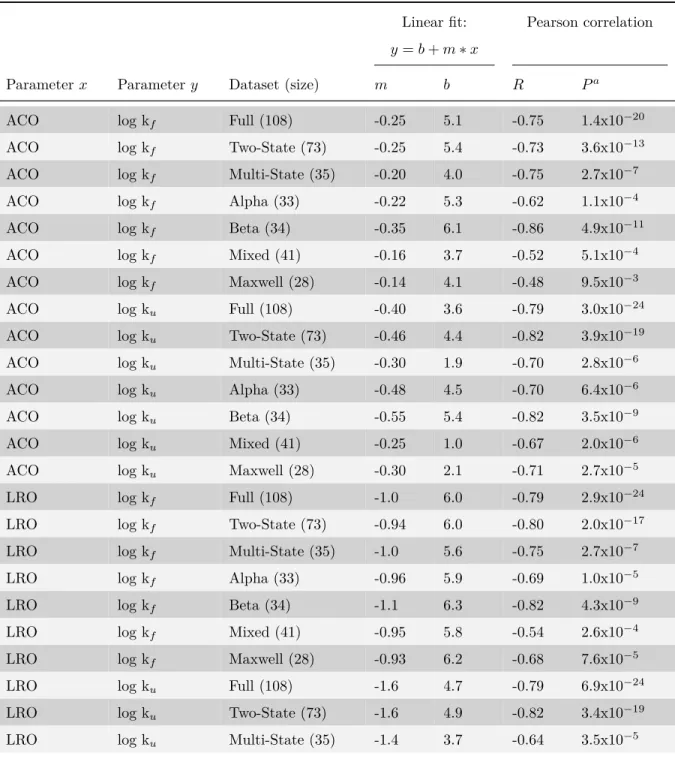
4.1 Correlations and linear fits of unfolding and folding rate constants, measures of native structure, and thermodynamic stability . . . . 66
4.2 Correlations and linear fits of unfolding and folding rate constants, measures of native structure, and thermodynamic stability, ex-tended . . . 73
4.3 Dataset . . . 83
4.4 Single mutation effects on folding and unfolding rates . . . 90
5.1 Folding and unfolding kinetics of ThreeFoil, Symfoil, and Hisac-tophilin . . . 133
5.2 Proteins with experimentally determined kinetics . . . 134
5.3 Resistance dataset of monomeric proteins . . . 139
6.1 Success of stability prediction tools in designing stabilizing point mutations . . . 145
6.2 Automated stability prediction tools . . . 146
6.3 Performance of stability prediction tools in real-world protein en-gineering applications . . . 172
List of Figures
1.1 Overview of approaches for protein design . . . 4
1.2 Protein topology designs taking advantage of modularity and symmetry . . 12
1.3 Optimizing designs . . . 16
2.1 Internal symmetry in the β-trefoil fold . . . 22
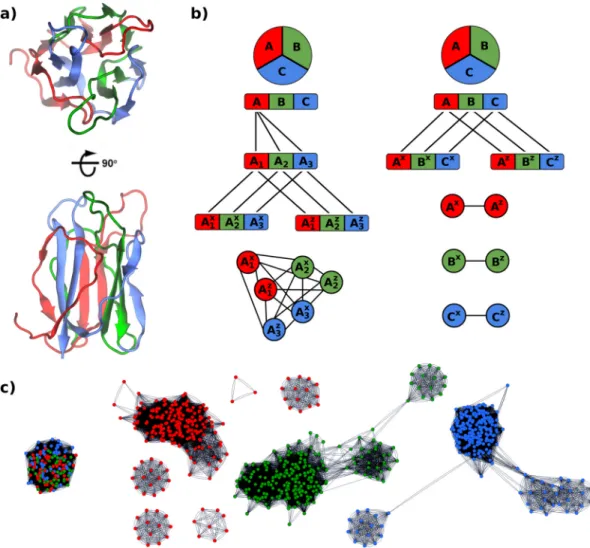
2.2 Evolution by whole-domain duplication versus subdomain repetition . . . . 25
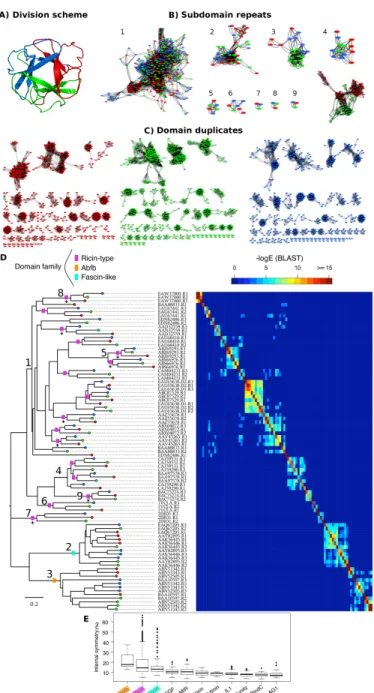
2.3 Representative sequence clusters of β-trefoil subdomain modules show oc-currences of both whole-domain duplication and subdomain repetition . . . 26
2.4 Reconstruction of a three-fold symmetric sequence, ThreeFoil . . . 28
2.5 Symmetric structure in ThreeFoil . . . 32
2.6 Multivalent glycan binding by ThreeFoil . . . 33
2.7 Biophysical characterization of ThreeFoil . . . 34
2.8 Packing of symmetric, repeat, and oligomeric proteins . . . 35
2.9 Sequence clustering and phylogenetic analysis ofβ-trefoil subdomain modules 43 2.10 Consensus design of ThreeFoil . . . 45
2.11 Additional biophysical characterization of ThreeFoil and OneFoil . . . 46
3.1 Folds evolving through ongoing subdomain amplification . . . 51
3.2 The β-Prism fold shows evidence of ongoing subdomain amplification events 55 3.3 Subdomain amplification allows for rapid evolution of multivalent binding specificity to symmetric ligands . . . 56
3.4 Subdomain amplification yields increased benefits with higher valency struc-tures . . . 59
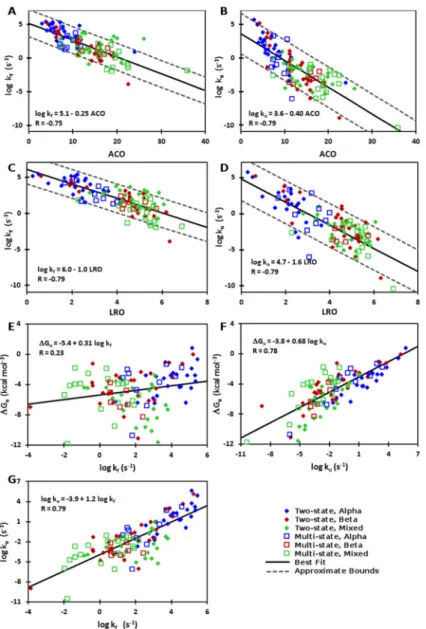
4.1 Correlations between structural complexity, folding and unfolding rates, and thermodynamic stability . . . 65
4.2 Correlations between structural complexity and the rates of folding and unfolding at the transition midpoint. . . 72
5.1 Topological complexity promotes survival under harsh conditions . . . 94
5.2 Design of ThreeFoil . . . 96
5.3 Folding and unfolding kinetics of ThreeFoil are modulated by ligand binding 97
5.4 ThreeFoil folding/unfolding kinetics are extremely slow compared to other proteins . . . 99
5.5 Structure-based simulations reveal the molecular origins of ThreeFoil’s large kinetic barrier . . . 102
5.6 ThreeFoil is highly resistant to protease and detergent. . . 105
5.7 Reversible unfolding of ThreeFoil fits a two-state transition . . . 121
5.8 Structural analysis of ThreeFoil and OneFoil in the presence of lactose. . . 122
5.9 Glycan binding by ThreeFoil was tested via a glycan array containing over 600 mammalian glycans . . . 123
5.10 Lactose binding causes little change in the NOESY spectrum of ThreeFoil. 124
5.11 Native and denatured ThreeFoil do not bind ANS . . . 125
5.12 Experimental protein folding rates at midpoints of chemical and thermal denaturation are strongly correlated . . . 126
5.13 Simulations show symmetric non-native interactions do not trap ThreeFoil folding . . . 127
5.14 Coarse-grained simulations show that ligand binding reduces Rosetta-based non-native structure but leaves ThreeFoil folding largely unchanged . . . . 128
5.15 Detergent and protease resistance of ThreeFoil and other proteins . . . 130
6.1 Mutations predicted to be stabilizing are most likely to be approximately
neutral instead . . . 151
6.2 Analysis of stability prediction tools . . . 154
6.3 Performance of stability prediction tools over time . . . 157
6.4 Suggested workflow to stabilize a protein of interest . . . 159
6.5 Meta-predictions of ∆∆G . . . 165
6.6 Chevron plots of ThreeFoil mutant kinetics . . . 166
6.7 Aggregation propensity prediction of ThreeFoil mutants . . . 167
6.8 Predicted stability does not correlate with experimental when designing sta-bilizing mutations . . . 167
6.9 Individual predictions on the known mutation dataset for all tools . . . 168
6.10 Distribution of mutations categorized by each tool . . . 169
6.11 Mock predictors and SimpleMachine . . . 170
6.12 Cross-correlation matrix of the stability prediction tools. . . 171
7.1 The streptavidin-biotin complex in solution. . . 188
7.2 Solution versus gas-phase interaction maps of streptavidin-biotin . . . 189
7.3 Testing for equilibration/convergence in umbrella sampling . . . 193
7.4 β-lactoglobulin with palmitic acid and scFv with the Gal-Abe-Man trisac-charide . . . 196
7.5 FES of scFv and mutants with the Gal-Abe-Man and Gal-Abe-Deoxy-Man trisaccharide . . . 197
7.6 Equilibrium simulations of myristoyl dynamics within the binding pocket for WT hisactophilin and mutants . . . 200
7.7 FES of myristoylated WT hisactophilin and mutants . . . 201
7.8 Comparison of structural fluctuations between sequestered and accessible forms of WT hisactophilin . . . 202
7.9 Fitting of a Morse/long-range potential to water dimer FES . . . 204
List of Abbreviations
ACO - absolute contact order
ANS - anilinonaphthalenesulfonic acid BSA - bovine serum albumen
BTB - Bis-tris buffer CC - clustering coefficient CD - circular dichroism
CDD - conserved domain database CHCA - α-cyano-4-hydroxcinnamic acid CPD - computational protein design CO - contact order
COG - center of geometry D2D - diagonal two dimensional DLS - dynamic light scattering
DSC - differential scanning calorimetry EDTA - ethylenediaminetetraacetic acid EP - empirical potential
FES - free energy surface FGF - fibroblast growth factor FN - false negative
FP - false positive
GPGPU - general purpose graphical processing unit GS - gold standard
GuHCl - guanidine hydrochloride GuSCN - guanidine thiocyanate H/D - hydrogen / deuterium HMM - hidden Markov model
IPTG - isopropylβ-D-1-thiogalactopyranoside IQR - inter-quartile range
I/O - input/output
KSP - kinetically stable protein LC - liquid chromatography LIE - linear interaction energy
LRO - long range order
MALDI - matrix assisted laser desorption ionization MCC - Matthews correlation coefficient
MD - molecular dynamics
MLR - Morse/long-range potential MM - molecular mechanics
MRR - multiple replica repulsions MS - mass spectrometry
MSA - multiple sequence alignment
NCBI - National Center for Biotechnology Information NOESY - nuclear Overhauser effect spectroscopy NMR - nuclear magnetic resonance
PAGE - polyacrylamide gel electrophoresis PDB - protein data bank
PP - physical potential
PPV - positive predictive value QM - quantum mechanics RCO - relative contact order
RCSB - research collaboratory for structural bioinformatics (see also PDB) RESP - restrained electrostatic potential
RGR - replica ghost repulsions
RMSD - root mean squared deviation SASA - solvent accessible surface area SDS - sodium dodecyl sulfate
SEC - size exclusion chromatography SLS - static light scattering
SP - statistical potential SSL - secure socket layer
SOD - human Cu,Zn superoxide dismutase SRO - short range order
TCD - total contact distance TI - thermodynamic integration TN - true negative
TOF - time of flight TP - true positive
TST - transition state theory
VMO-I - vitelline outer membrane protein I WHAM - weighted histogram analysis method
Chapter 1
Introduction
1.1
Structure of the thesis
This thesis is constructed from unpublished data and published papers. The published papers are presented in a “pre-print” format, so as to create a cohesive style throughout. At the beginning of each chapter a brief “Context” section attempts to place the chapter in the context of the whole thesis, and for previously published works, delineates my contribution. This introductory chapter is primarily a pre-print of a review “Using natural sequences and modularity to design common and novel protein topologies”, recently published in Current Opinion in Structural Biology [1], though it is bracketed by additional short sections in order to introduce the full scope of the thesis.
1.2
Why proteins matter
An American Presidential candidate was once heard to utter, “Proteins do things. Pro-teins do the best things”. While we have moved beyond the early cellular biology dogma suggesting that proteins perform all the enzymatic functions for a cell, it is nevertheless the case that proteins are responsible for the vast majority of biocatalysis [2]. Their capacity for finely tuned specificity in molecular interactions also makes them the dominant players in sensing and recognition and binding events [2]. Thus, many hereditary diseases result from mutations within protein coding regions [3].
The catalytic dominance of proteins has made them key targets in evolving more ef-fective means of biofuel production [4, 5], bioremediation [4, 6], and the field of green
chemical synthesis both for common and novelty chemical compounds [4,7]. The capacity for tight and specific binding has been exploited in the development of many antibodies or antibody mimetics [8]. Such binding abilities have also been used to probe internal cellular environments [9], or to screen and characterize cellular products such as cancer markers [10]. Thus, while proteins already provide valuable biomedical and biocatalytic functions, we have typically only co-opted existing functions, and considerably more may be available form these molecular machines if we could design them with precision and ease.
The finely tuned function of proteins owes itself to their modular form which allows nearly infinite possibilities. Specifically, proteins are linear combinations of amino acids linked by peptide bonds. Depending on the choice of amino acids in this “primary struc-ture”, the chain may adopt particular local configurations, known as “secondary strucstruc-ture”, and subsequently could adopt a specific final shape or “tertiary structure”. Typically it is this shape that provides a protein with its function. In most organisms (ourselves included) there are 20 possible amino acids that can be used, and most protein domains are in the range of∼100-200 amino acids [11]. Thus, even for small proteins there are 20100 possible
combinations, or a number so large that if we made only a single protein molecule for each sequence, the resulting protein slurry (even without being solvated in water) would be so massive that, placed next to the known universe, it would appear as the Sun placed next to a grain of sand. While this is absolutely marvellous for those who love proteins, it has the unfortunate effect of making the design of these molecules quite complicated.
The complication is increased by the fact that even very similar protein sequences can have different functions [12], and some sequences which are nearly identical nevertheless adopt different tertiary structures or folds [13]. Therefore, a very fine-grained understand-ing of protein structure and function is needed for effective protein design. Approaches which have been used to tackle the design of a protein’s fold are introduced in Section
1.3 with limited emphasis on function. A focus on the use of advanced computational methods such as molecular dynamics to address design of binding function in particular is then introduced in Section1.4.
1.3
Computational protein design
Protein design has advanced tremendously over the last several decades; yet, the reliable design of a stable, well-folded, and soluble protein with the intended structure remains far from routine, often requiring multiple attempts, iterative improvements, and substantial resources [14,15]. On the other hand, nature has successfully explored a great diversity of
that are increasingly leveraged in design. The advent of computational protein design (CPD) enabled the exploration of fullyde novosequences for natural topologies [16,17], and more recently the design of de novo topologies (also using natural structural information) [18, 19]. While nature’s existing sequences and topologies offer a solid foundation for protein design, recent breakthroughs generating natural and novel topologies, often with very high stability, demonstrate that many forms are possible [18, 20,21, 22, 23,24].
Much progress has been made concurrently using natural mechanisms to improve or guide design by selection and directed evolution approaches [25]. Here we focus predomi-nantly on rational design of protein topology, highlighting recent developments that lever-age sequence and topology databases in addition to CPD using both atomistic energy functions and coarse-grained simulations. Recent results demonstrate the numerous and increasingly sophisticated strategies, combining multiple approaches, which are being de-veloped and validated; these promise to further advance fundamental understanding of the interplay between sequence, folding and topology and to improve the success of protein design in practical applications (Figure 1.1). The ongoing improvements may be likened to the development of refined and powerful machine tools at the onset of the industrial revolution, and may usher in a similarly transformative period.
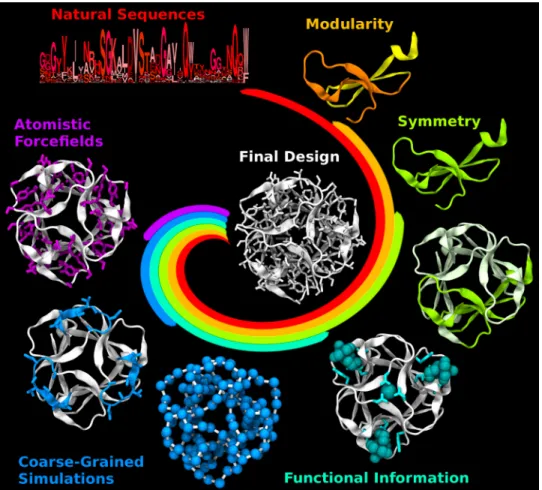
Figure 1.1: Overview of approaches for protein design. The central colored spirals depict the contributions of different design methods, which may vary from one approach to another, and together generate the final design. For each method, the corresponding coloured elements of structure are designed, and may then be fixed in later design stages (white). A wide range of protein topologies have been realized, using approaches based on: information derived from natural sequences, such as consensus (red); small subdomain-sized structural modules (yellow, orange); repetition of structural modules, i.e. symmetry (green); consideration of functional sites (cyan, ligands shown as spheres); coarse-grained simulations (blue spheres represent individual residues in simulations which inform the design of certain portions of the backbone or sidechains); and atomistic simulations using force fields (purple, modelled sidechains shown as sticks). Recent successful designs typically incorporate multiple methods. For instance, incorporating structural modularity (yellow, orange) with symmetry (green) can greatly reduce the size and complexity of the design problem. Including functional constraints (cyan) and/or coarse-grained folding simulations of many or selected residues (blue) can help retain function or optimize folding. The design methods are illustrated using ThreeFoil (PDB: 3PG0).
1.3.1
Natural sequence statistics in design
Sequence data, without explicit consideration of structure, are now widely employed in designing stable and functional proteins. Numerous studies have shown that consensus sequence-based design — choosing the most common amino acid at each position of a multiple sequence alignment (MSA) — can be useful for increasing protein stability and may also aid in diversifying function. Recently, for example, the consensus design of FN3 domains using only a handful of closely-related sequences resulted in significantly increased stability [26], while using thousands of more distantly-related sequences produced an extraordinarily stable variant [27]. In the case of proteins with a catalytic function, large and diverse MSAs similarly resulted in improved stability but often with concurrent loss of catalytic activity and increased substrate promiscuity [28,29]. A similar loss of specificity may occur when consensus designing proteins with ligand-binding, transport, and other functions. Reconstructing ancestral sequences from the same MSAs used for consensus design, Risso et al. found a similar trend in activity, though the ancestral reconstructions in this case were all more stable than the consensus designs [29]. A cogent review of ancestral sequence reconstruction is provided by Wheeleret al. [30]. Sequence-based protein design may be more successful for highly populated folds which provide larger alignments, and such folds may be highly populated precisely because they are more amenable to functional diversification or engineering [31, 32].
The success of consensus design is proposed to arise from the tendency for natural sequences to drift over time while the amino acids critical for stability and folding are retained owing to evolutionary pressure [33]. This phenomenon can be utilized to improve the folding and stability of natural and designed proteins by making specific “consensus mutations” [34]. Further, the covariation or correlations between amino acids at different positions in an MSA may be useful for structure prediction and identifying functional residues [35, 36]. Accounting for covariation when choosing consensus mutations may improve stability while also reducing potentially negative impacts on function [34, 37]. Entirely sequence-based design methods have been successfully applied and continue to be developed; in more complex designs, inclusion of sequence-based tools has become common and promises to be ever more widely useful (Figure1.1).
1.3.2
Modular topology simplifies design
Sequence-based methods are often included as part of more complex design approaches that have been applied to make a wide range of topologies. For instance, various de novo sequence designs have been successful for small folds (∼100 amino acids or smaller)
[16,17,18,38,39]. The design of larger and often more complex topologies has been aided by using the modular nature of protein structures [40, 41] to simplify the design process and improve the tractability of CPD [42]. In particular, various common protein topologies have evolved via duplication(s) of a single module [40, 43] (Figure 1.2), and design of a single subdomain module (of ∼20-40 amino acids) repeated to form a larger domain, is an attractive means of simplifying the design process [21, 22, 23, 44, 45, 46,47]. Here we use the term repetition from a structural perspective, referring to domains which can be deconstructed into repeated subdomain modules, making no assumptions concerning the genetic mechanisms giving rise to such domains. Furthermore, the term subdomain module refers to a peptide with continuous sequence that forms a compact structural element that is smaller than an autonomously folding domain. Notably,∼20% of all folds are estimated to have internal repetition or symmetric structures, including a substantial proportion of the topologies most frequently observed for natural proteins [43, 48]. We begin by examining the recombination of subdomain modules and follow with special cases where a single module is repeated to generate a larger whole domain. Both types of fold/domain generation have been successful as rational design approaches, but have also been used by nature to successfully generate novelty and diversity. Thus, natural protein evolution can inform how one approaches design [31, 49, 50] and conversely, design studies can provide insight into evolution [44, 45, 51, 52,53, 54].
Recombination between modules
Topological or structural modularity has been leveraged by recombining sequences corre-sponding to the same module from different proteins. Chimeras made of modules chosen so as to disrupt a minimal number of residue-residue contacts [55] are quite frequently folded and functional [56]. Chimeric proteins can combine desirable properties of both parents; for instance, recombination of a protein with high stability and another with a desired function (but less stability) can frequently result in improved stability while retain-ing function [57, 58, 59]. Large changes in sequence (particularly at modular interfaces) accompanying recombination may also alter structural dynamics. Notably, Gobeil et al.
found for TEM-1 β-lactamase that while the two parent enzymes had similar dynamics, those of the chimera were dramatically increased; yet, substrate turnover was unaltered [60]. Thus, while dynamics may be critical for function, altered dynamics need not limit design and may even foster innovating useful new functional features, particularly in the context of a robust scaffold [32].
se-mental and theoretical analyses have demonstrated that non-homologous recombinations may tunnel under barriers insurmountable via point mutations to create novel proteins [61, 62]. To date, examples of rational design using non-homologous recombination have been rare, perhaps because disruption of correlated amino acids at module interfaces re-duces the likelihood of success. In one case, Bharat et al. attempted to build a new (βα)8-barrel using half of a known (βα)8-barrel and a portion of a very distantly related
protein with a (βα)5-flavodoxin-like topology. The chimera was stable, monomeric, and
exhibited cooperative unfolding, but adopted an unintended 9-stranded barrel structure [51]. Subsequently, Rosetta was used to make five interface optimizing mutations, result-ing in the original target topology and increased stability [63]. Thus, the modular nature of protein topologies may help promote generating folded and functionally diversified pro-teins, but more adventurous recombinations between distantly or unrelated modules will likely require complementary strategies — such as CPD — to maximize success.
Linear repeat proteins
The repetition of a single subdomain module to construct an entire protein has been studied extensively for linear repeat proteins, which have elongated structures consisting of topologically identical modules (Figure 1.2a,b). The regularity of repeat protein structures offers advantages for designing versatile binding scaffolds [64,65], and their linear character simplifies understanding and modelling of their folding behaviour [66]. modelling has suggested that with sufficient interaction energies between modules, longer repeat proteins can be extremely stable. This is exemplified by a consensus designed ankyrin repeat protein comprised of three identical internal repeats (plus distinct N- and C- cap repeats) having a Tm >100◦C, with additional internal repeats resulting in variants resistant to unfolding by high temperature alone [67]. Coarse-grained simulations have shown that a higher ratio of inter- vs. intra-repeat contacts results in slower and more cooperative kinetic transitions, explaining the kinetic stability of this design [68]. Consistent with the simulations, additional intra-repeat contacts increased the experimentally determined folding cooperativity for a redesigned repeat protein [69], and may be pertinent to creating high cooperativity and kinetic stability in other protein topologies [70,71].
Combining the Rosetta atomistic forcefield with natural sequence statistics, Parmeg-giani et al. redesigned five repeat protein folds as well as three types of β-propeller struc-tures (see “Toroidal β-propellers”). Excepting the β-propellers, the designs were largely successful with 60% forming folded monomers, many with a Tm above 95◦C [47]. In a striking application of rational design, Park et al. used Rosetta to make a series of repeat modules that could be intermixed to fine-tune the curvature of the resulting structures,
providing rational control over shape complementarity for binding [22]. In addition to optimization of binding interfaces through shape complementarity, some binding targets may require unique modules with highly correlated sequence choices providing a coor-dinated binding surface [72]. The above examples illustrate how linear repeat proteins have emerged as particularly designable; lessons learned about the molecular determinants of their kinetic stability and cooperativity may be extendable to other modular protein topologies, considered further below.
Toroidal β-propellers
β-propellers can be thought of as a repeat protein with interacting N- and C-terminal modules forming a toroidal structure (often with a solvated core) (Figure 1.2c). Con-sequently, toroidal structures may be more challenging design targets than linear-repeat proteins with fewer constraints on interactions between modules. In the work of Parmeg-giani et al. (see “Linear repeat proteins”), 13 monomeric β-propeller designs of 6-, 7- and 8-bladed β-propellers were tested experimentally. Only a single design appeared folded, but formed an unintended dimer, hence, success was markedly lower for these toroidal structures than for the linear repeats [47]. Nevertheless, de novo β-propeller sequences have been successfully designed using entirely natural sequences and in combination with CPD. Smock et al. performed ancestral reconstruction starting with a highly symmetric natural 5-blade β-propeller to generate a putative ancient single blade. Based on this module they demonstrated a plausible evolutionary path from a functional homopentamer to a monomeric, symmetric and functional 5-bladed β-propeller [54]. Starting from an-other highly symmetric naturalβ-propeller (in this case 6-bladed), Voetet al. used limited consensus design combined with Rosetta-based CPD with symmetry constraints to design a single blade module. Proteins containing 2-10 identical repeats of this blade formed 6-bladed structures within various oligomeric assemblies [45]. Subsequently, engineering of a metal binding site into 2-bladed monomers resulted in 6-bladed assemblies stabilized by metals and promoting nanocrystal formation [73]. These studies further illustrate benefits of simplifying the design process by using repeated modules, and demonstrate the utility of combining natural sequence information to test evolutionary hypotheses as well as produce successful designs.
Globular folds with internal symmetry
are thought to have similarly arisen from the repetition of smaller subdomain modules [40,
43,48]. Early tests of this idea focused on the ubiquitous (βα)8-barrel “superfold” [48], by
designing structures proposed to have evolved from the repetition of half- or quarter-barrels [52] (Figure 1.2d). These investigations culminated in the design of several stable and soluble (βα)8-barrels composed of identical half-barrel [74,75] or disulfide-linked
quarter-barrel modules [53]. While these (βα)8-barrel cases used nature-sourced sequences as
templates, several recent studies have undertaken de novo design using Rosetta. Despite numerous computational checks and balances, the de novo design of a 216-residue (βα)8
-barrel, while adopting the intended secondary structure, folded non-cooperatively and was poorly soluble [76]. Taking advantage of symmetry by designing identical quarter-barrel modules using Rosetta, and incorporating rules for idealized backbones [39], Nagarajan et al. [77] and Huang et al. [46] both generated soluble designs. The design by Nagarajan
et al. had marginal thermodynamic stability (∼2 kcal/mol) and NMR suggested a molten globule [77]. On the other hand, the design of Huang et al. (which imposed additional rational design constraints on the backbone structure, loop residues, and hydrophobicity of the barrel interior) produced the first de novo sequence structurally confirmed to adopt the intended (βα)8-barrel topology. Still, the thermodynamic stability was moderate (∼4
kcal/mol) [46], considering that larger structures can have increased capacity for high thermodynamic stability [21, 67, 69,78].
Another internally symmetric “superfold”, the β-trefoil, consists of three repeats of a four β-strand module (Figure 1.2e). Interestingly, analysis of β-trefoil sequences indi-cates that the repetition of modules to generate new folds was not only a common ancient occurrence [40, 43, 52] but can be ongoing [44]. Our group and the Blaber group inde-pendently designed fully symmetric β-trefoils, called ThreeFoil and Symfoil, using very different approaches. For ThreeFoil, starting with a highly symmetric predicted β-trefoil sequence as a template and combining consensus design using close homologs (to pre-serve function) with Rosetta-based CPD, the multivalent carbohydrate binding target was obtained in a single attempt [44]. Multivalent binding is a common feature of proteins with modular repeats as in this case as well as toroidal β-propellers [54] and linear repeat proteins [65, 66, 69, 72]. ThreeFoil has significant thermodynamic stability and remark-ably high kinetic stability (unfolding half-life ∼8 yrs) as well as high resistance against proteolytic degradation, chaotropes and detergent [70]. Analysis using contact order and coarse-grained modelling indicates the extremely slow unfolding arises from a highly coop-erative topology containing numerous long range contacts [70, 78]. Incorporating desired kinetic stability is a little-explored but promising avenue for future protein designs.
Using an iterative process, Symfoil was designed starting from the natural fibroblast growth factor (FGF), with many rounds of design and selection gradually increasing
se-quence symmetry [79]. This process eliminated function but resulted in high thermody-namic stability. While the design of Symfoil and ThreeFoil used the structural module inferred from sequence analysis of natural proteins, an alternate FGF-based design used a module comprising the experimentally determined folding nucleus. This design also ablated function, but exhibited improved solubility and stability compared with FGF, suggesting the repeated topological module need not be defined by inferred evolutionary pathways [80].
Thus, the repetition of a simple topological module has proven successful for globular folds despite their increased structural complexity, including long-range contacts between symmetric residues.
Parametric design of helices
The complex nature of protein topologies in addition to the interactions of numerous residues in different structural contexts typically requires in an extremely large and com-plex design space. By contrast, theα-helical coiled-coil topology is particularly amenable to design using relatively few parameters [81]. Recent advances have leveraged the com-bined strengths of parametric design and CPD to realize a range of supercoiled α-helical architectures [19, 21].
Classical coiled-coils, long a target of protein design, are assemblies of α-helices con-taining heptad sequence repeats [82], and oligomers composed of five or more helices are described asα-helical barrels, which may enclose a central channel [19] (Figure1.2f). Using structure-based computational methods to screen candidate heptad sequences, Thomson
et al. rationally designed repeats compatible with specific α-helical barrel parameters, including oligomer state, thereby tuning the size of the central channel [19]. The rational design of cage-like structures has also been accomplished using heptad-repeat coiled-coils, both as monomers [83] and oligomers [84]. Using longer repeats of 11- and 18-residues with Rosetta, Huanget al. made 4- and 3-helix bundles consisting of 191 and 247 amino acids, respectively (Figure1.2g); the clever use of repetition within the long helices and symmetry between helices greatly reduced the number of configurations for structure-based evalua-tion [21]. These relatively large monomeric proteins exhibited extremely high stability (e.g. extrapolated ∆G > 61 kcal/mol).
Taken together, the studies highlighted herein show how comparatively small, repeated modules simplify the design process and have yielded many first round successes for a wide range of topologies [19, 21, 45, 46, 70, 85]. As many of the most common protein
folds exhibit internal symmetry [43] there are many opportunities to take advantage of symmetry and repetition in design.
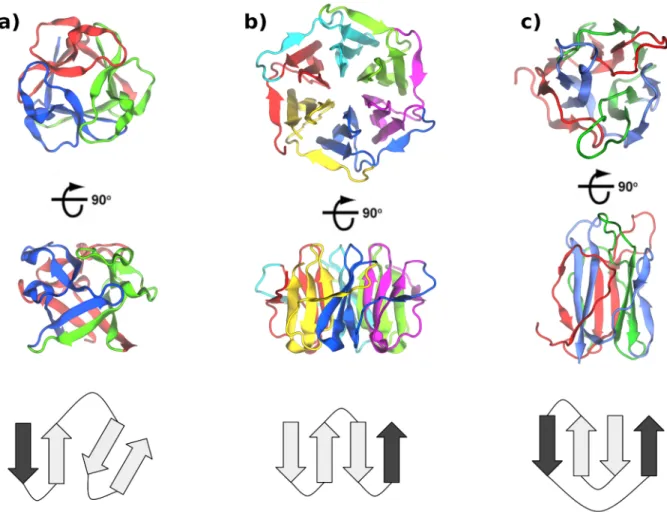
Figure 1.2: Protein topology designs taking advantage of modularity and symmetry. Rep-resentative structures of recent successful designs are shown with a single modular element highlighted in dark orange/blue. The remaining part of the structure constructed by repeating the single element is shown as light orange/blue. Linear repeat proteins can be made by repetition of (a) topologically identical modules [47] resulting in uniform curvature, as typically observed in nature, or (b) using different modules (orange and blue) to give rational control over curvature for binding interactions [22]. For the linear repeat proteins, capping modules (grey) for improving protein solubility have a modified sequence and may have (a) the same or (b) different structures as the other repeats. Toroidal proteins such as (c) theβ-propeller [45] are distinct from linear repeat proteins in that the N- and C-terminal repeats interact, forming a con-tinuous topology without the need for capping modules, and may enclose a solvated pore (cyan). Globular proteins such as (d) the 4-fold symmetric (βα)8-barrel [46] and (e) the 3-fold symmetricβ-trefoil [70,79]
have interacting N- and C-terminal repeats like the toroidal proteins, but with a central hydrophobic core. Parametrically designed helices forming coiled-coils may be designed as (f) homo-oligomers or (g) monomers, with each helix generated from the repetition of a small sequence motif. The homo-oligomers designed by Thomsonet al. have the potentially useful property of containing a central solvated channel (cyan surface) with a rationally designable diameter [19]. In the extremely stable monomeric helical bundle [21] two different motifs (orange and blue) are repeated to form a structure with 2-fold symmetry (g). Sev-eral idealized scaffolds [39], while not designed using modular repetition, nevertheless have structures with significant symmetry (h), a property of many common protein folds [43, 48], suggesting such structures
1.3.3
Improving designs
Natural, well-folded proteins typically have native states that have significant but not very high stability compared to their unfolded states (∼3-10 kcal/mol). Because the stabiliza-tion resulting from the burial of a hydrophobic group or the formastabiliza-tion of a hydrogen bond can be on the order of∼1 kcal/mol [86], even small improvements, for example in packing efficiency [87], can substantially improve protein design outcomes (Figure 1.3a). As de-scribed below, many tools and methods, mainly native-centric but some considering also the transition and denatured states, have been developed that may improve designs and increase the likelihood of obtaining a soluble and well-folded protein.
Using native-centric energy functions
Considerable progress both in whole sequence design and in subsequent optimization have been achieved using atomistic energy functions coupled with extensive sidechain/backbone configurational searching. In a relatively computationally tractable case, the backbone is kept fixed, limiting the search to only side-chain degrees of freedom. While successful designs have been realized using this approach [17, 44], the resulting sequences are fre-quently very similar to natural ones. Often, the ability of sequence design algorithms to recapitulate natural sequence statistics for a given topology is used as a scoring metric [88]. Such natural sequence statistics can be used directly as components of energy functions in design. For instance, Mitraet al. combined sequence information with the empirical FoldX energy function [89] to computationally redesign 243 proteins; 5 were tested experimentally of which∼3 appeared by NMR to be quite well-folded [90]. Protein design has also been accomplished using only statistical energy functions as in the recent redesign of four nat-ural targets [91]. Statistical energy functions, empirical or physical energy functions (like FoldX), and machine learning approaches have been applied as tools for stabilizing protein native structure, with mixed results [92, 93]; it is widely thought that more accurate force fields are needed to improve design outcomes [34, 94, 95]. Nevertheless, the abundance of computational tools for improving protein stability offers considerable scope for optimizing native structure (Figure 1.3b).
That design approaches employing a fixed backbone, as mentioned above, typically produce sequences with appreciable identity to natural proteins of the same topology, suggests the range of sequence innovation is limited. Varying the degrees of freedom of both the backbone and side chain, on the other hand, may greatly expand the range of designable targets, as even small (1-2 Å) perturbations of the backbone enabled the exploration of de novo sequences with low identity to natural counterparts or templates
[23,38,46]. Flexible backbone design can nevertheless recover natural sequences, and also recapitulate the covariation between amino acids at different positions [96]. The benefits of flexible backbone design, however, come at the cost of a more difficult optimization problem. This cost can be reduced by taking advantage of modularity and symmetry, as described for the largest completelyde novo globular protein design to date (∼200 amino acid, see “Globular folds with internal symmetry”) [21] (Figure 1.2d). This design was also aided by previously developed rational rules for the design of backbone templates compatible with well-funnelled energy landscapes, which demonstrated impressive success for variousαβtopologies [39,21] (Figure 1.2h). Collectively, there has been much progress in applying native-centric approaches both for optimization of existing native structure and de novo design.
Beyond native-centric design, using coarse-grained simulations
Coarse-grained simulations are being used increasingly to move beyond the native state and analyze the energy landscape of designed proteins. These simulations have indicated less cooperative folding of thede novo designed Top7 topology compared to natural pro-teins, which may be a consequence of non-native interactions [97] and/or an imbalance of local and long-range interactions [98]. Similarly, other designed proteins may suffer from complex/non-cooperative folding kinetics [97,99]. Coarse-grained simulations showed that designed surface electrostatic interactions in various proteins may reduce frustration and improve both equilibrium stability and folding kinetics [100] (Figure 1.3c). In contrast, non-native electrostatic interactions markedly slowed the folding of another designed pro-tein in all atom molecular dynamics (MD) simulations [101]. In general, coarse-grained simulations have shown that the folding energy landscape is modulated in complex and quite often detrimental ways by functional features [102]; yet, foldability can be criti-cal for achieving function [54]. Also, slower unfolding kinetics can protect proteins from degradation, modification, and aggregation, even if their thermodynamic stability is low; simulations illuminated how kinetic stability may be predicted and enhanced by increas-ing the proportion of contacts between residues distant in sequence [70] (Figure 1.3d). Thus, simulations are providing valuable insights into mechanistic details of folding, and so have potential to be a valuable tool to improve future designs and to assess the impact of designing functional features into idealized but function-less scaffolds [21,39, 46].
Avoiding unintended oligomerization
A critical area for further development is controlling the population of the most stable folded protein structure relative to alternative conformations, e.g. oligomers or aggregates, or functional states. Many current designs fail to express a soluble protein or the intended monomeric form, often forming oligomeric species or specific domain-swapped dimers [22,
23, 39, 45, 47]. To address the common and specific problem of domain-swapped dimers, which may arise from highly native-centric design approaches, Mou et al. used atomistic MD to redesign a domain-swapped dimer into the intended monomer [103] (Figure 1.3e). To combat the tendency of forcefields used in design to generate hydrophobic patches on the protein surface — leading to unwanted oligomerization — forcefields have been re-parameterized to penalize such patches; this has improved the solubility of designs [104] (Figure 1.3f). Similarly, the design of high net-charge surfaces has resulted in increased protein solubility [105]. Aberrant oligomerization is a prevalent problem in design and these approaches may be widely applicable moving forward.
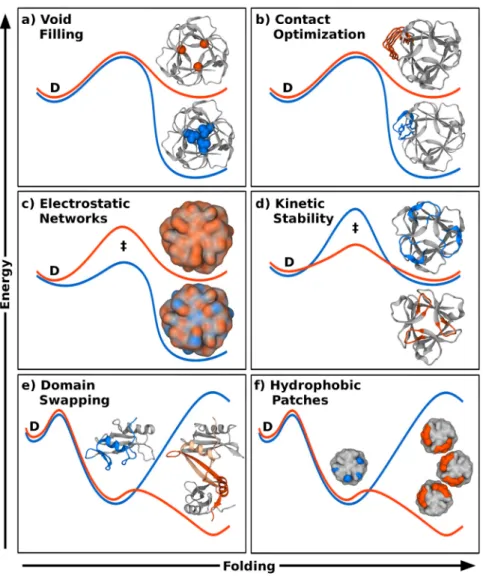
Figure 1.3: Optimizing designs. Energy profiles for initial (orange lines) and optimized (blue lines) protein designs; in each panel the folded state is at the right (and shown as structures) relative to the denatured state (D) at the left, separated by the transition state (‡). Optimization of features (blue parts of structures) of the initial designed or natural proteins (orange) can be designed by stabilizing the native state using CPD to (a) improve packing efficiency to eliminate voids (residues shown in space filling representation) [87], or (b) generally improve such properties as: polar contacts, sterics and backbone angles, among others, to improve energetics or reduce unwanted flexibility. Coarse-grained simulations of the entire energy landscape may also be used to (c) optimize electrostatic interactions [100] or (d) modulate topological complexity to control kinetic stability by tuning the energy barrier for unfolding [70]. Atomistic molecular dynamics can be employed to (e) eliminate unwanted oligomerization caused by local opening/domain swapping [103]. Aggregation of (f) exposed hydrophobic patches (orange) on designed surfaces may be eliminated (blue) by adding penalizing parameters to existing forcefields [104].
1.3.4
Conclusions
In recent years, designs of new sequences that stably adopt the intended natural, idealized, and even de novo topologies have been reported with increasing frequency. Ever-growing natural sequence and structure databases as well as increasing functional annotation [49] provide a valuable resource for further developing tools and methods to address outstand-ing challenges in achievoutstand-ing fully cooperative foldoutstand-ing and incorporatoutstand-ing function. Numerous examples have demonstrated that topological modularity and repetition/symmetry, a hall-mark of many natural proteins, can simplify developing foldable and functional sequences by constraining the search space for computational design tools.
Despite the many successes, a substantial proportion of design attempts still fail [22,
23,39,47,76,77], and reliable discrimination of designs that will be successful or fail is not possible. While increasing the accuracy of forcefields may well improve results, typically native-centric approaches leave open the possibility that failed designs are unable to fold properly. However, increasing power in computation is opening pathways to explore the folding landscape during design, which may further improve outcomes [70, 100, 103].
Recent progress in developing increasingly accessible and sophisticated design approaches that make use of natural sequences, modularity, symmetry and coarse-grained as well as atomistic CPD have significantly advanced the outcomes and the scope protein topology design. Further work is needed to elucidate the detailed molecular basis for the specific characteristics of individual designed proteins. Such knowledge in combination with likely continuing methodological advances can be expected to drive the design of novel and useful proteins into a realm with a high confidence of success.
1.4
Molecular dynamics of ligand binding
While the design of protein structure as detailed in the previous section is a critical first step in realizing the full biomedical and industrial possibilities of proteins, a scaffold alone serves little practical value. Other than as a food source. In order to have function, a protein must first be capable of binding to something. Therefore, understanding how to rationally engineer binding specificity is paramount.
Correctly modelling protein-ligand binding is extremely difficult. This difficulty arises due to a combination of numerous degrees of freedom with a rugged energy landscape. Pro-tein structures are highly dynamic, undergoing “breathing motions” on the same timescale that binding occurs [106], and even beyond the overall structure, sidechains themselves
have considerable flexibility [107]. Thus, even a shallow binding groove on a protein sur-face can adopt a plethora of micro-configurations, without considering those of the ligand itself. Moreover, van der Waals forces, which account for a substantial fraction of the total energy of binding have a narrow energy minimum and any overlap between the van der Waals radii of contacting atoms, is highly unfavourable. These factors, and the vast ensem-ble of structures availaensem-ble to the binding partners, combine to generate an extremely large and rugged energy landscape when modelling or designing protein-ligand binding. If the approximate location of the binding site is not known and/or the ligand has appreciable flexibility or size (a flexible organic molecule like a carbohydrate, a small peptide, or even another protein) then the problem becomes yet more complex.
In chapter7, the problem of protein-ligand binding is tackled using molecular dynamics (MD). MD has been used extensively over the last several decades, not only to tackle prob-lems in protein-ligand binding [108], but also: ion transport through protein channels [109], protein folding [110, 111], protein aggregation [112, 113, 114], catalysis [115], and many others. Introducing the topic would be a volume in of itself, but a specific introduction of the methods used can be found in Chapter 7.
Chapter 2
Design of ThreeFoil
via
Repetition of
a Subdomain Module
2.1
Context
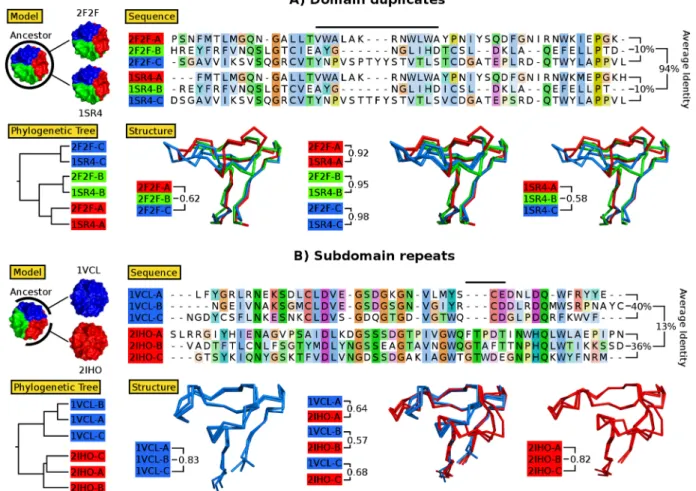
This chapter is a pre-print version of “Modular Evolution and the Origins of Symmetry: Reconstruction of a Three-Fold Symmetric Globular Protein”, published in Structure in 2012 [44]. The work expands on an existing evolutionary hypothesis that proteins with internal structural symmetry emerged from repetition and fusion of smaller subdomain fragments or modules. The hypothesis was experimentally validated by reconstructing a protein, named ThreeFoil, which plausibly existed immediately after a series of repeti-tion and fusion events that would have amplified the founder subdomain into a threefold symmetric globular protein. Additionally, an analysis of existing structures and sequences found that these repetition and fusions events are ongoing, at least in the case of the
β-trefoil fold.
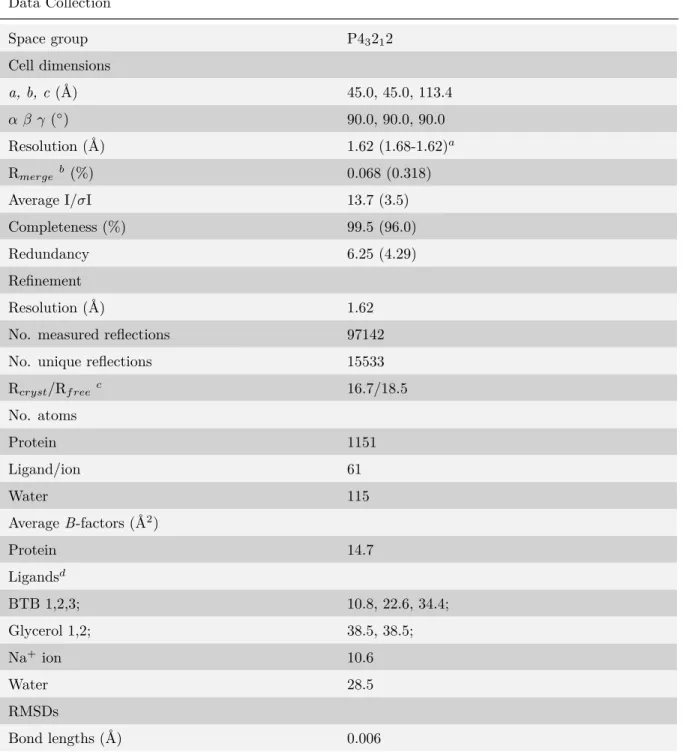
The original protein design work (Figure 2.4) and initial characterization (Figure 2.7, Figures 2.10 and 2.11) were done as part of my Masters degree. Andrew C. Doxey per-formed the bioinformatics analyses (Table2.1, Figure 2.3, Figure 2.9, Table 2.3). Yuri D. Lobsanov collected X-ray diffraction data on crystals of ThreeFoil to solve the 3D struc-ture (Table2.2, PDB: 3PG0). During my PhD, I performed structural analyses to improve the sequence alignments and independently validated our hypothesis (Figures2.1 and2.2), grew the aforementioned crystals and analyzed the structure (Figure2.5), arranged for and interpreted glycan micro-array data (Figure2.6), and wrote the manuscript in collaboration with the other authors.
2.2
Summary
The high frequency of internal structural symmetry in common protein folds is presumed to reflect their evolutionary origins from the repetition and fusion of ancient peptide modules, but little is known about the primary sequence and physical determinants of this process. Unexpectedly, a sequence and structural analysis of symmetric subdomain modules within an abundant and ancient globular fold, theβ-trefoil, reveals that modular evolution is not simply a relic of the ancient past, but is an ongoing and recurring mechanism for regenerat-ing symmetry, havregenerat-ing occurred independently in numerous existregenerat-ing β-trefoil proteins. We performed a computational reconstruction of aβ-trefoil subdomain module and repeated it to form a newly three-fold symmetric globular protein, ThreeFoil. In addition to its near perfect structural identity between symmetric modules, ThreeFoil is highly soluble, performs multivalent carbohydrate binding, and has remarkably high thermal stability. These findings have far-reaching implications for understanding the evolution and design of proteins via subdomain modules.
2.3
Introduction
Internal structural symmetry is observed very frequently in common protein folds [48] and is thought to have arisen from the ancient evolution of these folds via the repetition and fusion of smaller peptide modules [40, 116]. The well-established occurrence of sequence duplication and fusion events in protein evolution [48,117] supports the structural evidence for this evolutionary mechanism. However, in modern globular proteins, symmetry at the primary sequence level is typically relatively low to undetectable, owing to sequence diver-gence [40, 116]. This represents a challenge for understanding the origins and molecular determinants of symmetric protein evolution. Elucidating how symmetric protein struc-tures can be constructed from a set of basic “building blocks” or subdomain modules has far-reaching implications not only for understanding evolution, but also for rational protein design.
Seminal studies on (βα)8-barrel proteins have provided experimental proof of principle
for the evolution of symmetric globular folds via the repetition of subdomain modules [118,53,119]. Sterner, Hocker, and colleagues identified sequence and structural evidence for the evolution of this fold from a (βα)4-half-barrel ancestor [120]. By fusing two identical
copies of a half-barrel and stabilizing the resulting protein using a combination of rationally designed mutations and mutations selected from a library of variants, they obtained a stable
experiments often fail to produce the intended structure or properties [118, 17, 121], and data for other globular symmetric folds is limited, additional investigations are needed. The recent explosive growth in the availability of protein sequences and structures from genomics initiatives combined with new tools for reconstructing and designing proteins have set the stage for such investigations.
The focus of this study is the internally symmetric β-trefoil structure, an ancient fold adopted by many proteins with a great diversity of sequences and ligand-binding func-tions [122, 123]. β-trefoils currently include at least 14 families according to Pfam [124], such as the carbohydrate-binding ricin and agglutinin toxins, actin-bundling proteins, the fibroblast growth factor (FGF) and interleukin-1 cytokines, STI-like protease inhibitors, and LAG-1 DNA-binding proteins. Theβ-trefoil fold displays three-fold internal structural symmetry (Figure 2.1A), and internal sequence similarities have been noted in some fam-ilies, such as the multivalent sugar-binding ricins and actin-bundling proteins [122]. Each of the three subdomain modules is composed of four β-strands, with two strands from each module collectively forming a six-stranded β-barrel and the remaining two from each mod-ule together forming a β-hairpin triplet that caps one end of the barrel. Previous sequence analyses have suggested that modern β-trefoil proteins share a common homotrimer an-cestor of identical subdomain modules [122, 123, 125, 126]. A recent parallel study to the work herein demonstrated the feasibility of this evolutionary model by constructing both homotrimer and fused three-fold symmetric β-trefoil structures, developed from a cytokine FGF template using rational design and library screening, in which protein function was lost [127, 79]. This, together with a wealth of previous structural and folding studies on
β-trefoil proteins [123, 128, 129, 130], makes them an attractive candidate for examining modular evolution.
We report herein a large-scale sequence clustering analysis ofβ-trefoils. Based on previ-ous analyses, we expected to find evidence for a single ancient homotrimer and triplication event [122, 123, 125, 126]. To our surprise, our analysis revealed that the repetition and fusion of subdomain modules to form new symmetricβ-trefoils is an ongoing and recurring process that has occurred numerous times. We then reconstructed a completely three-fold symmetric β-trefoil sequence by using consensus sequence and protein design based on a carbohydrate-binding ricin sequence identified from the clustering results. The designed protein, ThreeFoil, forms a structure whose subdomain modules are essentially identical, and further more, it exhibits extremely high thermal stability, as well as functional multi-valent carbohydrate-binding properties. The single subdomain module, OneFoil, is poorly structured, however. Consequently, incorporating symmetry may be attractive both in evolution and in the design of multivalent binding proteins.