Patron: Her Majesty The Queen Rothamsted Research Harpenden, Herts, AL5 2JQ Telephone: +44 (0)1582 763133 Web: http://www.rothamsted.ac.uk/
Rothamsted Research is a Company Limited by Guarantee Registered Office: as above. Registered in England No. 2393175. Registered Charity No. 802038. VAT No. 197 4201 51. Founded in 1843 by John Bennet Lawes.
Rothamsted Repository Download
D1 - Technical reports: non-confidential
Shewry, P. R., Wood, A. J., Hassall, K. L., Pellny, T. K., Riche, A. B.,
Hussain, A., Hawkesford, M. J., Griffiths, S., Penson, S., Tucker, G. and
Baker, C. 2020. Low protein wheat for bread making. Agriculture and
Horticulture Development Board.
The publisher's version can be accessed at:
•
https://ahdb.org.uk/low-protein-wheat-for-bread-making
The output can be accessed at:
https://repository.rothamsted.ac.uk/item/97yx4/low-protein-wheat-for-bread-making
.
© 1 June 2020, Please contact [email protected] for copyright queries.
June 2020
Project Report No. 621
Low protein wheat for bread making
Peter R Shewry1, Abigail J Wood1, Kirsty Hassall1 Till K Pellny1, Andrew Riche1, Abrar Hussein1,
Malcolm J. Hawkesford1, Simon Griffiths2, Simon Penson3, Gary Tucker3 and Clothilde Baker 3
1Rothamsted Research, Harpenden, Hertfordshire AL52JQ, UK 3John Innes Centre, Norwich Research Park, Norwich NR4 7UH, UK
3Campden BRI, Station Road, Chipping Campden, Gloucestershire GL55 6LD, UK
This is the final report of a 48-month project 21130005 that started in January 2016. The work was funded by BBSRC and a contract for £90,000 from AHDB Cereals & Oilseeds.
While the Agriculture and Horticulture Development Board seeks to ensure that the information contained within this document is accurate at the time of printing, no warranty is given in respect thereof and, to the maximum extent permitted by law, the Agriculture and Horticulture Development Board accepts no liability for loss, damage or injury howsoever caused (including that caused by negligence) or suffered directly or indirectly in relation to information and opinions contained in or omitted from this document.
Reference herein to trade names and proprietary products without stating that they are protected does not imply that they may be regarded as unprotected and thus free for general use. No endorsement of named products is intended, nor is any criticism implied of other alternative, but unnamed, products.
CONTENTS
1. ABSTRACT ... 1
2. INTRODUCTION ... 3
2.1. Effects of N on grain proteins... 4
2.2. Quality assessment of low protein wheat ... 5
3. MATERIALS AND METHODS ... 5
3.1. Materials ... 5
3.1.1. Wheat genotypes ... 5
3.1.2. Field trials ... 6
4. RESULTS ... 10
4.1. Field trials ... 10
4.2. Milling and rheology ... 13
4.3. Size-exclusion HPLC ... 16
4.4. Mixing and baking ... 17
4.5. Comparison of performance with composition and properties ... 18
4.6. Relationships between grain protein content, SE-HPLC parameters, R/E by Extensograph and bread-making quality ... 21
5. DISCUSSION ... 24
ACKNOWLEDGEMENTS ... 25
6. REFERENCES ... 25
1
1. Abstract
Nitrogen (N) is the major mineral that determines crop yield, but it is also an important determinant of grain quality, particularly in wheat. It is required for the synthesis of grain proteins, with gluten forming the major protein fraction in wheat grain. Because of the high protein content required for bread making, the requirement for N applied to bread-making wheats may be above the optimum required for yield, by up to 50 kg N/ha. For example, Dampney et al. (1995) reported that to produce grain containing 13% protein, about 60 kgN/ha above the yield optimum was required. N fertiliser is a major cost for farmers, with a high-energy requirement for manufacture and potentially harmful environmental footprint. Therefore, it is important to reduce the requirement for producing bread-making wheat, either by improving the efficiency of N use within the plant or by developing new types of wheat that allow the use of lower protein contents for bread making. This project focused on the latter strategy. It aimed to identify and characterise types of wheat with good bread-making quality at low grain protein content.
Forty wheat genotypes were grown on 6 sites for 2 years, with a sub-set of 30 grown on the same sites for a third year. All were grown in 3 randomised replicate plots and at 2 levels of N fertilisation: 150 kgN/ha (low) and 250 kgN/ha (conventional). This generated over 4000 grain samples that were analysed for protein content. Samples from 4 sites were bulked for detailed analysis, excluding sites associated with technical problems or unusually high or low contents of protein or responses to fertilisation. Whereas all 40 genotypes were studied in the first year, the number was reduced to 30 in year 2 and to 20 in year 3, based on the analysis of the samples from years 1 and 2, respectively. Campden BRI milled the samples and carried out Extensograph and Farinograph analyses of all flours. The mixing and bread-making performances were subsequently determined by 6 commercial partners, who used three different bread-making processes. SE-HPLC analyses of gluten polymer size distribution was determined on all samples from year 1 and the low N samples from years 2 and 3. This comparison showed that five cultivars (called Group 1) performed well at both high and low N and over all three years: Crusoe and Gallant (current UK nabim Group 1), Rumor and Nelson (German varieties bred to show high quality at low grain protein) and Genius (Danish bread-making cultivar). In addition, two cultivars (called Group 2) performed better when grown at low N than at high N: Skyfall (current UK nabim Group 1 cultivar) and Mv Lucilla (Hungarian high protein bread-making cultivar). A comparison between these two groups of cultivars and the whole set of cultivars was carried out focusing on four parameters: grain N, grain protein deviation (GPD), gluten protein profiles by SE-HPLC and dough rheology (R/E) measured by Extensograph. This showed that:
1. The selected (Groups 1 and 2) wheats had higher %N, GPD, dough elasticity and proportions of glutenin polymers ((%F1+%F2)/(%F3+%F4)) than the non-selected cultivars.
2. In addition, the Group 2 wheats (which performed better at low N) had higher proportions of high molecular weight glutenin polymers (%F1, (%F3+%F4)/%F1).
2
Although these cultivars include two German lines bred to perform well at low N, they also include three highly successful recent UK cultivars: Crusoe, Gallant and Skyfall. Hence, modern cultivars, which have been selected for performance in high-input systems, may also perform well under low N inputs.
We conclude that good bread-making performance at low N fertiliser resulted from two factors: efficient translocation of N into the grain and increased proportions of glutenin in gluten, which resulted in greater dough elasticity. Breeding should, therefore, focus on increasing the efficiency of N use combined with high gluten protein elasticity.
3
2. Introduction
Nitrogen is the major mineral that determines crop yield, being essential to “build” a canopy and maximise the capture of carbon. However, it is also an important determinant of grain quality, particularly in wheat. This is because it is required for the synthesis of grain proteins, with the gluten proteins forming the major grain protein fraction in wheat. About 40% of the wheat produced in the UK is used for food production, particularly for making bread and other baked products (including cakes and biscuits). Wheat is also widely used as a functional ingredient in many processed foods, while bread wheat and imported durum wheats are used to make noodles and pasta, respectively. The gluten proteins are essential for these uses, providing visco-elastic properties to dough. Consequently, the content and quality of the grain proteins affect the processing quality, with a minimum of 13% protein being specified for the Chorleywood Breadmaking Process (CBP) which is used for over 80% of the “factory produced” bread in the UK. In fact, although some additional nitrogen (up to about 50 kg/Ha in the UK) may be available to the crop from atmospheric deposition and soil mineralisation, current varieties only take up about 80% of applied N (less at higher N applications), with N harvest indexes of 80-90%. Unless these efficiencies can be improved, the minimum amount of applied N for required for 10 tonnes of wheat per hectare at 13% protein are about 300-350 kg N/Ha, which is significantly above the current fertilisation rates.
Figure 1.1. Effects of N fertiliser (kg N/ha) on the mean grain yield and grain protein content of wheat cv Hereward grown on the Broadbalk long-term experiment at Rothamsted and harvested in 2005, 2006 and 2007.
Because of the high protein content required for breadmaking the requirement for nitrogen applied to breadmaking is also above the optimum required for yield (Figure 1.1), and farmers may apply up to 50 kg N/Ha above the yield optimum to achieve 13% protein (2.28% N).
It may be possible to reduce the nitrogen requirement for breadmaking wheats by optimising the efficiency of nitrogen uptake and increasing the nitrogen recovered in the grain (nitrogen harvest index). This was the topic of a previous project supported by AHDB and BBSRC, which focused on grain protein deviation (Shewry et al., 2013; Mosleth et al., 2013). An alternative, or complementary, approach is to develop new types of wheat and processing systems which will allow the use of lower protein contents for breadmaking. This will require increases in the stability and functionality of the gluten proteins, and/or the identification and exploitation of other quality-related components. This
4
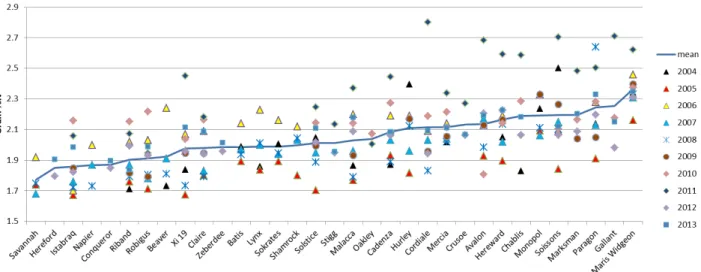
will not only reduce the cost and energy footprint of production but also reduce the energy requirement for dough mixing. Data obtained by the defra Wheat Genetic Improvement Network (WGIN) (Figure 2) and also determined by NIAB TAG (Variety Interactions Handbook, 2013) indicate varietal and year to year (environmental) influences on the stability of both grain yield and protein content, with some varieties showing greater stability than others.
Figure 1.2. Grain nitrogen content (%N) in WGIN trials held at Rothamsted, UK for harvests from 2004 to 2013 for all varieties trialled for more than a single year, ranked in order of mean performance. Unpublished data of Malcolm Hawkesford and colleagues (Rothamsted Research).
2.1.
Effects of N on grain proteins
Gluten proteins account for over half of the total grain proteins, with the proportion increasing with higher N application. They are broadly divided into two groups, the monomeric gliadins which confer viscosity and extensibility to dough and the polymeric glutenins which confer elasticity (strength), which is the major requirement for breadmaking. One group of glutenin proteins, the high molecular weight (HMW) subunits, is particularly important, with allelic variation in their composition being related to differences in dough strength. These effects appear to be mediated by direct effects on the size distribution of the glutenin polymers, with ‘good quality’ subunits being associated with increased proportions of large glutenin polymers. We, therefore, have a good understanding of the molecular basis for the differences in quality associated with allelic variation in the HMW subunits and other gluten proteins (reviewed by Payne et al., 1987; Shewry et al., 2003).
Although increasing grain N results in a higher content of total gluten proteins, there are differential effects on different protein types, with most studies showing increased proportions of monomeric gliadins and decreased glutenins (Jia et al., 1996; Panozzo and Eagles, 2000; Kindred et al., 2008; Zhu and Khan, 2001; Godfrey et al., 2010) leading to increased dough extensibility. However, Pechanek et al. (1997) showed that the effect of nitrogen on grain protein composition varied between varieties.
5
Less is known about the effects of nutrition on the glutenin fraction, either on the proportions of the individual subunits or on the size distribution of the glutenin polymers. Thus, both increases (Weiser and Selimeier, 1998) and decreases (Pechanek et al., 1997) in the proportions of HMW subunits have been reported while other studies showed differential effects of N on glutenin polymers and processing properties in cultivars with different HMW subunit alleles (Panozzo and Eagles, 2000; Zhu et al., 1999).
2.2.
Quality assessment of low protein wheat
The protein content of wheat correlates with functionality within certain limits. Testing for protein content is rapid and cost-effective, whereas tests for protein functionality are more time consuming. Consequently, protein content has become the major criterion used for trading bread making wheat. However, the industry is aware that the functional properties vary between varieties and grain samples, and different wheat samples will often be blended (‘gristed’) to achieve flours with the desired functionality. The emphasis on protein content not only has significant cost implications for growers and processors (as discussed above) but is also limited in value as high protein content does not guarantee the quality of the flour produced from it.
The development of wheat varieties to produce flours with improved protein functionality at lower protein content will, therefore, require a fundamental change in the way wheat quality is measured during breeding programmes and at mill intakes. Simply measuring grain protein content would clearly be insufficient, while current methods used to determine the quality at high protein contents are unlikely to provide reliable results at low protein levels. In practice, this means a test which could deliver results within 20min of sample presentation.
2.3. The aims of the project were to:
1. Determine genetic variation in breadmaking performance at low protein content in commercial wheat germplasm from the UK and other European countries.
2. Determine the biochemical basis for differences in quality and use this information to identify traits that can be used to determine potential quality at low protein in breeding programmes and mill intakes.
3. Provide material to millers and bakers to optimise processing conditions for low protein grain.
3. Materials and methods
3.1.
Materials
3.1.1. Wheat genotypes
Forty wheat genotypes were selected for comparative field trials (Table 1). Basic seed was obtained from breeders for all lines except three mutants of the spring genotype Paragon, which were provided by the John Innes Centre.
6
3.1.2. Field trials
Field trials were carried out at six sites: Rothamsted Research (Harpenden, Hertfordshire), Agrii (Throw’s Farm, Essex), Limagrain (Woolpit, Suffolk), KWS (Thriplow, Hertfordshire), Saaten Union (Newmarket, Suffolk) and DSV (Wardington, Oxfordshire). The geographical coordinates of the sites and their soil types are given in Appendix 1. All 40 genotypes were grown over 2 years (2015-6 and 2016-7) and a sub-set of 30 genotypes for a third year (2017-2018) (Table 3.1). All lines (spring and winter type) were planted in October and each trial comprised three randomised replicated plots of 6 x 1.5m with a seed rate of 250/m2. The nitrogen was applied as ammonium nitrate in three splits:
50:50:50 (for 150 kg/Ha) and 50:150:50 (for 250 kgN/Ha). 40kgS/Ha was also applied. Precise application dates varied between sites, reflecting the local practice of the breeders and the weather and soil conditions of the sites. Details are summarised in Appendix 2. All other agronomic treatments were local practice for the sites.
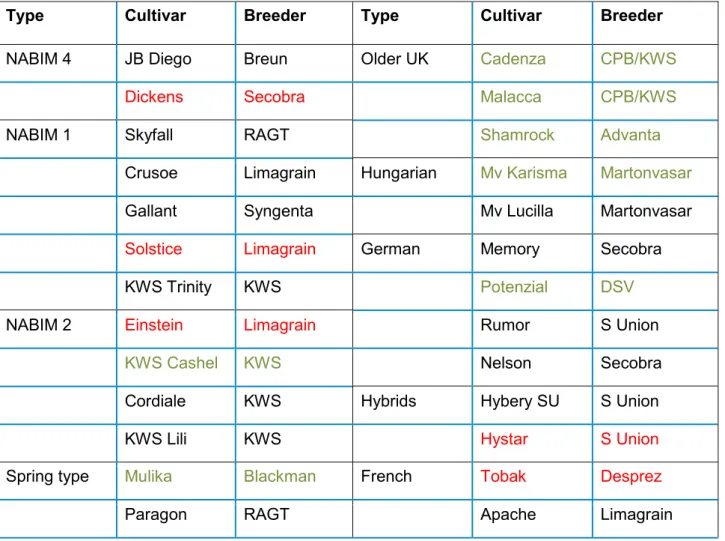
Table 3.1. Wheat genotypes selected for field trials.
Genotypes which were grown and analysed in all three years (2015-6, 2016-7, 2017-8) are shown in black. Genotypes which were grown in 2015-6 and 2016-7 but not analysed from 2016-7 are shown in red. Samples that were grown in all 3 years but not analysed from 2017-8 are shown in green.
Type Cultivar Breeder Type Cultivar Breeder
NABIM 4 JB Diego Breun Older UK Cadenza CPB/KWS
Dickens Secobra Malacca CPB/KWS
NABIM 1 Skyfall RAGT Shamrock Advanta
Crusoe Limagrain Hungarian Mv Karisma Martonvasar
Gallant Syngenta Mv Lucilla Martonvasar
Solstice Limagrain German Memory Secobra
KWS Trinity KWS Potenzial DSV
NABIM 2 Einstein Limagrain Rumor S Union
KWS Cashel KWS Nelson Secobra
Cordiale KWS Hybrids Hybery SU S Union
KWS Lili KWS Hystar S Union
Spring type Mulika Blackman French Tobak Desprez
7
Granary KWS Arlequin Limagrain
KWS Willow KWS Premio RAGT
Older UK KWS Siskin KWS Denmark Genius S Union
Hereward RAGT Decanto KWS
Soissons Desprez Paragon lines Paragon Rht2 JIC
Xi 19 Limagrain Paragon Stay
Green
JIC
Avalon PBI Paragon
1BL/1RS
JIC
Two levels of nitrogen fertilisation (150 and 250 kgN/ha) were applied to separate blocks with all plots also receiving 40 kg S/ha. Other agronomic treatments were standard for the sites. Material from two sites (DSV in 2015-6 and KWS in 2016-7) was discarded due to technical problems leaving 5 sets of samples from these years. The yields were converted to tonnes/Ha.
3.1.3 Grain analyses Nitrogen determination
The N contents of all grain and flour samples were determined by NIR, at Rothamsted and CBRI, respectively. Grain protein deviation (GPD) was calculated as described by Mosleth et al. (2015).
Milling
White flour was produced using a Bühler Laboratory Flour Mill MLU 202 at Campden BRI according to an internal Campden BRI method (TES-CM-01). Where replicates were pooled for analysis, wheat grain from each replicate was combined and blended thoroughly prior to milling.
Hagberg Falling Number
Hagberg Falling Number was determined by breeders on the grain harvested from their own sites using their “in house” systems on samples from year 2 only because of wet harvest conditions.
Dough rheology
Flour water absorption was measured using a Brabender Farinograph according to the Manual of methods of the Cereals and Cereal Applications Testing Working Group (CCAT) Method No 04. The Extensibility and Resistance of the dough was measured using a Brabender Extensograph according to the Manual of methods of the Cereals and Cereal Applications Testing Working Group (CCAT) Method No 03.
Size-exclusion HPLC
Size exclusion high-performance liquid chromatography (SE-HPLC) was used to determine the protein polymer size distribution of white flour samples milled using a Chopin CD 1 laboratory mill
8
(Chopin Technologies, Villeneuve-la-Garenne Cedex, France). The analysis was performed according to the Profilblé method developed jointly by ARVALIS and l’Institut National de Recherche Agronomique(Morel et al., 2000). Flour (160 mg) was mixed with 20 mL 1% SDS (w/v) in 0.1 M phosphate buffer (pH 6.9), sonicated (Misonix Microson XL2000, Qsonica, LLC, Newtown, CT) to solubilise the polymeric gluten proteins, and then centrifuged for 10 min at 4500 x g. An aliquot of the supernatant was sealed in an HPLC vial ready for analysis. SE-HPLC was conducted using a Jasco (Jasco (UK) Ltd, Great Dunmow, Essex, UK) system operating with a TSK gel G 4000SW column (30cm x 7.5mm) and a TSK gel SK guard column (7.5cm x 7.5mm). The flow rate was 0.7 mL/min, and detection was performed at 214 nm. Samples from the three biological replicates were pooled prior to analysis. The chromatograms (Figure 3.1) were integrated using a combination of automated algorithms and manual rules developed as part of the Profilblé method. Peak ratios were calculated as reported by Millar (2003). The first peak to elute from the column is referred to as F1 and consists of high molecular weight (HMW) polymers enriched in HMW subunits. The F2 peak comprises low molecular weight (LMW) polymers and is enriched in LMW subunits. The F3 and F4
peaks are comprised principally ω-gliadins and α-, β-, and γ-gliadins, respectively, while the F5 peak
comprises low molecular weight proteins including albumins and globulins. The overall area under the trace is a measure of the total protein content of the flour and is termed AT.
.
Figure 3.1. Typical SE-HPLC chromatogram of HMW and LMW glutenin polymers (F1 and F2, respectively), monomeric gliadins (F3 and F4) and smaller albumin and globulin proteins (F5).
Breadmaking
The six baking companies used three different processes (Table 3.2).
1. The Chorleywood Breadmaking Process (CBP) was used by Warburtons, ATC and Hovis. This system was developed in the early 1960s and is now used for about 80% of the bread produced in the UK. It reduces the amount of time required for production by using high speed mixing combined with pressure control and modifications to the recipe. It allows the use of
0 10 20 30 40 50 60 70 80 90 0 5 10 15 20 25 Time (min) Abs or ba nc e un its (m V) F1: HMW glutenins F2: LMW glutenins F3: Gliadins F4: Gliadins F5: Albumins & Globulins
9
lower protein wheats than typically used when it was first developed and compared to the traditional processes at the time. The CBP is less sensitive to differences in quality.
2. Spiral white mixing was used by ADM and Whitworths. This is a traditional mixing system, similar to small scale kitchen mixers, and is used mainly by small bakers for specialist and artisan breads. It is more sensitive than the CBP to differences in flour quality.
3. Bulk fermentation was used by Heygates. This was a 1-hour bulk fermentation with a lean yeast, salt, amylase recipe followed by mixing and proofing. The recipe does not include a improver and hence measures the true performance of a flour, and the dough is developed by the yeast rather than mixing energy.
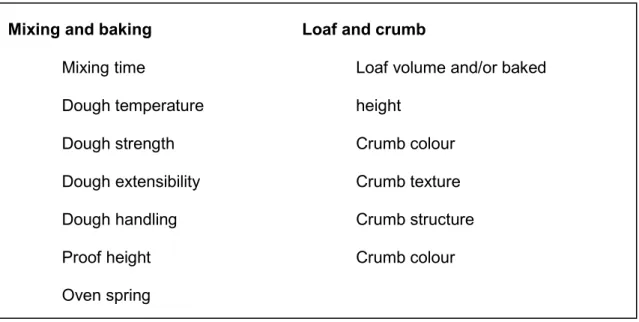
A range of parameters were measured using in house procedures (Table 3.3).
Table 3.2. Breadmaking processes and samples analysed by baking companies.
Process Samples analysed
2016 2017 2018 Warburtons CBP 20H+20L 30H+30L 20H+20L ATC CBP 20H+20L 30H+30L 20H+20L ADM Spiral 20H+20L 30H+30L 20H+20L Whitworths Spiral 20H+20L 30H+30L 20H+20L Heygates Bulk fermentation 40 L 30H+30L 20H+20L Hovis CBP 40L 30H+30L 20H+20L
Table3.3. Mixing, baking and loaf quality parameters measured by baking companies using their “in house” procedures.
Mixing and baking
Mixing time Dough temperature Dough strength Dough extensibility Dough handling Proof height Oven spring
Loaf and crumb
Loaf volume and/or baked height
Crumb colour Crumb texture Crumb structure Crumbcolour
10
4. Results
4.1.
Field trials
Forty genotypes were selected to explore the relationships between grain protein content and breadmaking performance. These included current and past UK cultivars, European cultivars and three mutant lines of the cultivar Paragon. These genotypes were selected by discussion among the project partners to include diversity, cultivars with interesting processing properties, and cultivars which might be expected to perform well at low nitrogen application (Hungarian high protein and German low protein breadmaking lines). The lines are summarised in Table 4.1 below and listed in full in Table 3.1.
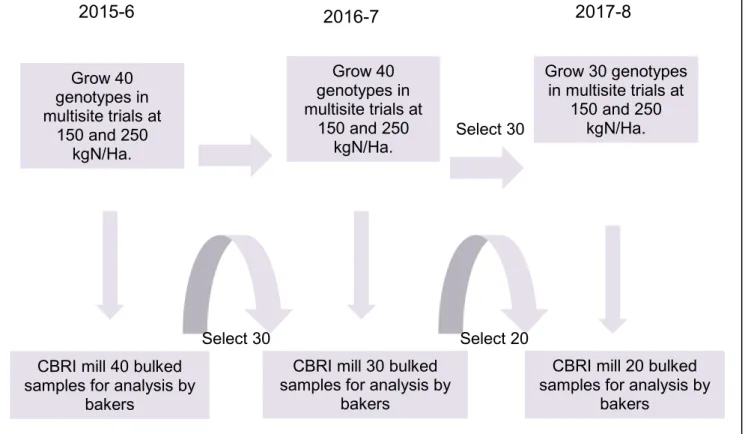
A reiterative approach was adopted, with all 40 genotypes being grown on all sites in years 1 and 2 (2015-6, 2016-7). Based on the analyses of the samples from 2015-6, only 30 of those grown in 2016-7 were analysed. These 30 genotypes were grown in the field in 2017-8 and, based on the analysis of the 30 samples grown in 2016-7, only 20 were analysed from 2017-2018. This is summarised in Figure 4.1.
Two levels of nitrogen fertiliser were used: 150 kg N/Ha to represent the level required for high yield but low protein content, and 250 kgN/Ha to represent the use of additional nitrogen (above the yield optimum) required for high grain protein content.
Yield of all plots were determined, and total grain nitrogen was determined by NIR of wholemeal flour. Grain protein deviation (GPD) was also calculated as described by Mosleth et al (2015). This measures the extent to which cultivars deviate positively from the well-established negative relationship between the yield and the concentration of protein in the grain and reflects their ability to transfer nitrogen into the developing grain (Monaghan et al., 2001).
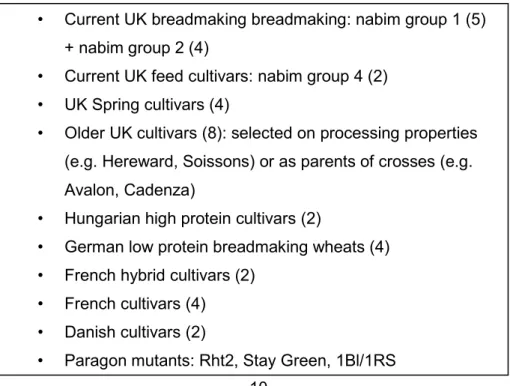
Table 4.1. Genotypes selected for field trials.
• Current UK breadmaking breadmaking: nabim group 1 (5) + nabim group 2 (4)
• Current UK feed cultivars: nabim group 4 (2) • UK Spring cultivars (4)
• Older UK cultivars (8): selected on processing properties (e.g. Hereward, Soissons) or as parents of crosses (e.g. Avalon, Cadenza)
• Hungarian high protein cultivars (2)
• German low protein breadmaking wheats (4) • French hybrid cultivars (2)
• French cultivars (4) • Danish cultivars (2)
11
Figure 4.1. Growth and analysis of samples in 2015-6, 2016-7 and 2017-8.
Figure 4.2 Strategy for growth and analysis of samples.
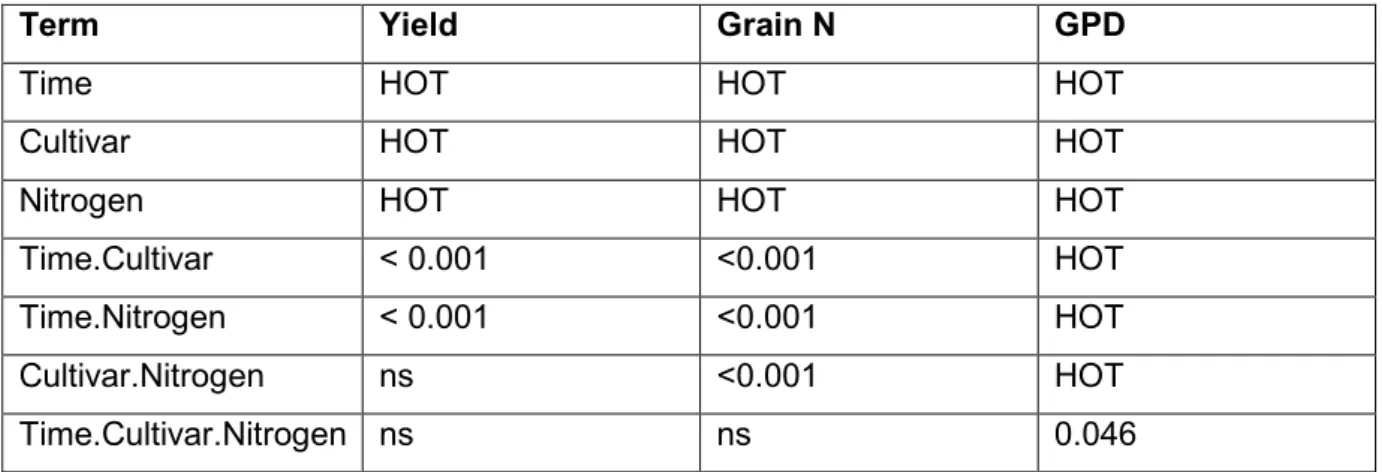
Yield, Grain N and grain protein deviation (GPD) were analysed with a linear mixed model with random terms given by site/year/block and fixed terms given by the three-way term:
cultivar * nitrogen * time.
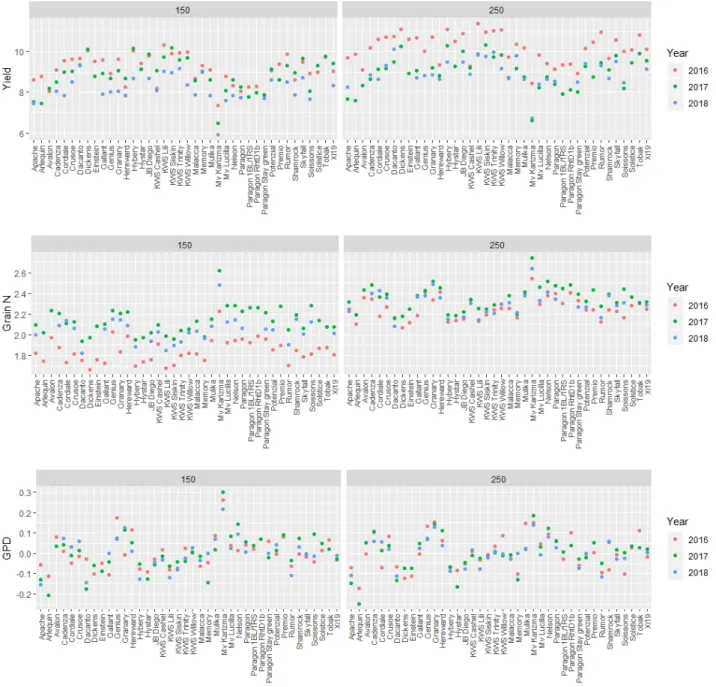
Due to the imbalance in the fixed effects, terms were sequentially dropped according to the approximate (Kenward-Roger) F-statistic until all terms remaining in the model were significant at the 5% level. These results are shown in Table 4.2 below and the predicted means in Figure 4.2.
This showed clear differences between cultivars, which were broadly consistent between years. Variation in yield was to be expected as the cultivars included older and recent UK cultivars and other cultivars which were grown outside their area of adaptation. Hence, the Hungarian high protein cultivar Mv Karisma had the lowest yield and highest N content, while the modern cultivars generally had the highest yields.
Differences in grain N were observed between cultivars, and between the nitrogen contents of the samples grown at high and low nitrogen. However, the extent of the latter differed between years, being greatest in 2016 and least in 2017. Finally, there were differences between the nitrogen contents of samples from the different sites. These may have resulted from several factors:
Grow 40 genotypes in multisite trials at 150 and 250 kgN/Ha. Grow 40 genotypes in multisite trials at 150 and 250 kgN/Ha. Grow 30 genotypes in multisite trials at 150 and 250 kgN/Ha.
CBRI mill 30 bulked samples for analysis by
bakers CBRI mill 40 bulked
samples for analysis by bakers
CBRI mill 20 bulked samples for analysis by
bakers
2015-6
2016-7
2017-8
Select 30
12
differences in residual soil nitrogen, differences in application regimes (which followed the standard procedures for the sites) and effects of other environmental factors.
Based on these analyses, samples from four sites each year were bulked for milling and breadmaking (omitting sites with technical problems or unusually high or low N contents or responses).
1. 2016: omitted samples from DSV and Rothamsted. 2. 2017: omitted samples from Agrii and KWS.
3. 2018: omitted samples from Rothamsted and Agrii.
Table 4.2. Analysis of yield, grain nitrogen and GPD for the 40 genotypes grown over 3 years.
Term Yield Grain N GPD
Time HOT HOT HOT
Cultivar HOT HOT HOT
Nitrogen HOT HOT HOT
Time.Cultivar < 0.001 <0.001 HOT
Time.Nitrogen < 0.001 <0.001 HOT
Cultivar.Nitrogen ns <0.001 HOT
Time.Cultivar.Nitrogen ns ns 0.046
13
Figure 4.2. Predicted means for yield, grain nitrogen and GPD for the genotypes grown in 3 years.
4.2.
Milling and rheology
All samples were milled by CBRI with mean flour yields for years and nitrogen applications ranging between 76.5% and 80.5% (Table 4.3). Determination of water absorption using the Farinograph gave “typical” values (means 56.8-59.1) for 2016, but unusually low values for 2017 (means 54.8-55.8) and 2018 (means 55.2-56.2).
14
Table 4.3. Yields and properties of white flours from all genotypes grown in the three years.
2016 Crop 2017 Crop 2018 Crop
Nitrogen Low N High N Difference Low N High N Difference Low N High N Difference Extraction rate (%) 78.7 80.4 1.7 79.1 78.9 -0.2 76.8 76.8 0.0 Water Absorption (@14%) 56.8 59.1 2.3 54.8 55.8 1.0 55.2 56.2 1.0 Moisture (% as is) 14.6 14.9 0.3 14.9 15.0 0.1 14.4 14.4 0.0 Protein (% as is) 8.9 10.9 2.0 9.7 10.8 1.1 9.2 10.5 1.3 Resistance (BU) 227 217 -10 325 340 15 323 351 28 Extensibility (cm) 16.5 18.7 2.2 19.7 20.9 1.2 17.1 19.6 2.5 R/E (BU/mm) 1.4 1.2 -0.2 1.6 1.6 0.0 1.9 1.8 -0.1
Dough rheology was determined using an Extensograph. This gives values for resistance (R) and extensibility (E), with R/E representing the balance between these properties. In broad terms, dough with R/E >0.8 to <1.3 is too poor for breadmaking unless the protein content is very high, 1.3 to <1.7 moderate quality, 1.7 to <2.6 good quality and >2.6 too strong for most UK breadmaking processes. In the present sample sets, R/E peaked between 1.5 and 2.0, but increased from 2016 to 2018 and was greater in the high nitrogen samples (Figures 4.3 and 4.4). Similar increases in R/E from 2016 to 2018 were observed when the full datasets (40 cultivars in 2016, 30 in 2017 and 20 in 2018) and only the 20 cultivars grown in all three years were considered (cf. Figure 4.4A and 4.4B), indicating that they were related to the year and did not result from selection for quality over the three years.
R/E was analysed via a linear mixed model with fixed model given by Variety* N and random model given by year and interactions between year and Variety and N (Table 4.4).
15
This showed evidence of a significant interaction between nitrogen and variety. It should also be noted that there is substantial variation between years and interactions between year and nitrogen. The effect of year.variety is much smaller.
Figure 4.3. Predicted means and standard errors of R/E per cultivar, predicted and averaged over the three years.
Figure 4.4. R/E determined by Extensograph. A. for all cultivars grown in 2016, 2017 and 2018; B
for the 20 cultivars grown in 2016, 2017 and 2018.
250 150 Apac he Ar lequi n Ava lo n C adenz a C or di al e C ru so e D ac ant o D icke ns Ei nst ei n G al lant G eni us G ranar y H er ew ar d H yb ery SU H yst ar JB D ie go KW S C ash el KW S L ili KW S Si ski n KW S T rin ity KW S W illo w Ma la cca Me mo ry Mu lika Mv Ka risma Mv L uci lla N el son Par agon Par agon 1B L/ 1R S Par agon R ht 2 Par agon S tay G reen Pot enz ial Pre mi o R um or Sh amro ck Skyf al l So isso ns So lst ice Tobak Xi 1 9 0.5 1.0 1.5 2.0 2.5 0.5 1.0 1.5 2.0 2.5 Selection Not Selected Selected Selected at low N R/ E R/ E A B
16
Table 4.4. Estimated variance components for R/E measured by Extensograph.
Random term component s.e.
year 0.06242 0.06550
year.NLevel 0.00417 0.00490
year.variety 0.01222 0.00490
Residual variance model
Term Model(order) Parameter Estimate s.e.
Residual Identity Sigma2 0.0195 0.00397
Tests for fixed effects
Sequentially adding terms to fixed model
Fixed term Wald statistic n.d.f. F statistic d.d.f. F pr
NLevel 3.69 1 3.69 2.0 0.197
variety 325.31 39 8.34 48.0 <0.001
NLevel.variety 72.92 39 1.87 48.1 0.020
4.3.
Size-exclusion HPLC
SE-HPLC was carried out on all samples from 2016 and on the 30 low N and 20 low N samples from 2017 and 2018, respectively. Millar (2003) showed that accurate estimates of dough strength were provided by comparing the ratio of large to small glutenin polymers (%F1/%F2) and the ratio of gliadins to large glutenin polymers ((%F3+%F4)/%F1) and data for these parameters are therefore shown in Figure 4.4. Data for %F1 and (%F1+%F2)/(%F3+%F4) are also shown, as these measure the proportion of high molecular weight glutenin polymers and the glutenin:gliadin ratio, respectively, both of which have been used as measures of quality. Because the analyses were not carried out on the high N samples from 2017 and 2018, data for low N samples only are shown (Figure 4.5). Analysis of variance showed that for both parameters the major effect was of genotype (Table 4.5)
Table 4.5. REML analysis of F1/F2 and (F1+F2)/(F3+F4) for the low N samples grown in three years through linear mixed models. Table shows the approximate (Kenward-Roger) F-statistic for the variety fixed effect when year is included as a random effect. The year.variety term is the residual.
Variable ndf ddf F statistic p-value
F1 39 48.1 2.3 0.003
F1/F2 39 48.1 3.71 <0.001
(F3+F4)/F1 39 48.1 2.78 <0.001
(F1 + F2) / (F3 + F4) 39 48.1 9.27 <0.001
17
Figure 4.5. %F1, %F1/%F2 and (%F3+%F4)/%F1 and (%F1+%F2/(%F3+%F4) determined by SE-HPLC for the low N samples grown in three years. Predicted means, averaged over the three years and associated standard errors. Group 1 and 2 genotypes (see section 4.5) are shown in red and green, respectively.
4.4.
Mixing and baking
The white flours were provided to the six commercial milling and baking partners, who determined the mixing properties and breadmaking performance using their own “in house” test systems. (Table 3.2). They measured a range of parameters relating to mixing and baking properties, including the quality of the loaves (Table 3.3). Based on their own “in house” measurements, each baker ranked the samples in order of quality. The group then met with CBRI to agree the final overall ranking. This ranking was used, together with agronomic performance (notably adaptation), to agree the genotypes to be analysed in detail the following year (the number reducing from 40 in 2016, to 30 in 2017 and to 20 in 2018).
This comparison showed that five cultivars performed well at both high and low nitrogen and over all three years (Table 4.6).
15 16 17 18 19 20 Apac he Ar lequi n Ava lo n C adenz a C or di al e C ru so e D ac ant o D icke ns Ei nst ei n G al lant G eni us G ranar y H er ew ar d H yb ery SU H yst ar JB D ie go KW S C ash el KW S L ili KW S Si ski n KW S T rin ity KW S W illo w Ma la cca Me mo ry Mu lika Mv Ka risma Mv L uci lla N el son Par agon Par agon 1B L/ 1R S Par agon R ht 2 Par agon S tay G reen Pot enz ial Pre mi o R um or Sh amro ck Skyf al l So isso ns So lst ice Tobak Xi 1 9 %F 1 0.50 0.55 0.60 0.65 0.70 Apac he Ar lequi n Ava lo n C adenz a C or di al e C ru so e D ac ant o D icke ns Ei nst ei n G al lant G eni us G ranar y H er ew ar d H yb ery SU H yst ar JB D ie go KW S C ash el KW S L ili KW S Si ski n KW S T rin ity KW S W illo w Ma la cca Me mo ry Mu lika Mv Ka risma Mv L uci lla N el son Par agon Par agon 1B L/ 1R S Par agon R ht 2 Par agon S tay G reen Pot enz ial Pre mi o R um or Sh amro ck Skyf al l So isso ns So lst ice Tobak Xi 1 9 % F1 / % F2 2.50 2.75 3.00 3.25 3.50 3.75 Apac he Ar lequi n Ava lo n C adenz a C or di al e C ru so e D ac ant o D icke ns Ei nst ei n G al lant G eni us G ranar y H er ew ar d H yb ery SU H yst ar JB D ie go KW S C ash el KW S L ili KW S Si ski n KW S T rin ity KW S W illo w Ma la cca Me mo ry Mu lika Mv Ka risma Mv L uci lla N el son Par agon Par agon 1B L/ 1R S Par agon R ht 2 Par agon S tay G reen Pot enz ial Pre mi o R um or Sh amro ck Skyf al l So isso ns So lst ice Tobak Xi 1 9 % F3 + % F4 / % F1 0.8 0.9 1.0 Apac he Ar lequi n Ava lo n C adenz a C or di al e C ru so e D ac ant o D icke ns Ei nst ei n G al lant G eni us G ranar y H er ew ar d H yb ery SU H yst ar JB D ie go KW S C ash el KW S L ili KW S Si ski n KW S T rin ity KW S W illo w Ma la cca Me mo ry Mu lika Mv Ka risma Mv L uci lla N el son Par agon Par agon 1B L/ 1R S Par agon R ht 2 Par agon S tay G reen Pot enz ial Pre mi o R um or Sh amro ck Skyf al l So isso ns So lst ice Tobak Xi 1 9 % F1 + % F2 / % F3 + % F4
18 These are referred to as Group 1 and comprise:
• Crusoe and Gallant, which are current UK nabim group 1 cultivars.
• Rumor and Nelson, which are German varieties bred to show high quality at low grain protein.
• Genius, which is a Danish breadmaking cultivar.
In addition, two cultivars performed better when grown at low nitrogen than at high nitrogen. These are referred to as Group 2 and comprise:
• Skyfall, which is a current UK nabim group 1 cultivar.
• Mv Lucilla, which is a Hungarian breadmaking wheat developed to have high grain protein
content.
4.5.
Comparison of performance with composition and properties
Although there was good agreement between the ranking of the cultivars by the bakers, this could not be confirmed by statistical analysis because of differences between the “in house” systems which were used for quality assessment.
A comparison between the two groups of cultivars above and the whole set of cultivars was carried out, focusing on four parameters:
1. Grain N determined by NIR of samples from individual field plots, as a measure of grain protein (%N x 5.7= % protein).
2. Grain protein deviation (GPD). 3. SE-HPLC profiles.
4. R/E measured by Extensograph.
To formally compare the selected cultivars to the whole set, a structured treatment comparison was included in the linear mixed effects model.
Specifically:
• the term “Selection” compares the average response of the selected cultivars to the average response of the non-selected cultivars.
• Non-Selected compares the response between the non-selected cultivars.
• Group 1 vs Group 2 compares (Crusoe, Gallant, Rumor, Nelson and Genius) to (Skyfall and
Mv Lucilla).
• Group 1 compares between (Crusoe, Gallant, Rumor, Nelson and Genius). • Group 2 compares between (Skyfall and Mv Lucilla).
Where appropriate, these terms are tested for an interaction with Nitrogen (Grain protein content (GPC), R/E, Yield, Grain N and GPD) and with time (Yield, Grain N and GPD).
19
Table 4.6. Cultivars showing best performance at low and high nitrogen over three years, determined by comparison of mixing and baking studies.
Group 1 cultivars in red combined good quality at low and high nitrogen with high year-to-year stability. Group 2 cultivars in green showed consistently higher quality at low nitrogen. UKG1, 2 and 4 refer to nabim wheat Group nomenclature.
Variety
N Level with better
baking performance Variety
N Level with better baking performance
JB Diego (UKG4) Equal Hereward (UKG1) Equal
Skyfall (UKG1) Low Xi19 (UKG1) High
Crusoe (UKG1) Equal Mv Lucilla (H) Low
Gallant (UKG1) Equal Memory (G) High
KWS Trinity (UKG1) Equal Rumor (G) Equal
Cordiale (UKG2) High Nelson (G) Equal
KWS Lili (UKG2) High Hybery SU (Hybrid) Equal
Paragon (UKSG1) Equal Apache (F) Equal
Granary (UKSG2 High Genius (DK) Equal
KWS Siskin (UKG2) High Paragon Stay Green Equal
This analysis showed:
• Grain N: highly significant differences detected between the selected (Groups 1 and 2) and non-selected cultivars.
Differences detected within Group 1 (between Crusoe, Gallant, Rumor, Nelson and Genius} and also within Group 2 (between Skyfall and Mv Lucilla). These cultivar differences differ over time and Nitrogen treatment.
• GPD: highly significant differences detected between the selected (Groups 1 and 2) and
non-selected cultivars. Differences detected within Group 1 (between Crusoe, Gallant, Rumor, Nelson and Genius) and also within Group 2 (between Skyfall and Mv Lucilla). These cultivar differences differ over time and Nitrogen treatment.
• R/E: significant differences between the selected (Groups 1 and 2) and non-selected
cultivars. No significant difference among the selected cultivars except an interaction with nitrogen treatments with Group 2 (between Skyfall and Mv Lucilla).
• %F1: no significant differences detected (on average) between the selected (Groups 1 and 2) and non-selected cultivars. Highly significant differences between Group 1 (Crusoe,
20
Gallant, Rumor, Nelson and Genius) to Group 2 (Skyfall and Mv Lucilla), with %F1 being higher in Group 2.
• %F1/%F2: marginal differences detected (on average) between the selected (Groups 1 and 2) and non-selected cultivars. Significant differences between Group 1 (Crusoe, Gallant, Rumor, Nelson and Genius) and Group 2 (Skyfall and Mv Lucilla) were identified but this difference was not biologically relevant (Group 1 mean = 0.6029 and Group 2 mean = 0.6320).
• (%F3+%F4) / %F1: no significant differences detected (on average) between the selected (Groups 1 and 2) and non-selected cultivars. Highly significant difference comparing Groups 1 (Crusoe, Gallant, Rumor, Nelson and Genius) and 2 (Skyfall and Mv Lucilla), with the latter being lower.
• (%F1+%F2) / (%F3+%F4): Significant differences between the selected and non-selected cultivars. Significant difference between Group 1 (Crusoe, Gallant, Rumor, Nelson and Genius) and Group 2 (Skyfall and Mv Lucilla), with the latter being higher.
The statistical analyses are summarised in Table 4.7 and the differences between the groups of cultivars in Table 4.8.
Table 4.7 Significant differences between SE-HPLC parameters in Group 1, Group 2 and non-selected genotypes.
Where higher order terms are included in the analyses, these tests are provided in Appendix 3 Table 1.
Trait Significant differences
Between selected (groups 1 and 2) and non-selected genotypes
Between Groups 1 and 2
ndf ddf F statistic p-value ndf ddf F statistic p-value Grain N 1 3020.7 27.38 <0.001 1 3020.8 0.22 0.638 GPD 1 3021.9 42.49 <0.001 1 3021.9 2.23 0.135 R/E 1 48 24.52 <0.001 1 48 2.75 0.104 %F1 1 48.3 0.09 0.77 1 48.1 24.68 <0.001 %F1/%F2 1 48.4 4.39 0.041 1 48.1 4.8 0.033 (%F3+%F4) / %F1 1 48.3 0.69 0.411 1 48 30.71 <0.001 (%F1+%F2) / (%F3+%F4) 1 48.2 9.84 0.003 1 48 66.49 <0.001
21
The differences can essentially be summarised as follows:
3. The selected (Groups 1 and 2) wheats had higher %N, GPD, dough elasticity (R/E) and proportions of glutenin polymers ((F1+F2)/(F3+F4)) than the non-selected cultivars.
4. In addition, the Group 2 wheats (which performed better at low N) had higher proportions of high molecular weight glutenin polymers (%F1, and (F3+F4)/F1).
Hence, good performance at low N fertiliser resulted from two factors: efficient translocation of N into the grain and increased proportions of glutenin in gluten.
Table 4.8. Summary of statistically significant differences between and among Group 1, Group 2 and non-selected cultivars.
Differences between selected (groups 1 and 2) and non-selected Differences between groups 1 and 2 Differences within group 1 Differences within group 2
Grain N Higher in selected no yes yes
GPD Higher in selected no yes yes
R/E Higher in selected
%F1 no Higher in group 2 no yes
%F1/%F2 marginal Statistically significant but not biologically no no (%F3+%F4) / %F1 no Lower in group 2 no no (%F1+%F2) / (%F3+%F4)
Higher in selected Higher in group 2 no no
4.6.
Relationships between grain protein content, SE-HPLC parameters, R/E by
Extensograph and breadmaking quality
In order to explore the relationship between nitrogen, gluten composition, rheology and breadmaking quality, a detailed statistical analysis was carried out using data from the low N samples only, with the baked height measured by Heygates and Hovis (who baked all of the low N samples) as measure of breadmaking quality.
22 Parameters were:
1. Protein content: GPC and GPD (calculated for each cultivar/year combination as described above).
2. Protein quality: SE-HPLC parameters (%F1, %F1 / %F2, (%F3+%F4) / %F1, (%F2+%F4) / (%F1+%F2).
3. Dough rheology: R/E.
4. Breadmaking quality: parameters determined by Heygates and Hovis.
The correlation across parameters was relatively weak (Figure 4.7)
Figure 4.7. Correlation matrix between parameters relating to breadmaking quality.
However, Principal Components Analysis (PCA) showed that more than 77% of the variation could be explained by four principal components (Figure 4.8). The first principal component (33% of the total variation) is strongly associated with differences between years with 2016 being distinct from 2017 and 2018. The traits contributing to the four PCs are shown in the loadings plots in Figure 4.9. From these, it can be seen that the SE-HPLC measurements along with R/E and GPD have the largest contribution to the first 2 PCs and, hence, are associated with the environmental differences across years. The breadmaking traits have larger contributions in PCs 2 to 4 but are difficult to associate with the selected cultivars in a consistent way.
Correlation R/V GPC GPD F1 F1/F2 F3F4/F1 F1F2/F3F4 BakedHeight_Hey BakedHeight_Hov ProofHeight_Hey ProofHeight_Hov OvenSpring_Hey R/V GPC GPD F1 F1/F2 F3F4 /F1 F1F2 /F3F4 BakedH eight_H ey BakedH eight_H ov Proo fHeight _Hey Proo fHeight _Hov OvenS pring_H ey -1.0 -0.5 0.0 0.5 1.0 R/E
23
Figure 4.8. PCA of traits relating to breadmaking performance.
Figure 4.9. Loadings plots showing the traits contributing to the PCs shown in Figure 4.8. F1 F3F4/F1 F1/F2 R/V BakedHeight_Hey F1F2/F3F4 ProofHeight_Hey GPC BakedHeight_Hov GPD ProofHeight_Hov OvenSpring_Hey -0.4 -0.2 0.0 0.2 0.4 PC1: 32.98% F1F2/F3F4 F3F4/F1 GPD BakedHeight_Hey BakedHeight_Hov OvenSpring_Hey GPC F1 ProofHeight_Hey ProofHeight_Hov R/V F1/F2 -0.2 0.0 0.2 0.4 PC2: 16.67% GPD GPC BakedHeight_Hey ProofHeight_Hey OvenSpring_Hey R/V ProofHeight_Hov F1/F2 F1 F3F4/F1 BakedHeight_Hov F1F2/F3F4 -0.2 -0.1 0.0 0.1 0.2 0.3 0.4 PC3: 16.63% ProofHeight_Hov OvenSpring_Hey ProofHeight_Hey R/V GPC GPD F1/F2 F1 BakedHeight_Hov F3F4/F1 BakedHeight_Hey F1F2/F3F4 -0.4 -0.2 0.0 0.2 0.4 0.6 PC4: 10.91% Loadings R/E R/E R/E R/E
24
5. Discussion
We have identified 5 wheat cultivars which give high stable performance with low nitrogen fertilisation (150 kg/Ha): Crusoe, Gallant (both breadmaking nabim Group 1), Rumor, Nelson (both German varieties bred for high quality at low grain protein) and Genius (Danish breadmaking). In addition, two cultivars were identified which performed better when grown at low nitrogen than at high nitrogen: Skyfall (nabim Group 1) and Mv Lucilla (Hungarian high protein bread making cultivar).
Although these cultivars include two German lines bred to perform well at low nitrogen, they also include three highly successful recent UK cultivars: Crusoe, Gallant and Skyfall. Hence, modern cultivars, which have been selected for performance in high input systems, may also perform well under low N inputs. It is also notable that Crusoe has the “dicoccoides” chromosome introgression associated with higher grain protein content. However, it should be noted that only one of the non-UK cultivars, Rumor, had a comparable yield to the modern non-UK cultivars (Crusoe, Gallant, Skyfall), while Mv Lucilla and Nelson were among the lowest yielding (Figure 4.2).
The two groups of cultivars had statistically significantly higher grain %N, GPD, dough elasticity (R/L) and proportions of glutenin polymers than the non-selected cultivars. In addition, Skyfall and Mv Lucilla had higher proportions of high molecular weight glutenin polymers (%F1, (%F3+%F4)/%F1). Hence, good performance at low N fertiliser resulted from two factors: efficient translocation of N into the grain and increased proportions of glutenin in gluten.
The identification of GPD as one of the traits associated with good breadmaking quality at with low levels of nitrogen application is not surprising, as GPD has long been recognised as an important factor contributing to the efficiency of nitrogen use in wheat (Monahan et al., 2001; Kindred et al., 2008). It was, therefore, the subject of our previous project supported by AHDB and BBSRC (Shewry et al., 2013), which led to the identification of genes which were differentially expressed in developing grain in relation to differences in GPD (Mosleth et al., 2015). GPD results in a higher content of gluten proteins, and the present study shows that this can be combined with higher gluten protein quality (increased R/L and proportion of large glutenin polymers) to give better breadmaking performance at low levels of nitrogen fertiliser.
The demonstration that three current UK cultivars had good breadmaking quality when grown at 150 kgN/Ha, with one cultivar (Skyfall) having better quality for breadmaking when grown at 150 kgN/Ha than at 250 kgN/Ha (despite having a lower protein content), raises the question of whether the current requirement of 13% grain protein content for breadmaking wheats remains valid. It certainly suggests that the requirement should be revised, to recognise that certain cultivars perform well, or even better, at lower grain protein.
25
The current AHDB funded project “21140040 Nitrogen and sulphur fertiliser management to achieve grain protein quality targets of high yielding modern winter milling wheat” is relevant in this respect, as the aim is to update RB209 guidance on nitrogen and sulphur fertiliser use for winter milling wheat, to achieve optimum grain quality and milling specifications for a range of varieties, soil types and growing environments.
Our study has, therefore, shown that breeding wheat for good beadmaking quality with low N fertilisation should focus on increasing the efficiency of nitrogen use combined with high gluten elasticity. This is clearly possible but will require further research to establish markers and/or biochemical tests for breeders and grain processors.
We consider this additional investment to be justified as the requirements for high nitrogen fertilisation and grain protein content are major concerns of farmers and processors, affecting not only the costs of grain production and food processing but also the impacts of the cereal food chain on energy use and environmental sustainability (including the contribution of cereal production to GHG emissions).
Acknowledgements
The work was supported by BBSRC grant B/N000854/1 and AHDB grant RD-2170005 “Developing novel types of low protein wheat for breadmaking”.
We thank our partners in DSV UK Ltd. (Matt Kerton), KWS UK Ltd. (Mark Dodds, Henry Barber), Secobra Recherches (Camille Bedard, Pascal Giraudeau), Limagrain UK Ltd. (Ed Flatman, Ian Foot), Saaten Union (Richard Jennaway, Andrew Creasy) and Agrii (David Langton, Colin Patrick) for carrying out field trials and providing samples and yield data. We also thank our partners in the Allied Technical Centre (Mark Charlton, Will Jakes), Whitworth Bros Ltd., UK (Keith Newton), Heygates Ltd. (Mervin Poole, Liz Howes), ADM Milling Ltd. (Karyn Boniface, Anna Perz), Warburtons Ltd. (Stuart Jones) and Hovis Ltd. (Shaun Taylor, Peter Skeggs) for carrying out mixing and baking studies and providing the data from these.
Rothamsted Research and the John Innes Centre receive strategic funding from the Biotechnology and Biological Sciences Research Council (BBSRC) and the work forms part of the Designing Future Wheat strategic programme (BB/P016855/1).
6. References
Dampney, P.R.M., Salmon, S.E., Greenwell, P.; Pritchard P.E. Management of breadmaking wheat: effects of extra nitrogen on yield, grain and flour quality. HGCA Project Report 109. 1995.
Godfrey, D.; Hawkesford, M.; Powers, S.; Millar, S.; Shewry, P. R. Nutritional effects on wheat grain composition and end use quality. J. Agri. Food Chem. 2010, 58, 3012-3021.
26
Jia, Y.-Q.; Masbou, V.; Aussenac, T.; Fabre, J.-L.; Deaeke, P. Effects of nitrogen fertilization and maturation conditions on protein aggregates and on the breadmaking quality of Soissons, a common wheat cultivar. Cereal Chem. 1996, 73, 123-130.
Kindred, D. R.; Verhoeven, T. M. O.; Weightman, R. M.; Swanston, J. S.; Agu, R. C.; Brosnan, J. M.; Sylvester-Bradley, R. Effects of variety and fertiliser nitrogen on alcohol yield, grain yield, starch and protein content, and protein composition of winter wheat. J. Cereal Sci.2008, 48, 46-57.
Monaghan, J. M.; Snape, J. W.; Chojecki, A. J. S.; Kettlewell, P. S. The use of grain protein deviation for identifying wheat cultivars with high grain protein concentration and yield. Euphytica 2001, 122, 309-317.
Morel, M. H.; Dehlon, P.; Autran, J. C.; Leygue, J. P.; Bar-L’Helgouac’h, C. Effects of temperature, sonication time and power settings on size distribution and extractability of total wheat flour proteins as determined by size-exclusion high performance liquid chromatography. Cereal Chem. 2000, 77, 685-691.
Millar, S. J. The development of near infrared (NIR) spectroscopy calibrations for the prediction of wheat and flour quality; Project Report 310; HGCA: UK; 2003.
Mosleth, E. F.; Wan, Y.; Lysenko, A.; Chope, G. A.; Penson, S. P.; Shewry, P. R.; Hawkesford, M. J. A novel approach to identify genes that determine grain protein deviation in cereals. Plant Biotech. J. 2015, 13, 625-635.
Panozzo, J. F.; Eagles, H. A. Cultivar and environmental effects on quality characters in wheat. II. Protein. Aust.J. Agric. Res.2000,51, 629-636.
Payne, P. I.; Nightingale, M. A.; Krattiger, A. F.; Holt, L. M. The relationship between HMW glutenin subunit composition and the breadmaking quality of British grown wheat varieties. J. Sci. Food Agric.
1987,40, 51-65.
Pechanek, U.; Karger, A.; Gröger, S.; Charvat, B.; Schöggl, G.; Lelley, T. Effect of nitrogen fertilization on quality of flour protein components, dough properties, and breadmaking quality of wheat. Cereal Chem. 1997, 74, 800-805.
Shewry, P. R.; Halford, N. G.; Tatham, A. S.; Popineau, Y.; Lafiandra, L.; Belton, P. S. The high molecular weight subunits of wheat glutenin and their role in determining wheat processing properties. In Advances in Food and Nutrition Research, Taylor, S. L., Ed.; Academic Press: San Diego, USA, 2003; Volume 45, pp 220-302.
Shewry, P. R.; Wan, Y.; Chope, G.; Penson, S.; Mosleth, E. F.; Hawkesford, M. J. Sustainability of UK-grown wheat for breadmaking. HGCA Project Report 521. 2013.
Weiser, H.; Seilmeier, W. The influence of nitrogen fertilisation on quantities and proportions of different protein types in wheat flour. J. Sci. Food Agric.1998, 76, 49-55.
Zhu, J.; Khan, K. Effects of genotype and environment on glutenin polymers and breadmaking quality. Cereal Chem. 2001, 78, 125-130.
27
Zhu, J.; Khan, K.; Huang, S.; O’Brien, L. Allelic variation at Glu-D1 locus for high molecular weight (HMW) glutenin subunits: quantification by multi-stacking SDS-PAGE of wheat grown under nitrogen fertilization. Cereal Chem.1999,76, 915-919.
28
Appendix 1. Geographical coordinates and soil types of field sites
Year Site Soil Type Map Reference (Latitude, Longitude) Residual N
2016 Rothamsted Research Flint Silt Clay Loam 51.8058006, -0.3931349 58
Agrii Sand Silt Loam 52.172, 0.284 40
Limagrain Medium Soil 52.220668, 0.88715962 51
KWS Clay 52.111097, 0.008146 69
Saaten Union Deep Clay Loam, Hanslope Series 52.161, 0.461 8
DSV Medium Ironstone 52.111083, -1.306556 49
2017 Rothamsted Research Flint Silt Clay Loam 51.8058006, -0.3931348 59
Agrii Sand Silt Loam 52.182, 0.256 36
Limagrain Medium Soil 52.194775, 0.85657793 73
KWS Chalky Loam 52.086392, 0.056674 115
Saaten Union Deep Clay Loam, Hanslope Series 52.161, 0.461 81
DSV Medium Ironstone 52.112667, -1.288139
2018 Rothamsted Research Flint Silt Clay Loam 51.8057094, -0.3893937 108
Agrii Clay Loam 52.187, 0.261 23
Limagrain Medium Soil 52.215726, 0.87521386 60
KWS Chalky Loam 52.090677, 0.064304 64
Saaten Union Deep Clay Loam, Hanslope Series 52.161, 0.461 87
29
Appendix 2. Timings of fertiliser applications to field trials Table 1. Timings of fertiliser applications for 150kgN/ha plots
Year Site First application Date GS Second application Date GS Third application Date GS Fourth application Date GS
2016 Rothamsted Research 17/03/2016 22-31 08/04/2016 30-34 26/04/2016 32-39 39 Agrii 26/02/2016 22-31 21/04/2016 30-34 24/05/2016 32-39 39 Limagrain 22/03/2016 22-31 03/05/2016 30-34 07/06/2016 32-39 39 KWS 26/02/2016 22-31 04/04/2016 30-34 19/05/2016 32-39 39 Saaten Union 16/03/2016 22-31 06/04/2016 30-34 26/04/2016 32-39 39 DSV 16/03/2016 22-31 14/04/2016 30-34 20/05/2016 32-39 39 2017 Rothamsted Research 24/03/2017 22-31 05/04/2017 30-34 11/05/2017 32-39 39 Agrii 02/03/2017 22-31 12/04/2017 30-34 12/06/2017 32-39 39 Limagrain 21/03/2017 22-31 14/04/2017 30-34 16/05/2017 32-39 39 KWS 07/04/2017 22-31 25/04/2017 30-34 16/05/2017 32-39 39 Saaten Union 12/03/2017 22-31 07/04/2017 30-34 25/04/2017 32-39 26/05/2017 39 DSV 15/03/2017 22-31 10/04/2017 30-34 24/05/2017 32-39 39 2018 Rothamsted Research 23/04/2018 22-31 03/05/2018 30-34 17/05/2018 32-39 39 Agrii 23/03/2018 22-31 04/05/2018 30-34 17/05/2018 32-39 39 Limagrain 18/04/2018 22-31 11/05/2018 30-34 23/05/2018 32-39 39 KWS 20/03/2018 22-31 19/04/2018 30-34 03/05/2018 32-39 17/05/2018 39 Saaten Union 07/04/2018 22-31 26/04/2018 30-34 23/05/2018 32-39 39 DSV 22/03/2018 22-31 19/04/2018 30-34 22/05/2018 32-39 39
30
Table 2. Timings of fertiliser applications for 250kgN/ha plots
Year Site First application Date GS Second application Date GS Third application Date GS Fourth application Date GS
2016 Rothamsted Research 17/03/2016 22-31 08/04/2016 30-34 26/04/2016 32-39 39 Agrii 26/02/2016 22-31 21/04/2016 30-34 24/05/2016 32-39 39 Limagrain 22/03/2016 22-31 03/05/2016 30-34 07/06/2016 32-39 39 KWS 26/02/2016 22-31 04/04/2016 30-34 28/04/2016 32-39 19/05/2016 39 Saaten Union 16/03/2016 22-31 06/04/2016 30-34 26/04/2016 32-39 39 DSV 16/03/2016 22-31 14/04/2016 30-34 20/05/2016 32-39 39 2017 Rothamsted Research 24/03/2017 22-31 05/04/2017 30-34 11/05/2017 32-39 39 Agrii 02/03/2017 22-31 12/04/2017 30-34 12/06/2017 32-39 39 Limagrain 21/03/2017 22-31 14/04/2017 30-34 16/05/2017 32-39 39 KWS 17/03/2017 22-31 07/04/2017 30-34 25/04/2017 32-39 16/05/2017 39 Saaten Union 12/03/2017 22-31 07/04/2017 30-34 25/04/2017 32-39 26/05/2017 39 DSV 15/03/2017 22-31 10/04/2017 30-34 24/05/2017 32-39 39 2018 Rothamsted Research 23/04/2018 22-31 03/05/2018 30-34 17/05/2018 32-39 39 Agrii 23/03/2018 22-31 04/05/2018 30-34 17/05/2018 32-39 39 Limagrain 18/04/2018 22-31 11/05/2018 30-34 23/05/2018 32-39 39 KWS 20/03/2018 22-31 19/04/2018 30-34 03/05/2018 32-39 17/05/2018 39 Saaten Union 07/04/2018 22-31 26/04/2018 30-34 23/05/2018 32-39 39 DSV 22/03/2018 22-31 19/04/2018 30-34 22/05/2018 32-39 39
31
Appendix 3. Statistical comparison of the groups of selected and non-selected cultivars.
REML analysis of measured traits comparing performance between selected and non-selected cultivars.
Table 1. Analysis of GPC and R/E, where data are pooled over all replicates within each year. Thus, replication is considered over time.
Term GPC R/E
ndf ddf F statistic p-value ndf ddf F statistic p-value
Nitrogen 1 2 25.61 0.037 1 2 3.69 0.197 Selection 1 48.2 18.21 <0.001 1 48 24.52 <0.001 Non-Selected 32 48.1 17.13 <0.001 32 48 9.19 <0.001 Group 1 vs Group 2 1 48 10.01 0.003 1 48 2.75 0.104 Group 1 4 48 15.88 <0.001 4 48 1.02 0.408 Group 2 1 48 40.39 <0.001 1 48 0.01 0.938 Nitrogen.Selection 1 48.1 0.28 0.598 1 48.4 0.12 0.734 Nitrogen.Non-Selected 32 48 1.31 0.194 32 48.1 1.69 0.049 Nitrogen.Group 1 vs Group 2 1 48 2.66 0.11 1 48.1 2.41 0.127 Nitrogen.Group 1 4 48 0.88 0.482 4 48.1 1.04 0.397 Nitrogen.Group 2 1 48 3.07 0.086 1 48.1 12.29 <0.001
32
Table 2. Analysis of Yield, Grain N and GPD where individual data are available for each year (3 replicates)
Term Yield Grain N GPD
ndf ddf F statistic p-value ndf ddf F statistic p-value ndf ddf F statistic p-value time 2 7.8 0.95 0.429 2 8 3.75 0.071 2 42.9 0 1 Nitrogen 1 3019.8 617.85 <0.001 1 3020.7 6184.72 <0.001 1 3021.9 0 0.993 Selection 1 3019.8 3.42 0.064 1 3020.7 27.38 <0.001 1 3021.9 42.49 <0.001 time.Nitrogen 2 3019.8 118.15 <0.001 2 3020.8 245.7 <0.001 2 3021.9 0 1 time. Selection 2 3019.8 2.1 0.122 2 3020.7 3.4 0.034 2 3021.9 3.79 0.023 Nitrogen. Selection 1 3019.8 1.44 0.23 1 3020.7 0.54 0.464 1 3021.8 1.68 0.195 Non-Selected 32 3019.8 76.78 <0.001 32 3020.8 90.44 <0.001 32 3022 50.54 <0.001 Group 1 vs Group 2 1 3019.9 0.87 0.351 1 3020.8 0.22 0.638 1 3021.9 2.23 0.135 time.Nitrogen. Selection 2 3019.8 0.41 0.664 2 3020.7 2.76 0.064 2 3021.8 3.43 0.033 time.Non-Selected 54 3019.8 5.8 <0.001 55 578 4.81 <0.001 54 3022 4.13 <0.001 Nitrogen.Non-Selected 32 3019.8 0.93 0.576 32 3020.8 2.7 <0.001 32 3021.9 2.96 <0.001 time.Group 1 vs Group 2 2 3019.9 0.36 0.697 2 3020.8 0.32 0.73 2 3021.9 0.52 0.597 Nitrogen.Group 1 vs Group 2 1 3019.9 0 0.972 1 3020.8 2.11 0.146 1 3021.9 2.53 0.112 Group 1 4 3019.8 23.54 <0.001 4 3020.6 75.37 <0.001 4 3021.8 53.82 <0.001 Group 2 1 3019.9 97.57 <0.001 1 3020.8 55.73 <0.001 1 3022 9.43 0.002 time.Nitrogen.Non-Selected 55 1464.7 0.8 0.856 54 3020.8 0.76 0.907 54 3021.9 1.3 0.071 time.Nitrogen.Group 1 vs Group 2 3 12.2 0.19 0.902 2 3020.8 0.24 0.786 2 3021.9 0.03 0.97 time.Group 1 8 3019.8 3.26 0.001 8 3020.6 5.06 <0.001 8 3021.8 4.85 <0.001
33 Nitrogen.Group 1 4 3019.8 1.84 0.119 4 3020.6 1.88 0.111 4 3021.8 3.29 0.011 time.Group 2 2 3019.9 4.74 0.009 2 3020.8 3.72 0.024 2 3022 0.39 0.674 Nitrogen.Group 2 1 3019.9 5.5 0.019 1 3020.8 4.48 0.034 1 3022 0.93 0.336 time.Nitrogen.Group 1 9 1041.7 1.09 0.367 9 10.5 0.55 0.811 9 1582.5 1.36 0.2 time.Nitrogen.Group 2 2 3019.9 0.33 0.72 2 3020.8 0.18 0.835 2 3022 0.63 0.535
Table 3. Analysis of HPLC measurements, where data are available for low N treatments and pooled over all replicates within each year. Thus, replication is considered over time.
Term F1 F1/F2 (F3 + F4) / F1 (F1 + F2) / (F3 + F4) ndf ddf F statistic p-value ndf ddf F statistic p-value ndf ddf F statistic p-value ndf ddf F statistic p-value Selection 1 48.3 0.09 0.77 1 48.4 4.39 0.041 1 48.3 0.69 0.411 1 48.2 9.84 0.003 Non-Selected 32 48.1 1.89 0.023 32 48.1 3.94 <0.001 32 48.1 2.29 0.005 32 48.1 8.72 <0.001 Group 1 vs Group 2 1 48.1 24.68 <0.001 1 48.1 4.8 0.033 1 48 30.71 <0.001 1 48 66.49 <0.001 Group 1 4 48.1 0.53 0.718 4 48.1 1.42 0.241 4 48 0.66 0.626 4 48 1.44 0.235 Group 2 1 48.1 2.42 0.127 1 48.1 3.84 0.056 1 48 1.33 0.255 1 48 0.61 0.438