Original Research Article
Epidemiology of acute respiratory infections among under-fives in a
rural community of Trivandrum district, Kerala
Shaliet Rose Sebastian*
INTRODUCTION
A nation rests on its citizens. It is therefore vital that they stay healthy, wealthy and wise. Children constitute the most priority and vulnerable group in terms of survival, growth and development. Upbringing of children in a wholesome environment is the priority health need for every country. According to UNICEF Statistics 2006, 10.6 million children die before their fifth birthday every year. More than 2 million children die from pneumonia each year, accounting for almost 18 percent of under five deaths worldwide.1
While the occurrence of pneumonia in developed countries is only 3-4 percent, its occurrence in developing countries ranges between 20 to 30 percent. This
difference is due to high prevalence of malnutrition, low birth weight and indoor air pollution in developing countries.2 Even though most of the spells are mild and self-limiting, ARI is to blame for about 30-50 percent of visits to health facilities and for about 20-40 percent of admissions to hospitals.3
Of late, the burden posed by ARI has moved global concern. Rising global awareness has climaxed in the initiation of standard strategy of case identification using symptoms and clinical signs and empirical antibiotic treatment. These are included in the case management approach introduced by WHO under IMNCI programme.
Considerable progress has been made towards lessening under-five mortality. The number of under-five deaths
ABSTRACT
Background: More than 2 million children die from pneumonia each year, accounting for almost 18 percent of under five deaths worldwide. Childhood ARI is a significant public health problem in India, although robust epidemiological data are not available on its incidence. In recent years, the burden posed by ARI in underdeveloped and developing countries has stimulated global concern. The objective of the study was to study the occurrence of acute respiratory infections (ARI) in children under the age of five years in Nellanad Panchayat, Trivandrum district and to study the factors associated with ARI in children under five years of age.
Methods: A community based cross-sectional study was conducted among 375 children below the age of five years.
Results: Occurrence of ARI was found to be 52%. A significant association was found between ARI and under-nutrition, low birth weight, poor breast feeding practices, poor parental education, exposure to passive smoking and inadequate indoor ventilation.
Conclusions: The study points towards the importance of basic health promotional measures like good antenatal care, proper breast feeding practices, proper nutrition of the child and socio-economic improvement in prevention and control of ARI.
Keywords: Acute respiratory infection, Under five children, Breast feeding, Nutrition
Department of Community Medicine, Believers Church Medical College Hospital, Thiruvalla, Kerala, India
Received: 08 May 2018
Revised: 13 June 2018
Accepted: 14 June 2018
*Correspondence:
Dr. Shaliet Rose Sebastian, E-mail: [email protected]
Copyright: © the author(s), publisher and licensee Medip Academy. This is an open-access article distributed under the terms of the Creative Commons Attribution Non-Commercial License, which permits unrestricted non-commercial use, distribution, and reproduction in any medium, provided the original work is properly cited.
worldwide has declined from nearly 12 million in 1990 to 6.9 million in 2011. Even though that translates into 14,000 fewer children dying every day in 2011 compared to 1990, it still infers 19,000 under-five deaths every day. About half of these under-five deaths occur in five countries -India, Nigeria, Democratic Republic of Congo, Pakistan and China. On an average, children below the age of five suffer about 5 episodes of ARI per child per year, thus accounting for about 238 million occurrences.4 Childhood ARI is thus an important public health problem in India and a multiple of social and environmental factors are linked with ARI morbidity and mortality. Studies in developing countries have identified risk factors to be among poverty, overcrowding, low birth weight, poor housing conditions, passive smoking and lack of access to preventive (including immunization) and curative services.5-8
Many of these risk factors are amenable to corrective measures. The mortality can be effectively controlled and prevented by cost-effective intervention measures like
immunization, health education programmes etc.
Therefore, knowledge of these risk factors related to acquisition of ARI will be helpful in suggesting preventive measures at the community level
Objective
To study the occurrence and factors associated with acute respiratory infections (ARI) in children under the age of five years in Nellanad Panchayat, Trivandrum district, Kerala.
METHODS
A cross-sectional survey was conducted in ten wards, randomly selected out of 16 wards of Nellanad panchayat, in Nedumangad Taluk of Trivandrum district. Sample size was calculated as per the prevalence of ARI obtained from a previous study.5 Sample size is calculated according to the formula N=(1.96)2 pq/L2 +10% non-respondents. (p=22% q=100-p=78% L=20% of p.) Obtained sample size was 375.
A house to house visit was made in the selected area, and after establishing a rapport with the family, the nature, purpose and objectives of the study were explained to the parents of the children chosen for study. The first house was selected randomly and consecutive houses were surveyed till 40 children were surveyed from each ward.
A pretested, semi-structured questionnaire was used to elicit information from parent/guardian of children belonging to age group 0-5 years. Variables included were age and gender of the child, birth order, birth weight, immunization status, vitamin A prophylaxis, duration of exclusive breastfeeding and time of commencement of weaning, socioeconomic status of family, educational status of parents, housing conditions,
fuel used for cooking, exposure to passive smoking, overcrowding, treatment seeking behaviour. History of episodes of ARI during the last one month prior to interview was enquired. The height, weight and mid-arm circumference of children were recorded and nutritional status was graded according to Indian Academy of Paediatrics. Data was entered using Microsoft Excel and analysed using SPSS software version 20. Results were expressed as proportions with 95% confidence interval. Chi-square test was used to evaluate statistical significance of association. Odds ratio with 95% confidence interval was calculated. P value less than 0.05 was considered as significant.
Operational definition
Acute respiratory infection
Children with cough or cold along with any one or combinations of symptoms and signs like fever, rapid breathing, noisy breathing, stops feeding and or drinking, chest indrawing, convulsions, cyanosis.
RESULTS
Socio-demographic data of the study population
Mean age of study participants was 3.1±1.04 years. Out of the 375 study participants, 176 (46.9%) were boys and 199 (53.1%) were girls. According to Kuppuswamy’s socio-economic status scale, 11 (2.93%) belonged to upper class, 88 (23.47%) belonged to upper middle class, 232 (61.9%) belonged to lower- middle class and 44 (11.7%) belonged to upper- lower socio-economic class.
Occurrence of acute respiratory infections
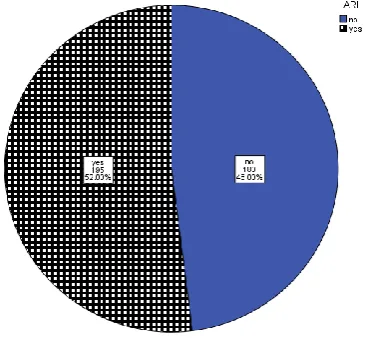
Out of the total 375 study participants, 195 (52%) had suffered an episode of ARI in the last one month prior to interview [95% CI -(46.94 –57.03)] (Figure 1).
Table 1: Chi-square analysis of factors associated with acute respiratory infections.
Sl. no Study variables
ARI
Chi-square P value
Yes
Count (% within ARI) No
Count (% within ARI)
1. Birth weight less than or equal
to 2.5 kg 35 (17.9) 7 (3.9) 18.604 0.001
2. A history of preterm birth 27 (13.8) 9 (5.0) 8.440 0.004
3. Absence of cross ventilation 163 (83.6) 80 (44.4) 62.881 0.001
4. Dusty Indoors 169 (86.7) 90 (50.0) 58.901 0.001
5. Using firewood only for
cooking 31 (15.9) 3 (1.7) 22.991 0.001
6. Passive smoking 118 (60.5) 20 (11.1) 98.219 0.001
7. Duration of exclusive
breast-feeding less than 6 months 56 (28.7) 33 (18.3) 5.577 0.018
8. Taking supplementary nutrition
from Anganwadi centre 145 (74.4) 153 (85.0) 6.495 0.011
9. Presence of undernutrition 17 (8.7) 1 (0.6) 13.647 0.001
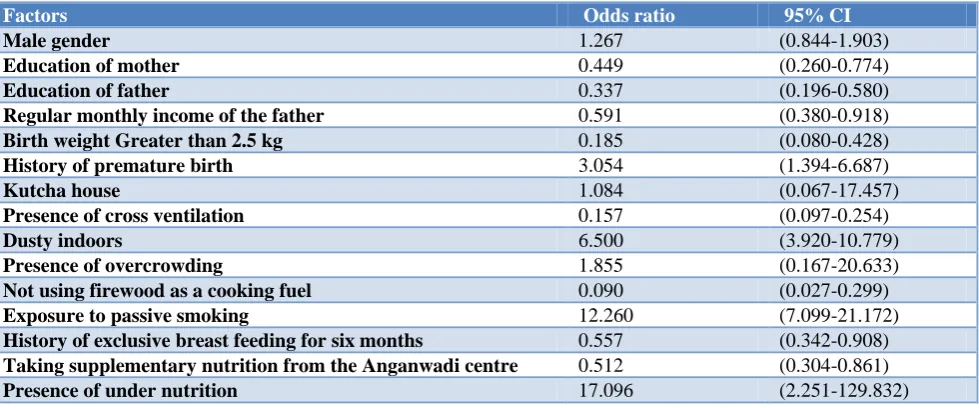
Table 2: Case control analysis of factors associated with acute respiratory infections.
Factors Odds ratio 95% CI
Male gender 1.267 (0.844-1.903)
Education of mother 0.449 (0.260-0.774)
Education of father 0.337 (0.196-0.580)
Regular monthly income of the father 0.591 (0.380-0.918)
Birth weight Greater than 2.5 kg 0.185 (0.080-0.428)
History of premature birth 3.054 (1.394-6.687)
Kutcha house 1.084 (0.067-17.457)
Presence of cross ventilation 0.157 (0.097-0.254)
Dusty indoors 6.500 (3.920-10.779)
Presence of overcrowding 1.855 (0.167-20.633)
Not using firewood as a cooking fuel 0.090 (0.027-0.299)
Exposure to passive smoking 12.260 (7.099-21.172)
History of exclusive breast feeding for six months 0.557 (0.342-0.908)
Taking supplementary nutrition from the Anganwadi centre 0.512 (0.304-0.861)
Presence of under nutrition 17.096 (2.251-129.832)
195 children had an episode of ARI in the last one month prior to interview. Majority of children affected with ARI belonged to the age group 1-3 yrs (48.2%). No significant association was found between the age group and occurrence of acute respiratory infections. There was also no significant difference in the occurrence of Acute Respiratory Infections among boys and girls. The occurrence of ARI was found to be lower in children of parents having educational qualification higher than high school compared to the children of parents who had a lower educational qualification (Chi-square-16.284, p=0.001). The results of Chi-square analysis are given in Table 1.
Case–control analysis
Case–control analysis of the study data revealed the following factors to determine the occurrence of acute
respiratory infections among the study population (Table 2).
DISCUSSION
occurrence of ARI was higher in children from households using firewood alone as cooking fuel compared to the households using other sources like LPG along with firewood for cooking (Chi-square-22.991, p=0.001) similar findings were seen in a study conducted at Ahmedabad, where the prevalence of ARI was higher in children with a history of exposure to biomass fuel smoke (24.8%) as compared to those without exposure to the same (17.2%). This difference was statistically significant (Chi-square-3.97, p<0.001).5 Occurrence of ARI is found to be higher in children exposed to passive smoking compared to children who were not (Chi-square-98.219, p=0.001). Postnatal exposure of infants to cigarette smoke is causally associated with an increased risk of lower respiratory tract infections such as bronchitis and pneumonia, increased prevalence of fluid in the middle ear, symptoms of upper respiratory tract irritation, and a small but significant reduction in lung function.9 A study done by Armstrong and Campbell have shown association between paternal smoking and ARI.10 During the study, it was observed that the occurrence of ARI was lower in children with a history of exclusive breast-feeding for 6 months compared to the children who were not exclusively breast fed for six months. (Chi-square-5.577, p=0.018). According to USAID Report, occurrence of ARI was higher in children of mothers who continued breast feeding for up to 3 months as compared to breastfeeding up to 6, 9 and 12 months (29.7, 27.2 and 30.4 respectively).11 It was also observed that the occurrence of ARI was lower among children taking supplementary nutrition from Anganwadi Centres compared to other children. (Chi-square-6.495, p=0.011) Under nutrition of the child was significantly associated with a high number of ARI episodes in a study by Mitra.12 In a study by Dharmage et al, ARI Incidence was significantly higher in undernourished children. The attack rate was 4.9 and 6.8 episodes/child/year in normally nourished and PEM children respectively.13
CONCLUSION
The present study has demonstrated that the risk factors for ARI are under nutrition, low birth weight, poor breast feeding practices, poor parental education, exposure to passive smoking and inadequate indoor ventilation. Based on the findings of the study, occurrence of ARI could be reduced by improved living, environmental conditions and nutrition of children. The study observations emphasize the need to determine the most appropriate approaches to control acute respiratory infection which could be utilized to strengthen the ongoing control programme for ARI.
Recommendations
ARI burden can be significantly reduced by employing various measures as given below:
Raising female literacy level and awareness regarding indoor pollution will go a long way in prevention of
morbidity amongst children in general and ARI in particular. Parents of pre-school children should be given education regarding early identification of symptoms of respiratory illness and prompt care of mild illness. Parents could be educated with regard to utilization of supplementary nutrition provided from Anganwadi centres as improvement in the nutritional status of the child can reduce the morbidity associated with ARI. Nutritional education should be given to all expectant mothers and mothers of pre-school children. Awareness about the importance of breast feeding and the proper techniques of breast feeding should be given to all expectant mothers and mothers of pre-school children. Exclusive breast feeding upto six months should be promoted. Custom of giving pre-lacteal feeds should be discouraged and mothers need to be educated regarding complementary feeding practices and home management of mild malnutrition cases. The community should be given education on environmental measures such as living in well-ventilated houses with good sized windows and the need to open them regularly, the need to avoid overcrowding and the effects of passive smoking and indoor air pollution on health especially of children. Improvement in the socioeconomic conditions has major role in the improving the living conditions of the people. So, Poverty alleviation programmes like tailoring, home based industries like manufacturing soap, pickles etc. with the involvement of NGOs and self help groups need to be implemented to improve the economic status of families.
Primary health care services must be emphasized with particular reference to its essential components such as nutrition, immunization and environmental management. Proper training needs to be provided to local health personnel in early recognition, treatment and referral of
sick and at-risk children with ARI. Effective
implementation of the existing national health
programme should be ensured by periodic monitoring and evaluation.
Funding: No funding sources Conflict of interest: None declared
Ethical approval: The study was approved by the Institutional Ethics Committee
REFERENCES
1. UNICEF, WHO, Pneumonia: the forgotten killer of
children, Geneva, 2006. Available at: http://www.
unicef.org/publications/files/Pneumonia: The
Forgotten Killer of Children.pdf. Accessed on 3 February 2018.
2. Rudan I, Boschi-Pinto C, Biloglav Z, Mulholland K,
Campbell H. Epidemiology and etiology of childhood pneumonia. Bull World Health Organ. 2008;86:408–16.
int/entity/healthsituationtrends/documents/health situation sear 1994-1997.pdf. Accessed on 3 February 2018.
4. United Nations Inter-agency Group for Child
Mortality Estimation (IGME), Levels and Trends in Child Mortality: Report 2012, UNICEF, New York,2012.Availablefrom:http://www.childmortalit y.org/filesv20/download/Levels and Trends in Child Mortality Report 2012.pdf
5. Prajapati B, Talsania NJ, Lala MK, Sonalia KN. Epidemiological profile of acute respiratory infections (ARI) in under five age group of children in urban and rural communities of Ahmedabad district, Gujarat. Int J Med Sci Public Health. 2012;1:52-8.
6. Sharma D, Kuppusamy K, Bhoorasamy A.
Prevalence of acute respiratory infections (ari) and their determinants in under five children in urban and rural areas of Kancheepuram district, South India. Ann Trop Med Public Health. 2013;6:513-8.
7. Singh MP, Nayar S. Magnitude of acute respiratory
infections in under five children. J Commun Dis. 1996;28:273-8.
8. Goel K, Ahmad S, Agarwal G, Goel P, Kumar V. A
Cross Sectional Study on Prevalence of Acute
Respiratory Infections (ARI) in Under-Five
Children of Meerut District, India. J Community Med Health Educ. 2012;2:176.
9. Behera D, Jindal SK, Malhotra HS. Ventilatory
function in non-smoking rural Indian women using different cooking fuels. Thorax. 1991:46(5):344–6. 10. Campbell H, Armstrong JR, Byass P. Indoor air
pollution in developing countries and acute
respiratory infection in children. Lancet.
1989;333:1012.
11. Puffer RR – Mortality in infancy and childhood in India : a report to the USAID. New Delhi, India: Aruna Printing Press; 1985: 35.
12. Mitra NK. A longitudinal study on ARI among rural
under-fives. Indian J Community Med.
2001;26(1):8-11.
13. Dharmage SC, Rajapaksa LC, Fernando DN. Risk
factors of acute lower respiratory tract infections in children under five years of age. Southeast Asian J Trop Med Public Health. 1996;27(1):107-10.