RESEARCH NETWORKING PROGRAMME
Quantum Spin CoherenCe
and eleCtroniCS (QSpiCe)
Standing Committee for Physical and Engineering
Sciences (PESC)
Cover picture:
AFM image of a lateral double quantum dot (Quantum Transport group, TU Delft)
the european Science Foundation (eSF) is an inde-pendent, non-governmental organisation, the members of which are 79 national funding agencies, research performing agencies, academies and learned societies from 30 countries.
the strength of eSF lies in the influential member-ship and in its ability to bring together the different domains of european science in order to meet the challenges of the future.
Since its establishment in 1974, eSF, which has its headquarters in Strasbourg with offices in Brussels and ostend, has assembled a host of organisations that span all disciplines of science, to create a common platform for cross-border cooperation in europe.
eSF is dedicated to promoting collaboration in sci-entific research, funding of research and science policy across europe. through its activities and instruments eSF has made major contributions to science in a glo-bal context. the eSF covers the following scientific domains:
• humanities
• life, earth and environmental Sciences • medical Sciences
• physical and engineering Sciences • Social Sciences
• marine Sciences
• materials Science and engineering • nuclear physics
QSpiCE | 3
A physical realisation of quantum information process-ing requires the use of technologies restprocess-ing on coherent quantum transport and correlation phenomena. Due to the relatively weak coupling of spin with electric fluctua-tions of the environment, the spin degree of freedom appears as an ideal candidate for quantum informa-tion applicainforma-tions. With the ESF Research Networking Programme QSpiCE, we plan to investigate quantum spin-dependent effects and transport in nanoscale structures such as semiconducting nanowires, carbon nanotubes, quantum dots and graphene nanoribbons. QSpiCE aims to improve the manipulation and the con-trol of the electron or hole spin in nanostructures and to analyse and harness the various mechanisms lead-ing to relaxation and decoherence of spin in nanoscale objects. QSpiCE should help to strengthen networking between the leading European groups in the field and thus increase their influence in this important and popular field of modern condensed matter physics.
The scientific activity of QSpiCE is focused on a sys-tematic investigation of spin-related quantum transport phenomena in nanostructures. This includes semicon-ductors, carbon nanotubes and also more recently developed materials like graphene. QSpiCE aims to identify the relevant physics underlying coherent spin transport and control in such low-dimensional systems, seeking new microscopic schemes for quantum informa-tion processing such as manipulating the electron spin via correlation effects, engineered spin-orbit coupling, g-factor control, or by means of optical methods.
Electronics and spin-based quantum computing in the solid state have become strongly interconnected fields where fundamental issues related to the spin dynamics of electrons in semiconductors or in organic compounds are of interest. The main objective of the ESF Research Networking Programme QSpiCE is to investigate the coherent manipulation and control of electron or hole spin in nanostructures, the study of the spin relaxation and decoherence in nanoscale objects, the analysis of important spin effects in electron transport and, finally, opto-spintronics (the manipulation of the electron/hole spin via photons).
QSpiCE will provide interdisciplinary training for both theorists and experimentalists in the field of quantum spintronics. The activities of the programme include the organisation and support of research conferences, workshops and schools for young scientists together with a visitor programme for short (short visit grants) and long visits (exchange grants).
The running period of the ESF QSpiCE Research Networking Programme is five years, from June 2009 to June 2014.
4 | QSpiCE
coupling and therefore offering one way to circumvent restrictions dictated by selection rules.
Another goal is to address the coherent coupling and entanglement between two spins in order to perform two-qubit operations. They can be realised via Heisenberg exchange interaction between two electron spins in adjacent dots using an all-electrical control scheme. Two-qubit operations are essential for universal quantum computing.
B. Relaxation and decoherence of electronic spin in nanoscale objects
We would like to understand better the different mecha-nisms leading to spin relaxation and decoherence in nanostructures. Of central interest is the decoherence of the electron or hole spin due to the hyperfine interac-tion with the surrounding nuclear spins. One goal is to control the Overhauser field that the nuclei generate at the position of the electron or hole. A possible approach is to narrow the nuclear spin distribution by performing measurements on the electron spin. Another interest-ing approach to narrow this nuclear spin distribution is to polarise them. A recent proposal suggests that this may be achieved by going to a low enough temperature, below which the nuclear spins embedded in the electron liquid may be ferromagnetically ordered. Such theoretical prediction has first to be checked experimentally and refined before it can be used for quantum information purposes.
Another important goal of the programme will be to understand better the spin relaxation mechanism and therefore the spin currents in carbon-based nanostruc-tures such as carbon nanotubes and graphene which are very promising materials for spin-based quantum computing.
Scientific Goals
Most of the current semiconductor technology is based on the control of the electron charge. Only recently, it has been proposed that electron spin could be used as a new control variable. Yet the combination of spin current and quantum physics has not so far been much developed. In particular, the control of electron spins in phase coherent set-ups offers immense opportunities for novel devices, like spin-based transistors, single electron spin valves or spin based quantum computers. In this new field – which can be termed ‘quantum spintronics’ – the individual electron spin becomes a central ob-ject. For instance, full control of an elementary quantum two-level system leads to proposals for quantum-based information processing in the solid state. In this context, the electron spin appears to be a promising candidate for such a qubit, owing to its relatively long coherence times in a solid state environment.
The main objectives of the QSpiCE programme are to investigate coherent quantum spin effects in nano-scopic systems. Along the lines of the main objectives, the proposed research will be focused on the following four topics:
A. Manipulation and control of electron or hole spin in nanostructures
One first challenge aims at studying, improving and com-paring complementary techniques for inducing electron spin coherent rotations: electron spin resonance via micro-wave electric fields or via micro-wave magnetic fields. These operations should be performed faster than the spin decoherence rate in order to observe Rabi oscillations.
Part of this programme will also be turned in parallel toward the manipulation of coherent hole spin using electric fields by taking advantage of the strong spin-orbit
Figure 1. Schematic of a graphene-based double quantum dot
(after B. Trauzettel, D.V. Bulaev, D. Loss and G. Burkard, Nature Physics, 2007)
Figure 2. Image of a graphene nanoribbon (Low Temperature
Laboratory, Helsinki University of Technology)
QSpiCE | 5
C. Spin effects in electronic transport
We plan to study spin-related effects via transport through nanostructures. When a nanostructure is em-bedded between two superconductors, the Josephson current turns out to be very sensitive to the magnetic properties of the nano object. This property could also be used to access the spin dynamics of the nanos-tructure via some interferometry or directly via the ac Josephson effect. This is presently a very active and promising area of research that we plan to investigate in close collaboration between theory and experiments. On the more theoretical side, we note that while the equilibrium properties of a quantum dot with a net spin are rather well understood, its non-equilibrium proper-ties are however poorly understood and constitute a major challenge which may unlock our understanding of strongly correlated non-equilibrium phenomena.
Spin-related effects also play a prominent role in sys-tems with strong spin-orbit interactions. Our focus is to analyse various spin-related phenomena in systems such as the magneto-electrical effect, the electric-dipole-in-duced spin resonance in extended and confined systems, the control of single confined spins, the Zitterbewegung effect, the spin-Hall effect and the spin physics in the recently discovered topological insulators.
Topic Areas
D. Opto-spintronics
We are aiming to design a system in which localised electron or hole spins in quantum dots and flying qubits (such as the polarisation of photons) can be integrated in a single device such that state transfer from localised to flying qubits and vice versa is easily realisable. From the theoretical side, we would like to understand better the different sources of decoherence in these combined systems where very little is known at the moment. From the experimental side, it is challenging to combine nano-electronics at dilution fridge temperatures with optics. Nevertheless, the functionality of such a device would be superior to other (all electronic based) realisations of the coupling of localised to flying qubits.
Figure 3. Illustration of the helical
nuclear magnetism of a carbon nanotube (after B. Braunecker, P. Simon and D. Loss,
Phys. Rev. B, 2009)
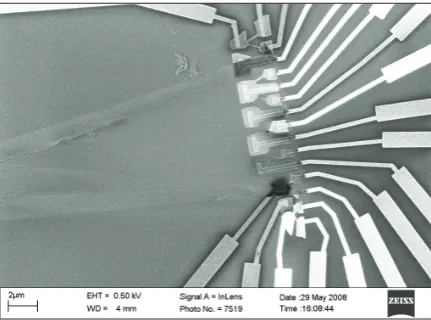
Figure 4. Image of a superconducting nanowire device (Quantum
Transport group, TU Delft)
Figure 5. Photoluminescence measurements in crystal
phase quantum dots (after N. Akopian, G. Patriarche, L. Liu, J.-C. Harmand and V. Zwiller, Nano Letters, 2010)
6 | QSpiCE
ESF Research Networking Programmes are principally financed by the Foundation’s Member Organisations on
an à la carte basis. QSpiCE is supported by:
• Fonds zur Förderung der wissenschaftlichen Forschung in Österreich (FWF)
Austrian Science Fund, Austria
• Suomen Akatemia/Finlands Akademi
Academy of Finland, Finland
• Centre National de la Recherche Scientifique (CNRS)
National Centre for Scientific Research, France
• Deutsche Forschungsgemeinschaft (DFG)
German Research Foundation, Germany
• Nederlandse Organisatie voor Wetenschappelijk Onderzoek (NWO)
Netherlands Organisation for Scientific Research, The Netherlands
• Norges Forskningsråd
Research Council of Norway, Norway
• Polska Akademia Nauk (PAN)
Polish Academy of Sciences, Poland
• Consejo Superior de Investigaciones Científicas (CSIC)
Council for Scientific Research, Spain
• Comisión Interministerial de Ciencia y Tecnología (CICYT)
Interministerial Committee on Science and Technology, Spain
• Vetenskapsrådet (VR)
Swedish Research Council, Sweden
• Schweizerischer Nationalfonds (SNF)
Swiss National Science Foundation, Switzerland
Activities
Funding
Research conferences/summer schools
QSpiCE will organise a summer school in year 2 and a big research conference in year 4 of the funding pe-riod. Furthermore, QSpiCE will co-sponsor conferences/ schools whenever the scientific aims of the programme are positively influenced by the corresponding activity. This will, for instance, be done for the school on
Spin-based quantum information processing in Konstanz,
Germany in August 2010.
Workshops
It is planned to organise three QSpiCE workshops over the duration of the programme. The first workshop of this series will take place in Acquafredda di Maratea, Italy in October 2010. Additionally, workshops related to the scientific aims of the programme will be co-spon-sored. This, will, for instance, be done for a workshop on
The physics of micro and nano scale systems in Lund,
Sweden in June 2010.
Short visit grants
Short visit grants facilitate visits between scientists in-volved in the QSpiCE programme. Visits for a duration of up to 15 days are funded based on the scientific excel-lence of the proposal.
Exchange grants
QSpiCE exchange grants aim at promoting exchange visits lasting from 15 days to up to six months.
Website
QSpiCE | 7
QSpiCE Steering Committee
Professor Björn Trauzettel (Chair)
Institute for Theoretical Physics and Astrophysics University of Würzburg • Am Hubland
97074 Würzburg • Germany Tel: +49 931 31 83638
Email: [email protected] Professor Józef Barnas
Department of Physics Adam Mickiewicz University Ul. Umultowska 85
61614 Poznan • Poland Tel: +48 61 8295298
Email: [email protected]
Professor Arne Brataas Department of Physics
Norwegian Institute of Science and Technology 7491 Trondheim • Norway
Tel: +47 735 93647
Email: [email protected]
Professor Francisco Guinea Departamento de Teori
Instituto de Ciencia de Materiales de Madrid CSIC Sor Juana Inés de la Cruz 3
Cantoblanco
28049 Madrid • Spain Tel: +34 913 349 047
Email: [email protected]
Professor Pertti Hakonen Low Temperature Laboratory School of Science and Technology Aalto University
Puumiehenkuja 2B
PO Box 15100 • 00076 Aalto • Finland Tel: +358 9 470 22964
Email: [email protected]
Professor Wolfgang Jantsch
Institut für Halbleiterphysik und Festkörperphysik Johannes Kepler Universität Linz
Altenbergstrasse 69 4040 Linz • Austria Tel: +43 732 2468 9641 Email: [email protected]
Professor Leo P. Kouwenhoven Quantum Transport Group Department of Nanosciences Kavli Institute of Nanoscience TU Delft
Lorentzweg 1
2628 CJ Delft • The Netherlands Tel: +31 152786064
Email: [email protected]
Professor Daniel Loss
Swiss National Centre of Competence and Research in Nanoscale Science
Department of Physics and Astronomy University of Basel
Klingelbergstrasse 82 4056 Basel • Switzerland Tel: +41 61 267 3750 Email: [email protected]
Dr Peter Samuelsson
Department of Solid State Theory University of Lund
Sölvegatan 14 A 223 62 Lund • Sweden Tel: +46 46 222 9078 Email: [email protected] Professor Pascal Simon UMR 8502
Laboratoire de Physique des Solides Université Paris-Sud • Bâtiment 510 91405 Orsay cedex • France Tel: +33 1 69 15 60 90 Email: [email protected]
ESF Liaison
Mr Neil Williams Science
Ms Carole Mabrouk Administration
Physical and Engineering Sciences Unit European Science Foundation
1 quai Lezay-Marnésia BP 90015
67080 Strasbourg cedex • France Tel: +33 (0)3 88 76 71 69
Fax: +33 (0)3 88 37 05 32 Email: [email protected]
For the latest information on this Research
P
rin
t r
un
: 1
0
0
0 – D
ec
em
b
er
2
01
0
1 quai Lezay-Marnésia | BP 90015 67080 Strasbourg cedex | France