Original Research Article
A study on the dangerous outbreak of Chikungunya in Chittagong,
including a limited survey around that city of Bangladesh
Baishakhi Biswas
1, Sabrina Amin
1, M. Abul Kalam Azad
1*, Motashen Billah
1, Mirfa Murad
2,
Sraborni Chowdhury
1, Rajashree Roy
1, Sharmin Akter
1, Sanjida Alam
1INTRODUCTION
Chittagong is located along the following coordinates: 22°22′0″N 91°48′0″E.1 It is situated in the Southeastern
part of Bangladesh spanning the coastal foothills of the Chittagong hill tracts. Along the southern banks of the city, runs the Karnaphuli River. The highest mountain in the district is Mount Sitakunda, which has a peak of 351 meters (1,152 feet). Within the city, Batali Hill is the highest with an elevation of 85.3 meters (280 feet).2
Chikungunya is a viral disease transmitted to humans by infected mosquitoes, characterized mostly by its symptoms, with special reference to the fever and severe joint pain. Other notable signs and symptoms may include; fatigue, muscle pain, headache, rash, etc. The usual signs and symptoms of the disease appear within 2-7 days after being bitten by an infected mosquito. The name chikungunya comes from a Kimakonde word, which means “to become contorted”, and refers to the slouching gait of a person suffering from Arthralgia. ABSTRACT
Background: The first major outbreak in Bangladesh was reported in 2008 in Rajshahi and Chapainawabgonj. It then
re-emerged in 2013, 2014 and 2015 mostly in Dhaka and other parts of Bangladesh, with a notable outbreak in December 2016 according to a report. This is a statistical report on the data collected from chikungunya patients in some areas of Chittagong in relation to age, gender, location, weather and symptoms of the patients. The aim of the report is to assess the magnitude of the outbreak and an interest to identify the probable socio-environmental factors responsible for chikungunya in Chittagong.
Methods: Medical records were collected from well-established diagnostic laboratories, as well as, a limited survey
on awareness of chikungunya was conducted from July to December, 2017. There were 188 clinically tested chikungunya cases in both genders ranging from 2-70 years of age.
Results: From the total chikungunya cases in the study area it has been found that the highest number of cases (25%)
was found in the age group of 41-50 years, almost equally distributed in both genders. The lowest number of cases (5.3%) was from children below 10 years of age with males having only 3 positive cases and females having 7. Amongst the total present study population, 44.4% were suffering from chikungunya.
Conclusions: From our study we found that this outbreak took place in Chittagong mainly due to lack of awareness in
the population. Educating the general population about its causes, effects, treatment and preventive methods is the best way to prevent future outbreak.
Keywords: Chikungunya, Diagnosis, Outbreak in Chittagong region, Symptoms
1Department Biochemistry and Biotechnology, 2Department of Medicine, University of Science and Technology
Chittagong (USTC), Foy’s Lake, Khulshi - 4202, Chittagong, Bangladesh
Received: 23 August 2019
Revised: 09 October 2019
Accepted: 10 October 2019
*Correspondence:
M. Abul Kalam Azad,
E-mail: [email protected]
Copyright: © the author(s), publisher and licensee Medip Academy. This is an open-access article distributed under
the terms of the Creative Commons Attribution Non-Commercial License, which permits unrestricted non-commercial use, distribution, and reproduction in any medium, provided the original work is properly cited.
The disease was first identified in 1952-1953 in Tanzania.3 In 1955, chikungunya was first officially described from an outbreak in Tanzania, Africa, 1952. In 2007, there was an outbreak in Italy, which caused significant concern in Europe. From October 2006, Sri Lanka experienced an incidence of chikungunya. As for Bangladesh, in 2008, chikungunya was first identified in Rajshahi and Chapainawabgonj. An outbreak of undiagnosed pain and fever was reported in Dohar, Dhaka District in late October, 2011. It then re-emerged in 2013, 2014 and 2015, mostly in Dhaka and other parts of Bangladesh, with a notable outbreak in December 2016 according to a report.4 According to the Institute of Epidemiology, Disease Control and Research Officials, on average, 7-10 cases of Chikungunya were found in a week of May, 2017.
Our study composes of procuring data from Diagnostic Centers in Chittagong that were reported to have received high number of chikungunya cases. There were 500 clinically suspected chikungunya cases in both male and female ranging from 2-70 years of age. The characteristic symptoms of chikungunya are high fever mostly associated with joint pain. It is considered to be very dangerous as it has no specific treatment nor any vaccine available to protect from it.5 This is a statistical report on the data collected from chikungunya patients in some areas of Chittagong in relation to age, gender, location, weather and symptoms of the patients. The aim of the report is to assess the magnitude of the outbreak and an interest to identify the probable socio-environmental factors responsible for chikungunya in Chittagong. Further, in this report, we are reporting on the large outbreak of chikungunya in Chittagong, during the period of the first week of July to the end of December.
The common test used for chikungunya are ICT (Immunochromatographic test), ELISA (Enzyme -Linked Immunosorbent Assay) and Serological tests which may confirm the presence of IgM and IgG anti-chikungunya antibodies.6 About 3 to 5 weeks after the onset of illness, IgM antibody levels are highest. These levels can last for around 2 months. Treatment is focused mainly on relieving the symptoms as there are no specific antiviral drugs to cure chikungunya.
As far as our knowledge no previous study was done before in Chittagong related to chikungunya outbreak. This study was planned to find out the socio-environmental factors associated with chikungunya outbreak in Chittagong region. Our study will update the knowledge of chikungunya in Chittagong region as well as Bangladesh.
METHODS
We did a cross-sectional type of descriptive study by applying descriptive statistics. As well as, a survey was conducted to determine the level of awareness. This study was run from July 2017 to December 2017.
In our study, we focused on the economic center of Chittagong (i.e. Agrabad and GEC). For survey, were covered 115 households of 4-wards (Wards 08, 09, 13, 14), within Khulshi area of Chittagong.
This study was conducted among the residents of Chittagong from all ages, both male and female.
Diagnosis reports were collected from well-established diagnostic laboratories. We also conducted house-to-house surveys to identify factors involved in chikungunya outbreak. Blood was withdrawn from every patient suspected of suffering from chikungunya fever. The collected blood samples were tested to detect chikungunya specific IgM antibodies. The samples were screened for the presence of chikungunya specific IgM and IgG antibodies by using standard Q chikungunya IgM/IgG; a rapid Immunochromatographic test (ICT) device. The ICT devices are manufactured by a company, SD Biosensor, in the Republic of Korea and lab technicians have to follow strict manufacturer’s protocol whilst using it.
We have carried out a cross-sectional, descriptive study to analyze the prevalence of chikungunya in the economic center of Chittagong (i.e. Agrabad and GEC) and to find out how age, gender, weather, and antibodies are related to chikungunya. The analyzed data were collected whilst maintaining proper official procedures from several public and private hospital and laboratory records in Chittagong.
RESULTS
The clinical samples that showed a positive result in the assays were marked as positive for chikungunya infection. The samples were labeled using codes that did not contain any personal identifiers.
The study started with records from first week of July as shown in Figure 1. First week had no positive cases but from the second week of July up until the second week of August, there was a steady rise in the number of positive cases. From the second week of August to fourth week of the month, the frequency decreased to nearly zero. From the fourth week of August, there is an abrupt increase in the number of cases from the aforementioned second week that exponentially increases and reaches a peak in the second week of September. The graph then shows an abrupt drop and steady rise in the frequency within the third and fourth weeks of September. The second highest peak is reached in this fourth week. Again, there is a sharp decline till the first week of October, after which the graph rises till the third week. From the third week of October, the frequency starts to fall unevenly until the last week of December where no positive cases were found in the records collected.
Diagnostic tests
Chikungunya IgM Sensitivity 100% (21/21)
Specificity 97.6% (253/259)
Chikungunya IgG
Sensitivity 100% (21/21) Specificity 99.6% (258/259)
Specimen Serum plasma
Sample volume 10 microliters
Time 15 minutes
Temperature 2 to 400C
Shelf time 24 months
Figure 1: Weekly distribution of positive chikungunya cases.
Table 2: Climate of Chittagong between the months of July to August in 2017.
Series Months Average precipitation in mm No. of wet days Average temperature in degrees Celsius
1 July 598 26 27
2 August 519 25 27
3 September 321 21 28
4 October 180 8 27
5 November 55 2 24
6 December 16 1 20
Table 3: Relative humidity in Chittagong, Bangladesh.
Month Jan Feb Mar Apr May June July Aug Sept Oct Nov Dec
Relative humidity (%) 58 58 65 71 76 83 85 86 84 78 71 68
Average dew point
temperature in Celsius 10.6 12.4 18 21.3 23.6 24.8 24.3 24.5 25 22.8 18.4 13.9
*This information was collected from climate maps: http://www.chittagong.climatemps.com/
From the Figure 1, it can be concluded that the highest number of cases were reported in the months of September, October and November. According to Dr. Limin Wijaya, Senior Consultant in the Department of Infectious Diseases, Singapore General Hospital (SGH), prolonged hot weather and increase in breeding areas show a rise in chikungunya infection.7 Another study done in Bhopal and India showed that despite earlier known facts that winters mean lesser mosquito-borne infections, chikungunya incidence was notable.8 From an article in the Health and Human Rights Journal, it is found that chikungunya prevalence is highest during the summers and particularly after heavy rain falls. From our study, we found similar patterns where chikungunya (CHIK V) infection reached peak after heavy showers (in the months of July and August) as shown below in Table 2 and Table 3.
The average annual humidity is 73.7% with highest in the months of June-October. From the Figure 2, it can be concluded that 179 out of 188 cases were acute due to positive IgM levels, i.e. 95.2% of the total positive cases, whilst 9 out of 188 cases had only positive IgG levels, i.e. 4.7% of the cases had past infection. On other hand, 15.4% of the cases had both IgG and IgM positive.
Figure 2: Comparison of IgM with IgG values.
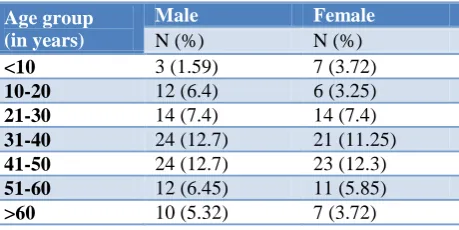
Table 4: Distribution of age according to gender.
Age group (in years)
Male Female
N (%) N (%)
<10 3 (1.59) 7 (3.72)
10-20 12 (6.4) 6 (3.25)
21-30 14 (7.4) 14 (7.4)
31-40 24 (12.7) 21 (11.25)
41-50 24 (12.7) 23 (12.3)
51-60 12 (6.45) 11 (5.85)
>60 10 (5.32) 7 (3.72)
0 0 1 1 2 3
1 0
3 9
25
14 22
5 10
20 17
15
10 12 12
4 1 1
0 0 0
5 10 15 20 25 30
0 1 2 3 4 5 6 7 8 9 10 11 12 13 14 15 16 17 18 19 20 21 22 23 24 25 26 27 28
No
.
o
f
cas
es
Time in weeks (from first week of July to December, 2017)
0 5 10 15 20 25
1 2 3 4 5 6 7 8 9 10 11 12 13 14 15 16 17 18 19 20 21 22 23 24 25 26 27 28
Time in weeks (from first week of July to December, 2017)
Comparison of IgM with IgG values
Figure 3: Percentage of infected males and female.
The clinical reference has been taken from the Pan American Health Organization- Preparedness on response for Chikungunya virus, Mayo medical clinic, according to which IgM and IgG positive means IgM and IgG antibodies to CHIK virus detected, suggesting recent infection, IgG positive means IgG antibody to CHIK V detected indicating past infection and IgM positive means IgM antibody to CHIK V detected, suggesting recent infection.9
In Figure 2 and 3, CHIKV affected both male and female almost equally. Therefore, we can conclude that gender is not a factor in the occurrence of Chikungunya.
From Table 4 we found that the highest number of cases where found in the age group of 41-50 (25%), almost equally distributed in both genders. The least (5.3%) was found in children under 10 years of age; males having only 3 positive cases and females being 7. So there is an increase in frequency of infected cases with age.
From Table 5, we can see that out of the 83 families, 71 families had the Chikungunya infection amongst them.
Table 5: Preventative measures observed by Chittagong families.
Protection methods Number of families using protection
Nets 80/115 (69.5%)
Coils 78/115 (67.8%)
Aerosol 36/115 (31.3%)
Others (repellant creams) 17/115 (14.7%)
Families that were aware
of Chikungunya outbreak 83*/115 (72.1%)
DISCUSSION
By conducting a survey study, it has been found that there was an outbreak of chikungunya in Chittagong in 2017. Amongst the total present study population, 44.4% were suffering from chikungunya.
Of the positive cases, 95.2% tested positive for IgM levels in the blood indicating more acute recent infections. Highest cases were reported in September, i.e. 25 cases, indicating that maximum incidence occurs during the hot days and after heavy showers. Further, there is no significant difference observed in the gender specific distribution as affected males were 53% and female were 47% respectively. On the other hand, a significant difference in the age specific distribution of CHIK V infection was observed, where prevalence amongst both genders were highest between the age groups of 41-50 followed by 31-40. However, least number of infections occurred amongst children under the age group of 10. This deviation in age groups as compared with previous studies, could be due to the distribution of different age groups, where 39.73% of the population falls under the 25-54 years of age group. According to reported studies, the severity of the disease increases after the age of 65.10
Another short study was conducted amongst the 115 households, to find out their level of awareness regarding the chikungunya outbreak. Although about 61% of them were aware of the infection, they lacked knowledge about the spread of infection and the control methods required to prevent chikungunya. As seen from Table 5, preventive methods are observed by most of the households for protection from arthropod-borne infections as Bangladesh is prone to them (however, not specifically due to chikungunya).
In Bangladesh, the first chikungunya outbreak was recognized in 2008 in two villages in the northwest part of the country.11 In 2017, it re-emerged and spread to all the big cities in Bangladesh including Chittagong. First chikungunya virus was isolated from Aedes albopictus.12 As chikungunya and dengue viruses are transmitted by the same mosquito vector and often difficult to differentiate clinically. Though dengue incidences have been decreasing since the first dengue outbreak occurred in Bangladesh in 2000 but chikungunya takes place of it.13
A study found that in the coastal regions unusually dry, warm conditions are suitable for the outbreaks.14 This finding is consistent with our observation that the highest number of cases in Chittagong were reported in the months of September, October and November which is the dry season in Bangladesh. It also support the study which was conducted in regions of Kerala in India.15 In 2005-2006, epidemics of CHIKV disease spread in the islands of the South-West Indian Ocean.16 Another chikungunya outbreak study revealed that transmission continued throughout the dry and temperate months.17 Besides, a population-based survey found evidence for a high proportion of symptomatic CHIKV infection in younger individuals (2 to 24 years).18 But in our study, we found that the highest number of cases in the age group of 41-50 (25%). One of previous case study found that most of the cases remain undiagnosed or misdiagnosed due to
0 2 4 6 8 10 12 14 16
1 2 3 4 5 6 7 8 9 10 11 12 13 14 15 16 17 18 19 20 21 22 23 24 25 26 27 28 29 30 31
Time in weeks (from first week of July to December)
males females
2 per. Mov. Avg. (males) 2 per. Mov. Avg. (females)
lack of awareness and it helps to spread the outbreak which is consistent with our survey result.19
CONCLUSION
Chikungunya has recently resurfaced and become a global health problem. Amongst the countries most affected, Bangladesh was one of them. Our study based on Chittagong helped us estimate the magnitude of chikungunya prevalence here. The main target in the prevention of chikungunya should be to educate the general population about its causes, effects, treatment and preventive methods. Our findings would contribute to establish an effective way for preventing future chikungunya outbreaks in Bangladesh.
ACKNOWLEDGEMENTS
We would like to show our gratitude to Dr. Nurul Absar, Head of the Department of Biochemistry and Biotechnology, University of Science and Technology Chittagong (USTC) for sharing his pearls of wisdom and support us during the course of this research.
Funding: No funding sources Conflict of interest: None declared
Ethical approval: The study was approved by the Institutional Ethics Committee
REFERENCES
1. Chattogram, wiki. Wikipedia. Available at
https://en.wikipedia.org/wiki/Chattogram. Accessed on 5 May 2018.
2. Anon. 2009-2017 climatemps.com. climatemps,
Chittagong Climate Chittagong Temperatures.
Available at: http://www.chittagong.
climatemps.com/. Accessed on 5 May 2018.
3. Anon., WHO 2018. WHO | Chikungunya. Available
at: http://www.who.int/emergencies/diseases/
chikungunya/en/. Accessed on 6 February 2018. 4. Khatun S. An Outbreak of Chikungunya in Rural
Bangladesh, 2011. PLOS Neglected Trop Dis. 2015:9.
5. Sing A. Chikungunya Fever: What to Know Health
Xchange. Health 2016. Available at:
https://www.healthxchange.sg/seniors/health-scares outbreaks/chikungunya-fever-what-to-know. Accessed on 6February 2018.
6. Ray P, Ratagiri VH, Kabra SK, Lodha R, Sharma S,
Sharma BS, et al. Chikungunya infection in India: results of a prospective hospital based multi-centric study. PLoS One. 2012;7(2):e30025.
7. Anon S. Updated 2017. World Health Organization;
fact sheet: chikunguniya. Available at:
http://www.who.int/mediacentre/factsheets/fs327/en /. Accessed on 7 February 2018.
8. Kumar NP, Suresh A, Vanamail P, Sabesan S,
Krishnamoorthy KG, Mathew J, et al. Chikungunya
virus outbreak in Kerala, India, 2007: a
seroprevalence study. Memórias do Instituto Oswaldo Cruz. 2011;106(8):912-6.
9. Mayoclinic. Mayo Medical Laboratories. Available
at: https://www.mayomedicallaboratories.com/
testcatalog/Clinical+and+Interpretive/643. Accessed on 7February 2008.
10. Hardin DM. Chikungunya fever patient. 2015.
Available at: https://patient.info/doctor/
chikungunya-fever-pro. Accessed on 8
February2018.
11. Dubrulle M, Mousson L, Moutailler S, Vazeille M, Failloux AB. Chikungunya virus and Aedes mosquitoes: saliva is infectious as soon as two days after oral infection. PLoS One. 2009;4(6):e5895.
12. Hossain MS, Hasan MM, Islam MS, Islam S,
Mozaffor M, Khan MAS, et al. Chikungunya outbreak (2017) in Bangladesh: Clinical profile, economic impact and quality of life during the acute phase of the disease. PLoS Negl Trop Dis. 2018;12(6):e0006561.
13. Khatun S, Chakraborty A, Rahman M, Banu NN,
Rahman MM, Hasan SMM, et al. An outbreak of chikungunya in rural Bangladesh, 2011. PLoS Negl Trop Dis. 2015;9:e0003907.
14. Sharmin S, Viennet E, Glass K, Harley D. The emergence of dengue in Bangladesh: epidemiology, challenges and future disease risk. Trans R Soc Trop Med Hyg. 2015;109:619-27.
15. Chretien JP, Anyamba A, Bedno SA, Breiman RF, Sang R, Sergon K, et al. Drought-associated chikungunya emergence along coastal East Africa. Am J Trop Med Hyg. 2007;76(3):405-7.
16. Sergon K, Yahaya AA, Brown J, Bedja SA,
Mlindasse M. Seroprevalence of Chikungunya virus infection on Grande Comore Island, union of the
Comoros, 2005. Am J Trop Med Hyg.
2007;76:1189-93.
17. Sissoko D, Malvy D, Giry C, Delmas G, Paquet C, Gabrie P, et al. Outbreak of Chikungunya fever in Mayotte, Comoros archipelago, 2005-2006. Trans Royal Soci Trop Med Hyg. 2008;102(8):780-6.
18. Sissoko D, Moendandze A, Malvy D, Giry C,
Ezzedine K, Solet JL, et al. Seroprevalence and risk factors of chikungunya virus infection in Mayotte, Indian Ocean, 2005-2006: a population-based survey. PLoS ONE. 2008;3(8):e3066.
19. Hassan R, Rahman MM, Moniruzzaman M, Rahim
A, Barua S, Biswas R, et al. Chikungunya: an emerging infection in Bangladesh: a case series. J Med Case Rep. 2014;8:67.
Cite this article as: Biswas B, Amin S, Azad MAK,
Billah M, Murad M, Chowdhury S, et al.A study on