RVC OPEN ACCESS REPOSITORY – COPYRIGHT NOTICE
This is the peer-reviewed, manuscript version of the following article:
Adams, H. A., Sonstegard, T. S., VanRaden, P. M., Null, D. J., Van Tassell, C. P., Larkin, D. M. and Lewin, H. A. (2016) 'Identification of a nonsense mutation in APAF1 that is likely causal for a decrease in reproductive efficiency in Holstein dairy cattle', Journal of Dairy Science, 99(8), 6693-6701.
The final version is available online: http://dx.doi.org/10.3168/jds.2015-10517.
© 2016. This manuscript version is made available under the CC-BY-NC-ND 4.0 license http://creativecommons.org/licenses/by-nc-nd/4.0/.
The full details of the published version of the article are as follows:
TITLE: Identification of a nonsense mutation in APAF1 that is likely causal for a decrease in reproductive efficiency in Holstein dairy cattle
AUTHORS: Adams, H. A., Sonstegard, T. S., VanRaden, P. M., Null, D. J., Van Tassell, C. P., Larkin, D. M. and Lewin, H. A.
JOURNAL: Journal of Dairy Science
PUBLISHER: Elsevier
PUBLICATION DATE: August 2016
1 Identification of a nonsense mutation in APAF1 that is likely causal for a decrease in 1
reproductive efficiency in Holstein dairy cattle 2
Heather A. Adams*†, Tad S. Sonstegard‡, Paul M. VanRaden§, Daniel J. Null§, Curt P. Van 3
Tassell‡, Denis M. Larkin*, and Harris A. Lewin*†#1 4
5
*Department of Animal Sciences, and 6
†Institute for Genomic Biology, University of Illinois at Urbana-Champaign, Urbana 61801 7
‡
Bovine Functional Genomics Laboratory, and 8
§Animal Improvement Programs Laboratory, Agricultural Research Service, USDA, Beltsville, 9
MD 20705 10
#Department of Evolution and Ecology and the UC Davis Genome Center, University of 11
California, Davis, Davis 95616 12
1Corresponding author: [email protected] 13
ABSTRACT 14
The HH1 haplotype on chromosome 5 is associated with reduced conception rate and a 15
deficit of homozygotes at the population level in Holstein cattle. The source HH1 haplotype was 16
traced to the bull Pawnee Farm Arlinda Chief (Chief), who was born in 1962 and sired more than 17
16,000 daughters. We identified a nonsense mutation in APAF1 (APAF1 p.Q579X) within HH1 18
using whole-genome resequencing of Chief and three of his sons. This mutation is predicted to 19
truncate 670 amino acids (53.7) percent of the encoded APAF1 protein that contains a WD40 20
domain critical to protein-protein interactions. Initial screening revealed no homozygous 21
individuals for the mutation in 758 animals previously genotyped, whereas all 497 HH1 carriers 22
2 Holsteins revealed 5,299 APAF1 heterozygotes and zero homozygotes for the mutation. The 24
causative role of this mutation is also supported by functional data in mice that has demonstrated 25
Apaf1 to be an essential molecule in the cytochrome-c mediated apoptotic cascade and directly 26
implicated in developmental and neurodegenerative disorders. In addition, most Apaf1
27
homozygous knock-outs die by day 16.5 of development. We thus propose that the APAF1
28
p.Q579X nonsense mutation is the functional equivalent of the Apaf1 knockout. This mutation 29
has caused an estimated 525,000 spontaneous abortions world-wide over the past 35 years, 30
accounting for approximately $420 million in losses. With the mutation identified, selection 31
against the deleterious allele in breeding schemes has aided in eliminating this defect from the 32
population, reducing carrier frequency from 8% in past decades to 2% in 2015. 33
3 INTRODUCTION
35
Fertility is one of the most important traits determining the sustainability of animal 36
agriculture. For example, the milk produced as a result of a successful pregnancy, and the 37
number of complete gestations in a cow’s lifetime, are essential to maintaining the profitability 38
of a modern dairy operation. If reproductive performance decreases, financial losses accrue 39
because of reduced milk production of the herd and the need for replacement animals to maintain 40
herd size. The relative importance of fertility and associated lactation traits to the dairy industry 41
has made reproductive performance an important target in dairy cattle breeding programs (Lucy, 42
2001; Shook, 2006). However, after more than 50 years of using quantitative genetics for 43
genetic improvement, traits related to reproductive performance have been difficult to select for 44
because of low heritability (VanRaden et al., 2004). As an added complexity, inbreeding reduces 45
reproductive efficiency, so intensive efforts have been made to reduce mating between relatives 46
by using pedigree information in breeding decisions. Despite these efforts, the extensive use of 47
artificial insemination (AI) in the dairy industry has resulted in an increase in the inbreeding 48
coefficient of the national herd to about 6 percent 49
(https://www/cdcb.us/eval/summary/inbrd.cfm). 50
Inbreeding can rapidly increase the frequency of recessive lethal and sub-lethal alleles in 51
the population, but can also lead to purging of harmful alleles by natural selection. Lethal 52
mutations are the most detrimental economically because no offspring carrying such mutations 53
will survive to reproduce. Some of the top bulls in the history of the dairy industry have been 54
shown to harbor mutations affecting fertility, which spread rapidly in the population through AI. 55
In recent years, a number of these mutations have been identified (see Online Mendelian 56
4 sub-lethal fertility mutations include deficiency of uridine monophosphate synthase (DUMPS) 58
(Robinson et al., 1984; Shanks and Robinson, 1989), complex vertebral malformation (CVM) 59
(Agerholm et al., 2001; Agerholm et al., 2004), and brachyspina (Charlier et al., 2012). These 60
disorders are caused by point mutations, insertions and deletions that result in aborted fetuses or 61
stillbirths. A recently discovered deletion in Nordic Red cattle (Kadri et al., 2014) causes not 62
only recessive fertility loss but also increased milk yield, maintaining high frequency due to 63
balancing selection. Identification of such mutations has enabled screening programs to avoid 64
matings between carriers from within the population. 65
VanRaden et al. (2011b) used high density SNP genotyping to identify a haplotype on 66
chromosome 5 (BTA5), named HH1, that was associated with a decrease in conception rates and 67
an increase in stillbirths in Holstein cattle. No individuals homozygous for HH1 were found 68
among >78,000 individuals genotyped, despite a haplotype frequency of 2.25%. This led to the 69
hypothesis that a recessive lethal allele located in an 8 Mbp region of BTA5 was circulating in 70
the population. 71
The HH1 haplotype was subsequently traced to a single sire born 50 years ago during the 72
early period of advanced animal breeding (VanRaden et al., 2011a). The present study reports 73
the identification of a stop-gain (nonsense) mutation in the apoptosis peptide activating factor 1 74
(APAF1) gene carried on the this bull’s HH1 haplotype that is the likely mutation causing 75
reduced conception rate in the Holstein population. This work provides much more complete 76
documentation and validation of the APAF1 mutation than earlier reports (Adams et al., 2012; 77
Fritz et al. 2013), including pedigree, laboratory, commercial, and across-species bioinformatic 78
validation, sequencing details, fine mapping, economic analysis, and estimates of allele 79
5 to recombination, whereas causative mutation tests improve breeder confidence in genetic
81
selection and are much simpler to use. 82
83
MATERIALS AND METHODS 84
Calculations supporting Chief’s influence on spontaneous abortions
85
Using pedigree data, VanRaden et al. (2011a) identified Pawnee Farm Arlinda Chief 86
(Chief), born in 1962 (Table 1), as the earliest genotyped ancestor carrying the HH1 haplotype. 87
Chief is one of the most influential sires in the history of the Holstein breed, having produced 88
many sons that became popular sires in addition to >16,000 daughters, >500,000 granddaughters, 89
and >2 million recorded great-granddaughters. We estimated the cumulative number of 90
spontaneous abortions caused by HH1 over the 30 years since Chief alleles became highly 91
frequent to be more than 100,000 nationally and nearly 500,000 worldwide as follows: the 92
estimated cumulative number of spontaneous abortions caused by HH1 in the US Holstein 93
population was calculated as the number of cows (8 million) * .045*(1/2) * .045*(1/2) = 4,050 94
per year, where .045 is the HH1 carrier frequency of one parent, and 1/2 is the probability that 95
the parent will contribute the defect to the offspring. Globally, the estimate is 15,000 per year 96
based on a population size of 30 million. These estimates correspond to approximately 140,000 97
spontaneous abortions in the US and 525,000 world-wide over a 35 year period, the approximate 98
time that Chief alleles appeared on both sides of the pedigree. 99
Carrier frequency in U.S. Holsteins exceeded 0.08 during the 1980’s and 1990’s, but 100
dropped to about 0.03 in 2010 (VanRaden et al., 2011b). The actual mating pattern for 58,453 101
genotyped Holsteins was used by VanRaden et al. (2011b) who reported 23 expected HH1 102
6 pattern is difficult for national or international populations because many ancestors are either not 104
known or not genotyped. Further direct selection for fertility and against HH1 reduced the 105
frequency to 0.02 in 2015. 106
The economic loss from a mid-term abortion is estimated to be about $800 (Norman et 107
al., 2012), for a total cost of ~$420 million. For comparison, the increased value of milk from 108
using Chief instead of an average bull in 1962 is his genetic contribution to the breed (.143) * the 109
farm price of milk ($0.33/liter) * the increased milk yield (2 liters/day) * 305 days/year * 35 110
years * 30 million cows = $30 billion. Embryonic and fetal loss during gestation was 111
investigated using the national fertility database and occurred mainly from 60 to 200 d of 112
gestation for HH1, but earlier for several other recessive defects (VanRaden et al., 2011a; see 113
also Norman et al., 2012 for more details on the timing of embryo loss, and Fritz et al., 2013 for 114
independent confirmation of fertility effects). 115
116
Haplotype detection and crossover analysis
117
Recombinant haplotypes, defined as a portion but not all of Chief’s HH1 source 118
haplotype, were detected within the pedigree of 78,465 animals that had 54,001 SNP genotypes 119
as of 2011 using findhap.f90 as previously described (VanRaden et al., 2011a; Sonstegard et al., 120
2013). All copies of the 75-marker source haplotype spanning 7.1 Mbp that contained the 121
putative mutation appeared to trace to Chief and to no other prominent ancestors. VanRaden et 122
al. (2011b) studied only the source haplotype, whereas living animals with recombinant 123
haplotypes that are homozygous for only a portion of the source haplotype can rule out that 124
portion of the haplotype as not containing the lethal mutation. This fine mapping method is the 125
7 shared by affected animals instead of ruling out regions of the haplotype homozygous in
127
unaffected animals. After processing all recombinant haplotypes, the area not ruled out was 128
defined as the mutation-critical region, as described by Sonstegard et al. (2013). 129
Recombination events were detected in 78,465 animals genotyped for 43,385 SNPs from 130
the Illumina BovineSNP50 BeadChips (Illumina, San Diego, CA) using edits of Wiggans et al. 131
(2010), and standard output from findhap.f90 (VanRaden et al., 2011a) version 2, which first 132
examined haplotypes of length 600 markers, then 200 markers, and finally output haplotypes of 133
≤75 markers. The program phases genotypes into haplotypes and detects recombination points 134
between the maternal and paternal haplotype of each genotyped parent. “Recombinant 135
haplotypes contain part of the source haplotype and part of a non-source haplotype, and a 136
descendant’s phenotype status may be unknown when crossovers occur. Crossovers were 137
detected from genotypes by directly comparing progeny to parent haplotypes within the 138
pedigree. For each crossover, the last marker known to be from the first parental haplotype and 139
the first marker known to be from the second parental haplotype are output. A gap may remain 140
between those two markers if the parental haplotypes are identical in that region, some genotypes 141
are not called, or both parents were heterozygous and alleles could not be phased leading to an 142
unknown crossover location. Because few dams are genotyped, crossovers occurring in maternal 143
ancestors are often undetected (Sonstegard et al., 2013). 144
Fine mapping was accomplished by checking for animals with both the original HH1 145
haplotype and a recombinant haplotype. Regions homozygous for a section of the source 146
haplotype were removed from consideration of harboring the causative HH1 mutation. For 147
example, if a live animal received the original HH1 haplotype from one parent and the left 20 148
8 removed from consideration, exactly as described in Sonstegard et al. (2013) for Jersey
150
haplotype 1. The frequency of HH1 heterozygotes in all animals genotyped was 3.2% for the 151
source haplotype and 4.5% when recombinant haplotypes were included. Upon identification of 152
the region of the HH1 haplotype including the potentially lethal allele, individuals were selected 153
for study on the basis of their relationship to Chief, allele carrier status, and overall relationship 154
(expected future inbreeding, EFI) to the U.S. Holstein breed. 155
Two sons of Chief, Walkway Chief Mark (Mark) and Milu Betty Ivanhoe Chief (Ivanhoe 156
Chief) were identified as carriers of HH1 on the basis of previous genotyping information 157
(VanRaden et al., 2011b). An additional son of Chief, S-W-D Valiant (Valiant), was found not 158
to carry the HH1 haplotype. Chief and Mark had complete genome sequence available from an 159
earlier study (Larkin et al. 2012) and were thus useful for a preliminary screen to identify 160
mutations on the HH1 haplotype. For the present study, additional sequencing was conducted 161
for Chief to increase coverage (see below; Supplemental Table S1), thus permitting greater 162
accuracy of base calling in and near the APAF1 locus. Whole genome sequencing of Ivanhoe 163
Chief and Valiant were conducted as part of an independent project. For Ivanhoe Chief and 164
Valiant, only the sequence data at the APAF1 locus was used in the present study to assist 165
validation of the inheritance of the APAF1 mutation (see below). The whole genome sequences 166
of Ivanhoe Chief and Valiant will be reported elsewhere. The DNA sequences of Chief and three 167
of his sons in and near the APAF1 locus permitted phasing of genotypes into haplotypes, and was 168
useful for designing the 12-marker APAF1 confirmatory SNP panel (see below). 169
170
Sequencing, alignment and mapping
9 The genomes of Chief, Ivanhoe Chief and Valiant were sequenced using sequencing by 172
synthesis chemistry on an Illumina HiSeq 2000 platform (Illumina Inc., San Diego, CA). 173
Libraries were prepared from 5 μg of genomic DNA purified from semen straws and data was 174
generated using standard sequencing protocols provided by the manufacturer. Previous 175
sequencing results of Mark (12X) and Chief (6X) using 454 Titanium technology were also used 176
(Larkin et al., 2012). 177
Sequence reads were mapped against a whole bovine genome assembly (Btau 4.0) using 178
SOAP2 (Li et al., 2009). Sequence reads were paired-end and 100 bp in length, and in 179
accordance with the mismatch criteria chosen (5 mismatches alloted), only reads with > 95% 180
coverage in chromosome sequences were considered mapped. Quality filters included accepting 181
those bases where the quality score (phred-scaled) was > 20 (corresponding to a 1% error rate), 182
and read depth was > 3X coverage per site per individual in each direction. Among mapped 183
reads, those with single matches in chromosome sequences (excluding unassigned contigs), and 184
those identified as a best SOAP2 hit in a chromosome sequence that was better than any other 185
hit, were compiled for subsequent SNP detection. 186
187
Detection of SNPs and genes
188
The SNPs in the suspect region of BTA5 were identified using FreeBayes (Garrison and 189
Marth, 2012). Putative SNPs were accepted if they fit within the following criteria: 4x minimum 190
read coverage with at least two reads aligning in each orientation (forward, reverse), and 191
minimum allele sequencing quality > 20. Upon acquiring a list of SNPs in the region, functional 192
annotation of the variants was performed using ANNOVAR (Wang et al., 2010). The 193
10 genome. The program reports SNPs located within introns and exons of annotated genes, 5’ and 195
3’ UTR regions, and those upstream and downstream of gene positions. All coordinates 196
pertaining to SNP and gene positions were converted from Btau4.0 to UMD3.1 genome 197
assemblies using the program LiftOver created by the UCSC Genome Bioinformatics Group 198
(http://genome.ucsc.edu/cgi-bin/hgLiftOver) for consistency with haplotype and genotype 199
datasets. 200
201
Selection of animals for APAF1 SNP validation
202
Animals were selected for validation by querying a large database of 33,415 Holsteins 203
genotyped for 54,001 SNP as constructed previously (Wiggans et al., 2010). Genotype 204
imputation and haplotype frequencies included all 33,415 animals, but the 758 samples selected 205
for further validation were from the Cooperative Dairy DNA Repository, which contains DNA 206
from almost all progeny tested bulls in North America. Haplotype identification was based on 207
the 75 SNP markers designated as the 7.1 Mbp HH1-containing interval on BTA5 (UMD3.1 208
coordinates 58,638,702 to 65,743,920; VanRaden et al., 2011b). An additional query was 209
implemented to select a diverse set of non-carriers that had unique heterozygous haplotype 210
combinations in this interval. 211
A SNP genotyping panel (Sequenom Inc., San Diego, CA) designed for the validation 212
test (Page et al., 2004) was composed of 24 bi-directional assays for 12 putative SNPs in the 213
refined HH1 interval region. This included all SNPs with gene boundaries found within this 214
interval, as well as five additional SNPs observed near adjacent genes in the interval or in distal 215
flanking regions from the APAF1 stop-gain mutation. A total of 22 of the 24 SNP assays were 216
11 except for UMD3_63107293 (99.3%) and UMD3_62591311 (99.9%). Results from the bi-218
directional assays for each SNP locus were compared for concordance and integrated into a 219
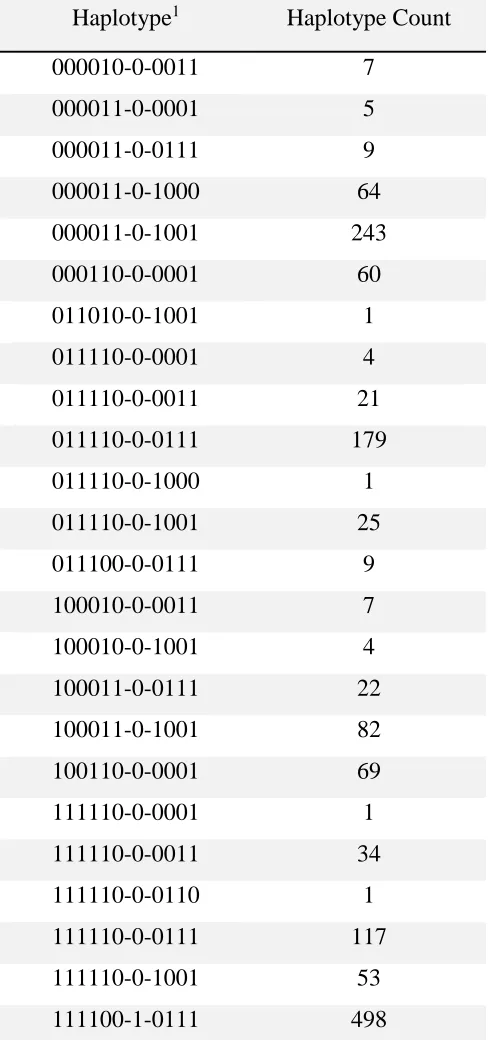
single marker genotype score for each animal across the 11 SNP loci. Haplotypes of 11 220
informative SNPs were determined by PHASE v2.1.1 (Stephens et al., 2001), and a total of 24 221
probable haplotypes were identified (Table 3). These haplotypes are much shorter and different 222
than those originally defined by the 75-marker window (derived from the 54,001 chip) spanning 223
7.1 Mbp that was used to find HH1. Two different numbering systems exist: one for the more 224
than 2,000 different haplotypes in this 7.1 Mbp window, and a second for the 24 haplotypes in 225
the narrow 11 SNP window for validation (Table 3). 226
In all, 758 animals were selected for validation genotyping using a 24-SNP (12x2) 227
multiplex panel, and 486 of these were presumed carriers based on the presence of haplotype 12, 228
which was the original designation for the corresponding HH1 haplotype within the 7.1 Mbp 229
interval. Among all animals within the validation set, 246 unique haplotypes existed within the 230
HH1 interval, as well as 323 heterozygous haplotype combinations. Additionally, animals 231
possessing “haplotype 32” (n=11) had a small region of 40 markers in a 1Mb region within the 232
HH1 interval that was expected to be equivalent to haplotype 12 because haplotype 32 was a 233
recombinant haplotype. These individuals were expected to test positive for the causalmutation 234
if the SNP was potentially associated with the recessive lethal effect. After re-genotyping the 235
animals for validation, one animal within the haplotype 12 group was found to have an incorrect 236
genotype (the DNA was actually from a different animal), and was removed from the study. In 237
total, 497 animals (485 with haplotype 12, and 11 with haplotype 32) were expected to be 238
heterozygous for the APAF1 stop-gain mutation. Following this initial validation, a test for the 239
12 Neogen, Lincoln, NE; Neogen Corp., 2013) and subsequent chips, and genotypes were received 241
for 246,773 Holsteins as part of routine genomic predictions. 242
243
Nomenclature
244
The length of APAF1 we originally reported in Adams et al. (2012) was 1238 aa, which is 245
the polypeptide length given by the UCSC Genome Browser (https://ucsc.edu/cgi-246
bin/hgGateway). The UCSC Genome Browser annotation of the APAF1 protein 247
(NP_001178436.1) is based on the NCBI cattle genome annotation. Fritz et al. (2013) 248
apparently used either the human protein, which is 1248 aa, or an alternate annotation of the 249
bovine sequence (e.g., XP_005206703) that is 1248 aa. In UNIPROT, the cattle APAF1 protein 250
(Entry F1MUW4) is 1251 aa, which is caused by addition of 2 aa at the amino terminus and 251
insertion of another internal residue. Upon careful analysis, we have concluded that the 252
UNIPROT annotation is likely to be incorrect. We have also concluded that the 1238 aa 253
polypeptide represents a prediction error or an isoform produced by an alternatively spliced 254
product of the full length APAF1 mRNA. To adopt the most likely length of the protein, and 255
avoid confusion in the literature, we have chosen 1248 aa for the APAF1 protein. Thus, the 256
nomenclature for the mutation used in this report is Q579X (or Gln579X), which is consistent 257
with the nomenclature described by Fritz et al. (2013). 258
13 RESULTS AND DISCUSSION
260 261
The mutation was fine mapped within the 75-marker HH1 haplotype to a 3.162 Mbp critical 262
region on BTA5 (BTA5:62,435,307 to 65,597,776) bound by 39 SNPs. Fine mapping was based 263
on eight live animals from a group of >78,000 genotyped animals that inherited both the HH1 264
source haplotype and an HH1-derived recombinant haplotype. In addition, 26 animals having 265
one HH1 haplotype with a crossover within the 75-marker interval but outside the fine-mapped 266
region were identified. Animals possessing these recombinant haplotypes were designated as 267
putative carriers and used subsequently for the validation analysis (see below). Within the 39 268
marker-subinterval, 51 additional animals with crossovers inside the fine-mapped region were 269
detected. The carrier status of these animals could not be fully ascertained at this stage. 270
Chief’s genome was sequenced previously, along with his son Mark, because of his 271
influence in the Holstein breed (Larkin et al., 2012). As part of an ongoing study that aims to 272
sequence all influential bulls of the Holstein breed, we added additional sequence coverage to 273
Chief and sequenced two other Chief sons, Ivanhoe Chief and Valiant (Table 1). Ivanhoe Chief, 274
Mark and Valiant are also highly influential, having sired many high index bulls and >14,000, 275
>57,000, and >36,000 daughters, respectively. Chief, Mark, Ivanhoe Chief, and Valiant were 276
sequenced to ~31x, 13.5x, ~50x and ~36x coverage, respectively (Supplemental Table S1). 277
Having the genome sequence of these bulls allowed us to search within the mapped interval for 278
SNPs and candidate genes for the lethal allele. Normal and carrier progeny of Chief provide 279
information by helping to phase the SNPs. As a preliminary step, alleles possessed by Chief that 280
14 available, sequence for an animal homozygous for Chief’s normal haplotype could also rule out 282
those mutations. 283
A list of SNPs within the critical region was acquired by alignment of sequence reads to 284
cattle genome reference assembly Btau4.0 and then converted to coordinates of assembly UMD 285
3.1. The SNPs were then annotated as genic, intergenic, synonymous, nonsynonymous, etc., 286
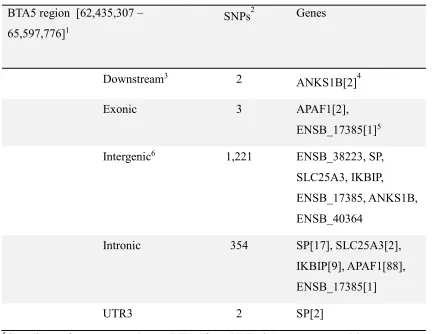
using ANNOVAR. Analysis of Chief’s DNA within the critical region revealed three unique 287
SNPs in exons while the rest were in intronic, intergenic, 3’UTR and downstream regions (Table 288
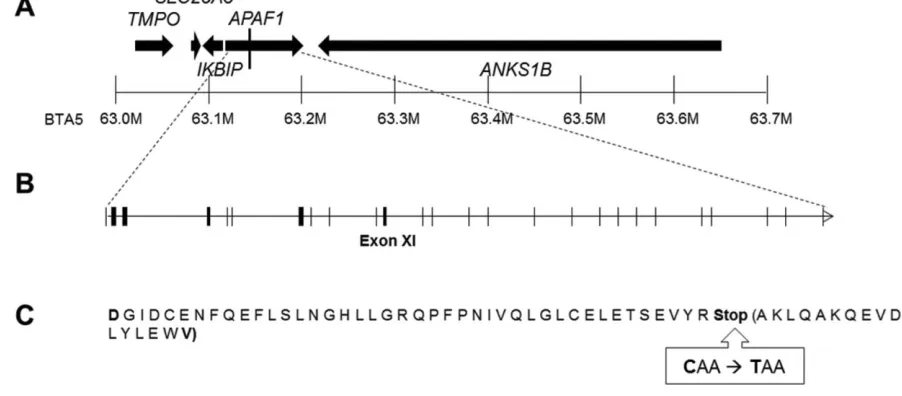
4). Among the exonic SNPs for which Chief was heterozygous, a C→T substitution in exon 11 289
of the gene encoding apoptosis peptide activating factor 1 (APAF1) produces a stop-gain 290
mutation at position 579 in the polypeptide (Table 2; Figure 1). The APAF1 p.Q579X mutation 291
truncates 670 C-terminal amino acids (53.7%) from the 1248 residue full-length APAF1 protein. 292
Alignments of Mark and Ivanhoe Chief sequence reads, both deemed carriers of HH1, confirmed 293
that these Chief sons were heterozygous for the APAF1p.Q579X mutation. Chief’s son Valiant, 294
classified as a non-carrier, was found to be homozygous for the normal allele. The other two 295
exonic SNPs, one in APAF1 and the other in a predicted gene, both cause synonymous 296
substitutions (Table 2), ruling out these mutations as causative. Thus, APAF1 p.Q579X was 297
determined to be the putative mutation causing prenatal lethality associated with the HH1 298
haplotype. 299
Validation of APAF1 p.Q579X as the likely causative mutation was accomplished by 300
querying a large inventory of archived cattle genomic DNA for all animals carrying the HH1 301
haplotype (see Materials and Methods). Among the 758 animals selected for validation 302
genotyping, 497 were presumed carriers of the mutation on the basis of HH1 haplotyping; the 303
15 SNPs identified from Chief sequence that are located in the refined HH1 interval, including the 305
SNP producing the stop-gain mutation, were used for the validation studies (Table 2). Only one 306
haplotype among the 24 observed 11-SNP haplotypes was associated with the stop-gain mutation 307
and corresponded to the 497 previously identified HH1-positive individuals (Table 3). 308
Only one other SNP besides the APAF1 stop-gain mutation was in high concordance with 309
HH1 (Table 3), defined as the absolute value of the percentage of SNP and HH1 genotypes that 310
matched for the 758 validation animals. This SNP is unlikely to be responsible for reduced 311
fertility because it is located in an intron of SLC25A3 and had a 1.2% false positive detection rate 312
for HH1 haplotypes. In contrast, the stop-gain mutation at position UMD3_63150400 in APAF1
313
was 100% concordant with the recessive lethal (Table 3). Subsequent test results provided by 314
GeneSeek-Neogen Corp. (Lincoln, NE) for APAF1 p.Q579X identified 5,299 heterozygotes and 315
zero homozygotes in 246,773 Holsteins, consistent with the hypothesis that this is the lethal HH1 316
mutation. 317
Additional support for APAF1 p.Q579X as the causative mutation derives from functional 318
studies. The protein encoded by APAF1 is a central component of the cytochrome-c-mediated 319
apoptotic cascade (Apweiler et al., 2004) and has been directly implicated in the etiology of 320
cancer, developmental disorders and neurodegenerative diseases (Honarpour et al., 2001; Blake 321
et al., 2011). The APAF1 protein forms an oligomer that when bound with cytochrome-c and 322
dATP forms the apoptosome, a cytoplasmic structure that binds the caspase 9 preprotein and 323
cleaves it into its mature active form. The activated form of caspase 9 initiaties the caspase 324
cascade that ultimately leads to apoptotic cell death. Expression of Apaf1 during murine 325
development begins between days 7 and 9 in a number of vital tissues and organs, and is crucial 326
16 leads to embryonic lethality by day 16.5 or perinatally, and Apaf1-deficient mice exhibit severe 328
abnormalities such as brain overgrowth, persistence of interdigital webs and craniofacial 329
malformations (Cecconi et al., 1998; Yoshida et al., 1998; Honarpour et al., 2001; Muller et al., 330
2005). Significantly, the deletion of 670 C-terminal amino acids from the APAF1 polypeptide 331
removes 15 WD40 repeats that form a predicted functional WD40 domain in the cattle protein. 332
WD40 domains are found in many proteins involved in signal transduction, transcriptional 333
regulation and apoptosis, and are essential for protein-protein interactions (Acehan et al., 2002). 334
Deletion of the WD40 domain would likely result in failure to form apoptosomes, which are 335
essential for binding of caspase 9 and initiating the apoptosis pathway (Acehan et al., 2002; 336
Riedl and Salvesen, 2007). The severely truncated APAF1 peptide in homozygous cattle is likely 337
the functional equivalent of the homozygous Apaf1 knockout in mice. These data strongly 338
support the APAF1 stop-gain mutation p.Q579X as the causative mutation for embryonic, fetal 339
and perinatal loss of cattle homozygous for the HH1 haplotype. 340
An undetected insertion, deletion, or copy number variant carried on HH1 is another 341
possibility, but seems less likely than this obvious candidate. The validation animals were mostly 342
5 to 12 generations removed from Chief, whereas newborn calves may be >14 generations 343
removed, making haplotype detection more difficult, especially with lower density chips. 344
However, the stop-gain mutation is now included in routine genomic evaluation to improve the 345
accuracy of detecting both carrier status and genomic prediction of fertility. 346
Screening for loss of homozygosity is a powerful approach for the identification of 347
chromosomal segments associated with prenatal mortality (VanRaden et al., 2011b; Fritz et al., 348
2013). We have shown here that detection of loss of homozygosity in combination with 349
17 mutations for prenatal mortality, particularly if there is an available database of DNA sequences 351
of key individuals in animal pedigrees. Such databases are now being widely developed for 352
several cattle breeds (Fritz et al., 2013; Daetwyler et al., 2014; McClure et al., 2014), and the list 353
of haplotypes associated with loss of homozygosity is growing (for an updated list see 354
http://aipl.arsusda.gov/reference/recessive_haplotypes_ARR-G3.html). Identification of the 355
causative mutations for prenatal and perinatal mortality can be translated into genetic screens to 356
rapidly eliminate the unwanted alleles from the breeding population. In the case of APAF1, it 357
will now be possible to eliminate a mutation that is estimated to be causal for more than 500,000 358
abortions in Holstein cattle world-wide. Alternatively, these diagnostic tests can also be used to 359
avoid mating of carriers to avoid losing the more prevalent beneficial genetic contributions 360
derived from Chief, whose chromosomes contributed 14% of the current Holstein genome and 361
have been attributed to about $30 billion dollars in increased milk production. 362
18 ACKNOWLEDGMENTS
365
This work was supported by USDA, ARS CRIS projects 1265-31000-104-00D and 31S. 366
Thanks to A. Beavers, M. McClure for assistance, and GeneSeek-Neogen Corp. (Lincoln, NE) 367
for providing supporting genotype data. Mention of trade names or commercial products in this 368
article is solely for the purpose of providing specific information and does not imply 369
recommendation or endorsement by the US Department of Agriculture. The USDA is an equal 370
opportunity provider and employer. 371
19 Table 1. Pedigree information for four Holstein dairy bulls: Pawnee Farm Arlinda Chief (Chief), 373
Milu Betty Ivanhoe Chief (Ivanhoe Chief), S-W-D Valiant (Valiant), and Walkway Chief Mark 374
(Mark). 375
Bull ID1 Birth
Year
Sire Dam Pedigree
EFI2
Ranking3
Alleles
Shared
(%)4
Chief 1427381 1962 Pawnee Farm
Reflection Admiral (138326)
Pawnee Farm Glenvue Beauty (4546976)
7.1 5 14.3
Ivanhoe Chief
1578139 1969 Chief Milu Betty
Ovation Ivanhoe (5287566)
5.9 - -
Valiant 1650414 1973 Chief Allied Admiral
Rose Vivian (6781299)
6.7 11 8.7
Mark 1773417 1978 Chief Walkway Matt
Mamie (8309147)
6.6 16 7.8
1Holstein breed identification number. 376
2Expected Future Inbreeding (EFI) of bull’s daughters 377
(http://aipl.arsusda.gov/eval/summary/inbrd.cfm?R_Menu=HO.k#StartBody). 378
3Bull’s EFI ranking, which outlines the relationship of the bull to the Holstein cow population 379
(http://aipl.arsusda.gov/eval/summary/inbrd.cfm?R_Menu=HO.k#StartBody). 380
4Percentage of alleles in common with top currently available Holstein sires; the value is an 381
indicator of the bull’s overall contribution to the Holstein breed, from a list of the top 25 most 382
20 Table 2. SNPs used for validation and concordance with carrier haplotypes.
384
Gene SNP Location
UMD3.1
coordinate
Allele
11
Allele
22 Concordance3
ENSBTAG000000382234 Intergenic 62591311 T C 0.61
ENSBTAG00000038223 Intergenic 62756350 T A Not Informative
TMPO UTR3 63051612 A G 0.53
TMPO UTR3 63052631 A G 0.53
SLC25A3 Intronic 63088973 T A 0.45
SLC25A3 Intronic 63091578 T A 0.99
IKBIP Intronic 63107293 T C 0.45
APAF1 exonic/stop-gain 63150400 C T 1.00
APAF1 exonic/synonymous 63198664 C T 0.52
ENSBTAG00000017385 exonic/synonymous 63209396 C T 0.64
ANKS1B downstream 63228106 C T 0.60
ANKS1B intergenic 63486133 C T 0.30
1Allele found in the reference sequence and found on Chief’s haplotype carrying the normal 385
allele. 386
2Allele found on Chief’s HH1 haplotype. 387
3Concordance is the comparison of the HH1 state to the alternative allele. 388
4Ensembl identification for predicted genes. 389
21 Table 3. Haplotypes of the 11 informative SNPs in HH1 validation region.
392
Haplotype1 Haplotype Count
000010-0-0011 7
000011-0-0001 5
000011-0-0111 9
000011-0-1000 64
000011-0-1001 243
000110-0-0001 60
011010-0-1001 1
011110-0-0001 4
011110-0-0011 21
011110-0-0111 179
011110-0-1000 1
011110-0-1001 25
011100-0-0111 9
100010-0-0011 7
100010-0-1001 4
100011-0-0111 22
100011-0-1001 82
100110-0-0001 69
111110-0-0001 1
111110-0-0011 34
111110-0-0110 1
111110-0-0111 117
111110-0-1001 53
111100-1-0111 498
1APAF1 stop-gain mutation is the 7th marker of this haplotype, and designated as allele 1.
22 Table 4. Results of the functional annotation analysis using ANNOVAR (Wang et al., 2010). 395
BTA5 region [62,435,307 – 65,597,776]1
SNPs2 Genes
Downstream3 2
ANKS1B[2]4
Exonic 3 APAF1[2],
ENSB_17385[1]5
Intergenic6 1,221 ENSB_38223, SP,
SLC25A3, IKBIP,
ENSB_17385, ANKS1B, ENSB_40364
Intronic 354 SP[17], SLC25A3[2],
IKBIP[9], APAF1[88], ENSB_17385[1]
UTR3 2 SP[2]
1Coordinates for suspect region on BTA5 from UMD 3.1 genome assembly.
396
2SNPs indicate the number of SNPs identified within each region. 397
3Location of SNP within chromosome: downstream, variant overlaps 1-kb region downstream of 398
transcription end site; exonic, variant overlaps a coding exon; intergenic, variant is in intergenic 399
region; intronic, variant overlaps an intron; UTR3, variant overlaps a 3’ untranslated region. 400
4Brackets indicate the number of SNPs associated with the given gene or predicted gene. 401
5’ENSB_’ abbreviated from ‘ENSBTAG000000’ for all predicted genes listed. 402
6Genes listed for SNPs located within intergenic regions are the closest genes that flank the 403
23 Figure 1. Identification of the APAF1 p.Q579X mutation. (A) The critical region on BTA5 is 405
presented with the SNP-containing genes used in the validation analysis. Genes are shown with 406
arrows indicating their position and orientation. The vertical line within the APAF1 gene denotes 407
the position of the p.Q579X mutation; UMD 3.0 coordinates are included for positional 408
reference. (B) This schematic shows the gene structure for APAF1, including all exons marked 409
by vertical bars. Sequencing revealed a mutation in exon 11. (C) The AA sequence of APAF1 410
exon 11 showing the position where the stop-gain mutation terminates the polypeptide at residue 411
43 of exon 11. Amino acids within the parentheses are those truncated from exon 11. The 412
remainder of the 1,248–AA full-length APAF1 polypeptide is presumed deleted in individuals 413
with the p.Q579X mutation. 414
24 416
REFERENCES 417
418
Acehan D., X. Jiang, D.G. Morgan, J.E. Heuser, X. Wang and C.W. Akey. 2002. Three-419
dimensional structure of the apoptosome: implications for assembly, procaspase-9 binding, 420
and activation. Mol. Cell 9: 423-432. 421
422
Adams H.A., T. Sonstegard, P.M. VanRaden, D.J. Null, C.P. Van Tassell, D.M. Larkin, and H.A. 423
Lewin. 2012. Identification of a nonsense mutation in APAF1 that is causal for a decrease 424
in reproductive efficiency in dairy cattle. Plant and Animal Genome Meeting, Poster 425
P0555, June 14–18 2012, San Diego. 426
427
Agerholm J.S., C. Bendixen, J. Ambjerg, and O. Andersen. 2004. Morphological variation of 428
“complex vertebral malformation” in Holstein calves. J. Vet. Diagn. Invest. 16: 548-553. 429
430
Agerholm J.S., C. Bendixen, O. Andersen, and J. Ambjerg. 2001. Complex vertebral malformation 431
in Holstein calves. J. Vet. Diagn. Invest. 13: 283-289. 432
433
Apweiler R., A. Bairoch, C.H. Wu, W.C. Barker, B. Boeckmann, S. Ferro, E. Gasteiger, H. Huang, 434
R. Lopez, M. Magrane, et al. 2004. UniProt: the Universal Protein knowledgebase. Nuleic 435
Acids Res. 32: D115-D119. 436
437
Blake J.A., C.J. Bult, J.A. Kadin, J.E. Richardson, and J.T. Eppig; Mouse Genome Database 438
Group. 2011. The Mouse Genome Database (MGD): premier model organism resource for 439
mammalian genomics and genetics. Nucleic Acids Res. 39(suppl 1): D842-D848. 440
441
Cecconi F., G. Alvarez-Bolado,B.I. Meyer, K.A. Roth, and P. Gruss. 1998. Apaf1 (CED-4 442
homolog) regulates programmed cell death in mammalian development. Cell 94(6): 727-443
737. 444
25 Charlier, C., J.S. Agerholm, W. Coppieters, P. Karlskov-Mortensen, W. Li, G. de Jong, C. 446
Fasquelle, L. Karim, S. Cirera, N. Cambisano, N. Ahariz, E. Mullaart, M. Georges, and M. 447
Fredholm. 2012. A deletion in the bovine FANCI gene compromises fertility by causing 448
fetal death and brachyspina. PLoS ONE 7:e43085. 449
450
Daetwyler H.D., A. Capitan, H. Pausch, P. Stothard, R. van Binsbergen, R.F. Brondum, X. Liao, 451
A. Djari, S.C. Rodriguez, C. Grohs, D. Esquerre, O. Bouchez, M.N. Rossignol, C. Klopp, 452
D. Rocha, S. Fritz, A. Eggen, P.J. Bowman, D. Coote, A.J. Chamberlain, C. Anderson, 453
C.P. VanTassell, I. Hulsegge, M.E. Goddard, B. Guldbrandtsen, M.S. Lund, R.F. 454
Veerkamp, D.A. Boichard, R. Fries, and B.J. Hayes. 2014. Whole-genome sequencing of 455
234 bulls facilitates mapping of monogenic and complex traits in cattle. Nat. Genet. 46(8): 456
858-865. 457
458
Flisikowski K., H. Venhoranta, J. Nowacka-Woszuk, S.D. McKay, A. Flyckt, J. Taponen, R. 459
Schnabel, H. Schwarzenbacher, I. Szczerbal, H. Lohi, et al. 2010. A novel mutation in the 460
maternally imprinted PEG3 domain results in a loss of MIMT1 expression and causes 461
abortions and stillbirths in cattle (Bos taurus). PLoS One 5(11): e15116. doi: 462
10.1371/journal.pone.0015116. 463
464
Fritz S., A. Capitan, A. Djari, S.C. Rodriguez, A. Barbat, A. Baur, C. Grohs, B. Weiss, M. 465
Boussaha, D. Esquerré, C. Klopp, D. Rocha, and D. Boichard. 2013. Detection of 466
haplotypes associated with prenatal death in dairy cattle and identification of deleterious 467
mutations in GART, SHBG and SLC37A2. PLoS One 8(6): e65550. doi: 468
10.1371/journal.pone.0065550. 469
470
Garrison E. and G. Marth. 2012. Haplotype-based variant detection from short-read sequencing. 471
Preprint at arXiv:1207.3907v2 [q-bio.GN]. 472
473
Honarpour N., S.L. Gilbert, B.T. Lahn, X. Wang, and J. Herz. 2001. Apaf-1 deficiency and neural 474
tube closure defects are found in fog mice. Proc. Natl. Acad. Sci. USA 98(17): 9683-9687. 475
26 Kadri, N. K., G. Sahana, C. Charlier, T. Iso-Touru, B. Guldbrandtsen, L. Karim, U. S. Nielsen, F. 477
Panitz, G. P. Aamand, N. Schulman, M. Georges, J. Vilkki, M. S. Lund, and T. Druet. 478
2014. A 660-Kb deletion with antagonistic effects on fertility and milk production 479
segregates at high frequency in Nordic Red Cattle: Additional evidence for the common 480
occurrence of balancing selection in livestock. PLoS Genet 10:e1004049. 481
482
Larkin D.M., H.D. Daetwyler, A.G. Hernandez, C.L. Wright, L.A. Hetrick, L. Boucek, S.L. 483
Bachman, M.R. Band, T.V. Akraiko, M. Cohen-Zinder, et al. 2012. Whole-genome 484
resequencing of two elite sires for the detection of haplotypes under selection in dairy 485
cattle. Proc. Natl. Acad. Sci. USA 109(20): 7693-7698. 486
487
Li R., C. Yu, Y. Li, T.W. Lam, S.M.Yiu, K. Kristiansen, and J. Wang. 2009. SOAP2: an improved 488
ultrafast tool for short read alignment. Bioinformatics 25(15): 1966-1967. 489
490
Lucy M.C. 2001. Reproductive loss in high-producing dairy cattle: where will it end? J. Dairy Sci. 491
84: 1277–1293. 492
493
McClure M.C., D. Bickhart, D. Null, P. VanRaden, L. Xu, G. Wiggans, G. Liu, S. Schroeder, J. 494
Glasscock, J. Armstrong, J.B. Cole, C.P. VanTassell, and T.S. Sonstegard. 2014. Bovine 495
exome sequence analysis and targeted SNP genotyping of recessive fertility defects BH1, 496
HH2, and HH3 reveal a putative causative mutation in SMC2 for HH3. PLoS One 9(3): 497
e92769. doi:10.1371/journal.pone.0092769. 498
499
Muller M., J. Berger, N. Gersdorff, F. Cecconi, R. Herken, and F. Quondamatteo. 2005. 500
Localization of Apaf1 gene expression in the early development of the mouse by means of 501
in situ reverse transcriptase-polymerase chain reaction. Devel. Dynam. 234(1): 215-221. 502
503
Neogen Corporation. 2013. GeneSeek Genomic Profiler for Dairy Cattle. Accessed November 504
2013. http://www.neogen.com/Genomics/pdf/Slicks/GGP-LD_Dairy.pdf. 505
27 Norman H.D., R.H. Miller, J.R. Wright, J.L. Hutchison, and K.M. Olson. 2012. Factors associated 507
with frequency of abortions recorded through Dairy Herd Improvement test plans. J. Dairy 508
Sci. 95(7):4074-84. 509
510
Page B.T., E. Casas, R.L. Quaas, R.M. Thallman, T.L. Wheeler, S.D. Shackelford, M. 511
Koohmaraie, S.N. White, G.L. Bennett, J.W. Keele, et al. 2004. Association of markers in 512
the bovine CAPN1 gene with meat tenderness in large crossbred populations that sample 513
influential industry sires. J. Anim. Sci. 82: 3474-3481. 514
515
Riedl S.J. and G.S. Salvesen. 2007. The apoptosome: signaling platform of cell death. Nat. Rev. 516
Mol. Cell Biol. 8: 405-413. 517
518
Robinson J.L., D.B. Dombrowski, G.W. Harpestad, and R.D. Shanks. 1984. Detection and 519
prevalence of UMP synthase deficiency among dairy cattle. J. Hered. 75: 277-280. 520
521
Shanks R.D. and J.L. Robinson . 1989. Embryonic mortality attributed to inherited deficiency of 522
uridine monophosphate synthase. J. Dairy Sci. 72: 3035-3039. 523
524
Shook G.E. 2006. Major advances in determining appropriate selection goals. J. Dairy Sci. 89: 525
1349–1361. 526
527
Stephens M., N.J. Smith, and P. Donnelly. 2001. A new statistical method for haplotype 528
reconstruction from population data. Amer. J. Human Genet. 68: 978-989. 529
530
Sonstegard T.S., J.B. Cole, P.M. VanRaden, C.P. Van Tassell, D.J. Null, S.G. Schroeder, D. 531
Bickhart, and M.C. McClure. 2013. Identification of a nonsense mutation in CWC15 532
associated with decreased reproductive efficiency in Jersey cattle. PLoS One. 8(1): 533
e54872. doi:10.1371/journal.pone.0054872. 534
535
VanRaden P.M., D.J. Null, K.M. Olson, and J.L. Hutchison. 2011a. Reporting of haplotypes with 536
28 538
VanRaden P.M., K.M. Olson, D.J. Null, and J.L. Hutchison. 2011b. Harmful recessive effects on 539
fertility detected by absence of homozygous haplotypes. J. Dairy Sci. 94(12): 6153-6161. 540
541
VanRaden P.M., A.H. Sanders, M.E. Tooker, R.H. Miller, H.D. Norman, M.T. Kuhn, and G.R. 542
Wiggans. 2004. Development of a national genetic evaluation for cow fertility. J. Dairy 543
Sci. 87: 2285–2292. 544
545
Wang D., W. Wang, P. Dawkins, T. Paterson, N. Kalsheker, J.M. Sallenave, and A.M. Houghton. 546
2011. Deletion of Serpina1a, a murine α1-antitrypsin ortholog, results in embryonic 547
lethality. Exp. Lung Res. 37(5): 291-300. 548
549
Wang K., M. Li, and H. Hakonarson. 2010. ANNOVAR: functional annotation of genetic variants 550
from high-throughput sequencing data. Nucleic Acids Res. 38(16): e164. 551
552
Wiggans G.R., P.M. VanRaden, L.R. BachellerR, M.E. Tooker, J.L. Hutchison, T.A. Cooper, and 553
T.S. Sonstegard. 2010. Selection and management of DNA markers for use in genomic 554
evaluation. J. Dairy Sci. 93(5): 2287-2292. 555
556
Yoshida H., Y.Y. Kong, R. Yoshida, A.J. Elia, A. Hakem, R. Hakem, J.M. Penninger, and T.W. 557
Mak. 1998. Apaf1 is required for mitochondrial pathways of apoptosis and brain 558