USING A COGNITIVE MODEL TO SUPPORT THE
DESIGN OF TRAINING COURSES FOR PHYSICAL
TASKS FOR ENHANCED KNOWLEDGE TRANSFER:
THE CASE OF MANUAL HANDLING TRAINING
by
Jacqueline Anne Nicholls
University College London
Submitted for the degree of Doctor of Philosophy in the
University of London
ProQuest Number: 10055833
All rights reserved
INFORMATION TO ALL USERS
The quality of this reproduction is dependent upon the quality of the copy submitted.
In the unlikely event that the author did not send a complete manuscript and there are missing pages, these will be noted. Also, if material had to be removed,
a note will indicate the deletion.
uest.
ProQuest 10055833
Published by ProQuest LLC(2016). Copyright of the Dissertation is held by the Author.
All rights reserved.
This work is protected against unauthorized copying under Title 17, United States Code. Microform Edition © ProQuest LLC.
ProQuest LLC
789 East Eisenhower Parkway P.O. Box 1346
ABSTRACT
The experience of Low Back Pain (LBP) is associated with the manual handling of loads. The purpose of training workers to handle loads is to reduce the incidence of handling- related LBP. Training will only be effective if workers transfer taught knowledge from the training situation to the workplace. This thesis is concerned with demonstrating support to the process of designing an effective training programme, such that transfer is improved.
To identify the scope of the problem, the effectiveness of a specific training programme was investigated. Physiotherapy students' compliance with training in classroom and workplace settings was compared. Comparison of students' behaviours in the workplace with those of experts revealed deficiencies in some of the students' cognitive behaviours, including their ability to plan their lifting manoeuvres. The data provided the basis for the development of a cognitive model of planning and control - the model of multiple activity control - patient-handling (MMAC-PH) - to support reasoning about enhancements to the training programme such that performance might be improved.
The use of the model to support reasoning about possible enhancements to the training programme is explained. From the model's prescriptions, the development of a training programme enhanced by the addition of cognitive training is described. The enhanced training programme was empirically tested in two contexts, by comparing it to the addition of physical training. The first context was that of subjects without a recent previous experience of LBP, whereas the second, more general context, was that of subjects with recent experience of LBP. The results suggested that the model was effective in supporting the prescription of enhancements to the training programme which improve transfer. However, in terms of the differential effects of the prescriptions the findings are not entirely consistent with the model's predictions. Specifically, performance was unexpectedly enhanced with additional physical training. Possible explanations for inconsistencies are offered.
CONTENTS
p a g e
ABSTRACT 2
CONTENTS 3
LIST OF FIGURES 6
LIST OF TABLES 7
ACKNOWLEDGEMENTS 8
CHAPTER 1: INTRODUCTION
LI Chapter overview 9
1.2 The specific problem 9
1.3 A general problem 14
1.4 Identifying a solution 16
1.5 The ergonomics context 19
1.6 Logic of thesis 20
1.7 Organisation of thesis 22
1.8 Summary 23
CHAPTER 2: THE PATIENT-HANDLING TRAINING PROBLEM
2.1 Chapter overview 24
2.2 Patient-handling training 24
2.3 Content of training programmes 27
2.4 The effectiveness of patient-handling training 29
2.5 Conclusions 46
CHAPTER 3: STUDY I - A N OBSERVATIONAL STUDY OF TRANSFER OI
TRAINING IN PATIENT-HANDLING TASKS
3.1 Chapter overview 47
3.2 Background to Study 1 47
3.3 Study 1 57
3.4 Results 65
p a g e
3.6 Summary and conclusions 89
CHAPTER 4: THE SOLUTION REQUIREMENTS - A FRAMEWORK
FOR A MODEL OF COMPLEX BEHAVIOUR
4.1 Chapter overview 91
4.2 Introduction 91
4.3 The requirements of a framework 93
4.4 Psychological frameworks - transfer 94
4.5 An ergonomic framework 101
4.6 Training 108
4.7 Summary and conclusions 118
CHAPTER 5: MODELLING THE RESEARCH PROBLEM: DEVELOPING
A MODEL FOR A SOLUTION
5.1 Chapter overview 120
5.2 Introduction 120
5.3 MM AC modelling framework 121
5.4 Using the MMAC framework to model patient-handling 131
5.5 Knowledge structures 140
5.6 Summary 149
CHAPTER 6: DEVELOPING A SOLUTION
6.1 Chapter overview 151
6.2 Introduction 151
6.3 Developing a solution 152
6.4 Developing the specific prescription 158
6.5 Configuring the enhanced training programme 169
6.6 Summary 172
CHAPTER 7: STU D Y! - THE EFFECT OF ALTERNATIVE FORMS OF
INSTRUCTION REGIME ON THE TRAINING
OF PATIENT-HANDLING
7.1 Chapter overview 173
7.2 Background 173
p a g e
7.4 Development of methodology 175
7.5 Study 2 183
7.6 Data analysis 192
7.7 Results 198
7.8 Discussion 206
7.9 Summary and conclusions 219
CHAPTER 8: STUDY 3 - APPLYING THE MODEL MORE GENERALLY
8.1 Chapter overview 220
8.2 Defining the problem 221
8.3 LBP and the MMAC-PH model 223
8.4 Developing a solution 224
8.5 Study 3 228
8.6 Results 235
8.7 Discussion 240
8.8 Applying the model more widely 245
8.9 Summary and conclusions 247
CHAPTER 9: ASSESSMENT OF THE RESEARCH
9.1 Chapter overview 248
9.2 Introduction 248
9.3 Contribution to the solution of the specific problem 249 9.4 Contribution to the solution of the general problem 257
9.5 Future work 260
9.6 Evaluation of the overall contribution of the research 261
9.7 Summary and conclusions 262
LIST OF FIGURES
p a g e
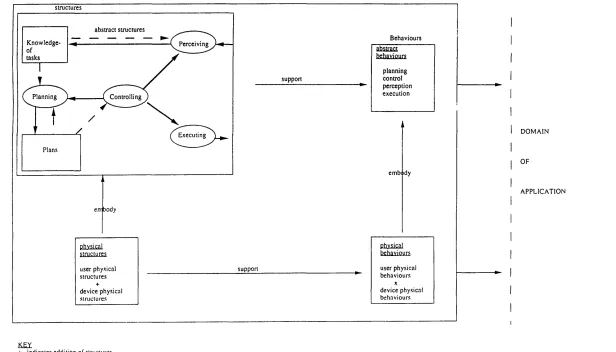
Figure 5.0: Relationship between ergonomic framework and MMAC
framework 122
Figure 5.1: Abstract structures of MMAC 127
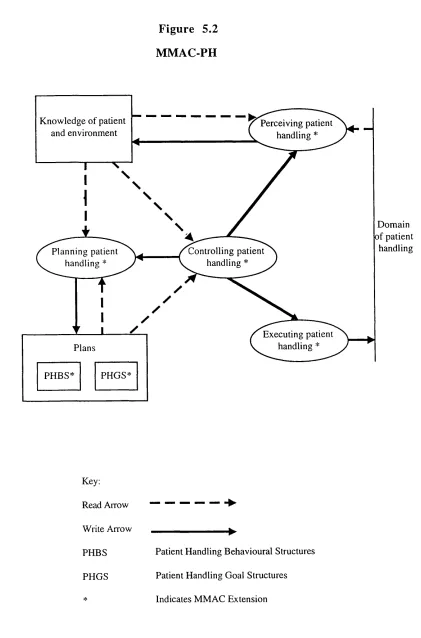
Figure 5.2: MMAC-PH model 137
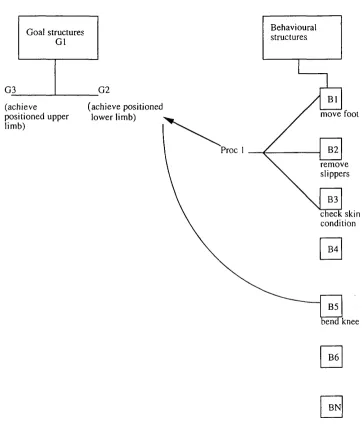
Figure 5.3: Relationship between behavioural structures and goal
LIST OF TABLES
p a g e
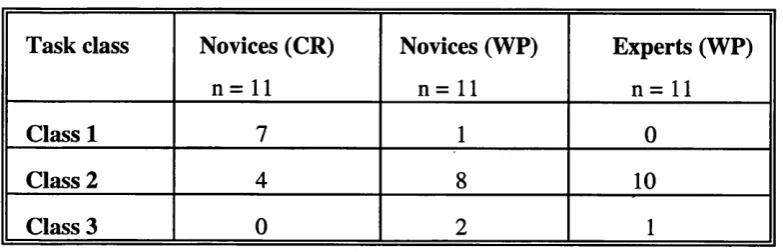
Table 3.0 Distribution by class of tasks analysed in novices
and experts 66
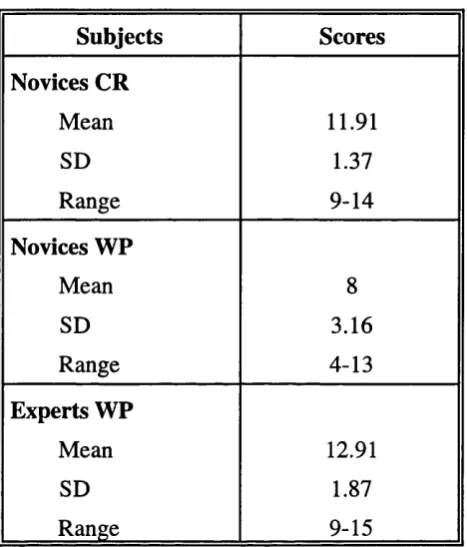
Table 3.1 Mean (sd) performance scores of novices in classroom and
workplace and of experts in workplace 69
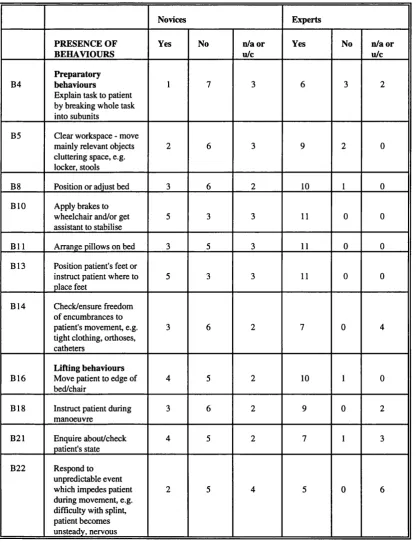
Table 3.2 Frequency of behaviours with marked differences
between novices and experts 72
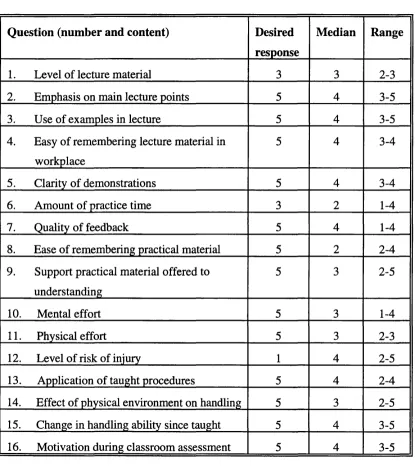
Table 3.3 Summary of questionnaire responses 74
Table 7.0 Mean (sd) pre and post-intervention performance scores (Study 2) 200
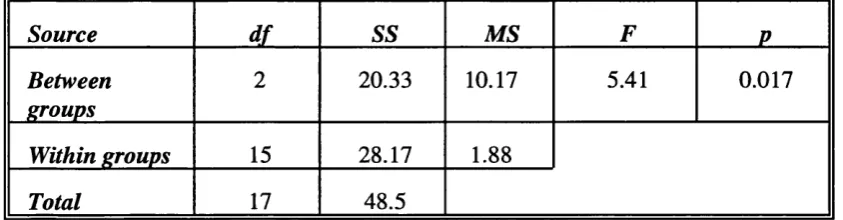
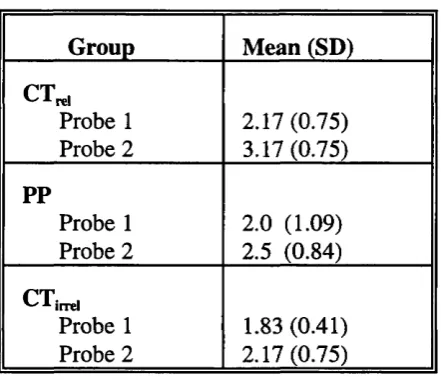
Table 7.1 ANOVA summary table based on difference in performance scores 200 Table 7.2 Mean (sd) responses to internal and external planning probes 202 Table 7.3 Number and category of protocol references indicating planning
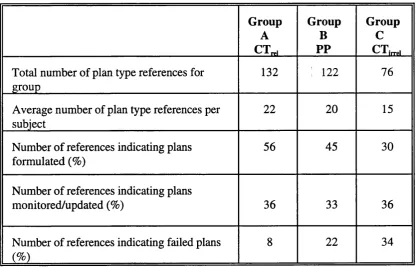
(Study 2)
203
Table 7.4 Responses to questions 205
Table 8.0 Mean (sd) pre and post-intervention performance scores (Study 3) 236
Table 8.1 Mean (sd) accuracy of self rating scores 238
ACKNOWLEDGMENTS
I begin by expressing my appreciation to Dr Andrew Life for his exemplary advice and unfailing patience and encouragement throughout. Special thanks also to Professor John Long for his invaluable advice and unstinting support across the years.
I am grateful to all those who took part in the studies, directly or indirectly, and particularly to those who made them possible and helped to organise them: to the physiotherapy staff of the participating clinical centres; to friends, colleagues and students who were involved in the experimental studies (particularly to Fiona Cowieson and Gill James); and to Dr A. Maclvelland for his patient statistical advice.
A considerable personal debt is owed to the late Dr Stephen Pheasant for his enthusiastic support and willingness to be involved throughout.
Chapter 1
INTRODUCTION
1.1 Chapter overview
This chapter begins to identify, by means of an example, the general problem which this thesis addresses. Hence, it notes that health care workers required to perform patient- handhng tasks are prone to work-related low back pain (LBP), despite undergoing training in patient-handling. It suggests that it is difficult to design effective training programmes for patient-handling tasks, and places this problem in the wider context of the problem of designing training programmes for physical tasks in general. The chapter considers possible ways of solving the problem and locates it within the context of ergonomics. The logic of the thesis is explained and the chapter concludes with an overview of how the thesis is organised in its address of the problem.
1.2 The specific problem
Chapter 1: Introduction
reported that about a third of nurses (n = 5184) sustained an injury at work related to moving and handling. According to a relatively recent survey published by the Royal College of Nursing, the National Health Service's estimated biU for replacing trained nurses who leave nursing due to back injury, and for lost nursing hours through sickness is £120 million (Simon, 1992). The consensus is that most of the work-related LBP in nurses is the result of, or is precipitated by, frequent manual hfting of patients (Dehhn, Hedenrud and Horal, 1976; Bell, Dalgity, Fennel and Aitken, 1979; Klaber-Moffett, Hughes and Griffiths, 1993). For a more recent review of the epidemiological data concerning LBP in nurses see Pheasant and Stubbs (1992).
Most of the published work relates to injuries sustained by nurses or carers and indicates that the risk of injury is related to the nature of the handling environment. For example, nurses working in intensive care, acute orthopaedic, community, and geriatric areas are more at risk than those in other clinical areas (Venning, Walter and Stitt, 1987; Knibbe and Friele, 1996), as are nurses required to perform a large amount of patient-handling (Smedley, Egger, Cooper and Coggon, 1995).
Chapter 1: Introduction
Physiotherapy is Handling' necessitates that therapists are trained to handle patients in a way which reduces the risk of injury to themselves and to the patient. A question raised is: 'Do physiotherapists experience work-related LBP, or are they protected by their training in patient-handling? '.
The response to this question currently rests on three relatively small-scale studies and one larger study, which have shown that physiotherapists do experience work-related LBP (Molumphy, Unger, Jensen and Lopopolo, 1985; Scholey and Hair, 1989; Chartered Society of Physiotherapy, 1994; van Doom, 1995). In a study of Californian physical therapists (Molumphy et al, 1985), 29% of therapists (n = 337) reported work-related LBP that persisted for at least three days. Initial episodes of back pain were most frequent among physical therapists under the age of 30. Of the initial episodes, 58% occurred during the four years after qualification, a similar finding to that reported in newly qualified nurses (Cust, Pearson and Mair, 1972; Stubbs et al, 1983a). Eighty-three percent of those who reported LBP were treating or handling a patient at the time of injury and, as in nurses, the incidence of LBP was highest in acute care and rehabilitation settings.
Chapter 1: Introduction
and the nature of work environments are similar in nurses and therapists. Thus, both groups are vulnerable when they first encounter a new environment or when they return having been absent for some time (Cust et al, 1972; Molumphy et al, 1985).
The most recent study of physiotherapists (n = 242) (van Doom, 1995) compared their experience of low back disabihty with that of dentists and veterinarians. Using data obtained from the records of claims made to a Dutch private insurer for low back disabihty, both veterinarians and physiotherapists were found to have a significantly greater risk of experiencing disability than dentists.
In a large (n = 1603) survey conducted by the Chartered Society of Physiotherapy (CSP, 1994), more than half of ah respondents experienced LBP and 40% of those under the age of 28 reported LBP. Sixty-seven percent of physiotherapists experienced their first incidence at work even though more than 85% of therapists had received training in patient-handhng, and 75% believed that they practised what they were taught. Although this was not a rigorously designed investigation, the findings suggest that work-related LBP in physiotherapists may be an even more substantial problem than was previously thought.
Chapter 1: Introduction
Management of Health and Safety at Work Regulations 1992, require employers to provide employees with health and safety information and training. This should be supplemented, as necessary, with more specific information and training in manual handling injury risks and prevention, as part of the steps to reduce risk required by Regulation 4(l)(b)(ii) of the Manual Handling Operations Regulations (1992). This regulation implements the European Directive 90/269/EEC on the manual handling of loads. The escalating number of legal cases (e.g. Fitzsimmons v Northumberland Health Authority, 1989) reflects the size of the problem, and the increasing financial costs to employers if they ignore their responsibility for providing adequate preventive measures, so far as is reasonably practicable.
Chapter 1: Introduction
transferring their training. This view is partially endorsed by McGuire and Dewar's (1993) finding that, '35% of respondents did not find the training adequate to meet their needs'. Yet, given the substantial financial costs associated with the provision of training and with its failure, it becomes clear that in a situation such as the National Health Service (NHS) in the mid 1990's, where financial resources are tightly constrained, training must be effective.
To summarise, a significant operational problem for the NHS is the ineffective design of patient-handling training programmes for health service workers. The problem is evidenced generally, by the poor outcome of such programmes with respect to their stated goal of supporting a set of worker behaviours designed to decrease injuries and the complaint of LBP. More specifically, the problem is evidenced by workers' poor compliance with taught procedures. Physiotherapists exemplify an occupational group in which this problem is manifested.
1.3 A General Problem - Training programmes for physical tasks
Chapter 1: Introduction
design of training programmes to support physical tasks difficult? As a first response to this question, it is necessary to recognise that human performance is supported by the mental and physical behaviours of a person (Dowell and Long, 1989). Mental behaviours are those concerned with the acquisition, storage and transformation of knowledge, and include, for example, planning and reasoning behaviours. The effect of training will depend on its impact on the mental and physical behaviours and upon their relationship as a subject performs a task. Therefore, designing manual handling training programmes to support transfer may involve either reconfiguring those components of the programme concerned with the physical aspects of the tasks, or those concerned with the mental aspects, or both.
Chapter 1: Introduction
This thesis is concerned with the specific problem that taught skills may not be transferred from the taught to the non-taught situation. Improving transfer may involve identifying and developing ways of supporting the interacting mental and physical behaviours trained, to produce enhanced performance. Thus, the general research problem to be addressed is that of supporting the design of more effective training for tasks which, at face value, might be classified as predominantly physical, for example, the manual handling of loads. This can be contrasted with supporting the design of more effective training for tasks which appear to be predominantly cognitive, for example, air-traffic control.
1.4 Identifying a solution
Training programmes in manual handling need to support performance in diverse situations which impose variable physical and psychological demands. As ergonomics is an applied discipline which aims to reduce any mismatch between a person's capabilities and the demands of the task, environment or organisation, it may provide the basis for a solution to the problem. However, other approaches to solving the problem exist and warrant discussion.
Chapter 1: Introduction
dirty' addition of extra physical practice. However, this is costly in terms of training time. There may also be costs associated with exposing the trainees to more risk of injury within the training environment. The central concern of manual handling training programmes is to reduce the likelihood of work-related LBP. Yet, given the high prevalence of LBP in the general population, it is possible that trainees may have some level of back pain making unwise the haphazard addition of potentially injurious movements, via the, 'quick and dirty' addition of physical practice.
Chapter 1: Introduction
Assuming that appropriately reliable predictors could be found and used satisfactorily, the selection approach may reduce the back injury rate. It may also identify individuals who are more physically able to use their training so that they comply with the taught procedures. However, this will only affect transfer to the extent that the problem arises from the physical incon^atibüity of a person with the task. More pragmatically, given the proportion of the population who may be required to care for and hence handle patients, reliance on selection seems unrealistic.
A third possible approach to the problem might be to change the nature of the organisational system within which work occurs. This could be effected in several ways. For example, improvements in staffing levels may facilitate the transfer of learned skills to the extent that lack of human resources contributes to the problem. Similarly, the provision and use of sufficient, appropriate, equipment may render training more effective when transfer is constrained by equipment-related concerns.
Chapter 1: Introduction
1.5 The Ergonomics context
In seeking a more global address to the problem posed:
How can more ejfective training program m es in manual handling be
designed?
the relationship of the problem to the discipline of ergonomics merits consideration.
The central concern of ergonomics is the inçrovement of a person's performance of a task by optimisation of the human machine system which is performing the work. It is this concern which distinguishes a training programme designed with respect to ergonomics from one designed with respect to other disciplines. Thus, ergonomics includes an orientation to the task and to performance, and, more specifically, to the problems of task performance generated by ineffective training programmes.
In seeking optimisation via a global systems-oriented view, ergonomics may recruit cross- disciplinary knowledge to the design of training programmes. Thus, it has the potential to bring physical and psychological approaches together in an explicit manner. This can be contrasted with the implicitness afforded by ad hoc practice.
Chapter 1: Introduction
knowledge, has a task and performance orientation, and offers a systems-based view of the problem. The combination of these is what makes the ergonomic approach to the problem presented in this thesis a novel one.
1.6 Logic of thesis
Given the choice of domain, the particular problem to be addressed is: how can ergonomics support the more effective design of training programmes in patient- handling? The thesis explores one answer to the question:
that ergonomics can contrihute by providing a model of a human performer
that can be used by course developers to increase the effectiveness of a
training programme's structure.
The use of an ergonomic approach in the present work is aimed at identifying an enhancement to a training programme. The enhancement aims to improve a person's ability to apply taught material in novel situations, by providing them with knowledge to support them in such situations. The work aims to acquire new knowledge concerned with the failure of trainees to implement learned skills in non-classroom contexts. This failure is assumed to be attributable to the fact that trainees have not acquired appropriate cognitive structures able to support the transfer of patient-handling skills from the classroom to the workplace.
Chapter 1: Introduction
the enhancement seeks to provide the knowledge required to support improved performance. Therefore, the key technical issue to be addressed is the conceptualisation, operationalisation, and application of an improved set of cognitive structures which is not currently available to trainees. The present work provides a framework for reasoning about the techniques which might be used to enhance training to support transfer. In so doing it aims to acquire and provide programme designers with knowledge, which, when added to the programme, supports the transfer of patient-handling skills to new contexts. The knowledge needs to have an adequate scope and appropriate level of description, in order to support the programme designer's reasoning about the specification of support to the behaviours required for the performance of patient-handling tasks.
Chapter 1: Introduction
1.7 Organisation of thesis
The question of how ergonomics can support the ineffective design of training programmes in patient-handling can be broken down into three subquestions:
1. How can the weaknesses of a current generic training programme be established in order to provide a basis for redesign?
2. How can the behaviours of people engaged in patient-handling be modelled?
3. How can the model be applied to help develop enhanced training programmes?
QUESTION 1 will be addressed in Chapters 2 and 3. Chapter 2 uses a review of the hterature to expose the problem, Chapter 3 describes an exploratory study aimed at confirming the existence and nature of the problem, and attempting to understand its causes in terms of training design.
Chapter 1: Introduction
QUESTION 3 is addressed in the remainder of the thesis. Chapter 6 describes the development of a solution to the problem. Chapter 7 describes an experiment to test the enhanced programme and hence the model and Chapter 8 describes a generalisation of the solution by considering the case of training for trainees with a recent experience of LBP. The thesis concludes with an assessment of the work in Chapter 9.
1.8 Summary
Chapter 2
THE PATIENT-HANDLING TRAINING PROBLEM
2.1 Chapter overview
This chapter extends the problem specification by introducing manual handling training and clarifying its relationship to training in patient-handling. The chapter begins with consideration of the scope of patient-handling. The review that follows aims to provide a context for the work presented in the remainder of the thesis. The intention is to provide the reader with only sufficient technical information to appreciate the role and function of patient-handling training as addressed in this thesis.
2.2 Patient-handling training
This section is essentially a thumbnail sketch of patient-handling training, considering what it is and the context of its use.
2.2.1 Manual Handling and Patient-Handling
Manual handling operations are defined according to The Manual Handling Operations Regulations (1992) as:
'any transporting or supporting of a load (including the hfting, putting down, pushing, pulling, carrying or moving thereof) by hand or by bodily force'
Chapter 2: The Patient-handling problem
posture. A subset of manual handling is the handling carried out in health workplaces. Much of this entails handling human beings as patients, i.e. patient-handling. Informally, patient-handling can be characterised as hfting a patient, moving a patient's body part, assisting a patient to walk, rolling a patient, transferring a patient from a bed to a chair or vice versa, positioning a patient, or assisting a patient to retain balance. Handhng tasks may involve the use of an aid(e) such as a hoist, or assistance provided by another person(s). Regarding the patient, an assisted manoeuvre is one in which the patient takes
h e r j
some of his own weight and contributes, somewhat, to the movement.
The dependency and mobility problems of patients will vary according to the specific health workplace. Carlson (1989) showed that health personnel are often required to move or to assist to move patients, whose weights range from 37kg to over 100kg. Furthermore, in patient-handling, the load is an awkward shape and patients can be combative, heavily contracted, uncooperative, and unpredictable. They may suddenly resist movement and/or grab personnel, throwing them off balance (Carlson, 1989). These considerations coexist with the spatial limitations imposed by many health workplaces.
Chapter 2: The Patient-handling problem
Since 'lifting' of loads is associated with the largest portion of all back injuries, training in 'safe' lifting procedures has been advocated and conducted for decades. The overall aim of most training programmes in manual handhng, is to reduce the incidence of work- related LBP, by helping workers to develop a set of behaviours that wih reduce the likelihood of back pain. Whereas many training programmes have focused on supporting the acquisition of patient-handling skills (Raistrick, 1981; Troup and Rauhala, 1987), other programmes have concentrated on improving a person's physical capacity to manually handle, by improving trunk strength and fitness (Genaidy, 1991). As the latter are less numerous, presumably because they are likely to be more costly to run, the definition of manual handling training programmes used in this work excludes programmes where the emphasis is on the strengthening of muscles or the enhancement of cardiovascular fitness.
Chapter 2: The Patient-handling problem
2.3 Content of training programmes
This section aims to briefly report the views and recommendations of arbitrarily defined experts representing a variety of perspectives on patient-handling training. The aim is to provide sufficient background information concerning recommended practice to provide a yardstick against which to judge the representativeness of the programme investigated in this thesis.
Troup and Edwards (1985) in their literature review on manual handling, summarise those aspects of the training curriculum that are 'generally agreed'. These include:
- the dangers of careless and unskilled handling methods - levers and the laws of motion
- anatomy of the vertebral column
- effects on the body of lifting, pulling, pushing - the components of skill:
preparation
keeping the load close to the body avoiding twisting and sideways bending use of legs and of body weight
proper hold and foot position straight back
Chapter 2: The Patient-handling problem
tasks likely to be undertaken, and reiterate the following principles:
- stop and think: planning the lift, removing obstructions and assessing the need for help
- place the feet: balanced and stable base - adopt a good posture
- get a firm grip
- lift smoothly, do not jerk - move the feet
- keep close to the load - put down, then adjust
The HSE also emphasises that training should incorporate practice and that the training conditions should be as similar as possible to the workplace conditions.
Chapter 2: The Patient-handling problem
- assessment of patient and task with respect to potential manual handling risk - manual holds
- manoeuvres for moving the patient in bed - assisting walking
- moving from lying to sitting; sitting to standing - transfers: bed to chair
- hoists
- legal requirements
The recommendations comprehensively address issues concerning the content of training programmes but are less explicit regarding ways of configuring such programmes.
2.4 The effectiveness of patient-handling training
A systematic search of the literature was undertaken. The MEDLINE, NIOSH, HSE, and PSYCHLITT electronic databases were searched for the ten years before December 1995 for articles in which patient-handling and training were major areas of focus. Other sources of articles included references of articles found by the aforementioned methods, a manual search of the printed ERGONOMICS ABSTRACTS from January 1985 to June
1996 and personal communication.
To be included in this part of the review, studies had to meet the following criteria:
Chapter 2: The Patient-handling problem
2.2.1, hence the exclusion of studies with a purely 'physical fitness' emphasis
- at least brief details of the essential nature of the training programme should be clearly reported
- the programme should be applicable to health care workers, (given the paucity
of data specifically concerning physiotherapists, restricting consideration to studies involving physiotherapists only was not feasible)
- the methodology should be clearly reported and replicable
- original study results had to be presented
- the article had to be published in English
Chapter 2: The Patient-handling problem
attempted integration of the findings will be presented in section 2.4.4.
2.4.1 Classroom-based studies
A considerable amount of published work exists concerning patient-handling training in nurses (Takala and Kukkonen, 1987; Wood, 1987; Videman, Rauhala, Lindstrom, Cedercreutz, Kamppi, Tola and Troup, 1989), and there are several epidemiological studies concerning LBP in physiotherapists, (Molumphy et al, 1985; Scholey and Hair, 1989; van Doom, 1995). However, the author has been unsuccessful in identifying any published work which specifically investigates the effectiveness of training in physiotherapists.
In a preliminary study, Ellis (1993) used a postal questionnaire to explore the reported characteristics of training programmes offered to undergraduate physiotherapists (n = 85) in eleven, randomly selected educational institutions. From the reported raw data the mean programme length can be calculated to be 3.68 hours (sd = 0.6), representing a combination of theory-based sessions (mean = 1.90+/-0.2 hours) and practical sessions (mean = 1.77+/-0.52 hours). However, neither the temporal organisation of the programmes, nor the teaching methods used are reported.
Chapter 2: The Patient-handling problem
biomechanics of the spine, and there is no mention in any of the categories of spinal anatomy. Nevertheless, all courses taught the classical principles of lifting, i.e. stance, grip and commands as stated by Hollis (1985) and Lloyd, Tarling, Troup and Wright (1987). Students' perceptions of the effectiveness of training were assessed on a five-point scale, and indicated that 71% felt that they had been taught only the, 'basic principles with room for inprovement'. The suggested improvements included reduced class size and increased practice time. Although, this was a small, exploratory study, given that 27% of the subjects had already experienced LBP related to patient-handling, it seems clear that methods of supporting more effective training warrant further consideration.
Troup and Rauhala (1987) assessed the patient-handling skills acquired by particularly trained (n = 106) nurses and by a control group (n = 93). The latter underwent 'traditional' training in patient-handling, whereas the former underwent a programme involving 20 hours of theory and practice in semester one, followed by five hours of predominantly revision material in the four subsequent semesters. The programme was specially designed and emphasised problem-solving skills in the context of biomechanics and ergonomics.
Chapter 2: The Patient-handling problem
0 - 'bad' - wrong technique, use of dead lift, twisted back or excessive load on spine
1 - 'poor' - imperfections at different stages, back unnecessarily loaded but probably not dangerously so
2 - 'good' - stages of lift well planned, back not excessively loaded, but timing did not work out satisfactorily
3 - 'excellent' - right technique and smooth correct lift
Although, on average, subjects in both groups scored less than half marks, the results showed that the experimental group scored significantly better than the group that had undergone 'traditional' training. However, it is difficult to comment on the validity of these findings in the absence of details concerning the nature of the traditional training. Furthermore, the authors acknowledge that the results may not reflect subjects' actual working practices. Subsequently, Videman, Nurminen, Cedercruetz, Asp, Rauhala and Troup (1986) followed up the untrained control group. They found that in the year following assessment of handling skill, 11 out of 86 nurses had a back injury and all these subjects had scored less than 0.5 when assessed.
Chapter 2: The Patient-handling problem
Videorecordings were made as each subject performed two transfers on a 'model' patient. Performance was assessed using a scale similar to that used in the previous study, but unlike in the previous study, the 0-3 scale had seven points, incremented at 0.5 intervals. Presumably, this allowed more sensitive data collection, although the vahdity and reliability of this assessment are not clearly reported. The results indicated relatively poor patient-handling skills in both the trained (mean =1.31 +/- 0.77), and the control (mean = 0.50 +/-0.55) groups. The trained group's scores were, however, significantly higher than those of the control group, indicating that the lifting skills can be acquired. However, the only statistical difference between the groups was in the incidence of acute back pain occurring in the workplace which was significantly lower in the skilled nurses. There was no difference between the groups for other forms of back pain. Furthermore, when data relating to the incidence of acute pain is pooled with that relating to other forms of pain, no significant between-group difference is found. Videman et al (1989) conclude that suitable training may be rendered ineffective by ergonomically unsatisfactory environments. What remains uncertain is the extent to which the ineffectiveness of training can be attributed to such environments.
2.4.2 Field studies
Chapter 2: The Patient-handling problem
Meanwhile, Wright surveyed the need for training in patient-handling and developed a programme for another DHA of comparable size (Wright, 1981a, b). Following an introductory course held over two days, 38 trainers held a series of short training sessions for small groups over a period of six months. A substantial initial fall in the back injury rate (Daws, 1981) was not sustained the following year. As Troup and Edwards (1985) point out, these findings may have been due to an early Hawthorne effect or else to a change in standards for reporting injuries. Whatever the explanation the findings underline the need for training effectiveness to be considered via controlled epidemiological studies.
Prior to conducting a field study involving 32 orderlies working in a geriatric hospital, St Vincent and Tellier (1989) formed the view that, 'this (training) preventive approach would probably be effective if it could be improved'. The study aimed to identify the main deficiencies of training programmes by investigating whether the methods taught were used and characterising the deviations from the taught methods. It is claimed that the twelve hours of theoretical and practical training represented the teaching of the basic principles characterising the, 'bent knees, straight back' profile.
Chapter 2: The Patient-handling problem
agreement), inter-observer reliability (89% agreement) and accuracy (91% agreement).
The results showed that the handling principles taught were infrequently used in the workplace, and that this was especially so in horizontal as contrasted with vertical handling operations. St Vincent and Tellier (1989) defined the assessed criteria in absolute terms, rather than in relation to what was possible in the particular circumstances. Hence, a possible explanation for the results obtained is that the physical constraints of the environment prevented the principles taught fi-om being applied. A similar explanation can be applied to other studies that have found that taught principles are seldom used (Hale and Mason, 1986; Wachs and Parker, 1987). The implication is that clearer assessment is required of the effectiveness of training as contrasted with assessment of the use of taught principles per se. There are several ways of approaching this. For example, assessments could be made of students' performances within ergonomically optimised environments. An alternative approach would be to desist from separating subjects' performances from the environment in which they occur. This might lead to assessment based on subjects' use of taught principles making allowance for the constraints present.
Chapter 2: The Patient-handling problem
subjects failed to either use mechanical aids when available, or to adopt an acceptable working posture, leading to the report that:
'bent and twisted trunk positions were recorded.... often in situations where the observer could see no need to work in such an awkward position'
A question raised by St Vincent and Telher's (1989) study and that of Takala and Kukkonnen (1987) is whether the lack of use of taught principles in the workplace represents a failure in respect of retention of the training provided, or else suggests that the original training was, for whatever reason, not adequately acquired.
The work of Wood (1987) partly addresses this question. He evaluated a back injury prevention programme in a group of geriatric hospitals using a before-after comparison and time-series analysis. The back programme centred on training by a physiotherapist. It included individual feedback being given to nursing personnel after 30 minute observations of patient-handling activities. The programme was instituted on two units of a single hospital with a third unit serving as a control.
Chapter 2: The Patient-handling problem
'Generic rules of lifting have not been viewed as being helpful in our
hospital situation, staff members would leave a classroom demonstration and say, "Oh sure that technique works when the model is a helpful nurse aide, but what about Mr Smith? He's big, uncooperative and aggressive'
Subsequently, subjects followed their normal working routine and were shadowed for 30 minutes by a physiotherapist who provided feedback with respect to the subject's handling skill.
The main dependent variable was the number of wage loss claims filed for back injuries arising from patient-handling activities. The results showed no quantitative differences between the groups. However, Wood (1987) reports that staff feedback in terms of course evaluation forms and subjects' comments were more positive. It is unfortunate that more detailed qualitative assessment was not made, forcing the conclusion that individual instruction and feedback on lifting technique is not beneficial.
Chapter 2: The Patient-handling problem
In 1976, in an interview-based study to determine the incidence of spinal symptoms in a population of nursing aides, Dehlin et al found no effect on the incidence of LBP when nursing aides received repeated instruction emphasising the, 'straight back, bent knees' principles of lifting. Subsequently, in a quasi-experimental study, they compared the effect on back pain of three interventions applied to 45 nursing auxiliaries with a history of back problems (Dehlin, Berg, Andersson, and Grimby, 1981). Rather than being randomly allocated to the experimental condition, volunteer subjects were assigned to one of three groups according to the building in which they worked, as follows:
a) aerobic exercise - (n=13): aimed at increasing subjects' physical fitness
b) ergonomic counselling - entailing instruction in lifting and ergonomic principles (n=14): aimed at making subjects, 'more aware of the importance of using the most optimal lifting techniques in different lifting situations'
c) control group - with no training - (n=15)
Chapter 2: The Patient-handling problem
'patient lift'. Although precisely what is meant by the term 'patient lift' is unclear, the authors failed to find greater evidence of its use in Group b).
In another observational study, Wachs and Parker (1987) distinguished health-related behaviour (lifting behaviour) from health outcome (pain and injury). They devised a study premised on the notion that describing nurses' actual lifting behaviour would provide evidence for specific preventive strategies. Volunteer female nurses (n = 178) formed part of a convenience sample of four Midwestern community hospitals. An observational checklist comprising 13 dichotomous items was divided into two subscales. The first eight-item scale allowed recording of nurses' postures and movements while the second five-item scale allowed recording of environmental factors. In terms of consistency of the scale items Wachs and Parker (1987) found that the environmental scale was markedly less internally consistent than the posture and movements scale. They suggested that this reflected the fact that in environmental terms one behaviour such as raising the bed was not related to another such as lowering the siderails. Conversely, they suggested that the higher internal consistency for postural items indicated the existence of relationships between the scale items.
Chapter 2: The Patient-handling problem
Parker (1987) conclude by emphasising the need for research to address the primary question of whether students understand what they are taught, as reflected in their cognitive and motor abilities at the end of the training period.
Using a pre and post-test design, Rogers (1987) began to address the question raised by Wachs and Parker (1987). Rogers conducted a field study to evaluate the effect of an experiential lifting programme on subjects' knowledge of lifting procedures and those procedures actually used, in a sample (n = 59) of trained and student nursing staff. Data collection was via interviews and ward-based observations. Rogers (1987) identified a discrepancy between student nurses' knowledge and practice. Although 33-47% of those interviewed mentioned a 'safe' lift as being easier to do and best for the patient, only four out o f 66 lifts used by the same subject were observed as being safe. In response to a question concerning which lift would be 'best' for the patient, an equal percentage (31%) named the shoulder lift and an unsafe method of lifting as safest. Rogers does not report the unsafe method of hfting. Even following the experimental lifting programme there were no significant differences in the knowledge of lifts between the experimental and control groups, leading to the inevitable conclusion that training was ineffective.
Chapter 2: The Patient-handling problem
they most commonly used.
Many authors believe that effective training may be only one component of a back injury prevention programme and have advocated the introduction of an approach based on the redesign of the working environment (Stubbs et al, 1983b; Lloyd et al, 1987; Venning, 1988). Hence, although it is debatable whether the study by IGarg and Owen (1992)i should be considered here as the training programme was concerned with supporting nursing assistants' use of ergonomically inproved hoists, walking belts and shower chairs, it will be considered for two reasons. Firstly, the principles underlying use of the improved aids are, inevitably, similar to those applicable to conventional training. Secondly, consideration of the effectiveness of training applied within a redesigned workspace offers some insight into the extent to which the effectiveness of training can be related to the redesign of the environment.
Garg and Owen (1992) used a pre and post-intervention study to investigate the effectiveness of introducing redesigned hoists walking belts and shower chairs to volunteer nursing assistants (n = 57). Subjects received at least four hours training which included video and practice elements. Direct observations provided data on subjects' use of the aids to indicate their 'acceptability', i.e. subjects' compliance in using them. Other data collected were ratings of perceived exertion and reports of injury.
Chapter 2: The Patient-handling problem
less than a year these data should be treated with some caution as similarly positive findings by others (Daws, 1981) have, on longer follow-up, proved more disappointing. The results also indicated high overall 'acceptability' of the ergonomic improvements for patient transfer tasks, but low acceptability for non-transfer tasks in which the subjects had not been trained to use the improvements. In the absence of a control group it is not possible to differentiate the effectiveness of the training from the effects of the improvements themselves. An interesting observation, however, was that the subjects tended to lift the patient when using the walking belt, and this lifting action appeared to be related to most of the injuries associated with use of the walking belt. This led the authors to state that, 'to modify this ingrained behaviour would, it is believed, require extensive education and training of nursing assistants in new skills' (Garg and Owen,
1992).
2.4.3 Epidemiological studies
Many researchers have undertaken epidemiological studies to investigate work-related LBP in health workers and several of these have explored the effectiveness of training with respect to the subsequent risk of experiencing back pain (Dehlin et al, 1976; Stubbs, Buckle, Hudson and Rivers, 1983b; Scholey and Hair, 1989).
Chapter 2: The Patient-handling problem
pain among nurses and the extent of their prior training in lifting techniques, led to the conclusion that there was no evidence to indicate that the amount of training, be it classroom or workplace-based, was relevant to the point prevalence of LBP. Furthermore, in an earlier study conducted by Stubbs' team (Stubbs, Hudson, Rivers, and Worringham, 1980), 32% of nurse respondents had received less than three hours instruction in patient- handling, leading the authors to suggest that questions need to be addressed concerning the design of training to support the abihty of students to acquire andj retain patient- handling skills.
Similarly, a prospective multicentre cohort study by Venning et al (1987), which involved observation of 4306 nurses, from ten hospitals, for twelve months, suggested that prior training in back care and lifting was not protective during a one year follow-up interval.
Chapter 2: The Patient-handling problem
be consistent with the finding that older (> 45 years) therapists reported less satisfaction (43% satisfied compared to 78% in younger group) with their training and suggested a need for more clinically-based training. Clearly, further investigation is required to assess the adequacy of the training received by novice therapists and their acquisition and retention of the training material.
2.4.4 Summary
It is not difficult to find ways of criticising many of these studies particularly given the deficiencies in experimental design and the inadequate control of training. However, there is a certain consensus among the findings, although the absence of a single coherent picture is not surprising given the variety of approaches taken.
There is considerable evidence that the design of patient-handling training programmes is informal and ad hoc rather than based on a formal analysis of the problem. Therefore, it is hardly surprising, that despite the plethora of training programmes that exist in patient-handling, few have unequivocally demonstrated effectiveness, and fewer still a rational development of a training programme. As Kroemer (1992) points out, fundamental questions concerning which method of training is most effective and how much knowledge is needed remain unanswered.
Chapter 2: The Patient-handling problem
behaviour, but few on both. A second consequence is that whereas many programmes have assessed back pain, to the neglect of whether or not practice is based on what is taught, others have not always addressed patient-handling in the context of LBP.
2.5 Conclusions
In conclusion, despite increasing legislation, the increasing costs to society of LBP and a reasonably large number of research efforts, the following comment from Stubbs
et al (1983b) remains as relevant today as when it was issued
'this interest (in manual handling training) has however usually been more conjectural than scientific' and, '...there is no scientific evidence that it is, in fact, effective in reducing the frequency or severity of back pain'
Chapter 3
STUDY 1: AN OBSERVATIONAL STUDY OF TRANSFER OF
TRAINING IN PATIENT-HANDLING
3.1 Chapter overview
This chapter reports an exploratory study which compares novices' performance of patient-handling tasks in the taught, classroom environment to their performance of patient-handling tasks in a workplace environment. Novices' performances in the workplace are compared with those of experts. The investigation reported confirms the inadequacy of training in patient-handling identified in the literature, and considers the problem in relation to the design of training. Details of the methods, results and preliminary conclusions appear in this chapter. The outcome of the study, in the sense of the details of the specific model used as an analytic tool and developed from it, appears in Chapter 5.
3.2 Background to Study 1
3.2.1 Introduction
Chapter 3: Study 1
and in a different, non-taught context, i.e. a workplace setting (WP). Students' performances in the workplace were compared to those of experts to identify potential areas of improvement.
3.2.2 Aims of study
The specific aims of the study were:
1. To determine whether novices' performances of patient-handling tasks in the classroom setting differ from their performances in the workplace, and from the performances of experts.
2. To identify differences between the behaviours of novices and experts in the workplace.
3. To identify likely reasons for any differences between novices' performances in the two situations,
4. To suggest the preliminary requirements for a model which would allow the problem to be related to a possible solution.
Chapter 3: Study 1
Given the potential diversity of the workplace situation, if assessment was confined merely to how well novices performed, valuable aspects of the problem might not have been captured. Thus, to try to obtain as complete a picture as possible, the way in which novices approached the task, i.e. their behaviour(s) was also assessed.
It was necessary to assess whether novice performance in the workplace could be improved. In other words, was there a gap between the 'actual' performance of novices and 'target' performance, and might this therefore, be reduced. To address this question, the performances and behaviours of experts in the workplace were compared to those of novices. In defining the experts it was assumed that people with substantial practical experience would have achieved a more desirable level of performance than subjects without such experience. It was possible, however, that experts would have developed 'bad habits' and could demonstrate inferior performance, therefore the validity of the assumption made was partly assessed by the study.
3.2.3 The training progranune
Chapter 3: Study 1
how to transfer a patient safely and effectively from a wheelchair to a bed. If the training programme is inadequate, there may be a deficiency in the lecture knowledge, the practical knowledge, or in the relationship between these knowledge types.
Presumably, when both lecture knowledge and practical knowledge are adequately acquired and remembered, they will support adequate classroom behaviours and, in turn, adequate workplace behaviours. Conversely, when neither lecture knowledge, nor practical knowledge are adequate, little support will be provided for either classroom or workplace behaviours. Between these extremes intermediate scenarios may exist in which either the lecture knowledge and/or the practical knowledge are inadequate, leading to inadequate classroom and/or workplace performance. For example, the lecture knowledge may be adequate but the practical knowledge may not support workplace lifting. There are several possible reasons for this. For example, the practical knowledge may be acquired but forgotten, or it may contain omissions so that it supports the lifting and handling of people, but not of objects.
The training programme selected to investigate the research problem was that used to train physiotherapy students at King's College, University of London. It was chosen on the basis of being reasonably representative of expert opinion (Troup and Edwards, 1985) and of current training practice in British undergraduate physiotherapy programmes (Ellis, 1993).
Chapter 3: Study 1
based mainly on the teaching of fundamental principles applicable to all handling tasks, and reflected in the, 'straight back, bent knees' profile previously described (see section 2.3). The instructional methods included lectures, video, handouts, demonstrations, and supervised practice. The programme consisted of seven hours of training across an academic year. One hour of theoretical instruction was followed by three, one hour sessions involving demonstration and practice of patient-handling techniques. The programme included use of a demonstration video. The college based teaching was followed by a hospital based workplace assignment of approximately three hours. This assignment required students to observe clinicians handling patients and to complete a written exercise based on their observational experience (see Appendix 1 for full training programme).
The basis of most forms of training is to give students an opportunity to acquire and practice knowledge in one situation which can then be used in another situation. Only if students' performances in the workplace were markedly worse than those in the classroom would a problem exist. In taught students, the aim is for their performance of patient- handling tasks to reflect adherence to commonly applied rules. These rules reflect ways of reducing the stresses placed on the students' spines and hence, reduce their risk of injury. Clearly, implementation of the taught rules may be influenced by environmental or task constraints.
Chapter 3: Study 1
situation. Target performance can be contrasted with 'ideal' performance which, theoretically, would entail con^lete adherence to the rules, but which in practice may not be achievable. This definition of 'target' performance permits legitimate comparison of patient-handling performances in different circumstances. The closer 'actual', i.e. workplace, performance is to 'target' performance, the smaller the problem and conversely.
It is unlikely that students would achieve 'target' performance, and anecdotal evidence suggests that even experts are unlikely to always meet the criterion. However, the distinction of 'actual' versus 'target' performance and use of the notion of the 'target' standard, facilitates assessment of the level of deficiency in a student's performance. Consequently, reduction in that deficiency can be aimed for. The overall aim of training programmes is to support behaviours which reduce the likelihood of patient-handhng- related back pain or injury. Within this remit, aiming for a reduced deficiency, even if in absolute terms performance is not 'good', seems acceptable, as subjects may be placed into a situation with reduced potential for injury.
3.2.4 Requirements of data collection methods
Chapter 3: Study 1
(for example, instructing a patient), thus indicating a requirement for the use of one or more reasonably flexible, open-ended data collection method(s), likely to capture as many behaviours as possible.
Clearly, only a subset of all the physical behaviours occurring could feasibly be considered with respect to performance. Although some controversy exists concerning the, 'correct lifting technique' (Pamianpour et al 1987, Venning, 1988; Garg, 1990), as there is a reasonable degree of agreement on the basic principles which should be taught, consideration of a subset was deemed to be adequate for the purposes of an exploratory study. The physical behaviours assessed were chosen for two reasons. First, because of their importance in terms of established, desired patient-handling practice (Troup and Edwards, 1985). Second, on the basis of being principles which are frequently required to be applied when carrying out patient-handling manoeuvres. The following behaviours formed the basis of the performance assessment:
1. Maintaining the load close to the body 2. Keeping the back straight
3. Avoiding jerkiness - handling smoothly 4. Avoiding unnecessary twisting
5. Ensuring an adequate grip
3.2.4.1 The selected data collection and analysis methods
Chapter 3: Study 1
the difficulty of controlling for any observer bias, and the absence of the facility to review the data led to sole use of such methods being rejected in favour of the combined use of observation and videorecordings for data collection. Similarly, it was decided that interviews would facilitate the collection of much richer data than self-administered questionnaires. This richness was desirable in view of the exploratory purpose of the study. Semi-structured interviews were chosen because, given the difficulties associated with verbalising knowledge concerning how to do something (procedural knowledge), it was felt that subjects would find it easier to respond accurately if they were prompted.
3.Z.4.2 Data collection - developing a questionnaire format for the interviews
A questionnaire was developed to facilitate exploration of the relative adequacy of the lecture and practical parts of the training programme, and to provide a basis for understanding any differences in classroom and workplace performance. The content and wording of the questions was tested and improved in informal trials with three people trained in patient-handling. This resulted in the addition of some questions, for example. Question 12 concerned with assessment of an individual's ability to assess their own level of risk. Subjects were also asked whether they thought that they, or other people, consistently conçlied with training in patient-handhng and if not, what they perceived to be the reasons for non-compliance.
Chapter 3: Study 1
questionnaire appears in Appendix 1.
3.2.4.3 Data analysis - performance checklist
Analytic options range from qualitative assessments of performance to quantitative analyses of movement parameters. Quantitative analysis was rejected because, in a complex environment where the emphasis was on assessment of performance relative to what the physical environment allowed, it was impractical to collect data from two unobscured views simultaneously. Furthermore, substantial error was likely to be incurred due to subjects' clothing. Had adequate camera positioning been possible, the influence of two carefully positioned cameras on subjects' performances is likely to have been considerable, leading to loss of ecological validity.
Thus, for analytic purposes, a performance checklist was developed. It was based on that previously used by Chaffin, Gallay, Wooley and Kuciemba (1986) in a study of warehousemen. However, it incorporated descriptive four-point scales not dissimilar to the three-point scales used by St Vincent and TeUier (1989) in their study of patient- handling. The decision to use a four-point scale rather than a three or five-point scale was an arbitrary one aimed at increasing the sensitivity of the checklist without sacrificing reliabihty.
Chapter 3: Study 1
the application of a particular technique may be advantageous from a postural point of view, but may impede the smoothness with which handling occurs, rendering compromise necessary (St Vincent, Lortie, and Tellier, 1987). Similar observations have been made in other manual handling contexts leading to the conclusion that the biomechanically based recommendations for 'correct lifting' are rarely practically applicable (Kuorinka, Lortie, and Gautreau, 1994). For these reasons and because the aim was to identify compliance with taught procedures, the criteria in the checklist were all defined in a relative sense using the qualifier 'as possible'. Thus criterion 1 became: 'Did the subject get as close to the load as possible?'. The checklist assessed the five manual handling behaviours identified previously:
1. Did the subject get as close to the load as possible? 2. Did the subject keep the back as straight as possible? 3. Did the subject lift/handle as smoothly as possible?
4. Did the subject avoid unnecessary twisting as far as possible? 5. Did the subject ensure adequate grip as far as possible?
When the checklist was used to assess a subject's performance each criterion was scored 0, 1, 2, or 3. An overall performance score between 0 and a maximum of 15 could be achieved. The full checklist appears in Appendix 1.
3.2.4.4 Checklist reliability and validity
Chapter 3: Study 1
predicts some relationship between the criteria, for example if the subject is as close as possible to the load, then the trunk should be able to be held reasonably straight. No attempt was made to formally validate the checklist, for example, by perhaps using the checklist alongside quantitative assessments of subjects' performances under ideal conditions. Such quantitative assessments would be difficult to make and, furthermore, the comparison of judgments made by two raters provided a crude indication of its validity. This was deemed adequate for the purposes of the present work.
3.3 STUDY 1
3.3.1 Introduction
This study is not strictly experimental in the conventional laboratory sense since it lacks the requisite control conditions. However, given its status as a study to explore the existence and nature of the problem in as naturalistic a manner as possible, the use of a novice group of subjects in the classroom, and workplace settings, and of an expert group in the workplace setting, provides some level of control over the variable of lifters' knowledge. A between groups comparison of novices' and experts' workplace performances was possible, and a within groups comparison of novices' classroom and workplace performances.
3.3.2 Hypotheses
Chapter 3: Study 1
workplace. On commonsense grounds, it was presumed that novices would perform better in the classroom, the implicit assumption being that they would perform better on 'more familiar' tasks, which were obviously similar to those learnt in the training programme. However, it was possible that novices would perform better or at least similarly in the workplace if, for example, they were more motivated in the latter situation.
It was also postulated that experts' performances in the workplace would be significantly better than those of novices, on the premise that practical experience is likely to lead to more skilful performance. This assumption was the basis of using the experts as a group against which to con^are the novices. The use of experts for comparison had two further purposes. First, it facilitated more detailed consideration of the sensitivity of the assessment procedures. Secondly, it provided a means of obtaining insight into areas of deficit which might be amenable to improvement by redesign of the training programme.
3.3.3 Subjects
3.3.3.1 Novices
Eleven undergraduate physiotherapy students (ages 18-25; maie=2, femaie=9) who were undertaking
Chapter 3: Study 1
Subjects were asked whether they had any history of low back pain, as such subjects might reasonably be expected to be more responsive or, at least, to respond differently to training in patient-handling. All subjects had undergone routine health clearance prior to the start of their undergraduate programme. No subject had received any previous formal exposure to patient-handling training prior to undertaking the training programme.
3.3.3.2 Experts
Eleven experts were recruited, by personal approach, from three London hospitals^: Experts were defined as:
a) physiotherapists with more than 3 years, full time, post-quahfication clinical experience
b) physiotherapists who had held responsibility for teaching patient-handling to other health care workers
All the experts were currently working as senior physiotherapists in the field of neurological rehabilitation where they were required to perform substantial amounts of patient-handhng daily.
3.3.4 Procedure
3.3.4.1 Specific Training Programme (STP)
The specific training programme was that previously described. The fuU programme
Chapter 3: Study 1
appears in Appendix 1.
3.3.4.2 Classroom assessment of novices
Novices were videorecorded whilst performing a patient-handling task on a student 'model' in the classroom setting following completion of the training programme. The assessment required each subject to answer questions concerning patient-handling and to demonstrate at least one handling manoeuvre on a 'model' patient with a particular 'medical condition'. Subjects wore standard clothing, i.e. physiotherapy uniform. The classroom environment permitted application of the principles of patient-handling as taught, for example, there were no space constraints and the bed height was readily adjustable.