655
Analysis Of The Interoperability Of Intelligent
Tutoring Systems For Programming: An Aspect
Of Programming Exercises
Bui Trong HieuAbstract: University introductory programming courses are part of the curricula of many engineering and sciences programs. These courses provide a set of programming exercises for students. However, for many novice students, it is very difficult to learn. In particular, these students often get stuck and frustrated when attempting to solve programming exercises. One way to assist beginning programmers to overcome difficulties in learning to program is to use intelligent tutoring systems (ITSs) for programming, which can provide students with personalized hints of students’ solving process in programming exercises. Many ITSs for programming that offer programming exercises provide automated feedback on student programs. In spite of the proven effectiveness of ITSs for, not many ITSs for programming are utilized in real classrooms. Because of interoperability issues, ITSs for programming are difficult to build in current educational platforms without additional work. This disadvantage is significant because ITSs for programming require considerable time and resources for their implementation. In this research work, the paper presents both a soft and technical interoperability of programming exercises. With regard to the soft interoperability of programming exercises, the paper discusses on a classification of programming exercises. With regard to the technical interoperability of programming exercises, this paper presents a framework that addresses the content and communication interoperability issues typically found in the domain of programming.
Index Terms: Classification, Intelligent Tutoring Systems, Interoperability, Programming Assignments, Programming Exercises Programming Tutors.
————————————————————
1
I
NTRODUCTIONPROgramming skills are becoming a core competency for almost every profession and thus, computer science education is being integrated in the curriculum for almost every study subject [1]. However, many students find great difficulty with the learning of programming and it becomes a barrier to their further studies of computer science and other disciplines. This difficulty is in large part due to students’ inabilities to solve their programming exercises, and this may discourage them to progress further when help can be obtained immediately. In order to address this problem, various approaches have been proposed to help students learn solving programming exercises. Traditionally, face-to-face and one-to-one human tutoring had been the best option for tutor. However, human tutors are not always available and that’s why computer based tutoring is developed to provide as an alternative support. Intelligent Tutoring System (ITS) is an example of computer-based tutoring which is developed emulating the human tutor [2]. According to VanLehn [3], an Intelligent Tutoring System that is designed with the ability to understand the coding to a low level of granularity in its advice can be just as effective as human tutor. ITSs for programming are useful particularly for first year computer science students and non-major students [4]. Many ITSs for programming that offer programming exercises provide automated feedback on student solutions. The aim of this paper is to 1) discuss on a classification of programming exercises and 2) present a framework that addresses the content and communication interoperability issues typically found in the domain of programming. The benefits of this classification are twofold. First, designers of ITSs for programming can choose or develop an appropriate modeling technique for a specific class of programming exercises.
Second, this classification serves researchers of the ITSs for programming community with a communication means to talk about types of programming exercises more precisely when they intend to exchange their programming exercises, e.g. for evaluation purposes. Based on this framework a network of ITSs for programming and services was created and deployed for the computer programming domain. This framework instance comprises several systems and services and their integration poses interoperability issues on two levels: content and communication. Content issues are tacked with a standard format to describe programming exercises as learning objects. Communication is achieved with the extension of existing specifications for the interoperation with several systems typically found in an e-learning environment such as ITSs for programming, learning objects repositories and online judge systems. Some of these systems were created from scratch and others were adapted to support the new content and communication specifications.
2
BACKGROUND
2.1 Intelligent Tutoring Systems
As noted above, face-to-face and one-to-one human tutoring is the best tutoring field. However, it is extremely expensive in terms of both physical and human resources. ITSs are a natural solution that can be used to address this problem, as they are developed to give personalized feedback and help to students who are working on problems. The fact the ITSs are formed by three fields: Computer Science, Psychology, and Education, as illustrated in Fig. 1, in which, (i) Artificial Intelligence (AI) addresses how to reason about intelligence and thus learning, (ii) Psychology (Cognitive Science) addresses how people think and learn, and (iii) Education focuses on how to best support teaching/learning [5].
_________________________________
Fig. 1. The development of an Intelligent Tutoring System using methods and instruments from three different domains.
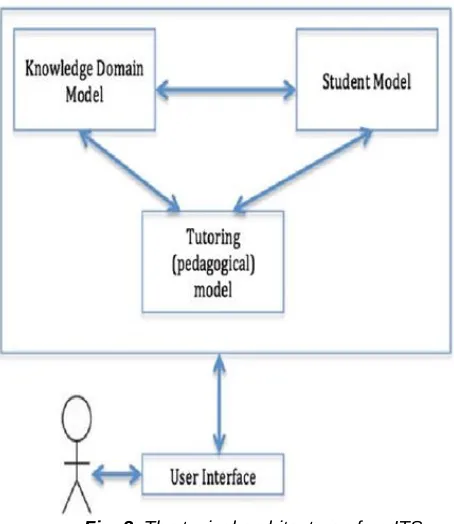
According to Lee & Chen [6], an Intelligent Tutoring System (ITS) is a computer system that provides immediate and customized instruction or feedback to learners. The classical architecture of an Intelligent Tutoring System includes the following four components (Fig. 2) [7], [8], [9], [10], [11].
Fig. 2. The typical architecture of an ITS.
This traditional view of ITSs is still very accepted by the ITS community. However, recent studies stress functionality over structure [12], [13], [14], [15], [16], describing ITSs as having two main loops [12]: 1) the inner loop and 2) the outer loop (Fig. 3) [13]. The inner loop is responsible for providing
personalized feedback, hints, and direct problem solving assistance to students. The inner loop also assesses students’ competence and registers it on the student model. Using the information that is obtained about the student, the outer loop performs task selection. until tutoring is complete, repeat { tutor selects a task; until task is complete, repeat { student executes a step; tutor may present a hint; tutor updates the student model; tutor presents feedback on the step; }} Fig. 3. ITS Loops. This research work is inspired from VanLehn’s [12] two loop characterization of tutoring systems. The main task of the outer loop is to select an appropriate programming exercise for the student. The inner loop is responsible for giving hints on student steps. Here, this research work focus on the inner loop. This work does not support an outer loop which can create an overall student model and intelligently choose which programming exercises to show to the student. Nesbit and colleagues [17], in their paper, “Work in Progress: Intelligent Tutoring Systems in Computer Science and Software Engineering Education”, research on ITSs has accelerated over the last decade, and scholarly interest in such systems has never been greater. ITS have been developed for a wide range of subject domains (e.g., mathematics, physics, biology, medicine, reading, languages, philosophy, information technology and computer science) and for students in primary, secondary and postsecondary levels of education. Founded on several decades of research on human cognition and intelligence, Intelligent Tutoring System is now a fast growing area in academia and industry. We now turn our attention to some cutting-edge research on Intelligent Tutoring System in a specific learning domain: programming [18].
2.2 Intelligent Tutoring Systems for Programming
In the past four decades, a variety of ITSs for programming have been built to provide tutoring services for programming problems. When it comes to functionalities, in general, ITSs for programming can be classified into five types: 1) curriculum sequencing, which constructs for each student an individual learning path, including individual selection of topics to learn, examples, and exercises; 2) intelligent analysis of student’s solutions, which focuses more on debugging and error diagnosis for complete student’s program; 3) program debugging support, which helps students learn to analyze programs; 4) interactive code-writing problem solving support, which provides students with personalized assistance in each code-writing problem solving step and 5) example based code-writing problem solving support which suggests the most relevant cases or examples to students. In the context of ITSs for programming, for brevity, this paper will use the term “ITSs for code-writing” to describe to the ITSs for programming for interactive code-writing problem solving support.
3. RELATED WORK
3.1 Classification of Programming Exercises
657 Knowledge, Comprehension, Application, Analysis, Synthesis
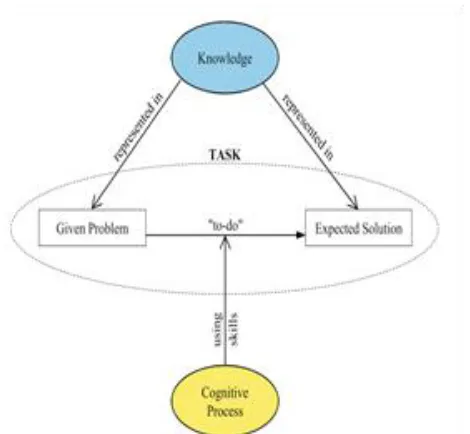
and Evaluation [19]. According to Santos et al. [19], the SOLO (Structure of the Observed Learning Outcome) taxonomy makes no reference to the learner performance cognitive characteristics or to the affective dimension. It focuses on the content of the learner’s response to what is being assessed. It aims to identify the nature of that content and the structural relationships within it. The content could be designed to assess knowledge, cognitive skills or underlying values. The taxonomy can be used to establish the expected relationships between these different types of content. Le et al. [20] posed a classification of the degree of ill-definedness of educational problems based on the existence of solution strategies, the implementation variability for each solution strategy, and the verifiability of solutions. The classification divides educational problems into five classes: 1) one single solution, 2) one solution strategy with different implementation variants, 3) a known number of typical solution strategies, 4) a great variety of solution strategies beyond the anticipation of a teacher where solution correctness can be verified automatically, and 5) problems whose solution correctness cannot be verified automatically. Le and Pinkwart [21] proposed a classification of programming exercises supported in learning environments. They base their classification on the degree of ill-definedness of a programming exercise. Class 1 programming exercises have a single correct solution. Examples are quiz-like questions with a single solution, or slots in a program that need to be filled in to complete some task. Class 2 programming exercises can be solved by different implementation variants. Usually a program skeleton or other information that suggests the solution strategy is provided, but variations in the implementation are allowed. Finally, class 3 programming exercises can be solved by applying alternative solution algorithms. According to Ruf et al. [22], programming exercises can be classified by very different properties, such as the difficulty, the purpose, the type or form (e.g. open or multiple choice questions), or the context, to mention only some features. As noted by the authors, they captured what is given in the respective programming exercise and what the student has to do to solve the programming exercise. Then they stripped both criteria “given” and “to-do” from the context and formulated them in a generic way. Two programming exercises were classified in the same category if they have basically the same given and if the same is to do. More complex programming exercises, which involved more than one “to-do” were divided into corresponding parts and associated with multiple categories, i.e. an “atomic” programming exercise was made from each “to-do”, which was then used for further investigation. For each of these “atomic” programming exercises it can be distinguished between knowledge and cognitive process dimension comparable with learning objectives. Knowledge elements in tasks occur both in the given problem and in the expected solution, whereas the cognitive process hides in the description of what is to do (see Figure Fig. 4).
Fig. 4. The roles of knowledge and cognitive process while solving a programming exercise.
3.2 Interoperability of Programming Exercises
Fig. 5. The generic architecture of an ITS.
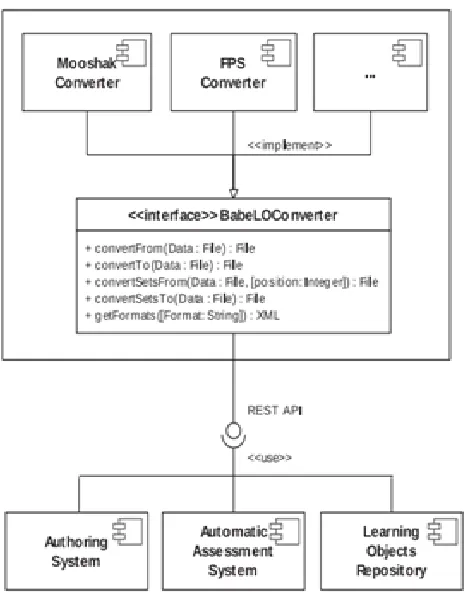
Fig. 6. BabeLO architecture.
Gustavo Soares Santos and Joaquim Jorge [23], in their work proposed an approach for the development of interoperable e-learning standards. In their approach, “atomic” tutoring systems are grouped to create “molecular” tree structures that cover course modules (see Figure Fig. 7). In this approach, the authors used SCORM compliance for developing.
Fig. 7. Tree structure of a sample ITS.
In 2015, Amorim et al. [25] present an e-learning content selection model, based on multi-agent paradigm, aiming to facilitate the learning material reuse and adaptability on Learning Management Systems (LMSs). The proposed model was developed according to a (Belief, Desire, Intention) BDI multi-agent architecture, as an improvement of the Intelligent Learning Objects approach, allowing the dynamic selection of Learning Objects (LOs). The new proposed model is based on Multi-Agent System (MAS) approach integrated to a LMS, resulting on the improvement of the analyzed related works, allowing that LO can be included to the learning experience dynamically, adding intelligent behavior to the system. According to Amorim et al., to produce more intelligent LO, previous researches proposed the convergence between the LO and MAS technologies, called Intelligent Learning Objects (ILO). The objective of the new model called Intelligent Learning Object Multi-Agent System (ILOMAS) (see Figure Fig. 8) is to enhance the framework developed to create ILO based on MAS with BDI architecture, extending this model to allow the production of adaptive and reusable learning experiences.
Fig. 8. ILOMAS Web prototype architecture.
659 organizations that are authorized to approve specifications as
standards. Also it presents quality standards and their frameworks, and gives an overview on personalization and adaptation learning. Their research work also covers trends of e-learning standards. As noted by the authors, it is important to incorporate the approaches, techniques, tools, and trends in this branch of learning.
4
C
ONCLUSIONIn the context of ITSs for programming, this paper presents both a soft and technical interoperability of programming exercises. With regard to the soft interoperability of programming exercises, the paper discusses on a classification of programming exercises. With regard to the technical interoperability of programming exercises, this paper presents a framework that addresses the content and communication interoperability issues typically found in the domain of programming.
R
EFERENCES[1] L. Nguyen-Thinh, “Analysis Techniques for Feedback-Based Educational Systems for Programming,” In Proceedings of the 4th International Conference on Computer Science, Applied Mathematics and Applications, ICCSAMA 2016, 2016, pp. 141-152.
[2] Chughtai, Rehman, S. Zhang, and ScottyD. Craig, "Usability evaluation of intelligent tutoring system ITS from a usability perspective," In Proceedings of the Human Factors and Ergonomics Society Annual Meeting, 59(1), 2015, pp. 367-371.
[3] K. VanLehn, "The relative effectiveness of human tutoring, intelligent tutoring systems, and other tutoring systems," Journal of Educational Psychologist 46(4), 2011, pp. 197-221.
[4] M. Gómez-Albarrán, "The teaching and learning of programming: a survey of supporting software tools, " The Computer Journal 48(2), 2005, p.p.130-144.
[5] W. B. Park, Building intelligent interactive tutors: Student-centered strategies for revolutionizing e-learning, Morgan Kaufmann, 2010.
[6] L. R. Maria and T. T. Chen, "Digital creativity: Research themes and framework," Journal of Computers in Human Behavior 42, 2015, pp. 12-19.
[7] S. G. Soares and J. Jorge,"Interoperable intelligent tutoring systems as open educational resources," Journal of IEEE Transactions on Learning Technologies 6(3), 2013, pp. 271-282.
[8] W. D. Samanthi, "Intelligent tutoring system for learning PHP," eprints.qut.edu.au, 2013. [Online]: Available: http://eprints.qut.edu.au/63202/1/Dinesha%20Samanthi_ Weragama_Thesis.pdf. [Accessed: Feb. 12, 2014]. [9] H. Budi, "Incorporating anchored learning in a C#
intelligent tutoring system," eprints.qut.edu.au, 2014.
[Online]: Available:
http://eprints.qut.edu.au/78834/1/Budi_Hartanto_Thesis.p df. [Accessed: Dec. 12, 2014].
[10]C. Konstantina and M. Virvou, "Student Modeling for Personalized Education: A Review of the Literature," in Advances in Personalized Web-Based Education, 2015, pp. 1-24.
[11]Bui, H. T., & Mustapha, S. M. F. S. (2018). Automated Data-Driven Hint Generation in Intelligent Tutoring Systems for Code-Writing: On the Road of Future
Research. International Journal of Emerging Technologies in Learning (iJET), 13(09), 174-189.
[12]V. Kurt, "The behavior of tutoring systems," International journal of artificial intelligence in education 16(3), 2006, pp. 227-265.
[13]G. Alex, “Ask-Elle: a Haskell Tutor,” www.botkes.nl/wp-content/uploads, 2012. [Online]: Available: http://www.botkes.nl/wp-content/uploads/HaskellTutor.pdf. [Accessed: Dec. 20, 2013].
[14]S. G. Soares and J. Jorge,"Interoperable intelligent tutoring systems as open educational resources," Journal of IEEE Transactions on Learning Technologies 6(3), 2013, pp. 271-282.
[15]R. Kelly and K. R. Koedinger, "Data-driven hint generation in vast solution spaces: a self-improving python programming tutor," International Journal of Artificial Intelligence in Education, 2015, p.p.1-28.
[16]R. Vasile and D. Ştefănescu, "Non-intrusive assessment of learners’ prior knowledge in dialogue-based intelligent tutoring systems," Journal of Smart Learning Environments 3(1), 2016.
[17]J. C. Nesbit, Q. L. A. Liu and O. O. Adesope, "Work in Progress: Intelligent Tutoring Systems in Computer Science and Software Engineering Education," Proceeding 122nd Am. Soc. Eng. Education Ann, 2015. [18]M. T. Irfan and V. N. Gudivada, "Cognitive Computing
Applications in Education and Learning," Handbook of Statistics 35, 2016, pp. 283-300.
[19]Santos, Álvaro, Anabela Gomes, and António Mendes. "A taxonomy of exercises to support individual learning paths in initial programming learning." 2013 IEEE Frontiers in Education Conference (FIE). IEEE, 2013.
[20]Le, N. T., Loll, F., & Pinkwart, N. Operationalizing the continuum between well-defined and ill-defined problems for educational technology. IEEE Transactions on Learning Technologies, 6(3), 2013, pp. 258-270.
[21]Le, N. T., & Pinkwart, N. Towards a classification for programming exercises. In Workshop on AI-supported Education for Computer Science, 2014, pp. 51-60.
[22]Ruf, A., Berges, M., & Hubwieser, P. Classification of programming tasks according to required skills and knowledge representation. In International Conference on Informatics in Schools: Situation, Evolution, and Perspectives, 2015, pp. 57-68.
[23]Queirós, R., Leal, J. P., Gupta, S., & Dubey, S. Programming Exercises Evaluation Systems-An Interoperability Survey. In CSEDU, 2012, pp. 83-90. [24]Queirós, R., & Leal, J. P. BabeLO&# x2014; An
Extensible Converter of Programming Exercises Formats. IEEE Transactions on Learning Technologies, 2013, 6(1), pp. 38-45.
[25]Santos, G. S., & Jorge, J. Interoperable intelligent tutoring systems as open educational resources. IEEE Transactions on Learning Technologies, 2013, 6(3), 271-282.