Please cite this article asHossein Zadeh M, Kermanshahi H, Sanjabi MR, Golian A, Azin M & Majidzadeh-Heravi R. 2018. Comparison of Different selenium Sources on Performance, Serum Attributes and Cellular Immunity in Broiler Cchickens. Poult. Sci. J. 6(2): 191-203.
ISSN: 2345-6604 (Print), 2345-6566 (Online) http://psj.gau.ac.ir DOI: 10.22069/psj.2018.15232.1341
Comparison of Different selenium Sources on Performance, Serum Attributes and
Cellular Immunity in Broiler Chickens
Hossein Zadeh M1, Kermanshahi H1, Sanjabi MR2, Golian A1, Azin M2 & Majidzadeh-Heravi R1
1Department of Animal Science, Faculty of Agriculture, Ferdowsi University of Mashhad, Mashhad, Iran 2Iranian Research Organization for Science and Technology, Tehran, Iran
Poultry Science Journal 2018, 6(2): 191-203
Introduction
Selenium (Se) has been defined as an essential element for growth (Yoon et al., 2007; Wang and Xu, 2008), immune competence (Cai et al., 2012; Liao et al., 2012), antioxidant (Peng et al., 2007; Zhou and Wang, 2011) and reproductive functions, immunocompetence, and ageing (Sevescova et al., 2006; Leeson et al., 2008) of broilers. Selenium as an essential trace mineral is crucial in human health (Rayman, 2004), and improving performance and health of the birds
(Haug et al., 2007; Yoon et al., 2007).
Commercial organic and inorganic forms of Se are available in the market. Organic forms are selenomethionine, Se enriched yeast, and Se enriched alga, while inorganic forms of Se are available as selenite, selenate, and selenide (Sevescova et al., 2006). The main used Se source in poultry diets is sodium selenite. However, research has shown Se yeast and other sources of Se, have been examined as alternatives to inorganic Se supplementation (Payne and
Abstract Keywords
Broilers Immunity Performance Blood indices Selenium source
The effects of organic and inorganic sources and concentration (0 and 0.3 mg per kg of diet) of Selenium (Se) on growth performance, blood biochemical and immune system were evaluated in broiler chickens. Chickens were fed corn-soy-based diets formulated to 8 dietary treatments containing no added Se (negative control), negative control plus yeast (positive control), and 6 diets had 0.3 mg/kg of diet supplemented with Se from Availa Se, Sel-plex, SeleMax, Se enriched yeast, sodium selenite and sodium selenate. Four hundred Ross 308 male chickens were randomly divided into 8 treatments and 5 replicates of 10 birds each. Feed intake, body weight gain, and feed conversion ratio were measured at starter (0-10 d), grower (11-24 d), and finisher (25-42 d) periods. On d 24 and 42, one bird from each replicate was killed by cervical dislocation and blood samples were collected to determine blood chemicals, glutathione peroxidase (GPx) activity and heterophile to lymphocyte ratio. Results showed that Se supplementation had no effect on feed intake, body weight gain, and feed conversion ratio of the chickens (P < 0.05). However, blood triglycerides, GPx activity and heterophile to lymphocyte ratio were significantly affected by organic and inorganic Se sources (P < 0.05). Results showed that selenium in organic and inorganic forms didn't have any effect on growth performance and blood parameters but they could improve immune system through increase in GPx activity.
Corresponding author Hassan Kermanshahi [email protected]
Article history
Southern, 2005; Baylan et al., 2010). Organic Se has shown an enhancement in the tissue Se concentration, while has no other effects on plasma GPx activity, carcass characteristics and growth performance compared to inorganic Se (Sevescova et al., 2006; Yoon et al.,2007). Use of Se yeast as an organic Se in poultry diets was authorized by Food and Drug Administration (FDA, 2000), and then Se yeast extracted from various yeast species through different methods (Yoon et al., 2007). When yeast and alga cultivated in a media enriched by Se, they may convert Se to selenomethionine as a source of organic Se which is more efficiently absorbed and retained in tissues compared to inorganic Se salts such as sodium selenite (Yoon et al., 2007).
In biological systems, during normal metabolism reactive oxygen species (ROS) and free radicals are produced in the cells (Tappel and Tappel, 2004) while neutralized by innate antioxidant systems (Sies, 1991). However, the excessive production of free radicals and ROS under stress conditions and diseases can damage the phospholipid membranes of the cells and other macromolecules and destroy the oxidants and antioxidants balance (Wiseman and Halliwell, 1996). The antioxidant effect of Se has been shown in farm animals. For example, Se shows its physiological activities in the forms of selenoproteins, including superoxide dismutase (SOD), GPx, glutathione reductase, selenoprotein P, and selenoprotein in mammals (Kaushal and Bansal, 2007).
Various sources of Se have been added to poultry diets to evaluate its effect on health and production of birds. This study was designed to enrich specific yeast by selenium at the laboratory conditions. When the concentration of selenium inside of the yeast reached at the acceptable level, they dried and used at an appropriate level in the diet. In the current study, the effects of a produced organic Se enriched yeast compared with several commercial inorganic and organic Se sources and their efficacy on performance, immune system, GPx activity and blood biochemical indices of broiler chickens were evaluated.
Materials and Methods Birds and housing
A total of 400 male one-day-old Ross 308 broiler chickens were assigned into 8 dietary treatments with 5 replicates of 10 birds each. The birds with the initial weight of 42±0.9 g were used in a completely randomized design experiment. The brooding temperature was held at 33±0.5°C until d 7 and gradually decreased to 22°C by day 24 and kept constant thereafter. Birds were vaccinated against infectious bronchitis, infectious bursal disease and Newcastle disease according to the local veterinary officials. Birds received 23 hours of light per day. The birds were housed in an environmentally controlled poultry house with paper roll as litter at the research farm of Animal Science Research Institute of Karaj, Iran (ASRI).
Experimental diets
The current experiment was conducted with 8 treatments, four replicates of 10 birds each in a completely randomized design. The variable parameter in the diets was Se sources at the used level (0.3 mg/kg of diet). The birds had ad libitum access to feed and water.
This experimental was performed for 42 days with three phases of starter (1-10 d), grower (11-24 d), and finisher (25-42 d). Eight dietary treatments were as follow: 1) Negative control diet based on corn-soybean without Se or yeast supplementation (NC); 2) Positive control diet (NC with supplemental yeast; 3) NC with
supplemental Availa®Se
(zinc-L-selenomethionine, Zinpro Corporation, Eden Prairie, USA); 4) NC with supplemental SelMax® (Se yeast, Biorigin, Brazil); 5) NC with supplemental Sel-Plex® (Se yeast B, Alltech, Nicholasville, Kentucky), 6) NC with supplemental sodium selenite (99.9% purity, Merck, Germany); 7) NC with supplemental sodium selenate (99.9% purity, Merck, Germany); 8) NC with supplemental Se enriched yeast (SEY) (contained 3000 ppm organic Se derived from Saccharomyces cerevisiae and produced in the biotechnology laboratory of Iranian Research Organization for Science and Technology), that approved by intellectual property center of Iran (Patent No. 139550140003008880).
were added to the diets at the rate of 0.3 mg per kg of diet that is the optimum requirement of Se in poultry. The amount of yeast in positive control diet was the same as that of SEY. All diets were balanced to meet the chicken requirements based on Ross 308 Broiler
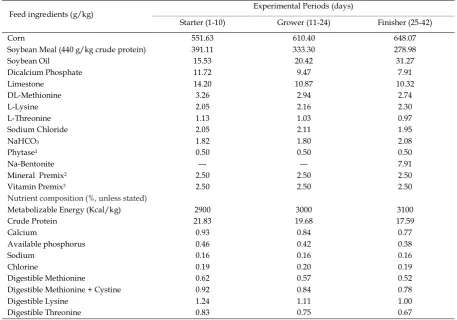
Nutrition Requirements Specifications (2014) as shown in Table 1. The experimental protocols were reviewed and approved by the Animal Care Committee of the Ferdowsi University of Mashhad, Iran (No. 3/29728 dated March 4, 2014).
Table 1.Composition of the basal diet (as-fed basis)
Feed ingredients (g/kg) Experimental Periods (days)
Starter (1-10) Grower (11-24) Finisher (25-42)
Corn 551.63 610.40 648.07
Soybean Meal (440 g/kg crude protein) 391.11 333.30 278.98
Soybean Oil 15.53 20.42 31.27
Dicalcium Phosphate 11.72 9.47 7.91
Limestone 14.20 10.87 10.32
DL-Methionine 3.26 2.94 2.74
L-Lysine 2.05 2.16 2.30
L-Threonine 1.13 1.03 0.97
Sodium Chloride 2.05 2.11 1.95
NaHCO3 1.82 1.80 2.08
Phytase1 0.50 0.50 0.50
Na-Bentonite --- --- 7.91
Mineral Premix2 2.50 2.50 2.50
Vitamin Premix3 2.50 2.50 2.50
Nutrient composition (%, unless stated)
Metabolizable Energy (Kcal/kg) 2900 3000 3100
Crude Protein 21.83 19.68 17.59
Calcium 0.93 0.84 0.77
Available phosphorus 0.46 0.42 0.38
Sodium 0.16 0.16 0.16
Chlorine 0.19 0.20 0.19
Digestible Methionine 0.62 0.57 0.52
Digestible Methionine + Cystine 0.92 0.84 0.78
Digestible Lysine 1.24 1.11 1.00
Digestible Threonine 0.83 0.75 0.67
† 1Microbial phytase AVEMIX® P10000 from AVEVE® (AVEVE Biochem NV, Belgium)
2 Each kg of Mineral Premix contained: Mn, 48 g; Fe, 8 g; Zn, 44 g; Cu, 6.4 g; I, 0.5 g; Se, 0.12 g.
3Each kg of Vitamin Premix contained: vitamin A (retinol), 3000000 IU; vitamin D3 (cholecalciferol), 2000000 IU; vitamin E
(tocopheryl acetate), 32000 IU; vitamin K3, 1.28 g; vitamin B1, 1.28 g; vitamin B2, 3.44 g; Niacin, 26 g; Pantothenic Acid, 8 g; B6, 1.72 g; B9, 0.88 g; Biotin, 0.08 g; vitamin B12, 0.0068 g; Choline chloride 100 g; Folic acid 0.88 g; H2; 0.088 g.
Performance
Body weight gain (BWG) and feed intake (FI) were measured weekly for each pen, and daily mortality was recorded. FCR were calculated based on Body weight gain and FI.
Blood biochemical measurements
At 24 and 42 days of age, 2 mL of blood was taken from wing vein of one bird from each replicate; 1 mL of blood was collected in anticoagulant EDTA (1 mg/mL) tube and centrifuged at 1,734 × g at 0°C for 20 min and the plasma was collected to measure GPx activity.
measuring H/L ratio, blood smears were made and stained with May-Grünwald-Giemsa stain. From 100 white blood cells, heterophiles and lymphocytes were counted to calculate their ratio (H/L).
Statistical analysis
Analysis of variance was examined using SAS software (SAS, 1987). Treatment effects were analyzed using the General Linear Models procedure (GLM) of SAS along with Tukey's range test to compare means. Differences due to experimental treatments were considered significant at P < 0.05. Orthogonal contrasts were made for presence or absence of Se, Se sources,
and SEY vs other Se sources for the measured indices.
Results
Growth performance
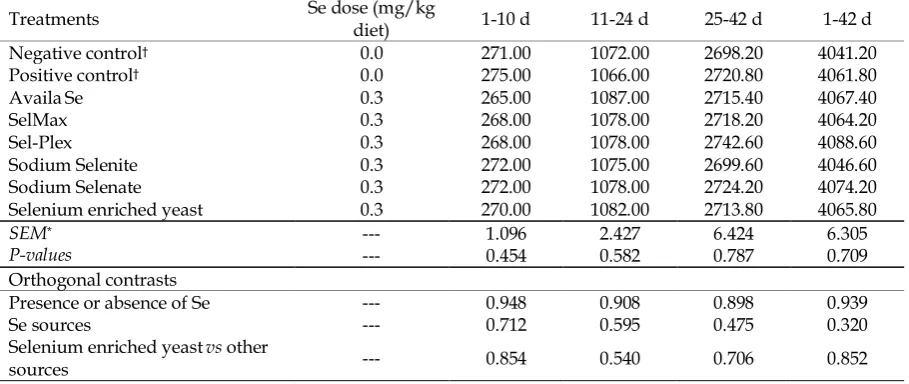
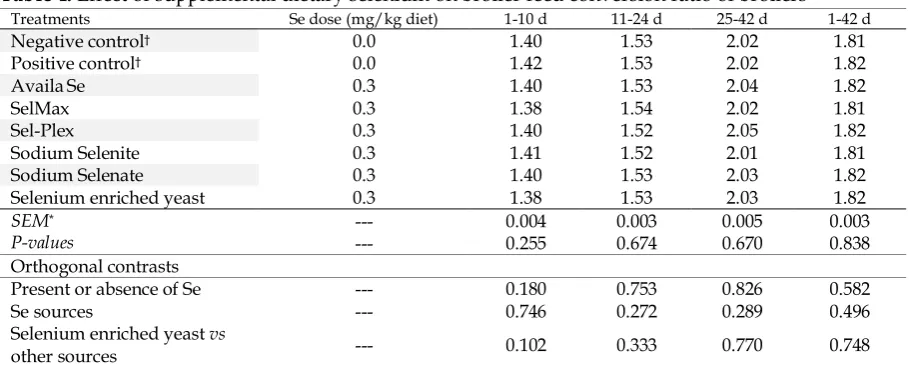
Feed intake was not affected by dietary treatments (Table, 2). Body weight gain of broilers at each period (Table, 3) showed no significant difference among treatments. No significant difference was observed among treatments for FCR over the entire trial periods (Table, 4). No significant orthogonal contrasts in FI, BWG, and FCR was attributable to dietary Se. In other words, supplemental organic Se, inorganic Se and SEY at the rate of 0.3 mg/kg diet had no significant impact on performance.
Table 2. Effect of supplemental dietary selenium sources on feed intake of broilers (g)
1-42 d 25-42 d
11-24 d 1-10 d
Se dose (mg/kg diet) Treatments
4041.20 2698.20
1072.00 271.00
0.0
Negative control†
4061.80 2720.80
1066.00 275.00
0.0
Positive control†
4067.40 2715.40
1087.00 265.00
0.3
AvailaSe
4064.20 2718.20
1078.00 268.00
0.3 SelMax
4088.60 2742.60
1078.00 268.00
0.3 Sel-Plex
4046.60 2699.60
1075.00 272.00
0.3 Sodium Selenite
4074.20 2724.20
1078.00 272.00
0.3 Sodium Selenate
4065.80 2713.80
1082.00 270.00
0.3 Selenium enriched yeast
6.305 6.424
2.427 1.096
---
SEM*
0.709 0.787
0.582 0.454
---
P-values
Orthogonal contrasts
0.939 0.898
0.908 0.948
---
Presence or absence of Se
0.320 0.475
0.595 0.712
---Se sources
0.852 0.706
0.540 0.854
---Selenium enriched yeastvs other
sources
† Treatment groups: The negative control group without added selenium source; The positive control group without added
selenium source but added yeast without selenium. Except for positive and negative control groups, in other treatments the only difference is the type of selenium sources used.
*Standard error of means ((n = 10) per treatment).
Blood biochemical indices
The mean blood serum albumin, globulin, total protein, cholesterol, triglyceride, HDL-c, LDL-c, serum urea nitrogen, and glucose on 24 and 42 d of age are presented in Tables 5 and 6, respectively. None of the serum indices on days 24 and 42 except triglyceride showed any significant effect among dietary treatments. On day 42, the mean values of serum triglyceride in negative control group was significantly higher than those of other treatments (P < 0.05).
Table 3. Effect of supplemental dietary selenium on body weight gain of broilers (g)
1-42 d 25-42 d
11-24 d 1-10 d
Se dose (mg/kg diet) Treatments
2231.00 1338.00
700.00 193.00
0.0
Negative control†
2235.60 1347.00
695.00 193.60
0.0
Positive control†
2231.60 1331.80
710.00 189.80
0.3
AvailaSe
2241.80 1348.00
700.00 193.80
0.3 SelMax
2242.00 1339.20
711.00 191.80
0.3 Sel-Plex
2241.00 1343.00
705.00 193.00
0.3 Sodium Selenite
2238.20 1341.00
703.00 194.20
0.3 Sodium Selenate
2234.20 1333.60
705.00 195.60
0.3 Selenium enriched yeast
2.930 2.290
1.730 1.022
---
SEM*
0.967 0.615
0.305 0.943
---
P-values
Orthogonal contrasts
0.546 0.844
0.703 0.465
---Presence or absence of Se
0.753 0.511
0.157 0.926
---Se sources
0.551 0.335
0.811 0.471
---Selenium enriched yeastvs other
sources
†Treatment groups: The negative control group without added selenium source; The positive control group without added
selenium source + yeast without selenium. Except for positive and negative control groups, in other treatments the only difference is the type of selenium sources used.
*Standard error of means ((n = 10) per treatment).
Table 4. Effect of supplemental dietary selenium on broiler feed conversion ratio of broilers 1-42 d 25-42 d
11-24 d 1-10 d
Se dose (mg/kg diet) Treatments
1.81 2.02
1.53 1.40
0.0
Negative control†
1.82 2.02
1.53 1.42
0.0
Positive control†
1.82 2.04
1.53 1.40
0.3
AvailaSe
1.81 2.02
1.54 1.38
0.3 SelMax
1.82 2.05
1.52 1.40
0.3 Sel-Plex
1.81 2.01
1.52 1.41
0.3 Sodium Selenite
1.82 2.03
1.53 1.40
0.3 Sodium Selenate
1.82 2.03
1.53 1.38
0.3 Selenium enriched yeast
0.003 0.005
0.003 0.004
---
SEM*
0.838 0.670
0.674 0.255
---
P-values
Orthogonal contrasts
0.582 0.826
0.753 0.180
--- Present or absence of Se
0.496 0.289
0.272 0.746
--- Se sources
0.748 0.770
0.333 0.102
--- Selenium enriched yeast vs
other sources
†Treatment groups: The negative control group without added selenium source; The positive control group without added
selenium source + yeast without selenium. Except for positive and negative control groups, in other treatments the only difference is the type of selenium sources used.
Ta b le 5 . E ffe ct of su pp le m en tal d ie tar y se le ni um on b lo od b io ch em ic al p ar am et er s of b roi le rs a t 2 4 d ay of ag e G lu cose (m g/ d L ) Se
rum urea
ni tro ge n (mg / dL ) L D L ‡ (m g/ d L ) H D L ‡ (m g/ d L ) T ot al T ri gl yc eri d e (m g/ d L ) T ot al C hol est er ol (m g/ d L ) T ot al Prot ei n (mg / dL ) G lob u li n (g /d L ) A lb u m in (g /d L ) Se d ose (m g /k g d ie t) T re at m en ts 1. 42 6. 21 82 .5 4 44 .1 1 16 9. 58 16 0. 57 4. 33 15 6. 31 2. 81 0. 0 N eg at iv e con trol † 1. 31 5. 78 81 .8 9 43 .2 2 15 1. 70 15 5. 46 4. 24 16 2. 60 2. 77 0. 0 Pos it iv e con tro l † 1. 51 6. 26 89 .0 8 46 .6 7 15 1. 70 16 6. 08 4. 48 17 4. 32 2. 80 0. 3 A va ila Se 1. 41 6. 15 86 .3 1 48 .1 9 15 6. 09 16 5. 72 4. 38 16 6. 59 2. 77 0. 3 Se lM ax 1. 65 6. 43 82 .7 2 49 .2 5 15 3. 37 16 2. 65 4. 62 16 9. 20 2. 77 0. 3 Se l-Pl ex 1. 60 6. 02 82 .4 0 46 .6 4 14 5. 15 15 8. 07 4. 53 15 7. 16 2. 77 0. 3 Se le ni te so d ium 1. 35 6. 23 85 .9 3 46 .7 9 16 5. 75 16 5. 87 4. 37 16 3. 39 2. 77 0. 3 Se le na te sod iu m 1. 51 6. 13 80 .7 2 46 .0 8 16 0. 32 16 5. 72 4. 49 16 0. 20 2. 77 0. 3 Se le ni u m e n ri ch ed y ea st 0. 06 0 0. 06 8 1. 26 0. 59 2. 31 1. 45 0. 06 0 1. 86 0. 00 5 ---SE M * 0. 85 8 0. 44 9 0. 75 3 0. 21 2 0. 13 8 0. 47 8 0. 85 3 0. 21 1 0. 54 9 ---P -v al ue s Ort hog on al c on tra st s 0. 27 6 0. 47 3 0. 41 6 0. 33 1 0. 30 3 0. 51 6 0. 81 1 0. 60 9 0. 02 0 ---Pre se nc e or a bse nc e of Se 0. 27 6 0. 16 3 0. 71 9 0. 29 9 0. 67 5 0. 83 2 0. 22 4 0. 63 2 1. 00 0 ---Se sourc es 0. 89 8 0. 65 6 0. 49 1 0. 43 3 0. 43 9 0. 49 0 0. 91 3 0. 60 3 1. 00 0 ---Se le ni u m e n ri ch ed y ea st vs ot he r sourc es
†Trea
Tab le 6 . E ffe ct of su pp lem en tal d iet ar y sel en iu m on b lo od b io ch em ic al p ar ame ter s of b roi ler s at 4 2 d ay of ag e G lu cose (m g/ d L ) Se rum u re a ni tro ge n (mg / dL ) L D L ‡ (m g/ d L ) H D L ‡ (m g/ d L ) T ot al T ri gl yc eri d e (m g/ d L ) T ot al C hol est erol (m g/ d L ) T ot al Prot ei n (m g/ d L ) G lob u li n (g /d L ) A lb u m in (g /d L ) Se d ose (m g /k g di et ) T re at m en ts 1. 90 6. 03 84 .7 3 45 .7 0 18 5. 63 a 16 5. 44 4. 71 16 5. 21 2. 85 0. 0 N eg at iv e C on trol † 1. 75 6. 01 86 .1 2 43 .5 8 16 4. 87 ab 16 5. 44 4. 75 16 2. 25 2. 96 0. 0 Posi ti ve c on trol † 2. 07 6. 32 82 .1 4 47 .4 5 16 8. 86 ab 16 3. 36 4. 95 16 0. 98 2. 88 0. 3 A va ila Se 1. 94 6. 21 80 .1 7 43 .6 5 17 5. 57 ab c 15 8. 93 4. 77 15 4. 91 2. 82 0. 3 Se lM ax 2. 12 5. 71 81 .3 4 43 .0 5 15 5. 85 b 15 5. 56 4. 89 15 8. 92 2. 76 0. 3 Se l-Pl ex 2. 05 5. 98 83 .2 4 44 .8 6 17 9. 88 ab 16 4. 08 4. 90 15 9. 18 2. 85 0. 3 Sod iu m S el en it e 1. 57 6. 13 92 .7 5 44 .5 2 16 3. 03 ab 16 9. 87 4. 44 17 3. 65 2. 87 0. 3 Sod ium S el en at e 2. 03 5. 60 84 .3 5 42 .3 4 16 4. 07 ab 15 9. 50 4. 81 16 4. 24 2. 78 0. 3 Se le ni u m e n ri ch ed y ea st 0. 05 2 0. 08 6 1. 50 0 0. 52 8 2. 51 5 1. 77 5 0. 05 1 1. 73 0 0. 02 1 ---SE M * 0. 09 5 0. 46 4 0. 57 6 0. 31 3 0. 04 1 0. 61 9 0. 29 7 0. 17 9 0. 31 7 ---P -v al ue s Ort hog on al c on tra st s 0. 34 0 0. 08 3 0. 23 3 0. 20 8 0. 52 6 0. 62 6 0. 34 3 0. 24 9 0. 93 0 --Pre se nc e or a bse nc e of S e 0. 17 0 0. 77 1 0. 50 1 0. 66 6 0. 02 6 0. 31 4 0. 42 0 0. 08 1 0. 20 6 --Se sourc es 0. 39 2 0. 71 8 0. 68 2 0. 85 0 0. 03 0 0. 87 3 0. 97 9 0. 52 7 0. 05 7 --Se le ni u m e n ri ch ed y ea st v s ot he r sourc es
a-c M
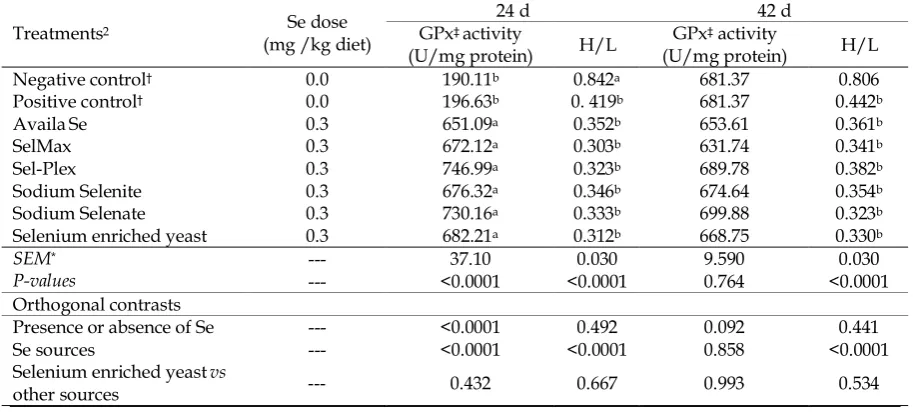
Table 7. Effect of supplemental dietary selenium on GPx1 activity and H/L of broilers at 24 and 42 day of age
42 d 24 d
Se dose (mg /kg diet)
Treatments2
H/L activity
‡ GPx
(U/mg protein) H/L
GPx‡ activity
(U/mg protein)
0.806 681.37
0.842a
190.11b
0.0
Negative control†
0.442b
681.37
0. 419b
196.63b
0.0
Positive control†
0.361b
653.61
0.352b
651.09a
0.3
AvailaSe
0.341b
631.74
0.303b
672.12a
0.3 SelMax
0.382b
689.78
0.323b
746.99a
0.3 Sel-Plex
0.354b
674.64
0.346b
676.32a
0.3 Sodium Selenite
0.323b
699.88
0.333b
730.16a
0.3 Sodium Selenate
0.330b
668.75
0.312b
682.21a
0.3 Selenium enriched yeast
0.030 9.590
0.030 37.10
---
SEM*
<0.0001 0.764
<0.0001 <0.0001
---
P-values
Orthogonal contrasts
0.441 0.092
0.492 <0.0001
--- Presence or absence of Se
<0.0001 0.858
<0.0001 <0.0001
--- Se sources
0.534 0.993
0.667 0.432
---
Selenium enriched yeastvs
other sources
a-bMeans value within the same column sharing a common superscript letter are not statistically at P< 0.05. 1GPx, glutathione peroxidase; H/L, heterophile to lymphocyte ratio.
†Treatment groups: The negative control group without added selenium source; The positive control group without added
selenium source + yeast without selenium. Except for positive and negative control groups, in other treatments the only difference is the type of selenium sources used.
‡Glutathione peroxidase
*Standard error of means ((n = 10) per treatment).
Discussion
The results of the present study in both ANOVA and orthogonal contrasts showed that dietary supplementation of Se had no effect on the growth performance of broilers, which was in agreement with those of others (Spears et al., 2003; Yoon et al., 2007; Peric et al., 2009; Oliveira et al., 2014). In other words, Se supplementation either with organic or inorganic forms did not have any significant effect on BWG, FI, and FCR. However, in another study, FCR and BWG improved in broiler chickens fed diets supplemented with Se enriched yeast (Krstic et al., 2012). No significant difference observed in the present study regarding BWG and FCR might be due to feeding the balanced diet including adequate nutrients (Lesson and Summers, 2001). The non-effect of Se on performance of the chickens might also be due to the fact that Se has no direct role on BWG and FCR, especially when birds reared under normal conditions without stress. The growth response of birds to Se supplementation can be influenced by the birds’ stress level, and the stressed birds are more responsive (Surai, 2006; Seven et al., 2009). The variation in the results could
contribute to the differences in the chicken strains used in various experiments, the concentration of Se in the basal diet, analytical techniques, composition of diets, seasons, maintenance, and weather conditions during the rearing periods.
Serum samples did not show any significant effect on the measured indices. However, the content of triglycerides at day 42, showed significant difference among treatments (P < 0.05). The highest and the lowest content of total triglycerides were seen in positive and Sel-Plex fed birds, respectively. Yang et al. (2012) showed that chickens fed diet containing 0.3 mg/kg organic Se had no significant effect on their total cholesterol when the serum samples were compared to those fed diet without Se supplementation.
Brewer's yeast is a rich source of Se. This yeast when cultivated in a medium containing Se, converts Se to selenomethionine, which is efficiently absorbed and retained in the rat body as compared to inorganic Se salts such as sodium selenite (Amany and Badawy, 2010).
(Kang et al., 2000). Yang et al. (2012) observed that addition of 0.3 mg/kg organic Se added to the diet of broilers showed no insignificant effect on serum globulin, glucose, total cholesterol, LDL-c, HDL-c, serum urea nitrogen, and total protein levels when compared to that of control group.
No effect of ingredients on blood glucose is already described by others (Collin et al., 2003; Swennen et al., 2005, 2006). They suggested that the lack of diet ingredients effect on blood glucose levels is probably due to the strict adjustment of carbohydrate metabolism in broilers. The blood glucose levels retain constant, even when broilers are submitted to fasting (Swennen et al., 2007).
In contrast to the results of this study, it is reported that the addition of SeF as nanoparticles at 0.3 mg/kg level in layer chicks up to 8 week of post hatch significantly elevated serum glucose, albumin, globulin, urea nitrogen, and total protein and decreased cholesterol and triglycerides levels when compared to that of control treatment (Mohapatra et al., 2014). Sodium selenite supplementation as nanoparticles to male Wistar rat diet at the level of 150 ng/kg Se increased serum globulin levels and decreased albumin/globulin ratio, which are sign of stimulatory effect on the immune status in the animals (Bunglavan et al., 2014).
The results showed that diet supplementation with Se increased the GPx activity. The highest GPx activity was related to the birds received Se and the lowest GPx activity was related to the positive and negative control treatments. Addition of Se in either organic or inorganic sources to diet significantly affected GPx activity compared to those of the birds fed diet without Se.
This result is in agreement with those of others (Spears et al., 2003). They indicated that Se supplementation improved GPx activity in comparison to those of birds fed diet without Se. Sodium selenite elevates GPx activity and could play a critical role in controlling free radical damage in poultry (Choct et al., 2004). Some researchers showed that the addition of organic Se source in diet of broilers significantly elevated plasma GPx activity and hence improved antioxidant activity (Khajali et al., 2010;
Markovic et al., 2018). Methionine moiety can also be changed to cysteine which in turn, changes to glutathione (GSH). Both GSH and cysteine can operate as direct scavengers of reactive oxygen species (ROS) and maintain proteins from oxidative damage (Mallis et al., 2002). Antioxidant defense systems remove ROS to prevent the oxidative stress. GPx catalyze the decrement of hydrogen peroxide and organic hydroperoxides, thus preserve cells from oxidative damage (Papp et al., 2007). Jun et al. (2011) reported a more mortality, less serum GPx activity, and histopathological changes in the mice fed a Se deficient diet.
In orthogonal comparisons, addition of SEY had no significant impact on GPx activity when compared with those of other Se sources. According to the proposed metabolic pathways for Se (Sunde, 1997), no significant effect for GPx activity from SEY group in comparison with inorganic Se sources was observed. Apart from Se sources, it needs to be converted to selenocysteine before incorporated into the GPx enzyme (Forstrom et al., 1978). Supplementation of diets by sodium selenite significantly improved GPx activity in red blood cells of the chickens and this effect was higher than that of organic Se (Choct et al., 2004). Payne & Southern (2005) noticed that organic and inorganic sources of Se did not have any effects on performance, carcass traits and GPx activity in broilers.
more immune responses by reducing the endogenous production of prostaglandin.
In the present study, addition of 0.3 mg Se from yeast/kg diet improved immune response when compared with that of negative group. Unicellular eukaryotes, yeast fungi and also Saccharomyces, have been used as models for many researches in various fields of biotechnology and medicine. Saccharomyces specious of Saccharomyces cerevisiae and Saccharomyces Boulardii are accepted and believed as probiotics. The result of many studies showed that orally ingestion of a component of yeast cell wall, such as yeast beta glucan, stimulates the immune system (macrophages) and help to inhibit bacterial infections.
Conclusion
Under the conditions of this study, it was
concluded that supplementation of corn-soy diet with either organic or inorganic Se at the rate of 0.3 mg/kg diet had no significant effects on performance and blood biochemical indices of broiler chickens. All organic and inorganic Se sources improved GPx activity and H/L ratio. This study proved that the locally produced SEY is comparable to those commonly used Se sources in the market. SEY did not show any negative effect on the parameters evaluated in this study. Therefore, locally produced SEY can effectively be used in broiler diets.
Acknowledgements
We are grateful to Ferdowsi University of Mashhad, Iranian Research Organization for Science and Technology, and Tarbiat Modarres University, Tehran, Iran for their financial support and technical assistance for this project.
References
Amany MH & Badawy IH. 2010. Comparative effect of organic and inorganic forms of selenium on hypercholesterolemic rats. Medical Journal Cairo University, 78: 393– 398. DOI: 10.1017/S0007114508911594
Basmacioglu H, Tokusoglu O & Ergul M. 2009. The effect of Oregano and Rosemary essential oils or alpha-tocopheryl acetate on performance and lipid oxidation of meat enriched with N-3 PUFAs in broilers. South African Journal of Animal Science, 34: 197– 210. DOI: 10.1016/j.meatsci.2007.06.005 Baylan M, Canogullari S, Ayaşan T & Copur, G.
2010. Effects of dietary selenium source, storage time and temperature on eggshell ınternal quality in Quail eggs. Biological Trace Element Research, 143: 957-964. DOI: 10.1007/s12011-010-8912-x
Boiago MM. 2006. Caracteristicas produtivas equalitativas da carne de frangos alimentados com diferentes concentraçâes e fontes de selênio [dissertaçâo]. Jaboticabal (SP): Universidade Estadual Universidade Estadual Paulista.
Bunglavan SJ, Garg AK, Dass1 RS & Shrivastava S. 2014. Effect of supplementation of different levels of selenium as nanoparticles/sodium selenite on blood biochemical profile and
humoral immunity in male Wistar rats. Veterinary World Journal, 7: 1075–1081. DOI: 10.14202/vetworld.2014.1075-1081
Cai SJ, Wu CX, Gong LM, Song T, Wu H & Zhang LY. 2012. Effects of nano-selenium on performance, meat quality, immune function, oxidation resistance, and tissue selenium content in broilers. Poultry Science, 91: 2532– 2539. DOI: 10.3382/ps.2012-02160
Choct M, Naylor AJ & Reinke N. 2004. Selenium supplementation affects broiler growth performance, meat yield and feather coverage. British Poultry Science, 45: 677–683. DOI:10.1080/00071660400006495
Collin A, Malheiros RD, Moraes VMB, AS VP, Darras VM, Taouis M, Decuypere E & Buyse J. 2003. Effects of dietary macronutrient content on energy metabolism and uncoupling protein mRNA expression in broiler chickens. British Journal of Nutrition, 90: 261–269. DOI: 10.1079/BJN2003910 Food and Drug Administration. 2000. Final rules
for 2000. Food and Color Additive Final Rules.
https://www.fda.gov/Food/GuidanceRegul ation/.../ucm061705.htm
Biochemistry, 17: 2639–2644.DOI: 10.1021/bi00606a028
Haug A, Eich-Greatorex S, Bernhoft A, Wold JP, Hetland H, Christophersen OA & Sogn T. 2007. Effect of dietary selenium and omega-3 fatty acids on muscle composition and quality in broilers. Lipids in Health and Diseases, 2007; 6: 29. DOI: 10.1186/1476-511X-6-29
Jun EJ, Ye JS, Hwang IS, Kim YK & Lee H. 2011. Selenium deficiency contributes to the chronic myocarditis in coxsackie virus-infected mice. Acta virologica, 55: 23–29. DOI: 10.4149/av_2011_01_23
Kang BP, Bansal MP & Mehta U. 2000. Hyperlipidemia and type I 5’ monodeiodinase activity: regulation by selenium supplementation in rabbits. Biological Trace Element Research, 7: 231– 239. DOI: 10.1385/BTER:77: 3: 231
Kaushal N & Bansal MP. 2007. Dietary selenium variation-induced oxidative stress modulates CDC2/cyclin B1 expression and apoptosis of germ cells in mice testis. Journal of Nutritional Biochemistry, 18: 553–564. DOI: 10.1016/j.jnutbio.2006.11.003
Khajali F, Raei A, Aghaei A & Qujeq D. 2010. Evaluation of a dietary organic selenium supplement at different dietary protein concentrations on growth performance, body composition, and ant oxidative status of broilers reared under heat stress. Asian– Australasian Journal of Animal Science, 23: 501–507. DOI: 10.5713/ajas.2010.90448 Krstic B, Jokić Z, Pavlović Z & Zivković D. 2012.
Options for the production of selenized chicken meat. Biological Trace Element Research, 146: 68–72. DOI: 10.1007/s12011-011-9229-0
Leeson S, Namkung H, Caston L, Durosoy S & Schlegel P. 2008. Comparison of selenium levels and sources and dietary fat quality in diets for broiler breeders and layer hens. Poultry Science, 87: 2605–2612. DOI: 10.3382/ps.2008-00174
Lesson S & Summers JD. 2001. Nutrition of the chickens. 4th ed. University book, Guelph, Ontario, Canada.
Liao X, Lu L, Li S, Liu S, Zhang L, Wang G, Li A & Luo X. 2012. Effects of selenium source and
level on growth performance, tissue selenium concentrations, antioxidation, and immune functions of heat-stressed broilers. Biological Trace Element Research, 150: 158–165. DOI: 10.1007/s12011-012-9517-3
Mallis RJ, Hamann MJ, Zhao W, Zhang T, Hendrich S & Thomas JA. 2002. Irreversible thiol oxidation in carbonic anhydrase III: protection by S-glutathiolation and detection in aging rats. Biological Chemistry, 383: 649– 662. DOI: 10.1515/BC.2002.067
Markovic R, Ciric J, Drljacic A, Sefer D, Jovanovic I, Jovanovic D, Milanovic S, Trbovic D, Radulovic S, Baltic MŽ & Starcevic M. 2018. The effects of dietary Selenium-yeast level on glutathione peroxidase activity, tissue Selenium content, growth performance, and carcass and meat quality of broilers. Poultry Science, 97: 2861-2870. DOI: 10.3382/ps/pey117
Mohapatra P, Swain RK, Mishra SK., Behera T, Swain P, Mishra SS, Behura NC, Sabat SC, Sethy K, Dhama K & Jayasankar P. 2014. Effects of dietary nano selenium on tissue selenium deposition, antioxidant status and immune functions in layer chicks. International Journal of Pharmacology, 10: 160-167. DOI: 10.3923/ijp.2014.160.167 Oliveira TFB, Rivera DFR, Mesquita FR, Braga
H, Ramos EM & Bertechini, AG. 2014. Effect of different sources and levels of selenium on performance meat quality and tissue characteristics of broiler. The Journal of Applied Poultry Research, 23: 15–22. DOI: 10.3382/japr.2013-00761
Papp LV, Lu J, Holmgren A & Khanna KK. 2007. From selenium to selenoproteins: synthesis, identity, and their role in human health. Antioxidants & Redox Signaling, 9: 775–806. DOI: 10.1089/ars.2007.1528
Payne RL & Southern LL. 2005. Comparison of inorganic and organic selenium sources for broilers. Poultry Science, 84: 898–902. DOI: 10.1089/ars.2007.1528
Biochemistry, 101: 1457–1463. DOI: 10.1016/j.jinorgbio.2007.06.021
Peric L, Milosevic N, Zikic D, Kanacki Z, Dzinic N, Nollet L & Spring P. 2009. Effect of selenium sources on performance and meat characteristics of broiler chickens. The Journal of Applied Poultry Research, 18: 403-409. DOI: 10.3382/japr.2008-00017
Rayman MP. 2004. The use of high-selenium yeast to raise selenium status: how does it measure up? British Journal of Nutrition, 92: 557–574. DOI: 10.1079/BJN20041251
Ross 308 Broiler Nutrition Specifications – Aviagen, 2014. ROSS 308BROILER: Nutrition Specifications.
https://www.winmixsoft.com/en/blog/ite m/ross308-eng
SAS (Statistical Analysis System). 1987. SAS/STAT® Users Guide. SAS Institute Inc., Cary, NC.
Seven I, Tatli Seven P & Yilmaz S. 2009. Responses of broilers under cold conditioning (15c) to dietary triiodothyronine and iodine combined to antioxidants (selenium and vitamin C). Kafkas Üniversitesi Veteriner Fakültesi Dergisi, 15: 499–504. DOI: 10.9775/kvfd.2009.022-A Sevescova S, Skrivan M, Dlouha G & Kouck M.
2006. The effect of selenium source on the performance and meat quality of broiler chickens. Czech Journal of Animal Science, 51, 449-457. DOI: 10.17221/3964-CJAS
Sies H. 1991. Oxidative stress: introduction. In Oxidative Stress: Oxidants and Antioxidants, ed. SIES, H., pp. xv-xxii. Academic Press, London.
Spears JW, Grimes J, Lloyd K & Ward TL. 2003. Efficacy of a novel organic selenium compound (zinc-L-selenomethionine, Availa Se) in broiler chicks. 1st Latin American Congress of Animal Nutrition. Cancun. Mexico, 197–198.
Sunde RA. 1997. Selenium. Page 493 in Handbook of Nutritionally Essential Mineral Elements. B. L. O’Dell & R. A. Sunde, eds. Marcel Dekker, Inc., New York, NY.
Surai PF. 2006. Selenium in Nutrition and Health. Nottingham University Press, Nottingham, UK.
Swennen Q, Janssens GPJ, Millet S, Vansant G, Decuypere E & Buyse J. 2005. Effects of substitution between fat and protein on feed intake and its regulatory mechanisms in broiler chickens: Endocrine functioning and intermediary metabolism, 84: 1051–1057. DOI: 10.1093/ps/84.7.1051
Swennen Q, Janssens GPJ, Collin A, Le Bihan-Duval E, Verbeke K, Decuypere E & Buyse J. 2006. Diet-induced thermogenesis and glucose oxidation in broiler chickens: influence of genotype and diet composition. Poultry Science, 85: 731–742. DOI: 10.1093/ps/85.4.731
Swennen Q, Decuypere E & Buyse J. 2007. Implications of dietary macronutrients for growth and metabolism in broiler chickens. World’s Poultry Science Journal, 63: 541–556. DOI: 10.1017/S0043933907001602
Tappel A & Tappel A. 2004. Oxidant free radical initiated chain polymerization of protein and other biomolecules and its relationship to diseases. Medical Hypotheses, 63: 98–99. DOI: 10.1016/j.mehy.2004.01.022
Tayeb IT & Qader GK. 2012. Effect of feed supplementation of selenium and vitamin E on production performance and some hematological parameters of broiler. KSU Journal of National Science, 15: 46–56. DOI: 10.5713/ajas.2004.1000
Wang YB & Xu BH. 2008. Effect of different selenium source (sodium selenite and selenium yeast) on broiler chickens. Animal Feed Science and Technology, 144: 306–314. DOI: 10.1016/j.anifeedsci.2007.10.012
Wiseman H & Halliwell B. 1996. Damage to DNA by reactive oxygen and nitrogen species: role in inflammatory disease and progression to cancer. Biochemical Journal, 313: 17-29. DOI: 10.1042/bj3130017
Wu H, Jin Y, Shi YQ & Bi SP. 2007. On-line organoselenium interference removal for inorganic selenium species by flow injection coprecipitation preconcentration coupled with hydride generation atomic fluorescence spectrometry. Talanta 71: 1762–1768. DOI: 10.1016/j.talanta.2006.08.011
Effect of organic and inorganic selenium supplementation on growth performance, meat quality and antioxidant property of broilers. African Journal of Biotechnology, 11: 3031–3036. DOI: 10.5897/AJB11.3382
Yoon I, Werner TM & Butler JM. 2007. Effect of source and concentration of selenium on growth performance and selenium retention
in broiler chickens. Poultry Science, 86: 727– 730. DOI: 10.1093/ps/86.4.727.328