3630
Universities Human Resource Management
System
Nishad Nawaz
Abstract: The paper developed and tested a human resource management system in the university. To achieve the aim, objectives, the study designed methodology and taken the opinion from the users. To reach to the results percentage methods was adopted and data collected with a structured questionnaire. The study found that the program well-executed and employees usage human resource management system in the human resource department of universities. The tools were useful for developers, researchers and Industry.
Keywords: Human resource management system, universities, visual basic, oracle and employees. Classification: Technical paper.
—————————— ——————————
1. INTRODUCTION
The world is moving forward with changes via information technology and communication. Technology transforming the data and facilitating meaningful information, and software applications were providing solutions for every problem of the industry irrespective of nature of the industry. The organizations looking forward to disseminating the information among the users, any software get success via meeting the needs of the users. Therefore, most of the organizations look for easy, effective, cost-less applications; this will be possible through useful software. The universities of human resource departments must take care of a large amount of data that data should be adequately collected and facilitated among the users. However, the organizations will need to assist the requirement for the developers to manage the project. Moreover, the study aimed to design a human resource management system for serving the needs of the human resource department. The project should design in a systematic way to achieve the needs of the users. Therefore, the study incorporated the system development life cycle (SDLC) to obtain the aim of the study.
2. LITERATURE REVIEW
In the present most of the companies implemented human resource information system into their human resource department [1]. Human resource information systems extend the human resource department to run effectiveness in the functional level [2]. The implications of human resource information required technological support, therefore most of the organizations will have a big look into all area of functions [3], of resources of human to be as strategic.
Human resource information systems will be benefit to the human resource professional in many ways such as getting total information of the employee.[4]. In the concern of information flow the data will flow it will make use of all [5], it will lead to the good effective use of information by the decision makers that will safe of time and cost of the organization. [6] [7]. The information technology influencing organizations to more into new technologies that technologies emerging into functionals of human resource management so that will leads the organizations internet based applications [8] of information technology. The system development life cycle methodology that evaluate software development through various methods of software development life cycle. [9]. The methods of will provide security and ensure the capabilities in order to gain maximum strength of the project. Moreover supports into cloud as well.[10],[11],[12]. For the gathered literature, the study has been used various methods to collect relevant data, used Web of science, Scopus, Elsevier, Emerald and Science direct to get meaningful information in a selected area of the topic. Moreover, other sources also used, such as industry reports and various sites, which are related and relevant to the topic chosen, for this purpose used very effective method (i) used essential keywords. It searched multiple databases like ProQuest, Scopus, EBSCO, Elsevier, Springer, Emerald, Taylor and Francis and Wiley Inderscience to reach proper information, quality of work-life, employee satisfaction, Mines Industry keywords were used, (ii) taken help google, google scholar, research gate, academia and finally accessed periodic and review of leading journals, which are frequently published articles in human resource information systems not to miss any new knowledge related to the topic.
3. Research methods
3.1 Statement of the problem
In the field of human resource management systems, there are many vendors such as SAP, Oracle, BambooHR, Gusto HR, Paycor, Cloud HR, EPAY Systems and others as well. Still, it is quite expensive for design and development and software packages. So, having their application to make useful human resource function. For this purpose, the study was conducted.
—————————— —————————— Nishad Nawaz PhD
Assistant Professor
Department of Business Management College of Business Administration Kingdom University, Bahrain.
3631 IJSTR©2020
www.ijstr.org 3.2 Need for the study
The study made to solve following problems, the variables as follows name, gender, age, date of birth, nationality, state, caste, work address, phone information, caste code, current position, status, permanent, part-time, temporary, faculty department, employee academic, professional qualification, salary and employee leave report are taken.
3.3 Data collection and sample
The data collected from 50 employees through interview, questionnaire and reports.
3.4. Technique used
The study used system development life cycle methods, which consists of investigation, requirements, design, development, implementation and maintenance & evaluation. The project used visual basic 6 and Microsoft database.
4. DESIGN AND FINDINGS
The study was conducted on following department and all information was collected, which data gathered that will be converted as a input for the system. Moreover, the percentage method and coding were used to draw results and the results as follows.
Table 1 Respondents details in department-wise Department Respondents Percentage
Administration 5 2.50
Sociology 5 2.50
Library 5 2.50
Hostel 5 2.50
Marathi 5 2.50
Kannada 5 2.50
Geography 5 2.50
Economics 5 2.50
Library Science 5 2.50
Political Science 5 2.50
Total 50
Source: Primary data
Table 1 displays details about the departments, from administration department staff 5, sociology department staff 5, library department staff 5, hostel department staff 5, Marathi department staff 5, Kannada department staff 5, Geography department staff 5, Economics department staff 5, Library science department staff 5 and Political science department staff 5, irrespective of staff and percentage also presented. In the methodology system investigation and requirement not discussed, system design, system and system implementation are discussed.
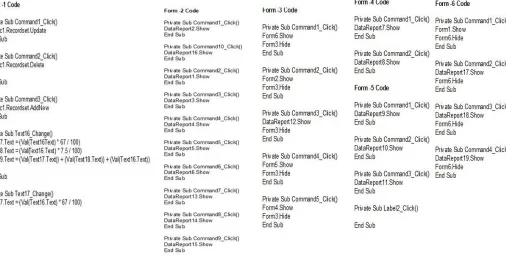
In the system development the structure query language used and meta data and developed the following forms (Displayed after 5.1)
Employee Name : Contain the information regarding Names, Gender : Contain the information regarding Sex, Age : Contain the information regarding Age, Marital Status : Contain the information regarding Marriage Status, Nationality : Contain the information regarding Nationality, State : Contain the information regarding State, Working Address : Contain the information regarding Address, Phone Number : Contain the information regarding Numbers, Caste Code : Contain the
information regarding Caste, Current Position : Contain the information regarding Positions, Status : Contain the information regarding permanent, part time, temporary. Department : Contain the information regarding Department, Employee Qualification : Contain the information regarding Qualification, Working Department : Contain the information regarding Department, Salary : Contain the information regarding Basic Salary, Dearness Allowance, and House Allowance. Causal Leave : Contain the information regarding Causal Leave, Earned Leave : Contain the information regarding Earned Leave Restricted Leave : Contain the information regarding Restricted Leave, Half Pay Leave : Contain the information regarding Half Pay Leave Compensatory Leave : Contain the information regarding Compensatory Leave. Based the queries reports are generated the queries and commands are given below For SQL for Command 1 Select*from Emp where Department="Library‖ order by Emp_no
For SQL for Command 2: Select*from Emp where Department="Administration‖ order by Emp_no
For SQL for Command 3: Select*from Emp where Department="Hostel" order by Emp_no
For SQL for Command 4: Select*from Emp where Department="Sociology" order by Emp_no
For SQL for Command 5: Select*from Emp where Department="Kannada" order by Emp_no
For SQL for Command 6: Select*from Emp where Department="Marathi" order by Emp_no
For SQL for Command 7: Select*from Emp where Gender="Male" order by Emp_no
For SQL for Command 8: Select*from Emp where Gender="Female" order by Emp_no
For SQL for Command 9: Select*from Emp where Status="Permanent" order by Emp_no
For SQL for Command 10 :Select*from Emp where Status="Temporary" order by Emp_no
For SQL for Command 11: Select*from Emp where Status="Part Time" order by Emp_no
For SQL for Command 12: Select * from Emp order by Emp_no
For SQL for Command 13: Select*from Emp where Department="Geography" order by Emp_no
For SQL for Command 14: Select*from Emp where Department="Economics" order by Emp_no
For SQL for Command 15: Select*from Emp where Department="Political Science" order by Emp_no
For SQL for Command 16: Select*from Emp where Department="Library Science" order by Emp_no
For SQL for Command 17: Select * from Emp order by Emp_No
For SQL for Command 18: Select*from Emp where Department="Library Science" order by Emp_no
For SQL for Command 19: Select * from Emp order by Emp_No
3632 All the data connected OLEDB and click on buttons,
automatically it will generate reports. The system maintains & evaluation indicated the change of modification as per the requirements of end-user. Another step evaluation of the system to measure the speed, reliability, accuracy and visual impact on frequently. After implementation, the researchers collected the opinion from the respondents the data displayed in the Table 02.
Table 2 Respondents opinion influence of human resource management system on the various factors.
SL Variables F S P F
1 HRM department 30 10 5 5
2 Finance section 32 8 5 5
3 Other departments 35 5 4 6
4 Decision makers 40 10 0 0
5 Employee satisfaction 41 08 1 0 Source: Primary data
Note: The percentage values are presented in the parenthesis.
Note: SL: Serial Number, F: Fully, S: Substantially P: Partially F: Fairly.
Table 2 display various factors regarding the employee satisfaction level of human resource management system, human resource department 30 fully, 10 substantially,5 partially, 5 fairly working, finance section 32 fully, 8 substantially, 5 partially and 5 fairly opined about the effectiveness of HRMS, other departments 35 fully, 5
substantially, 4 partially and 6 fairly stated their opinion, decision makers 40 fully, 10 substantially, 0 partially and 0 fairly and finally employee satisfaction 41 fully, 8 substantially, 1 partially and 0 fairly respondents felt that human resource management system working efficiently.
5. DISCUSSION
The study developed a small human resource management package for human resource department of targeting of a small university, the required data collected through various modes such as questionnaire, interview and manuals of the university. For the development of software, software development life cycle method was deployed, and visual basic and Microsoft database used, the program code was written for the forms, which are required to the human resource department and the buttons are created. With the help of buttons, the human resource department generates required reports of the employees. As per the program code, the following sections reports can be generated Administration, Sociology, Library, Hostel, Marathi, Kannada, Geography, Economics, Library Science and Political Science.
5.1 Limitations and future research directions.
The study has been done on the platform of visual basic and program code is very small. The study can be done in large universities by having more departments. It is also possible to add other departments into human resource management systems; application can be integrated with other applications such as financial, logistics and more. By using new technology like cloud-based HRMS (human resource management system) can also possible. Furthermore, artificial intelligence, face recognition, robotics process automation, biometric can possible to study.
3633 IJSTR©2020
www.ijstr.org Forms of Human Resource Management System
REFERENCES
[1] Nishad Nawaz, ―Human Resource Information Systems -A Review,‖ Int. J. Manag. IT Eng., vol. 2, no. 6, pp. 402–416, 2012.
[2] Z. Hussain, J. Wallace, and N. E. Cornelius, ―The use and impact of human resource information systems on human resource management professionals,‖ Inf. Manag., vol. 44, no. 1, pp. 74–89, 2007.
[3] G. DeSanctis, ―Human Resource Information Systems: A Current Assessment,‖ MIS Q., vol. 10, no. 1, p. 14, 1986.
[4] M. S. Shahibi, A. Saidin, T. Adil, T. Izhar, U. Selangor, and S. Alam, ―A Framework Based on Human
Resource Management Information System ( HRMIS ) for the Evaluation of Users Satisfaction,‖ Int. J. Acad. Res. Bus. Soc. Sci., vol. 6, no. 10, pp. 2222–6990, 2016.
[5] Nishad Nawaz, ―To assess the impact of human resource information system in facilitating information flow among the select software companies in Bangalore, India.,‖ Res. J. Manag. Sci., vol. 1, no. 3, pp. 1–8, 2012.
3634 [7] Nishad Nawaz, ―Human resource information system
as a tool for effective decision making in select software companies in Bangalore, Karnataka, India.,‖ Int. J. Bus. Manag. Rev., vol. 2, no. 1, pp. 90–107, 2014.
[8] A. Davarpanah and N. Mohamed, ―Human Resource Information Systems ( HRIS ) Success Factors In A Public Higher Education Institution Context,‖ 3rd Int. Conf. Res. Innov. Inf. Syst. – 2013, vol. 3, pp. 79–84, 2013.
[9] A. K. Gupta, ―A Comparison Between Different Types of Software Development Life Cycle Models in Software Engineering,‖ Int. J. Adv. Technol. Eng. Sci., vol. 03, no. 01, pp. 624–631, 2015.
[10] M. Dawson, D. N. Burrell, E. Rahim, and S. Brewster, ―Integrating software assurance into the software development life cycle (sdlc) meeting department of defense (dod) demands,‖ J. Inf. Syst. Technol. Plan., vol. 3, no. 6, pp. 49–53, 2010.
[11] T. C. Kao, C. H. Mao, C. Y. Chang, and K. C. Chang, ―Cloud SSDLC: Cloud security governance deployment framework in secure system development life cycle,‖ Proc. 11th IEEE Int. Conf. Trust. Secur. Priv. Comput. Commun. Trust. - 11th IEEE Int. Conf. Ubiquitous Comput. Commun. IUCC-2012, pp. 1143–1148, 2012. [12] B. V. R. Murthy, ―International Journal of Advanced