P-D-ABC-DE sequence to replace the
Trauma Management ABC Priorities
The conventional management priorities have evolved from ‘ABC’ to include ‘DE’, and subsequently to PD-ABC-DE as indicated in Table 1 (1,2).
Universal precaution has transformed to encompass the appropriate personal protective equipment (PPE) including the additional facial shield besides the regular mask, gown, and gloves since the emergence of new infectious diseases
such as SARS, (3) avian flu, and human swine flu. Prompt evaluation is important to determine the aggressiveness of treatment. Out-of-hospital traumatic cardiac (OHCA) arrests with unorganized electrocardiogram (ECG), fixed pupils (all at the scene), and cardiopulmonary resuscitation (CPR) greater than 15 min, carry grave prognosis and termination of resuscitation can be followed (4–7). Early biomarkers such as arterial lactate and base deficit (8), soluble CD40L (9), matrix metalloproteinase-9 (10), and Nt-proBNP to indicate the trauma severity and
Abstract
This editorial aims to refine the severe polytrauma management principles. While keeping ABCDE priorities, the termination of futile resuscitation and the early use of tourniquet to stop exsanguinating limb bleeding are crucial. Difficult-airway-management (DAM) is by a structured 5-level approach. The computerised tomography (CT) scanner is the tunnel to death for hemodynamically unstable patients. Focused Abdominal Sonography for Trauma–Ultrasonography (FAST USG) has replaced diagnostic peritoneal lavage (DPL) and is expanding to USG life support. Direct whole-body multidetector-row computed tomography (MDCT) expedites diagnosis and treatment. Non-operative management is a viable option in rapid responders in shock. Damage control resuscitation comprising of permissive hypotension, hemostatic resuscitation and damage control surgery (DCS) help prevent the lethal triad of trauma. Massive transfusion protocol reduces mortality and decreases the blood requirement. DCS attains rapid correction of the deranged physiology. Mortality reduction in major pelvic disruption requires a multi-disciplinary protocol, the novel pre-peritoneal pelvic packing and the angio-embolization. When operation is the definitive treatment for injury, prevention is best therapy.
Keywords: computerised axial tomogram, damage control resuscitation, difficult airway mangement, peritoneal pelvic packing, prevention, trauma, ultrasonography
Management – Refining the Essential
Principles
Kam Chak Wah1, Choi Wai Man2, Wong Janet Yuen Ha3,
Vincent Lai4, Wong Kit Shing John1
1 Department of Accident & Emergency, Tuen Mun Hospital, Hong Kong
2 Department of Social Work & Public Admin, The University of Hong
Kong, Hong Kong
3 School of Nursing, Li Ka Shing Faculty of Medicine, The University
of Hong Kong, Hong Kong
4 Department of Diagnostic Radiology, Li Ka Shing Faculty of Medicine,
The University of Hong Kong, Hong Kong Submitted:9 Sep 2012
mortality are under active research and hopefully will throw light on the frontline decision as a point of care test in the future.
The top three rapid killer conditions in trauma are the obstructed airway, deranged ventilation, and hemorrhage which can be external or internal cavity (abdomen, pelvis or thorax). Consequently, the ‘ABC’ steps precede the ‘D’ standing for decompression of the intracranium. Though, intracranial bleeding can be lethal but usually not as fast as the former three.
‘E’ represents the limbs as the extremities. The highly fatal scenario is the exsanguinating limb bleeding, uncontrollable by the direct compression. However, the cautious application of a proximal tourniquet (conventionally was a taboo) can be life-saving (11–14). Survival increases by 92% if applied versus not applied, 80% if applied before shock versus after shock, and 13% if applied in the pre-hospital versus in emergency department (ED) (12). The tourniquet does not cause significant risk to the nerve or limb tissues when the compression pressure and time are restricted (11–13).
DAM/DIM – from Plans A&B to the
explicit and stratified Levels 1 to 5
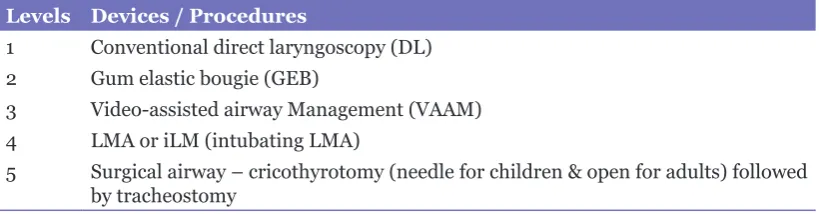
While the conventional plans A&B for difficult-airway-management (DAM) is confusing for being too non-specific, the modern trend is to explicitly state. The escalation levels of the DAM/ DIM choices as in the algorithm of the advanced trauma life support (ATLS) update in 2008 (1) or as in Table 2 (2) showing a practical and stratified approach according to a pre-defined team work
protocol to improve the outcome (15). When difficult airway is anticipated, video-assisted airway management (VAAM) can be the first line choice to shorten the intubation interval in the difficult airway with higher success rate. In case of very severe maxillofacial injuries with inaccessible oral passage, a surgical airway starting with cricothyrotomy will be life-saving (15).
The advantages of VAAM include a higher intubation success in difficult airway (16–18), Morquio syndrome (19), and paediatric airways (20), and an enlarged and close-up visualization of the laryngeal opening, while maximizing the distance between the intubation clinician from the patient’s mouth to reduce contact with blood splash during endotracheal intubation (ETI). With a high resolution viewing monitor, the assistants, or supervisors can provide more efficient collaboration. Video-recording of the ETI is feasible for both training and quality assurance (21). Besides, this VAAM is highly valuable for teaching the direct laryngoscopy (22).
The GlideScope, a VAAM-model has been successfully applied in the pre-hospital helicopter transfer services, rendering other back up devices unnecessary (23).
In the absence of the expensive VAAM, the more affordable laryngeal mask airway (LMA) or intubating laryngeal mask (iLM) can also maintain the airway, and provide ventilation as well as an alternative for endotracheal intubation (24).
The VAAM popularity rises with the decreasing cost. Emerging complications include the lingual nerve injury, palatopharyngeal wall, and palato-glossal arch perforation have
Table 1: Treatment Priorities in Major Polytrauma
P Protection with PPE (facial shield + conventional mask, gown & gloves)
D Decision: To initiate, continue or discontinue trauma resuscitation (such as fatal injuries with decapitation, torso truncation or OHCA)
A Airway: Maintenance of patent airway with cervical spine control (head & neck immobilization) a new 5-level of DAM & DIM (2)
B Breathing: Ensure adequate breathing or to provide ventilation
C Circulation: Check circulation, stop external bleeding, intravenous lines + blood work, identify internal bleeding to control hemorrhage (to prevent lethal trauma triad by DCR & MTP as indicated)
D Decompression of intra-cranium
E Extremities and adequate exposure but to prevent hypothermia) : after controlling exsanguinating external limb bleeding, the priorities returns to C & D above
been reported (25–28). Obviously, careful training programmes and cautious visualization procedures must be followed in using new technology to maximize the risk-benefit ratio.
CT scanner as the tunnel to death for
hemodynamically unstable
Imaging for the damaged anatomy is not as pressing as for the identification of the deranged physiology with impending death. CT suite is an adverse venue to monitor or resuscitate a critical ill patient, not to mention the tremendous hazard of the transfer. Bed-side decision in hemodynamically unstable patients is mainly based on clinical evaluation, plain XR and USG to decide the definitive treatment; otherwise, the CT gantry will be the tunnel to death (29).
FAST USG has superseded DPL and
is expanding to USG life support
process to sort out the shock and to
locate the bleeding
Diagnostic peritoneal lavage (DPL) has become unpopular in the early 2000’s after its wide-spread use since 1970’s owing to its high false positive rate leading to 25% to 36% of non-therapeutic laparotomy (30–31). DPL requires more time and higher technical skills than the bed-side USG. The rising affordability of USG models and improved USG accuracy of good sensitivity (81%–93%) and high specificity (90%–98%) (31–33), and achieving 100% specificity in development world (34), have rendered DPL obsolete. Jansen has engraved the DPL Obituary (born 1965 and died 2005) (35).
The FAST USG has extended from abdominal (fluid collection in Morrison’s pouch, spleno-renal recess, and the pelvic pouch) to include the extra-abdominal scanning to include the pericardial collection as in the Focused Echocardiographic Evaluation in Life Support
(FEEL) (37). In the more sophisticated approach, USG can help identify hemothorax (at the supine lung bases) (38–43), pneumothorax (front chest in the supine position) (38–44), impaired myocardial contractility (40) and IVC diameter, and the respiratory collapsibility (45) to establish the shock aetiology and to locate the bleeding sites. The USG sensitivity and specificity for pneumothorax are respectively 92% to 100% and 91% to 100% (43).
Moreover, hand-held USG used by emergency physician is of comparable accuracy (sensitivity for FAST was 88.9%, specificity was 97.6%, negative predictive value was 99.5%, and positive predictive value was 61.5% as the bed-side abdominal USG by radiologists (46). The high portability and affordability of the former will evidently transform the future clinical practice from the prehospital care, emergency department to the critical care.
TeleUSG (telemedicine USG) can be used in remote or under resourced areas to evaluate injured patient to guide the management and the transfer decision (47–50). Telementorable USG has also been developed (48–50). Tables 3 and 4 respectively summarize the USG evolution and imaging focus in trauma.
Trauma Imaging – Direct Whole-body MDCT
Despite controversy, there is a trend of favouring direct whole-body MDCT in major polytrauma with stable hemodynamics with CT performed outside the ED Trauma Room instead of a stepwise imaging from plain XR to USG followed by regional CT.
Direct whole-body CT in Wurmb’s study showed a reduction in the diagnostic interval from a median of 70 min to 23 min, and definitive management plan interval from another median of 82 min to 47 min (52). The NNT (number needed to treat or to scan to identify one major injury warranting operation to reduce mortality) was 302 and the NNH was 1777 (number needed
Table 2: Five Levels of DAM/DIM
Levels Devices / Procedures
1 Conventional direct laryngoscopy (DL) 2 Gum elastic bougie (GEB)
3 Video-assisted airway Management (VAAM) 4 LMA or iLM (intubating LMA)
Table 4: USG Imaging Focus in Trauma (51) 1. Abdomen – intra-peritoneal free fluid (IPFF) 2. Pericardial collection – effusion, tamponade 3. Myocardial contractility & wall motion 4. Lungs – pneumothorax & hemothorax
5. IVC – diameter & respiratory collapsibility (hypovolemic/cardiogenic/obstructive shock differentiation)
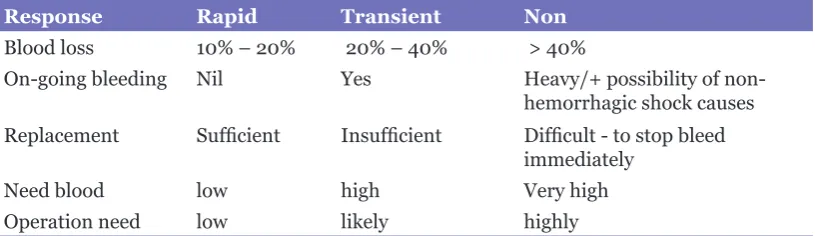
Table 5: Response to Initial IVF Resuscitation in Trauma Shock
Response Rapid Transient Non
Blood loss 10% – 20% 20% – 40% > 40%
On-going bleeding Nil Yes Heavy/+ possibility of
non-hemorrhagic shock causes Replacement Sufficient Insufficient Difficult - to stop bleed
immediately
Need blood low high Very high
Operation need low likely highly
to harm to produce one more fatal cancer per 10 mSv of additional radiation dose over regional CT usually around 9.2 mSv). Houshian found 31.4% of missed injuries needed operation (53). Rieger identified MDCT was superior to conventional imaging in terms of the diagnostic accuracy (54).
Huber-Wagner et al., (55) revealed a substantial relative reduction in mortality of 25% by the Trauma and Injury Severity Score (TRISS) and 13% by the Revised Injury Severity Classification (RISC) Score. The number needed to scan (NNT) was 17 based on TRISS and 32 by on RISC. Whole-body CT was a significant independent predictor for survival.
The compliance with the irradiation as low as reasonably achievable (ALARA) principle is essential to minimize cancer risk due to CT scanning though new technology can reduce the radiation dose (56). Further delineation of the risk-benefit balance is indicated (57–59).
Non-operative management (NOM) is a viable option based on the dynamic response to fluid resuscitation in shock assessment and diagnostic imaging in rapid responder
A dynamic evaluation of shock assessment has replaced the static model of classification by percentage of blood volume loss. The response model to initial IVF resuscitation is graded into Rapid, Transient, and Non-responders to indicate the status of any on-going bleeding, volume loss, need for transfusion and operation as in Table 5 (1).
Coupled with diagnostic imaging data in the stable cases, sound decision to adopt the non-operative management (NOM) (60) with subsequent monitoring in a critical care unit has been a common trauma practice in the past decade especially in the paediatric group mainly with trauma to the liver and spleen with rapid healing of the injured organs (61,62).
Table 3: Evolution of USG Imaging in Trauma Management 1. FAST – originally on the abdomen only
2. eFAST – Extended FAST – beyond the abdomen to include the thorax 3. USG life support – to sort out the type of shock and the etiology
Table 6: Damage Control Resuscitation (DCR)
1) Permissive Hypotension/Restrictive Fluid Resuscitation
2) Hemostatic Resuscitation/Balanced Blood Product Resuscitation 3) Damage Control Operation/Surgery (DCO/DCS)
DCR to combat the Lethal Triad of Trauma
The recent advanced armamentarium against the triad of trauma fatality (hypothermia, coagulopathy, and acidosis) (63–65) is the damage control resuscitation (DCR) (66–70) encompassing 3 major components as in Table 6.
Restriction of the fluid resuscitation by permissive hypotension (69) till bleeding is arrested can reduce the danger of hydrostatic displacement of the temporary clots in bleeding vessels of internal injuries before the surgical hemostasis.
Suboptimal organ perfusion is allowed to occur for a short duration. The aim is to keep the vital organ perfusion (brain and heart) with a systolic BP of around 80-90 mmHg. Bickel et al., in their landmark study, has shown an absolute mortality reduction of 8% by delayed and small IVF replacement in penetrating torso trauma with shock (71) but could not generalize the conclusion owing to the unusual short pre-hospital duration and very young age-mix.
Despite Cochrane review (72–74) has not shown mortality difference between early and delayed fluid resuscitation, the permissive hypotension approach would deserve attention to await further delineation studies.
However, Duke subsequently proved restrictive fluid resuscitation (less than 150 mL of crystalloids) in combination with DCS could substantially reduce mortality (OR 0.69;95 CI 0.37–0.91) in penetrating torso injuries (75).
Hemostatic Resuscitation aims at early transfusion by packed red cells (PRBC) with high ratios of plasma and platelet concentrate when massive blood transfusion (MBT) is indicated to reduce coagulopathy to decrease the mortality (76–81). Trauma patients with severe base deficits (less than negative 24) had higher survival benefit with MTP (82). An efficient communication and enhanced availability system could further lower the mortality (RRR–58%) (83). Early studies showed higher acute respiratory distress syndrome and multiple organ failure (ARDS and MOF) incidences with high ratio of fresh frozen plasma (FFP) (81). A later study revealed the septic shock, ventilator-associated pneumonia (VAP), abdominal compartment syndrome
(ACS), heart failure, liver failure, and MOF rates were lower in MBT with high component ratios (84). Besides, mortality (85–87) and the total amounts of blood products transfused (85) were both decreased with massive transfusion protocol (MTP). The current blood product ratio recommendation is 1:1:1. The on-going researches are to identify the most optimal ratios (88). The impact to paediatric trauma survival (89), to analyse if there might be a survivorship bias (creation or inflation) favouring MTP (90) and to delineating the real benefit impact (91,92).
Another new research arena is on the immunoregulator to treat the dysregulated inflammatory response in major trauma (93). Low-volume hypertonic saline resuscitation versus normal saline in head injury after DCS to control the torso bleeding can reduce the 30-days mortality from 15.2% to 5.3% as well as decreasing the ARDS, MOF and ICU stay duration (94).
Damage Control Surgery (DCS) is to correct the patho-physiology and not to have an immediate total repair of the destructed anatomy
There has been no head to head comparative study on the DCS to evaluate the mortality impact. Historical control in a small study of major penetrating abdominal injuries showed an impressive mortality reduction for treatment with the modern DCS (42% versus 10%) (69). Another evidence to favour the DCS coupled with other enhanced trauma management was the mortality diminishment of the United States servicemen wounded in Iraq and Afghanistan (2003 and 2009) to 10% from 24% in the first Gulf War (1990–1991) and Vietnam War (1961–1973) (69).
The success factors of mortality reduction in major pelvic disruption include a pre-set multi-disciplinary protocol, the novel Pre-PPP (Pre-Peritoneal Pelvic Packing) and the angio-embolization
Major pelvic disruption with shock carries high mortality (100,101). There is no direct comparison of whether transcatheter angiographic embolization (TCAE) (101) first is superior to external pelvic fixation (EPF) (102) or the converse but an explicit and pre-defined protocol improves the survival outcome (101,103).
Pelvic binder followed by EPF, pre-peritoneal packing (Pre-PPP) and TCAE (102) +/- venous stenting (104,105) can be a reasonable approach since trauma surgeons are usually in-house of the hospital in contrast to the interventional radiologists.
The rapid application of external pelvic circumferential compression devices (PCCD) can promptly help arrest the bleeding by the tamponade effect in the reduced pelvic space (103,106,107). Three commonly used models are the Pelvic Binder (R), SAM-Sling (R), and T-POD (R). However, prolonged use can cause skin and tissue damage and timely switch to EPF is essential (108). EPF apposes the fracture sites to help control the bone marrow bleeding and prevent expansion of the pelvic volume to enhance the consequent pressure effect of pre-peritoneal pelvic packing (Pre-PPP) to compress the venous and potentially the arterial bleeders. pre-ppp is a
re-kindled management from Europe, America and to Asia for mechanically unstable pelvis fractures in critically injured patients (109–113). This operative treatment can be rapidly performed by the orthopods or surgeons to stop the venous bleeding with/without subsequent TCAE especially in centres with limited interventional radiology services. In the Denver studies, the first line pre-ppp has been demonstrated to reduce the mortality (from 40% to 21–25%), the need for emergent trans-catheter arterial embolization (TCAE) and the blood product requirement in high risk pelvic fracture with no acute bleeding death (110,111) though the EAST review indicated more comparative studies with TCAE are required (103).
The adoption of the Pre-PPP (or retro-PPP) first with a bundle of management changes has also reduced the mortality of major pelvic fractures from the historical 69.2% of TCAE first to 36.3% in a Hong Kong trauma centre (114). A German model of pelvic emergency simulator has been developed to train pelvic hemorrhage reduction by the Pre-PPP (115).
TCAE targets at arresting arterial bleeding by injecting gel-foam or as a permanent procedure by metallic coils in case of A-V fistula or pseudo-aneurysm. Venous stenting controls hemorrhage through the large ruptured veins such as the iliac veins. Interventional TCAE is an efficient and effective procedure for hemostasis of arterial bleeding as contrast (or blood) blush detected on MDCT in pelvic fractures. It should be incorporated into the early clinical Management protocol (116). Table 8 outlines the important management steps in major pelvic fracture.
While operation is the definitive
treatment for injury, prevention is
the best treatment
Though the golden hours of trauma resuscitation (117) are very exciting, appealing but challenging and at times disheartening, prevention is actually more important. WHO
Table 7: Damage Control Surgery (DCS) Hemostasis
Decontamination
Quick body cavity closure to rewarm patient
Focussed critical care in the intensive care unit to further improve the hemodynamic, electrolyte and metabolic status
Table 8: Key management steps in major pelvic fracture in shock Permissive hypotension + Hemostatic Resuscitation
PCCD – external pelvic circumferential compression devices
DCL (Damage Control Laparotomy) if abdominal USG reveals IPFF; if not, proceed to EPF EPF – External pelvic fixation
Pre-PPP – Pre-peritoneal (Retro-peritoneal) pelvic packing
TCAE (Trans-catheter Arterial Embolization) / Angio-embolism / Endovascular stenting for large vein perforation
Second-look Pre-PPP 24 to 48 hrs later after ICU stabilization
Table 9: Knowledge Translation Barriers – the 4 U’s 1. Unaware
2. Under-resourced 3. Unwilling 4. Un-prepared
(World Health Organization) reported the global road traffic injuries (RTI) killed nearly 1.3 million people annually in the Global Status Report on Road Safety in 2009 (118) and would become the fifth leading cause of death by 2030 if the trend did not change. Besides, there were 20 to 50 million sustaining non-fatal injuries each year. The results revealed RTI continued to be an important public health problem, particularly for low-income and middle-income countries. Nearly 50% of the deaths were of pedestrians, cyclists and motorcyclists, signifying the urgent need for these road users to be given more attention in road safety programmes and law enforcement.
As a prestigious trauma surgeon, Donald Trunkey is certainly one of most dedicated advocates on trauma prevention, who has shown motor vehicle crash, homicide, burns, alcohol and drug abuse constitute the major problems (119).
Helmets though simple devices are important to reduce head and maxillofacial injuries and death in bicyclists and related activities whereas the safety belts decreases mortality in motor vehicle crashes (120–128), not to mention the tremendous reduction in financial burden (125,126). While drunk driving persists as an important cause for trauma mortality (129), drugged driving is another emerging problem with the high respective prevalence rate of 18.5%, 13%, 12.3% and 10% among the injured drivers (of the developed countries) of in Italy (130), Sweden (131), Belgium (132) and Hong Kong (133). Education, legislation and law enforcement are the 3-pronged public health approach to
control the harm.
Trauma care quality indicators comprise of 3 levels from the prehospital, in-hospital to post-hospital (134). In the prepost-hospital and in-post-hospital levels, the endeavour is to attain the secondary injury prevention by mitigating the injury severity by decreasing the impact force such as by the safety devices mentioned earlier with safe car and road design, not to mention the reduction of the trauma complications by prompt EMS and medical treatment. Tertiary prevention aims at injury recurrence while primary prevention focuses on occurrence elimination.
Therapy including resuscitation and operation may not be able to salvage mortality or wholly restore the body functions (brain or limb), resulting in not only death, permanent disability, scars, pain but burden in all forms including and not limited to physical, psychological, financial and social. Injury prevention can never be over-emphasized and deserves timely re-attention and additional resources allocation.
In summary, comprehensive injury management care is not restricted to the golden hours of resuscitation, but commences with pre-hospital bystander and competent ambulance services and continues with the in-patient critical care followed by high quality rehabilitation programme enhanced by future prevention for the injured and primary prevention for the at risk groups.
Correspondence
Dr Kam Chak Wah
MBBS (HKU), MRCP (UK), FRCSEd; FRCSG; FCEM; FHKAM (Surgery), FHKAM (Emergency Medicine) Accident and Emergency Department
Tuen Mun Hospital Tuen Mun, Hong Kong Tel: +852-2468 5198 Fax: +852-2456 9186 E-mail: [email protected]
References
1. Kortbeek JB, Al Turki SA, Ali J, Antoine JA, Bouillon B, Brasel K, et al. Advanced trauma life support, 8th edition, the evidence for change. J Trauma. 2008; 64(6):1638–1650.
2. Kam CW, Lai CH, Lam SK, So FL, Lau CL, Cheung KH. What are the ten new commandments in severe
polytrauma management? World J Emerg Med.
2010;1(2):85–92.
3. Moore D, Gamage B, Bryce E, Copes R, Yassi A; BC Interdisciplinary Respiratory Protection Study Group. Protecting health care workers from SARS and other respiratory pathogens: organizational and individual factors that affect adherence to infection control guidelines. Am J Infect Control. 2005;33(2):88–96.
4. Hopson LR, Hirsh E, Delgado J, Domeier RM, Krohmer J, McSwain NE, Jr, et al. Guidelines for withholding or termination of resuscitation in prehospital traumatic cardiopulmonary arrest. J Am Coll Surg. 2003;196(3):475–481.
5. Pickens JJ, Copass MK, Bulger EM. Trauma patients receiving CPR: predictors of survival. J Trauma. 2005;58(5):951–958.
6. O'Brien E, Hendricks D, Cone DC. Field termination of resuscitation: analysis of a newly implemented protocol. Prehosp Emerg Care. 2008;12(1):57–61.
7. Capizzani AR, Drongowski R, Ehrlich PF. Assessment of termination of trauma resuscitation guidelines: are children small adults? J Pediatr Surg. 2010;45(5):903–907.
8. Neville AL, Nemtsev D, Manasrah R, Bricker SD, Putnam BA. Mortality risk stratification in elderly trauma patients based on initial arterial lactate and base deficit levels. Am Surg. 2011;77(10):1337–1341.
9. Johansson PI, Srensen AM, Perner A, Welling KL, Wanscher M, Larsen CF, et al. High sCD40L levels early after trauma are associated with enhanced shock, sympathoadrenal activation, tissue and endothelial damage, coagulopathy and mortality. J Thromb Haemost. 2012;10(2):207–216.
10. Teng L, Yu M, Li JM, Tang H, Yu J, Mo LH, et al. Matrix metalloproteinase-9 as new biomarkers of severity in multiple organ dysfunction syndrome caused by trauma and infection. Mol Cell Biochem. 2012;360(1–2):271–277.
11. Lee C, Porter KM, Hodgetts TJ. Tourniquet use in the civilian prehospital setting. Emerg Med J. 2007;24(8):584–587.
12. Kragh JF Jr, Walters TJ, Baer DG, Fox CJ, Wade CE, Salinas J, et al. Survival with emergency tourniquet use to stop bleeding in major limb trauma. Ann Surg. 2009;249(1):1–7.
13. Brodie S, Hodgetts TJ, Ollerton J, McLeod J, Lambert P, Mahoney P. Tourniquet use in combat trauma: U.K. military experience. J Spec Oper Med. 2009;9(1):74–77.
14. Schrager JJ, Branson RD, Johannigman JA. Lessons from the tip of the spear: medical advancements
from Iraq and Afghanistan. Respir Care.
2012;57(8):1305–1313.
15. Dupanovic M, Fox H, Kovac A. Management of the airway in multitrauma. Curr Opin Anaesthesiol. 2010;23(2):276–282.
16. Choi HJ, Kang HG, Lim TH, Chung HS, Cho J, Oh YM, et al. Endotracheal intubation using a GlideScope video laryngoscope by emergency physicians: a multicentre analysis of 345 attempts in adult patients. Emerg Med J. 2010;27(5):380–382.
17. Ray DC, Billington C, Kearns PK, Kirkbride R, Mackintosh K, Reeve CS, et al. A comparison of McGrath and Macintosh laryngoscopes in novice users: a manikin study. Anaesthesia. 2009;64(11): 1207–1210.
18. Tsui KL, Hung CY, Kam CW. A manikin study to compare video-optical intubation stylet versus Macintosh laryngoscope used by novice in normal and simulated difficult airway situation. Hong Kong J Emerg Med. 2008;15(3):133–138.
19. Theroux MC, Nerker T, Ditro C, Mackenzie WG. Anesthetic care and perioperative complications of children with Morquio syndrome. Paediatr Anaesth. 2012;22(9):901–907.
20. Ilies C, Fudickar A, Thee C, Dütschke P, Hanss R, Doerges V, et al. Airway management in pediatric patients using the Glidescope Cobalt®: a feasibility
study. Minerva Anestesiol. 2012;78(9):1019–1025.
22. Viernes D, Goldman AJ, Galgon RE, Joffe AM. Evaluation of the GlideScope Direct: A New Video Laryngoscope for Teaching Direct Laryngoscopy. Anesthesiol Res Pract. 2012;2012:820961.
23. Struck MF, Wittrock M, Nowak A. Prehospital Glidescope video laryngoscopy for difficult airway management in a helicopter rescue program with anaesthetists. Eur J Emerg Med. 2011;18(5): 282–284.
24. Gerstein NS, Braude DA, Hung O, Sanders JC, Murphy MF. The Fastrach Intubating Laryngeal Mask Airway: an overview and update. Can J Anaesth. 2010;57(6):588–601.
25. Magboul MM, Joel S. The video laryngoscopes blind spots and possible lingual nerve injury by the Gliderite rigid stylet--case presentation and review of literature. Middle East J Anesthesiol. 2010;20(6):857–860.
26. Leong WL, Lim Y, Sia AT. Palatopharyngeal wall perforation during Glidescope intubation. Anaesth Intensive Care. 2008;36(6):870–874.
27. Hsu WT, Tsao SL, Chen KY, Chou WK. Penetrating injury of the palatoglossal arch associated with use of the GlideScope videolaryngoscope in a flame burn patient. Acta Anaesthesiol Taiwan. 2008;46(1): 39–41.
28. Cooper RM. Complications associated with the use of the GlideScope videolaryngoscope. Can J Anaesth. 2007;54(1):54–57.
29. Mackay A. Is the 'tunnel of death' a suitable modality for investigating the severely traumatized child? Aust N Z J Surg. 1999;69(8):587–588.
30. Sözüer EM, Akyürek N, Kafali ME, Yildirim C. Diagnostic peritoneal lavage in blunt abdominal trauma victims. Eur J Emerg Med. 1998;5(2): 231–234.
31. Bain IM, Kirby RM, Tiwari P, McCaig J, Cook AL, Oakley PA, et al. Survey of abdominal ultrasound and diagnostic peritoneal lavage for suspected intra-abdominal injury following blunt trauma. Injury. 1998;29(1):65–71.
32. Porter RS, Nester BA, Dalsey WC, O'Mara M, Gleeson T, Pennell R, et al. Use of ultrasound to determine need for laparotomy in trauma patients. Ann Emerg Med. 1997;29(3):323–330.
33. Boulanger BR, Brenneman FD, McLellan BA, Rizoli SB, Culhane J, Hamilton P. A prospective study of emergent abdominal sonography after blunt trauma. J Trauma. 1995;39(2):325–330.
34. Smith ZA, Postma N, Wood D. FAST scanning in the developing world emergency department. S Afr Med J. 2010;100(2):105–108.
35. Jansen JO, Logie JR. Diagnostic peritoneal lavage – an obituary.USG is now extensively used as the visual stethoscope to visualize the injuries through the skin by clinicians. Br J Surg. 2005;92(5):517-518.
36. Gillman LM, Kirkpatrick AW. Portable bedside ultrasound: the visual stethoscope of the 21st century. Scand J Trauma Resusc Emerg Med. 2012;20:18.
37. Schellhaas S, Breitkreutz R. Basics of emergency ultrasound. Praxis (Bern 1994). 2012;101(18): 1153–1160.
38. Dexheimer Neto FL, Dalcin Pde T, Teixeira C, Beltrami FG. Lung ultrasound in critically ill patients: a new diagnostic tool. J Bras Pneumol. 2012;38(2): 246–256.
39. Turner JP, Dankoff J. Thoracic ultrasound. Emerg Med Clin North Am. 2012;30(2):451–473.
40. ean-Vivien S, Pierre P, Alexandre S, Julie R, Stéphane M. In press; Ultrasound: Easy and reliable technique in diagnosis of occult traumatic pneumothorax. Injury. 2012.
41. Burns BJ, Aguirrebarrena G. Occult Traumatic Loculated Tension Pneumothorax-A Sonographic Diagnostic Dilemma. Prehosp Emerg Care. 2012; 17(1):92–94.
42. Abbasi S, Farsi D, Hafezimoghadam P, Fathi M, Zare MA. Accuracy of emergency physician-performed ultrasound in detecting traumatic pneumothorax after a 2-h training course. Eur J Emerg Med. 2012.
43. Zechner PM, Seibel A, Aichinger G, Steigerwald M, Dorr K, Scheiermann P, et al. Lung ultrasound in acute and critical care medicine. Anaesthesist. 2012;61(7):608–617.
44. Husain LF, Hagopian L, Wayman D, Baker WE, Carmody KA. Sonographic diagnosis of pneumothorax. J Emerg Trauma Shock. 2012;5(1):76–81.
45. Sefidbakht S, Assadsangabi R, Abbasi HR. Sonographic measurement of the inferior vena cava as a predictor of shock in trauma patients. Emerg Radiol. 2007;14(3):181–185.
46. Coşkun F, Akıncı E, Ceyhan MA, Sahin Kavaklı H. Our new stethoscope in the emergency department: handheld ultrasound. Ulus Travma Acil Cerrahi Derg. 2011;17(6):488–492. doi: 10.5505/tjtes.2011.89914.
47. Boniface KS, Shokoohi H, Smith ER, Scantlebury K. Tele-ultrasound and paramedics: real-time remote physician guidance of the Focused Assessment With Sonography for Trauma examination. Am J Emerg Med. 2011;29(5):477–481.
48. McBeth PB, Crawford I, Blaivas M, Hamilton T, Musselwhite K, Panebianco N, et al. Simple, almost anywhere, with almost anyone: remote low-cost telementored resuscitative lung ultrasound. J Ttrauma. 2011;71(6):1528–1535.
49. Crawford I, McBeth PB, Mitchelson M, Tiruta C, Ferguson J, Kirkpatrick AW. Telementorable "just-in-time" lung ultrasound on an iPhone. J Emerg Trauma Shock. 2011;4(4):526–527.
51. Gillman LM, Ball CG, Panebianco N, Al-Kadi A, Kirkpatrick AW. Clinician performed resuscitative ultrasonography for the initial evaluation and resuscitation of trauma. Scand J Trauma Resusc Emerg Med. 2009;17(1):34.
52. Wurmb TE, Frühwald P, Hopfner W, Keil T, Kredel M, Brederlau J, et al. Whole-body multislice computed tomography as the first line diagnostic tool in patients with multiple injuries: the focus on time. J Trauma. 2009;66(3):658–665.
53. Houshian S, Larsen MS, Holm C. Missed injuries in a level I trauma center. J Trauma. 2002;52(4): 715–719.
54. Rieger M, Czermak B, El Attal R, Sumann G, Jaschke W, Freund M. Initial clinical experience with a 64-MDCT whole-body scanner in an emergency department: better time management and diagnostic quality? J Trauma. 2009;66(3):648–657.
55. Huber-Wagner S, Lefering R, Qvick LM, Körner M, Kay MV, Pfeifer KJ, et al. Working Group on Polytrauma of the German Trauma Society. Effect of whole-body CT during trauma resuscitation on survival: a retrospective, multicentre study. Lancet. 2009;373(9673):1455–1461.
56. McCollough CH. CT dose: how to measure, how to reduce. Health Phys. 2008;95(5):508–517.
57. Hall EJ, Brenner DJ. Cancer risks from diagnostic radiology. Br J Radiol. 2008;81(965):362–378.
58. Huang B, Law MW, Khong PL. Whole-body PET/CT scanning: estimation of radiation dose and cancer risk. Radiology. 2009;251(1):166–174.
59. Sun Z, Ng KH, Vijayananthan A. Is utilisation of computed tomography justified in clinical practice? Part I: application in the emergency department. Singapore Med J. 2010;51(3):200–206.
60. Schroeppel TJ, Croce MA. Diagnosis and management of blunt abdominal solid organ injury. Curr Opin Crit Care. 2007;13(4):399–404.
61. Gaines BA, Ford HR. Abdominal and pelvic trauma in children. Crit Care Med. 2002;
30(11 Suppl):S416–423.
62. Gaines BA. Intra-abdominal solid organ injury in children: diagnosis and treatment. J Trauma. 2009;67(2 Suppl):S135–139.
63. Hess JR, Brohi K, Dutton RP, Hauser CJ, Holcomb JB, Kluger Y, et al. The coagulopathy of trauma: a review of mechanisms. J Trauma. 2008;65(4): 748–754.
64. Brohi K, Singh J, Heron M, Coats T. Acute traumatic coagulopathy. J Trauma. 2003;54(6):1127–1130.
65. Maegele M, Lefering R, Yucel N, Tjardes T, Rixen D, Paffrath T, et al. AG Polytrauma of the German Trauma Society (DGU). Early coagulopathy in multiple injury: an analysis from the German Trauma Registry on 8724 patients. Injury. 2007;38(3): 298–304.
66. Holcomb JB, Jenkins D, Rhee P, Johannigman J, Mahoney P, Mehta S, et al. Damage control resuscitation: directly addressing the early coagulopathy of trauma. J Trauma. 2007;62(2): 307–310.
67. Hodgetts TJ, Mahoney PF, Kirkman E. Damage control resuscitation. J R Army Med Corps. 2007;153(4):299–300.
68. Beekley AC. Damage control resuscitation: a sensible approach to the exsanguinating surgical patient. Crit Care Med. 2008;36(7 Suppl):S267–274.
69. Jansen JO, Thomas R, Loudon MA, Brooks A. Damage control resuscitation for patients with major trauma. BMJ. 2009; 338:b1778. doi: 10.1136/bmj.b1778.
70. Spinella PC, Holcomb JB. Resuscitation and transfusion principles for traumatic hemorrhagic shock. Blood Rev. 2009;23(6):231–240.
71. Bickell WH, Wall MJ Jr, Pepe PE, Martin RR, Ginger VF, Allen MK, et al. Immediate versus delayed fluid resuscitation for hypotensive patients with
penetrating torso injuries. N Engl J Med.
1994;331(17):1105–1109.
72. Turner J, Nicholl J, Webber L, Cox H, Dixon S, Yates D. A randomised controlled trial of prehospital intravenous fluid replacement therapy in serious trauma. Health Technol Assess. 2000;4(31):1-57.
73. Dutton RP, Mackenzie CF, Scalea TM. Hypotensive resuscitation during active hemorrhage: impact on in-hospital mortality. J Trauma. 2002;52(6): 1141–1146.
74. Kirkman E, Watts S, Hodgetts T, Mahoney P, Rawlinson S, Midwinter M. A proactive approach to the coagulopathy of trauma: the rationale and guidelines for treatment. J R Army Med Corps. 2007;153(4):302–306.
75. Duke MD, Guidry C, Guice J, Stuke L, Marr AB, Hunt JP, et al. Restrictive fluid resuscitation in combination with damage control resuscitation: Time for adaptation. J Trauma Acute Care Surg. 2012;73(3):674–678.
76. Borgman MA, Spinella PC, Perkins JG, Grathwohl KW, Repine T, Beekley AC, et al. The ratio of blood products transfused affects mortality in patients receiving massive transfusions at a combat support hospital. J Trauma. 2007;63(4):805–813.
77. Duchesne JC, Hunt JP, Wahl G, Marr AB, Wang YZ, Weintraub SE, et al. Review of current blood transfusions strategies in a mature level I trauma center: were we wrong for the last 60 years? J Trauma. 2008;65(2):272–278.
78. Gunter OL, Au BK, Isbell JM, Mowery NT, Young PP, Cotton BA. Optimizing outcomes in damage control resuscitation: identifying blood product ratios associate with improved survival. J Trauma. 2008;65(3):527–534.
80. Holcomb JB, Wade CE, Michalek JE, Chisholm GB, Zarzabel LA, Schreiber MA, et al. Increased plasma and platelet to red blood cell ratios improves outcome in 466 massively transfused civilian trauma patients. Ann Surg. 2008;248(3):447–458.
81. Maegele M, Lefering R, Paffrath T, Tjardes T, Simanski C, Bouillon B. Red blood cell to plasma ratios transfused during massive transfusion are associated with mortality in severe multiply injury: a retrospective analysis from the trauma registry of the Deutsche Gesellschaft fur Unfallchirurgie. Vox Sang. 2008;959(2):112–119.
82. Hodgman EI, Morse BC, Dente CJ, Mina MJ, Shaz BH, Nicholas JM, et al. Base deficit as a marker of survival after traumatic injury: consistent across changing patient populations and resuscitation paradigms. J Trauma Acute Care Surg. 2012;72(4):844–851.
83. Riskin DJ, Tsai TC, Riskin L, Hernandez-Boussard T, Purtill M, Maggio PM, et al. Massive transfusion protocols: the role of aggressive resuscitation versus product ratio in mortality reduction. J Am Coll Surg. 2009;209(2):198–205.
84. Cotton BA, Au BK, Nunez TC, Gunter OL, Robertson AM, Young PP. Predefined massive transfusion protocols are associated with a reduction in organ failure and postinjury complications. J Trauma. 2009;66(1):41–48.
85. Cotton BA, Dossett LA, Au BK, Nunez TC, Robertson AM, Young PP. Room for (performance) improvement: provider-related factors associated with poor outcomes in massive transfusion. J Trauma. 2009;67(5):1004–1012.
86. Dente CJ, Shaz BH, Nicholas JM, Harris RS, Wyrzykowski AD, Patel S, et al. Improvements in early mortality and coagulopathy are sustained better in patients with blunt trauma after institution of a massive transfusion protocol in a civilian level I trauma center. Trauma. 2009;66(6):1616–1624.
87. Riskin DJ, Tsai TC, Riskin L, Hernandez-Boussard T, Purtill M, Maggio PM, et al. Massive transfusion protocols: the role of aggressive resuscitation versus product ratio in mortality reduction. J Am Coll Surg.
2009;209(2):198–205.
88. Holcomb JB, Spinella PC. Optimal use of blood in trauma patients. Biologicals. 2010;38(1):72–77.
89. Hendrickson JE, Shaz BH, Pereira G, Parker PM, Jessup P, Atwell F, et al. Implementation of a pediatric trauma massive transfusion protocol: one institution's experience. Transfusion. 2012;52(6):1228–1236.
90. Ho AM, Dion PW, Yeung JH, Joynt GM, Lee A, Ng CS, et al. Simulation of survivorship bias in observational studies on plasma to red blood cell ratios in massive transfusion for trauma. Br J Surg. 2012; 99(1 Suppl):S132–139. doi: 10.1002/bjs.7732.
91. Shere-Wolfe RF, Galvagno SM Jr, Grissom TE. Critical care considerations in the management of the trauma patient following initial resuscitation. Scand J Trauma Resusc Emerg Med. 2012;20(1):68.
92. Theusinger OM, Madjdpour C, Spahn DR. Resuscitation and transfusion management in trauma patients: emerging concepts. Curr Opin Crit Care. 2012;18(6):661–670.
93. Gruen RL, Brohi K, Schreiber M, Balogh ZJ, Pitt V, Narayan M, et al. Haemorrhage control in severely injured patients. Lancet. 2012;380(9847):1099– 1108. doi: 10.1016/S0140-6736(12)61224-0.
94. Duchesne JC, Simms E, Guidry C, Duke M, Beeson E, McSwain NE, et al. Damage control immunoregulation: is there a role for low-volume hypertonic saline resuscitation in patients managed with damage control surgery? Am Surg. 2012;78(9):962–968.
95. Lee JC, Peitzman AB. Damage-control laparotomy. Curr Opin Crit Care. 2006;12(4):346–350.
96. Blackbourne LH. Combat damage control surgery. Crit Care Med. 2008;36(7 Suppl):S304–310.
97. Cirocchi R, Abraha I, Montedori A, Farinella E, Bonacini I, Tagliabue L, et al. Damage control surgery for abdominal trauma. Cochrane Database Syst Rev. 2010;1:CD007438.
98. Chovanes J, Cannon JW, Nunez TC. The evolution of damage control surgery. Surg Clin North Am. 2012;92(4):859–875.
99. Waibel BH, Rotondo MM. Damage control surgery: it's evolution over the last 20 years. Rev Col Bras Cir. 2012;39(4):314–321.
100. Banerjee S, Barry MJ, Paterson JM. Paediatric pelvic fractures: 10 years experience in a trauma centre. Injury. 2009;40(4):410–413.
101. White CE, Hsu JR, Holcomb JB. Haemodynamically unstable pelvic fractures. Injury. 2009;40(10): 1023–1030.
102. van Vugt AB, van Kampen A. An unstable pelvic ring. The killing fracture. J Bone Joint Surg Br. 2006;88(4):427–433.
103. Cullinane DC, Schiller HJ, Zielinski MD, Bilaniuk JW, Collier BR, Como J, et al. Eastern Association for the Surgery of Trauma practice management guidelines for hemorrhage in pelvic fracture-update and systematic review. J Trauma. 2011;71(6): 1850–1868.
104. Hagiwara A, Minakawa K, Fukushima H, Murata A, Masuda H, Shimazaki S. Predictors of death in patients with life-threatening pelvic hemorrhage after successful transcatheter arterial embolization. J Trauma. 2003;55(4):696–703.
105. Hagiwara A. Murata A. Matsuda T. Matsuda H. Shimazaki S. The usefulness of transcatheter arterial embolization for patients with blunt polytrauma showing transient response to fluid resuscitation. J Trauma. 2004;57(2):271–276.
107. Tan EC, van Stigt SF, van Vugt AB. [Epub ahead of print]. Effect of a new pelvic stabilizer (T-POD ((R)) on reduction of pelvic volume and haemodynamic stability in unstable pelvic fractures. Injury. 2010.
108. Knops SP, van Riel MP, Goossens RH, van Lieshout EM, Patka P, Schipper IB. Measurements of the exerted pressure by pelvic circumferential compression devices. Open Orthop J. 2010;4: 101–106.
109. Cothren CC, Moore EE, Smith WR, Morgan SJ. Preperitoneal pelvic packing in the child with an unstable pelvis: a novel approach. J Pediatr Surg. 2006;41(4):17–19.
110. Cothren CC, Osborn PM, Moore EE, Morgan SJ, Johnson JL, Smith WR. Preperitonal pelvic packing for hemodynamically unstable pelvic fractures: a paradigm shift. J Trauma. 2007;62(4):834–839; discussion 839–142.
111. Burlew CC, Moore EE, Smith WR, Johnson JL, Biffl WL, Barnett CC, et al. Preperitoneal pelvic packing/ external fixation with secondary angioembolization: optimal care for life-threatening hemorrhage from unstable pelvic fractures. J Am Coll Surg. 2011;212(4):628–365; discussion 635–637.
112. Eckroth-Bernard K, Davis JW. [Epub ahead of print]. Management of pelvic fractures. Curr Opin Crit Care. 2010.
113. Zhao XG. Emergency management of
hemodynamically unstable pelvic fractures. Chin J Traumatol. 2011;14(6):363–366.
114. Tai DK, Li WH, Lee KY, Cheng M, Lee KB, Tang LF, et al. Retroperitoneal pelvic packing in the management of hemodynamically unstable pelvic fractures: a level I trauma center experience. J Trauma. 2011;71(4):E79–86.
115. Pohlemann T, Culemann U, Holstein JH. Initial experience using a pelvic emergency simulator to train reduction in blood loss. Clin Orthop Relat Res.
2012;470(8):2098–2103.
116. Westhoff J, Laurer H, Wutzler S, Wyen H, Mack M, Maier B, et al. Interventional emergency embolization for severe pelvic ring fractures with arterial bleeding. Integration into the early clinical treatment algorithm. Unfallchirurg. 2008;111(10):821–828.
117. Lambert JL, Hartstein G, Ghuysen A, D'Orio V. Emergency practice: specifics in the management of complex multiple trauma. Rev Med Liege. 2001; 56(3):149–154.
118. Global Report On Road Safety [Internet]. Switzerland: World Health Organization; 2009 [cited 2012 Oct 9]. Available from: http://www.who.int/violence_ injury_prevention/road_safety_status/2009/en/ index.html.
119. Trunkey DD. Shock trauma. Can J Surg.
1984;27(5):479–486.
120. Passmore J, Tu NT, Luong MA, Chinh ND, Nam NP. World Health Organization, Hanoi, Viet Nam. Impact of mandatory motorcycle helmet wearing legislation on head injuries in Viet Nam: results of a preliminary
121. Bavon A, Standerfer C. The effect of the 1997 Texas motorcycle helmet law on motorcycle crash fatalities. South Med J. 2010;103(1):11–17.
122. Donate-López C, Espigares-Rodríguez E, Jiménez-Moleón JJ, Luna-del-Castillo Jde D, Bueno-Cavanillas A, Lardelli-Claret P. The association of age, sex and helmet use with the risk of death for occupants of two-wheeled motor vehicles involved in traffic crashes in Spain. Accid Anal Prev. 2010;42(1):297–306.
123. Wang JT, Li JS, Chiu WT, Chen SH, Tsai SD, Yu WY, et al. Characteristics of bicycle-related head injuries among school-aged children in Taipei area. Surg Neurol. 2009;72(2 Suppl):S36–40.
124. Kiss K, Pintér A. Are bicycle helmets necessary
for children? Pros and cons. Orv Hetil.
2009;150(24):1129–1133.
125. Conner KA, Xiang H, Smith GA. The impact of a standard enforcement safety belt law on fatalities and hospital charges in Ohio. J Safety Res. 2010;41(1): 17–23.
126. Hemmo-Lotem M, Endy-Findling L, Epel A, Klein M, Raanan R. The rationale for promotion of bicycle helmet legislation for children up to 18 years. Harefuah. 2007;146(9):690-4, 733–734.
127. Pardi LA, King BP, Salemi G, Salvator AE. The effect of bicycle helmet legislation on pediatric injury. J Trauma Nurs. 2007;14(2):84–87.
128. Thompson DC, Rivara FP, Thompson R. Helmets for preventing head and facial injuries in bicyclists. Cochrane Database Syst Rev. 2000;2:CD001855.
129. Impinen A, Mäkelä P, Karjalainen K, Rahkonen O, Lintonen T, Lillsunde P, et al. High mortality among people suspected of drunk-driving. An 18-year register-based follow-up. Drug Alcohol Depend. 2010;110(1-2):80–84.
130. Siliquini R, Chiadò Piat S, Gianino MM, Renga G. Drivers involved in road traffic accidents in Piedmont Region: psychoactive substances consumption. J Prev Med Hyg. 2007;48(4):123–128.
131. Ahlm K, Bjornstig U, Ostrom M. Alcohol and drugs in fatally and non-fatally injured motor vehicle drivers in northern Sweden. Accid Anal Prev. 2009;41(1): 129–136.
132. Schepens PJ, Pauwels A, Van Damme P, Musuku A, Beaucourt L, Selala MI. Drugs of abuse and alcohol in weekend drivers involved in car crashes in Belgium. Ann Emerg Med. 1998;31(5):633–637.
133. Wong OF, Tsui KL, Lam TS, Sze NN, Wong SC, Lau FL, et al. Prevalence of drugged drivers among non-fatal driver casualties presenting to a trauma centre in Hong Kong. Hong Kong Med J. 2010;16(4):246–251.