The effectiveness of two methods of teaching safe falls
to physiotherapy students
Bartłomiej Gąsienica-Walczak
1ABCD
, Bartłomiej Jan Barczyński
2ABCDE
,
Roman Maciej Kalina
3ABCDE
, Cezary Kucio
3ACD
1
Institute of Physiotherapy, The Podhale State Vocational School of Higher Education, Nowy Targ, Poland
2Index Copernicus International S.A., Warsaw, Poland
3
Department of Physiotherapy, Academy of Physical Education, Katowice, Poland
Source of support:
Departmental sources
Received:
9 April 2010;
Accepted:
13 April 2010;
Published online:
15 April 2010
Abstract
Background
Falls are a phenomenon which cannot be eliminated from human ontogenesis. The study aim was to verify the hy-pothesis that teaching safe falls to young women and men by methods that prefer playful forms of exercises is as effective as the rigorous method, on condition of high attendance at classes.Material/Methods:
The surveys included 107 physiotherapy students of the fifth semester of first degree studies. Eighty subjects were female (range 20–24 years with a mean age of 21.06 years), and 27 subjects were male (range 19–34 years with a mean age of 21.66 years). Sixty-eight female and 22 male students attended 90–100% classes (attendance 70–80%: 12 female, 5 male students). Students completed the first part of the authors’ programme titled “The theory and methodology of safe falls in individuals after limb amputations and the blind”. Students in group A were trained by the rigorous method, while students in group B were trained by a method that preferred playful forms of exer-cises. The “test of safe falls” (TSF) results were adopted as the criterion for the assessment of the effectiveness of the methods.Results:
The average TSF result in group A was 90.77±5.93 points; in group B, it was 90.44±7.13 points. These results show a more-than-good motor competence of students as pertains safe falls. The TSF run-time was 18.57±2.06 s in group A and 19.15±2.43 s in Group B. There were no statistically significant difference between the two groups in relation to both indices. As much as 44.4% of students in group B declared a need to increase the number of classes to 2–3 classes per week, compared to 31.1% students in group A, which proves that the method preferring playful forms of exercises is more attractive. A 70–80% class attendance was not a factor lowering adaptive effects.Conclusions:
Both methods are effective. Because of higher attractiveness of playful forms of exercises, one should often but cautiously apply them in teaching safe falls in order to precipitate adaptive effectsand shape the habit of system-atic physical training.Key words: safe falls • rigorous method • method preferring playful forms of exercises • test of safe falls
Author’s address: Bartłomiej Barczyński, Index Copernicus International S.A., Al. Jerozolimskie 146 C, 02-305 Warsaw, Poland, e-mail: [email protected]
B
ackgroundFalls are phenomena which cannot be eliminated from human ontogenesis. Fatal falls and injuries caused by collision with the ground or vertical obstacles happen in the entire population in similar proportions, as con-firmed by WHO estimates [1,2]. However, as shown by
research conducted by numerous institutions [3–7] and research teams [8–14], the epidemiology of the phenom-enon, its risk factors, social costs and prevention are de-termined by local, national or regional circumstances. Conclusions of many studies agree that as a result of a longer lifespan, falls will concern a growing number of older individuals. For example: “In England, the number
and Study Aim:
Authors’ Contribution: A Study Design
B Data Collection
C Statistical Analysis
D Manuscript Preparation
E Funds Collection
of people aged over 65 is due to rise by a third by 2025. In the same period, the number of people over 80 will double and the number of individuals over 100 will in-crease fourfold (…) A significant rise in falls and associ-ated fractures is therefore likely unless specific preven-tative interventions (…) become widespread” [5, p. 3].
According to experts from the Chartered Society of Physiotherapy [7], the group of the highest risk of falls and injuries includes mainly:
• frail older people;
• those with long-term conditions that affect the body in physical terms, such as stroke, Parkinson’s disease, arthritis, visual impairment, etc., where there isn’t a quick response of their neurological and musculoskel-etal systems to prevent a fall or where there is no suf-ficient strength to make the saving response effective; • those with mental health issues and learning
disabil-ities who may not appreciate danger.
So far, 400 different fall risk factors were described [13], including certain types of physical activities. High risk groups include athletes, both those who often fall in combat sports – judokas, wrestlers, hockey players, foot-ball players etc. [15] as well as those undertaking mo-tor activities in different conditions of the natural envi-ronment [16]. Individuals practicing numerous extreme sports (i.e. climbing, le parkour, skateboarding), soldiers, policemen, firemen, stunts, etc., can also be classified into high risk groups. The representation of people tak-ing such intensive and extremely risky physical activi-ties in the entire population is small. Even smaller is the group of individuals after limb amputations. However, these individuals – with the exception of the disabled athletes – are characterized by a reduced physical activ-ity, and are exposed to extensive injuries in case of los-ing their balance and falllos-ing down. Blind persons consti-tute a specific risk group. There are more than 18 million blind individuals worldwide (in Poland, 80,000), plus many more whose sight is restricted [17]. Visual distur-bances are currently one of the most common causes of limitations to physical activity, and this means a lower level of physical activity, higher susceptibility to loss of balance and increased risk of injury as a result of a fall.
In relation to the risk groups mentioned in the last para-graph, the most rational recommendation of injury pre-vention is to teach safe falls and ways to avoid collisions (both with fixed obstacles and with objects in motion – a thrown stone, a racing motorcycle, etc.). However, teach-ing the blind to avoid collisions with objects in motion is a very difficult methodological challenge.
The following hypothesis was empirically proven to be true: if the methodological and educational standards
are met, then sex, age, and type of body build are not factors limiting the effectiveness of safe fall learning [18]. Since the oldest subjects were 55, a justified ques-tion arises whether it is possible to teach safe falling techniques to individuals over 55. A positive answer is authorized by our own methodological experience, scientific knowledge and many other premises. Most importantly, at least four conditions have to be met, in-cluding: (1) a competent instructor; (2) patient’s moti-vation and trust in the instructor; (3) soft floor, adapt-ed to patient’s physical ability and body build; (4) the need to use appropriate accessories, such as protectors for body parts most exposed to falls; polyurethane re-habilitation cubes, wedges, cylinders etc.
The study aim was to verify the hypothesis that teach-ing safe falls of young women and men by methods that prefer playful forms of exercises forms is as effective as the rigorous method, provided high attendance at classes.
M
aterialand MethodsThe surveys included 107 physiotherapy students of the fifth semester of the first-degree studies in the Podhale State Vocational School of Higher Education (PSVSHE) in Nowy Targ, Poland (including 80 women and 27 men). The age range was 20–24 years in women (mean age of 21.06 years) and 19–34 in men (mean age of 21.66 years). Sixty-eight female and 22 male students attend-ed 90–100% classes (attendance of 70–80%: 12 female, 5 male students).
In the period from October 1st, 2009 – May 30th, 2010,
the students took part in the unique two-semester-long authors’ programme titled “The theory and methodol-ogy of safe falls in individuals after limb amputations and the blind” (lectures 20 hours, classes 40 hours). The aim of the program is to provide knowledge as well as motor and methodological skills regarding safe falls in individuals at different degrees of motor and visual im-pairment. The study was conducted after completion of the first part of the programme (lectures 10 hours, classes 20 hours), with the assumption that education pertains to individuals whose visual acuity does not exceed 3\60 or 1\20 (group A) and individuals whose visual field is narrowed down to 20 degrees (group B). The Polish clas-sification of blind individuals was assumed [19]. It is therefore possible to use the methodology of teaching safe falls that was developed for use in healthy individ-uals, [20] with certain limitations taken into account. Students in group A were trained by the rigorous od, while students in group B were trained by a meth-od that preferred playful forms of exercises. In most of the exercises, students in group A had their eyes covered by appropriate eye patches to simulate visual acuity not
Systematic exercises in teaching of falls – specific for each type of fall, constitute a methodology in the process of teaching safe impacts with the ground and with a certain group of vertical obstacles.
“Matador” (a playful form in avoiding collision) – A
has arms outstretched in front (one hand placed on top of the other and directed towards the centre); he takes off for a run over a section of 3-4 meters, trying to touch B’s chest with his hands; B avoids the contact, for example by shifting the left leg right to the rear, and simultaneously making a semi-turn on toes of the right leg to face the direction of
A’s run).
Fall techniques – defined as safe collisions of the body with the ground in one of the four main directions: to the rear; to the front; to the side (right, left).
Forms of advanced fall techniques – i.e. a jump up with a turnover of 360°, immediately followed by a rear fall with a turn.
exceeding 3\60 or 1\20. Each time, the classes were start-ed by group A students, in order to eliminate the pos-sibility of observing the motor tasks beforehand. The students in group B (who were less ‘impaired’ by defini-tion) used the eye patches occasionally (when repeating particular falling techniques in their advanced forms).
The rigorous method
The exercises were based on an empirically verified [20] system of exercising safe collisions with the ground and certain vertical obstacles.
The method preferring playful forms of exercises
A competent inclusion of motor tasks that force an un-expected fall (e.g. when A is running backwards, B – who is in a sitting position – trips up over both legs of A at the knee-level with his own leg, forcing A to make a fall to the rear) or a required fall (e.g. front fall over an ob-stacle with a turn over one’s shoulder). Avoiding colli-sions is mostly based on playful forms (e.g. „matador”).
Randomization
Due to the number of students, classes were held in 6 student teams of 18–20 individuals each. Every student team was randomly generated using the administrative criteria accepted in PSVSHE (one of the requirements was to include at least one male student in the student team).
Student teams were divided into groups A and B accord-ing to a formal “twin pair” principle. The first criteri-on was the identity of the sex within the pair, so that women and men could be proportionally distributed be-tween groups A and B. Similarity of the results of the turnover test [21], measuring the ability to tolerate dis-turbances in the body balance, and the result of the test of susceptibility to bodily injuries as a result of the falls [22] were assumed as the motor competence criterion.
Evaluation of motor competence as pertains the safe falling
The “test of safe falls” (TSF) results were adopted as the criterion for the assessment of the effectiveness of the applied methods. The test was performed after the stu-dents had completed the classes programme. The TSF is described in detail in volume 4 of Archives of Budo [18], while visualization of the test is available in the Safe Falls Academy section on the ejournal’s webpage (www. archbudo.com/text.php?ids=263).
The test comprises execution of four consequent tasks constituting a series of seven falls: (1) rear fall and rear
fall with turn; (2) front fall; (3) fall to the side (left and right); (4) front fall with a turn over the shoulder (left and right).
Each task was evaluated according to an arbitrary four-point scoring scale: 25 (excellence); 20 (good); 15 (sufficient); 0 (insufficient).
Test result Test implementation Grade (total points) time (s)
100–95 20 Excellence
90–85 25 More than good
80–75 30 Good
70–65 35 More than sufficient
60–55 40 Sufficient
<55 <40 Insufficient
Workload intensity during the TSF
Heart rate (HR) measured (by a skilled assistant) for 10 s immediately after the test using the palpation method at the carotid artery was chosen as the criterion for the evaluation of the workload intensity during the TSF. The analysis of the empirical data was based on the heart rates in beats per minute. The following formula was used in the interpretation of HRmax in relation to age [23]: HRmax = 208 – (0.7 × age).
Data by Pollock et al. [24] were used as the basis for interpreting the workload intensity in healthy adults – Classification (%HRmax): very light (<35), light (35–54), moderate (55–69), hard (70–89), very hard (≥90), maximal (100).
For the youngest student, (19 years), HRmax was 195 bpm, while for the oldest (34 years) it was 184 bpm. Assuming the mean age of all tested students to be 21, the estimated HRmax was 193 bpm.
Evaluation of mental results
After completion of this part of the programme, a sur-vey regarding different aspects of teaching safe falls to individuals was administered. The attractiveness criteri-on of a method was the rate of students’ opinicriteri-ons stat-ing that the number of classes per week and/or class du-ration should be increased.
Statistical analysis
The estimation based on empirical data took into con-sideration the arithmetic mean, the standard deviation, the maximum result and the minimum result. In order to determine the significance of the differences between the two means, a t test for independent samples was used.
Polish classificationof blind individuals [19]:
Individuals who are completely blind.
Individuals whose visual acuity does not exceed 3/60 or 1/20 (3\60 – an individual sees from the distance of 3 m of what can be seen from 60 m at normal visual acuity; 1/20 – an individual sees fingers against dark background from the distance of 2.5 m).
Individuals whose visual field is restricted to 20 degrees.
Pearson correlation coefficient was used in the studies of the correlation of pairs of empirical variables. The significance of the differences and the correlation be-tween the empirical variables were most important for verification of the hypothesis.
r
esultsThirty-four women and 11 men in both groups (A and B) attended 90–100% classes. This means that they exercised safe falls for 30–45 minutes during each of 9–10 classes (the active part of the class was shorter at the beginning). In this time, their partners document-ed their efforts (exercise content, scope, duration and intensity). While group A was exercising, documenta-tion was performed by their partners from group B (in the respective twin pairs), and vice versa. Exercise du-ration and intensity in groups A and B were similar. Due to methodological differences, content and scope of numerous exercises was different in groups A and B. In case of 17 students, including 10 students in group A (6 women and 4 men) and 7 students in group B (6 women and 1 man), the attendance was 70–80%. The absence was mostly due to medical contraindications (however, in most cases hospitalization was not neces-sary and the students could observe the classes). This group of 17 students was included in group C for pre-sentation of the empirical data.
No statistically significant differences in main empirical variables were observed between the groups (Table 1). This proved the correctness of randomization (similar-ity of results in groups A and B) and that absences in groups A and B were random (no differences between group C compared to groups A and B). It is therefore justified to further compare groups A and B only, ac-cording to the study aim.
The average TSF result in group A was 90.77±5.93 points; in group B, it was 90.44±7.13 points. These results show a more-than-good motor competence of
students as pertains the safe falls. The TSF run-time was 18.57±2.06 s in group A and 19.15±2.43 s in Group B. There were no statistically significant differences be-tween groups in relation to both indices. Therefore, both methods were equally efficient as pertains specific mo-tor effects. This was confirmed by more detailed anal-yses. Evaluation of grades (or the population structure of motor competence in safe falling) is nearly identical (Figure 1). The more than good grade was dominant (dif-ference in favor of group A was only 4.45%), while the rate of excellence and good grades (respectively 42.22%
Variable Index Group A (n=45) Group B (n=45) Group C (n=17)
X SD Min Max X SD Min Max X SD Min Max
Age Years 21.51 1.99 20 34 21.28 0.73 21 25 21.58 0.86 21 24
Height cm 171.51 7.3 158 191 170.82 8.65 153 198 167.82 7.4 158 186
Weight kg 63.13 10.8 43 87 61.77 9.18 49 86 61.17 11.4 45 82
TSF: total result Points 90.77 5.93 75 100 90.44 7.13 70 100 91.77 6.35 80 100
TSF: run-time s 18.57 2.05 14 23 19.15 2.06 15 24 19.70 1.99 17 23
TSF: workload
intensity HRbpm 161.86 18.5 114 198 159.60 16.1 120 204 160.94 16.3 138 204 Table 1. Estimates of main empirical variables.
55 50 45 40 35 30 25 20 15 10 5 0 %
Excellence 42.22 42.22
53.33 48.88
4.44 4.44 4.44 0 More than
good Good More thansufficient Group A (n=45) Group B (n=45)
Figure 1. Structure of motor competence as pertains to
safe falling in the population of physiotherapy students, based on TSF results.
25 24 23 22 21 20 19 Points
(1) rear fall and rear fall with turn
(2) front fall p<0.05
22.44 23.66
23.44 23.11
20.22
23.66 23.88
20.88
(4) front fall with turn over the ahoulder (left and roght) (3) fall to
the side (left and right) Group A (n=45) Group B (n=45)
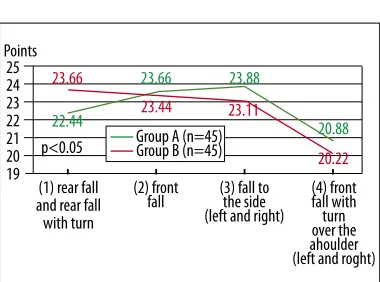
Figure 2. Qualitative differences of performance of
particular TSF tasks by physiotherapy students.
and 4.44%) was identical in both groups. Two students in group B were graded more than sufficient.
Students in group B mastered the first TSF task – rear fall and rear fall with turn to a more advanced level (p<0.05) (Figure 2). The remaining differences between the groups were not statistically significant. The front fall with turn over the shoulder was the task that the students in both groups mastered the least.
Students trained by the rigorous method mastered task (1) to a significantly lower level (p<0.05) than tasks (2) and (3). Task (4) was performed at a level significant-ly lower (p<0.01) than the remaining TSF tasks. The largest inter-individual differentiation of results was ob-served for task (4) (Table 2).
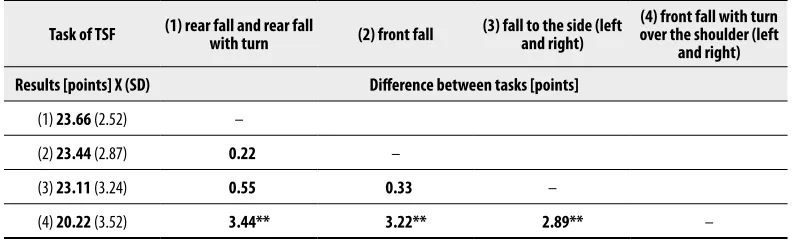
Students trained by the method preferring playful forms of exercises mastered task (4) to a significantly lower level (p<0.01) than the remaining TSF tasks. (Table 3). The largest inter-individual differentiation of results was observed for tasks (3) and (4).
The average TSF run-time of less than 20 seconds at average bpm values of 161.86 in group A and 159.6 in group B (Table 1) makes the TSF a hard intensity work-load. The borderline bpm for part of the students indi-cated that the workload was of very light intensity (<35% HRmax) for some of the students, while for other part,
it was of maximal intensity (100% HRmax). In case of in-dividuals whose heart rate exceeded 193 bpm there are grounds for claims that the workload was of supramaximal intensity. This included one male, 21-year-old student in group A (TSF 85 points, 19 s) and one female, 21-year-old student in group B (TSF 90 points, 16 s). For the oldest student (34 years), a major league hockey play-er, the workload was of hard intensity (HR 144 bpm) and lasted 17 s, with flawless performance of all TSF tasks (100 points).
Significant correlations between the values of main em-pirical variables were observed in group A with regard to body height and weight (r=0.792 p<0.01), which was an expected regularity and to certain variables describ-ing the TSF results (Table 4). Run-time TSF was nega-tively correlated with total TSF result (in points) and with workloads of intensity (expressed in HR). Both correlations were moderate.
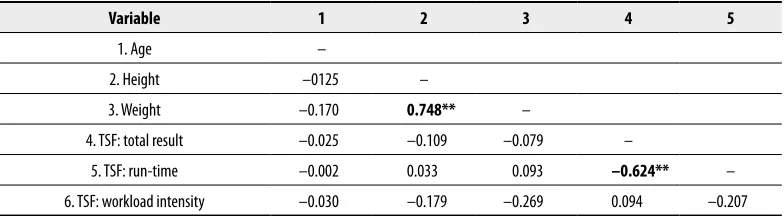
Only two significant correlations between the values of main empirical variables were observed in group B stu-dents. High correlations were observed for body height and weight as well as for TSF run-rime and total TSF result (Table 5).
After completion of this part of the programme, 44.4% of students in group B declared a need to increase the number of classes to 2–3 classes per week, compared to Tasks of TSF (1) rear fall and rear fall with turn (2) front fall (3) fall to the side (left and right) over the shoulder (left (4) front fall with turn
and right) Results [points] X (SD) Difference between tasks [points]
(1) 22.44 (2.52) –
(2) 23.55 (2.52) 1.11* –
(3) 23.88 (2.58) 1.44* 0.33 –
(4) 20.88 (3.24) 2.44** 2.67** 3** –
Table 2. Qualitative differences of performance of particular TSF tasks by group A students (n=45).
* p<0.05; ** p<0.01.
Task of TSF (1) rear fall and rear fall with turn (2) front fall (3) fall to the side (left and right) over the shoulder (left (4) front fall with turn and right) Results [points] X (SD) Difference between tasks [points]
(1) 23.66 (2.52) –
(2) 23.44 (2.87) 0.22 –
(3) 23.11 (3.24) 0.55 0.33 –
(4) 20.22 (3.52) 3.44** 3.22** 2.89** –
Table 3. Qualitative differences of performance of particular TSF tasks by group B students (n=45).
** p<0.01.
31.1% students in group A, which proves that the meth-od preferring playful forms of exercises is more attrac-tive. However, the difference in the number of these dec-larations is not statistically significant, as shown by the result of the significance test: independent proportions (z=1.316, i.e. deviation from the normal curve is not suf-ficient, especially since N1 and N2 are sufficiently high).
d
iscussionThe results of the study authenticate the previously verified hypothesis [18] that if the methodological and educational standards are met, then sex, age, and type of body build are not factors limiting the effectiveness of safe fall learning. The obtained empirical data give grounds to claim that the hypothesis subject to verifi-cation in this work is also true.
Both methods employed in teaching safe falls students were effective. Although it was shown that the atten-dance of 70–80% did not limit the adaptation effects, this result does not justify an automatic conclusion that the second part of the hypothesis (…as the rigorous method, on condition of high attendance at classes) is false. In such case, it would be reasonable to reduce the number of classes in the basic safe falling course. This in turn would mean ignoring the most important adaptation effects which are by definition aimed at prevention of bodily injuries due to falls, collisions with vertical ob-stacles or objects in motion. A significant variance was observed between students as pertains the TSF run-time
(time of test implementation): 9 s in group A, in com-parison to 10 s in group B. This result shows explicit-ly that mastering of safe falling techniques should not be associated only with the motor effects in the narrow sense of the term, i.e. basing on the conformity of the body motions with the motor standard. Appropriate motor reaction time, or time of appropriate motor ad-aptation to danger situation, is also important. In our opinion, this problem is one of the most serious meth-odological dilemmas regarding the enhancement of the effectiveness of teaching safe falls and methods for di-agnosing motor competence in this area.
The TSF-based motor competence evaluation criteria in-clude two factors – motor effects (total points) and time of test implementation, where both of these factors show a relatively strong negative correlation. However, further modifications should put more focus towards the time factor. In the studies among PSVSHE physiotherapy stu-dents and stustu-dents from other universities[18], the time of test implementation was measured with the accura-cy of 1 second. At the same time, the results of studies on information processes in fencing [25] showed that the advanced fencers were faster than the novice fenc-ers in all the studied parametfenc-ers (with the use of sens-es of vision, touch and hearing) but the time was mea-sured in milliseconds. Choice reactions were also shown to be two times longer than simple reactions in combat sports athletes (180–220 ms and 380–410 ms, respec-tively). It was also observed that the subjects’ time of reaction to the same light signals varied depending on
Variable 1 2 3 4 5
1. Age –
2. Height 0.093 –
3. Weight 0.226 0.792** –
4. TSF: total result 0.186 0.205 0.218 –
5. TSF: run-time –0.106 –0.056 –0.133 –0.437* –
6. TSF: workload intensity 0.186 0.005 0.066 –0.023 –0.355*
Table 4. Correlation of values of main empirical variables in group A students (n=45).
* p<0.05; ** p<0.01.
Variable 1 2 3 4 5
1. Age –
2. Height –0125 –
3. Weight –0.170 0.748** –
4. TSF: total result –0.025 –0.109 –0.079 –
5. TSF: run-time –0.002 0.033 0.093 –0.624** –
6. TSF: workload intensity –0.030 –0.179 –0.269 0.094 –0.207
Table 5. Correlation of values of main empirical variables in group B students (n=45).
** p<0.01.
duration of different complex motor tasks with the use of tennis balls. The reaction time varied in the three suc-cessive trials (from simple to more complex): 159 ms – 195 ms – 208 ms, while the movement time was: 0–95 ms – 465 ms, respectively.
The review by Borysiuk and Waśkiewicz [25] leads to two reflections. Firstly, certain forms of physical activi-ty – as the so-called life sports – may constitute an im-portant element of enhancing motor security of human beings. A human having an appropriately early train-ing and maintaintrain-ing their psychophysical disposition throughout their life, is able to maintain the capability of adequate motor reactions in face of various danger situations. Secondly, measurement of the TSF run-time with the accuracy of 0.01 s seems to be a reasonable recommendation, albeit requiring empirical verifica-tion. Slowed-down motor reactions in the elderly per-sons, especially those with low physical activity levels, are an important factor. To date, poor positive correla-tion between age and time of test implementacorrela-tion was observed only in the oldest women and men (range 23– 55 years with mean age of 35.92 years) who completed the basic course of safe falling [18]. It is therefore nec-essary to compensate the slowed-down motor reaction upon the loss of balance and the fall by perfect collision with the ground or a vertical obstacle. Gravity and other external forces acting on a human losing their balance and falling should be taken into account. Therefore, in the particular case, a time of 200-400 ms may decide that the collision with the ground or a vertical obstacle would not lead to any bodily injuries. This time may also significantly limit these injuries.
Comparison of the motor effects (total points and ex-ecution of four consecutive TSF tasks) in observed in individuals studied to date shows that PSVSHE stu-dents are leaders in this aspect. Most valuable compar-ative data were obtained in groups directly trained or strictly supervised by the same instructor (RM Kalina) [18]. The total TSF result of the Academy of Physical Education (APE) students (female and male) was 88.33 points (range 60–100 points), while the result of the University College (course UCA) students was 85.86
points (range 65–100 points). Courses APE and UCA
were implemented in the stationary curriculum over 13 weeks, one lesson per week (45 minutes each). APE students (n=284) were aged 19–30 years (mean age of 20.9±1.16 years). UCA students (n=29) were
aged 20–23 years (mean age of 21.13±0.87 years). Therefore, age was not the factor to differentiate the compared groups but the training duration was three weeks longer in case of APE and UCA students in
com-parison to PSVSHE students. However, in case of one class per week, this period was insufficient to master
the front fall with turn over the shoulder (the fourth TSF task) to a more advanced degree. This method of colliding with the ground is the most complex of all safe falling techniques in terms of motor compe-tence. The opinion of every third surveyed physio-therapy student that the number of classes per week should be increased to 2–3, and that the class dura-tion should be extended to 90 minutes, was, to some degree, a manifestation of students’ awareness of the fact that rational training is the basis of actual safe falling skills.
The analysis of the time of test implementation showed that the APE students were the fastest – in terms of the mean result (17.3 s) – to perform seven falls en-compassed in four arbitrary motor tasks. However, the difference gap (10–40 s) was as large as 30 s [18]. UCA students were nominally slower in performing the
TSF (mean time of 19.34 s) than PSVSHE students in groups A and B. However, the difference gap of 18 sec-onds (15–33 s) is a proof of a very high interindividual diversity. This, in turn, means that many students who completed the UCA course and many APE students may
not have enough time to safely collide with the ground (in a situation of a sudden loss of balance and fall), de-spite their ability to reproduce the particular TSF tasks according to the motor model.
the relationships between the HR and the systolic time interval (STI) and other factors [26–29] during the or-thostatic manoeuvre.
This very general discussion of the results of studies verifying the hypothesis that both methods of teach-ing safe falls are equally effective should not pass over the perspective of training individuals after limb ampu-tations and the blind. Since certain psychological bar-riers, put up by both patients and physiotherapists, are to be expected, it should be one of the essential didac-tical goals that students are able to perfectly demon-strate all exercises. Previous observations of students, including students attending the earlier courses, justi-fy the conclusion that playful forms of exercises induce strongest positive emotions and result in best commit-ment. These positive reactions were intensified during the course by simulating the conditions of motor behav-iour of individuals with visual impairment (by covering their eyes with appropriate patches). We may therefore assume that when training individuals with either vi-sual impairment or after limb amputations, one of the most convincing arguments given by the movement in-structor (physiotherapist, PE inin-structor) would be the demonstration of exercises (particular motor tasks) with blinded eyes, tied arms etc.
c
onclusionsBoth methods are effective. Because of higher attractive-ness of playful forms of exercises, one should often but cautiously apply them in teaching safe falls in order to
precipitate adaptive effectsand shape the habit of the systematic physical training.
Recommendations
Successive research programs regarding the issue of teach-ing safe falls to individuals at different age should allow for a more comprehensive evaluation of particular mo-tor effects (momo-tor competence as pertains safe falling) in relation to health-related fitness profiles (balance, muscular fitness, flexibility, cardio-respiratory endur-ance, body weight and composition), as well as to oth-er health-related and mental effects.
The methodological competence factor should also be particularly taken into account when testing potential in-structors: physiotherapy, PE or motor recreation students
Acknowledgments
The paper was written as part of the studies of the Test for Safe Falls – stage III, on Virtual Research Group, a web-based cooperation platform, powered by Index Copernicus International S.A.
The students performed the TSFs and exercises during classes as part of the didactical regimen of the course ti-tled “The theory and methodology of safe falls in indi-viduals after limb amputations and the blind”, which is the part of the educational curriculum in the Institute of Physiotherapy, Podhale State Vocational School of Higher Education, Nowy Targ, Poland (first degree studies).
1. WHO. Fall-related injuries, 2002
2. WHO. A Global Report on Falls Prevention. Epidemiology of Falls; 2007
3. Finchley Memorial Day Hospital [editorial]. Information on falls. For patients and carers. Produced by the staff at the Falls Clinic FMH. London, 2005
4. Falls and fractures: effective interventions in health and social care, Department of Health, 2009 5. Fracture prevention services. An economic
eval-uation. Produced by COI for the Department of Health; First published November 2009 /www. dh.gov.uk/publications/
6. Audit pack guideline for the collaborative, rehabili-tative management of elderly people who have fall-en: The Chartered Society of Physiotherapy. College of Occupational Therapists /www.csp.org.uk/ 7. CSP Factsheet: Falls Prevention: The Chartered
Society of Physiotherapy /www.csp.org.uk/ /www. physio2u.org uk/
8. Tinetti ME, Speechley M, Ginter SF: Risk factors for falls among elderly persons living within the community. N Eng J Med, 1988; 319: 1701–7 9. Campbell AJ, Borrie MJ, Spears GF et al:
Circumstances and consequences of falls experi-enced by a community population 70 years and over during a prospective study. Age and Ageing, 1990; 337: 1279–84
10. Close J, Ellis M, Hooper R et al: Prevention of falls in the elderly trial (PROFET): a randomised con-trolled trial. Lancet, 1999; 353: 93–97 11. Żak M, Skalska A, Ocetkiewicz T: Falls among the
elderly – risk assessment carried out one year af-ter fall. Rehabilitacja Medyczna, 2004; 8(3): 19– 22 [In Polish, abstract in English]
12. Mackintosh SF, Sheppard LA: A pilot falls-preven-tion programme for older people with dementia from a predominantly italian background. Hong Kong Physiotherapy Journal, 2005; 23: 20–26 13. Czerwiński E, Białoszewski D, Borowy P et al:
Epidemiology, Clinical Significance, Costs and Fall Preventio in Elderly People. Ortopedia Traumatologia Rehabilitacja, 2008; 5(6); 419–28 14. Watts JJ, McGinley JL, Huxham F et al: Cost effec-tiveness of preventing falls and improving mobil-ity in people with Parkinson disease: protocol for an economic evaluation alongside a clinical trial. BMC Geriatrics, 2008, 8: 23
15. Sterkowicz S: Poziom sportowy a częstość i cha-rakter wypadków u osób uprawiających judo Wychowanie Fizyczne i Sport, 1985; (29)3: 59– 75 [In Polish, abstrakt in English]
16. dos Santos G., Marcelo Pastre C, Lia do Amaral S, Luiz Monteiro H: Adventure race’s injuries Nature des lésions chez des athlètes pratiquant des sports d’aventure. Science & Sports, 2009; 24: 15–20 [Abstract in French]
17. Gawlik K, Zwierzchowska A: Wychowanie fizyc-zne niewidomych i słabo widzących. Wydawnictwo AWF. Katowice, 2004 [In Polish]
18. Kalina RM, Barczyński B, Jagiełło W et al: Teaching of safe falling as most effective element of person-al injury prevention in people regardless of gender, age and type of body build – the use of advanced information technologies to monitor the effects of education. ArchBudo, 2008; 4: 89–89
19. Ossowski R: Dzieci niedowidzące i niewidome [in] Obuchowska I (eds.): Dziecko niepełnosprawne w rodzinie. WSiP. Warszawa, 1999; 317 [In Polish]
20. Kalina RM, Kruszewski A, Jagiełło W, Włoch G: Combat sports propaedeutics – basics of judo. Wydawnictwa AWF. Warszawa, 2003
21. Kalina RM, Jagiełło W, Gliniecka W: Ocena poziomu równowagi sportowców uprawiających woltyżerkę [in] Urbanik C. (eds) Wybrane zagad-nienia biomechaniki sportu. Akademia Wychowania Fizycznego w Warszawie, 2001; 183–96 [In Polish]
22. Kalina RM: Miękkie lądowanie. Medical Tribune, 2009; 13: 28–29 [In Polish]
23. Tanaka H, Monahan KD, Seals DR: Age predicted maximal heart revisited. Journal of the American College of Cardiology, 2001; 37: 153–56
r
eferences:
24. Pollock ML, Gaesser GA, Butcher JD et al: The recommended quantity and quality of exercise for developing and maintaining cardiorespiratory and muscular fitness, and flexibility in healthy adults. Medicine & Science in Sports & Exercise, 1998; 30: 975–91
25. Borysiuk Z, Waśkiewicz Z: Information Processes, Stimulation and Perceptual Training in Fencing. Journal of Human Kinetics, 2008; 19: 63–82
26. Cybulski G, Niewiadomski W, Strasz A et al: Relationships Between Systolic Time Intervals and Heart Rate During Initial Response to Orthostatic Manoeuvre in Men of Different Age. Journal of Human Kinetics, 2009; 21: 57–64
27. Hoefnagels WA, Padberg GW, Overweg J et al: Transient looss of consciousness: the value of the history for distinguishing seizure from syncope. J. Neurol, 1991; 238: 39–43
28. Naschitz J, Rosner I: Orthosttatic hypotension: framework of the syndrome. Prosgrad Mewd J, 2007; 83: 568–74
29. Van Dijk JG, Sheldon R: Is there any point to vaso-vagal syncope? Clin Auton Res, 2008; 18: 167–69