Citizenship and Community
Editors:
Ian Davies, Gillian Hampden Thompson, Maria Tsouroufli, and Vanita Sundaram of the University of York, UK
Citizenship and Community
Content
Ian Davies, Gillian Hampden Thompson, Maria Tsouroufli, Vanita Sundaram, Pippa Lord, Jennifer Jeffes, George Bramley:
Editorial
3-5
Lynne Parmenter:
Community and Citizenship in Post-Disaster Japan: The Roles of Schools and Students
6-21
Alistair Ross:
Communities and Others: Young Peoples’ Constructions of Identities and Citizenship in the Baltic Countries
22-43
Corinne Wyss, Alexander Lötscher:
Class Councils in Switzerland: Citizenship Education in Classroom Communities?
44-64
Paul Warwick, Hilary Cremin, Tom Harrison, Carolynne Mason: The Complex Ecology of Young People’s Community Engagement and the Call for Civic Pedagogues
65-87
Don Rowe, Nicola Horsley, Tony Breslin, Tony Thorpe
:
Benefit or Burden? How English Schools Responded to the Duty to Promote Community Cohesion
88-107
Ian Davies, Gillian Hampden Thompson, Maria Tsouroufli, Vanita Sundaram, Pippa Lord, Jennifer Jeffes, George Bramley:
Creating Citizenship Communities
108-119
Pedro D. Ferreira, Joaquim L. Coimbra, Isabel Menezes: “Diversity within Diversity” - Exploring Connections between Community, Participation and Citizenship
120-134
Graham Pike:
From Internationalism to Internationalisation: The Illusion of a Global Community in Higher Education
135-152
Book Reviews Gary Clemitshaw:
Patriotism and Citizenship Education
153-155
Andrew Peterson:
Religious Education and Social and Community Cohesion: An Exploration of Challenges and Opportunities
156-157
Alistair Ross:
Citizenship and Immigration
158-159
Ian Davies, Gillian Hampden Thompson, Maria Tsouroufli, Vanita Sundaram, Pippa Lord, Jennifer Jeffes, George Bramley
Editorial
In this issue of the Journal of Social Science Education we explore the theme of community in relation to citizenship education. We are delighted to present a series of articles and book reviews in which there is discussion of conceptual and empirical studies that further our understanding of a vitally significant and complex field.
‘Community’ is a significant priority in many countries. David Cameron in the UK has proclaimed the importance of what he refers to as ‘the big society’; Barack Obama worked as a community organizer and many of the policies he is now developing seem to have connections with that experience; Angela Merkel has raised issues about multicultural communities in Germany. In education ‘service learning’, ‘community involvement’ and ‘citizenship education’ are key terms that reflect the need to respond to perceived changes in the nature of political engagement; debates about the extent to which young people understand and are involved in society; the significance of gender to the possibilities and forms of involvement in society, and, the need to recognise, celebrate and further develop a multicultural society.
When we began work on this issue of Journal of Social Science Education we wished to include a variety of perspectives (e.g. service learning, character education, political literacy); a range of countries within and beyond Europe; issues that affect students of different ages. We aimed to focus on education but were keen to welcome theoretical and other material that allows for consideration of issues using insights from a range of academic disciplines (e.g. urban education; community psychology; international development studies etc). We are delighted that our call for papers led to the submission of excellent papers which are summarised below.
The first article provides insights into events and issues in Japan in 2011.
Lynne Parmenter’s article discusses issues arising from the terrible events
of March 2011 when a triple earthquake-tsunami-nuclear disaster rocked north-eastern Japan. She focuses on the role of teachers in saving lives and leading communities, and the role of schools as sites and agents of community and citizenship in the disaster situation. The article is structured around four themes, namely, the role of school leaders and teachers, the role of schools as sites of community, changing media representations of children and communities in the wider national context, and the birth of global citizenship as a meaningful concept.
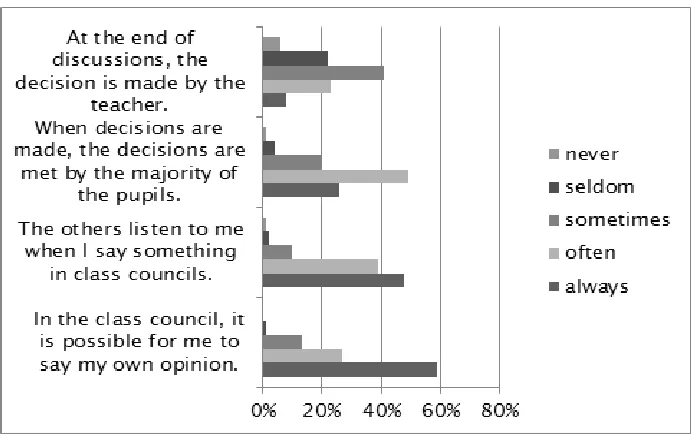
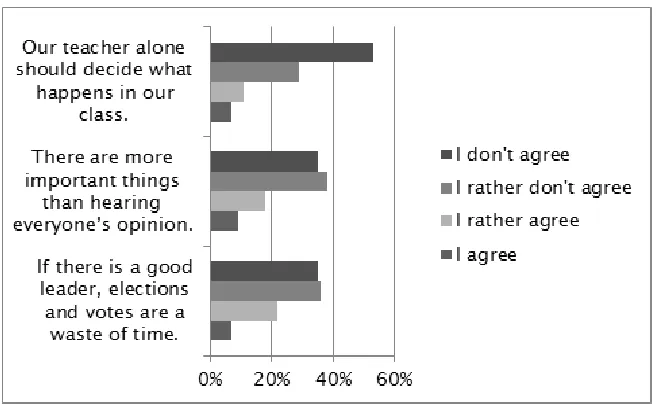
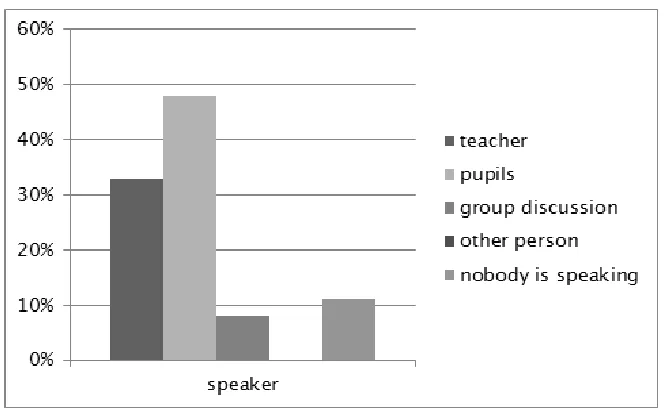
attachment to their country and to Europe. Two particular areas were identified: the sense of generational difference and the ways in which different groups created ‘other’ communities, within and without their country’s borders. Corinne Wyss and Alexander Lötscher provide much needed empirical data about class councils in Switzerland in order to illustrate how action may be taken to promote citizenship in a school community. Using data from video recordings of fourteen class councils in secondary schools as well as interviews and questionnaires they argue that councils are popular but that their power is not always seen to be significant. The authors describe three forms of class councils that favour the development of communicative competences as a part of citizenship education.
We have then included 3 articles that emerge from empirical work in England. Paul Warwick, Hilary Cremin, Tom Harrison and Carolynne
Mason’s paper draws from the EngagED research project that used a mixed
methods approach to explore the civic action and learning of young people living in both inner city and rural areas of socio-economic disadvantage. It presents an eco-systemic model of the host of factors and agencies that influence young people’s civic identity and patterns of community engagement. It outlines two new civic learning spaces that were created in response to these complex ecologies and from these experiments in ‘pre-figurative practice’ proposes a set of key principles for the effective civic pedagogue. This radical notion of the civic educator moves away from educational strategies that seek to ‘transform’ young people into good future citizens, towards finding personalised ways of supporting young people ‘as’ citizens.
Don Rowe, Nicola Horsley, Tony Breslin and Tony Thorpe discuss results
from a small scale qualitative study of how primary and secondary schools in three English local authorities responded to the introduction and subsequent inspection of a legal duty to promote community cohesion, following a series of ‘race’ riots in 2001 and the London bombings of 2005. Those in more multi-cultural areas responded with higher degrees of confidence than those in mono-ethnic areas. Most schools saw the policy positively and came to identify the curriculum and the school’s ethos as the most important weapons in their armoury.
The final of the 3 articles on England is our own contribution to this issue.
Gillian Hampden Thompson, Ian Davies, Maria Tsouroufli, and Vanita
Sundaram, Pippa Lord, Jennifer Jeffes and George Bramley discuss issues
and findings that are beginning to emerge from an ongoing study. ‘Creating Citizenship Communities’ is a 2 year project funded by the Esmée Fairbairn Foundation and which aims to identify current thinking and practice in schools; explore young people’s perceptions and practice; and, through the development of a focussed impact strategy, encourage partnerships to be established between professionals and others. Using data from a national online survey of schools and fieldwork in 8 schools as well as analysis of secondary data sets we are identifying the high priority accorded by schools to community and to citizenship education but also becoming aware of some gaps between what could be described as legitimation and implementation.
citizenship and community. The first of these 2 pieces is written by Pedro
D. Ferreira, Joaquim L. Coimbra and Isabel Menezes. They have analysed
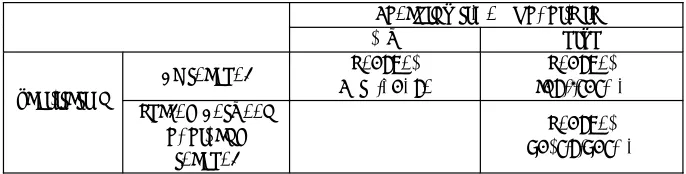
citizens’ participation in their communities, illustrating significant dimensions of participation: power, dialogue, initiative, formality, pluralism and time. The discussion considers how these dimensions might contribute to making community organizations turn into ‘schools of democracy’E with specific recognition of the diversity of migrant groups. Graham Pike discusses the nature of ‘internationalism’ and ‘internationalisation,’ suggesting that tensions exist between these trends. Whereas the former might aim for the altruistic goals of international education proclaimed in institutional mission statements and government policies, the latter may relate more to neo-liberal perspectives that aim to secure additional resources through cross border flows of students and knowledge. An analytical matrix is offered as a tool with which higher education institutions can map their internationalisation activities and assess the extent to which they match their stated policies and missions. While the rhetoric of international education purports to promote the concept of a global community, the article suggests this claim may be illusory.
We are also deloighted ton include reviews on various aspects of citizenship and community. Patritotism is explored by Gary Clemitshw, religious education and community cohesion by Andrew Peterson and citizenship and immigration by Alistair Ross.
Lynne Parmenter
Community and Citizenship in Post-Disaster Japan:
The Roles of Schools and Students
In March 2011, a triple earthquake-tsunami-nuclear disaster rocked north-eastern Japan. In this article, the impact of these three disasters on schools, teachers and children will be analysed, with a particular focus on the role of teachers in saving lives and leading communities, and the role of schools as sites and agents of community and citizenship in the disaster situation. The article is structured around four themes, namely, the role of school leaders and teachers, the role of schools as sites of community, changing media representations of children and communities in the wider national context, and the birth of global citizenship as a meaningful concept. Primary data from visits to schools in Miyagi Prefecture and Fukushima Prefecture in Japan in July 2011 and December 2011 are combined with analysis of secondary sources written in Japanese to paint a clear picture of the different roles served by teachers and schools at different points in time during and after the disasters. This provides insights not only into post-disaster communities, but also into the role of teachers and function of schools as agents and sites of community and citizenship in Japanese society.
Keywords
Japan, earthquake, tsunami, nuclear disaster, school leadership, post-disaster, community, local citizenship, global citizenship
1
Introduction
On 11 March 2011, the north-eastern region of Japan was rocked by a triple earthquake-tsunami-nuclear disaster. Damage to children’s schools, their families and their lives was immense. The aim of this article is to examine the multiple ways in which teachers acted and schools functioned as agents of community and sites of citizenship in the year after the disasters.
2 Setting the Scene
struck off the north-east coast of Japan. Earthquakes are not unusual in Japan, and children and their teachers hold regular drills and know what to do. Children across a wide area of Japan from south of Tokyo to the northernmost island of Hokkaido ducked under their desks to protect themselves from falling objects and flying debris. Teachers reassured them, although the length and strength of the earthquake, off the scale in terms of previous experience for most children, scared everyone. As the shaking stopped, children followed the standard procedure of filing outside to the school grounds. Many of the groups of younger children that had just started heading home returned to school.
For most, the worst was over. For some, it was still to come. Within 3 minutes, a major tsunami warning was issued for most of the east coast of Japan north of Tokyo. Some schools in the danger zone were still connected to news sources, while others were warned by town broadcast systems, fire and police officers or by word of mouth. Parents and grandparents started arriving at schools to collect their children. School principals and teachers up and down the eastern coast of Japan were faced with the most critical decision of their careers, namely, what action to take to save the lives of the hundreds of children in their care. No school had a contingency plan for a tsunami as big as the one that struck the coast that Friday afternoon, taking the lives of over 19,000 people and destroying or seriously damaging over 350,000 homes (National Police Agency 2011).
Thousands of children saw the tsunami with their own eyes, and many saw their families, friends and homes torn away in the tidal wave of debris, cars, electricity pylons and water. Furthermore, the tsunami was recorded on live TV by helicopter cameras, watched not only by adults, but by hundreds of thousands of children and young people throughout Japan. Most of the footage shown as it happened has never been shown on television since, as it is too horrifying. The effects of experiencing disasters indirectly are significant and long-term (Houston et al. 2008), and will continue to be felt by many people for many years.
As the tsunami receded and the sheer scale of destruction started to sink in, another disaster was unfolding. Like schools, nuclear power plants did not have a contingency plan for a tsunami of this size. As the back-up generators failed and radiation started to leak, residents within 3km of Fukushima No. 1 Nuclear Reactor were ordered to evacuate, and this order was soon extended to residents within 10km and then 20km. By Saturday morning, residents were sat in traffic queues for hours, heading to the other side of the invisible safety line, exposed to unknown amounts of radiation, escaping from their homes with a few belongings and nowhere to go. One year later, in March 2012, tens of thousands of people had still not been able to go home.
visits to schools in Miyagi Prefecture and Fukushima Prefecture in Japan in July 2011 and December 2011. These visits involved observations, 7 semi-structured interviews with school leaders and teachers who had experienced the disasters directly, 5 focus group interviews with small groups of 3-8 children, and collection of documents such as student work and class, school and town newsletters. These primary data were supplemented by analysis of secondary sources written in Japanese, including newspapers, collections of experiences, collections of student essays and other documents. Analysis of these diverse sources of evidence using principles of grounded theory to elicit categories paints a clear picture of the different roles served by schools at different points in time during and after the disasters, providing insights not only into post-disaster communities, but also into the role of teachers and function of schools as agents and sites of community and citizenship in Japanese society.
3 The Role of School Leaders and Teachers
To a greater extent than most other countries prone to natural disasters, Japan has a high level of disaster readiness in terms of technology, infrastructure and public awareness. Schools in particular are considered to be safe places in a disaster, both because of their structure and because they serve a dual role as evacuation shelters in the case of disasters, a role that is central to the discussion in this article. School furniture is designed in such a way as to provide protection in the case of an earthquake, in the form of individual desks with space underneath for the whole body, and school classrooms almost always have two exits so that people do not become trapped if doors or windows warp in the earthquake. Children and teachers in schools engage in regular earthquake drills, and are accustomed to experiencing earthquakes. Still, the force and length of this particular earthquake frightened everyone, as this 6-year old from Fukushima Prefecture describes, jumping off his chair onto the floor to demonstrate his words as he spoke:
“We were under the desks but the desks were moving across the floor and I couldn’t hold on, and it didn’t stop, and my friends were crying and I banged my head one, two, three times like this. It hurt…. It was scary.”
Although the Great East Japan Earthquake was the most powerful earthquake ever to strike Japan, there were no reported fatalities of children in schools directly attributable to the earthquake. This is a tribute to the disaster-preparedness and calm reaction of school leaders, teachers and children in Japan. Schools remained standing, and teachers stayed calm, reassured children, and made sure they stayed safe.
this, schools rely on their city or town’s coastal defences. Much of the Japanese coastline is protected by huge concrete walls and blocks to break the force of a tsunami. These reinforcements are especially strong near the nuclear power stations. What nobody predicted in this case was the size and reach of the tsunami. Many buildings designated as tsunami evacuation shelters, some of them schools, were hit by the tsunami (Asahi Shimbun 22 March 2011).
Knowing they had less than 30 minutes to act, reliant on unstable communications and conflicting information, and unaware of the size of the approaching tsunami, school principals and teachers along the coast faced the critical decision of whether to attempt to move hundreds of children in their care to higher ground or to take the risk of staying where they were. The situation was further complicated by the arrival of many parents and local residents, fleeing their homes to the schools, which were their local evacuation centres. Throughout the affected area, regardless of their own personal circumstances, teachers stayed in school to look after their pupils rather than leaving to ensure the safety of themselves or their own families. This was true beyond the worst affected area too, as communications and transport networks were disrupted over a wide area of Japan. Many children in Tokyo and across eastern Japan stayed in schools overnight, looked after by teachers until the situation normalised and their parents could collect them safely. Throughout the area, schools and universities also opened their buildings to anyone who could not get home. This in itself is a reflection of the degree of pastoral responsibility of schools, and of teachers as key citizens of the local community in Japan. In a number of cases, most not recorded, teachers did indeed lose family members in the tsunami as they took care of children in schools, and are left not knowing whether there is anything they could have done to prevent this (Shibui et al. 2011, 24).
In the vast majority of cases, school leaders made the right decisions to save the lives of children in schools. For example, at a large elementary school several hundred metres from the sea in Ishinomaki, one of the cities hardest hit by the tsunami, the principal decided to risk staying in school and moving all children and teachers to the roof. The tsunami hit the school, but did not reach the third floor, and all children in school care were safe. In the next town, school leaders decided to flee with the children, and an 8-year old girl in a school in Kesennuma, Miyagi Prefecture, describes what happened in an essay that captures the urgency of the situation as well as the sense of school as a community.
tsunami was coming, so we ran to the community hall on higher ground. I didn’t have a coat, so I borrowed a blanket from the community hall and huddled under it with my friend. Then there was this huge, crashing, roaring noise and when we looked behind, the tsunami was already up to the front of the community hall. We ran to even higher ground, and the tsunami didn’t come that far, so we stayed there, but I was so scared. The teacher said, “Get into your year groups, and if your parents are here, stay with your parents,” so I looked for people in my class and we got together. Some of my friends already had their mums and dads there, and I wondered when my mum would come. She didn’t come for ages, and I was very scared that she had drowned in the tsunami. Then at last she came, and I felt safe...” (Mori 2011).
Many children were not reunited with their parents for several days, as communications and transport systems were not operational, and bridges and roads were broken or impassable. Teachers looked after cold, hungry, frightened children in schools where there was no food, no electricity, no heating and no water until family members could get to them. Parents believed that their children would be safe in the care of the school and, in the vast majority of cases, school leaders and teachers were able to live up to this trust. The tragic exception was Okawa Elementary School, a small school located several kilometres inland in Ishinomaki City, where indecision followed by wrong decision led to 74 of the 108 children and 10 of 13 teachers dying or going missing in the tsunami.
The total number of children between the ages of 6 and 18 killed or missing in the disaster was 536 (Japan Times 29 April 2011). Most of these were children who had already left school before or just after the earthquake, and the number of children killed or missing whilst in school care was actually very low. The Iwate Board of Education, among others, has speculated that the death toll among children could have been much higher if the earthquake and tsunami had occurred an hour later, when children were not in school (Japan Times 29 April 2011). The responses and actions of teachers along a coastline the distance of London to Edinburgh undoubtedly saved the lives of tens of thousands of children that afternoon. The sense of school as a community, evident in the well-practised earthquake response, the crisis decision-making of principals and teachers, the willingness of children to trust their teachers and the commitment of teachers to protecting the children, all contributed to minimization of the loss of life in schools on 11th March.
With the scale of devastation so huge, it took several days for relief efforts to start to take effect. During this period, teachers were often managing the evacuation shelters in extremely difficult conditions. Accounts written by children of these first days tend to highlight the intense cold and hunger most of them experienced, probably for the first time in their lives. Teachers themselves went without food, as this elementary school teacher describes:
The role of teachers in managing evacuation shelters meant that some teachers near the nuclear power stations in Fukushima Prefecture did not have chance to return home before being evacuated. One elementary school teacher described in an interview how she stayed in school until all the children had been collected by their parents, which was 11pm on 11th March. By this time, residents from the tsunami-affected area of the town were filling the school, and the teachers switched to community leader role, taking on the task of clearing fallen objects and broken glass from classrooms to accommodate evacuees, and of trying to obtain and share out blankets and food. Early the next morning, everyone in the school was told to evacuate immediately because of the nuclear danger, and teachers were in charge of organising transport and making sure everyone left the school safely, before leaving together themselves two hours later, sharing cars. This teacher did not have chance to go home between the earthquake and evacuation, but had to flee the town with nothing more than her purse, mobile phone and the clothes she was wearing.
The reconstruction of school communities is discussed in more detail in the next section, but one long-term role that teachers in the affected area have now taken on is responsibility for monitoring the mental health of children who experienced the disasters. Most Japanese schools do not have school counsellors or specific guidelines for mental health care, and there has not yet been any systematic form of post-disaster educational intervention as sometimes occurs in other countries (Wolmer et al. 2005). As teachers are the only providers of mental health care available to the majority of children, this extension to the already significant pastoral role assumed by teachers as class teachers adds to their responsibility as key figures in the school community and also in the wider local community.
Traditionally in Japan, the teacher is a respected figure in the community, with high status and significant moral and social responsibility, although recent years have seen a wave of blaming schools and teachers for a variety of social problems among young people (Okano, Tsuchiya 1999, 157). As in most of East Asia, there is no need to justify the linking of moral and civic/citizenship education as happens in other parts of the world (e.g. Beck 1998), as the two are assumed to be inseparable and teachers are supposed to act as the personification of the end result. The assumption of the moral and civic responsibility of saving lives, protecting children and other community members and then serving as leaders in community relief efforts was not even questioned by the majority of teachers after these disasters and, indeed, from 1947 to 2006, was enshrined in Article 6 of the Basic Act on Education as key to their identity:
“Teachers of the schools prescribed by law shall be servants of the whole community. They shall be conscious of their mission and endeavor to discharge their duties. For this purpose, the status of teachers shall be respected and their fair and appropriate treatment shall be guaranteed.” (Ministry of Education, Culture, Sports, Science and Technology undated).
roles that many teachers fulfilled after the disaster were not part of their official job description, such roles clearly still constitute part of what it means to be a teacher and key member of the community in Japan. Ishida (2011) explains the role played by teachers during and after the disaster.
“If teachers had not worked so hard, it is hard to imagine how much greater the scale of the disaster would have been. In spite of the “teacher bashing” and negative publicity about schools that has gone on for a long time, teachers put everything they had into the education and care of children, and also took care of residents in the evacuation shelters. The number who have died of overwork is not insignificant.” (Ishida 2011, 97).
In this way, the impact of the disaster has been to reinforce the traditional role of teachers as key community figures ready to take the lead when normal local administration structures break down. Simultaneously, the traditionally valued traits of the teacher in society have also been highlighted, both by teachers themselves and by the wider community and media. Dedication to the role appears in the way teachers protected children’s lives and subsequently gave everything to serving the community and their schools, in spite of losing their own homes and often family members, friends and acquaintances. Self-sacrifice is seen in the accounts of teachers distributing food and blankets without taking any for themselves. Although these traits are not generally discussed or highlighted under normal circumstances, it is these traits that are identified by individuals as being part of their teacher role and by the media and wider community as being evident after the disaster. In various ways, then, the disaster has served to underline the traditional view of the teacher that had been eroded to a certain degree in recent years, that is, the teacher as a dedicated, upstanding member of the local community, both as a form of self-identification among teachers themselves and as a professional identity in the wider community.
4 The Roles of Schools as Communities and Sites of
Citizenship
“A few hours after the tsunami, the teachers came and gave out crème brulee desserts and drinks. It tasted so good. From the next day, there was hardly any food, so we would get quarter of a slice of bread, and we were always hungry. That lasted for a few days, but gradually people left and there were less people at school. We had been sleeping in the corridor, but then we could move into a classroom. The classroom was warmer than the corridor, and we could sleep much better. But there was no electricity or water, and so we went to sleep at 6pm because it was pitch black by then.” (Mori 2011).
part of school life, through an efficient system of rotas and collaboration. The fact that life ran so smoothly in the school evacuation shelters, in spite of shortages of food, electricity, heating and water, is undoubtedly linked to these citizenship education practices that are observable in schools throughout Japan, from elementary to senior high schools. For many teachers and older students, classes were replaced by the work of managing an emergency community service and facility in the days and weeks following the disaster. While this was not a role they had ever prepared for, the routines of ordinary school life, which are shared across Japan and were therefore familiar to every single person staying in the shelter who had attended school in Japan, were transposed and adapted to create routines of evacuation shelter life very quickly and efficiently. In this respect, the role of school as a community and the role of school in the community merged to produce evacuation shelters as sites where the familiar routines and rhythms of school citizenship education were effectively practiced to ensure maximum wellbeing under difficult circumstances for all concerned.
The second example comes from an evacuation shelter in a school in Kesennuma, a city badly affected by the tsunami and fires after the earthquake. Risa, a 7-year old girl in the evacuation shelter, decided to start a newspaper, called “Fight Newspaper,” for the evacuation shelter, explaining in her own words,
“I love writing and drawing pictures, and mummy and daddy are happy when I write for them. I wanted to write letters to everyone in the evacuation shelter, but there was no pretty paper. I don’t know anyone here, and nobody is happy. There were some big sheets of white paper so I decided to make a newspaper to make everyone feel better. When people read it, they praised me and they smiled and they talked to me, and I felt happy too.” (Fight Shimbunsha 2011, 10).
Shimbunsha 2011). In November 2011, three copies of the original handwritten newspapers were preserved in permanent form by Seiko Epson Japan, with one copy to be kept in the children’s hometown, one copy to be circulated around schools throughout Japan, and one copy to be displayed at UNESCO headquarters in Paris (Asahi Shimbun 25 November 2011). This powerful example of the way in which an active citizenship initiative by one child can create and impact a community at both the local and national levels is now part of the national memory of the 3/11 disaster.
In the immediate phase, food and shelter provided by schools as evacuation centres were the main priorities, but ensuring that schools could start functioning as school communities again was a widespread concern from a very early stage. In many cases where schools were being used as evacuation shelters, and where electricity and water had not been fully restored, there was no option but to postpone the start of the new school year, which usually begins in the first week of April. The opening ceremonies of schools in the worst-affected areas, widely reported in the press and on television, were hailed as first steps in recovery, and boosted morale throughout the region. They also made a huge difference to children, with an elementary school principal in Ishinomaki City describing the “total transformation in children” the day school resumed in temporary classrooms borrowed from another school. The principal said that he had never understood the power of education as acutely as at that time, when children stopped looking at debris and could return to the routine of school. The important role of education in emergency situations has been analysed in detail in literature on conflict and post-conflict situations, and the argument made by Cahill (2010, 3) applies equally to post-disaster situations:
“Education is a manifestation of society’s belief that somehow, someday, somewhere there will be a life after the near death that children experience in conflict and post-conflict situations.”
The security of returning to school study in a suddenly insecure world, even if that means a return to dreaded tests and homework, is evident in many of the children’s accounts, too, such as this comment by a 13-year old girl in the Fight Newspaper on 24th April, just after schools finally reopened in Kesennuma:
“We’ve got tests tomorrow! I am no good at science and English, so I’ll be really happy if I get 80%. Then we’ll get our Japanese test back and we’ve got all 6 classes and club activities. I am so, so, so looking forward to it!” (Fight Shimbunsha 2011, 99).
or four times between March and September, and some had moved five or six times. Because people living near the nuclear power plant had to leave their homes so quickly, most went wherever they could, and a year later are scattered throughout Japan, living with relatives, renting accommodation, or living in temporary housing. At the time of the focus group interviews, the majority of the children who participated were living in temporary housing erected on a sports ground in a town just outside the nuclear exclusion zone. In this situation, one of the priorities for the town’s elementary school, which reopened in a disused, borrowed school just outside the exclusion zone in August 2011, was to recreate a sense of community security within the school, as the principal explains:
“The children have had various experiences and there are issues in the temporary housing with parents having lost their jobs and so on, but when they come to school, it’s important that life goes on as normal, that they know we are all together, and that we look to the future positively.”
While the emphasis within the school is on creating the school as a community and keeping school life as normal as possible for the children, in spite of circumstances, the existence per se of this school is critical to maintenance of the town as a community, as it is the only accessible, living, physical representation of the town post-3/11, apart from the displaced town office, which works out of borrowed premises nearby. Articles about the school feature largely in the town newsletter, which is produced monthly by the town office and posted to every former resident of the town, in an effort to maintain a sense of community. While the sense of community and attachment to the town was still strong a year after the disaster, town office staff and teachers are understandably concerned about how long this can be maintained in such uncertain circumstances, with no prediction of how long it will be before they can return to their town and their homes.
The discussion above has emphasised the role of schools as communities and the role of schools in their communities during and after the disaster. While the focus in normal times tends to be more on school as a community, the designation of so many schools as evacuation shelters has highlighted their function in the community in post-disaster Japan. For many children, schools became home for weeks or months, as they lived, ate and slept with their families in the school gymnasium or classrooms until temporary housing became available. The fact that the two roles of school as community and school in community converged so smoothly after the disasters is due largely to the citizenship education practised on a daily basis in schools throughout Japan.
5 Changing Media Representations of Children and
Communities
has been claimed that this period has “been characterized by rampant youth-adult conflict” (Yoder 2004, 1). Widespread media attention has been given to school refusal, NEET youth and the hikikomori (social withdrawal) problem. One positive aspect of the 2011 disaster has been widespread media recognition of young people as active citizens who care about their communities and are willing to shoulder the responsibilities of rebuilding towns and recreating communities. Not only this, but young people have been portrayed as leaders in the recovery, providing inspiration, encouragement and hope to those around them, and rekindling hope for the future in spite of all that has been destroyed and lost. The perceptual shift that seems to have occurred in the media and among the general public is pithily expressed in the following extract from part of a book that compiled Twitter entries, describing a scene in an evacuation shelter:
“They brought out pork soup, and a senior high school boy raced straight over to be at the front of the queue. I was thinking how selfish he was as I watched him, but then he took the soup to an old lady who could not walk easily, said “Drink this while it’s hot,” and went to the back of the long line of people to queue again for his own.” (Shibui et al. 2011, 81).
the last week of March, and are interesting in that all the traditional elements of the graduation ceremony – its ceremonious and emotional nature, its focus on determination to go out into the world and do good, and its sombreness and acceptability as one of the few sites of public community grieving for what is ending – are writ large to the disaster and the nation. In this way, graduation ceremonies, which would probably have been cancelled in many countries in the same situation, went ahead in spite of huge obstacles in many cases in Japan, partly because of their symbolic importance as a rite of passage in school life, but also because their function within the school coincided cathartically with the need of people in the affected region and throughout Japan at that particular point to come together as a community, remember and mark what had gone before, cry openly as a community, and start to move on to the next stage.
While media representation of children and young people has taken a positive turn, this is less true for media representation of specific communities. Media coverage and representation has been a major concern for teachers and students affected by the nuclear disaster, both directly and indirectly. In direct terms, principals, teachers and children in badly affected schools have had to get used to television and newspaper reporters in their schools, and to the fact that representation of their schools in the national and international media, even if not negative, has not necessarily matched their own views of their school community. At an indirect level, several teachers and parents expressed concerns about the media coverage of radiation and its impact on children and their development in the community. Children in Fukushima Prefecture were still wearing radiation monitors around their necks in December 2011, measuring the cumulative amount of radiation in the air to which they were exposed. In focus group interviews, the most common response of children to the question of what they did not like about their life now was not being able to play outside. Some teachers in Fukishima expressed the opinion that negative media overreaction to the effects of radiation was probably more harmful to children’s and parents’ mental health than the radiation itself. Studies from Chernobyl support this view, with reports concluding that the most significant public health consequence of the Chernobyl accident has been mental health effects (Bromet et al. 2011).
with degrees in education in 2012 and wishing to be teachers have to mark time for at least a year or move out of the prefecture, unable to contribute to their communities as teachers even if they want to do so. This is not entirely due to media representation, of course, but media representation is doing little to contribute to the reconstruction of communities in Fukushima at present.
6 The Birth of Global Citizenship as a Meaningful Concept
While the three sections above describe ways in which the disaster has impacted schools, teachers and children by reinforcing traditional roles, extending existing roles or changing representation, there are also signs that the disaster has served to create a climate of change in schools in some ways. One interesting way in which this is apparent is the change of attitude to global engagement. Within Japan, the north-eastern region hit hardest by the tsunami and nuclear disaster has a reputation of being rather closed, even to the rest of Japan. However, the huge wave of support and media attention from all over Japan and from many other parts of the world has forced many schools and teachers to rethink their position beyond their local and regional communities and consider themselves much more as part of the national and global community. As a principal from a school in Miyagi prefecture explained:
“We had the Self Defence Forces here, and the American forces, and volunteers and television and newspaper reporters from all over Japan and even other countries. The world came to us, and now we have realised how much we are part of the world. That is something the children need to keep learning.”
Another principal from Fukushima prefecture concurs:
“Since the disaster, we have received and received – messages of support, satchels for the children, school supplies – and we are very grateful. But and give back to the rest of Japan and the world. I don’t know how we’re going to do that internationally yet, but I believe we can.”
7 Conclusion
The disasters of 11th March 2011 had and continue to have massive, far-reaching impact on schools, teachers and children. Families, friends, homes and stability have been lost, and the effects on physical and mental health remain to be seen. Yet this disaster has highlighted the resilience of children and young people and their willingness to engage in their communities as active, caring citizens. It has also shown the dedication of teachers to their role as key community members and to their children and schools as communities. It has proven the effectiveness of citizenship education routines in schools as preparation for coping with the unexpected. It has planted the seed of global citizenship as a meaningful element of school education. It has changed media representation of children, young people, teachers and schools in Japan, and has generated respect and admiration for them. It has scattered and destroyed communities, but also created new communities. To finish with the words of an elementary school teacher:
“I have lost friends and my home and most of my possessions, but I cannot have regrets for ever. I am a teacher. We have to look forward, we have to recover and rebuild the community, and we need to be examples for the children to be positive and forward-looking and help them be able to contribute to that task.”
References
Asahi Shimbun (22 March 2011) “We Never Thought it Would Come This Far:” The Rage of the Tsunami that Reached Designated Evacuation Shelters – Miyagi.
(http://www.asahi.com/national/update/0322/TKY201103210377.html)
accessed November 15, 2011 [In Japanese].
Asahi Shimbun (25 November 2011) “Fight Shimbun” Preserved Forever: The Handwritten Work of the Children who Encouraged Kesennuma.
( http://www.asahi.com/edu/news/chiiki/TKY201111250224.html ) accessed
December 13, 2011 [In Japanese].
Beck, John. 1998. Morality and Citizenship in Education. London.
Bromet, Evelyn J.; Havenaar, Johan M.; Guey, Lin. 2011. A 25 year
Retrospective Review of the Psychological Consequences of the Chernobyl Accident. In: Clinical Oncology, Vol.23, No. 4, 297-305.
Cahill, Kevin, ed. 2010. Even in Chaos: Education in Times of Emergency. New York.
Fight Shimbunsha. 2011. Fight Shimbun. Tokyo [In Japanese].
Fukushima Prefectural Board of Education. 2011. Guidelines for Selection Examinations for Applicants for Employment as Teachers in Public Schools in Fukushima in the 2012 Academic Year.
24, 2011 [In Japanese].
Houston, J. Brian; Pfefferbaum, Betty; Reyes, Gil. 2008. Experiencing Disasters Indirectly: How Traditional and New Media Disaster Coverage Impacts Youth. In: The Prevention Researcher, Vol.15, No. 3, 14-17.
Ishida, Kazuhiko. 2011. The Existence of School and Role of Teachers Reviewed in Light of the Disaster. In: Miyagi Kyouiku Bunka Kenkyuu
Center, eds. What Happened on and after 3.11: The Experiences of Disaster of the Children and Schools of Miyagi. Kyoto, 94-98 [In Japanese].
Japan Times. 29 April 2011. 378 Students Killed, 158 Missing in Disaster.
( http://www.japantimes.co.jp/text/nn20110429a4.html ) accessed
November15, 2011.
Kahoku Shinpousha. 2011. The 3.11 Great East Japan Earthquake: Articles from 1 Month.Tokyo [In Japanese].
Ministry of Education, Culture, Sports, Science and Technology (undated) English Translation of Basic Act on Education.
( http://www.mext.go.jp/b_menu/kihon/data/07080117.htm ) accessed
December 9, 2011.
Mori, Ken, ed. 2011. Tsunami: A Collection of 80 Essays by Children in the Affected Region.Bungei Shunju, August Special Edition [In Japanese].
National Police Agency. 2011. Damage and Police Action in the Great East Japan Earthquake, 9 December.
( http://www.npa.go.jp/archive/keibi/biki/higaijokyo.pdf ) accessed
December 9, 2011 [In Japanese].
Okano, Kaori; Tsuchiya, Motonori. 1999. Education in Contemporary Japan. Cambridge.
Omori, Naoki. 2011. Major Problems of Schools Revealed through the Great Disaster. Tokyo [In Japanese].
Parmenter, Lynne; Mizuyama, Mitsuharu; Taniguchi, Kazuya. 2008.
Citizenship Education in Japan. In: Arthur, James; Davies, Ian; Hahn, Carole, eds. SAGE Handbook of Education for Citizenship and Democracy. London, 205-214.
Shibui, Tetsuya; Kamematsu, Taro; Nishimura, Hitomi; Murakami, Kazumi; Watabe, Makoto. 2011. The Bonds of Messages from 3.11: Support from Around the World and the Affected Region Now. Tokyo [In Japanese].
Wolmer, Leo; Laor, Nathaniel; Dedeoglu, Ceyda; Siev, Joanna; Yazgan, Yanki. 2005. Teacher-Mediated Intervention after Disaster: A Controlled Three-Year Follow-Up of Children’s Functioning. In: The Journal of Child Psychology and Psychiatry, Vol. 46, No. 11,1161-1168.
Alistair Ross
Communities and Others: Young Peoples’ Constructions of
Identities and Citizenship in the Baltic Countries
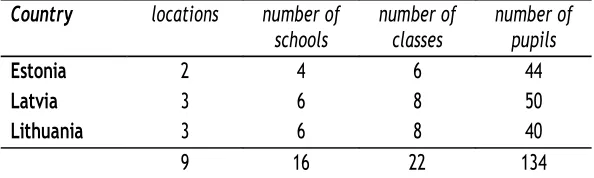
This article explores how young people (aged 12-18) in the three Baltic states of Estonia, Latvia and Lithuania are constructing their identities, particularly their sense of attachment to their country and to Europe. This generation is of particular significance, in that they are the first generation for many years to have been born and socialised in independent states that are in a relatively peaceful and stable state. Data was collected through 22 focus groups, conducted in 10 different locations in the different states, and were analysed in terms of the degree of enthusiasm expressed for civic institutions and cultural practices related to the country and to Europe. Two particular areas were identified: the sense of generational difference and the ways in which different groups created ‘other’ communities, within and without their country’s borders. These parameters allow us to distinguish the significant communities that these young people are creating in order to make sense of their social and political worlds.
Keywords
Identity, community, young people, Estonia, Latvia, Lithuania, social construction
1 Background
Citizenship and civic identity have been traditionally associated with a defined, limited and exclusive area or territory (Mackenzie 1978). Over the past sixty years, this conception has become gradually and partially eroded, through processes such as globalisation, large scale migration, and the development of dual citizenship (Joppke, 2010: vi-viii). The development of the European Union (EU) has contributed another layer of complexity. Citizens of the countries that are members of the Union are now also citizens of the EU, and this second citizenship gives them rights that are superior to those rights given by their country’s citizenship (Joppke 2010). As the EU has expanded, this citizenship–and these rights–have been extended to include an increasing number of Europeans. The border of the EU has moved between its inception in 1956 and its most recent expansion in 2007 with further border movements planned in coming years.1
This article describes part of a small-scale qualitative investigation into how young people – aged between 11 and 18 - are constructing their identities and becoming aware of their actual or potential European identity in the three Baltic countries of Estonia, Latvia and Lithuania.2
These countries are all engaged in a process of change, having become members of the European Union in May 2004. However, there was an additional prior change to the status of the three countries in mid 1991, when they all became independent of the USSR (Judt 2005, 646, 655). They had been independent states between 1920 and 1940, but between August 1940 and 1991 each had been formally incorporated into the Soviet Union as a Soviet Socialist Republic (and had also been occupied by Nazi forces, and claimed as part of the Reichskommissariat Ostland, between 1941 and 1945).
These events mean that in 2010 people under 19 in these three countries have some particular characteristics. Other than those over 70 years of age, this is the first generation to be born in the three independent states, and to have been wholly socialised into these self-governing communities. They will have no personal memories of the Soviet period, or of the events leading to the establishment of the independent countries. Parents and various histories will have mediated any narratives they construct of the events before 1991. They will also have become aware, over the past six years, of their country’s membership of the EU. Although they will all have this in common, these young people are by no means an homogeneous group (see Table 1). During the Soviet period3 there was considerable migration into the
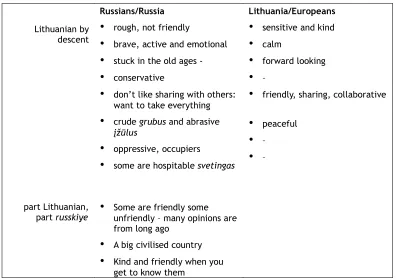
three territories from other Soviet Socialist Republics, particularly in Estonia and Latvia (Hiden, Salmon 1994). In Lithuania, there were also some longstanding communities of Polish or Belarus origin, and the creation of the Polish-Lithuanian border in 1945 paid scant respect to the ethnic origin of any residents. There was also migration out of the territories–many of the immigrants were transient, and a number of the indigenous population moved to other parts of the USSR, not always of their own free will. A number of the migrants into the territory married local people, and settled permanently. Since independence, some people of migrant origin living in the three countries have taken up citizenship of one of the three countries, and others have not. Many of those of migrant origin have adopted the language of the country in which they now live, but a proportion has not done so to a significant degree (Judt 2005, 644-645). Some, but not all, of these people may refer to themselves as being of Russian origin (russkiye, русские) and speak Russian: in this context, the term russkiye is used to refer to members of one of a number of ethnic groups, not to citizenship of Russia (rossiyanin, россиянин). As will be seen, the term ‘Russian’ is used to include those of Ukrainian, Cossack, Belarusian and other origins, as well as those of ethnic Russian origin.
2 This was part of a larger study of young people in the countries that have recently joined the European Union (2004-2007), and the countries that are currently candidate countries seeking membership in the future. The study was conducted under the aegis of a Jean Monnet ad personam Chair, awarded by the European Commission. I am grateful for this support, but emphasise that all the analysis and conclusions are my responsibility, and should not be construed in any way as the views or opinions of the European Commission. Thanks to Etina Annuskanc, Giedre Bagdonaite, Zoja Cehlova, Jolanta Desperat, Natalja Goliusova, Igors Ivashkins, Kristi Köiv, Catherine
Ł
Kozjuhina, Edgar Krull, Andrita Krumina, Giedre Kvieskiene, Urve Laanempts, Anna Liduma, Marcin uczka, Eve Magi, Marina Marchenoka, Antra Mazura, Jurgita Norvaisaite, Alina Petrauskiene, Sandra Rone, Zandra Rubene, Katya Simeonova, Anna Tatarinceva, Sulev Valdmaa, Gerda Vogule, Irena Zaleskiene and Vaiva Zuzeviciute. In London Metropolitan University, to Marta Pinto, Marko Bojcun and colleagues in IPSE for useful discussions and pointers, and to Angela Kamara for managing my travel and records.
Table 1. Ethnic composition of the populations of Estonia, Latvia and Lithuania, 2010
** data not classified in this category in this country
Sources: Estimates made by the various statistical offices of each country:
Statistics Estonia (website of the Government of Estonia statistics office) http://pub.stat.ee/px-web.2001/Dialog/statfile1.asp, accessed November 2, 2011; Latvia: Citizenship & Migration Affairs www.pmp.gov.lv/lv/statistika/dokuments/2011/21SVP_Latvija_pec_VPD.pff, accessed November 2, 2011; Lithuania: Statistikos Departmentas http://db1.stat.gov.lt/statbank/default.asp?w=1920, accessed November 2, 2011; the Lithuanian data is rounded to the nearest 100, the Estonian and Latvian data is not
The young people with whom this study is concerned – 12 to 18 year olds – therefore include those who have both parents of Estonian/Latvian/Lithuanian origin, speaking the respective language; some who have two russkiye parents (possibly with Russian as the home language, and possibly attending a Russophone school, in which Russian is the medium of instruction);4 some with one parent is russkiye and the other
Estonian/Latvian/ Lithuanian; and some with one or more grandparent of russkiye origin (and some of these last two groups are also possibly in Russophone schools). The sample is discussed in detail below in Issues of methodology and Table 2.
2
Identities and Attachments: A Brief Discussion
Identities are increasingly recognised as being both multiple and constructed contingently and, for some, in a context that includes Europe. Such identities may include a range of intersecting dimensions, including gender, age and region. It appears that a growing number of young people in parts of the EU are acknowledging at least a partial sense of European identity alongside their national identity: the degree to which this is
4 Russophone schools teach most subjects in Russian: they are state-funded, but cater for students of Russian-origin families who wish their children to be educated in Russian. They also teach Latvian or Estonian, and public examinations for University entrance are conducted in these languages, respectively.
Estonia Latvia Lithuania
N % n % n %
Estonians 924,100 69.0 2,359 0.1 **
Latvian 2,177 0.2 1,327,129 59.5 2,400 0.1 Lithuanian 2,046 0.2 29,376 1.3 2,721,500 83.9 Russian 341,450 25.5 610,297 27.4 174,900 5.4 Polish 1,993 0.1 51,397 2.3 212,800 6.6 Belorussian 15,315 1.1 78,556 3.5 41,100 1.3 Ukrainian 27,530 2.1 54,425 2.4 21,100 0.6
Finns 10,494 0.8 ** **
Jewish 1,770 0.1 9,529 0.4 3,400 0.1
Tartar 2,428 0.2 ** 3,100 0.1
German 1,918 0.1 4,548 0.2 3,000 0.1
Romany ** 0.0 8,536 0.4 2,900 0.1
Others 8,973 0.7 53,489 2.5 8,000 0.2
Not known ** 0.0 ** 50,400 1.5
acknowledged varies by nationality, gender and social class, as well as by age (Lutz et al 2006). European and national identities are not alternatives, but potentially complementary feelings that can be held in parallel (Licata 2000). But what does this multiplicity mean for the young people involved? In these three countries, particular contrasts between the various ‘national’ or ‘ethnic’ communities allow the possibility of exploring constructions of not just identity and citizenship, but also of community and generation in these particular countries in the early 21st Century.
I draw on two particular writers in framing this analysis of what a sense of European identity might mean. Michael Bruter (2005), analysing the emergence of mass European identity, describes the identities of citizens as having a civic and a cultural component. Individual have differing balances of the ‘civic’ (identification with “the set of institutions, rights and rules that preside over the political life of the community”) and the ‘cultural’ (“identification with a certain culture, social similarities, values” (Bruter 2005, 12)). Lynn Jamieson, writing with Sue Grundy describes the different processes by which some young people “come to present themselves as passionate utopian Europeans, while for many being European remains emotionally insignificant and devoid of imagined community or steps towards global citizenship” (Grundy, Jamieson 2007, 663).
My research questions were derived from these frameworks. Do these young people identify with a mixture of cultural and civic aspects of Europe, and how does this relate to the presence of the same two components in their identification with their country? To what extent are young people passionate or indifferent about each? In Estonia and Latvia in particular, do russkiye young people see themselves as an identity community, and are they perceived as such by their Estonian and Latvian contemporaries? Do young people acknowledge their multiplicity of identities, and how much to they insist that their identity is singular, essentialist and immovable? Does their sense of their own identity require the construction of ‘the Other,’ a contrasting outside or alien identity to be held in juxtaposition to their own identity? This question is of particular significance to the subjects of this study: their eastern borders were created just twenty years ago, and as the borders of the European Union continue to demonstrate their flexibility, even an ambiguity, are there (in the minds of these young people) limits to Europe: where does the frontier lie?
The generational identity may also be significant in this context: the experiences of this generation are markedly different to those of their parents and grandparents. In a recent study of generational identities in 20th Century Germany, Fulbrook (2011) notes the ‘construction of a collective identity on the basis of generationally defined common experiences’ (11). Age, she suggest, is ‘crucial at times of transition, with respect to the ways in which people can become involved in new regimes and societies’ (488). Do these young people perceive themselves as a generation differently available for political and social mobilisation than their parents or grandparents?
‘society/association’) Tönnies (1887, reprint 2001) will be useful: the community identities in these countries will not simple contrast the associative process of a ‘natural’ communitarian will with a rational individualistic will (Adair-Toteff 1995). The critical communitarianism analysis of Barzilai (2003) suggests that communities excluded from the processes of ruling – such as, arguably, the russkiye communities in Estonia and perhaps Latvia – might construct legal cultures that interact with aspects of political power: the identities constructed in such a process constitute communities protected by law and boundaries against other communities. Is such a process recognised and described by the young members of these communities?
3 Issues of Methodology
These are big and complex questions, and putting them directly to young people will not, I argue, lead to coherent or meaningful answers. They may not have considered them, and feel obliged by the interview context to provide ‘an answer’; they may feel constrained by how they reply to a direct question; they will almost inevitably use the language and constructions of the questioner in making any response. The focuses of this study is on how these young peoples’ ideas are socially constructed. Social constructions are created through social interaction, in a social context, so my methodology has been to conduct focus groups with small groups of five to six pupils, all about the same age. In a focus group, the researcher introduces a few open-ended questions, and encourages the pupils to discuss these between them so that they are interacting with each other, rather than with the researcher. As an example of this, here is a group of Latvians discussing what makes them ‘Latvian:’
Reines F5 (♂15¾) I’m not a total Latvian, I’m only partial. On my mother’s
side, everyone was Latvian, but on my father’s side there is a very mixed line: there are Russian, Belarusians, and even Polish descent. I kind of respect both – I am a patriot of more than just one country.
Nellija G ( 14 ¾) ♁ It’s not the blood that makes your nationality. If you have a Russian mother and a Russian father, and you were born in Latvia and you learn the Latvian language, and you do everything as a Latvian would do – it
doesn’t make a difference – Monta A6 ♁
( 15½) – it’s more what’s in your head –
Agnese K ( 16.0) ♁ – and what you see every day. If you are Russian, but you live in Latvia, you don’t know how the Russians live in Russia, so – so you become Latvian. It’s really not a lot!
Monta A Also friends do some stuff to you. If you are Russian,
5 All names have been changed so that individuals remain anonymous. They are identified by the country in which they were interviewed, their gender and their age. The cities of Riga and Tallinn have not been anonomised.