Using a knowledge translation framework to identify barriers and supports
to effective nursing handover: A focus group study
Adriana Hada
a,*, Leanne Jack
b, Fiona Coyer
caDivision of Medicine, Princess Alexandra Hospital, Brisbane, Queensland, Australia
bPost Graduate Study Area Coordinator Intensive Care Nursing and Emergency Nursing, School of Nursing, Queensland University of Technology, Brisbane, Australia cJoint Appointment with School of Nursing, Queensland University of Technology and Royal Brisbane and Women's Hospital, Metro North Hospital Health Service, Brisbane, Queensland, Australia
A R T I C L E I N F O
Keywords:
Barriers and facilitators Clinical handover Focus group Knowledge translation Nursing
Qualitative research Adverse event
Continuous quality improvement Evidence based nursing Effectiveness in nursing care
A B S T R A C T
The aims of this study were to systematically assess the barriers and facilitators to evidence-based nursing handover in a clinical environment, and to identify potential adopters and attributes of evidence-based nursing handover for translation into practice. The study was conducted in the medical wards of a major tertiary referral hospital in Brisbane, Australia. Participants comprised registered and enrolled nurses permanently employed in the participating wards for at least three months prior to the commencement of study. Using a qualitative focus group design, a context specific assessment of the barriers and enablers to knowledge translation was performed throughfive semi-structured focus groups. Focus groups discussions were recorded by a registered court reporter using a stenotype machine for voice to text transcription, transcribed verbatim and de-identified for analysis. Focus group data were analysed using thematic analysis.
Three themes emerged from the focus group discussions: 1) Content (information transferred); 2) Process (steps used to transfer accountability and responsibility for care); and 3) Environment (factors impacting on safe handover). Participants identified barriers to effective nursing handover including variability of handover content and process, uncertainty around sharing sensitive information, inconsistency around clarifying gaps through questioning during the handover, superficial patient involvement, time constraints and environmental challenges. Key facilitators discussed during the focus groups were the use of integrated electronic medical records, support and clear expectations from the nursing leadership and targeted handover education.
During the focus group discussions, participants identified several barriers and facilitators to effective hand-over. Thesefindings will guide the development of research translation strategies to support the implementation of best practice, standardised clinical handover.
1. Introduction
Nursing clinical handover has been identified as a research priority for patient safety, and consequently, there has been a strong national and international focus on improving handover communication over the last decade (Gage, 2013;Manser and Foster, 2011;Smeulers et al., 2014). Communication failures during clinical handover are the leading cause of patient harm and are the root cause of 65% of sentinel or catastrophic events (Joint Commission, 2011). In addition, poor handover practice has been associated with inaccurate clinical assessment and diagnosis, delays in diagnosis, delays in ordering tests, medication errors, incon-sistent or incorrect results interpretation, duplication of tests, increased rates of in-hospital complications, increased length of ward and hospital
stay, and decreased patient and staff satisfaction (Smeulers et al., 2014). There is an emphasis on the need for high quality evidence based on rigorous quantitative and qualitative evaluation of interventions aimed at improving the quality and safety in nursing handover (Chaboyer et al., 2009;Sand-Jecklin and Sherman, 2013). Furthermore, there is growing recognition of the importance of knowledge translation to ensure that researchfindings are integrated into clinical practice. The use of explicit conceptual frameworks by clinicians and researchers to translate evi-dence into practice has resulted in improved uptake of research (Green, 2014).
Over the past decade, research has focused on developing evidence based solutions for improving clinical handover, through improved and standardised handover practices (Chaboyer et al., 2010; Manser and
* Corresponding author.
E-mail addresses:[email protected],[email protected](A. Hada).
Contents lists available atScienceDirect
Heliyon
journal homepage:www.heliyon.com
https://doi.org/10.1016/j.heliyon.2019.e01960
Received 3 February 2019; Received in revised form 21 April 2019; Accepted 12 June 2019
2405-8440/©2019 The Authors. Published by Elsevier Ltd. This is an open access article under the CC BY-NC-ND license (
http://creativecommons.org/licenses/by-nc-nd/4.0/).
Foster, 2011). Despite ongoing efforts at national and international levels, there are still identified gaps in practice related to the inconsistent structure and processes utilised by nursing staff during shift-to-shift handover.
Local evaluations of the nursing bedside handover process conducted to monitor compliance with the National Safety and Quality clinical handover standards (ACHS) identified gaps in practice related to the inconsistent structure and processes utilised by nursing staff during shift-to-shift bedside handover in our hospital. Despite the adoption of a clinical handover framework within the organisation, nursing handover remained highly variable in content and process.
We undertook a multi-phased translational research project, the TEaCH study, using the Ottawa Model of Research Use (Graham and Logan, 2004), a knowledge translation framework, to transform evidence-based clinical handover principles into nursing practice. This article will describe Phase one of this study.
1.1. Aim of the study
The aims of this study were to systematically assess the barriers and facilitators to evidence-based nursing handover in a clinical environ-ment, and to identify potential adopters and attributes of evidence-based nursing handover for translation into practice. The research questions were:
What are the perceived barriers to the implementation and sustain-ability of best practise nursing handover in the clinical setting? What are the facilitators and strategies that would assist and sustain
best practice nursing handover in the clinical setting?
2. Methods
2.1. Study design
This study used a qualitative focus group discussion design. A focus group is a qualitative research method that provides opportunity to capture deeper information more economically than individual in-terviews. In focus group design participants are guided in a discussion, to elicit multiple opinions and perspectives that would not be revealed without the interaction of the group, thus participants are encouraged to make connections to various concepts throughout the discussion (Denzin and Lincoln, 2005).
2.2. Setting
The study was conducted between January and February 2018 in four, 24-bed acute medical wards, providing a total of 96 beds, in a major tertiary referral hospital in Brisbane, Australia. The medical wards pro-vide care for patients admitted through the Emergency Department or Medical Assessment and Planning Unit for the assessment and manage-ment of complex medical conditions, such as diabetes and endocrine disorders, heart failure, hypertension, immunology, kidney disease, and rheumatology. One of the four wards primarily specialises in respiratory conditions. The average patient length of stay across the four wards is betweenfive to seven days. Each ward admits 30 to 35 patients per week.
2.3. Participants
All 173 nursing staff which comprised registered and enrolled nurses permanently employed in the four wards for at least three months prior to the commencement of study, were included in this study. A convenience sampling method was used, where the nurses rostered to work at the time of the scheduled sessions were invited to participate in the focus groups.
2.4. Data collection
Demographic data collected at the beginning of the focus group included: nursing position, gender, age, years of nursing experience and highest level of education.
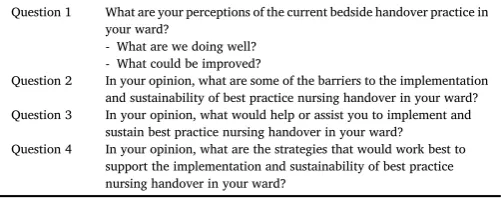
Participants were asked to reflect on the current night to morning and morning to afternoon shift bedside handover. The focus group facilitator (AH) used a guided set of questions that were prepared in advance to increase consistency across sessions (Table 1).
Focus groups were 45–60 minutes in length and were recorded by a registered court reporter using a stenotype machine for voice to text transcription, transcribed verbatim and de-identified for analysis.
2.5. Reflexivity
The facilitator was female registered nurse with clinical experience in medical, surgical and rehabilitation nursing and research co-ordination. Because of her position in the organisation, the facilitator knew some of the participants by name and role, but did not have a direct collegial or managerial relationship with any. AH was mindful to maintain integrity to participants’ discussion during data collection and analysis while remaining focused on the nursing handover literature and overall project as a doctoral researcher.
2.6. Reporting
The‘COREQ: consolidated criteria for reporting qualitative research’ guided the reporting of this study (Tong et al., 2007).
2.7. Ethical approval
Ethical approval to conduct this study was granted by the relevant hospital and university Human Research Ethics Committees (HREC) (HREC/17/QPAH/754; UHREC 1700001132).
2.8. Recruitment and consent
Following ethical approval, the researcher met with the Nurse Unit Managers (NUMs), Nurse Educators (NEs) and Clinical Facilitators (CFs) of the relevant wards to discuss the project. An invitation to participate in the focus groups and a study participant information form was distrib-uted to all nursing staff employed in the wards via email sent by the ward receptionists on the authors’behalf and also verbally by the focus group facilitator (AH) attending ward meetings. Posters advertising the study were placed in the four wards to encourage the study involvement. Nurses were asked to express their interest in participating in the focus groups within two weeks of receiving the invitation. A reminder email was sent one week before the closing date of expression of interest sub-mission. Written consent was obtained from all participants prior to focus group commencement.
Table 1
Focus groups questions.
Question 1 What are your perceptions of the current bedside handover practice in your ward?
- What are we doing well? - What could be improved?
Question 2 In your opinion, what are some of the barriers to the implementation and sustainability of best practice nursing handover in your ward? Question 3 In your opinion, what would help or assist you to implement and
sustain best practice nursing handover in your ward? Question 4 In your opinion, what are the strategies that would work best to
2.9. Data analysis
The focus group data was analysed using an inductive content anal-ysis method, which included six phases: becoming familiar with the data, generating initial codes, recognising themes, reviewing the themes, defining and naming the theme, and producing thefinal report (Braun& Clarke, 2006). No qualitative data analysis software was used. The transcripts were read and re-read to ensure familiarity with the text (AH, LJ, FC). Participants’quotes were collated into a word document table, and through close analysis of data, categories and themes were developed.
The data analysis process included:
1. For each focus group transcript, meaning units (sentences and para-graphs) were identified and labelled with a code by AH, LJ and FC, then any discrepancies were discussed. Consensus was reached after the second round of consultation.
2. The codes were divided into four topics from the interview guide– perceptions of the current bedside handover; barriers and facilitators; identification of factors that would assist with the implementation and sustainability of best practise nursing handover in the ward; identification of strategies that would work best to support the implementation and sustainability of best practise nursing handover in the ward.
3. The codes within each topic were grouped into categories.
The preliminary categories were developed and compared, and cat-egories with similar names were grouped together when found to have the same content. Next, the categories were compared for similarities and differences and grouped into themes and subthemes. Each theme and subtheme was then written using interpretation, direct quotations from the data and literature (Richards and Morse, 2002). The research team discussed these emerging themes and subthemes, with further revision occurring to ensure that the reportedfindings accurately reflected par-ticipants’perceptions (Liamputtong, 2011).
3. Results
Five focus group sessions were conducted with 49 participants. De-mographic characteristics of participants are presented inTable 2.
3.1. Themes
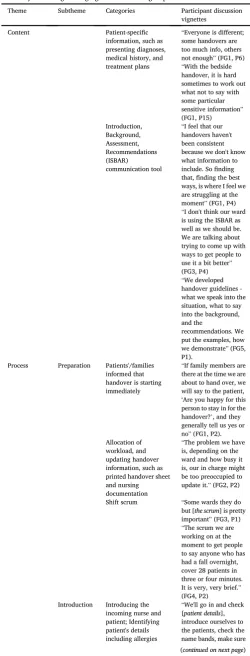
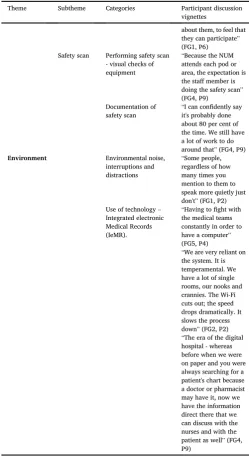
A summary of thefindings is presented inTable 3.
Three themes emerged from the focus group discussions: 1) Content (information transferred); 2) Process (steps used to transfer account-ability and responsibility for care); and 3) Environment (factors impacting on safe handover). Within the Process theme, the categories were further sorted into subthemes: Preparation, Information exchange, Patient involvement and Safety scan.
Table 2
Demographic characteristics of participants (n¼49).
Position N (%) EN: 7 (14.3); RN: 23 (46.9); CN: 8 (16.3); CF: 4 (8.1); NE: 1 (2.1); CNC: 2 (4.2); NUM: 4 (8.1)
Gender M/F N (%)
M: 8 (16.3) F: 41 (83.7) Age Median (IQR) 32 (37.5–25) Years of nursing experience
Median (IQR)
5 (10–2)
Highest tertiary education (nursing) N (%)
Diploma: 7 (14.3); Bachelor: 33 (67.2); PG Cert: 7 (14.3); Masters: 2 (4.2)
*NUM- Nurse Unit Manager, NE – Nurse Educator, CNC – Clinical Nurse Consultant, CF–Clinical Facilitator, CN–Clinical Nurse, RN–Registered Nurse, and EN–Enrolled Nurse.
Table 3
Summary offindings emerging from the focus group discussions.
Theme Subtheme Categories Participant discussion
vignettes
Content Patient-specific
information, such as presenting diagnoses, medical history, and treatment plans
“Everyone is different; some handovers are too much info, others not enough”(FG1, P6) “With the bedside handover, it is hard sometimes to work out what not to say with some particular sensitive information” (FG1, P15) Introduction,
Background, Assessment, Recommendations (ISBAR) communication tool
“I feel that our handovers haven't been consistent because we don't know what information to include. Sofinding that,finding the best ways, is where I feel we are struggling at the moment”(FG1, P4) “I don't think our ward is using the ISBAR as well as we should be. We are talking about trying to come up with ways to get people to use it a bit better” (FG3, P4) “We developed handover guidelines -what we speak into the situation, what to say into the background, and the
recommendations. We put the examples, how we demonstrate”(FG5, P1).
Process Preparation Patients'/families informed that handover is starting immediately
“If family members are there at the time we are about to hand over, we will say to the patient,
‘Are you happy for this person to stay in for the handover?’, and they generally tell us yes or no”(FG1, P2). Allocation of
workload, and updating handover information, such as printed handover sheet and nursing documentation
“The problem we have is, depending on the ward and how busy it is, our in charge might be too preoccupied to update it.”(FG2, P2)
Shift scrum “Some wards they do but [the scrum] is pretty important”(FG3, P1) “The scrum we are working on at the moment to get people to say anyone who has had a fall overnight, cover 28 patients in three or four minutes. It is very, very brief.” (FG4, P2) Introduction Introducing the
incoming nurse and patient; Identifying patient's details including allergies
“We'll go in and check [patient details], introduce ourselves to the patients, check the name bands, make sure
3.1.1. Content
Whilst participants generally agreed that the Introduction, Situation, Background, Assessments, Recommendations (ISBAR) tool is used for structuring the bedside handover communication, extensive discussions occurred in each focus group around the inconsistent handover content:
“I feel that our handovers haven't been consistent because we don't know what information to include.”(FG1, P4)
There was consensus amongst the participants in all focus groups that although the ISBAR tool has been used for some time, there is still un-certainty regarding the specific information to be discussed. Further-more, participants reflected that the content of the bedside handover can often depend on the experience and personal style of the person providing the information and that some people tend to go into too much detail whilst others rush through and miss important facts:
“Everyone is different; some handovers are too much info, others not enough”(FG1, P6)
Finally, concerns regarding the disclosure of sensitive information at
Table 3(continued)
Theme Subtheme Categories Participant discussion
vignettes
the patient is in the right bed. (FG3, P2) Information
exchange
Accuracy and efficiency of handover information
“for example falls risk, all that information is discussed.”(FG5, P1) “If someone has deteriorated, that is one of the foremost things we will hand over to the next lot of staff, the plan for the deteriorating patient. I think that we do that quite well”(FG1, P2) Clarifying gaps or
uncertainty through questioning
“They are not looking at the information and interpreting it. That is potentially going to be a problem in the next eight hours or there is a trend there. That comes with experience.”(FG4, P1) “If they want more clarity, even though they are not in charge for that shift, they will ask those questions” (FG4, P5) “I think the handover sheet is really helpful for that because it's all basically there. You go through it and add what's relevant”(FG3, P4)
Patient involvement
Inviting patient to confirm/clarify
“we introduce ourselves and tell them who the nurses are but as far as involving them in their care and what's going on, you don't see that”(FG4, P7)
“I worry sometimes that there is a breach of patient confidentiality” (FG1, P3)
“How much are you going to want to say to 10 people standing there, looking at you? The dynamics of having so many people attending handover I think can prohibit patient interaction” (FG4, P5) Inviting patient to ask
questions
“I would say typically patients don't tend to engage in it. If they do, it's fairly rare. I feel it is more of a reassurance for them to know that they can speak up if they want to. Ifind that not many people do have questions”(FG5, P4)
“Rather than talking about them with them lying there while listening to what you are saying, it's nice to feel like, because it is
Table 3(continued)
Theme Subtheme Categories Participant discussion
vignettes
about them, to feel that they can participate” (FG1, P6) Safety scan Performing safety scan
- visual checks of equipment
“Because the NUM attends each pod or area, the expectation is the staff member is doing the safety scan” (FG4, P9)
Documentation of safety scan
“I can confidently say it's probably done about 80 per cent of the time. We still have a lot of work to do around that”(FG4, P9) Environment Environmental noise,
interruptions and distractions
“Some people, regardless of how many times you mention to them to speak more quietly just don't”(FG1, P2) Use of technology–
Integrated electronic Medical Records (IeMR).
“Having tofight with the medical teams constantly in order to have a computer” (FG5, P4)
the bedside arose in each focus group with general accord that having a clear understanding of what sensitive and confidential information means and when these should be discussed would be beneficial.
3.1.2. Process
a)Preparation
Most participants agreed that in preparation for the handover, they would ask patients if they want their family members present at the handover. The patient allocation model was discussed and in each group participants agreed that the current allocation model worked well. The patients are allocated to the upcoming shifts before the handover and all the participating wards work within a“pod”allocation model–that is a number of nurses are allocated a group of patients in a geographical area of the ward and they work together to provide care for the allocated group of patients. Participants in all focus groups reflected on the use of printed handover sheet. Whilst most participants stated that it is helpful to use this, the agreement was that the printed handover is not always updated. Furthermore, extensive discussion occurred in all focus groups around the “scrum” before the bedside handover. There was general agreement that this is an important part of the process:
“The scrum we are working on at the moment to get people to say anyone who has had a fall overnight, cover 28 patients in three or four minutes. It is very, very brief.”(FG4, P2).
b)Introduction
Most participants agreed that at the beginning of the handover they introduce the incoming staff and patients and check the patients’identity: “We'll go in and check[patient details],introduce ourselves to the pa-tients, check the name bands, make sure the patient is in the right bed” (FG3, P2).
c)Information exchange
Extensive discussion occurred in all focus groups in relation to the process of communicating risks and identifying deteriorating patients. There seemed to be agreement amongst the participants that these pro-cesses are generally done well.
Concerns related to the process of clarifying gaps or uncertainty through questioning during the bedside handover arose in each focus group. Participants reflected on and agreed that less experienced nurses may not be able to interpret the information received, therefore the more experienced staff should be mindful and provide opportunities for clarification:
“They are not looking at the information and interpreting it. That is potentially going to be a problem in the next eight hours or there is a trend there. That comes with experience.”(FG4, P1)
It was acknowledged that the presence of a senior nurse (NUM, NE, CF, team leader) during the handover facilitated a consistent process for checking the accuracy of key information and clarifying gaps. The con-sisted use of a printed handover was also discussed as a potential facili-tator for the information exchange process; participants reflected that the updated printed handover would not only ensure accuracy of information but would also reduce duplication and save time:
“I think the handover sheet is really helpful for that because it's all basi-cally there. You go through it and add what's relevant”(FG3, P4)
d) Patient involvement
Participants acknowledged that the patient involvement is very brief and is often resumed to establishing the initial rapport (introduction). Several barriers were identified in each focus group in relation to su-perficial patient involvement including nurses' concerns regarding pa-tient confidentiality, papa-tients’reluctance to participate in discussions particularly when several nurses attend the handover and time constrains:
“I worry sometimes that there is a breach of patient confidentiality”(FG1, P3)
There was agreement within the groups that patient involvement in the bedside handover would increase patient participation in their care planning:
“Rather than talking about them with them lying there while listening to what you are saying, it's nice to feel like, because it is about them, to feel that they can participate”(FG1, P6)
Targeted education and clear guidelines were suggested as facilitators to increase nurses’confidence in ensuring patient confidentiality during the bedside handover.
e) Safety scans
Generally, participants agreed that the safety scans are performed and documented in IeMR. There was consensus that a clear expectation from the NUM is a significant facilitator for performing and documenting the safety scans:
“Because the NUM attends each pod or area, the expectation is the staff member is doing the safety scan”(FG4, P9)
3.1.3. Environment
Participants discussed the environmental noise during the handover and reflected that this can be distracting for patients as well as for the nurses handing over:
“Some people, regardless of how many times you mention to them to speak more quietly just don't”(FG1, P2)
The use of computers and IeMR during the bedside handover was extensively discussed in each focus group. A few concerns arose regarding difficulties tofind a portable computer as well as occasional technology glitches which slow down the handover process:
“We are very reliant on the system. It is temperamental. It slows the process down”(FG2, P2)
Despite some identified challenges, the use of technology (IeMR) is generally perceived by most participants as a facilitator for the handover:
“The era of the digital hospital - whereas before when we were on paper and you were always searching for a patient's chart because a doctor or pharmacist may have it, now we have the information direct there that we can discuss with the nurses and with the patient as well”(FG4, P9)
3.2. Enablers and strategies that would support the implementation and sustainability of best practise nursing handover
3.2.1. Use of integrated electronic medical records (IeMR)
Extensive discussions occurred around the use of IeMR and different ways in which this could enable the best practise nursing handover were identified including the setup of a handover screen, using theflagged events function, and the risk identification capability:
“Using Flagged events in IeMR- Observations, codes, falls, those kinds of things areflagged and they stay there for about seven days”(FG4, P1)
3.2.2. Support and clear expectations from nursing leadership
Participants agreed that in order to achieve consistency with the handover content and process, the senior staff need to set, communicate and re-inforce clear expectations:
“It needs to be reinforced by the senior staff, the NUMs in charge. They all have to agree it is going to be done this way, and reinforce it”(FG2, P3)
In addition, the presence of senior nurses at the handover has been identified as an enabler to sustain the best practise handover:
“I can guarantee the nurses are following the right procedure or local procedure when the nurse unit manager and the CF are there”(FG4, P1)
3.2.3. Targeted handover education
Targeted handover education was identified as a key facilitator to improve the handover content and the process. A range of education strategies and delivery methods that would support the implementation and sustainability of best practice nursing handover were suggested including: online training consisting of written guidelines and a short video articulating the structure and process of the handover; role play during in-service sessions and written materials such as handoverfl ow-chart and ISBAR laminated cards and posters:
“In-service followed by some written guidelines. Some in-services, the next day you forget what was said”. (FG1, P6)
“I would love to see a little handover video with visual dot points on it, these are the ten things in order you want during a handover.” (FG2, P3)
“Role-playing is the basis of our education. It demonstrates how we do it, how to give handover. That would be part of the strategy”(FG4, P8)
A summary of thefindings was presented by the researcher to the nursing staff in the participating wards, with an opportunity for partici-pants to provide feedback on thefindings.
4. Discussion
This study provided valuable insights into nurses' perceptions of the current clinical handover content and process as well as the impact of the environment on the quality of the handover. The group dynamics and interaction among participants helped to further explore and clarify participants’views on barriers and facilitators to the implementation and sustainability of best practice nursing handover in the participating wards. Furthermore, during the focus groups discussions, potential en-ablers and strategies that would support the implementation and sus-tainability of best practice nursing handover were suggested. A key strength of this study was the development of a good understanding of contextual factors that influence clinical practice in this setting. Identi-fication of the local context is the first step and a key factor in the knowledge translation. Furthermore, the systematic depiction of barriers and supports to the adoption of evidence based interventions in a practice setting assists the management of difficulties and the promotion of pos-itive approaches to facilitate the adoption of research intervention (Graham and Logan, 2004).
Participants identified that although the ISBAR communication
framework is generally used during the shift-to-shift nursing handover, the handover content varied with the knowledge, experience and style of the nurse giving the report. This variability creates inconsistency in the handover content with some nurses providing too much, too little or poor quality information. The current handover process was extensively dis-cussed in each focus group and participants identified several gaps in the current practice including inconsistent availability of a printed handover, need for a“scrum”before the bedside handover, deficiency in clarifying information or uncertainty through questioning, inadequate patient involvement and inconsistencies with performing and documenting the safety scan. Environmental factors such as the inconsistent availability and functionality of computers, as well as noise distractions were also reflected upon as barriers to an effective handover.
Thefindings of this study are consistent with previous studies, where nurses identified that inadequate and variable handover content and process hinder effective handover communication (Street et al., 2011; Welsh et al., 2010). Mixed models of written and verbal bedside hand-over preceded by a shift scrum or huddle are frequently recommended in the literature (Holly and Poletick, 2014;Johnson and Cowin, 2013). The short meeting at the beginning of the shift, often called scrum” or “huddle”can be described as a preparatory briefing among nurses for the purpose of exchanging information such as diagnosis, tests scheduled for the day, fall risk, safety issues, and plan for the day. The nurses then head to the bedsides for the detailed handover (Chapman, 2009;Glymph et al., 2015). Additionally, a clear process for checking the accuracy of key information both verbally and in written documents, and clarifying gaps or uncertainty through questioning, was found to enhance the quality of handover communication (Bates et al., 2014;Drach-Zahavy et al., 2015). Patient involvement in nursing handover communication has been rec-ommended as best practice at the national and international level (Australian Commission on Safety and Quality in Health Care, 2012; World Health Organization, 2007) and was found to improve overall patient satisfaction and quality of care (Chaboyer et al., 2009;Maxson et al., 2012). Despite this, the frequency of patient participation in bedside handover remains variable. Findings from several studies describe nurses perception of patient involvement as impractical during bedside handovers due to time constraints (Drach-Zahavy and Shilman, 2015), patient unwillingness to contribute (Scholl et al., 2014) or nurses’ concerns about sharing sensitive information at the bedside (Tobiano et al., 2017).
Participants in this study agreed that standardised handover content and process support safe patient care. Explicit guidelines, targeted handover education as well as leadership support and clear expectations would facilitate the provision of standardised handover content. Furthermore, consistent use of the Nursing Clinical Handover component in IeMR was discussed as a potential facilitator to improve the quality of the handover content and process.
Handover standardisation is supported by current literature ( Austra-lian Commission on Safety and Quality in Health Care, 2012; British Medical Association, National Patient Safety Agency, 2005).Smeulers et al. (2014)propose that the guiding principles of face-to-face commu-nication, structured documentation, patient involvement and use of in-formation technologies can be applied when redesigning the nursing handover process (Smeulers et al., 2014). Furthermore, Halm (2013) suggests that standard handover protocols identify necessary information for reliable handover and thus reduce clinicians’use of their discretion, which often leads to variability and lower safety margins. Finally, the use of technology, specifically electronic handover tools developed using the ISBAR format is recommended by the literature to improve workflow and nurse satisfaction (Riesenberg and Leitzsch, 2010; Wentworth et al., 2012).
4.1. Limitations
as the local context may have influenced the studyfindings. However, the qualitative nature of the method employed, enabled frank, strong dis-cussions during the focus groups sessions, and empowered the identifi-cation of barriers and facilitators which will support the development of targeted strategies in subsequent phases of this study. Finally, while we acknowledge that thefindings arising from this study are generally rec-ognised among nurses; however, identifying contextual enablers and barriers to best practice in clinical handover remains an important focus in the implementation of best practice.
5. Conclusions
This study explored nurses’perceptions of the current clinical hand-over content and process as well as the impact of the environment on the quality of the handover. During the focus group discussions, several barriers and facilitators to effective handover were identified including variability of handover content and process, uncertainty around sharing sensitive information, inconsistency around clarifying gaps or uncer-tainty through questioning during the bedside handover, superficial pa-tient involvement, time constrains and environmental challenges. The use of IeMR, support and clear expectations from the nursing leadership and targeted handover education were the key facilitators discussed during the focus groups. The findings from this study will be used to develop research translation strategies that will overcome barriers and emphasise adopters of the best practice nursing handover.
Declarations
Author contribution statement
Adriana Hada, Leanne Jack, Fiona Coyer: Conceived and designed the experiments; Performed the experiments; Analyzed and interpreted the data; Contributed reagents, materials, analysis tools or data; Wrote the paper.
Funding statement
This research did not receive any specific grant from funding agencies in the public, commercial, or not-for-profit sectors.
Competing interest statement
The authors declare no conflict of interest.
Additional information
No additional information is available for this paper.
Acknowledgements
We wish to acknowledge all nurses who participated in this study.
References
Australian Commission on Safety and Quality in Health Care, 2012. National Safety and Quality Health Service Standards. Australian Commission on Safety and Quality in Health Care, Sydney, NSW. Retrieved from.https://www.safetyandquality.gov.au/ wp-content/uploads/2011/09/NSQHS-Standards-Sept-2012.pdf.
Bates, K.E., Bird, G.L., Shea, J.A., Apkon, M., Shaddy, R.E., Metlay, J.P., 2014. A tool to measure shared clinical understanding following handoffs to help evaluate handoff
quality. J. Hosp. Med. 9 (3), 142–147.
Braun, V., Clarke, V., 2006. Using thematic analysis in psychology. Qual. Res. Psychol. 3
(2), 77–101.
British Medical Association, National Patient Safety Agency,&NHS Modernisation
Agency, 2005. Safe Handover: Safe Patients. Guidance on Clinical Handover for Clinicians and Managers. BMA London.
Chaboyer, W., McMurray, A., Johnson, J., Hardy, L., Marianne, W., Ying, F., 2009.
Bedside handover: quality improvement strategy to“transform care at the bedside”.
J. Nurs. Care Qual. 24 (2), 136–142.
Chaboyer, W., McMurray, A., Wallis, M., 2010. Bedside nursing handover: a case study.
Int. J. Nurs. Pract. 16, 27–34.
Chapman, K., 2009. Improving Communication among Nurses, Patients, and Physicians: a series of changes leads to cultural transformation at a TCAB hospital. Am. J. Nurs.
109, 21–25.
Denzin, N.K., Lincoln, Y.S., 2005. The SAGE Handbook of Qualitative Research, third ed. Sage Publications, Thousand Oaks, CA.
Drach-Zahavy, A., Goldblatt, H., Maizel, A., 2015. Between standardisation and resilience:
nurses’emergent risk management strategies during handovers. J. Clin. Nurs. 24
(3-4), 592–601.
Drach-Zahavy, A., Shilman, O., 2015. Patients’participation during a nursing handover:
the role of handover characteristics and patients’personal traits. J. Adv. Nurs. 71 (1),
136–147.
Gage, W., 2013. Evaluating handover practice in an acute NHS trust. Nurs. Stand. 27 (48),
43–50.
Glymph, D., Olenick, M., Barbera, S., Brown, E., Prestianni, L., Miller, C., 2015. Healthcare utilizing deliberate discussion linking events (HUDDLE): a systematic review. AANA J. (Am. Assoc. Nurse Anesth.) 83 (3), 183–188. Retrieved from.http:// search.proquest.com/docview/1712860532/.
Graham, I.D., Logan, J., 2004. Translating research. Innovations in knowledge transfer and continuity of care. Can. J. Nurs. Res. 36 (2), 89–103. Retrieved from.https://ga
teway.library.qut.edu.au/login?url¼https://search.ebscohost.com/login.aspx?
direct¼true&AuthType¼ip,sso&db¼c8h&AN¼106658625&site¼ehost-live&scop
e¼site.
Green, H.E., 2014. Use of theoretical and conceptual frameworks in qualitative research.
Nurse Res. 21 (6), 34–38.
Halm, M.A., 2013. Nursing handoffs: ensuring safe passage for patients. Am. J. Crit. Care
22 (2), 158–162.
Holly, C., Poletick, E.B., 2014. A systematic review on the transfer of information during
nurse transitions in care. J. Clin. Nurs. 23 (17-18), 2387–2396.
Johnson, M., Cowin, L.S., 2013. Nurses discuss bedside handover and using written
handover sheets. J. Nurs. Manag. 21 (1), 121–129.
Joint Commission, 2011. Sentinel Event Data Root Causes by Event Type 2004 - 2010. Retrieved from:http://www.jointcommision.org/assets/1/18/Root_Causes_by_Eve nt_Type_2004-4Q2010.pdf.
Liamputtong, P., 2011. Focus Group Methodology: Principle and Practice. SAGE Publications Limited, Los Angeles.
Manser, T., Foster, S., 2011. Effective handover communication: an overview of research
and improvement efforts. Best Pract. Res. Clin. Anaesthesiol. 25, 181–191.
Maxson, P.M., Derby, K.M., Wrobleski, D.M., Foss, D.M., 2012. Bedside nurse-to-nurse handoff promotes patient safety. Medsurg Nurs. 21 (3), 140–144. Retrieved fromhtt
ps://gateway.library.qut.edu.au/login?url¼https://search-proquest-com.ezp01
.library.qut.edu.au/docview/1021188154?accountid¼13380.
Richards, L., Morse, J.M., 2002. Readme First for a User’s Guide to Qualitative Methods,
third ed. Sage Publications, Thousand Oaks, CA.
Riesenberg, L.A., Leitzsch, J., 2010. Nursing handoffs: a systematic review of the
literature. Am. J. Nurs. 110 (4), 24–34.
Sand-Jecklin, K., Sherman, J., 2013. Incorporating bedside report in to nursing handoff:
evaluation of change in practice. J. Nurs. Care Qual. 28 (2), 186–194.
Scholl, I., Zill, J.M., Harter, M., Dirmaier, J., 2014. An integrative model of patient-centeredness: a systematic review and concept analysis. PLoS One 9 (9), e107828. Smeulers, M., Lucas, C., Vermeulen, H., 2014. Effectiveness of different nursing handover
styles for ensuring continuity of information in hospitalised patients. Cochrane Database Syst. Rev. Online.
Street, M., Eustace, P., Livingston, P.M., Craike, M.J., Kent, B., Patterson, D., 2011.
Communication at the bedside to enhance patient care: a survey of nurses’experience
and perspective of handover. Int. J. Nurs. Pract. 17, 133–140.
Tobiano, G., Whitty, J.A., Bucknall, T., Chaboyer, W., 2017. Nurses’perceived barriers to
bedside handover and their implication for clinical practice. Worldviews
Evidence-Based Nurs. 14 (5), 343–349.
Tong, A., Sainsbury, P., Craig, J., 2007. Consolidated criteria for reporting qualitative research (COREQ): a 32-item checklist for interviews and focus groups. Int. J. Qual.
Health Care 19, 349–357.
Welsh, C.A., Flanagan, M.E., Ebright, P., 2010. Barriers and facilitators to nursing
handoffs: Recommendations for redesign. Nurs. Outlook 58 (3), 148–154.
Wentworth, L., Diggins, J., Bartel, D., Johnson, M., Hale, J., Gaines, K., 2012. SBAR: electronic handoff tool for noncomplicated procedural patients. J. Nurs. Care Qual.
27 (2), 125–131.