University of Pennsylvania
ScholarlyCommons
Publicly Accessible Penn Dissertations
1-1-2016
Novel Targets for Reducing Nicotine
Withdrawal-induced Phenotypes: Contribution of the AMPK
Pathway and BDNF Val66met Polymorphism
Bridgin LeeUniversity of Pennsylvania, [email protected]
Follow this and additional works at:http://repository.upenn.edu/edissertations
Part of theNeuroscience and Neurobiology Commons, and thePharmacology Commons
This paper is posted at ScholarlyCommons.http://repository.upenn.edu/edissertations/1834 Recommended Citation
Lee, Bridgin, "Novel Targets for Reducing Nicotine Withdrawal-induced Phenotypes: Contribution of the AMPK Pathway and BDNF Val66met Polymorphism" (2016).Publicly Accessible Penn Dissertations. 1834.
Novel Targets for Reducing Nicotine Withdrawal-induced Phenotypes:
Contribution of the AMPK Pathway and BDNF Val66met Polymorphism
Abstract
Smoking is the leading cause of preventable illness and death in the United States. Despite this, current pharmacological treatments for nicotine withdrawal remain partially effective and the abstinence rate remains low. The development of novel pharmacotherapies that can mediate the aversive symptoms of nicotine withdrawal will contribute to improved cessation outcomes. To this end, the studies in this dissertation had two objectives: one- to identify novel molecular pathways underlying nicotine withdrawal and two- to examine the contribution of genetic variants to withdrawal symptoms. To address the first objective we used functional genomic approaches (chromatin immunoprecipitation and whole genome sequencing (ChIP-Seq)) to identify pathways that are altered following withdrawal from nicotine. Through these means we identified the AMPK (AMP-activated protein kinase) signaling pathway as one such target. In addition, we demonstrated that the AMPK pathway is activated following chronic nicotine, an effect that is reversed by 24-hour withdrawal. Maintaining AMPK activation during withdrawal via the preclinical AMPK activator AICAR or the FDA approved diabetes drug metformin attenuated anxiety-like behavior during nicotine withdrawal in preclinical animal models. Further, the reduction in anxiety-like behavior was through a mechanism dependent on the AMPKα subunit within the hippocampus, as determined by a genetic AMPKα loss-of function animal model. Metformin treatment also reversed withdrawal-induced deficits in contextual fear conditioning. In our final study we examined the contribution of genetic variants to the affective phenotypes of nicotine withdrawal. We utilized a BDNF knock-in mouse containing the BDNF Val66Met polymorphism to examine the effect of this single nucleotide polymorphism (SNP) on anxiety-like behavior following withdrawal. Using this model we found blunted anxiety-like behavior in mice homozygous for the SNP (BDNFMet/Met) following withdrawal. We also observed an increase in expression of the BDNF prodomain in BDNFMet/Met mice following nicotine withdrawal, highlighting the potential role of this ligand in mediating withdrawal behavior. Together, research from this dissertation provide the first evidence of a direct effect of AMPK modulation on behavior following nicotine withdrawal, and provides the first example of using a mouse genetic variant model to examine withdrawal behavior.
Degree Type Dissertation
Degree Name
Doctor of Philosophy (PhD)
Graduate Group Pharmacology
First Advisor Julie A. Blendy
Keywords
Subject Categories
NOVEL TARGETS FOR REDUCING NICOTINE WITHDRAWAL-INDUCED PHENOTYPES: CONTRIBUTION OF THE AMPK PATHWAY AND BDNF VAL66MET POLYMORPHISM
Bridgin Greenwood Lee
A DISSERTATION in
Pharmacology
Presented to the Faculties of the University of Pennsylvania in
Partial Fulfillment of the Requirements for the Degree of Doctor of Philosophy
2016
Supervisor of Dissertation Graduate Group Chairperson
________________________ ________________________
Julie A. Blendy, PhD Julie A. Blendy, PhD Professor of Pharmacology Professor of Pharmacology
Dissertation Committee
Teresa M. Reyes, PhD, Adjunct Associate Professor of Pharmacology Irwin Lucki, PhD, Professor of Psychology in Psychiatry
ACKNOWLEDGEMENTS
This dissertation would not have been possible without a wide array of people. I
would like to thank the entire Blendy Lab including all of the undergraduates, graduate
students, and postdocs that have helped me, and shared their invaluable expertise along
the way. I am deeply grateful to my mentor Dr. Julie Blendy for the opportunity to work
in her lab, as well as her many years of guidance and support. Nicole Yohn was my
backbone, psychiatrist and good friend. I am lucky to be leaving graduate school with her
friendship, and couldn’t imagine this experience without her.
The friends that I have made from graduate school are amazing. Friendships that
started as sharing notes from missed classes and eating lunch together as first years have
transcended into relationships that will last a lifetime. These friends stood by me through
the successes and struggles of graduate school and for this I am exceedingly grateful.
I would like to give special thanks to my parents; An and Rob Lee, and my sister
and brother-in law, Whitney and Paul. My family have always stood beside me and been
my largest cheerleaders in life. Without their love and constant support the road to
completing this body of work would have had far more speed bumps. Thank you, thank
you, thank you.
Finally I would like to thank my husband, Ian Murphy. Ian has tirelessly held my
hand throughout this entire process. He has picked me up and strengthened my resolve
after strings of failed experiments, pretended to be my audience for practice presentations
and yelled with me as I cursed out stubborn lab equipment. I wish there was a phrase
more profound then thank you to properly convey my gratitude, but please know how
ABSTRACT
NOVEL TARGETS FOR REDUCING NICOTINE WITHDRAWAL-INDUCED PHENOTYPES:
CONTRIBUTION OF THE AMPK PATHWAY AND BDNF VAL66MET POLYMORPHISM
Bridgin G. Lee Julie A. Blendy
Smoking is the leading cause of preventable illness and death in the United States.
Despite this, current pharmacological treatments for nicotine withdrawal remain partially
effective and the abstinence rate remains low. The development of novel
pharmacotherapies that can mediate the aversive symptoms of nicotine withdrawal will
contribute to improved cessation outcomes. To this end, the studies in this dissertation
had two objectives: one- to identify novel molecular pathways underlying nicotine
withdrawal and two- to examine the contribution of genetic variants to withdrawal
symptoms. To address the first objective we used functional genomic approaches
(chromatin immunoprecipitation and whole genome sequencing (ChIP-Seq)) to identify
pathways that are altered following withdrawal from nicotine. Through these means we
identified the AMPK (AMP-activated protein kinase) signaling pathway as one such
target. In addition, we demonstrated that the AMPK pathway is activated following
chronic nicotine, an effect that is reversed by 24-hour withdrawal. Maintaining AMPK
activation during withdrawal via the preclinical AMPK activator AICAR or the FDA
approved diabetes drug metformin attenuated anxiety-like behavior during nicotine
withdrawal in preclinical animal models. Further, the reduction in anxiety-like behavior
determined by a genetic AMPKα loss-of function animal model. Metformin treatment
also reversed withdrawal-induced deficits in contextual fear conditioning. In our final
study we examined the contribution of genetic variants to the affective phenotypes of
nicotine withdrawal. We utilized a BDNF knock-in mouse containing the BDNF
Val66Met polymorphism to examine the effect of this single nucleotide polymorphism
(SNP) on anxiety-like behavior following withdrawal. Using this model we found blunted
anxiety-like behavior in mice homozygous for the SNP (BDNFMet/Met) following
withdrawal. We also observed an increase in expression of the BDNF prodomain in
BDNFMet/Met mice following nicotine withdrawal, highlighting the potential role of this
ligand in mediating withdrawal behavior. Together, research from this dissertation
provide the first evidence of a direct effect of AMPK modulation on behavior following
nicotine withdrawal, and provides the first example of using a mouse genetic variant
TABLE OF CONTENTS
Acknowledgements………...………….………ii
Abstract………..………...iii
List of Tables………vii
List of Figures……….viii
Chapter 1: General Introduction……….1
Nicotine Addiction………...1
Nicotine Withdrawal in Humans……….2
FDA Approved Therapies for Nicotine Withdrawal………...6
Genetic Contribution to Withdrawal Variability……….9
Preclinical Animal Models of Nicotine Withdrawal……….11
Drug Repositioning for the Discovery of Novel Nicotinic Cessation Therapies...15
AMPK Activation as a Repositioning Candidate for Nicotine Cessation……….16
Overview of Dissertation………...22
Chapter 2: Activation of AMPK by Metformin reduces anxiety-like behavior and rescues cognitive deficits in preclinical models of nicotine withdrawal…………..…24
Abstract……….……….………25
Introduction…….……….……….……….26
Materials & Methods.……….………..……….28
Results………….……….……….…………...…..36
Discussion…….……….……….………...43
Chapter 3:Effects of the BDNF Val66Met polymorphism on anxiety-like behavior following nicotine withdrawal in mice.……….……….…60
Abstract…….……….……….………...61
Introduction…….…….……….……….………62
Materials & Methods.……….………..……….64
Results………….……….……….……….69
Chapter 4: General Discussion………..……….81
Potential upstream kinases for nicotine and metformin activation of AMPK..84
Mitochondria ~ could the cells powerhouse be contributing to withdrawal?...86
Metformin for smoking cessation looking beyond affect and cognition……..89
The effect of current therapies on AMPK……….92
Concluding remarks………..93
Appendix A: Serine 133 phosphorylation is not required for hippocampal CREB-mediated transcription and behavior……….95
Abstract…….……….……….………...96
Introduction…….…….……….……….…………97
Materials & Methods.……….………..……….98
Results………….……….……….………...104
Discussion…….……….……….……….108
LIST OF TABLES
Chapter 1 – General Introduction………1
1.1 Ongoing clinical trials for repurposing FDA-approved drugs in smoking
cessation………...16
1.2 Effect of AMPK activation on affective behavior and cognitive performance
in vivo………..22
Chapter 2– Activation of AMPK by metformin reduces anxiety-like behavior and rescues cognitive deficits in preclinical models of nicotine withdrawal………..24
2.1 Members of the AMPK pathway bound by CREB in the hippocampus…………...56
S2.1 Blood glucose concentrations in mice fed ad libitum and following a 16-hour fast.59
Chapter 3 – Effects of the BDNF Val66Met polymorphism on anxiety-like behavior following nicotine withdrawal in mice………...60
Chapter 4 – General Discussion………..81
Appendix A – Serine 133 phosphorylation is not required for hippocampal CREB-mediated transcription and behavior……….95
LIST OF FIGURES
Chapter 1 – General Introduction………1
Chapter 2 – Activation of AMPK by metformin reduces anxiety-like behavior and rescues cognitive deficits in preclinical models of nicotine withdrawal………..24
2.1 Activation of the AMPK pathway following chronic nicotine treatment is reduced
during 24-hour withdrawal in a CREB-dependent manner……….50
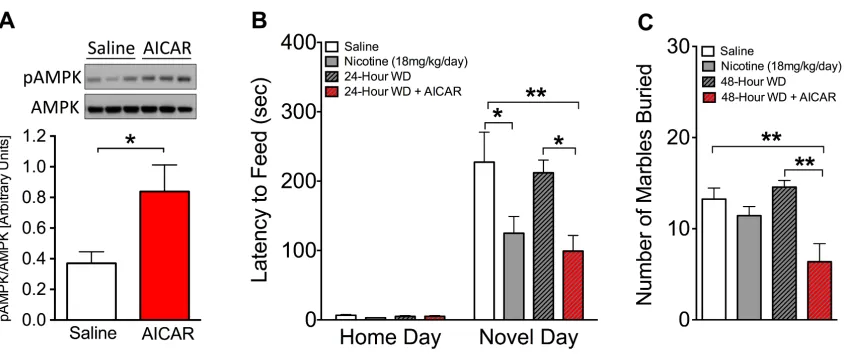
2.2 Chronic AICAR increases pAMPK in the hippocampus and reduces anxiety-like
behavior during 24-hour withdrawal………..51
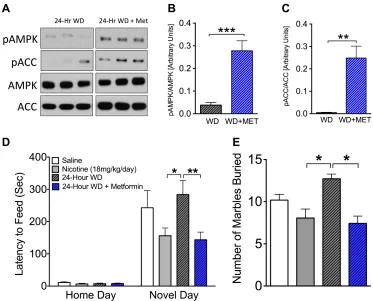
2.3 Systemically administered metformin increases pAMPK in the hippocampus and
reduces anxiety-like behavior during nicotine withdrawal in the novelty-induced hypophagia (NIH) and marble-burying (MB) test………...52
2.4 Intracerebroventricular (i.c.v.) metformin maintains elevated pAMPK levels and
reduces anxiety-like behavior in the NIH during 24-hour withdrawal………53
2.5 Efficacy of metformin in alleviating anxiety-like behavior is dependent on AMPKα
within the hippocampus………...54
2.6 Metformin ameliorates deficits in contextual fear conditioning observed in C57BL//6
mice withdrawn from nicotine……….55
S2.1 One week of chronic AICAR treatment does not alter body weight or palatable food
consumption………...57
S2.2 One week of chronic metformin treatment does not alter palatable food
consumption, total locomotive activity or body weight………58
S2.3 Intrahippocampal injection of AAV-GFP in mouse hippocampus………58
S2.4 ICV administration of saline and metformin does not alter palatable food
Chapter 3 – Effects of the BDNF Val66Met polymorphism on anxiety-like behavior following nicotine withdrawal in mice………...60
3.1 Behavioral effects of the mouse brain-derived neurotrophic factor (BDNF) Val66Met
variant in the novelty-induced hypophagia (NIH) test………77
3.2 Effect of chronic nicotine, 24-hour withdrawal and the brain-derived neurotrophic factor (BDNF) Val66Met genotype on behavior in the marble burying task………..78
3.3 Open field behavior in the brain-derived neurotrophic factor (BDNF) Val66Met
variant during baseline (saline-treated) and 24-hour withdrawal………...79
3.4 Western blot analysis of proBDNF and brain-derived neurotrophic factor (BDNF)
prodomain in the hippocampus………...80
Chapter 4 – General Discussion………..81
Appendix A – Serine 133 phosphorylation is not required for hippocampal CREB-mediated transcription and behavior……….95
A.1 Derivation and characterization of Ser133Ala mutant mouse………..111
A.2 S133A mice exhibit normal aversive and instrumental learning………..113
CHAPTER 1
GENERAL INTRODUCTION I. Nicotine Addiction
In the United States over 40 million adults and more than 3.5 million youths
under the age of 18 smoke (CDC, 2014). Considered the number one cause of
preventable death, smoking claims nearly half a million lives per year in the United
States (U.S. HHS, 2014). In 1964, the first Surgeon General report entitled “Smoking and
Health” formally established cigarette smoking as the cause of a multitude of diseases
ranging from liver cancer to diabetes. However, despite a disease list that encompasses
nearly every organ in the body it is estimated that at least 60,000 additional deaths per
year are due to causes not yet formally recognized by the Surgeon General (Carter et al.,
2015), yet still attributable to smoking.
Tobacco smoke contains approximately 4,700 different substances (Borgerding
and Klus, 2005) including nicotine, the established addictive component of cigarettes
(Stolerman and Jarvis, 1995). A naturally occurring chemical compound, nicotine
(3-(1-Methyl-2-pyrrolidinyl)pyridine), acts as an acute agonist at nicotinic acetylcholine
receptors (nAChRs) located throughout the body including the central nervous system
(CNS) (Holladay et al., 1997). Within the CNS nAChRs are located predominantly on
presynaptic terminals (Wonnacott et al., 1996) and are composed of α and β subunits
grouped into homopentamers (all α subunits) or heteropentamers (combination of α and β
subunits). Similar to other drugs of abuse nicotine can activate the mesocorticolimbic
dopamine reward system (Pontieri et al., 1996) and stimulates the release of almost all
these neurotransmitters produces reinforcing effects including mild euphoria, reduced
negative mood and heightened arousal (Pomerleau and Pomerleau, 1992; Stolerman and
Jarvis, 1995) that contribute to a physiological dependence and strengthening of the
smoking habit. Chronic nicotine also contributes to multiple adaptive changes in the
central nervous system including long-lasting changes in gene expression (Martin-Soelch,
2013). These changes underlie the physiological withdrawal symptoms that accompany
abstinence from nicotine. Aversive symptoms of nicotine withdrawal act as negative
reinforcers encouraging smoking behavior to provide relief from the negative withdrawal
symptoms (West et al., 2006). The reinforcing properties of nicotine, and the aversive
effects of withdrawal both contribute to why nicotine dependence is considered a chronic,
relapsing condition (Rennard and Daughton, 2014).
II. Nicotine Withdrawal in Humans
Nicotine withdrawal is characterized by a collection of somatic (physical),
affective, and cognitive symptoms following an abrupt depletion of nicotine. Decreased
heart rate and increased weight are somatic indicators of withdrawal while affective
symptoms include increased irritability, anxiety, and depression (Hughes and Hatsukami,
1986; Hughes, 1992; 2007a). Lastly, withdrawal induces cognitive deficits, specifically
an inability to concentrate (Wesnes et al., 2013). These symptoms are important factors in
both maintaining drug dependence and in the relapse that follows a quit attempt.
Withdrawal symptoms emerge within hours of cessation (al’Absi et al., 2004; Hendricks
et al., 2006) and follow a time-limited course of 2-4 weeks (Hughes, 1992; 2007a).
quantitative analysis of qualitative symptom data. Studies using these methods have
shown that the severity rating of experienced symptoms act as strong predictors of
relapse (Piasecki et al., 1998; 2000), with greater withdrawal symptoms observed in those
that relapse compared to those that successfully quit (al’Absi et al., 2004). Of mechanistic
importance, withdrawal symptoms are a direct result of nicotine deprivation. Nicotine
replacement therapy lessens the severity of withdrawal symptoms and increases
abstinence rates (Schuurmans et al., 2004; Rose et al., 2006; Atzori et al., 2008).
However, even with nicotine replacement therapy, or either of the two other FDA
approved therapies for nicotine cessation (Chantix®, Zyban®), the rate of successful quit
attempts remains low.
Nicotine withdrawal symptoms in humans: Cognitive deficits The role of nicotine in
enhancing attention and ameliorating cognitive deficits is seen across multiple diseases
including Alzheimers (Sahakian et al., 1989), Parkinsons (Kelton et al., 2000), and
attention deficit/hyperactivity disorder (ADHD) (Potter and Newhouse, 2008). Although
the viability of nicotine as a cognitive enhancer is still debated, nicotine administration in
a non-smoking, healthy population can provide cognitive benefits (Provost and
Woodward, 1991; Jubelt et al., 2008). The perceived cognitive benefits of nicotine
contribute to the maintenance of nicotine dependence, while the cognitive deficits
induced by withdrawal from nicotine act as a barrier to quitting.
Cognitive deficits are a commonly reported symptom of nicotine withdrawal, with
66% self-reporting difficulty concentrating during days 1-3 post-cessation (Ward et al.,
and peak at 24-hour withdrawal (Hendricks et al., 2006). Furthermore, cognitive
performance during abstinence is inversely correlated with time to relapse (Patterson et
al., 2010). Multiple studies support that nicotine deprivation causes impaired
performance in sustained attention tasks, and arithmetic response time (Snyder and
Henningfield, 1989; Provost and Woodward, 1991; Myers et al., 2007; Wesnes et al.,
2013). The effect of nicotine withdrawal on working memory however, remains unclear.
Studies have demonstrated no effect of nicotine withdrawal on working memory (Myers
et al., 2007; Sweet et al., 2010; Wesnes et al., 2013). In contrast, others have shown
impaired working memory following nicotine withdrawal; including slower response and
greater errors in a performance task of working memory (Mendrek et al., 2006).
Re-exposure to nicotine during withdrawal normalizes most withdrawal-induced deficits in a
dose-dependent manner (Snyder and Henningfield, 1989; Bell et al., 1999; Atzori et al.,
2008). Not only is cognition improved with nicotine therapy post-cessation, but
performance tasks such as arithmetic response time and logical reasoning are enhanced
above baseline (smoking) measurements (Snyder and Henningfield, 1989; Myers et al.,
2007).
Multiple variables could contribute to the differential effects of nicotine
withdrawal on working memory, these include: sample size, subject variance in nicotine
dependence, sex, genetics and length of abstinence prior to testing. Recent neuroimaging
developments have allowed scientists a unique insight into the functional effect of
nicotine withdrawal independent of behavioral manifestations. One such study found that
following an overnight abstinence, more variation in the activation and deactivation
withdrawal, suggesting an overall change in neural processing (Sweet et al., 2010).
Continued efforts in linking human brain activity to the cognitive symptoms of
withdrawal will highlight areas of functional relevance for improved pharmacotherapies.
Nicotine withdrawal symptoms in humans: Negative affect The subjective effects of
nicotine administration include positive affect, as defined by feelings of comfort,
satisfaction, and relaxation (Perkins et al., 2003). In contrast, following nicotine
withdrawal negative affect including irritability, anxiety and depression, increases (see
(Hughes, 2007a) for review). In addition to causing distress during cessation, negative
affect experienced during withdrawal is prohibitive to a successful quit attempt, with
variability in affect scores directly correlating to withdrawal-related outcomes (Piasecki
et al., 1998; 2000). The occurrence of a relapse event is especially influenced by affective
symptoms; with negative affect both precipitating and aggravating withdrawal attempts
(Shiffman, 1982; Brandon et al., 1990).
One characteristic of negative affect that is intensified and frequently reported
following nicotine withdrawal is anxiety (Shiffman, 1982; Ward et al., 2001). Increased
anxiety symptoms are experienced within 2-hours of quitting smoking (Hendricks et al.,
2006), and are most prevalent in the first three days post-cessation (Hughes et al., 1992;
Gilbert et al., 1998; Ward et al., 2001). As the cessation expectancies of most smokers are
focused on the immediate consequences of their quitting (Hendricks et al., 2009) putative
factors such as anxiety that manifest quickly can greatly impact quit rates and contribute
to relapse. Proceeding a lapse (temporary return to nicotine use), six in ten report
complete relapse (full return to regular nicotine use) (Brandon et al., 1990). As a high
prevalence of tobacco use is observed in those with mental illness, including anxiety
disorders (Ziedonis et al., 2008), it is important to identify if withdrawal symptoms are
due to a predisposed psychopathology. In contrast, twin studies have shown
withdrawal-induced symptoms, including anxiety, occur independently of any predisposition to
mental or behavioral disorders thus supporting anxiety as a true pharmacological
withdrawal symptom (Edwards and Kendler, 2011).
III. FDA Approved Therapies for Nicotine Withdrawal
In order to develop novel and improved pharmacotherapies for nicotine cessation
it is critical to first understand the efficacy of current approved therapies in alleviating
withdrawal symptoms including negative affect and cognitive deficits. At this time, there
are three FDA-approved pharmacotherapies for nicotine withdrawal: nicotine
replacement therapy, partial nAChR agonist varenicline (Chantix®), and the
antidepressant bupropion (Zyban®). Previous meta-analysis demonstrated all therapies to
be more efficacious in promoting smoking cessation than placebo with an odds ratio of
2.1 and 2.5 for bupropion and varenicline respectively, and a range of 1.6 to 2.3
according to the product for nicotine replacement therapy. Improvement of withdrawal
symptom severity has also been demonstrated across all treatment groups (Jorenby et al.,
1999). However, even with pharmacological treatment one-year after a quit attempt, two
in three people will lapse, and one in five people will return to smoking (Ucar et al.,
Nicotine replacement therapies Nicotine replacement therapy (NRT) uses remedial
administration of nicotine as a treatment for smoking cessation. First investigated with
2mg nicotine gum in 1984, there are currently five different types of nicotine replacement
therapies approved by the FDA: nasal spray, inhaler, lozenge, patch, and gum. All
nicotine replacement therapies, with the exception of inhalers and nasal spray are
available over the counter and without a prescription. As most withdrawal symptoms are
present within the first month after cessation, the efficacy of NRT in reducing symptoms
within this time-point is significant. NRT reduces anxiety over the first month of
treatment and abrogates difficulty concentrating throughout the first week (Jorenby et al.,
1996). Meta-analysis of 12 NRT trials confirmed it to be more efficacious than placebo
for smoking cessation (Etter and Stapleton, 2006) with a one-year average relapse rate of
30%.
Bupropion The drug bupropion acts as a weak norepinephrine and dopamine reuptake
inhibitor (Ascher et al., 1995). In addition to its effects within the synapse, bupropion is
also a noncompetitive antagonist at α4β2 nicotinic receptors (Slemmer et al., 2000;
Damaj et al., 2004). Initially FDA-approved for the treatment of depression, the first
landmark clinical trial with bupropion as a treatment for smoking cessation occurred in
1997 (Hurt et al., 1997). This trial demonstrated that the cessation rates at six-weeks and
one-year were two times greater with bupropion treatment compared with placebo. In
addition to maintaining cessation, bupropion treatment also increased the median time to
relapse from 65 days to 156 days, a 140% increase over placebo (Hays et al., 2001). On
and enhanced response time for number stimuli in a sustained attention task following an
overnight abstinence period (Perkins et al., 2013). Despite its efficacy over placebo, the
one-year abstinence rate with bupropion remains at 30% (Hays et al., 2001).
Varenicline The drug varenicline is the current gold standard of smoking cessation
therapies and is considered to be the most effective pharmacological treatment for short
and long-term smoking cessation. A nicotine mimicker, varenicline stimulates nAChRs
through its actions as a partial agonist at α4β2 and full agonist at α7 nAChRs (Mihalak et
al., 2006). In addition, varenicline contributes to cessation maintenance through its
actions as a nicotinic antagonist. As 88% of those who smoke a single cigarette during
withdrawal eventually return to regular nicotine use (Brandon et al., 1990), blocking
nicotine reward during an initial post-cessation lapse is a critical component to
varenicline therapy.
The efficacy of varenicline in smoking cessation was initially confirmed in 2006
by two Phase III efficacy trials (Gonzales et al., 2006; Jorenby et al., 2006). Each trial
independently corroborated the efficacy of varenicline over placebo and bupropion in
maintaining abstinence. Varenicline reduced craving and negative affect and mitigated
the rewarding effect of nicotine during a lapse (West et al., 2008). Varenicline also
enhanced both sustained attention and working memory within 72-hours of withdrawal
(Patterson et al., 2009). From the time when these trials were conducted, varenicline
received the FDA’s strongest safety warning, a black box warning. The black box
warning highlighted the risk of neuropsychiatric events associated with varenicline
FDA added cardiovascular problems to its black box warning. Despite of these warnings,
in 2014 varenicline was included in the IMS Health List of Top 100 Performing Drugs,
with over two million prescriptions between October 2013 and September 2014.
Notwithstanding safety and efficacy, varenicline treatment still demonstrates an overall
smoking cessation rate of 32% after 1 year (Ucar et al., 2014), a rate comparable to other
FDA-approved smoking cessation treatments.
Combination therapies In addition to monotherapies, studies have also investigated the
use of combination therapies in maintaining nicotine cessation and preventing relapse.
Polytherapy with bupropion and nicotine patch compared to nicotine patch treatment
alone increased abstinence rates (Jorenby et al., 1999). Polytherapy with varenicline also
improved cessation with a higher abstinence rate at six months observed with
co-treatment of nicotine patch plus varenicline compared to varenicline co-treatment alone
(Koegelenberg et al., 2014). Finally, subjects treated with a combination therapy of
varenicline and bupropion compared to varenicline alone exhibited prolonged abstinence,
however, this effect was lost after one-year (Ebbert et al., 2014).
IV. Genetic Contribution to Withdrawal Variability
Not all subjects respond equally to nicotine cessation treatment. Therefore, in
addition to understanding the kinetics and mechanisms of current treatments it is equally
as important to understand the contributions of ones genetic makeup to nicotine
cessation. The importance of genetic influence on withdrawal is two-fold; one, it can
predict treatment response, thereby guiding the selection of pharmacotherapies. Genetic
variability accounts for approximately 70% of the risk for nicotine dependence (Sullivan
and Kendler, 1999; Vink et al., 2005). The severity of nicotine withdrawal and the ability
to achieve and maintain abstinence are also both under considerable genetic control. A
male twin study found a 31% genetic contribution to the variance of experienced nicotine
withdrawal symptoms and a 51% genetic contribution to the variance in failed cessation
(Xian et al., 2003). This finding was replicated and broadened to include a data set of
female twins which found a 50% genetic contribution to smoking cessation, suggesting
the influence of genes on withdrawal is independent of sex (Broms et al., 2006).
The exact mechanism for how genetic variance contributes to phenotypic variance
in nicotine withdrawal continues to be investigated through large-scale genome-wide
association studies (GWAS) and directed single candidate gene approaches. Of specific
focus is the contribution of single nucleotide polymorphisms (SNPs) to withdrawal from
nicotine. SNP variants can predict cessation success (Sarginson et al., 2011), time to
relapse (King et al., 2012), and contribute to withdrawal symptoms (Kubota et al., 2006).
These large association studies can also be used to narrow down the study to single genes
of interest. A meta-analysis of 17 twin studies from the literature identified an association
between brain-derived neurotrophic factor (BDNF) variants and nicotine dependence (Li,
2006). Of particular interest to nicotine dependence and withdrawal is the BDNF genetic
variant Val66Met. This variant is a non-synonymous SNP in the prodomain of the BDNF
gene that substitutes a valine (val) for a methionine (met) amino acid (Val66Met). The
BDNF Val66Met SNP is associated with more frequent smoking behavior in humans
affect cessation and is associated with an increased percent of successful quitting
(Breetvelt et al., 2012). Mice with the SNP on both alleles (BDNFMet/Met) exhibit
increased anxiety-like behavior and cognitive deficits (Chen et al., 2006), behaviors
central to nicotine withdrawal symptoms. These studies suggest a critical link between
BDNF genetic variants, smoking and withdrawal.
Of additional interest, studies have also shown a correlation between SNP variants
and cessation drug efficacy. Variants in nicotinic receptor subtypes can predict response
to varenicline, while variants within the drug-metabolizing enzyme CYP2B6 are
associated with bupropion response (King et al., 2012). However, with over 4500 unique
SNPs identified in a comparison of unsuccessful versus successful abstainers (Uhl et al.,
2008) there still remains much research in the area of individual SNP variant contribution
to nicotine withdrawal.
V. Preclinical Animal Models of Nicotine Withdrawal
The use of animal models in investigating nicotine withdrawal allows for the
opportunity to parse apart the specific genetic, behavioral, and molecular components
contributing to the withdrawal syndrome observed in humans. Valid preclinical models of
withdrawal have predictive validity and reliability that can be related back to human
withdrawal symptoms and controlled within a laboratory setting. Furthermore,
pharmacological and genetic manipulation of animal models allows researchers to probe
at potential targets for novel pharmacotherapies and determine how to maximize the
benefit of current therapies. Therefore, animal models of nicotine withdrawal can act both
simulation of the behaviors that contribute to relapse in humans during withdrawal.
Following both spontaneous and precipitated withdrawal with a nicotinic antagonist,
mecamylamine, rodents exhibit the full spectrum of withdrawal symptoms. These
symptoms mirror those of humans and include increased anxiety-like behavior and
cognitive deficits as measured by difficult learning (Damaj et al., 2003; Davis et al.,
2005). In addition, rodents also exhibit physical (somatic) signs of withdrawal including
increased paw and body tremors (Damaj et al., 2003). However, these physical signs are
not similar to those in humans (Hughes, 2007b), and do not contribute to drug motivation
or withdrawal adversity as significantly as negative affect and cognition (Baker et al.,
2004).
Behavioral animal models of nicotine withdrawal: Negative affect In order to model
affective symptoms of withdrawal, behavioral assays that examine anxiety-like behavior
in rodents can be used. These assays include: the novelty-induced hypophagia (NIH) test,
marble-burying (MB), open field test (OFT), and the elevated zero maze (EZM). The
NIH test is a sensitive and dependable test for anxiety-like behavior in rodents. In this test
an animal is trained to consume a palatable food in their home cage. For testing day, mice
are placed in a novel environment under anxiety-inducing conditions including bright
light, no bedding, and/or aversive scent. Increased latency to approach and eat the
palatable food on testing day, in such an aversive environment, is a direct measure of
increased anxiety-like behavior. Pharmacological anxiolytics ameliorate the anxiogenic
effect of the novel environment, while drugs with no known anxiolytic capabilities have
test for anxiety behavior. Of importance, this test mimics the effects of nicotine and
withdrawal from nicotine in humans with decreased latency (decreased anxiety-like
behavior; anxiolytic) observed following chronic nicotine treatment, and increased
latency (increased anxiety-like behavior; anxiogenic) observed following 24-hour
withdrawal in mice (Turner et al., 2013).
The marble-burying test is a second preclinical model used to screen anxiolytics.
In this test, mice are placed in a cage full of bedding with marbles lain on top. Unlike the
passive measurements used in the NIH (latency to approach), MB uses the active
measurement of burying to quantify anxiety-like behavior. Although the marbles
represent a novel object they are not aversive to mice as illustrated by equal preference
shown for a compartment with and without marbles (Njung'e and Handley, 1991). The
use of this paradigm in combination with the NIH test provides a nice complementary
measure of anxiety-like behavior both in the absence and presence of aversive
environments, thus controlling for this potential stressor on behavior. This test is specific
to known anxiolytics including alprazolam, diazepam and chlordiazepoxide, with all
anxiolytics significantly reducing the number of marbles buried (Broekkamp et al., 1986;
Nicolas et al., 2006). Of importance to withdrawal modeling, acute nicotine decreases the
number of marbles buried (decreased anxiety-like behavior; anxiolytic) while 24-hour
withdrawal from nicotine increases the number of marbles buried (increased anxiety-like
behavior; anxiogenic) (Turner et al., 2010). In addition to anxiolytics, the responsiveness
of the MB test to cessation pharmacotherapies increases its translational value, with acute
varenicline abrogating the observed increase in marbles buried during withdrawal from
Behavioral animal models of nicotine withdrawal: Cognition The cognitive deficits
observed in humans during withdrawal from nicotine can be modeled in preclinical
rodent models. In order to model these deficits behavioral assays that examine learning
and memory in rodents can be used. These assays include: Fear conditioning (FC),
Morris Water Maze (MWM), and Novel Object Recognition (NOR).
Fear conditioning is a test of learning and memory where an animal is trained
with two paired stimuli: a conditional stimulus (white noise) to an unconditional stimulus
(foot shock). In order to assess how withdrawal from nicotine specifically affects
cognition in this task, training in rodents occurs during the withdrawal time point.
Twenty-four hours following training mice are placed back in the same environment they
were trained in and freezing behavior for contextual fear conditioning is measured in the
absence of any stimuli. Following this contextual test, the rodent is tested again in a novel
environment with and without the presence of the conditioned stimuli (white noise). This
second test is a measure of any deficits or enhancements in cued learning. Increased
freezing behavior in either the context or cued test is interpreted as enhanced cognition,
while decreased freezing behavior can be interpreted as a cognitive deficit.
Nicotine dose dependently enhances contextual FC in mice (Gould and Stephen
Higgins, 2003) and this enhancement is dependent on the hippocampus, a brain region
critical to learning and memory (Davis and Gould, 2009). Similar to humans, following
withdrawal from nicotine cognitive deficits, as measured by a decrease in freezing
behavior, are observed in contextual but not cued learning (Davis et al., 2005; Davis and
Gould, 2009). This deficit can be reversed with acute administration of nicotine,
what is clinically detected, nicotine administration during withdrawal not only
ameliorates the cognitive deficits associated with withdrawal, but enhances them above
baseline levels (Snyder and Henningfield, 1989; Davis et al., 2005; Myers et al., 2007).
FC is also a test sensitive to the effects of nicotine cessation therapies. Bupropion
(Portugal and Gould, 2007) and varenicline (Raybuck et al., 2008) dose-dependently
ameliorate the contextual fear conditioning deficits observed in mice following
withdrawal from nicotine. Therefore, the FC paradigm offers two advantages: one,
demonstration of cognitive withdrawal symptomology and two, modeling of cessation
treatment efficacy for the cognitive deficits observed during withdrawal.
VI. Drug Repositioning for the Discovery of Novel Nicotine Cessation Therapies
In addition to using animal models in the discovery of novel therapeutics, these
models can also identify current FDA-approved drugs that might be efficacious outside of
their originally approved medical indication (repurposed) for nicotine cessation. There
are multiple benefits to repurposing medications including: established safety and
efficacy, decreased development costs and shorter time to approval. Novel drug
development is not only financially prohibitive, standing at $2.6 billion according to a
recent report by the Tufts Center for the Study of Drug Development, but also risky with
a ~16% success rate for clinical approval (DiMasi, 2014). Utilizing established profiles of
approved drugs including toxicology, pharmacokinetics and manufacturing data, up to
40% of development costs (Chong and Sullivan, 2007) and several years of development
Repurposing is not a novel concept to nicotine cessation drug development. The
FDA-approved drug bupropion was initially approved for use in a depressed population.
However, anecdotal evidence demonstrated that those who were taking bupropion for
depression exhibited greater spontaneous smoking cessation during treatment, leading to
its development as a smoking cessation aid (Hurt et al., 1997). In addition to bupropion,
there are multiple open clinical trials investigating the use of FDA-approved drugs for
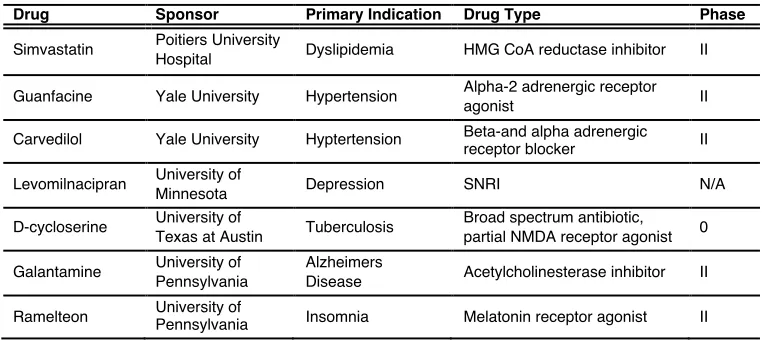
smoking cessation (Table 1.1). These drugs have primary indications ranging from the
treatment of high blood pressure, to tuberculosis, to sleep disorder therapy. However,
they all share a common link in showing preclinical promise as nicotine cessation
therapies.
VII. AMPK Activation as a Repositioning Candidate for Nicotine Cessation
Shared pathophysiology across disease states can contribute to the identification
of common therapeutic targets and thus shared pharmacotherapies. Mei and colleagues
demonstrated how network modeling can identify gene and/or molecule clusters involved !
Table 1.1 Ongoing clinical trials for repurposing FDA-approved drugs in smoking cessation
! ! ! ! ! ! ! ! ! ! ! !
HMG, 3-hydroxy-3-methyl-glutaryl; SNRI, serotonin-norepinephrine reuptake inhibitor; NMDA, N-methyl-D-aspartate
Drug Sponsor Primary Indication Drug Type Phase
Simvastatin Poitiers University
Hospital Dyslipidemia HMG CoA reductase inhibitor II
Guanfacine Yale University Hypertension Alpha-2 adrenergic receptor
agonist II
Carvedilol Yale University Hyptertension Beta-and alpha adrenergic
receptor blocker II
Levomilnacipran University of
Minnesota Depression SNRI N/A
D-cycloserine University of
Texas at Austin Tuberculosis
Broad spectrum antibiotic,
partial NMDA receptor agonist 0
Galantamine University of
Pennsylvania
Alzheimers
Disease Acetylcholinesterase inhibitor II
in not only one, but across multiple CNS diseases, allowing for discovery of shared
pathways for repurposing opportunities (Mei et al., 2012). Our lab utilized a similar
network pathway analysis and discovered that the “cell-cell signaling, carbohydrate
metabolism, lipid metabolism” pathway was altered following nicotine withdrawal. We
determined that the central mediator of this pathway was the molecule adenosine
monophosphate-activated protein kinase (AMPK), and that the pathway was already an
established target for diabetes treatment. Therefore, we hypothesized that one
FDA-approved drug that could be a safe and efficacious treatment for smoking cessation is the
diabetes drug and AMPK activator, metformin. Although metformin has not yet been
used in clinical trials, its preclinical profile includes alterations in cognition and negative
affect. These findings suggest that AMPK activation, specifically with metformin, could
be a novel new pharmacotherapy for smoking cessation.
AMP-Activated Protein Kinase (AMPK) AMPK is a serine/threonine kinase with a
critical role as a metabolic regulator within the body (Moore et al., 1991). First
characterized within the liver, AMPK is present within multiple tissues including the
brain, where it can play a role in neuroplasticity (Potter and Newhouse, 2008), energy
balance (Kim et al., 2004; Landree et al., 2004), and neuroprotection (Kuramoto et al.,
2007). AMPK is a heterotrimeric protein consisting of one catalytic α subunit (α1, α2),
and two non-catalytic β (β1, β2) and γ (γ1, γ2) subunits, all three of which are required
for the functional integrity of the kinase (Woods et al., 1996). While both the α1 and α2
catalytic subunits are expressed within neurons, the α2 subunit predominates (Turnley et
expressed in the brain (Turnley et al., 1999). However, the specific role of each isoform
within the brain remains to be determined.
AMPK is a master regulator of cellular metabolism. As such, multiple systems
converge on AMPK to activate it via phosphorylation at threonine (Thr) 172 including
the kinases Ca2+/calmodulin-dependent protein kinase kinase-β (CamKKβ) (Woods et al.,
2005) and Liver kinase B1 (LKB1) (Woods et al., 2003), as well as the hormone
adiponectin (Kubota et al., 2007). Prior to the development of pharmacological activators
ATP depletion via fructose or environmental stressors such as heat shock or arsenite were
used to stimulate AMPK activation. However, as these conditions introduced a variety of
uncontrolled variables the utilization of pharmacological compounds to specifically
activate AMPK led to more control and greater characterization of the AMPK pathway.
AMPK can be activated by two pharmacological compounds;
5-Aminoimidazole-4-carboxamide ribonucleoside (AICAR) and the FDA-approved drug metformin.
AICAR is an AMPK activator used for preclinical in vitro and in vivo
experiments. Once mono-phosphorylated, AICAR mimics AMP and acts as an allosteric
activator of AMPK. Additionally, and of experimental importance, AICAR specifically
activates AMPK without altering levels of ATP, ADP, or AMP (Corton et al., 1995). Of
specific importance to CNS research AICAR can cross the blood brain barrier. However,
large doses are needed as its brain permeability is greatly limited (Marangos et al., 1990).
In addition to the preclinical AMPK activator AICAR an additional
pharmacological compound that is used clinically is metformin. Metformin is a first-line
therapy for the treatment of type 2 diabetes, acting to reduce hyperglycemia and improve
and efficacy (Charles, 1997). Even 65 years after its approval, metformin is still
recommended as an initial pharmacotherapy for type 2 diabetes due to its low cost,
breadth of patient data, and ability to lower blood glucose without causing hypoglycemia
(Bolen et al., 2007).
Metformin is a potent indirect activator of AMPK, acting to inhibit complex I of
mitochondrial oxidative phosphorylation resulting in decreased ATP and subsequent
activation of AMPK (El-Mir et al., 2000). Metformin can also activate AMPK through
phosphorylation of the Thr172 site on the catalytic (α) subunit of AMPK, independent of
changes in the ADP:ATP ratio (Hawley et al., 2002). Although evident that metformin
can effectively activate AMPK, the role of AMPK in mediating the physiological effects
of metformin remains controversial. Metformin exhibits both AMPK-dependent (Cao et
al., 2014a) actions as well as AMPK-independent actions, as demonstrated by its ability
to mediate glucose production in the absence of AMPK in the liver (Foretz et al., 2010).
Due to its ability to rapidly cross the blood brain barrier metformin is being investigated
in preclinical mouse models for multiple CNS indications including Alzheimer’s disease
(Du et al., 2014), Huntington’s (Ma et al., 2007) and multiple sclerosis (Nath et al.,
2009).
Role of AMPK on cognition in animals Of importance to nicotine withdrawal is the
ability of AMPK to abrogate cognitive deficits. AMPK promotes neurogenesis and is a
direct modulator of long-term potentiation, a measure of synaptic strength critical to
role of AMPK in cognition, specifically in hippocampal-dependent spatial memory and
cognitive mapping tasks including the Morris water maze, radial arm maze and T-maze.
The majority of research on AMPK in cognitive performance is focused on the
role of AMPK activators in preventing or reversing cognitive deficits generated by
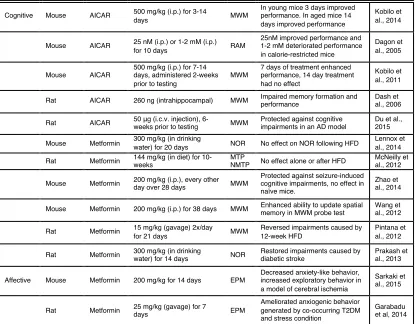
pharmacological or diet-induced disease models (Table 1.2). Metformin protected against
cognitive impairments induced by pentylenetetrazole in a seizure model (Zhao et al.,
2014), and restored cognitive impairments following diabetic stroke (Prakash et al.,
2013). AICAR showed similar cognitive protection in a streptozotocin-induced model of
Alzheimer’s disease (Du et al., 2014). The effects of AMPK activation following high-fat
diet remain less clear. Metformin reversed memory impairments caused by 12-weeks of
high-fat diet (Pintana et al., 2012). Yet others show that metformin had no effect on
cognition following a high-fat diet (McNeilly et al., 2012; Lennox et al., 2014). The
mode of administration, length of metformin treatment and length of diet all varied
between studies.
In wildtype animals metformin can enhance spatial memory formation (Wang et
al., 2012). In contrast, the effect of AICAR on cognitive enhancement is dependent on
rodent age (Kobilo et al., 2014), drug concentration (Dagon et al., 2005), mode of
administration (Dash et al., 2006) and length of treatment (Kobilo et al., 2011).
Contingent on these factors AICAR can impair, enhance, or have no effect on cognitive
performance. The alternating effects of AMPK activation on cognition highlight a need
Role of AMPK on negative affect in animals The role of AMPK in negative affect,
specifically anxiety-like behavior is not well characterized (Table 1.2). In rats, the stress
hormone corticosterone can modulate AMPK activity (Christ-Crain et al., 2008) and
glucocorticoid receptor expression can be modified by metformin treatment (Cleasby et
al., 2003). Both steroid and receptor play an important role in mechanisms underlying
anxiety-like behavior. Therefore, understanding the effect of AMPK on behaviors
modulated by this system is critical. Similar to cognition, the effects of AMPK activators
on anxiety-like behavior have primarily been examined in preclinical disease models.
Metformin pretreatment decreased anxiety-like behavior as measured by the elevated plus
maze in a preclinical model of global ischemia (Sarkaki et al., 2015) and a global model
of co-occurring diabetes and stress (Garabadu and Krishnamurthy, 2014). Following a
stressor such as chronic unpredictable stress, pAMPKα is reduced ~50%. This decrease in
phosphorylation is correlated with increased anxiety-like behavior in the open field test,
elevated plus maze, and novelty suppressed feeding test (Zhu et al., 2014). No studies to
date have examined the effect of AMPK activators on anxiety-like behavior in naïve
VIII. Overview of Dissertation
In support of the established role of nicotine withdrawal symptoms in predicting
relapse and the utility of preclinical models for withdrawal, the goal of this dissertation
was twofold– to utilize both a pharmacological and genetic approach to examine the
mechanisms of withdrawal-induced phenotypes. The kinase AMPK was identified as a
novel target altered during withdrawal from nicotine in Chapter 2. We found AMPK to
be increased following chronic nicotine, while this activation was lost 24-hours following
withdrawal. Maintaining activation of AMPK during withdrawal via two
Table 1.2. Effect of AMPK activation on affective behavior and cognitive performance in vivo
AICAR, 5-aminoimidazole-4-carboxamide-1-β-4-ribofuranoside; MWM, morris water maze; RAM, radial arm maze; NOR, novel object recognition; MTP/NMTP, matching and non-matching to position task; EPM, elevated zero maze; OFT, open field test; AD, Alzheimer’s disease; HFD, high-fat diet; T2DM, type 2 diabetes mellitus
Cognitive Mouse AICAR 500 mg/kg (i.p.) for 3-14
days MWM
In young mice 3 days improved performance. In aged mice 14 days improved performance
Kobilo et al., 2014
Mouse AICAR 25 nM (i.p.) or 1-2 mM (i.p.)
for 10 days RAM
25nM improved performance and 1-2 mM deteriorated performance in calorie-restricted mice
Dagon et al., 2005
Mouse AICAR
500 mg/kg (i.p.) for 7-14 days, administered 2-weeks prior to testing
MWM
7 days of treatment enhanced performance, 14 day treatment had no effect
Kobilo et al., 2011
Rat AICAR 260 ng (intrahippocampal) MWM Impaired memory formation and performance Dash et al., 2006
Rat AICAR 50 μg (i.c.v. injection),
6-weeks prior to testing MWM
Protected against cognitive impairments in an AD model
Du et al., 2015
Mouse Metformin 300 mg/kg (in drinking
water) for 20 days NOR No effect on NOR following HFD
Lennox et al., 2014
Rat Metformin 144 mg/kg (in diet) for 10-weeks
MTP
NMTP No effect alone or after HFD
McNeilly et al., 2012
Mouse Metformin 200 mg/kg (i.p.), every other
day over 28 days MWM
Protected against seizure-induced cognitive impairments, no effect in naïve mice.
Zhao et al., 2014
Mouse Metformin 200 mg/kg (i.p.) for 38 days MWM Enhanced ability to update spatial memory in MWM probe test
Wang et al., 2012
Rat Metformin 15 mg/kg (gavage) 2x/day
for 21 days MWM
Reversed impairments caused by 12-week HFD
Pintana et al., 2012
Rat Metformin 300 mg/kg (in drinking
water) for 14 days NOR
Restored impairments caused by diabetic stroke
Prakash et al., 2013
Affective Mouse Metformin 200 mg/kg for 14 days EPM
Decreased anxiety-like behavior, increased exploratory behavior in a model of cerebral ischemia
Sarkaki et al., 2015
Rat Metformin 25 mg/kg (gavage) for 7
days EPM
Ameliorated anxiogenic behavior generated by co-occurring T2DM and stress condition
pharmacological activators, AICAR and metformin alleviated anxiety-like behavior and
rescued the cognitive deficits observed in preclinical models of nicotine withdrawal.
Furthermore, i.c.v. and AAV studies found the efficacy of metformin in alleviating
withdrawal symptoms to be dependent on activation of the catalytic AMPKα subunit
within the hippocampus. In Chapter 3, we utilized a mouse model of a human genetic
variant in the BDNF gene, the Val66Met single nucleotide polymorphism (SNP). Using
this model we investigated the effect of this polymorphism in mediating the anxiety-like
behavior following withdrawal from nicotine. Our findings showed a reduced withdrawal
phenotype in mice with the BDNFMet/Met genotype. Together, these studies support the
clinical AMPK activator metformin as a novel treatment for smoking cessation and
demonstrate the utility of mouse SNP models in identifying molecular markers for
withdrawal sensitivity in humans. Ultimately these findings could contribute to a novel
pharmacotherapy and further the understanding of personalized medicine for the
symptoms of nicotine withdrawal. An overall discussion of this body of work along with
CHAPTER 2
ACTIVATION OF AMPK BY METFORMIN REDUCES ANXIETY-LIKE BEHAVIOR AND RESCUES COGNITIVE DEFICITS IN PRECLINICAL MODELS OF NICOTINE WITHDRAWAL
Bridgin G. Lee1, Isaac J. Perron3, Gavin Huang1, Sangwon Kim1,2, Julie A. Blendy1
1Department of Pharmacology, 2Department of Psychiatry, 3Department of Neuroscience
Perelman School of Medicine, University of Pennsylvania, Philadelphia, PA 19104
Currently under review for publication in
Science Signaling
2015
ACKNOWLEDGEMENTS: The authors thank Dr. Benoit Viollet for providing the AMPKα1loxP/loxP;AMPKα2loxP/loxP mice, and David Braak for his help in designing and conducting the fear conditioning experiments. Funding: This work was supported by NIH grants: T32-GM008076 (B.L), National Cancer Institute (P50-CA143187) (J.B.),
NIDDK (DK084336)(S.K.). Research reported in this publication was also supported by
Abstract
Cigarette smoking is the leading cause of preventable disease and death in the United
States, with more persons dying from nicotine use than from any other addiction.
Cessation from smoking incurs multiple health benefits. However, even with current
smoking cessation medications the abstinence rate remains low. In order to identify novel
molecular targets for development of new smoking cessation therapies we employed
functional genomic approaches (chromatin immunoprecipitation and whole genome
sequencing (ChIP-Seq)) to identify pathways that are altered following withdrawal from
nicotine. Using ChIP-Seq for CREB in the hippocampus we identified the AMPK
(AMP-activated protein kinase) signaling pathway as one such target. Here we demonstrate that
the AMPK pathway is activated following chronic nicotine exposure, an effect that is
reversed by 24-hour withdrawal from nicotine. We use a combination of pharmacological
and genetic approaches to modulate the AMPK pathway during nicotine withdrawal. We
find that increasing pAMPK levels, and consequently downstream AMPK signaling,
attenuates anxiety-like behavior following nicotine withdrawal in two behavioral
paradigms, novelty-induced hypophagia and marble burying. Furthermore, we show that
the FDA approved drug metformin - an AMPK activator – reduces withdrawal induced
anxiety-like behavior through a mechanism dependent on the AMPKα subunit within the
hippocampus. Further, chronic metformin treatment also reversed withdrawal-induced
deficits in contextual fear conditioning. These studies provide the first evidence of a
direct effect of AMPK modulation on behavior following nicotine withdrawal, and
highlight the potential repurposing of metformin and related compounds as a novel
Introduction
Cigarette smoking constitutes a major health burden in the US, with smoking
accounting for over 500,000 deaths a year nationwide (U.S. HHS, 2014). Despite over 30
reports issued by the Surgeon General addressing the negative impact of smoking on the
health and well being of Americans, the cessation rate remains modest (U.S. HHS, 2014).
Multiple obstacles prevent a successful quit attempt including irritability, anger,
depressed mood, anxiety and difficulty concentrating. Withdrawal symptom severity is
not only a direct predictor of relapse (West et al., 1989; al’Absi et al., 2004) but is also
correlated to the time to relapse (al’Absi et al., 2005). There are currently three FDA
approved therapies used for targeting the symptoms of withdrawal: nicotine replacement
therapy, a nicotinic acetylcholine receptor (nAChR) partial-agonist
(Varenicline/Chantix®), and an anti-depressant (Bupropion/Zyban®). However, although
70% of smokers express a desire to quit, current therapies only result in a 15% success
rate after three months of treatment (Hughes et al., 2004; U.S. HHS, 2014).
Chronic nicotine use contributes to multiple alterations in the central nervous
system, including long-lasting changes in gene expression that may underlie withdrawal
phenotypes (Martin-Soelch, 2013). One well-characterized protein that alters gene
expression following chronic nicotine is the transcription factor CREB (cAMP response
element binding protein). Nicotine regulates CREB signaling in a variety of brain regions
associated with drug dependence (Hu, 2002; Brunzell et al., 2003) and is necessary for
nicotine reward (Walters et al., 2005; Brunzell et al., 2009). To date, relevant
CREB-target genes that are regulated during chronic nicotine or withdrawal are not well
withdrawal, we previously performed chromatin immunoprecipitation (ChIP) analyses
followed by high-throughput sequencing (ChIP-Seq) and target expression analysis
(Turner et al., 2014). We focused on the hippocampus, because this brain region is
strongly associated with nicotine withdrawal symptoms, cue reactivity, and quitting
success in human neuroimaging studies (Franklin et al., 2007; Wang et al., 2007;
Froeliger et al., 2010).
We discovered that within the hippocampus, CREB binding was enriched in a
number of pathways (Ingenuity Pathway Analysis, see (Turner et al., 2014) for complete
gene lists). In the category of “cell-to-cell signaling, carbohydrate metabolism, lipid
metabolism”, we found that CREB binds to the cis-regulatory elements in 12 of 24
members of the energy-sensing AMPK (AMP-activated protein kinase) pathway as listed
in the ‘Reactome’ database (Table 2.1). These included several subunits of AMPK itself
(the genes encoding the β1, β2, γ1 and γ2 subunits) and the upstream regulator of AMPK,
LKB1 (Liver Kinase B1; also known as Serine/Threonine Kinase 11, STK11).
Considered the “master regulator” of cellular metabolism, AMPK is a heterotrimeric
complex composed of one catalytic (α) subunit and two regulatory (β,ϒ) subunits, which
can be phosphorylated following metabolic stressors including hypoxia, ischemia or
exercise (Laderoute et al., 2006; Palacios et al., 2009; Li et al., 2010), as well as by
pharmacological activators including the diabetes drug metformin (Hawley et al., 2002).
Although the role of AMPK in peripheral tissues is established, few studies have
focused on its effect within the central nervous system, and none have examined its
relation to nicotine dependence outside of the hypothalamus. Of importance, recent
cognition and negative affect (Dagon et al., 2005; Garabadu and Krishnamurthy, 2014;
Liu et al., 2014a; Yau et al., 2014; Zhu et al., 2014). As these behaviors are contributing
symptoms of relapse during nicotine withdrawal, a careful analysis of how alterations in
AMPK modulate these behaviors following nicotine withdrawal is warranted.
Here, we test the hypothesis that modulating AMPK during nicotine withdrawal
will ameliorate affective and cognitive behaviors observed in mouse models of nicotine
withdrawal. To test this, we employed a combination of pharmacologic and genetic
approaches. Specifically, we used the FDA approved drug metformin, the safest
first-in-class therapy for type 2 diabetes (Berkowitz et al., 2014), and an activator of AMPK
(Zhou et al., 2001). In addition to its anti-diabetic profile, metformin crosses the
blood-brain barrier (Labuzek et al., 2010) and shows promise as a preclinical therapeutic across
multiple CNS indications (Castellani et al., 2002; Nath et al., 2009; Patil et al., 2014; Liu
et al., 2014c). Finally, we used a genetic loss-of-function mouse model with a conditional
deletion of both catalytic α1 and α2 subunits of the AMPK complex to determine if
alterations in AMPK are causally related to the negative affect behaviors seen following
nicotine withdrawal.
Materials & Methods
Study Design
The aim of this study was to examine the impact of AMPK activation on mediating
anxiety-like behavior and cognition in preclinical models of nicotine withdrawal. To this
saline or nicotine (18mg/kg/day) for two weeks. Spontaneous withdrawal from nicotine
occurred following physical removal of minipumps. All behavioral responses were
measured between 24-48 hours of withdrawal as the first two days of nicotine withdrawal
are associated with the highest rate of relapse in humans (Hughes et al., 1992) and with
peak affective withdrawal symptoms in mice (Damaj et al., 2003). AMPK activators
(AICAR and metformin) were chronically administered prior to withdrawal from
nicotine, and behavioral outcomes evaluated using two behavioral paradigms:
novelty-induced hypophagia (NIH) and marble burying (MB). Fear conditioning was also used as
a preclinical model of cognitive deficits associated with nicotine withdrawal.
Experimenters blind to treatment groups measured behavioral endpoints; latency to
consume (NIH), number of marbles buried (MB) and percent time freezing (fear
conditioning). Western blotting was used to quantify protein levels of AMPK within
hippocampal tissue following AICAR or metformin administration. Finally, we used an
AAV vector to deliver Cre recombinase into Ampkα1loxP/loxP;Ampkα2loxP/loxP mice
harboring a conditional allele for AMPK to determine if AMPK is necessary for
mediating the anxiolytic effects of metformin during withdrawal from nicotine.
Animals
Male 129SvEv;C57Bl/6J F1 hybrid mice 6-8 weeks of age were obtained from Jackson
Laboratories and used in behavioral paradigms, i.c.v. drug experiment, and molecular
studies. All AAV-Cre experiments were conducted in previously derived and described
AMPKαloxP/loxP mice (AMPKα1loxP/loxP mice previously crossed with AMPKα2loxP/loxP