University of Pennsylvania
ScholarlyCommons
Publicly Accessible Penn Dissertations
1-1-2015
When, How, and for Whom Does Creativity
Predict Well-Being?
Marie Julie Cécile Forgeard
University of Pennsylvania, [email protected]
Follow this and additional works at:http://repository.upenn.edu/edissertations Part of thePsychology Commons
This paper is posted at ScholarlyCommons.http://repository.upenn.edu/edissertations/1056
For more information, please [email protected].
Recommended Citation
Forgeard, Marie Julie Cécile, "When, How, and for Whom Does Creativity Predict Well-Being?" (2015).Publicly Accessible Penn Dissertations. 1056.
When, How, and for Whom Does Creativity Predict Well-Being?
Abstract
Past research suggests that creative thinking and behavior, defined as the generation of ideas or products that are both original and valuable, may enhance well-being. The present studies aimed to further investigate when, how, and for whom creativity predicts well-being. First, this research assessed whether creativity predicted well-being in a number of contexts and domains, as past scholarship in this area has mainly focused on the arts. Second, this research examined a number of mechanisms that may account for the benefits of creativity. Third, this research investigated whether individual differences in personality and motivation predict the extent to which individuals engage in creative behavior, and the extent to which creative behavior is associated with positive outcomes. Chapter 1 showed that experiences of adversity predicted perceptions of increased creativity in a sample of adults. This relationship was mediated by reports of posttraumatic growth. In addition, the personality trait of openness to experience moderated the extent to which experiences of adversity predicted perceptions of increased creativity. Chapter 2 showed that retrospective reports of extracurricular involvement during high school predicted higher levels of psychological adjustment at the beginning of college in a sample of emerging adults. This relationship was mediated by feelings of mastery and creative self-efficacy associated with extracurricular activities. In addition, feelings of creative self-efficacy predicted higher levels of creative achievement. Chapter 3, Study 1, provided an in-depth qualitative analysis of the motivations and processes driving the work of a sample of professional artists and scientists. Chapter 3, Study 2, found that these could be reduced to three main types of motivations (prosocial, intellectual, and emotional) and one process (the degree to which creators think about others during their work - i.e., their sense of audience). In a sample of aspiring artists and scientists, prosocial and intellectual motivations predicted higher levels of well-being, and this relationship was explained by a greater sense of audience and self-efficacy. Overall, results of the present studies suggested that creative behavior may enhance well-being through both general and creativity-specific mechanisms, and important individual differences may determine the extent to which creative behavior is beneficial.
Degree Type
Dissertation
Degree Name
Doctor of Philosophy (PhD)
Graduate Group
Psychology
First Advisor
Martin E. Seligman
Keywords
creativity, psychopathology, well-being
Subject Categories
Psychology
WHEN, HOW, AND FOR WHOM DOES CREATIVITY PREDICT WELL-BEING? Marie Julie Cécile Forgeard
A DISSERTATION in
Psychology
Presented to the Faculties of the University of Pennsylvania in
Partial Fulfillment of the Requirements for the Degree of Doctor of Philosophy
2015
Supervisor of Dissertation
_______________________________________
Martin E. P. Seligman, Zellerbach Family Professor of Psychology
Graduate Group Chairperson
_______________________________________ John Trueswell, Professor of Psychology
Dissertation Committee
ii
WHEN, HOW, AND FOR WHOM DOES CREATIVITY PREDICT WELL-BEING? COPYRIGHT
2015
iii
ACKNOWLEDGMENT
It is with great gratitude that I acknowledge the contributions of numerous individuals to my professional development. I am deeply indebted to my advisor Martin Seligman for the countless opportunities he has offered me, and for his continued support of my interests and ideas. I am also extremely grateful to the members of my dissertation committee – Geoffrey Goodwin, Angela Duckworth, and Paul Rozin – for their
invaluable advice and guidance. Gordon Bermant also deserves thanks for many intellectually stimulating conversations, and for his unparalleled kindness.
This research was made possible through the support of grants from the John Templeton Foundation. The opinions expressed in this dissertation are those of the author and do not necessarily reflect the views of the John Templeton Foundation. I am also extremely grateful for the generous financial support provided by Eva Kedar, as well as for her enthusiasm for my work.
iv In addition, I have been privileged to train as a clinician under the supervision of Dianne Chambless, Melissa Hunt, Judy Eidelson, Robert DeRubeis, David Rubenstein, Alan Goldstein, Martin Franklin, and Diana Antinoro-Burke. I am especially grateful to Judy Eidelson for her advice and support in past years.
I am also exceptionally lucky that my doctoral studies at the University of Pennsylvania have allowed me to meet a number of individuals who are not only incredible collaborators, but also the most wonderful of friends. I am continuously inspired by Eranda Jayawickreme’s determination and resourcefulness, Stephen
Schueller’s wisdom and curiosity, Ann Marie Roepke’s brilliance and adventurousness, as well as Eli Tsukayama’s generosity, intelligence, and grit. I am also deeply thankful to
Pavel Atanasov, Marina Dimova, Nuwan Jayawickreme, Jenny Ratnovsky, Laura Blackie, Lauren Hallion, Anna Rudo-Hutt, Dahlia Mukherjee, Irena Ilieva, and Danielle Naugle for the endless intellectual stimulation and exceptional friendships they have offered me.
v research presented here, including Lucia Vazquez de Mercado, Mike Tzeng, Briana Henry, Ben Whitenack, Tiffany Jordan, Winnie Yan, Airi Ban, Stephanie Ramones, Madeleine Hill, and Marcus Robinson. Finally, I have also been very appreciative of the assistance provided by Derek Freres, William Hopkins, Madison Silverstein, Jill Chivers, and Sam Buchl.
When I arrived on the campus of the University of Pennsylvania as an exchange student in August of 2002, I had high expectations – to immerse myself in a different culture, to make new friends, to take engaging classes (including, of course, my first introduction to psychology), and to make memories that would last a lifetime. I could not imagine that my expectations would be so far exceeded. Twelve years later, I feel grateful every day that this opportunity led me to meet my husband, Justin Lacasse. His love, kindness, patience, and honesty have helped and inspired me every step of the way. I also thank my parents for their support and understanding. They encouraged and helped me make my own path, even if this took me to another continent, and fostered a deep passion for the pursuit of knowledge in my siblings and me. I am also very grateful for the
support of my husband’s family, and of many childhood and university friends. Though
vi
ABSTRACT
WHEN, HOW, AND FOR WHOM DOES CREATIVITY PREDICT WELL-BEING? Marie Julie Cécile Forgeard
Martin E. P. Seligman
Past research suggests that creative thinking and behavior, defined as the generation of ideas or products that are both original and valuable, may enhance well-being. The present studies aimed to further investigate when, how, and for whom creativity predicts well-being. First, this research assessed whether creativity predicted well-being in a number of contexts and domains, as past scholarship in this area has mainly focused on the arts. Second, this research examined a number of mechanisms that may account for the benefits of creativity. Third, this research investigated whether individual differences in personality and motivation predict the extent to which individuals engage in creative behavior, and the extent to which creative behavior is associated with positive outcomes. Chapter 1 showed that experiences of adversity predicted perceptions of increased creativity in a sample of adults. This relationship was mediated by reports of posttraumatic growth. In addition, the personality trait of openness to experience moderated the extent to which experiences of adversity predicted
vii was mediated by feelings of mastery and creative self-efficacy associated with
extracurricular activities. In addition, feelings of creative self-efficacy predicted higher levels of creative achievement. Chapter 3, Study 1, provided an in-depth qualitative analysis of the motivations and processes driving the work of a sample of professional artists and scientists. Chapter 3, Study 2, found that these could be reduced to three main types of motivations (prosocial, intellectual, and emotional) and one process (the degree to which creators think about others during their work – i.e., their sense of audience). In a sample of aspiring artists and scientists, prosocial and intellectual motivations predicted higher levels of well-being, and this relationship was explained by a greater sense of audience and self-efficacy. Overall, results of the present studies suggested that creative behavior may enhance well-being through both general and creativity-specific
ix
TABLE OF CONTENTS
ACKNOWLEDGMENT ... III
ABSTRACT ... VI
LIST OF TABLES ... X
LIST OF FIGURES ... XII
LIST OF APPENDICES ... XIV
GENERAL INTRODUCTION ... 1
References ... 15
CHAPTER 1: ... 24
Abstract ... 25
References ... 63
CHAPTER 2: ... 94
Abstract ... 95
References ... 128
CHAPTER 3: ... 165
Abstract ... 166
References ... 211
GENERAL DISCUSSION ... 260
x
LIST OF TABLES
CHAPTER 1
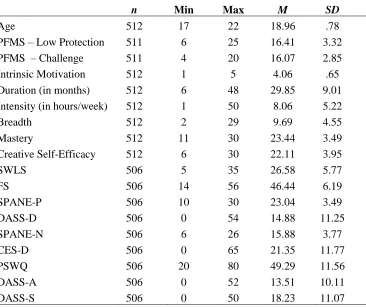
Table 1: Means and Standard Deviations for All Continuous Variables Included in the Main Path Model.
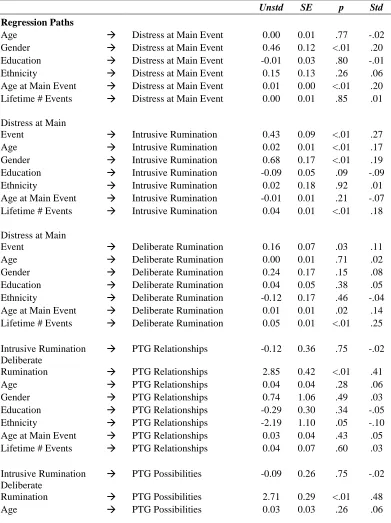
Table 2a: Unstandardized Estimates, Standard Errors, p-values, and Standardized Estimates for Regression and Covariance Paths Included in the Main Path Model.
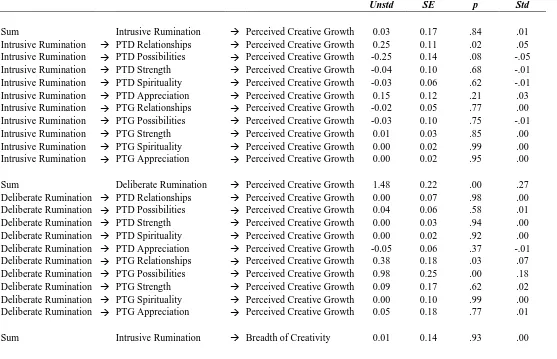
Table 2b: Unstandardized Estimates, Standard Errors, p-values, and Standardized Estimates for Indirect Effects Tested in the Main Path Model.
Table 3: Results of Multiple Regression Analyses Testing Whether the Personality Trait of Openness to Experience Moderated the Relationship Between Distress at Main Event and Self-Reported Creativity Outcomes Including Unstandardized B Estimates, Standard Errors, Standardized Β Estimates, t- and p-Values.
Table 4: Results of the Multiple Regression Analysis Examining the Relationship Between Self-Reported Creativity Outcomes and Peak Creative
Achievement Scores, Including Unstandardized Β Coefficients, Standard Errors, Standardized Β Coefficients, t- and p-Values.
Table 5: Estimated Marginal Means, Standard Errors, and Sample Sizes for Main Creative Area Endorsed (Covarying Age, Gender, Ethnicity, and
Education).
Table 6: Estimated Marginal Means, Standard Errors, and Sample Sizes for Main Event Kind (Covarying Age, Gender, Ethnicity, Education, Age at Main Event and Distress at Main Event).
Table 7: Results of Multiple Regression Analyses Examining Relationships Between Lifetime Number of Events and Creativity Outcomes, Including Unstandardized B Estimates, Standard Errors, Standardized Β Estimates, t- and p–Values.
CHAPTER 2
xi Table 2: Descriptive Statistics for all Continuous Variables Included in the Overall
Model
Table 3: Sample Size, Percentage of Missing Data, and Fit Statistics for all Structural Equation Models Examined.
Table 4: Results of The Blockwise Multiple Regression Analyses Including Unstandardized B Coefficients, Standard Errors, Standardized Β Coefficients, t- and p-Values.
CHAPTER 3
Table 1: Demographic Characteristics of Sample and Subsamples, Including Age, Gender, Ethnicity, and Type of Graduate Program.
Table 2a: Results of the Exploratory Factor Analysis (40 items) of the Self-Report Scale of Motivations and Processes.
Table 2b: Factor Correlations for the Exploratory Factor Analysis of the Self-Reported Scale
Table 3: Convergent and Discriminant Validity Analyses using Grant’s (2008, 2011) Intrinsic and Prosocial Motivation Scales, as well as the Short Schwartz’ Values Survey (Lindeman & Verkasalo, 2005).
Table 4: Results of the one-way MANCOVA and follow-up one-way ANCOVAs (controlling for age, gender, ethnicity, and type of program), including estimated marginal means, standard errors, F-test, p-values, and effect size (Cohen’s d).
Table 5: Direct Effects for the Multigroup Path Analysis, Including Unstandardized Estimates, Standard Errors, p-values, and Standardized Estimates for Graduate Students in Science and in the Arts.
Table 6: Indirect Effects for the Multigroup Path Analysis, Including
Unstandardized Estimates, Standard Errors, p-values, and Standardized Estimates for Graduate Students in Science and in the Arts.
xii Sciences and in the Arts. Results are presented in descending order of significance.
LIST OF FIGURES
CHAPTER 1
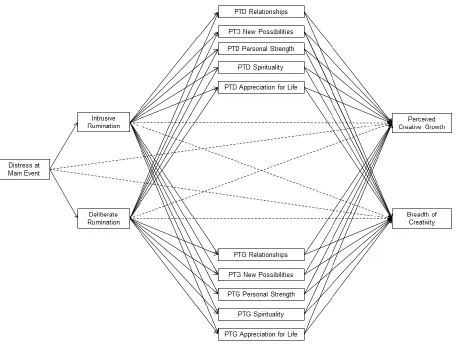
Figure 1: Main path model tested. Dotted lines represent the six direct paths constrained to zero in the nested mediation model.
Figure 2: Results of the path analysis (including standardized path coefficients and squared multiple correlations). Regression paths approaching significance appear in dotted lines.
Figure 3: Moderation effects depicted using Preacher et al.’s (2006) computational tool for probing interaction effects. Low and high distress represent M-1SD and M+M-1SD respectively.
Figure 4: Peak Creative Achievement Scores by Main Creative Area endorsed (covarying age, gender, ethnicity, and education). Error bars represent standard errors.
Figure 5: Perceived Creative Growth by Main Event Kind (covarying age, gender, ethnicity, education, Age at Main Event and Distress at Main Event). Error bars represent standard errors.
CHAPTER 2
Figure 1: Hypothesized full mediation model tested using Structural Equation Modeling.
Figure 2a: Results of the full mediation model for overall ECA participation,
including significant (p < .05) and near-significant (p < .10) standardized path coefficients, as well as squared multiple correlations (dotted lines indicate near-significant paths).
xiii Figure 2c: Results of the partial mediation model for academic ECAs, including
significant (p < .05) and near-significant (p < .10) standardized path coefficients, as well as squared multiple correlations (dotted lines indicate near-significant paths).
Figure 2d: Results of the partial mediation model for artistic ECAs, including significant (p < .05) and near-significant (p < .10) standardized path coefficients, as well as squared multiple correlations (dotted lines indicate near-significant paths).
Figure 2e: Results of the partial mediation model for prosocial ECAs, including significant (p < .05) and near-significant (p < .10) standardized path coefficients, as well as squared multiple correlations (dotted lines indicate near-significant paths).
CHAPTER 3
Figure 1: Results of the Confirmatory Factor Analysis (Study 2) including factor correlations, standardized factor loadings, and multiple squared
correlations.
Figure 2: Results of the one-way MANCOVA and follow-up ANCOVAs assessing differences between artists and scientists on motivations and processes (controlling for age, gender, ethnicity, and type of program). Error bars represent standard errors of the mean. Asterisks denote significant differences.
Figure 3: Baseline model tested in the multigroup path analysis.
xiv
LIST OF APPENDICES
CHAPTER 1
Appendix A: Perceived Creative Growth Scale
Appendix B: Correlations (Pearson’s r) and p-values for all continuous variables included in the main path model.
CHAPTER 2
Appendix A: Mastery and Creative Self-Efficacy Scale
Appendix B: Instructions for Raters (adapted from Baer, 1993; Kaufman, Plucker, & Baer, 2008).
Appendix C: Results of the Structural Equation Models (Final Models
Retained), Including Unstandardized Path Coefficients, Standard Errors, p-values, and Standardized Path Coefficients, for All Direct Effects
Appendix D: Results of the Joint Significance Tests for Indirect Effects,
Including Unstandardized Coefficients, Standard Errors, p-values, and Standardized Coefficients
CHAPTER 3
Appendix A: Study 1. Semi-Structured Interview Protocol
Appendix B: Study 2. Self-Report Scale of Motivations/Processes
1
GENERAL INTRODUCTION
One of the most striking differences between humans and other species is the extent to which they deliberately come up with new ideas, behaviors, or things – in other words, their creativity. Accordingly, creativity is often viewed as one of the main forces driving the advancement of human culture (Gabora, 1997; Mithen, 1998), and
“manifest[s] itself in new types of behavior, going beyond mere re-applications of established scripts or action-patterns” (Carruthers, 2002, p. 226). Creativity therefore contributes to an optimally functioning society by, for example, inspiring great works of arts, as well as by driving technological and political progress. In addition to its positive societal and historical impact at the macro level, creativity also benefits individuals at the micro level (Simonton, 2002) by enhancing individuals’ well-being and psychological adjustment. After providing a definition of creativity, I review evidence supporting the claim that creative behavior may enhance well-being, as well as evidence bearing on the specific mechanisms that could explain these effects. Finally, I highlight a number of gaps in this literature in order to introduce the research questions addressed by the studies included in this dissertation.
Defining Creativity
2 sciences), but is present to varying degrees in almost all areas of life – excelling at work, solving thorny interpersonal problems, managing painful emotions, or cooking dinner are all tasks that benefit from effective creative thinking. Related to this, creative thinking takes place not only in “creative therapies” (e.g., art therapy), but to some degree also in
all forms of psychotherapy.
Creativity is generally conceptualized as an ability or character strength—a somewhat stable positive trait manifested to varying degrees and frequencies by different individuals (Cropley, 1997; Nicholls, 1972). Accordingly, creativity has become a topic of interest for the field of positive psychology, which is concerned with the study of human flourishing and attempts to delineate what individual, situational, and institutional factors allow individuals to thrive (Seligman & Csikszentmihalyi, 2000).
The Relationship between Creativity and Well-Being
Creativity and well-being. Researchers have highlighted the numerous benefits that creativity may have for well-being (Cropley, 1990, 1997; Richards, 2010).
Csikszentmihalyi commented that although
Personal creativity may not lead to fame and fortune, it can do something that from the individual’s point of view is even more important: make day-to-day experiences more vivid, more enjoyable, and more rewarding. When we live creatively, boredom is banished and every moment holds the possibility of a fresh discovery. (1996, p. 344).
experience-3 sampling study, Silvia et al. (2014) asked a sample of young adults to report on their feelings and their activities at random times during a period of seven days. Results showed that within participants, participants were more likely to be engaged in creative activities than other activities when they reported feeling happy and active. Between participants, personality (but not affect) predicted whether participants were engaging in creative activities. These correlational findings support the claim that creative behavior may both reflect and/or enhance well-being (Richards, 2007).
As such, creative activities may constitute “positive interventions” defined as “treatment methods or intentional activities that aim to cultivate positive feelings, behaviors, or cognitions” (Sin & Lyubomirsky, 2009, p. 468). Positive interventions therefore aim to build character strengths (such as creativity) and promote well-being, as opposed to simply fixing what is deficient or maladaptive (Duckworth, Steen, &
Seligman, 2005; Forgeard, Jayawickreme, Kern, & Seligman, 2011; Jayawickreme, Forgeard, & Seligman, in press; Seligman, 2011).
4 (Johnson et al., 2012), or the rumination observed in depression (Verhaeghen, Joormann, & Khan, 2005). Some researchers have also suggested that creative work may under some circumstances exacerbate psychopathology. For example, the short form and high levels of emotions generally seen in poetry may not allow poets to process their
experiences in as much depth as prose permits. As a result, writing emotionally-focused poetry may increase rather than decrease distress (Kaufman & Baer, 2002).
Conversely, and leaving aside third variable explanations which also deserve further research, psychopathology may motivate individuals to engage in creative
activities as a way to alleviate their suffering and enhance their well-being, the hypothesis explored in this dissertation. By engaging in creative work, individuals may find
opportunities to heal and grow from the challenges that have befallen them. The writer Virginia Woolf for example commented:
Odd how the creative power at once brings the whole universe to order. I can see the day whole, proportioned – even after a long flutter of the brain such as I’ve had this morning[;] it must be a physical, moral, mental necessity, like setting the engine off. (Woolf, 1934/2003, p. 213).
Woolf, known to suffer from bipolar disorder (Caramagno, 1992), expressed her belief that writing was essential to her well-being. Other eminent artists echoed a similar feeling with regards to either physical or psychological health. For example, the painter Paul Klee, who suffered from a severe autoimmune disorder, explained during the last stages of his disease: “I create - in order not to cry” (Sandblom, 1997, p. 187). The
5 writing “a form of therapy” (p. 37). Finally, the French writer Antonin Artaud, who
suffered from clinical depression, chronic pain, and addiction to opiates throughout his life (Rowlands, 2004) commented that “No one has ever written, painted, sculpted, modeled, built, or invented except literally to get out of hell” (Jamison, 1993, p. 121).
Empirical Evidence on the Benefits of Creative Activities
Given these anecdotal reports and psychological theories supporting the value of creativity for well-being, what empirical evidence supports these claims?To date, the main body of literature that has sought to verify the benefits of creativity for well-being is the art therapy literature. In 1812, Benjamin Rush described patients who had discovered hidden artistic talents upon developing a psychiatric illness (Beveridge, 2001). The promotion of creative activities as part of clinical, therapeutic practice, however, came into being relatively recently in the mid-20th century (Vick, 2003). Although originally born out of the psychoanalytic tradition, the field of art therapy now encompasses a range of theoretical approaches, and most art therapists primarily define their practice as
“eclectic” rather than aligning themselves with any specific therapeutic discipline or
technique (Vick, 2003). Art therapy encompasses interventions that use visual arts, dance, theater, or music, among other media. According to the American Art Therapy Association (AATA), the practice of art therapy “is based on the belief that the creative process involved in artistic self-expression helps people to resolve conflicts and
6 therapy simultaneously, though reflection and discussion are often significant
components of art therapy as well (Malchiodi, 2003).
Art therapy frequently takes place in a group setting, and can therefore focus more specifically on building relationships between the client, therapist, and other members of the group (Crawford et al., 2012; Gussak, 2006). In addition, art therapy is thought to facilitate self-expression and growth (Fisher & Specht, 1999). By using and creating concrete images (or other creative media such as music or dance), individuals can explore difficult thoughts and emotions in a pleasurable, nonthreatening manner (Malchiodi, 2003). Art therapy has been used to treat a variety of conditions including (but not limited to) eating disorders (Frisch, Franko, & Herzog, 2006), learning disabilities (Safran, 2003), or addiction (Wilson, 2003). Art therapy may also be particularly beneficial for individuals whose age (e.g., children) or disorders (e.g., autism, schizophrenia) cause them to have difficulty communicating verbally and would therefore benefit from the nonverbal communication tools used in art therapy (Crawford & Patterson, 2007; Malchiodi, 2003; Richardson, Jones, Evans, Stevens, & Rowe, 2007).
7 but usually statistically significant improvements on a range of psychological measures (Maujean, Pepping, & Kendall, 2014; Slayton, D’Archer & Kaplan, 2010).
Mechanisms Underlying the Therapeutic Effects of Creative Work and Activities
Given these results, how do researchers explain the potential benefits of creative activities? Several mechanisms have been proposed and investigated to explain the therapeutic benefits of creative activities, including engagement and flow, catharsis, increases in positive affect, meaning-making, and psychological growth.
Engagement and Flow. Engagement in creative activities may promote
psychological adjustment by promoting experiences of absorption with the task at hand. Csikszentmihalyi’s (1990) concept of flow therefore provides one mechanism explaining how creativity may increase well-being. Csikszentmihalyi developed the construct of flow in the 1960s as a result of observing artists paint (Csikszentmihalyi, 2000). Flow is a psychological state defined by the presence of both high skills and high challenges, giving individuals a sense of control over the activity at hand. It is characterized by intense focus and concentration, a merging of action and awareness, the feeling that the passage of time may be distorted in some way, and intrinsic reward. Given that flow may facilitate learning, this experience may help explain how creative activities could benefit other facets of psychological well-being including a sense of personal competence, accomplishment, positive emotion, and meaning in life (Csikszentmihalyi, 1996).
8 of its “excessive passions” (Lucas, 1928, p. 24). Creative activities may therefore give individuals a vehicle through which to express their painful emotions (De Petrillo & Winner, 2005; Sloan & Marx, 2004). As illustration, Virginia Woolf reported that writing the novel To the Lighthouse (Woolf, 1927) allowed her to express her feelings about, and recover from, losing her mother, who died when Woolf was 13:
I wrote the book very quickly; and when it was written, I ceased to be obsessed with my mother. I no longer hear her voice; I do not see her. I suppose that I did for myself what psycho-analysts do for their patients. I expressed some very long felt and deeply felt emotions. And in expressing it I explained it and then laid it to rest. (Woolf, 1985, p. 81)
As noted below however, little empirical research supports the notion that creative activities increase well-being by promoting catharsis (Dalebroux, Goldstein, & Winner, 2008).
Distraction and positive emotion. In contrast, creative activities may promote healing by simply distracting individuals using an enjoyable activity that promotes the exploration and expression of positive emotions. Drawing on Fredrickson’s (1998, 2001) “broaden-and-build” model, activities that increase positive emotions (such as creative
activities, which are often reported to be intrinsically enjoyable) produce a broadening of attention that allows individuals to “pursue novel, creative, and often unscripted paths of thought and action” (1998, p. 304). Experiences of positive emotion and creativity may therefore reinforce each other in a virtuous “broaden-and-build” cycle, in which engaging
9 understand and deal with their psychological symptoms. The positive emotions induced by creative activities may also ameliorate the deleterious health effects of negative
emotions and stress on the cardiovascular and immune systems (Fredrickson, 1998, 2001; Salovey, Rothman, Detweiler, & Steward, 2000), though more research is needed to test these claims. By distracting individuals from negative emotions and promoting novel ways of thinking, creative activities and positive emotions may work hand-in-hand to promote healing. During the painter’s stay in a psychiatric hospital in the South of France, Van Gogh (1889) wrote in a letter to his brother Theo: “Work distracts me
infinitely better than anything else, and if I could once really throw myself into it with all my energy that might possibly be the best remedy.”
A few studies have compared the effects of creative activities that promote either catharsis or positive emotion. Dalebroux et al. (2008) found that an artistic activity that focused on the expression of positive feelings was more effective at repairing short-term negative mood (induced in healthy subjects by watching a sad movie clip) than an equivalent artistic activity that focused on the expression of negative feelings (catharsis). In support of this conclusion, other studies have shown that distracting individuals from their negative emotional states may alleviate symptoms of depression (Nolen-Hoeksema, 1991) and effectively repair short-term negative moods (Drake et al., 2011). In addition, the promotion of positive emotions may strengthen individuals’ resilience for future stressful events (Keltner & Bonanno, 1997; Tugade & Fredrickson, 2007).
10 a process of making meaning out of difficult experiences. The Irish writer Colm Toibin, for example, described the writer’s need to build a coherent narrative to make sense of one’s experience in the following terms:
It seems that the essential impulse in working at all is to rehaunt your own house, or to allow what haunts you to have a voice, to chart what is deeply private and etched on the soul, and find form and structure for it (Eugenides & Toibin, 2011, para. 7).
The hypothesis that creative activities help create meaning for painful experiences has primarily been investigated with regards to expressive writing, although meaning-making may certainly occur with other forms of creative expression. These studies have usually followed the expressive writing paradigm put forward by Pennebaker and colleagues. In a typical expressive writing study, participants are asked to write about an emotionally salient topic for 15-20 minute sessions over the course of several days or weeks. They are then compared to a control condition in which participants are asked to write about a non-emotional topic (Sexton & Pennebaker, 2009). Overall, engaging in expressive writing has been shown to improve outcomes in a wide range of domains such as physical health (including blood pressure, medication use, or recovery time from medical procedures), psychological health (including depression and rumination), occupational outcomes (including work attendance and shorter periods of
11 real past events, participants are nonetheless asked to write about these events in a way that allows for the expression of original ideas. Thus, it is possible that writing done in this paradigm falls on a continuum of creativity, depending on the degree to which writers express novel and useful insights about their experiences.
The benefits of creative activities may result from the fact that these activities do not just entail recording or expressing ideas, but also interacting with them, leading one’s thinking to evolve as a direct result of the creative activity. Writing may constitute an especially beneficial form of creativity, as it provides clear opportunities for self-disclosure, self-expression, and problem-resolution (Runco, 2009). In particular, the formation of a narrative may assist individuals in making meaning out of their
experiences by shifting perspectives and restructuring their cognitions around difficult events (Sexton & Pennebaker, 2009). In keeping with this, the beneficial effects of writing have been related to the degree to which participants use cognitive words (e.g., “know,” “understand”) (Pennebaker & Seagal, 1999).
Limitations and Research Questions
Four important limitations limit the conclusions that can be drawn from existing research on the benefits of creativity for well-being, as well as on the mechanisms underlying these effects. I describe them below, and in parallel outline the research questions addressed by the studies included in this dissertation.
12 effects reported are attributable to creativity per se (rather than the arts), and would generalize to other contexts or domains. The present studies examined multiple life contexts during which creativity may be beneficial, including following experiences of adversity (Chapter 1), during adolescence and emerging adulthood (Chapter 2), as well as during the everyday life of aspiring and professional creators (Chapter 3). The present set of studies also investigated the relationship between various domains of creativity
(including the arts, the sciences, and others) and well-being.
Mechanisms. Little research has investigated the specific mechanisms that may account for the beneficial effects of creative behavior, aside from the findings reviewed above. Yet, such research is needed in order to both understand how creative behavior exerts its benefits, and whether these mechanisms are general or creativity-specific. Indeed, to the best of my knowledge, little empirical evidence has demonstrated that creative thinking (defined as the generation of novel and useful ideas or products) is one of the specific active ingredients accounting for the benefits of creative activities. Research addressing this important question will help determine whether creative activities provide unique benefits for those who partake in them, and will help refine interventions to maximize their effectiveness. The present studies examine a number of potential general and creativity-specific mechanisms that may account for the benefits of creative activities, including feelings of general and/or creative self-efficacy (Chapters 2 and 3) as well as the time creators devote to creative work and their sense of the audience (Chapter 3).
13 differences in explaining the benefits of creative behavior. Important individual
differences likely affect whether people engage in creative behavior to begin with. In addition, the degree to which creative behavior predicts well-being may differ according to pre-existing differences in personality or motivation, among other possibilities. Indeed,
who people are and why people engage in creative activities may have as much as an effect on outcomes as how they do so. The present studies examine the role of the personality trait of openness to experience (Chapter 1) and individual differences in motivation (Chapters 2 and 3).
Facets of Well-Being. Past research examining the benefits of creative activities has tended to focus on very limited sets of outcome variables generally related to short-term mood and/or symptoms of psychopathology. Yet, anecdotal evidence suggests that the benefits of creative activities may extend to other important facets of well-being, including aspects of eudaimonic well-being capturing not just how people feel, but also how they do (Forgeard et al., 2011; Ryan & Deci, 2001; Ryff, 1989; Seligman, 2011). The present studies examined relationships between creative behavior and posttraumatic growth (Chapter 1), depression, anxiety, well-being, as well as achievement (Chapters 2 and 3).
The Present Studies
In Chapter 1, I investigated the relationship between perceptions of creativity and posttraumatic growth following experiences of adversity. This study demonstrated that in a sample of 373 adults recruited online, perceptions of increased creativity were
14 personality trait of openness to experience moderated the relationship between adversity and perceptions of increased creativity.
In Chapter 2, I investigated the relationship between involvement in
extracurricular activities (ECAs) during high school and psychological adjustment at the beginning of college. This study demonstrated that in a sample of 520 freshman and sophomore college students, retrospective reports of high school involvement in ECAs predicted greater psychological adjustment (including both higher levels of well-being and lower levels of psychopathogy). The relationships found were mediated by feelings of mastery and creative self-efficacy associated with high school ECAs. In turn, feelings of creative self-efficacy also predicted greater levels of creative achievement.
15
References
American Art Therapy Association. (2011). History and background. Retrieved from
http://www.arttherapy.org/aata-history-background.html.
Andreasen, N. (1987). Creativity and mental illness: Prevalence in writers and their first-degree relatives. American Journal of Psychiatry, 144, 1288-1292.
Beveridge, A. (2001). A disquieting feeling of strangeness? The art of the mentally ill.
Journal of the Royal Society of Medicine, 94, 595-599.
Caramagno, T. C. (1992). The flight of the mind: Virginia Woolf’s art and
manic-depressive illness. Los Angeles: University of California Press.
Carruthers, P. (2002). Human creativity: Its cognitive basis, its evolution, and its connections with childhood pretence. British Journal for the Philosophy of Science, 53, 225-249.
Chambless, D., & Hollon, S. (1998). Defining empirically supported therapies. Journal of
Consulting and Clinical Psychology, 66, 7-18.
Crawford, M. J., Killaspy, H., Barnes, T. R., Barrett, B., Byford, S., Clayton, K., . . . Waller, D. (2012). Group art therapy as an adjunctive treatment for people with schizophrenia: A randomised controlled trial (MATISSE). Health Technology Assessment, 16, 1-76.
Crawford, M. J., & Patterson, S. (2007). Arts therapies for people with schizophrenia: An emerging evidence base. Evidence-Based Mental Health, 10, 69-70.
16 Cropley, A. J. (1990). Creativity and mental health. Creativity Research Journal, 3,
167-178.
Cropley, A. J. (1997) Creativity and mental health in everyday life. In M. A. Runco & R. Richards (Eds.), Eminent creativity, everyday creativity, and health. Greenwich, CT: Ablex Publishing Corporation.
Csikszentmihalyi, M. (1990). Flow: The psychology of optimal experience. New York: Harper & Row.
Csikszentmihalyi, M. (1996). Creativity: Flow and the psychology of discovery and
invention. New York: HarperCollins Publishers.
Csikszentmihalyi, M. (2000). Beyond boredom and anxiety: Experiencing flow in work
and play. San Francisco: Jossey-Bass.
Dalebroux, A., Goldstein, T. R., & Winner, E. (2008). Short-term mood repair through art-making: Positive emotion is more effective than venting. Motivation and
Emotion, 32, 288-295.
DePetrillo, L., & Winner, E. (2005). Does art improve mood? A test of a key assumption underlying art therapy. Art Therapy: Journal of the American Art Therapy
Association, 22, 205-212.
Drake, J. E., Coleman, K., & Winner, E. (2011). Short-term mood repair through art: Effects of medium and strategy. Art Therapy: Journal of the American Art
Therapy Association, 28, 26-30.
17 Eugenides, J., & Toibin, C. (2011, October 1, 2011). The stuff that won't go away, New
York Times.
Fisher, B. J., & Specht, D. K. (1999). Successful aging and creativity in later life. Journal of Aging Studies, 13, 457-472.
Forgeard, M. J. C., Jayawickreme, E., Kern, M. L., & Seligman, M. E. P. (2011). Doing the right thing: Measuring well-being for public policy. International Journal of Wellbeing, 1, 79-106.
Frattaroli, J. (2006). Experimental disclosure and its moderators: A meta-analysis.
Psychological Bulletin, 132, 823-865.
Fredrickson, B. L. (1998). What good are positive emotions? Review of General Psychology, 2, 300-319.
Fredrickson, B. L. (2001). The role of positive emotions in positive psychology: The broaden-and-build theory of positive emotions. American Psychologist, 56, 218-226.
Frisch, M. J., Franko, D. L., & Herzog, D. B. (2006). Arts-based therapies in the treatment of eating disorders. Eating Disorders, 14, 131-142.
Gabora, L. (1997). The origin and evolution of culture and creativity. Journal of
Memetics, Evolutionary Models of Information Transmission, 1. Retrieved from
http://cogprints.org/794/1/oecc.html.
18 Gussak, D. (2006). Effects of art therapy with prison inmates: A follow-up study. The
Arts in Psychotherapy, 33, 188-198.
Holmkvist, G., & Persson, C. L. (2012). Is there evidence for the use of art therapy in treatment of psychosomatic disorders, eating disorders, and crisis? A comparative study of two different systems for evaluation. Scandinavian Journal of
Psychology, 53, 47-53.
Jamison, K. (1993). Touched with fire. New York: Free Press.
Jayawickreme, E., Forgeard, M. J. C., & Seligman, M. E. P. (in press). The engine of well-being. Review of General Psychology.
Johnson, S. L., Murray, G., Fredrickson, B., Youngstrom, E. A., Hinshaw, S., Malbrancq Bass, J., Deckersbach, T., Schooler, J., & Salloum, I. (2012). Creativity and bipolar disorder: Touched by fire or burning with questions? Clinical Psychology Review, 32, 1-12.
Kaplan, F. F. (2000). Art, science, and art therapy. London: Jessica Kingsley Publishers. Kaufman, J. C. (2009). Creativity 101. New York: Springer.
Kaufman, J. C., & Baer, J. (2002). Could Steven Spielberg manage the Yankees?
Creative thinking in different domains. Korean Journal of Thinking and Problem Solving, 12, 5-14.
19 Keltner, D., & Bonanno, G. A. (1997). A study of laughter and dissociation: Distinct
correlates of laughter and smiling during bereavement. Journal of Personality and
Social Psychology, 73, 687-702.
Lucas, F. L. (1928). Tragedy in relation to Aristotle’s Poetics. New York: Harcourt, Brace, and Company.
Ludwig, A. (1995). The price of greatness: Resolving the creativity and madness
controversy. New York: Guilford Press.
Malchiodi, C. A. (Ed.). (2003). Handbook of art therapy. New York, NY: Guilford Press. Maujean, A., Pepping, C. A., & Kendall, E. (2014). A systematic review of randomized
controlled studies of art therapy. Art Therapy: Journal of the American Art
Therapy Association, 31, 37-44.
Mithen, S. (1998). Creativity in human evolution and history. London, England: Routledge.
Nicholls, J. G. (1972). Creativity in the person who will never produce anything original and useful: The concept of creativity as a normally distributed trait. American Psychologist, 27, 717-727.
Nolen-Hoeksema, S. (1991). Responses to depression and their effects on the duration of depressive episodes. Journal of Abnormal Psychology, 100, 569-582.
Pennebaker, J. W., & Seagal, J. D. (1999). Forming a story: The health benefits of narrative. Journal of Clinical Psychology, 55, 1243-1254.
20 Richards, R. R. (2010). Everyday creativity: Process and way of life – Four key issues. In
J. C. Kaufman & R. J. Sternberg (Eds.), The Cambridge handbook of creativity
(pp. 180-215). New York: Cambridge University Press.
Richardson, P., Jones, K., Evans, C., Stevens, P., & Rowe, A. (2007). Exploratory RCT of art therapy as an adjunctive treatment in schizophrenia. Journal of Mental Health, 16, 483-491.
Rowlands, E. (2004). Redefining resistance: The poetic wartime discourses of Francis
Ponge, Benjamin Péret, Henri Michaux, and Antonin Artaud. New York: Rodopi
BV.
Ruddy, R., & Milnes, D. (2005). Art therapy for schizophrenia or schizophrenia-like illnesses (Review). Cochrane Database of Systematic Reviews, 4, CD003728. Runco, M. A. (2009). Writing as an interaction with ideas. In S. B. Kaufman & J. C.
Kaufman (Eds.), The psychology of creative writing (pp. 180-195). New York: Cambridge University Press.
Ryan, R. M., & Deci, E. L. (2001). On happiness and human potentials: A review of research on hedonic and eudaimonic well-being. Annual Review of Psychology, 52, 141-166.
21 Safran, D. S. (2003). An art therapy approach to attention-deficit/hyperactivity disorder.
In C. A. Malchiodi (Ed.), Handbook of art therapy (pp. 181-192). New York: Guilford Press.
Salovey, P., Rothman, A. J., Detweiler, J. B., & Steward, W. T. (2000). Emotional states and physical health. American Psychologist, 55, 110-121.
Sandblom, P. (1997). Creativity and disease: How illness affects literature, art and
music. New York: Marion Boyars.
Seligman, M. E. P. (2011). Flourish: A visionary new understanding of happiness and
well-being. New York: Free Press.
Seligman, M. E. P., & Csikszentmihalyi, M. (2000). Positive psychology: An introduction. American Psychologist, 55, 5-14.
Sexton, J. D., & Pennebaker, J. W. (2009). The healing powers of expressive writing. In S. B. Kaufman & J. C. Kaufman (Eds.), The psychology of creative writing (pp. 264-273). New York: Cambridge University Press.
Silvia, P. J., Beaty, R. E., Nusbaum, E. C., Eddington, K. M., Levin-Aspenson, H., & Kwapil, T. R. (2014). Everyday creativity in daily life: An experience-sampling study of “little c” creativity. Psychology of Aesthetics, Creativity, and the Arts.
Advance Online Publication.
Simonton, D. K. (2002). Creativity. In C. R. Snyder & S. J. Lopez (Eds.), Handbook of
22 Sin, N. L., & Lyubomirsky, S. (2009). Enhancing well-being and alleviating depressive
symptoms with positive psychology interventions: A practice-friendly meta-analysis. Journal of Clinical Psychology: In Session, 65, 467-487.
Slayton, S. C., D'Archer, J., & Kaplan, F. (2010). Outcome studies on the efficacy of art therapy: A review of findings. Art Therapy: Journal of the American Art Therapy Association, 27, 108-119.
Sloan, D. M., & Marx, B. P. (2004). Taking pen to hand: Evaluating theories underlying the written disclosure paradigm. Clinical Psychology: Science and Practice, 11, 121-137.
Smyth, J. M. (1998). Written emotional expression: Effect sizes, outcome types, and moderating variables. Journal of Consulting and Clinical Psychology, 66, 174-184.
Stein, M. I. (1953). Creativity and culture. Journal of Psychology, 36, 31–322.
Sternberg, R., & Lubart, T. (1999). The concept of creativity: Prospects and paradigms. In R. Sternberg (Ed.), Handbook of creativity (pp. 3-15). New York: Cambridge University Press.
Tugade, M. M., & Fredrickson, B. L. (2007). Regulation of positive emotions: Emotion regulation strategies that promote resilience. Journal of Happiness Studies, 8, 311-333.
23 Verhaeghen, P., Joorman, J., & Khan, R. (2005). Why we sing the blues: The relation
between self-reflective rumination, mood, and creativity. Emotion, 5, 226-232. Vick, R. M. (2003). A brief history of art therapy. In C. A. Malchiodi (Ed.), Handbook of
art therapy (pp. 5-15). New York: Guilford Press.
Wilson, M. (2003). Art therapy in addictions treatment: Creativity and shame reduction. In C. A. Malchiodi (Ed.), Handbook of art therapy (pp. 281-293). New York: Guilford Press.
Woolf, V. (1927). To the lighthouse. London: Hogarth.
Woolf, V. (1934/2003). Friday, July 27th 1934. In L. Woolf (Ed.), A writer’s diary (p. 213). Orlando, FL: Harcourt.
Woolf, V. (1985). In Schulkind, J. (Ed.), Moments of being: A collection of
24
CHAPTER 1:
Perceiving Benefits after Adversity:
25
Abstract
Anecdotal and scientific evidence has documented the existence of a relationship between the experience of adversity and creativity. Accounts of the challenges endured by creative individuals suggest that they may have been able to channel their negative experiences into sources of inspiration and motivation for their work. Increased creativity may therefore constitute a manifestation of posttraumatic growth, defined as
retrospective perceptions of positive psychological change that take place following the experience of highly challenging life circumstances. To investigate this hypothesis, the present study tested whether scores on a measure of posttraumatic growth and
depreciation related to scores on self-reported measures of creativity in the aftermath of adversity. Results of a path analysis showed that adversity-induced distress predicted self-reported creative growth and breadth of creativity in a sample of online participants. Cognitive processing (intrusive/deliberative rumination) as well as domains of
posttraumatic growth/depreciation - in particular, self-reported changes in interpersonal relationships and in the perception of new possibilities for one’s life - mediated the link
between self-reported distress and creativity outcomes. In addition, the personality trait of openness to experience moderated the extent to which adversity predicted self-reported creativity. This study is the first focused investigation showing that self-reported posttraumatic growth may be manifested through perceptions of increased creativity.
26
Perceiving Benefits after Adversity:
The Relationship between Self-Reported Posttraumatic Growth and Creativity
Posttraumatic growth (PTG) has been defined as the retrospective perceptions of positive psychological change that take place following the experience of highly
challenging life circumstances (Tedeschi & Calhoun, 2004). Research on positive changes in the aftermath of adversity has highlighted the tendency for people to report growth in five domains: interpersonal relationships, the perception of new possibilities for one’s life, personal strength, spirituality, and appreciation for life (Tedeschi &
Calhoun, 1996, 2004). In addition, the unique life experiences often reported by highly creative individuals suggest that adversity may have played a critical role in fostering their creativity, and that increased creativity could therefore constitute a manifestation of PTG.
Anecdotal reports suggest that the experience of adversity is a recurrent theme in the lives of eminent creative individuals, and examples of great creative achievements following traumatic or very difficult experiences come to mind easily. To give one example, Mexican painter Frida Kahlo survived polio, a severe traffic accident, and three miscarriages, experiences which may have exerted an important influence on her art (Herrera, 1983). These reports suggest an intimate connection between the experience of adversity and creative thinking, and point to the possibility, inter alia, that these
27 In keeping with this, scientists interested in the determinants of creative thinking and achievement have begun to study the adversity-creativity link empirically (Simonton, 1994), although much remains to be learned about the specific mechanisms explaining this association. In parallel to this growing area of research, clinical psychologists have over the past few decades developed a large body of literature documenting and
examining ways in which adverse experiences may promote psychological growth. One label for this phenomenon is posttraumatic growth (Tedeschi & Calhoun, 2004), the term used in the present paper. This construct has also been termed stress-related growth
(Park, Cohen, & Murch, 1996), benefit finding (Tennen & Affleck, 2002), or growth through adversity (Joseph & Linley, 2005). The present study aimed to bridge these two areas of research by investigating whether perceptions of increased creativity constitute a way in which PTG may be expressed. As the first focused empirical investigation of the relationship between self-reported PTG and creativity, the present study can help shed light on whether and how creative processes emerge and can be used adaptively in the aftermath of adversity.
The Link between Adversity and Creativity
Beyond anecdotal reports, empirical studies have provided preliminary support for the existence of a link between adversity (in the form of adverse life events,
28
Life events. Simonton (1994), for example, reviewed the body of scientific literature pointing to the existence of an “orphanhood effect.” Studies demonstrating this effect have shown that accomplished individuals tend to have experienced early parental loss at higher rates than the normal population and at equal rates with individuals
receiving psychiatric treatment for depressive and/or suicidal symptoms. For example, the lives of celebrated writers Charlotte, Emily, and Anne Brontë were marked by the loss of their mother and older sisters in early childhood (Barker, 1995). The orphanhood effect appears to be particularly strong in writers, for which rates as high as 55% have been found (Simonton, 1994). Csikszentmihalyi (1996) also noted the recurrent theme of the missing father in his interviews of creative individuals. Csikszentmihalyi
hypothesized that while early parental loss can lead to negative outcomes, it can also lead a child to take on adult responsibilities early and grow beyond what would normally be expected. In addition, Aldwin and Sutton (1998) proposed that individuals exposed to adversity early in life may have suffered from social isolation, and as a result developed the ability to “step outside of social conventions” (p. 53) and to see the world differently.
In keeping with this, Kim, Vincent, and Goncalo (2012) showed that the experience of social rejection fostered creative thinking in individuals holding an independent (as opposed to interdependent) self-concept by heightening the feeling of being different from others.
29 psychological disorder as sudden and acute, the disorder may be perceived as a highly traumatic event that profoundly and radically changes one’s life. Findings suggest that
the lifetime rates of psychological disorders in individuals in the creative arts exceed the rates of individuals in other fields (including scientific fields) (for reviews see Jamison, 1993; Kaufman, 2009; Ludwig, 1995; Simonton, 1994). The most common disorders found in creative individuals are affective in nature (depression or bipolar disorder) (Andreasen, 1987; Jamison, 1989; Johnson et al., 2012). These results overall suggest that psychological disorders may be more associated with particular creative domains (usually artistic domains) than with creativity per se. The highly domain-specific nature of the mental illness – creativity link is further supported by the finding that even within the domain of creative writing, poets present more psychopathology than other kinds of writers (Kaufman, 2001).
Several explanations have been proposed for the link between psychological disorders and creativity. First, self-selection may lead individuals prone to psychological disorders to gravitate towards creative careers as a result of their abilities or particular ways of thinking (Jamison, 1995). Alternatively, they may engage in creative endeavors as a way to heal and grow from their experience (the hypothesis examined by the present study). Additionally, creative work may cause, maintain or exacerbate psychological symptoms, as has been suggested for poets (Kaufman & Sexton, 2006). Finally, third variables may of course explain this relationship.
30 conducted a qualitative study of the biographies of 21 visual artists having suffered from a physical illness (including Botticelli, Michelangelo, Dürer, Monet, Munch, and others), and concluded that the experience of illness may have the power to break habits, provoke disequilibrium, and lead to the emergence and pursuit of new possibilities for one’s art. Commenting on her own experience with ovarian cancer, Zausner (2007, p. 3) reflected that “an illness that feels like an impassible barrier can become a doorway to a new and more creative existence.” In addition to Zausner’s findings, Reynolds (2004) conducted a
qualitative study of 24 female textile artists coping with a variety of chronic illnesses (e.g., multiple sclerosis, rheumatoid arthritis, chronic fatigue syndrome, cancer, etc.). Participants in this sample reported that the experience of illness contributed to inspiring their creative practice by sharpening their perceptions, by increasing their emotional sensitivity, and by confronting them with deep issues surrounding life.
Perceptions of Increased Creativity as a Manifestation of PTG
The studies discussed above provide preliminary support for the hypothesis of the present study: that perceptions of increased creativity following the experience of
adversity constitute a manifestation of PTG. These studies however mostly focused on the lives of eminent creators, and the present study therefore attempted to expand the scientific understanding of this phenomenon by examining a sample of non-eminent creators. In addition, the present study used a correlational design to investigate the relationship between self-reported PTG and creativity following the experience of adversity. As with most existing studies on PTG, the term “growth” therefore refers to
31 change. As a result, reports of PTG may only constitute subjective beliefs that do not correspond to changes in psychological and/or behavioral markers. In addition, if change indeed occurred, it may not actually be causally related to the adverse event(s) it followed (see also Ford, Tennen, & Albert, 2008; Park & Helgeson, 2006)1.
Theories of posttraumatic growth. In light of the variety of psychological processes which may explain how perceptions of positive change occur following stressful events, three main theories have been developed, each offering a unique perspective on the nature of PTG, including on whether this construct truly represents “growth.” Indeed, these theories underlie an important debate around the genuine or
illusory nature of PTG. First, cognitive adaptation theory (Taylor, 1983) proposed that individuals faced with threatening events cope by developing and maintaining self-enhancing positive illusions that do not, in fact, relate to real positive changes. In contrast, organismic valuing theory proposed that humans have an innate tendency to integrate experiences (including traumatic or difficult experiences) into one’s unified
sense of self, a process through which genuine growth occurs (Joseph & Linley, 2005). Third, assumptive world theory (which is closely related to organismic valuing theory) proposed that adverse events have the power to shatter individuals’ assumptions about
themselves and about the world. In other words, adverse experiences force individuals to
1
These limitations, which apply to a majority of past studies investigating the
32 question the core beliefs they had been taking for granted (for instance, the benevolence, predictability, and controllability of the world) (Janoff-Bulman, 1992, 2006; Tedeschi & Calhoun, 2004). These assumptions must then be rebuilt. Growth following adversity occurs through cognitive processing, allowing individuals to make sense of their experience, and to modify their assumptive world by integrating new information.
33 In addition, recent research has established a link between rumination and creative thinking, as long as the rumination does not focus on one’s negative emotional states.
When participants engaged in rumination that focused on their negative emotional states (i.e., dysphoric rumination), rumination has been found to predict poorer problem-solving and to be associated with self-criticism, self-blame, as well as reduced self-confidence and willingness to engage in problem-solving (Lyubomirsky, Tucker, Caldwell, & Berg, 1999). In addition, dysphoric rumination appears to be characterized by decreased cognitive flexibility (Davis & Nolen-Hoeksema, 2000), which is an important predictor of creative thinking as it involves the ability to seek out and apply alternative strategies to solve problems, as well as the capacity to find relationships between concepts generally thought to be unrelated (Isen, Johnson, Mertz, & Robinson, 1985; Murray, Sujan, Hirt, & Sujan, 1990).
In contrast, research on the relationship between non-dysphoric rumination (i.e., repetitive thinking that does not focus on one’s negative emotional states) has revealed
that such deliberate rumination may actually be helpful for creative thinking. Verhaeghen, Joorman and Khan (2005) for example found that rumination fully accounted for the relationship between depression and creativity in a sample of
undergraduate students, by increasing both fluency and seriousness about one’s creative
activities. In a content analysis study of the works of eminent writers, Forgeard (2008) found that writers known to have suffered from depression were more likely to use words describing cognitive mechanisms (e.g., “think,” “know”) than other groups, suggesting
34 them as a tool for creativity. Finally, in a sample of adult participants, Cohen and Ferrari (2010) found that rumination predicted creative ideation in participants who also reported being high in indecision. Evidence from this literature therefore supports the hypothesis that deliberate rumination may foster PTG outcomes including creativity. Indeed, researchers in this field have already noted the possibility that creativity may constitute one way in which PTG is expressed (Aldwin & Sutton, 1998; Bloom, 1998; Forgeard, Mecklenburg, Lacasse, & Jayawickreme, 2012).
Mechanisms explaining the hypothesized link between self-reported PTG
and creativity. In addition to past research on the relationship between adversity and creativity, as well as on cognitive processing and creativity, other possible mechanisms may explain why PTG could be manifested by perceptions of increased creativity. First, it is possible that the experience of adversity provides important material, ideas, and
motivation for the realization of creative projects: for example, artists may describe their emotional experiences through their work, entrepreneurs may develop products or services designed to solve or counteract the difficulties they encountered, or scientists may seek to understand the causes of the circumstances they experienced. Such creative callings motivated by past adverse experiences may therefore constitute a form of “survivor mission” (Eskreis-Winkler, Duckworth, & Shulman, 2012).
Second, particular domains of PTG may explain how this construct could relate to perceptions of increased creativity. As mentioned above, the positive and negative
35 personal strength, spirituality, and appreciation for life) (Tedeschi & Calhoun, 1996, 2004). Two of these domains could explain an association with self-reported PTG and creativity. Indeed, research on the personality predictors of PTG has found that the trait of openness to experience predicted the identification of new possibilities for one’s life,
and perceptions of increased personal strength (Tedeschi & Calhoun, 1996). In addition, the personality trait of openness to experience - which refers to active imagination, aesthetic and intellectual curiosity, as well as a willingness to try new things and
experiences - is one of the most well-known predictors of creative thinking (Feist, 1998; King, Walker, & Broyles, 1996; McCrae, 1987). The perception of new possibilities seems intuitively linked to creativity, since identifying new possibilities for one’s life
requires creative thinking. In addition, an increased sense of personal strength may promote feelings of initiative beneficial to creativity, or, alternatively, creative
involvement may confer a sense of mastery and strength to individuals (Zausner, 1997). The present study therefore hypothesized that perceptions of increased creativity would be related to these two domains of PTG (see below), and that the personality trait of openness to experience would moderate the extent to which experiences of adversity predict perceptions of increased creativity.
Hypotheses of the Present Study
To date, only one study has examined the relationship between PTG and
creativity. Using the Values in Action Inventory of Strength (VIA-IS; Peterson, Park, & Seligman, 2005), Peterson, Park, Pole, D’Andrea, and Seligman (2008) found that the
36 there was a significant linear association between the number of traumatic events
experienced and participants’ score on the VIA-IS creativity scale. However, since
creativity was only one out of many character strengths included as outcomes in this study, the precise nature of the association between PTG and creativity was not
investigated further or explained. Nevertheless, Peterson and colleagues’ finding provides
preliminary support for the main hypothesis of the present study.
This study used path analysis to look at the relationship between the experience of adversity, rumination, self-reported posttraumatic growth (PTG) and posttraumatic depreciation (PTD), as well as self-reported creativity, in a sample of online participants. The path model tested was based on the theoretical relationships between variables outlined in the introduction, and illustrated in Figure 1. In particular, the model focused on the effect of the most traumatic/difficult event experienced by participants at any point in their lives. This main independent variable was selected in light of assumptive world theory (Tedeschi & Calhoun, 2004), which proposes that PTG occurs when an event is powerful enough to shatter a person’s core beliefs about the world (e.g., assumptions about the safety, predictability, and controllability of the world) (Janoff-Bulman, 1992, 2006). Thus, the model posits that “seismic” events bring about perceptions of change.
37 instruments designed to assess PTG typically ask participants to refer to one major event in order to assess perceptions of change (e.g., Tedeschi & Calhoun, 1996).
The main statistical analyses tested the following hypotheses:
The amount of distress experienced by participants at the time of the main
traumatic/difficult event of their lives predicts both the amount of Intrusive and Deliberate Rumination they engaged in after the event; Intrusive and Deliberate Rumination are correlated.
Intrusive Rumination predicts PTD domains (including self-reported negative
changes in Relationships, perception of New Possibilities, Personal Strength, Spirituality, and Appreciation for Life).
Deliberate Rumination predicts PTG domains (including self-reported positive
changes in Relationships, perception of New Possibilities, Personal Strength, Spirituality, and Appreciation for Life).
It was also predicted that Intrusive Rumination would not predict PTG, and
Deliberate Rumination would not predict PTD, although these paths were still included and tested in our model based on some contradictory findings in the
literature showing, for example, that recent intrusive rumination may predict reduced levels of PTG (Cann, Calhoun, Tedeschi, & Solomon, 2010).
Self-reported positive changes in the perception of New Possibilities for one’s life