S Y S T E M A T I C R E V I E W
Open Access
The effectiveness of interventions to
improve laboratory requesting patterns
among primary care physicians: a
systematic review
Sharon L. Cadogan
1*, John P. Browne
1, Colin P. Bradley
2and Mary R. Cahill
3Abstract
Background:Laboratory testing is an integral part of day-to-day primary care practice, with approximately 30 % of patient encounters resulting in a request. However, research suggests that a large proportion of requests does not benefit patient care and is avoidable. The aim of this systematic review was to comprehensively search the literature for studies evaluating the effectiveness of interventions to improve primary care physician use of laboratory tests. Methods:A search of PubMed, Cochrane Library, Embase and Scopus (from inception to 09/02/14) was conducted. The following study designs were considered: systematic reviews, randomised controlled trials (RCTs), controlled clinical trials (CCTs), controlled before and after studies (CBAs) and interrupted time series analysis (ITSs). Studies were quality appraised using a modified version of the Effective Practice and Organisation of Care (EPOC) checklist. The population of interest was primary care physicians. Interventions were considered if they aimed to improve laboratory testing in primary care. The outcome of interest was a volume of laboratory tests.
Results:In total, 6,166 titles and abstracts were reviewed, followed by 87 full texts. Of these, 11 papers were eligible for inclusion in the systematic review. This included four RCTs, six CBAs and one ITS study. The types of interventions examined included education, feedback, guidelines, education with feedback, feedback with guidelines and changing order forms. The quality of included studies varied with seven studies deemed to have a low risk of bias, three with unclear risk of bias and one with high risk of bias. All but one study found significant reductions in the volume of tests following the intervention, with effect sizes ranging from 1.2 to 60 %. Due to heterogeneity, meta-analysis was not performed.
Conclusions:Interventions such as educational strategies, feedback and changing test order forms may improve the efficient use of laboratory tests in primary care; however, the level of evidence is quite low and the quality is poor. The reproducibility of findings from different laboratories is also difficult to ascertain from the literature. Some standardisation of both interventions and outcome measures is required to enable formal meta-analysis.
Keywords:Interventions, Primary care, Behaviour change, Healthcare interventions, Laboratory testing
Background
Laboratory testing is an integral part of day-to-day practice in medicine and supports approximately 70 % of diagnoses and treatment decisions [1]. Further, among primary care physicians, an estimated 30 % of patient visits result in a laboratory request [2]. Healthcare budgets worldwide
are facing increasing pressure to reduce costs and remove inefficiencies, while maintaining quality and safety. Labora-tory testing is a major component of healthcare budgets in absolute terms, and demand for testing is increasing faster than medical activity [3]. In the National Health Service (NHS) in England, for example, an estimated £2.5 billion per annum is spent on laboratory services accounting
for 3–4 % of the UK national health budget [4, 5]. Despite
this relatively small proportion of healthcare budget * Correspondence:[email protected]
1
Department of Epidemiology and Public Health, University College Cork, Cork, Ireland
Full list of author information is available at the end of the article
© 2015 Cadogan et al.Open AccessThis article is distributed under the terms of the Creative Commons Attribution 4.0 International License (http://creativecommons.org/licenses/by/4.0/), which permits unrestricted use, distribution, and reproduction in any medium, provided you give appropriate credit to the original author(s) and the source, provide a link to the Creative Commons license, and indicate if changes were made. The Creative Commons Public Domain Dedication waiver (http://creativecommons.org/publicdomain/zero/1.0/) applies to the data made available in this article, unless otherwise stated. Cadoganet al. Implementation Science (2015) 10:167
expenditure, laboratory testing often underpins more costly downstream care such as outpatient visits and radiology requests.
The unnecessary use of laboratory services has been highlighted by a meta-analysis of 108 studies involving 1.6 million results from 46 of the 50 most commonly ordered lab tests in medicine [6]. This found that, on average, 30 % of all tests are likely to be unnecessary [6, 7]. With respect to primary care, US research has found that physicians order diagnostic laboratory tests for approximately 30 % of patient visits [8]. Authors reported that test-ordering factors including unnecessary test requests were responsible for 13 % of testing process errors in primary care [9].
The overuse of laboratory services can stem from the physician, the patient and the broader policy context. For example, some studies have found that many physicians report uncertainty over when to order tests and how to interpret test results [2]. Reasons given for this include lack of knowledge about indications, costs, insurance restrictions and inconsistent names for the same test [8]. Meanwhile, patients have high expectations that blood tests are performed and have little understanding of the limitations of testing [7, 10]. Other factors include a lack of knowledge regarding the financial effect of labora-tory testing on the healthcare system [11] and the increas-ing volume of laboratory tests available to physicians [5]. Furthermore, system level factors associated with laboratory testing patterns have been identified and include limitations of laboratory and/or surgery information technology sys-tems [5, 12]. As a result, it has been recommended that the theoretical and contextual factors responsible for changing primary care physician behaviour should also be considered
when designing interventions [13–16].
A number of approaches for reducing unnecessary test ordering in primary care have implemented. These comprise of interventions aimed at tackling both the overutilization and underutilization of tests through strategies such as including cost displays on electronic order forms, facilitating educational workshops, and providing feedback to physicians on their
test-ordering patterns [17–19]. However, the effectiveness
of these strategies vary, and to date, no systematic re-views have focused solely on studies evaluating test-ordering behaviours of primary care physicians. Hence, the objective of this systematic review was to systematic-ally and comprehensively search the literature for studies evaluating the effectiveness of interventions aimed at
nudging primary care physicians’ ordering practice
further in a direction which will maximally impact patient care. The Preferred Reporting Items for System-atic Reviews and Meta-Analyses (PRISMA) criteria guided reporting of the methods and findings (see Additional file 1).
Methods
Primary objective
The main objective of this systematic review was to syn-thesise the available published literature on interventions focused on improving the appropriateness of laboratory requesting patterns from primary care.
Primary outcomes
The outcome of interest in this review was objectively measured provider performance (request rates or appro-priateness of requests).
Types of studies
Systematic reviews, randomised controlled trials (RCTs), non-randomised controlled trials (NRCTs), controlled before-after studies (CBAs) and interrupted time series analysis (ITSs) were considered for this review.
Types of interventions
The review focused on interventions to change labora-tory requesting patterns or improve laboralabora-tory request-ing appropriateness.
Data sources
The following databases were searched for potentially eligible studies: PubMed (1966 to Feb 9, 2014) the Cochrane Library (1993 to Feb 9, 2014), Embase (1974 to Feb 9, 2014) and Scopus (1960 to Feb 9, 2014). Updated searches of the electronic databases were performed in November 2014 to ensure additional relevant papers were not published since.
Inclusion criteria
This review included interventions aimed at improving laboratory requesting patterns where objectively measured provider performance (requesting rates or appropriateness of requests) served as the dependent variable. Intervention studies were only considered if participants were primary care physicians, defined as any medically qualified phys-ician providing primary healthcare and including general practitioners, family doctors, family physicians or family practitioners.
Search strategy
PubMed was searched for potentially eligible studies by combining relevant medical subject headings (MeSH terms)
with subheadings and text words (e.g. “utilisation”,
“laboratory test(s)”). Only citations on human subjects
were included. Search terms and search findings are pro-vided in Additional file 2. For completeness, searches were repeated without subheadings and the results of these two searches were combined. The same methods were used for searching the Cochrane Library, Embase (Else-vier) and Scopus databases. Electronic searches were
supplemented by cross-checking the reference lists of all identified studies. Duplicate citations were identified and removed using Endnote citation manager.
Data collection and analysis
SLC carried out the electronic database searches. The search strategy for the review can be found in Additional file 2. Titles and abstracts of studies retrieved from the search strategy were reviewed independently by applying the appropriate inclusion/exclusion criteria. For each cit-ation, two investigators (SLC and MRC) independently screened the titles and abstracts for potential relevance. The full text article was obtained for all potentially eligible studies. Any disagreements between SLC and MRC were resolved through discussion with a third reviewer (JPB).
Data were extracted from the included papers by a sin-gle reviewer (SLC). A second reviewer (JPB) checked data extraction sheets for errors. Information was extracted on study design, year of study, setting, participants, interven-tion characteristics and the reporting of results. A sample data extraction form can be found in Additional file 3.
It was not deemed appropriate to conduct a meta-analysis due to the heterogeneity of interventions and outcomes across the included studies. Instead, the exist-ing analyses reported in the articles reviewed were ex-tracted and reported in a narrative format.
Quality assessment of included studies
Included studies were independently assessed for quality and risk of bias by SLC and JPB, with any disagreements
resolved by discussion. This was performed using a modi-fied version of the Cochrane Effective Practice and Organ-isation of Care (EPOC) Data Collection Checklist and Quality Criteria for studies with a control group (RCTs, CCTs and CBAs) and for ITSs studies [20]. The tool is specifically designed for interventions aiming to improve practice and provides a risk of bias assessment for each of the included study designs (RCT, CCT, CBA and ITS). This comprises of nine quality standards for RCTs, CCTs and CBAs: generation of allocation sequence, concealment of allocation, baseline outcome measurements, baseline characteristics, incomplete outcome data, blinding of out-come assessor and protection against contamination, se-lective outcome reporting and other risks of bias. For ITS study designs, the following three quality standards were also assessed: the independence of the intervention from other changes, the pre-specified shape of the intervention and if the intervention was unlikely to affect data collec-tion [20].
Results
Search results
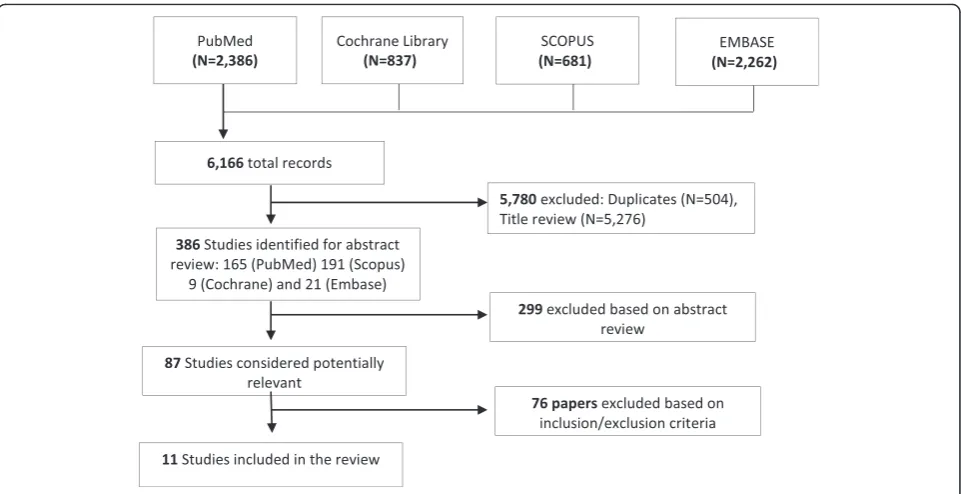
In total, 6,166 records of papers were identified from the search of the literature (Fig. 1). Based on a title review, 5,276 records were excluded. A further 504 records were duplicates and also excluded. Of the 386 records remaining, 299 were excluded based on abstract review. Full texts were obtained for the remaining 87 records, of which 11 papers met the inclusion criteria and were in-cluded in the review (Table 1).
Fig. 1Flow diagram of the search strategy for review
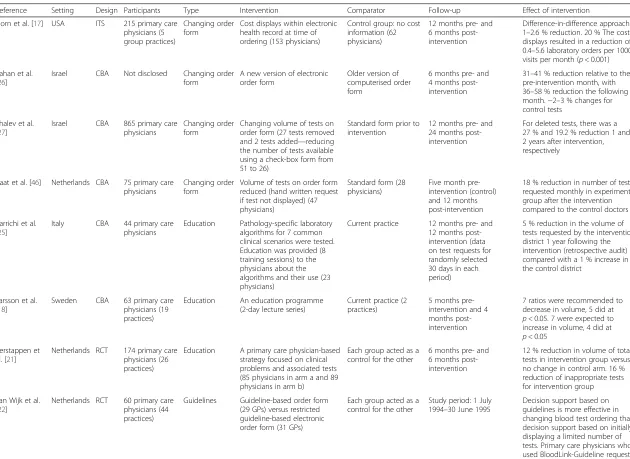
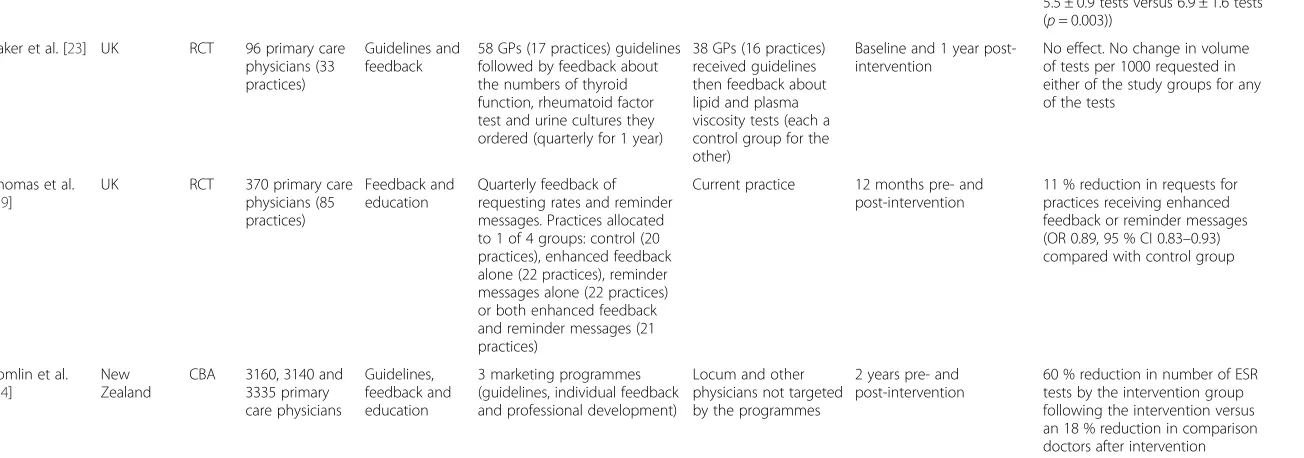
Table 1Overview of intervention characteristics and results
Reference Setting Design Participants Type Intervention Comparator Follow-up Effect of intervention
Horn et al. [17] USA ITS 215 primary care physicians (5 group practices)
Changing order form
Cost displays within electronic health record at time of ordering (153 physicians)
Control group: no cost information (62 physicians)
12 months pre- and 6 months post-intervention
Difference-in-difference approach. 1–2.6 % reduction. 20 % The cost displays resulted in a reduction of 0.4–5.6 laboratory orders per 1000 visits per month (p< 0.001)
Kahan et al. [26]
Israel CBA Not disclosed Changing order
form
A new version of electronic order form
Older version of computerised order form
6 months pre- and 4 months post-intervention
31–41 % reduction relative to the pre-intervention month, with 36–58 % reduction the following month.−2–3 % changes for control tests
Shalev et al. [27]
Israel CBA 865 primary care
physicians
Changing order form
Changing volume of tests on order form (27 tests removed and 2 tests added—reducing the number of tests available using a check-box form from 51 to 26)
Standard form prior to intervention
12 months pre- and 24 months post-intervention
For deleted tests, there was a 27 % and 19.2 % reduction 1 and 2 years after intervention, respectively
Zaat et al. [46] Netherlands CBA 75 primary care physicians
Changing order form
Volume of tests on order form reduced (hand written request if test not displayed) (47 physicians)
Standard form (28 physicians)
Five month pre-intervention (control) and 12 months post-intervention
18 % reduction in number of tests requested monthly in experimental group after the intervention compared to the control doctors
Barrichi et al. [25]
Italy CBA 44 primary care
physicians
Education Pathology-specific laboratory algorithms for 7 common clinical scenarios were tested. Education was provided (8 training sessions) to the physicians about the algorithms and their use (23 physicians)
Current practice 12 months pre- and 12 months post-intervention (data on test requests for randomly selected 30 days in each period)
5 % reduction in the volume of tests requested by the intervention district 1 year following the intervention (retrospective audit) compared with a 1 % increase in the control district
Larsson et al. [18]
Sweden CBA 63 primary care
physicians (19 practices)
Education An education programme (2-day lecture series)
Current practice (2 practices)
5 months pre-intervention and 4 months post-intervention
7 ratios were recommended to decrease in volume, 5 did at
p< 0.05. 7 were expected to increase in volume, 4 did at
p< 0.05 Verstappen et
al. [21]
Netherlands RCT 174 primary care physicians (26 practices)
Education A primary care physician-based strategy focused on clinical problems and associated tests (85 physicians in arm a and 89 physicians in arm b)
Each group acted as a control for the other
6 months pre- and 6 months post-intervention
12 % reduction in volume of total tests in intervention group versus no change in control arm. 16 % reduction of inappropriate tests for intervention group
van Wijk et al. [22]
Netherlands RCT 60 primary care physicians (44 practices)
Guidelines Guideline-based order form (29 GPs) versus restricted guideline-based electronic order form (31 GPs)
Each group acted as a control for the other
Study period: 1 July 1994–30 June 1995
Decision support based on guidelines is more effective in changing blood test ordering than decision support based on initially displaying a limited number of tests. Primary care physicians who used BloodLink-Guideline requested 20 % fewer tests on average than did practitioners who used
Table 1Overview of intervention characteristics and results(Continued)
BloodLink-Restricted (mean (±SD), 5.5 ± 0.9 tests versus 6.9 ± 1.6 tests (p= 0.003))
Baker et al. [23] UK RCT 96 primary care
physicians (33 practices)
Guidelines and feedback
58 GPs (17 practices) guidelines followed by feedback about the numbers of thyroid function, rheumatoid factor test and urine cultures they ordered (quarterly for 1 year)
38 GPs (16 practices) received guidelines then feedback about lipid and plasma viscosity tests (each a control group for the other)
Baseline and 1 year post-intervention
No effect. No change in volume of tests per 1000 requested in either of the study groups for any of the tests
Thomas et al. [19]
UK RCT 370 primary care
physicians (85 practices)
Feedback and education
Quarterly feedback of requesting rates and reminder messages. Practices allocated to 1 of 4 groups: control (20 practices), enhanced feedback alone (22 practices), reminder messages alone (22 practices) or both enhanced feedback and reminder messages (21 practices)
Current practice 12 months pre- and post-intervention
11 % reduction in requests for practices receiving enhanced feedback or reminder messages (OR 0.89, 95 % CI 0.83–0.93) compared with control group
Tomlin et al. [24]
New Zealand
CBA 3160, 3140 and 3335 primary care physicians
Guidelines, feedback and education
3 marketing programmes (guidelines, individual feedback and professional development)
Locum and other physicians not targeted by the programmes
2 years pre- and post-intervention
60 % reduction in number of ESR tests by the intervention group following the intervention versus an 18 % reduction in comparison doctors after intervention
Cadogan
et
al.
Implementa
tion
Science
(2015) 10:167
Page
5
of
Table 2Quality assessment of included studies
Author Intervention Design Independent of other
changes
Knowledge of allocated intervention
Unlikely to affect data collection
Shape of effect pre-specified
Attrition bias Selective reporting
Other risk of bias Overall risk
Horn et al. [17] Changing order form
ITS Low risk High risk Low risk Low risk Unclear risk Low risk Low risk High
risk
The study had a control group
Participants knew which intervention they were receiving
Sources and data collection methods same before and after intervention
Specified Missing data
unclear
Appropriate outcomes reported
No other potential bias
Author Intervention Design Random sequence
generation
Allocation concealment
Protection against contamination
Blinding Attrition bias Selective
reporting
Similar at baseline Overall risk
Shalev et al. [27] Changing order form
CBA High risk High risk N/A High risk Low risk Low risk N/A High
risk
CBA study CBA study No control group No blinding No missing
data
Appropriate outcomes reported
No control group
Kahan et al. [26] Changing order form
CBA High risk High risk N/A High risk Low risk Low risk N/A High
risk
CBA study CBA study No control group No blinding No missing
data
Appropriate outcomes reported
No control group
Zaat et al. [28] Changing order form
CBA High risk High risk Unclear risk High risk Low risk Low risk Unclear risk High
risk
CBA study CBA study No information
in text
Participants knew what they had been allocated to
No missing data
Appropriate outcomes reported
No information in text on baseline characteristics, baseline outcomes similar (Fig 1/2)
Baricchi et al. [25]
Education CBA High risk High risk Unclear risk High risk Low risk Low risk Unclear risk High
risk
CBA study CBA study No information
in text
Participants knew what they had been allocated to
No missing data
Appropriate outcomes reported
No information in text
Larson et al. [18] Education CBA High risk High risk Unclear risk High risk Low risk Low risk Unclear risk High
risk
CBA study CBA study No information
in text
Participants knew what they had been allocated to
No missing data
Appropriate outcomes reported
No information in text
Verstappen et al. [21]
Education RCT Low risk Low risk Low risk Low risk Low risk Low risk Low risk Low
risk
Blocked randomization
Cadogan
et
al.
Implementa
tion
Science
(2015) 10:167
Page
6
of
Table 2Quality assessment of included studies(Continued)
Cluster trial, allocation after recruitment completed
Independent clinics
Controls were blinded, hence preventing the Hawthorne effect
No missing data
Appropriate outcomes reported
Outcomes measured at baseline and baseline characteristics reported and similar
van Wijk et al. [22]
Guidelines RCT Low risk Low risk Low risk High risk Low risk Low risk Low risk High
risk
“researcher not involved in the study… performed the randomisation using random-numbers table”
“each practice assigned by simple random allocation”
Separate practices All participants knew what they had been allocated to. Test ordering in controls may have been affected
Missing data similar between groups and all participants accounted for
Appropriate outcomes reported
Similar baseline characteristics
Baker et al. [23] Guidelines and feedback
RCT Low risk Low risk Low risk High risk Low risk Low risk High risk High
risk
Random number table Cluster trial, allocation after recruitment completed
Primary care physicians work separately
Participants knew what they had been allocated to. Test ordering in controls may have been affected
No sites lost to follow-up
Appropriate outcomes reported
Participants in group 2 had fewer patients and GPs than group 1
Thomas et al.[19]
Feedback and education
Cluster RCT
Low risk Low risk Low risk High risk Low risk Low risk Low risk High
risk
“cluster randomization… with a minimization procedure”
Cluster trial, allocation after recruitment completed.
Separate practices Participants knew what they had been allocated to. Test ordering in controls may have been affected.
No missing data
Appropriate outcomes reported
Similar baseline characteristics
Tomlin et al. [24] Guidelines, feedback and Education
CBA High risk High risk High risk High risk Low risk Low risk High risk High
risk
CBA study CBA study “Changes…might
be explained by
….contamination of the comparison group”
Participants knew what they had been allocated to. Test ordering in controls may have been affected
No missing data
Appropriate outcomes reported
Intervention group included GPs only while control group included locum GPs also
Cadogan
et
al.
Implementa
tion
Science
(2015) 10:167
Page
7
of
Risk of bias in included studies
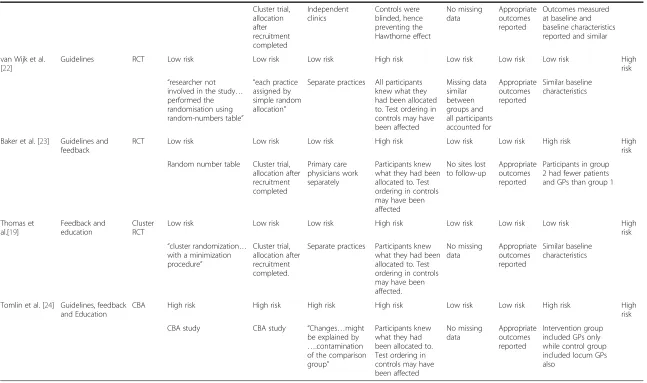
Table 2 provides details on the quality assessment of the studies. Ten of the 11 studies were deemed to have a high risk of bias, while one study [21] was deemed to be of low risk. Randomisation and allocation concealment was adequately performed for the four included RCTs
[19, 21–23]. The most common reason for high risk of
bias was the fact that participants (primary care physicians) in the intervention groups could not be blinded. This in-troduces the risk of information bias as physicians may have altered their requesting behaviours based on know-ledge of being assessed. Only one of the studies adequately blinded participants [21]. Also, a key limitation of the RCT by Thomas and colleagues [19] was the lack of power to detect interactions and, hence, a much larger trial would be required to ensure that these interventions act inde-pendently. A key limitation of the included ITS study [17] was the physician-level design utilised with an absence of individual patient characteristics.
Characteristics of studies included in the review
Characteristics and the key findings of the included studies are presented in Table 1. Four of the studies were
RCTs [19, 21–23], six were before-after studies [18, 24–28]
and one was an ITS [17] with a parallel control group. The included studies were conducted in the Netherlands [21, 22, 28], USA [17], UK [19, 23], Italy [25], Israel [26, 27], Sweden [18] and New Zealand [24] with samples ran-ging in size from 44 to over 3,000 primary care physicians. The interventions covered by the review include education programmes [18, 21], laboratory profiles [25] clinical guidelines [22], guidelines and feedback combined [23],
cost displays [17], the redesign of order forms [26–28]
and the use of feedback and education strategies [19, 24].
Clinical guidelines and policy recommendations
In their RCT study, van Wijk et al. [22] found that deci-sion support based on guidelines integrated with patient electronic records was more effective for changing blood test-ordering behaviour than decision support based on limited testing offered in modified request forms. Primary care physicians who had access to the guideline-based system has ordered 20 % fewer tests per form than did primary care physicians who had access to the restricted system (mean ± SD 5.5 ± 0.9 versus 6.9 ± 1.6 tests,
respect-ively;p= 0.003, Mann-Whitney test) [22]. Similar findings
were obtained in the adjusted multivariate regression analysis [22]. Controlling for practice characteristics and historic test-ordering behaviour, 19 % more tests were requested by primary care physicians with access to the
restricted order form (RR 1.19, 95 % CI 1.10–1.29) [22].
The study also reported a difference in requesting patterns between the two groups for specific tests. For example, in the restricted group, 61.2 % of order forms included an
erythrocyte sedimentation rate test, compared with 44.1 % in the guideline group (p< 0.001) [22].
In a study using a CBA design and involving over 3,000 primary care physicians in New Zealand, Tomlin et al. [24] assessed the effect of three different marketing programmes promoting clinical guidelines. Each of these programmes involved written material advising of guide-line recommendations. Individual laboratory-test use feed-back data was distributed to each practice, and professional development opportunities were provided. The study found that clear information marketed to primary care physicians improved the quality of laboratory test ordering [24]. Some key findings included a 42 % reduction in erythrocyte sedimentation rate tests following the intervention
(intervention physicians−60 %, comparison physicians−18 %,
p< 0.01) [24].
Feedback and reminders
Baker et al. [23] evaluated the use of feedback following guidelines in their RCT. Both groups received guidelines followed up with feedback about their use of selected tests. The first group of practices received feedback about their testing for thyroid function tests, rheumatoid factor and urine culture requests, while the second group received feedback about their serum lipids and viscosity requests. Hence, both groups were intervention groups but acted as control groups for the other group. The authors reported no change in laboratory requests quarterly feedback over a 1-year time period for any of the five tests studied [23].
A multifaceted clustered RCT by Verstappen et al. [21]
aimed to optimise primary care physicians’ test-ordering
behaviour by means of practice-based strategies targeting tests for specific clinical problems. Thirteen groups of primary care physicians underwent the strategy for three clinical problems (arm A; cardiovascular topics, upper and lower abdominal complaints), while 13 other groups under-went the strategy for three other clinical problems (arm B; chronic obstructive pulmonary disease and asthma, general complaints, degenerative joint complaints). The strategy consisted of personalised graphical feedback, including a
comparison of each physician’s own data with those of
colleagues; dissemination of national, evidence-based guidelines; and regular meetings on quality improvement in small groups [21]. Each of the arms of the trial acted as a control for each other. Physicians discussed personal feedback reports in small group meetings, related them to evidence-based clinical guidelines, and made plans for change. Authors reported a 12 % reduction in volume of total tests for arm A in intervention group versus no
change in control arm (p< 0.001) [21]. However, for arm
B of the trial, no statistically significant changes were iden-tified (p= 0.22) [21].
In a third RCT by Thomas et al. [19], the use of feed-back combined with educational reminder interventions
was assessed. The feedback intervention involved the use of a booklet containing graphical presentations of individual practice level ordering for the targeted tests. Each practice was compared to regional statistics over a 3-year period. Educational reminders were developed in conjunction with the primary care physicians and were included with test results. The study found that primary care practices receiving either or both feedback and re-minders had significantly reduced blood test utilisation
(p< 0.001) [19]. The combined effect of the
interven-tions resulted in a 22 % reduction in total number of
targeted tests ordered (OR = 0.78, 95 % CI 0.71–0.85)
versus 13 % for reminders alone (OR = 0.87, 95 % CI
0.81–0.94, p= <0.001) and 11 % for feedback alone
(OR = 0.89, 95 % CI 0.83–0.94, p= 0.003) [19].
How-ever, feedback led to greater reductions in the number of laboratory tests ordered compared with reminders although the model-based analyses suggested similar ef-fects (adjusted change relative to baseline performance in audit and feedback arm = 12 %; OR for reminders =
0.89, 95 % CI 0.83 to 0.93,p= 0.003) [19].
Education-based strategies
Baricchi et al. [25] evaluated the effect of seven path-ology-specific laboratory profiles for more effective test requesting, using a CBA study design. Training sessions were facilitated to educate the primary care physicians in the intervention group about these profiles and to discuss their presumed usefulness. Authors reported a 5 % reduc-tion in the volume of tests requested by the intervenreduc-tion group 1 year following the intervention compared with a 1 % increase in the control group (p= <0.001) [25].
Also using a CBA study, Larsson et al. [18] assessed the effects of an education programme which involved a 2-day lecture series at which each participant received a folder containing information relating to the guidelines for future reference. The authors reported significant
changes (p< 0.05) for nine of 14 tests [18]. They
recom-mended that ordering rates for seven ratios should
de-crease, of which five did (p< 0.05) and that seven ratios
should increase in volume, of which four did (p< 0.05).
None of the ratios significantly changed in the wrong direction [18].
Cost displays of pricing information
Using an ITS design, Horn et al. [17] evaluated the effect of implementing cost displays for laboratory tests in
pri-mary care. The authors reported a reduction (1–2.6 %)
in the volume of tests ordered for five out of 27 different laboratory tests when real-time display of cost informa-tion was provided electronically on patient record and results (estimated reduction of between 0.4/1000 visits per
month and 5.6/1000 visits per month, p< 0.001) [17].
However, for higher cost tests, a reduction in test requests was observed in only one of six such tests [17].
Changing order forms
Kahan et al. [26] evaluated a new version of a compu-terised order form for three target tests (vitamin B12, folic acid and ferritin) using a CBA study. Test requests for haemoglobin and iron were evaluated as controls. The
authors reported a 31–41 % decrease in volume of requests
for the three target tests at 1-month follow-up, with a
fur-ther decrease to 36–53 % 2 months after the intervention
[26]. In comparison, the effect on test requests for controls
tests ranged from−2 to 3 % [26]. A second CBA study in
Israel by Shalev et al. [27] evaluated changing the format of the existing check-box laboratory order form that is em-bedded in a computerised medical record. This involved removing 26 tests from the form and adding two tests. They found that for deleted tests, there was a 27 and 19.2 % reduction 1 and 2 years after intervention,
respect-ively (p< 0.001) [27]. For unchanged tests, the percentage
changes were +18.4 % in year one and−22.4 % in year two.
Meanwhile, a 60.7 % (year one) and 90 % (year two) in-crease in volume was found where tests were added to the order form (p< 0.001) [27].
In a second CBA study, Zaat et al. [28] modified the request form so that it only had 15 tests listed and all other tests had to be hand written. The form also re-quired more information about the reason for requesting the test. Primary care physicians in the intervention group received a copy of a booklet with descriptions of the es-sential characteristics of the 15 important tests on the new form. The authors reported an 18 % reduction in volume of laboratory test requested on a monthly basis for the intervention group [28]. In the comparison period, the
dif-ference between groups was significant (p< 0.0001) [28].
Discussion
This review aimed to identify and evaluate interventions for improving the use of laboratory tests among primary care physicians. Intervention strategies included: educa-tion, feedback, guidelines, cost displays and changing the content of order forms. While included studies differed considerably in relation to the tests they assessed, the findings were consistently in the same direction, perhaps indicating some publication bias. All but one [23] of the included studies reported positive effects on laboratory testing patterns. However, a number of the studies included in this review have a high risk of bias and are lacking in certain areas of methodological quality.
Education-based interventions appear to have promising effects on improving primary care physician laboratory testing patterns in this review [18, 21, 25]. This included evidence from a high-quality RCT [21]. Similar educational strategies have also been effective in changing other
primary care behaviours including improving prescribing patterns for antibiotics [29] and referral for radiological as-sessments [30]. In particular, diagnoses- or symptom-based education strategies involving a multidisciplinary approach proved effective [21, 25]. The sustainability of education-based strategies is often questioned in the literature. However, follow-up of long term effects of the education programme implemented by Larsson et al. [18] found it can be achieved with regular re-enforcement [31].
Further, the literature suggests provider education is inexpensive and feasible for widespread delivery [32]. Larsson et al. [18] also reported direct laboratory cost savings of their education programme. Similarly, Ver-stappen et al. [33] evaluated the costs and cost reduc-tions of their feedback- and education-based strategy [21]. However, as with many intervention studies, a lack of rigorous economic evaluation methods and poor clinical data are key limitations of studies attempting to describe the economic value of their behaviour change strategies.
The feedback-based interventions in this review were multifaceted, and their effects were dependent on the par-ticular combination of strategies used [19, 23, 24]. Feedback strategies have also shown positive results for other test-or-dering activities by primary care physicians such as electrocardiogram use [34, 35]. In particular, enhanced feedback combined with brief educational reminder mes-sages had a positive effect on requesting patterns [19]. The broader literature also suggests that feedback interven-tions have improved success when combined with other education-based strategies, including outreach visits or educational reminders [36, 37]. In primary care, providing feedback may change attitudes towards current practice and subsequent clinical outcomes, by changing self-assessment or by directing attention to a particular set of guidelines [38].
However, Baker et al. found that feedback was ineffective for changing primary care physician requesting behaviour when provided following guidelines [23]. The literature suggests that this may be explained by baseline perform-ance, how often feedback is provided and how the feedback is provided [38, 39]. Moreover, individualised feedback in other areas of clinical performance has been shown to be more effective than general feedback, in particular when it is regular and repeated [40].
Implementation strategies for the delivery of education-based strategies may also be important, in particular the dissemination of guidelines. Decision support based on limited testing offered in modified request forms was less effective compared to decision support based on guide-lines integrated with patient electronic records for chan-ging blood test-ordering behaviour [22]. However, the use of guidelines is often criticised with respect to sustainabil-ity of change in the long term [11].
Real-time display of cost information provided elec-tronically on patient record, and results showed a signifi-cant but small change in laboratory testing patterns [17]. However, this change was dependent on specifics of the test with insignificant changes for five out of six of the high-cost tests [17]. Little research exists on the effective-ness of cost displays for altering behaviour in the primary care; however, conflicting evidence exists among studies that have included physicians in hospital settings [41, 42]. In addition, diverse background health systems need to be considered when implementing a cost-display-based strategy.
Implications for the implementation of interventions
Some multifaceted intervention strategies within the scope of this review have shown positive results although con-flicting evidence exists in the wider literature on changing healthcare professional behaviours [43, 44]. Grimshaw and colleagues highlight that few studies explain the rationale for choice of a particular combination of interventions [44]. The authors conclude that if interventions are tai-lored to address local barriers to change, then multifaceted approaches may be more effective than individual inter-ventions [44]. There is a literature to support the belief that knowledge of pre-requesting variables contributes to the success of interventions in health professionals [45]. For example, some authors identified test decision points
including primary care physicians’preference for risk [46]
and perceived needs of the patient for reassurance [47]. Studies have also highlighted the importance of factors associated with wider health system performance [46].
Interestingly, in this review, none of the interventions appear to be designed based on the attitudes and behav-iours responsible for laboratory testing patterns. The use of theory to understand such barriers has been recom-mended for the design of behaviour change interventions [13, 14]. In particular, Michie and colleagues have highlighted the importance of understanding the nature of the behaviour to be changed and the context [16]. The au-thors argue that designing interventions based on practi-tioner or researcher intuition rather than theory prevents an understanding of the behaviour change processes re-sponsible for effective interventions [16]. To address this issue, they have developed a behaviour change
the-ory, the “capability, opportunity, motivation-behaviour
(COM-B) system”, which can be used as a taxonomy to
map any identified barriers to the origin of the problem [15]. Hence, implementation strategies should also con-sider the theoretical and contextual factors responsible for changing primary care physician behaviour when de-signing interventions.
Similarly, the wider impacts of these interventions on the clinical outcome and the management of the patient need to be considered. There is a paucity of data on
downstream effects of laboratory ordering. Few studies have attempted to link and quantify laboratory ordering with subsequent ordering of radiology or outpatient re-quests [48], and none have linked a reduction of labora-tory orders with reduced follow on requests. Further research on the proportion of laboratory requests, where the result (either normal or abnormal) leads to a quantifi-able diagnosis, health gain or evidenced-based health intervention, is required. Ultimately, the laboratory mis-sion is to serve the patient and most studies to date have focused on the requester. Thus, while laboratory-based in-terventions to curtail inappropriate requests are valu-able, they rarely have a patient focus. Aiming to reduce the volume of test requests may not be a satisfactory out-come of interest. The key drivers of demand management and improving the appropriateness of test requesting should include economic savings in the health service but also improved clinical outcomes for patients [5, 12]. In order to do so, a collaborative approach involving labora-tories and clinicians may be most beneficial. For example, provision of interpretative comments on test reports is not only welcomed by users but has been suggested to influence requesting behaviour and, indeed, patient outcomes.
Limitations of this review
Firstly, the heterogeneity of the studies precludes a quanti-tative pooling of the results to produce any statistical in-ference; our study is thus essentially descriptive. Secondly, follow-up periods of the included studies varied, ranging from 3 months to 2 years. As a result, the findings may vary. Also, this review followed EPOC adapted guidelines when including study designs and included a mixture of RCT, CBA and ITS study designs. The latter two study de-signs are weaker and more susceptible to bias due to their observational nature. Finally, not all included studies controlled for the same confounders, in particular patient-level characteristics.
Another limitation of our review is that it is possible that additional studies with non-significant or negative effects were not published. This leads to publication bias which may have an impact on our findings. In par-ticular, clinical laboratories may be carrying out routine audits of new strategies they have implemented but may be not publishing less favourable negative results. Also, in many of the included studies, authors reported a suspicion of inappropriate testing as part of their
mo-tivation [17, 19, 21–23, 25, 27, 28].
However, our study also has several strengths. Our litera-ture search is exhaustive and provides a clear overview of the subject matter. The studies included are from practices within covering multiple geographic locations; thereby, the inferences of the review are generalisable to a large population.
Conclusions
Our review suggests that many different interventions may change primary care physician requesting patterns, in particular multifaceted interventions. However, due to the small number of studies and questionable validity and generalisability of findings of these studies, this review should encourage further better quality research in this area. While some of the included study designs are weak, the results are generally consistent in pointing to the need to intervene to improve test-ordering behaviour. As a result, it is important that policy makers consider the benefits of providing the resources to further explore and implement some of these interventions pending the con-duct of better quality studies. The possibility of publica-tion bias should be weighed when assessing intervenpublica-tions. However, due to the downstream expenditure resulting from laboratory testing, the cost and time associated with continuous quality improvement initiatives in laboratory medicine will be beneficial.
There is a paucity of theory-based interventions in re-lation to test-ordering behaviours of physicians. Further research should concentrate on improving our understand-ing of when interventions such as education or guidelines are likely to be effective and how to improve them. In par-ticular, current interventions have been limited to tackling only one or a very few elements of the behaviour change wheel. As a result, the determinants of success and failure remain unclear and interventions may not be applicable to specific tests. Given the difficulties inherent in translating research into practice, it is reasonable to question whether the interventions we describe are generalisable or adapt-able to other healthcare settings and conditions. Also, future studies that examine the effect of combined ap-proaches, conducted by a multidisciplinary team are likely to be of interest. Hence, further research is needed to systematically examine the contextual and organisational factors likely to influence the behaviour change and imple-mentation. In addition, research focused on the impact on patient care, further testing and diagnosis as a result of change in laboratory ordering would assist with appropri-ate policy for future laboratory services.
Additional files
Additional file 1:PRISMA checklist. Completed PRISMA checklist indicating page number in manuscript of relevant content.
Additional file 2:Search terms and search records for PubMed, Cochrane, Embase and Scopus databases.
Additional file 3:Sample data extraction form.
Abbreviations
CBA:controlled before and after study; CCT: controlled clinical trial; EPOC: Effective Practice and Organisation of Care; ITS: interrupted time series; NRCT: non-randomised controlled trials; RCT: randomised controlled trial.
Competing interests
The authors declare that they have no competing interests.
Authors’contributions
SLC, JPB, CPB and MRC conceived and designed the study. SLC carried out the initial searches. SLC and MRC reviewed the articles and abstracted the data. SLC drafted the manuscript. JPB, CPB and MRC critically revised the manuscript for important intellectual content. All authors agreed on the final manuscript and approved its submission for publication.
Acknowledgements
The first author (SLC) is funded by the Health Research Board in Ireland under the Scholars Programme in Health Services Research Grant No. PHD/2007/16. This systematic review was supported by Postgraduate Module PG7016 Systematic Reviews for the Health Sciences, University College Cork, Ireland.
Author details 1
Department of Epidemiology and Public Health, University College Cork, Cork, Ireland.2Department of General Practice, University College Cork, Cork, Ireland.3Department of Haematology, Cork University Hospital, Cork, Ireland. Received: 15 April 2015 Accepted: 30 November 2015
References
1. Forsman RW. Why is the laboratory an afterthought for managed care organizations? Clin Chem. 1996;42(5):813–6.
2. Hickner J, Thompson PJ, Wilkinson T, Epner P, Shaheen M, Pollock AM, et al. Primary care physicians’challenges in ordering clinical laboratory tests and interpreting results. J Am Board Fam Med. 2014;27(2):268–74.
3. Freedman DB: Towards better test utilization—strategies to improve physician ordering and their impact on patient outcomes. The Journal of the International Federation of Clinical Chemistry and Laboratory Medicine. 2015;26(1):15-30.
4. Beastall GH. The modernisation of pathology and laboratory medicine in the UK: networking into the future. Clin Biochem Rev. 2008;29(1):3. 5. Fryer AA, Smellie WS. Managing demand for laboratory tests: a laboratory
toolkit. J Clin Pathol. 2013;66(1):62–72.
6. Zhi M, Ding EL, Theisen-Toupal J, Whelan J, Arnaout R. The landscape of inappropriate laboratory testing: a 15-year meta-analysis. PLoS One. 2013;8(11):e78962.
7. van Bokhoven MA, Pleunis-van Empel MC, Koch H, Grol RP, Dinant G-J, van der Weijden T. Why do patients want to have their blood tested? A qualitative study of patient expectations in general practice. BMC Fam Pract. 2006;7(1):75. 8. Colling CA, Volk LA, Jenter C, Dembowitz M, Bates DW, Simon SR. Using a
patient portal to communicate laboratory test results in community practices. J Gen Intern Med. 2012;27:S543.
9. Hickner J, Graham D, Elder N, Brandt E, Emsermann C, Dovey S, et al. Testing process errors and their harms and consequences reported from family medicine practices: a study of the American Academy of Family Physicians National Research Network. Quality Safety Health Care. 2008;17(3):194–200. 10. Wong ET. Cost-effective use of laboratory tests: a joint responsibility of
clinicians and laboratorians. Clin Lab Med. 1985;5(4):665–72.
11. Solomon DH, Hashimoto H, Daltroy L, Liang MH. Techniques to improve physicians’use of diagnostic tests: a new conceptual framework. JAMA. 1998;280(23):2020–7.
12. Janssens PM. Managing the demand for laboratory testing: options and opportunities. Clin Chim Acta. 2010;411(21):1596–602.
13. Craig P, Dieppe P, Macintyre S, Michie S, Nazareth I, Petticrew M. Developing and evaluating complex interventions: the new Medical Research Council guidance. BMJ. 2008;29(337):a1655.
14. Colquhoun HL, Brehaut JC, Sales A, Ivers N, Grimshaw J, Michie S, et al. A systematic review of the use of theory in randomized controlled trials of audit and feedback. Implement Sci. 2013;8(1):66.
15. Michie S, Johnston M, Francis J, Hardeman W, Eccles M. From theory to intervention: mapping theoretically derived behavioural determinants to behaviour change techniques. Applied Psychol. 2008;57(4):660–80. 16. Michie S, van Stralen MM, West R. The behaviour change wheel: a new
method for characterising and designing behaviour change interventions. Implement Sci. 2011;6(1):42.
17. Horn DM, Koplan KE, Senese MD, Orav EJ, Sequist TD: The impact of cost displays on primary care physician laboratory test ordering. Journal of general internal medicine. 2014;29(5):708-714.
18. Larsson A, Biom S, Wernroth ML, Hulten G, Tryding N. Effects of an education programme to change clinical laboratory testing habits in primary care. Scand J Prim Health Care. 1999;17(4):238–43.
19. Thomas RE, Croal BL, Ramsay C, Eccles M, Grimshaw J. Effect of enhanced feedback and brief educational reminder messages on laboratory test requesting in primary care: a cluster randomised trial. Lancet. 2006;367(9527):1990–6. 20. Effective Practice and Organisation of Care Review Group, Cochrane Data
Collection Checklist [https://epoc.cochrane.org/sites/epoc.cochrane.org/files/ uploads/datacollectionchecklist.pdf]
21. Verstappen WH, van der Weijden T, Sijbrandij J, Smeele I, Hermsen J, Grimshaw J, et al. Effect of a practice-based strategy on test ordering performance of primary care physicians: a randomized trial. JAMA. 2003;289(18):2407–12. 22. van Wijk MA, van der Lei J, Mosseveld M, Bohnen AM, van Bemmel JH.
Assessment of decision support for blood test ordering in primary care. a randomized trial. Ann Intern Med. 2001;134(4):274–81.
23. Baker R, Falconer Smith J, Lambert PC. Randomised controlled trial of the effectiveness of feedback in improving test ordering in general practice. Scand J Prim Health Care. 2003;21(4):219–23.
24. Tomlin A, Dovey S, Gauld R, Tilyard M. Better use of primary care laboratory services following interventions to‘market’clinical guidelines in New Zealand: a controlled before-and-after study. BMJ Qual Saf. 2011;20(3):282–90. 25. Baricchi R, Zini M, Nibali MG, Vezzosi W, Insegnante V, Manfuso C, et al. Using
pathology-specific laboratory profiles in clinical pathology to reduce inappropriate test requesting: two completed audit cycles. BMC Health Serv Res. 2012;12:187. 26. Kahan NR, Waitman DA, Vardy DA. Curtailing laboratory test ordering in a
managed care setting through redesign of a computerized order form. Am J Manag Care. 2009;15(3):173–6.
27. Shalev V, Chodick G, Heymann AD. Format change of a laboratory test order form affects physician behavior. Int J Med Inform. 2009;78(10):639–44. 28. Zaat JO, van Eijk JT, Bonte HA. Laboratory test form design influences
test ordering by general practitioners in The Netherlands. Med Care. 1992;30(3):189–98.
29. Butler CC, Simpson SA, Dunstan F, Rollnick S, Cohen D, Gillespie D, et al. Effectiveness of multifaceted educational programme to reduce antibiotic dispensing in primary care: practice based randomised controlled trial. BMJ. 2012;344:d8173.
30. Eccles M, Steen N, Grimshaw J, Thomas L, McNamee P, Soutter J, et al. Effect of audit and feedback, and reminder messages on primary-care radiology referrals: a randomised trial. Lancet. 2001;357(9266):1406–9. 31. Mindemark M, Larsson A. Long-term effects of an education programme on
the optimal use of clinical chemistry testing in primary health care. Scand J Clin Lab Invest. 2009;69(4):481–6.
32. Grimshaw JM, Thomas RE, MacLennan G, Fraser C, Ramsay CR, Vale L, et al. Effectiveness and efficiency of guideline dissemination and implementation strategies. Health Technol Assess. 2004;8(6):1–72.
33. Verstappen WH, van Merode F, Grimshaw J, Dubois WI, Grol RP, van der Weijden T. Comparing cost effects of two quality strategies to improve test ordering in primary care: a randomized trial. Int J Qual Health Care. 2004;16(5):391–8.
34. Winkens R, Pop P, Bugter-Maessen A, Grol R, Kester A, Beusmans G, et al. Randomised controlled trial of routine individual feedback to improve rationality and reduce numbers of test requests. The Lancet. 1995;345(8948):498–502. 35. Stafford RS. Feedback intervention to reduce routine electrocardiogram use
in primary care. Am Heart J. 2003;145(6):979–85.
36. O’Brien MA, Rogers S, Jamtvedt G, Oxman AD, Odgaard-Jensen J, Kristoffersen DT, et al. Educational outreach visits: effects on professional practice and health care outcomes. Cochrane Database Syst Rev. 2007;17(4):CD000409. 37. Forsetlund L, Bjorndal A, Rashidian A, Jamtvedt G, O’Brien MA, Wolf F, et al. Continuing education meetings and workshops: effects on professional practice and health care outcomes. Cochrane Database Syst Rev. 2009;2:CD003030.
38. Ivers N, Jamtvedt G, Flottorp S, Young JM, Odgaard-Jensen J, French SD, et al. Audit and feedback: effects on professional practice and healthcare outcomes. Cochrane Database Syst Rev. 2012;6:CD000259.
39. Ivers NM, Grimshaw JM, Jamtvedt G, Flottorp S, O’Brien MA, French SD, et al. Growing literature, stagnant science? Systematic review, meta-regression and cumulative analysis of audit and feedback interventions in health care. J Gen Intern Med. 2014;29(11):1534-41.
40. van Bokhoven MA, Koch H, Dinant GJ, Bindels PJ, Grol RP, van der Weijden T. Exploring the black box of change in improving test-ordering routines. Fam Pract. 2008;25(3):139–45.
41. Feldman LS, Shihab HM, Thiemann D, Yeh HC, Ardolino M, Mandell S, et al. Impact of providing fee data on laboratory test ordering: a controlled clinical trial. JAMA Intern Med. 2013;173(10):903–8.
42. Bates DW, Kuperman GJ, Jha A, Teich JM, Orav EJ, Ma’luf N, et al. Does the computerized display of charges affect inpatient ancillary test utilization? Arch Intern Med. 1997;157(21):2501–8.
43. Squires J, Sullivan K, Eccles M, Worswick J, Grimshaw J. Are multifaceted interventions more effective than single-component interventions in changing health-care professionals’behaviours? An overview of systematic reviews. Implement Sci. 2014;9(1):152.
44. Grimshaw J, Thomas R, MacLennan G, Fraser C, Ramsay C, Vale L, et al. Effectiveness and efficiency of guideline dissemination and implementation strategies. Health Technol Assess. 2004;8:1–72.
45. Solomon D, Hashimoto H, Daltroy L, Liang M. Techniques to improve physicians’use of diagnostic tests: a new conceptual framework. JAMA. 1998;280:2020–7.
46. Zaat JO, van Eijk JT. General practitioners’uncertainty, risk preference, and use of laboratory tests. Med Care. 1992;30(9):846–54.
47. van der Weijden T, van Bokhoven MA, Dinant GJ, van Hasselt CM, Grol RP. Understanding laboratory testing in diagnostic uncertainty: a qualitative study in general practice. British J Gen Pract. 2002;52(485):974–80. 48. Winkens RA, Grol RP, Beusmans GH, Kester AD, Knottnerus JA, Pop P. Does a
reduction in general practitioners’use of diagnostic tests lead to more hospital referrals? Br J Gen Pract. 1995;45(395):289–92.
• We accept pre-submission inquiries
• Our selector tool helps you to find the most relevant journal
• We provide round the clock customer support
• Convenient online submission
• Thorough peer review
• Inclusion in PubMed and all major indexing services
• Maximum visibility for your research
Submit your manuscript at www.biomedcentral.com/submit