Open Access
Review
Notch activity in the nervous system: to switch or not switch?
Elise Cau*
1,2and Patrick Blader
1,2Address: 1Université de Toulouse, UPS, Centre de Biologie du Développement (CBD), 118 route de Narbonne, F-31062 Toulouse, France and 2CNRS, CBD UMR 5547, F-31062 Toulouse, France
Email: Elise Cau* - [email protected]; Patrick Blader - [email protected] * Corresponding author
Abstract
The Notch pathway is instrumental for cell fate diversification during development. Pioneer studies conducted in Drosophila and more recent work performed in vertebrates have shown that in the nervous system, Notch is reiteratively employed when cells choose between two alternative fates, a process referred to as a binary fate decision. While the early (neural versus epidermal) fate decisions mainly involve an inhibitory effect of Notch on the neural fate, late fate decisions (choice between different subtypes of neural cells) have been proposed to involve a binary switch activity whereby Notch would be instructive for one fate and inhibitory for the other. We re-examine this binary switch model in light of two recent findings made in the vertebrate nervous system. First, in the zebrafish epiphysis, Notch is required to resolve a mixed identity through the inhibition of one specific fate. Second, in the murine telencephalon, Notch regulates the competence of neural progenitors to respond to the JAK/STAT pathway, thereby allowing for the induction of an astrocyte fate. In neither case is Notch instructive for the alternative fate, but rather cooperates with another signalling pathway to coordinate binary fate choices. We also review current knowledge on the molecular cascades acting downstream of Notch in the context of neural subtype diversification, a crucial issue if one is to determine Notch function as an instructive, permissive or inhibitory signal in the various cellular contexts where it is implicated. Finally, we speculate as to how such a 'non-switch' activity could contribute to the expansion of neuronal subtype diversity.
Notch in the fly nervous system: selection of a
neural progenitor and specification of neuronal
subtype identity
The Notch pathway is a crucial signalling pathway involved in development and disease that functions through the binding of transmembrane ligands (the DSL proteins, for Delta-Serrate-Lag2) to transmembrane recep-tors (the Notch molecules) on adjacent cells. Such bind-ing triggers the proteolysis of Notch and the release of its intracellular domain (the so-called Notch-intra frag-ment), which is translocated into the nucleus. Canonical Notch signalling involves the binding of Notch-intra to
DNA-binding cofactors belonging to the CSL family (for CBF1 in human, Suppressor of Hairless in Drosophila and Lag-1 in Caenorhabditis elegans) [1,2]. Notch-intra/CSL complexes subsequently activate transcription of target genes through the recruitment of the histone-acetyl trans-ferases CBP/p300 [3,4] and PCAF [5].
Notch activity has been extensively studied in the Dro-sophila nervous system, where it regulates cell fate choice in several different contexts. First, the Notch pathway is required to select single cells to become neural precursors from a cluster of equipotent progenitors that express basic
Published: 2 October 2009
Neural Development 2009, 4:36 doi:10.1186/1749-8104-4-36
Received: 19 June 2009 Accepted: 2 October 2009
This article is available from: http://www.neuraldevelopment.com/content/4/1/36
© 2009 Cau and Blader; licensee BioMed Central Ltd.
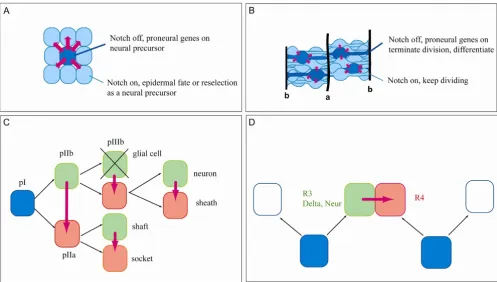
helix-loop-helix (bHLH) transcription factors called proneural genes (Figure 1A). Expression of proneural genes endows cells with a neural potential as these genes are both necessary and sufficient for the formation of neu-ral progenitors [6]. In situations where Notch activity is absent, all the cells from the clusters retain expression of the proneural genes and become neural cells [7-11]. Con-versely, when Notch signalling is activated constitutively, all the cells of the cluster acquire an epidermal fate [12-14]. These observations led to the following model whereby cells within proneural clusters communicate via an inhibitory feed-back loop of Notch activity. After sev-eral iterations of the loop, only one cell of the cluster downregulates the Notch pathway, retains proneural expression and becomes a neural precursor. The remain-ing cells, which still have the neural fate inhibited by Notch, will either be reselected during a second wave of neurogenesis or secondarily adopt an epidermal fate [15].
Importantly, cells double mutant for Notch and the proneural genes form epidermis indicating that Notch acts only through the inhibition of proneural gene expres-sion [16]. Thus, in this process Notch controls a binary fate decision (defined as a choice between two cell fates) between the epidermal and neural fates through the inhi-bition of a neural program. Hereafter, a mechanism where Notch resolves a binary fate choice through the inhibition of a specific program of differentiation will be referred to as lateral inhibition.
The second mechanism consists of binary fate decisions that specify distinct neural subtype identities. For instance, in the Drosophila peripheral nervous system (PNS), once the neural precursor (which is called SOP for Sensory organ precursor) has been specified via lateral inhibition, it divides in a stereotypical fashion to generate two intermediate progenitors (pIIb and pIIa) that
com-Roles for Notch during neurogenesis: selection of a neural progenitor and specification of neuronal subtype identity
Figure 1
municate via Notch to establish their respective identities. These cells divide again to generate four cells, the identi-ties of which are again established through communica-tion between sister cells via Notch [17]. The descripcommunica-tion of Notch activity during specification of neural subtype iden-tity has led to the binary switch model. Briefly, this model postulates that during fate choices between two subtype identities, Notch is both instructive for one fate and inhib-itory for the other. This model is mainly based on the observation that during these fate decisions, the loss of Notch activity and the constitutive activity of the Notch pathway leads to opposite phenotypes. In addition, this model does not imply that Notch is instructive in an abso-lute manner but that it has an instructive capability in the context of a binary fate choice, meaning that it drives one specific fate from a bipotent progenitor.
Two important points need to be raised concerning the binary switch model. First, since Notch is able to trigger different outcomes depending on the cellular context, it is likely to cooperate with other influences during the speci-fication of cell fate, which are missing in the simple model of the binary switch. Second, only the identification of Notch targets will enable us to ascertain that Notch has an instructive (rather than inhibitory) role in these fate deci-sions. Nevertheless, during both the selection of neural precursors and the specification of neural subtype iden-tity, Notch appears to trigger a binary fate decision between two possible alternative identities. While in the first case the activity of Notch is strictly inhibitory, it is not yet clear whether the choices between two different neural subtype identities involve the inhibition of one fate or the promotion of the other fate or both activities as postu-lated in the binary switch model.
Divisions of the Drosophila SOPs exhibit stereotyped ori-entations and, consequently, stereotyped outcomes in terms of cell-type specification. Indeed, these outcomes are the result of a process of asymmetric segregation of cell fate determinants that relies on the stereotyped division orientation. At each of these divisions the Notch interac-tors Numb and Neuralized (Neur) are segregated to one of the two daughter cells. In turn, these molecules appear to bias the activity of the Notch pathway either negatively in the case of Numb or positively in the case of Neuralized, which potentiates the activity of Notch ligands [17]. Not all binary decisions regulated by Notch require asymmet-ric segregation of fate determinants, however. For instance, in the Drosophila eye the decision to adopt an R4 versus an R3 photoreceptor identity relies on Notch activ-ity despite R3 and R4 not sharing a fixed lineage relation-ship (Figure 1D). In this system, the initial bias in Notch activity is provided by the activity of the Frizzled receptor (Fz) acting through Dishevelled (Dsh), which reinforces
both delta and neur expression in the presumptive R3 cell [18-22].
Finally, Notch influences neural subtype specification in decisions that appear more complex than simple choices between two alternative fates. For instance, in the Dro-sophila eye disc, the loss of Notch activity induces a trans-formation of R7 photoreceptors into other subtypes of photoreceptors (R1 or R6), while conversely the constitu-tive activation of Notch in R1 and R6 photoreceptors can either force them to differentiate as R7 or less frequently as cone cells [23]. Thus, in this context, Notch activity can-not be restricted to a single R7 versus R1/6 binary fate decision. Further studies will be required to understand whether in this system Notch functions through a mecha-nism that does not involve binary fate decisions or whether it is in fact involved in several successive binary decisions.
Altogether, these studies suggest a role for Notch in binary fate decisions in two subsequent contexts: first, decisions between an epidermal and a neural fate, and second, dur-ing choices between two distinct neural subtypes. In addi-tion, Notch specifies neural fates through decisions that appear more complex than simple binary fate choices.
Notch activity in the vertebrate nervous system:
an emerging role in cell fate diversification
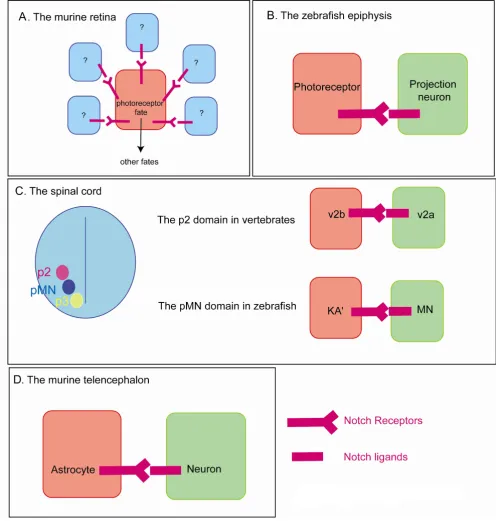
In the rodent retina, ganglion cells, horizontal cells and cone photoreceptors are produced at early stages followed by amacrine and rod photoreceptors and finally bipolar cells and Muller glia at late stages [26]. Conditional inac-tivation of the notch1 gene induces the production of an excess of photoreceptors at the expense of other cell fates regardless of whether this inactivation is performed at an early or late stage. These data cannot simply be explained by a role for Notch in maintaining a pool of progenitors as one would expect an excess of bipolar or Müller cells (the latest fates) upon late inactivation of Notch1 if this were the case. Therefore, Notch appears to directly control cell fate through the inhibition of a photoreceptor identity [27,28]. Conversely, gain of Notch activity induces the production of an excess of Müller glia [29]. These data would argue for a photoreceptor/Müller glia switch. How-ever, these cell types are not produced at the same time and the increased number of photoreceptors observed upon Notch1 inactivation occurs at the expense of all other cell types and not just Müller cells [26-28]. Hence, the phenotype observed upon loss of Notch1 might reflect a binary decision occurring between a photoreceptor and a cell that retains the potential for all other identities or various binary fate decisions between a photoreceptor and another differentiated cell (including a decision between a photoreceptor and a Müller cell) or even an effect that does not involve binary fate decisions at all (Figure 2A). Surprisingly, data obtained in other model systems do not support a role for Notch in inhibiting the photoreceptor fate. In the chick, knock down of c-notch1 using an anti-sense strategy leads to an excess of ganglion cells [30]. Moreover, in the zebrafish, inactivation of the Notch pathway slows down photoreceptor differentiation and severely impairs the production of Müller glial cells but does not result in an excess of photoreceptors [31]. Whether these different results reflect methodological dif-ferences, differences in the reduction of Notch activity or the employment of different strategies to specify cell fate in different species remains unclear.
The Notch pathway is also instrumental during the speci-fication of cell fate in the ventral spinal cord (Figure 2C).
In the pMN domain of the zebrafish spinal cord, GABAer-gic interneurons (KA') and primary motoneurons (MNs) are produced simultaneously, and in a number of cases are related by lineage - one KA' and one MN cell being generated from an asymmetric terminal division. In this context, constitutive activation of Notch promotes the specification of the KA' fate over the MN fate [32,33]. Sim-ilarly, Notch plays a role in specifying two distinct sub-types of interneurons: the v2a and the v2b from the p2 domain of the ventral spinal cord [34-36]. Interestingly, virtually all of these neurons are produced through a ter-minal v2a versus v2b decision [37], suggesting again a direct effect of Notch on fate specification. Finally, loss or gain of Notch activity affects cell fate within the zebrafish epiphysis, a dorsal diencephalic structure that contains two neuronal types: the photoreceptors and the projec-tion neurons (Figure 2B). In this context as well, the Notch pathway directly controls the specification of cell fate as birth-dating experiments show that these two cell types are born simultaneously [38]. Altogether, these studies point towards a direct role for Notch during the specification of neuronal subtype identity in vertebrates. While most cases can reasonably be attributed to a role for Notch in binary fate decisions (KA'/MN, V2a/V2b, zebrafish epiphysis), it is possible that in systems such as the murine retina, Notch is involved in more complex decisions than single binary fate choices.
Another important question is whether the effects of the Notch pathway on specification of neuronal subtype iden-tity are biased by asymmetric segregation of Notch inter-actors. The vertebrate retina is well-known for its apparent lack of fixed lineage relationships [39-41]. However, an elegant study by Poggi et al. [42] suggests a previously unanticipated logic in the retinal lineages. Indeed, theses authors describe the existence of a ganglion cell progeni-tor, labelled with a specific transgene, that divides with a specific orientation to generate one ganglion cell and one non-ganglion cell. This suggests that the vertebrate retina contains specific progenitors that can be identified molec-ularly and that produce a relatively stereotyped outcome. Whether such a progenitor exists for photoreceptors
A role for Notch during neural subtype specification in vertebrates
Figure 2 (see previous page)
remains to be determined. Given the lineage data, asym-metric segregation of Notch interactors could occur in both KA'/MN and v2a/v2b contexts [32,33,37]. However, in the former case terminal divisions generating two KA' cells are also observed, suggesting that asymmetric segre-gation of Notch interactors is not an absolute requirement [32].
Is Notch instructive in binary fate decisions?
In Drosophila, during the choice between a neural versus epidermal fate, Notch has always been described as inhib-iting the neural fate rather than activating the epidermal fate. In contrast, during its later activity during the specifi-cation of neural subtype identity, it has been proposed to function as a binary switch, instructive for one fate and inhibitory for the other. However, in both the selection of a neural progenitor and neural specification, the cell has the choice between the 'A' fate and the 'B' fate, and whereas loss of Notch activity results in the production of two 'B' cells, constitutive activation of Notch signalling always leads to the production of two 'A' cells [15,17]. In the vertebrate spinal cord, constitutive activation of the Notch pathway is sufficient to induce the v2b fate at the expense of the v2a fate in the p2 domain [35], which led to the interpretation that Notch is instructive to specify this fate. Similarly, in the pMN domain constitutive acti-vation of Notch forces cells towards the KA' fate at the expense of the MN fate [33], which led to the interpreta-tion that Notch both instructs the KA' fate and inhibits the MN fate. It is important to note that while these interpre-tations appear reasonable and parsimonious, they have yet to be firmly established through the study of Notch target genes (see below).
The zebrafish epiphysis represents a slightly different case from the 'binary switch' model. Indeed, while the loss of Notch activity leads to an excess of projection neurons, under these conditions a significant proportion of cells are detected with a mixed photoreceptor/projection neu-ron identity. Furthermore, while forced activation of the pathway inhibits the expression of projection neuron markers, photoreceptor identity is not promoted. There-fore, in the epiphysis Notch does not function as a binary switch but serves to repress an undesired genetic pro-gramme in cells induced through a parallel mechanism to adopt a different fate [38]. In this context, Notch would not be instructive but would rather cooperate with another pathway that would be instructive for the activa-tion of a photoreceptor fate.
Similarly, during the induction of the astrocytic fate in the murine telencephalon, Notch does not operate in a truly instructive manner but rather requires interaction with another signalling pathway. Neural progenitors of the mammalian brain produce neurons at early stages of
ges-tation and glial cells later, which led to the hypothesis that recently born neurons could be responsible for providing astrocytic potential to their neighbouring neural progeni-tors at late stages of development. Coherent with this idea, young neurons express Notch ligands and overexpression of the constitutively active form of Notch is sufficient to trigger astrocytic differentiation in neural progenitors (Figure 2D). However, this effect is revealed only when the JAK/STAT (Janus kinase/Signal transducer and activa-tor of transcription) pathway is activated. Moreover, Notch has been shown to regulate the competence to acti-vate the JAK/STAT pathway through the demethylation of astrocyte-specific promoters. This demethylation is neces-sary for the induction of the astrocyte fate by the JAK/STAT pathway and is triggered by the nuclear factor I (NFI) A, which prevents binding of the methyltransferase DNMT1 to the astrocytic promoters [43]. Therefore, the expression of Notch ligands by young neurons appears to confer astrocytic potential to neighbouring neural progenitors but is not sufficient for specification of astrocytes. As such, the role of Notch in this context can be defined as permis-sive rather than instructive. Can the effect of Notch on astrocyte differentiation fit in the binary fate choice model? One could consider that the coordinated activities of the Notch and JAK/STAT pathways are responsible for a neural progenitor versus astrocyte fate decision. However, it will be important to understand whether telencephalic neural progenitors that have not activated the Notch path-way retain neurogenic potential. These data exemplify the fact that Notch communication can influence fate deci-sions by regulating the competence to respond to a second pathway without being instructive.
Towards an understanding of the Notch-elicited
response
To discover whether Notch really possesses the ability to induce specific neural fates, it is crucial to identify the molecular cascades acting downstream of Notch in the nervous system. During the selection of neural precursors, in both Drosophila and vertebrates, the intracellular domain of Notch together with its co-activator Suppressor of Hairless (Su(H)) elicits the transcriptional activation of the Enhancer of Split (E'(Spl)) family of bHLH transcrip-tional repressors. In turn, Enhancer of Split proteins repress the proneural genes [1,44-46]. This inhibition of proneural gene expression leads to the inhibition of a neuronal fate.
Tramtrack69 (TTK69), a zinc finger transcription factor that functions as a repressor. Therefore, cells that have activated the Notch pathway show a more efficient trans-lation of TTK69 [49,50]. Interestingly, the sheath/neuron cell fate decision does not seem to rely on either of these two mechanisms while the socket/hair decision relies on both Su(H) and ttk69 [47-50]. This suggests a complexity that is not fully understood even in the Drosophila PNS where these questions have been best studied. In addition, as Su(H) functions either as a negative regulator of tran-scription (through the recruitment of co-repressors such as histone deacetylases; see [2] for a review) or as an acti-vator of transcription (when combined with Notch-intra and co-activators, including histone acetyl transferases; see [2] for a review), it is possible that some of the events that have been classified as Su(H)-independent in fact rely on Su(H) but show an equilibrium between the negative, Notch-independent effect and the positive Notch-depend-ent effect. Such an equilibrium has been observed during the regulation of single-minded (sim) gene expression in the Drosophila mesectoderm [51].
To understand whether Notch is instructive for the socket cell fate and/or inhibitory for the hair cell fate, it is crucial to identify the targets of ttk69 and Su(H) in the socket cells. A recent study shows that Notch and Su(H) together with their cofactor ventral veins lacking (vvl) activate
sox15, a gene required for socket cell survival but not
socket cell formation. Therefore, although Notch seems to be important to implement socket cell differentiation by activating sox15, it is not yet clear whether it is instructive for a socket fate. Part of the problem in answering this question could be that Notch regulates a plethora of socket differentiation genes rather than a single 'high level' regulator of socket fate. In contrast, both Su(H) and
sox15 are required to prevent the expression of D-pax2, a regulator of hair cell differentiation. This last result sug-gests that an essential activity of Notch is to prevent the inappropriate activation of the hair cell program in the socket cell [52,53]. Even in Drosophila, it is not clear whether Notch specifies neural subtype identities through being instructive for specific fates, inhibitory for others or both in binary fate decisions. In the long run, we hope that approaches aiming at identifying targets for Su(H) and TTK69 will provide answers to this question.
Interestingly a target for Notch has been identified in a decision that appears more complex than a single binary fate decision in the Drosophila retina. Here, D-pax2 is required for proper cone cell differentiation [54]. Notch,
lozenge and the epidermal growth factor (EGF) pathways
are also all important for the formation of cone cells [55-57]. In addition, the combined activities of Notch, the EGF pathway and the transcription factor Lozenge are responsible for the specific expression of D-pax2 in the
cone cells of the Drosophila eye disc through the direct binding of Su(H), Pointed (an EGF effector) and Lozenge to a D-Pax2 eye-specific enhancer [58]. Therefore, Flores et al. [58]proposed a model in which the [cells that would exhibit lozenge expression and both Notch and EGF activa-tion at the same time would be fated to become cone cells. In the extended version of their model, the [combined activities of Notch, the EGF pathway and lozenge would allow for the generation of four distinct identities (undif-ferentiated cell, cone cell, R3, or R4 and R7). Interestingly, in this model, the R7 and the cone cells show the same level of Lozenge and EGF activity and only differ by their level of Notch activity; therefore, absence of Notch activa-tion in R7 is thought to be responsible for the absence of
D-pax2 expression in the R7 photoreceptor. However, a
study by Cooper and Bray [23] contradicts this model as it shows both activation of the Notch pathway in the R7 cells as well as a prominent role for Notch on the specifi-cation of the R7 photoreceptor fate. Nevertheless the data obtained by Flores et al. [58] nicely shows that Notch can be instructive for specifying cell fate in the nervous sys-tem, although it requires cooperation with other influ-ences Further studies will be necessary to understand what controls the context-dependent effect of Notch that func-tions as an inhibitor of D-pax2 in the PNS and as an acti-vator in the retina.
How is Notch activity transduced in contexts where it directly regulates fate specification in vertebrates? In the zebrafish spinal cord, the KA'/MN fate decision relies on the canonical Su(H)-dependent pathway [33]. In order to understand whether, in this context, Notch acts through the activation of the KA' fate, the inhibition of the MN fate or both, it will be important to identify the targets of a Su(H)-Notch-intra complex and analyze their activities. While no KA' fate inducers are available to date (nor KA' differentiation genes), one can speculate that the inhibi-tion of the motoneuron fate by Notch activity could lead to the down-regulation of the proneural gene olig2, which is both necessary and sufficient for the specification of pri-mary motoneurons in zebrafish [59]. Similarly, inhibition of the v2a fate by Notch could involve the down-regula-tion of lhx3 and chx10 expression while the three tran-scription factors Scl, Gata2 and Gata3 could mediate the effects of Notch on the activation of the v2b fate in the spi-nal cord [34,35]. Before the molecular mechanisms that transduce the Notch effect in this v2a/v2b fate decision have been elucidated, it is not possible to conclude whether Notch is instructive for the v2b fate.
whether it is inductive for others or whether it influences the response to other signalling pathways.
Alternative models for the role of Notch in
binary fate decisions
The results obtained upon gain or loss of Notch activity in the epiphysis significantly differ from the binary switch model in two ways: first, loss of Notch results in the pro-duction of cells with a double-identity; and second, Notch is not instructive for the alternative (photoreceptor) fate. These data have been interpreted to mean that Notch acts to inhibit the projection neuron fate (the B fate in Figure 3A) whereas the photoreceptor fate (A fate) is promoted by a yet to be discovered inducing signal. In contrast, in the binary switch model, Notch is thought to instruct the A fate (Figure 3B) and possibly inhibit the B fate in paral-lel. Since it is not possible at this point to conclude whether Notch really possesses instructive activity in binary fate decisions made in the nervous system (see above), we propose two alternative models to the binary switch in which Notch activity is mainly inhibitory with respect to one fate. In the first scenario (Figure 3C), Notch only has a repressive activity on the acquisition of the B fate and this activity of Notch allows cells to choose between the influence of two inductive signals, one for the A fate and one for the B fate. In a variation of this scenario, the A fate would be a natural 'default state' that would not require the intervention of a signal (Figure 3D). In these two cases, Notch activity is only repressive, as in the epi-physis (Figure 3A). However, in contrast to the epiepi-physis, the B cells are initially able to become A cells, either because they are exposed to or can respond to the A fate-inducing signal or because this A fate is a 'default state'. These scenarios, however, do not explain that mixed iden-tity cells have not been observed in binary switch para-digms such as the Drosophila PNS. The most trivial explanation for this would be that in other binary deci-sions, the presence of cells with a mixed identity has been missed due to the lack of appropriate markers. Alterna-tively, these systems could show no tolerance for the simultaneous activation of two genetic programs, either because the B genetic program would have the capacity to override the A program or because AB cells would die. The data obtained in the murine telencephalon [43] suggest a fifth model (Figure 3E) where Notch regulates the compe-tence to respond to another signalling pathway thereby allowing for the induction of the A fate without being instructive for it. Interestingly, a similar model was first proposed by Cooper and Bray [23] to explain the cooper-ation between the Notch and the Ras pathways during the specification of the R7 identity in the Drosophila eye disc. Therefore, apart from the binary switch-instructive model, it is possible to explain the effects obtained in binary fate decisions with simple alternative models involving either an inhibitory effect of Notch on specific fates or the
regu-lation of the competence to respond to other signalling pathways. Further studies will clarify how cooperation with other pathways impacts on Notch-driven binary fate choices.
An interesting aspect of these models is that they might help understanding of how Notch activity triggers differ-ent effects in differdiffer-ent cell contexts. Indeed, in the third and fifth models (Figure 3C, E) Notch cooperates with an additional pathway during the specification of cell fate. Therefore, combination of Notch pathway activation with different combinations of other signalling pathways would allow different outcomes and help diversify the response to Notch activation. Along the same line, in the fourth model, the cell that has received Notch activation and is therefore inhibited from producing a B type of cell, differentiates as an A-type of cell as a 'default fate', mean-ing that it adopts this fate as the result of the specific com-bination of transcription factors and chromatin marks found in this particular cell in the absence of additional signalling activity. Here again, activation of Notch in dif-ferent types of cells (expressing difdif-ferent combinations of transcription factors and chromatin marks) would be expected to produce different outcomes.
A new way to generate cell fate diversity?
Models for Notch activity in binary decisions
Figure 3
diversification. The results obtained in the zebrafish epi-physis suggest that the inhibitory activity of Notch on spe-cific genetic programs could have contributed to such a segregation, therefore contributing to an expansion of neuronal subtype diversity.
Conclusion
Although binary fate decisions are most likely an oversim-plified way of looking at Notch activity, as Notch controls many other processes, including fate decisions between more than simply two fates, they represent a convenient framework to compare Notch activity in different systems. In addition, while the binary fate decisions triggered by Notch have been initially categorized in two general classes - lateral inhibition and 'binary switch', which were thought to correspond to initial decisions to adopt a neu-ral fate and the choice of a neuneu-ral subtype identity, respec-tively - the situation appears to be more complex than this simple dichotomy. Indeed, in the epiphysis the specifica-tion of neural subtype identity involves the inhibispecifica-tion of a specific genetic program (lateral inhibition) rather than a 'switch activity'. In this context, as well as during the specification of astrocytes in the murine telencephalon, Notch does not appear as the 'magic fate switcher' but rather acts cooperatively with other pathways during the specification of cell fate. Also surprising is the observation that whereas Notch activity is implicated in an increasing number of fate decisions (including recently in vertebrate neuronal subtype specification), very little is known con-cerning its activity as an inhibitory or instructive signal on specific genetic programs leading to fate choice. We believe that future work devoted to the understanding of the cascade of events following Notch activation will pave the way for a better understanding of its action as well as elucidate its potential evolutionary significance.
Abbreviations
bHLH: basic helix-loop-helix; CNS: central nervous sys-tem; EGF: epidermal growth factor; ipRGC: intrinsically photosensitive retinal ganglion cell; PNS: peripheral nerv-ous system; JAK/STAT: Janus kinase/Signal transducer and activator of transcription; SOP: Sensory organ precursor; Su(H): Suppressor of Hairless; TTK69: Tramtrack69.
Competing interests
The authors declare that they have no competing interests.
Authors' contributions
EC wrote the paper and PB revised the manuscript.
Acknowledgements
We thank Constandina Arvanitis, Alice Davy, Marc Haenlin, Fabienne Pitu-ello, Aurelie Quillien and Lucas Waltzer for critical reading of our manu-script and Aurelie Quillien for help with the art work. Financial support was provided by the CNRS, INSERM, Université Paul Sabatier, HFSP, FRM, FRC and the Ministère de la Recherche.
References
1. Bray SJ: Notch signalling: a simple pathway becomes complex.
Nat Rev Mol Cell Biol 2006, 7:678-689.
2. Kovall RA: More complicated than it looks: assembly of Notch pathway transcription complexes. Oncogene 2008,
27:5099-5109.
3. Fryer CJ, Lamar E, Turbachova I, Kintner C, Jones KA: Mastermind mediates chromatin-specific transcription and turnover of the Notch enhancer complex. Genes Dev 2002, 16:1397-1411. 4. Oswald F, Tauber B, Dobner T, Bourteele S, Kostezka U, Adler G,
Liptay S, Schmid RM: p300 acts as a transcriptional coactivator for mammalian Notch-1. Mol Cell Biol 2001, 21:7761-7774. 5. Kurooka H, Honjo T: Functional interaction between the
mouse notch1 intracellular region and histone acetyltrans-ferases PCAF and GCN5. J Biol Chem 2000, 275:17211-17220. 6. Bertrand N, Castro DS, Guillemot F: Proneural genes and the
specification of neural cell types. Nat Rev Neurosci 2002,
3:517-530.
7. Hartenstein V, Posakony JW: A dual function of the Notch gene in Drosophila sensillum development. Dev Biol 1990, 142:13-30. 8. Cabrera CV: Lateral inhibition and cell fate during neurogen-esis in Drosophila: the interactions between scute, Notch and Delta. Development 1990, 110:733-742.
9. Heitzler P, Simpson P: The choice of cell fate in the epidermis of Drosophila. Cell 1991, 64:1083-1092.
10. Lehmann R, Jimenez F, Dietrich U, Campos-Ortega JA: On the Phe-notype and Development of Mutants of Early Neurogenesis in Drosophila melanogaster. Roux's Arch Dev Biol 1983,
192:62-74.
11. Parks AL, Muskavitch MA: Delta function is required for bristle organ determination and morphogenesis in Drosophila. Dev Biol 1993, 157:484-496.
12. Lieber T, Kidd S, Alcamo E, Corbin V, Young MW: Antineurogenic phenotypes induced by truncated Notch proteins indicate a role in signal transduction and may point to a novel function for Notch in nuclei. Genes Dev 1993, 7:1949-1965.
13. Rebay I, Fehon RG, Artavanis-Tsakonas S: Specific truncations of Drosophila Notch define dominant activated and dominant negative forms of the receptor. Cell 1993, 74:319-329. 14. Struhl G, Fitzgerald K, Greenwald I: Intrinsic activity of the Lin-12
and Notch intracellular domains in vivo. Cell 1993, 74:331-345. 15. Simpson P: Notch signalling in development: on equivalence groups and asymmetric developmental potential. Curr Opin Genet Dev 1997, 7:537-542.
16. Heitzler P, Bourouis M, Ruel L, Carteret C, Simpson P: Genes of the Enhancer of split and achaete-scute complexes are required for a regulatory loop between Notch and Delta during lat-eral signalling in Drosophila. Development 1996, 122:161-171. 17. Bardin AJ, Le Borgne R, Schweisguth F: Asymmetric localization
and function of cell-fate determinants: a fly's view. Curr Opin Neurobiol 2004, 14:6-14.
18. Cooper MT, Bray SJ: Frizzled regulation of Notch signalling polarizes cell fate in the Drosophila eye. Nature 1999,
397:526-530.
19. Lawrence PA, Green SM: Cell lineage in the developing retina of Drosophila. Dev Biol 1979, 71:142-152.
20. Tomlinson A, Struhl G: Decoding vectorial information from a gradient: sequential roles of the receptors Frizzled and Notch in establishing planar polarity in the Drosophila eye.
Development 1999, 126:5725-5738.
21. del Alamo D, Mlodzik M: Frizzled/PCP-dependent asymmetric neuralized expression determines R3/R4 fates in the Dro-sophila eye. Dev Cell 2006, 11:887-894.
22. Fanto M, Mlodzik M: Asymmetric Notch activation specifies photoreceptors R3 and R4 and planar polarity in the Dro-sophila eye. Nature 1999, 397:523-526.
23. Cooper MT, Bray SJ: R7 photoreceptor specification requires Notch activity. Curr Biol 2000, 10:1507-1510.
24. Lewis J: Neurogenic genes and vertebrate neurogenesis. Curr Opin Neurobiol 1996, 6:3-10.
25. Temple S: The development of neural stem cells. Nature 2001,
414:112-117.
26. Young RW: Cell differentiation in the retina of the mouse.
Publish with BioMed Central and every scientist can read your work free of charge
"BioMed Central will be the most significant development for disseminating the results of biomedical researc h in our lifetime."
Sir Paul Nurse, Cancer Research UK
Your research papers will be:
available free of charge to the entire biomedical community
peer reviewed and published immediately upon acceptance
cited in PubMed and archived on PubMed Central
yours — you keep the copyright
Submit your manuscript here:
http://www.biomedcentral.com/info/publishing_adv.asp
BioMedcentral
27. Jadhav AP, Mason HA, Cepko CL: Notch 1 inhibits photorecep-tor production in the developing mammalian retina. Develop-ment 2006, 133:913-923.
28. Yaron O, Farhy C, Marquardt T, Applebury M, Ashery-Padan R:
Notch1 functions to suppress cone-photoreceptor fate spec-ification in the developing mouse retina. Development 2006,
133:1367-1378.
29. Furukawa T, Mukherjee S, Bao ZZ, Morrow EM, Cepko CL: rax, Hes1, and notch1 promote the formation of Muller glia by postnatal retinal progenitor cells. Neuron 2000, 26:383-394. 30. Austin CP, Feldman DE, Ida JA Jr, Cepko CL: Vertebrate retinal
ganglion cells are selected from competent progenitors by the action of Notch. Development 1995, 121:3637-3650. 31. Bernardos RL, Lentz SI, Wolfe MS, Raymond PA: Notch-Delta
sig-naling is required for spatial patterning and Muller glia differ-entiation in the zebrafish retina. Dev Biol 2005, 278:381-395. 32. Park HC, Shin J, Appel B: Spatial and temporal regulation of
ventral spinal cord precursor specification by Hedgehog sig-naling. Development 2004, 131:5959-5969.
33. Shin J, Poling J, Park HC, Appel B: Notch signaling regulates neu-ral precursor allocation and binary neuronal fate decisions in zebrafish. Development 2007, 134:1911-1920.
34. Del Barrio MG, Taveira-Marques R, Muroyama Y, Yuk DI, Li S, Wines-Samuelson M, Shen J, Smith HK, Xiang M, Rowitch D, Richard-son WD: A regulatory network involving Foxn4, Mash1 and delta-like 4/Notch1 generates V2a and V2b spinal interneu-rons from a common progenitor pool. Development 2007,
134:3427-3436.
35. Peng CY, Yajima H, Burns CE, Zon LI, Sisodia SS, Pfaff SL, Sharma K:
Notch and MAML signaling drives Scl-dependent interneu-ron diversity in the spinal cord. Neuron 2007, 53:813-827. 36. Batista MF, Jacobstein J, Lewis KE: Zebrafish V2 cells develop into
excitatory CiD and Notch signalling dependent inhibitory VeLD interneurons. Dev Biol 2008, 322:263-275.
37. Kimura Y, Satou C, Higashijima S: V2a and V2b neurons are gen-erated by the final divisions of pair-producing progenitors in the zebrafish spinal cord. Development 2008, 135:3001-3005. 38. Cau E, Quillien A, Blader P: Notch resolves mixed neural
identi-ties in the zebrafish epiphysis. Development 2008,
135:2391-2401.
39. Holt CE, Bertsch TW, Ellis HM, Harris WA: Cellular determina-tion in the Xenopus retina is independent of lineage and birth date. Neuron 1988, 1:15-26.
40. Price J, Turner D, Cepko C: Lineage analysis in the vertebrate nervous system by retrovirus-mediated gene transfer. Proc Natl Acad Sci USA 1987, 84:156-160.
41. Wetts R, Fraser SE: Multipotent precursors can give rise to all major cell types of the frog retina. Science 1988, 239:1142-1145. 42. Poggi L, Vitorino M, Masai I, Harris WA: Influences on neural lin-eage and mode of division in the zebrafish retina in vivo. J Cell Biol 2005, 171:991-999.
43. Namihira M, Kohyama J, Semi K, Sanosaka T, Deneen B, Taga T, Nakashima K: Committed neuronal precursors confer astro-cytic potential on residual neural precursor cells. Dev Cell
2009, 16:245-255.
44. Cau E, Gradwohl G, Casarosa S, Kageyama R, Guillemot F: Hes genes regulate sequential stages of neurogenesis in the olfac-tory epithelium. Development 2000, 127:2323-2332.
45. Ishibashi M, Ang SL, Shiota K, Nakanishi S, Kageyama R, Guillemot F:
Targeted disruption of mammalian hairy and Enhancer of split homolog-1 (HES-1) leads to up-regulation of neural helix-loop-helix factors, premature neurogenesis, and severe neural tube defects. Genes Dev 1995, 9:3136-3148.
46. Takke C, Dornseifer P, v Weizsacker E, Campos-Ortega JA: her4, a zebrafish homologue of the Drosophila neurogenic gene E(spl), is a target of NOTCH signalling. Development 1999,
126:1811-1821.
47. Schweisguth F, Posakony JW: Antagonistic activities of Suppres-sor of Hairless and Hairless control alternative cell fates in the Drosophila adult epidermis. Development 1994,
120:1433-1441.
48. Wang S, Younger-Shepherd S, Jan LY, Jan YN: Only a subset of the binary cell fate decisions mediated by Numb/Notch signaling in Drosophila sensory organ lineage requires Suppressor of Hairless. Development 1997, 124:4435-4446.
49. Guo M, Bier E, Jan LY, Jan YN: tramtrack acts downstream of numb to specify distinct daughter cell fates during asymmet-ric cell divisions in the Drosophila PNS. Neuron 1995,
14:913-925.
50. Okabe M, Imai T, Kurusu M, Hiromi Y, Okano H: Translational repression determines a neuronal potential in Drosophila asymmetric cell division. Nature 2001, 411:94-98.
51. Morel V, Schweisguth F: Repression by suppressor of hairless and activation by Notch are required to define a single row of single-minded expressing cells in the Drosophila embryo.
Genes Dev 2000, 14:377-388.
52. Kavaler J, Fu W, Duan H, Noll M, Posakony JW: An essential role for the Drosophila Pax2 homolog in the differentiation of adult sensory organs. Development 1999, 126:2261-2272. 53. Miller SW, Avidor-Reiss T, Polyanovsky A, Posakony JW: Complex
interplay of three transcription factors in controlling the tor-mogen differentiation program of Drosophila mechanore-ceptors. Dev Biol 2009.
54. Fu W, Noll M: The Pax2 homolog sparkling is required for development of cone and pigment cells in the Drosophila eye. Genes Dev 1997, 11:2066-2078.
55. Cagan RL, Ready DF: Notch is required for successive cell deci-sions in the developing Drosophila retina. Genes Dev 1989,
3:1099-1112.
56. Daga A, Karlovich CA, Dumstrei K, Banerjee U: Patterning of cells in the Drosophila eye by Lozenge, which shares homologous domains with AML1. Genes Dev 1996, 10:1194-1205.
57. Freeman M: Reiterative use of the EGF receptor triggers dif-ferentiation of all cell types in the Drosophila eye. Cell 1996,
87:651-660.
58. Flores GV, Duan H, Yan H, Nagaraj R, Fu W, Zou Y, Noll M, Banerjee U: Combinatorial signaling in the specification of unique cell fates. Cell 2000, 103:75-85.
59. Park HC, Mehta A, Richardson JS, Appel B: olig2 is required for zebrafish primary motor neuron and oligodendrocyte devel-opment. Dev Biol 2002, 248:356-368.
60. Berson DM, Dunn FA, Takao M: Phototransduction by retinal ganglion cells that set the circadian clock. Science 2002,
295:1070-1073.
61. Hattar S, Liao HW, Takao M, Berson DM, Yau KW: Melanopsin-containing retinal ganglion cells: architecture, projections, and intrinsic photosensitivity. Science 2002, 295:1065-1070. 62. Do MT, Kang SH, Xue T, Zhong H, Liao HW, Bergles DE, Yau KW:
Photon capture and signalling by melanopsin retinal gan-glion cells. Nature 2009, 457:281-287.
63. Arendt D: The evolution of cell types in animals: emerging principles from molecular studies. Nat Rev Genet 2008,
9:868-882.
64. Fichelson P, Gho M: The glial cell undergoes apoptosis in the microchaete lineage of Drosophila. Development 2003,
130:123-133.