1 | P a g e
Abstract
Background: Studies have shown that shorter durations of untreated psychosis are associated with improved responses to antipsychotic treatment and decreased severity of negative symptoms. Therefore if healthcare providers have the ability to utilize a clinically useful prediction algorithm for future episodes of psychosis in the undiagnosed adolescent
population, then physicians may be able to initiate treatment or interventions to decrease the associated morbidity and mortality that is associated with this mental illness.
Purpose: To systematically review the literature for prediction algorithms of future episodes of psychosis in the adolescent population.
Data Sources: PubMed (MEDLINE) was searched for relevant articles from January 1, 1994 until April 1, 2011.
Study Selection: Retrospective and prospective cohort studies, case control trials, and systematic reviews were included, if these studies focused on predictors or risk factors for future episodes of psychosis in the adolescent population.
Results: 869 articles were identified through an initial database search, of these articles 26 underwent a full text review and six articles were selected to be included in this systematic review. The selected articles comprised of two longitudinal prospective studies, one literature review, one population based historical cohort study, and two case-control studies. The articles were evaluated on numerous factors that affect the study design, internal and external validity. Three articles were graded as “fair”, two articles were “poor”, and one article was “good”. All of the articles identified some associations between specific measured variables and the future onset of psychosis in the adolescent population, such as child sexual abuse before the age of 16, school performance at the age of 16, movement disorders, and neurocognitive deficits.
2 | P a g e
Introduction:
Background:
In a systematic review and meta-analysis of studies investigating the association of the
duration of untreated psychosis with symptom severity and treatment outcomes, a shorter
duration of untreated psychosis was associated with improved responses to antipsychotic
treatment and decreased severity of negative symptoms (1). Therefore, if there were a way to
predict the future development of psychosis in adolescents before they meet diagnostic
criteria, healthcare providers may be able to initiate interventions to improve the prognostic
outcomes of the disease.
One of the difficulties in finding these factors lies in the need to have a strong
correlation between these predictors and the development of psychosis. This prediction tool
must be able to make a strong distinction between those who will develop future psychiatric
ailments and those who will not, in addition to being easily useable by healthcare providers.
This is essential, because being labeled as someone who will develop future psychosis will
undoubtedly cause stigmatization and stress. Therefore a risk prediction tool must be
developed in a methodical and scientific manner.
Another obstacle in the development of this prediction tool is the inconspicuous and the
seemingly unpredictable manifestation of this disease. The early prodromal stages of psychosis
can last anywhere from days to years. Neither the person afflicted with the condition nor their
acquaintances can easily identify the early manifestations of this ailment. Numerous people can
3 | P a g e
underlying etiology. Also, people are not readily amenable to seeking psychiatric help due to
the possibility of being labeled psychotic by others in society.
The reasoning behind this systematic review is not to construct a screening modality to
be performed on the general population. Rather this information can be utilized to create a
triage instrument that physicians can use to determine the necessity of further workup on
adolescent patients who have subtle signs, symptoms, or risk factors for the development of
future episodes of psychosis. For example, screening for skin cancer with full body skin
examinations on every patient is not an evidence based practice. However, if a physician sees
an abnormal skin lesion while examining the patient for another reason, then it would be
important for the physician to refer the patient to a dermatologist.
Similar to that approach, if physicians had a tool that could reliably and validly predict
the future onset of psychosis, it is possible that patients could be helped before they become
symptomatic. If we had reliable, valid, strong predictors, physicians could perhaps be more
helpful to these patients.
Epidemiology:
Some studies estimate that 3 to 5 percent of the American population is affected with a
psychotic disorder at some point during their lives (2, 3). This estimate is uncertain, however,
because of the lack of standardization of the diagnostic measures and the poor external validity
due to the fact that many of these studies take place in countries other than the United States
(2, 3). The actual prevalence of psychosis in the general population may be more than these
4 | P a g e
providers.
Morbidity/Mortality:
There are significant morbidity and mortality consequences that result from psychotic
disorders. Therefore, if we are able to identify and treat these mental disorders early in the
disease progression, then we may be able to decrease some of the associated morbidity and
mortality. People with these ailments are more likely to have a downward drift of
socioeconomic status due to a lack of the ability to maintain full time employment (4) (5); also
they are disproportionally represented in the homeless population (6).
Thronicroft, Brohan, Rose, et. al performed a cross sectional study in 27 countries to
identify possible stigmas that people with schizophrenia face (7). This study assessed perceived
discrimination of 729 participants through the use of the Discrimination and Stigma Scale,
which evaluated three types of experienced discrimination: positive, negative, and anticipated
discrimination (7). The study concluded that people with schizophrenia not only have to deal
with their own mental health issues but also are negatively stigmatized in personal, social, and
employment relationships (7).
People with psychosis may also have higher rates of suicide as compared to the general
population. It is estimated that the lifetime risk of suicide in the psychotic population ranges
anywhere from 5-10% (8)(9). However these percentages are at best general approximations
due to a number of limitations in the studies, such as the lack of specific follow up times for
5 | P a g e
use of suicides classified as such, excluding accidental deaths and deaths of uncertain causes. A
meta-analysis, estimated that the risk of suicide tends to be highest in the early stages of the
disorder (10). The theories behind this increased rate are that younger people are more likely
to die from suicide as compared with other older populations and the lack of treatment in the
early onset of disease manifestation may cause psychotic individuals to act more impulsively.
With earlier treatment of psychosis, physicians may be able to decrease the violent
behavior that is associated with this ailment. A systematic review and meta-analysis of 9
studies estimated the frequency and type of violence seen in first episode psychosis (11). The
study estimated that one third of people with first episode psychosis demonstrated some form
of violent behavior before seeking treatment, and 1 in 6 of first episode psychotic people
committed acts of assault on another person (11). Despite this, fewer than 1 in 100 psychotic
patients inflicted serious injury to the victim (11).Another study that interviewed 1410
schizophrenic patients about violent behavior over a six month period reported that 19.1% of
them had some type of violent episode and 3.6% had a serious episode of violent behavior,
which included any form of assault with injury or assault with the use of a lethal weapon (12).
Finally, earlier treatment of psychosis may allow physicians the ability to initiate
treatments or interventions that could decrease the financial hardships that are associated with
misdiagnoses, loss of productivity, and indirect healthcare costs. One study that analyzed claims
data of publicly and privately insured patients, estimated that the annual cost of schizophrenia
is approximately $62 billion, which included direct healthcare costs ($22.7 billion), other direct
6 | P a g e
Psychotic disorders are unique from many medical conditions. These disorders cannot
be detected through routine lab work or imaging tests. Since there are not any pathognomonic
characteristics or confirmatory laboratory tests for these types of disorders, the diagnosis is
made through the use of diagnostic evaluations of psychotic symptoms and the assessment of
mental deterioration. The diagnostic evaluation, which is performed by a trained healthcare
provider, includes a clinical interview where information of the assumed psychotic behavior is
observed and elicited from the patient and other individuals who have regular contact with the
patient. Therefore the diagnosis of psychosis lies greatly in the quality and amount of
information being provided to the health care provider and the provider’s interpretation of the
information.
Treatment Options:
There are many well-known evidence based treatments for patients with psychotic
disorders. The main medications used for this ailment are antipsychotics. These antipsychotics
are usually divided into two categories: conventional and atypical antipsychotics. Some of the
most common conventional antipsychotics are chlorpromazine, fluphenazine, and haloperidol.
Other common atypicals are olanzapine, quetiapine, risperidone, and ziprasidone.
The conventional and atypical antipsychotics share similar efficacy profiles. In a large
meta-analysis of 150 randomized controlled trials comparing the efficacy of these two types of
7 | P a g e
demonstrated better efficacy profiles (Hedge’s g ranged from -0.13 to -.052) as compared to
conventional antipsychotics (14).
Conventional antipsychotics are commonly associated with side effects like parkinsonian
extrapyramidal side effects (EPS) and tardive dyskinesia. EPS is defined as a disorder that
involves rigidity, slowed movements, tremors, and subjective restlessness. Tardive dyskinesia is
a type of movement disorder often characterized by irreversible involuntary, repetitive, and
stereotyped movements. A systematic review and meta-analysis found that the average annual
incidence of tardive dyskinesia due to atypical antipsychotics was 0% in children, 0.8% in adults
(range= 0.0%- 1.5%), and 6.8% in the mixed adult and elderly population, as compared to 5.4%
(range= 4.1%- 7.4%) in adults treated with a conventional (haloperidol) (15). This systematic
review included 11 studies with 2,768 patients receiving second-generation antipsychotics (15).
However there are some serious side effects from atypicals such as weight gain and
metabolic abnormalities, such as diabetes and dyslipidemia. A systematic review and
meta-analysis of 82 research studies pertaining to weight change in patients treated with
antipsychotics, estimated that atypical antipsychotics resulted in a mean weight change of 4.45
kg, 4.15 kg, 2.10 kg, and 0.04 kg for clozapine, olanzapine, risperidone, and ziprasidone,
respectively, over a 10 week period (16). A cohort study of 338 youth aged 4 to 19 who were
being treated with four atypical antipsychotic medications (apripirazole, olanzapine, quetiapine,
and risperidone), estimated that all of the atypical medications used were related to statistically
8 | P a g e
cholesterol levels (17).
Future Studies:
If there were a way to accurately predict future psychosis, studies still need to be
conducted to determine what healthcare providers should do with that information. Even
though the treatment is effective in managing psychosis, there are serious side effects.
Therefore the negative side effects and stress must be weighed against the possible benefits of
early treatment. The identification of adolescents who are at a higher risk for developing
psychosis will allow the patient and their social network, such as the friends, family, and
caregivers, the ability to learn, prepare for, and adequately treat the ailment. Thus, it is
essential that a systematic review be performed to examine the question, “Is there a clinically
useful method to predict future episodes of psychosis in adolescents without clinically
diagnosed psychosis?”. The purpose of striving for a “clinically useful” method is that these
predictors will allow a clear differentiation between those who are at a higher risk for psychotic
disorders and those who are not.
Methods:
Population:
This systematic review will focus on adolescents, ages 13 to 18 years. We chose to limit
the search to adolescents because this population may stand to gain the most from this type of
9 | P a g e
targeted for early intervention or support before the recognizable manifestations of this
ailment are present.
Intervention:
The purpose of the systematic review is to find, critically appraise, and synthesize the
research literature on clinically significant predictors or risk factors for the future development
of psychotic disorders in the adolescent population. Therefore, the majority of studies that
pertain to this topic will be observational cohort studies that track participant’s psychiatric
diagnoses over a period of time.
Inclusion/Exclusion Criteria:
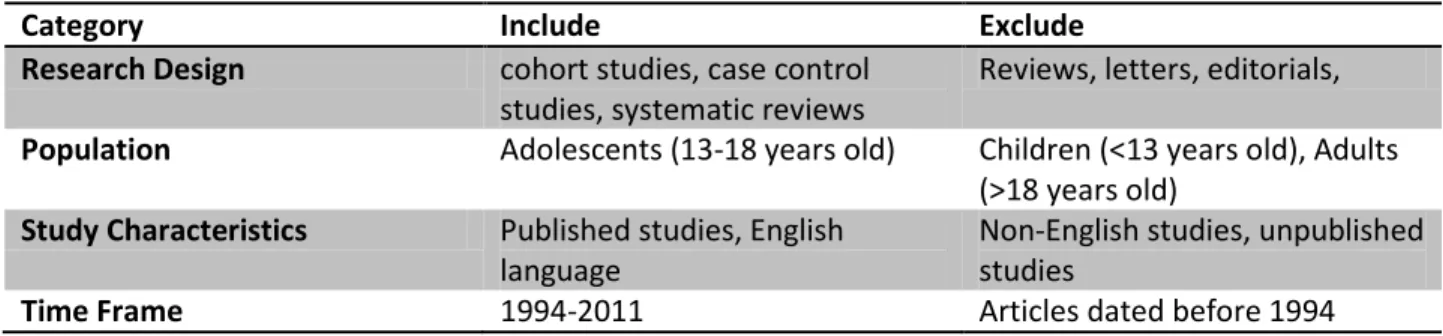
There are strict inclusion and exclusion criteria for this review. All of the articles had to
be published and written in the English language from 1994 until April 2011. The study
population of these articles also had to be 13-18 years of age. See Table 2 for a summary of inclusion and exclusion criteria.
Outcomes:
Numerous advances have been made over the past 60 years in the field of psychiatry,
starting in 1952 with the release of the Diagnostic and Statistical Manual of Mental Disorders
(DSM). The publication of this manual initiated the standardization of the definitions and
diagnostic criteria for mental health disorders. Since the initial release of the DSM, there have
been four updates to the manual, including the latest revision being released in 2000 (DSM-IV).
This manual provides the framework for many physicians to accurately identify and diagnose
10 | P a g e
diagnosis of a psychotic disorder as defined by the DSM-IV (18). The included articles do not
have to explicitly use the DSM-IV and a full psychiatric interview to confirm the diagnosis of a
mental disorder; however, the diagnostic scales and evaluations utilized in the studies must be
based on DSM-IV criteria.
“Psychosis” is a general term that the DSM-IV refers to as “delusions, any prominent
hallucinations, disorganized speech, or disorganized or catatonic behavior” (18). Delusions are
firmly held false believes that contradict the norms of a society or culture. Hallucinations are
usually referred to as false perceptions of any of the 5 senses, with the most common being
auditory. Disorganization of speech and behavior is indicated as a deviation of logical thought
and/or behavior processing and execution. The final characteristic of catatonic behavior is
defined as muscular tightness or rigidity.
Psychosis can be seen in many different psychiatric ailments including schizophrenia,
schizophreniform, schizoaffective, delusional, brief psychotic, and shared psychotic disorders.
Each of these ailments has its own criteria for diagnosis. Schizophrenia is the disorder that is
most associated with psychosis. It is a disturbance that has some level of persistence for at least
6 months, including at least one month of at least two or more active-phase symptoms, such as
delusions, hallucinations, disorganized speech, grossly disorganized or catatonic behavior, or
negative symptoms such as affective flattening, decreased speech, or an inability to initiate or
carry out goal directed activities (18). Schizophreniform disorder is an ailment that shares the
11 | P a g e
disorder is one to six months and there does not have to be a decline in social or occupational
functioning (18). Schizoaffective disorder is characterized by a severe mood episode such as
mania, depression, or a combination of the two, in addition to symptoms of delusions,
hallucinations, disorganized speech, grossly disorganized or catatonic behavior or negative
symptoms that was either preceded or followed by two weeks of delusions or hallucinations
(18).
Delusional and brief psychotic disorders are also two ailments that share some
component of psychosis. Delusional disorder is characterized by at least a one month period of
nonbizarre delusions (i.e., involving situations that could occur in real life such as being
followed, having an illness, or threatened) (18). Finally, brief psychotic disorders is defined by
an episode of delusions, hallucinations, disorganized speech or grossly disorganized or catatonic
behavior that lasts from 1 day to one month with an eventual recovery back initial baseline(18).
Refer to the appendix for a table of the psychosis definitions.
Time Frame:
Before the development of the DSM-IV the diagnosis of psychiatric diseaseswas based
mainly on expert consensus. The DSM-IV was published in 1994 after years of comprehensive
reviews of the psychiatric literature to form an empirical basis for psychiatric diagnoses.
Therefore this review will evaluate research articles that are dated from January 1, 1994 until
April 1, 2011. This time frame was selected with the aims of reducing the amount of
undiagnosed and misdiagnosed psychiatric ailments due to the lack of a researched based
12 | P a g e
The types of articles to be included in this review will include prospective and
retrospective cohort, case control, meta-analysis, systematic reviews and primary research
studies. Editorials, reviews, randomized controlled trials, and letters will not be included for
evaluation in this paper.
Table 1: PICOTS Table
Population: Adolescents aged 13-18 without clinically diagnosed psychosis (by DSM criteria)
Intervention: A predictor (or risk factors) for developing psychosis later on in life
Comparators: Adolescents with clinically diagnosed psychosis (by DSM criteria)
Outcomes: Development of psychosis as defined by DSM IV criteria
Time: 1994- May 2011
Studies: Retrospective and Prospective Cohort Studies, Case Control Studies, Meta-Analysis, Systematic Reviews
Table 2: Inclusion and Exclusion Criteria
Category Include Exclude
Research Design cohort studies, case control studies, systematic reviews
Reviews, letters, editorials,
Population Adolescents (13-18 years old) Children (<13 years old), Adults (>18 years old)
Study Characteristics Published studies, English language
Non-English studies, unpublished studies
Time Frame 1994-2011 Articles dated before 1994
Search Strategy:
Databases:
We conducted a PubMed (MEDLINE) search to identify all published articles relating to
13 | P a g e
Search terms:
The terms utilized in the search phrase included MeSH searching and key words. The
search phrase used to identify articles was “psychotic disorders AND (predictors OR risk
factors)”. “Psychotic disorders” was used as a search term because this general phrase
encompasses the numerous previously defined types of psychotic ailments. By using this MeSH
term, articles using different terminology such as psychosis, psychoses, schizoaffective, etc.
were also identified. There is not a MeSH or standardized term for predictors or risk factors.
Therefore, both terms were used with the word “or” to identify articles that contained either of
two expressions.
Limits:
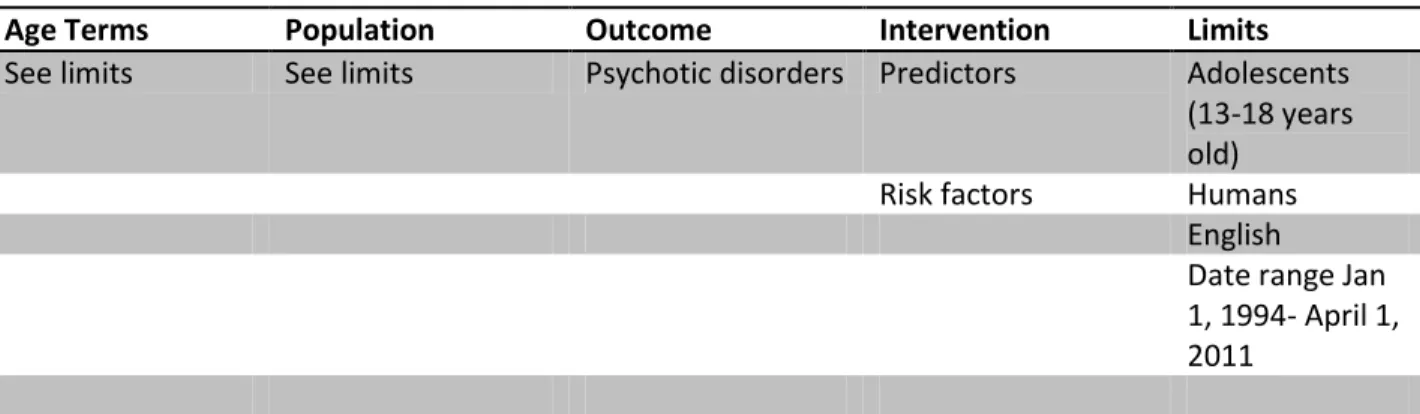
Limits were utilized to facilitate the identification of articles without having to explicitly
define these parameters in the search term. The study population characteristic limits in this
review were humans, aged 13-18. Other limits in the search included being written in the
English language and published from January 1, 1994 until April 1, 2011 (see Table 3 for search summary).
Table 3: Search Terms and Limits
Age Terms Population Outcome Intervention Limits
See limits See limits Psychotic disorders Predictors Adolescents (13-18 years old)
Risk factors Humans English Date range Jan 1, 1994- April 1, 2011
14 | P a g e
Quality Criteria:
To evaluate the quality of the selected studies in this systematic review, this paper will
model the U.S. Preventive Services Task Force (USPSTF) guidelines for determining quality of
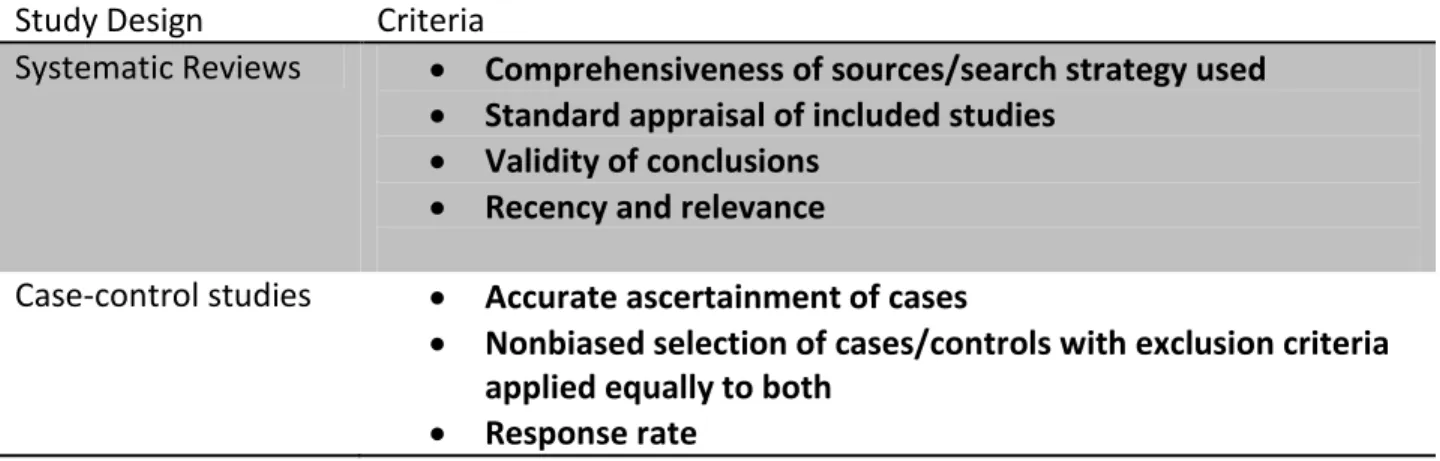
evidence of medical literature. On the individual study level, the USPSTF evaluates a study
based on the quality of the study design and the quality of the conduction of the study also
known as internal validity (19). The USPSTF created guidelines to determine internal validity for
the five major study designs: systematic reviews, case-control studies, randomized control
trials, cohort studies, and diagnostic accuracy studies (see Table 4). In this systematic review, an
overall grade of “good”, “fair”, or “poor” will be given to the selected studies to assess the
quality of the study design and the internal validity. The USPTF defines a “good” study as one
that meets all criteria for that study design, a “fair study” does not meet all criteria but does not
have any fatal flaws that invalidates its results, and a “poor” study contains a fatal flaw (see
Table 5) (19). Due to the subjectivity of this ranking scale, explanations for the grade will be
included where necessary.
Table 4: Guidelines for grading internal validity of studies
Study Design Criteria
Systematic Reviews Comprehensiveness of sources/search strategy used
Standard appraisal of included studies Validity of conclusions
Recency and relevance
Case-control studies Accurate ascertainment of cases
Nonbiased selection of cases/controls with exclusion criteria applied equally to both
15 | P a g e
Diagnostic testing procedures applied equally to each group Appropriate attention to potential confounding variables
Randomized control trials (RCTs) and cohort studies
Initial assembly of comparable groups:
o For RCTs: adequate randomization, including
concealment and whether potential confounders were distributed equally among groups
o For cohort studies: consideration of potential
confounders with either restriction or measurement for adjustment in the analysis; consideration of inception cohorts
Maintenance of comparable groups (includes attrition, crossovers, adherence, contamination)
Important differential loss to follow-up or overall high loss to follow up
Measurements: equal, reliable, and valid (includes masking of outcome assessment)
Clear definition of interventions All important outcomes considered
Analysis: adjustment for potential confounders for cohort studies, or intention to treat analysis for RCTs
Diagnostic accuracy studies
Screening test relevant, available for primary care, adequately described
Study uses a credible reference standard, performed regardless of test results
Reference standard interpreted independently of screening test
Handles indeterminate results in a reasonable manner Spectrum of patients included in the study
Sample size
Administration of reliable screening test
*Adapted from Current Methods of USPSTF (19)
Table 5: Study rankings based on quality criteria
Ranking Criteria
Good Meets all criteria for study design; very low potential for biases
Fair Does not meet all criteria for study design; likely potential for biases; does not have any fatal flaws that would invalidate its results;
Poor Contains a fatal flaw that would invalidate its results; very high potential for biases.
16 | P a g e
Results:
Study Selection
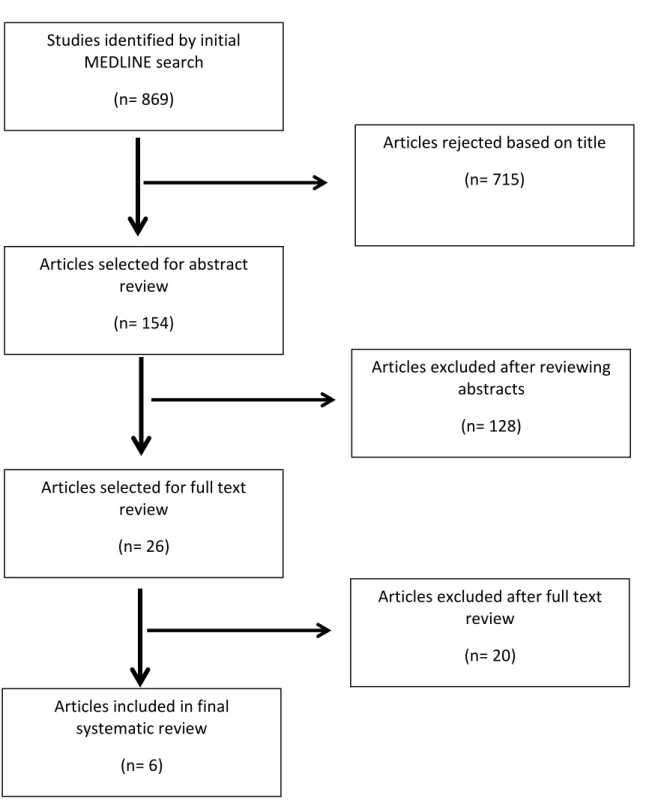
The search conducted on MEDLINE with the aforementioned search criteria produced
867 results. An author read through the titles of the articles and excluded those that did not
pertain to the research topic. After rejecting these articles, 154 articles were selected to
undergo an abstract review. Of these articles, 26 papers were chosen for a further full text
analysis. After this review, 6 articles were selected to be included in this systematic review.
To increase the number of eligible articles to be included in this systematic review, the
inclusion criteria were slightly modified. We allowed articles that selected sample populations
that fell outside of our adolescent age range; however, the mean age of the participants
included in the study had to fall between 13 and 18 years of age. We also allowed the use of
“high risk” study populations, if the criteria for these groups were based on a set of defined and
standardized measures, such as scoring a certain grade on a standardized scale.
The main reason behind the substantial exclusion of articles was based on the study
design. The majority of articles did not focus on the adolescent population; most focused on
the adult population. Some articles also did not base the diagnosis of a psychotic disorder on
the DSM-IV. Many papers used the DSM-III, non-DSM-IV based evaluation scales, or old hospital
records that preceded the development of the DSM-IV. However, we did allow articles that
confirmed the diagnosis of psychosis with the use of International Classification of Disease
17 | P a g e
Figure 1: Flow Chart of Study Selection
Studies identified by initial MEDLINE search
(n= 869)
Articles selected for abstract review
(n= 154)
Articles rejected based on title
(n= 715)
Articles selected for full text review
(n= 26)
Articles excluded after reviewing abstracts
(n= 128)
Articles excluded after full text review
(n= 20)
Articles included in final systematic review
18 | P a g e
Evaluation of Selected Studies
Mittal, Walker, Bearden, et. al conducted a longitudinal prospective study of
adolescents in order to assess the relationship between hyperkinesia and decreased cognitive
function with the likelihood of conversion to Axis I psychosis. Their study sample consisted of 90
“high risk” adolescents aged 11 to 29 who were recruited from Emory University and University
of California, Los Angeles (UCLA) through the use of psychoeducational talks for health care
clinics, hospitals, and schools, in addition to a website that described prodromal symptoms
(20). The definition of “high risk” in this study included scoring “moderate” levels of positive
symptoms on the Structured Interview for Prodromal Symptoms (SIPS), and/or a decline in
global functioning in the presence of schizotypal personality disorder, and/or a family history of
schizophrenia (20). The study excluded participants who had a neurological disorder, mental
retardation, substance abuse or addiction within 6 months of baseline, and a history of
significant head injury (20).
The authors in this study evaluated Axis I disorders, neurocognitive measures, and
movement abnormalities. They assessed Axis I disorders through the use of Structured Clinical
interview for DSM-IV Axis Disorders or the Kiddie Schedule for Affective Disorders and
Schizophrenia (for ages 14 and under) (20). The authors varied in their protocol for
neurocognitive measures between the two sites. The Wechsler Intelligence Scale (for Children
and Adults), Wechsler Memory Scales, and the vocabulary subtests were administered at both
19 | P a g e
matrix reasoning subtest was only administered at the UCLA site, both which assessed general
neurocognitive function. And finally the movement assessment was evaluated using the
Dyskinesia Identification System: Condensed User Scale from videos of the participants during
their initial clinical interviews. The other assessments were utilized at baseline, then annually
for 2 years.
The analysis of the results from the study demonstrated some associations between
neurocognitive measures, movement abnormalities, and psychosis. Of the 90 participants in the
study, 24 (26.67%) individuals did convert to psychosis (20). The study demonstrated that there
were statistically significant associations between hyperkinetic upper body region movement
disorders and neurocognitive functions, such as poorer ratings on verbal comprehension,
perceptual organization (block design), and immediate and delayed auditory logical memory
(20). Facial region movements did not show a statistically significant relationship with
neurocognitive function (20). The authors also used discriminant function analyses to
determine that movement abnormalities and neurocognitive deficits significantly differentiated
those participants who did convert and those who did not. They estimated that the
discriminant function was able to correctly classify 72.3% of the study sample (76%
non-converted, 60.0% converted) as converted or nonconverted (20). They estimated that this
function has 76.0% sensitivity, 60.0% specificity, 86.3% positive predictive value, and 43.0%
negative predictive value (20). They used the leave one out cross validation technique to
determine that this classification would correctly identify 69.2% (74.0% not converted, 53.3%
20 | P a g e
due to its adequate study design and comparability between the groups. One of the flaws in the
study design was the lack of standardization of neurocognitive protocol between the sites.
However, despite the discrepancy between the sites, both of the differing tests evaluated the
same neurocognitive domain of perceptual organization. The authors also demonstrated
comparability between the groups through the use of t-tests and chi square tests. They
concluded that there were no statistically significant differences between the diagnostic
group’s age, parental education, sex ratio, or medication. When comparing between study
sites, there was not a statistically significant differences in gender or education. However, there
were statistically significant differences in age. The statistical analyses also adjusted for sex and
medication use, which did not significantly alter the magnitude or direction of association.
Another study performed by MacCabe, Lambe, Cnattingius, et. al attempted to identify
whether or not school performance at age 16 is associated with adult schizophrenia and other
psychoses. The authors conducted a large population-based historical cohort study with the use
of the Swedish National Register (21). This register contains all the school grades for all
students who graduated from the final year of compulsory education, which is until June of the
calendar year in which they turn 16 and take their national examinations to evaluate their
eligibility for upper secondary education. The registry contained 907, 011 individuals from 1988
to 1997 (21). After eliminating those who had a parent born outside of Sweden, or had died or
emigrated at any time prior to the start of the follow up period, the study population was 715,
21 | P a g e
In order to assess the diagnosis of psychosis in this study population, the authors
utilized the Swedish Hospital Discharge Registry, which contains details such as diagnoses,
admission information, and discharge dates for patients since 1973(21). The authors used this
database to identify episodes of schizophrenia, schizo-affective, and other non-affective
psychoses through the use of ICD 9 and ICD 10 codes (21). The authors followed this registry
until December 31, 2003(21).
Cox proportional hazard models were used to calculated hazard ratios, with Z scores
representing GPA ranges in 4 different categories (21). The authors also analyzed the hazard
ratios for schizophrenia, schizo affective disorder, and other psychoses in 3 different models
adjusting for different variables such as sex, paternal and maternal age at birth, highest
parental education, socio-economic status, etc. (21).
The study showed associations between grade point averages and future diagnoses of
schizophrenia, schizo-affective disorder, and other psychosis (21). The individuals who scored
low grades had statistically significant hazard ratios (95% CI) of 3.72 (2.73-5.08), 3.81
(1.80-8.06), and 2.82 (2.16-3.69) for schizophrenia, schizo-affective disorder, and other psychoses,
respectively, as compared to average students (21). Those with moderately poor grades had
statistically significant hazard ratios (95% CI) of 1.83 (1.46-2.29), 2.69 (1.67-4.33), and 2.05
(1.74-2.42) for schizophrenia, schizo-affective disorder, and other psychoses as compared to
average grade individuals (21). These hazard ratios varied little and stayed significant after
22 | P a g e
compared to individuals of with average grades (21).
The study attained an overall grade of “fair” in the quality assessment analysis. The
study had some limitations that can modify the interpretation of the results to the study. For
instance, the study attained the diagnosis of psychosis through the use of hospital records. This
methodology would likely skew the results towards to the null, because individuals who were
treated entirely outside of the hospital would be missed. Another possible flaw could be in the
diagnosis of the psychosis in the study. The study used a hospital registry that contained data
from 1973 until December 31, 2003. The DSM-IV was created in 1994. Therefore, some
diagnoses of psychiatric ailments could have been misdiagnosed before this time. The authors
in the study were also unable to adjust on evidence based risk factors for psychosis, such as a
family history. However, the authors did an exceptional job of adjusting for numerous
confounders in the study. Therefore, despite these limitations, the study was well designed and
conducted. These results do not allow physicians the ability to classify high risk individuals out
of the general population; however, this information could be used to raise the index of
suspicion of a psychotic disorder in a person who has additional signs or risks for psychosis.
A case-control study performed by Cutajar, Mullen, Ogloff, et. al, attempted to identify
whether or not child sexual abuse (CSA) is a risk factor for later psychotic disorders. This study
used a cohort of 2759 individuals who had a history of sexual abuse when younger than 16
23 | P a g e
Victorian Institute of Forensic Medicine, which has provided medical examinations for
individuals in the state who had suspected child sexual abuse since 1957 (22).
The cases were categorized as contact or penetration abuse based on the history
provided by the child or other individuals, in addition to the examination findings and
laboratory analysis. All investigated cases of CSA prior to age 16 from 1964 to 1995 were
included in the study. The authors identified the control group from a random sample of 4,938
Victorian residents on the electoral role (22). Voting and voter registration is compulsory in
Victoria, with more than 93% of individuals older than 18 appearing on the role (22).
The authors identified diagnoses of schizophrenic disorders (schizophrenia,
schizoaffective disorder, and delusional disorders) and other psychoses (affective psychosis,
brief psychosis, drug-induced psychosis, and nonspecific psychosis) through the use of the
Victorian Psychiatric Case Register (22). This register allows healthcare providers the ability to
record the date, nature of the contact, duration of contact, diagnosis if made, and treatment, if
any, that was provided for their patients (22).
The authors conducted two analyses: one to compare the diagnoses of psychoses
between the CSA subjects and the controls and the other to compare the risk of the developing
a psychotic disorder based on accumulating aggravating factors in the CSA cohort. The study
demonstrated that individuals who had a history of CSA were at a statistically significant higher
risk of seeking out mental health services, be diagnosed with schizophrenia and all forms of
psychoses with ORs (95% CI) of 4.1(3.4-4.8), 2.6(1.6-4.4), 2.1(1.4-3.1), respectively, as compared
24 | P a g e
penetrated and >12 years old, or were penetrated and >12 years old and had >1 abuser with
ORs (95% CI) of 3.3(2.0-5.5), 4.4(2.6-7.4), and 12.5(3.4-45.3), respectively as compared to other
CSA individuals (22). The risk of developing any psychoses was also statistically significant if CSA
individuals were penetrated, penetrated and >12 years old, or penetrated, >12 years old, and
>1 abuser with ORs (95% CI) of 2.6(1.7-3.9), 3.1(2.0-4.8), 14.9(8.4-26.3) (22).
Despite the fact that this study showed strong associations of CSA and psychoses, the
overall grade for this study was poor. This grade was due to significant flaws in the matching
criteria between the cases and the controls. The authors only matched based on age and sex.
They did not take into account other confounders such as socioeconomic status, education
level, or other variables that could have affected the study population. Additionally, the authors
did not provide any tables providing the demographics of the controls and cases to support
their rationalizing behind only matching based on two variables. By not including demographic
information of individuals with a history of CSA, they are assuming that this population is the
same as the general population, which may or may not be true. However, the CSA individuals
were identified through contact with police or child protective services, which may equate to
these families being at a higher risk for more disrupted or dysfunctional families to gain the
attention of these services. To perform a strong case control study, one must take into account
different variables which could cause selection bias due to the failure to account for relevant
25 | P a g e
Lencz, Smith, McLaughlin, et. al, performed a case control study to examine the
relationship of neurocognitive deficits and clinically high risk adolescents for schizophrenia. The
authors stated numerous hypotheses: 1) the IQ levels of clinically high risk subjects for
psychosis would be lower than predicted in their premorbid function; 2) there would be greater
neurocognitive deficits seen in the high risk individuals as compared to a healthy cohort but the
magnitude of this deficit would be less than what has been observed in other studies of
patients with schizophrenia; 3) the verbal memory and executive functioning/working memory
domains of the neurocognitive tests would be more impaired than the other domains; and 4)
one or more deficits in the neurocognitive tests can be used to predict future episodes of
psychosis (23).
The study used clinically high risk patients that were recruited for research from the
clinical arm of the Recognition and Prevention (RAP) program as the cases. They defined “high
risk” as scoring a 3, 4, or 5 (moderate, moderately severe, or severe but not psychotic) on any
Scale of Prodromal Symptoms (SOPS) positive symptoms (23). The controls in the study were
recruited from announcements in local newspapers and within the medical center. The controls
were allowed to be included in the study if they did not have a diagnosis of past or present
DSM-IV psychotic disorders, meet a diagnosis of Axis II disorders that have been associated with
the schizophrenia spectrum, have a first degree relative with a diagnosed Axis I psychotic
disorder, and did not meet any criteria for any clinical high subgroup within the RAP program
26 | P a g e
their neurocognitive functioning and the presence of psychosis. All subjects received numerous
tests at baseline to evaluate their premorbid IQ, current full-scale IQ, and six neurocognitive
domain scores (verbal memory, executive functioning/working memory, attention, motor
speed, visuo-spatial processing, and language). The RAP cohort was followed for the
progression of psychosis through the use of the SOPS regularly every 6 to 9 months at after
entry into the RAP program, in addition to at the termination of treatment. (Refer to Appendix
for full measuring details)
The results from the study identified numerous relationships between neurocognition,
being at high risk for psychosis, and being diagnosed with psychosis. In comparison with the
healthy control group, the RAP cohort had statistically significant lower premorbid and full scale
IQs (23). The RAP group also had statistically significant deficits in all neurocognitive domains
except for visuo-spatial functioning in comparison to the health controls (23). Verbal memory
and executive functioning/working memory were significantly more impaired in the RAP cohort
as compared to the other domains, while visuo-spatial was significantly less impaired (23). After
running a series of analyses, the authors observed that verbal memory and total attenuated
positive symptoms (measured by SOPS) could significantly predict the conversion to psychosis
(23). Using baseline scores of verbal memory and SOPS scores, they predicted that they could
classify 80% of cases correctly, with a sensitivity of 82%, specificity of 79%, positive predictive
27 | P a g e
This study received an overall grade of “good”. The authors clearly defined their
hypotheses and measured the variables of the study in a standardized and systematic manner.
The manner in which the controls were chosen ould cause minimal selection bias; however, the
authors addressed this issue by stating and showing important demographics that could have
been possible confounders were similar between the two groups, such as age, education levels,
socioeconomic status, and geographical region. The authors did numerous subgroup analyses
that could cause false positives due to multiple testing; however, the authors stated their
hypotheses early in the article and performed only the necessary tests to address these
theories. Overall, the study did not have a high probability for types of biases or confounders
that would invalidate the results of this article.
Cannon, Cadenhead, Cornblatt, et. al conducted a longitudinal prospective study to
evaluate the risk of conversion to psychosis and to create a prediction algorithm for future
conversion to psychosis. The study gathered a group of 370 participants from 8 research
centers across the country through the use of clinical referrals. All of the participants in the
study were classified as “prodromal” which means that they met the Structured Interview for
Prodromal Syndromes (SIPS) criteria for a prodromal syndrome (scoring a 3-5 on a 7 point
severity scale of attenuated positive symptoms in 1 or more of 5 possible categories), or by
having a genetic risk for a psychosis and deterioration of 30% or greater on the General
Assessment of Functioning Scale in the past 12 months (24).
The main outcome of the study was conversion to psychosis according to SIPS criteria.
28 | P a g e
deterioration.
The results from the study ascertained information on the risk and prediction algorithm
of the conversion to psychosis. Of the 370 subjects, 82 individuals converted to psychosis (24).
The incidence rate of conversion demonstrated an overall decelerating trend during the follow
up period with a highest rate of 13% during the first 6 months (24). After the 77 potential
predictor variables were examined by univariate and multivariate analyses, genetic risk for
schizophrenia with relevant functional deterioration, unusual thought content,
suspicion/paranoia, social impairment, and history of any drug abuse were significantly related
to conversion to psychosis(24). Among the tested algorithms, three baseline variables of
genetic risk for schizophrenia with relevant functional decline, higher levels of unusual beliefs
or suspiciousness, and greater social impairment had a positive predictive value of 74%-81%
for conversion to psychosis as compared to a positive predictive value of 35% for conversion
with SIPS criteria alone(24).
The overall grade for this study is “fair”. This grade is mainly attributed to the lack of
exclusion criteria and the selection of a subgroup of the participants to be entered into a
randomized control treatment with an antipsychotic or placebo. However, the authors did
analyze this subgroup apart from the entire group to rule out possible confounding due to their
inclusion in the study. Overall the study did not have any fatal flaws that would invalidate its
29 | P a g e
Menezes and Milovan performed a literature review to assess the diagnostic evolution
and predictive variables of diagnosis and outcome in first episode psychosis in adolescents and
adults. The authors conducted this search using MEDLINE, Psychinfo, PubMed, and selected
bibliographies (25). The inclusion criteria for this review were being published in English from
1989 to 1999, inclusion of first episode psychosis data, subjects 13 years and older, and
measurements of variables related to diagnosis or outcome over time(25). The authors
excluded articles that contained only 1 diagnosis only without consideration of progression to
other diagnosis (25).
The authors identified certain trends for the selected articles regarding adolescents and
the development of psychosis (25). The authors identified that there was greater diagnostic
instability in the adolescent population for psychiatric disorders as compared to adults,
personality and global assessment of functioning are the best predictors for diagnosis of
psychosis, and global assessment functioning is the best predictor of outcome of psychosis in
the both adolescents and adults (25).
Despite the identification of trends in the studies selected in this systematic review, the
study earned an overall grade of “poor” due to fatal flaws that invalidated its results. The
authors fail to include a flow chart for the selection of articles or provide the number of
selected and rejected articles. This information is essential in a well conducted literature review
to assure the reader that the review was performed in a systematic and reproducible manner.
The authors also fail to evaluate the selected articles or provide any information on the
30 | P a g e
demonstrated numerous flaws in its methodology, evaluation, and presentation of results,
which does not provide the reader with any useful information from the results that could be
applicable to individuals in the general or clinical setting.
Discussion:
The selected articles included two longitudinal prospective studies, two case-control
studies, one population based historical cohort study, and one literature review. All of the
articles identified some associations between specific measured variables and the onset of
psychosis in the adolescent population. However, these relationships do not equate to these
findings being applicable to the general adolescent population.
Half of the selected articles used “high risk” individuals as their study populations. Using
these types of individuals in studies does not allow the results to be easily applicable to the
general population. If an individual is characterized as “high risk” then they are usually to some
extent already afflicted with a mental disorder. Therefore, the studies that use these
populations are not entirely predicting the risk of developing a mental disorder; but rather,
these studies predict the risk of progression or increasing severity of illness.
Therefore to answer the original question of “is there a clinically significant method to
predict future episodes of psychosis in adolescents without clinically diagnosed psychosis”, the
only studies that can be applied to the general population are the ones that involve a general
cohort population that has not been screened for prodromal or high risk categories. After
excluding the poorly rated article, the only predictor for psychosis that can be applied to the
31 | P a g e
unreasonable for healthcare providers to use grades to identify individuals who are at high risk
for developing a mental disorder in the general population. However, this information could
raise the index of suspicion of a psychotic disorder in an individual with subtle prodromal
symptoms of psychosis and/or a genetic predisposition for psychosis.
The implication of this systematic review for clinical practice is that there is no clear,
definitive predictor for future episodes of psychosis for the general adolescent population. The
current research on this topic reveals that the majority of predicting algorithms only apply to a
subset of the adolescent population. Physicians will be unable to clearly draw the line between
those who are at a high risk for developing future episodes of psychosis in the general
population from those who are not by solely using the associations that were found from the
selected research articles.
Future Studies
Although the information obtained from the majority of these articles cannot be applied
to the general population, these results can be the framework for future studies of predictors
for future episodes of psychosis in the general population. In order to make a prediction
algorithm for the general adolescent population, a randomized group of adolescents from the
general population must be utilized. This study population would be utilized in a longitudinal
prospective cohort study. These groups would be followed for an extended amount of time
with the main outcome of developing of a psychotic disorder being the measured periodically.
From the information attained from the studies selected in this literature review certain
32 | P a g e
variables for prediction algorithms.
This methodology would serve as a framework to produce a prediction algorithm for the
general adolescent population. However, there are numerous obstacles with performing a
longitudinal prospective cohort study like this. The monetary and time commitment for
following a substantial number of adolescents for many years would be prohibitive. Also, the
regular follow-ups with the study population would prove to be an additional hindrance to the
study. However, until there is a study that is conducted in this manner, it is unlikely that
physicians would be able to attain a clinically relevant prediction for future episodes of
33 | P a g e
Author/Year Mittal, Walker, Bearden, et. al Study Question &
Research Design
2-year longitudinal prospective study of adolescents at high risk for developing a psychotic disorder Hypotheses:
1. Hyperkinesia will be associated with deficient cognitive function among youth with a prodromal risk syndrome. 2. Baseline movement-related and cognitive markers will increase the ability to identify those high risk participants who
will eventually convert to Axis I psychosis.
Source Population Patients were recruited by staff from UCLA and Emory via psychoeducational talks for health care clinics and schools and a website describing prodromal symptoms.
Inclusion Criteria: must meet “high risk” characteristics: moderate levels of positive symptoms as defined by the
Structured Interview for Prodromal Symptoms (SIPS), and/or a decline in global functioning accompanying the presence of schizotypal personality disorder, and/or a family history of schizophrenia.
Exclusion Criteria: presence of a neurological disorder, mental retardation (Full Scale Intelligence Quotient score <70), substance abuse or addition within 6 months of baseline, and history of significant head injury with the exception of mood, anxiety, attention deficit, and other disruptive behavior disorders.
Initial
Comparability of Groups
No randomization.
Groups are comparable on age, parental education, and baseline movement and neurocognition tests.
Participants who did not convert were more likely to be on medication (stimulants, antidepressants, and antipsychotics).
Drop outs, adherence, cross overs
There was no mention of drops outs in the study. 24 of the 90 participants converted to an Axis I disorder.
Potential for selection Bias
Minimal/Moderate: The authors did perform t-test and chi square analyses and they determined that there were not significant differences of age or parental education of the tests, and there was not a significant difference between medication use and stimulant use between those who converted and those who did not.
Measurement Criteria
Neurocognitive measures: assessed through the use of the Wechsler Intelligence Scales for Children, 3rd ed. (ages 11-15) and the Wechsler Adult intelligence Scales, 3rd ed. (ages 16 and older), and selected subtests: vocabulary (at both sites), block design (at Emory site), matrix reasoning (at UCLA site), Wechsler Memory Scale (at both sites).
Movement Abnormalities: coded from videotapes of participants during the initial clinical interviews. The dyskinesia identification system: condensed user scale was used to code involuntary movements. Raters were blinded to the participant’s clinical status, and rating was conducted on muted videotapes.
Axis I disorders: Structured Clinical Interview for DSM-IV Axis I Disorders or the Kiddie Schedule for Affective Disorders and Schizophrenia (ages 14 and under)
34 | P a g e
Measurement Bias conducted (ex. UCLA conducted matrix reasoning while the Emory site did not) Potential
Confounders
The use of medication in the participants (60% of the participants were being treated during the study)
Data Analysis Chi-square and t tests were used to check for demographic differences between groups and sites. Medication use (stimulants, antidepressants, and antipsychotics) was examined as covariates. Movement abnormalities and
neuropsychological test performance associations were assessed through partial correlations. And multiple discriminant function analyses were utilized to assess discriminative ability of neurocognitive and movement variables in predicting conversion.
Results 24/90 (26.67%) of participants converted to an Axis I psychotic disorder (schizophrenia; n=5), (schizoaffective disorder; n =9), (mood disorder with psychotic features; n=6), (psychosis not otherwise specified; n=4).
Partial Correlation between movement abnormalities and neurocognitive dysfunction: Verbal comprehension vocabulary 0.01, facial region movements (FRM)), 0.28‡; upper body region movements (UBRM)); Block design 0.08; FRM), (-0.44‡; UBRM); Matrix reasoning (0.16; FRM), (0.07; UBRM); Immediate auditory logical memory I (0.14; FRM), (-0.25†; UBRM); Delayed Auditory Logical Memory II (.05; FRM), (-0.23†; UBRM); Full Scale Intelligence (.03 FRM), (-0.29‡;UBRM);
Discriminant function analysis:
Wilks’ lambda Λ= 0.81, Χ² (5, n=65)= 12.48, p = 0.03
Correlation coefficients (discriminant function): Movement abnormality: FRM (0.16), UBRM (0.93); Neurocognition: Logical memory I (-0.42), Logical memory II (-0.34), Full scale intelligence quotient (-0.26)
Converted group(M= 0.86); nonconverted group (M=-0.25)
Correctly classified 72.3% (76.0% not converted, 60.0% converted) of participants as converted vs. nonconverted Test characteristics: sensitivity (76.0%), specificity (60.0%), positive predictive value (86.3%), negative predictive value (43.0%)
†= p<-.05; ‡= p,0.01 Clinical/Public
Health Importance
Significant: A link between movement abnormalities and cognitive deficits can give scientists a deeper understanding of the underlying neural process linked with the early etiology of psychosis.
Internal validity grade
Good: The authors did use numerous analysis modalities to test for potential confounders such as age, parental education, and medication use.
35 | P a g e
Overall Grade Good: This article did not include any fatal flaws in its methodology or implementation that would invalidate the results. Other Comments Funding: National Institute of Mental Health Grant and the National Institutes of Health Grants. Additional support from a
gift to the University of California Los Angeles Foundation by Garen and Shari Staglin. Author/Year MacCabe, Lambe, Cnattingius, et. al (2008)
Study Question & Research Design
A population-based historical cohort study of eight Swedish national school registries of 907,011 participants from 1988 to 1997.
Hypothesis:
School performance at age 16 is associated with risk of adult schizophrenia and other psychoses
Source Population Participants were obtained from eight Swedish national registries from 1988 to 1997. This registry contains the individual school grades for all pupils graduating from the final year of compulsory education until June of the calendar year in which they turn 16 (grade 9), when they sit national examinations to assess their qualifications for upper secondary education (ages 16-18).
Inclusion Criteria: Swedish citizens who had completed compulsory education.
Exclusion Criteria: if individuals had either parent born outside Sweden (n=181, 596), or if they had died (n=235), or emigrated (n=9,404) at any time prior to the start of the follow up period (including those that had later returned to Sweden). Also excluded individuals admitted with an index diagnosis during the year following the examinations (n=375). Initial
Comparability of Groups
No randomization, large population based historical cohort.
There was no baseline sample characteristic data before diagnosis analysis. Drop outs,
adherence, cross overs
9,404 individuals emigrated and 235 subjects died. Missing data on 2905 subjects (0.3%)
Potential for selection Bias
Minimal: The study used a national population based cohort that included all citizens that completed compulsory education.
Measurement Criteria
School performance: Swedish national school registries based student grades on a scale of “A” (excellent) to “E” in each of 16 compulsory subjects. The grading system followed a normal distribution and the grades were nationally
standardized.
36 | P a g e
Potential for Measurement Bias
Moderate: Through the use of ICD-9 and ICD-10 codes for psychiatric ailments prior to the utilization of DSM-IV, could have led to misdiagnosis of these mental disorders.
Potential Confounders
The authors identified numerous possible confounders a priori. These include pregnancy and birth characteristics, advanced parental age, parental education level, socio-economic status, and spring birth.
Data Analysis Cox proportional hazard models calculated hazard ratios for hospital admission for each disorder. GPAs were converted to Z score categories as the exposure.
Performed 3 Model analyses adjusted for different variables. Model 1: adjusted for sex
Model 2: adjusted for sex, advanced paternal or maternal age (<40 @ birth), highest parental socio-economic status, highest parental education, and spring birth.
Model 3: adjusted for all the above variables and low birth weight, low birth length and low head circumference for gestational age, preterm delivery, parity greater than 2 and hypoxia.
Results N= 725, 401 individuals. Mean follow up time 9.5 years. 1,525 individuals were diagnosed with a psychotic disorder. Z scores: <-2; -2 to -1; -1 to +1 (reference group); +1 to +2; >+2 (these were based on GPA scores ( >+2 is the highest and <-2 is lowest)
Model 1 HR (95% CI):
Schizophrenia: <-2, 3.72†(2.73-5.08); -2 to -1, 1.83†(1.46-2.29); +1 to +2, 0.94(0.69-1.28); >+2, 0.00
Schizo-affective: <-2, 3.81†(1.80-8.06); -2 to -1, 2.69†(1.67-4.33); +1 to +2, 0.68(0.31-1.50); >+2, 0.00
Other psychoses: <-2, 2.82†(2.16-3.69);-2 to -1, 2.05†(1.74-2.42) ; +1 to +2, 1.14(0.93-1.40); >+2, 1.40 (0.79-2.48) Model 2 HR(95%CI):
Schizophrenia: <-2, 3.87†(2.80-5.34);-2 to -1, 1.94†(1.53-2.46); +1 to +2, 0.81(0.59-1.11); >+2, 0.00
Schizo-affective:<-2, 4.08†(1.89-8.84);-2 to -1, 2.86†(1.74-4.70); +1 to +2, 0.61(0.27-1.37); >+2, 0.00
Other psychoses: <-2, 3.06†(2.32-4.02);-2 to -1, 2.22†(1.88-2.64); +1 to +2, 0.99(0.80-1.22); >+2, 1.11(0.62-1.98) Model 3 HR(95% CI):
Schizophrenia: <-2, 3.87†(2.80-5.34);-2 to -1, 1.94†(1.53-2.46); +1 to +2, 0.81(0.59-1.11); >+2, 0.00
Schizo-affective: <-2, 4.18†(1.93-9.06);-2 to -1, 2.92†(1.78-4.79); +1 to +2, 0.60(0.27-1.35); >+2, 0.00
Other psychoses: <-2, 3.04†(2.31-4.00);-2 to -1, 2.22†(1.87-2.63); +1 to +2, 0.99(0.80-1.22); >+2, 1.11(0.62-2.00)
37 | P a g e
Clinical/Public Health Importance
Moderate: If we are able to use adolescent’s school performance as future indicators for psychosis, then physicians can have a heightened awareness for kids with learning disabilities for mental health disorders.
Internal validity grade
Good: The authors did an adequate job in the design and implementation of this study. They also adjusted the analyses for multiple confounders.
External Validity Good: Although this was a study that was conducted in Sweden, it can have implications to the general US adolescent population too.
Overall Grade Fair: This was a well-constructed and implemented study; however, the uncertainty in the accuracy of the diagnosis of psychiatric ailments may have altered the results.
38 | P a g e
Study Question & Research Design
Case Control Study
Hypothesis: Child sexual abuse is a risk factor for later psychotic disorders
Source Population
Child sexual abuse cases were identified via the record of the Police Surgeon’s Office and the Victorian Institute of Forensic Medicine, which has provided medical examinations in Victoria, Australia since 1957. These cases were referred from the police and child protection services whenever the possibility of sexual penetration was suspected. (n=2759)
Comparison group was selected from a random sample of 4938 Victorian residents on the electoral role. Voting and voter registration is compulsory. (n=2677)
Inclusion Criteria: Cases were defined as contact abuse or penetration on the basis of the history provided by the child or other informants, together with examination findings and laboratory analysis. All investigated cases of sexual abuse prior to age 16 years between 1964 and 1995 were included.
Exclusion Criteria: None stated Initial
Comparability of Groups
Cases were matched with controls based on sex and age. No additional information provided.
Drop outs, adherence, cross overs None stated Potential for selection Bias
Substantial: The study matched based on only on sex and age. However, the study does not give any demographic
information about the cases. Therefore, it is possible that cases could have varied from the general population in different demographics that the authors could have used to strengthen the matching protocol.
Measurement Criteria
Mental health histories: Psychiatric information was obtained from the Victorian Psychiatric Case register, which is a state-wide registry. This register contains records of the dates of admission, nature of the contact, duration of the contact,
diagnosis if made, and treatment (if any). The mental disorders were identified through the use of ICD-9 and ICD-10 codes. For complicated diagnosis assignments where some cases were diagnosed with a psychotic disorder on some occasions and not others, cases where 2 out of 3 occasions resulted in a diagnosis of a psychotic disorder were included and those cases with widely varying diagnostic categorization but an occasional entry of a psychosis were excluded.
39 | P a g e
Measurement Bias
priority is major mental illnesses. It generally does not include private services. However, the authors do note that there are incentives for clinical services to maintain full data entry due to funding opportunities. Also the private services make a restricted and limited provision for those with schizophrenic disorders.
Potential Confounders
The use of clinician diagnosis rather than interviewer-applied research criteria could have increased the likelihood of individuals being misdiagnosed as schizophrenic instead of severe posttraumatic syndrome.
The CSA victims were identified through contact with police and child protection services. These individuals may represent a subset of all CSA victims, because they are more likely to come from disrupted and dysfunctional families that attract attention of these protective services.
Data Analysis Groups were initially compared using t tests and chi-squared tests of association. Univariate differences were converted into odds ratios and 95% confidence intervals. Multivariate logistic regression was used to determine abuse characteristics
associated with psychosis. The ratio likelihood test was used to fit the interaction terms to the models for both sex and penetration.
Results
Risk of Schizophrenia OR(95% CI); All CSA subjects (n=2,759), Cases without penetration(n=1022); Penetration(n=1737); Penetration and >12 yo (n=990); Penetration and >12 yo and >1 abuser(n=58)
Total: all CSA subjects (n=53) 2.6 (1.6-4.4); Cases without penetration (n=11) 1.4(0.7-2.7); Penetration(n=42) 3.3(2.0-5.5); Penetration and >12 yo (n=32) 4.4(2.6-7.4); Penetration and >12 yo and >1 abuser(n=5) 12.5(3.4-45.3)
Males: all CSA subjects(n=12) 1.7(0.7-4.1); Cases without penetration(n=1) 0.3(0.1-2.3); Penetration(n= 11)2.8(1.2-6.8); Penetration and >12 yo (n=7) 4.5(1.7-11.6); Penetration and >12 yo and >1 abuser (n=2) 15.4(4.4-53.9)
Females: all CSA subjects(n=41) 3.2(1.7-5.9); Cases without penetration(n=10)2.2(0.9-4.9); Penetration(n=31) 3.8(2.0-7.1); Penetration and >12 yo (n=25) 5.1 (2.7-9.5); Penetration and >12 yo and >1 abuser (n=3) 11.9 (4.3-32.8)
Risk of Any Psychosis OR(95% CI); All CSA subjects (n=2,759), Cases without penetration(n=1022); Penetration(n=1737); Penetration and >12 yo (n=990); Penetration and >12 yo and >1 abuser(n=58)
Total: All CSA subjects (n=78) 2.1(1.4-3.1); Cases without penetration(n=18) 1.3(0.7-2.4); Penetration(n=60)2.6(1.7-3.9); Penetration and >12 yo (n=41) 3.1(2.0-4.8); Penetration and >12 yo and >1 abuser(n=10) 14.9(8.4-26.3)
Males: All CSA subjects (n=21) 2.3(1.1-4.9); Cases without penetration(n=4) 1.0 (0.4-2.7); Penetration(n=17) 3.6(1.7-7.6); Penetration and >12 yo (n=9) 4.7(2.0-11.0); Penetration and >12 yo and >1 abuser(n=2) 14.3(4.4-46.1)
40 | P a g e
Clinical/Public Health Importance
Substantial: Identifying a link between child sexual abuse and mental health disorders can aid in the management of these individuals who have undergone this experience.
Internal validity grade
Poor: Mainly due to the possibility of selection bias due to the weak matching criteria. Also a lack of demographics on the cases or controls does not allow the reader to assess the comparability of the groups.
External Validity
Poor: due to the low internal validity grade. This does not allow this study to be applicable to a wider basis.
Overall Grade Poor: Despite the large study population, the lack of demographic characteristics of the groups does not allow the reader to determine whether or not these groups are comparable. Therefore, the results of the study are invalidated.
Other Comments