Proceedings of the
3
rdInternational Workshop on
Multi-Paradigm Modeling
(MPM 2009)
Toward Automated Verification of Model Transformations: A Case
Study of Analysis of Refactoring Business Process Models
M´ark Asztalos, L´aszl´o Lengyel and Tiham´er Levendovszky
5 pages
Guest Editors: T. Levendovszky, L. Lengyel, G. Karsai, C. Hardebolle Managing Editors: Tiziana Margaria, Julia Padberg, Gabriele Taentzer
Toward Automated Verification of Model Transformations: A Case
Study of Analysis of Refactoring Business Process Models
M´ark Asztalos, L´aszl´o Lengyel and Tiham´er Levendovszky
Budapest University of Technology and Economics Department of Automation and Applied Informatics Magyar Tud´osok k¨or´utja 2., I. em., Budapest, H-1111, Hungary
{asztalos, lengyel, tihamer}@aut.bme.hu
Abstract: Verification of the transformations is a fundamental issue for applying them in real world solutions. We have previously proposed a formalization to declar-atively describe model transformations and proposed an approach for the verifica-tion. Our approach consists of a reasoning system that works on the formal trans-formation description and deduction rules for the system. The reasoning system can automatically generate the proof of some properties. In this paper, we present a case study, to demonstrate our approach of automated verification of model transforma-tions in a multi-paradigm environment.
Keywords:model transformations, automated verification, offline analysis
1 Introduction
In Multi-Paradigm Modeling , model transformations are used to transform models between different paradigms (for example, synchronization), or for generating new models by compos-ing existcompos-ing models (for example, generatcompos-ing source code uscompos-ing different models in different paradigms) . Verification of model transformations means proving some properties of the model transformations functional and non-functional properties as well, and some properties of the models under transformation. The analysis of a transformation is calledoffline, when only the definition of the transformation itself and the metamodels of the target and source languages are used during the analysis process and no concrete input models are taken into account. Formal verification methods proposed in related work can usually be applied only to a certain (type of) transformation or for the analysis of only a certain (type of) property (seeSection 3for details). Moreover, many of these methods can only be applied manually, therefore, no automation can be built in the analysis process at all.
2 Background
Graph rewriting-based model transformations offer a strong mathematical background for the formalization and analysis of model transformations [EEPT06] . In model transformation frame-works, each transformation consists of separate rules and an additional control structure (control flow) that defines the execution order of the rules. Models can be considered special graphs, for these applications, attributed typed graphs have been introduced.
of assertions. In other words, an assertion states something about the model or the model trans-formation. We want our system to prove if some assertions are true or prove if they are false. We have proposed the formal definition language for describing the assertions. We have also defined deduction rules for the reasoning system that works on an initial assertion set that de-scribe a model transformation and may derive some more assertions automatically applying the deduction rules. We want to generate some assertions automatically from the very definition of the model transformations. We also let the developer of the model transformation to provide additional assertions for different parts of the transformation manually, therefore, the knowledge of domain experts can be used. The reasoning system should use these assertions as well.
3 Related Work
Offline analysis of model transformations have been performed in several cases, but the ap-proaches presented can usually be applied for only certain (type of) transformations, or only for certain (type of) properties. In [Var02], syntactic correctness and semantic correctness are aimed to be verified by the VIATRA transformation system. Converting system models into Kripke structures allows to verify certain properties of a single transformation starting from a single model. [KN08] presents how behavior preservation of a model transformation can be ver-ified via goal-directed certification. The proposed verification realized in GReAT is based on the generation of assurances for code produced by automatic synthesis tools. Some papers propose approaches for verification of model transformations in special domains, such as mechatronic systems [BGL05], or Java code generation [BBG+06]. [ABK07] presents an approach similar
to the one presented in this paper: UML metamodels along with embedded well-formedness rules (typically OCL constraints) can be translated to the formalism Alloy. Then, the Alloy An-alyzer can conduct fully automated analysis of the transformation. The difference between our approach and the one presented in that paper is that the Alloy Analyzer uses a simulation that generates a random instance model of the input metamodel, then analyzes the behavior of the transformation by transforming this instance model.
4 Business Process Modeling
VMTS is our n-level metamodeling and model transformation framework that applies the MPM concept. Business Process Model Notation (BPMN) and Business Process Execution Language (BPEL) are both standards for describing business process models [AML09]. In VMTS, for each business process, a BPMN and a BPEL model is created describing different aspects of the same system, therefore, we apply an MPM concept. Model transformations have been implemented from BPMN to BPEL and in the reverse direction as well. The presentation of the whole con-cept, and the BPMN, and BPEL metamodels are detailed in [AML09]. A fundamental part of the transformation from BPMN to BPEL is to flatten BPMN models, which is an in-place trans-formation that works on a single BPMN model. Figure 1presents the BPMN metamodel, the transformation control flow, and the rules. Each rule is applied exhaustively.
In the following, we outline the main elements of the analysis that is performed by the rea-soning system automatically. The properties that should be analyzed are the properties presented above: (i) all nodes of typeBPMNCompositewill be deleted. (ii) All edges of BPMNContain-mentwill be deleted. (iii) If a path exists between two nodes of type other thanBPMNComposite
can be described by assertions presented inSection 2, but (iii) cannot be expressed by means of assertions. This is an abstract property that is not understandable by the reasoning system, therefore, in this case, we need to manually define what properties should be hold for the trans-formation that results (iii). If the property (iii) was true beforerule1, then it will be so after the
execution of this rule, since this rule performs the refactoring operation by its definition. rule2
does not modify the property either, since it only deletes edges of type BPMNContainment, which does not take part in the paths. The third rule,rule3, deletes a node of type
BPMNCom-posite. We can state that if there is no incoming, or outgoing edge of typeBPMNSequenceFlow, then this rule does not modify the property either, since, in this case, all paths remain unmodi-fied. But if there are edges of typeBPMNSequenceFlow, then this rule may modify some paths in the model. Until this point, we have presented the discussion of the property (iii), this must be performed manually by domain experts, since this property cannot be expressed in the formalism used to describe the transformation. The automated analysis should be used to help the proof of the property. In this case, we want to prove with the reasoning system, the there are no incoming or outgoing edges to or from nodes of typeBPMNCompositebeforerule3. If this property can
be proven, than (iii) can be proven as well.
VMTS automatically generates a transformation description from the flattening
transforma-(a) BPMN Metamodel of models under transformation
rule1 rule2 rule3
(b) Transformation BPMN Flattening
c
a e
types of nodes:
c:BPMNComposite a:BPMNFlowObject
types of edges:
e:BPMNContainment
c
a
(c) Rule 2 of Transforma-tion BPMN Flattening
c
types of nodes: c:BPMNComposite
(d) Rule 3 of Trans-formation BPMN Flat-tening (RHS is empty)
s
types of nodes:
s: BPMNFlowObject c:BPMNComposite t:BPMNFlowObject f:BPMNFlowObject l:BPMNFlowObject c t f l attribute constraints:
f.IsFirst = true f.IsLast = false l.IsFirst = false l.IsLast = true
e1 e2
e3 e4
types of edges:
e :BPMNSequenceFlow1 e :BPMNSequenceFlow e :BPMNContainment e :BPMNContainment 2 3 4
s c t
f l
attribute constraints:
f.IsFirst = false f.IsLast = false l.IsFirst = false l.IsLast = false
e5 e6
e3 e4
types of edges:
e :BPMNSequenceFlow5 e :BPMNSequenceFlow6
(e) Rule 1 of Transformation BPMN Flattening
e
types of edges: e:BPMNContainment
(a) Pattern
P1
s
types of nodes:
s: BPMNFlowObject c:BPMNComposite
c e1
types of edges:
e :BPMNSequenceFlow1
(b) PatternP2
types of nodes: c:BPMNComposite
t:BPMNFlowObject
c t
e2
types of edges: e :BPMNSequenceFlow2
(c) PatternP3
s
types of nodes:
s: BPMNFlowObject c:BPMNComposite t:BPMNFlowObject
c t
e1 e2
types of edges:
e :BPMNSequenceFlow1 e :BPMNSequenceFlow2
(d) PatternP4
s1
types of nodes: s : BPMNFlowObject
c:BPMNComposite 1
s : BPMNFlowObject2
c e1
types of edges: e :BPMNSequenceFlow1
e :BPMNSequenceFlow2
s2 e2
(e) PatternP5
types of nodes: c:BPMNComposite t :BPMNFlowObject1
t :BPMNFlowObject2
c t2
e2
types of edges: e :BPMNSequenceFlow e :BPMNSequenceFlow 1 2 t1 e1
(f) PatternP6
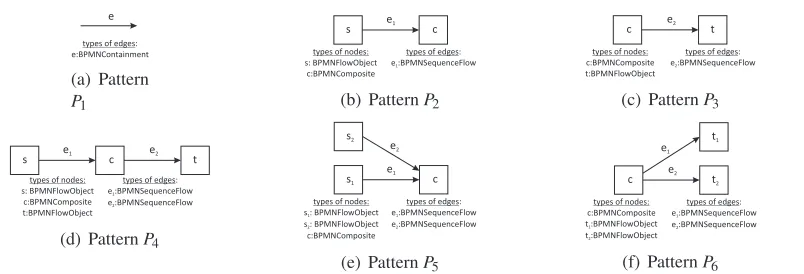
Figure 2: Additional patterns used in assertions
tion. This description describes the control flow, which has three steps conforming to the three rules of the transformation. Assertions describing the rules and the preconditions of the suc-cessful application of the rules are also generated. LetPLHSi, andPRHSi the patterns in the left hand side and right hand side of rulei (i=1,2,3). The generated assertions are as follows:
pre(rulei)ExistsPLHSi (i=1,2,3) , andatsucc(rulei)ForEachPLHSi →PRHSi (i=1,2,3). In the following, we will refer patterns depicted in Figure 2. We need to add some asser-tions manually that define some properties that must be true for the input model: (1) Each edge of type BPMNContainment must have a left node of type BPMNComposite and a right node (since, dangling edges are forbidden): before(rule1)AnyP1→PLHS2 (2) It is forbidden
that a node of type BPMNComposite has two incoming edges of type BPMNSequenceFlow:
before(rule1)NoneP3. (3) Similarly, it is forbidden that a node of typeBPMNCompositehas
two outgoing edges of typeBPMNSequenceFlow:before(rule1)NoneP4(4) Each node of type
BPMNCompositemust have one incoming edge of typeBPMNSequenceFlow, one outgoing edge of typeBPMNSequenceFlow, and a first and last node connected by edges of type BPMNCon-tainment:before(rule1)AnyPLHS3 →PLHS1.
We have provided all information needed for the automated reasoning, except the deduction rules of the reasoning system, but it would exceed the limits of this paper. In the following, we describe the properties to be verified by formal assertions and informally outline the main steps of the reasoning that is performed completely by the reasoning system automatically:
• Property (i):after(rule3)NonePLHS3. This assertion can be derived, sincePLHS3 is the left
hand side ofrule3that is applied exhaustively, until it cannot be applied anymore. A rule cannot be applied, when no instances of the left hand side can be found in the input model.
• Property (ii):after(rule3)NonePLHS2(By the metamodel). We can prove that the formula
AnyP1→P2can be propagated through the whole control flow, therefore, this formula is
true at any point of the transformation.after(rule2)NonePLHS2is true becausePLHS2, and rule2 is applied exhaustively. If there was an instance ofP1in the model under
transfor-mation, there should be an instance ofPLHS2 as well, which is a contradiction, therefore,
there are no instances ofP1 after the application ofrule2. FormulaNoneP1 can be
• Property (iii): before(rule2)NoneP2, andbefore(rule2)NoneP3. From the initial
asser-tion set, it can be derived thatbefore(rule1)AnyP2→P4,before(rule1)AnyP3→P4, and before(rule1)AnyP4→PLHS1. The key of the proof is the propagation of the formulas in
these assertions through the whole control flow. Sincerule1is applied exhaustively,PLHS1
cannot be present in the model under transformation afterrule1, and formulaNonePLHS1
can be propagated through the whole control flow as well. It results the none of the patterns
P2,P3,P4can be present at any point afterrule1.
5 Conclusions
In this paper, we have demonstrated the applicability of our previously presented approach of au-tomated verification of model transformations on a case study. We have shown that an initial as-sertion set of the system is generated automatically from the definition of model transformations. We have demonstrated how complex analysis is performed automatically, largely decreasing the complexity of the verification of model transformations.
Acknowledgements: This paper was supported by the J´anos Bolyai Research Scholarship of the Hungarian Academy of Sciences.
Bibliography
[ABK07] K. Anastasakis, B. Bordbar, J. M. Kster. Analysis of Model Transformations via
Alloy. InWorkshop MoDeVVA’07. Pp. 47–56. October 2007.
[ALL09] M. Asztalos, L. Lengyel, T. Levendovszky. A Formalism for Describing Modeling
Transformations for Verification. InMoDeVVA’09. Denver, Colorado, USA, 2009.
http://www.aut.bme.hu/Portal/asztalosmark.
[AML09] M. Asztalos, T. M´esz´aros, L. Lengyel. Generating Exeutable BPEL Code from
BPMN Models. InGraBaTs’09 Tool Contest. Zurich, Switzerland, 2009.
[BBG+06] B. Becker, D. Beyer, H. Giese, F. Klein, D. Schilling. Symbolic invariant verification for systems with dynamic structural adaptation. InICSE ’06. Pp. 72–81. ACM, New York, NY, USA, 2006.
[BGL05] J. O. Blech, S. Glesner, J. Leitner. Formal Verification of Java Code Generation from
UML Models. InFujaba Days. september 2005.
[EEPT06] H. Ehrig, K. Ehrig, U. Prange, G. Taentzer.Fundamentals of Algebraic Graph
Trans-formation. Monographs in Theoretical Computer Science. An EATCS Series XIV. Springer, 2006.
[KN08] G. Karsai, A. Narayanan. Towards Verification of Model Transformations Via
Goal-Directed Certification.ASWSD 2006, San Diego, CA, USA, March 15-17, 2006, Re-vised Selected Papers, pp. 67–83, 2008.
[Var02] D. Varr´o. Towards Formal Verification of Model Transformations. InPhD Student