ISSN 1479-4403 1 ©Academic Conferences Ltd Reference this paper as:
Arora, P. “Evaluating Online Dialogue on “Security” Using a Novel Instructional Design.” The Electronic Journal of e-Learning Volume 6 Issue 1, pp. 1 - 10, available online at www.ejel.org
Evaluating Online Dialogue on “Security” Using a Novel
Instructional Design
Payal Arora
Teachers College, Columbia University, New York, USA [email protected]
Abstract: This paper explores evaluation strategies to gauge the impact of a novel instructional design on international community participation online. This is done by conceptualizing and devising indicators for measuring “engagement” online amongst marginalized adult communities worldwide. In doing so, a review of online evaluation literature is conducted. In comparing dialogue sessions based on an ongoing traditional model to the new instructional approach, various challenges are faced in “measuring” asynchronous discussion. While the initial findings of marginal increase in engagement with the adapted instructional approach is not sufficient to prove that the new model works, this paper demonstrates various strategies/ challenges in evaluating dialectic engagement.
Keywords: online evaluation, instructional design, community participation, international, marginalized, engagement
1. Introduction
In the last two decades, the subject of computer-mediated collaborative environments has gained attention as more individuals across the globe seek to express themselves and understand each other through diverse online avenues. Much has been made about “virtual communities” that shape themselves along weak social network ties, celebrating these novel online engagements and connectedness (Rheingold, 1993). Of course these celebrations are countered with equally vehement derisions and cautions of loss of real time and face-to-face relationships, the (de)socializations of what is seen as a new virtual public (Lipnack & Stamps, 1997). Be it celebration, caution, derision or processes of “figuring out,” there is no doubt however that online social networks are here to stay and more importantly, expand in often unpredictable ways.
Much has been researched in areas of online identity in contestation to socially constructed stereotypes (Turkle, 1995; Wilber, 1997; Kendell, 1998; Kollock, 1999; Smith, 1992) as has the role of computer-mediated communications (CMC) in the complex interplay of text, talk and learning (Warschauer, 1997) and membership through social learning amongst communities online (Kim, 2000). As online communities get more competitive and formalized in their facilitation and mediation, strategies are sought to enhance the participant’s online experiences and engagements. There is much literature on strategies to moderate formal online distance learning (Levine & Sun, 2002; Discenza, Schenk & Howard, 2002; Assié-Lumumba, 2004), metacognitive or higher-order thinking strategies to enhance such learning (King, 1992; Schwartz, Bransford, & Sears, 2005) and the use of computers as a tool to advance these strategies (Scardamalia & Bereiter, 1991; Pea, 1994; Lin, Hmelo, Kinzer & Secules, 1999).
Further, evaluation of such strategies is now a pursued field as it is looked upon as essential to the understanding and proliferating of conducive behaviors, online and offline (Kendall, 1999; Leander & McKim, 2003). However, there is limited research conducted on strategies employed to facilitate asynchronous online dialogue forums amongst marginalized adults across socio-cultural and geographic environments. In particular, instructional strategies and evaluative frameworks to guide online dialogue amongst “disadvantaged” groups are few and far between. Therefore, this paper explores the potential of an instructional design strategy amongst such participants through demonstrated evaluative measures. Specifically, the scope of this paper is to gain some insight to the following questions through specific evaluation:
1. Is there a change in “engagement” with a change in the instructional design model online?
2. Does the new (CEBLE) instructional design model enhance “engagement” within an online dialogue setting?
This paper contains three sections. The first section surveys the understandings of online community participation and its evaluation strategies. The second section contains the details of the pilot project. This entails a description of the CEBLE model and the pilot setting, research goals, comparative results of the traditional to the applied CEBLE model and an analysis of findings. The third section concludes by stating challenges, inferences, and avenues for further research.
2. Understanding online community participation
One of the main challenges in the understanding of collaborative online discourse is in its transient nature. Nentwich (2004) states that to capture the good ideas that come up within a group, it is useful to have an archives feature. Also, in describing group dynamics, he states that online communities can serve as a portal for interactive interaction, information dissemination and exchange, capable of producing a synergistic relationship among the members of the group. Hine (2000) likens such interaction to a “flow” that achieves “relative spatiality across disparate resources” within social-material networks (p.76). The nature of the “flow” as Kendall (2004) professes is influenced more by asynchronous than synchronous factors, a form of communication that involves an interval between the sender and receiver of messages. This is corroborated by Moss and Shank’s (2002) findings on asynchronous discussions on Bulletin Board Systems (BBS). Based on their findings, they inferred that asynchronous discussion could produce higher participation & quality discussion as compared to synchronous discussion (p.24). Also, they found that participants collaborated with more equity using BBS. Kendall (2004) warns us though that in evaluating socially disparate sub-cultural group participants, we should not presume that all online interaction occurs within the same homogenous cultural context separate from the different cultures of the participants who contribute to it. Furthermore, in making inferences from online data studies, Sudweeks and Simoff (1999) state that perhaps the biggest issue with CMC field research is in the near impossibility of replicating its studies. This daunting task, they remark, is currently being researched more thoroughly for furthering the validity of online evaluations.
2.1 Evaluating online participation
There is a common understanding now that online and offline activities and spaces cannot be divorced in the study of virtual community participation. However, how to go about evaluating such activities continues to pose as a formidable challenge. Kendall (1999) exemplifies some of the dominant challenges through her three-year experiences with Bluesky, a text only online forum. To measure interaction within this forum, she chose an eclectic range of methods: face-to-face interviews, participant observation online, participation in face-to-face gatherings, and reading of related newsgroups and email lists. In her analysis, she concludes that while it is understood that online interaction cannot be divorced from social and political offline contexts, the feasibility and expense issue in researching both domains is often insurmountable. She also warns us to not assume that there is a natural congruence between the offline-online worlds. In other words, we cannot look at online activities as extensions of offline activities, events and social and cultural norms and values.
This thinking is echoed by Leander and McKim (2003) wherein the investigation of real-virtual spaces is rooted in the understanding of “the processes by which social spaces are held apart and blended, and how boundaries and blends are recognized in everyday practice” (p. 235). They envision though that over time, online communities will become more natural and familiar, blurring further the lines between these binaries. All the more reason to view the “place” for research online differently states Spradley (1980). Unlike offline traditional data collection at a “place,” he asks the readers to view online “place” instead as a “social situation” (p.19). The other two aspects that compose a sense of place in an online setting, he claims are its actors and activities where its physicality can be marked as a “basis for a social situation as long as the other two elements are also present” (p.19).
When it comes to examining the role of actors in computer-mediated communications (CMC), there is a special emphasis on the role of the researcher. This is a critical issue for many researchers when adapting the traditional ethnographic approach of participant observation to an online setting. For example, Kendall (2004) recommends participant observations for online interactive forums to prevent avoidance of important social contexts of online communication and interactions. However, such participation comes with its own challenges. Leander and McKim (2003) remarks on the researchers’ double bind, wherein when a researcher “observes” online, she is perceived by participants as a “lurker,” one who reads but does not post online (p.216). This is often looked upon negatively by the participants. Yet, if the researcher does not lurk but instead joins the online discussion, the problem shifts from lack of interaction to that of authenticity.
On the other hand, Moss and Shank (2002) champion the role of the researcher as also that of a participant, stating that researchers from the “outside” cannot do justice to the understanding of data. The authors attribute the close readings of the data in their study to the fact that they were from the same learning communities. They express less concern on the issue of “objectivity” as they claim that they allowed the participants to speak for themselves.
Payal Arora
www.ejel.org 3 ISSN 1479-4403
3. Online pilot project on topic of “security”
3.1 The CEBLE modelThe Critical Event-Based Learning Environment (CEBLE) was chosen for this pilot project as it is designed to help community facilitators think “past the application of their schematic responses” in response to recurrent problems as well as to capitalize on the multiple and unique perspectives of its participants (Lin, Schwartz & Hatano, 2005, p. 251). Originally designed for teachers, this model provides all participants the
…opportunities to interact with people of different backgrounds, values, and goals through its multiple perspectives, and through sharing thoughts with other members of the communities. These social interactions allow teachers to gain the first-hand experience that the same problem can have many different solutions depending on the goals and values people bring with them. (p.251)
The CEBLE shell evolved from a STAR Legacy software shell. The shell includes: (a) Meet the event (b) Generate responses to questions (c) Listen to multiple perspectives offered by people of different backgrounds, goals, and values (d) Act on the perspectives by generating solutions for selected perspectives (e) Reflect on the effectiveness of one’s solutions and share their choices of perspectives, solutions and legacies with other members in the community who explore a similar event and topic (p.251).
This metacognitive thinking in the CEBLE model has been defined as “the awareness and regulation of the process of one’s thinking” and has been recognized as a critical ingredient to successful learning, online and offline (Lin, Schwartz & Hatano, 2005, p.4). In fact, this model promises potential within an online community environment given the popular belief that computer-mediated learning communities are based largely in situated cognition theory characterized by active engagement, discovery learning and co-construction of knowledge in communities of practice (Kirshner & Whitson, 1998; Lave & Wenger, 1991; Wenger, 1998). In particular, asynchronous communication is now commonly viewed as an effective tool for participant reflection and critical thinking (Luppicini, 2002). That said, this paper investigates this potential by applying this model to an online dialogue forum with participants from highly diverse, disadvantaged environments.
3.1.1 Project goals
This online pilot project was founded by an international non-profit in New York that uses dialogue for creating peace and understanding across boundaries. For the last fifteen years, they have facilitated dialogue within various settings and among diverse audiences. In the last year, they embraced the online medium as they sought to open this dialogue across international environments, particularly amongst actors that were marginalized socially, economically, politically and otherwise. The goals of this dialogue as professed and made explicit to the participants by the non-profit were mainly three fold:
̇ To generate a deeper understanding of the topic on “Security: How can we all have it?” amongst international participants
̇ To foster participation from a range of different cultures to broaden perspectives
̇ To apply cross-cultural awareness to critical problems participants face in their own communities to generate novel solutions to chronic problems related to security.
The research goals however, for the scope of this paper is to gain insight to the following: 1. Is there a change in “engagement” with a change in the instructional design model online?
2. Does the CEBLE instructional design model enhance “engagement” within an online dialogue setting?
3.1.2 Methodology
Particular themes were drawn out and categorized from the discussion dataset. This heuristic coding (Jensen, 2002) produced a working document of elements and occurrences in the dataset. This analysis embraces the initial stages of the computer-mediated discourse analysis (CMDA) interpretive approach described by Herring (2004) starting with some of the situational and technological variables of the pilot project. Some of the situational variables entail the participant structure (number of participants), participant characteristics (background, motivation, experience, demographic etc), setting, purpose, topic, tone, linguistic code; some of the technological variables are synchronicity, anonymity, and channels of communication to name a few.
Also applied was the “manifest content coding reproduction” conceptual framework of Luppicini (2002) to determine the indicators of “engagement” online. In determining characteristics of this dialectic engagement, linkages were made to the goals of the non-profit for online dialogue: exposure to other perspectives and a deeper understanding of the topic “security” for generating ideas and solutions. In doing so, the following coding set was looked at as an aggregate of factors that constituted “engagement.” Some key codes are as follows:
1. 1) Number of postings: The assumption is that the higher the number of postings, the more participation in the forum.
2. 2) Participants referencing their own personal experiences: Dahlberg’s (2004) "inherent characteristics" of CMC was used, particularly the personalization/ depersonalization or intimacy as a determinant to measure engagement. The assumption here is that the personalization of a posting is indicative of “trust” and relationship building on the forum.
3. 3) Participants referencing the topic: Here, if participants are not addressing the topic and are going off on a tangent, it can be perceived as disruptive and disengaging within the “flow” (Hine, 2000) of the dialogue. Hence, each posting that addresses the topic would be considered as that contributing to higher engagement.
4. 4) Participants referencing each other: This is looked at as synonymous to “listening” within an online setting. The assumption here is that when a participant quotes or “refers” to a posting by another participant, it implies that they are reading the postings and building on it to further dialectic engagement. 5. 5) Participants furthering dialogue: This category is intended to incorporate the aspect of higher-order
thinking that is a sign of high engagement. When a participant posts a comment that is not regurgitating past dialogue but taking the past dialogue to a new and different level, it is considered an aspect that increases dialectic engagement. This is measured by looking at the prior postings and seeing if the posting at hand “adds” to the subject of security. Participants asking questions that compel participants to respond with new insights is also considered to have furthered the dialogue.
Hence, each posting got a point for catering to each of these categories. The dataset was clumped into seven sessions, six that were traditional and the seventh that was the CEBLE model. Within each session, “engagement” was measured based on this coding structure and compared to one another and the CEBLE session to help determine whether there had been any change in dialectic engagement using the CEBLE model. In the CEBLE online model, the action research method was adopted to strengthen the validity of the study (Moss and Shank, 2002) wherein the author was on the “inside” of this online learning community playing the dual role of a facilitator and participant. However, the authors’ postings were not counted.
3.1.3 Participants
This organization employed the iEARN platform, the largest international education resource network1 to facilitate an online dialogue on “security”. In order to participate, each person had to be registered with iEARN. Most participants were recruited primarily through outreach activities on iEARN and idealist.org website, another popular non-profit Web Site. All participants had some access to computers and the internet as well as English proficiency skills. As we can see in Table1, there were ten participants and one facilitator. The ratio of men to women on the forum is not overly skewed (4: 6). The participants are mainly social workers engaged in the field of migration, children and human rights, HIV/AIDS, drug prevention and the like. As we can see in Table 1, most have chosen to work in environments that are isolated, disadvantaged and marginalized in one form or another.
The topic of “security” for this online forum was decided by the non-profit organization particularly in response to the 9/11 event. At the start, each participant introduced him/herself to all members of the organization. They were specifically asked to share with the group their reason/ motivation for participating in the dialogue. About half of the participants expressed overt interest in understanding people from international and diverse backgrounds. Furthermore, while two members (participant 2 & 3) expressed interest and motivation in attaining “peace” through dialogue, five of the members alluded to the subject of “rights” in addressing security issues. For example, participant # 4 from the Philippines wrote, "I am interested with this international conversation about security because my six years in working with children in
1
Started in 1988, iEARN is the world's largest non-profit global network that enables teachers and young people to use the Internet and other new technologies to collaborate on projects that are aimed to enhance learning. See http://www.iearn.org/ for more details.
Payal Arora
www.ejel.org 5 ISSN 1479-4403
extremely difficult situation in the Philippines, I realized the value of security issues specially in empowering the rights holders in claiming their rights" (Table 1).
Table 1: Background and initial motivation of participants of online pilot project
Participants Country Gender Affiliated field Stated reason for participation: QUOTES from Forum
1 NY, USA F Social work: Church
"...after the US was attacked on 9/11/01 and this powerful country began focusing on its security...all of us in the world have security issues and security rights and we might grow to understand one another better in a conversation on this topic."
2 NY, USA F
Social Work volunteer: Retired
"I want to explore what kind of societies we need to create in order to have peace."
3 Zambia M
Social work: HIV/ AIDS
"I believe that all the wars and rumours of war that we have see and heard respectively are as a result of failure by people to come to a round table and amicably discuss and resolve differences...Getting views from different backgrounds may in its own way add something to the search for global peace which to me is not beyond reach."
4 Philippines F
Social work: Child labor
"I am interested with this international conversation about security because my six years in working with children in extremely difficult situation in the Philippines, I realized the value of security issues specially in empowering the rights holders in claiming their rights."
5
Zimbabwae/
South African F Social Work
"Security is an important aspect in our lives and the more we can debate the various issues relating to it the better we can find answers."
6 LA, USA F Shelters
"We feel like it our duty to make sure that everyone in our own community know that they have the right to feel secure while it is our responsibilty promote security within our own communities and to hold our governments repsonible as well."
7 Turkey M Student Cultural studies interest
8
Zurich,
Switzerland M
Social work: Child Abuse
"...working with victims of abuse and detention is pushing my motivation even harder"
9 Philippines M
Social work: Elderly Care
"...our long range goal is to have a nation-wide organization of older people (mostly poor, mostly women) who will ensure real security."
10 NY, USA F
Social work: Drug prevention
"I am happy to learn about the experiences and lives of people living so differently from me."
NY USA/ Caucasian F Traditional model/ Masters student NY, USA/ Indian F CEBLE model facilitator/ Doctoral student
I am doing my doctoral studies in technology, literacy and language and I want to understand what makes for effective and meaningful dialogue online.
3.1.4 Application of the CEBLE model
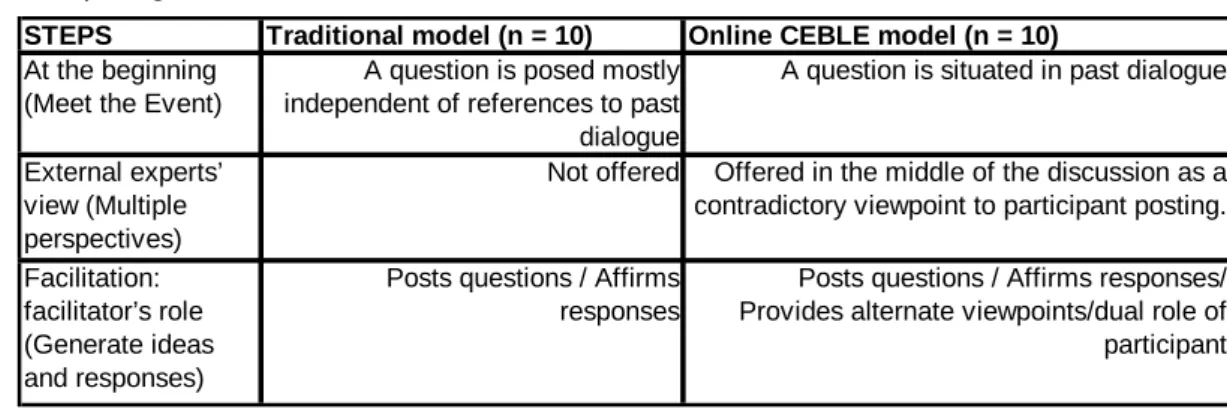
In terms of sessions, there were a total of seven sessions in the online forum: six using the “traditional” instructional model and one using the CEBLE instructional model (see Table 2). The instructional model in the past six sessions is termed here as the “traditional” model for comparative sake only. The impetus to use a new model by the non-profit was based on the intent to increase the quantity and quality of postings in the online forum. To address this challenge, the CEBLE model was applied to the seventh session of the forum. Given that the online forum was a dynamic international and cross-cultural environment with a goal for critical thinking on the issue of security, it was hypothesized that the CEBLE model may be appropriate to foster dialogue, particularly by generating questions and facilitating discussion grounded within the context of past participant dialogue and exposure to new viewpoints for higher engagement (see Table 2). As we can see below, the instructional strategies between the two models to create an engaging online dialogue were different.
Table 2: Comparing the traditional and online CEBLE model
STEPS Traditional model (n = 10) Online CEBLE model (n = 10) At the beginning
(Meet the Event)
A question is posed mostly independent of references to past dialogue
A question is situated in past dialogue
External experts’ view (Multiple perspectives)
Not offered Offered in the middle of the discussion as a contradictory viewpoint to participant posting. Facilitation:
facilitator’s role (Generate ideas and responses)
Posts questions / Affirms responses
Posts questions / Affirms responses/ Provides alternate viewpoints/dual role of participant
As we can see in Table 2, to initiate discussion in the traditional model, the facilitator posed a question to the participants as a separate discussion link for each of the six sessions. This question was posted as an independent entity without referencing past participant dialogue. When participants responded to the question, the facilitator primarily affirmed the participants’ responses. On the other hand, in the CEBLE model, the question was rooted in past dialogue to determine trends of consensus and dissent. The question was then built around this critical synthesis to further the understanding on security (see Abstract 1)
Abstract 1: Meet the event: Initiation of dialogue through question in the traditional and CEBLE model
The other distinguishing aspect between the two models is in the strategic posting of an outside and provocative perspective through the CEBLE model (Table 2). This feature was absent in the traditional model. This aspect was incorporated to supply a contradictory and perhaps unfamiliar viewpoint to the participants to make them reevaluate their perspectives and engage at a higher metacognitive level. As we can see in Abstract 2, there is back and forth dialogue between the participant and the facilitator. Prior to this, there was a general consensus amongst the participants on the idea that migration produced insecurity as exemplified in the first posting in Abstract 2. The outside (expert) perspective (Second posting: Abstract 2) introduced by the facilitator was deliberately chosen to contradict this perception. The posting was on the “urban tribes” theory proposed by Ethan Wattars stating that migration can cause a reverse effect, where the need for security amongst the displaced populace can create tighter communities.
Payal Arora
www.ejel.org 7 ISSN 1479-4403
Abstract 2: Sampling of CEBLE dialogue before and after outside perspective is introduced
3.1.5 Results from the CEBLE application:
0 5 10 15 20 25 30
No
. o
f
P
o
s
tings
P
e
rs
onal
R
e
f
R
e
f.
t
o
To
p
ic
R
e
f.
O
th
e
rs
F
u
rther
in
g
D
ialogu
e
To
ta
l
E
n
gagem
e
nt
Session 1
Session 2
Session 3
Session 4
Session 5
Session 6
Session 7 (CEBLE model REF.)
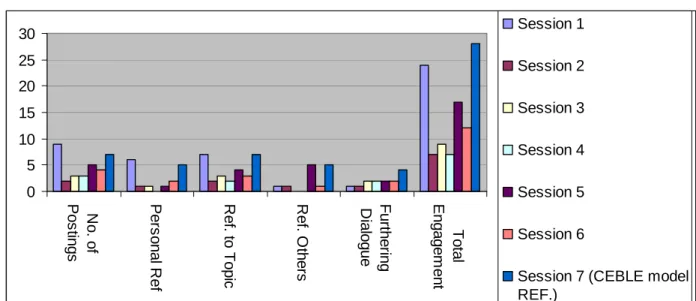
Figure 1: Comparison of traditional model and CEBLE model: Indicators for engagement
As we can see in Figure 1 above, there is some change with the change in the instructional design model. If we were to discount session 1 when comparing the indicators, the CEBLE session can be seen as showing positive results over the traditional sessions (Session 1 to Session 6). Also, the postings in the CEBLE session marginally increased over all sessions but for session 1. However, the difference appears less significant. While there is a total of seven postings in the CEBLE session, this was still less than the total number of participants (n =10). On the other hand, there seemed to be more significant changes in the content of postings in the CEBLE session. For example, while most participants referred to the topic across
sessions, be it the CEBLE or traditional sessions, there had been a substantive increase in the personalization aspect within the CEBLE model. In other words, participants appeared to draw much more from their own experiences when responding within the CEBLE model. They seemed to share perspectives from their own contextual environment when explaining their point of view.
The only other session that competed on this personalization aspect is session 1. In fact, as we can see in Figure 1, there are a number of similarities between session 1 of the traditional model and session 7 from the CEBLE model. They both had high number of postings, high referencing to the topic and more importantly, they both scored high on the personal reference category. Six of the nine participants in session 1 weaved in their own experiences when responding to the question. In the CEBLE model, five of the seven participants did the same. Also, few participants in session 1 referred to one another or furthered the topic with questions or insights on the topic of security. In terms of furthering the dialogue, there was a gradual increase in participants demonstrating critical comments or questions that “furthered” the concept of security. Given that this is a harder category to make explicit, here is a sample of what constituted as “furthering the discussion.”
- Oct 14, 2005 9:14 am (3.)
You cant have security because you want security. You have to think, what makes for security? (your question) because it is consequent or contingent on something else. Some people seem to think it’s strength—gotta show you’re strong.”the best defense is a good offence” but security is built not so much on physical or armed strength but on mutual respect—a kind of strength in itself. In our case, it means going door to door and spending months talking to people until we are accepted and can get everyone to sit down together and talk about what they would like to do together—as a community (do you want better health care—are you willing to be trained as community health workers? Etc.) now, we can talk about security—not because we set out to get more security but because we share something of the same values, the same dreams…now we are secure because we are in this together…
And here’s a sample of what did not constitute as furthering the discussion…
I am under stress with a new job which involves a lot of travel. I will respond on later for a while. And I wanted to say that - in Portugal has results of a discussion, but has been having some difficulty getting it translated to English.
However, if we were to not discount Session 1, the results are less definitive. Overall, to answer the research questions on whether there were any changes whatsoever in the change in instructional design as well as to see if the CEBLE model enhanced engagement, results can be found to be affirmative on both accounts only
if accounting for Session 1. This in itself is not sufficient to profess that CEBLE does in fact increase
engagement as there are some confounding factors as we see in the analysis section below besides the more obvious small sample size that deters generalization. The purpose of this paper though lies in explicating the evaluation strategies and challenges involved in online dialogue measurement as well as gauging the potential of the CEBLE model for engagement.
3.1.6 Analysis of findings
The reason we can consider discounting Session 1 is due to it being the first session where participants have to address the topic as they are explicitly asked to do so by the facilitator. This can explain the high number of postings, personal references and reference to the topic. To the extent that in session 1, the discussion was at its initial stage where the participants were getting to “know” one another and was starting to “build a relationship” with the group, it can be seen as an anomaly. Further, as is commonly experienced in voluntary participation, there is generally an enthusiasm at the start of an endeavor. The challenge for most online discussion boards is in sustaining and enhancing participation through engagement and not just the recruitment of the participants.
Also, if we take a look at the questions in session 1, the reason for the personalization aspect becomes more evident. The question being: “When you were growing up, what did you learn about how to resolve arguments or other conflicts? What do you think now?” This was deliberately structured to evoke personalized responses. In contrast, the question for the CEBLE session (Abstract 1) was framed as a synthesis of participant’s past comments to further the dialogue to new insights. With that logic in mind however, the tables can be reversed. In effect, the CEBEL session personalization can also be seen as "understandable" because the question in that session was posed to maximize that aspect. Of course, this brings into question whether or not its’ the CEBEL model that is causing the result, or simply the type of question.
Payal Arora
www.ejel.org 9 ISSN 1479-4403
That said, even if we do discount Session 1, the increase in the postings seems unimpressive and cautions against clear declarations on engagement levels. While this in itself is worth pointing to, what is of more importance here is that this category fails to include “lurkers” which is critical to the understanding of engagement. In theory, a participant could never post a comment online and yet be highly “engaged” by reading all the postings and reflecting upon it in their offline lives. The usage of log files of the online forum was considered to determine whether participants were viewing the comments. However, it was discovered that users do not necessarily have to visit the forum in order to actively participate in the topic. This is because every posting on the forum gets automatically sent as an email notification to the participants email account. Thereby, the most active participant theoretically could never have logged into the forum. Since many users had this option enabled, the log files would have been an unreliable measure of participation. Thereby, we have an unresolved confound between participant postings and engagement.
Also, while having created categories or codes as a composite of “engagement,” it is questionable whether all codes are of equal weight in the gauging of engagement. Further, in relation to CEBLE’s multiple perspectives, it is worth asking whether simple disagreement automatically constitutes as a multiple perspective and whether multiple perspectives could in fact equate to engagement by itself. As to the researcher being the facilitator, there is always the research bias looming over the study that takes away from the results to a certain extent. At best, a compelling case can be made that CEBEL came out with some potential in generating personalized engagement.
4. Conclusion
This study was particularly fortunate to have the same number of participants across all sessions. This fostered stronger validity within the pilot project. Being asynchronous and by invite only, this online pilot study was able to circumvent some of the challenges that incur within most synchronous settings such as participant anonymity, changing online demographics within the time of the study, etc. Also, the controlled setting with separate discussion threads and archives for each session enabled the sorting of data.
That said, given the marginal increase in the number of postings in the CEBLE model, the issue of increasing the quantity of postings still persists. Part of this is because of the small sample size. The log files dilemma as explicated in the reading of the postings remains unresolved. Other variables that could be influencing this data also need to be investigated. Given that the adult group specifically chosen by the non-profit represents an international demographic situated within marginalized environments, variables pertaining to access to technology and other related issues of access and usage need to be considered. Unique socio-cultural, economic and geographic factors such as lack of mobility to cybercafés, electricity, individual routine, political and social stability and the like could be impacting the amount and quality of postings by the participants. This reinforces the inseparable nature between offline and online lives.
Also, while attempting to execute a fair comparison between the two models, the discrepancy of session length is evident. While the traditional model went on for approximately six months, the CEBLE model was executed for a period of one month only. Hence, a more longitudinal approach is needed to gauge impact. While the number of postings is not significant, the observed difference between the nature of postings between the two models is encouraging. Based on these preliminary findings, there seems to be some support for the CEBLE model as a potential engagement tool in instructional design within online dialogue.
For future studies, it would also be useful to know what aspects of the CEBLE model are most effective in online dialogue. To conclude, it is important to remember that in evaluating socially disparate sub-cultural group participants, we should not presume that all online interaction occurs within the same homogenous cultural context separate from the different cultures of the participants who contribute to it and that “engagement” means different things to different individuals from different socio-cultural backgrounds.
References
Assié-Lumumba, N. T. (2004). Cyberspace, distance learning, and higher education in developing countries : Old and emergent issues of access, pedagogy, and knowledge production. Boston: Leiden: Brill.
Dahlberg, L. (2004). Internet research tracings: Towards non-reductionist methodology. Journal of Computer Mediated Communication, 9(3).
Discenza, R., & Schenk, K., & Howard, C. (2002). The design and management of effective distance learning programs [electronic resource]. Hershey [Pa.]:Idea Group Publishing.
Herring, S. C. (2004). Online communication: Through the lens of discourse. In M. Consalvo, Baym, N., & J.Hunsinger’s (Eds.) Internet research annual: Selected papers from the association of Internet Researchers, 65-76.
Jensen, K. B. (2002b). The qualitative research process. In K. B Jensen’s (Ed.) A handbook of media and communication research: Qualitative and quantitative methodologies, 235-253. London, Routledge.
Kendall, L. (1999). Recontextualizing "cyberspace": Methodological considerations for on-line research. In S. Jones’ (Ed.) Doing internet research, 57-74. Thousand Oaks: CA, Sage.
Kendall, L. (2004). Participants and observers in online ethnography: five stories about identity. In M. D. Johns (Ed.) Online social research: methods, issues, and ethics, 125 -140, New York: Peter Lang.
King, A. (1992). Facilitating elaborative learning through guided student-generated questioning. Educational Psychologist, 27(1), 111-126.
Kirshner, D., & Whitson, J. (1998). Obstacles to understanding cognition as situated.Educational Researcher, 27(8), 22-28.
Kollock, P. (1999). The economies of online cooperation: Gifts and public goods in cyberspace. In Smith, M., & Kollock, P (Eds.) Communities in cyberspace. London: Routledge.
Lave, J., & Wenger, E. (1991). Situated learning: Legitimate peripheral participation. Cambridge, UK: Cambridge University Press.
Leander, K. M., & McKim, K. K. (2003). Tracing the everyday ‘sittings’ of adolescents on the internet: a strategic
adaptation of ethnography across online and offline spaces. Education, Communication & Information, 3(2), 211-240. Levine, A., & Sun, J.C. (2002). Barriers to distance education. Washington, D.C.: American Council on Education. Lin, X., & Schwartz ,D. L., & Hatano, G. (2005). Towards teachers’ adaptive metacognition. Educational Psychologist,
40(4), 245-255.
Lin, X.D., Hmelo, C., Kinzer, C., & Secules, T. (1999). Designing technology to support reflection. Educational Technology Research & Development,47 (3), 43-62.
Lipnack, J., & Stamps, J. (1997). Reaching across space, time and organizations with technology. John, Wiley & Sons, Inc. New York.
Luppicini, R. J. (2002). Toward a conversational system modeling research methodology for studying computer-mediated learning communities. Journal of Distance Education, 17 (2), 87-101.
Moss, C. M., & Shank, G (2002). Using qualitative processes in computer technology research on online learning: Lessons in change from "teaching as intentional learning." Forum: Qualitative Social Research 3(2).
Nentwich, M. (2004). Cyberscience, methodology and research substance. Internet Research Manual Publishing. Pea, R. D. (1994). Seeing what we build together: Distributed multimedia learning environments for transformative
communications. The Journal of the Learning Sciences, 3(3), 285-301.
Rheingold, H. (2000). The Virtual community: Homesteading on the electronic frontier. London: MIT Press.
Scardamalia, M., & Bereiter, C. (1991). Higher levels of agency for children in knowledge building: A challenge for the design of new knowledge media. Journal of the Learning Sciences, 1, 37-68.
Schwartz, D. L., Lin, X., Brothy, S., & Bransford, J. D. (1999). Towards the development of flexibly adaptive instructional design. In C. M. Reigeluth (Ed.), Instructional-Design Theories and Models: A New Paradigm of Instructional Theory, (2), 183-213. Mahwah, NJ: Erlbaum.
Smith, M. Voices from the WELL: The logic of the virtual commons [Electronic Book].. Retrieved on July 26, 2007 from the UCLA Department of Sociology Web Site: http://www.sscnet.ucla.edu/soc/csoc/papers/voices/Voices.htm
Spradley, J.P. (1980) Participant Observation. New York: Holt: Rinehart & Winston.
Sudweeks, F., & Simoff, S. J. (1999). Complementary exploratory data analysis: The reconciliation of quantitative and qualitative principles. In S. Jones’ (Ed.) Doing internet research, 29-55. Thousand Oaks, CA, Sage.
Turkle, S. (1995). Life on the screen: Identity in the age of the internet. New York: Simon and Schuster.
Warschauer, M. (1997). Computer-mediated collaborative learning: Theory and practice The Modern Language Journal, 81 (4), 470-481.
Wenger, E. (1998). Communities of practice: Learning, meaning, and identity. New York: Cambridge University Press. Wilber, S. P. (1997). An archeology of cyberspace: virtuality, community, identity. Internet Culture, Routledge, 5-22. Acknowledgements:
I am deeply grateful to Professor Charles Kinzer from Teachers College, Columbia University for his thoughtful feedback and continued support. I would also like to thank Professor Xiaodong Lin from Teachers College for allowing the use of the instructional design model as well as Nabeel Ahmad, Christina Florio and Keol Lim for their feedback on this project. Most importantly, I am thankful to the international non-profit organisation in New York and its participants for permitting me to be part of and use their discussion forum for analysis.
Managing e-Learning: What are the Real Implications for
Schools?
Helen Boulton
Nottingham Trent University, UK [email protected]
Abstract: This paper is concerned with the use of e-learning in secondary education. It is based on research that has taken place over a period of two years with students aged 14-16 (Key Stage 4). The paper considers the current research in learning and identifies the challenges faced by students, the changing role of the learner, and the impact e-learning can have on students. The author argues that preparation needs to be carried out at the school level prior to introducing e-learning into the Key Stage 4 curriculum. It concludes by discussing the findings of the research which identifies a range of issues schools may want to consider, when embracing e-learning.
Keywords: e-Learning, secondary, curriculum development, teaching, learning
1. Introduction
‘E-learning has the potential to revolutionise the way we teach and how we learn’ (DfES, 2003). There are many definitions of e-Learning available such as ‘learning facilitated and supported through the use of information and communications technology’ (JISC, 2007). For the purposes of this research E-Learning is defined as students developing knowledge, skills and understanding, through the use of computer-based technologies.
The recent developments in technology are changing the role of the teacher and the learning experiences of school children, engendering an exciting future where students study increasingly from places other than school. A new milestone in the development of e-learning in schools has been the use Virtual Learning Environments (VLEs), enabling new opportunities to personalise learning (Barajas and Owen, 2000), although this can lead to inequity through the digital divide (BECTa, 2001). There is a need for greater research to take place to discover the best practices when e-learning is the primary medium for delivering content, particularly at compulsory education level (11-16 year olds).
E-learning can provide better support for the less able, engage students who do not respond well to ‘traditional’ classroom learning, provide opportunity for accelerated learning for gifted and talented students, and develop independent learning skills through a personalised learning experience. Increased development with e-learning in schools will enable a more flexible use of the school building and the school day, as well as vertical grouping and movement of students. Increased connectivity of schools to the Internet via broadband in the United Kingdom (UK) has provided greater opportunity for school managers to introduce and make use of e-learning materials across the school curriculum (Hesketh and Selwyn, 1999). The establishment of 10 regional Broadband Consortia to support the development of e-learning within schools, and the continued support of the Government for schools to purchase e-learning materials1, is resulting in an increased use of e-learning in secondary education. This will continue to develop with pressure from the Government, and the introduction of new teaching standards in 2007 to include the use of e-learning by trainee teachers, thereby raising the level of skills and the development of a pedagogical framework for e-learning.
The use of e-learning within the school curriculum has developed from industry where it has been used, both successfully and unsuccessfully, for training staff; the first recorded use being in 1984. For example Karon (2000) comments on improved accessibility of courses that can be self-paced and available via the Internet at a time to suit the learner, as compared with more conventional distance learning delivery agents. While Urdan and Weggen (2000), suggest that e-learning can result in a higher retention rate due to materials being personalised and reflecting different learning styles. The protagonists of more traditional learning and teaching methods have tended to dismiss e-learning, viewing it as a training tool, rather than reflecting the learning environment of a traditional classroom that encourages debate, discussion and interactive learning. However, developments of e-learning tools are now enabling opportunity for these elements to be present and e-learning is evolving into a virtual classroom.
1
. The Government ear-marked £100m funding for 3 years for the purchase of e-learning materials, to finish in August 2006, enabling individual schools to receive £1000 plus almost £10 per pupil per year. This money has to be spent on ‘approved’ software.
ISSN 1479-4403 11 ©Academic Conferences Ltd
Reference this paper as:
Boulton, H. “Managing e-Learning: what are the Real Implications for Schools?” The Electronic Journal of e-Learning Volume 6 Issue 1, pp. 11 - 18, available online at www.ejel.org
Much research has been carried out with Higher Education (HE) and training establishments, identifying a range of issues such as student satisfaction being a significant factor in drop out rates (Levy, 2007, Sachs and Hale, 2003, Chyung et al 1998, Yang and Liu, 2007); the need for a personalised learning pathway and curriculum sequencing linked to learners’ ability (Chen et al, 2006); the need for the opportunity to collaborate, a variety of learning stimuli, and effective interactive tools linked to contextual learning and feedback (Yang and Liu, 2007).
E-learning is seen by many as a growth area for schools although there is little research into its use in schools. The Department for Education and Skills (2005) sets out the UK Government’s strategy for harnessing the use of technology in schools, including the development of e-learning. This document has tough challenges for schools. Joo (1999) recognises some of the challenges ahead, including the need for motivated teachers and learners who have ‘appropriate training, easy access to high quality materials, and systematic academic, administrative, and technical support within and outside of schools’.
This paper, based on research within the secondary school sector in the UK, seeks to identify some of the challenges schools face when using e-learning for the first time, both within the classroom, and when studying from home. It describes the research methodology, the school’s experience with e-learning, and the students’ perceptions when using e-learning. Finally the paper concludes with considerations for schools when introducing e-learning at the secondary school level, and discusses the question ‘What are the real implications for schools when introducing e-learning materials?’
2. Research methodology
The author undertook research over a 2-year period focussing on students opting to take a General Certificate in Secondary Education (GCSE) equivalent course in Information Communications Technology (ICT) via e-learning materials. These students were all aged 14-16 during the period of research. Students opting for this course did so in addition to 8 GCSEs, the ‘standard’ number of GCSEs taken by students at 16 within the UK. This is still a new area for research into e-learning, the main focus being in HE, training, and post-16 use of e-learning.
The research commenced when the students were in year 9 choosing their GCSE options, and followed their progress throughout the 2 years of the course during years 10 and 11.
This new e-learning opportunity proved popular and 42 students opted to take the course: 20 formed a group at school attending after school twice each week, and 22 took the course at home with hardware and Internet connection provided by parents. Students selected which group they were in. The course was designed to take 3 hours of study per week over 2 years.
This was the first time the school had used e-learning materials. The students had undergone no specific training prior to the introduction of this course, other than that described in this article. The research therefore focussed on how the students utilised the e-learning materials, what factors were identified as important to the students to enable them to complete, and what factors engendered a sense of satisfaction and motivation with their learning.
A range of methods were used to obtain data to ensure triangulation of findings and a fitness for purpose of the research tools used. These include a range of interviews:
̇ all teachers and students were interviewed each term of the first year, and in the last term of the second year. The teachers were interviewed separately, while the students were interviewed in groups. The initial interviews were to ascertain the background of the introduction of e-learning; the following interviews were to ascertain their level of satisfaction, identified by Sachs and Hale (2003) as satisfaction being an essential element of retention and success.
̇ an interview with the headteacher prior to the commencement of the e-learning course to identify the aims and purpose of this initiative in the school, as well as the roles of those involved, and the training provided for both staff and students;
̇ interviews with the school technician who was responsible for providing technical support in school. These had not initially been planned into the research, but it became evident that the technical support was an important factor in retention and success, as identified by Joo (1999);
̇ interviews with a range of students following the course from home. This group had the highest non-completion rate, which correlates with findings identified in HE-focused e-learning research
Helen Boulton
by Parker (1999). These students were chosen to gain a representative group of gender and ability, factors that had been identified as important to HE research by Levy (2007),
Classroom observations of the school based group were carried out once each term. Meetings were held with the students studying from home and a questionnaire was sent to their parents to ascertain their perceived role and the amount of support they were giving. Students who did not complete the course were sent a questionnaire to determine why they had decided not to continue.
Additionally, data from Key Stage 3 Standards of Attainment Test (SAT) results was used to establish the prior knowledge of ICT for each group.
The data gathered has been used to reflect factors need to be present to engage 14-16 year olds in e-learning, and what needs to be considered to encourage completion.
3. Prior experience
The school where the research was carried out has a strong commitment to Information Communications Technolgoy (ICT). The Office for Standards in Education2 (OfSTED) Report for this school indicated that ICT performanceachieved by students at the end of Year 9 was above national average ‘Teacher assessments, at the end of Year 9, show the proportion of students reaching national expectations of attainment was well above average’ (OfSTED, 2000). Students received one hour each week of ICT in Years 7, 8 and 9 from specialist ICT teachers, plus additional experience of using ICT across the curriculum. In year 10 students could opt to take an ICT-related GCSE or the e-learning route.
As outlined above, the students who opted for the e-learning route could either study entirely from home outside the school day, referred to as the home study group, or they could join a group, supported by an ICT teacher 2 evenings each week, referred to as the after-school group. The students taking the course in both the home study and after-school groups had good ICT skills developed at Key Stage 3. The expected level at the end of Key Stage 3 in the UK is level 5.
Table 1: Key Stage 3 Standard Attainment Target ICT Results3
Level No. of Students in After-School Group No. of Students in Home Study Group
4 1 0
5 1 0
6 8 4
7 5 9
8 5 9
The school had no previous experience of learning. Staff did not receive any training in the pedagogy of learning, or guided to useful references which would provide helpful advice on engaging learners in e-learning, and their role as an e-tutor. When the course was introduced to the students it had been planned to provide a one hour induction, but this was cancelled due to staff changes.
4. The home study group
Table 1 indicates that this group had higher level ICT skills prior to commencing the course, but a lack of awareness of the amount of self-motivation and independent learning skills that would be needed to complete the course and achieve the qualification.
In initial interviews with the students they were motivated by their enjoyment of ICT and their aspirations to gain additional qualifications. They found the e-learning materials were simple to navigate and enjoyed being able to go back to theory they had found difficult. They were enthusiastic about the new method of learning and they enjoyed the novelty of working on their own at a computer. As Papert (in Abbot 2001) stated ‘Everywhere, with very few exceptions, I see the same gleam in their eyes, the same desire to appropriate this thing. And more than wanting it, they seem to know that in a deep way it already belongs to them. They know they can master it more easily and more naturally than their parents. They know they are the computer generation.’
2
OfSTED was set up by the UK Government in 1992 to help improve the quality and standards of education by regular school inspection.
3
Studentsare expected to gain level 5 by the end of Key Stage 3 (National Curriculum in Action). Level 8 is the highest level achievable for ICT in the UK.
www.ejel.org 13 ISSN 1479-4403
However, with no induction this group were provided with a sheet giving log on details and assessment deadlines. Their initial enthusiasm soon disappeared as they experienced the tedium of the materials. These were mainly in text-book format with occasional use of voice to reinforce explanations, or use of screen-capture for elements of software development skills. There was no use of video, 3D graphics, or opportunity to collaborate or discuss with others. ‘Users have high expectations of multimedia; they judge audio-visual material by broadcast standards and interactivity by the standards of commercial software. They have a low tolerance of material that falls short of these expectations’ (Tearle and Dillon, 2000).
There was no opportunity to meet other group members and no list was provided of who these members were. Throughout the course there was no opportunity for the development of support groups. They were assigned to a tutor, but there was no opportunity for them to meet this tutor. Students stated that the start of the course was demotivating and needed to change for future groups.
The group quickly experienced difficulties and expressed dissatisfaction with the e-learning materials, and lack of time-tabled tutorial support. There was no formative feedback on progress until the end of each module when coursework assignments were marked, no reminders of deadlines (all students in this group missed at least one deadline), no feedback on progress, no individual targets, challenge, or extrinsic motivation. The students expressed a feeling of loss of the ‘traditional’ teacher - ‘I miss the teachers’ help, support and feedback’, ‘I need more support with meeting deadlines and would like reminders built into the software’. ‘I know I moan about my teachers, but I don’t like learning without one’. This corresponds with the research by Yang and Liu (2007).
As the teaching team became aware of the difficulties of the home study group they offered support during break times, providing a ‘drop-in’ facility for these students to seek individual help. However the students found the 15 minutes at break too short and often filled with other demands, such as choir or orchestral practice, or the simple need to socialise with friends. They also found it time-consuming to log onto the network and access their files, often just getting to the crux of the problem when the bell for the next lesson went; or finding that the software used at home was not compatible with the school’s system.
Some of the group experienced technical difficulties at home that often had to be solved by parents, and the use of a slow dial up connection which was frustrating (none had broadband). The school technician provided help where possible, but this raised the question of whether it was the parental responsibility to maintain their own equipment, or the school that is providing the programme of study. In 2 cases the students got too far behind, missed their first deadline, and left the course due to technical difficulties at home.
The main challenge faced by this group was the lack of opportunity to meet and discuss progress. They expressed feelings of loneliness quite early on in the course and a lack of support and motivation from their peers, as found by (Lawton, 1987). As we become more experienced with e-learning, developers are building in opportunities for ‘socialisation’ via electronic forms such as discussion boards, web blogs, and web-conferencing, but software in this research did not offer such a facility and the only time the group of students came together was for the purpose of this research.
The students were not used to sitting in front of a computer working on their own. Adults know this can be very difficult and takes a great deal of motivation (Macpherson et al, 2004). It is increasingly recognised that students should experience shorter spells of practical work at a computer; and the new UK National Strategy ICT Framework lesson plans (available at www.dfes.gov.uk), indicate short practical sessions broken up with whole class teaching raises achievement, engages students, and helps with motivation. For the students on this e-learning course the expectation of the software providers was that they would sit at a computer for extended periods of time.
The parents of the students working from home were positive of this new curriculum initiative. As Wishart and Blease (1999) found, eighty per cent of parents who took part in this research rated additional qualifications as the main reason for wanting their child to take this e-learning course in addition to their GCSEs. One parent stated it was ‘a useful and challenging way to gain additional qualifications and developing ICT skills’. There was some cost involved as some parents purchased additional hardware and all maintained Internet connections. The students appreciated the initial support from parents, but most experienced it short-lived and sometimes found the time they had set aside for completing their e-learning study was taken up with other family activities ‘The only time I can do this course is at the weekends when Mum and Dad want me to join in family activities’. In addition several students only had one telephone line in
Helen Boulton
their home and were continually being asked to log off the internet so the telephone could be used by other members of the family.
In one meeting with this group much time was taken in students expressing feelings of upset that parents no longer took as much interest in their progress: ‘At the beginning Mum used to help me and look at what I was doing. Now she seems to have forgotten all about it’. It was felt by the author that the students expected their parents to take on the role of ‘teacher’ in encouraging, challenging, looking at what they were doing, and reminding them of assignment dates. Selinger (2001), in her discussion on teacherless classrooms, acknowledged the importance of students having a person to support their learning. In this situation this role fell mainly to the parents. This raises the issue of whether parents should receive training from the school in supporting their children in e-learning, particularly when the full course is being taken from home.
5. After-school group
In the UK it is increasingly common to find many activities taking place in schools after the traditional school day has ended. At this particular school after-school activities were more difficult because approximately 70% of the students went home on school buses. For these students, and their parents, arranging alternative transport home, often to outlaying villages, was problematic. Due to transport arrangements attendance at sessions was not always good. Those students that maintained regular attendance were among those that ultimately completed the course.
In observing the after-school sessions it was clear that the students enjoyed this new method of learning. The students welcomed the fact that they could control their own learning (Lepper, 1993), but not all learning styles were met in all sessions through the e-learning materials, which sometimes led to dissatisfaction with the materials (Oh and Lim, 2005). The students were supported by a teacher during each session, and technical difficulties were quickly managed by the on-site technician. As the teachers became more confident with the learning environment they encouraged students to help and support each other, a process also observed by Hexel, et al (1998).
This group received good support during sessions, deadline reminders for coursework, feedback on progress, and the teachers maintained a form of monitoring of progress, although these were often based on completion of coursework, rather than individual progress during sessions which would have provided greater motivation (Black and Wiliam, 1998). Their parents also received reports on their progress as part of the usual reporting system within the school.
The satisfaction aspect for this group was much higher than the home study group. This was reflected in the final completion and pass rate of the whole cohort, which was much higher for this group.
6. Findings
Overall the after-school group were the highest satisfied, scoring an overall satisfaction score of 69%. The areas they were least satisfied with were the slowness of downloading the materials 62%, and the tedium of the materials 78%. The areas they found most satisfaction with were the support of the teacher 67%, the support of the school technician 64%, meeting as a group 64%, and formative feedback 83% which they identified as being an important motivating factor. There was little gender difference with 64% of girls enjoying the learning experience, 60% of boys, which is supported by Levy (2007).
The home study group were the least satisfied, scoring an overall satisfaction score of 29%. The areas they were least satisfied with were the lack of teacher support 93%, the tedium of the materials 75%, lack of opportunity to work collaboratively 73%, and technical problems 66%. The areas they found most satisfaction with were opportunity to work when they wanted to 52%, and being able to revisit theory they didn’t understand 59%. There was little gender difference with 31% girls enjoying the learning experience, 28% of boys.
www.ejel.org 15 ISSN 1479-4403
6.1 Satisfaction rates
Figure 1: Scatter graph showing satisfaction of students
By the end of the first year 72% of the home study group had left the group. Ultimately only 3 of these completed, 3 transferring to the after-school group to complete the course.
The after-school group was more successful with only 7 leaving during the course, gaining a completion rate of 80%, including 3 students that transferred from the home study group.
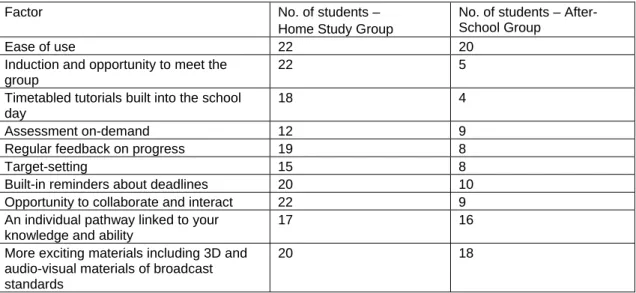
Factors that were identified as important to the students to complete included those shown in table 2.
Table 2: Factors identified as important
Factor No. of students –
Home Study Group
No. of students – After-School Group
Ease of use 22 20
Induction and opportunity to meet the group
22 5 Timetabled tutorials built into the school
day
18 4
Assessment on-demand 12 9
Regular feedback on progress 19 8
Target-setting 15 8
Built-in reminders about deadlines 20 10
Opportunity to collaborate and interact 22 9 An individual pathway linked to your
knowledge and ability
17 16 More exciting materials including 3D and
audio-visual materials of broadcast standards
20 18
These areas identified by the students correlate with the findings of the main areas in Chung and Liu’s research (2007) into what the virtual online classroom should be. Pituch and Lee (2006) have also developed a ‘technology acceptance model’ for successful e-learning where perceived usefulness and perceived ease of use leads to an intention to use the system. They also support the importance of being able to interact with other students and the teacher as the key to effective use of e-learning.
Helen Boulton
Research findings indicated that in HE factors such as student satisfaction with the course was a main contributor to non-completion. This is supported with the findings in this research. The opportunity to take the course was optional, but it is important to reflect on how students in this age group, with no prior-experience of e-learning, would engage with e-learning as a regular method of learning. As this school found, e-learning has many advantages, but also presents many challenges for those involved. Ensminger et al (2003) found that the successful implementation of new technology depends on well-managed change, efficiency and performance improvements, recognition or reward for taking part, and having sufficient resources to make the change. This should include careful preparation and training for all those involved.
Table 1 indicates the prior achievement of the students in ICT. There was some correlation with completion between their achievement levels, but not a significant amount, and with other factors to take into account the author was not able to make the same confident conclusion as Levy (2007). It should be noted that the one student who embarked on the course with a level 4, ie the lowest ICT skills, completed the course successfully.
It may be appropriate to introduce students to e-learning and blended learning tools at an early age so that students establish e-learning skills that they can then develop into life-long learning. This may help retention figures in HE or provide experience to make an informed choice about whether to take an e-learning course after school. All e-learning students need to develop a new range of skills such as managing their own pace of learning, learning how to become autonomous independent learners, and taking greater responsibility for their own learning. As Leask (2001) states ‘we need to develop in young people, abstraction, system thinking, experimentation, collaboration and learner training, allowing them to meet the challenging requirements of the information society and equip them with the ability to be flexible, change and learn new skills for emerging contexts’. As e-learning continues to become more available, and schools offer an increasingly flexible curriculum, school managers will need to consider how to engender these skills in the students.
School managers may also want to consider the role of parents where they are going to take on the role of supporter for students using e-learning from home. There is a digital divide in the UK as reported by BECTa (2001) with access to resources and quality of software and hardware. National and local decisions need to be made as to who will be provided with home computers in order to ensure equality of access to e-learning.
As the use of e-learning, particularly from home, increases, the issue of who maintains the hardware will need to be addressed. For some parents, with poor computer skills the smallest technical problem may prove a barrier. As the students in this study found, any delays in getting hardware repaired, or upgraded to meet the requirements of the software, meant the students quickly fell behind. Incompatibility with school and home software led to a reduced level of satisfaction.
Finally, it is recognized that the issues raised in this research may be outweighed by the many benefits of e-learning and it must be acknowledged that software applications are becoming more intelligent and responsive to the user (DfES 2002) which will result in more personalised e-learning materials and an opportunity for higher standards of achievement for all students.
It is also recognised that the size of the sample, based in one school may limit the findings from larger scale research.
7. Conclusion
e-Learning certainly has a place in the future curriculum of secondary schools, but there needs to be an awareness that younger students of full-time compulsory school age do need training in using e-learning materials and developing independent learning skills. Schools may want to consider planned parental involvement for students working from home, and careful preparation of students, together with tutorial support and opportunity for collaborative work.
It was disappointing that a significant number of students failed to complete the course, but the school has learnt much from the experience, the teaching staff have developed much greater confidence in preparing students for e-learning, and senior managers have realised that there is a need to support the introduction of e-learning on a small scale at an earlier age, as well as provide timetabled tutorial support for the students. It is anticipated that the experience will ensure greater completion rates in following years, and the introduction of more e-learning materials across the school.
www.ejel.org 17 ISSN 1479-4403