A RESTROSPECTIVE EVALUATION OF THE ESTIMATION OF VO2max IN INDIVIDUALS WHO ATTAIN PEAK VERSUS INDIVIDUALS THAT ATTAIN MAX
DURING A CPET USING A DYNAMIC SYSTEMS MODEL
Kerry James Martin
A thesis defense submitted to the faculty of the University of North Carolina at Chapel Hill in partial fulfillment of the requirements for the degree of Master of Arts in the Department of
Exercise and Sport Science (Exercise Physiology).
Chapel Hill 2016
iii ABSTRACT
Kerry Martin: A Retrospective Evaluation of the Estimation of VO2max in Individuals Who Attain Peak Versus Individuals That Attain Max During a CPET Using a Dynamic Systems
Model
(Under the direction of Claudio Battaglini)
Due to uncertainty in maximal oxygen uptake (VO2max) determination from a traditional
cardiopulmonary exercise test (CPET), dynamic systems models (DSMs) may be used to predict or confirm VO2max. The purpose of this study was to use a DSM to predict VO2max and to
compare the difference between individuals who reached maximal criteria (MAX) versus individuals who did not (PEAK). A retrospective analysis was performed on nine male individuals who performed a cycle ergometer CPET. Oxygen uptake, stage power, and fixed cadence values from a CPET were used in the DSM to predict VO2max. Despite a trend to predict
VO2maxin both groups, there was a significant difference between predicted and obtained VO2max
in the MAX group (p=.045), and no significant difference between experimental VO2peak and
predicted VO2max in the PEAK group (p=.13). This study demonstrates the necessity of power
iv
TABLE OF CONTENTS
LIST OF TABLES ... vi
CHAPTER I ... 1
Introduction ... 1
Statement of Purpose ... 3
Research Question ... 3
Hypotheses ... 4
Assumptions ... 4
Limitations ... 4
Delimitations ... 4
Definition of terms ... 4
Significance of the Study ... 5
CHAPTER II ... 6
Review of Literature ... 6
Cardiorespiratory Function ... 6
VO2max Testing ... 7
VO2max Versus VO2peak ... 8
Effects of different types of CPET testing on determination of VO2max ... 9
Problems with Current Criteria ... 10
Mathematical Modeling ... 12
CHAPTER III ... 14
Methods ... 14
Subjects ... 14
Instrumentation ... 14
General Procedures ... 15
v
Research Design and Statistical Analyses ... 17
CHAPTER IV... 18
Abstract ... 18
Introduction ... 18
Methods... 21
Results ... 22
Discussion ... 23
Conclusion ... 25
vi
LIST OF TABLES
TABLE 1: Obtained versus Predicted Results by Group………..……22
1 CHAPTER I
Introduction
The assessment of maximal oxygen uptake (VO2max) using a cardiopulmonary exercise
test (CPET) is the gold standard method for the assessment of cardiopulmonary function. It is defined as the maximum amount of oxygen that the body can uptake and utilize during vigorous exercise (Hill & Lupton, 1923). Many times, the results from a cardiopulmonary exercise test (CPET) can be translated into exercise training prescription, quantify and predict aerobic activity performance, and be used as a determinant of health status or mortality risk (Albouaini, Egred, & Alahmar, 2007). Furthermore, VO2max is considered by many experts to be the single-best
measurement of overall fitness.
There are many physiological factors that affect VO2max and VO2 kinetics, such as
cardiovascular, pulmonary, and skeletal muscle factors, as well as ambient conditions. However, the culmination of all of these factors yields the final oxygen consumption measurement as a simple number. That is to say that oxygen consumption is a metric that is an indicator for capacity to utilize oxygen, but does not directly reflect differences in individuals’ physiological responses during the test (e.g. a-vO2, hematocrit, etc.). Results that are obtained from a CPET are
often used to measure aerobic performance, especially in endurance aerobic activities, such as running or cycling. In a study performed by Noakes et al., VO2max was found to be a strong
2
In addition to being an indicator of fitness, it is often used for training and exercise prescription, offering a more accurate definition of training intensities than the commonly used heart rate training zones. Often times, training prescription is expressed as a percent of VO2max or
percent of VO2 reserve. When extrapolated from a VO2max test, corresponding workloads to
oxygen consumption values may be prescribed using HR or workloads as a percent of VO2max.
This allows exercise physiologists to control the dose-response of an individual’s exercise session more accurately, which is commonly used in research settings and high-performance athletic training; this is very important when attempting to maximize an adaptation from training known as a training response.
The VO2max measurement has also been used as a determinant for physical wellbeing.
Results of a CPET can be used to identify different cardiopulmonary abnormalities that may indicate a clinical disease (Neuberg, Friedman, Weiss, & Herman, 1988), stratify individuals for risk of cardiac events (Albouaini et al., 2007), predict mortality of cancer patients (Wood et al., 2013; Jones et al., 2010; Sawada et al., 2003) as well as many other clinical applications. Despite the value of a CPET in clinical populations, the assessment of VO2max is seldom obtained due to
its complex nature, expensive equipment, and the necessity of specialized personnel to administer the test.
When maximal exercise tests are performed, there are predetermined criteria that are analyzed after the test to determine if the individual who underwent the test was able to attain VO2max. The American College of Sports Medicine suggests the following five criteria for the
determination of a true VO2max: blood lactate concentration greater than 8.0mmol/L, rating of
3
respiratory exchange ratio greater than or equal to 1.15, and a failure to see a rise in VO2 when
workload is increased (plateau); if at least three of the aforementioned criteria are met, the individual is considered to have attained a “true” VO2max (American College of Sports Medicine,
2014). It is not uncommon to see a failure to reach the predetermined criteria; in these scenarios, the highest VO2 value is said to be the peak oxygen uptake (VO2peak). The VO2peak, although the
highest VO2 an individual could attain during the test, is not thought to be the highest VO2 that
the subject can physiologically achieve (true VO2max). This is more often the case in untrained
individuals when fatigue sets in prior to exhausting the cardiovascular and pulmonary systems. Failing to reach a “true”VO2max means different implications for post-testing inferences.
Within the context of research studies, if individuals or populations (e.g. clinical populations) fail to reach a true maximal value, the acceptance of the result of the CPET may undermine the usefulness of such an important physiological parameter for the prescription of exercise training (i.e. the prescription would most likely be underestimated) or for the prognostication for
treatment complication and mortality. In other words, in training studies, participants may be failing to exercise at intensity high enough to maximize positive changes in cardiopulmonary capacity large enough to be clinically relevant.
To date, there has been little research to attempt to model oxygen kinetics in an
individual-specific manner in an attempt to predict VO2max. Stirling, a biological mathematician,
produced an equation that is a function of exercise demand, VO2max, resting VO2, and
4
have different transient responses to steady state exercise, the subject-specific parameters are adjusted to the individual to best fit the model.
Continuing off of this model, Mazzoleni and colleagues were able to produce a demand function that was based on cycling power and cadence to adjust for a dynamic system, as opposed to steady-state (Mazzoleni, Battaglini, Martin, Coffman, & Mann, 2016). In this
correction, the equation is able to adapt to continuously changing power and cadence, making the equation able to predict oxygen kinetics from power, cadence, and the subject-specific
parameters. Once power, cadence, and the resulting oxygen kinetics are known, the equation can be solved using a process of best-fit known as a genetic algorithm to solve for the
subject-specific parameters. From there, VO2max may be estimated using the subject-specific parameters,
which produces accurate estimations of the “true” maximal oxygen uptake capacity of an individual.
Since the model is able to adapt the parameters to each individual’s physiological
response to exercise, it may be beneficial to use this model to detect what the physiological capabilities are of the individual being tested. In cases where the VO2max is met but a peak VO2 is
attained, the model may be used to detect what the true VO2max is based on the individual
physiological response. In cases where max is reached, a valid model could be used to confirm a true VO2max, not relying on the maximal criteria that are currently used.
Statement of Purpose
The purpose of this preliminary study was to evaluate the use of a dynamic systems model to compare predicted VO2max values to VO2max values obtained from a CPET, and to see if
5
Research Question
Can using a dynamic systems model, shown to accurately predict VO2max in individuals
that are able to attain a true VO2max during a CPET test (Manuscript in preparation for
publication), confirm VO2max in individuals who reached maximal criteria during a CPET, as
well as predict VO2max in individuals who do not attain maximal criteria during a CPET?
Hypotheses
H0: There will not be a difference between VO2max estimated using dynamic systems
modeling and VO2max obtained during the maximal cardiopulmonary exercise test in individuals
that did meet the maximal test criteria.
H1: VO2max estimated by the model from the CPET will be significantly higher than the
peak VO2 obtained during the CPET in individuals that did not meet the maximal test criteria.
Assumptions
The subjects were motivated to achieve maximal effort during the VO2max test.
The assessment guidelines have been followed and truthfully answered during
pre-testing questioning.
All subjects have similar experience with exercise and cycling ergometers.
Limitations
Results will be generalizable only to a young and healthy male population.
The mathematical model is only valid under the laboratory environmental conditions under
6
Delimitations
Subjects are being used from a study that is limiting subjects to males in order to
understand the heart rate response to exercise in the absence of menstrual cycle fluctuations.
Caffeine consumption was prohibited 24 hours prior to testing to limit diuresis and
cardiovascular stimulation.
Subjects are limited to 18-35 years old and must be cleared by a physician.
Definition of terms
VO2max– the maximum amount of oxygen able to be utilized by exercising tissues, adjusted
for body mass and expressed in ml/kg/min.
VO2peak– the highest amount of oxygen that the individual was able to consume before
during termination of a test that does not meet three of the five criteria for a maximal test. CPET – Cardiopulmonary Exercise Test
Dynamic Systems Model – a model using differential equations to determine oxygen
kinetics
Genetic Algorithm – a process of best fit, where random parameters are tested and assessed
for best fit. Parameters deemed fit move to the next generation; the process continued for many generations.
Significance of the Study
7
maximum, mainly due to these individuals’ inability to pedal at higher workloads without fatiguing prematurely. Many of the maximal criteria that are currently used are heavily debated, and are subject to arbitrary cutoff values. When using a mathematical model that predicts VO2max
from individuals’ physiological responses, it may be possible to detect if the peak VO2 value
obtained in a CPET is or is not the ‘true’ VO2max, due to the mathematical model’s ability to
identify individual transient physiological responses during the test, allowing for the most probable estimation of a maximal response at the end of the bout of the exercise test.
By having a model that can detect an individual’s ‘true’ VO2max, the model could be
applied using data from a peak VO2 test to provide a true max estimation, which would provide
better means for using the results of a VO2peak test in many different applications. This would
8 CHAPTER II Review of Literature
Cardiorespiratory Function
The process of oxygen consumption is defined by the uptake, transport, and utilization of atmospheric oxygen. During exercise, oxygen consumption increases due to increased reliance on aerobiosis to produce adenosine triphosphate (ATP). There are many processes associated with oxygen consumption, including: alveolar transport, binding of oxygen to hemoglobin, movement of the oxygen-rich hemoglobin to the target tissues, unloading of the hemoglobin, and utilization of oxygen in the mitochondria. These pathways are able to adapt to training, causing an increased ability to utilize oxygen during exercise. Similarly, any disease or condition that alters any of these components will cause a decreased capacity for oxygen consumption.
According to the Fick equation, oxygen consumption can be described as the product of cardiac output and the arteriovenous oxygen difference (Fick, 1870). This takes into account the ability to transport oxygen, as well as to uptake and utilize the oxygen. When increasing exercise demands, both cardiac output and a-vO2 difference increase and contribute to meet the oxygen
demand (De Cort, Innes, Barstow, & Guz, 1991; Skinner, McLellan, & McLellan, 1980). When muscular contractions occur to provide submaximal exercise movement, mostly type I muscle fibers are recruited, which have greater oxidative capacity than type II muscle fibers. The recruited type I fibers require a higher ATP turnover, which comes primarily through oxidative pathways in these tissues sub-maximally. This process converts the O2 into CO2, which causes a
9
for oxygen to unload in the capillaries. This allows a-vO2 to increase upon increasing activity
level.
Increase of cardiac output can be controlled in multiple different ways. Cardiac output is a function of stroke volume (SV) and heart rate (HR), which are typically under slightly different regulation. Norepinephrine secreted as a result of increased intensity stimulates the
beta-adrenergic receptors, causing increased myocardial contraction and acceleration; thus, both HR and SV are increased to increase cardiac output. Stroke volume is also affected by the Frank-Starling mechanism, which is the phenomenon where increased venous return to the heart causes greater diastolic filling and slight myocardium stretching, which has been shown to increase the contractility of the myocardium. Additionally, HR has been shown to respond to increased hydrogen ions, potassium, and CO2, all of which are metabolic byproducts of exercise. These are
just a few factors that affect cardiac output, but these are very important, since much of the increase in VO2 is typically thought to be through the cardiac output (De Cort et al., 1991).
However, at maximal efforts, both systems are thought to be at maximal capacity, yet there is disagreement about whether or not these systems are being fully taxed. Traditional cardiovascular theory has pointed to cardiac output being the limiting factor (González-Alonso & Calbet, 2003). More recently, evaluations of the limiting factors of VO2max suggest that a-vO2
difference may be the more important limiting factor. One study in horses demonstrated that erythropoietin usage in horses increased a-vO2 in horses and VO2max, despite a lack of increase in
cardiac output, indicating that a-vO2 difference may be the limiting factor in maximal oxygen
uptake (McKeever, McNally, Hinchcliff, Lehnhard, & Poole, 2016).
10
is at or near maximum, heart rate should be maximized in order to maximize the cardiac output, allowing for greater oxygen transportation. If workloads are so high that type II fibers are being recruited heavily, blood lactate should also accumulate faster than it can be cleared, so lactic acid values should rise drastically. This lactic acid buildup causes the blood and tissues to become more acidic due to hydrogen ion buildup, which is countered by bicarbonate buffering in the blood. When these hydrogen ions combine with bicarbonate, formation of carbon dioxide occurs, which can be blown off. This excess carbon dioxide contributes to the RER rising well over a value of one, indicating a large anaerobic contribution. Lastly, oxygen consumption is thought only to increase to a certain point, at which aerobic cannot consume any more oxygen for ATP production. Reaching this point indicates the upward limit of cardiopulmonary function and aerobic contribution to exercise.
VO2max Testing
Maximal oxygen consumption was a concept originally expressed by Hill and Lupton. Using bags to collect expired gas, they were able to quantify the average amount of oxygen that was consumed for different running stages. Each stage was completed by trained runners on a grass track and were discontinuous from one another. As speed increased, Hill and Lupton noticed an increase in oxygen consumption. However, the most notable was that there was a point at which no more oxygen was being consumed, despite an increased running speed. This eventually gave rise to the concept of the physiological maximum oxygen consumption, as well as the VO2 plateau. Since this study, many exercise physiology studies have included this
11
VO2max Versus VO2peak
Many exercise physiologists determine whether or not a test was a true maximal effort by use of criteria. The traditional criterion from the study by Hill and Lupton is that a plateau in oxygen consumption should be attained to validate the physiological maximum. In a CPET, this would mean that oxygen consumption does not increase despite an increase in workload. While this is the traditional criterion, there have since been additional criteria that are set forth by the American College of Sports Medicine (ACSM). The ACSM criteria are a plateau in oxygen consumption, a blood lactate level greater than 8.0 mmol, a respiratory exchange ratio greater than 1.10, a rating of perceived exertion greater than or equal to 17 on the Borg 6-20 scale, and a heart rate maximum that is within 10 bpm of age-predicted maximum heart rate (220-age).
ACSM recommends that these criteria be used in conjunction; three or more criteria met indicates a maximal effort, whereas less than three criteria met indicates a peak effort. This peak (VO2peak) is thought to indicate the highest value that the individual could achieve during that
particular test, but may not be the highest possible VO2 value that the individual can achieve
physiologically. This is often times the case when subjects reach fatigue at a premature state, which has been theorized to be related primarily to peripheral fatigue.
Often times, VO2peak and VO2max are used interchangeably, which should not be the case.
Using a peak value as a true maximal value will lead to undervaluing the importance of the statistic. When used as a way to prescribe exercise, a peak value will lead to a lower VO2
reserve; in this case, exercise prescription may be less than desired, not reaching the proper dose-response of exercise. In training studies, this may potentially lead to under-valuing the protocol’s efficacy in providing a training response. Additionally, in clinical studies using VO2max cut-off
12
physiological aerobic capacities are being inferred from the VO2max values, then the VO2peak
values are not a good marker for a clinical cut-off. In these populations, it is most often a peak value that is being attained, since the individual may not be functionally strong enough to complete the test, fatiguing before the cardiopulmonary system has been completely utilized.
Effects of different types of CPET testing on determination of VO2max
The aim of a CPET is to obtain the true physiological VO2max to understand the
physiological capabilities of an individual. Since Hill and Lupton’s initial study on VO2max, there
have been many different protocols created for the sole purpose of obtaining the true VO2max.
Protocols may vary in the type of exercise, ramp rates, and whether or not the test is
continuously graded. The selection of protocol has been shown to make a difference in VO2max
determination and evidence of maximal criteria, particularly the evidence of a VO2 plateau.
A study conducted by Froelicher et al. demonstrated that different protocol methods yielded different VO2max values (Froelicher et al., 1974). The comparison of protocols was
between continuous protocols (Bruce and Balke) and discontinuous protocols (modified Taylor). Fifteen subjects completed each test a total of three times over 9 weeks, one of each test per three-week period where order was randomized. Results showed that the Bruce and Balke continuous protocols provided VO2max values 6.5% and 9.7% lower than the discontinuous
Taylor protocol. It was theorized that the 5 minutes of rest in between the exercise stages in the Taylor protocol allowed for heat dissipation, which allowed for less shunting of blood for thermoregulatory purposes. Regardless of mechanism, the findings of this study suggest that different protocols can provide different outcome measures. This is important when interpreting VO2max values because these are all maximal tests for the purpose of determining the maximal
13
efforts. If these were to be used without the results of the discontinuous Taylor test, the subject’s VO2max values may be undervalued.
In order to better understand the effect of testing modalities on the ability to achieve maximal VO2, Bassett and Boulay examined the VO2max values obtained from running and
cycling protocols in three different groups of athletes (Basset & Boulay, 2000). The groups were separated into trained runners, cyclists, and triathletes, consisting of six subjects per group. These groups represented the different levels of familiarity with the modalities used. The tests were both continuous ramp protocols designed to last a similar total duration of
time-to-completion. In every group, regardless of familiarity, the treadmill CPET produced significantly higher VO2max values than the cycling CPET. The difference in VO2max between treadmill and
cycling was largest in runners and least in the cycling group. These results indicate that the ability to achieve a true maximal effort depends on the modality of testing used, particularly for the athlete’s specific abilities. Although the cyclist group performed the closest between the two
tests, the treadmill test provided VO2max values that were an average of 4.1 mlO2/kg/min higher;
despite being highly trained on a bicycle, a treadmill test still provided results that were higher. Since cycle ergometers are commonly used for CPET evaluation, it is important to note that the results from this kind of test may not be indicative of the true maximal physiological capability of the subject.
In addition to modalities causing different outcome measurements, a study by Kang et al. revealed that different protocols, all of which were continuous-ramp tests on a treadmill, may provide different VO2max values for trained individuals (Kang, Chaloupka, Mastrangelo, Biren, &
14
males and females, there was no difference between VO2max values for any of the testing
procedures. However, in male trained runners, there was a difference in obtained VO2max values
between testing procedures. There was no difference between Astrand and Costill/Fox protocols despite the Astrand test lasting approximately 4 minutes longer on average, but the VO2max
obtained from the Bruce protocol was significantly less than the Astrand and Costill/Fox protocols. The researchers suggested that this may be due to the rather small increase in speed relative to the increase in incline through the test, causing premature peripheral fatigue.
Regardless, this study demonstrates that there can indeed be a difference between tests based on ramp rates and styles even within a continuously graded treadmill protocol.
Problems with Current Criteria
By using criteria set forth by ACSM for maximal determination, the classification of a maximal effort is assumed to be open to less error. However, many of these criteria are fundamentally arbitrary, which does not allow for a clear-cut assessment of whether or not an effort was a true maximal effort. While the observation of a plateau is often considered the clearest criteria, the presence of a plateau does not always occur (Bassett & Howley, 1997). Furthermore, the definition of a plateau is often debated in terms of quantification and cutoff values (Howley, Bassett, & Welch, 1995). Blood lactate and RER have been shown to
15
oxidative muscle fibers, with less of an anaerobic contribution near the end of the test, altering the RER and blood lactate response.
The initial criterion, a failure to see increased oxygen consumption upon increasing workload (i.e. a VO2 “plateau”), has been considered by many to be the clearest definition of a
true maximal test. While the observation of this phenomenon would indicate the maximal aerobic contribution, the absence of a VO2 plateau would not necessarily indicate a peak test.
This leads to confusion when including this criterion in maximal determination, because the VO2
plateau is not always clear or even present.
Rossiter and colleagues performed a study to assess the plateau prevalence and interpretation (Rossiter, Kowalchuk, & Whipp, 2006). Following a cycling ramp-wise
incremental test (RI), seven subjects were instructed to cycle at 105% of the final workload from the RI test after a 6 minute recovery period. Results showed that despite a workload that was higher than the end of the RI test, the maximal oxygen consumption was not difference between the two (r = .98). In 12 maximal RI tests, a plateau in VO2 was not observed prior to termination
of the test. However, the completion of a workload that was higher than the maximal effort during the RI test (105% of maximal power) demonstrated that an increase in workload did not illicit an increase in oxygen consumption, which agree with the original assessment by Hill and Lupton confirming the physiological maximum of oxygen consumption. Given the results of this study, the VO2 plateau is not a good indicator of a true maximal effort.
Similarly to Rossiter, Day et al. found that there was no difference between the
16
ramp test, performed until the limit of tolerance. When comparing the two peak VO2max values,
there was no significant difference between them. Additionally, six subjects completed five additional constant-load tests at “very heavy” workloads, three of which were different than the 90% peak workload. When comparing the results of the constant-workloads and the ramp test, there was still no significant difference; that is to say that there was not an ability to achieve a different VO2max that was higher than the ones obtained from the traditional ramp-incremental
test. Additionally, in the maximal tests done on a total of 71 subjects, only 17% of the subjects achieved a plateau-like response in the final stages of the maximal test. Day suggests that since there was no difference between the constant-load tests and the ramp-incremental tests as well as a failure to achieve a plateau-like response in 83% of ramp tests, the plateau-response is not a good maximal criterion.
In addition to the plateau phenomenon, Mier et al. investigated criteria cutoff values for heart rate and respiratory exchange ratio (RER) (Mier, Alexander, & Mageean, 2012). Maximal CPETs were performed on 35 Division II college athletes until volitional fatigue. Subjects also performed a verification stage at the next consecutive workload from when they ended the testing session after a 10-minute active recovery window. The verification stage provided
confirmation of VO2max in each individual, while max HR and RER were collected and analyzed
for cutoff values. Cutoff values tested for HR max were greater than 85% age-predicted MHR, within 10 bpm of age-predicted MHR, and achieving age predicted MHR. For RER, cutoff values assessed were ≥ 1.05, ≥ 1.10, and ≥ 1.15. Plateau cutoff values were also divided into ≤
2.0 ml/kg/min and ≤ 2.2 ml/kg/min. Of individuals who met a plateau criterion, significantly less
17
and colleagues do not recommend that graded exercise tests be used for VO2max determination,
and that use of HR and RER as secondary criterion for maximal determination is not effective. Use of the plateau as well as secondary criteria are meant to enhance the ability to determine if an effort was maximal or not. However, it appears that the interpretation of such values may limit the ability to use these criteria, especially depending on the type of test method used. Therefore, additional means to determine VO2max accurately are needed in order to
eliminate uncertainty in the maximum versus peak debate.
Mathematical Modeling
To date, there are few models that attempt to model oxygen consumption. Very few of these models are able to predict oxygen consumption in response to dynamic systems (i.e. changing workloads). Additionally, few mathematical models are able to predict oxygen consumption on an individual basis. The use of dynamic systems models has allowed researchers to understand and mathematically describe complex systems and behaviors. Being able to use dynamic systems models can incorporate the ability to adapt to individuals, rather than aggregate responses. Many of the mathematical equations used to predict oxygen consumption, such as the equations set forth by the American College of Sports Medicine, have relied on aggregate data across a wide population at a steady state. This doesn’t allow for an accurate estimation of oxygen
consumption, as oxygen consumption economy and biomechanical efficiency have been shown to be different among individuals; nor does this allow for accurate predictions in scenarios where the exercise demand changes throughout.
18
responses of oxygen consumption to the same exercise demand, Stirling included parameters that allowed the equation to be adapted to best fit the individual’s physiological response. This
model, however, was unable to account for a dynamic system. The demand function was set at an arbitrary value, without a method of exercise quantification.
Mazzoleni and colleagues were able to solve this problem by creating a demand function that is dependent upon workload (watts) and pedaling cadence on a cycle ergometer (Mazzoleni et al., 2016). This demand function can then change over the course of time, which allows the original Stirling model to work in a dynamic system. Using this model, oxygen consumption measured in response to a cycling protocol can be used to solve for the individual-specific parameters. Once these parameters are known, the model is able to be used to simulate the individual’s physiological response of oxygen consumption to synthetic protocols or to simulate
19 CHAPTER III
Methods
Subjects
20
Instrumentation
Health status and participation eligibility was assessed using the PAR-Q and general medical history form. Previous physical activity levels were collected using the IPAQ. The Pre-assessment Guidelines were used to prepare the subject for exercise sessions. A
sphygmomanometer (American Diagnostics Corporation, Hauppage, NY) and a Littman stethoscope (3M, St. Paul, MN) was used to manually assess resting blood pressure by
auscultation. Height was measured with a stadiometer (Detecto, Webb City, MO), and a balance beam scale (Detecto, Webb City, MO) was used to measure subject weight. Hydration status was verified using refractometer (TS Meter, American Optical Corp., Keene, NH, USA) prior to testing. A GE CASE Exercise Testing System (GE Healthcare, Buckinghamshire, United
21
General Procedures
For this study, data from the initial CPET obtained from a larger study, Prediction and Uncertainty in Cycling Performance (Principal Investigators: Claudio Battaglini and Brian Mann IRB #14-0967) was used for analyses. Therefore, only the procedures up to completion of the initial CPET is presented. The current study consisted of two total visits, occurring two to seven days apart. Subjects reported to the Exercise Oncology Research Lab (EORL) in Fetzer Hall on the campus of the University of North Carolina at Chapel Hill for both visits. After expressing verbal interest in the study to one of the research team members, the subject was contacted by email and phone to participate in a health screening for participation (Visit -1). After subjects signed an informed consent approved by the University of North Carolina Institutional Review Board (IRB), and were cleared and agreed to be in the study, they were scheduled for a second visit to undergo the initial VO2max test.
Visit 1(Health Screening for participation)
Upon arrival to the lab for the first visit, subjects were provided with informed consent and were assigned a coded identification number. Then subjects completed the IPAQ, PAR-Q, and a general medical history questionnaire and underwent a 12-lead resting ECG. Subjects were then instructed to sit quietly for approximately 5 minutes, after which resting blood pressure, height, and weight were recorded. The results of all the initial screening assessments were reviewed by a physician part of the research team. After being approved by the research team physician, subjects were given pre-assessment guidelines, and instructed to follow these guidelines strictly prior to reporting to the lab for the second visit.
22
Upon arrival to the EORL, subjects were asked about adherence to the pre-assessment guidelines, sleep, and current fatigue state. Then, the subject’s height, weight, and hydration status were assessed using the specific gravity method. For the assessment of hydration status, subjects were provided with a sterilized cup for urine collection, which assessed hydration using a refractometer. A specific gravity value of 1.028 was used as the cutoff for euhydration. If the subject did not meet the hydration criteria, then the subjects were scheduled to perform the CPET on another day.
Before testing began subjects were given instructions about the stages of the test, safety, and termination of the test. Once a subject was ready for testing, a heart rate monitor,
electronically braked ergometer, helmet, nose clip, and mouthpiece were fitted to the subject. Subjects were allowed a five-minute warm-up period during which the subject were instructed to pedal at 50W and maintain cadences between 60 and 100RPM to become accustomed to the bike. Upon completion of the warm-up, the test began at an intensity of 100W, with wattage increasing by 50W every two minutes. After reaching 250W, test wattage increased in intervals of 30W per minute.
Criteria for test termination used included: 1. Volitional fatigue;
2. The subject requested to stop at any time point;
3. The researcher stops the test due to a medical issue; or
23
For the determination of a maximal effort during the test (VO2max), three of five criteria below
had to be met:
1. A blood lactate greater than or equal to 10.0mmol;
2. A lack of increase in oxygen uptake with increasing workload;
3. A heart rate maximum within 10 beats per minute of age-predicted maximum heart rate (220-age)
4. A respiratory exchange ratio greater than or equal to 1.15; and 5. An RPE greater than or equal to 18
If three of the five criteria were not met, the test was considered a VO2peak test, instead of
a VO2max test (American College of Sports Medicine, 2014).
After the lactate measurement, subjects were assisted off the bike and into a chair to complete the recovery process. Subjects rested until resting blood pressure returned within 10 mmHg and heart rate returned to within 30 bpm of resting values. After that, subjects were cleared to leave the laboratory.
Data Processing
Results from the Parvo Medics TrueMax® 2400 Metabolic system were converted into eight-breath averaging, exported as an Excel file, and downloaded into MatLab (MathWorks, Natick, MA). Average power from each stage, a fixed cadence, and oxygen kinetics data were used in a heuristic algorithm in MatLab to estimate parameters for the subject. Since cadence was not recorded in the CPET, an assumed cadence of 50RPM was given to all subjects. Then, parameters were used to calculate a VO2max value from the submaximal test protocol as well as
24
Research Design and Statistical Analyses
The study design was a retrospective study, with the subjects acting as their own controls. Descriptive statistics, including mean and standard deviations of predicted and obtained VO2max
values, were computed. The obtained VO2max values and values obtained from the dynamic
model prediction were compared using a two-tailed paired-samples t-test. Comparison of the VO2peak values and the predicted VO2max values from the system dynamic model were evaluated
25 CHAPTER IV
Manuscript
Introduction
Use of cardiopulmonary exercise tests (CPET) are commonly used to determine maximal oxygen uptake (VO2max), which is defined by the maximal amount of oxygen that the body can
uptake and utilize during exercise (Hill & Lupton, 1923). Use of a CPET for VO2max
determination is often used to evaluate athletic performance, cardiopulmonary health (Albouaini et al., 2007), and even survivorship in clinical settings (Wood et al., 2013), among many other uses. Additionally, the determination of VO2maxallows for quantification of aerobic exercise
intensity, usually expressed as a percentage of VO2max, or percent of VO2 reserve.
It is important that the subject undergoing the CPET achieves a maximal effort for
accurate VO2max determination. There are many differing criteria to assess whether the effort was
a true maximal effort or not, but the most widely used criteria are those set forth by the American College of Sport Medicine (ACSM) recommendations (American College of Sports Medicine, 2014). These recommendations state that if three of the following five criteria are met during the CPET, effort VO2max was achieved: 1. Heart rate (HR) maximum is within 10 bpm of
age-predicted maximal heart rate (220-age), 2. Blood lactate ≥ 8.0 mmol, 3. Respiratory exchange ratio ≥ 1.10, 4. Rating of perceived exertion > 17, and 5. A plateau in oxygen uptake, with an
increase in workload during the test. However, if three of the five criteria are not met, the highest value obtained is called a peak oxygen consumption (VO2peak); in other words, the peak oxygen
26
community that this VO2peak value is considered not to be the maximal physiological capability
of an individual, whereas a true VO2max is often accepted as the current maximal
cardiopulmonary capacity of an individual during a maximal exercise effort. The reason an individual may attain a peak value instead of a maximal value may be due to many different factors. It is often thought that, peripheral muscle fatigue sets in before cardiopulmonary systems are fully demanded, thus not allowing the individual to continue with the test, terminating it prematurely prior to achieving VO2max. This scenario is believed to be even more accentuated in
sedentary and older individuals experiencing sarcopenia (Neder, Nery, Silva, Andreoni, & Whipp, 1999).
Interpretation and use of the VO2max criteria may help with practical classification of
maximal versus peak tests, but may not provide the most accurate determination of the “true”
maximum oxygen uptake during a CPET. Some exercise physiologists deviate from the ACSM guidelines, and vary their cutoff values or number of overall criteria used to be more stringent in the evaluation of a “true” max test. For example, RER ≥ 1.15 instead of 1.10 is not uncommonly
seen. Although these altered cutoff points may assist in a more precise evaluation of the results of a CPET, this does not help guarantee that results from the CPET are truly maximal. However, the biggest issue facing the certainty of maximal tests is that many of these aforementioned criteria are arbitrary in nature, and are subject to much debate (Howley et al., 1995). Cutoff values for RER and HR that change slightly have been shown to affect the total percentages of people meeting the criteria, despite verification of VO2max (Mier et al., 2012). Certainty in
27
neglecting other tissues of the body. Also, the specificity of the cycling test, potentially leading to premature fatigue in those who are not used to cycle or are sedentary or have decreased leg muscle strength (Neder et al., 1999).
The implication of using a VO2peak in place of a VO2max value may overvalue the intensity
of the exercise being quantified as a percent of VO2max, or may undervalue the dose-response
relationship when used as exercise prescription in training. This may be more pronounced in less athletic populations, where the physiological responses are more variable than trained athletic populations. Similarly, clinical populations have much less reliable responses to the test, which makes the use of maximal criteria more complicated to be interpreted. The goal of CPET testing should therefore be to increase certainty of the physiological maximum value in order to better understand cardiovascular function and to provide a more precise mean for the quantification of aerobic exercise intensity for training.
Use of individualized models has been shown to describe oxygen kinetics to a non-dynamical demand function (i.e. using steady state exercise to model oxygen kinetics) (Stirling et al., 2005). However, during exercise oxygen kinetics behave in a non-linear fashion, with transient alterations in physiological parameters occurring constantly to account for the stress being imposed in the body. Thus, models using non-dynamical demand functions to estimate individualized oxygen kinetics responses during exercise may not be as precise for the evaluation of cardiopulmonary function. This would inherently limit the use of submaximal exercise models for physiological parameter estimation, which may be used for the prediction of VO2max in
individuals who most likely won’t be able to achieve a maximal effort during a test. By
28
adapts in a changing system as a function of cycling power output and pedaling cadence
(Mazzoleni et al., 2016). Further adapting this dynamical model to describe oxygen consumption kinetics, it is possible to model the individualized response of one subject and obtain individual-specific parameters using a heuristic algorithm. Using this method, a VO2max prediction may
allow for verification of maximal tests, or predictions in peak tests. Therefore, a first step using data from a traditional CPET conducted using a cycle ergometer may assist in the development and evaluation of the potential use of dynamic system modeling in accurately determining a maximum oxygen uptake of an individual during a CPET. Thus, the purpose of this study was to evaluate a dynamic system model estimation of VO2max using data from a traditional CPET test
conducted using a cycle ergometer to compare the results of the dynamic system model prediction with results of individuals who attained VO2max versus individuals who attained
VO2peak during the CPET. Methods
A retrospective analysis of nine males from the Uncertainty in Cycling Performance Study(PI’s: Claudio Battaglini and Brian Mann; IRB #14-0967) was performed. The subjects were divided into two groups, those who achieved maximal effort during a CPET (VO2max) and
those who achieved peak effort during a CPET (VO2peak). Maximal determination was considered
meeting three or more of the ACSM maximal CPET criteria (American College of Sports Medicine, 2014), otherwise the test was considered a peak test.
29
on a Lode Corival electronically-braked cycle ergometer (Lode B.V., Groningen, Netherlands). Expired gas was measured using a Parvomedics TrueOne 2400 (Parvo Medics, Salt Lake City, UT, USA) for the determination of oxygen uptake. Subjects were given a five-minute warm-up period at 50W, and then began the test at 100W. Workload was increased by 50W from the initial 100W every two minutes until the 250W stage was achieved. After that, workload was increased by 30W every minute until volitional fatigue. Rating of perceived exertion (RPE) on the Borg 6-20 scale (Borg, 1970) was collected during the last 20 seconds of each stage. Heart rate was recorded using a Polar Heart Rate monitor synced via telemetry to the metabolic cart. Three minutes after CPET termination, blood lactate was performed on the fourth digit of the non-dominant hand using a lancet and Lactate Plus (Sports Resource Group, Hawthorne, NY).
Data from the Parvomedics were exported using eight-breath averaging. The maximum VO2 used for analyses was determined by averaging the highest VO2 values attained during the
last stage of the test. Using a heuristic algorithm, power output and oxygen uptake data from the CPET, as well as an assumed constant cadence, were used to determine the individual parameters for each subject. Because the cadence was not recorded during the maximal tests, even though an electric-braked cycle ergometer was used, for the purpose of this retrospective study, an assumed cadence of 50RPM was used in the dynamic system model. Using the parameters obtained from this heuristic algorithm, predicted maximal oxygen uptake values were determined for all subjects.
For the MAX group, a two-tailed paired-samples t-test was performed to test the hypothesis that there would be no difference between predicted (pVO2max) and experimental
(eVO2max) relative maximal oxygen uptake values. In the PEAK group, pVO2max and
30
test the hypothesis that the predicted VO2max value would be higher than the VO2peak value
obtained from the CPET.
Results
Nine young, healthy male subjects had an average age of 21.4 ± 2.9years, height of 178.9 ± 12.9cm, and weight of 81.9 ± 11.6 kg. Six individuals achieved VO2max during the
CPET and were placed in the MAX group, while three individuals who did not achieve VO2max
were placed in the PEAK group. The average VO2max in the MAX group as determined by the
CPET was 47.59 ± 3.51 ml/kg/min, and the average VO2peak in the PEAK group was 49.54 ±
4.60 ml/kg/min.
In individuals in the MAX group, there was a significant difference between eVO2max and
pVO2max (p = .046) using the dynamic system model. The average predicted VO2max was 51.75 ±
5.95 ml/kg/min, with a mean absolute error in the MAX group of 4.13 ml/kg/min. However, no significant difference was found between the pVO2max and eVO2peak in individuals who achieved
peak values (PEAK) (p = .130). The average VO2max prediction for the PEAK group was 56.41 ±
3.76 ml/kg/in, with a mean absolute error for the PEAK group was 6.87 ml/kg/min. Table 1. Obtained and predicted maximal VO2 values for MAX and PEAK groups.
Group
Number of Subjects (n)
Maximal VO2 From CPET (ml/kg/min ± SD)
Predicted VO2max (ml/kg/min ± SD)
Significance (p)
MAX 6 47.59 ± 3.51 51.75 ± 5.95 0.045
31
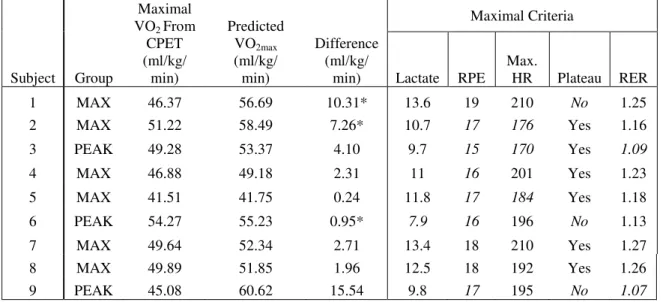
Table 2. Individual subjects’ obtained peak VO2 versus predicted VO2max. Lactate – blood lactate in mmol, RPE –
last stage RPE from Borg’s 6-20 scale, Max. HR - maximum heart rate in beats per minute, Plateau – evidence of a lack of increase in VO2 despite increased workload, and RER – respiratory exchange ratio. (*values that did not fit
the expected trend, when factoring in the 1-3.0 ml/kg/min error of the equipment; italicized values represent criteria that were not met using ACSM guidelines)
Subject Group
Maximal VO2 From
CPET (ml/kg/ min) Predicted VO2max (ml/kg/ min) Difference (ml/kg/ min) Maximal Criteria
Lactate RPE
Max.
HR Plateau RER
1 MAX 46.37 56.69 10.31* 13.6 19 210 No 1.25
2 MAX 51.22 58.49 7.26* 10.7 17 176 Yes 1.16
3 PEAK 49.28 53.37 4.10 9.7 15 170 Yes 1.09
4 MAX 46.88 49.18 2.31 11 16 201 Yes 1.23
5 MAX 41.51 41.75 0.24 11.8 17 184 Yes 1.18
6 PEAK 54.27 55.23 0.95* 7.9 16 196 No 1.13
7 MAX 49.64 52.34 2.71 13.4 18 210 Yes 1.27
8 MAX 49.89 51.85 1.96 12.5 18 192 Yes 1.26
9 PEAK 45.08 60.62 15.54 9.8 17 195 No 1.07
Discussion
Use of a dynamic systems model has the potential to accurately predict VO2 kinetics as
well as VO2max. By using this methodology, a comparison of obtained and predicted VO2max
values may enhance the certainty of a true maximal test. The purpose of this study was to evaluate the use of a dynamic systems model to confirm VO2max in individuals who obtained
maximal efforts, as well as predicting VO2max in individuals who were not able to achieve
maximal criteria.
The results of this initial study were quite surprising, yet not totally unexpected. The hypothesis stated that there would be no significant difference between the dynamic systems model predicted VO2max value when compared to the VO2max results achieved by the MAX
group, was not observed.
32
methodology inherently limits the parameter estimation, which is the most important step in predicting VO2max for this study.
One of the biggest affecters that limited parameter estimation was the lack of
instantaneous cadence acquisition during the CPET. The demand function was calculated using a fixed cadence of 50 RPM, but cadence was neither fixed nor near 50 RPM for any of the tests. Using real-time cadence allows the dynamic systems model to adapt to changes in cadence, despite a fixed-workload. That is to say that the current parameter estimation assumed a fixed demand function for each stage, as opposed to allowing the model to account for a changing demand function in each stage; which is the major advantage of the dynamic system model when compared to non-dynamical models for precise estimation of physiological responses during exercise.
In a similar respect, instantaneous power is necessary to collect and use, even when using an electronically braked cycle ergometer. The electronically braked cycle ergometer controls the power by adapting the torque of each pedal stroke based on the cadence. Due to the time delay from the detection of cadence to the adjustment of torque, instantaneous power output tends to fluctuate, despite the cycle ergometer reporting a steady workload. These small changes in torque, due to slight changes in cadence during the test, have the potential to alter the
physiological response to a stage, and are accounted for in the demand function of the model. By collecting both instantaneous power and cadence, the demand function plays a more dynamic role than in the current study, which most likely explains the inaccuracies in VO2max prediction
found in the current study.
33
continuously graded test, the oxygen on-kinetics, which is only part of the dynamic systems model, is only being assessed. By having a dynamic exercise protocol, it may be possible to achieve a more inclusive assessment of oxygen kinetics, which would provide a more accurate parameter estimation and VO2max prediction. Given the nature of dynamic systems modeling, it is
possible that the inclusion of oxygen off-kinetics would be more important than pushing to maximal workloads, which would allow for submaximal tests to predict VO2max, but that has yet
to be validated.
It is worth noting that although the parameter estimations and VO2maxpredictions are
individualized for each subject, having a larger sample in both the maximal and submaximal groups could help with the interpretation of the study results, due to the fact that the way the data was analyzed using paired-samples t-tests. Most likely, the analyses were underpowered, thus potentially producing erroneous interpretation of the data. The average difference for the MAX group between tests was 4.16 ml/kg/min, whereas the PEAK group demonstrated a difference of 6.87 ml/kg/min. Since the total number of individuals in each group was low, the two individuals in the max group and one in the PEAK group that did not follow the expected trend had a large influence on the standard deviation of each group. Despite the error in methodology, inclusion of more subjects may reveal a more normally distributed sample in each of the groups, increasing the statistical power. Further analysis should attempt to increase the sample size in order to see if the data becomes more normally distributed.
34
metabolic system used is can be between 1- 3.0 ml/kg/min, it may be important to note that only one subject remained within this margin of error. In the MAX group, two of the six individuals did not have absolute errors inside of 1-3.0 ml·kg-1·min-1 (Table 2), which does support that the model could predict inside the margin of error of the equipment. The two individuals in the MAX group who fall outside of this margin are enough to change the statistical significance of the group as a whole, and for these individuals, the instantaneous power and cadence demand functions could potentially be the major source of error of estimation.
It is essential that additional studies using the dynamic systems model include the instantaneous power and cadence data from the exercise session as well as off-kinetic stages when estimating the individual parameters. Without these inclusions, the parameter estimation appears to produce a larger error or estimation. Parameter estimation can, in some individual cases, provide VO2max predictions that appear to be accurate. However, more tightly controlled
studies are necessary in order to validate the use of a dynamic systems model for the purpose of predicting VO2max.
Conclusion
To our knowledge, this is the first study that attempted to predict VO2max with a dynamic
systems modelusing data obtained from a traditional CPET. The results suggest that
35
physiological responses, which provides a more inclusive assessment of cardiopulmonary capacity. Therefore, it is concluded that using the physiological data from a traditional CPET may not be the best exercise test to estimate VO2max using dynamic systems modeling, and
therefore, future studies which attempt to predict VO2max using a dynamic systems model should
36
REFERENCES
Albouaini, K., Egred, M., & Alahmar, A. (2007). Cardiopulmonary exercise testing and its application. Postgraduate Medical Journal, 83(985), 675–682.
http://doi.org/10.1136/hrt.2007.121558
American College of Sports Medicine. (2014). ACSM’s Guidelines for Exercise Testing and
Prescription (Ninth Edition). Philadelphia, PA: Wolters Kluwert/Lippincott Williams & Wilkins.
Basset, F. A., & Boulay, M. R. (2000). Specificity of treadmill and cycle ergometer tests in triathletes, runners and cyclists. European Journal of Applied Physiology, 81(3), 214– 221. http://doi.org/10.1007/s004210050033
Bassett, D. R., & Howley, E. T. (1997). Maximal oxygen uptake: “classical” versus
“contemporary” viewpoints. Medicine and Science in Sports and Exercise, 29(5), 591– 603.
Borg, G. (1970). Perceived exertion as an indicator of somatic stress. Scandinavian Journal of Rehabilitation Medicine, 2(2), 92–98.
Day, J. R., Rossiter, H. B., Coats, E. M., Skasick, A., & Whipp, B. J. (2003). The maximally attainable VO2 during exercise in humans: the peak vs. maximum issue. Journal of Applied Physiology (Bethesda, Md.: 1985), 95(5), 1901–1907.
http://doi.org/10.1152/japplphysiol.00024.2003
De Cort, S. C., Innes, J. A., Barstow, T. J., & Guz, A. (1991). Cardiac output, oxygen
consumption and arteriovenous oxygen difference following a sudden rise in exercise level in humans. The Journal of Physiology, 441, 501–512.
Fick, A. (1870). Ueber die Messung des Blutquantums in den Herzventrikeln. Sitz. Physik. Med. Ges, 2, 16.
Froelicher, V. F., Brammell, H., Davis, G., Noguera, I., Stewart, A., & Lancaster, M. C. (1974). A comparison of three maximal treadmill exercise protocols. Journal of Applied
Physiology, 36(6), 720–725.
González-Alonso, J., & Calbet, J. A. L. (2003). Reductions in systemic and skeletal muscle blood flow and oxygen delivery limit maximal aerobic capacity in humans. Circulation,
107(6), 824–830.
37
Howley, E. T., Bassett, D. R., & Welch, H. G. (1995). Criteria for maximal oxygen uptake: review and commentary. Medicine and Science in Sports and Exercise, 27(9), 1292– 1301.
Jones, L. W., Eves, N. D., Kraus, W. E., Potti, A., Crawford, J., Blumenthal, J. A., … Douglas, P. S. (2010). The lung cancer exercise training study: a randomized trial of aerobic training, resistance training, or both in postsurgical lung cancer patients: rationale and design. BMC Cancer, 10, 155. http://doi.org/10.1186/1471-2407-10-155
Kang, J., Chaloupka, E. C., Mastrangelo, M. A., Biren, G. B., & Robertson, R. J. (2001). Physiological comparisons among three maximal treadmill exercise protocols in trained and untrained individuals. European Journal of Applied Physiology, 84(4), 291–295. Mazzoleni, M. J., Battaglini, C. L., Martin, K. J., Coffman, E. M., & Mann, B. P. (2016).
Modeling and predicting heart rate dynamics across a broad range of transient exercise intensities during cycling. Sports Engineering, 1–11. http://doi.org/10.1007/s12283-015-0193-3
McKeever, K. H., McNally, B. A., Hinchcliff, K. W., Lehnhard, R. A., & Poole, D. C. (2016). Effects of erythropoietin on systemic hematocrit and oxygen transport in the
splenectomized horse. Respiratory Physiology & Neurobiology, 225, 38–47. http://doi.org/10.1016/j.resp.2016.02.001
Mier, C. M., Alexander, R. P., & Mageean, A. L. (2012). Achievement of VO2max criteria during a continuous graded exercise test and a verification stage performed by college athletes. Journal of Strength and Conditioning Research / National Strength &
Conditioning Association, 26(10), 2648–2654. http://doi.org/10.1519/JSC.0b013e31823f8de9
Neder, J. A., Nery, L. E., Silva, A. C., Andreoni, S., & Whipp, B. J. (1999). Maximal aerobic power and leg muscle mass and strength related to age in non-athlethic males and females. European Journal of Applied Physiology and Occupational Physiology, 79(6), 522–530.
Neuberg, G. W., Friedman, S. H., Weiss, M. B., & Herman, M. V. (1988). Cardiopulmonary exercise testing. The clinical value of gas exchange data. Archives of Internal Medicine,
148(10), 2221–2226.
Noakes, T. D., Myburgh, K. H., & Schall, R. (1990). Peak treadmill running velocity during the VO2 max test predicts running performance. Journal of Sports Sciences, 8(1), 35–45. http://doi.org/10.1080/02640419008732129
Rossiter, H. B., Kowalchuk, J. M., & Whipp, B. J. (2006). A test to establish maximum O2 uptake despite no plateau in the O2 uptake response to ramp incremental exercise.
38
Sawada, S. S., Muto, T., Tanaka, H., Lee, I.-M., Paffenbarger, R. S., Shindo, M., & Blair, S. N. (2003). Cardiorespiratory fitness and cancer mortality in Japanese men: a prospective study. Medicine and Science in Sports and Exercise, 35(9), 1546–1550.
http://doi.org/10.1249/01.MSS.0000084525.06473.8E
Skinner, J. S., McLellan, T. M., & McLellan, T. H. (1980). The transition from aerobic to anaerobic metabolism. Research Quarterly for Exercise and Sport, 51(1), 234–248. http://doi.org/10.1080/02701367.1980.10609285
Stirling, J. R., Zakynthinaki, M. S., & Saltin, B. (2005). A model of oxygen uptake kinetics in response to exercise: including a means of calculating oxygen demand/deficit/debt.
Bulletin of Mathematical Biology, 67(5), 989–1015. http://doi.org/10.1016/j.bulm.2004.12.005
Wood, W. A., Deal, A. M., Reeve, B. B., Abernethy, A. P., Basch, E., Mitchell, S. A., … Battaglini, C. (2013). Cardiopulmonary fitness in patients undergoing hematopoietic SCT: a pilot study. Bone Marrow Transplantation, 48(10), 1342–1349.