EXPLORING ORGANIZATIONAL INFLUENCES ON PATIENT SYMPTOM MANAGEMENT IN HOSPITALS
Cynthia Thornton Bacon
A dissertation submitted to the faculty of the University of North Carolina at Chapel Hill in partial fulfillment of the requirements for the degree of Doctor of Philosophy in the School of
Nursing
Chapel Hill 2012
Approved by:
Barbara Mark, PhD. Jennifer Leeman, DrPH
©2012
Cynthia Thornton Bacon ALL RIGHTS RESERVED
ABSTRACT
CYNTHIA THORNTON BACON: Exploring organizational influences on patient symptom management in hospitals
(Under the direction of Dr. Barbara Mark)
Nurses' abilities to effectively manage hospitalized patients' symptoms may be
influenced by organizational factors on the nursing units, particularly the size of the nursing unit, work complexity and nurses' participation in decision making. Guided by Structural Contingency Theory (SCT) which assumes that structural forms and context must match in
order for effectiveness to be achieved in organizations, this study assumes that achieving effective management of patient symptoms in hospitals depends on identification of nursing
unit structures that are best suited to the technological contexts in which nursing units
operate. The purpose of this study was to investigate the interrelationships among the nursing unit's context (unit size and work complexity), structure (nurses' participation in decision
making) and effectiveness (symptom management).
Mixed-effects linear models were used to test the data according to the hypothesized
statements. The hypothesized relationship between increased unit size, operationalized as number of beds, and increased work complexity was supported, but the relationship between increased unit size, operationalized as number of nurses, and increased work complexity was
not supported. The hypothesized relationship between increased work complexity and increased nurses' participation in decision making was not supported. Work complexity was
direction from that which was hypothesized. The hypothesized relationship between
increased nurse participation in decision making and patient ratings of symptom management
was not supported.
Despite the limitations of the study, this research highlights the importance of the
effects of unit size on work complexity for nurses that is often not accounted for when determining nurse staffing in hospitals. This study also illustrates the important effects of work complexity on nurses' ability to participate in decision making on nursing units.
Nurses' participation in decision making was found to be significantly negatively impacted by increasing work complexity which reinforces the importance of nurse leaders' facilitation
of work conditions that support nurses' full participation in decisions on nursing units.
Finally, this study provides support for continued research to identify organizational contexts and structures that foster the delivery of hospital care that is consonant with patients’
expectations for symptom management.
ACKNOWLEDGEMENTS
To complete a project of this magnitude requires a network of support, and I am indebted to many people. I am most particularly grateful to my incredible husband, Mark
Bacon, for his unwavering love and support throughout this entire process. The emotional support he provided gave me strength to move beyond adversity and achieve my goals. I am
also indebted to my children, Erin and Allison Bacon, and my parents, Ken and Carol Thornton for their steadfast support and encouragement.
I would also like to acknowledge my peer community at UNC School of Nursing
because without them it would have difficult to complete this journey. First and foremost I thank Charlie Wade who has been a dear friend, coach and cheerleader every step of the way. I also thank my friend Leo Yurek for encouraging and challenging me when I lost strength
and always making me laugh. Thanks must also go to my colleagues Deonni Stolldorf, Nora Warshawsky, Karen Jakub, Obi Melekwe and Joel Adams whose friendships I cherish.
Finally, I must thank my dissertation chair, Dr. Barbara Mark for providing me with
wisdom and insight into the scientific process and for the data used in this secondary analysis that were invaluable to my learning experience. Special thanks are extended also to each
member of my dissertation committee, Dr. Daniel Lee, Dr. Jamie Crandell, Dr. Noreen Esposito and Dr. Jennifer Leeman for their time, expertise, guidance, and commitment in the achievement of this personal goal and quest for knowledge.
TABLE OF CONTENTS
LIST OF TABLES...x
LIST OF FIGURES...xi
Chapter I. INTRODUCTION...1
Problem, Background & Significance...1
Improving Patient Symptom Management in Hospitals...7
Context, Work Complexity and Decentralized Decision Making...8
Research Questions...9
Chapter Summary...11
II. THEORETICAL FOUNDATION ...12
Utilizing Structural Contingency Theory to Investigate Organizational Influences on Patient Symptom Management...12
Context...15
Technology...20
Structure...31
Effectiveness...33
Theoretical Model...35
Chapter Summary...37
III. REVIEW OF THE LITERATURE...38
The Importance of Symptom Management in Patient Centered Care...38
Symptom Management in Hospitals...39
Research Approaches to Symptom Management...42
Nurse Participation in Decision Making and Improvements in Care Processes and Outcomes...49
Linking Research Model Components: Unit Size to Increased Work Complexity to Nurse Participation in Decision Making and Management of Patient Symptoms...52
Control Variables...55
Case Mix Index (CMI)...55
Unit Tenure...56
Years of Experience...57
Educational Preparation...58
Chapter Summary...59
IV. RESEARCH METHODOLOGY...60
ORNA II Study...61
ORNA-II Research Design...62
ORNA-II Sample...64
ORNA-II Data Collection Procedures...65
Current Study...68
Definition and Measurement of Variables...70
Contextual Variables...74
Structural Variables...74
Effectiveness Variables...75
Definition and Measurement of Control Variables...75
Unit of Analysis and Data Aggregation...76
Nursing Units and Clustering...80
Model Building/Statistical Approach...80
Chapter Summary...81
V. STUDY RESULTS...82
Study Variables...87
Correlations Between Study Variables...89
Testing for Assumptions Underlying Multiple Regression...91
Missing Data...96
Hypothesis Testing...97
Chapter Summary...101
VI. DISCUSSION. ...103
Hypotheses Testing...103
Unit Size and Work Complexity...103
Work Complexity and Nurses' Participation in Decision Making...105
Nurses' Participation in Decision Making and Patient Perceptions of Symptom Management...108
Theoretical Implications...110
Practice Implications...112
Policy Implications...115
Study Limitations...116
Recommendations for Future Research...120
Summary...122
APPENDICES ...124 REFERENCES ...127
LIST OF TABLES Table
1. Dimensions of Technology...22
2. Collection Points and Sources of Data...69
3. Definition and Measurement of Study Variables and Data Sources...71
4. Statistics for Data Aggregation...79
5. Types of units in sample...83
6. Descriptive Statistics for Registered Nurses on Units...85
7. Descriptive Statistics for Patients on Units...86
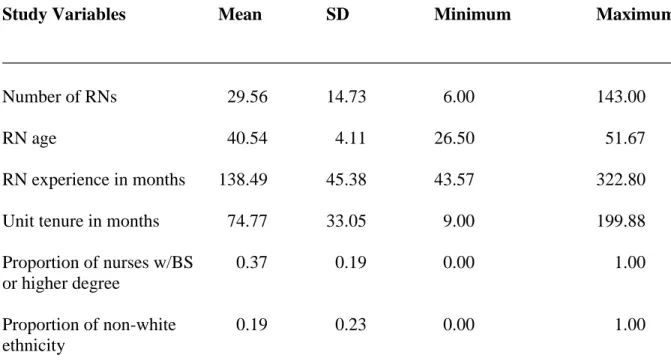
8. Descriptive Statistics for Study Variables...88
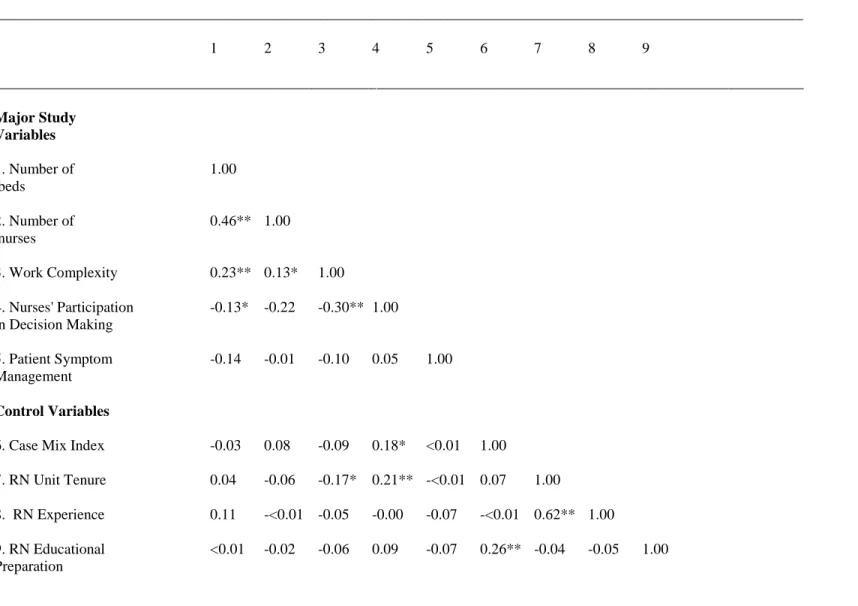
9. Correlations Among Study Variables...90
10. Mixed Model for Work Complexity...97
11. Mixed Model for Work Complexity...98
12. Mixed Model for Nurses' Participation in Decision Making...99
13. Mixed Model for Patient Symptom Management...100
14. Factor Analysis for Decision Making Scale...106
LIST OF FIGURES
1. Dissertation Conceptual Model...10
2. Key Concepts in Structural Contingency Theory...14
3. Conceptual Model Redrawn...20
4. Dissertation Full Model...36
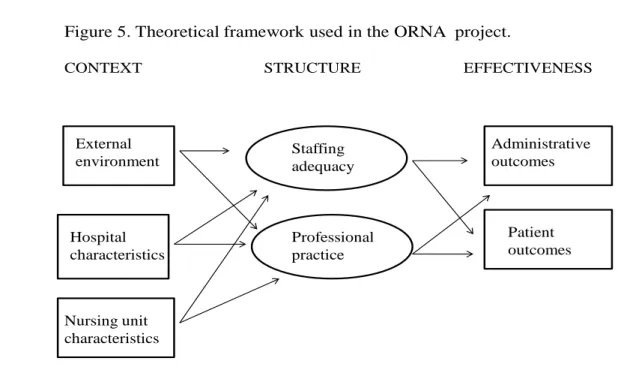
5. Theoretical Framework Used in the ORNA Project...62
6. Sampling Framework...65
7. ORNA-II Data Collection...68
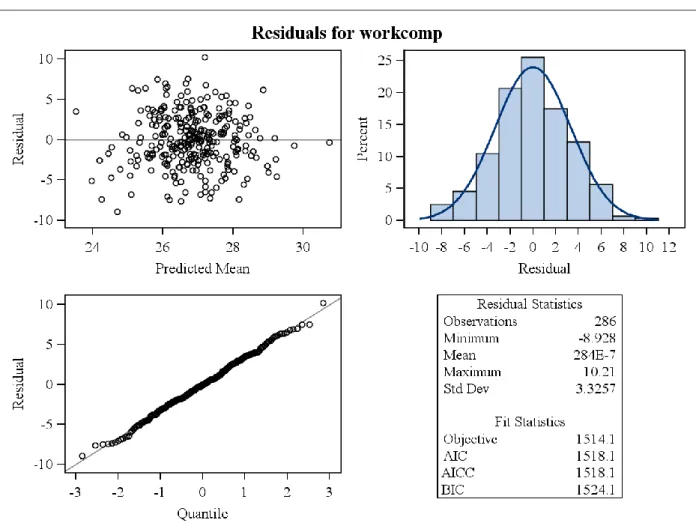
8. Residual Plot for the Mixed Model for Work Complexity - Hypothesis 1...92
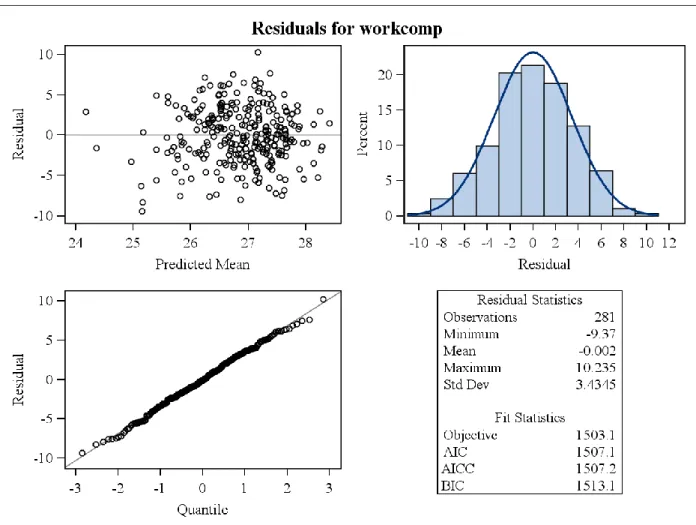
9. Residual Plot for the Mixed Model for Work Complexity - Hypothesis 1A...93
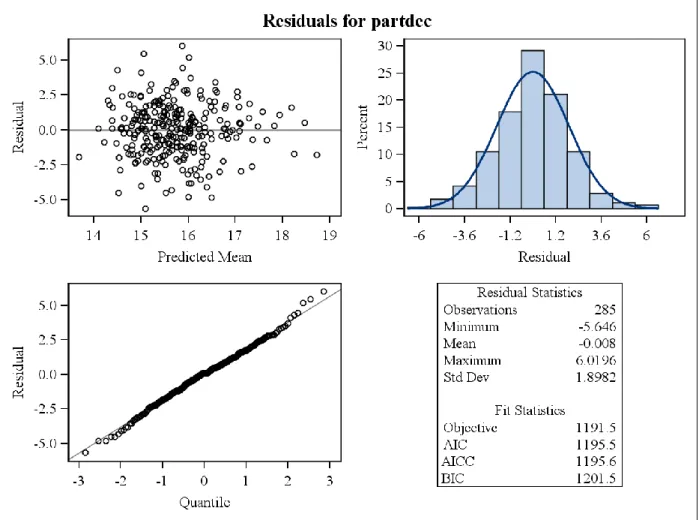
10. Residual Plot for the Mixed Model for Nurses' Participation in Decision Making - Hypothesis ...94
11. Residual Plot for the Mixed Model for Patient Symptom Management - Hypothesis 3...95
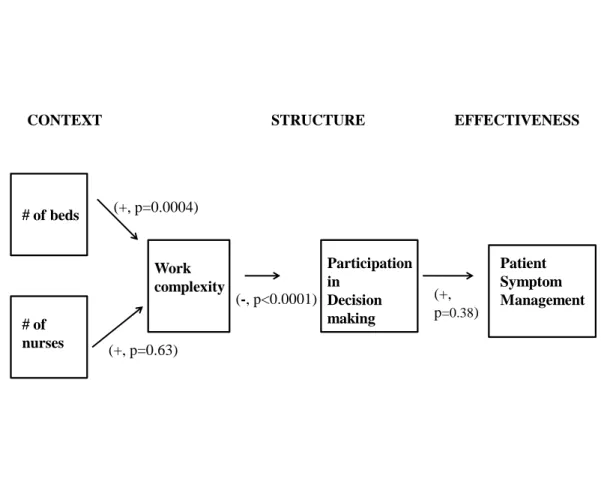
12. Summary of Significant Relationships...102
CHAPTER 1 INTRODUCTION
PROBLEM, BACKGROUND & SIGNIFICANCE
The health care system in the United States (U.S.) has been under intense scrutiny in
the last two decades as concerns about the quality of health care have grown. Several
prominent review panels have played an important role in publicizing these quality issues as they documented the large scale and seriousness of the problem (Advisory Commission on
Consumer Protection and Quality in the Health Care Industry, 1998; Committee on Quality of Health Care in America Institute of Medicine (IOM, 2001). These landmark reports
stimulated research and discussion about improving the quality of health care, particularly related to patient safety, but it remains unknown whether these efforts will translate into better quality care for patients (Leape & Berwick, 2005; Provonost, Holzmueller, Needham,
Sexton, Miller et al., 2006; Stelfox, Palmisani, Scurlock, Orav & Bates, 2006; Watcher, 2010). Recent research characterizes progress towards health care quality and safety as
"showing pockets of excellence on specific measures or in specific services at individual health care facilities" (Chassin & Loeb, 2011), but also that consistently high levels of quality have not yet been achieved (Chassin & Loeb, 2011; Landrigan, Parry, Bones,
Hackbarth, Goldmann & Sharek, 2010; Leape & Berwick, 2006). Therefore, problems with health care quality remain today.
2
shortcomings in the way care is organized. The U.S. health care system often lacks the environment, processes and capabilities to ensure that services are in line with the IOM's
aims of safe, effective, patient-centered, timely, efficient and equitable care (Committee on Quality of Health Care in America IOM, 2001).
Substantial research has been done to investigate factors that are associated with quality patient care. Patient-centeredness has been found to play a key role in patients' assessment of what constitutes quality care and in their ratings of the effectiveness of health
care interventions (Berwick, 2009; Committee on Quality of Health Care in America Institute of Medicine (IOM), 2001; Saha, Beach & Cooper, 2008). Patient-centeredness focuses on the
patient's experience of illness and health care and on the systems that do or do not meet individual patients' needs. Researchers have identified six dimensions of patient-centered
care:
respect for patients' values preference and needs
coordination and integration of care
information, communication and education
physical comfort including management of symptom distress emotional support including relieving fear and anxiety
involvement of family and friends
(Committee on Quality of Health Care in America Institute of Medicine (IOM), 2001; Gerteis, Edgman-Levitan & Daley, 1993; Saha et al., 2008). Patients' preferences are highly
specific to each individual and they can change over time depending on the circumstances or the problem in question. Because patients are variable in their preferences, clinicians alone
3
Henderson & Wennberg, 1995; Brock, 1991; Emanuel & Emanuel, 1992; Wagner, Barrett, Barry, Barlow & Fowler, 1995). Patients increasingly want to be involved in health care
decision making (Deber, Kraetschmer & Irvine, 1996; Guadagnoli & Ward, 1998; Mansell, Poses, Kaziz & Duefield, 2000) but they differ in terms of how large a role they wish to
assume (Committee on Quality of Health Care in America Institute of Medicine (IOM), 2001). Therefore, the goal of patient-centeredness is to "modify the care to respond to the patient, not the patient to the care" (Committee on Quality of Health Care in America (IOM),
2001, p. 51). For these reasons, health providers and systems must be dynamic - they must be structured to adapt and respond to variations in order to effectively meet patient needs.
Despite the IOM's efforts encouraging providers to structure health care in a patient- centered manner patient centered care is not always well implemented. Patients have
expressed frustration with their inability to fully participate in health care decisions affecting
them (Braddock, Edwards, Hassenberg, Laidley & Levinson, 1999; Cleary, Edgman-Levitan, Roberts, Moloney, McMullen, Walker & Delbanco, 1991) and often do not get their comfort
needs fully met. In addition, several studies report that patients frequently experience pain, shortness of breath and other distressing symptoms while hospitalized and fail to receive adequate pain relief or respiratory management (Ingham and Foley, 1998; SUPPORT
Principal investigators, 1995). Patients also report emotional and spiritual suffering that is not well addressed by health providers (Byok, 1998; Cassell, 1991). Thus, this study will focus
on one aspect of patient- centered care - meeting comfort needs through management of symptom distress.
Addressing patients' comfort needs through effective management of distressing
patient-4
centered care and increasing health care effectiveness. High levels of symptom distress have been associated with reduced quality of life (Germino, 1987) and decreased satisfaction with
hospital care (Jackson, Chamberlin & Kroenke, 2001; Kroenke, Stump, Clark, Callahan, & McDonald, 1999).Further, patients who experience higher levels of symptom distress during
hospitalization are more likely to require home care once discharged (McCorkle, Strumpf, Nuamah, Adler, Cooley, Jepson, Lusk & Torosian, 2000). The experience of troubling symptoms creates distress for patients and it also disrupts social functioning (Dodd, Janson,
Facione, Faucet, Froelicher et al., 2001).
In general, two approaches have been typical of the research to investigate effective
management of patient symptoms. First, researchers have conducted studies with individuals as the unit of analysis to identify specific patients who either have or are at risk for these concerns. Cancer patients have been most widely studied because despite the variety of
disease processes, and stages of the disease, cancer patients share many of the same
characteristics of symptom distress (McCorkle, 1973) and needs for nursing care (Holmes &
Eburn, 1989). A recurrent theme in the research literature on symptom management in cancer patients finds cancer pain is inadequately assessed despite the magnitude and the negative consequences on unrelieved symptoms in this population (Von Roenn, Cleeland, Gonin,
Hatfield & Panda, 1993; Ward, Goldberg, Miller-McCauley, Mueller, Nolan et al., 1993) and when it is assessed it is undertreated (Cleeland, 1998; Cleeland, Gonin, Hatfield,
Edmondson, Blume et al., 1994). Further, evidence supports the underassessment of fatigue (Rieger, 2001; Stone, Richardson, Ream, Smith, Kerr & Kearney, 2000) and depression
5
However, more recent research indicates that the prevalence of symptom distress is high in both cancer and noncancer patients (Tranmer, Heyland, Dudgeon, Groll,
Squires-Graham & Coulson, 2003). Studies indicate that patients are especially vulnerable to distressing symptoms during hospitalization, particularly pain, lack of energy, sleep
disturbances and nausea, (Kris & Dodd, 2004; Kroenke et al.,1999; Tranmer et al., 2003) and these symptoms are often poorly controlled (Kris & Dodd, 2004; Toscani, Di Giulio,
Brunelli, Miccinesi & Laquintana, 2005).
Recent research suggests that symptom distress is highly prevalent among many groups of hospitalized patients. In a study of 2,100 hospitalized medical patients, the
majority of patients reported distressing symptoms, with 80% admitting to fatigue on admission (Kroeneke et al, 1999). Subsequent research confirms that these findings are also true in medical-surgical populations where patients reported an average of nine symptoms
per patient, with 74% reporting pain, 67% reporting dry mouth, and 50% or more reporting lack of energy, difficulty sleeping and drowsiness (Kris & Dodd, 2004). These findings
suggest that symptom distress is widespread in hospitalized patients. Further, these symptoms do not appear to be treated as effectively as they could be because patients
reported symptoms that failed to resolve by hospital discharge 25-50% of the time (Kroeneke
et al, 1999). It is possible that organizing care in a manner that maximizes caregivers' abilities to deliver high levels of patient-centered care may influence management of patient
symptoms in hospitals.
Second, researchers have isolated factors thought to contribute to ineffective management of patient symptoms. These include patient/family, professional and system
6
to services, cultural and religious issues and ineffective communication with providers (Beck, 2004). For example, knowledge and language barriers may lead to less optimal
symptom relief for patients (Beck, 2004). Even when information and access barriers are removed, research indicates that effective management of symptoms remains difficult
because family members report inability to implement or maintain recommended treatments and competing demands from other distressing symptoms, suggesting that providers'
coordination and integration of treatment for symptom distress could be improved (Johnson,
Kassner, Houser & Kutner, 2005). Professional barriers include those related to health care providers such as misconceptions and attitudes about how people perceive and behave in
response to symptoms and lack of knowledge (Beck, 2004). For example, significant differences have been found between cancer patients' and nurses' perceptions of symptom occurrence and distress with nurses underestimating the majority of symptoms expressed by
patients (Tanghe, Evers & Paridaens, 1998). Further, in a study comparing provider, patient and caregiver perceptions of symptom distress in cancer patients in a hospital hospice care
unit, neither family caregivers nor physicians were able to give congruent distress scores for distressing symptoms experienced by patients (Oi-Ling, Man-Weh & Kam-Hung, 2005). System barriers focus on the organization and structure of care including a lack of or reduced
access to resources needed to deliver effective care to patients and these are often considered in terms of perceptions of consumers and/or providers or as observable characteristics of the
system (Melnyk, 1988). For example, in a study examining barriers to effective symptom management in hospices, nurses perceived difficulty achieving effective patient-family-provider relationships as the chief barrier to effective symptom management (Johnson et al,
7
symptoms including lack of an integrated approach to managing patient symptoms, lack of
care coordination and ineffective teamwork (Beck, 2004).
Improving Patient Symptom Management in Hospitals
Health care experts suggest that the highly complex work environment in hospitals
plays an important role in contributing to difficulties in providing patient centered and effective care (Committee on Quality of Health Care in America Institute of Medicine (IOM), 2001). Narrowing this focus to a specific aspect of patient-centered care,
management of patient symptoms, researchers have found differences in symptom
management across both hospitals and nursing units, unexplained by patient characteristics (Brown, Sandoval, Murray & Boissonnault, 2008; Desbiens, Wu, Broste,Wenger, Connors,
Lynn, Phillips, Fulkerson, 1996). These findings suggest that organizational characteristics may influence the extent to which patient symptoms are perceived as effectively managed
while patients are hospitalized.
There is growing evidence of a link between the structure of organizational systems and symptom management outcomes but most of this research has been limited to the
symptom of pain. Organizational factors that affect pain management have been found to include low prioritization of pain; lack of written standards for assessment and management
of pain; lack of accountability for pain management and lack of criteria for pain management in quality improvement initiatives (National Institute of Nursing Research, 1994).
Specifically, the structure of the nursing unit has been shown to be important to the management of pain because it can either facilitate or hinder effective pain management (Foster, 1991; Hester, Miller. Foster & Vojir, 1997; Miller, 1994). However, the nature of the
8
capture because much of the research has failed to consider the nursing unit as a complex entity in which multiple interelationships exist between characteristics of the nursing unit,
such as the size of the unit, nurse staffing, and the complexity of the work on the unit and structural mechanisms, such as the participation in decision making that underpins
professional nursing practice, that are needed to achieve effective symptom management for patients.
One study by Bacon and colleagues (Bacon, Hughes & Mark, 2009) utilized such a
comprehensive approach when they tested a structural contingency theoretical model of the relationships of hospital context, nursing unit structure, and patient characteristics to patients’
perceptions of the extent to which nurses met their expectations for management of a range of troubling symptoms. These researchers found that when structural mechanisms facilitating professional nursing practice (autonomy, participation in decision making and collaboration
with other health providers) were present on the nursing unit patient symptom management was significantly positively impacted (Bacon et al, 2009). This study will focus on the effects
of one of these structural supports - nurses' participation in decision making - on nurses' ability to effectively manage patient symptoms.
Context, Work Complexity and Decentralized Decision Making
To explore the relationship between nursing unit context, work complexity and the
structural mechanisms needed to achieve effective symptom management for patients the following is proposed: the size of the nursing unit is an important contextual characteristic because unit size (number of beds and number of nursing staff) determines the work volume
9
patients - increases there is increased uncertainty due to the need for new information about the additional patients, increased unpredictability due to inability to predict when new
admissions will arrive (Argote, 1982) and increased requirements for control and coordination (Ford & Slocum, 1977). As the number of patients increase, the number of
nursing staff needed to care for them also is expected to increase. Increased unit size thus results in increased work complexity and this increased complexity then affects how
decisions are made on the nursing unit. With increased complexity, there is also an increased
need to control and manage the inputs - patients (Ford & Slocum, 1977). When decisions focused on patient care are required, decentralized methods of decision making may
maximize nurses' flexibility and discretion (Argote, 1982), and may lead to improved symptom management. In addition, when nurses participate in decision making they may have more control over their work and may be more effective in the care of their patients,
including symptom management (Mark, Salyer & Wan, 2003; Mark, Hughes, Belyea, Chang, Hoffman, Jones & Bacon, 2007). In this manner nurses contribute to unit organization and
functioning which then impacts their ability to care for patients including management of troubling symptoms.
Research Questions
Despite the key role that hospital nurses play in monitoring symptoms and acting to ensure that they are resolved, their contributions to the management of patients’ symptoms
during hospitalization are not well understood. Further, the size of nursing units may present previously unrecognized challenges to nurses' ability to effectively manage patients'
symptoms. Finally, although the positive effects of nurse participation in unit level decision
10
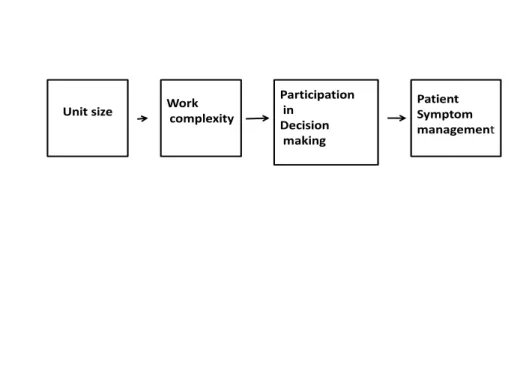
patient symptoms has not been well documented. This research aims to fill these gaps by exploring these relationships. The conceptual model for this dissertation in noted below in
figure 1. This model will be described in detail in the next chapter.
Figure 1: Dissertation Conceptual Model
Unit size Workcomplexity
Participation in
Decision making
Patient Symptom management
Based on this conceptual model, the following research questions are proposed: 1) What is impact of size on work complexity on medical-surgical units in acute care
hospitals?
2) What is the impact of work complexity on participation in decision making on
medical-surgical units in acute care hospitals? 3) What is the impact of participation in decision making on patient symptom management
11 Chapter Summary
In this chapter, the need to investigate organizational effects on patient symptom
management was described. Before such research can be conducted, however, it is important to develop a theoretically meaningful understanding of the link between unit size, work
CHAPTER 2 THEORETICAL FOUNDATION
UTILIZING STRUCTURAL CONTINGENCY THEORY TO INVESTIGATE ORGANIZATIONAL INFLUENCES ON PATIENT SYMPTOM MANAGEMENT
Symptom distress is widespread and poorly controlled in hospitalized patients
(Kris & Dodd, 2004; Kroeneke et al, 1999). As discussed in the previous chapter, there may be certain organizational factors on the nursing units that influence the extent to which nurses can effectively manage patients' symptoms. One of the factors affecting nurses' capacity to
deliver care is the size of the nursing unit. Unit size determines work volume through the number of patients that are admitted to the unit and the number of nursing staff required to
care for them. As the size of the units increases there is increased uncertainty due to the need for new information about additional patients and unpredictability due to inability to predict when new admissions will arrive (Argote, 1982) necessitating increased information
processing among nurses on the unit (Galbraith, 1974). Increases in unit size are also associated with tighter administrative control, increased task differentiation and increased
bureaucratization (Blau, 1970; Blau & Schoenerr, 1971) suggesting that on units with more nurses there is a greater need for control and coordination of work activities and that a larger proportion of unit activity may be allocated to administrative duties at the actual or perceived
expense of direct patient care, (Alexander, 1984) particularly the effective management of patient symptoms. Increased numbers of patients and nurses leads to increased complexity of
13
participation in decision making, that support increased information processing among
nursing staff to effectively manage patient symptoms (Galbraith, 1974).
One organizational theory that focuses on the relationships among context (in this case, unit size and the complexity of patient care), how work is organized (in this case, participation in decision making) and organizational effectiveness (in this case, management
of symptom distress) is Structural Contingency Theory (SCT). SCT arose in the
mid-twentieth century as a direct challenge to the classical management perspective that assumed
that an ideal organizational structure could be identified and universally applied to all organizations in order to achieve the best possible performance. Structural contingency
theory emerged as a paradigmatic shift in the ideas governing how researchers and managers thought about organizational structure. Instead of a single approach to organizational
structure, organizations began to be described as open systems that interact with the context
in which they functioned and in which structures were expected to vary depending on their particular context (Child, 1975).
Lawrence and Lorsch (1967) are credited with the "contingency theory" label which has two core assumptions. The first is that there is no single best way to structure or organize the work in an organization1. This rejects the assumption of a single best approach to
structuring work assumed by classical management theorists. The second assumption of structural contingency theory is that different approaches to organizational structure are not
equally effective (Donaldson, 2001; Galbraith, 1973; Scott, 2003). This rejects the classical argument and suggests that multiple structures can be effective as long as they are matched to
1
14
the contextual contingencies faced by the organizations in which they operate (Betts, 2003; Ford & Slocum, 1997; Galbraith, 1973; Ifinedo, 2007; Ifenido & Nahar, 2006; Peterof &
Reed, 2007; Scott, 2003; Shafritz & Ott, 1996; Tosi & Slocum, 1984; Weill & Olsen, 1989; Zott & Amit, 2007). SCT theorists further assert that certain structural forms may work in
some contexts but not work in others because structural forms and context must match in order for optimal performance to be achieved. The major relationships examined in
contingency theory are diagrammed in Figure 2.
Figure 2. Key Concepts in Structural Contingency Theory
CONTEXT STRUCTURE EFFECTIVENESS
Environment
Structure Organizational Effectiveness
Technology
Technology has been defined as the nature of the raw materials (i.e. the complexity of patients' care) and how the work (i.e. nursing care) is structured to transform these raw material inputs (hospitalized patients) into completed outputs (discharged persons)
15
determinants of its structure, with structure defined as the administrative mechanisms that are used to coordinate, organize and control work activities (Donaldson, 2001; Jackson &
Morgan, 1986). Structure is a key factor in determining how information is communicated both within and outside the boundaries of the organization, how and by whom decisions are
made, and how the production of goods or services is divided among workers (Ambrose & Schminke, 2003; Hollenbeck, Moon, Ellis, West, Ilgen et al., 2002; Pugh, Hickson, Hinings, & Turner, 1968). Effectiveness has no widely agreed upon conceptual definition in SCT,
however, it is often discussed in terms of organizational performance as the achievement of desired goals or results (Donaldson, 2001).
Context Environment
Context incorporates both the environment and technology of the organization.
Environment has been defined as the factors or inputs that are both within and beyond the boundaries of the focal organization (i.e. the nursing unit) that have the potential to influence
the way the organization is structured and determines how work is completed. Although SCT distinguishes an external environment from an internal environment, it is the nursing unit's internal environment that is the focus of this study. The internal environment is composed of
factors within the boundaries of the nursing unit that affect its functioning. The internal environment at the nursing unit is seen as especially relevant since it is the level at which the
transformation of inputs to outputs occurs (i.e. nursing care to patients). For this reason, the internal environment is recognized as a source of contingencies that are relevant to structure and, ultimately, performance (Duncan, 1972; Lawrence & Lorsch, 1967; Leatt & Schneck,
16 Size
The size of the nursing unit is an important environmental contingency because the size (defined in this study as the number of beds and the number of nursing staff) determines
work volume through the number of patients that are admitted to the unit. As work volume - more patients - increases there is increased patient activity and turnover (Unruh & Fottler, 2006) and an increased need for new information about the additional patients (Argote,
1982). As the number of patients increase, the more likely there is to be patient turnover as evidenced by transfers in and transfers out of the unit as well as patient transfers to and from
diagnostic and interventional procedures (Unruh & Fottler, 2006). These transfers are highly labor intensive and increase the need for information sharing among nurses in order to coordinate these patient care activities. They also may divert time and attention away from
the nurse's ability to respond to patients' needs for symptom relief. There may be increased need for information processing which may be best managed through participation in
decision making among the nurses (Galbraith, 1974) because when nurses are involved in decisions about patient care they can more easily coordinate and control patient care
activities (Comstock & Scott, 1977) and may be better able to manage patient symptoms as a
result.
Large volumes of patients may also lead to competing demands for nurses' time and
attention because the potential for more patients who might experience a change in condition increases as volume increases. When such changes occur, the nurses are faced with providing care in the midst of competing priorities (Ebright, 2010; Cook & Woods, 1994). For
17
diagnosis and threatening to leave the hospital against medical advice, while another patient simultaneously calls for assistance to deal with a sudden onset of severe pain. Or a nurse may
be asked to accept a new admission while in the process managing acute nausea in a post-operative patient, while a new graduate nurse concurrently seeks her assistance to manage the
unanticipated decision to discharge a patient two days earlier than planned to make room for another new admission. In such instances, nurses' participation in decision making may assist the nurses to better manage the needs of their patients because they can more easily
coordinate and prioritize the job tasks that must be carried out carry out in the face of competing demands.
As diagrammed in the Figure on page 3, traditional interpretations of SCT consider the environment and size to be co-occurring factors independently affecting the
organization’s structure. However, an argument can be made that the key environmental
variable in this study – unit size – actually affects the complexity of work on nursing units (the technology). Thus, increased size influences work complexity through its affects on
patients and the nursing care that they require.
Unit size is also determined by the number of nurses required to care for the patients residing on the unit. As the number of patients increases, it is expected that the
number of nurses will also increase in order to maintain effective levels of staffing. Most prior research has defined nurse staffing as the ratio of registered nurses to total nursing staff
18
lower 30-day patient mortality (Estabrooks, Midodzi, Cummings, Ricker & Giovannetti, 2011).
Research over the last decade suggests that the creation and maintenance of effective nursing teams is more complicated on larger nursing units with more nurses. While larger
teams may provide more efficient, cost-effective care (Barry-Walker, 2000), as the number of nurses increases there are more likely to be communication barriers that arise due to the increasing complexity and the larger number of coworkers that nurses need to interact with
(Kalisch & Begeny, 2005; Kalisch & Lee, 2011) as they carry out their job tasks. Large team size may make it more difficult to achieve the high level of teamwork required as work
complexity increases (Kalisch & Begeny, 2005) and nurses may be less satisfied with their jobs (Mark, Salyer & Wan, 2003). In nursing units with more nurses there have been higher reported levels of intragroup conflict (Cox, 1997; Cox, 2001) however, the association
between intragroup conflict and large numbers of nurses can be buffered by nurses'
perceptions of unit morale and interpersonal relationships. This suggests that units with large
number of nurses can minimize conflicts and communicate effectively when nurses participate in decision making as this can be perceived as one aspect of a supportive peer-work group environment. Participation in decision making may increase nurse job
satisfaction on these larger units and may in turn promote effective patient symptom management.
When there are more patients on the nursing unit work complexity is expected to increase because more frequent patient transfers and multiple competing patient demands increase the requirements for their nurses to control and coordination their care (Ford &
19
to increase because it becomes increasingly challenging for larger groups of nurses to effectively communicate and coordinate the work - patient care - that needs to be carried out
on the unit (Smith, Smith, Olian, Smis, O'Bannon & Scully, 1994). This suggests a relationship between unit size and work complexity with increased size likely to result in
increased work complexity.
Consistent with this argument, the following hypothesis is proposed:
Hypothesis 1: As unit size (the number of beds) increases, work complexity will increase on nursing units.
Hypothesis 1 A: As unit size (the number of nurses) increases, work complexity will increase on nursing units.
Increased work complexity affects nurses' capacities to process the information needed to effectively carry out the transformation process in which their patients become discharged
persons (Alexander & Bauerschmidt, 1987). Nurses will then have an increased need for information processing which can best be obtained through their participation in decision
20
CONTEXT STRUCTURE EFFECTIVENESS
Size
Work complexity
Participation in
decision making
Patient Symptom Management Figure 3: Conceptual Model Redrawn
# of beds
# of nurses
Technology
Alexander and Bauerschmidt (1987) define nursing technology as the acts employed by nurses to change the status of an individual from hospitalized patient to a discharged person. This is consistent with SCT which conceptualizes technology as the work or tasks to
be carried out by the organization (Burns and Stalker, 1961; Lawrence & Lorsch, 1967; Perrow, 1967; Thompson,1967) and is further specified as the actions that an individual
performs upon an object, referred to as raw materials, within an organization in order to make some change in that object (Perrow, 1967). Therefore, nursing technology can be
further specified in terms of both the raw materials - patients - and the transformation process - the nursing care required to transform these patients. Using a framework developed by Perrow (1967) and later applied to nursing work, (Alexander & Bauerschmidt, 1987;
21
1977) researchers describe three dimensions that depict the nature of nursing technology: uncertainty, instability and variability. These dimensions are illustrated below in Table 1.
The discussion that follows will focus first on the nature of the raw materials - the patients - and then the nature of the transformation process - the nursing care - as they relate to
Table 1
Dimensions of Technology
___________________________________________________________________________________________________ Concepts Definitions
___________________________________________________________________________________________________ Technology in general
___________________________________________________________________________________________________ Technological Uncertainty Lack of knowledge or information about the raw material to be transformed in
the process of work (Perrow, 1967)
Absence of information about work (Daft & Lengel, 1986)
General lack of knowledge about cause-effect relationships (Duncan, 1972; Lawrence & Lorsch, 1967)
An inability to assign probabilities as to the likelihood of future events (Duncan, 1972; Pennings, 1981; Pennings & Tripathi, 1978; Pfeffer & Salancik, 1978)
An inability to predict accurately what the outcomes of a decision might be (Downey & Slocum, 1975; Duncan, 1972; Hickson, Hinings, Lee, Schneck, & Pennings, 1971; Schmidt & Cummings, 1976).
Technological Instability Degree to which raw materials and transformation processes present unexpected exceptions for workers (Comstock & Scott, 1977)
Unpredictable change in work (Milliken,1987)
Technological Variability Extent that the transformation of raw materials can be standardized or require continual adjustment (Perrow, 1967)
Table 1 (continued)
___________________________________________________________________________________________________ Concepts Definitions
___________________________________________________________________________________________________ Number of exceptional cases encountered in the work requiring different methods or procedures for doing the work (Van de Ven & Delbecq, 1974)
Stability or uniformity of inputs and outputs (Hickson et al., 1971; Thompson, 1967) Degree to which workers must engage in multiple tasks (Alexander & Randolph, 1985; Overton et al., 1977)
Diversity of inputs (Rousseau, 1983)
___________________________________________________________________________________________________ Technology in Nursing - Raw Materials (Patients)
___________________________________________________________________________________________________ Concepts Definitions
___________________________________________________________________________________________________ Uncertainty Degree to which there is insufficient knowledge about the raw materials (patients)
(Overton, Schneck, and Hazlett, 1977)
Patients with more than one diagnosis and complex nursing problems (Leatt & Schneck, 1981)
Instability Unpredictability arising from changes in each patient's condition (Overton, Schneck, and Hazlett, 1977)
Degree of unpredictable fluctuations in raw materials - patients (Leatt & Schneck, 1981; Overton, Schneck, and Hazlett, 1977)
Frequency and magnitude of moment-to-moment changes in patient conditions (Mark & Hagenmueller, 1994; Mark, Sayler & Smith, 1996)
Table 1 (continued)
___________________________________________________________________________________________________ Concepts Definitions
___________________________________________________________________________________________________ Patients who require frequent nursing observation and attendance, highly specialized technical monitoring, and/or might require emergency procedures (Overton,
Schneck, and Hazlett, 1977)
Variability Unpredictability arising from variations among patients (Overton, Schneck, and Hazlett, 1977)
Extent to which patients have multiple, different problems (Leatt & Schneck, 1981) ___________________________________________________________________________________________________
Technology in Nursing - Nurses' Work
___________________________________________________________________________________________________ Concepts Definitions
___________________________________________________________________________________________________ Uncertainty Inability to attribute specific cause and effect relationships between nurses' work and
its outcomes (Mark, Sayler & Smith, 1996)
Difficulty in identifying a clear and consistent relationship between a particular nursing action and a specific patient outcome (Mark & Hagenmueller, 1994) Probability of achieving intended patient outcomes when there is insufficient knowledge about patients (Overton, Schneck, and Hazlett, 1977)
Extent to which lack of information about patients leads to complex patient problems, difficulty in nurses' problem solving and changes in nursing care related to discerning patient needs (Leatt & Schneck, 1981)
Table 1 (continued)
___________________________________________________________________________________________________ Concepts Definitions
___________________________________________________________________________________________________ Degree to which nurses' work is difficult to understand or complex (Alexander & Bauerschmidt, 1987)
Instability Degree to which nurses are required to deal with increased frequency and magnitude of moment-to-moment changes in patient conditions (Mark, Sayler & Smith, 1996) Extent to which nursing observations and interventions are required due to
unpredictable changes in patient conditions (Leatt & Schneck, 1981; Overton, Schneck & Hazlett, 1977)
Degree to which unpredictable fluctuations in patients leads to unpredictable fluctuations in work techniques and practices (Alexander & Bauerschmidt, 1987) Variability Degree to which nurses are required to deal with patients who have diverse health
problems (Mark, Sayler & Smith, 1996)
Extent to which differences in types of patient leads to differences in nursing tasks performed (Alexander & Bauerschmidt, 1987)
Unpredictability arising from the nursing care needs of large varieties of patients (Overton, Schneck, and Hazlett, 1977)
Extent to which large variety in patients' problems affect nurses' decisions and problem solving related to their patients (Leatt & Schneck, 1981)
26
Uncertainty is concerned with knowledge. Uncertainty arises when there is a lack of knowledge or information about the raw material to be transformed during the work process
(Perrow, 1967). Typically, this lack of knowledge refers to a general lack of knowledge rather than a specific individual's learned knowledge. Uncertainty with respect to patients
focuses on the degree to which there is insufficient knowledge about them (Overton, Schneck & Hazlett, 1977) which leads to difficulty in identifying a clear and consistent relationship between nursing actions taken to deal with specific patient problems and the resultant
outcomes (Mark & Hagenmueller, 1994). Further, because patients with high levels of uncertainty tend to possess more than one diagnosis and complex nursing problems (Leatt &
Schneck, 1981) it can be difficult for nurses to discern and prioritize their needs.
Perrow (1967) defines instability in terms of whether the raw materials can be treated in a standardized fashion. If the materials have a high degree of instability they are perceived
as non-routine or non-standardized. Nursing researchers further define instability with respect to patients as a situation where patients' needs are often changing (considered
non-routine by Perrow) because they possess unpredictable fluctuations and shifting needs that often do not follow a typical pattern or trajectory (Alexander, 1996). When changes in patients’ conditions are frequent and of high magnitude, they are considered to present with a
high level of instability (Mark, Slayer & Smith, 1996). Discerning patents' needs when there are unpredictable and changing needs is challenging for nurses because it will be difficult for
27
Variability in terms of patients refers to differences among patients which is measured by the degree to which patients exhibit different problems that lead to the
application of many nursing techniques (Alexander & Bauerschmidt, 1987). According to Perrow, organizations uniformly seek to standardize their raw materials to minimize
exceptional situations (1967). Hospitals generally try to do this by grouping patients in a manner so that their clinical needs are similar, for example patients are placed in nursing units according to clinical diagnoses and specialty, and their care is organized in a standard
manner when possible through protocols or care pathways that map standard courses of treatments for specific diagnoses or procedures. However, when patients are placed in units
where they typically do not receive care, such as when hospital occupancy is high, exceptional situations will be more likely because nurses will be unfamiliar with the standards of care required by these patients.
Large numbers of patients on the nursing unit may increase the likelihood that there will be a large differences in the patients and thus there will be a high variety in patient needs
(Alexander, 1996). When patients needs vary highly it may be more difficult for nurses to assess, monitor and treat their needs because they may not be as familiar with the wide variety of needs that they must meet. As a result, when patient variability is high it may be
more difficult for nurses to make decisions that best meet patients' needs for management of their symptoms.
Work complexity
In the present study, the work to be completed by the organization is the delivery of
28
are uncertain, unstable and variable, the work of providing care can be described as complex. When patients are uncertain there is insufficient knowledge for nurses to transform them
from hospitalized patients to discharged persons. Thus, patient uncertainty leads to uncertainty in nurses' work because nurses are responsible for carrying out the
transformation process. When nurses' work is uncertain, there is an inability to attribute specific cause and effect relationships between nurses' work and its outcomes - this means that nurses are unclear how their nursing actions might affect patients' abilities to achieve
their goals i.e. symptom relief. Moreover, it is not only the existence of uncertainty that is important, but the amount as well, because when there is extensive uncertainty about patients'
needs, it is more likely that patients' problems will be complex (Leatt & Schneck, 1981), which makes nurses' problem solving more difficult. Further, because uncertain patients have uncertain needs, nurses are challenged in determining the care that they will provide in
order to best meet patients' needs (Leatt & Schneck, 1981). For example, when atypical or "off-service" patients are placed on the nursing unit, or when unexpected admissions occur,
nurses may be unfamiliar with the specific needs of such patients. Nurses may lack information about the clinical course that these patients are expected to follow, they may struggle to find the most effective treatment for a patient's problem and they may not be as
apt to anticipate and respond to symptoms that might occur. Thus, patient uncertainty may lead to increased uncertainty and complexity in nurses work (Alexander & Bauerschmidt,
1987) because nurses must frequently revise their plan of care, determine alternate treatment options and mobilize the treatment team to achieve effective patient outcomes.
When patients are unstable their needs change frequently and in an
29
challenging because nurses must care for patients in the midst of frequently changing patient conditions. When patients' needs change from moment-to-moment, nursing care changes
from moment-to-moment. The more unpredictable the changes, the greater the extent of nursing observations and interventions that are required (Leatt & Schneck, 1981; Overton,
Schneck & Hazlett, 1977). In such situations, nurses may have little time to gather and process the information needed to make effective patient care decisions, and must act quickly to determine the best plan of action for their patients. When patients are unstable they may
experience problems that are both sudden and acute and need immediate attention. In such situations, this affects nurses' abilities to meet patients' needs because they must provide their
care in the midst of competing priorities for multiple patients. For example, a nurse may be caring for a patient with onset of acute anxiety who is distraught about their diagnosis and threatening to leave the hospital against medical advice, while another patient simultaneously
calls for assistance to deal with a sudden onset of severe pain, while a nurse colleague seeks assistance in planning the best course of action for a patient who has experienced a sudden
fall. Instability in nursing work increases the complexity of the job tasks that nurses must carry out and may make it more challenging for them to meet the needs of their patients.
When patients are highly variable the extent to which patients have multiple, different
problems is high (Leatt & Schneck, 1981) and there is a high degree of unpredictability in determining their needs because of the variations among the patients (Overton, Schneck &
Hazlett, 1977). When patients are highly variable, nurses' work becomes more demanding because nurses must deal with patients who have diverse health problems (Mark, Sayler & Smith, 1996), perform many diverse tasks depending on the diversity of patient problems
30
care needs that arise when there are large variety of patients (Overton, Schneck & Hazlett, 1977). Further, when there is a large variety in patients there will be a large variety in
patients' problems that must be addressed which will affect nurses' decision making and problem solving abilities (Leatt & Schneck, 1981).
When patient variability is high, it will be more challenging for the nurses to be fully knowledgeable about each patients' specific needs because they may not be as familiar with the care that they need. When there is high variability in work, a high level of worker
expertise and participation in decision making is needed in order to achieve effectiveness (Randolph & Finch, 1977; Schoonhoven, 1981) so that workers can obtain the knowledge
they require to carry out their job tasks. Therefore, as nursing work becomes more complex, there is an increased need for information processing among nurses in order to perform patient care tasks (Galbraith, 1974; Kozlowski et al, 1999; Olson & Teasley, 1996; Salvador,
Scholtz & Larson, 1996; Weick, 1976).
Complexity in nursing work has important implications for the information
processing requirements (the amount of information that has to be processed between
decision makers during execution of tasks) at the subunit level and therefore for the structural form that is most likely to result in unit effectiveness (Galbraith, 1974). The greater the work
complexity, the greater the amount of information that must be processed among decision makers (nurses) during patient care in order to achieve effective symptom management. This
suggests that work complexity increases the need for participation in decision making. Thus, unit size contributes to the increased complexity of nursing work and influences the structure that supports the work, which in turn, may influence the effectiveness of symptom
31
In summary, the raw materials - patients - present as uncertain, unstable and variable, contributing to the complexity of nursing work which then necessitates high levels of
collaboration and information sharing among team members (McGrath, 1991; Sundstrom, deMuese& Futrell, 1990). This argument is supported in SCT as Galbraith (1974) asserts that
the greater the complexity of work, the greater the amount of information that must be processed among decision makers during task execution in order to achieve a given level of performance. Greater information processing capacity is obtained through nurses'
participation in decision making.
Structure
Participation in Decision-making
SCT defines structure as the administrative mechanisms that are used to coordinate, organize and control work activities (Donaldson, 2001; Jackson & Morgan, 1986).
Determining the appropriate structure for an organization is dependent upon the demands placed upon it by the organization's context, i.e. its environment and technology. As
previously discussed, the complexity of nursing work requires high levels of participation in decision making to achieve effective symptom management. This is because the raw
materials - patients - are uncertain, variable and unstable which makes care of them complex,
and when work - the transformation process achieved through nursing care - is complex, more information needs to be shared among members of the work team - nurses.
Participation in decision making, described as horizontal participation by some researchers (Alexander, 1984; Pugh et al, 1968) refers to the practice of managers allowing subordinates to be involved in decision making and problem solving in their work groups
32
they are better positioned to quickly gather the information needed to more fully understand patients' problems and assemble a plan to treat them. This increases their knowledge about
patients' specific needs which may make them more apt to pick up on subtle changes in their conditions. In this manner then, symptoms may be detected earlier in a patient's clinical
course when they may be more easily treatable as opposed to later in a clinical course when they may be more difficult to treat. Therefore, nurses' participation in decision making may influence nurses' ability to manage the increasing complexity that results from increasing
numbers of patients on the nursing unit. For example, when nurses are involved in designing nurse-patient assignments they can more quickly mobilize the resources needed to make
changes to these assignments because they understand the assignment making process. In such a situation, when one nurse's patient develops an acute problem requiring immediate attention, the other nurses can quickly assemble an on-the-spot plan that temporarily
disperses the care of that nurse's other patients among her nurse colleagues so she can deal with the immediate problem at hand. If nurses had not been allowed to participate in how
such decisions were made there could be a delay in getting patient care needs met, such as management of their troubling symptoms, as they sought a supervisor to assist them in this process.
Increased size and work complexity affects the need for decision making in the work unit. As size increases there is a increased need to control and manage the inputs (Ford &
Slocum, 1977). This is particularly true in the case of nonprogrammed decisions (complex and novel decisions) which characterize patient care as contrasted to programmed decisions (those that are repetitive and routine). When more nonprogrammed decisions are required,
33
are needed to maximize the flexibility and discretion with which nurses can make decisions (Argote, 1982).
It is the assertion of this study that the complexity of nursing work necessitates high levels of information sharing among nurses in order to facilitate the complex decision
making that occurs. The mechanism hypothesized to best accomplish this in the nursing unit is to increase the capacity to process information and bolster the information sharing process among the nurses on the nursing unit and between levels of the nursing unit hierarchy
(Galbraith, 1973). Nurse participation in decision making should maximize the information that nurse have available to them, reducing the uncertainty that is in part caused by
fluctuations and increases in patient volumes, and thus exert more control over their work which will in turn allow them to provide more effective care for patients through better management of their troubling symptoms. This is supported by research conducted by
Jirathummakoon (2004) which found that on nursing units where nurses felt they influenced decision making about patients' pain, patients had shorter lengths of stay, suggesting that
patients' were able to be discharged more quickly because their pain was better managed. In light of these arguments the following hypothesis is proposed:
Hypothesis 2: As work complexity increases, nurses participation in decision making will increase.
Effectiveness
34
management during hospitalization. Symptoms can be defined as subjective experiences in the biophysical functioning, sensations or cognition of an individual (Dodd, et al, 2001). The
symptoms most commonly experienced by patients during hospitalization include nausea, pain, difficulty sleeping, headache, mobility issues, and lack of energy (Kris & Dodd, 2004;
Kroenke et al., 1999; McCorkle & Young, 1978; Tranmer et al., 2003). Symptom distress is widespread in hospitalized patients (Kris & Dodd, 2004) and symptom relief is often
ineffective because symptoms persist at hospital discharge in up to 50% of patients
(Kroeneke et al, 1999). Management of troubling symptoms is important to patients and meeting expectations for symptom relief has been identified as a strong predictor of patient
satisfaction (Jackson, Chamberlin, & Kroenke, 2001; Kroenke et al, 1999). Hospitalized patients who have persistently severe symptoms tend to be less satisfied with their care than patients who experience improvement in symptom severity (Desbiens et al., 1996; Jackson et
al., 2001; Kroenke et al.,1999). Because of nurses' direct care roles, symptom management can be directly attributable to the care that nurses provide. An important component of
patient's perceptions of their symptoms involves how well they are treated and the effects of these symptoms on their lives (Dodd et al, 2001). If nurses are effectively responding to patients' symptoms then patients are expected to have positive perceptions regarding
management of their symptoms.
This study hypothesizes that symptom management is a measurement of
effectiveness. Previous research indicates that hospitalized patients are more likely to state that their expectations for symptom management were met on subunits where the nursing workgroup reported better work conditions (Bacon, Hughes & Mark, 2009). A primary
35
nurses participate in decisions at the unit level, they increase the capacity to process
information. This is because information is collected at the point of origin - the nursing unit -
and can be directed quickly to dealing with the immediate problems at hand. Joint planning and problem solving is also facilitated which fosters lateral relationships among nurses on the
unit (Galbraith, 1974). Enhanced and expedited information sharing and decision making should make it easier for nurses to mobilize the resources necessary to better anticipate and manage patients' troubling symptoms. Therefore, the following hypothesis is proposed:
Hypothesis 3: As nurses' participation in decision making increases, patients will report better management of their symptoms.
Theoretical Model
Achieving effective management of patient symptoms in hospitals will depend on identification of nursing unit structures that are best suited to the technological contexts in
which nursing units operate. The role of unit size as it affects work complexity and the effect of work complexity on nurses' participation in decision making and effective management of
36
Figure 4: Dissertation Full Model
CONTEXT STRUCTURE EFFECTIVENESS
# of beds
# of nurses
Work Complexity
Nurses’ Participation in Decision
Making
Patient Symptom Management
Control Variables
Case Mix Index Unit tenure Years of experience Educational preparation
Of note in this theoretical model is the representation of the contextual factors as they relate to structural contingency theory. Traditional SCT generally discusses the contextual
components of environment and technology separately with environment drawn above technology as was depicted earlier in figure 2 (see page 13). While traditional SCT
acknowledges that these contextual factors are important determinants of the structure adopted by the organization, a weakness of the theory is that it doesn't discuss how environment and technology may be related. In the present study, the proposed research
examines a model in which environmental contingencies lead to technological contingencies that the organization must structure itself for. In this model, size leads to work complexity
37
In summary, the hypotheses to be tested in this study are:
Hypothesis 1: As unit size (the number of patients) increases, work complexity will increase on nursing units.
Hypothesis 1A: As unit size (the number of nurses) increases, work complexity will increase on nursing units.
Hypothesis 2: As work complexity increases, nurses' participation in decision making will increase.
Hypothesis 3: As nurses' participation in decision making increases, patients will report better management of their symptoms.
Chapter Summary
In this chapter, Structural Contingency Theory was presented as the theory that will be used to investigate organizational influences on patient symptom management.
Hypotheses were developed and the research model was described. In chapter 3, a synthesis of the literature addressing the variables in the research model developed for this study will
CHAPTER 3 REVIEW OF THE LITERATURE
THE IMPORTANCE OF SYMPTOM MANAGEMENT IN PATIENT CENTERED CARE
When health care organizations are structured in a patient-centered manner, research
indicates that patient outcomes are improved. For example, patient-centered communication has enabled patients to gain common ground with their physician, improve their health status and increase the efficiency of their care (Jayadevappa & Chhatre, 2011; Stewart, Brown,
Doner, McWhinney, Oates et al, 2000; Wanzer, Booth-Butterfield & Gruber, 2004). Patient-centered nursing interventions are characterized by responsiveness, individualization,
coordination and proficiency (Lauver, Ward, Heidrich, Keller, Bowers et al, 2002; Ward et al, 2002; Radwin, Alster & Rubin, 2003; Radwin, Cabral & Wilkes, 2009). When nursing interventions for hospitalized patients are structured to provide patient centered care, patients
report increased trust in nurses, an improved sense of well-being and increased optimism in their prognosis (Radwin et al., 2009; Zambroski, Moser, Bhat & Ziegler, 2005). Given that
nurses are principally responsible for the direct care that patients receive in hospitals, it is important that nursing care - particularly the management of patient symptoms - be delivered
in an patient-centered manner.
Effective management of symptoms is important to the health status of individuals and populations. This is strikingly illustrated through research examining the prevalence of
39
health care visits (Kroeneke, Zhong, Theobald,Wu, Wanzhu & Carpenter, 2010) and several symptoms, including back pain, fatigue and dizziness, are strongly associated with functional
impairment (Gatchel, Ricard, Brede & Howard, 2009; Hung, Krebs, Coups, Feinstein, Park, Burkhalter & Ostroff, 2011; McCaslin, Jacobsen, Grantham, Piker & Verghese, 2011).
However, despite the fact that symptom distress is pervasive and many studies, particularly those related to pain, have been conducted during the past two decades, research in symptom management remains fragmented. Most research has focused primarily on specific groups,
most often cancer patients, and patients' experiences outside the hospital. Research
examining patients' symptom management experience in hospitals has been limited leaving a
lack of complete information about its predictors, prevalence, severity, contributing factors, and relationship to patient and other outcomes.
Symptom Management in Hospitals
Symptoms at the time of hospitalization are an important diagnostic tool and an indicator of the likely course of the hospital stay (Kroenke et al, 1999; McGaughey, Alderdice, Fowler, Kapila, Mayhew et al, 2007; Ng, Niti, Tan, Cao, Ong et al, 2007).
Management of patient symptoms while hospitalized is also important to patient outcomes as it is a critical indicator of patient satisfaction with the care that they receive (Bacon et al,
2009; Bacon & Mark, 2009). Research examining symptoms of hospitalized patients gained momentum in the last decade with studies focusing on the frequency and persistence of
symptoms from admission to discharge (Kroeneke et al, 1999) and symptom burden (Desbiens et al, 1999; Goodell & Nail, 2005). Researchers have learned that hospitalized patients do not tend to suffer from single symptoms such as pain, rather they suffer more