DEVELOPMENT OF A THEORY-BASED INTERVENTION FOR COMMUNICATION OF HEALTHCARE DECISIONS IN ATHLETIC TRAINING: THE CHAT STUDY
Melissa C. Kay
A dissertation submitted to the faculty at the University of North Carolina at Chapel Hill in partial fulfillment of the requirements for the degree of Doctor of Philosophy in the Department
of Interdisciplinary Human Movement Science in the School of Medicine.
Chapel Hill 2019
Approved By:
Johna K. Register-Mihalik Zachary Y. Kerr
Kristen L. Kucera Meredith A. Petschauer Kurt M. Ribisl
iii ABSTRACT
Melissa C. Kay: Development of a Theory-Based Intervention for Communication of Healthcare Decisions in Athletic Training: The CHAT Study
(Under the direction of Johna K. Register-Mihalik)
Optimal decision-making by athletic trainers, grounded in best practices, is vital to optimize patient healthcare. However, many challenges exist within the athletic environment hindering consistency, efficacy, and/or effectiveness of concussion-related decision-making by athletic trainers. Therefore, the study purpose was to 1) understand factors impacting decision making, and 2) develop a novel intervention tool to prepare athletic training students for high-pressure situations which require the ability to make an appropriate medical decision to withhold an athlete from concussion-related symptoms. Improving athletic trainer preparation regarding making and implementing appropriate decisions can improve secondary concussion prevention and patient outcomes. This mixed-methodological study design incorporated formative research and intervention development/testing. Formative research was conducted via survey with certified athletic trainers (n=1029) and athletic training educators (n=55), and with surveys (n=840) and interviews (n=15) with athletic training students. The intervention was developed using the Predisposing, Reinforcing, and Enabling Constructs in Education/Environmental Diagnosis and Evaluation (PRECEDE) planning model. This development incorporated preliminary data and formative research grounded in the Integrated Behavior Model.
iv
pressure (p=0.001; p=0.044). For athletic training students, quality significantly affected self-efficacy (p=0.003) and intentions to make appropriate decisions despite pressure (p<0.001). From the educator perspective, quality and quantity of healthcare communication focus, and general attitudes were independent constructs with minimal differences within educational programs (general attitudes; z=2.16; p=0.03). Additionally, participants explained a large desire for greater focus on these topics despite positive findings. The designed intervention improved perceived behavioral control (p=0.027), self-efficacy (p=0.001), and intentions despite pressure (p=0.011), situation (p=0.003), and setting (p=0.012).
These influential factors over decision-making may place athletes at further injury risk and negatively impact overall athlete health. Healthcare communication is not a mandated portion of athletic training curriculum but appears to have statistically and clinically significant effects on the intentions to make appropriate concussion-related decisions. As such, it is
v
ACKNOWLEDGEMENTS
Completing a dissertation is not an easy task and it would not be possible without the direction and support of those around me. I would not have been able to succeed without them and for that, I am forever grateful.
To my mentor, Dr. Johna Register-Mihalik, I have had an amazing time learning from you over the last few years and I am looking forward to our continued relationship. The amount of time, effort, and faith you placed in me as your student only made me want to succeed more. I have learned so much from you over the past four years and I truly value our time spent together. Your passion for being a holistic faculty member focused on all aspects of success including research, scholarship, teaching, and service have been a blessing to learn from and I aspire to live up to those standards personally and professionally moving forward. Thank you for taking me on as your first PhD student and offering me the opportunity to continue to grow.
vi
strong mentor and role model regarding how to be a successful athletic training faculty member. It has been so great to see someone so successful in all aspects of the job, while still highlighting clinical rapport. You have truly helped me see and appreciate the value of translational research and the end goal. To Dr. Kurt Ribisl, thank you for taking a chance on an outsider when I was able to take classes in Health Behavior. These classes and having you as a mentor on my committee allowed me to apply concepts that were new, novel, and innovative, prioritizing overall health and behavior change on a more global level. Without all of you, my dissertation and doctoral experience would have suffered greatly.
From a professional perspective, particularly as a member of the community targeted within this dissertation, I am proud and inspired by the willingness to discuss hard questions, and value this study’s potential benefit to the community at large. I have truly learned the value of integrating multiple perspectives and translational research agendas to ultimately impact care. To my fellow G’fellas (inclusive of the LBC and GSD), you all have made this journey so incredibly fun and rewarding. It has been awesome getting to know you, learning from you, being friends with you, and working with you. I am truly looking forward to seeing where life takes all of us and I cannot wait to keep working with you in the future.
vii
TABLE OF CONTENTS
List of Tables ... xiv
List of Figures ... xv
List of Abbreviations and Symbols. ...xvi
Chapter 1: Introduction ... 1
1.1The Burden of Athletic Injury ... 1
1.2Athletic Trainer Role ... 3
1.3Challenges with Injury-Related Decision-Making ... 4
1.4Statement of the Problem ... 6
1.5Specific Aims ... 7
1.6Research Hypotheses... 8
1.7 Independent Variables ... 9
1.8Dependent Variables ... 9
1.9Definition of Terms ... 9
1.10 Operational Definitions ... 10
1.11 Assumptions ... 11
1.12 Delimitations ... 11
1.13 Limitations ... 11
1.14 Significance of the Proposed Study ... 12
viii
2.1Epidemiology of Sport Injury... 14
2.1.1Overall ... 15
2.1.2Concussion... 16
2.2Burden of Sport Injury ... 17
2.2.1Societal Burden ... 18
2.2.2Community and Organizational Burden ... 19
2.2.3Interpersonal Burden ... 20
2.2.4Intrapersonal Burden ... 21
2.3Athletic Trainer Role in Sport Injury ... 22
2.3.1Role in Injury Prevention... 23
2.3.2Role in Injury Management ... 25
2.4 Injury-Related Decision-Making ... 26
2.4.1Diversity of Settings ... 27
2.4.2Diversity of Stakeholders ... 28
2.4.3Communication and Collaboration ... 29
2.5Athletic Training Education ... 29
2.5.1Current Educational Format ... 29
2.5.2Content of Education ... 30
2.5.3Areas of Educational Improvement ... 31
2.6Methodological Literature Review ... 32
2.6.1Applying the Integrated Behavior Model to Decision-Making ... 32
2.6.2Applying the PRECEDE-PROCEED Planning Model to Decision-Making ... 34
ix
Chapter 3: Methods ... 40
3.1Research Design ... 40
3.2Formative Research – Aim 1 ... 40
3.2.1Participants ... 41
3.2.2Instrumentation and Variables ... 42
3.2.3Procedures ... 48
3.2.4Analyses... 50
3.3Formative Research – Aim 2 ... 52
3.3.1Participants ... 53
3.3.2Instrumentation and Variables ... 53
3.3.3Procedures ... 54
3.3.4Analyses... 55
3.4 Intervention Development and Pilot – Aim 3 ... 56
3.4.1Participants ... 56
3.4.2Instrumentation and Variables ... 57
3.4.3Procedures ... 60
3.4.4Analyses... 61
Chapter 4: Specific Aim 1a Overview, Results, and Background ... 75
4.1 Overview and Background ... 75
4.2 Study Sample ... 77
4.3 Measures ... 78
4.4 Statistical Analysis ... 80
x
4.5.1 Descriptives ... 81
4.5.2 Confirmatory Factor Analyses ... 82
4.5.3 Overall Model Fit ... 82
4.5.4 Significant Partial Path Predictors in Structural Model ... 83
4.5.5 Significant Full Path Predictors in Structural Model ... 83
4.6 Discussion ... 84
4.7 Limitations... 87
4.8 Conclusions ... 87
Chapter 5: Specific Aim 1b Overview, Results, and Background ... 93
5.1 Overview and Background ... 93
5.2 Study Sample ...95
5.3 Measures ... 96
5.4 Statistical Analysis ... 98
5.5 Results ... 99
5.5.1 Descriptives ... 99
5.5.2 Confirmatory Factor Analyses ... 100
5.5.3 Overall Model Fit ... 100
5.5.4 Significant Partial Path Predictors in Structural Model ... 101
5.5.5 Significant Full Path Predictors in Structural Model ... 101
5.6 Discussion ... 102
5.7 Limitations... 104
5.8 Conclusions ... 104
xi
6.1 Overview and Background ... 114
6.2 Study Sample ... 116
6.3 Measures ... 116
6.4 Statistical Analysis ... 117
6.4.1 Qualitative ... 117
6.4.2 Quantitative ... 118
6.4.3 Integration ... 118
6.5 Results ... 118
6.5.1 Quantitative ... 118
6.5.2 Qualitative ... 119
6.5.3 Integrated ... 120
6.6 Discussion ... 121
6.7 Limitations... 123
6.8 Conclusions ... 124
Chapter 7: Specific Aim 3 Overview, Results, and Discussion ... 133 7.1 Overview and Background ... 133
7.2 Intervention Strategies and Application ... 135
7.2.1 Conceptual Design ... 135
7.2.2 Formative Research ... 136
7.2.3 Program Planning and Development ... 139
7.2.4 Program Implementation and Initial Evaluation ... 141
7.3 Discussion ... 143
xii
Chapter 8: Additional Supporting Results ... 149
8.1Aim 1a – Certified Athletic Trainers ... 149 8.2Aim 1b – Athletic Training Students ... 152 Chapter 9: Summary of Study ... 157
9.1Summary Specific Aim 1 ... 157
9.2Summary Specific Aim 2 ... 158
9.3Summary Specific Aim 3 ... 159
9.4 Scientific Lessons Learned ...160
9.5Future Directions And Next Steps ... 161
Appendix A. Formative Research - Athletic Training Student Interview Protocol ... 163
Appendix B. Preliminary Study Interview Protocol ... 166
Appendix C. Formative Research – Certified Survey Initial Recruitment Email ... 168
Appendix D. Formative Research – Student Survey Initial Recruitment Email ... 169
Appendix E. Formative Research – Certified Survey Reminder Recruitment Email ... 170
Appendix F. Formative Research – Student Survey Reminder Recruitment Email ... 171
Appendix G. Formative Research – Student Interview Initial Recruitment Email ... 172
Appendix H. Formative Research – Student Interview Reminder Recruitment Email ... 173
Appendix I. Formative Research – Educator Survey Initial Recruitment Email ... 174
Appendix J. Formative Research – Educator Survey Reminder Recruitment Email ... 175
Appendix K. Consort Diagrams ... 176
Appendix L. Intervention Outline ... 177
Appendix M. Intervention Lesson Plans ... 183
xiii
Appendix O. Survey Questions By Construct ... 190
Appendix P. Formative Research – Certified Athletic Trainer Survey ... 193 Appendix Q. Formative Research – Athletic Training Student Survey. ...220 Appendix R. Formative Research – Athletic Training Educator Survey ... 248
Appendix S. Intervention Didactic Content ... 270
xiv
LIST OF TABLES
Table 2.1. Integrated Behavior Model Construct Definitions... 36
Table 3.1. Variables by Aim ... 63
Table 3.2. Data Analyses by Aim ... 67
Table 4.1. Certified Athletic Trainer Descriptives by Construct ... 89
Table 4.2. Path Analysis Final Model Sources and Paths of Influencea ...90
Table 5.1. Personal Participant Demographics ... ... 106
Table 5.2. Professional Participant Demographics ... ... 108
Table 5.3. Athletic Training Student Descriptives by Construct ... 110
Table 5.4. Path Analysis Final Model Sources and Paths of Influence ... 111
Table 6.1. Personal Demographic Questions ... 125
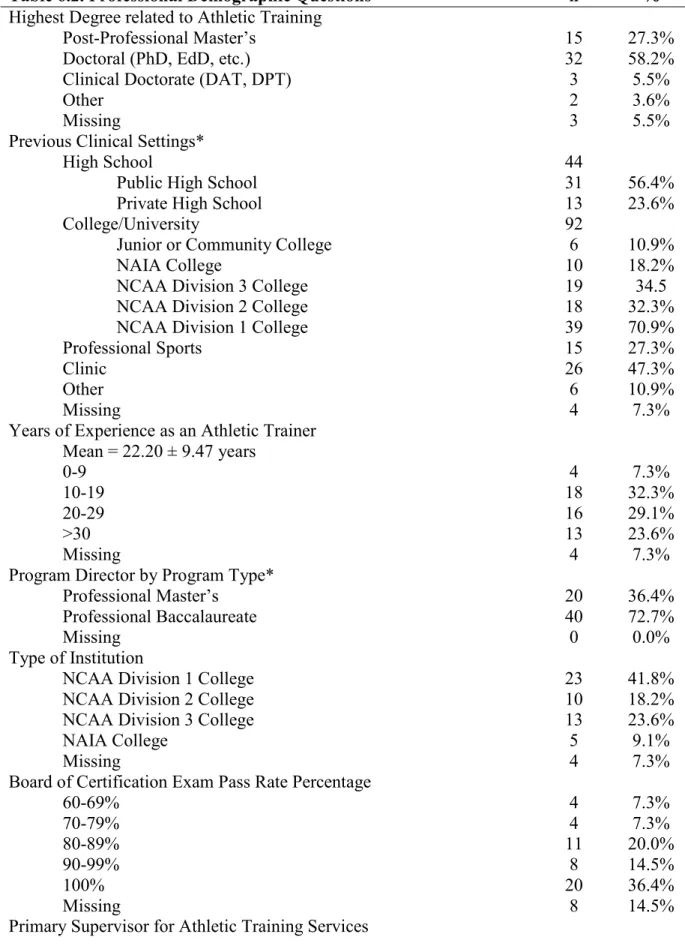
Table 6.2. Professional Demographic Questions ... ... 126
Table 6.3. Construct Questions and Descriptives ... ... 128
Table 6.4. Categorization and Frequency of Open-Ended Responses ... 130
Table 6.5. Athletic Training Educator Joint Display Array ... 132
Table 7.1. Construct Descriptives for Comparison ... 145
Table 7.2. Analysis of Variance by Time and Program Type ... 146
xv
LIST OF FIGURES
Figure 2.1. Socioecological Framework ... 37
Figure 2.2. Integrated Behavior Model ... 38
Figure 2.3. PRECEDE Planning Model ... 39
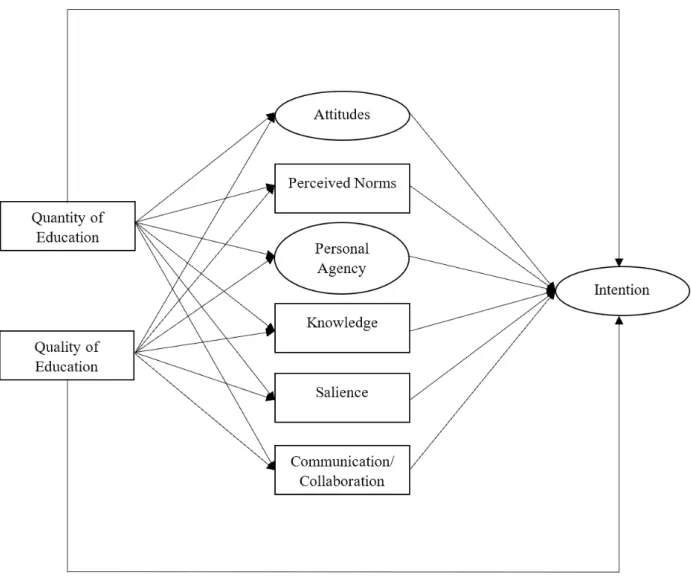
Figure 3.1. Conceptual Model ... 68
Figure 3.2. Project Timeline ... 69
Figure 3.3. Certified Athletic Trainer Sample ... 70
Figure 3.4. Athletic Training Student Sample ... 71
Figure 3.5. Sampling Timeline ... 72
Figure 3.6. Simplified Model for Power Analysis of the Path Analysis ... 73
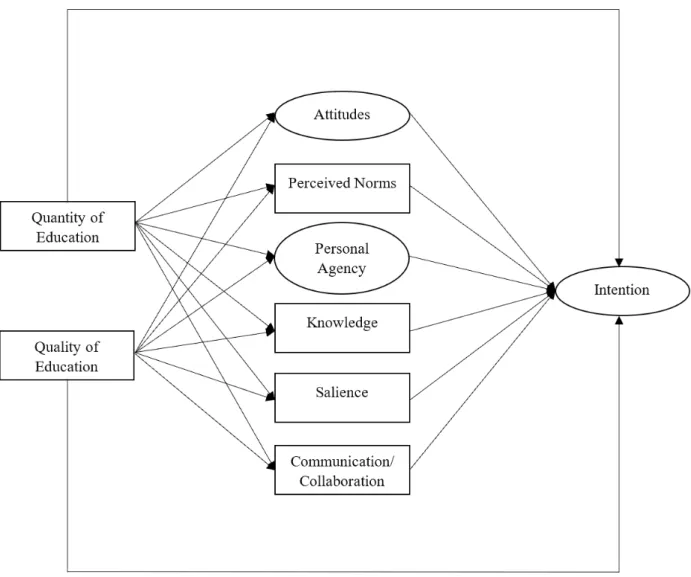
Figure 3.7. Proposed Path Analysis Model ... 74
Figure 4.1. Proposed Certified Athletic Trainer Model for Path Analysis ... 91
Figure 4.2. Certified Athletic Trainer Path Analysis Final Model ... 92
Figure 5.1. Proposed Athletic Training Student Model for Path Analysis ... 112
Figure 5.2. Athletic Training Student Path Analysis Final Model ... 113
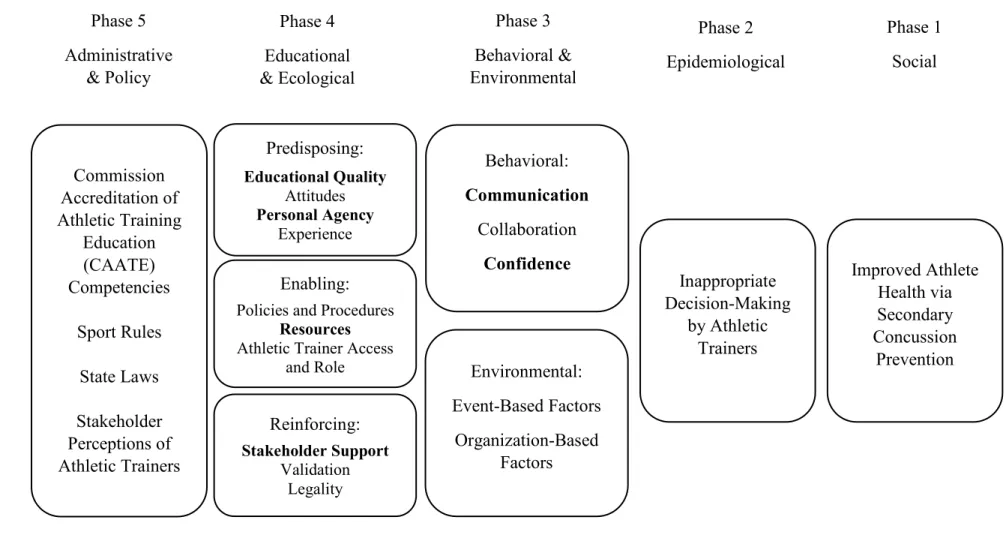
Figure 7.1. PRECEDE Planning Model to Determine Intervention Content ... 147
Figure 7.2. Workshop Content and Delivery Timeline ... 148
xvi
LIST OF ABBREVIATIONS AND SYMBOLS AT Athletic Trainers
ATP Athletic Training Education Program
CHAT Communication of Healthcare decisions in Athletic Training CFI Comparative Fit Index
CFA Confirmatory Factor Analysis CQR Consensual Qualitative Research IBM Integrated Behavior Model IPC Interprofessional Collaboration IQR Interquartile Range
NATA National Athletic Trainers’ Association NCAA National Collegiate Athletic Association
PRECEDE Predisposing, Reinforcing, and Enabling Constructs in Educational/ Environmental Diagnosis and Evaluation
PROCEED Policy, Regulatory, and Organizational Constructs in Educational and Environmental Development
RMSEA Root Mean Square Error of Approximation SEF Socioecological Framework
1
CHAPTER 1: INTRODUCTION 1.1 The Burden of Athletic Injury
Participation in athletics has many mental, physical, and social benefits for children and adults. These benefits include personal development and confidence,1–3 weight management and skill development,1,4 teambuilding and friendship,1,3 as well as many others. Despite the benefits sport participation provides, there are also risks, particularly in the form of injuries. These injuries impact not only the participating individuals, but the families and the communities in which they exist. The socioecological framework (SEF) provides a theoretical framework to the burden placed upon a population by emphasizing the impact of injury at each level of influence, i.e. intrapersonal (athlete), interpersonal (teammate/family/coach), organization and community (school or league), and public policy or society (governing bodies of sport).5 This framework proves useful for explanation of sport and injury burden due to the overlapping interests of all stakeholders involved.
The types of injuries sustained within athletic participation often occur from multiple mechanisms (player contact/non-contact) and to diverse body regions (ankle, knee, shoulder, etc.) resulting in a variety of acute and/or chronic conditions. Some of the most common injuries across all participation levels and sport types include ligament sprains, muscle strains, and
2
programs have many types of healthcare professionals they can turn to for prevention, diagnosis, and management of mental, physical, and social health ramifications of injury. These individuals need to be able to operate in an often-high stress environment involving pressure from multiple sources; this is especially true for injuries such as concussion due to the misunderstanding of the injury by stakeholders as well as potential for serious implications during recovery. Injuries such as concussions results in return to sport decisions that often place healthcare providers,
particularly athletic trainers, under a high-level of scrutiny.
Concussion is typically defined as an injury to the brain that is induced by biomechanical trauma via an impact to the head or body resulting in a variety of symptoms and neurological deficits.8 These injuries represent approximately 13% of all sport/recreational injuries nationally, totaling almost 300,000 annually.9,10 Although concussion rates have increased over time,11,12 strong evidence exists that this increase may be due to a rising level of awareness leading to better reporting of the injury as opposed to changes in injury rates themselves.9,13–15 As with many other types of injuries, risk factors exist for sustaining a concussion such as age (younger), gender (female), sport participation (contact/collision), type of activity (competition versus practice), and previous health history (concussion).10,13,16–21 It is imperative that athletic trainers, who frequently witness and assess concussed athletes, understand the epidemiologic trends, risk factors, and pathological deficits that exist with concussion-related injuries. Due to the complex, multi-faceted nature of the injury itself, it is an ideal scenario to implement a team approach to injury management.
3
school versus college), setting (private versus public school), sport of participants, and injury present (such as concussion) due to a variety of resource constraints.8,22,23 Common individuals include athletic trainers, physicians, physical therapists, school nurses, guidance counselors, and specialists as well as the athlete themselves, parents, and even coaches. This team approach is especially common within concussion management, as management includes areas of cognition, postural control, vision, and others requiring specialty care,24,25 accommodations at school,26–28 and a return-to-sport progression.8,29 Athletic trainers, in particular, are uniquely positioned to provide care to athletes both on and off the field in the prevention, diagnosis, treatment, and management of potential injuries.
1.2 Athletic Trainer Role
Athletic trainers (AT) are defined by the National Athletic Trainers’ Association30 as, “highly qualified, multi-skilled health care professionals who collaborate with physicians to provide preventative services, emergency care, clinical diagnosis, therapeutic intervention, and rehabilitation of injuries and medical conditions.” The majority of ATs work within the school setting at either the high school or collegiate level, although they are also present in professional sports, clinics and hospitals, and other more recent settings such as the military, performing arts, and occupational health.31 In order to work in such diverse settings, ATs need breadth and depth of understanding achieved through both classroom and clinical coursework.
In order to become an AT, an individual must graduate from an accredited professional program which utilizes a competency-based approach to learning. These competencies
4
the diversity of competencies included within athletic training education programs (ATP), ATs must make a variety of injury-related decisions that are often difficult. In relation to concussion decisions, ATs can implement preventative measures with collaboration from team staff such as behavior modifications or reducing the number of contact practices in a week.33 They also recognize and evaluate concussions through self-reported symptoms, postural control
assessments, and a neurocognitive exam.8 In the presence of any “red flag” symptoms, such as loss of consciousness, deteriorating mental status, and others, ATs can implement proper emergency action plans and referral channels.8 ATs also provide daily monitoring and care for concussed athletes, with a recent focus on treatment and rehabilitation in conjunction with physical therapists, vestibular therapists, psychologists, and others, requiring a team-based approach.34 Lastly, ATs are responsible for the tracking and documentation of concussions which are often a site of legal pursuit.35 By having good communication, collaboration, and
documentation of concussive injuries, athletes are more likely to receive the proper care they need after a concussion thereby improving their overall health.
1.3 Challenges with Injury-Related Decision-Making
The injury-related decisions that ATs are faced with on a daily basis may be influenced in part by how much work-related diversity (including number of sports, work settings,
5
professionals, which can be difficult in particular settings as well as when others do not feel ATs are capable or competent to provide care for such injuries.36 Stakeholders have previously discussed dissatisfaction with an ATs level of education and perceptions of their inability to provide care to athletes for a variety of injuries, including concussions.37 Another factor
presenting challenges to appropriate decision-making may include the perceptions of ATs by the stakeholders, as well as the diversity of stakeholders present. This perception encompasses issues such as educational qualifications,37,38 the role of the AT in decision-making,38,39 and the gender bias that exists in both position hired40,41 and sport worked.41 One example of this struggle was brought to light when Zander Diamont, a former football player at Indiana University, expressed frustration with the healthcare received by himself and his teammates stating,
“They [athletic trainers] were walking on eggshells and there was only one athletic trainer who would stand up to Wilson [head football coach], who was a poor
communicator. They [athletic trainers] were just always acting out of fear. Like there was always a pressure on them [athletic trainers] to treat us a certain way or not. It did inhibit them [athletic trainers] from doing their job to the best of their ability.42”
Due to the challenging factors and relationships that have the potential to impact an AT’s ability to make appropriate medical decisions, communication and collaboration are key.
6
of power resulting in limited autonomy and decision-making. Limited autonomy may hinder their ability to act in an authoritative manner once certified. Without the proper communication and collaboration on medical decisions, athlete health may suffer due to miscommunication or detrimental relationships leading to contradicting recommendations or influence on the decision to remove or return an athlete to sport.
1.4 Statement of the Problem
Currently, much of the literature examining the AT work environment focuses on its impact to AT health including physical and mental health stress,44,45 burnout,45–47 and work-life balance.48,49 As such, there is a lack of a theoretical framework to direct our understanding of the work environment impact on ATs ability to make appropriate medical decisions, thereby
influencing athlete health and safety. The decision to remove an individual with a potential concussion is one of the most scrutinized decisions an athletic trainer is faced with on the playing field. It requires collaboration with other healthcare professionals, understanding of coaches and family, as well as recognition and management of the injury itself, in order to make and
implement appropriate medical decisions.
7
This study first examined factors that impact certified athletic trainers’ and athletic training students’ intention to make appropriate decisions related to concussion, including demographic and organizational perceptions, IBM constructs,50 and the quantity and quality of focus placed upon healthcare communication in current ATPs. The IBM is a behavioral theory that places a strong focus on attitudes, norms, and personal agency to perform a particular behavior. Many of the IBM constructs fit within the SEF as intrapersonal (intention, attitudes, personal knowledge, and personal agency) and interpersonal (perceived norms) factors. Whereas demographic information (including legislative mandates that are geographically and
organizationally relevant) and environmental perceptions address the organizational/community and societal levels of the SEF. We also utilized the Predisposing, Reinforcing, and Enabling Constructs in Educational/Environmental Diagnosis and Evaluation (PRECEDE) planning model in the development of an intervention to prioritize influencing factors to determine what is changeable and important to changing behavior.51 The goal of the developed intervention was to help athletic training students establish communicative and collaborative relationships improving the success of their concussion-related decision-making. The following research aims directed this dissertation.
1.5 Specific Aims
8
2. To describe relationships among professional-level athletic training educators’ quantity and quality of healthcare communication perceptions and general attitudes about decision-making and communication within athletic training education programs (Aim 2.a) and to describe program-type (professional baccalaureate vs. professional masters) differences in these factors (Aim 2.b).
3. To design and pilot a theory-based intervention for healthcare communication among professional-level athletic training students to improve their intentions toward making appropriate medical decisions to remove concussed athletes from participation. 1.6 Research Hypotheses
1. Specific Aim 1 HR: Attitudes, perceived norms, personal agency, salience, knowledge, communication/collaboration, and quantity and quality of healthcare communication education will influence certified athletic trainers and athletic training students’ intentions to make appropriate concussion-related decisions.
2. Specific Aim 2 HR: Coverage of healthcare communication, as a part of athletic training education, will not differ by program type.
3. Specific Aim 3 HR: Completion of a theory-based intervention for healthcare
9 1.7 Independent Variables (see Table 3.1)
RA 1:
- Quantitative: Total attitudes, total perceived norms, total personal agency, total salience, total knowledge, total communication/collaboration, total quantity, and total quality
- Qualitative: Perceptions and experiences of witnessing athletes being removed from play
RA 2:
- Quantitative: Type of program (professional baccalaureate vs. professional masters)
- Qualitative: Perceptions and experiences of preparedness to communicate/collaborate on medical decisions
RA 3:
- Quantitative: Pre-test or post-test, type of program (professional baccalaureate vs. professional masters)
- Qualitative: Perceptions of the intervention (post-test only) 1.8 Dependent Variables
RA 1: Total intention
RA 2: General attitudes score, total quantity, total quality
RA 3: Total knowledge, total attitudes, total personal agency, total intention 1.9 Definition of Terms
10
training and the states’ statutes, rules and regulations. As a part of the health care team, services provided by ATs include injury and illness prevention, wellness promotion and education, emergent care, examination and clinical diagnosis, therapeutic intervention, and rehabilitation of injuries and medical conditions.52
2. Best Practices: Procedures that have been demonstrated by research and experience to produce optimal results and that are established or proposed as a standard suitable for widespread adoption.53
3. Evidence-Based Medicine: Integration of the best research evidence with clinical expertise and patient values to make clinical decisions.54
1.10 Operational Definitions
1. Appropriate Medical Decisions: The ability of a certified athletic trainer or athletic training student to make a medical decision that would be considered acceptable according to best practices.
2. Clinical Decision-Making: The process of making a medical decision within a clinical environment, such as on the sideline of a sporting event or in an athletic training room/clinic.
3. Attitudes: Particular feelings or thoughts regarding removing an athlete for a concussion. 4. Perceived Norms: Typical thoughts or behaviors by athletic trainers about removing a
concussed athlete from participation.
5. Personal Agency: The efficacy and control to be able to remove a concussed athlete when necessary.
11
7. Knowledge: Facts, information, and skills athletic trainers learn through education to know when an athlete needs to be removed from play and how to make the decision to remove them.
8. Communication/Collaboration: Communication and collaboration for making and implementing concussion-related decisions.
9. Quantity: Quantity of healthcare communication/collaboration focus including curricular hours for communication/collaboration, clinical hours for communication/collaboration, and total number of times experiencing the communication/collaboration of decisions. 10. Quality: Quality of healthcare communication focus including effectiveness and
satisfaction with communication/collaboration. 1.11 Assumptions
1. The certified athletic trainers, athletic training students, and athletic training educators answered survey questions honestly.
2. The survey was reliable and valid.
3. Each participant completed the survey according to directions provided. 1.12 Delimitations
1. All participants were current certified athletic trainers, athletic training students, or athletic training educators.
2. All participants were at least 18 years of age. 1.13 Limitations
12
2. Aim 2 participants were solicited using a freely-available list of program directors provided by the Commission on Accreditation of Athletic Training Education. This only included professional-level program directors as post-professional programs do not have the same accreditation requirements.
3. Formative research participants may have only selected to participate due to pre-existing interest in the topic of study.
4. Formative research participants may not have felt comfortable answering all survey questions honestly.
1.14 Significance of the Proposed Study
This study had two primary objectives including the determination of factors influencing concussion-related decision-making, and the design of a theory-based intervention for
distribution to athletic training students to promote healthcare communication/collaboration and autonomy related to concussion. There is limited empirical evidence on how an ATs work environment affects their ability to make appropriate decisions thereby influencing athlete health; however, preliminary data conducted by the research team using interviews of certified athletic trainers suggests this is based in the lack of communication and collaboration of injury diagnosis and management.
13
these “hidden” injuries, athlete health and well-being can be improved. As such, this study utilized intention of ATs to make appropriate medical decisions related to concussion as
intention has been shown to be the strongest predictor of true behavior.50 Without the intention to make an appropriate medical decision, ATs are less likely to do the right thing during stressful situations which may negatively impact athlete health by increasing their risk of further or future injury.
14
CHAPTER 2: REVIEW OF THE LITERATURE
Sports have a variety of well-documented benefits to both adolescents and adults that are physical, mental, and social in nature.56 Despite these benefits, there is an inherent risk of injury associated with sport participation including, but not limited to, various musculoskeletal
conditions as well as concussions.57 Injuries impact individuals, families, and the communities in which they live placing a large burden on the population as a whole financially, physically, and psychologically. This literature review first details the prevalence of injuries and corresponding risk factors followed by the burden sport injury provides, the role of the athletic trainer in lessening this burden, why the athletic trainer’s job is not always the easiest, and finally how athletic trainers are prepared for the role they play. Specifically, concussion will be the example of focus throughout this document to explore and explain the burden injuries can cause.
2.1 Epidemiology of Sport Injury
15
2.1.1 Overall
In the last few years, an average of 8.6 million sport and recreation-related injuries occurred annually in the United States.64 Out of those, 65% were in individuals aged 5-24, which covers the population most frequently served by athletic trainers, with the highest rates in
children aged 5-14. Within the adolescent population, it is reported that upwards of 3.5 million individuals receive treatment for sport-related injuries in some capacity annually,65 two million of which occur in high school athletes alone,66 with many resulting in visits to the emergency department.67 With lower injury estimates for the collegiate population, around 200,000
annually,6 it is important to note that the number of people participating in collegiate athletics is significantly less.
Several risk factors exist relating to injuries as a whole including: age, gender,
competition, severity, and lifestyle. In regards to age, older athletes, meaning those who have participated in sports longer are at an increased risk of injury, particularly relating to overuse.68,69 Even though overuse injuries make up approximately 50 percent of all childhood sports
16
2.1.2 Concussion
The head and neck are affected by injury approximately 17 percent of the time during sport participation, the majority of which are concussions.64 1.6-3.8 million sport and recreation-related concussions occur annually9 with 300,000 occurring in the United States alone18,19,78 representing approximately 13 percent of all injuries.10 The definition of concussion has evolved over recent years but can be characterized as, a traumatic brain injury induced by biomechanical forces caused by either a direct or indirect blow to the head or body resulting in the rapid onset of short-lived neurological impairment and/or a variety of symptoms.8 As with the evolving definition, rates of concussion have also increased over time; however, it is argued that this may not be due to a true increase in injury, but an increase in awareness of already existing injury leading to increased albeit not perfect reporting of symptoms.9,13–15 There is no objective
diagnostic measure in isolation that can determine the presence of injury. Instead, clinicians rely on the self-report of athletes and more objective tools (such as cognitive and balance exams) to provide insight into a potential injury. The majority of athletes experiencing concussions miss more than one week of activity,10 indicating they are following best practice guidelines
encouraging a sequential return-to-play process that occurs in 5 to 6 stages. However, upwards of 50 percent of all concussions are not reported making the decision to remove an individual that much more difficult and complex.79–83
As with injuries in general, several risk factors also exist for sustaining a concussion including: age, gender, mechanism of injury, competition, and previous health history.
17
brain.17–20 The influence of gender on risk of concussive injury is not quite as clear with some evidence showing no difference between genders,21 girls being at greater risk,10,13 and boys being at greater risk.16 Part of the reason for this discrepancy may be that concussions most commonly occur from player-to-player contact experienced in contact and collision sports, such as
football.10,18,21,84,85 Even though females take part in contact and collision sports, the biggest contributor is football, which may potentially be skewing these findings. Similarly to
musculoskeletal injury as well as injury overall, the majority of concussive injuries occur during competition10,17 and having a previous history of concussion increases an individual’s likelihood of sustaining a concussion in the future.21,86
2.2 Burden of Sport Injury
Despite injuries occurring among athletes at all levels, it is important to balance the concerns with the benefits brought about by sport participation.87,88 These social, psychological, and physical health benefits are met with equal burden and financial effects brought on by injury. It is important to determine the health and economic burden of injury to inform public health policy, provide appropriate resources, and target prevention strategies for sport injuries.89 The financial impact of injury is driven by emergency department visits, hospitalizations, surgeries, and the inability to attend school and/or work.90–93 Apart from being a proxy of injury severity, the monetary cost of sport injury provides strong evidence and support for preventative measures including the presence of appropriate medical personnel at the time of the event.94 Most
18
2.2.1 Societal Burden
The first level of influence described by the SEF is policy which examines broad societal factors influencing the environment in which sport injury occurs.5 One of the primary ways in which this is accomplished is via legislation and liability. The use of public health policy has previously been a successful strategy targeting injury prevention,95–100 yet not widely applied in sport safety, apart from concussion.
Literature suggests the best defense against legal liability is an offense of conservative management and treatment of sport-related concussions.101 As such, all 50 states have initiated laws pertaining to concussion management, most of which include three primary principles: 1) concussion education, 2) immediate removal from play, and 3) clearance by a healthcare professional.102 The goal of this legislation is to improve the safety of sports by preventing the improper return of concussed athletes to the playing field.103 By being legally responsible for the removal of an injured player, the likelihood of further injury is avoided.104 Even though
concussion lawsuits have targeted individuals in the past, larger-scale organizations are
becoming targets101 making the development of policy and legislation imperative. One example of this is via the initiation of a Concussion Safety Protocol Committee by several conferences as part of the NCAA.101 This committee is tasked with reviewing each individual school’s written concussion protocol prior to participation in sport for that school year where schools can be asked to revise and resubmit until their protocol is deemed appropriate. This is ideal for creating a societal norm of concussion management, particularly considering most schools failed their initial submission during the first year of implementation. Even though the development of these policies is important, it takes a lot of time and resources relying strongly on a sense of
19
2.2.2 Community and Organizational Burden
The next level of the SEF includes the community influence. As mentioned above, the NCAA has placed a high value of importance on the development of policies to aid in sport safety improvements, especially for concussions; however, the ultimate responsibility to protect student-athletes remains in the hands of the individual schools and employees.101,105 This places a primary portion of the financial and health burden on the community at large. The average cost of a visit to the emergency department in the United States is $985, making the fiscal
implications of injury a major concern.106 If one multiplies this by the number of emergency department visits incurred by sport injury victims, there is an estimated $4.2 billion health care expenditure burden.107 Many unnecessary referrals are made to emergency departments where expensive scans, such as Computed Tomography or Magnetic Resonance Imaging, will not display concussions. This has a significant impact on the community in which injured athletes reside as this burden is not equal across the United States. For example, the northeast has been shown to have the lowest number of emergency department visits with the south having the highest.107 This also may be further influenced by the resources and factors within each community such as number of individuals participating in sports and access to onsite medical providers,107 like athletic trainers who may have the power to reduce financial burden by knowing when referrals to the emergency department are warranted and unavoidable.
The community burden also extends to athlete recovery from injury as individuals outside of an athlete’s immediate social network, such as team supporters and/or spectators control public approval, which is highly valued by certain athletes.108 Collegiate athletes that are starters often feel the most pressure from fans to continue playing while concussed although it is
20
such as not wanting to let supporters down.109,110 This has been shown to be a real concern with concussion reporting behaviors in which if the athlete felt the fans did not want them to report an injury, they were less likely to do so.110
2.2.3 Interpersonal Burden
The next level of the SEF explores the influence of injury on the interpersonal network of athletes, in which one primary mechanism is level of social support. Social support has been identified as a clear factor facilitating or inhibiting recovery from injury and/or illness.111–115 This level of support can provide a source of stress or distress after injury as well as an influencer of motivation during rehabilitation.115–119 Despite social support having a strong influence on recovery, those responsible for providing the support differ drastically depending on the type of injury experienced and setting in which the injury occurs. In a study completed by Yang et al.,120 they found that the amount and sources of social support as well as an athlete’s satisfaction with the support differ after injury. The most dramatic increase was by athletic trainers, where support increased following injury, as did support from coaches, friends, and physicians (albeit at a much lower level) while there were decreases in support from family and counselors. One reason for this may be that in the collegiate population, injured athletes do not have as much access to their parents or counselors outside of the health care providers within the athletic department.
When athletes sustain concussions, there are many interactions with their interpersonal network including the reporting of the injury, reinforcement of the decision to report, and how that might influence their decision to report a future injury.110 For athletes, this could mean teammates or others who may approve or disapprove of their behavior such as parents and
21
commodities such as playing time and money for school.110,121–123 Approximately 25 percent of athletes feel pressure from at least one source (teammates, coaches, parents, fans) to continue playing after sustaining a potential injury even without the direct presence or statement of displeasure.110
2.2.4 Intrapersonal Burden
The final layer of the SEF involves the impact of injury on the individual athlete. Athletic injury has been shown to have a great deal of physical health (such as pain and loss of
function)124,125 as well as psychological health (such as distress, anger, depression, anxiety, fear, and self-esteem) impacts.113,126–129 This overall impact is deemed health-related quality of life130 in which injured athletes (either sidelined or limited participation) have deficits.131 The majority of previous research has focused on the physical burden of injury, but the inability to continue team participation can be distressing for coping with injury.132–134 One common assumption is that physical and psychosocial recovery from injury happen simultaneously;135 however, recent evidence would argue the opposite.136 Not only can psychosocial responses to injury exist after physical recovery, but they can in fact, hinder physical recovery as well.128,135,137 One of the primary difficulties for athletes after injury is the fact that competitive athletes may not return to their level of preinjury performance further escalating the pressure to be out of participation as little as possible.138,139
22
their overall health-related quality of life may decline.140 Part of this may be due to lingering physical deficits and symptoms, such as headaches, but also the inability to live their daily life via concentrating in class, socializing with friends, or the development of depression.141,142 2.3 Athletic Trainer Role in Sport Injury
As described above, sport-related injury can place a large burden on an individual, family, community, and society. An estimated eight percent of adolescents drop out of sport-related activities annually because of injuries.143 In order to reduce the health burden of injury, it is important to utilize a multidisciplinary approach targeting all levels of the SEF including knowledge and attitudes of injury, rules within sport, policies for sport safety, and an
individual’s behavior following injury.144,145 This approach has been taken over the past few years related to concussions. A strong focus has shifted from management to prevention including educational efforts,149,150,151 rule and policy changes,148,149 and behavior
modifications150 of those predisposed to injury such as having a head-down tackling technique. One of the primary people positioned to initiate and influence all levels of the SEF on sport safety is the athletic trainer. Athletic trainers are defined as, “health care professionals who render service or treatment, under the direction of or in collaboration with a physician, in
23
Since athletic trainers work in a variety of settings and have access to all levels of the SEF, they are in a prime position to influence the prevention and management of injuries.
2.3.1 Role in Injury Prevention
Many of the injuries occurring due to participation in athletics may be preventable or even predictable.152 Even though every level of the SEF has some role in injury prevention, the lowest responsibility of prevention should be placed in the hands of the individual (especially with adolescents) with the greatest responsibility lying in those with the most potential to effect change, such as policymakers.153 Injury and illness prevention have been a trademark of the AT profession as a way to reduce injury and shorten rehabilitation times resulting in less absence from school/work and lessened healthcare costs.30,154 ATs have a unique role as a substantial portion of their job relies on prevention of injury as well as re-injury.155 There are three types of prevention that athletic trainers might deliver including: primary, secondary, and tertiary. Primary prevention is defined as, “the first level of health care designed to prevent the
occurrence of disease and promote health.”156 Secondary prevention is defined as, “the second level of health care, based on the earliest possible identification of disease so that it can be more readily treated or managed and adverse sequelae can be prevented.”156 Lastly, tertiary prevention is defined as, “the third level of health care, concerned with promotion of independent function and prevention of further disease-related deterioration.”156 Although ATs are well-positioned within all levels of the SEF to initiate injury prevention strategies, most are unfamiliar with how to influence prevention at the community and societal levels.154
24
ability to attain the many physiological, psychological, and social benefits that sports provide.158 Previous efforts to reduce the burden of concussion at all levels have spanned from modifying behaviors, such as tackling techniques, to changing the rules of different sports in an attempt to reduce head impact exposure.8,144,159 Some of the specific methods used to do this include
education,160 the use of equipment to decrease head impacts, and collision anticipation to prepare the body to absorb impacts more effectively.15,161 The primary prevention of concussion centers around the concept of limiting exposure to brain trauma through the use of equipment as well as legislation. Despite there being many advances in the equipment worn by athletes in a variety of sports, there is little evidence to suggest its benefit in reducing risk of concussion, although it may prevent superficial head injury.162 The majority of legislation focuses around rule changes and rule enforcement, including sportsmanship.158 In terms of secondary prevention, it is imperative to remove a potentially concussed individual from play immediately to receive a thorough medical evaluation due to the potential of sustaining additional impact and long-term damage.8,80,144,163 The primary method by which this is accomplished is via education to encourage athletes to disclose possible symptoms to a parent, coach, or healthcare provider.79
It has been estimated that at least half of all concussions are not diagnosed, primarily due to the lack of reporting.79–83 As many concussion-related symptoms are not visible to the
25
outcomes.8 Just as athletic trainers have a strong role in injury prevention, they are also trained to manage injuries after they occur.
2.3.2 Role in Injury Management
Emergency care, clinical diagnosis, therapeutic intervention, and rehabilitation of injury are all aspects of an athletic trainer’s education.30 One unique aspect of ATs compared to other healthcare professionals is the management of patients who have experienced an injury but are continuing to participate in their sport to the best of their ability. Athletes who experience these non-time-loss injuries utilize athletic trainers and their services to help them continue to
participate even while injured, preventing further injury.155 Unfortunately, this does not always lead to the easiest of decisions for athletic trainers who are attempting to perform a balancing act between allowing an athlete to continue participating (even if in a limited capacity) while not putting them at further risk of injury. As such, several athletic conferences at the collegiate level have implemented a rule stating that team medical personnel have autonomous and final
authority in determining when an athlete returns to play from any injury.148 This is particularly important in regards to concussion which is often termed an “invisible” injury to those who have not been educated on the associated signs and symptoms.
Athletic trainers are in a prime position to take the lead on emergency care, clinical diagnosis, therapeutic intervention, and rehabilitation of concussions as they are often witness to the injury and have continual interaction with concussed athletes. ATs are educated on the signs and symptoms associated with concussion as well as “red flags” such as alterations in
26
serve as a liaison between all parties to balance rest and stress both cognitively and physically providing an optimal environment for athlete recovery.26,165 In order to manage concussions appropriately, athletic trainers must make a variety of decisions including when a participant needs to be removed, when they are ready to begin returning to the playing field, and when they are ready for unrestricted return, just to name a few.
2.4 Injury-Related Decision-Making
Society often places sports and participation in sports on a pedestal. As such, it is imperative that societal accountability exist to balance the glorification of participation with the safety of its participants.158 The decision to return an athlete to the playing field is not always an easy one and it must weigh the risks of reinjury with the desires of the patient to return.166 As this decision is often pressure-filled, it can frequently pose a challenge to those with less years of experience, such as graduate assistant athletic trainers, who complete all coursework and have their professional certification but desire more autonomous experience while continuing their education and professional development.167 Depending on the setting in which the athletic trainer works, they may have ultimate authority to remove a participant or they may work with a
physician on the sideline to remove someone from play. At the high school level, an AT may not be present at all practices and games in which a coach or a parent would take on the
27
justify decision, legal implications, role in decision-making).168 Lastly, being able to
communicate the decision being made and how to collaborate with individuals throughout that process can often be a source of concern due to significant pressure from outside sources. These factors may lead to increased stress, burnout, or conflict, further compromising an athletic trainers’ ability to perform their role in decision-making appropriately.169
2.4.1 Diversity of Settings
28
2.4.2 Diversity of Stakeholders
Creating a balance of sport participation and safety is an approach requiring buy-in from all involved stakeholders including equipment manufacturers, coaches, athletic trainers,
physicians, game officials, governing bodies, parents, and the athletes themselves.158 Despite the typical interprofessional mindset of athletic trainers,177 not all members of the team are
comfortable working in tandem. In order to best care for athletes and have optimal patient outcomes, members of the team must understand their role as well as the roles of others, which has previously been an issue for athletic trainers, leading to increased pressure for decision-making.37,38,178–181 The attempt to meet expectations of administrators, coaches, and athletes, as well as others, simultaneously create a unique challenge for athletic trainers, as they are
frequently treated as the “middle man.” Stress and pressure are heightened by competing
obligations and expectations placed upon the AT which may impact their ability to perform their job in the most appropriate manner.182,183
With concussion, the stakeholders play a role in establishing a team’s culture and expectations of safety and/or concussion-related disclosure behaviors.79 By having stakeholders who encourage the reporting of symptoms, athletes are more likely to perform that behavior.184 Even in the event of medical professional presence, concussion is an injury which relies on honesty and unity to recognize symptoms that may not always be the most visible. Therefore, if focus is diverted from medical personnel to a different injured athlete, or the coach is
29
2.4.3 Communication and Collaboration
Interprofessional collaboration (IPC) takes the strengths of all individual members and combines them for a collective goal. In order for an athletic department to be successful,
administrators, coaches, athletes, athletic trainers, and others all must engage in interpersonal and interprofessional interactions.185 This promotes workplace equity, patient safety, and effective communication.186–189 Crucial elements of IPC include having a common goal, shared
knowledge, interactions over time, common understanding of each other’s role, and a symmetry of power.190,191 One way in which this can be achieved is via the concept of shared decision-making fostering patient-centered care in which a variety of appropriate healthcare options can be weighed.192 Previous research has primarily focused on the physician-patient dyad without incorporating the values and opinions of others involved, such as family and other healthcare professionals.192 Generation of a team understanding of concussion-related injury and disclosure being a priority may be aided by the inclusion and involvement of IPC between coaches,
athletes, athletic trainers, and team physicians. This may in turn improve and encourage
communication between all parties when an injury does occur, thereby reducing pressure on the AT, since the foundation for understanding has been laid previously.79 Without proper
communication and collaboration on medical decisions, athlete health may suffer due to miscommunication or detrimental relationships leading to contradicting recommendations or influence for athletes.
2.5 Athletic Training Education
2.5.1 Current Educational Format
30
over the next several years.30,32 The hallmark of athletic training education follows a medical model in which students endure both academic curriculum as well as clinical rotations and training.30 Upon graduation, athletic trainers are also required to complete continuing education intended to promote new knowledge and skills related to updated research and clinical practice. By providing this requirement, ATs stay up-to-date in not only advancements in the field, but how to incorporate these advancements into their clinical practice.32 As opposed to being delivered in a classroom setting, continuing education may also be achieved by attending conferences or workshops and viewing online educational modules.
2.5.2 Content of Education
31
Specifically related to concussions, athletic training students are commonly taught about three main concepts: 1) concussion prevention, 2) concussion diagnosis, and 3) concussion management.195 Concussion prevention covers the legal aspects of concussion including state laws and best practice guidelines, education of athletes/parents/coaches, and equipment-related concerns. Concussion diagnosis covers the tools available to aid in diagnosing concussions such as neurocognitive exams, postural control assessments, and symptom inventories. They are also taught about the consequences of an individual returning to sport prior to the first concussion resolving, which may include second impact syndrome. Finally, athletic training students are taught about how to manage the injury once it occurs. This encompasses aspects of return-to-learn as well as return-to-play. As described above, concussion-related prevention, diagnosis, and management are largely contingent on the presence of effective communicative and
collaborative relationships. Without these relationships, athletic trainers’ jobs are more difficult and athlete health ultimately suffers.
2.5.3 Areas of Educational Improvement
32
credentialed athletic trainers. Upon interview, employers of ATs who were in entry-level positions described interpersonal communication, independent decision-making, initiative, confidence, and the ability to learn from mistakes as major sources of deficiencies, also supported by preliminary data.170,197,208
2.6 Methodological Literature Review
2.6.1 Applying the Integrated Behavior Model to Decision-Making
Within athletic training, and concussion specifically, there is not a single theoretically-driven intervention to target decision-making behaviors around injury. As shown through the literature review above, the burden of sport-related injury and concussion cause a variety of issues that fit within public health practices at multiple levels of influence. This makes
concussion an ideal scenario to implement an intervention driven by theory to improve athlete health via those who provide care to them, such as athletic trainers. The Integrated Behavior Model (IBM) encompasses both the Theory of Reasoned Action (TRA) and the Theory of Planned Behavior (TPB) with intention as the most important behavioral determinant.209 Apart from intention, IBM considers four primary factors resulting in behavioral performance
33
ATs ability to make a decision, however, are inherent to being an AT and are much more difficult to alter.
Outside of the four factors influencing behavior, there are also several constructs that influence the intention to perform said behavior. The main constructs of IBM include attitudes (experiential and instrumental), perceived norms (injunctive and descriptive norms), and
personal agency (perceived behavioral control and self-efficacy).209 Experiential attitudes are the individual’s emotional response to performing the behavior, while instrumental attitudes refers to the beliefs of the outcomes of performing the behavior.211–213 Injunctive (or subjective) norms refer to what others think one should do and the individual’s motivation to comply with that belief. Descriptive norms are the perceptions about what others in the social network of the individual are doing, or the social identity of the culture.211,214–217 Personal agency specifically addresses the perceived control a person has over the behavior (such as factors that make it easy or hard) as well as their self-efficacy in performance of the behavior.218
34
all. This quantity and quality of educational efforts regarding decision-making have a strong possibility of influencing future behavior. Without education about the influencing factors, athletic trainers may have poorer attitudes, less positive perceptions of their peers, and the perception of an inability to perform the behavior, thereby not implementing the most appropriate decision, even if they know it is necessary.
IBM has not been applied to sports medicine, although the individual components, TRA and TPB, have been used successfully to explain concussion reporting behaviors. Figure 2.2 is a schematic representation of the IBM and Table 2.1 includes the definitions of all IBM constructs.
2.6.2 Applying the PRECEDE-PROCEED Planning Model to Decision-Making
35
for athletic training students to feel more comfortable and confident with healthcare communication for concussions. Figure 2.3 displays the PRECEDE planning model. 2.7 Summary for Rationale
Injury-related decision-making, particularly for concussion, is difficult for athletic trainers at all levels of experience. Due to the lack of physical appearance and understanding by stakeholders of concussive injury, athletic trainers are often met by distrust from parents, coaches, and administrators in the decision to remove someone from the playing field. Apart from the initial decision to remove an athlete, roadblocks also exist for ATs during the return-to-play process via pressure from the involved stakeholders, particularly due to it being a
standardized process consisting of six steps that take time to go through, even if the athlete appears “fine” on the surface. Additionally, preparing and positioning athletic trainers to make these decisions aids in secondary concussion prevention efforts.
Without the appropriate decision-making by qualified healthcare professionals, such as athletic trainers, patient outcomes ultimately suffer. To date, no study has proposed a way to close the gap between making these tough decisions and the even tougher concept of
communicating the decision that is made along with collaborating effectively to improve athlete health. This study targeted this gap by developing an intervention focused on the
36 Table 2.1. Integrated Behavior Model Construct Definitions50
37 Figure 2.1. Socioecological Framework221
Society
Community & Organization
Interpersonal
Intrapersonal
38 Figure 2.2. Integrated Behavior Model50
Feelings about Behavior
Behavioral Beliefs
Others’ Expectations
Others’ Behaviors
Efficacy Beliefs Control Beliefs
Attitudes (Experiential
and Instrumental)
Perceived Norms (Injunctive and
Descriptive)
Personal Agency (Perceived Control and Self-Efficacy)
Knowledge & Skills
Intention
Habit Salience of the
Behavior
Environmental Constraints
Behavior
39 Figure 2.3. PRECEDE Planning Model220
40
CHAPTER 3: METHODS 3.1 Research Design
This dissertation utilized a mixed methodological design resulting in a developed and piloted intervention targeting athletic training students’ decision-making concerning concussion. The Integrated Behavior model, previous literature, and preliminary data guided all surveys, interviews, and data interpretation. Figure 3.1 includes a conceptual model for the study. Aims 1 and 2 (formative research) took place from April 2018-October 2018 and consisted of a
convergent parallel mixed methods approach including: 1) certified athletic trainer surveys, 2) athletic training student surveys and interviews, and 3) athletic training educator surveys. Aim 3
(development/pilot; October 2018-February 2019) included the building and pilot testing of the intervention. Figure 3.2 shows a detailed timeline for the study.
3.2 Formative Research – Aim 1
41
adjusted to reflect their current experience and/or observation compared to previous experience with decision-making. Interviews were conducted over the phone with athletic training students in this phase to determine what constructs students felt would be beneficial to include in the intervention as well as further insight into what affects decision-making. Certified athletic trainers completed interviews as part of preliminary research and therefore were not gathered during the dissertation period.
3.2.1 Participants
Aim 1a: We solicited a list of all athletic trainers from the National Athletic Trainers’ Association (NATA) including certified athletic trainers at the secondary school (n=4,133), college/university (n=3,488), and graduate post-professional certified student (n=1,383) settings who graduated in or after 2012 (total certified n=9,004). 2012 was chosen as a cut-off, as
educational standards changed significantly in that year. We also used the more recent (2012) cut-off to reduce recall bias. Potential participants were sampled from this list until attainment of as many completed survey responses as possible (at least 80% of items completed) to achieve sufficient power for the complex statistical model. Other than being a member of one of these groups, the only additional inclusion criteria was that the participant be at least 18 years old. Individuals with professional association with the NATA who indicated in the NATA database they were willing to receive emails, and self-identified into these respective groups were eligible to be selected. Procedures for sample selection from this available population are described in section 3.2.3.
42
many completed survey responses as possible (at least 80% of items completed) to achieve sufficient power for the complex statistical model. Other than being a member of one of these groups, the only additional inclusion criteria was that the participant be at least 18 years old. Individuals with professional association with the NATA who indicated in the NATA database they were willing to receive emails, and self-identified into these respective groups were eligible to be selected. We also solicited an additional 15 individuals from survey responses (n=272) indicating interest of participation in future research to participate in follow-up phone interviews. Students were the only group solicited for interviews as a part of this dissertation because the research team previously collected preliminary data with certified athletic trainers. Inclusion criteria for phase one interviews required participants to be a member of a CAATE-accredited professional program (baccalaureate or master’s) and be in the final year of their program. Procedures for sample selection from this available population are described in section 3.2.3.
3.2.2 Instrumentation and Variables
Two developed surveys served as the primary instrumentation for Aim 1: one for certified athletic trainers (Aim 1a; Appendix P) and one for athletic training students (Aim 1b; Appendix Q). The surveys were pilot tested for content validity by a total of 10 individuals (5 certified athletic trainers, 5 athletic training students) who met inclusion criteria. A single interview protocol (Appendix A) for athletic training students served as the primary qualitative instrumentation for Aim 1b.