RACIAL VARIATION IN THE USE OF ONCOTYPE DX TESTING FOR WOMEN WITH BREAST CANCER
Megan Clarke Roberts
A dissertation submitted to the faculty at the University of North Carolina at Chapel Hill in partial fulfillment of the requirements for the degree of Doctor of Philosophy in the the Department of Health Policy and Management in the Gillings School of Global Public Health.
Chapel Hill 2015
Approved by:
Stephanie B. Wheeler Stacie B. Dusetzina Michaela A. Dinan
ABSTRACT
Megan Clarke Roberts: Racial Variation in the Use of Oncotype DX Testing among Women with Breast Cancer
(Under the direction of Morris Weinberger)
Oncotype DX (ODX) is a tumor gene-profiling test that aids in adjuvant chemotherapy decision-making. While ODX has the potential to improve quality of care, <50% of eligible women receive it. If there is differential ODX testing by race, well-documented disparities in quality of cancer care may persist or worsen. Thus, we had three research objectives: (1) examine racial variation in ODX test uptake, (2) examine racial variation in subsequent adjuvant chemotherapy initiation, and (3) explore how oncologists use the test, identifying barriers and facilitators.
We used mixed methods to explore these objectives. We used data from the Carolina Breast Cancer Study Phase III (n=2,998), a population-based cohort study of women diagnosed with breast cancer in 2008-2014. We used modified Poisson regression to determine the associations between race and (1) ODX testing (stratified by node status), and (2) adjuvant chemotherapy initiation
(stratified by ODX risk group). We also conducted semi-structured interviews with oncologists (n=15). Interview transcripts were double-coded using template analysis.
Overall, 42% of women (n=1468) had ODX testing. We found no racial disparities in the uptake of ODX testing among node negative patients. However, among node positive patients, Black patients were 46% less likely to receive testing than non-Black women after controlling for clinical factors (aRR: 0.54, 95%CI:0.35-0.84, p=0.006). Among women who underwent ODX testing (n=541), 54.2%, 37.5%, and 8.3% of women had low-, intermediate- and high-risk tumors, respectively. We did not observe racial variation in adjuvant chemotherapy initiation. Several themes emerged from our provider interviews, including organizational, interpersonal, and intrapersonal factors that influenced ODX testing.
ACKNOWLEDGEMENTS
This dissertation reflects not only my efforts, but also the efforts of countless others. There are many individuals who played integral roles in supporting this research and me. The following acknowledgements hardly begin to convey my gratitude for their support.
First, I must thank Morris Weinberger, my mentor and co-chair. With a background in teaching and basic science, I was not a traditional HPM applicant: I am so grateful that four years ago, Morris believed in me, took a chance, and admitted me into HPM as his advisee. After talking with Morris, there was little question in my mind whether I would ultimately accept admission to UNC (though I did take my time making the final decision!) I was impressed by Morris’ apparent, sincere, and selfless commitment to his students. During admitted students’ day, I remember Dio, Morris’ former advisee, telling me what a great mentor Morris is, and that I wouldn’t truly understand, unless I came and saw for myself. Per usual, Dio was right---I never could have imagined having such an incredible advisor and mentor. I feel honored to have had the opportunity not only to be his research assistant, but also teaching assistant: I have been learning from the best. As I look towards an academic career, Morris has set the bar for what it means to be a dedicated mentor, researcher, teacher, colleague and leader. I have learned so much from Morris, and any words to express my gratitude will ultimately fall short of sufficient. While I am leaving UNC, I know that Morris will continue to play an important role in my professional development and in my life. He could not possible hear it enough: Thank you, Morris for all that you have done for me, my classmates, the PhD program, and our department: You make UNC a better place.
disparities in endocrine therapy adherence among breast cancer patients. That research experience has launched my path towards a career in cancer health outcomes research. Because of my
experiences working with Stephanie: (1) I gained qualitative methods training, (2) I started attending the cancer health outcomes breakfasts and met amazing cancer researchers both at UNC and beyond, (3) I became linked in with the Carolina Breast Cancer Study Phase III, (4) I was able to publish my first, first-authored manuscript, and (5) I had the research experiences necessary to receive the Cancer Control Education Program predoctoral fellowship and the Cancer Prevention Training Program postdoctoral fellowship at the National Cancer Institute. Over the years, I have learned so much from Stephanie. Not only have she given me numerous research opportunities, but also she has been an exceptional mentor. Stephanie has always offered me candid advice, and at the times when I really needed support, she was always there. Stephanie has set an example of what it means to be a young woman in academia---I admire how much she has accomplished and how well respected she is so early in her career. At the last conference I went to (AACR The Science of Cancer Disparities), a researcher walked by my poster, which presented some of this dissertation work. This researcher stopped when she saw Stephanie’s name on the poster, and said “Oh! Stephanie Wheeler---I have read and I admire her work. She is doing some very important and interesting research!” I couldn’t have agreed more. Thank you, Stephanie for being a mentor and advocate these past three years.
collaborate with me on a small project to look at this aim using a national claims dataset. Though we put equal amounts of work into the gene expression profiling paper, she graciously offered that I be the first author on the manuscript. I am so grateful that I had these opportunities to work with Stacie, and I am even more grateful that Stacie was on my dissertation committee. In moments of panic and/or confusion about methods or data, Stacie was always responsive and met with me to discuss issues with my analyses. She has been selfless with her time and for that I am so appreciative. Students in our department have compared Stacie to Morris, which is the ultimate compliment!
Next I must thank the other two members of my dissertation committee: Katie Reeder-Hayes and Michaela Dinan. I have had the fortune of working on several projects with Katie over the past three years. Her clinical perspectives have been invaluable in providing context and clinical relevance to this work. A conversation with Katie in my second year of graduate school drove the direction of this research away from BRCA testing to Oncotype DX testing, a more feasible topic that had the potential to touch the lives of a larger proportion of breast cancer patients. In addition to being on my dissertation committee, in the spring of 2014, Katie was kind enough to allow me to shadow her in clinic. During this time, I learned that not only was Katie an amazing researcher, but also provider. The compassion and care that Katie conveys to her patients is moving and inspiring. In clinic with Katie, I saw in practice what I had learned in the classroom about high quality care. I am in awe of what Katie does for her patients both in the clinic and through her research. The final committee member that I must thank is Michaela Dinan. Having her content expertise in Oncotype DX testing was so important and helpful for the quality of this research. I appreciated her thoughtful and timely feedback and guidance both during proposal writing and during my dissertation research. I am so thankful that I had the opportunity to work with her.
also provided incredibly thorough and timely feedback on my quantitative work. Her perspective as a cancer epidemiologist truly added to the quality of these papers. In addition to Melissa’s support during my dissertation, I owe her another token of appreciation: In 2013, I took Melissa’s Cancer Epidemiology course. This was one of my favorite elective courses: She is an amazing teacher, and it was during her class that I started investigating Oncotype DX testing as a potential dissertation topic. Finally, I owe a big thank you to Andy Olshan who was paramount in facilitating my use of the Carolina Breast Cancer Study data. Without his help and generosity in sharing these rich data, I would not have been able to conduct this dissertation research, especially within the ideal timeframe. Also associated with the Carolina Breast Cancer Study, Chui Kit Tse and Mary Beth Bell were incredibly helpful in putting together the dataset and answering questions about the data, respectively. Their help and contributions behind the scenes were extraordinarily important.
Other faculty helped me in the development of the qualitative interview guide and survey including Bryce Reeve, Bryan Weiner, and Hyman Muss. Outside of my dissertation research, both Bryce and Bryan have been inspiring faculty, and I thoroughly enjoyed their classes. In particular, I am grateful to Bryce for his support as I was deciding whether to accept the Cancer Prevention Fellowship Program offer at the National Cancer Institute. Hy was generous with his time and helped me pilot our interview guide; I was so glad to have had the opportunity to receive his feedback.
In addition faculty in HPM, I must acknowledge the Cancer Control Education Program (CCEP). I would like to thank Michael O’Malley, a fellow Davidson alumnus, for being an excellent teacher in class and mentor in CCEP. His support was especially invaluable as I applied for the NCI postdoctoral program. Also thanks to Jo Anne Earp and Kurt Ribisl for their support in the CCEP. I have learned so much from them, and I appreciate their feedback throughout the past two years. Furthermore, this dissertation research would not have been possible without the funding support that I received from CCEP. Thanks also to Melissa Mack, Mary Lou Coffman, Mark Kramer, and Nanette Pedelty for all of their help in utilizing the CCEP funds.
In addition to all of the support that I received from faculty, thanks to my fellow CCEP fellows, cohort members, and PhD students in Health Policy and Management. Especially, thanks to Matt Toth for sharing STATA code and bouncing around methodological ideas. Thanks to Kelly Kohler for her support through this process, not only as a colleague, but also as a friend. I would also like to acknowledge my friends who are both in and out of the program for their support, especially Evan Johnson, Jenn Felder (and her husband Ryan), Emily Gillen, Makda Mebrahtu, Devon Check, Ellie Morales (and her husband Francisco), Larissa Calancie, Sarah Lewis, Yuna Kim, Christa Martens, Claire Chu and Henry Colangelo, Lisa Selker and countless others. Also thank you to my friends who live afar, especially Ashley Ackerman, Sara Jacobs, Wayne Psek, Jacqueline McKeon, Elizabeth Langton, Amy Reid, Evelyn Slaughter, Lauren Morse, Hattie Carvalho, Alexis Gonzales-Black, Sonya Castellino, Jo McDonald, and Mary Vasquez. Thanks especially to Sara Jacobs for providing advice and guidance through the program, as well as Wayne Psek, Leah Zullig, and Mike Park. I am also grateful for my friends at the Pretty in Pink Foundation, and the champions of this organization who are a reminder of why health disparities research in breast cancer care is so important. Also, thanks to all of my friends at GlaxoSmithKline---They were my family away from home when I worked at GSK before graduate school. I am grateful to still have them in my life. All of these friends have inspired me and have been of great support leading up to and during the PhD program.
always shared his passion for science with me, and it is no accident that I am studying genetic technologies and cancer. From when I was young, my dad taught me to pursue my passions and to use research as a mechanism for better understanding the world. He has taught me that a person is measured, not by material goods or status, but by pursuing a passion and making a difference. He has sacrificed much so that I could have amazing educational opportunities, and I am grateful for that. My dad is an amazing person, father, researcher, teacher, and friend: Thanks, Dad.
I also would like to thank my mom. She always put Bryan and me first, and we love her for it. Everyday I am thankful that she is in my life, and it is this gratefulness that compels me to study access to high quality breast cancer care. Under the scariest situations, she is strong and selfless, and I deeply admire that about her: She is the bravest woman I know. She is also the most important woman in my life, and I am thankful to have her as my mom and friend. Together, my mom and dad have inspired me to pursue my research career in cancer, and they have given me the strength and support needed to realize this path.
TABLE OF CONTENTS
LIST OF TABLES ... xvi
LIST OF FIGURES ... xvii
LIST OF ABBREVIATIONS ... xviii
CHAPTER 1. ONCOTYPE DX TESTING IN WOMEN WITH BREAST CANCER: OVERVIEW ... 1
Specific Aims ... 1
Executive Summary ... 3
REFERENCES ... 6
CHAPTER 2. ONCOTYPE DX TESTING IN WOMEN WITH BREAST CANCER: STUDY RATIONALE ... 8
Background... 8
Health Disparities in Cancer Care ... 8
Genetic Technologies in Cancer Care ... 9
Oncotype DX for the Management of Early Breast Cancer ... 10
Uptake of Oncotype DX (Aim 1) ... 12
Chemotherapy Decision-Making with Oncotype DX (Aim 2) ... 13
Multilevel Factors Associated with Oncotype DX Use (Aim 3) ... 13
Rationale ... 14
Significance ... 14
Innovation ... 16
REFERENCES ... 18
CHAPTER 3: METHODS ... 23
Aims 1 and 2 Methodology ... 23
Hypotheses ... 26
Data Source ... 27
Eligibility Criteria ... 28
Descriptive Analyses ... 28
Primary Analyses ... 29
Secondary Analyses ... 33
Aim 3 Methodology ... 38
General Approach ... 38
Conceptual Model: Individual Acceptance of an Innovation ... 38
Data Source/Eligibility Criteria ... 42
Procedures ... 42
Recruitment ... 42
Data Collection Protocol ... 43
Analysis ... 43
Expected Outcomes ... 44
REFERENCES ... 46
CHAPTER 4. RACIAL VARIATION IN THE UPTAKE OF ONCOTYPE DX FOR EARLY STAGE BREAST CANCER ... 49
Background... 49
Methods ... 50
Data Source ... 50
Subjects ... 51
Measures ... 52
Analyses ... 53
Results ... 53
Discussion ... 64
ODX Use for Node Negative Patients ... 65
Limitations ... 67
Conclusions ... 68
REFERENCES ... 69
CHAPTER 5. RACIAL VARIATION IN ADJUVANT CHEMOTHERAPY INITIATION FOR BREAST CANCER PATIENTS RECEIVING ONCOTYPE DX TESTING ... 72
Background... 72
Methods ... 73
Data Source ... 73
Sample ... 73
Measures ... 74
Analyses ... 74
Results ... 75
Racial Differences in ODX Risk Score ... 75
Racial Differences in Adjuvant Chemotherapy Initiation in Risk Groups: Higher Treatment Certainty in Guidelines ... 80
Racial Differences in Adjuvant Chemotherapy Initiation in the Intermediate Risk Group: Lower Treatment Certainty in Guidelines ... 81
Discussion ... 85
REFERENCES ... 88
CHAPTER 6. BARRIERS AND FACILITATORS FOR ONCOTYPE DX USE AMONG ONCOLOGISTS: A QUALITATIVE STUDY ... 90
Background... 90
Methods ... 91
Study Design ... 91
Procedures ... 91
Data Analysis ... 92
Results ... 92
Provider Characteristics ... 92
Organizational-Level Factors ... 94
Interpersonal-Level Factors ... 96
Intrapersonal-level Factors ... 96
Discussion ... 99
REFERENCES ... 101
CHAPTER 7. DISCUSSION ... 103
Conclusions ... 103
Race and ODX Use... 103
Associations of Covariates with ODX Use ... 104
Additional Qualitative Factors That May Influence ODX Use ... 105
ODX Test Results and Adjuvant Chemotherapy Decision-Making ... 106
Policy Relevance ... 109
Limitations ... 109
Aims 1 and 2 ... 109
Aim 3 ... 111
Future Directions ... 111
REFERENCES ... 114
APPENDIX 1: PROPENSITY SCORE ANALYSES ... 115
APPENDIX 2: RECRUITMENT LETTER ... 127
APPENDIX 3: INFORMED CONSENT AND SURVEY ... 130
APPENDIX 4: SEMI-STRUCTURED INTERVIEW GUIDE ... 133
APPENDIX 5: INCLUSION/EXCLUSION CRITERIA, AIM 2 ... 136
APPENDIX 6: CODING TEMPLATE ... 137
APPENDIX 7: THEMATIC SATURATION ... 139
LIST OF TABLES
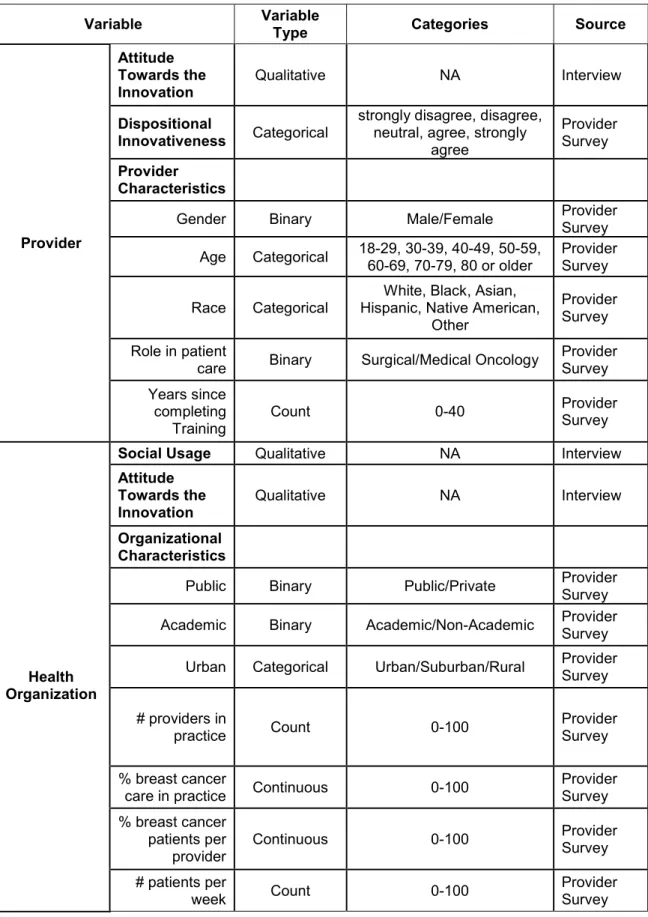
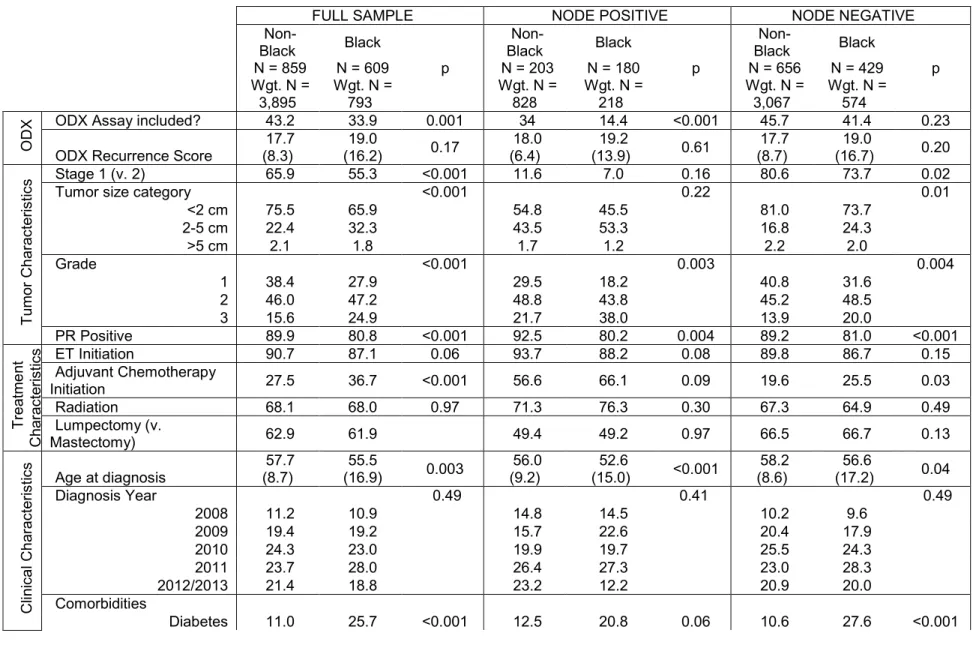
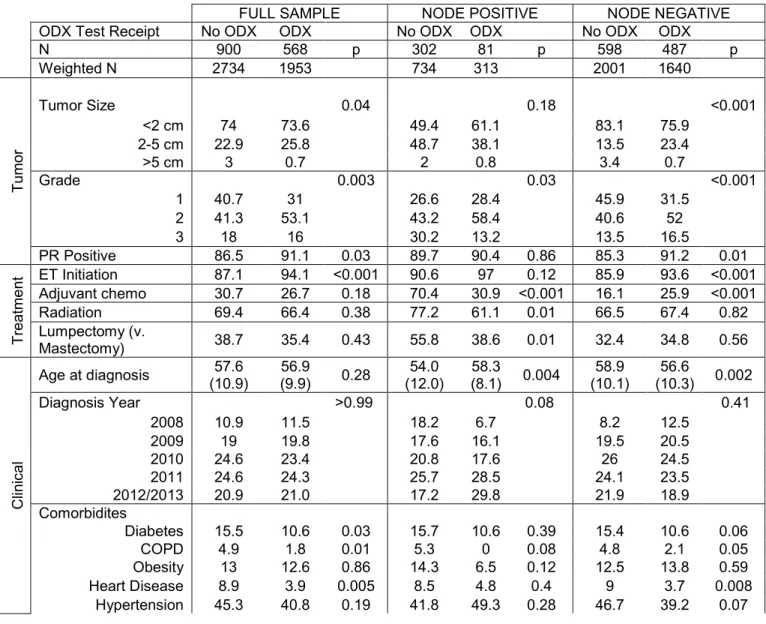
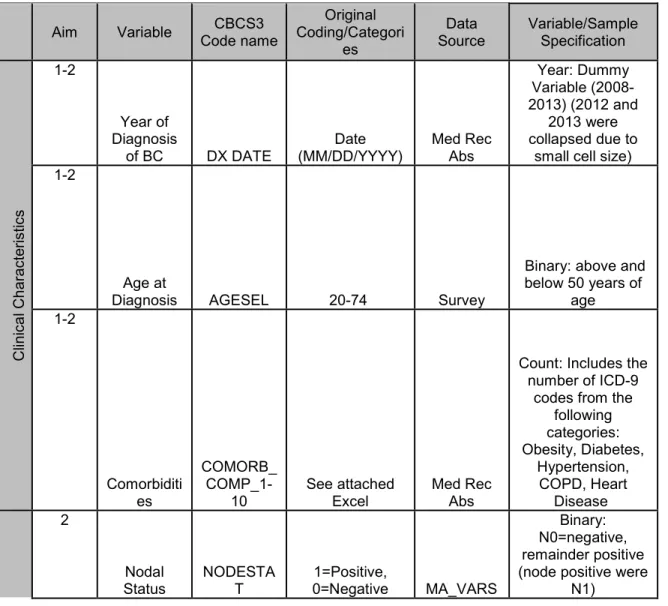
Table 1. Variables of Interest ... 34 Table 2. Characteristics from the Electronic Provider Survey. ... 41 Table 3. Population-Weighted Sample Characteristics (Mean with Standard
Error/Proportion) by Race and Lymph Node Status ... 55 Table 4. Sample Characteristics (Mean with Standard Error/Proportion) by
ODX Use and Lymph Node Status. ... 57 Table 5. Modified Poisson Regression Results of ODX Test use for Node
Negative Breast Cancer Patients ... 60 Table 6. Modified Poisson Regression Results for the Association between Race
and Covariates and ODX Testing in Node Positive Breast Cancer Patients ... 62 Table 7. Patient Characteristics by Race and ODX Risk Group, Carolina Breast
Cancer Study, Phase 3 ... 77 Table 8. Sample Characteristics by Adjuvant Chemotherapy Initiation, Carolina
Breast Cancer Study, Phase 3 ... 79 Table 9. Unadjusted and Adjusted Risk Ratios for the Association between
Race and Adjuvant Chemotherapy Initiation in the Low ODX Risk Groups ... 82 Table 10. Unadjusted Risk Ratio for the Association between Race and
LIST OF FIGURES
Figure 1. Andersen's behavioral model for health care utilization informed
empirical models for Aims 1 and 2 ... 26 Figure 2. Andersen's behavioral model for health care utilization informed
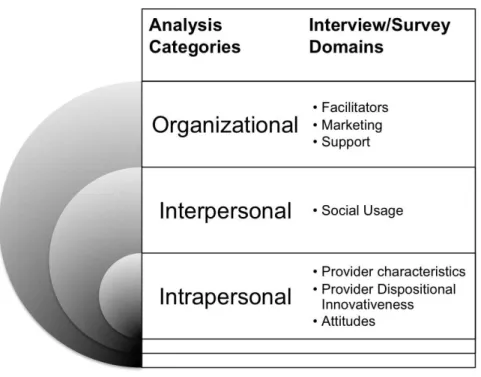
empirical models for Aims 3 ... 39 Figure 3. Provider acceptance of ODX test, from Elsevier from Frambach and
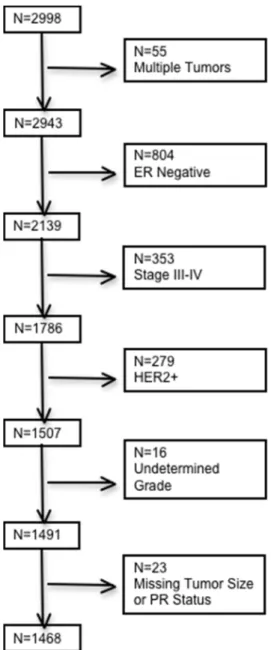
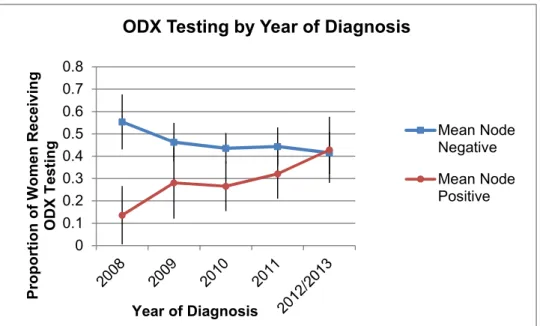
Schillewaert, Journal of business research, 55(2), page 167, 2002 ... 40 Figure 4. Qualitative methods framework ... 45 Figure 5. Sample population with exclusion criteria ... 51 Figure 6. Proportion of ER+, HER2-, Stage I-II patients who had an ODX testing
LIST OF ABBREVIATIONS
ODX Oncotype DX test®, Genomic Health, Redwood City, California CMS Centers for Medicare and Medicaid Services
CBCS-III Carolina Breast Cancer Study, Phase III
IOM Institute of Medicine
ER Estrogen receptor
PR Progesterone receptor
HER2 Human epidermal growth factor receptor 2 ASCO American Society of Clinical Oncology NCCN National Comprehensive Cancer Network AJCC American Joint Committee on Cancer
NC North Carolina
Med Rec Abs Medical record abstraction
Path Pathology report abstraction
MA_VARS Derived variables from CBCS-III data
SES Socioeconomic Status
SWOG Southwest Oncology Group
RxPONDER Rx for Positive Node Endocrine Therapy Responsive Breast Cancer TAILORx Trial Assigning IndividuaLized Options for Treatment
aRR Adjusted risk ratio
RR Risk Ratio
PSU Primary Sampling Unit
Df degrees of freedom
HS High school
CHAPTER 1. ONCOTYPE DX TESTING IN WOMEN WITH BREAST CANCER: OVERVIEW Specific Aims
Breast cancer remains the second leading cause of cancer death among women, and while the incidence of breast cancer is lower among Black women, their breast cancer mortality is 37% higher compared to white women.[1, 2] Transformative research and technology have improved the prognosis and treatment of breast cancer in the past decade. However, even when controlling for known differences in tumor biology, racial disparities in breast cancer care processes and outcomes continue to grow[3, 4], suggesting that this racial disparity can be partially explained by access to high quality cancer treatment.[5, 6] In 2004, a genomic innovation in breast cancer treatment, Oncotype DX® (ODX), became commercially available [7]. ODX uses tumor genetics to predict not only risk of recurrence, but also the benefit of chemotherapy among early-stage, estrogen receptor positive breast cancer patients.[7] [8, 9] ODX began to be included in clinical guidelines in 2007 and
reimbursed by CMS in 2006. ODX can improve treatment decision-making by avoiding the costs and risks associated with adjuvant chemotherapy among women with low risk scores [10-13]. However, some evidence suggests that eligible Black patients are less likely to utilize ODX testing compared to white patients [14-16]. Reasons for these disparities and whether these disparities persist across diverse health care settings and insurers remain unclear. Furthermore, it is unknown whether ODX testing impacts chemotherapy use equally across racial subgroups. Genomic diffusion research suggests that organizational, provider, and patient level characteristics contribute to racial disparities in genetic testing uptake across diverse health care settings [17]. However, to my knowledge, no studies have explored racial disparities in ODX uptake and subsequent adjuvant chemotherapy initiation across a diversity of health care settings and insurance types.
disparities exist in ODX test use and to identify modifiable factors that (1) contribute to racial disparities in ODX uptake and subsequent adjuvant chemotherapy initiation and (2) inform future interventions. The central hypothesis of this work is that Black women are less likely to receive ODX testing compared to white women and that ODX testing impacts chemotherapy behaviors
differentially by racial subgroup. Literature has demonstrated that racial disparities in breast cancer care emerge not only due to access to innovative technologies, but also during the treatment decision-making process.[17] The rationale for this study is to close a gap in our current
understanding of how race influences ODX uptake and adjuvant chemotherapy use across diverse health organizations in North Carolina. Identifying these factors will move the field forward by
providing an evidence base to inform future interventions aimed at increasing patients’ access to and the appropriate use of ODX testing and other genetic technologies among minority populations. This leads to the following three aims and hypotheses to be tested using Carolina Breast Cancer Study (CBCS-III), a unique and rich dataset that includes survey and medical record abstraction data for 2998 women across North Carolina, as well as interviews with oncologists in North Carolina:
Aim 1: Determine whether ODX test use varies by racial subgroup. Hypothesis: ODX testing is lower among Black patients compared to white patients. I will build multivariate regression models using CBCS-III data.
Aim 2: Determine the independent and interactive effects of race with ODX risk score on the initiation of guideline-concordant adjuvant chemotherapy. Hypothesis 2a: Black women will be less likely to receive guideline-concordant chemotherapy within the low and high-risk groups compared to white women. Hypothesis 2b: Black women will be less likely to initiate adjuvant chemotherapy within the intermediate risk group compared to white women.I will use CBCS-III data to elucidate the relationship between race and ODX risk score on adjuvant chemotherapy use among NC breast cancer patients.
As genomic technologies shift cancer treatment towards personalized therapies, it is critical to understand utilization patterns across patient populations and health care settings and to identify factors that can increase access to high quality cancer care for all patients. I seek to elucidate whether race influences the use of transformative genomic technologies, such as ODX testing (Aim 1). Furthermore, I expect to identify whether ODX risk score influences adjuvant chemotherapy initiation differentially by race (Aim 2). Qualitative interviews with oncologists across diverse settings will compliment current understanding of ODX use and subsequent treatment decision-making by focusing on factors that cannot be studied using secondary data sources (Aim 3). Taken as a whole, results from these three aims can inform future interventions and policies aimed to provide high quality care to all breast cancer patients.
Executive Summary
Breast cancer remains the second leading cause of cancer death among women. Although the incidence of breast cancer is lower among Black women, they are more likely to experience worse breast cancer care processes and outcomes compared to white women. New and developing genetic technologies and targeted therapies hold great potential to guide individualized high-quality cancer care; however, an unintended consequence could be increased disparities if such innovative technologies are not equally accessible across racial subgroups.
In 2004, a genomic innovation in breast cancer treatment, Oncotype DX® (ODX), became commercially available. For women with early-stage, estrogen receptor positive breast cancer, ODX predicts not only risk of breast cancer recurrence, but also the benefit of chemotherapy. ODX has already been incorporated into the clinical guidelines for node negative patients and is widely
of ODX test results. This study contributes to the literature by exploring racial disparities in ODX uptake and subsequent adjuvant chemotherapy use across a large cohort of women treated in the community. Specifically, this dissertation has three objectives: 1) to characterize racial variation in the uptake of ODX among women with node negative and node positive breast cancer, 2) to characterize racial variation in adjuvant chemotherapy initiation among women receiving ODX testing, and 3) to understand the nuances in ODX and adjuvant chemotherapy decision making among oncologists caring for breast cancer patients.
To achieve these objectives, we used modified Poisson regression to examine the
association between race and ODX testing and between race and adjuvant chemotherapy initiation among women in the Carolina Breast Cancer Study, Phase III cohort. We also conducted 15 semi-structured telephone interviews with oncologists to further understand provider and organizational level factors that influence the use of ODX testing and adjuvant chemotherapy initiation.
We found that ODX testing does not vary by race among node negative patients. However among node positive patients, Black women are less likely to receive ODX testing compared to White women. Currently, clinical and insurance guidelines recommend ODX testing only among eligible women with node negative, not node positive, breast cancer. Our qualitative work suggested that providers often order ODX testing for node positive within the context of an ongoing clinical trial. It is possible that racial differences among node positive women occur due lower clinical trial enrollment by minority patients, less favorable insurance policies, patient preferences or provider
recommendation patterns. This racial difference in node positive patients reflects more guideline concordant care among African American women. Future research should examine more the role of these factors on racial variation in ODX test uptake for node positive patients. Specifically, it is unclear whether racial differences in the use of ODX testing by race are important and lead to differential quality of care and outcomes. Distinguishing between racial disparities verses racial differences in the uptake of newly emerging genetic technologies will be a challenge moving forward in the era of “precision medicine.”
adjuvant chemotherapy uptake within risk groups. It is possible that the additional objective
information provided by ODX reduces racial variation in chemotherapy uptake. Alternatively, the lack of racial differences may reflect broader recent research that has suggested narrowing racial
disparities in adjuvant chemotherapy initiation.
Finally, oncologists identified organizational, interpersonal and intrapersonal factors that influence ODX use in clinical practice. Providers did not report variation in ODX testing by socioeconomic or racial characteristics. Instead, they discussed how clinical characteristics and patient preferences influence ODX test recommendations and chemotherapy initiation. Additionally, multi-level factors influenced the uptake of ODX testing in clinical practice. These factors appeared to vary across providers and their health care settings. Furthermore, providers reported that barriers to ODX testing that existed during early adoption have diminished over time. For example, we identified targets for facilitating the incorporation of this genetic technology into breast cancer care:
Organizational structures, insurance coverage, and medical guidelines emerged as important organizational levers for facilitating the use of ODX testing, especially during early adoption. Future research should examine the association between organizational and provider level factors with ODX testing.
REFERENCES
1. Atlas, S.J., et al., A cluster-randomized trial of a primary care informatics-based system for breast cancer screening. J Gen Intern Med, 2011. 26(2): p. 154-61.
2. Jemal, A., et al., Annual report to the nation on the status of cancer, 1975-2005, featuring trends in lung cancer, tobacco use, and tobacco control. J Natl Cancer Inst, 2008. 100(23): p. 1672-94.
3. Schneider, E.C., A.M. Zaslavsky, and A.M. Epstein, Racial disparities in the quality of care for enrollees in medicare managed care. JAMA, 2002. 287(10): p. 1288-94.
4. Du, X.L., S. Fang, and T.E. Meyer, Impact of treatment and socioeconomic status on racial disparities in survival among older women with breast cancer. Am J Clin Oncol, 2008. 31(2): p. 125-32.
5. Racial disparities in breast cancer mortality are not driven by estrogen receptor status alone, 2011, National Institutes of Health.
6. Wheeler, S.B., K.E. Reeder-Hayes, and L.A. Carey, Disparities in breast cancer treatment and outcomes: biological, social, and health system determinants and opportunities for research. Oncologist, 2013. 18(9): p. 986-93.
7. Paik, S., et al., A multigene assay to predict recurrence of tamoxifen-treated, node-negative breast cancer. N Engl J Med, 2004. 351(27): p. 2817-26.
8. Marchionni, L., et al., Impact of gene expression profiling tests on breast cancer outcomes. Evid Rep Technol Assess (Full Rep), 2007(160): p. 1-105.
9. Recommendations from the EGAPP Working Group: can tumor gene expression profiling improve outcomes in patients with breast cancer? Genet Med, 2009. 11(1): p. 66-73. 10. Asad, J., et al., Does oncotype DX recurrence score affect the management of patients with
early-stage breast cancer? Am J Surg, 2008. 196(4): p. 527-9.
11. Joh, J.E., et al., The effect of Oncotype DX recurrence score on treatment recommendations for patients with estrogen receptor-positive early stage breast cancer and correlation with estimation of recurrence risk by breast cancer specialists. Oncologist, 2011. 16(11): p. 1520-6.
12. Ademuyiwa, F.O., et al., The effects of oncotype DX recurrence scores on chemotherapy utilization in a multi-institutional breast cancer cohort. Breast Cancer Res Treat, 2011. 126(3): p. 797-802.
13. Henry, L.R., et al., The influence of a gene expression profile on breast cancer decisions. J Surg Oncol, 2009. 99(6): p. 319-23.
14. Hassett, M.J., et al., Adoption of gene expression profile testing and association with use of chemotherapy among women with breast cancer. J Clin Oncol, 2012. 30(18): p. 2218-26. 15. Lund, M.J., et al., 21-Gene recurrence scores: racial differences in testing, scores, treatment,
and outcome. Cancer, 2012. 118(3): p. 788-96.
CHAPTER 2. ONCOTYPE DX TESTING IN WOMEN WITH BREAST CANCER: STUDY RATIONALE
Background Health Disparities in Cancer Care
National focus on health disparities came into the forefront following the 2003 Institute of Medicine’s (IOM) report, Unequal Treatment, which brought attention to disparities in health care quality and outcomes among racial/ethnic minorities, low-income and other vulnerable populations.[1] From this report, IOM developed a working definition for health disparities “the difference in treatment or access not justified by the differences in health status or preferences of the groups.”[1] This definition acknowledges a distinction between health differences and disparities, where a health difference fails to account for patient preferences and clinical appropriateness. Additionally as a result of Unequal Treatment, the National Health Disparities Report began providing an annual national view of health disparities in the US. The 2013 report demonstrated that health disparities persist across quality and access measures among all priority populations, including racial/ethnic minorities, low-income groups, women, children, the elderly, lesbian, gay, bisexual and transgender populations, disabled, and uninsured and rural populations.[1] Moreover, the majority of identified disparities in these groups have remained from year to year, demonstrating a need for innovative approaches for improving documented disparities.[2]
are more likely to present with more aggressive tumor types [4]. However, even upon controlling for disease stage and treatment, disparities persist.[3] [5-9] For example, among hormone receptor positive breast cancers, Black women are more likely to experience poor health outcomes [10]. This is of particular interest, as hormone receptor positive breast cancer is associated with an improved prognosis compared to other breast cancer subtypes, yet disparities in health outcomes among Black women persist even upon controlling for tumor biology [10]. Thus, studies have demonstrated that even when controlling for biological differences, Black women still fare worse, suggesting that access and quality of care may contribute to existing disparities.
Racial disparities in breast cancer care processes and outcomes likely arise from a combination of biological, social and health system factors.[11] From screening to survivorship or mortality, racial/ethnic minorities fare worse on many quality and access measures.[2] The National Health Disparities Report demonstrated that racial/ethnic minorities, low-income populations, and those with public insurance (v. private) were less likely to have recommended mammogram screening;[2] even upon controlling for screening mammography and stage at diagnosis, racial disparities persist.[12, 13] This may be explained by concurrent differences in quality and access of care among breast cancer patients. Among women who develop breast cancer, multiple treatment quality and access disparities have been identified.[5, 10, 14-17] These treatment disparities may reflect differential access to, and quality of, cancer care among Black women. Black women were less likely to receive guideline concordant radiation therapy [2] and chemotherapy [5, 18] compared to white women. Furthermore, racial and socioeconomic disparities have been found among the use of targeted therapies such as trastazumab [19] for HER2 positive patients with metastatic breast cancer, and endocrine therapy for hormone receptor positive breast cancer patients [20]. This suggests that racial/ethnic minorities and low socioeconomic patients are less likely to reap the benefits of new targeted therapies compared to their white counterparts.
Genetic Technologies in Cancer Care
all women. Furthermore, if equally accessible to all racial/ethnic minorities, these technologies have the potential to account for biological differences in cancer etiology between racial/ethnic subgroups, potentially narrowing disparities in breast cancer processes and outcomes. However, if these technologies are not equally accessible across racial/ethnic subgroups, we risk widening existing disparities [21-23]. Thus, moving forward, health disparities researchers must also consider disparities in access to and use of genetic technologies in breast cancer care.
Evidence suggests that racial/ethnic minorities have lower access to innovative technologies compared to whites, including lower use of cancer predisposition genetic tests among Blacks
compared to whites [22-24]. For example, Black women are less likely to access BRCA1/2 testing for breast and ovarian cancer prevention compared to white women [25]. These disparities in test receipt partially result from characteristics of the providers seen by racial/ethnic minorities: For example, Blacks are more likely to see providers or health care centers that are less likely to use these innovations [26, 27]. A qualitative study found that providers, patient advocates, executives and insurers identified similar barriers to the use of cancer predisposition genetic tests (e.g., BRCA1 test) and prognostic genetic tests (e.g., tumor gene expression panels for the management of breast cancer) [28]. Thus, it is also important to explore whether racial disparities exist in the uptake of tumor gene expression panels for the management of cancer.
Oncotype DX for the Management of Early Breast Cancer
these genes are not associated with carcinogenesis. Together, an algorithm was based around the expression of these 21 genes to compute a recurrence score that quantifies the likelihood of 10-year distance recurrence in patients with node negative, estrogen receptor positive breast cancer [29, 30]. This algorithm was validated to predict 10 year distant recurrence using data from the National Surgical Adjuvant Breast and Bowel Project Trial B-14 [30].
ODX leverages tumor gene expression patterns using the validated algorithm to predict risk of 10 year distant recurrence: The algorithm groups genes into functional groups (i.e., reference (or control genes), proliferation, invasion, HER2, GSTM1, CD68, BAG1 and Estrogen) and calculates a “risk of recurrence score” which correlates to a percent risk of distant recurrence at ten years. These risk scores are divided into three risk groups: low (score<18), intermediate (score 18-30) and high (score >30). The test not only predicts a woman’s risk of breast cancer recurrence, but also the benefit to chemotherapy; thus, it may be a useful tool for providers and patients during adjuvant chemotherapy decision-making [29, 30]. Women with low risk tumors are unlikely to receive any clinical benefit for using adjuvant chemotherapy, whereas women with high risk scores receive a significant improvement in ten-year distant recurrence outcomes.[29] The benefit for adjuvant chemotherapy in the intermediate risk group is less clear: for these women, clinical-pathological and preference based decision-making may be appropriate. The Trial Assigning IndividuaLized Options for Treatment (Rx) (TAILORx) is currently in progress to acquire more information about women in the intermediate risk group. The TAILORx trial is randomizing women with intermediate ODX risk scores (defined as ODX risk score=11-25 for the trial) to anti-estrogen therapy (i.e., tamoxifen, aromatase inhibitors) only or antiestrogen therapy plus adjuvant chemotherapy.[31]
Since the original study validating ODX, evidence has mounted to support the prognostic [37] and predictive value of the test [38]. Exempt from FDA approval, ODX became commercially
available in 2004. Insurance reimbursement for the test began in 2005 by a commercial insurer [39], and by 2006 CMS began reimbursing the test [40]. ODX was subsequently added to the guidelines in 2007 and 2008 by ASCO and NCCN, respectively.[39] Today, many large insurers cover the test [39], as evidence suggests prognostic and predictive validity for the test and potential cost savings [39, 41-45]. On a population level, evidence suggests that ODX influences chemotherapy treatment decision-making [46-54], reducing the overuse of chemotherapy [52-55]. ODX may increase providers’ confidence in the chemotherapy decision-making process [47], and patients have reported that they would recommend ODX to other breast cancer patients [56].
Uptake of Oncotype DX (Aim 1)
About half of all women with invasive breast cancer may be eligible for and benefit from ODX [57]. However, uptake of ODX varies across study settings, ranging from 10%-50% of eligible women receiving the test. This suggests potentially suboptimal use of the test among eligible patients.[58, 59] [60] Unfortunately, early descriptive evidence suggests that Black women are less likely to receive this test compared to white women [58, 60, 61], even when controlling for disease characteristics.[61] To my knowledge, only five studies describe the uptake of ODX by race.[27, 58, 59, 61, 62] Of these five studies, three reported racial disparities in its use, with the proportion of Black women who received ODX being an average of 10% lower compared to white women.[58, 60, 61] Two studies found no racial differences in ODX testing; however, the generalizability may be limited as one was conducted within a single academic, comprehensive cancer center [59] and the other was conducted among women ages 65 or older with Medicare [62]. Only two studies directly examined racial
system-level factors influence the ODX testing among patients. However, it is likely that additional patient level factors influence the ODX testing. Reasons for racial disparities in ODX testing may consist of biological (e.g., more aggressive tumor biology) and social factors (e.g., access to care) on the patient level. Studies investigating patient level factors that influence ODX test receipt and disparities will fill a gap in the literature regarding who has access to genomic technologies in cancer care.
Chemotherapy Decision-Making with Oncotype DX (Aim 2)
In addition to potential disparities in the uptake of ODX, it is unclear whether racial variation exists in adjuvant chemotherapy decision-making when ODX test results are available to the provider. A number of studies indicate that minority women are less likely to receive guideline-concordant, primary course of treatment for breast cancer.[63] Similar results have been found for adjuvant care. Black women across health care insurers appear to be less likely to receive guideline-concordant adjuvant chemotherapy compared to their white counterparts.[5, 8, 18, 64] Differences in adjuvant chemotherapy use may emerge during the treatment decision-making process. Thus, it is of interest to understand whether a technology, such as ODX testing, influences adjuvant chemotherapy decision-making differentially among racial subgroups. Only one study has examined racial
differences in chemotherapy use among women who receive ODX score results.[58] Interestingly, the study found no racial differences in chemotherapy use within ODX risk groups. However these results may not be generalizable, as the study was conducted within three academic-affiliated Atlanta
hospitals. Furthermore, this study’s evaluation of treatment outcomes was limited by small sample size. Studies conducted in diverse settings are necessary to characterize how ODX scores impact adjuvant chemotherapy initiation across racial subgroups in order to inform policy and interventions which aim to improve adjuvant chemotherapy decision-making.
Multilevel Factors Associated with Oncotype DX Use (Aim 3)
The lack of a multilevel framework to model ODX testing is partially due to data-constraints, as secondary datasets rarely include provider and organizational level factors that influence the receipt of ODX testing across diverse health settings (i.e., public/private, academic/non-academic, and urban/rural health care centers) [58, 60, 61, 66]. To date, two studies have examined whether site of care influences ODX receipt.[27, 61] The authors found that women treated at municipal hospitals were less likely to receive ODX testing compared to those being seen at tertiary hospitals.[27] Interestingly, Black women were more likely to be seen at municipal facilities, suggesting that site of care is a partial source of the racial disparity in receiving ODX testing. Another study found that women who were seen at a comprehensive cancer center were more likely to receive gene expression profiling tests compared to those seen in the community.[61] These studies provide supporting evidence for taking multilevel approaches in examining disparities in the use of ODX testing.
Two qualitative studies have used provider interviews to examine provider and system-level factors that influence the ODX testing in clinical care.[28, 67] Study findings indicated that
characteristics of the test (i.e., interpreting intermediate results)[67], test coordination (including reimbursement) [28], patient out-of-pocket costs [28], and the use of multidisciplinary teams [67] created barriers to the use of this technology in clinical practice. Furthermore, oncologists worried that testing could be used inappropriately [67] or result in treatment delays [28]. One study focused on barriers to the ordering ODX testing, while the other study focused on how the test is used in clinical practice [28]. However, neither explored both issues of uptake and use of the test results, nor were conceptual frameworks used to explicitly examine provider and organizational factors. Ordering ODX testing and subsequent adjuvant chemotherapy is a nuanced decision process, and quantitative analyses alone may not capture how ODX is used in decision-making. Thus a need remains to conduct a theory driven, qualitative study that explores both why the test is ordered/not ordered and how the test result is used in clinical decision-making.
Rationale Significance
Today, we recognize that breast cancer is not one single disease, but rather a complex set of diseases that can be characterized by genetic markers. The genetic characteristics of a tumor can predict risk of recurrence and can be used to tailor therapeutics to the individual, providing high-quality, patient-centered cancer care [68]. However, if genomic innovations are not accessed equally and used appropriately across racial groups, an unintended consequence of this technology may be to exacerbate current racial disparities in the process and outcomes of cancer care [58].
ODX, an example of such a genomic technology, has demonstrated prognostic and predictive validity [69-71]. Thus, ODX was added to the American Society of Clinical Oncology guidelines in 2007 and National Comprehensive Cancer Network Breast Cancer Treatment guidelines in 2008; in addition, Medicare began reimbursing for ODX in 2006. By personalizing cancer treatment plans, ODX testing has the potential to improve overall processes and outcomes of care for women with breast cancer. However, research demonstrates that Black women are less likely to receive ODX testing compared to white women with similar disease characteristics [58, 60, 61], which may exacerbate racial disparities in cancer care. Current literature regarding race and ODX testing is largely descriptive and has not identified factors that are associated with racial disparities across different health care systems, nor has the literature demonstrated that this innovation impacts adjuvant chemotherapy initiation equivalently across racial subgroups.
Innovation
The proposed research is innovative in four important ways.First, it is the first study to examine uptake of ODX testing by racial subgroup across diverse health settings (i.e., public/private, academic/non-academic, and urban/rural health care centers) and insurers [58, 60, 61, 66]. Although two published studies examined racial disparities in the uptake of ODX testing [58, 60], their
REFERENCES
1. Nelson, A., Unequal treatment: confronting racial and ethnic disparities in health care. J Natl Med Assoc, 2002. 94(8): p. 666-8.
2. National Healthcare Disparities Report, 2013. Agency for Healthcare Research and Quality May 2014; Available from: http://www.ahrq.gov/research/findings/nhqrdr/nhdr13/index.html. 3. Aizer, A.A., et al., Lack of reduction in racial disparities in cancer-specific mortality over a
20-year period. Cancer, 2014. 120(10): p. 1532-9.
4. Carey, L.A., et al., Race, breast cancer subtypes, and survival in the Carolina Breast Cancer Study. JAMA, 2006. 295(21): p. 2492-502.
5. Bickell, N.A., et al., Missed opportunities: racial disparities in adjuvant breast cancer treatment. J Clin Oncol, 2006. 24(9): p. 1357-62.
6. Shavers, V.L. and M.L. Brown, Racial and ethnic disparities in the receipt of cancer treatment. J Natl Cancer Inst, 2002. 94(5): p. 334-57.
7. Bradley, C.J., C.W. Given, and C. Roberts, Disparities in cancer diagnosis and survival. Cancer, 2001. 91(1): p. 178-88.
8. Banerjee, M., et al., Disentangling the effects of race on breast cancer treatment. Cancer, 2007. 110(10): p. 2169-77.
9. Freedman, R.A., et al., Trends in racial and age disparities in definitive local therapy of early-stage breast cancer. J Clin Oncol, 2009. 27(5): p. 713-9.
10. O'Brien, K.M., et al., Intrinsic breast tumor subtypes, race, and long-term survival in the Carolina Breast Cancer Study. Clin Cancer Res, 2010. 16(24): p. 6100-10.
11. Wheeler, S.B., K.E. Reeder-Hayes, and L.A. Carey, Disparities in breast cancer treatment and outcomes: biological, social, and health system determinants and opportunities for research. Oncologist, 2013. 18(9): p. 986-93.
12. Bickell, N.A., Race, ethnicity, and disparities in breast cancer: victories and challenges. Womens Health Issues, 2002. 12(5): p. 238-51.
13. Breen, N., et al., Progress in cancer screening over a decade: results of cancer screening from the 1987, 1992, and 1998 National Health Interview Surveys. J Natl Cancer Inst, 2001. 93(22): p. 1704-13.
14. Dignam, J.J., et al., Prognosis among African-American women and white women with lymph node negative breast carcinoma: findings from two randomized clinical trials of the National Surgical Adjuvant Breast and Bowel Project (NSABP). Cancer, 1997. 80(1): p. 80-90. 15. Yood, M.U., et al., Race and differences in breast cancer survival in a managed care
population. J Natl Cancer Inst, 1999. 91(17): p. 1487-91.
17. Curtis, E., et al., Racial and ethnic differences in breast cancer survival: how much is
explained by screening, tumor severity, biology, treatment, comorbidities, and demographics? Cancer, 2008. 112(1): p. 171-80.
18. Hershman, D., et al., Racial disparities in treatment and survival among women with early-stage breast cancer. J Clin Oncol, 2005. 23(27): p. 6639-46.
19. Shih, Y.C., L.S. Elting, and M.T. Halpern, Factors associated with immunotherapy use among newly diagnosed cancer patients. Med Care, 2009. 47(9): p. 948-58.
20. Roberts MC, W.S., Reeder-Hayes K, Racial/Ethnic and Socioeconomic Disparities in Endocrine Therapy Adherence in Breast Cnacer: A systematic review. American Journal of Public Health In Press.
21. Hall, M. and O.I. Olopade, Confronting genetic testing disparities: knowledge is power. JAMA, 2005. 293(14): p. 1783-5.
22. Hall, M.J. and O.I. Olopade, Disparities in genetic testing: thinking outside the BRCA box. J Clin Oncol, 2006. 24(14): p. 2197-203.
23. Suther, S. and G.E. Kiros, Barriers to the use of genetic testing: a study of racial and ethnic disparities. Genet Med, 2009. 11(9): p. 655-62.
24. Singer, E., T. Antonucci, and J. Van Hoewyk, Racial and ethnic variations in knowledge and attitudes about genetic testing. Genet Test, 2004. 8(1): p. 31-43.
25. Armstrong, K., et al., Racial differences in the use of BRCA1/2 testing among women with a family history of breast or ovarian cancer. JAMA, 2005. 293(14): p. 1729-36.
26. Shields, A.E., W. Burke, and D.E. Levy, Differential use of available genetic tests among primary care physicians in the United States: results of a national survey. Genet Med, 2008. 10(6): p. 404-14.
27. Guth, A.A., et al., Utilization of Oncotype DX in an Inner City Population: Race or Place? Int J Breast Cancer, 2013. 2013: p. 653805.
28. Weldon, C.B., et al., Barriers to the use of personalized medicine in breast cancer. J Oncol Pract, 2012. 8(4): p. e24-31.
29. Paik, S., et al., Gene expression and benefit of chemotherapy in women with node-negative, estrogen receptor-positive breast cancer. J Clin Oncol, 2006. 24(23): p. 3726-34.
30. Paik, S., et al., A multigene assay to predict recurrence of tamoxifen-treated, node-negative breast cancer. N Engl J Med, 2004. 351(27): p. 2817-26.
31. Sparano, J.A., TAILORx: trial assigning individualized options for treatment (Rx). Clin Breast Cancer, 2006. 7(4): p. 347-50.
32. Dowsett, M., et al., Prediction of risk of distant recurrence using the 21-gene recurrence score in node-negative and node-positive postmenopausal patients with breast cancer treated with anastrozole or tamoxifen: a TransATAC study. J Clin Oncol, 2010. 28(11): p. 1829-34.
chemotherapy: a retrospective analysis of a randomised trial. Lancet Oncol, 2010. 11(1): p. 55-65.
34. Goldstein, L.J., et al., Prognostic utility of the 21-gene assay in hormone receptor-positive operable breast cancer compared with classical clinicopathologic features. J Clin Oncol, 2008. 26(25): p. 4063-71.
35. Wong, W.B., et al., The value of comparative effectiveness research: projected return on investment of the RxPONDER trial (SWOG S1007). Contemp Clin Trials, 2012. 33(6): p. 1117-23.
36. Fisher, B., et al., Tamoxifen and chemotherapy for lymph node-negative, estrogen receptor-positive breast cancer. J Natl Cancer Inst, 1997. 89(22): p. 1673-82.
37. Habel, L.A., et al., A population-based study of tumor gene expression and risk of breast cancer death among lymph node-negative patients. Breast Cancer Res, 2006. 8(3): p. R25. 38. Kelly, C.M., et al., Review of the clinical studies using the 21-gene assay. Oncologist, 2010.
15(5): p. 447-56.
39. Trosman, J.R., S.L. Van Bebber, and K.A. Phillips, Coverage policy development for personalized medicine: private payer perspectives on developing policy for the 21-gene assay. J Oncol Pract, 2010. 6(5): p. 238-42.
40. Womack, C. Medicare contractor to reimburse Genomic Health’s Oncotype Dx: Step toward broader PGx coverage? . 2006 August 25, 2014; Available from:
http://www.genomeweb.com/dxpgx/medicare-contractor-reimburse-genomic-health-s-oncotype-dx-step-toward-broader-p.
41. Hornberger, J., L.E. Cosler, and G.H. Lyman, Economic analysis of targeting chemotherapy using a 21-gene RT-PCR assay in lymph-node-negative, estrogen-receptor-positive, early-stage breast cancer. Am J Manag Care, 2005. 11(5): p. 313-24.
42. Reed, S.D., et al., Cost-effectiveness of the 21-gene recurrence score assay in the context of multifactorial decision making to guide chemotherapy for early-stage breast cancer. Genet Med, 2013. 15(3): p. 203-11.
43. Lyman, G.H., et al., Impact of a 21-gene RT-PCR assay on treatment decisions in early-stage breast cancer: an economic analysis based on prognostic and predictive validation studies. Cancer, 2007. 109(6): p. 1011-8.
44. Lo, S.S., et al., Prospective multicenter study of the impact of the 21-gene recurrence score assay on medical oncologist and patient adjuvant breast cancer treatment selection. J Clin Oncol, 2010. 28(10): p. 1671-6.
45. Tang, G., et al., Comparison of the prognostic and predictive utilities of the 21-gene Recurrence Score assay and Adjuvant! for women with node-negative, ER-positive breast cancer: results from NSABP B-14 and NSABP B-20. Breast Cancer Res Treat, 2011. 127(1): p. 133-42.
46. Asad, J., et al., Does oncotype DX recurrence score affect the management of patients with early-stage breast cancer? Am J Surg, 2008. 196(4): p. 527-9.
women with estrogen receptor-positive (ER+) node-negative breast cancer. Ann Oncol, 2012. 23(3): p. 625-31.
48. Biroschak, J.R., et al., Impact of Oncotype DX on treatment decisions in ER-positive, node-negative breast cancer with histologic correlation. Breast J, 2013. 19(3): p. 269-75.
49. de Boer, R.H., et al., The impact of a genomic assay (Oncotype DX) on adjuvant treatment recommendations in early breast cancer. Med J Aust, 2013. 199(3): p. 205-8.
50. Henry, L.R., et al., The influence of a gene expression profile on breast cancer decisions. J Surg Oncol, 2009. 99(6): p. 319-23.
51. Joh, J.E., et al., The effect of Oncotype DX recurrence score on treatment recommendations for patients with estrogen receptor-positive early stage breast cancer and correlation with estimation of recurrence risk by breast cancer specialists. Oncologist, 2011. 16(11): p. 1520-6.
52. Ademuyiwa, F.O., et al., The effects of oncotype DX recurrence scores on chemotherapy utilization in a multi-institutional breast cancer cohort. Breast Cancer Res Treat, 2011. 126(3): p. 797-802.
53. Kamal, A.H., et al., Breast medical oncologists' use of standard prognostic factors to predict a 21-gene recurrence score. Oncologist, 2011. 16(10): p. 1359-66.
54. Rayhanabad, J.A., et al., Changing paradigms in breast cancer management: introducing molecular genetics into the treatment algorithm. Am Surg, 2008. 74(10): p. 887-90.
55. Chavez-MacGregor M, N.J., Smith B, Zhao H, Buchholz TA, Giordano SH, Oncotype Dx use and its relationship with chemotherapy administration in the general population, in San Antonio Breast Cancer Symposium2014, American Association for Cancer Research: San Antonio, TX. p. P3-07-05.
56. Leggett, L.E., et al., Experiences and attitudes toward risk of recurrence testing in women with breast cancer: a systematic review. Breast Cancer Res Treat, 2014.
57. Siegel, R., D. Naishadham, and A. Jemal, Cancer statistics, 2013. CA Cancer J Clin, 2013. 63(1): p. 11-30.
58. Lund, M.J., et al., 21-Gene recurrence scores: racial differences in testing, scores, treatment, and outcome. Cancer, 2012. 118(3): p. 788-96.
59. Defrank, J.T., et al., Who Gets Genomic Testing for Breast Cancer Recurrence Risk? Public Health Genomics, 2013.
60. Guth AA, F.S., Fei K, Franco R, Bickell N. Utilization of Oncotype DX in an Inner-City Population: Race or Place? in San Antonio Breast Cancer Symposium. 2012. San Antonio 61. Hassett, M.J., et al., Adoption of gene expression profile testing and association with use of
chemotherapy among women with breast cancer. J Clin Oncol, 2012. 30(18): p. 2218-26. 62. Dinan, M.M., Xiaojuan; Reed, SD;Hirsch, BR; Lyman, GH; Curtis, LH, Initial Trends in the
63. Li, C.I., K.E. Malone, and J.R. Daling, Differences in breast cancer stage, treatment, and survival by race and ethnicity. Arch Intern Med, 2003. 163(1): p. 49-56.
64. Griggs, J.J., et al., Racial disparity in the dose and dose intensity of breast cancer adjuvant chemotherapy. Breast Cancer Res Treat, 2003. 81(1): p. 21-31.
65. Institute of Medicine (US) Roundtable on Translating Genomic-Based Research for Health, 2008, Institute of Medicine: Washington (DC).
66. Brewer, N.T., et al., Improving communication of breast cancer recurrence risk. Breast Cancer Res Treat, 2012. 133(2): p. 553-61.
67. Spellman, E., et al., Conveying genomic recurrence risk estimates to patients with early-stage breast cancer: oncologist perspectives. Psychooncology, 2013.
68. Curtis, C., et al., The genomic and transcriptomic architecture of 2,000 breast tumours reveals novel subgroups. Nature, 2012. 486(7403): p. 346-52.
69. Sparano, J.A. and S. Paik, Development of the 21-gene assay and its application in clinical practice and clinical trials. J Clin Oncol, 2008. 26(5): p. 721-8.
70. Carlson, J.J. and J.A. Roth, The impact of the Oncotype Dx breast cancer assay in clinical practice: a systematic review and meta-analysis. Breast Cancer Res Treat, 2013. 141(1): p. 13-22.
71. Azim, H.A., Jr., et al., Utility of prognostic genomic tests in breast cancer practice: The IMPAKT 2012 Working Group Consensus Statement. Ann Oncol, 2013. 24(3): p. 647-54. 72. NCI. NCI Mission Statement. 2013 10/14/2013]; Available from:
CHAPTER 3: METHODS
I have organized the Methods section by Specific Aims. First, I have described the Methods for Aims 1 and 2, including the General Approach, Conceptual Model, Hypotheses, Data Sources, and Analytical Plans. Second, I have described Aim 3, using the same structure. The rationale for organizing the Methods in this way is that Aims 1 and 2 are quantitative analyses of CBCS-III, while Aim 3 uses qualitative methods: Such a structure should reduce redundancy.
Aims 1 and 2 Methodology General Approach
Aim 1: Characterizing which patients received ODX testing provides information regarding who has access to genomic technologies in clinical practices across health care settings. In
Aim 2: Determining the effects of race and ODX risk group on adjuvant chemotherapy initiation will elucidate whether there are racial differences in how the test results are used in treatment initiation. The objective of this aim sought to identify whether racial differences occur in adjuvant chemotherapy initiation among women with similar ODX risk scores. For this objective, I tested two working hypotheses:(1) Black women in the low and high risk groups would be less likely to initiate guideline-concordant adjuvant chemotherapy compared to white women and (2) Black women in the intermediate risk group would be less likely to initiate adjuvant chemotherapy compared to white women. I tested these hypotheses using the approachof multivariate modeling techniques to elucidate chemotherapy initiation within the CBCS-III dataset. The rationale for this aim was to identify whether racial differences existed in treatment decisions in the presence of ODX risk information. This information is critical in understanding the impact of ODX test results on racial differences in breast cancer processes, and may inform interventions that improve the use of test results across racial groups. When completed, my expectation was to have identified whether there are racial differences in chemotherapy initiation, accounting for ODX risk score. This evidence would allow policy makers to create interventions that impact how genomic technologies are used among breast cancer patients, particularly minority patients.
Conceptual Model: Andersen’s Behavioral Model
Andersen’s behavioral model of health care utilization guided the analysis for Aims 1 and 2 (Figure 1) [1]. Andersen’s behavioral model of health services use demonstrates how environmental factors and population characteristics influence health care utilization.[1] In particular, the model suggests population characteristics, including predisposing characteristics, enabling resources, and needs, influence ODX test receipt. A woman’s need for ODX testing is determined by predisposing factors and mediated by enabling resources.
Enabling Resources. The ODX test is a complex and expensive tumor gene expression test. Thus, education, income, employment, insurance status and social support [2, 9-11] may act as enabling resources for the use of ODX, where more educated women and women with more financial and social resources might be more likely to access ODX. According to the IOM’s definition of health disparities, both measures of SES and race/ethnicity together measure health disparities in the US.
Need. Clinical characteristics such as tumor size, stage, grade, receptor subtype, nodal involvement and treatment type influence the perceived need for ODX testing. These characteristics influence a patient’s need for chemotherapy decision-making support through the use of ODX testing.[9] Black women are more likely to have more aggressive tumor characteristics and this may impact whether a patient receives ODX testing. For example, if a provider observes high-risk tumor characteristics, then he/she may bypass ODX testing and automatically recommend adjuvant chemotherapy. Other clinical predisposing factors such as age [12] and comorbidities [10] may also influence chemotherapy decision-making, where women who are very frail or who suffer from extensive co-morbidities may be less likely to receive ODX testing, as chemotherapy may be contraindicated, negating a need for the test. On the other hand, it is possible that women who are frail or who suffer from co-morbidities may be in higher need of ODX testing to provide reassurance that chemotherapy is not necessary. Either way, it is likely that these clinical characteristics influence ODX testing in one direction or another.
Figure 1. Andersen's behavioral model (adapted) for health care utilization informed empirical models for Aims 1 and 2.[1]
Just as the model frames how race, a predisposing characteristic, influences whether a patient receives ODX testing, the model frames how race may influence adjuvant chemotherapy initiation (Aim 2). Researchers have documented lower rates of guideline-concordant chemotherapy among Black women [8, 10, 12, 16], suggesting that Black women may be more likely to forgo chemotherapy. The aforementioned predisposing, enabling and need variables, influence not only ODX test receipt, but also chemotherapy initiation. Predisposing characteristics, including
socioeconomic factors (such as education, income, employment status, insurance) [9]and social support, may influence chemotherapy use.
In Aim 2, ODX test results were added to the analytic model. The ODX test result, a need variable, reflects a patient’s need for adjuvant chemotherapy. Thus, race interacted with ODX risk scores would demonstrate whether racial differences in chemotherapy initiation occur by risk score (where risk scores are categorized into three groups: low-, intermediate, and high- risk groups). Hypotheses
characteristics.
Question 2a: To what extent is race associated with the initiation of guideline-concordant adjuvant chemotherapy? Hypothesis 2a: Black women are less likely to receive guideline-concordant chemotherapy within the low and high-risk groups compared to white women.
Question 2b: Is race associated with the initiation of guideline concordant adjuvant
chemotherapy among women with intermediate risk scores? Hypothesis 2b: Black women are less likely to initiate adjuvant chemotherapy within the intermediate risk group compared to white women. Data Source
Data included baseline, pathology report, and medical record abstraction data from phase III of the Carolina Breast Cancer Study (CBCS-III) (NIH 8389741). This dataset contains data on 2.998 women, age 20-74 years with invasive breast cancer who were enrolled in the study between 2008 and 2013. Participants were identified through rapid case ascertainment in collaboration with the North Carolina Cancer Registry[17]. Women were included in the study if they had an incident primary invasive breast cancer diagnosed, and if they were North Carolina residents at the time of diagnosis. These women were enrolled across the state of North Carolina, representing 44 counties, including both rural and urban counties.
(Table 1). Thus, these rich data provided a comprehensive look at how ODX testing has been used, across a diverse population in North Carolina.
Eligibility Criteria
Eligibility criteria for women in the CBCS-III dataset were: (1) estrogen receptor positive (ER+) breast cancer, as ODX testing has been approved for use within this patient population[19], and (2) early, non-metastatic disease (i.e., AJCC stage III-IV patients were excluded), because chemotherapy decision-making process is quite different in this patient population and ODX testing has not been validated within this patient population, (3) HER2 negative, because ODX testing is not approved for these patients, (4) patients with undetermined tumor grade, and (5) patients with missing data.[20] We estimated that 1439 women (602 Black women, 837 white women) would meet these eligibility criteria. Given this sample size, our preliminary sample size calculation suggested that we would be able to detect effect sizes of 10-15% with 80% power; this effect size reflected a minimal clinically significant difference. Our total sample size was 1468 women; thus, we had enough power to detect 10% differences in ODX test receipt by race. This supports the AHRQ definition of health disparities, which detects racial disparities as differences of 10% or greater [21].
Aim 2 analyses were further limited to those women who received ODX testing and had an ODX test result abstracted from their pathology records. We estimated that 651 women (417 Black women, 234 white women) would meet these criteria. A preliminary sample size calculation suggested that we would be able to detect crude effect sizes of 15-25% with 80% power. Our total samples size was 544 women; we have enough power to detect effect sizes of ~15% in the intermediate group, and ~20% in the low risk group, and ~35% in the high risk group. Descriptive Analyses
![Figure 1. Andersen's behavioral model (adapted) for health care utilization informed empirical models for Aims 1 and 2.[1]](https://thumb-us.123doks.com/thumbv2/123dok_us/8111719.2151008/44.918.132.810.132.480/figure-andersen-behavioral-adapted-health-utilization-informed-empirical.webp)
![Figure 2. Andersen's Behavioral Model (adapted) describes how environmental factors, including health system factors influence health services use [1] (Aim 3))](https://thumb-us.123doks.com/thumbv2/123dok_us/8111719.2151008/57.918.137.800.124.464/andersen-behavioral-describes-environmental-including-factors-influence-services.webp)
![Figure 3. Provider acceptance of ODX test [29]](https://thumb-us.123doks.com/thumbv2/123dok_us/8111719.2151008/58.918.183.729.180.449/figure-provider-acceptance-of-odx-test.webp)