THE IMPLEMENTATION AND EFFECTIVENESS OF POLICY INTERVENTIONS FOR SCHOOL BULLYING
William J. Hall
A dissertation submitted to the faculty of the University of North Carolina at Chapel Hill in partial fulfillment of the requirements for the degree of Doctor of Philosophy in the School of Social Work
Chapel Hill 2015
ABSTRACT
WILLIAM J. HALL: The Implementation and Effectiveness of Policy Interventions for School Bullying
(Under the direction of Mimi V. Chapman)
Bullying threatens the well-being and school success of students. Since the 1990s, the creation of policies as a strategy to combat bullying has increased considerably. The three studies comprising this dissertation examined the implementation and effectiveness of policy interventions for bullying.
The first paper was a systematic review of studies examining the effectiveness of policy interventions for bullying. Eleven databases were searched, and 21 studies were reviewed. More educators perceived that policies were effective rather than ineffective. Policies may be more effective for direct bullying and less effective for indirect bullying. Lesbian, gay, bisexual, transgender, and queer students in schools with policies that enumerated protections based on sexual orientation and gender identity experienced less harassment and more frequent and effective intervention by school personnel. Findings were mixed regarding associations between anti-bullying policy presence and bullying outcomes.
orientation and gender identity. More educators had been trained on bullying based on race than any other social class. Students were more often informed that bullying based on race was prohibited and were least often informed about prohibitions regarding sexual orientation and gender identity. Reporting, investigating, and remediating bullying behavior was highest for bullying based on race and then disability and was lowest for bullying based on sexual orientation and gender identity.
The third paper examined the relationships between school contextual factors and two outcomes: fidelity of implementation of the law and teacher protection of students.
As I’m finishing my Ph.D. and shifting my vision ahead to my future career, I’m starting
to think about my legacy. Or rather, the legacy I hope to leave behind in terms of my work. This time has also spurred me to think about all the people who’ve played a role in my education. I’ve realized that my brother and I were my mother’s legacy. Throughout my life, my education
ACKNOWLEDGMENTS
I am very grateful to those who have helped me through this journey. First, I thank Mimi Chapman who has been my research advisor for the past 5 years. I could not have finished this program without her support and guidance. She has helped guide me through many difficult decisions and challenging times. I could not have asked for a better mentor or role model.
I also thank Kathleen Rounds who has been my faculty advisor for the last 5 years. Somehow she always has time for me to pop into her office or quickly respond to an email when I have a question or need advice. Without her support and assistance in navigating through the M.S.W./Ph.D. continuum program, I would have certainly been lost and missed valuable opportunities.
I would like to thank Mark Fraser who has a unique ability to inspire the inner intervention researcher within social work doctoral students. I found his interest in and
thoughtful feedback about my intervention ideas highly encouraging. I plan to focus my career on intervention research.
I also thank Natasha Bowen for being on my committee even though she may have been tempted to not be. I have come to appreciate her high standards for doctoral student work, and her feedback on my writing over the years has helped me become a more precise and scholarly writer. Her support of me and my work has meant a great deal to me.
I would also like to thank Barb Fedders who graciously agreed to be on my committee even without having met me. Her insights about the legal aspects of my research were
Finally, I thank Sheryl Zimmerman who challenged me and provided very detailed and constructive feedback on papers during the dissertation seminar, which evolved into my
TABLE OF CONTENTS
LIST OF TABLES ...x
LIST OF FIGURES ... xi
LIST OF ABBREVIATIONS ... xii
INTRODUCTION ...1
References: Introduction ...5
PAPER I: THE EFFECTIVENESS OF POLICY INTERVENTIONS FOR SCHOOL BULLYING: A SYSTEMATIC REVIEW………..………...8
Introduction ...8
Methods...14
Results ...16
Discussion ...22
References: Paper I ...46
PAPER II: FIDELITY OF IMPLEMENTATION OF A STATEWIDE ANTI-BULLYING POLICY WITH A FOCUS ON PROTECTED SOCIAL CLASSES…………..……….55
Introduction ...55
Methods...59
Results ...64
Discussion ...67
Implications for School Health ...72
PAPER III: THE ROLE OF SCHOOL CONTEXT IN IMPLEMENTING A STATEWIDE ANTI-BULLYING POLICY AND PROTECTING
STDUENTS ……….………..………...85
Introduction ...85
Methods...94
Results ...104
Discussion ...106
References: Paper III...116
CONCLUSIONS ...125
LIST OF TABLES
Table 1.1 – Summary of Studies Included in the Systematic Review ...32
Table 2.1 – Fidelity of Implementation of Bullying Policy Components ...74
Table 2.2 – Bullying Policy Implementation Actions by School Personnel ...75
Table 2.3 – Pairwise Comparisons of Social Classes across Policy Components ...76
Table 3.1 – Descriptive Statistics on the Fidelity of Policy Implementation ...112
Table 3.2 – Means, Standard Deviations, and Intercorrelations for Continuous Variables ...113
LIST OF FIGURES
LIST OF ABBREVIATIONS
ASSIA Applied Social Sciences Index and Abstracts
CINAHL Cumulative Index to Nursing and Allied Health Literature ERIC Education Research Information Center
ESP Education Support Professional
FIML Full Information Maximum Likelihood ICC Intraclass Correlation Coefficient
LGBTQ Lesbian, Gay, Bisexual, Transgender, and Queer NASW National Association of Social Workers
NC North Carolina
PRISMA Preferred Reporting Items for Systematic Reviews and Meta-Analyses RCT Randomized Controlled Trial
INTRODUCTION
THE IMPLEMENTATION AND EFFECTIVENESS OF POLICY INTERVENTIONS FOR SCHOOL BULLYING
Bullying in schools is a significant social problem because of the proportion of students involved in bullying and because bullying threatens the physical, mental, social, behavioral, and educational well-being of youth. In the United States, almost half of youth were directly
involved in bullying through perpetration (18%), victimization (21%), or both perpetration and victimization (8%; Cook, Williams, Guerra, & Kim, 2010). Negative outcomes associated with bullying victimization include absenteeism, low academic performance, low self-esteem,
anxiety, depression, suicidal ideation and behavior, conduct problems, psychosomatic problems, psychotic symptoms, and physical illness (Aluede, Adeleke, Omoike, & Afen-Akpaida, 2008; Arseneault, Bowes, & Shakoor, 2010; Aresneault et al., 2006; Buhs & Ladd, 2001; Buhs, Ladd, & Herald, 2006; Copeland, Wolke, Angold, & Costello, 2013; Dake, Price, & Telljohann, 2003; Gini & Pozzoli, 2009; Glew, Fan, Katon, Rivara, & Kernic, 2005; Hawker & Boulton, 2000; Juvonen, Nishina, & Graham, 2000; Kim & Leventhal, 2008; Klomek, Sourander, & Gould, 2010; Nakamoto & Schwartz, 2010; Reijntjes et al., 2011; Reijntjes, Kamphuis, Prinzie, & Telch, 2010; Rigby, 2003; Ttofi, Farrington, Lösel, & Loeber, 2011a; Wong, 2009). In addition, bullying perpetration is associated with truancy, low academic performance, school failure, depression, suicidal ideation, violent behavior, and delinquency and criminality (Aluede,
Klomek, Sourander, & Gould, 2010; Ma, Phelps, Lerner, & Lerner, 2009; Ttofi, Farrington, & Losel, 2012; Ttofi, Farrington, Lösel, & Loeber, 2011b).
Policy interventions have been introduced over the past two decades to reduce bullying. Currently, 49 states have passed anti-bullying laws (Bully Police USA, 2014). These laws apply to approximately 98,000 K-12 public schools, with the goal of protecting over 50 million
students from involvement in bullying (Snyder & Dillow, 2013; Stuart-Cassel, Bell, & Springer, 2011). Despite the widespread adoption of anti-bullying policies, relatively few studies have examined the effectiveness of these interventions, and no empirical reviews or syntheses of research evidence have been completed to inform policy creation and revision regarding bullying. Research on the implementation of school bullying policies is also limited. These studies have primarily focused on descriptive accounts of implementation as well as identifying barriers to and drivers of implementation. Studies have described how implementation differs by policy component, but no studies have examined if policies are being implemented differently in terms of social groups protected from bullying (e.g., consistently addressing bullying based on race and inconsistently addressing bullying based on sexual orientation). Further, researchers have not used inferential, multivariate analyses to examine the relationships between potential barriers to and facilitators of bullying policy implementation.
Organization of the Dissertation
bullying; (2) to synthesize the substantive findings from these studies; and (3) to provide suggestions for future research.
The second and third papers focus on the implementation of a statewide anti-bullying policy in North Carolina (NC). The primary goal of the second paper was to examine the fidelity of implementation of the NC School Violence Prevention Act of 2009 (SVPA). This study used data collected from educators (e.g., administrators, teachers, education support professionals, and school counselors) to perform descriptive and comparative analyses about the implementation of nine mandated components in SVPA (e.g., adopting a local anti-bullying policy, training school personnel about the policy, and notifying students about the policy). Most of the analyses examined differential implementation of the policy in terms of the protected social identities and statuses enumerated in the policy (i.e., race, national origin, gender, socioeconomic status, sexual orientation, gender identity, physical appearance, and disability status).
The capacity of educators to implement components of an anti-bullying policy and protect students from bullying likely hinges on the school context. Thus, the purpose of the third paper was to examine the relationships between school contextual factors (e.g., school size, school type, teacher to student ratio, teacher turnover rate, per pupil expenditure, and the
proportion of students below grade level in math and reading) prior to the full implementation of the SVPA and two outcome variables: fidelity of implementation of the SVPA and teacher protection of students.
Relevance to Social Work
problems. And, bullying often disproportionately affects youth who are vulnerable or from marginalized minority groups, including racial/ethnic minority students, students who are
immigrants or the children of immigrants, students from low socioeconomic backgrounds, sexual minority students, gender nonconforming students, students who are overweight or obese, and students with disabilities and special needs (Elamé, 2013; Peguero, 2012).
This dissertation may be most relevant to social workers practicing in schools and those engaged in policy advocacy. School social workers are frequently involved in the planning and delivery of interventions for bullying at multiple ecological levels as their role typically focuses on the mental and behavioral well-being of students (Whitted & Dupper, 2005). Further, the NASW has charged social workers to interrupt the bullying dynamic in schools and to aid students who have been victims and perpetrators of bullying (Issurdatt, 2010).
REFERENCES: INTRODUCTION
Aluede, O., Adeleke, F., Omoike, D., & Afen-Akpaida, J. (2008). A review of the extent, nature, characteristics and effects of bullying behaviour in schools. Journal of Instructional Psychology, 35, 151-158.
Arseneault, L., Bowes, L., & Shakoor, S. (2010). Bullying victimization in youths and mental health problems: ‘Much ado about nothing’?. Psychological Medicine, 40, 717-729. Aresneault, L., Walsh, E., Trzesniewski, K., Newcombe, R., Caspi, A., & Moffitt, T. E. (2006).
Bullying victimization uniquely contributes to adjustment problems in young children: A nationally representative cohort study. Pediatrics, 118, 130–138.
Buhs, E. S., & Ladd, G. W. (2001). Peer rejection as antecedent of young children’s school adjustment: An examination of mediating processes. Developmental Psychology, 37, 550-560.
Buhs, E. S., Ladd, G. W., & Herald, S. L. (2006). Peer exclusion and victimization: Processes that mediate the relation between peer group rejection and children’s classroom engagement and achievement? Journal of Educational Psychology, 98, 1–13. Bully Police USA. (2014). Anti-bullying law passage calendar. Retrieved from
http://www.bullypolice.org/
Comer, M. (2009). Perdue signs two controversial, historic bills. Retrieved from http://goqnotes.com/3035/perdue-signs-two-controversial-historic-bills/
Cook, C. R., Williams, K. R., Guerra, N. G., & Kim, T. E. (2010). Variability in the prevalence of bullying and victimization: A cross-national and methodological analysis (pp. 347-362. In S. R. Jimerson, S. M. Swearer, & D. L. Espelage, Handbook of bullying in schools: An international perspective. New York, NY: Routledge.
Copeland, W. E., Wolke, D., Angold, A., & Costello, E. J. (2013). Adult psychiatric outcomes of bullying and being bullied by peers in childhood and adolescence. JAMA Psychiatry, 70, 419-426.
Dake, J. A., Price, J. H., & Telljohann, S. K. (2003). The nature and extent of bullying at school.
Journal of School Health, 73, 173-180.
Elamé, E. (2013). Discriminatory bullying: A new intercultural challenge. New York, NY: Springer.
Equality NC. (2009). School Violence Prevention Act implementation toolkit. Raleigh, NC: Author.
Gini, G., & Pozzoli, T. (2009). Association between bullying and psychosomatic problems: A meta-analysis. Pediatrics, 123, 1059-1065.
Glew, G.M., Fan, M., Katon, W., Rivara, F.P., & Kernic, M.A. (2005). Bullying, psychosocial adjustment, and academic performance in elementary school. Archives of Pediatric Adolescent Medicine, 159, 1026-1031.
Hawker, D. S., & Boulton, M. J. (2000). Twenty years' research on peer victimization and psychosocial maladjustment: A meta‐analytic review of cross‐sectional studies. Journal of Child Psychology and Psychiatry, 41, 441-455.
Human Rights Campaign. (2015). Statewide school anti-bullying laws and policies. Washington, DC: Author.
Issurdatt, S. (2010). A shift in approach: Addressing bullying in schools. Washington, DC: National Association of Social Workers.
Jankauskiene, R., Kardelis, K., Sukys, S., & Kardeliene, L. (2008). Association between school bullying and psychosocial factors. Social Behavior and Personality, 36, 145–162. Juvonen, J., Nishina, A., & Graham, S. (2000). Peer harassment, psychological adjustment, and
school functioning in early adolescence. Journal of Educational Psychology, 92, 349-359.
Kim, Y. S., & Leventhal, B. (2008). Bullying and suicide. A review. International Journal of Adolescent Medicine and Health, 20, 133-154.
Klomek, A. B., Sourander, A., & Gould, M. (2010). The association of suicide and bullying in childhood to young adulthood: A review of cross-sectional and longitudinal research findings. Canadian Journal of Psychiatry, 55, 282-288.
Ma, L., Phelps, E., Lerner, J. V., & Lerner, R. M. (2009). The development of academic competence among adolescents who bully and who are bullied. Journal of Applied Developmental Psychology, 30, 628-644.
Nakamoto, J., & Schwartz, D. (2010). Is peer victimization associated with academic achievement? A meta-analytic review. Social Development, 19, 221–242.
Peguero, A. A. (2012). Schools, bullying, and inequality: Intersecting factors and complexities with the stratification of youth victimization at school. Sociology Compass, 6, 402-412. Reijntjes, A., Kamphuis, J. H., Prinzie, P., Boelen, P. A., Van der Schoot, M., & Telch, M. J.
(2011). Prospective linkages between peer victimization and externalizing problems in children: A meta‐analysis. Aggressive Behavior, 37, 215-222.
Reijntjes, A., Kamphuis, J. H., Prinzie, P., & Telch, M. J. (2010). Peer victimization and
Rigby, K. (2003). Consequences of bullying in schools. Canadian Journal of Psychiatry, 48, 583-590.
School Violence Prevention Act, North Carolina General Statute § 115C‐407.15-.18 (2009). Snyder, T. D., & Dillow, S. A. (2013). Digest of education statistics 2012. Washington, DC:
U.S. Department of Education, National Center for Education Statistics, Institute of Education Sciences.
Stuart-Cassel, V., Bell, A., & Springer, J. F. (2011). Analysis of state bullying laws and
policies. Washington, DC: U.S. Department of Education, Office of Planning, Evaluation and Policy Development, Policy and Program Studies Service.
Ttofi, M., & Farrington, D. (2009). What works in preventing bullying: Effective elements of anti-bullying programmes. Journal of Aggression, Conflict and Peace Research, 1, 13-24.Ttofi, M. M., & Farrington, D. P. (2011). Effectiveness of school-based programs to reduce bullying: A systematic and meta-analytic review. Journal of Experimental Criminology, 7, 27-56.
Ttofi, M., Farrington, D. P., & Lösel, F. (2012). School bullying as predictor of violence later in life: A systematic review and meta-analysis of prospective longitudinal studies.
Aggression and Violent Behavior, 17, 405–418.
Ttofi, M. M., Farrington, D. P., Lösel, F., & Loeber, R. (2011a). Do victims of school bullies tend to become depressed later in life? A systematic review and meta-analysis of longitudinal studies. Journal of Aggression, Conflict, and Peace Research, 3, 63–73. Ttofi, M. M., Farrington, D. P., Lösel, F., & Loeber, R. (2011b). The predictive efficiency of
school bullying versus later offending: A systematic/meta-analytic review of longitudinal studies. Criminal Behavior and Mental Health, 21, 80–89.
Whitted, K. S., & Dupper, D. R. (2005). Best practices for preventing or reducing bullying in schools. Children & Schools, 27, 167-175.
PAPER I
THE EFFECTIVENESS OF POLICY INTERVENTIONS FOR SCHOOL BULLYING: A SYSTEMATIC REVIEW
Bullying in schools is a pervasive threat to the educational and psychological well-being of youth. Bullying refers to unwanted aggressive behaviors enacted intentionally over time by an individual or group using some form of power to cause physical and/or psychological harm to another individual or group in a shared social context (Gladden, Vivolo-Kantor, Hamburger, & Lumpkin, 2014; Olweus, 2013). Thus, bullying is unwanted, aggressive, intentional, repetitive, harmful, interpersonal, and involves power differentials. Bullying occurs in many social settings (e.g., schools, neighborhoods, and workplaces) and among various age groups. However,
bullying among students in schools is particularly pressing given that childhood and adolescence are vulnerable and formative periods of development, and bullying in a school context can affect the physical, mental, social, and educational well-being of youth. A meta-analysis of 82 studies conducted in 22 countries in North America, South America, Europe, Southern Africa, East Asia, and Australia and Oceania found that 53% of youth were involved in bullying as bullies, victims, or both bullies and victims (Cook, Williams, Guerra, & Kim, 2010).
Negative Outcomes Connected with Bullying
esteem, anxiety, depression, suicidal ideation and behavior, conduct problems, psychosomatic problems, psychotic symptoms, and physical illness (Aluede, Adeleke, Omoike, & Afen-Akpaida, 2008; Arseneault, Bowes, & Shakoor, 2010; Copeland, Wolke, Angold, & Costello, 2013; Dake, Price, & Telljohann, 2003; Gini & Pozzoli, 2009; Gini, Pozzoli, Lenzi, & Vieno, 2014; Hawker & Boulton, 2000; Kim & Leventhal, 2008; Klomek, Sourander, & Gould, 2010; Reijntjes et al., 2011; Reijntjes, Kamphuis, Prinzie, & Telch, 2010; Rigby, 2003; Ttofi,
Farrington, Lösel, & Loeber, 2011a; Wong, 2009). In addition, students who have been bullied may not feel safe at school and disengage from the school community due to fear and sadness, which may contribute to higher rates of absenteeism and lower academic performance
(Aresneault et al., 2006; Buhs & Ladd, 2001; Buhs, Ladd, & Herald, 2006; Glew, Fan, Katon, Rivara, & Kernic, 2005; Juvonen, Nishina, & Graham, 2000; Nakamoto & Schwartz, 2010).
Youth who perpetrate bullying behaviors also face psychosocial difficulties. These youth often grow up in harsh social environments with few resources (Hong & Espelage, 2012), and bullies often lack impulse control and empathy for others (O'Brennan, Bradshaw, & Sawyer, 2009; van Noorden, Haselager, Cillessen, & Bukowski, 2014). Students who bully are more likely to skip school, perform poorly, and drop out (Jankauskiene, Kardelis, Sukys, &
meta-analysis of longitudinal studies found that school bullies were 2.5 times more likely to engage in criminal offending over an 11-year follow-up period (Ttofi, Farrington, Lösel, & Loeber, 2011b).
Student bystanders are present in up to 90% of bullying incidents (Atlas & Pepler, 1998; Craig & Pepler, 1995; Glew, Fan, Katon, Rivara, & Kernic, 2005; Hawkins, Pepler, & Craig, 2001). Youth who witness bullying often report emotional distress, including increased heart rate and higher levels of fear, sadness, and anger when recalling bullying incidents (Barhight, Hubbard, & Hyde, 2013; Janson & Hazler, 2004). Thus, across the literature, bullying is associated with problematic outcomes for perpetrators, victims, and bystanders alike.
Policy as an Intervention for Bullying
Policies have a long and often successful history of influencing human behavior and health, with examples in tobacco use, seat belt use, vaccination practices, and graduated driver licensing. Since the late 1990s, policies have been developed as a strategy to reduce bullying. A policy is a system of principles created by governing bodies or public officials to achieve
agencies or school districts, and school rules and procedures established by school principals. All aspects of this complex network of education policy are directed at influencing the operations and outcomes of schools.
Policy interventions have several advantages. Policies can influence student, teacher, and administrator behavior as well as school organizational practices. For example, school bullying policies typically prohibit certain behaviors, such as threatening and harassing other students or retaliating against students who witness and then report bullying incidents. Policies may also
require behaviors, such as requiring teachers to report bullying incidents to administrators and requiring administrators to investigate reports of bullying. Further, policies may promote certain behaviors by explicitly stating positive behavioral expectations for students or discourage
behaviors by explicitly stating punishments associated with aggressive behaviors. At the school level, policies can guide organizational practices, such as establishing bullying incident reporting procedures and creating school safety teams tasked with developing and executing school safety plans. Thus, policies can influence individual and organizational behaviors.
When well-crafted and properly implemented, policy may be the most cost-efficient intervention method. Whereas individual and small-group interventions tend to be time- and labor-intensive, and might reach only a limited number of people, policies can achieve
widespread change by influencing many organizational systems and entire populations. Policies can be universal prevention strategies because they are typically designed to reach entire
new resources to be implemented as intended, policies can remain in place as unfunded mandates.
Policies can also be thought of as upstream interventions that provide a foundation for
downstream interventions because policies are systems-level interventions that typically require more targeted intervention programs, practices, and services at the organizational, group, and individual levels (McKinlay, 1998). For example, a bullying policy may be adopted within a state or district, which then applies to all of the schools within the state or district. This policy may require training all school employees on bullying prevention strategies, integrating bullying awareness and education into classroom lessons and curricula, and individual or group
counseling for students involved in bullying. Thus, policy lays the groundwork for an array of more specific and targeted interventions to be deployed in schools by outlining goals and directives in the policy document.
Policy design is important because the content influences a cascade of actions throughout school systems, which may result in positive or negative outcomes. For example, a bullying policy that requires schools to provide counseling services and positive behavioral reinforcement to students who perpetrate bullying is markedly different than a policy that requires schools to suspend or expel students who have engaged in multiple bullying incidents. Research shows that overly harsh and punitive policies (e.g., “three strikes and you’re out” policies or
“zero-tolerance” policies) are not effective at reducing aggression or improving school safety
Anti-bullying laws have been enacted in a number of countries, including Canada, the Philippines, the United Kingdom, and the United States. Although the United States does not have a federal law against school bullying currently, 49 states have enacted anti-bullying laws (Bully Police USA, 2014). These state laws apply to approximately 98,000 K-12 public schools, with the goal of protecting over 50 million students from involvement in bullying (Snyder & Dillow, 2013; Stuart-Cassel, Bell, & Springer, 2011).
Despite the widespread adoption and application of anti-bullying policies within the United States and in other countries, relatively few studies have examined the effectiveness of these interventions. Instead, research has focused on programmatic interventions. Numerous systematic or meta-analytic reviews have been completed on the effectiveness of programmatic interventions for school bullying (e.g., Baldry & Farrington, 2007; Evans, Fraser, & Cotter, 2014; Ferguson, San Miguel, Kilburn, & Sanchez, 2007; Jiménez Barbero, Ruiz Hernández, Llor Esteban, & Pérez García, 2012; Lee, Kim, & Kim, 2013; Livingston, 2008; Merrell, Gueldner, Ross, & Isava, 2008; Polanin, Espelage, & Pigott, 2012; Smith, Schneider, Smith, & Ananiadou, 2004; Ttofi & Farrington, 2009, 2011; Vreeman & Carroll, 2007). A systematic review of the literature on the effectiveness of policy interventions for school bullying has not been completed.
Purpose of the Current Review
Given the proportion of students directly or indirectly involved in bullying, the array of educational and psychological problems associated with bullying, the extensive adoption of anti-bullying policies, and the absence of a review of the research on these policy interventions, the need for a systematic review on this topic is imperative. The purpose of this systematic review was to provide a state of the research on school bullying policy effectiveness. Thus, the
methodological characteristics of studies investigating the effectiveness of school bullying policies; (2) to summarize the substantive findings from these studies; and (3) to provide recommendations for future research.
Methods
In the preparation of this systematic review, I used methods outlined in Cooper (2010) and Littell, Corcoran, and Pillai (2008) and adhered to the PRISMA (Preferred Reporting Items for Systematic Reviews and Meta-Analyses) criteria (Moher, Liberati, Tetzlaff, & Altman, 2009). Protocols for bibliographic searches, study inclusion and exclusion, and data extraction were developed before beginning the systematic search for relevant studies. And, this review was registered with PROSPERO, an international databased of systematic reviews regarding health and social well-being.
Inclusion Criteria
Studies were included in the review if they met the following criteria: (a) collected data and reported results on the effectiveness of policy interventions for bullying in school settings; (b) written in English; and (c) completed since January 1, 1995. Policy interventions for
comprehensive and contemporary review of the empirical literature completed in this area over the past 20 years.
Search Procedure
A behavioral and social sciences librarian was consulted to assist with developing a search string and identifying relevant computerized bibliographic databases in which to search. The following search string was used to search all databases for studies published between January 1, 1995 and November 8, 2014: school AND bullying AND (law OR policy OR policies OR legislation OR statute) AND (effect OR effects OR effectiveness OR efficacy OR impact OR influence). The search of multiple databases increases the likelihood of identifying all possible studies falling within the scope of the review; thus, I searched 10 databases, some of which included gray literature sources. Searches were performed in the following databases via EBSCO with terms searched within the abstracts: CINAHL (Cumulative Index to Nursing and Allied Health Literature), Educational Full Text, ERIC (Education Research Information Center),
PsycInfo, and Social Work Abstracts. The following databases were searched via ProQuest with terms searched within the titles, abstracts, and subject headings: ASSIA (Applied Social Sciences Index and Abstracts), Dissertations & Theses Full Text, and Social Services Abstracts. In addition, Conference Proceedings Citations Index was searched with terms searched within titles, abstracts, and keywords. Finally, PubMed was searched with terms searched within titles and abstracts. These more formal bibliographic database searches were supplemented with internet searches of Google Scholar.
Study Screening Methods
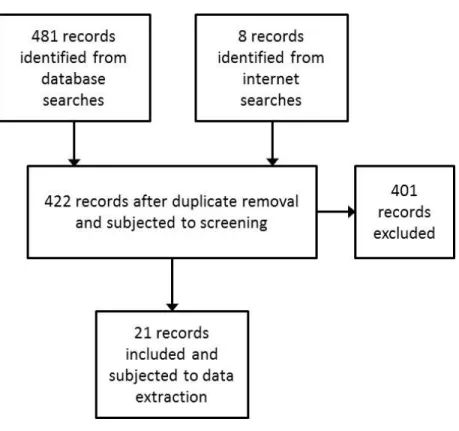
duplicate removal, 414 studies remained. An additional 8 studies were added from Google Scholar searches that were not present among the 414 studies. The first author and a trained research assistant independently screened each of the 422 studies to determine eligibility. A checklist of the inclusion criteria was created prior to the search and was used for eligibility assessment. Most studies were included or excluded after reading the title and abstract; however, it was also necessary to examine the full source document of some studies to determine
eligibility. To examine inter-rater agreement, the screening decisions of the two screeners were compared and Cohen’s kappa was calculated with SPSS (version 21), which showed excellent agreement: kappa = 0.97, p < .05 (Landis & Koch, 1977). There were only six disagreements between the screeners, which were resolved by the first author examining the source documents.
Data Extraction Methods
After completing the study inclusion and exclusion process, 21 studies were included and then subjected to data extraction (see Figure 1). A data extraction sheet was developed to assist with identifying and collecting relevant information from included studies. Information
extracted included the citation, purpose of the study, study design, sampling strategy and location, response rate, sample size and characteristics, measurement of relevant variables, analyses performed, and results and findings. The first author extracted this information and then a research assistant compared the completed extraction sheets with the source documents to assess the accuracy of the extractions. There were only six points of disagreement between the extractor and checker, which they then resolved together by examining the source documents and extractions simultaneously.
A total of 21 studies were included in this review: 9 peer-reviewed journal articles, 6 research reports that were not peer-reviewed, 5 doctoral dissertations, and 1 master’s thesis. I will present a summary of the methodological characteristics of these studies followed by a synthesis of the substantive findings regarding the effectiveness of school bullying policies. Table 1 shows a summary of information extracted from each study.
Study Design Characteristics
Of the 21 studies, 12 (57%) used mixed methods, 8 (38%) used quantitative methods, and 1 (5%) used qualitative methods. All studies relied on cross-sectional designs. Most (65%) studies used convenience sampling, whereas the remaining studies used some form of probability sampling. Over half (57%) of studies used national samples, whereas 24% used samples from a single city or local region, 15% used statewide samples, and 5% used samples from areas in multiple countries. Over 80% (n = 17) of studies sampled participants in the United States, with the remaining studies drawing participants from Europe (n = 3), Australia (n = 1), East Asia (n = 1), and the Middle East (n = 1). The most common recruitment sites were schools, followed by listservs, websites, community groups or organizations, professional associations, and personal contacts. Most studies reported participant response rates which varied from 21% to 98%, and the average response rate across studies was 57% (SD = 29). Eight studies did not report response rates.
Study Samples
administrators, school psychologists, school counselors, education support professionals, and parents. About one-third of studies included multiple participant groups (e.g., students and teachers). Most studies (62%) recruited participants from K-12 settings, whereas other studies recruited participants from a single school level: elementary, middle, or high school. Among adult participants, about 75% were female and 90% were White. These percentages are similar to those reported by the U.S. Department of Education, which show that 76% of teachers are female and 82% are White (Snyder & Dillow, 2013).
Study samples of students were more diverse in terms of race/ethnicity with most studies consisting of about two-thirds White participants as well as Black, Hispanic/Latino/Latina, Asian, Native American Indian, Middle Eastern, and multiracial students. In addition, student samples were closer to having equal proportions of males and females. Five studies included student participants who were exclusively LGBTQ, whereas six studies did not report
information about student sexual orientation or gender identity. In addition, studies typically did not measure or report participant national origin, citizenship status, religious identity,
socioeconomic status, or disability status. Finally, most students were high school aged.
Measurement and Evaluation of Policy Effectiveness
All studies relied on self-report data. However, studies varied in terms of analytic approaches used to evaluate effectiveness: 9 studies used bivariate analyses, 8 studies used descriptive statistics of perceived effectiveness, 3 studies used multivariate analyses, and 1 study used both bivariate and multivariate analyses. Studies that used a bivariate analytic approach compared measures of teachers’ responsiveness to bullying or measures of student bullying
responding to a single, self-report item about their perceptions of policy effectiveness (e.g., “How effective do you feel that your school’s anti-bullying policy is in reducing bullying?”),
with Likert-type agreement/disagreement response options or categorical response options (e.g.,
yes or no). Multivariate analytic approaches primarily used student bullying scores as the dependent variable and either a continuous anti-bullying policy score or a dichotomous variable indicating whether or not the school had an anti-bullying policy as the independent variable. School bullying policy scores were based on either a set of items about the perceived presence of an anti-bullying policy (e.g., “I think my school clearly set forth anti-bullying policies and rules”) or a content analysis of policy documents to identify the presence of criteria or strategies
associated with effectiveness (e.g., having a definition of bullying, establishing procedures and consequences for bullies, having educational events about the school’s bullying guidelines, ensuring adult supervision in school areas prone to bullying, and formulating a school task group to coordinate anti-bullying efforts).
The measures used to assess bullying among students varied with some studies using established scales (e.g., Olweus Bullying Questionnaire) whereas other studies used items
developed by the researchers. The number of items used to measure bullying varied from 3 to 23 (M = 18.2, SD = 6.1). The majority of the 11 studies that measured bullying measured bullying victimization (n = 8). Only two studies measured both bullying victimization and perpetration, and one study measured just perpetration. In terms of the types of bullying measured, 10 studies measured verbal bullying, 9 measured physical bullying, 9 measured social or relational
bullying, 5 measured electronic bullying, 5 measured sexual bullying, and 2 measured property bullying. In addition to student bullying, educators’ responsiveness to bullying was another
responsiveness, and the remaining seven studies used one to four items about educator responding to student bullying.
Results and Findings on Policy Effectiveness
Perceptions of policy effectiveness. Eight (38%) of the 21 studies reported results on participants’ perceptions of policy effectiveness. The proportion of educators who perceived
school bullying policies to be effective to some degree ranged from 5% to 88% (M = 49.4, SD = 33.4; Barnes, 2010; Bradshaw, Waasdorp, O’Brennan, & Gulemetova, 2013; Hedwall, 2006; Isom, 2014; Sherer & Nickerson, 2010; Terry, 2010). Likewise, the proportion of educators who perceived policies to be ineffective ranged from 4% to 79% (M = 24.5, SD = 23.6). In addition, only two studies allowed participants an “I don’t know” response option, which ranged from 16% to 70% (M = 51.3, SD = 30.6). Only one study measured students’ perceptions of policy effectiveness, and results showed that they perceived policies to be moderately effective (Ju, 2012). In addition, only one of the 21 studies collected multiple waves of data, though respondents were different at each of the two waves (Samara & Smith, 2008). In this study, researchers examined perceived effectiveness before and after the passage of an anti-bullying policy; however, there were no significant changes in perceived effectiveness.
Differences in outcomes between schools with differing policy characteristics. Nine (43%) of the 21 studies compared outcomes of interest (i.e., bullying perpetration or
victimization among students and educators’ responses to bullying) between students or
victimization (Ordonez, 2006). Similarly, another study found lower rates of verbal, physical, and property bullying victimization among students in schools with high quality bullying policies, yet higher rates of social/relational bullying perpetration (Woods & Wolke, 2003.
Six studies with rather large samples of primarily LGBTQ students consistently found that compared to students in schools with no anti-bullying policy or an anti-bullying policy that did not explicitly prohibit bullying based on sexual orientation and gender identity, students in schools with comprehensive anti-bullying policies that included protections based on sexual orientation and gender identity reported lower rates of anti-LGBTQ bullying, more school personnel frequently intervening when anti-LGBTQ comments were made in their presence, and more school personnel being effective in their anti-LGBTQ bullying responses (Kosciw & Diaz, 2006; Kosciw, Diaz, & Greytak, 2008; Kosciw, Greytak, Diaz, & Bartkiewicz, 2010; Kosciw, Greytak, Bartkiewicz, Boesen, & Palmer, 2012; Kosciw, Greytak, Palmer, & Boesen, 2014). These differences were consistent in analyses of both local bullying policies and state anti-bullying laws. The influence of policy on differences in educators’ responses to anti-bullying was
supported by another study that was not focused specifically on LGBTQ bullying. This study found that educators in schools with bullying policies were more likely to enlist the help of parents and colleagues in responding to a bullying incident and were less likely to ignore the bullying (Bauman, Rigby, & Hoppa, 2008).
non-significant associations were found between school bullying policy presence and scores of general, physical, verbal, and social/relational bullying perpetration as well as physical, verbal, and social/relational bullying victimization (Farrington & Ttofi, 2009; Khoury-Kassabri 2011; Lee, 2007). Finally, one large, national study of educators found no relationship between having an anti-bullying policy and educators’ comfort intervening in both general and discriminatory bullying (O’Brennan, Waasdorp, & Bradshaw, 2014).
Discussion
Findings from the 21 studies are mixed. Educators were divided in their perceptions of the effectiveness of policies for school bullying; however, about twice as many educators reported that policies were effective to some degree as those who reported that they were not effective. Nonetheless, many educators also felt uncertain about policy effectiveness or ineffectiveness.
Two studies found lower rates of verbal and physical bullying in schools with high rather low quality policies; however, in terms of social/relational bullying, one study found no
Educators have reported difficulty in responding to bullying incidents which they did not witness (Mishna, Pepler, & Wiener, 2006).
One area of consistent agreement in the findings relates to the benefits for LGBTQ students who are in schools with anti-bullying policies that provide protections based on sexual orientation and gender identity. These benefits included lower rates of victimization and higher rates of intervention by educators. Numerous studies have demonstrated that LGBTQ youth experience high rates of bullying victimization (Berlan, Corliss, Field, Goodman, & Austin, 2010; Espelage, Aragon, Birkett, & Koenig, 2008; Kosciw & Diaz, 2006; Kosciw, Diaz, & Greytak, 2008; Kosciw, Greytak, Diaz, & Bartkiewicz, 2010; Kosciw, Greytak, Bartkiewicz, Boesen, & Palmer, 2012; Kosciw, Greytak, Palmer, & Boesen, 2014; McGuire, Anderson, Toomey, & Russell, 2010; Varjas et al., 2008). However, only 19 (39%) of the 49 states with anti-bullying laws enumerate protections based on sexual orientation and/or gender
identity/expression (Human Rights Campaign, 2015). Given the evidence for the effectiveness of enumerated policies, all policies should prohibit harassment and bullying based on sexual orientation and gender identity.
Aside from the LGBTQ-focused studies, only two other studies examined educators’ responsiveness to bullying. Findings from these studies were contradictory as one found a connection between having a bullying policy and responding to a bullying incident, whereas the other study found no relationship between having a policy and educators’ comfort in responding
to bullying. However, the study that found no relationship included a number of other relevant independent variables (i.e., receiving training on how to implement the school’s bullying policy
and having resource available in the school to help educators intervene), which were
& Bradshaw, 2014). Thus, the relationship between the presence of a school bullying policy and educators’ responsiveness to bullying incidents may be mediated by training about putting the
policy into practice and having resources available for intervention.
Findings among the few studies that examined associations between policy presence and student bullying were mixed; although more non-significant than significant associations were found. Two of the significant associations were correlations, not regression coefficients from a multivariate analysis, and the third promising association was only marginally significant. At first glance, one may conclude from these findings that the presence of bullying policies does not influence bullying among students; however, the presence of a policy is necessary but not
sufficient to effect student behavior. Indeed, after a policy has been adopted, it must be put into practice. The mere adoption or presence of a policy does not mean that it will be immediately and consistently put into practice exactly as intended. The implementation of a policy is a complex, dynamic, and ongoing process involving a vast assortment of people, resources, organizational structures, and actions. No study that examined the implementation of school bullying policies found that the policies were being implemented precisely as intended (Hedwall, 2006; Holmgreen, 2014; Jordan, 2014; LaRocco, Nestler-Rusack, & Freiberg, 2007; MacLeod, 2007; Robbins, 2011; Schlenoff, 2014; Smith-Canty, 2010; Terry, 2010). Indeed, the extent of faithful implementation varied considerably by location and policy component. Therefore, fidelity of implementation may mediate the relationship policy adoption or presence and the targeted policy outcome of student bullying. However, none of the studies measured
exception being the findings from the six studies with large, primarily national samples of LGBTQ students.
Methodological Limitations of Studies
Caution should be taken in the interpretation and generalization of these results because of the limitations inherent in the studies’ methods used to examine the effectiveness of school
bullying policies. I identified five prominent methodological limitations among the studies reviewed. First, the studies relied on evidence from cross-sectional surveys. Based on
frameworks of evidence supporting intervention effectiveness, cross-sectional studies are either low in the hierarchy or absent as recommended sources of evidence (Coalition for Evidence-Based Policy, 2003; Petticrew & Roberts, 2003; Pilcher & Bedford, 2011). Cross-sectional designs are vulnerable to selection bias and confounding. And, these studies cannot examine a key criterion of causality – a temporal relationship, where an anti-bullying policy was adopted and implemented, which then led to decreases in bullying over time.
A second limitation was the use of convenience sampling. Although convenience sampling may be highly feasible and efficient, it can lead to the under-representation or over-representation of particular groups within a sample. Thus, it is unlikely that a convenience sample is representative of the population of interest, and therefore, undermines the
generalizations that can be made from the findings (Larsen, 2007).
A third limitation related to the studies’ analytic approaches. Most of the studies used
analyses can be oversimplified and leave out relevant explanatory or contextualizing variables (Spicer, 2004). In addition, some of the studies that used bivariate analyses did not report the exact statistical test used (e.g., independent groups t-test and chi-square test) or effect sizes, and instead, focused on substantive findings. Although these reports seemed to be aimed at a more general, non-scholarly audience, the omission of this information can become problematic in understanding the methods used and drawing conclusions about the results. Few of the studies used multivariate analyses and only one study used a multilevel analysis. Multilevel analysis is often needed in educational research because students are nested within classrooms, which are nested within schools, which are nested within districts, which are nested within states. Nesting or clustering violates the independence assumption for regression modeling, and violating this assumption and not accounting for nesting can lead to biased estimated standard errors and spurious results (Guo, 2005).
A fourth limitation involved the measurement of bullying policies. Many studies asked participants to report whether or not their school had an anti-bullying policy. This may be problematic for student respondents because they may not know about the policies in their schools. In addition, some educators have reported not formally or informally notifying students about bullying policies (Holmgreen, 2014; Jordan, 2014; LaRocco, Nestler-Rusack, & Freiberg, 2007; Robbins, 2011; Smith-Canty, 2010). Even educators may not know whether or not their school has a bullying policy. Up to 14% of educators in three studies did not know if their school systems had adopted a local anti-bullying policy (Hedwall, 2006; Smith-Canty, 2010; Terry, 2010).
studies evaluating the effectiveness of these interventions should measure bullying among students as a primary outcome. Nonetheless, only half of the studies directly measured student bullying, and most of these studies did not measure both bullying perpetration and victimization. Policies are aimed at influencing multiple actors involved in the bullying dynamic, which
includes bullies, targets, victims, bystanders, parents, and school personnel. Thus, studies that do not measure bullying perpetration and victimization among students are not assessing the two main targeted behavioral outcomes of anti-bullying policies. In addition, bullying behaviors can manifest in many forms, including physical bullying, verbal bullying, social/relational bullying, cyber-bullying, property bullying, and sexual bullying. However, none of the studies in this review measured all of the dimensions of bullying.
Recommendations for Future Research
Undoubtedly, research on the effectiveness of policy interventions for school bullying will continue to expand. To build upon the extant literature and to pursue promising lines of new inquiry in this area, six recommendations are presented for future research on school bullying policy effectiveness.
First, future studies should employ more rigorous designs to evaluate the effectiveness of policy interventions for bullying. The randomized controlled trial (RCT) is the “gold standard”
cross-sectional studies in determining the effectiveness of interventions (Coalition for Evidence-Based Policy, 2003; Petticrew & Roberts, 2003; Pilcher & Bedford, 2011).
Second, studies should collect data on outcomes as well as the implementation of policy components. When bullying policies do not successfully achieve targeted outcomes, we do not know whether or not those policies were implemented as intended and failed or whether lack of implementation fidelity is to blame. Implementation data, if collected, could be used to ensure that policies are being activated as intended with high levels of fidelity and reported along with outcome evaluation data in the study designs mentioned in the previous paragraph. These data could also be used to examine the predictive relationship between implementation fidelity and outcomes. Theory would suggest an inverse relationship where higher levels of proper
implementation are associated with lower levels of bullying among students; however, this remains an untested hypothesis. Also, bullying policies are comprised of an array of directives to be put into action. Data on the fidelity of implementation of all of the components of an anti-bullying policy would also allow researchers to examine the relative or combined impact of policy components on outcomes.
outcomes, which could help identify the most influential policy components. Only examining presence or absence is insufficient because a school district may indeed have an anti-bullying policy but its content may be quite poor and not evidence-based. Policies can also vary in the way they are written as some policies are lengthy, vague, and contradictory, whereas other policies are clear, concise, and specific. This area of content could also be analyzed and may relate to educators’ comprehension of policies, which would influence implementation actions by
educators, and subsequently, policy outcomes.
Fourth, future studies should use multivariate and multilevel analyses. The effectiveness of policy interventions for bullying are influenced by a number of variables including policy content, fidelity of implementation, and school environmental factors. By using more complex statistical methods, such as regression modeling, structural equation modeling, propensity score matching, and hierarchical linear modeling, researchers will be able to examine the influence of multiple variables, examine moderating and mediating relationships, control for extraneous variables, match intervention participants with control participants, and account for clustered data. These statistical methods will be essential to execute the recommended study designs and analytic methods described in the previous paragraphs. The use of these statistical methods will help ensure the integrity of future findings on policy effectiveness.
Fifth, studies should improve sampling practices. To attain more representative samples, researchers should partner with school districts and state departments of education or public instruction and employ some form of probability sampling. Many of the studies in this review that used probability sampling had collaborated with educational agencies in their data
from multiple respondent groups, such as administrators, teachers, school mental health professionals, and students, in order to gain a more comprehensive and multi-perspective understanding of the implementation and effectiveness of school bullying policies.
Finally, future studies should use scales to measure both bullying perpetration and victimization, and these measures should assess all of the dimensions of bullying: physical, verbal, social/relational, electronic, sexual, and property. Multi-factor scales with a sufficient number of items are needed in order to measure the full range of bullying behaviors. The Centers for Disease Control and Prevention created a compendium of bullying measures that is available to the public (see Hamburger, Basile, & Vivolo, 2011). However, caution should be taken in selecting instruments because some measures have low internal consistency reliability values (i.e., α < .70), low test-retest reliability coefficients (i.e., r < .70), no recall time frames,
overly long and problematic definitions of bullying, limited evidence of construct validity, limited evidence of criterion validity, and limited evidence regarding respondents’ understanding of the measure’s instructions and items. In addition, as opposed to questionnaires about bullying
behaviors, peer and/or teacher nomination methods to identify students who are bullying victims or perpetrators may be more developmentally appropriate for elementary school age children.
Conclusion
Findings on the effectiveness of policy interventions for bullying are primarily mixed and limited by the methods used. Research on school bullying policy will undoubtedly continue to expand with the growing understanding of the need for evidence-based education policies and as bullying policies continue to be introduced and revised in schools across the globe. Future research must use more rigorous methods and designs and may indeed find that policy
Table 1.1
Summary of Studies Included in the Systematic Review Citation Study Purpose Study Design,
Location, and Sampling Strategy
Sample Description and Response Rate
Measurement and Evaluation of Policy Effectiveness
Results and Findings
Barnes, 2010 To explore the relationships between anti-bullying policies developed and implementation of those policies. Quantitative cross-sectional study in Arkansas using probability sampling from elementary, middle, and high schools.
547 school administrators and counselors (51% counselors, 49%
administrators); 69% female and 31% male; 93% White, 5% Black, 1% Hispanic, and 1% multiracial; 1% ages 20-29, 15% ages 30-39, 37% ages 40-49, 37% ages 50-59, 10% ages 60-69; response rate = 25%
Participants responded to one item: “How effective do you feel your school’s anti-bullying policy is in reducing bullying?”
Results showed 5% of participants reported that their policy was very effective, 32% reported it was effective, 46% reported it was
somewhat effective, 15% reported it was not very effective, and 2% reported it was ineffective. There were significant differences in responses between
administrators and counselors where counselors tended to view the policies as less effective and administrators tended to view policies as more effective.
Bauman, Rigby, & Hoppa, 2008
To explore the various strategies that teachers and school counselors use to respond to a
hypothetical bullying incident.
Mixed methods, cross-sectional study across the United States using convenience sampling from listservs and email distribution through personal contacts of educators working in elementary,
735 teachers and school counselors (60% counselors, 39% teachers); 85% female and 15% male; 85% White, 7% Asian, 4%
Hispanic/Latino, 3% Black, 3% Native American, 2% other; response rate not reported
Participants indicated whether or not their school had an anti-bullying policy. Participants also completed a 22-item, 5-factor scale measuring strategies for
responding to a hypothetical bullying incident: Working with the victim (α = .75),
Educators in schools with an anti-bullying policy were more likely to enlist the help other adults (t = 3.62*) and less likely to ignore the incident (t = -2.72*)
compared to those in schools without a policy. Analysis of qualitative data indicated that a need for anti-bullying policies was the third most frequently reported theme
3
schools. (α = .69), ignoring the incident (α = .70), enlisting other adults (α = .63), and disciplining the bully (α = .45).
schools. Bradshaw, Waasdorp, O’Brennan, & Gulemetova, 2013 To examine variations between teachers’ and education support professionals’ exposure to bullying, perceived efficacy of in handling bullying situations,
involvement in prevention efforts, and needs for additional training.
Quantitative, cross-sectional study in the United States using stratified sampling from a national professional association of educators working in elementary, middle, and high schools.
5,064 teachers and education support professionals (57% education support
professionals, 43% teachers); 80% female and 20% male; 89% White, 5% Black, 4% Hispanic, and 2% other; response rate = 31%
Participants responded to one item: “Are bullying problems adequately addressed by the bullying policy?”
Results showed that 80% of teachers and 88% of education support
professionals reported that their school’s bullying policy adequately addressed
bullying. Compared to teachers, significantly more education support
professionals reported that the policy was effective.
Farrington & Ttofi, 2009
To assess the effectiveness of school-based anti-bullying programs in reducing bullying.
Systematic and meta-analytic review of studies evaluating intervention programs implemented in elementary, middle, and high schools, in Australia, Europe, and North
America.
30 studies evaluating bullying intervention programs in K-12 schools; 22 had a bullying policy and 8 did not
Researchers coded whether or not study schools had a whole-school bullying policy in place before or during intervention program
implementation. Mean scores for bullying perpetration and victimization or the proportion of bullies and victims in schools were extracted.
Having a bullying policy was marginally associated with a decrease in bullying
victimization (weighted mean OR = 1.53†). Having a bullying policy was not significantly associated with a decrease in bullying
perpetration, an increase in perpetration, or an increase in victimization.
Hedwall, 2006
To examine the extent of
implementation and effectiveness of a state anti-bullying law. Quantitative, cross-sectional study in Connecticut using probability sampling from
62 teachers, administrators, and department chairs (61% elective-area educators (e.g., business, technology, and health), 39% core-area educators (e.g., math and
Participants responded to one item: “Has the incidence of bullying declined in the classroom since the policy was put in
Results showed that 21% of elective-area educators and 26% of core-area educators reported that the incidence of bullying had declined since the adoption of the policy,
high schools. science)); response rate = 21% for core-area educators and 33% for elective-area educators
place?” 11% of elective-area
educators and 4% of core-area educators reported that the incidence had not declined, and 68% of elective-area educators and 70% of core-area educators were not sure.
Isom, 2014 To understand teacher perceptions of bullying and the effectiveness of an anti-bullying policy in a suburban school district.
Qualitative, cross-sectional study in a school district in the southwestern United States using convenience sampling from high schools.
6 teachers; 67% female and 33% male; 100% White; response rate not reported
Participants’ perceptions of the district anti-bullying policy were collected via interviews, journals, and observations. Data were analyzed using thematic analysis.
Four of the six participants (67%) stated that the policy was effective to some degree and two participants (33%) found the policy ineffective. One teacher stated that the policy was effective for bullying that occurs at school but was less effective for cyber-bullying. Another teacher stated that students knew about the policy and bullying among students was low. Another teacher felt that the policy was not
consistently implemented and personnel did not know how to respond to bullying. Ju, 2012 To explore the
effectiveness of anti-bullying policies in high schools from the student perspective. Mixed-methods, cross-sectional study in Providence, Rhode Island using convenience sampling of recent high school graduates.
80 students; 54% female and 46% male; 95% White, 3% Black, and 2% other; response rate = 96%
Participants responded to one item: “Anti-bullying policies make a beneficial impact in the effort to prevent bullying in high school.” Participants also entered qualitative comments to elaborate on their responses.
The beneficial impact of bullying policies was rated a 3.6 on average on a Likert scale of 1 (strongly disagree) to 6 (strongly agree), which indicates moderate agreement. Five of the seven comments (71%) related to this item suggested that the school anti-bullying policies were effective and two comments
(29%) indicated that policies were not helpful because they were ignored or people were not made aware of them.
Khoury-Kassabri 2011
To examine individual and contextual factors that explain students’ victimization by peers among Jewish and Arab students.
Quantitative, cross-sectional study in Israel using stratified sampling from Arab and Jewish elementary schools.
3,375 students; response rate = 98%
120 teachers; response rate = 78%
47 schools; response rate = 64%
Students completed an 8-item subscale about the school anti-aggression policy (α = .87). Students also completed a 17-item, 3-factor scale measuring victimization
experiences: physical victimization (α = .76), verbal victimization (α = .69), and relational victimization (α = .68).
Three-level hierarchical linear modeling results showed no significant associations between school
anti-aggression policy scores and rates of physical victimization (b = 0.36, n.s.), verbal
victimization (b = –0.22, n.s.), and relational victimization (b = 0.06, n.s.).
Kosciw & Diaz, 2006
To examine the school experiences of LGBTQ students.
Mixed-methods, cross-sectional study in the United States using convenience sampling from websites, listservs, and youth-serving groups and organizations.
1,732 students in elementary, middle, and high schools; 69% White, 10% Hispanic/Latino, 7% Black, 5% Asian, 5% multiracial, 4% American Indian, and 2% other; 52% cisgender female, 38% cisgender male, 11% transgender/genderqueer; mean age = 16; 62% gay/lesbian, 27% bisexual, 11% queer/other; response rate not reported
Participants reported whether or not their school had an anti-bullying policy and if it enumerated protections based on sexual orientation and gender identity. Participants also responded to 22 items on experiences of physical, verbal, relational, electronic, and sexual
victimization in school. Using 3 items,
participants also reported on the frequency that school personnel intervened when anti-LGBTQ
Significantly fewer youth reported victimization based on their sexual orientation (32%) in schools with comprehensive anti-bullying policies than those in schools with no policies (40%) or general policies without enumerated protections (41%). Significantly more youth reported that school personnel intervened when homophobic remarks were made in their presence in schools with comprehensive anti-bullying policies (25%) than those in schools with no policies (16%) or general policies without enumerated protections (12%).
their presence and the effectiveness of staff responses to harassment
reported that school personnel effectively responded to homophobic harassment in schools with comprehensive anti-bullying policies (56%) than those in schools with no policies (39%) or general policies without enumerated protections (39%).
Kosciw, Diaz, & Greytak, 2008
To examine the school climate experiences of LGBTQ students, the negative effects of a hostile school climate on educational and psychological well-being, reporting and responding to victimization experiences, and the presence and influence of
supportive resources.
Mixed-methods, cross-sectional study in the United States using convenience sampling from websites, listservs, and youth-serving groups and organizations.
6,209 students in elementary, middle, and high schools; 64% White, 13% Hispanic/Latino, 6% Black, 6% American Indian, 5% multiracial, and 4% Asian; 58% cisgender female, 33% cisgender male, 9%
transgender/genderqueer; mean age = 16; 54% gay/lesbian, 42% bisexual, 5% queer/other; response rate not reported
Participants reported whether or not their school had an anti-bullying policy and if it enumerated protections based on sexual orientation and gender identity. Participants also responded to 23 items on experiences of physical, verbal, relational, electronic, and sexual
victimization in school. Using 3 items,
participants also reported on the frequency that school personnel intervened when anti-LGBTQ remarks were made in their presence and the effectiveness of staff responses to harassment
Youth in schools with a comprehensive anti-bullying policy experienced
significantly lower levels of victimization based on their sexual orientation (M = 4.72) than those in schools with no policy (M = 5.47)and
marginally significantly lower levels in schools with a general policy (M = 5.08). Significantly more students reported that school personnel frequently intervened when homophobic remarks and negative remarks about gender expression were made in their presence in schools with comprehensive anti-bullying policies (29% and 23%, respectively) than those in schools with no policies (13% and 11%, respectively) or general policies without enumerated protections (18% and 15%, respectively). Significantly more youth reported that school staff were effective in addressing
3