Impact of Instructional Technology Professional Development on Teaching Practice and Student Performance
Nellie Ren Hewitt Bryan
A dissertation submitted to the faculty of the University of North Carolina at Chapel Hill in partial fulfillment of the requirements for the degree of Doctor of Education in the School of Education (Curriculum and Instruction).
Chapel Hill 2008
Approved by:
© 2008
ABSTRACT
NELLIE REN HEWITT BRYAN: Impact of Instructional Technology Professional Development on Teaching Practice and Student Performance
(Under the direction of Dr. Barbara Day)
In the United States billions of dollars have been spent on instructional technology with the expectation that the expenditure would have an impact on student achievement. Professional development provides teachers with the skills that they need in order to
effectively use the technology in ways that will impact student performance; however, there is little research about the implementation of strategies learned during professional
development. This research used qualitative methodology to examine the professional development implementation of fifty teachers from six schools a year after they attended the same professional development session. A theory was developed that explains the
relationship between several factors that impact the ability of teachers to implement instructional technology professional development. Results indicated that the ability of teachers to implement strategies in ways that affect student performance are impacted by the level of support that teachers receive from administrators and colleagues, the technology available to the teachers, and the strategies that are included in the professional development. The results of the research led to the creation of a professional development planning
ACKNOWLEDGEMENTS
I thank Dr. Barbara Day for her support and guidance through the research process and my graduate career. I also thank my committee members Dr. Frank Brown, Dr. Fenwick English, Dr. Michael Hickman, and Dr. Rhonda Wilkerson for their support and feedback.
I thank the teachers who participated in the professional development and then in the focus groups for their candid reflection about the impact of the professional development on their teaching and the performance of their students.
TABLE OF CONTENTS
Page
LIST OF TABLES……….…viii
LIST OF FIGURES………..……ix
Chapter I INTRODUCTION……….………1
Purpose………...………4
Statement of Problem……….4
Research Questions………5
Definition of Terms………...6
II REVIEW OF THE LITERATURE………...7
Description of Instructional Technology………...8
Federal Guidelines for Technology Integration into Instruction…...…………8
International Society of Technology in Education Standards………...…….10
Critics of Current Technology Use………..11
Improved Student Performance as a Result of Technology Integration...…13
Twenty-First Century Literacy………16
From Professional Development to Instructional Implementation…………..27
Barriers to Technology Integration………..29
Conclusion………...……31
Conceptual Framework of the Study………...32
III METHODOLOGY………...………35
Role of the Researcher……….36
Participants………...37
Data Collection………...……41
Interview Protocol for Focus Groups……….………..44
Data Analysis………...45
Trustworthiness………...….49
IV RESULTS………52
School Support………...…….………54
Technology Available………..60
Teaching Strategies………..66
Impacting Variables………...…….70
Core Category: Technology Integration………....……….75
Overview of the Emergent Theory………..77
V DISCUSSION……….……...……83
Research Question 1………...……84
Research Question 2………...……94
Research Question 3………99
Implications for Curriculum and Instruction……….………106
APPENDICES A. Informed Consent Form………...……….118
B. Demographic Information………...……….120
C. North Carolina Teacher Academy, The Wired Classroom………121
D. International Society for Technology in Education: NETS Standards for Teachers……….124
E. Constructs, Main Categories, Categories, and Concepts………...122
F. Twenty First Century Literacy Skills ……….…...131
LIST OF TABLES
Table Page
LIST OF FIGURES
Figure Page
1. Factors Impacting the Relationship between Instructional Technology and Student
Performance………..…………33
2. Theory of the Impact of Instructional Technology Professional Development on
CHAPTER I INTRODUCTION
During the mid-nineties, schools were rushing to find ways to place computers in classrooms across the nation, only to find that the teachers did not know what to do with them. A handful of visionaries explored the ways to implement the technology into
instruction, taking into consideration the skills that teachers would need in order to fully use the equipment in instruction. Professional development provided opportunities for teachers to learn how to use the equipment only to find that when they had learned to use the
equipment, it was replaced with something else.
Professional development for teachers in instructional technology required a second set of skills, however. In order to integrate the technology several things needed to occur. First, teachers had to have a strong curriculum background and knowledge of the curriculum goals for their students. Second, both students and teachers needed to have a common set of technology skills and an understanding about how the technology would be used. Third, teachers had to be willing to believe the new strategies would be successful in helping them reach their goals. After more than a decade of widespread technology integration into
In order for technology integration to occur, there has to be available technology, as well as an infrastructure to support it. By the turn of this century the United States
Department of Education estimated that more than 60 billion dollars had been spent on equipment, wiring, software, and support for technology in schools. While that money has not been spent in a way that ensures equal resources in all schools, the United States Department of Education Office of Educational Technology (2005) reports that nationwide there is a computer ratio of 4.4 students to 1 computer and the North Carolina 2005-2009 Technology Plan (2004) reports a student to classroom computer ratio of 6.2/1. Additionally 100% of schools in North Carolina currently have internet access.
The technology can be in place, but remain unused unless the teachers have the skills needed to use the equipment; therefore, staff development must be provided for the faculty. The United States Department of Education Office of Educational Technology has
encouraged schools to designate 25-30% of all technology funding for professional
development. In 1998 the North Carolina State Board of Education established a technology requirement of three Continuing Education Units for each five year renewal cycle for North Carolina teachers and evidence of mastery of technology competencies for education students seeking licensure in any certification area in North Carolina (McColl, 1999). The professional development and training however, must be delivered in a meaningful way in order for the teachers to make the connection to the curriculum. Teachers must also be willing to change their past instructional practices.
technology depends on the teacher‟s skills (Grove, Strudler, & Odell, 2004). In the area of instructional technology, ongoing professional development is even more necessary because the technology tools change so rapidly and the pedagogical skills that the teacher needs are different from the traditional pedagogical skill set. Teachers need to change roles from experts who provide information to facilitators or coaches, allowing students to assume more responsibility for their own learning. Teachers need to be willing to take risks and evaluate the learner outcomes to determine the most effective tools for the instruction (Impact, 2005).
The growth in the importance of technology in the classroom, as evidenced by the amount of spending for equipment, infrastructure, and professional development, has led to close scrutiny about how the emphasis on technology has changed student performance. The results are mixed (Bork, 1995; Kulik, 1994; Mann, 1999; Schacter, 1997; Sivin-Kachala, 1998) and indicate that the outcome of improved student achievement is directly related to the choice of the tools or equipment, the expected outcomes, and the skill with which the teacher organized and orchestrated the learning environment.
After a focused emphasis on the acquisition of computer skills for both teachers and students for more than fifteen years, the conversation between educational leaders, business leaders, and political leaders today is about the skills that students will need in order to be productive citizens in the 21st Century (Impact, 2005; Patrick, 2005; Partnership, 2005). The 21st Century Forum created a framework to define technological literacy as a component of 21st century skills and to identify best practices for applying these skills in the classroom.
In order to guide students toward the mastery of 21st century literacy skills, which include collaboration, technology literacy, strong communication skills, and global
students in ways that make meaningful use of the technology that they will have access to, not just the use of a word processor to write a paper or the use of the internet to locate information that could be found just as easily in print text. Professional development provides teachers with the skills that they will need in order to make the transition in instructional practice; however, the professional development must be directly linked to the curriculum with clearly identified outcomes (McKenzie, 1999).
Purpose
The purpose of this research is to investigate how instructional technology
professional development impacts the classroom instruction skills of secondary teachers, and therefore, their ability to enhance student performance.
Statement of the Problem
Research Questions
How have the instructional technology professional development experiences of secondary teachers in North Carolina schools impacted teacher practice and therefore, student
performance? The research questions that will guide the study are:
1. How has technology professional development of teachers impacted their instructional practice?
2. How have teachers integrated technology into their instructional practice as a result of professional development?
Definition of Terms
Instructional Technology
Educators have used tools to enhance student learning, including pencils, chalkboards, filmstrip projectors, televisions and other tools. For the purpose of this study, instructional technology is synonymous with information technology, defined by the Milken Exchange and refers to current computer technology and tools such as peripheral equipment like digital cameras, handheld computers, and activeboards, “as well as the effective use of digital information to extend human capabilities” (Schacter, 1999, p.3) .
Professional Development
No Child Left Behind federal legislation defines professional development as high quality, sustained, intensive, and classroom focused activities that have a positive and lasting impact on classroom instruction and the teacher‟s performance in the classroom and are not one-day or short-term workshops or conferences. (United States Department of Education, 2004) Secondary teachers
The North Carolina Department of Public Instruction defines secondary teachers as teachers of ninth through twelfth grade students. For the purpose of this study, the definition has been expanded to include the United States Department of Education definition of secondary teachers to include teachers of students in grades 6-12. (United States Department of Education, 2004)
Student Performance
CHAPTER II
REVIEW OF THE LITERATURE
educators need to effectively use technology, and the impact technology has had on student performance in the classroom and the acquisition of new skills.
Description of Instructional Technology
Technology has historically been viewed as a way to solve educational problems and to improve schools. After the launch of Sputnik in 1958, Congress passed the National Defense Education Act (NDEA) in an effort to improve math and science education in America‟s schools. While creating a framework for federally funded student loans, such as the Pell grant, it also provided federal funding for equipment for K-12 classrooms under Title III of the Act. In 1958, instructional technology included an overhead projector in some classrooms and filmstrip projectors that could be checked out of the library, but the law was revised in 1964 and modified the type of equipment that could be purchased with Title III funds to broaden the category (Cohen, 2005). The North Carolina Educational Technology Plan (2004) defines technology as “a tool that helps every teacher and every student master basic skills and develop critical thinking and problem-solving abilities” (p.2). In addition to computers and networked wiring, the variety of those skills and resources include online learning opportunities, school television, calculators, and other handheld devices. The increase in the amount of technology needed in the schools and the cost of building an infrastructure to support universal internet access has led to federal funding for educational technology through grants and reimbursements for schools through e-rates. With the federal funding, there have been guidelines to direct the way that the technology should be used.
Federal Guidelines for Technology Integration into Instruction
technology to improve education and support the goals of No Child Left Behind. It has adopted four national technology goals, with funding plans to help schools acquire the equipment and train the teachers in the use of technology in order to meet the goals. The goals are:
1. All teachers and students will have modern computers in their classrooms. 2. Every classroom will be connected to the information superhighway.
3. Effective and engaging software and on-line resources will be an integral part of every school curriculum.
4. All teachers will have the training and support they need to help all students learn through computers and through the information superhighway.
In order to meet the four national technology goals, seven action steps have been developed that will lead to the implementation of the goals.
1. Strengthen Leadership
2. Consider Innovative Budgeting 3. Improve Teacher Training
4. Support E-Learning and Virtual Schools 5. Encourage Broadband Access
6. Move Toward Digital Content 7. Integrate Data Systems (p. 14)
school administrators, as well as teachers. The Enhancing Education through Technology grant program requires recipients to use at least 25% of their funding for professional development, a funding standard that has consistently been suggested by the Department of Education. Federal funding for professional development and teacher training has led to a discussion about what skills teachers should have in the area of instructional technology.
International Society for Technology in Education Standards
The International Society for Technology in Education (ISTE) NETS for Teachers Project, supported by a US Department of Education grant, facilitated a series of activities and events resulting in a national consensus on what teachers should know about, and be able to do, with technology. In 1993 the International Society for Technology in Education developed computing and technology standards that have been adopted by state boards of education and departments of public instruction, including North Carolina, with
standards are found in Appendix D. Just as with curriculum standards for students, “the use of technology standards allows teachers to strive for a common goal agreed on by a wide variety of fellow educators” (Descy & Forcier, 2002, p.7).The implied outcome of a common set of goals for both teacher and student use of technology is the uniform
integration of those skills into the curriculum. Critics of the use of computers in education examine current technology use and suggest that those skills are not being taught and used. The next section focuses on some of the criticisms of the uses of technology in the
classroom.
Critics of Current Technology Use
Morrison and Lowther (2002) explain that two of the reasons for the lack of
technology integration currently in the schools are the type of technology available and the way that it is used. Technology has been used to deliver instruction, frequently using drill and practice software, which focuses on memorization (Archer, 1998; Becker, 1991). Alfred Bork (1987), a proponent of the use of microcomputers in education, reflected that
the results of computers in learning are disappointing; studies might even show that computers are doing more harm than good. Effective use of computers in learning will not occur automatically. A reasonable chance exists that it will not occur at all unless we readjust our current directions. Just because computers and other modern technology are widely present in schools is no guarantee that this equipment will be wisely employed.(¶3)
number of computers found in schools, rather than the use to which those computers were put. The North Carolina Educational Technology Plan 2005-2009 (2004) reinforces Bork‟s observation of the importance of obtaining equipment by stating that “technology is being used to differentiate instruction and enhance student achievement across the state” (p.8). Support for this statement in the NC Educational Technology Plan is that students have access to an average of 3.9 computers per classroom based on 24 students per classroom; 100% of schools have Internet access, and 91.7% of the classrooms are connected to the Internet. The statement emphasizes hardware and the number of computers with little or no consideration for the specific role that they will play in the learning environment of the school or university. There seems to be a belief in the magic that will occur with the use of the technology by parents, administrators, and teachers. Planning for learning, however, should precede any hardware purchase (Bork, 1995).
Todd Oppenheimer (2003) is an outspoken critic of the current trend in instructional technology use in schools. Rather than an educational researcher, Oppenheimer is an investigative journalist who has published extensively about what he sees as the false
promise of improvement in education as a result of the use of computers in the classroom. He argues that the schools have purchased expensive equipment that is under-used because teachers are poorly trained and people who have made the decisions to purchase the
equipment have been influenced by faulty research conducted by the computer industry. One of his primary arguments is that schools have limited funds with which to provide
also argues that effective pedagogy is lost in the glitter of the new technology, which is outdated before teachers even learn to use it.
Oppenheimer‟s opinion is supported by the PEW Internet /American Life Project which reports that in schools where technology is available for student use, there is a disconnect between what students do with the internet outside of school and what they do with the internet at school under the direction of a teacher. Most students reported that they had more significant interaction with the computer outside of school for a number of reasons, including limited numbers of computers at schools, inadequate leadership to drive the use of computers, and the skill level of the teachers (Levin & Arafeh, 2002).
Constance Mellon (1999), in the Journal of Research on Computing in Education, stated that although the integration of appropriate technology into education can enhance student learning in the appropriate learning environment, these effects will not have the same impact as an effective teacher using effective teaching strategies. Mellon also refutes the commonly held assumption that just the presence of technology implies more learning. This attitude is supported by the states like North Carolina that report progress in technology as increases in numbers of computers and related hardware in their schools, rather than learning outcomes as a result of technological use. While there is criticism about the ways that
technology has been integrated into instruction, there has been a body of research that supports the effect that technology has had on student performance.
Improved Student Performance as a Result of Technology Integration
were the most effective in increasing student achievement when they were integrated into the curriculum. The authors found that students performed better on standardized tests for reading comprehension if they were in schools that had well equipped media centers and well trained media specialists.
In a survey conducted for the Milken Exchange on Education Technology in 1997, John Schacter analyzed five large scale studies in order to identify both the positive and negative effects of technology on student achievement. James Kulik (1994) reviewed the impact of computer-based instruction such as tutorial or drill and practice software in 500 separate studies and reached several conclusions. He concluded that students were able to complete more work in less time, while enjoying the class more. When compared with students in control groups, student performance was higher on standardized tests; however, the computer-based instruction was not more effective in every area that was studied. Jay Sivin-Kachala (1998) completed a meta-analysis of 219 research studies from 1990-1997 in order to examine the effect of technology on student achievement in all grades and in all content areas. He found that increased student achievement and better attitudes toward learning were consistent with technology-rich environments; however, the level of
effectiveness depends on the level of access that students have to the technology, the student population, and the role of the teacher.
technology. The study examined three different factors: (a) ACOT students‟ basic skills on nationally normed assessments; (b) ACOT students‟ achievement over the five year period of the study; and (c) ACOT teacher practices. The findings of the research indicated that there may have been higher level thinking activities that involved problem solving for students in ACOT classrooms. Students had a better attitude toward school and teaching practices involved more collaborative activities. On basic skills standardized tests such as vocabulary and math concepts, students in ACOT schools did not perform any better than students who did not have access to computers, however, the studies have revealed that in classrooms where technology is used, students interact more with their peers and teachers than in traditional classrooms.
David Mann et.al. (1999) studied a sample of 950 West Virginia fifth graders from 18 elementary schools across the state that were using the West Virginia Basic
Skills/Computer Education. The practices of 290 teachers were also included in the study. Mann found that the more time the students spent with the program, the more the students‟ scores increased. On the Stanford 9 assessment, the students who had the lowest scores showed the greatest amount of improvement. Findings also indicate that teacher training in the technology led to higher student gains. Teachers reported that they became happier about using BS/CE over time.
higher than grade level in math as measured by NAEP. The students whose teachers had computer professional development scored up to thirteen weeks above grade level. Higher order uses of computers and professional development for teachers were related to increased student achievement in both fourth and eighth grades. The students who used the technology only for drill and practice activities performed worse than their peers who did not have access to computers. His research has continued for each subsequent administration of NAEP assessments across all content areas, most recently with the US History assessment in 2004, and his earlier findings have been substantiated (Wenglinsky, 2006).
While the findings of these studies suggest that student performance improves with the use of computers and other instructional technology in the classroom, the ways in which the technology has been used are significant. The research suggests that in different learning environments the results may vary, depending on how the teacher creates learning
opportunities for the students, including both drill and practice for remediation and also higher order simulations and problem-based activities.
Twenty- First Century Literacy
While the importance of the integration of instructional technology on student
children learn more, even as measured by conventional tests (Newmann et al., 2001; Wenglinsky, 1998, 2006). After years of research, a group of twenty first century literacy skills were identified by the Metiri Group which include specific technology skills, but which also have an expectation that technology will be used appropriately in all areas of literacy. The skills include:
• Basic Literacy: Language proficiency and numeracy at levels necessary to function on the job and in society to achieve one‟s goals and to develop one‟s knowledge and potential in this Digital Age.
• Scientific Literacy: Knowledge and understanding of the scientific concepts and processes required for personal decision making, participation in civic and cultural affairs, and
economic productivity.
• Economic Literacy: The ability to identify economic problems, alternatives, costs, and benefits; analyze the incentives at work in economic situations; examine the consequences of changes in economic conditions and public policies; collect and organize economic evidence; and weigh costs against benefits.
• Technological Literacy: Knowledge about what technology is, how it works, what purposes it can serve, and how it can be used efficiently and effectively to achieve specific goals.
• Visual Literacy: The ability to interpret, use, appreciate, and create images and video using both conventional and 21st century media in ways that advance thinking, decision making, communication, and learning.
and accomplish these functions using technology, communication networks, and electronic resources.
• Multicultural Literacy: The ability to understand andappreciate the similarities and
differences in the customs,values, and beliefs of one‟sown culture and the culturesof others. • Global Awareness: The recognition and understanding of interrelationships among
international organizations, nation-states, public and private economic entities, sociocultural groups, and individuals across the globe. (Lemke & Coughlin, 2006)
The authors of Digital Transformation, a recent report published by the Educational Testing Service‟s Center for Global Assessment, define today‟s literacy as the ability to use “digital technology, communications tools, and/or networks to access, manage, integrate, evaluate, and create information in order to function in a knowledge society” (International ICT Literacy Panel, 2002, p. 2). In other words, although reading, writing, listening, and speaking are necessary, today‟s students must be able to create meaning and express ideas through a variety of media, most of which is digital.
According to Howard Lee, Chair of the North Carolina State Board of Education, “in the years since 1985, we have witnessed a dramatic shift in the needs of business and
Professional Development Necessary for Effective Technology Integration
One of the most significant factors leading to the effective use of computers in the classroom is the training that teachers have had prior to the introduction of the technology. Thomas Kuhn (1962) examined the manner in which a scientific community changes its practice when a shift occurs in shared assumptions. These same shifts may occur in the social sciences, including education, when there is new information or technology that leads to changes in assumptions. These shifts have come to be widely referred to as paradigm shifts. A paradigm may be considered a set of lens through which to view a set of data and the corresponding shift occurs when a new set of lens is used to view the data. The paradigm within which a group operates guides and informs the way facts are gathered because
research tries to support the current paradigm. The use of instructional technology in a classroom may be considered a paradigm shift in traditional education and requires a new skill set that a veteran teacher may not have or with which a beginning teacher may not have practical experience. In order to determine the type of professional development that a teacher needs, the researcher works within one of two different paradigms. In one paradigm, the teacher needs to develop skills to use the technology to enhance prior pedagogical skill. In a second paradigm, the teacher‟s role in the classroom changes and not only does the teacher need to develop technology skills, but a new set of pedagogical skills as well.
issues that are facing schools today, but that computers can be one of the solutions, given the appropriate training.
Some of the earliest research in the type of professional development that classroom teachers need was conducted by the Apple Classrooms of Tomorrow (ACOT). The studies by ACOT identified five stages of teacher development: entry, adoption, adaptation,
appropriation, and invention (Sandholtz, Ringstaff & Dwyer 1997). In order for teachers to integrate technology into their instruction, they first had to develop the technology skills at the entry and adoption levels.
Teachers are recognized as change agents who have the power to make a difference in classroom practices (Hurst, 1999). In a seminal study on pedagogical content knowledge, Schulman (1986) determined that pedagogical content knowledge required both knowledge of the content area and knowledge of the pedagogical skill needed in order to teach that content area, which he identified as Content, Pedagogy, and Knowledge (CPK) skills. Koehler and Mishra (2004) extended that concept to add the technology skills necessary to teach a specific content area. Technology pedagogical content knowledge (TPCK) is the skill set that teachers need to know in order to effectively integrate technology into their
instruction. The authors described it as a useful frame of reference for researchers working in the area of teacher use of technology. TPCK can help a teacher determine the best
professional development is the catalyst to transform teaching practices that effectively use technology (Grove, Strudler, & Odell, 2004).
Koehler, Mishra, Hershey, & Peruski (2004) suggest that current research on teacher learning, teacher adoption of technology, and cognitive sciences as well as personal
experiences have led them to the conclusion that the ability to teach with technology is much more complex than mere acquisition of mechanical skills. Viewing teacher knowledge for technology integration as being a transaction between the three factors of content, pedagogy, and technology has significant implications for teacher education and teachers‟ professional development. They further argue that an overemphasis on skills-based training (e.g.,
workshops) puts too much focus on the Technology (the “T”) in their model, without developing knowledge about its relationships to Content and Pedagogy (the “P” and “C” in their model). Therefore, the development of an understanding of and the ability to use technology requires intensive, meaningful, and authentic interactions with technology.
The TCPK framework is based on four principles.
Principle 1. Teachers‟ ability to use technology must be closely connected to their ability to teach; that is, good-teachers-with-technology must first be good teachers. Their understanding of technology must be grounded in their understanding of teaching and learning in subject-specific and learner-specific contexts.
Principle 2. Technology, like language, is a medium for expression, communication, inquiry and construction that can help teachers solve pedagogical problems in classrooms. The most effective environment for teachers to learn to teach with technology is one that provides ample opportunities to engage in authentic uses.
and inquiry that is both dedicated to and engaged in standards-based teaching and learning.
Principle 4. The relationship between technological innovation and established educational practices is dialogical. Technological innovation pushes pedagogical change, but it is also selected and redefined by existing pedagogy. Technological innovation should be anchored in thoughtful pedagogical practices while serving as a catalyst for change. (Koehler, Mishra, Hershey, & Peruski, 2004)
Alfred Bork (1995) examined the problems he perceived with professional development for teachers and the failure of teacher education programs, which resulted in several observations. He argued that the problem of poor quality teacher education is important when one considers the new technology, changing curricula, or new theories and pedagogy in education. Those changes are usually covered by in-service education,
frequently delivered by giving lectures to the teachers. Additionally, technology professional development is not effective if it is lectured about and must be delivered in a hands-on venue. For this reason, Bork found that most technology professional development was ineffective at the time of his research.
While there have been improvements in the delivery of professional development, critics argue that if the professional development occurs in isolation it is not effective. A significant body of research has found that teacher knowledge, including knowledge about how to use technology, is situated and local (Ball & Cohen, 1999; Borko & Putnam, 1996; Lampert & Ball, 1999; Putnam & Borko, 2000). The knowledge is not only about what technology can do, but also what technology can do for them in their own school or
they are learning in a variety of contexts over time, including classroom contexts, in order to develop sufficient confidence and skill to adapt new ideas to future situations (Bosch & Cardinale, 1993; Willis & Mehlinger, 1996). They also need opportunities to tackle authentic pedagogical issues related to standards-based subject matter teaching, and explore potential technological responses to issues (Rosaen, Hobson & Khan, 2003). Koehler, Mishra, Hershey, & Peruski, (2004) explain that “it is essential for teachers to engage in
experimenting with technology in response to authentic problems that they are likely to encounter in their teaching” (p. 30). Given these realities, professional development must be evaluated in order to determine if the intended outcome has been achieved.
Models of Professional Development Evaluation
the ability to provide models of what is working in order to motivate others. There are two parts of the Success Case Method. First, through a survey, success cases are identified by those individuals who have had success in implementing the identified strategy. Second, the successful individuals are interviewed to identify the actual level of the success that they have reported and to verify or document evidence of the success.
An evaluation model introduced in 1959 by Donald Kirkpatrick and later republished in1994 identifies four distinct phases of professional development evaluation: reaction to the training, learning that occurs, changes in behavior as a result of the training, and results of the training. These four phases are well known and widely used to evaluate training in a variety of organizations. Reaction to the training can be gathered using feedback forms, either on paper or online, and can be gathered quickly. Learning can be evaluated by administering pre and post tests to the participants to determine if they learned the intended skills. Changes in behavior of the participants cannot necessarily be determined immediately after the training because the purpose is to determine if the participants have put the training into practice. Changes in behavior can be documented through observation or self-reporting. The fourth phase measures changes in performance indicators as a result of the training. The measurement instrument for teacher training might vary from the amount of time logged onto the internet, if increased online activity is a training goal, or increased student performance on standardized tests, if increased student achievement on specific learning objectives is a goal.
workshop, a study group, action research, or collaborative planning, and that all of these are important. Therefore, evaluation should be able to determine if they have achieved their purpose. Guskey has added a fifth dimension to the Kirkpatrick model by looking at the organizational structure that needs to be in place to support implementation of the new skills. Guskey has five critical levels of evaluation: (a) participant reactions; (b) participant
learning; ( c) organizational support and change; (d) participant use of new knowledge; and (e) student learning outcomes. Guskey further indicates the type of instrument that most appropriately provides data at each of the five levels.
earlier the North Carolina Standard Course of Study recognizes the importance of problem solving and use of information to create new meaning. (2002)
Guskey explains that an important distinction exists between evidence of the impact of professional development and proof of student achievement as a result of the professional development of the teacher. Professional development takes place with teachers who do not work in a controlled setting; therefore many variables may effect student achievement and can occur simultaneously (Guskey, 1997; Guskey & Sparks, 1996). While it is virtually impossible to isolate the impact of a professional development program on student
achievement, evidence can be gathered that indicates whether professional development has contributed to student gains. For this reason, it is important to gather evidence of student work products, anecdotes, and stories such as those gathered in Brinkerhoff‟s Success Case Method.
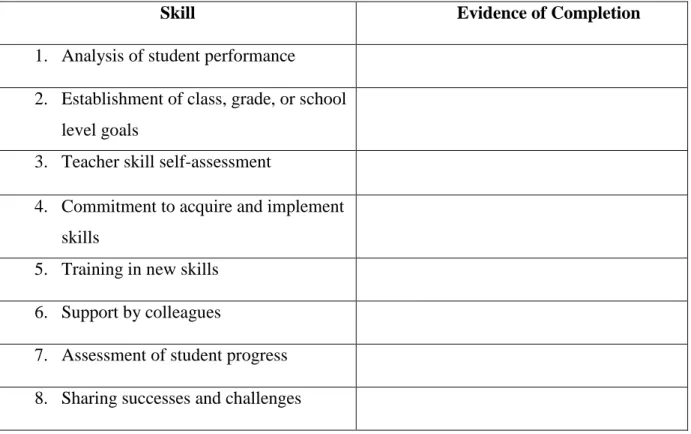
Guskey‟s work has formed the basis of the Backmapping model of evaluation that is currently supported by the National Staff Development Council. JoEllen Killion (2002) of the National Staff Development Council has developed a model of planning staff
development in order to improve student performance. The five steps of her plan include: (a) analyzing student performance data to identify student learning needs
(b) identifying target(s) for educator learning and development
(c) identifying results-based staff development interventions aligned with targets (d) designing and implementing staff development intervention(s) and evaluation (e) providing ongoing support for learning and implementation of new skills
examination of current student levels of performance and an examination of what needs to happen in order to move them forward, helps teachers to seek the professional development that will help them to move the students in the direction that they intend.
While professional development is planned with the intent of helping students make gains in achievement by providing teachers with the skills that are needed, as all of the models of evaluation discussed here imply, there may be barriers to the implementation of the skills that teachers learn.
From Professional Development to Instructional Implementation
Charles Claxton and Patricia Murrell (1987) described the adult learning cycle in four steps: concrete experience; where the learner engages in new information through personal actions or observation, reflective observation; where the learner processes and transforms the experience to fit his or her classroom needs; abstract conceptualization, where the learner forms generalizations about the new learning and is able to use the learning in classroom teaching; and active experimentation, where the learner tests the concepts in other situations or content areas. If the adult learning cycle is associated with the desired outcome of
implementation, then the professional development sessions must include a variety of activities that engage the learner and provide opportunities to develop and demonstrate the learned skills, which according to Pamela Nevills (2003) include:
observing demonstrated lessons;
studying the use of instructional materials; collaboratively planning lessons;
modeling and critiquing lessons;
problem-solving scheduling concerns.
When the professional development involves the acquisition of technology skills there must also be consideration for the variety of skill levels of the participants. The individual needs and concerns of learners must be considered when planning professional development for later implementation (Hord, Rutherford, Hunling-Austin, & Hall, 1987). If teachers are introduced to skills beyond their level of comfort, they will be frustrated and will not move beyond the specific skills that they may master during the professional development. One strategy that has shown success in helping teachers overcome the anxiety about skill implementation with technology has been the addition of a school-based technology facilitator or technology coach. (Saylor & Kehrhahn, 2003) The role of the technology facilitator is varied, but includes such responsibilities as direct instruction, support, resource coordinator, collaborator, and mentor.
Another critical component for the successful implementation of professional
integration, and scheduling opportunities for teachers to plan and discuss using technology in instruction (Persky, 1990).
Finally, peer collaboration provides collegial support for teachers to implement new skills, especially in the area of instructional technology, where a teacher may lack confidence in his or her skill level. Technological professional development must provide a safe
environment which is aware of the individual teacher‟s level of experience (Browne & Ritchie, 1991). During the professional development, collaborative problem solving and project development, along with cooperative learning, provide the support that reluctant learners will need to implement the new skills (Persky, 1990). Peers within the learning community remind individuals to focus on and achieve goals (Wexley & Baldwin, 1986). Reluctant learners may observe in classes where instructional strategies are being
implemented successfully (Broad, 1997; Browne & Ritchie, 1991). While research indicates that there are factors that support the implementation of new skills, there is also research to support barriers to the implementation of those newly acquired skills.
Barriers to Technology Integration
the teacher and can seek information to answer virtually any question posed by the teacher. The role of the teacher must change from information provider to a role of facilitator who sets up tasks and poses problems for students to solve with the information that is available (Healey, 2001). This reflects a significant change in the paradigm of a teacher and creates a barrier to the implementation of the technology if the teacher is unwilling to change.
regardless of what the obstacles were, but more than 80% of faculty in her research would wait until they were driven to the use of technology in instruction.
Spodark‟s findings at Hollins University are consistent with the work of Jamie Mackenzie (1999) who suggests that integration will not occur in K-12 classrooms unless learning goals are very clear. Teachers have to be shown the connection between the
curriculum and the tools. He suggests that in order to drive this connection, technology goals must be written into curriculum guides. Unlike others who suggest that there should be universal access to technology, Mackenzie advocates for extensive placement of equipment in the classrooms where teachers intend to use the equipment. Those teachers will model effective use of the equipment that other teachers will emulate later. He suggests that the placement of a single computer in every classroom is futile.
Conclusion
determining the best integration of technology into the instruction, and determining what professional development must take place in order for this to occur.
A number of studies have been conducted on the factors that impact student performance in the classroom including, but not limited to, facilities, teachers, and the curriculum that is taught. Since the inception of the widespread use of computers and other instructional technology in the classroom in the 1990s there has been close scrutiny about the way that the technology is used and how it impacts student performance. Ongoing studies have provided evidence of mixed results about student performance including a meta-analysis of the 5 largest scale studies of educational technology for the Milken Exchange (Schater, 1997). The studies examined the use of instructional technology in a variety of settings and were generally positive about the ways that technology has impacted student performance. There is not universal support however that the impact computers have had on students has been positive. The research of Bork (1995) and others suggest that the use of technology has fallen short of engaging students in meaningful ways that will bring about long-term changes in instructional practices in the classroom.
Student
Performance
Facilities
Instructional
Technology
Teachers
Pedagogy
Experience
Curriculum
NC Standard
Course of
Study
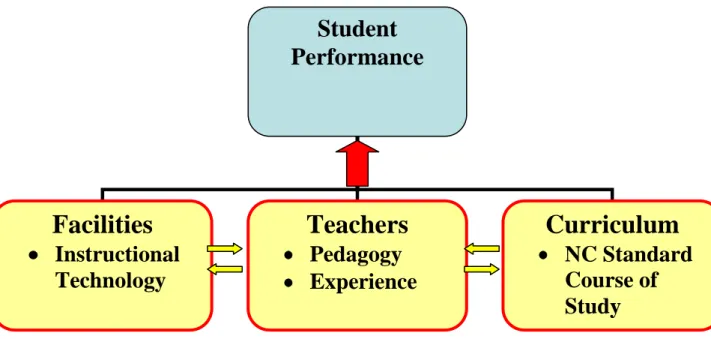
Conceptual Framework of the StudyFigure One
Factors Impacting the Relationship between Instructional Technology and Student Performance
Figure One represents a conceptual framework to begin this study of the impact of instructional technology professional development on student performance. Three primary elements contributing to student performance are facilities, teachers, and curriculum. For the purpose of this study the facilities that will be examined are instructional technology and the infrastructure that supports it, such as networked computers and technology support. The curriculum in this study is the North Carolina Standard Course of Study. The teachers are the instructional personnel at the classroom level that guide student learning. Teachers have professional development in all three areas including instructional technology professional development, pedagogical professional development, and curriculum professional
professional development that lead to the change in teacher practice in ways that impact student performance. This study will examine whether a specific instructional technology professional development program, The Wired Classroom, is helping secondary teachers understand ways to adapt pedagogy in order to effectively use technology to guide student learning.
CHAPTER III METHODOLOGY
The purpose of this research is to investigate how instructional technology professional development impacts the instructional practice of secondary teachers and therefore their ability to impact student performance. Qualitative methods have been widely used in educational research and Johnson (1995) suggests that technology educators enter into research that probes for deeper understanding instead of reviewing superficial features. He notes that qualitative methodologies are powerful tools for enhancing our understanding of teaching and learning, and that they have "gained increasing acceptance in recent years" (p. 4). A method that has gained attention is grounded theory. Grounded theory is concerned with the development or generation of theory from data, rather than verification of theory, by discovery of what the world appears to be in the eyes of the participants. According to Glaser (1998) grounded theory is “trying to understand the action on a substantive area from the point of view of the actors involved.” (p. 115) In their text Discovery of Grounded Theory, Glaser and Strauss (1967) describe the primary goal of qualitative research to
The primary reason that grounded theory was selected for this research model is that grounded theory emphasizes understanding the voice of the participants in building theory about the phenomena of changing classroom practice. Strauss and Corbin (1990) state that “theory is discovered, developed, and provisionally verified through systematic data collection and analysis of data pertaining to that phenomenon” (p. 23). In this study
interviews with teams of teachers were analyzed to develop a theory that explains the impact of instructional technology professional development on teaching practice and therefore on student performance. This theory addresses the ability of teachers to implement strategies as well as the barriers to implementation of new skills acquired during the professional
development sessions.
To review, the major research question is: how have the instructional technology professional development experiences of secondary teachers in North Carolina schools impacted teacher practice and therefore, student performance? The research questions that will guide the study are:
1. How has technology professional development of teachers impacted their instructional practice?
2. How have teachers integrated technology into their instructional practice as a result of professional development?
3. How has the use of instructional technology in classrooms where teachers have had professional development impacted student performance?
Role of the Researcher
the research, and to analyze the data. The researcher in this study was a former developer and facilitator for The Wired Classroom professional development, the program in which the participants were learners. The researcher was a member of a team of teachers who developed the professional development and delivered it during one week summer sessions between 1994 and 2005, and therefore was very familiar with the professional development that was provided. The researcher was not a facilitator for the participants‟ teams and had no contact with them prior to the interviews. The
researcher is currently a staff member of the organization that delivered the instructional technology professional development in which the teachers were participants.
Participants
A purposeful sampling technique was used to select participants for this research. Purposeful sampling is the process of selecting “particular subjects to include because they are believed to facilitate the expansion of the developing theory” (Bogdan & Bilken, 1998, p. 65). Because the purpose of the study was to develop a theory of the ability of teachers to implement specific instructional strategies in their classrooms after participation in specific professional development, the participants included secondary teachers who had been
participants in The Wired Classroom professional development summer sessions provided by the North Carolina Teacher Academy.
The Wired Classroom professional development is a five day professional
development session that is offered in a residential campus setting to teams of teachers from schools selected for participation in the sessions. Teams of teachers, including an
The summer session is followed by two follow-up sessions in the fall and the spring to review the success of implementation and introduce new skills. Participants for this research were selected at the conclusion of the school year following the professional development in order to have a full year in which to implement the skills that were learned. Appendix C provides an overview of the professional development session.
Procedure for Soliciting Participants
Fifty secondary teachers from six schools who attended The Wired Classroom during summer sessions in 2006 served as the participants in the study. The majority of the
participants were females; 36 participants were female and 14 participants were male. Participants represented several racial-ethnic groups; 19 were African American, 1 was Asian, 23 were Caucasian, 2 were Hispanic, and 5 were Native American. Participants reported years of teaching experience ranging from 5 to 30 years in a variety of different content areas including English/Language Arts, Social Studies, Math, Science, Fine Arts, and Exceptional Children. Secondary participants taught at both middle and high schools, with 22 teachers from high schools and 28 teachers from middle schools.
research. The decision to include all of the members of a team from each school was made as a result of the Teacher Academy philosophy of training a team of teachers from a school, rather than individual teachers, in order for them to support each other in the implementation of new strategies. Each school team selected by their peers to attend the North Carolina Teacher Academy is representative of the faculty at the school and makes a commitment to return to the school the following year and share new skills with their colleagues.
The researcher contacted the team contact for each school via email to request that they participate in the research. The purpose of the research was explained to the team leaders. They were told that they would receive a letter requesting the participation of members of the team from their school. A letter was mailed to each school explaining the research and requesting participation. The team leader from each school determined a time and location for the focus groups to meet.
Prior to the focus groups held at each school, the nature of the research was explained so that an informed decision about participation could be made. Participants were informed about their selection as participants and that their names, as well as the name of their school would not be revealed. Prior to participation in the focus group participants were asked to sign an informed consent that outlined their participation in the research project. The informed consent explained that participation was voluntary and confidential outside of the group. Group members were asked to respect the confidentiality of the comments made during the focus group. Appendix A provides a copy of the informed consent.
Participant Profiles
participation in professional development, which can be found in Appendix B. Teachers were asked to report about the computers, internet access, and other technology available in their schools for instructional purposes. Information provided on the questionnaire and gathered from the North Carolina Department of Public Instruction is reported below. The schools were identified with alphabetic codes (A, B, C, D, E, F) and team members from each school were identified numerically (for example A-1, A-2, B-1, B-2).
Team A was composed of five teachers from a high school in the central piedmont section of the state in a district that has three Local Education Agencies, two city districts and one county rural district. Team A is from one of the high schools in the predominantly white rural district. The school has total of 66 teachers who work with 933 students. African American students (N=6) scored significantly below the state average on End of Course tests, while the other demographic groups scored at the state level on all End of Course tests. Twenty seven percent of the school‟s teachers have earned advanced degrees. Within the focus group, three members have earned advanced degrees.
Team B was composed of ten teachers from a new middle school in the south central section of the state near a rapidly growing urban area. The school has a total of fifty teachers and serves 1030 students in grades 6-8. Students in the school score on the average 8-9 points above the state average on every End of Grade test disaggregated by every student group with the exception of Limited English Proficient students (N=27). Approximately one half of the school‟s teachers have earned an advanced degree. Within the team that
443 students. The number of teachers in the school with advanced degrees is 31. The school is approximately one half white and one half African American and American Indian. In all demographic categories, students are performing below the state average on End of Grade tests.
Team D was composed of seventeen teachers from a high school in the eastern part of the state with a total staff of 52 serving 630 students. Twenty one percent of the teachers have advanced degrees and the students in all demographic areas score near the state average on End of Course tests.
Team E was composed of seven teachers from a middle school in the north central part of the state with a faculty of 49 teachers who work with 760 students. Sixteen percent of the teachers have an advanced degree. The students in every demographic area score
significantly below the state average with the exception of the American Indian students (N=29).
Team F was composed of a team of five teachers from a middle school of 49 teachers serving 687 students. Eighteen percent of the teachers have advanced degrees. Students score significantly below the state average on End of Grade tests in all demographic areas.
Data Collection
Sources of data for the project included focus groups conducted with the teams of teachers from the schools that had been selected. The focus groups were used to gather data that would be used to develop the proposed theory. Focus group questions gathered
information about the teaching practice of the participants as a result of attending the
was integrated into instruction, and the ways in which student work was completed in their classrooms as an indication of student performance. A secondary focus of the questions was any barrier to implementation of the instructional strategies and speculation about how teaching practice would change if barriers were overcome.
Interview
The primary data collection technique involved focus group interviews. Participants completed the interviews, which lasted approximately 60-90 minutes. Responses in the interviews were written and audio-taped. A semi-structured format was used in the data collection, which allowed the participants and the researcher the flexibility to expand upon the specific questions proposed on the interview protocol.
The researcher had no previous experience conducting focus group interviews, therefore a pilot focus group was held with a group of teachers who met the criteria of the identified participant teams. The purpose of the pilot focus group was to test the interview questions and to provide interviewing practice. Conducting the pilot interview allowed the researcher to receive feedback on interviewing skills and the focus group format. After the pilot interview, questions were added to the protocol however no significant changes were made to the protocol.
instructional technology, what additional support was needed to implement the strategies learned in the professional development, and what barriers to implementation the teachers faced.
The focus groups began with introductory questions. Participants were asked non-threatening questions to make them feel comfortable in the focus group setting. The first group of questions asked participants about how technology professional development has impacted their instructional practice. Specifically questions were intended to determine if teachers believed that their instructional practice had been impacted by the professional development. The second set of questions focused on the integration of technology into instruction in the teachers‟ classrooms. The questions related to instructional technology differed from the instructional practice questions in that the professional development may have impacted the instructional practice without integrating technology.
The third set of questions focused on student performance in the classrooms as a result of teacher skills and the integration of instructional technology. Teachers were asked to assess student performance by observing changes in student behaviors that are not
measured in traditional End of Course/End of Grade tests. The fourth set of questions asked teachers about any additional support that they needed in order to implement the new
Interview Protocol for Focus Groups
1. How has technology professional development of teachers impacted their instructional practice?
a. What are you doing differently in your classroom now as a result of the technology professional development?
b. What would you like to do differently that you haven‟t tried?
c. What has prevented you from trying the activities that you haven‟t tried? d. How have you modified your instructional planning and practice?
e. What skills have you learned that enabled you?
f. What role did the assistance of your colleagues play in implementing new skills?
2. How have teachers integrated technology into their instructional practice as a result of professional development?
a. What technology are you integrating into your instructional practice? b. What technology would you integrate if you had access to it?
c. How would it change what is currently happening in your classroom?
d. How is this an outcome of the professional development that you participated in?
e. What additional professional development was necessary?
f. How did you acquire these skills (conference, peer coaching, journal article, lesson plan database)?
a. What difference has there been in student performance as a result of the professional development in the period since the teacher participated in the professional development?
b. If students have improved can there be an association between the improvement and the skills learned in professional development?
c. If there has not been an impact on student achievement, what factors would you identify that have contributed to that?
4. In order to implement the strategies that you learned in the instructional technology professional development, what additional support would be necessary?
a. Observing a class when instructional strategies are used b. Access to equipment
c. Time to collaborate and plan with teachers who use technology effectively 5. Do you think that if you were able to implement the strategies that you learned in the
instructional technology professional development, there would be an impact on student achievement?
a. What impact on student achievement do you think would have occurred if you had implemented the strategies?
6. How could you overcome the barriers that you have indicated might have prevented you from using technology in your classroom in ways that you had planned?
Data Analysis
research, three coding procedures were applied: open coding, axial coding, and selective coding. This section describes how data was broken down and then reorganized in order to develop an understanding about how instructional technology professional development impacts instructional practice.
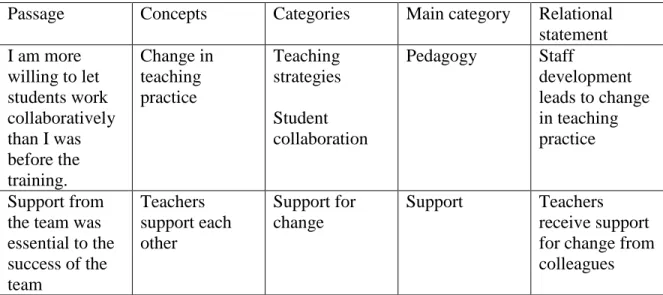
In order to illustrate the coding process, examples of coding focus group data are included in this chapter. While it may appear that the coding took place in different phases, some of the coding occurred simultaneously. Table One provides examples of focus group responses and coding.
Table One
Example of Focus Group Response and Coding
Passage Concepts Categories Main category Relational statement I am more
willing to let students work collaboratively than I was before the training. Change in teaching practice Teaching strategies Student collaboration
Pedagogy Staff
development leads to change in teaching practice
Support from the team was essential to the success of the team Teachers support each other Support for change
Support Teachers receive support for change from colleagues
Open Coding
segments that represented the main ideas of the participants. Transcripts and main ideas were reviewed by a peer editor to ensure that the research had accurately captured the concepts that the participants had thought were important. (Further information about this process is discussed in the section “Trustworthiness” later in this chapter).
Review of the data from the focus group interviews resulted in a list of more than seventy concepts and meaningful experiences. An example of concepts taken from the first example above “students work in different ways as a result of the training” and “teachers acquired skills necessary for changing student activities.” Concepts involving the training that teachers received were categorized under “Teacher Training.” The process of grouping concepts into categories comprises the second step in the coding process. In this phase of the process, the goal was to develop a list of categories regarding the changing teaching
practices. As a result of comparing these concepts for similarities and differences a list of more than thirty four categories was constructed.
The process of coding interviews using the category list was the next step. Two people coded each of the interviews, the researcher and the peer debriefer. The debriefer assigned categories independently from the researcher, then worked with the researcher to reach consensus about the categories. Non-representative categories were eliminated and notes were written that examined the properties of each dimension.
Axial Coding
Strategies category previously referred to was grouped into a main category labeled Pedagogy that included all of the needed areas of understanding discussed by the
participants. Notes and raw data were studied to determine the characteristics of this broader category. The Pedagogy category included information about what type of training had the greatest impact, how teaching practices were impacted, what additional training would have been needed. Based on participants‟ experiences that indicated a relationship between
professional development, teaching practice, and support available in the schools, a relational statement was developed linking the main categories of Pedagogy and Support.
Selective Coding
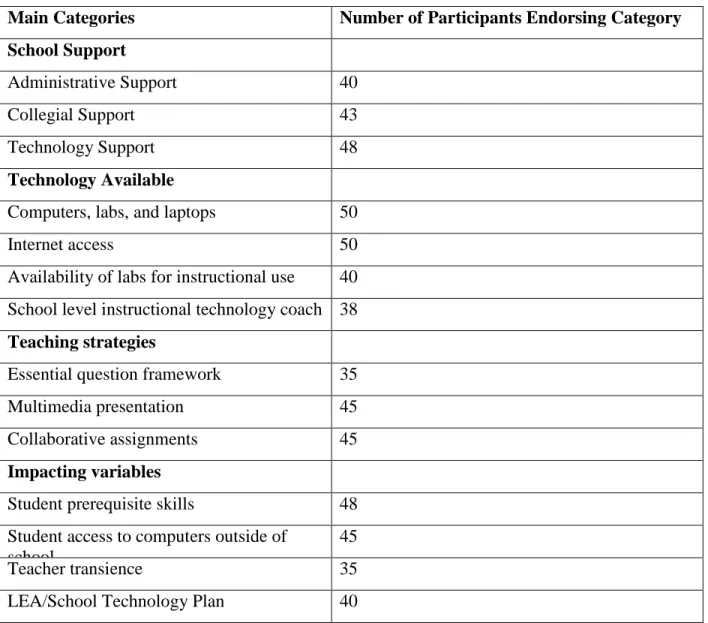
Selective coding “is the process of integrating and refining categories” according to Strauss and Corbin (1998, p. 142). The primary goal of this step was to develop a theoretical scheme that explains how each of the categories related to each other and to identify a core category explaining the participants‟ experiences. The main categories were examined for similarities and differences. Passages representing each of the main categories were sorted and reviewed with a peer debriefer. As a result of this process three theoretical categories emerged. One of the categories that emerged was labeled “Teaching Strategies” and involved the main categories that identified the elements that teachers contributed to instructional practice. The organization of the data is located in Appendix E.
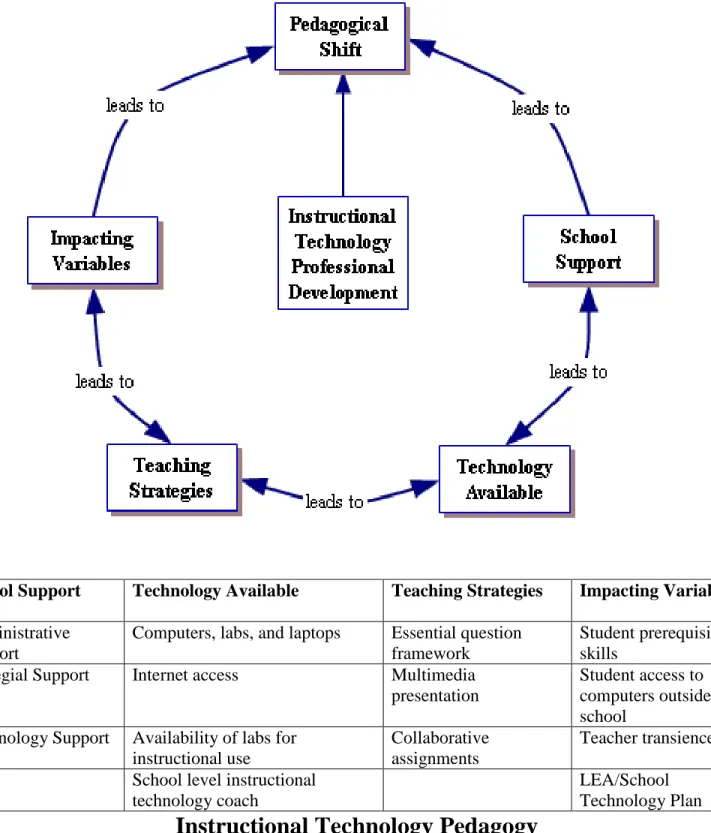
A diagram and a narrative describing the emergent theory were developed to explain the factors involved in the impact of the professional development on teaching practice in secondary schools. The story of each of the participants was reviewed to determine if it fit into the proposed theory. The specific components of the theory will be shared in the next chapter.
Trustworthiness
The trustworthiness, or validity, of any research study is a primary concern (Creswell, 2005). In qualitative research studies, the researcher must consider the data collection, the analysis, and the interpretation methods. Questions asked in the focus groups involved the degree in which they represent the participants‟ perceptions, whether other researchers would reach similar conclusions based on the data, whether the analysis process is flexible enough to allow for variations in experiences, and the degree to which study elements were described to allow for comparison to other populations and other studies. Some of the techniques that were used to ensure trustworthiness in this research study included triangulation, member checking, peer debriefing, and thick description.
Triangulation
Lincoln and Guba (1985) describe triangulation as a technique used to increase the trustworthiness of qualitative research by comparing the results from different sources to validate findings. In the present study, multiple focus groups were included and their experiences were compared to identify similarities and differences. The theory that was developed was based on the accumulation of common experiences, rather than data from a single team of participants.