A systematic literature review approach to estimate the
therapeutic index of selected immunosuppressant drugs
following renal transplantation
Jessica E. Ericson, MD, MPH1,2, Kanecia O. Zimmerman, MD2,3, Daniel Gonzalez, PharmD, PhD4, Chiara Melloni, MD, MHS2, Jeffrey T. Guptill, MD2, Kevin D. Hill, MD, MS2,3, Huali Wu, PhD2, and Michael Cohen-Wolkowiez, MD, PhD2,3
1Departments of Pediatrics, Pennsylvania State University, Hershey, PA 2Duke Clinical Research Institute, Durham, NC
3Department of Pediatrics, Duke University, Durham, NC
4Division of Pharmacotherapy and Experimental Therapeutics, UNC Eshelman School of
Pharmacy, University of North Carolina, Chapel Hill, North Carolina, USA
Abstract
Background—Drugs that exhibit close margins between therapeutic and toxic blood concentrations are considered to have a narrow therapeutic index (NTI). The Food and Drug Administration has proposed that NTI drugs should have more stringent bioequivalence standards for approval of generic formulations. However, many immunosuppressant drugs do not have a well-defined therapeutic index (TI).
Methods—We sought to determine whether safety, efficacy, and pharmacokinetic data obtained from the medical literature through a comprehensive literature search could be used to estimate the TI of cyclosporine, tacrolimus, and sirolimus. In this analysis, we considered TI ≤2 as a criterion to define a drug as having an NTI.
Results—Published literature indicates that cyclosporine has a TI of 2–3, which falls just short of our criteria to be classified as having an NTI. We found sirolimus and tacrolimus to have a
therapeutic range of 5–12 ng/mL and of 5–20 ng/mL, respectively, but were unable to calculate the TI.
Conclusion—Although current literature does not provide a clear indication that these drugs have an NTI, the routine use of therapeutic drug monitoring in clinical practice suggests that more stringent testing of their pharmacokinetic and pharmacodynamic properties should be performed prior to the approval of generic formulations.
Keywords
tacrolimus; cyclosporine; sirolimus; generic
HHS Public Access
Author manuscript
Ther Drug Monit
. Author manuscript; available in PMC 2018 February 01.Published in final edited form as:
Ther Drug Monit. 2017 February ; 39(1): 13–20. doi:10.1097/FTD.0000000000000364.
A
uthor Man
uscr
ipt
A
uthor Man
uscr
ipt
A
uthor Man
uscr
ipt
A
uthor Man
uscr
INTRODUCTION
Immunosuppression is an important aspect of successful organ transplantation. Cyclosporine, tacrolimus, and sirolimus are drugs that are commonly used for
immunosuppression in transplant patients to prevent graft rejection.1 However, the benefits
of preventing rejection must be carefully balanced with the risks of drug toxicities, including
increased risk of infections and malignancies.2,3 Immunosuppressive drugs are often
considered to have a narrow therapeutic index (NTI), exhibiting a very close margin between
therapeutic and toxic blood concentrations.4 Small changes in the dose of an NTI drug can
lead to changes in exposure that are associated with therapeutic failures if the therapeutic range is not reached, or unwanted side effects if the therapeutic range is exceeded.
In order for a new generic version of a drug to receive approval from the Food and Drug Administration (FDA), the manufacturer must demonstrate that the generic formulation is
pharmaceutically equivalent and bioequivalent to the innovator formulation.5 The current
FDA bioequivalence criteria require that the 90% confidence interval (CI) of the ratio between the geometric mean of a generic product and the reference product fall within 80–
125%.6 In 2010, the FDA proposed that drugs classified as NTI should have more stringent
regulatory standards for the approval of generic formulations. The proposed new bioequivalence criteria require reference-scaled bioequivalence testing and a variability
comparison test for generic drugs with an NTI.7
In order for these new standards to be implemented, it is necessary to define which drugs should be classified as NTI. NTI drugs generally have the following characteristics: (a) there is little separation between therapeutic and toxic doses (or the associated blood/plasma concentrations), (b) sub-therapeutic concentrations may lead to serious therapeutic failure, (c) they are subject to therapeutic monitoring based on pharmacokinetic (PK) or
pharmacodynamic (PD) measures, (d) they possess low-to-moderate (i.e., no more than 30%) within-subject variability, and (e) doses are often adjusted in very small increments (less than 20%) in clinical practice.8 NTI classification requires the estimation of therapeutic index (TI), which is not well established for many available immunosuppressants. Pollard et al. reported that conversion from innovator formulations to generic formulations of
immunosuppressants has been associated with increased renal graft failure and biopsy-proven acute rejection (BPAR), which has led to a lack of confidence by providers in
prescribing generic products.9 If certain immunosuppressants were to be identified as NTI
drugs, application of the new criteria would be expected to improve patient safety, enhance physician confidence in generic products, and decrease health care costs due to increased generic drug prescription. The purpose of our study was to determine whether the medical literature can be used to determine the TI of immunosuppressants commonly used to prevent rejection in renal transplant patients. We focused our assessment on renal transplantation, as this is the most common type of organ transplantation, which has the largest body of literature regarding the use of immunosuppressant therapies.
A
uthor Man
uscr
ipt
A
uthor Man
uscr
ipt
A
uthor Man
uscr
ipt
A
uthor Man
uscr
MATERIALS AND METHODS
Through collaboration with the FDA and review of international regulatory agency documents, we focused on three immunosuppressants as candidate NTI drugs that may benefit from tighter bioequivalence standards for generic drug development: cyclosporine, tacrolimus, and sirolimus.
Literature search
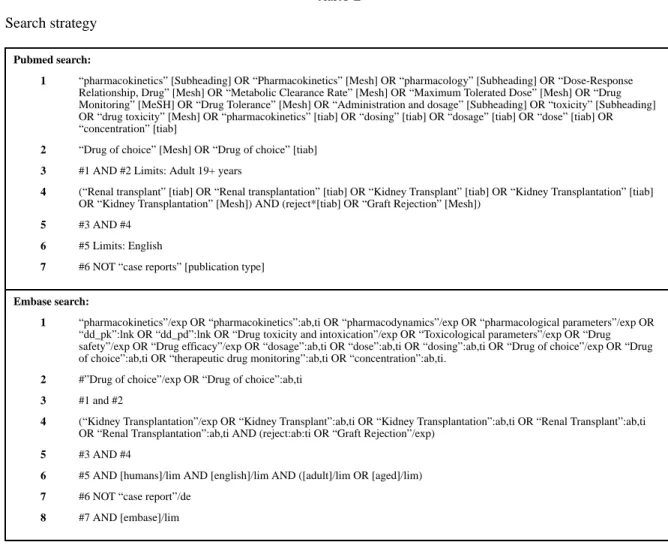
We performed a literature search with no time restriction to identify all studies reporting PK, safety, and efficacy data for these immunosuppressant drugs when used following the renal transplantation in adults using PubMed and Embase with the aid of professional librarians from Duke University Medical Library (Table 1).
A study team member initially reviewed all identified article abstracts and selected those for full text review that compared the efficacy or safety of the drug of interest to a comparator or contained therapeutic drug monitoring (TDM) information. Full text articles meeting the study criteria and containing sufficient safety, efficacy, pharmacokinetics or TDM data were included. When it was uncertain whether an article should be included and data extracted into the study database, the manuscript was reviewed by a second study team member to reach consensus. As a quality assurance measure, 5% of the extracted data underwent an independent full review by a third study member.
For each immunosuppressant, we extracted efficacy and safety data from all prospective randomized controlled trials, and we extracted PK data from all identified PK studies into a study-specific drug database. Specific variables extracted included study demographics, drug dosing and formulation, PK parameters (e.g., Cmax, area under the concentration versus time curve (AUC), clearance), and efficacy data (study phase, primary outcome, study result). Safety data collected included warning and precautions listed in the drug label as well as all adverse events (AEs) with a placebo adjusted frequency >10%.
Therapeutic index estimation
For each immunosuppressant drug, we reported the type and incidence of AE and the range of drug dosing and blood concentrations for which toxicity was described, the type and frequency of primary outcomes in efficacy studies, the blood drug concentration for which efficacy was described, and, when available, the effective versus toxic concentration and dose (therapeutic range). The efficacy of both cyclosporine and tacrolimus with mono- or combination therapy was most commonly assessed using three measures: (1) BPAR, (2) graft failure, and (3) patient death. Sirolimus efficacy with mono- or combination therapy was assessed using three similar measures: (1) BPAR; (2) patient death; and (3) a composite end point of death, graft loss, or BPAR. We extracted the minimum toxic concentration and the minimum effective concentration of the study population in the literature report and defined the TI as the ratio between the minimum toxic concentration to the minimum effective concentration. Even though FDA does not specify a threshold value to determine whether a TI is narrow, in this analysis, we considered a TI ≤2 as one criterion to support the classification as an NTI drug.
A
uthor Man
uscr
ipt
A
uthor Man
uscr
ipt
A
uthor Man
uscr
ipt
A
uthor Man
uscr
RESULTS
Cyclosporine
Cyclosporine is a calcineurin inhibitor that has been used as an immunosuppressant for the prevention of rejection in renal transplant patients since the early 1980s.10 Our literature search for cyclosporine yielded 373 articles with 122 articles containing data sufficient for extraction (Table 2).
Safety—AEs associated with cyclosporine use in patients with renal transplant varied and
involved many organ systems (Table 3).11–20 Common AEs were hyperlipidemia;
comparator-adjusted frequency, 21%21; hypertension, 26%22; cardiac events, 19%23;
gingival hyperplasia, 13–43%24,25; and increased creatinine, 12%.26 The incidence of AEs
was not consistently shown to be dose related, and observed drug concentrations among those with certain AEs were often similar to those in patients without these events.27,28 One study of 118 renal transplant patients found no difference in cyclosporine PK parameters for patients who had nephrotoxicity (≥25% increase in serum creatinine), liver toxicity, or post-transplant infection relative to peers without these conditions.27 Cyclosporine nephrotoxicity potentially threatens renal allograft survival and provides a rationale for careful dose
titration.29–31 At least one study demonstrated that decreasing cyclosporine dose or stopping
cyclosporine during the maintenance phase of immunosuppression led to the improved renal
function over time compared to those who stayed on cyclosporine.32
Efficacy—Cyclosporine was typically administered as part of a multiple drug
immunosuppressant regimen. Cyclosporine appeared to have similar efficacy to tacrolimus
but greater efficacy than sirolimus and azathioprine.13,26,33 A randomized trial comparing
cyclosporine and prednisone to azathioprine and prednisone in cadaveric renal transplant patients found that cyclosporine resulted in better graft and patient outcomes than
azathioprine.33 Another randomized trial comparing cyclosporine and sirolimus to
tacrolimus and sirolimus found that BPAR and graft survival were similar for the two
regimens.34 A third trial compared a combination immunosuppressant regimen containing
cyclosporine to one containing sirolimus and found that patients receiving cyclosporine had
lower rates of BPAR and death than those receiving sirolimus.13 Efficacy was not entirely
predicted by drug dose and concentration alone; rather, other PK parameters, such as AUC,
seemed to better predict cyclosporine efficacy.35
Therapeutic range and drug monitoring—Given available evidence, we were not able to determine the therapeutic range of cyclosporine; it appears to differ with time after transplantation, concomitant medications, and individual pharmacokinetics. The ranges of drug exposure associated with efficacy in prior studies varied greatly in the first three months: trough concentrations, 120–350 ng/mL; peak [2-hour] concentrations, 700–2000 ng/mL; and AUC at 12 hours, 3000–8000 ng · h/mL (Table 3). Target concentration ranges decreased over time, with some studies advocating for troughs as low as 50 ng/mL beyond one year post-transplant.36 Further, there appears to be notable overlap of these target values with those associated with AEs.
A
uthor Man
uscr
ipt
A
uthor Man
uscr
ipt
A
uthor Man
uscr
ipt
A
uthor Man
uscr
Therapeutic index estimation—The above estimates suggest a TI of 2–3 for
cyclosporine. Yet, TDM and individualization of therapy based on clinical presentation are essential.37,38 The optimal PD target, timing, and specimen type that will predict efficacy while minimizing the risk for toxicity has not been well defined though several studies have attempted to do so (Table 4). Trough concentrations are the most widely used metric for dose titration; however, the wide variability in absorption and PK, as well as an inconsistent
correlation with clinical outcome, prompted search for other PD targets.39–42
Tacrolimus
Tacrolimus is a newer calcineurin inhibitor that is now more commonly used than cyclosporine.10 Our literature search for tacrolimus yielded 244 articles, 106 of which contained safety and/or efficacy data sufficient for extraction.
Safety—AEs associated with tacrolimus use in renal transplant patients were varied (Table 2).11,18,43–49 Nephrotoxicity was the adverse effect most closely tied to tacrolimus dosing.50 One study found that three of five cases of nephrotoxicity were associated with tacrolimus trough concentrations >10 ng/mL.51 The analysis of 92 cadaveric renal transplant recipients found a linear association between increasing tacrolimus trough blood concentrations and higher rates of nephrotoxicity (increase from the post-transplant serum creatinine nadir by
≥0.5 mg/dL).52 The relationship between the frequency of infection and the concentration of
tacrolimus was unclear. One study found that there was no difference in the proportion of patients developing a bacterial, viral, or fungal infection when the goal trough concentration
was 1.5–3 ng/mL compared to a goal trough concentration of 4–7 ng/mL,53 and another
study noted no infections in patients with trough concentrations >10 ng/mL.51 A third study found that the trough and peak tacrolimus concentrations were higher in patients who developed an infection within six weeks of their renal transplant than in patients who did not develop an infection.54
Efficacy—Tacrolimus was typically given with other immunosuppressant agents, which varied based on immunologic parameters at the time of transplant and clinician preference. Dosing was most commonly based on blood trough levels, with target trough concentrations
varying widely from 1.5–40 ng/mL.48,53 Target trough concentrations were typically higher
in the 1–3 months immediately following the transplantation. A lower target trough
concentration was often used as the time since transplantation increased.55–58 A large
multicenter, randomized, controlled trial in renal transplantation demonstrated that a tacrolimus-based immunosuppressant regimen with a low goal trough concentration of 3–7 ng/mL resulted in a superior mean glomerular filtration rate and graft survival with a lower
incidence of acute rejection than the comparator arms.12
Therapeutic range and drug monitoring—The dose range associated with efficacy and toxicity partially overlapped. Efficacy did not appear to always be concentration-related (Table 4).55,59–61 The toxicity of tacrolimus increased gradually with increasing blood concentrations in some studies,48,51,55,62 while in others, the relationship was less clear (Table 3).48,53,61,63 Blood concentrations in patients without toxicity often did not differ
significantly from others who experienced adverse effects.54
A
uthor Man
uscr
ipt
A
uthor Man
uscr
ipt
A
uthor Man
uscr
ipt
A
uthor Man
uscr
Therapeutic index estimation—Based on the available medical literature, the optimal therapeutic range for tacrolimus is variable and the TI could not be estimated; therefore, we were unable to use the TI as a means of classifying tacrolimus as an NTI drug.
Sirolimus
Sirolimus is an inhibitor of the mammalian target of rapamycin and is sometimes used instead of or with a calcineurin inhibitor in renal transplant patients.64 Our literature search for sirolimus yielded 142 articles, 45 of which contained safety and/or efficacy data sufficient for extraction.
Safety—AEs associated with sirolimus’ use in renal transplant patients were varied (Table 2).65–70 The prevalence of AEs associated with sirolimus was dose related in some
studies.65,67 The incidence of AEs including malignancy, anemia, hypertension, abnormal
kidney function, and upper respiratory infection were significantly higher in patients receiving the sirolimus and cyclosporine combination therapy compared with sirolimus
monotherapy.71,72
Efficacy—Sirolimus was administered as monotherapy or in conjunction with calcineurin inhibitors, such as tacrolimus or mycophenolate mofetil, to provide steroid-free
immunosuppression. The effective dose range of sirolimus varied widely (0.5–5 mg per day) and may have been related to co-administered immunosuppressant drugs (e.g., cyclosporine, tacrolimus, and steroids).
Therapeutic range and drug monitoring—The dose range associated with efficacy and toxicity partially overlapped with both 100% patient survival and a high incidence of
hyperlipidemia and new onset diabetes mellitus occurring at doses of 2–4 mg/day.67,73
Overall toxicity of sirolimus increased gradually with increasing blood concentrations. Blood concentrations in patients with favorable immunosuppressant outcomes did not differ significantly from blood concentrations in patients who experienced AEs (Tables 3 and 4). Data from 150 renal transplant recipients on a regimen of sirolimus, cyclosporine, and prednisone found an association between trough sirolimus concentrations and both AEs and efficacy. Sirolimus concentrations <5 ng/mL were predictive of acute rejection, whereas concentrations >15 ng/mL were linked with hypertriglyceridemia, thrombocytopenia, and leukopenia.74 For patients receiving sirolimus with a calcineurin inhibitor and a
corticosteroid, a therapeutic range of 5–12 ng/mL has been recommended.75,76 If the
regimen does not include a calcineurin inhibitor, a higher range (12–24 ng/mL) has been
recommended.75,76 TDM is recommended for the use of sirolimus in all patients especially
in those likely to have altered drug metabolism and who are at high risk for rejection.
Therapeutic index estimation—Based on the available medical literature, the optimal therapeutic range for sirolimus varies depending if it is co-administered with a calcineurin inhibitor or not. As a result, more than one TI can be derived.
A
uthor Man
uscr
ipt
A
uthor Man
uscr
ipt
A
uthor Man
uscr
ipt
A
uthor Man
uscr
DISCUSSION
Our comprehensive literature search identified many studies evaluating the safety, efficacy, and PK data for these immunosuppressant drugs. The published literature indicates that cyclosporine has a TI of 2–3. While we found sirolimus to have a therapeutic range of 5–12 ng/mL and tacrolimus to have a therapeutic range of 5–20 ng/mL, based on published studies, we were unable to estimate the TIs for sirolimus and tacrolimus.
Although studies considering a wide range of medications have demonstrated
bioequivalence of generic medications to innovator medications, there are considerable concerns among physicians and patients regarding the safety and efficacy of generic
immunomodulators.4,77–79 While much of the evidence for these concerns is anecdotal,
retrospective database studies seemed to suggest worse outcomes for renal transplant patients receiving generic formulations. A single-center retrospective review found that 88 renal transplant patients treated with a generic cyclosporine formulation were significantly
more likely to experience BPAR than 100 patients treated with innovator cyclosporine.80
The analysis of a large database generated as a part of the Collaborative Transplant Study found that the 397 patients treated with generic cyclosporine had 10% lower graft survival at one-year post-transplant than the 16,801 patients treated with the innovator formulation (P < 0.01).9 However, the interpretation of these retrospective studies is challenging because there may be unrecorded differences between the patients that received the generic and those that received the innovator product. We are not aware of any studies demonstrating a difference in clinical outcomes for renal transplant patients receiving a generic formulation of
tacrolimus compared to the innovator formulation. However, an average decrease of 12% in the concentration-to-dose ratio has been described when switching from innovator
tacrolimus to a generic formulation while some other studies suggest similar dosing requirements and trough concentrations between the generic and innovator treatment
arms.81–84 Most of these studies recommend close TDM when changing a patient from
innovator to generic formulations, which may offset cost saving associated with the use of
generic formulations.77,78 Studies comparing the effectiveness of generic formulations of
sirolimus with the innovator formulation have not yet been published.
If the FDA were to enact tighter bioequivalence standards for generic formulations of certain drugs, this could result in decreased toxicity and sustained efficacy for patients switching from brand-name formulations. Clinicians and patients could then have more confidence in the less expensive products, likely leading to health care cost savings. Tighter
bioequivalence standards, however, are not as necessary for drugs that have a wide TI, as larger variations in patient exposure can be well tolerated. Identification of NTI drugs is, therefore, key to the implementation of new bioequivalence standards.
In our study, we used a comprehensive literature search to assess the TI of certain immunosuppressants used in renal transplant patients. A TI <2 is one criterion used to determine whether these drugs could be classified as NTI based on available evidence. Health Canada, the European Medicines Agency, and FDA consider cyclosporine to be a
NTI drug.85 We were not able to calculate the TI for tacrolimus or sirolimus. Tacrolimus has
been considered to be an NTI drug by experts in the United States and internationally and is
A
uthor Man
uscr
ipt
A
uthor Man
uscr
ipt
A
uthor Man
uscr
ipt
A
uthor Man
uscr
so classified by the FDA, European Medicines Agency, and Health Canada. For all three of these drugs, TDM is necessary in at least some clinical situations, and there are some concentration-dependent effects on efficacy and toxicity. The routine use of TDM in clinical practice suggests a clinical consensus that a NTI may be present and that more stringent testing of the PK and quality control properties should be performed prior to approval of generic formulations. In fact, after our data collection and analysis had been completed, the
FDA recommended that sirolimus be considered to have a NTI.86 Approval of generic
formulations of these drugs with stringent testing of PK and quality control properties could reduce the potential risk of adverse effects or therapeutic failure.
An advantage of our study is the inclusion of an exhaustive systematic review of all of the toxicity and efficacy data available in the medical literature for these immunomodulators. Based on the compiled information, we were able to calculate therapeutic indices for cyclosporine to aid in its consideration as NTI drugs. Our study is limited by the method of literature review: our results are based on a wide variety of trials that included different drug dosages, therapeutic targets, and monitoring regimens. Thus, the results of our review may be strengthened when combined with other methods to support an NTI classification, including PK-PD modeling approaches, to determine which drugs should be subjected to more stringent bioequivalence criteria by regulatory agencies. Because most renal transplant patients receive more than one immunosuppressive medication, it is difficult to fully attribute efficacy or safety to the concentration of a single drug. We reported comparator-adjusted AEs where possible in an attempt to better quantify AEs attributable to the drug of interest. A better source of data regarding safety and efficacy of generic formulations would be prospective clinical trials in which patients are randomized to continuing on brand-name formulations versus switching to a generic formulation. However, such trials usually require a large number of study subjects to draw conclusions on the difference or equivalence in safety or efficacy outcomes, and it is not feasible to compare all possible NTI innovator drugs to all possible generic formulations. Most of the studies included in our analysis did not describe the laboratory technique(s) used to determine the blood concentration of the drug of interest. Differences in techniques between studies or over time may account for a range of values associated with toxicity and efficacy. Finally, our estimation of the TI was based on the population therapeutic range, which may be wider than that of an individual. Therefore, we may have overestimated the TI that can be applied to an individual.
CONCLUSION
A systg/mLematic literature review approach offers a low-cost alternative method to estimate the TI of these drugs when sufficient data are available. However, our method cannot overcome significant gaps in the literature. Although current literature does not provide a clear indication that these drugs have an NTI, the routine use of TDM in clinical practice suggests that more stringent testing of their PK and pharmacodynamic properties should be performed prior to the approval of generic formulations to ensure bioequivalence in the clinical setting.
A
uthor Man
uscr
ipt
A
uthor Man
uscr
ipt
A
uthor Man
uscr
ipt
A
uthor Man
uscr
Acknowledgments
Conflicts of Interest and Source of Funding
J.E.E received support from the NICHD under award number 5T32HD060558.
K.Z. is funded by KL2TR001115-03 from the Duke Clinical and Translational Science Awards.
D.G. is funded by K23HD083465 from the National Institute for Child Health and Human Development (NICHD) and by the nonprofit Thrasher Research Fund (www.thrasherresearch.org).
C.M. receives support for research from the NICHD (HHSN275201000003I), the FDA (3U01FD004858-01), and from industry for drug development in adults (www.dcri.duke.edu/research/coi.jsp).
J.T.G. is supported by K23NS085049-01A1 from National Institute of Neurological Disorders and Stroke (NINDS), the Myasthenia Gravis Foundation of America, the NICHD (HHSN275201000003I), and from industry for drug development in adults (www.dcri.duke.edu/research/coi.jsp).
K.D.H. is supported in part by grants from The National Center for Advancing Translational Sciences of the National Institutes of Health (KL2TR001115-02), the Mend A Heart Foundation (Clarendon Hills, IL), and from industry (Gilead Sciences and Kowa pharmaceuticals) for drug development in children.
M.C.W. receives support for research from the NIH (1R01-HD076676-01A1), the National Center for Advancing Translational Sciences of the NIH (UL1TR001117), the NIAID (HHSN272201500006I and
HHSN272201300017I), the NICHD (HHSN275201000003I), the FDA (1U01FD004858-01), the Biomedical Advanced Research and Development Authority (HHSO100201300009C), the nonprofit Thrasher Research Fund (www.thrasherresearch.org), and from the industry for drug development in adults and children
(www.dcri.duke.edu/research/coi.jsp).
Funding for this manuscript was made possible by the Food and Drug Administration through grants
1U01FD004858-01 and 3U01FD004858-01. Views expressed in written materials or publications and by speakers and moderators do not necessarily reflect the official policies of the Department of Health and Human Services; nor does any mention of trade names, commercial practices, or organization imply endorsement by the United States Government.
Abbreviations
AE adverse event
AUC area under the curve
BPAR biopsy-proven acute rejection
CI confidence interval
Cmax maximum blood concentration
FDA Food and Drug Administration
NTI narrow therapeutic index
PD pharmacodynamics
PK pharmacokinetic
TDM therapeutic drug monitoring
A
uthor Man
uscr
ipt
A
uthor Man
uscr
ipt
A
uthor Man
uscr
ipt
A
uthor Man
uscr
References
1. Lee RA, Gabardi S. Current trends in immunosuppressive therapies for renal transplant recipients. Am J Health Syst Pharm. 2012; 69:1961–1975. [PubMed: 23135563]
2. Khan A, El-Charabaty E, El-Sayegh S. Fungal infections in renal transplant patients. J Clin Med Res. 2015; 7:371–378. [PubMed: 25883698]
3. Guba M, Pratschke J, Hugo C, et al. Early conversion to a sirolimus-based, calcineurin-inhibitor-free immunosuppression in the SMART trial: observational results at 24 and 36 months after
transplantation. Transpl Int. 2012; 25:416–423. [PubMed: 22320241]
4. Johnston A. Equivalence and interchangeability of narrow therapeutic index drugs in organ transplantation. Eur J Hosp Pharm Sci Pract. 2013; 20:302–307. [PubMed: 24089632]
5. U.S. Department of Health and Human Services, Food and Drug Administration, Center for Drug Evaluation and Research (CDER). Guidance for industry: bioequivalence recommendations for specific products. Silver Spring, MD: 2010. Available at: http://www.fda.gov/downloads/Drugs/ GuidanceComplianceRegulatoryInformation/Guidances/ucm072872.pdf [Accessed November 23, 2016]
6. Jiang W, Makhlouf F, Schuirmann DJ, et al. A bioequivalence approach for generic narrow therapeutic index drugs: evaluation of the reference-scaled approach and variability comparison criterion. AAPS J. 2015; 17:891–901. [PubMed: 25840883]
7. Yu, LX. [Accessed November 23, 2016] Quality and bioequivalence standards for narrow therapeutic index drugs (Presentation). GphA Technical Workshop. 2011. Available at: http:// www.fda.gov/downloads/drugs/developmentapprovalprocess/howdrugsaredevelopedandapproved/ approvalapplications/abbreviatednewdrugapplicationandagenerics/ucm292676.pdf
8. Yu LX, Jiang W, Zhang X, et al. Novel bioequivalence approach for narrow therapeutic index drugs. Clin Pharmacol Ther. 2015; 97:286–291. [PubMed: 25669762]
9. Pollard S, Nashan B, Johnston A, et al. A pharmacokinetic and clinical review of the potential clinical impact of using different formulations of cyclosporin A. Berlin, Germany, November 19, 2001. Clin Ther. 2003; 25:1654–1669. [PubMed: 12860490]
10. Azzi JR, Sayegh MH, Mallat SG. Calcineurin inhibitors: 40 years later, can’t live without. J Immunol. 2013; 191:5785–5791. [PubMed: 24319282]
11. Mayer AD, Dmitrewski J, Squifflet JP, et al. Multicenter randomized trial comparing tacrolimus (FK506) and cyclosporine in the prevention of renal allograft rejection: a report of the European Tacrolimus Multicenter Renal Study Group. Transplantation. 1997; 64:436–443. [PubMed: 9275110]
12. Ekberg H, Tedesco-Silva H, Demirbas A, et al. Reduced exposure to calcineurin inhibitors in renal transplantation. N Engl J Med. 2007; 357:2562–2575. [PubMed: 18094377]
13. Flechner SM, Gurkan A, Hartmann A, et al. A randomized, open-label study of sirolimus versus cyclosporine in primary de novo renal allograft recipients. Transplantation. 2013; 95:1233–1241. [PubMed: 23689085]
14. Budde K, Becker T, Arns W, et al. Everolimus-based, calcineurin-inhibitor-free regimen in recipients of de-novo kidney transplants: an open-label, randomised, controlled trial. Lancet. 2011; 377:837–847. [PubMed: 21334736]
15. Durrbach A, Pestana JM, Pearson T, et al. A phase III study of belatacept versus cyclosporine in kidney transplants from extended criteria donors (BENEFIT-EXT study). Am J Transplant. 2010; 10:547–557. [PubMed: 20415898]
16. Kramer BK, Del Castillo D, Margreiter R, et al. Efficacy and safety of tacrolimus compared with ciclosporin A in renal transplantation: three-year observational results. Nephrol Dial Transplant. 2008; 23:2386–2392. [PubMed: 18258740]
17. Gheith OA, Bakr MA, Fouda MA, et al. Steroid and azathioprine versus steroid, cyclosporine, and azathioprine therapies in primary haplo-identical living donor kidney transplantation: twenty-year experience. Iran J Kidney Dis. 2008; 2:34–39. [PubMed: 19367007]
18. Silva HT Jr, Yang HC, Abouljoud M, et al. One-year results with extended-release tacrolimus/ MMF, tacrolimus/MMF and cyclosporine/MMF in de novo kidney transplant recipients. Am J Transplant. 2007; 7:595–608. [PubMed: 17217442]
A
uthor Man
uscr
ipt
A
uthor Man
uscr
ipt
A
uthor Man
uscr
ipt
A
uthor Man
uscr
19. Montagnino G, Kramer BK, Arias M. Efficacy and safety of tacrolimus compared with
cyclosporine microemulsion in kidney transplantation: twelve-month follow-up. Transplant Proc. 2002; 34:1635–1637. [PubMed: 12176515]
20. Burke JF Jr, Pirsch JD, Ramos EL, et al. Long-term efficacy and safety of cyclosporine in renal-transplant recipients. N Engl J Med. 1994; 331:358–363. [PubMed: 8028616]
21. Barbari AG, Masri MA, Stephan AG, et al. Cyclosporine lymphocyte maximum level monitoring in de novo kidney transplant patients: a prospective study. Exp Clin Transplant. 2006; 4:400–405. [PubMed: 16827634]
22. Schleibner S, Krauss M, Wagner K, et al. FK 506 versus cyclosporin in the prevention of renal allograft rejection--European pilot study: six-week results. Transpl Int. 1995; 8:86–90. [PubMed: 7539270]
23. Waid T, Group CS. Tacrolimus as secondary intervention vs. cyclosporine continuation in patients at risk for chronic renal allograft failure. Clin Transplant. 2005; 19:573–580. [PubMed: 16146546] 24. Costa LC, Costa FO, Cortelli SC, et al. Gingival overgrowth in renal transplant subjects: a
44-month follow-up study. Transplantation. 2013; 96:890–896. [PubMed: 23903015] 25. Ponticelli C, Civati G, Tarantino A, et al. Randomized study with cyclosporine in kidney
transplantation: 10-year follow-up. J Am Soc Nephrol. 1996; 7:792–797. [PubMed: 8738816] 26. Gaber AO, Kahan BD, Van Buren C, et al. Comparison of sirolimus plus tacrolimus versus
sirolimus plus cyclosporine in high-risk renal allograft recipients: results from an open-label, randomized trial. Transplantation. 2008; 86:1187–1195. [PubMed: 19005398]
27. Lindholm A, Kahan BD. Influence of cyclosporine pharmacokinetics, trough concentrations, and Auc monitoring on outcome after kidney-transplantation. Clin Pharmacol Ther. 1993; 54:205–218. [PubMed: 8354028]
28. Ghafari A, Poorabbas R, Takieh JA, et al. Gingival enlargement and its risk factors in kidney transplant patients receiving cyclosporine A. Iran J Kidney Dis. 2010; 4:66–70. [PubMed: 20081307]
29. Servais A, Meas-Yedid V, Toupance O, et al. Interstitial fibrosis quantification in renal transplant recipients randomized to continue cyclosporine or convert to sirolimus. Am J Transplant. 2009; 9:2552–2560. [PubMed: 19843033]
30. Schena FP, Pascoe MD, Alberu J, et al. Conversion from calcineurin inhibitors to sirolimus maintenance therapy in renal allograft recipients: 24-month efficacy and safety results from the CONVERT trial. Transplantation. 2009; 87:233–242. [PubMed: 19155978]
31. Di Paolo S, Teutonico A, Schena A, et al. Conversion to C2 monitoring of cyclosporine A exposure in maintenance kidney transplant recipients: results at 3 years. Am J Kidney Dis. 2004; 44:886– 892. [PubMed: 15492955]
32. Mourer JS, Hartigh J, van Zwet EW, et al. Randomized trial comparing late concentration-controlled calcineurin inhibitor or mycophenolate mofetil withdrawal. Transplantation. 2012; 93:887–894. [PubMed: 22538450]
33. The Canadian Multicentre Transplant Study Group. A randomized clinical trial of cyclosporine in cadaveric renal transplantation. Analysis at three years. N Engl J Med. 1986; 314:1219–1225. [PubMed: 2871486]
34. Al Wakeel JS, Shaheen FA, Mathew MC, et al. Six-month clinical outcome of cyclosporine microemulsion formulation (Sigmasporin Microral) in stable renal transplant patients previously maintained on sandimmun neoral. Transplant Proc. 2008; 40:2245–2251. [PubMed: 18790205] 35. Kasiske BL, Heim-Duthoy K, Rao KV, et al. The relationship between cyclosporine
pharmacokinetic parameters and subsequent acute rejection in renal transplant recipients. Transplantation. 1988; 46:716–722. [PubMed: 3057694]
36. Russ G, Segoloni G, Oberbauer R, et al. Superior outcomes in renal transplantation after early cyclosporine withdrawal and sirolimus maintenance therapy, regardless of baseline renal function. Transplantation. 2005; 80:1204–1211. [PubMed: 16314787]
37. Freeman DJ. Pharmacology and pharmacokinetics of cyclosporine. Clin Biochem. 1991; 24:9–14. [PubMed: 2060139]
38. Choc MG. Bioavailability and pharmacokinetics of cyclosporine formulations: Neoral vs Sandimmune. Int J Dermatol. 1997; 36:1–6.
A
uthor Man
uscr
ipt
A
uthor Man
uscr
ipt
A
uthor Man
uscr
ipt
A
uthor Man
uscr
39. Salmela K, Kyllonen L. Early cyclosporine concentration as predictor of graft survival in cadaveric renal transplantation. Transplant Proc. 2001; 33:2441–2443. [PubMed: 11406202]
40. Sommer BG, Innes JT, Whitehurst RM, et al. Cyclosporine-associated renal arteriopathy resulting in loss of allograft function. Am J Surg. 1985; 149:756–764. [PubMed: 3893178]
41. Taube D, Marsden J, Palmer A, et al. Value of cyclosporine measurements in renal transplant recipients immunosuppressed with triple therapy. Transplant Proc. 1990; 22:1251–1252. [PubMed: 2349686]
42. Hami M, Naghibi M, Mojahedi MJ, et al. Graft function based on two hours peak level monitoring of cyclosporine A during the first six months of renal transplantation. Saudi J Kidney Dis Transpl. 2012; 23:1169–1174. [PubMed: 23168844]
43. Kramer BK. Tacrolimus prolonged release in kidney transplantation. Expert Rev Clin Immunol. 2009; 5:127–133. [PubMed: 20477061]
44. Sperschneider H. A large, multicentre trial to compare the efficacy and safety of tacrolimus with cyclosporine microemulsion following renal transplantation. Transplant Proc. 2001; 33:1279– 1281. [PubMed: 11267291]
45. Cheung CY, Chan HW, Liu YL, et al. Long-term graft function with tacrolimus and cyclosporine in renal transplantation: paired kidney analysis. Nephrology (Carlton). 2009; 14:758–763. [PubMed: 20025685]
46. Hamdy AF, El-Agroudy AE, Bakr MA, et al. Comparison of sirolimus with low-dose tacrolimus versus sirolimus-based calcineurin inhibitor-free regimen in live donor renal transplantation. Am J Transplant. 2005; 5:2531–2538. [PubMed: 16162204]
47. Margreiter R. Efficacy and safety of tacrolimus compared with ciclosporin microemulsion in renal transplantation: a randomised multicentre study. Lancet. 2002; 359:741–746. [PubMed: 11888584] 48. Laskow DA, Vincenti F, Neylan JF, et al. An open-label, concentration-ranging trial of FK506 in
primary kidney transplantation: a report of the United States Multicenter FK506 Kidney Transplant Group. Transplantation. 1996; 62:900–905. [PubMed: 8878381]
49. Bunnapradist S, Ciechanowski K, West-Thielke P, et al. Conversion from twice-daily tacrolimus to once-daily extended release tacrolimus (LCPT): the phase III randomized MELT trial. Am J Transplant. 2013; 13:760–769. [PubMed: 23279614]
50. Naesens M, Kuypers DR, Sarwal M. Calcineurin inhibitor nephrotoxicity. Clin J Am Soc Nephrol. 2009; 4:481–508. [PubMed: 19218475]
51. Budde K, Fritsche L, Mai I, et al. Clinical pharmacokinetics of tacrolimus in rescue therapy after renal transplantation. Int J Clin Pharmacol Ther. 1996; 34:493–497. [PubMed: 8937932] 52. Kershner RP, Fitzsimmons WE. Relationship of FK506 whole blood concentrations and efficacy
and toxicity after liver and kidney transplantation. Transplantation. 1996; 62:920–926. [PubMed: 8878385]
53. Langer RM, Hene R, Vitko S, et al. Everolimus plus early tacrolimus minimization: a phase III, randomized, open-label, multicentre trial in renal transplantation. Transpl Int. 2012; 25:592–602. [PubMed: 22471345]
54. Kuypers DR, Claes K, Evenepoel P, et al. Clinical efficacy and toxicity profile of tacrolimus and mycophenolic acid in relation to combined long-term pharmacokinetics in de novo renal allograft recipients. Clin Pharmacol Ther. 2004; 75:434–447. [PubMed: 15116056]
55. Cosio FG, Amer H, Grande JP, et al. Comparison of low versus high tacrolimus levels in kidney transplantation: assessment of efficacy by protocol biopsies. Transplantation. 2007; 83:411–416. [PubMed: 17318073]
56. Han DJ, Park JB, Kim YS, et al. A 39-month follow-up study to evaluate the safety and efficacy in kidney transplant recipients treated with modified-release tacrolimus (FK506E)-based
immunosuppression regimen. Transplant Proc. 2012; 44:115–117. [PubMed: 22310592]
57. Pirsch JD, Miller J, Deierhoi MH, et al. A comparison of tacrolimus (FK506) and cyclosporine for immunosuppression after cadaveric renal transplantation. FK506 Kidney Transplant Study Group. Transplantation. 1997; 63:977–983. [PubMed: 9112351]
58. Schiff J, Cole E, Cantarovich M. Therapeutic monitoring of calcineurin inhibitors for the nephrologist. Clin J Am Soc Nephrol. 2007; 2:374–384. [PubMed: 17699437]
A
uthor Man
uscr
ipt
A
uthor Man
uscr
ipt
A
uthor Man
uscr
ipt
A
uthor Man
uscr
59. Bolin P Jr, Shihab FS, Mulloy L, et al. Optimizing tacrolimus therapy in the maintenance of renal allografts: 12-month results. Transplantation. 2008; 86:88–95. [PubMed: 18622283]
60. O’Seaghdha CM, McQuillan R, Moran AM, et al. Higher tacrolimus trough levels on days 2–5 post-renal transplant are associated with reduced rates of acute rejection. Clin Transplant. 2009; 23:462–468. [PubMed: 19681975]
61. Russ GR, Campbell S, Chadban S, et al. Reduced and standard target concentration tacrolimus with sirolimus in renal allograft recipients. Transplant Proc. 2003; 35:115S–117S. [PubMed: 12742480]
62. Bottiger Y, Brattstrom C, Tyden G, et al. Tacrolimus whole blood concentrations correlate closely to side-effects in renal transplant recipients. Br J Clin Pharmacol. 1999; 48:445–448. [PubMed: 10510159]
63. Barraclough KA, Staatz CE, Johnson DW, et al. Kidney transplant outcomes are related to tacrolimus, mycophenolic acid and prednisolone exposure in the first week. Transpl Int. 2012; 25:1182–1193. [PubMed: 22946513]
64. Liu JY, Song M, Guo M, et al. Sirolimus versus tacrolimus as primary immunosuppressant after renal transplantation: a meta-analysis and economics evaluation. Am J Ther. 2015; 23:e1720– e1728.
65. MacDonald AS. A worldwide, phase III, randomized, controlled, safety and efficacy study of a sirolimus/cyclosporine regimen for prevention of acute rejection in recipients of primary mismatched renal allografts. Transplantation. 2001; 71:271–280. [PubMed: 11213073] 66. Kahan BD, Julian BA, Pescovitz MD, et al. Sirolimus reduces the incidence of acute rejection
episodes despite lower cyclosporine doses in caucasian recipients of mismatched primary renal allografts: a phase II trial. Rapamune Study Group. Transplantation. 1999; 68:1526–1532. [PubMed: 10589950]
67. Vitko S, Wlodarczyk Z, Kyllonen L, et al. Tacrolimus combined with two different dosages of sirolimus in kidney transplantation: results of a multicenter study. Am J Transplant. 2006; 6:531– 538. [PubMed: 16468962]
68. Lo A, Egidi MF, Gaber LW, et al. Observations regarding the use of sirolimus and tacrolimus in high-risk cadaveric renal transplantation. Clin Transplant. 2004; 18:53–61. [PubMed: 15108771] 69. Lee HS, Huh KH, Kim YS, et al. Sirolimus-induced pneumonitis after renal transplantation: a
single-center experience. Transplant Proc. 2012; 44:161–163. [PubMed: 22310604] 70. Weiner SM, Sellin L, Vonend O, et al. Pneumonitis associated with sirolimus: clinical
characteristics, risk factors and outcome--a single-centre experience and review of the literature. Nephrol Dial Transplant. 2007; 22:3631–3637. [PubMed: 17611248]
71. Mathew T, Kreis H, Friend P. Two-year incidence of malignancy in sirolimus-treated renal transplant recipients: results from five multicenter studies. Clin Transplant. 2004; 18:446–449. [PubMed: 15233824]
72. Morales JM, Campistol JM, Kreis H, et al. Sirolimus-based therapy with or without cyclosporine: long-term follow-up in renal transplant patients. Transplant Proc. 2005; 37:693–696. [PubMed: 15848504]
73. Dean PG, Lund WJ, Larson TS, et al. Wound-healing complications after kidney transplantation: a prospective, randomized comparison of sirolimus and tacrolimus. Transplantation. 2004; 77:1555– 1561. [PubMed: 15239621]
74. Kahan BD, Napoli KL, Kelly PA, et al. Therapeutic drug monitoring of sirolimus: correlations with efficacy and toxicity. Clin Transplant. 2000; 14:97–109. [PubMed: 10770413]
75. Kuypers DR. Benefit-risk assessment of sirolimus in renal transplantation. Drug Saf. 2005; 28:153–181. [PubMed: 15691225]
76. Rapamune® prescribing information. Wyeth Pharmaceuticals Inc; 2005 Dec.
77. Klintmalm GB. Immunosuppression, generic drugs and the FDA. Am J Transplant. 2011; 11:1765– 1766. [PubMed: 21794082]
78. Harrison JJ, Schiff JR, Coursol CJ, et al. Generic immunosuppression in solid organ
transplantation: a Canadian perspective. Transplantation. 2012; 93:657–665. [PubMed: 22267158]
A
uthor Man
uscr
ipt
A
uthor Man
uscr
ipt
A
uthor Man
uscr
ipt
A
uthor Man
uscr
79. Davit BM, Nwakama PE, Buehler GJ, et al. Comparing generic and innovator drugs: a review of 12 years of bioequivalence data from the United States Food and Drug Administration. Ann
Pharmacother. 2009; 43:1583–1597. [PubMed: 19776300]
80. Taber DJ, Baillie GM, Ashcraft EE, et al. Does bioequivalence between modified cyclosporine formulations translate into equal outcomes? Transplantation. 2005; 80:1633–1635. [PubMed: 16371936]
81. Momper JD, Ridenour TA, Schonder KS, et al. The impact of conversion from prograf to generic tacrolimus in liver and kidney transplant recipients with stable graft function. Am J Transplant. 2011; 11:1861–1867. [PubMed: 21714845]
82. McDevitt-Potter LM, Sadaka B, Tichy EM, et al. A multicenter experience with generic tacrolimus conversion. Transplantation. 2011; 92:653–657. [PubMed: 21788920]
83. Rosenborg S, Nordström A, Almquist T, et al. Systematic conversion to generic tacrolimus in stable kidney transplant recipients. Clin Kidney J. 2014; 7:151–155. [PubMed: 24944783] 84. Heavner MS, Tichy EM, Yazdi M, et al. Clinical outcomes associated with conversion from
brand-name to generic tacrolimus in hospitalized kidney transplant recipients. Am J Health Syst Pharm. 2013; 70:1507–1512. [PubMed: 23943182]
85. U.S. Department of Health and Human Services, Food and Drug Administration, Center for Drug Evaluation and Research (CDER). [Accessed July 28, 2016] Draft guidance on cyclosporine. Revised version of April 2016. Available at: http://www.fda.gov/downloads/Drugs/
GuidanceComplianceRegulatoryInformation/Guidances/UCM436817.pdf
86. U.S. Department of Health and Human Services, Food and Drug Administration, Center for Drug Evaluation and Research (CDER). [Accessed November 23, 2016] Draft guidance on sirolimus. Updated version of September 2015. Available at: http://www.fda.gov/downloads/Drugs/ GuidanceComplianceRegulatoryInformation/Guidances/UCM089640.pdf
A
uthor Man
uscr
ipt
A
uthor Man
uscr
ipt
A
uthor Man
uscr
ipt
A
uthor Man
uscr
A
uthor Man
uscr
ipt
A
uthor Man
uscr
ipt
A
uthor Man
uscr
ipt
A
uthor Man
uscr
ipt
Table 1
Search strategy
Pubmed search:
1 “pharmacokinetics” [Subheading] OR “Pharmacokinetics” [Mesh] OR “pharmacology” [Subheading] OR “Dose-Response Relationship, Drug” [Mesh] OR “Metabolic Clearance Rate” [Mesh] OR “Maximum Tolerated Dose” [Mesh] OR “Drug Monitoring” [MeSH] OR “Drug Tolerance” [Mesh] OR “Administration and dosage” [Subheading] OR “toxicity” [Subheading] OR “drug toxicity” [Mesh] OR “pharmacokinetics” [tiab] OR “dosing” [tiab] OR “dosage” [tiab] OR “dose” [tiab] OR “concentration” [tiab]
2 “Drug of choice” [Mesh] OR “Drug of choice” [tiab]
3 #1 AND #2 Limits: Adult 19+ years
4 (“Renal transplant” [tiab] OR “Renal transplantation” [tiab] OR “Kidney Transplant” [tiab] OR “Kidney Transplantation” [tiab] OR “Kidney Transplantation” [Mesh]) AND (reject*[tiab] OR “Graft Rejection” [Mesh])
5 #3 AND #4
6 #5 Limits: English
7 #6 NOT “case reports” [publication type]
Embase search:
1 “pharmacokinetics”/exp OR “pharmacokinetics”:ab,ti OR “pharmacodynamics”/exp OR “pharmacological parameters”/exp OR “dd_pk”:lnk OR “dd_pd”:lnk OR “Drug toxicity and intoxication”/exp OR “Toxicological parameters”/exp OR “Drug safety”/exp OR “Drug efficacy”/exp OR “dosage”:ab,ti OR “dose”:ab,ti OR “dosing”:ab,ti OR “Drug of choice”/exp OR “Drug of choice”:ab,ti OR “therapeutic drug monitoring”:ab,ti OR “concentration”:ab,ti.
2 #”Drug of choice”/exp OR “Drug of choice”:ab,ti
3 #1 and #2
4 (“Kidney Transplantation”/exp OR “Kidney Transplant”:ab,ti OR “Kidney Transplantation”:ab,ti OR “Renal Transplant”:ab,ti OR “Renal Transplantation”:ab,ti AND (reject:ab:ti OR “Graft Rejection”/exp)
5 #3 AND #4
6 #5 AND [humans]/lim AND [english]/lim AND ([adult]/lim OR [aged]/lim)
7 #6 NOT “case report”/de
A
uthor Man
uscr
ipt
A
uthor Man
uscr
ipt
A
uthor Man
uscr
ipt
A
uthor Man
uscr
ipt
T
ab
le 2
Literature search results Immunosuppr
essant
Articles meeting sear
ch criteria
(Pubmed/Embase)
Full
articles reviewed Articles fr
om
which data
extracted
Therapeutic
index
NTI
Classif
ication
supported by literatur
e?
Cyclosporine
454/689
373
122
2–3
Possibly
T
acrolimus
1396/5324
244
106
Undetermined
Sirolimus
454/689
141
45
A
uthor Man
uscr
ipt
A
uthor Man
uscr
ipt
A
uthor Man
uscr
ipt
A
uthor Man
uscr
ipt
Table 3Examples of drug-related adverse events (AEs) and associated dose ranges
AE Type Incidence
Mean Daily Dose (mg/kg/day)
Target PK Measure (ng/mL)
Cyclosporine
Hyperlipidemia 25%-33%{Cheung, 2006, Paired kidney analysis of tacrolimus and cyclosporine microemulsion-based therapy in Chinese cadaveric renal transplant recipients; Montagnino, 2002, Efficacy and safety of tacrolimus compared with cyclosporine microemulsion in kidney transplantation: twelve-month follow-up}
2.9–7.2 AUC: 6000–8000* first three months, then
4000–6000*{Cheung, 2006, Paired kidney
analysis of tacrolimus and cyclosporine
microemulsion-based therapy in Chinese
cadaveric renal transplant recipients}
Hypertension 58%-75% {Schleibner, 1995, FK 506 versus cyclosporin in the prevention of renal allograft rejection--European pilot study: six-week results; Gaber, 2008, Comparison of sirolimus plus tacrolimus versus sirolimus plus cyclosporine in high-risk renal allograft recipients: results from an open-label, randomized trial; Kim, 2004, Randomized trial of tacrolimus versus cyclosporine in steroid withdrawal in living donor renal transplant recipients}
Cmin 100–600
Tremors 27%{Ponticelli, 1996, Randomized study with cyclosporine in kidney transplantation: 10-year follow-up}
3.2 Cmin 200–800
Gingival hyperplasia
18%-43%{Ponticelli, 1996, Randomized study with cyclosporine in kidney transplantation: 10-year follow-up;Cheung, 2006, Paired kidney analysis of tacrolimus and cyclosporine microemulsion-based therapy in Chinese cadaveric renal transplant recipients}
2.9–3.2 AUC: 6000–8000* first three months, then
4000–6000*{Cheung, 2006, Paired kidney
analysis of tacrolimus and cyclosporine
microemulsion-based therapy in Chinese
cadaveric renal transplant recipients}
Diabetes mellitus 19%{Lee, 2010, Randomized trial of cyclosporine and tacrolimus therapy with steroid withdrawal in living-donor renal transplantation: 5-year follow-up}
Cmin 100–350
Fever 19%{Briggs, 2003, Effects of immediate switch from cyclosporine microemulsion to tacrolimus at first acute rejection in renal allograft recipients}
4.2 Cmin 150–300
Abnormal renal function
22%-40%{Gaber, 2008, Comparison of sirolimus plus tacrolimus versus sirolimus plus cyclosporine in high-risk renal allograft recipients: results from an open-label, randomized trial; Russ, 2005, Superior outcomes in renal transplantation after early cyclosporine withdrawal and sirolimus maintenance therapy, regardless of baseline renal function}
Cmin 50–300
Tacrolimus
Hypertension 71%{Kuypers, 2004, Clinical efficacy and toxicity profile of tacrolimus and mycophenolic acid in relation to combined long-term pharmacokinetics in de novo renal allograft recipients}
Cmin 9.2
Diabetes mellitus 13%-28%{Langer, 2012, Everolimus plus early tacrolimus minimization: a phase III, randomized, open-label, multicentre trial in renal transplantation; Hamdy, 2005, Comparison of sirolimus with low-dose tacrolimus versus sirolimus-based calcineurin inhibitor-free regimen in live donor renal transplantation}
Cmin 1.5–7
Malignancy 6%{Weir, 2011, Mycophenolate mofetil-based
immunosuppression with sirolimus in renal transplantation: a
A
uthor Man
uscr
ipt
A
uthor Man
uscr
ipt
A
uthor Man
uscr
ipt
A
uthor Man
uscr
ipt
AE Type Incidence
Mean Daily Dose (mg/kg/day)
Target PK Measure (ng/mL)
randomized, controlled Spare-the-Nephron trial}
Tremor 12%-20%{Laskow, 1996, An open-label, concentration-ranging trial of FK506 in primary kidney transplantation: a report of the United States Multicenter FK506 Kidney Transplant Group}
Cmin 5–25
Infection 52%-67%{Langer, 2012, Everolimus plus early tacrolimus minimization: a phase III, randomized, open-label, multicentre trial in renal transplantation; Schleibner, 1995, FK 506 versus cyclosporin in the prevention of renal allograft rejection– European pilot study: six-week results}
0.3 Cmin 1.5–7
Sirolimus
Hyperlipidemia 24%{Vitko, 2006, Tacrolimus combined with two different dosages of sirolimus in kidney transplantation: results of a multicenter study}
2
Rash 14%{MacDonald, 2001, A worldwide, phase III, randomized, controlled, safety and efficacy study of a sirolimus/cyclosporine regimen for prevention of acute rejection in recipients of primary mismatched renal allografts}
5
Thrombocytopenia 23%{MacDonald, 2001, A worldwide, phase III, randomized, controlled, safety and efficacy study of a sirolimus/cyclosporine regimen for prevention of acute rejection in recipients of primary mismatched renal allografts}
5
Diabetes mellitus 25%{Lo, 2004, Observations regarding the use of sirolimus and tacrolimus in high-risk cadaveric renal transplantation}
Cmin 5–10
Pneumonitis 17%{Lee, 2012, Sirolimus-induced pneumonitis after renal transplantation: a single-center experience}
Cmin 16.5
AUC: area under the curve at 12 hours; Cmin: minimum concentration
A
uthor Man
uscr
ipt
A
uthor Man
uscr
ipt
A
uthor Man
uscr
ipt
A
uthor Man
uscr
ipt
Table 4
Representative range of successful immunosuppressant drug concentrations used in studies
Number of
subjects Outcome measure
Efficacy results
Trough Concentration
(ng/mL)
Cyclosporine
207 Freedom from rejection{Pirsch, 1997, A comparison of tacrolimus (FK506) and cyclosporine for immunosuppression after cadaveric renal transplantation. FK506 Kidney Transplant Study Group}
56% 100–300*
303 Freedom from rejection{Mayer, 1997, Multicenter randomized trial comparing tacrolimus (FK506) and cyclosporine in the prevention of renal allograft rejection: a report of the European Tacrolimus Multicenter Renal Study Group}
54% 100–150*
131 One-year graft survival{Canafax, 1986, Early and late effects of two immunosuppressive drug protocols on recipients of renal allografts: results of the Minnesota randomized trial comparing cyclosporine versus antilymphocyte globulin-azathioprine}
86% 100–200*
142 Three-year graft survival{, 1986, A randomized clinical trial of cyclosporine in cadaveric renal transplantation. Analysis at three years. The Canadian Multicentre Transplant Study Group}
69% 100–400*
Tacrolimus
107 Freedom from rejection{Langer, 2012, Everolimus plus early tacrolimus minimization: a phase III, randomized, open-label, multicentre trial in renal transplantation}
97% 3.4†
401 Freedom from rejection{Ekberg, 2007, Reduced exposure to calcineurin inhibitors in renal transplantation}
85% 6.5†
33 Graft survival{Russ, 2003, Reduced and standard target concentration tacrolimus with sirolimus in renal allograft recipients}
91% 5.6†
31 Graft survival{Russ, 2003, Reduced and standard target concentration tacrolimus with sirolimus in renal allograft recipients}
97% 10†
117 Patient survival {O’Seaghdha, 2009, Higher tacrolimus trough levels on days 2–5 post-renal transplant are associated with reduced rates of acute rejection}
97% 11(2–13.5)‡
108 Patient survival{O’Seaghdha, 2009, Higher tacrolimus trough levels on days 2–5 post-renal transplant are associated with reduced rates of acute rejection}
98% 24 (20.5–27)‡
401 Patient survival{Ekberg, 2007, Reduced exposure to calcineurin inhibitors in renal transplantation}
97% 6.5†
Sirolimus
34 Freedom from rejection{Kahan, 1999, Sirolimus reduces the incidence of acute rejection episodes despite lower cyclosporine doses in caucasian recipients of mismatched primary renal allografts: a phase II trial. Rapamune Study Group; Kahan, 2001, RAD in de novo renal transplantation: comparison of three doses on the incidence and severity of acute rejection}
68% 1§
35 Freedom from rejection{Kahan, 2001, RAD in de novo renal transplantation: comparison of three doses on the incidence and severity of acute rejection}
85% 4§
64 Patient survival{Dean, 2004, Wound-healing complications after kidney transplantation: a prospective, randomized
A
uthor Man
uscr
ipt
A
uthor Man
uscr
ipt
A
uthor Man
uscr
ipt
A
uthor Man
uscr
ipt
Number of
subjects Outcome measure
Efficacy results
Trough Concentration
(ng/mL)
comparison of sirolimus and tacrolimus}
284 Composite: rejection free survival{Kuypers, 2005, Benefit-risk assessment of sirolimus in renal transplantation}
81% 2§
*
Goal range;
† mean;
‡
median (range);
§