Education Dissertations and Projects School of Education
2017
Making it Matters: Makerspaces’ Impact on
Creativity in an Elementary School Media Center
Janet Blair AustinFollow this and additional works at:https://digitalcommons.gardner-webb.edu/education_etd
Part of theEducational Methods Commons, and theEducational Technology Commons
This Dissertation is brought to you for free and open access by the School of Education at Digital Commons @ Gardner-Webb University. It has been accepted for inclusion in Education Dissertations and Projects by an authorized administrator of Digital Commons @ Gardner-Webb University. For more information, please seeCopyright and Publishing Info.
Recommended Citation
Austin, Janet Blair, "Making it Matters: Makerspaces’ Impact on Creativity in an Elementary School Media Center" (2017).Education Dissertations and Projects. 252.
Making it Matters: Makerspaces’ Impact on Creativity in an Elementary School Media Center By
Janet Blair Austin
A Dissertation Submitted to the
Gardner-Webb University School of Education in Partial Fulfillment of the Requirements
for the Degree of Doctor of Education
Gardner-Webb University 2017
ii
Approval Page
This dissertation was submitted by Janet Blair Austin under the direction of the persons listed below. It was submitted to the Gardner-Webb University School of Education and approved in partial fulfillment of the requirements for the degree of Doctor of Education.
__________________________________ ________________________
Mary Beth Roth, Ed.D. Date
Committee Chair
________________________________ ________________________
Kelly T. Clark, Ed.D. Date
Committee Member
________________________________ ________________________
John Jones, Jr., Ed.D. Date
Committee Member
_________________________________ _________________________
Jeffrey Rogers, Ph.D. Date
Dean of the Gayle Bolt Price School of Graduate Studies
iii
Acknowledgements
I would like to thank my school’s fifth-grade class of 2017 and their teachers for
allowing me to do this project with them. I am amazed by their creative potential, thoughtfulness, and enthusiasm for learning. I would also like to thank Mrs. Theresa Benson for her willingness to let me try new things and take risks. I am thankful for her vision and leadership.
I am also grateful for the guidance and support I received from Dr. Mary Beth Roth from Gardner-Webb University. Thanks for your attention and thoroughness. To Ms. Becky Knight, I greatly appreciate your comradery as part of a fantastic cohort of sojourners. To Dr. Danyah Hill, thank you for your friendship and encouragement.
None of this achievement would be possible without the support of my family. Thanks to Mr. and Mrs. Doug Glenn for their unconditional love. Thanks to my husband, Billy Austin, for believing in me and for the sacrifices he has made. Thanks to my son, Wyatt Austin, for being who he is and for always trying to do his best even when it is not fun or easy.
Last and most importantly, I thank our Lord and Savior Jesus Christ for His blessings and allowing me to reach this goal. I dedicate all that I have learned and accomplished to His glory.
iv
Abstract
Making it Matters: Makerspaces’ Impact on Creativity in an Elementary School Media
Center. Austin, Janet Blair, 2017: Dissertation, Gardner-Webb University, Makerspaces/ Creativity/Elementary School Media Center/21st Century Learning
This mixed-methods action research study investigated the impact of makerspaces on student creativity. Seventy fifth-grade students were exposed to makerspaces for 12 weeks. Quantitative data were collected using two assessment instruments. Prior to the experience, the students were given a preassessment of their creative potential using the Torrance Test of Creative Thinking (TTCT). After 12 weeks, students were given a
postassessment using a different form. A paired sample t test was used to analyze the pre
and posttest results. In addition, teachers were asked to evaluate student creativity by completing the creativity portion of the Scales for Rating the Behavior Characteristics of Superior Students (SRBCSS). Qualitative data were collected from an open-ended questionnaire completed by the teachers. The questionnaire was used to determine the teacher perceptions of student experiences with makerspaces related to creativity.
The results of the pre- and post-TTCT were analyzed. The t test showed a significant
gain in the mean score for the target group with the exclusion of one outlier score. The
results of the Pearson’s R analysis compared student TTCT posttests with teacher
rankings of individual students on the SRBCSS. The analysis showed a positive
correlation. An open-ended questionnaire was completed by the teachers and coded for
themes. The data were coded using Tesch’s Eight Steps for coding information. The
coding resulted in three themes related to creativity in makerspaces: communication, engagement, and motivation. The data allowed the researcher to determine if
makerspaces in an elementary school media center had a positive influence on student creative growth.
v
Table of Contents
Page
Chapter 1: Introduction ...1
Background ...1
Statement of the Problem ...5
Purpose of the Study ...8
Significance of the Study ...9
Research Questions ...10
Theoretical Framework ...10
Assumptions ...11
Limitations ...11
Delimitations ...12
Deficiencies in the Literature ...12
Audience ...15
Research Design...15
Definition of Terms...16
Summary ...21
Chapter 2: Literature Review ...23
Introduction ...23 Creativity in Education ...23 Makerspaces ...33 Constructionist Theory...44 Summary ...47 Chapter 3: Methodology ...49 Purpose ...49
Descriptions of Research Design and Approach ...54
Research Questions ...57
Population ...57
Independent Variable ...59
Dependent Variable ...60
Data Collection Instrumentation and Materials ...60
Quantitative Data ...61
Qualitative Data ...66
Validity and Reliability ...69
Data Collection ...72
Data Analysis ...73
Measures for Ethical Protection ...75
Summary ...76
Chapter 4: Results ...78
Introduction ...78
Data Analysis Strategy ...79
Findings...79
Summary ...88
Chapter 5: Discussion ...91
Introduction ...91
Interpretations of the Findings ...91
vi
Limitations ...101
Recommendations for Further Study ...101
Reflection ...102
Conclusion ...105
References ...107
Appendices A Makerspaces Vision, Goals, and Expectations for Makerspaces ...117
B Permission to Use Research Materials ...119
C Board of Education Policies Regarding Student Records...122
D Letter of Student Assent...131
E Parental Consent Form ...133
F Teacher Consent Form ...136
G Torrance Test of Creative Thinking (TTCT) Group Score Data ...139
H Scales for Rating the Behavior Characteristics of Superior Students (SRBCSS) Group Score Data ...142
I Tesch’s Eight Steps in the Coding Process Applied to Open-ended Questionnaire Examples ...145
J Makerspaces Open-ended Questionnaire Pilot ...149
Tables 1 Investment Theory of Creativity Classroom Strategies ...30
2 Variations of Makerspaces ...35
3 Makerspaces Activities ...38
4 Makerspaces Activities Involved in this Study ...50
5 Revised Bloom’s Taxonomy Aligned with Fifth Grade Content Themes and Makerspace Activities ...53
6 Sample Population of Fifth Graders by Age and Race ...58
7 Fifth Grade Teacher Information ...58
8 Connections Between the TTCT and the SRBCSS ...66
9 Makerspaces Open-ended Teacher Questionnaire ...67
10 Factor Intercorrelation Matrix from the Oblique Rotation (N=572) ...71
11 Interrater Reliability of Pilot Questionnaire ...72
12 Tesch’s Eight Steps in the Coding Process ...75
13 Paired t Test for Differences in Student Scores on Pre- and Post-TTCT ...80
14 Paired t Test for Differences in Student Scores on Pre- and Post-TTCT Excluding Outlier Score ...81
15 Paired t Test for Difference in Student Scores on Pre- and Post-TTCT for Girls ...82
16 Paired t Test for Difference in Student Scores on Pre- and Post-TTCT for Boys ...82
17 Paired t Test for Difference in Student Scores on Pre- and Post-TTCT for African-American Students ...83
18 Paired t Test for Difference in Student Scores on Pre- and Post-TTCT for Hispanic Students ...83
19 Paired t Test for Difference in Student Scores on Pre- and Post-TTCT for White Students ...84
20 Correlational Analysis of TTCT and SRBCSS Scores ...84
vii
22 Teacher Questionnaire Responses Related to Engagement ...87 23 Teacher Questionnaire Responses Related to Motivation ...88 Figures
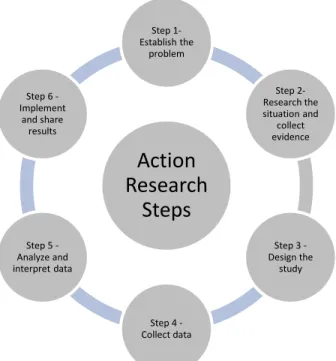
1 Action Research Steps ...55
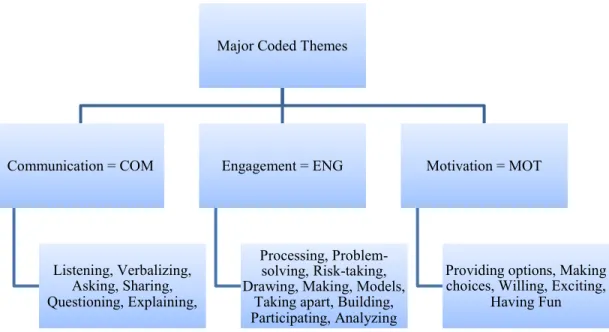
2 Major Coded Themes from Open-ended Teacher Questionnaire ...85
Chapter 1: Introduction
School libraries around the world are changing (Fleming, 2015; Kuhlthau, 2010).
“Global interconnectedness enabled by information technology calls for new skills,
knowledge, and ways of learning to prepare students for living and working in the 21st
century” (Kuhlthau, 2010, p. 1). According to Robinson and Aronica (2015), many
conventional aspects of schooling have been rethought and repurposed. One of the most conventional parts of many schools has been the traditional library. Through the years, some schools have renamed these spaces as media centers to include technology and other resources beyond printed books. Increased access to digital media through technology has been a driving change in the function and use of the school library. Increasing numbers of electronic books and other digital media have lessened the need for brick and mortar spaces as storehouses for books (Stanley, 2011). There are now new purposes for common areas in schools such as libraries, media centers, cafeterias,
atriums, and foyers. These areas are now being used to meet the creative needs of students in the 21st century (Fleming, 2015; Stanley, 2011). As part of the change in the purpose and use of media centers, makerspaces have been appearing in schools across the United States (Canino-Fluit, 2014; Fleming, 2015; Hlubinka et al. 2013; Maker Media, 2016).
Background
Makerspaces and the Maker Movement. The researcher explored the impact of
spaces within educational settings known as makerspaces. The people using the spaces have been referred to as makers. Makerspaces in schools are spaces where students have opportunities to explore, build, make, use tools, and develop creative projects (Fleming, 2015). Projects range from simple to complex. Some makerspaces involve highly
technological machinery and equipment, while other spaces provide everyday items such as crayons, cardboard, and masking tape. Makerspaces first began gaining notoriety around 2006 (Canino-Fluit, 2014; Martinez & Stager, 2013). They began as part of a larger phenomenon in our society known as the Maker Movement. It was about this time when school media coordinators and librarians began noticing the trend and started implementing makerspaces in school settings (Canino-Fluit, 2014). The purpose of this study focused on a makerspace within an elementary school media center. To begin, it is important to understand the broader context of makerspaces to have a better
understanding of the implications of this work.
Makerspace interest grew out of what has been called the Maker Movement (Maker Media, 2016). Several key events led to thousands of makerspaces emerging in public and private spaces throughout the United States (Fleming, 2015). In 2006, Maker Media began as a global networking site created to connect all kinds of makers with each
other to provide support. According to their website, “Maker Media serves a growing
community of makers who bring a DIY mindset to technology. Whether as hobbyists or professionals, makers are creative, resourceful, and curious, developing projects that
demonstrate how they can interact with the world around them” (Maker Media, 2016,
para. 1). Around this same time, Maker Media began publishing Make Magazine which
has become an important communication tool for the movement. In 2006, the first Maker Faire was said to spark the worldwide Maker Movement which continues to influence innovation and education (Maker Media, 2016).
In 2009, the movement was recognized when President Obama launched the Educate to Innovate Initiative. Through focus on science, technology, engineering, and
child, a maker” became the slogan of the president in terms of this initiative (The White
House, 2016, para. 1). The focus of this program was to encourage young people and adults to design and build on their own (The White House, 2016).
The momentum of the Maker Movement found its way into both public and private entities. Many businesses, libraries, museums, community centers, churches, and schools all over the United States have gotten involved with makerspaces (Peppler & Bender, 2013). The movement emphasized several key ideas. First, it helped individuals to hone skills that are important for survival in the future: creativity, innovation, problem solving, and collaboration (Peppler & Bender, 2013). It has also provided opportunities for learning and self-expression within a community environment (Bevan, Gutwill, Petrich, & Wilkinson, 2014). Additionally, the Maker Movement facilitated the
development of important technical, artistic, and mechanical skills needed for the future workforce of our nation (Tierney, 2015).
Maker Faires are events associated with the Maker Movement. These are gatherings of makers in festivals or conventions held to showcase the creations of the
participants. Make Magazine sponsors and hosts these regularly across the country
(Hlubinka et al., 2013). In 2012, a Maker Faire was held in San Mateo, California with about 120,000 participants. Mini-Maker Faires are held in smaller communities, while larger cities host bigger events. These smaller Maker Faires have also grown (Hlubinka et al., 2013). The projects at a Maker Faire vary widely in scale and scope. President Obama supported such endeavors. During the launch of his Educate to Innovate
campaign to improve STEM education, the president spoke of his support. Kalil (2012)
cited the President’s words:
science and engineering, whether it's science festivals, robotics competitions, fairs
that encourage young people to create and build and invent—to be makers of
things, not just consumers of things. (para. 4)
The role of creativity. Makerspaces are places where creativity can be explored by giving makers opportunities to express their ideas in a hands-on fashion as he or she makes things (Bowler, 2014). To provide opportunities for the nurturance and
development of students’ creative potential, spaces for open-ended exploration may play a key role. School libraries and media centers have become places where opportunities for creative expression happen. The opportunity to develop creative potential is
important because creativity as a personal attribute has become a desirable and lucrative characteristic (Florida, 2007). Creativity has become an economic commodity in the 21st century (Benton, Mullins, Shelley, & Dempsey, 2013; Florida, 2007). Business, industry, and society in general need creative thinkers to face challenges and opportunities of the future (Florida, 2007). The rise of the creative class in the 21st century refers to those people in society who make their living through endeavors that involve creative energy (Florida, 2007). The age of knowledge and information for which schools have tried to prepare students has rapidly turned into an age of new conceptualization and creativity (Pink, 2006). If we follow the trends of recent years, it is possible many of the jobs our children will have in the future do not even exist yet. Technological knowledge has exploded exponentially during the past several decades, and creative thinkers are needed to know what to do with it (Pink, 2006). With the increased demand for creativity in our society, it is important for educators to understand exactly what creativity is and how it impacts our students. Makerspaces relate to this because these are potential places in schools for creativity to be nurtured.
Statement of the Problem
The United States educational system is faced with the problem of preparing students for a future of great uncertainty. Cornish (2004) referred to this uncertainty as
“The Great Transformation” (p. 9). Cornish wrote,
We begin to sense the existence of the Great Transformation as we notice the rapid changes in our lives: new technologies, new buildings, and new lifestyles. It is not simply that human life is changing, but that it is changing extremely fast. (p. 10)
Technology, the economy, and social institutions have experienced this rapid change phenomenon; and it has influenced all aspects of life, especially how people live and work (Cornish, 2014). The economic stability of the United States depends on entrepreneurial innovation (Benton et al., 2013; Cox, 2009; Ross, 2016). Studies reported by Benton et al. (2013) found that the United States ranked behind other countries in several areas including global innovation-based competitiveness.
Robinson and Aronica (2015) noted the problem in education related to this is the fact that public education reflects an industrial model that is far outdated.
The issue in a nutshell is this: most of the developed countries did not have mass systems of public education much before the middle of the nineteenth century. These systems were developed in large part to meet the labor needs of the
Industrial Revolution and they are organized on the principles of mass production. The standards movement is allegedly focused on making these systems more efficient and accountable. The problem is that these systems are inherently unsuited to the wholly different circumstances of the twenty-first century. (Robinson & Aronica, 2015, p. xxiii)
Since 1965, the population of the world has doubled to more than seven billion, and the numbers are rising. As this has happened, the amounts of technologies and means of communication have also risen. According to Robinson and Aronica (2015),
this is only the beginning. “The old systems of education were not designed with this
world in mind. Improving them by rising to conventional standards will not meet the
challenges we now face” (Robinson & Aronica, 2015, p. xxiii).
A study by Lichtenstein, Lyons, and Kutzhanova (2004) noted seeking innovation is of critical importance for the sustainability of our society. This study looked at the trends of economic growth and development in communities nationwide. Enabling innovation starts by supporting its development among our youngest students (Benton et al., 2013). Makerspaces may be places where innovations can begin, because they are places where makers can be creative and try new ideas.
Teachers have always known that to be successful, they must meet the needs of students regardless of their background. This includes student needs to express
creativity. Not only is it important to understand where students come from but also to have a clear vision of how they can succeed in the future (Robinson & Aronica, 2015). In the era in which we live, this has not always been clear. Teaching practices are needed that encourage creativity and innovative thinking to prepare students for the future. Teachers and students must look toward trying new things to facilitate rich
conceptualization and creativity (Pink, 2006).
One of the ways creativity can be nurtured is by giving it an opportunity to grow. This includes giving it space and opportunity in an environment where teachers and students can do the work of creating (Robinson & Aronica, 2015). The Maker Movement has grown out of this need to give makers a platform for creating (Maker Media, 2016).
This also applies to learners in the educational environment (Fleming, 2015).
Makerspaces in schools have been born as places where students can go to create, build, make, and develop their own creative ideas into actual products (Fleming, 2015). Making at school is about helping students to identify the problems they want to solve and the things they want to create related to their own inquiry. Makerspaces are more
than just crafting corners. “By providing students with space and resources and inviting them to experiment, we can empower them to think of themselves as something other
than consumers” (Canino-Fluit, 2014, p. 22).
Another very important aspect of makerspaces is the collaborative effect making with others has on the learning process. Students learn from each other in sharing ideas and tools (Britton, 2012). In addition to creativity, collaboration is a critical skill for 21st century learners (Partnership for 21st Century Learning, 2016). Makerspaces give
students the opportunity to work with others. Together, alongside others, students work on creative endeavors in an environment where collaboration is encouraged (Britton, 2012). When students have problems they cannot solve themselves, others in the makerspace may share ideas and give suggestions. Students can work in community to solve problems that are of interest to them. This process can be very motivational and drive inquiry-based learning (Educause, 2013).
Makerspaces can be places where inquiry-based learning can occur and can be fueled by creativity. Kuhlthau (2010) discussed the importance of inquiry in school
media centers. This connects to the problem this researcher investigated. “Educators
around the world are seeking ways to prepare students for living and working in the
changing information environment of the 21st century” (Kuhlthau 2010, p. 2). Kuhlthau
preparation of students for living and working in this new complex environment. The
role of the media coordinator is to facilitate “new ways of learning” (Kuhlthau, 2010, p.
2). Media coordinators can guide students through the inquiry process into much deeper and more meaningful kinds of learning to engage, motivate, and challenge students (Kuhlthau, 2010). Makerspaces are an avenue for increasing the opportunities for both creativity and inquiry. This is because students solving creative problems can be guided by the media coordinator or other teachers toward research and reference material that support student exploration and acquiring new knowledge (Weisgrau, 2015). Curiosity along with creativity may lead to new discoveries and innovations. The key issue involved in this research is whether makerspaces help students to be more creative.
Purpose of the Study
The purpose of the study was to gauge the impact makerspaces had on the development of creativity in elementary school students. Creativity has been identified as one of the key learning skills needed for students to be successful in the 21st century (Partnership for 21st Century Learning, 2016). According to Robinson and Aronica (2015), schools need to help students cultivate their creativity to sustain a future that is economically sound and environmentally sustainable. Makerspaces may inspire students
to pursue their own creative aspirations. “Innovation is fundamentally an inspired activity, and the right environment has the potential to inspire new thoughts and
endeavors” (Kurti, Kurti, & Fleming, 2014, p. 8). This study was aimed at determining if a makerspace in an elementary school media center could provide the opportunities and resources for students to work in such a way that their ability to think creatively is enhanced.
Significance of the Study
Makerspaces is a growing phenomenon in the United States. Schools have embraced the model because of the potential there is for encouraging creativity in
students (Bevan, Petrich, & Wilkinson, 2014). According to Bevan, Petrich et al. (2014), Maker activities may come across as playful, even slightly wacky, explosions of inventiveness. But in education contexts like schools, museums, libraries, and after-school programs, research shows that if the invitation to creativity is accompanied by intentional structure and guidance, maker activities can be channeled to support deep student learning. (p. 28)
Makerspaces are different from traditional arts and crafts or vocational programs because the projects are driven by student interest and motivation within a community of makers (Bevan, Petrich et al., 2014). Makers is the term given to the individuals who are focused on making things (Hlubinka et al., 2013). The focus is on producing things rather than consuming things (Hlubinka et al., 2013). Quite often, making involves recycling or upcycling of materials once considered trash; therefore, it can have a positive
environmental effect as well (Hlubinka et al., 2013).
Makers are encouraged to follow their own inquiry toward developing ideas that solve problems (Bevan, Petrich et al., 2014). Making is also done in a community. Students work on their ideas in a setting where other makers are present (Hlubinka et al., 2013). At times, the students may call on their peers for help, ideas, or suggestions. In turn, they may offer their ideas to classmates. The Partnership for 21st Century Learning (2016) recognized communication, collaboration, and critical thinking in addition to creativity as important skills all students should cultivate. Makerspaces are settings that facilitate these skills (Hlubinka et al., 2013). For the purpose of this study, the research
focused on creativity as a 21st century skill by investigating whether makerspaces increase creativity potential.
Research Questions
To determine if makerspaces had an impact on student creativity, the researcher conducted a mixed-methods action research study. The researcher is a media coordinator in an elementary school where makerspaces were implemented prior to the study. The following questions enabled the researcher to collect both quantitative and qualitative data.
1. To what extent does student exposure to makerspaces in an elementary school
media center have an impact on student scores on the Torrance Test of Creative Thinking (TTCT)?
2. To what extent is there an association between student scores on the TTCT
and teacher ratings of creativity on the Scales for Rating the Behavior Characteristics of Superior Students (SRBCSS)?
3. What are teacher perceptions of student creativity after student exposure to
makerspaces in an elementary school media center?
Theoretical Framework
Makerspaces can be examined through a constructionist framework.
Constructionism is a theory related to constructivism (Ackermann, n.d.). Constructivism is associated with the work of Jean Piaget and deals with the development of knowledge
within an individual (Hruby, 2001). Piaget’s theory focused on how learning happens as
knowledge is constructed over time through stages (Ackermann, n.d.). According to constructivist theory, the learning process happens within the individual. Constructionist theory differs in that it is something that happens through social construction (Hruby,
2001). The focus is on physically making something to construct learning through a building process (Ackermann, n.d.). Seymour Papert is often associated with the ideas of constructionism. Papert is known for his work with designing technological systems for children during the 1970s and 1980s (Blikstein, 2013). He expanded the ideas of Piaget to use technology as a platform for invention (Blikstein, 2013). Logo is the system of programming that he developed which has enabled children to program and control tangible objects such as Lego building blocks (Blikstein, 2013).
Assumptions
The assumptions in this study were related to the elements of the school environment and learning situations which were considered likely to occur (Simon, 2011). The participants in the study were exposed to makerspaces in the school media center twice per week for the duration of 12 weeks. It was assumed that students enrolled in the fifth grade would be present at school and take part in the activities available in the makerspaces each week. It was also assumed the teachers of these students would be truthful in their qualitative feedback measuring their perceptions of student creativity. The activities the students participated in were part of the regularly planned curriculum.
Limitations
Limitations were conditions which were out of the control of the researcher with the potential to influence the outcome of the study (Simon, 2011). One limitation of the study is the element of time (Simon, 2011). The duration of the study was 12 weeks.
The time was set to coincide with the fifth graders’ access to the media center where they
had access to the makerspaces. In addition to the weekly scheduled visit to the media center, students had one additional time scheduled weekly to address the issue of adequate exposure to the treatment of the makerspaces.
Another limitation of the study is the amount of materials available for the makerspaces. Makerspaces require resources. To address this limitation, a grant was written and awarded to fund materials for the makerspaces. This included Lego robotics kits, and littleBits magnetic circuitry devices as well as arts and paper materials for building and construction projects.
Delimitations
Delimitationsare those factors that limit the scope and define the boundaries
of the research study over which the researcher has some control (Simon, 2011). The delimiting factors of this action research study include the population which consists of 70 fifth-grade students from five classrooms within an elementary school. These students were selected because of their level of understanding and because research has shown that this age group often displays a slump in creative behavior (Runco, 2007). This population is also a convenience sample because they were students of the researcher already scheduled to use the media center for makerspaces. The makerspace at this school was made of materials for design and building activities including technology resources. These areas were within the school media center and under the direction of the media coordinator (also the researcher).
Deficiencies in the Literature
Makerspaces are a relatively new endeavor for most schools and therefore formal research studies related to the topic in elementary education was sparse. There are many articles and reviews of how makerspaces can be implemented which describe how they have been created and how they operate; however, data regarding the effectiveness of makerspaces was difficult to find. There is also a wealth of descriptive literature designed for media coordinators and others involved in implementing makerspaces, but
evaluative data regarding impact were not readily found.
The researcher did discover a qualitative study which investigated the
competencies of those involved in implementing makerspaces. The findings of this study included the top 10 competencies for professionals (such as librarians and media
coordinators) who oversee facilitating the spaces. These included people, management, and technology skills as well as implications for library professionals (Koh & Abbas, 2015). Although this study was related to media coordinators, it did not address the impact on student creativity directly.
Another qualitative study by Sheridan et al. (2014) compared three makerspaces. These makerspaces all served adults, and none were in school settings. One of the settings was a commercial business makerspace. The other two were based in a
community center and a museum. This study sought to compare the environments of the spaces in terms of tools, usage, and opportunities (Sheridan et al, 2014).
Although the role of creativity in makerspaces has been discussed in the research, data regarding whether makerspaces enhanced creativity was not discovered by the researcher. Along these lines, another piece missing in the literature is research dealing with the fidelity of implementation of makerspaces. There is no single model or
methodology for starting a makerspace and evaluating the effectiveness. Definitions of makerspaces are varied and range in complexity depending on the context and situation. This is because makerspaces in themselves are meant to be open-ended. Their purpose is to promote creativity. Tight definitions, standards, and guidelines are contrary to the concept of makerspaces (Cooper, 2013).
Finding literature related to creativity was far less challenging. There was a wealth of information related to creativity focused on definitions and the theories
surrounding it. It was also quite easy to find information on creativity programs and strategies for promoting creative thinking. There were assessments available to gauge creativity in individuals discussed in the literature. Most of the creativity assessment research is geared toward the perceptions of creativity. One of the most well-known studies is one by Paul Torrance who studied the progress of students for over a 40-year period based on the results of his test of creative potential. The longitudinal study proved the test to be highly valid (Cramond, Matthews-Morgan, Bandalos, & Zuo, 2005).
Runco (2007) discussed the great number of studies that have attempted to show the results of creativity training or programs to increase creativity. According to Runco,
“There have been so many studies of the enhancement of creativity that meta-analyses
have also been conducted” (p. 369). One of these studies by Rose and Lin (1984) investigated programs that used the Torrance test to measure effectiveness. They found most improvement efforts could be grouped into one of six categories: Parnes-Osborn
Creative Problem-Solving Programs (or adaptions); Covington’s Productive Thinking
Program; The Purdue Creative Thinking Program; multiple-components programs; school programs; and kinesthetic, dramatic or transcendental meditation efforts. The study showed that the most effective program to be the Parnes-Osborn program (Rose & Lin, 1984). The Parnes-Osborn model is a creative problem-solving model developed in 1960 by Osborn who is known for originating the process of brainstorming. The model was later refined by Parnes and several others to what it is today (Rose & Lin, 1984). Of all the programs studied, “The most dramatic effects were apparent in the Parnes-Osborn
program (eta=.63)” (Runco, 2007, p. 369). Rose and Lin (1984) concluded the other
programs reviewed had more moderate effects. Overall, it was concluded from the meta-analysis that creativity can be both innate within an individual and nurtured through
enhancement techniques (Rose & Lin, 1984).
Audience
The audience for this study includes educators interested in creativity and how it applies to teaching and learning. The action research is especially relevant to librarians and media coordinators who may wish to implement makerspaces in the media centers where they work. Teachers wishing to teach students how to be more creative may also pick up on ideas that could be applicable in classroom settings as well. Administrators and supervisors may also be interested in the results of the study to determine whether makerspaces are worthy of support. These leaders as well as others in positions of power would be interested in the results of the study to determine whether money should be allocated for resources, materials, and supplies for the implementation of makerspaces. Organizations and individuals who provide grant money may be interested in the impact of makerspaces on student creative learning when considering funding for such
endeavors.
Research Design
The research design used for this study was an embedded mixed-methods action research model. Specifically, the design was a convergent, embedded mixed-methods model. The students involved in the study consisted of 70 fifth-grade students who attended a Title 1 public elementary school in North Carolina. The students were exposed to the treatment of makerspaces in the school media center twice weekly for 12 weeks. The population consisted of students at the school where the researcher worked as the media coordinator.
The quantitative information included analysis of a pre and postadministration of the TTCT to heterogeneous groups of fifth graders. These data were analyzed using a
paired sample t test to look at relationships between the independent and dependent variables. Students were given a pretest prior to their experience with makerspaces and then a posttest after the experience. The second part of the study also considered
quantitative data contributed by teachers through a creativity rating scale on each of their students. The instrument used was the SRBCSS. This is a Likert-like rating scale that looks specifically at creativity as one of the distinguishing characteristics of the students.
A Pearson’s R test was used to analyze whether there is an association between the TTCT scores and the SRBCSS ratings.
The third data point was qualitative. The same teachers were given an open-ended questionnaire to probe their perceptions of student creativity in a narrative format. These qualitative data were intended to inform how makerspaces influenced the students
and if there were other factors teachers felt influenced their students’ creativity. The
questionnaire was piloted with third-grade teachers in the same school to establish reliability and validity prior to beginning the study. The data were analyzed to look for trends and patterns in response to support or refute the quantifiable results.
Definitions of Terms
Convergent thinking. Convergent thinking is characterized by conventional
paths of thought (Runco, 2007). “Convergent thinking questions always have one (or
very few) correct or conventional answers” (Runco, 2007, p. 4).
Creative capital. Creative capital refers to the resources and abilities an
individual possesses which enable him or her to gain benefit (Brecknock, 2003; Florida, 2007; Robinson & Stern, 1998).
Creative class. The term for a social class composed of individuals who use and/or depend on creativity to prosper economically (Brecknock, 2003; Florida, 2007;
Robinson & Stern, 1998).
Creativity. Researchers have focused on creativity primarily in two ways:
creativity as a function of human intelligence or creativity as its own construct (Kaufman, 2009). Most creativity definitions include mention of creativity as something that is new and something that is useful or relevant (Kaufman, 2009). Researchers including Runco, Jaeger, and Stein would assert that creativity is the creation of something that is novel and of value (Weisberg, 2015). Robinson and Aronica (2015) defined creativity in a
similar way and added the importance of imagination and innovation. “Imagination is the
root of creativity. It is the ability to bring to mind things that aren’t present in our senses.
Creativity is putting your imagination to work. It is applied imagination. Innovation is
putting new ideas into practice” (Robinson & Aronica, 2015, p. 118). Creativity is also
thought to deal with divergent thinking (Antonenko & Thompson, 2011), but divergent thinking alone does not necessarily define creativity (Kaufman, 2009). Guildford and Torrance focused on describing creativity as having the following four components involved: fluency, flexibility, originality and elaboration (Kaufman, 2009).
Divergent thinking. “Divergent thinking is the intellectual ability to think of
many original, diverse, and elaborate ideas; while convergent thinking includes skills to
logically evaluate, critique and choose the best idea from a selection of ideas”
(Antonenko & Thompson, 2011, p. 205).
DIYer. An individual who is motivated to “do-it-yourself” in terms of making,
building, and/or creating things (Bajarin, 2014).
Elaboration. “…ability to develop, embroider, embellish, carry out, or otherwise elaborate ideas…” (Torrance, 2008, p. 48).
created using technology tools, machinery, and raw materials. The Fab Lab at the
Massachusetts Institute of Technology (MIT) is known to be “comprised of off-the-shelf,
industrial-grade fabrication and electronics tools, wrapped in open source software and
programs” (Fab Foundation, 2016, para. 2).
Flexibility. Refers to the number of different categories of ideas (Runco, 2007; Torrance, 1974).
Fluency. The number of ideas posed (Runco, 2007; Torrance, 1974).
Innovation. Robinson and Aronica (2015) defined innovation as putting new
ideas into practice.
Inquiry. The inquiry-based learning approach originated in the sciences based around the development and testing of hypotheses. Inquiry is the development of meaningful questions by students that guide their learning processes (Coffman, 2013).
Lego Education. Lego Education is a division of the Lego company specializing
in providing learning experiences through the popular toy building blocks. The content of Lego Education is focused on STEM as well as literacy and humanities topics. The resources are designed to provide hands-on, manipulative experiences that inspire children to create, reason, and invent. Digitalization is also part of the program as there are software applications that enable the Legos to move, make noise, and do things (Lego Education, 2013).
littleBits.“littleBits is a platform of easy-to-use electronic building blocks that empower you to invent anything, from your own remote controlled car, to a smart home
device. The bitssnap together with magnets, no soldering, no wiring, no programming
needed” (Sansing, 2015, p. 10).
promote and support arts, crafts, engineering, and science projects (Maker Media, 2016). Maker Faires operate on both large and small scale. These events showcase projects by makers. The projects emphasize creativity and innovation and are reflective of the energy behind the Maker Movement (Hlubinka, et al., 2013).
Maker. Individuals who have a certain mindset geared toward making things.
“Makers believe that if you can imagine it, you can make it” (Hlubinka et al., 2013, p. 2). Makers see themselves as more of creators than consumers (Hlubinka et al., 2013).
Makers seek out opportunities to learn to do new things, especially through hands-on, do-it-yourself (DIY) interactions . . . Makers comprise a community of creative and technical people that help one another do better. They are open, inclusive, encouraging and generous in spirit. Makers are generally not in it for
the money. This isn’t about filing patents or making a profit. At the same time,
(makers are) not anti-commercial— Makers sometimes start businesses . . .
makers celebrate other makers — what they make, how they make it and the
enthusiasm and passion that drives them. (Hlubinka et al., 2013, p. 2)
Maker Movement. Refers to a direction in American society where people are
inspired to create and invent. The movement is towards encouraging people to be more
of producers than consumers. Creativity is encouraged and processes for making new
things are valued (Hlubinka et al., 2013).
Makerspaces. Spaces within buildings where students can come to work on
creating with the indirect guidance of a professional (Canino-Fluit, 2014). “A
makerspace is a physical location where people gather to share resources and knowledge,
work on projects, network, and build” (Educause, 2013, para. 5). “Makerspaces come in
expertise. A collection of tools does not define a Makerspace. Rather, we define it by
what it enables: making” (Hlubinka et al., 2013, p. 1).
Media coordinator. A library education professional working in a school library media center whose duties include supervising and/or managing the collection, teaching students, and maintaining technology assets (Ballard, 2016).
Originality. The number of unique ideas that have not been posed before (Runco, 2007; Torrance, 1974).
SRBCSS. Also known as The Renzulli Scales, this is a battery of statements
designed to rank a teacher’s perception of certain behavioral characteristics including
creativity (Renzulli et al., 2010).
School library media center. The school library media center is a common area within a school setting where students come to do research, leisure reading, and
participate in classes designed to enhance literacy and inquiry-based practices. Another term for media center is library.
STEM education. An acronym for the movement in education emphasizing
science, technology, engineering, and mathematics to increase the global competitiveness of students in the United States (Bailey, 2005; Guyotte, Sochacka, Costantino, Waither, & Kellam, 2014).
STEAM education. In addition to STEM subjects as a focus, art educational
practices are also included in the acronym (Claymier, 2014; Erikson, 2013; Guyotte et al., 2014; Padovan, 2015).
Tinkering. “Tinkering is a branch of making that emphasizes creative,
improvisational problem solving. It centers on the open-ended design and construction of
al., 2014, p. 99).
TTCT. Well-known and widely used test of creativity. It was developed by Ellis Paul Torrance and focuses on four key characteristics to rank creativity within an
individual: fluency, flexibility, originality, and elaboration (Runco, 2007).
Summary
Chapter 1 was an overview of the study. It began with background information on makerspaces and the Maker Movement, because these are relatively new topics in the field of education. The problem involved in this study dealt with how creativity could be promoted in students, because this is a skill that research has identified as important for future success in the 21st century (Partnership for 21st Century Learning, 2016; Robinson & Aronica, 2015). The purpose of the study was to investigate whether makerspaces could enhance student creativity. The research questions were stated related to this followed by the assumptions, limitations, and delimitations associated with the study. Deficiencies in the literature as well as definitions of key terms were also presented in this chapter.
Many of the key ideas presented in the research will be discussed in the following literature review (Chapter 2). The subject of creativity in educational settings is
extremely broad; therefore, the researcher focused on the importance of understanding creativity as it applies to 21st century learning situations (Partnership for 21st Century Learning, 2016). The teaching of creativity is also discussed as it applies to the
implementation of makerspaces (Fleming, 2015; Sternberg, 1995). Measuring creativity was also of interest to the researcher for assessing the impact of makerspaces in an elementary school media center through action research. The role of the media
center’s makerspaces. Finally, the literature review examines the theoretical frameworks related to makerspaces. The researcher discusses how constructionist theory aligns with the basic goals of learning by making (Papert & Harel, 1991).
Following Chapter 2, Chapter 3 explains the mixed method action research approach. The methodology describes the participants including the demographics of the population sample. Procedures are outlined indicating the sequence of the activities, the way the study was conducted, the research design, the rationale for the methods, and justification of the appropriateness of the methods. The instruments used are cited and described. The limitations of the study are presented including possible threats to validity and reliability. In addition, the delimitations are also included. The researcher analyzes and reports the results in Chapter 4. Chapter 5 focuses on conclusions, discussion, and recommendations from the researcher.
Chapter 2: Literature Review Introduction
The literature review focused on research towards understanding the use of makerspaces in a school media center as a means of enhancing creative potential in students. The problem investigated how to develop creative potential in elementary school students to prepare them for their futures. The purpose of the study was to gauge the impact makerspaces had on the development of creativity in elementary school students. This action research study was a mixed-methods procedure. The study analyzed student performances on a test of divergent thinking (TTCT) and teacher perceptions of student creativity levels as evidenced on the Scales for Rating the Behavior of Superior Students (SRBSS). A qualitative questionnaire was given to the teachers of the students in the study to describe exposure to makerspaces in an
elementary school library. The first section of the literature review focuses on creativity through the lens of education; the second section focuses on makerspaces; and the third section focuses on constructionist theory as it is applied to creativity and makerspaces.
Creativity in Education
Creativity and 21st century education. Florida (2007) discussed the emergence
of a new class within American society. The creative class is known as a movement of people from all over the world working in careers which require creativity (Brecknock, 2003; Florida, 2007; Runco, 2007). Florida (2007) estimated that the population of the creative class in the United States was equal to about 30% of the workforce. During the last several decades, new fields and careers have emerged because of creative endeavors.
“The resulting evidence of the links between creative capital, quality of life, and
be considered particularly in regard to city viability” (Brecknock, 2003, para. 1). With this in mind, it is important for educators to consider how to promote practices which may encourage the development of creativity within students (Robinson & Aronica, 2015).
The predominant model of education in the United States is considered outdated by many in the educational field (Pink, 2006; Robinson & Aronica, 2015). According to Robinson and Aronica (2015), the model of schooling still used in many places today was designed over 100 years ago to meet the demands of the Industrial Revolution. The factory model used during this time focused on systems of efficiency for mass
production. Neat and orderly rows in classrooms reflected the model factories set up for automation and efficiency. These educational models are long outdated, do not address the needs of our world now, and must be changed (Robinson & Aronica, 2015).
The answers to the uncertainty and challenges society faces lie in the cultivation of creativity (Robinson & Aronica 2015; Wagner, 2006). This must be taken seriously and with a sense of great purpose for educators because the challenges students face are becoming more complex (Robinson & Aronica, 2015). In the United States, the
Partnership for 21st Century Learning (2016) proposed what are considered to be
important skills for students to possess to be successful in meeting such challenges. The Partnership was established in 2002 and represents many business and educational organizations such as Dell, Apple, Microsoft, and the National Education Association
(NEA; Formanack, 2008; Robinson & Aronica, 2015). “The Partnership believes schools
must go beyond basic competency by weaving in 21st century interdisciplinary themes
that are critical to success but not typically emphasized in schools today” (Formanack,
encourages educators to integrate them into classroom practices. The Four Cs are critical thinking, communication, collaboration, and creativity (Formanack, 2008; Partnership for 21st Century Learning, 2016).
Creativity is one of the Four Cs educators find most challenging to address (Partnership for 21st Century Learning, 2016). This is no doubt because of the different contexts in which creativity can be defined (Plucker, Begehtto, & Dow, 2004). For the purposes of education, creativity is a skill students should cultivate to address the challenges of problem finding, problem solving, divergent thinking, and the creation of new ideas and products (Runco, 2007). The challenge in promoting the development of creativity in schools comes in the fact that it is a difficult construct about which to find consensus (Partnership for 21st Century Learning, 2016).
Understanding creativity. Creativity is challenging to define (Runco, 2007). Scholars suggest creativity involves the production of something original and useful (Robinson & Aronica, 2015; Runco, 2007). Children are considered creative, yet in a different sense than adults because their creativity does not always result in a product (Runco, 2007). Children are not bound by their past experiences, routines, or
expectations as adults sometimes are (Runco, 2007). The way creativity is expressed has a lot to do with why it is so hard to define (Runco, 2007). There is much diversity in how creativity is expressed, and it can play a role in all aspects of life from business,
education, arts, and sciences to everyday common endeavors that require problem solving (Runco, 2007).
There is also great diversity in understanding how individuals acquire and grow in creativity. According to Runco (2007), all individuals have creative potential but not everyone demonstrates creativity. Potential depends on both our natural tendencies and
our environment (Runco, 2007).
Each of us has potentials to fulfill, but the range of potentials varies from individual to individual. That, again is the contribution of biology, genes, and nurture. This same biological contribution is apparent in the trends and stages of development. (Runco, 2007, p. 40-41)
One interesting trend in development of creativity has been identified in the literature as
the “fourth grade slump” (Torrance, 1967, p. 3). According to theories of stage development from Piaget and Kohlberg, children begin to follow the conventions of culture beginning around age eight or nine (Runco, 2007). Torrance (1967) identified this as a time when students begin to be less creative in their language and reasoning to
fit the norms and expectations of their parents and teachers. “The conventional child is a
conformist in the sense that he or she follows social expectations and imitates typical
behaviors of his or her peers. This inhibits self-expression and creativity” (Runco, 2007,
p. 41). Runco stated that certain types of creative thinking require strategies that go beyond conventional thinking such as those of scientists making new discoveries. Independent thinking beyond normal expectations help to form creative ideas (Runco, 2007).
Creativity is also linked to student motivation according to Buchanan, Harlan, Bruce, and Edwards (2016). Students who have more freedom to explore their own
learning interests tend to be more motivated and open to new ideas. “Student motivation
is linked to the students perceived value or meaning in the academic work at hand. It is connected to student interest specifically where interest carries both affective and
cognitive components” (Buchanan et al., 2016, p. 29). Motivation is also a key part of
generally more engaged in learning (Buchanan et al., 2016).
Henriksen and Mishra (2014) discussed some of the challenges in understanding where creative ideas come from. The writers noted myths related to creativity:
“Creativity has often been thought of as an elusive and mystical force – emerging from
burst of insight available only to certain fortunate individuals” (Henriksen & Mishra,
2014, p. 15). Henriksen and Mishra disputed this myth and noted creativity deals with the way individuals see old or known things in a new way. Background knowledge is therefore essential to the building of creative ideas through variations of prior schema depicted in new and novel ways (Henriksen & Mishra. 2014). Henriksen and Mishra noted it is the job of educators to help students build upon their prior experiences and broaden their perspectives so they can develop new and novel ideas.
Creativity is also differently expressed depending on the culture from which it originates (Runco, 2007). Because there is great variation in how it is expressed, creative potential is also hard to define (Florida, 2007; Runco, 2007). Creativity is a form of human capital that when tapped into has great potential for many situations (Runco, 2007). Runco (2007) suggested study of creativity is extremely difficult because the creative process is multifaceted and requires an eclectic approach to understand it.
In opposition to claims that creativity is difficult to define, Cropley (2000) disagreed. He stated it is not hard to define because such a great deal of research has been done on the subject. This began with the historical address by J. P. Guildford to the American Psychological Association in 1950 where he spoke of the need for the study of creativity (Cropley, 2000). Cropley posed a working definition of creativity as an
interaction between aptitude and process in an environment where a product is produced that is considered both novel and useful. This aligns with the Robinson and Aronica
(2015) definition that creativity brings forth something of value. Cropley’s point for educators was how the theoretical understandings of creativity are applied in school settings.
Cropley’s (2000) definition was not unlike the definitions given by other researchers on the subject (Robinson & Aronica 2015: Runco, 2007; Sternberg, 2006). Henry (2009) looked at definitions of creativity and the importance of understanding
them before applying them in educational settings. Henry cited Bailin who said, “if we
are not clear about what is meant by creativity, we may end up sacrificing creativity
precisely in the process for trying to foster it” (p. 1). Henry went on to describe how creativity has been defined through the years from four perspectives: the creative person, the creative process, the creative environment, and the creative product.
Four P approach to creativity. Rhodes (1961) was the first to describe the Four P approach to understanding creativity. Rhodes referred to creativity as evidenced
through the personality and refers to “intellect, temperament, physique, traits, habits,
attitudes, self-concept, value systems, defense mechanisms and behavior” (p. 306).
Process applies to “motivation, perception, learning, thinking, and communication”
(Rhodes, 1961, p. 307). Rhodes used the word “press” to represent environment and
described creativity relating to it through the relationship between human beings and the environment. The product of creativity is the item that is created; and according to Rhodes, it may be physical, tangible, or idea related.
According to Kaufman and Beghetto (2009), creative product is the most widely understood aspect of creativity probably because there is something concrete or tangible to evaluate. The product is what is yielded by the person through process and is
may not be considered creative due to the cultural context in which he or she is operating.
Four C approach to creativity. Kaufman and Baghetto (2009) discussed the 4C
model of creativity that goes beyond what has been referred to as Big-C creativity and little-c creativity. Big-C creativity is the type of creativity considered groundbreaking within a field, while little-c creativity is that which is considered every day (Kaufman & Baghetto, 2009). Two additional forms of creativity added to this by Kaufman and Baghetto (2009) were mini-c creativity which is considered part of the learning process and Pro-c creativity which is considered to be at a professional level.
Teaching creativity. Sternberg (2006) believed students could be taught to think more creatively. Other researchers agreed with this premise (Berrett, 2013; Hirsch, 2010; Hunsaker, 2005; Lin, 2011; McWilliam & Dawson, 2008; Robinson & Aronica, 2015). The investment theory developed by Sternberg (1995) stated,
Creatively gifted people share characteristics, including certain styles of thinking motivation and the right environment. It is consistent, however, with many theories of creativity that teachers would do well to read. . . . Creative thinkers buy low and sell high. That is they propose ideas that are like undervalued stocks, ideas that are often summarily rejected by the public at large and viewed by others
as odd, counterproductive, or even foolish. Many people simply do not realize—
and often do not want to realize—that these ideas may be valid and perhaps
superior to the way they think. (p. 80)
Creativity is a balance of synthetic, analytic, and practical abilities; and educators need to think about all three as very important (Sternberg, 1995). Synthetic ability is the ability to synthesize new ideas and make connections not thought of before. Analytic ability is the analysis of ideas also known as critical thinking with an evaluative element.
Practical ability is the ability to realize abstract ideas in real world ways (Sternberg, 1995). Sternberg (1995) developed strategies related to his Investment Theory that educators might consider to promote creativity. Table 1 displays 12 strategies Sternberg presented to apply his theory to the classroom.
Table 1
Sternberg’s Investment Theory Strategies
1. Serve as a role model for creativity.
2. Encourage questioning of assumptions.
3. Allow mistakes.
4. Encourage sensible mistakes.
5. Design creative assignments and assessments.
6. Let students define problems themselves.
7. Reward creative ideas and products.
8. Allow time to think creatively.
9. Encourage tolerance of ambiguity.
10. Point out creative thinkers invariably face obstacles.
11. Be willing to grow.
12. Recognize that creative thinkers need to find nurturing environments
(Sternberg, 1995, pp. 81-84).
Measuring creativity. Pioneers in the field of measuring creativity include Guilford (Runco, 2007) and Torrance (Sternberg, 2006). Both were concerned with the measurement of divergent thinking (Runco, 2007; Sternberg, 2006). According to Runco (2007), J. P. Guildford was the president of the American Psychological Association and is known for his 1950 presidential address on the subject of creativity. He spoke of creativity as a natural resource and encouraged its development to help society. He spent 35 years studying it objectively; and much of his work is still influential in the field, especially related to convergent and divergent thinking. He posed that divergent thinking leads one to many different possibilities for solving a problem or finding an answer, while convergent thinking leads to one correct or accepted response. The numerous and
(the number of unusual or unique ideas), and flexibility (the number of different
categories implied by the ideas)” (Runco, 2007, p. 9).
E. Paul Torrance was a highly acclaimed developmental psychologist and one of the most recognized names in all of creativity research (Sternberg, 2006). He outlined creativity as a process where one has tried to solve problems by coming up with new solutions, testing them out, and then sharing the results (Millar & Dahl, 2011). He is
known for the development of the TTCT which is used to assess a person’s capacity for
creativity (Torrance, 1974). The test is considered highly reliable and is the most used test of its kind across the world (Scholastic Testing Services Testing, 2016).
Torrance (1974) focused on solutions through divergent thinking. According to Runco (2007), divergent thinking is not the same thing as creative thinking, but they are related because it tells us something about the processes a person may be going through
cognitively that lead to novel solutions and new ideas. “Divergent thinking tests are the
most commonly used estimate of the potential for creative thought” (Runco, 2007, p. 10).
According to Runco, it is convergent thinking that dominates most of the activities in traditional schools, meaning knowledge is valued based on one correct answer. This sharply differs from the kinds of divergent thinking Torrance saw value in and sought to measure through his instrument (Runco, 2007).
Creativity research. The nature of creativity and lack of consistent definitions have led many to seek to learn more about how it applies in educational settings. Numbers of researchers have studied creativity in very different ways (Kaufman, 2009;
Runco, 2007; Sternberg, 2006; Torrance, 1967; Weisberg, 2015). Paul Torrance’s
instrument, the TTCT, has become one of the most widely used instruments for measuring creativity in individuals (Scholastic Testing Services, 2016). The research
behind this instrument spans the scope of 4 decades (Dahl et al., 2011). Torrance
conducted a longitudinal study that began in the late 1950s and early 1960s. The students originally tested with his instrument for predicting creativity are still being studied (Dahl et al., 2011).
Beyond the Torrance test, others have also sought to study how to nurture and assess creativity in educational settings, but searching for studies on the assessment of creativity at the elementary school level proves to be challenging. A recent search yielded a study on the assessment of creativity in the United Kingdom in the field of art and design business. Penaluna and Penaluna (2009) explored the question of how to assess creativity in entrepreneurial learning at the postsecondary level. The findings of
this study were “an assessment of ideas generation, innovation, and opportunity
recognition are central to developing and learning entrepreneurial behaviors. There are clear parallels between the pedagogic approaches from design disciplines and the
learning outcomes advocated in generic curriculum development for entrepreneurship”
(Penaluna & Penaluna, 2009, p. 718).
A study of the effect of science activities used for fostering creativity in Turkish preschool children was another exploration of the issue (Mirzaie, Hamidi, & Anaraki, 2009). Much attention has been given to understanding the concept of creativity and less toward understanding how to assess it.
The classical and contemporary views of creativity differ with respect to the
nature of such aspects of creativity as ‘insight’ and with respect to the distribution
of a capacity for creative activity within the population. But there is little
disagreement between these views of creativity on the centrality of the generative processes of problem posing and problem solving in creative activity. (Mirzaie et
al., 2009, p. 82)
Mirzaie et al. (2009) noted researchers such as Torrance and Taylor both worked to develop ways to measure creativity; however, today many teachers assess creativity in a formative manner by monitoring work, discussion, and behaviors.
Makerspaces
Definitions of makerspaces. The Makerspace Playbook defines makerspaces as
“physical spaces for people, including kids, to work together and review their projects.
Making can happen anywhere—on a kitchen table or in a high-end Fab Lab, a living
room or a garage, a school or a community center” (Hlubinka et al., 2013, p. 11). Many variations of makerspaces have grown worldwide (Cooper, 2013). The variety of
makerspaces means there are no standard lists of equipment, activities, or designs for the spaces. The creative nature of makerspace entities means each makerspace can be as unique as the makers who use it. Makerspaces may resemble labs, art studios, or shop
classes but do not represent one type of space. “Diversity and cross-pollination of
activities are critical to the design, making and exploration process” (Cooper, 2013, p. 1).
Flexible design is the best design when it comes to makerspaces. This is because the
activities are constantly evolving. According to Cooper (2013), The Makerspace
Playbook and other makerspace groups list tools and materials that can be considered. As the popularity of makerspaces has grown so have the opportunities for companies to profit. Commercial makerspace kits can be purchased from several suppliers (Hlubinka et al., 2013). School budgets often do not have means to purchase commercial kits. Many rely on donations and recycling programs as primary sources of materials (Hlubinka et al., 2013).