Article
Structure and Sequence Analyses of Clustered
Protocadherins Reveal Antiparallel Interactions that
Mediate Homophilic Specificity
Graphical Abstract
Highlights
d
Clustered protocadherin EC1–3 fragments form antiparallel
complexes in crystals
d
A full extracellular cadherin repeat region model yields an
extended molecule
d
Isoform-specific conservation of interfaces explains strict
homophilic specificity
d
Evolutionary correlations provide support for antiparallel
arrangement
Authors
John M. Nicoludis, Sze-Yi Lau,
Charlotta P.I. Scha¨rfe,
Debora S. Marks, Wilhelm A. Weihofen,
Rachelle Gaudet
Correspondence
[email protected] (R.G.),
[email protected]
(W.A.W.)
In Brief
Nicoludis et al. determined the structures
of two clustered protocadherin fragments
and found they formed antiparallel
complexes. The authors provide a
scaffold for isoform-specific interfaces
and propose a full-length antiparallel
complex that is responsible for
homophilic
trans
interactions that
mediate self-avoidance during
synaptogenesis.
Accession Numbers
4ZI9
4ZI8
Nicoludis et al., 2015, Structure23, 2087–2098
November 3, 2015ª2015 Elsevier Ltd All rights reserved http://dx.doi.org/10.1016/j.str.2015.09.005
Structure
Article
Structure and Sequence Analyses of Clustered
Protocadherins Reveal Antiparallel Interactions
that Mediate Homophilic Specificity
John M. Nicoludis,1Sze-Yi Lau,2,5Charlotta P.I. Scha¨rfe,3,4Debora S. Marks,3Wilhelm A. Weihofen,2,6,* and Rachelle Gaudet2,*
1Department of Chemistry and Chemical Biology, Harvard University, 12 Oxford Street, Cambridge, MA 02138, USA 2Department of Molecular and Cellular Biology, Harvard University, 7 Divinity Avenue, Cambridge, MA 02138, USA 3Department of Systems Biology, Harvard Medical School, Boston, MA 02115, USA
4Applied Bioinformatics, Department of Computer Science, University of Tu¨bingen, Tu¨bingen 72076, Germany
5Present address: Singapore Immunology Network, Agency for Science, Technology and Research, Biopolis, Singapore 6Present address: Novartis Institutes for Biomedical Research, 250 Massachusetts Avenue, Cambridge, MA 02139, USA
*Correspondence:[email protected](R.G.),[email protected](W.A.W.) http://dx.doi.org/10.1016/j.str.2015.09.005
SUMMARY
Clustered protocadherin (Pcdh) proteins mediate
dendritic self-avoidance in neurons via specific
ho-mophilic interactions in their extracellular cadherin
(EC) domains. We determined crystal structures of
EC1–EC3, containing the homophilic
specificity-determining region, of two mouse clustered Pcdh
isoforms (Pcdh
g
A1 and Pcdh
g
C3) to investigate the
nature of the homophilic interaction. Within the
crys-tal lattices, we observe antiparallel interfaces
consis-tent with a role in
trans
cell-cell contact. Antiparallel
dimerization is supported by evolutionary
correla-tions. Two interfaces, located primarily on
EC2-EC3, involve distinctive clustered Pcdh structure
and sequence motifs, lack predicted glycosylation
sites, and contain residues highly conserved in
orthologs but not paralogs, pointing toward their
biological significance as homophilic interaction
in-terfaces. These two interfaces are similar yet distinct,
reflecting a possible difference in interaction
archi-tecture between clustered Pcdh subfamilies. These
structures initiate a molecular understanding of
clus-tered Pcdh assemblies that are required to produce
functional neuronal networks.
INTRODUCTION
Clustered protocadherins (Pcdhs) have an important role in cell-cell interactions in neurons (Weiner and Jontes, 2013; Yagi, 2012). The Pcdh gene cluster comprises three groups,Pcdha, Pcdhb, andPcdhg, producing 53 variable isoforms in humans. Various studies have associated clustered Pcdhs with synapse maintenance and formation (Ferna´ndez-Monreal et al., 2009; Li et al., 2012; Weiner et al., 2005), promotion of synapse develop-ment by astrocytes (Garrett and Weiner, 2009), connectivity between terminals of type Ia afferent neurons and ventral
inter-neurons (Prasad and Weiner, 2011), and arborization of cortical pyramidal neurons (Garrett et al., 2012). Loss of the Pcdhg clus-ter has been linked to apoptosis, neurodegeneration, and syn-apse loss in different neuron populations (Chen et al., 2012; Emond and Jontes, 2008; Lefebvre et al., 2008; Prasad et al., 2008; Su et al., 2010; Wang et al., 2002), indicating that the role of clustered Pcdhs is complex and multifaceted.
The clustered Pcdhs have also been associated with self-avoidance in Purkinje and starburst amacrine cells, which results in dendritic self/non-self discrimination during synaptogenesis (Kostadinov and Sanes, 2015; Lefebvre et al., 2012). Each neuron stochastically expresses 5–10 isoforms (Esumi et al., 2005; Kaneko et al., 2006; Yagi, 2012; Yokota et al., 2011). In addition, the five C-type isoforms are constitutively expressed (Kaneko et al., 2006). Part of the cadherin superfamily of Ca2+ -dependent adhesion proteins, clustered Pcdhs, are thought to use specific homophilic interactions to signal self-avoidance (Lefebvre et al., 2012). In insects, the Dscam1 gene plays a role analogous to that of the clustered Pcdhs (Zipursky and Sanes, 2010). UnlikeDscam1,where the homophilic interfaces are well characterized (Meijers et al., 2007; Sawaya et al., 2008), the structural determinants of clustered Pcdh interactions are largely unknown.
Each clustered Pcdh isoform contains six extracellular cad-herin (EC) repeats followed by a transmembrane helix and a C-terminal intracellular domain. Although there are many known classical cadherin structures, few structures of the protocad-herin subfamily are available, with the only known interface being the tip link Pcdh15-Cdh23 complex involved in mammalian hearing (Sotomayor et al., 2012). Understanding the putative ho-mophilic interactions of clustered protocadherins requires struc-tures of these complexes.
Specific homophilic interactions are common in the cadherin superfamily. In classical cadherins, the first repeat, EC1, medi-ates homophilic interactions, either through an ‘‘X-dimer’’ com-plex or a tryptophan-containing strand-swapping mechanism (Brasch et al., 2012; Sotomayor et al., 2014). In contrast, while the clustered Pcdh EC1 is required for complex formation, EC2 and EC3 determine interaction specificity (Schreiner and Weiner, 2010; Thu et al., 2014). Thus the nature of clustered Pcdh
homophilic interactions is distinct from those of classical cadher-ins, prompting investigation into the difference in homophilic interaction specificity between these two cadherin subfamilies.
In cell-aggregation assays, chimeric Pcdhg isoforms were used to demonstrate that isoform concordance in both EC2 and EC3 is necessary for homophilic interactions (Schreiner and Weiner, 2010), implying the formation of parallel com-plexes, in which EC2 interacts with EC2 and EC3 with EC3. Concomitantly, immunoprecipitation experiments suggested that Pcdhg isoforms form promiscuouscis complexes within a cell (Biswas et al., 2012; Han et al., 2010; Schalm et al., 2010; Schreiner and Weiner, 2010). These data led to a pro-posed model of a cis bundle promoting parallel homophilic trans interactions, i.e. across two cells. Cisinteractions have a combinatorial behavior such that expression of combinations of isoforms leads to novel specificity (Thu et al., 2014), equiva-lent to an ‘‘AND’’ logic gate. This is strong evidence that combi-natorial interactions provide sufficient diversification potential to support the clustered Pcdhs as cell-identity markers in neu-rons. Cell-aggregation assays cannot easily distinguish homo-philic interactions that occur in trans from promiscuous cis interactions, especially if they are interdependent, indicating that we need other methods to determine the architecture of the specificity complex.
We know little about the structures of either thecisortrans interactions in clustered Pcdhs that lead to cellular self/non-self discrimination. We thus sought to identify possible inter-faces present in these complexes as a way to explore the overall architecture. Using a combination of X-ray crystallog-raphy and bioinformatics, we identified and analyzed possible interfaces. Here, we describe a set of antiparallel interfaces that are similar to the transPcdh15-Cdh23 interactions ( Soto-mayor et al., 2012). These structures and analyses initiate a molecular understanding of the complicated interactions in the clustered Pcdhs.
RESULTS
Structures of ProtocadheringA1 EC1–3 andgC3 EC1–3
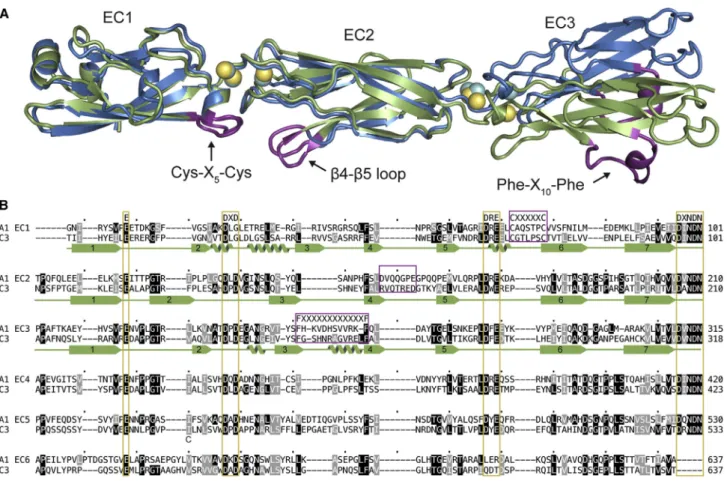
We obtained structures of mouse protocadheringA1 EC1–3 (A1) andgC3 EC1–3 (C3) (Table 1). The A1 and C3 protomers form elongated structures containing three Greek-key b-sandwich motif EC domains (Figure 1A), consistent with other available cadherin structures and nuclear magnetic resonance structures of EC1 from several other clustered Pcdh isoforms (Figure S1) (Morishita et al., 2006). The three repeats are arranged in tandem with two inter-repeat linker regions each containing three Ca2+-binding sites comprising canonical Ca2+-binding res-idues (Figure 1B).
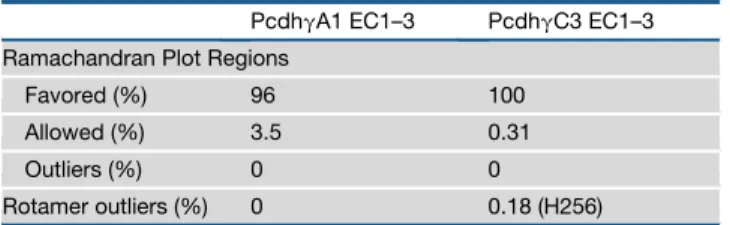
Table 1. Statistics for A1 and C3 Structures
PcdhgA1 EC1–3 PcdhgC3 EC1–3
PDB ID 4ZI9 4ZI8
SBGrid DataBank ID 173 174 Data Collection
Beam source APS 24-ID-E APS 24-ID-C Wavelength (A˚) 0.97918 0.97918 Space group P21 P212121 Unit cell a,b,c(A˚) 67.751, 63.687, 107.486 44.123, 82.286, 237.69 a,b,g() 90, 99.693, 90 90, 90, 90 Resolution (A˚) 50–1.77 (1.833–1.77) 50–1.70 (1.73–1.70) Total reflections 269,651 (13,875) 281,547 (8,193) Unique reflections 77,361 (5,120) 84,132 (3,718) Multiplicity 3.5 (2.7) 3.3 (2.2) Completeness (%) 87 (58) 86 (39) MeanI/s(I) 5.70 (0.46) 5.38 (0.53) Resolution shell at I/s(I) = 2 (A˚) 2.14–2.07 2.07–2.02 Wilson B factor 22.96 25 Rmerge 0.125 (1.499) 0.112 (1.079) Rmeas 0.1469 (1.804) 0.1316 (1.342) CC1/2 0.995 (0.513) 0.995 (0.292) CC* 0.999 (0.824) 0.999 (0.672) Refinement Refinement resolution range 33.51–1.77 (1.833–1.77) 48.17–1.698 (1.759–1.698) Reflections used in refinement 76,754 (4,773) 83,396 (3,379) Reflections used forRfree 2,031 (130) 1,983 (79) Rwork 0.2274 (0.4453) 0.2043 (0.3800) Rfree 0.2649 (0.4659) 0.2394 (0.4085) CCwork 0.964 (0.647) 0.961 (0.529) CCfree 0.946 (0.550) 0.948 (0.640)
No. of non-hydrogen atoms
Total 5,424 5,655 Macromolecules 4,935 5,001 Ligands 12 48 Waters 477 606 Protein residues 618 636 Rmsd Bonds (A˚) 0.008 0.011 Angles () 1.10 1.23 Clashscore 2.03 2.4 B Factor Average 46.60 36.15 Macromolecules 46.78 35.03 Ligands 31.22 52.37 Solvent 45.16 44.12 Table 1. Continued PcdhgA1 EC1–3 PcdhgC3 EC1–3 Ramachandran Plot Regions
Favored (%) 96 100
Allowed (%) 3.5 0.31
Outliers (%) 0 0
Comparing A1 and C3, each of the three EC repeat structures are very similar (root-mean-square deviation [rmsd] of 1.05, 0.824, and 0.593 A˚ for EC1, EC2, and EC3, respectively). How-ever, superposition of A1 and C3 shows that A1 EC3 and C3 EC3 vary in tilt by 15relative to EC2 (Figure 1A). There is some flexibility in fully Ca2+-bound linkers between cadherin repeats (Sotomayor and Schulten, 2008), which can explain the differ-ence in relative EC3 orientation in A1 and C3. Since the overall A1 and C3 structures are similar, for simplicity figures refer to the A1 structure and sequence unless otherwise indicated.
The clustered Pcdh structures reveal distinctive features compared with classical cadherins (Figure 1). The most distin-guishing feature is a conserved disulfide-clamped Cys-X5-Cys loop in EC1. This loop, elongated by the X5sequence compared with classical cadherins, is required for cell-surface expression of Pcdh isoforms (Schreiner and Weiner, 2010), but its role in Pcdh interactions is unknown. Another feature of clustered Pcdhs is the Phe-X10-Phe loop-helix motif in EC3. Lastly, the loop betweenb4 andb5 in EC2 is elongated when compared with classical cadherins. All three of these regions have low conservation between human paralogs (15%–25% average overall identity), suggesting that they may be sources of isoform diversity.
Crystallographic Interfaces Suggest Possible Biological Interfaces
The purified A1 construct behaved as a monomer (37.7 kDa) in multiangle laser light scattering (MALLS) measurements at con-centrations of up to 137mM (Figure S2). Furthermore, C3 and A1 behaved similarly in size-exclusion chromatography, indicating that C3 also behaves as a monomer in solution. This suggests that interactions between EC1–3 in solution are weak, precluding the use of solution-based experiments to investigate dimeriza-tion interfaces with these constructs. In the absence of in-solu-tion interacin-solu-tions, we analyzed the physicochemical properties of the crystallographic interfaces to determine their biological relevance.
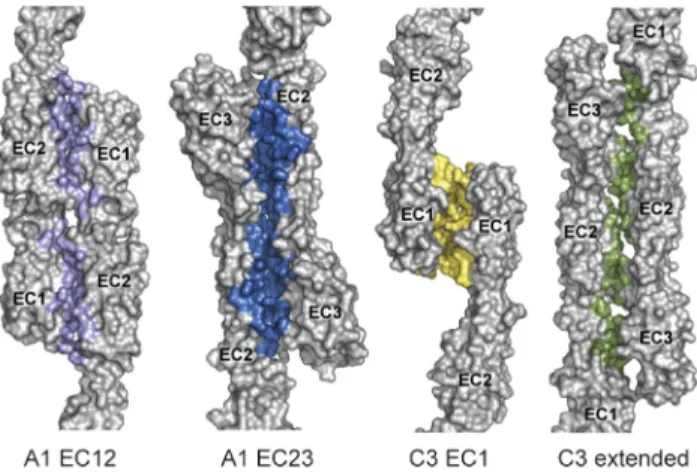
To select potential interfaces, we calculated the difference in accessible surface area (DASA) for all observed crystal packing interfaces. We further examined all interfaces of at least 600 A˚2, except one C3 interface withDASA = 650 A˚2because it was highly solvated and the affinity tag contributed more than 80 A˚2. We thus selected four potential biological interfaces to evaluate (Figure 2). Interestingly, all four are antiparallel dimer-ization interfaces (EC1-3 directions in the protomers are antiparallel to each other) with two-fold rotational symmetry approximately perpendicular to the long axis of the protomers.
Figure 1. Sequence and Structural Properties of Clustered Pcdhs (A) Superposition of A1 (blue with cyan Ca2+
) and C3 (green with yellow Ca2+
) structures showing the Cys-X5-Cys, Phe-X10-Phe and EC2b4-b5 loops in purple. (B) Alignment of the six EC repeats of mouse PcdhgA1 and PcdhgC3. Ca2+
-binding motifs are highlighted in yellow, the Cys-X5-Cys, Phe-X10-Phe, and EC2b4-b5 loops in purple, and the A1 EC1–3 secondary structure is shown below the sequence.
We found two mutually compatible A1 interfaces: one where EC2 interacts with EC3 (hereafter called the A1 EC23 interface; DASA = 1229 A˚2) and the other where EC1 and EC2 interact (the A1 EC12 interface;DASA = 1,381 A˚2) (Figure 2). The combi-nation of these two A1 interfaces yields crystal packing along one axis. We found two more potential interfaces in the C3 struc-ture: an extended interface over the length of EC1–3 (C3 extended;DASA = 1,156 A˚2), and an EC1-EC1 interface (C3 EC1 interface;DASA = 614 A˚2) (Figure 2). These four interfaces may represent some of the interactions present in thecisortrans complexes of clustered Pcdhs.
The largest determinant, by far, of biological significance of a protein complex interface is the DASA (Janin and Rodier, 1995). In a survey of PDB structures, an 856-A˚2cut-off distin-guished a biological interface from a crystal contact with 85% accuracy (Ponstingl et al., 2000). All but the C3 EC1 interface are significantly above the 856-A˚2threshold (Table 2), indicating that they are likely biological in nature.
The number of hydrogen bonds is indicative of specific protein interactions versus crystallization artifacts. Crystal contacts tend to have few hydrogen bonds (5) while homodimers and protein complexes have10–20 (Bahadur et al., 2004). The interfaces have a relatively large number of hydrogen bonds (Table 2),
sug-gesting they are not crystallization artifacts, and that they are, if valid, non-obligate in nature, as obligate interactions rely more heavily on non-polar interactions (Jones and Thornton, 1996).
Strong and specific interactions typically have highly comple-mentary surfaces. In our interfaces, the A1 EC12 interface has the highest shape correlation (Sc= 0.70), while the C3 extended interface has the lowest (Sc= 0.65) (Table 2). These are all near the range reported for antibody/antigen complexes (Sc= 0.64– 0.68), suggesting that the interfaces are specific, yet non-obli-gate (Lawrence and Colman, 1993), which would agree with the expected properties of the clustered Pcdh interactions.
NOXclass is a protein-protein interaction classifier that distin-guishes crystal packing from biological interactions and predicts whether an interface is likely obligate or non-obligate (Zhu et al., 2006). This prediction is useful for the non-obligate clustered Pcdhs interactions. According to NOXclass (Table 2), the C3 EC1 interface has a zero probability of being biological. A1 EC12 and A1 EC23 are both highly likely biological with 98.7% and 90% probability, respectively, while the C3 extended inter-face is 68% probable. All three are predicted to be obligate, but the A1 EC12 interface the least so with a 67% probability. This provides further support for the biological significance of all but the C3 EC1 interface.
The A1 EC23 and C3 extended interfaces include some of the structural features particular to the clustered Pcdhs described above (Figures 1 and 3). Polar interactions distribute toward the edge of the interface, while hydrophobic interactions are found toward the center of the interface, a property of biological interfaces (Chakrabarti and Janin, 2002). In A1 EC23 (Figure 3A), the Phe-X10-Phe loop of EC3 interacts with EC2 (Figure 3B). In the C3 extended interface (Figure 3C), the elongated b4-b5 loop in EC2 interacts with EC3 (Figure 3D). There is also exten-sive hydrogen bonding between the Cys-X5-Cys loop of EC1 and the Phe-X10-Phe loop of EC3 (Figure 3E). In this network T70 forms hydrogen bonds with S255 and H256 of the other pro-tomer, which holds H256 as a rotamer outlier in both protomers (Figure S3), suggesting a strong and specific interaction.
The A1 EC23 and C3 extended interfaces overlap, as they both include theb1-b2 loop andb2 of EC2, and theb3-b4 andb6-b7 loops of EC3. The two interfaces are related by a slide of the pro-teins by 22 A˚ and a slight rotation about their long axis (Figure 3F). The highly dissimilar sequences in this region may explain the difference in geometry between the A1 EC23 and C3 extended interfaces.
Figure 2. Observed Antiparallel Dimeric Interfaces in the A1 and C3 Crystal Lattices
Side view of the four interfaces withDASA greater than 600 A˚2: A1 EC12, A1 EC23, C3 EC1, and C3 extended. Residues with BSA >0 A˚2
are colored. See alsoFigure S2.
Table 2. Physicochemical Properties of Clustered Pcdh Interactions
Interface DASA (A˚2) #HBa #SBb S
cc
NOXclass Interface Area Ratio
Interface/Surface
Correlation GAPd Biological (%) Obligate (%)
A1 EC12 1,381 26 6 0.701 0.0845 0.5773 8.9 98.73 66.89
A1 EC23 1,229 11 4 0.662 0.0718 0.6007 12.2 90.03 85.64
C3 extended 1,156 17 2 0.648 0.0672 0.6941 15.1 68.14 91.73
C3 EC1 614 16 13 0.666 0.0356 0.7195 21.7 0 91.81
aNumber of hydrogen bonds at interface. bNumber of salt bridges at interfaces. cShape correlation statistic. dGap volume index.
Homology Modeling of EC1–6 Clustered Protocadherin Predicts a Linear Structure
To gain further insights into the complete structure of a clustered protocadherin extracellular domain, we used the A1 and C3 EC1–3 structures along with sequence and structural analysis of other cadherin structures to construct a homology model of EC1–6.
The Ca2+-binding sites rigidify the linkers between EC repeats (Cailliez and Lavery, 2005; Sotomayor and Schulten, 2008). We predict that all clustered Pcdh EC linkers are fully occupied with three Ca2+ions because all Ca2+-binding motifs are strictly conserved in each of the five EC linker regions (96% conserva-tion of canonical Ca2+-binding residues inFigure 1B). To deter-mine how to orient EC4–6 relative to each other and EC3, we surveyed cadherin structures with at least two ECs and canoni-cal three-Ca2+linker regions (Table S1). We defined the tilt angle as the angle between the long axes of two adjacent ovoid EC re-peats (Figure 4A). Rotation of each EC around this primary axis determines the azimuthal rotation of adjacent ECs, which re-flects the orientation of the cadherin fold for consecutive repeats. The average tilt and azimuthal angles for 17 canonical classical cadherin EC repeat pairs are 153± 6and 239± 9, respec-tively, versus 165 ± 6 and 217± 7 for the 13 non-classical cadherins and protocadherins (protocadherin-15, cadherin-23, A1 and C3). Thus adjacent EC pairs of non-classical and proto-cadherins are more linear than classical proto-cadherins. The origin of this difference is unknown, but could denote an important struc-tural difference between cadherin subfamilies.
We used two EC pairs as a starting model to position clustered Pcdh EC4–6: one model using the C3 EC2-3 pair, closest to the non-classical/protocadherin average (tilt = 164, azimuthal = 212), and one using mouse cadherin-6 EC1-2 pair (3lnd_a), closest to the classical cadherin average (tilt = 154, azimuthal =
239). We then used these models to construct homology models of the full mouse PcdhgA1 extracellular domain ( Fig-ure 4C). The two overall linear structures vary slightly in their overall curvature, but neither is incompatible with any of the po-tential interfaces in the A1 or C3 structures (Figure 4D).
The resulting clustered Pcdh model differs significantly from the five EC classical cadherin structures, due to the relative ori-entations of the repeats (Figure 4C). Non-canonical Ca2+-binding sites in classical cadherins cause a significantly smaller EC3-EC4 tilt angle (135), yielding a nearly perpendicular orientation of EC1 and EC5. The clustered Pcdh models are more linear, re-flecting the fact that all canonical Ca2+-binding motifs are completely conserved across all linker regions in clustered Pcdhs.
The A1 EC23 and C3 Extended Interfaces Lack Potential Glycosylation Sites
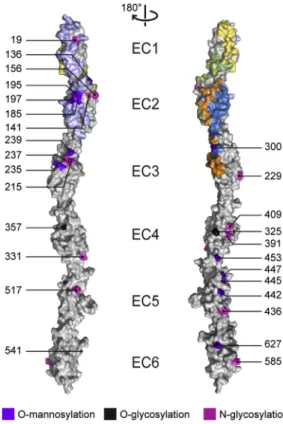
Post-translationally-modified N- and O-glycosylation sites in classical cadherins expressed inXenopus laevisor in HEK293 cells are distributed away from the homophilic binding interface (Boggon et al., 2002; Harrison et al., 2011), indicating that glycosylation is disfavored at cadherin interfaces. Since our re-combinantly expressed Pcdh constructs are not glycosylated, we mapped predicted glycosylation sites on the Pcdh struc-tures. We used the NetNGlyc v1.0 and NetOGlyc v4.0 servers to predict N- and O-glycosylation sites, respectively, in all hu-man clustered Pcdhs (Blom et al., 2004; Steentoft et al., 2013). Fourteen predicted N-glycosylation sites distributed across EC2–6 are well conserved across similar isoforms, and none overlap with the interfaces (Figure 5). Surprisingly, only two O-glycosylation sites were predicted: T325 in PcdhgA1 and position 357 (mouse PcdhgA1 numbering) in Pcdha2, Pcdha9, and Pcdha10 (Figure 5). This contrasts with the high
Figure 3. Structural Details of the A1 EC23 and C3 Extended Interfaces
(A–E) A1 EC23 (A) and C3 extended (C) interfaces are shown in an ‘‘open-book’’ orientation. Hydrogen-bonding (black) and salt-bridge (red) interactions are labeled on the top half of the interfaces, and residues with BSA >20 A˚2
on the bottom half. (B) In A1 EC23, the Phe-X10-Phe loop of EC3 (dark blue) makes specific interactions withb1 andb2 of EC2 (light blue). In the C3 extended interface, (D) theb4-b5 loop in EC2 of one protomer (dark green) interacts withb7 of EC3 in the other protomer (light green), and (E) the Cys-X5-Cys loop of EC1 (light green) forms a specific hydrogen-bonding network with Phe-X10-Phe loop of EC3 (dark green).
(F) The A1 EC23 (blue) and C3 extended (green) interfaces overlap extensively (orange). See alsoFigure S3.
O-glycosylation seen in C-, N-, and E-cadherin structures ( Bog-gon et al., 2002; Harrison et al., 2011). The NetOGlyc server pre-dicts no O-glycosylation sites for mouse C-, N-, or E-cadherin, indicating that it is not well trained for predicting O-glycosyla-tion sites in cadherins.
O-Mannosylation sites in clustered Pcdhs were identified by the SimpleCell strategy (Vester-Christensen et al., 2013). Many O-mannosylation sites were found in EC2, EC3, EC5, and EC6 of various isoforms. Several O-mannosylated resi-dues overlap the A1 EC12 interface (T185, S195, and T197) (Figure 5). A site at position 300, found in PcdhgB1, overlaps the A1 EC23 and C3 extended interfaces, but a methionine ingA1 (M300) or arginine ingC3 indicates this glycosylation is absent in these isoforms. While glycosylation site prediction could not provide striking support for a particular interface, it does suggest that glycosylation may prevent the A1 EC12 interaction.
A1 EC23 and C3 Extended Interfaces Correlate with Isoform-Specific Conservation
Sequence conservation analysis confirmed the homophilic interaction epitopes in the Drosophila Dscam1variable exons (Meijers et al., 2007). We searched for regions of high isoform-specific conservation, which may signify regions that impart homophilic specificity, by comparing the conservation of Pcdh paralogs in humans with orthologs of each isoform in mammalian species. Conservation in mammalian orthologs is higher (average overall identity for all orthologs is 78% ± 6%) than in hu-man paralogs (50% overall identity). Thus, we defined an isoform conservation ratio (ICR), the ratio of ortholog conservation of an isoform to paralog conservation of all isoforms in a species (in our case, humans), as an index for residue-by-residue sequence diversification. We then calculated residue-by-residue average ICR for all 60 mammalian isoforms (Figure 6A).
Average ICR values for EC1–3 are significantly higher than in EC4–6, and highest for EC2 and EC3 (Figure 6A). This prepon-derance of isoform-specific positions corroborates clustered Pcdh-driven cell-aggregation assays that demonstrated the importance of EC2-3 in homophilic specificity (Schreiner and Weiner, 2010). These data also correlate with the presence of positively selected sites in EC2 and EC3, where the rate of
Figure 4. Clustered Pcdh EC1-6 Homology Models as Elongated Molecules
(A) The orientation of adjacent EC repeats can be defined by the tilt and azimuthal rotation of the EC domain principal axes.
(B) Distribution of tilt and azimuthal angles from adjacent EC repeat pairs of classical (black), Pcdh15 and Cdh23 (blue), and clustered Pcdh (red). Gray and pink open circles represent averages of classical and non-classical/clustered Pcdh tilt and azimuthal angles. Crosses show the EC repeat pairs closest to the average values; these pairs were used to generate the homology models. (C) Homology models of A1 using the C3 EC2-3 (blue) and cadherin-6 EC1-2 (PDB: 3lnd_a; green) model pairs. Classical EP-cadherin (PDB: 1l3w; magenta; five EC repeats) is shown for comparison.
(D) Models oftrans-interacting antiparallel full-length dimers corresponding to the A1 EC12 (lilac) A1 EC23 (blue), C3 EC1 (yellow), and C3 extended (green) interfaces based on the full-length A1 homology model.
See alsoTable S1.
Figure 5. Predicted Clustered Pcdh Glycosylation Sites Largely Do Not Overlap with the Identified Antiparallel Interfaces
N-Glycosylation (magenta) or O-glycosylation (black) sites predicted in at least five human clustered Pcdh isoforms or a single C-type isoform, and O-man-nosylation sites (purple) from the SimpleCell strategy (Vester-Christensen et al., 2013) in clustered Pcdh EC repeats are overlaid with the observed in-terfaces (A1 EC12, lilac; A1 EC23, blue; C3 EC1, yellow; C3 extended, green; and A1 EC23 and C3 extended overlapping, orange). The left and right panels are related by a 180rotation; numbering corresponds to mouse PcdhgA1.
non-synonymous substitution at some positions is higher than the rate of synonymous mutations, implying that isoforms are un-der selective diversification (Wu, 2005). The average ICR of these previously identified positively selected sites (4.5 ± 0.5) is signif-icantly higher than the overall average ICR (2.09 ± 0.05), support-ing the ICR as a metric for selective diversification. We also compared the ICR values of clustered Pcdh subfamilies (a,b, g, C-type) with that of entire cluster by calculating the residual of the subfamily ICR from the entire cluster ICR (Figure 6B). No region has significantly different ICR values in thea,b, andg sub-families, supporting the notion that the homophilic specificity regions are common to all isoforms. In contrast, the C-type iso-forms contain some regions with significantly decreased ICR values, specifically in EC2 and EC3. These regions could sug-gest a difference in C-type subfamily homophilic interactions and/or could reflect the fact that C types may be under stronger conservation selection due to their essentiality in neuronal devel-opment (Chen et al., 2012).
The highest concentration of large ICRs is on a small portion of EC2 and a face on EC3 (Figure 6C), two regions proximal to both the A1 EC23 and C3 extended interfaces (Figure 6D). For example, the previously noted hydrogen-bond network in the C3 extended interface (Figure 3D) includes residues with high ICR values (T70 = 5.48, S255 = 6.18, and H256 = 5.49), indicating that this interaction is highly specific to thegC3 isoform.
To quantify the correlation between the observed interfaces and the ICR values, we calculated the average ICR value for non-interface and interface residues (judged as residues with a buried surface area [BSA] of more than 0 A˚2). The average ICR of non-interface residues is 2.36 ± 0.08, while the average ICR of interface residues of the A1 EC23 and C3 extended com-plexes are 3.1 ± 0.3 and 2.7 ± 0.2, respectively (Figure 6E). In contrast, the average interfaces ICR for the A1 EC12 and C3 EC1 complexes are both 2.3 ± 0.2. To determine whether the correlation between ICR and our interfaces was amplified in res-idues that contribute most significantly to the interface, we reduced our selection of interface residues to those with a BSA of at least 55 A˚2 per residue (Figure 6E). At this BSA cut-off, the average ICR of interface residues increases to 3.8 ± 0.7 for A1 EC23 and 3.7 ± 0.5 for C3 extended, whereas the A1 EC12 and C3 EC1 interface ICR values at this BSA cut-off are indistin-guishable from non-interface ICR values. This result indicates that residues in the A1 EC23 and C3 extended complexes contributing appreciably to the interface surface area are more likely to have a high ICR value, which supports the functional sig-nificance of these interfaces.
Evolutionary Correlations Corroborate Antiparallel Complex Architecture
Pairs of residues near each other in a structure can be identified via evolutionary covariance caused by compensatory mutations. These evolutionary correlations can indicate structural contacts within a given protein (Aurell and Ekeberg, 2012; Hopf et al., 2012; Kamisetty et al., 2013; Marks et al., 2011) or between pro-teins that interact (Hopf et al., 2014; Ovchinnikov et al., 2014). We used EVcouplings (adapted from (Hopf et al., 2014; Marks et al., 2011)) to search for evolutionary correlations arising from homo-typic interactions from an alignment generated with mouse PcdhgC3 as a query. The top 320 (alignment length/2) evolu-tionary correlations (Figure S4A) predominantly reflect structural features of the cadherin fold (Figure 7A). Eleven pairs in EC1–4 are not close to each other in the monomer, but nevertheless score higher than many true positives, suggesting they represent oligomeric contacts (Figure 7A). These pairs—between EC2 and EC3, or EC1 and EC4—support an antiparallel complex. Our structures corroborate the EC2-EC3 pairs, and although we did not crystallize EC4 our full-length homology model suggests that EC1 and EC4 interact (Figure 4D).
The 11 non-structural correlated pairs in EC1–4 come in close proximity in the A1 EC23 and C3 extended interfaces (Figures 7B and 7C), corroborating our posited interfaces. A plot of coupling strength versus pair distance reveals that these pairs are outliers compared with the rest of the observed monomeric pairs ( Fig-ure S4B). Using the A1 EC23 and C3 extended full-length com-plex models to define the pair distance of these 11 correlated pairs as intermolecular contacts, we find that the pair distance-coupling strength distribution is better preserved, supporting
Figure 6. Isoform-Specific Conservation in Clustered Pcdhs Local-izes to EC2 and EC3 Surfaces
(A) ICR average of all clustered Pcdh isoforms compared with human clustered Pcdhs, as a sliding average with a five-residue window size.
(B) Residual of the ICR value between the overall and subfamily averages (a= black,b= red,g= blue, and C-type = magenta).
(C) ICR values mapped on the EC2 and EC3 surfaces with a high density of high ICR values, numbered according to mouse PcdhgA1.
(D) ICR values mapped on full-length homology models of the A1 EC23 and C3 extended interfaces.
(E) Comparison of the average ICR values (±SEM) of non-interface (white) and interface (gray) residues. Interface residues are defined as those having a BSA of at least 0 A˚2
(light gray) or 55 A˚2
(dark gray). See alsoFiles S3andS4.
their significance as oligomeric contacts instead of intramolecu-lar structural ones. Interestingly, the A1 EC23 model yields shorter distances overall for the 11 correlated pairs, which is evident from the sliding of A1 EC23 and C3 extended interfaces relative to each other along the long cadherin axis (Figures 7B and 7C). This could indicate that A1 EC23 better represents ho-modimeric clustered Pcdh interfaces. However, because the clustered Pcdh locus has relatively few C-type isoforms, our sequence alignment contains many more non-C-type isoform sequences. This may manifest as a bias of observed correlated pairs toward non-C-type versus C-type interfaces if, as
biolog-ical data suggest (Chen et al., 2012), C-type and non-C-type have different modes of interaction.
DISCUSSION
There is strong evidence that EC1–3 mediate clustered Pcdh specificity of cell-surface signaling from cell-aggregation assays and sequence analysis (Schreiner and Weiner, 2010; Wu, 2005). Our structures of mouse PcdhgA1 and PcdhgC3 EC1–3 and bio-informatics analyses provide further evidence for the importance of EC2 and EC3 and offer the first hypotheses for these interac-tions. We propose two biologically relevant interactions: A1 EC23 and C3 extended. The physicochemical properties of these interfaces are consistent with canonical biological interac-tions, and interface residues are not predicted glycosylation sites and are conserved in isoform orthologs. The antiparallel arrangement is consistent with evolutionary correlations ob-served between EC2 and EC3, and EC1 and EC4. Lastly, iso-form-specific conservation suggests that all subfamilies have similar modes of homophilic recognition, with the possible exception of the C-type isoforms.
The combination of an antiparallel arrangement of the speci-ficity-determining homodimer and the linearity of our EC1–6 ho-mology model limits the geometry of atranscomplex. To satisfy both constraints, the overall length of A1 EC23 or C3 extended complexes is approximately 40 nm (Figure 4D). This distance is consistent with intercellular distances of chemical synapses (20–40 nm), suggesting that this trans complex architecture would be effective in determining synaptic specificity at nascent synapses (Phillips et al., 2003).
The two interfaces we identified comprise similar sets of resi-dues with high ICR values, but only partially overlap (Figures 3F and 5). At present, we cannot offer any explanation for these similar yet distinct interfaces. However, the biological behaviors of the two isoforms we crystallized are different: C-type Pcdhg isoforms are necessary for neonatal neuronal survival in mice, while A-type Pcdhg isoforms show redundancy in behavior (Chen et al., 2012). Thus, A1 EC23 and C3 extended interfaces may be representative of g-type and C-type Pcdh isoforms, respectively, and reflect structural adaptations to use overlap-ping surfaces to encode a large diversity of preferentially homo-typic dimerization interfaces.
In our data we find some indirect support for two potentialcis architectures in relation to the identified antiparalleltrans interac-tions (Figure 8). The lack of predicted glycosylation sites on a face of EC4–6 opposite the homophilic EC2-EC3 interface ( Fig-ure 5) and evolutionary correlations in EC5 and EC6 that are not part of intramolecular contacts (Figure 7A) suggest that EC5–6 could be part of promiscuouscisinteractions (Figure 8A). Supporting this model is the finding thataisoforms require EC6 of a carrier isoform (borg) to be surface expressed (Thu et al., 2014), suggestingcisEC6 interactions across paralogs. Further-more, deletion of EC1–3 does not impaircismultimers (Schreiner and Weiner, 2010), consistent with a model in which the C-termi-nal EC domains provide further multimerization interfaces. An alternative model derives from the A1 EC12 interface, which is statistically assessed as potentially biological (Table 2). The A1 EC12 interface is on the opposite side of the A1 EC23 interface, allowing a zippering of Pcdhs at an intercellular junction to form
Figure 7. Evolutionary Covariance Supports Antiparallel Oligomeric Contacts
(A) The top 320 correlated pairs (sequence length/2) are shown with the con-tact map of the EC1-6 clustered Pcdh homology model (gray) for reference. Correlated pairs matching structural constraints are shown in black while predicted oligomeric contact pairs are in orange. The observed interface contact residues are also mapped (A1 EC23, blue; C3 extended, green). (B and C) The predicted oligomeric contact correlated pairs are mapped (orange spheres) on the A1 EC23 (B) and C3 extended (C) complex models with a line between coupled residues.
an oligomer (Figure 8B), implying the presence oftrans-mediated promiscuouscisinteractions. This model is supported by a rela-tively conserved interface across isoforms, but is challenged by predicted glycosylation sites on the A1 EC12 interface. While neither model fully clarifies the mechanism used to enforce combinatorial homophilic interactions or specifies the possible multimeric state of these complexes, they can serve as testable hypotheses. Future experiments will require the development of biochemical and biophysical methods for investigating weak adhesion at a molecular level.
The interactions we identified are novel for the cadherin super-family. Unlike classical cadherins that interact through EC1 in an X-dimer or strand-swapping mechanism (Brasch et al., 2012; Sotomayor et al., 2014), these interactions are mediated by EC2 and EC3. Thecisinteractions of classical cadherins are also distinct, as they occur through EC1 and EC2 and are parallel in nature (Boggon et al., 2002; Nagar et al., 1996). The most similar interface described thus far is the antiparallel ‘‘hand-shake’’ Pcdh15-Cdh23 interaction in the tip link of hair cells ( So-tomayor et al., 2012). The elongated antiparallel interaction spanning multiple EC repeats of the Pcdh15-Cdh23 complex and in the clustered Pcdh interfaces described here may be a general adhesion strategy for other cadherin superfamily interactions.
We have described homophilic interactions of two clustered Pcdh isoforms and have presented physicochemical and bioin-formatics evidence for their biological significance. Overall, we showed that the A1 EC23 and C3 extended interfaces are the most likely to be relevant in vivo. It is clear from these interfaces and the presence of bothcisandtransinteractions that the archi-tecture of the entire clustered Pcdh signaling complex is multi-faceted. In addition, clustered Pcdhs play many roles in neuronal
development, suggesting that different complex architectures and interactions with other proteins provide further layers of complexity, which we need to better define before we reach a full structural understanding of these proteins. While cell-based aggregation assays have been indispensable for studying clus-tered Pcdh interactions, these assays have not yet been used to distinguish between cis and trans interactions (Schreiner and Weiner, 2010; Thu et al., 2014). Thus, better biochemical methods are needed to verify these and other interactions. The structures, homology models, and interactions we describe pro-vide a glimpse of the details of this complex system and con-straints to better study clustered Pcdh signaling assemblies. EXPERIMENTAL PROCEDURES
Protein Expression and Purification
Mouse PcdhgA1 EC1–3 (residues 1–311 referred to as A1) and PcdhgC3 EC1–3 (residues 1–314, referred to as C3) with C- and N-terminal hexahistidine tags, respectively, were expressed in BL21 Gold (DE3)Escherichia colicells in Terrific Broth, induced at OD600= 0.8 with 0.5 mM isopropylb -D-1-thiogalac-topyranoside at 37C for 4 hr. Cells were lysed by sonication in 8 M guanidine hydrochloride (GuHCl), 20 mM imidazole, 50 mM HEPES (pH 7.5), 2 mM CaCl2, 1 mM benzamidine, and 1 mM phenylmethanesulfonyl fluoride. Cleared ly-sates were diluted to 5 M GuHCl, loaded onto Ni-Sepharose, washed with 5 M GuHCl, 250 mM NaCl, 25 mM imidazole (pH 8), and 50 mM Tris (pH 8.5), and eluted with 200 mM imidazole. A1 was refolded overnight at room temperature by drop dilution from 2 mg/ml protein in elution buffer to a final concentration of 0.2 M GuHCl with refolding buffer (100 mM Tris [pH 8.5], 10 mM CaCl2, 1 mM EDTA, 3 mM reduced glutathione, 0.3 mM oxidized glutathione). C3 was refolded at 1 mg/ml by 12-hr dialysis steps into 3, 1.5, and 0 M GuHCl in refolding buffer with 0.2 M sucrose and 0.5 M L-arginine monohydrochloride. Concentrated refolded protein was purified by size-exclusion chromatography on a Superdex 200 column (GE Healthcare) in 20 mM Tris (pH 8.5), 200 mM NaCl, and 2 mM CaCl2. C3 was further purified on a Resource Q column (GE Healthcare) with a gradient of 50–500 mM NaCl in 20 mM Tris (pH 8.5) and 2 mM CaCl2. The A1 protein molecular mass was determined in runs at 5 mg/ml (137mM) over a Superdex S200 10/300 column with an in-line MALLS instrument (Wyatt) in 20 mM Tris (pH 8.5), 200 mM NaCl, and 2 mM CaCl2.
Crystallization, Data Collection, and Structure Determination
A1 crystals were grown by vapor diffusion at room temperature in 100 mM Tris (pH 8.5), 7.5% polyethylene glycol 8000, and 200 mM NDSB-221 (Hampton Research). Crystals were cryoprotected in reservoir plus 20% glycerol. C3 crystals were grown by vapor diffusion at 4C. Initial crystals, obtained with a drop ratio of 0.5ml 4.3 mg/ml C3 to 0.3-ml reservoir (100 mM HEPES [pH 7], 60% 2-methyl-2,4-pentanediol [MPD], 100 mM CaCl2), were used as seeds to grow larger crystals in 100 mM HEPES (pH 7), 20% MPD with a 0.5ml protein/0.2ml reservoir/0.1ml seeds ratio. Crystals were cryoprotected in reservoir plus 15% MPD. Crystals were cryocooled in liquid N2. X-Ray data were collected according toTable 1and processed in an HKL2000 ( Otwi-nowski and Minor, 1997). The A1 structure was determined by molecular replacement in PHENIX (Adams et al., 2010), using cadherin-23 EC1-2 as a starting model (Sotomayor et al., 2010). The C3 structure was solved by mo-lecular replacement using a C3 homology model based on A1. Model building was done in Coot (Emsley and Cowtan, 2004) and refinement in PHENIX (Adams et al., 2010). Both structures contain two protomers per asymmetric unit. In addition to canonical inter-EC linker Ca2+
ions, the C3 structure has three Ca2+
ions bridging an EC3-EC3, tail-end-to-tail-end, crystal packing interface between the two chains, chelated by EC3-EC4 linker residues in a non-physiological way. Validation reports for the A1 (File S1) and C3 (File S2) are provided in theSupplemental Information.
Structural Analysis of Interface Significance
The PISA webserver was used to analyze the observed Pcdh interfaces ( Kris-sinel and Henrick, 2007).DASA is (ASAA+ ASAB ASAAB)/2, where AB is a
Figure 8. Model of Clustered Protocadherin Antiparalleltransand
PossiblecisInteractions
(A) Lack of predicted glycosylation sites on one face of EC4-6 allows a model where EC4-6 engage in promiscuouscisinteractions to promote oligomeri-zation.
(B) The A1 EC12 interaction, which does not show preponderance for high ICR value residues, could support a model fortrans-mediatedcisoligomerization through EC1-2. Isoform types are shown as either blue or green to indicate homophilic (same color) or promiscuous (different color) interactions.
complex of A and B. BSA is the solvent-accessible surface area buried upon complex formation for a given residue. The SC program in CCP4 was used to calculate surface complementarity according to the following parameters (Lawrence and Colman, 1993): dot density = 15 A˚ 2
, interface separation = 8 A˚, trim width = 1.5 A˚, probe radius = 1.7 A˚, weight factor 0.5 A˚2
. NOXclass was used to evaluate the observed interfaces using interface area, interface area ratio, correlation between interface and protein surface, and gap volume index parameters (Zhu et al., 2006).
Homology Model Construction
Structures of cadherin proteins containing at least two EC repeats were collected from the PDB (Table S1). EC N was aligned to EC N+1 for each pair, and singular value decomposition was used to calculate the principal components of the EC N repeat and the original and aligned positions. The angles between the respective components were calculated to determine the tilt (between the first components) and azimuthal (average of the second and third components) angles. Models were constructed in PyMOL (Schro-dinger), after which Modeller (Sali and Blundell, 1993 ) was used to generate the EC1-6 homology model.
Sequence Analyses
For ICR analysis, Pcdh isoform sequences were collected from the UCSC Genome Browser (Kent et al., 2002) to create a multiple sequence alignment. Overall % identity of the most common residue at each position was used to calculate ICR values. The alignment (File S3) and ICR data (File S4) are pro-vided in theSupplemental Information.
Evolutionary couplings were predicted using EVcouplings (Aurell and Ekeberg, 2012; Marks et al., 2011; Morcos et al., 2011), applying a pseudo-likelihood maximization approximation (Balakrishnan et al., 2011; Ekeberg et al., 2013; Kamisetty et al., 2013). The multiple sequence alignment used was generated starting with EC1–6 of mouse PcdhgC3 (UniProt: Q91XX1_MOUSE, residues 30–670) as a query sequence for Jackhmmer 3.1 (Johnson et al., 2010). The alignment was created in five iterations against the UniProt Reference Cluster UniRef100 (release February 2015; Suzek et al., 2007) and then filtered to exclude sequences that are not part of the clus-tered protocadherin family. To build the global maximum entropy model, we clustered and weighted sequences with at least 90% identity according to their cluster size (theta 0.1). Alignment columns that contained gaps in 50% or more of the members were excluded from the model and later predictions. The effective number of sequences in the final alignment was 3,525.48 (sequences/alignment length = 5.56). Correlated pairs were normalized by the magnitude of the minimum coupling score to suppress background noise (Hopf et al., 2014). Pairs with normalized scores above 1.6 (alignment length/2 = 320 couplings) are considered statistically significant (>80% predic-tive of contact; true posipredic-tive rate [<8 A˚ distance] = 66% in EC1-3, 84% in EC2-3). The alignment (File S5) and raw coupling scores (File S6) for all pairs are presented in theSupplemental Information.
ACCESSION NUMBERS
The accession numbers for the PcdhgA1 EC1-3 and PcdhgC3 EC1-3 struc-tures reported in this paper are PDB: 4ZI9 and 4ZI8, respectively.
The unprocessed diffraction images used to determine the PcdhgA1 EC1-3 and PcdhgC3 EC1-3 structures were deposited in the SBGrid Data Bank (https://data.sbgrid.org/) with accession numbers SBGrid Data Bank: 173 and 174, respectively.
SUPPLEMENTAL INFORMATION
Supplemental Information includes four figures, one table, and six supple-mental data files and can be found with this article online athttp://dx.doi. org/10.1016/j.str.2015.09.005.
AUTHOR CONTRIBUTIONS
W.A.W. and R.G. initiated the project; J.M.N., W.A.W., and S.L. screened con-structs for purification and crystallization; J.M.N. and W.A.W. crystallized and solved structures; S.L. performed MALLS measurements; J.M.N. constructed
homology model and completed ICR analysis; J.M.N., C.P.I.S., D.S.M., and R.G. completed evolutionary correlation analysis; R.G. directed the research; J.M.N. and R.G. wrote the manuscript with input from all authors.
ACKNOWLEDGMENTS
We thank Dr. Marcos Sotomayor and Dr. Josh Sanes for helpful discussions. We thank Sriram Srikant for help with phylogenetic analysis. Financial support (to J.M.N.) was provided by the National Defense Science and Engineering Graduate Fellowship. We thank the beamline staff of NE-CAT at the Advanced Photon Source (Argonne, IL, USA) for help with data collection. NE-CAT is funded by NIH (P41 GM103403 and S10 RR029205), and the Advanced Photon Source by the US Department of Energy (DE-AC02-06CH11357). Received: April 29, 2015
Revised: September 14, 2015 Accepted: September 15, 2015 Published: October 15, 2015
REFERENCES
Adams, P.D., Afonine, P.V., Bunko´czi, G., Chen, V.B., Davis, I.W., Echols, N., Headd, J.J., Hung, L.-W., Kapral, G.J., Grosse-Kunstleve, R.W., et al. (2010). PHENIX: a comprehensive Python-based system for macromolecular struc-ture solution. Acta Crystallogr. D Biol. Crystallogr.66, 213–221.
Aurell, E., and Ekeberg, M. (2012). Inverse ising inference using all the data. Phys. Rev. Lett.108, 1–5.
Bahadur, R.P., Chakrabarti, P., Rodier, F., and Janin, J. (2004). A dissection of specific and non-specific protein-protein interfaces. J. Mol. Biol. 336, 943–955.
Balakrishnan, S., Kamisetty, H., Carbonell, J.G., Lee, S.-I., and Langmead, C.J. (2011). Learning generative models for protein fold families. Proteins79, 1061–1078.
Biswas, S., Emond, M.R., and Jontes, J.D. (2012). The clustered protocadher-ins Pcdhaand Pcdhgform a heteromeric complex in zebrafish. Neuroscience
219, 280–289.
Blom, N., Sicheritz-Ponte´n, T., Gupta, R., Gammeltoft, S., and Brunak, S. (2004). Prediction of post-translational glycosylation and phosphorylation of proteins from the amino acid sequence. Proteomics4, 1633–1649.
Boggon, T.J., Murray, J., Chappuis-flament, S., Wong, E., Gumbiner, B.M., and Shapiro, L. (2002). C-cadherin ectodomain structure and implications for cell adhesion mechanisms. Science296, 1308–1313.
Brasch, J., Harrison, O.J., Honig, B., and Shapiro, L. (2012). Thinking outside the cell: how cadherins drive adhesion. Trends Cell Biol.22, 299–310.
Cailliez, F., and Lavery, R. (2005). Cadherin mechanics and complexation: the importance of calcium binding. Biophys. J.89, 3895–3903.
Chakrabarti, P., and Janin, J. (2002). Dissecting protein-protein recognition sites. Proteins Struct. Funct. Genet.47, 334–343.
Chen, W.V., Alvarez, F.J., Lefebvre, J.L., Friedman, B., Nwakeze, C., Geiman, E., Smith, C., Thu, C.A., Tapia, J.C., Tasic, B., et al. (2012). Functional signifi-cance of isoform diversification in the protocadherin gamma gene cluster. Neuron75, 402–409.
Ekeberg, M., Lo¨vkvist, C., Lan, Y., Weigt, M., and Aurell, E. (2013). Improved contact prediction in proteins: using pseudolikelihoods to infer Potts models. Phys. Rev. E Stat. Nonlin. Soft Matter Phys.87, 1–16.
Emond, M.R., and Jontes, J.D. (2008). Inhibition of protocadherin-a func-tion results in neuronal death in the developing zebrafish. Dev. Biol. 321, 175–187.
Emsley, P., and Cowtan, K. (2004). Coot: model-building tools for molecular graphics. Acta Crystallogr. D Biol. Crystallogr.60, 2126–2132.
Esumi, S., Kakazu, N., Taguchi, Y., Hirayama, T., Sasaki, A., Hirabayashi, T., Koide, T., Kitsukawa, T., Hamada, S., and Yagi, T. (2005). Monoallelic yet combinatorial expression of variable exons of the protocadherin-alpha gene cluster in single neurons. Nat. Genet.37, 171–176.
Ferna´ndez-Monreal, M., Kang, S., and Phillips, G.R. (2009). Gamma-proto-cadherin homophilic interaction and intracellular trafficking is controlled by the cytoplasmic domain in neurons. Mol. Cell. Neurosci.40, 344–353.
Garrett, A.M., and Weiner, J.A. (2009). Control of CNS synapse development by {gamma}-protocadherin-mediated astrocyte-neuron contact. J. Neurosci.
29, 11723–11731.
Garrett, A.M., Schreiner, D., Lobas, M.A., and Weiner, J.A. (2012). Gamma-protocadherins control cortical dendrite arborization by regulating the activity of a FAK/PKC/MARCKS signaling pathway. Neuron74, 269–276.
Han, M.-H., Lin, C., Meng, S., and Wang, X. (2010). Proteomics analysis reveals overlapping functions of clustered protocadherins. Mol. Cell. Proteomics9, 71–83.
Harrison, O.J., Jin, X., Hong, S., Bahna, F., Ahlsen, G., Brasch, J., Wu, Y., Vendome, J., Felsovalyi, K., Hampton, C.M., et al. (2011). The extracellular architecture of adherens junctions revealed by crystal structures of type I cad-herins. Structure19, 244–256.
Hopf, T.A., Colwell, L.J., Sheridan, R., Rost, B., Sander, C., and Marks, D.S. (2012). Three-dimensional structures of membrane proteins from genomic sequencing. Cell149, 1607–1621.
Hopf, T.A., Scha¨rfe, C.P.I., Rodrigues, J.P.G.L.M., Green, A.G., Sander, C., Bonvin, A.M.J.J., and Marks, D.S. (2014). Sequence co-evolution gives 3D contacts and structures of protein complexes. Elife3, e03430.
Janin, J., and Rodier, F. (1995). Protein-protein interaction at crystal contacts. Proteins23, 580–587.
Johnson, L.S., Eddy, S.R., and Portugaly, E. (2010). Hidden Markov model speed heuristic and iterative HMM search procedure. BMC Bioinformatics
11, 431.
Jones, S., and Thornton, J.M. (1996). Principles of protein-protein interactions. Proc. Natl. Acad. Sci. USA93, 13–20.
Kamisetty, H., Ovchinnikov, S., and Baker, D. (2013). Assessing the utility of coevolution-based residue-residue contact predictions in a sequence- and structure-rich era. Proc. Natl. Acad. Sci. USA110, 1–6.
Kaneko, R., Kato, H., Kawamura, Y., Esumi, S., Hirayama, T., Hirabayashi, T., and Yagi, T. (2006). Allelic gene regulation of Pcdh-aand Pcdh-gclusters involving both monoallelic and biallelic expression in single Purkinje cells. J. Biol. Chem.281, 30551–30560.
Kent, W.J., Sugnet, C.W., Furey, T.S., Roskin, K.M., Pringle, T.H., Zahler, A.M., and Haussler, D. (2002). The human genome browser at UCSC. Genome Res.
12, 996–1006.
Kostadinov, D., and Sanes, J.R. (2015). Protocadherin-dependent dendritic self-avoidance regulates neural connectivity and circuit formation. Elife4, e08964.
Krissinel, E., and Henrick, K. (2007). Inference of macromolecular assemblies from crystalline state. J. Mol. Biol.372, 774–797.
Lawrence, M.C., and Colman, P.M. (1993). Shape complementarity at protein-protein interfaces. J. Mol. Biol.234, 946–950.
Lefebvre, J.L., Zhang, Y., Meister, M., Wang, X., and Sanes, J.R. (2008). Gamma-protocadherins regulate neuronal survival but are dispensable for cir-cuit formation in retina. Development135, 4141–4151.
Lefebvre, J.L., Kostadinov, D., Chen, W.V., Maniatis, T., and Sanes, J.R. (2012). Protocadherins mediate dendritic self-avoidance in the mammalian nervous system. Nature488, 517–521.
Li, Y., Xiao, H., Chiou, T.-T., Jin, H., Bonhomme, B., Miralles, C.P., Pinal, N., Ali, R., Chen, W.V., Maniatis, T., et al. (2012). Molecular and functional interaction between protocadherin-C5 and GABAA receptors. J. Neurosci.32, 11780– 11797.
Marks, D.S., Colwell, L.J., Sheridan, R., Hopf, T.A., Pagnani, A., Zecchina, R., and Sander, C. (2011). Protein 3D structure computed from evolutionary sequence variation. PLoS One6, e28766.
Meijers, R., Puettmann-Holgado, R., Skiniotis, G., Liu, J., Walz, T., Wang, J., and Schmucker, D. (2007). Structural basis of Dscam isoform specificity. Nature449, 487–491.
Morcos, F., Pagnani, A., Lunt, B., Bertolino, A., Marks, D.S., Sander, C., Zecchina, R., Onuchic, J.N., Hwa, T., and Weigt, M. (2011). Direct-coupling analysis of residue coevolution captures native contacts across many protein families. Proc. Natl. Acad. Sci. USA108, E1293–E1301.
Morishita, H., Umitsu, M., Murata, Y., Shibata, N., Udaka, K., Higuchi, Y., Akutsu, H., Yamaguchi, T., Yagi, T., and Ikegami, T. (2006). Structure of the cadherin-related neuronal receptor/protocadherin-alpha first extracellular cadherin domain reveals diversity across cadherin families. J. Biol. Chem.
281, 33650–33663.
Nagar, B., Overduin, M., Ikura, M., and Rini, J.M. (1996). Structural basis of calcium-induced E-cadherin rigidification and dimerization. Nature 380, 360–364.
Otwinowski, Z., and Minor, W. (1997). Processing of X-ray diffraction data collected in oscillation mode. In Methods in Enzymology, Volume 276: Macromolecular Crystallography, Part A, C.W. Carter, Jr. and R.M. Sweet, eds. (Academic Press), pp. 307–326.
Ovchinnikov, S., Kamisetty, H., and Baker, D. (2014). Robust and accurate pre-diction of residue-residue interactions across protein interfaces using evolu-tionary information. Elife3, e02030.
Phillips, G.R., Tanaka, H., Frank, M., Elste, A., Fidler, L., Benson, D.L., and Colman, D.R. (2003). Gamma-protocadherins are targeted to subsets of syn-apses and intracellular organelles in neurons. J. Neurosci.23, 5096–5104.
Ponstingl, H., Henrick, K., and Thornton, J.M. (2000). Discriminating between homodimeric and monomeric proteins in the crystalline state. Proteins57, 47–57.
Prasad, T., and Weiner, J.A. (2011). Direct and indirect regulation of spinal cord IA afferent terminal formation by the g-protocadherins. Front. Mol. Neurosci.4, 1–12.
Prasad, T., Wang, X., Gray, P.A., and Weiner, J.A. (2008). A differential devel-opmental pattern of spinal interneuron apoptosis during synaptogenesis: in-sights from genetic analyses of the protocadherin-gamma gene cluster. Development135, 4153–4164.
Sali, A., and Blundell, T.L. (1993). Comparative protein modelling by satisfac-tion of spatial restraints. J. Mol. Biol.234, 779–815.
Sawaya, M.R., Wojtowicz, W.M., Andre, I., Qian, B., Wu, W., Baker, D., Eisenberg, D., and Zipursky, S.L. (2008). A double S shape provides the struc-tural basis for the extraordinary binding specificity of Dscam isoforms. Cell
134, 1007–1018.
Schalm, S.S., Ballif, B.A., Buchanan, S.M., Phillips, G.R., and Maniatis, T. (2010). Phosphorylation of protocadherin proteins by the receptor tyrosine ki-nase Ret. Proc. Natl. Acad. Sci. USA107, 13894–13899.
Schreiner, D., and Weiner, J.A. (2010). Combinatorial homophilic interaction between gamma-protocadherin multimers greatly expands the molecular di-versity of cell adhesion. Proc. Natl. Acad. Sci. USA107, 14893–14898.
Sotomayor, M., and Schulten, K. (2008). The allosteric role of the Ca2+switch in adhesion and elasticity of C-cadherin. Biophys. J.94, 4621–4633.
Sotomayor, M., Weihofen, W.A., Gaudet, R., and Corey, D.P. (2010). Structural determinants of cadherin-23 function in hearing and deafness. Neuron66, 85–100.
Sotomayor, M., Weihofen, W.A., Gaudet, R., and Corey, D.P. (2012). Structure of a force-conveying cadherin bond essential for inner-ear mechanotransduc-tion. Nature492, 128–132.
Sotomayor, M., Gaudet, R., and Corey, D.P. (2014). Sorting out a promiscuous superfamily: towards cadherin connectomics. Trends Cell Biol.24, 524–536.
Steentoft, C., Vakhrushev, S.Y., Joshi, H.J., Kong, Y., Vester-Christensen, M.B., Schjoldager, K.T.-B.G., Lavrsen, K., Dabelsteen, S., Pedersen, N.B., Marcos-Silva, L., et al. (2013). Precision mapping of the human O-GalNAc gly-coproteome through SimpleCell technology. EMBO J.32, 1478–1488.
Su, H., Marcheva, B., Meng, S., Liang, F.A., Kohsaka, A., Kobayashi, Y., Xu, A.W., Bass, J., and Wang, X. (2010). Gamma-protocadherins regulate the functional integrity of hypothalamic feeding circuitry in mice. Dev. Biol.339, 38–50.
Suzek, B.E., Huang, H., McGarvey, P., Mazumder, R., and Wu, C.H. (2007). UniRef: comprehensive and non-redundant UniProt reference clusters. Bioinformatics23, 1282–1288.
Thu, C.A., Chen, W.V., Rubinstein, R., Chevee, M., Wolcott, H.N., Felsovalyi, K.O., Tapia, J.C., Shapiro, L., Honig, B., and Maniatis, T. (2014). Single-cell identity generated by combinatorial homophilic interactions betweena,b, andgprotocadherins. Cell158, 1045–1059.
Vester-Christensen, M.B., Halim, A., Joshi, H.J., Steentoft, C., Bennett, E.P., Levery, S.B., Vakhrushev, S.Y., and Clausen, H. (2013). Mining the O-mannose glycoproteome reveals cadherins as major O-mannosylated glycoproteins. Proc. Natl. Acad. Sci. USA110, 21018–21023.
Wang, X., Weiner, J.A., Levi, S., Craig, A.M., Bradley, A., and Sanes, J.R. (2002). Gamma protocadherins are required for survival of spinal interneurons. Neuron36, 843–854.
Weiner, J.A., and Jontes, J.D. (2013). Protocadherins, not prototypical: a com-plex tale of their interactions, expression, and functions. Front. Mol. Neurosci.
6, 1–10.
Weiner, J.A., Wang, X., Tapia, J.C., and Sanes, J.R. (2005). Gamma protocad-herins are required for synaptic development in the spinal cord. Proc. Natl. Acad. Sci. USA102, 8–14.
Wu, Q. (2005). Comparative genomics and diversifying selection of the clus-tered vertebrate protocadherin genes. Genetics169, 2179–2188.
Yagi, T. (2012). Molecular codes for neuronal individuality and cell assembly in the brain. Front. Mol. Neurosci.5, 1–11.
Yokota, S., Hirayama, T., Hirano, K., Kaneko, R., Toyoda, S., Kawamura, Y., Hirabayashi, M., Hirabayashi, T., and Yagi, T. (2011). Identification of the clus-ter control region for the protocadherin-beta genes located beyond the proto-cadherin-beta cluster. J. Biol. Chem.286, 31885–31895.
Zhu, H., Domingues, F.S., Sommer, I., and Lengauer, T. (2006). NOXclass: pre-diction of protein-protein interaction types. BMC Bioinformatics7, 27.
Zipursky, S.L., and Sanes, J.R. (2010). Chemoaffinity revisited: Dscams, pro-tocadherins, and neural circuit assembly. Cell143, 343–353.