1
Manipulation is key – On why non-mechanistic explanations in the cognitive sciences also describe
1
relations of manipulation and control
2
Lotem Elber-Dorozko
3
The Edmond & Lily Safra Center for Brain Sciences, The Hebrew University of Jerusalem.
4
To contact the author: [email protected]
5
6
This is a post-peer-review, pre-copyedit version of an article published in Synthese. The final authenticated
7
version is available online at: https://doi.org/10.1007/s11229-018-01901-3
8
9
Abstract
10
A popular view presents explanations in the cognitive sciences as causal or mechanistic and argues that
11
an important feature of such explanations is that they allow us to manipulate and control the
12
explanandum phenomena. Nonetheless, whether there can be explanations in the cognitive sciences
13
that are neither causal nor mechanistic is still under debate. Another prominent view suggests that both
14
causal and non-causal relations of counterfactual dependence can be explanatory, but this view is open
15
to the criticism that it is not clear how to distinguish explanatory from non-explanatory relations. In this
16
paper, I draw from both views and suggest that, in the cognitive sciences, relations of counterfactual
17
dependence that allow manipulation and control can be explanatory even when they are neither causal
18
nor mechanistic. Furthermore, the ability to allow manipulation can determine whether non-causal
19
counterfactual dependence relations are explanatory. I present a preliminary framework for
20
manipulation relations that includes some non-causal relations and use two examples from the cognitive
21
sciences to show how this framework distinguishes between explanatory and explanatory,
non-22
causal relations. The proposed framework suggests that, in the cognitive sciences, causal and non-causal
23
2
relations have the same criterion for explanatory value, namely, whether or not they allow manipulation
24
and control.
25
Keywords
26
explanation; non-causal explanations; manipulation and control; the cognitive sciences; counterfactual
27
dependence;
28
1 Introduction
29
Philosophers have characterized various types of explanations in the cognitive sciences. Functional
30
analyses (Cummins 1983, 2000), mechanistic models (Craver 2007a), computational models (Chirimuuta
31
2014; Egan 2017; Rusanen and Lappi 2016; Shagrir 2006; Shagrir and Bechtel 2017) as well as network,
32
topological, and mathematical models (Chirimuuta 2017; Huneman 2010; Silberstein and Chemero 2013)
33
have all been said to have explanatory value. This poses a challenge to philosophers – how does one
34
present a framework for explanation in the cognitive sciences, when said explanation is so deeply diverse
35
in range1?
36
One prominent - albeit highly contended - view is the mechanistic view of explanations in the cognitive
37
sciences. According to proponents of this view (henceforth: “mechanists”) (Craver 2007a, 2007b, 2016,
38
Kaplan 2011, 2017; Kaplan and Craver 2011; Milkowski 2013; Piccinini 2015; Piccinini and Craver 2011),
39
generally, models in the cognitive sciences are explanatory to the extent that they describe relevant causal
40
structures. These relevant causal structures are those “that produce, underlie, or maintain the
41
explanandum phenomenon” (Kaplan and Craver 2011, p. 602). On this view, explanations in the cognitive
42
sciences are often mechanistic - the phenomenon is explained by appeal to its underlying causal structure,
43
a mechanism. The appeal of this view is strong: it implies that many explanations in the cognitive sciences
44
1 One can also be a pluralist and argue that there is no single, unifying framework that can accommodate all these explanations. In this paper, I assume that, were it to be possible, such a framework would be preferable.
3
have a unifying feature, namely, the description of relevant causal structures. Nonetheless, in recent
45
years, mechanists have had to defend their view against claims that some models in the cognitive sciences
46
explain phenomena in ways that are outside the scope of the mechanistic framework (Bechtel and Shagrir
47
2015; Chirimuuta 2014; Egan 2017; Huneman 2010; Rusanen and Lappi 2016; Shagrir and Bechtel 2017;
48
Shapiro 2017; Silberstein and Chemero 2013). The mechanists reply that these models are either
49
explanatory because they describe relevant causal structures or they are not explanatory at all (Craver
50
2016; Kaplan 2011, 2017; Kaplan and Craver 2011; Piccinini and Craver 2011). This debate is still ongoing.
51
Furthermore, the mechanistic view has been criticized on the grounds that it diminishes the explanatory
52
value of non-mechanistic models such as functional analyses (Shapiro 2017) and computational models
53
(Shagrir and Bechtel 2017).
54
Another approach, which is geared towards scientific explanation in general, is the
counterfactual-55
dependence view of explanation. Woodward and Hitchcock (Hitchcock and Woodward 2003; Woodward
56
2003; Woodward and Hitchcock 2003) suggest that explanations provide the resources for answering a
57
variety of what-if-things-had-been-different questions. The counterfactuals implied in these questions are
58
described by appeal to intervention, a procedure formally and extensively set forth in (Woodward 2003)
59
as part of an account of causal relations. Many mechanists also adopt Woodward’s framework for causal
60
relations. Diverging from the mechanists who focus on the explanatory value of causal relations, several
61
philosophers have extended this framework and asserted that explanations reveal relations of
62
counterfactual dependence more generally, so that some explanatory counterfactuals cannot be
63
described as the result of interventions. In this way, non-causal counterfactual dependences, too, can be
64
taken as explanatory (Baron et al. 2017; Bokulich 2011; Chirimuuta 2017; Jansson 2015; Jansson and Saatsi
65
2017; Pexton 2016; Reutlinger 2016; Saatsi and Pexton 2013; Woodward 2018; Ylikoski and Kuorikoski
66
2010).
67
4
This approach has promise, but it faces a challenge confronted by many frameworks that describe
non-68
causal relations as explanatory: some counterfactual dependence relations are symmetrical (e.g.,
69
mathematical relations), yet in many of those cases, only one direction of dependence is taken to be
70
explanatory (Craver 2016; Craver and Povich 2017)2.
71
In this paper, I take a different route and combine an important feature of the mechanistic framework
72
with the notion that non-causal dependences can also be explanatory. Mechanists often trace the initial
73
interest in mechanistic explanations in the cognitive sciences to a desire to manipulate and control3 neural
74
and cognitive phenomena (in this, they follow Woodward, who makes a similar argument for causal
75
explanation in general (2003)). Here, I suggest that some relations can allow manipulation of cognitive
76
and neural phenomena even when these relations are not part of causal structures that produce or
77
underlie these phenomena (henceforth, “non-causal relations”). Therefore, the motivation to manipulate
78
cognitive and neural phenomena can be extended to account for the explanatory value of some
79
dependence relations that do not comply with mechanistic requirements. Moreover, I argue that a
80
framework that links explanation with the motivation to manipulate phenomena can account for some of
81
our intuitions about the type of non-causal counterfactual dependences that are explanatory in the
82
cognitive sciences4.
83
2 This issue has been addressed in several papers that develop such frameworks. (Saatsi and Pexton 2013) reply that the explanation of regularities, rather than a singular event, can be symmetrical, and therefore non-causal. For example, the fact that the length of pendulums is proportional to the gravitational field can be explained by the mathematical equation that relates the two. (Jansson 2015; Jansson and Saatsi 2017) describe specific dependence or determination relations and argue that they are not symmetrical.
3 Throughout the paper, I treat ‘manipulation’ and ‘control’ as having the same meaning in this context. They are often found together in the literature. To avoid redundancy, generally, I will only speak of manipulation.
4 Although they do not discuss manipulation and control directly, some of the studies that address the issue of the asymmetry of explanation in symmetrical dependence relations suggest solutions that seem consistent with this idea. (Woodward 2018) proposes, when describing one example, that if one side of a dependence relation can be explained by other ordinary causes, the direction of explanation runs from this side to the other. (Jansson and Saatsi 2017), for their part, claim that, in some mathematical relations, the dependence runs only in one direction when fixing a value of one variable determines the value of the other, but not vice versa.
5
This suggestion can contribute to both frameworks. Regarding the counterfactual dependence view,
84
associating explanation with manipulation provides a way to distinguish explanatory from
non-85
explanatory counterfactual dependences that is applicable to both causal and non-causal dependences in
86
the cognitive sciences. In the future, this suggestion can be extended to other fields. Regarding the
87
mechanistic framework, the point that non-causal dependences can also allow manipulation of the
88
explanandum may be a good reason to extend this framework to include some explanatory dependences
89
that are not causal or mechanistic.
90
In this paper, I analyze two examples of mathematical relations in the cognitive sciences, aiming to show
91
that they allow manipulation in the direction of explanation. In the first example, the fact that an
92
estimator that combines inputs from two modalities is optimal is explained by the statistics of the inputs
93
(Ernst and Banks 2002). In the second example, the magnitude of fluctuations in the input to a neuron is
94
explained by the ratio between its excitatory and inhibitory incoming inputs (Softky and Koch 1993; van
95
Vreeswijk and Sompolinsky 1996).
96
A variety of models in the cognitive sciences have already been presented as explanatory despite the fact
97
that they do not satisfy the mechanistic requirement of describing relevant causal structures (Chirimuuta
98
2014; Egan 2017; Huneman 2010; Rusanen and Lappi 2016; Silberstein and Chemero 2013). Unlike these
99
studies, I do not aim to argue that some explanations in the cognitive sciences are non-causal. According
100
to some manipulability frameworks for causation, relations of manipulability simply are relations of causal
101
dependence (Woodward 2003). Proponents of such views may interpret the argument of this paper as
102
showing that some dependence relations that were previously taken to be non-causal allow manipulation
103
and therefore are, in fact, causal. Those who adopt such a view of causation for the examples presented
104
here will have to concede that cause and effect can be mathematically related and occur simultaneously.
105
Furthermore, if they accept that constitutive relations in mechanisms allow manipulation, then they must
106
take constitutive relations to be causal. Such consequences are usually understood as undesirable
107
6
(Baumgartner and Gebharter 2016; Craver and Bechtel 2007; Romero 2015). Nonetheless, an
108
interpretation of this paper that takes mathematical relations to be causal is possible, and I will not argue
109
against it here.
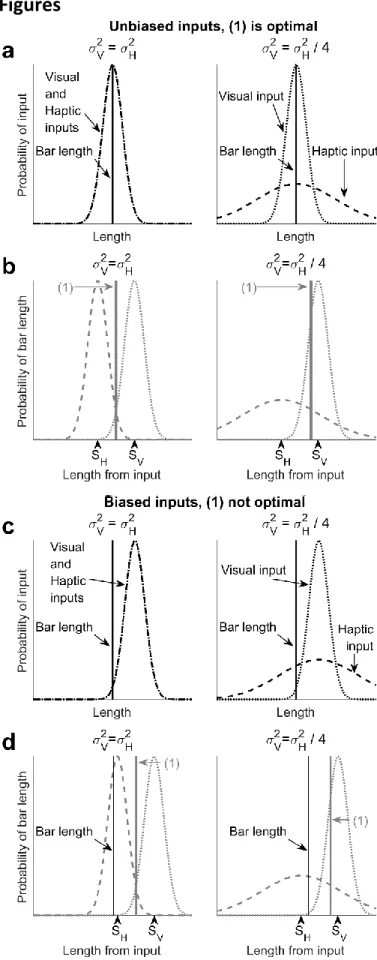
110
The paper is organized as follows: section 2 will describe the role of manipulation and control in
111
Woodward’s framework and in the mechanistic framework. Section 3 will present a preliminary
112
formulation of a manipulation relation that can accommodate causal and non-causal relations. Section 4
113
will provide two examples of non-causal explanations in the cognitive sciences that describe relations that
114
allow manipulation. Finally, section 5 will discuss a few possible objections and counter-objections to the
115
proposed framework.
116
2 manipulation and control in Woodward’s and the mechanists’ writings
117
Woodward develops an ‘interventionist’ or ‘manipulationist’ framework for causal relations and
118
explanation, which is based on the notion that causal relations can potentially be used to manipulate the
119
environment. He writes: “…our interest in causal relationships and explanation initially grows out of a
120
highly practical interest human beings have in manipulation and control” (2003, p. 10) and states the
121
following conditions for X to be a cause of Y:
122
(M) X causes Y if and only if there are background circumstances B such that if some
123
(single) intervention that changes the value of X (and no other variable) were to occur in
124
B, then Y or the probability distribution of Y would change…An intervention on X with
125
respect to Y [is] an idealized experimental manipulation of X which causes a change in Y
126
that is of such a character that any change in Y occurs only through this change in X and
127
not in any other way (Woodward 2010, p.4, italics in the original; for a more detailed
128
description see Woodward 2003)
129
7
Craver, developing a framework for mechanistic explanation, writes: “Explanations in neuroscience are
130
motivated fundamentally by the desire to bring the CNS [central nervous system] under our control.”
131
(Craver 2007a, p. 160) . Building on Woodward’s framework, he states that a component is relevant to
132
the behavior of a mechanism when “the two are related as part to whole and they are mutually
133
manipulable” (2007a, p. 153 italics in the original).
134
Woodward (2003) and Craver (2007a) describe causal and mechanistic explanations, respectively, in terms
135
of manipulability. I draw on this work and take causal relations and constitutive relations in mechanisms
136
to allow manipulation. There is also a second, weaker, sense in which Woodward and Craver tie together
137
explanation and manipulation - namely, both present explanation as motivated by the desire to be able
138
to manipulate and control phenomena. This relation between manipulation and explanation has been
139
echoed in other philosophical (Dretske 1994) and scientific (Lazebnik 2002) writings.
140
Inspired by this suggestion, I continue by arguing that, in the cognitive sciences, there are explanatory
141
counterfactual dependence relations that allow manipulation of the explanandum and are neither causal
142
nor mechanistic. Therefore, it may be possible to treat all these manipulation-allowing relations similarly,
143
forming a more unified framework for explanation in the cognitive sciences. I begin by presenting a
144
framework for manipulation.
145
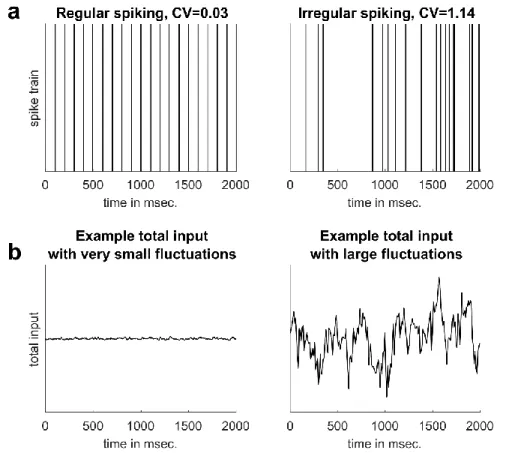
3 Relations of manipulation and control (manipulation*) as explanatory relations
146
Ideally, I would use Woodward’s (2003) interventionist framework to describe manipulation relations.
147
However, such a framework might not be able to accommodate non-causal dependence relations. In the
148
case of constitutive relations, it is argued that ideal interventions on the part with respect to the whole,
149
and vice versa, are not possible. In an ideal intervention, according to Woodward (2003), the intervention
150
variable that changes X must not be a cause of Y through a path that does not include X. Arguably,
151
however, any manipulation of the part can also be considered a direct manipulation of the whole, and
152
8
vice versa, thus ruling out the possibility of an ideal intervention (Romero 2015). Similar claims can be
153
made regarding supervenience, mathematical and other dependence relations in which the variables
154
cannot be considered distinct.
155
Therefore, I suggest a slightly different account that is intended to also fit cases where the variables are
156
not distinct. To differentiate this extended manipulation from that of Woodward, I term it manipulation*.
157
Take two non-identical variables, X and Y. Then Y can be manipulated* through X iff:
158
(1) There is at least one manipulation* variable M that can be used to manipulate* X5. So that in the
159
counterfactual scenario in which M is used to change the value of X, while all variables are held
160
constant except for {M, X, Y, the variables on the path from M to X, and the variables that are
161
manipulated through X}, the value of Y changes as well.
162
(2) The influence of M on the value of Y is completely mediated through X: if M is used to manipulate
163
X as in (1), while any other manipulation* variable M is used to keep X constant and all variables
164
are held constant except for {M, M, Y, the variables on the path from M to X, the variables on the
165
path from M to X, and the variables that are manipulated through X}, Y will remain constant6.
166
The first requirement cannot tell us whether the change in Y occurred because of the change in X or
167
because of the change in M directly. To meet the second requirement, the change in Y must occur only
168
because of the change in X. When both requirements are met, the implication is that there is some
169
dependence of Y on X that can be used to change the value of Y by changing X.
170
5 This requirement makes the manipulation* framework non-reductive; a manipulation* relation cannot be described without appeal to other manipulation* relations. In this respect, it is similar to Woodward’s framework (Woodward 2003).
6 The requirement that any manipulation* variable can be used to keep X constant may seem too strong. However, note that for causal relations, the effect of the intervention variable on Y must be mediated through X by
definition. Hence, however we keep X constant, while keeping all other variables that can manipulate* Y constant,
Y will not change. This is also the case for mathematical relations, where the value of Y is determined by the value of X and by the other variables that mathematically define Y.
9
I take it that, in the cognitive sciences, if Y can be manipulated* through X, then, to some extent, X and
171
the dependence relation explain Y. This is a counterfactual framework because the change in M describes
172
a counterfactual scenario. However, the counterfactuals discussed here differ slightly from those found
173
in Woodward (2003) and describe different possible manipulations* of X, which are not ideal
174
interventions. I will assume here that in the counterfactual scenarios of the manipulations*, the
175
mathematical relations of the factual world still hold7.
176
Several points are worth noting here. First, I am certainly not suggesting that “if I can manipulate it I can
177
explain it”. Instead, the relation between manipulation and explanation is such that manipulation*
178
relations and manipulating* variables can be used to explain the dependent explanandum. Second, like
179
Woodward‘s manipulability for causal relations, the manipulation* relation does not have to be practically
180
possible but only conceptually so. Finally, I focus on the cognitive sciences. It may be possible to extend
181
this framework to other sciences, but I suspect that there are some fields, such as fundamental physics,
182
that may not be as concerned about manipulation of their investigated phenomena. Therefore, I refrain
183
from making a more general claim.
184
4 manipulation and control in mathematical explanations in the cognitive sciences
185
In this section, I use the manipulation* framework to analyze two examples of explanations in the
186
cognitive sciences that appeal to mathematical relations. As a warm-up, I will take the well-known - albeit
187
not from the cognitive sciences - example of a mathematical explanation: Königsberg’s bridges (Craver
188
and Povich 2017; Lange 2013; Reutlinger 2016).
189
Euler’s theorem states that it is possible to walk through a graph traversing each edge exactly once (an
190
Euler walk) iff exactly zero or two nodes in the graph are connected to an odd number of edges. Therefore,
191
the fact that it is impossible for someone to take an Euler walk in Königsberg is explained by the fact that
192
10
Königsberg has four parts that are connected to an odd number of bridges. In this example, although in
193
some conditions the organization of Königsberg’s bridges (in terms of whether it meets Euler’s criterion)
194
and the possibility of an Euler walk there can each be derived from the other, we take the organization of
195
Königsberg’s bridges to explain the impossibility of an Euler walk there and not vice versa (Craver and
196
Povich 2017). Intuitively, the direction of manipulation in this example coincides with the direction of
197
explanation; we can manipulate the possibility of someone taking an Euler walk by changing the
198
organization of Königsberg’s bridges, but we cannot manipulate the organization of Königsberg’s bridges
199
by changing the possibility of someone taking an Euler walk. This intuition can be explicated in the
200
manipulation* framework.
201
Let us consider a manipulation* variable M that can change the organization of Königsberg’s bridges. For
202
example, we can tear down a bridge in Königsberg with the purpose of having only two parts with an odd
203
number of bridges. Such a change is expected to manipulate* both the organization of Königsberg’s
204
bridges and whether someone can take an Euler walk there. The change in possibility of taking an Euler
205
walk is mediated via the change to the organization of Königsberg’s bridges; any manipulation* to keep
206
the organization of Königsberg’s bridges constant (e.g., quickly build a new bridge) will make this walk
207
impossible again. Thus, both requirements for a manipulation* relation are met: the possibility of an Euler
208
walk can be manipulated* via the organization of Königsberg’s bridges. When considering whether this
209
manipulation* relation can also work in the other direction, we must seek a manipulation* that can
210
change both variables such that when the possibility of an Euler walk is held constant, the organization of
211
Königsberg’s bridges would remain constant as well. However, we can hold the possibility of an Euler walk
212
constant by barricading the city so that it is impossible for someone to take an Euler walk there. It is
213
difficult to fathom a manipulation* that would change the organization of Königsberg’s bridges when the
214
city is not barricaded but would not affect this organization when the city is barricaded. Considering the
215
destruction of bridges, it would change both variables, but the change in the organization of Königsberg’s
216
11
bridges would remain regardless of whether the city is barricaded. Therefore, until someone comes up
217
with an example that fits this requirement, this framework does not imply that we can manipulate* the
218
organization of Königsberg’s bridges via the possibility of an Euler walk. In this example, the direction of
219
manipulation* fits the direction of explanation.
220
4.a Optimal integration of information from two modalities
221
Consider a task where you are asked to estimate the length of a wooden bar. You have both visual and
222
haptic inputs that reflect the length of this bar, but because both these inputs are noisy, the visual and
223
haptic inputs differ slightly. What will your answer be? Ideally, you would like your answer to be optimal
224
in the sense that, given the information you have, it will minimize the difference between your estimate
225
and the true bar length. Measurements of this difference are called ‘cost functions’.
226
It can be shown mathematically that when the inputs from the two modalities are independent and
227
normally distributed around the true bar length (see Fig. 1a), the following estimate minimizes three
228
common cost functions (number of errors, mean absolute error (L1) and mean squared error (L2))8. This
229
estimate is a weighted mean of the inputs, so that the weight of each modality is inversely related to the
230
variance of the input noise (see Fig. 1b):
231
(1) 𝐸𝑠𝑡𝑖𝑚𝑎𝑡𝑒(𝜇) = 𝑆𝑉∙(1 𝜎𝑉2)+𝑆𝐻∙( 1 𝜎𝐻2) (1 𝜎𝑉2)+( 1 𝜎𝐻2)232
Where 𝜇 is the real length of the bar, 𝑆𝑉 and 𝑆𝐻 are the inputs that we get from the visual and the haptic
233
modalities, respectively, and 𝜎𝑉2 and 𝜎𝐻2 are the variance of the noise of visual and haptic inputs (i.e.,
234
𝑆𝑉 ~𝑁(𝜇, 𝜎𝑉2), 𝑆𝐻 ~𝑁(𝜇, 𝜎𝐻2)).
235
12
Therefore, if one posits that the inputs of the different modalities are distributed as described and the
236
cost of errors in the task is one of the three common cost functions, an optimal strategy would be to
237
answer in accordance with (1). Indeed, Ernst and Banks (2002) discovered that, in such a task, people gave
238
answers that were similar to the answers equation (1) would yield.
239
Now, one can ask ‘why is it the case that eq. (1) is optimal?’. We can answer this question by referring to
240
a mathematical relation. It can be shown that when it is assumed that the distributions of the inputs are
241
independent and normal with an expected value that is the real bar length 𝜇 (as in Fig. 1a), then equation
242
(1) can be mathematically derived as minimizing the common cost functions. But (1) may not be optimal
243
if these assumptions about the inputs are not correct. For example, if the expected value of the visual and
244
haptic inputs, 𝑆𝑉 and 𝑆𝐻, is not the actual bar length 𝜇 (i.e., they are biased estimates) then equation (1)
245
will not yield an optimal answer (see Fig. 1c-d). The optimal estimate will be one that takes this bias into
246
account. Therefore, the optimality of (1) depends on the probability distributions of the inputs. The
247
probability distributions of the inputs and the mathematical derivation that yields (1) as the optimal
248
estimate together explain the optimality of (1).
249
The probability distributions of the inputs explain (1)’s optimality even though (1)’s dependence on the
250
probability distributions of the inputs would generally not be considered causal: the probability
251
distributions of the inputs and the optimality of (1) occur simultaneously, and the dependence is between
252
variables that are mathematically connected rather than between two distinct variables (Craver and
253
Bechtel 2007)9.
254
9 As discussed in the introduction, non-causal by popular opinion that considers simultaneous, mathematical relations to be non-causal.
13
Given that this relation is not causal, it seems that the mechanistic framework cannot account for it. How
255
can the manipulation* framework elucidate this case? Intuitively, the optimality of (1) can be manipulated
256
via the probability distributions of the inputs. I will show that this is indeed a manipulation* relation.
257
Let us consider a variable that can be used to manipulate* the probability distributions of the inputs. It is
258
possible to change the probability distributions of the inputs by changing the experimental conditions.
259
(Ernst and Banks 2002) used specialized lab equipment to simulate visual and haptic inputs that differed
260
in their variance. Thus, it is possible to change experimental conditions so that the probability distributions
261
of the inputs become biased (their expected value is no longer the true bar length) and by this to render
262
(1) no longer optimal. We can show that the optimality of (1) can be manipulated* via the probability
263
distributions of the inputs by finding a manipulation* variable that cannot change Y when X is held
264
constant. Consider the aforementioned manipulation* variable, where the experimental conditions are
265
changed with the purpose of biasing the visual and haptic inputs. It is possible to counter the change to
266
the probability distributions of the inputs, for example by giving subjects special glasses that will remedy
267
the bias. In such a case, the probability distributions of the inputs as well as the optimality of (1) will both
268
remain constant. In fact, because of the mathematical dependence relation, we know that if we change
269
the experimental conditions, however we choose to keep the probability distributions of the inputs
270
constant, while keeping other relevant variables such as the cost function constant, the optimality of (1)
271
will remain constant as well. Therefore, the two conditions for manipulation* are met. We can conclude
272
that we can manipulate* the optimality of (1) via the probability distributions of the inputs, and therefore
273
the latter, together with the mathematical dependence relation, explain the former.
274
What about the asymmetry of the direction of explanation, despite the symmetrical mathematical
275
dependence (Craver 2016; Craver and Povich 2017)? The optimality of (1) is mathematically related to the
276
probability distributions of the inputs. So, one might argue that the manipulation* relation should be
277
symmetrical. Yet, it would seem very odd to say that the probability distributions of the inputs are
278
14
explained by (1)’s optimality. Luckily, this direction of explanation is not a consequence of the
279
manipulation* framework.
280
To see if the probability distributions of the inputs can be manipulated* via the optimality of (1), we search
281
for a manipulation* variable M that can change the value of both variables, but if some variable is used
282
to hold the optimality of (1) constant, the probability distributions of the inputs do not change. One way
283
to hold the optimality of (1) constant is by changing the cost function. However, it is difficult to imagine
284
how some manipulation* can change the probability distributions of the inputs for one cost function but
285
not for another. For this reason, until someone comes up with such a variable, in this example, the
286
manipulation* framework implies that manipulation* and explanation go only in one direction: the
287
probability distributions of the inputs can be used to manipulate* and explain the optimality of (1), but
288
not vice versa. The manipulation* framework yields the desired results: a symmetrical mathematical
289
relation allows manipulation* only in one direction, which is the direction we would also take to be the
290
direction of explanation.
291
4.bCortical neurons spike irregularly despite having a large number of incoming synaptic connections
292
Generally speaking, neurons in the cortex fire irregularly (Softky and Koch 1993): their inter-spike intervals
293
(the time between two consecutive spikes) vary greatly. A common regularity measure is the coefficient
294
of variation (𝐶𝑉):295
(1) 𝐶𝑉 =𝜎Δ𝑡 Δ𝑡 ̅̅̅̅296
Where Δ𝑡 is the inter-spike interval, Δ𝑡̅̅̅ is the mean of Δ𝑡 and 𝜎Δ𝑡 is the standard deviation of Δ𝑡 (for a
297
period where many inter-spike intervals are measured). The 𝐶𝑉 of many cortical neurons tends to be
298
between 0.4 and 1.2, while for regular firing we would expect 𝐶𝑉 ≪ 1 (i.e., the 𝐶𝑉 should be an order of
299
a magnitude smaller than 1; see simulated examples in Fig. 2a) (Softky and Koch 1993). Given that the
300
15
number of input synapses on cortical neurons is on the order of thousands, this finding is bewildering.
301
Usually, the firing of a neuron is viewed as reflecting an approximate summation of synaptic inputs.
302
According to the Central Limit Theorem, when the number (𝑛) of independently and identically distributed
303
(iid) random variables is very large, the sum of these random variables has an asymptotically normal
304
distribution with an expected value proportional to 𝑛 and a standard deviation proportional to √𝑛.
305
Formally:306
(2) lim 𝑛→∞∑ 𝑥𝑖 𝑛 𝑖=1 ~𝑁(𝑛 ∙ 𝐸(𝑥), 𝑛 ∙ 𝜎𝑥2)307
Where 𝑛 is the number of inputs, 𝑥𝑖 is a random variable 𝑖, 𝐸(𝑥) is the expected value of 𝑥 and 𝜎𝑥2 is the
308
variance of 𝑥. According to this formula, when the number of summed random variables is very large,
309
the standard deviation of their sum (also called fluctuations in the signal) is equal to √𝑛 ∙ 𝜎𝑥, which is
310
negligible relative to the signal (i.e., the sum itself)10. To illustrate, if 𝐸(𝑥) = 𝜎
𝑥, for a thousand inputs
311
and total signal size of 1, the fluctuations will be around 0.03. This means that when the number of iid
312
inputs is very large, we can mathematically derive that the total input will be approximately constant
313
(Fig. 2b, left). Studies have shown that it is not likely that the irregular firing is an intrinsic property of the
314
neurons (Mainen and Sejnowski 1995), and therefore the irregular firing is likely produced by large
315
fluctuations in the inputs (Fig. 2b, right). So, the puzzling question is this: why do neurons with many
316
input synapses receive highly fluctuating inputs, despite what we know from the Central Limit Theorem?
317
One possible explanation for the surprising irregularity of the neurons’ firing is that the inputs are not
318
independent. Instead, neurons are a part of a network in which excitatory and inhibitory synaptic inputs
319
to each neuron are balanced such that most of the excitatory and inhibitory inputs cancel out and the
320
total input is reduced to the order of magnitude of the fluctuations. Indeed, (van Vreeswijk and
321
10 This occurs because the sum is proportional to 𝑛 and the fluctuations are proportional to √𝑛, so the sum and its fluctuations differ by a magnitude of √𝑛.
16
Sompolinsky 1996) have shown that such a balance can be achieved in a network that has some general
322
connectivity properties (e.g., one requirement is sparse connectivity). In this way, the number of inputs
323
to each neuron is still very large but the total input fluctuates strongly. The theory of excitatory-inhibitory
324
balance has received experimental support (Wehr and Zador 2003; Xue et al. 2014). According to this
325
theory, the magnitude of fluctuations in the neurons’ total input depends on the balance between
326
excitatory and inhibitory synaptic inputs and therefore this inhibitory-excitatory (henceforth IE) balance
327
explains the fluctuations.
328
As in the previous example, the relation between the IE balance and the fluctuations in the total input
329
does not comply with our usual description of a causal relation; the variable ‘fluctuations in total input
330
to the neuron’ is simultaneous with the variable ‘IE balance’, and the relation between the IE balance
331
and the fluctuations in total input is a mathematical relation: without IE balance, the Central Limit
332
Theorem yields a barely fluctuating input, and when there is IE balance in accordance with the model
333
from (van Vreeswijk and Sompolinsky 1996), the mathematical model yields a highly fluctuating input.
334
According to the manipulation* framework, this relation is explanatory. There is a manipulation*
335
variable that changes the IE balance and the fluctuations in the neuron’s input. For example, we can
336
block many of the inhibitory inputs, disturbing the IE balance in the network, and this will yield a barely
337
fluctuating input. Furthermore, however we choose to restore the IE balance (e.g., by blocking many
338
excitatory inputs or by increasing the firing rate of the remaining inhibitory inputs), we will also restore
339
the fluctuations in the input. Therefore, this example meets the two requirements for manipulation*
340
and, according to the manipulation* framework, the fluctuations in total input are explained by the IE
341
balance.
342
What about the challenge from symmetry of non-causal relations (Craver 2016; Craver and Povich 2017)?
343
We can see that the manipulation* account does not imply that the IE balance can be manipulated* via
344
17
the fluctuations in total input. One way to keep the fluctuations in total input to the neuron constant is
345
by using an electrode to add external current to the neuron. However, it is again difficult to fathom a
346
variable that will change the balance between excitatory and inhibitory synaptic inputs for one value of
347
electrode current but not for another value. Hence, there is no implication regarding manipulation* and
348
explanation in the opposite direction, in accordance with our intuition about manipulation and
349
explanation in this example.
350
I have brought three examples in which the manipulation* account can come to our aid in distinguishing
351
explanatory from non-explanatory relations of mathematical dependence. I believe these examples
352
show convincingly that, for some non-causal explanations, explanatory value is closely related to
353
manipulation. In the following section, I discuss several possible objections to the proposed framework.
354
5 Possible criticisms of the manipulation* framework
355
a) The manipulation* view ignores important differences between causal and non-causal
356
relations that make non-causal relations unfit for manipulation.
357
The manipulation* view bundles together causal and non-causal relations and treats them
358
similarly. This, it may be argued, misses crucial differences between these relations. Importantly,
359
when manipulation is discussed regarding causal relations one distinct variable is manipulated
360
via another. However, for paradigm non-causal relations, the two variables are closely linked –
361
they are logically or mathematically related or at least occupy the same space-time slice. What
362
sense does it make to talk about manipulation when the two variables’ values are determined
363
simultaneously? It may make more sense to say that we are manipulating both variables
364
together, through an external variable.
365
However, even though in the two examples from the cognitive sciences presented here the
366
explanans occur simultaneously and are mathematically related to the explananda, in both cases
367
18
discovering the manipulation* relation between the variables can help us manipulate the
368
explananda in ways we could not have done before.
369
Considering the first example, the dependence of the optimality of an estimate on the
370
probability distributions of the inputs allows us to organize experimental settings so that some
371
estimate is optimal. This mathematical dependence is especially crucial since there is no way to
372
observe the optimality of an estimate. Unlike the common case with causal relations where the
373
values of the cause and the effect can be observed, the optimality of an estimate is a latent
374
variable that can only be derived mathematically. Hence, this mathematical dependence is
375
essential to the manipulation of the optimality of an estimate and cannot be replaced by causal
376
dependences. Despite the fact that such optimal estimates are latent variables, currently, they
377
play an important part in explaining the behavior of humans and animals (Berniker et al. 2010;
378
Ernst and Banks 2002; Fernandes et al. 2014; Vul et al. 2014; Weiss et al. 2002) and therefore
379
are central in the cognitive sciences11.
380
Let us now consider the second example. Without the dependence of the fluctuations in total
381
input to the neuron on the IE balance, we could still contemplate a causal manipulation of the
382
fluctuations in total input through the activity of specific neurons, but this relation would lack
383
systematicity and would be very difficult to generalize. In light of the mathematical dependence
384
of the fluctuations in total input on the IE balance, we can know how the fluctuations will change
385
when we change the activity of different pre-synaptic neurons because we can consider the
386
change in IE balance.
387
11 Some may be surprised that scientific explanations of phenomena can be given in terms of optimality. In the cognitive sciences, where behavior and neuronal activity are often explained by underlying computational models, such explanations are very common. Generally, these explanations assume that the cognitive system has evolved enough by evolution to reach some (at least locally) optimal strategy regarding perception and decision-making problems.
19
Therefore, while it is true that manipulations that employ a non-causal dependence of Y on X
388
often (perhaps always) need an external variable that can causally affect X, I think it is undeniable
389
that some non-causal dependences extend the ways in which we can manipulate phenomena.
390
b) Manipulation of variables in models is not equivalent to the manipulation of physical objects
391
One could argue that the manipulation* framework abuses the point that Woodward and Craver
392
were trying to make; when Craver discusses manipulation of the CNS (central nervous system),
393
he means that we want to manipulate and control actual physical objects: we want to cure
394
Alzheimer’s disease, treat anxiety disorders, or enable paraplegics to walk. My examples, this
395
argument will continue, are of manipulation of abstract mathematical variables that appear only
396
in models, and it is not clear how these variables relate to real, physical brains. In this sense,
397
manipulation* does not truly allow us to manipulate the CNS.
398
It is true that, in the examples given here, the mathematical dependence relations are between
399
abstract variables: estimates, probability distributions, random variables, etc. But these abstract
400
relations are applied to real phenomena12, allowing us to manipulate them. It is easy to see this
401
point regarding the Königsberg’s bridges example. Euler’s mathematical theorem describes
402
abstract phenomena, namely, graphs and paths. Nonetheless, this theorem has real, physical,
403
implications: it would be impossible for me to take an Euler’s walk in Königsberg.
404
In the example offered in 4.a, the mathematical dependence tells us what computation some
405
machine or organism should perform under certain conditions to minimize estimation error. This
406
estimation error may be related to an organism’s fitness and affect its survival. In the example
407
provided in 4.b, we can eliminate the fluctuations in the total input to the neuron by disrupting
408
12 See (Kuorikoski and Ylikoski 2015) for a discussion of the relation between counterfactual dependences in models and in real phenomena.
20
the IE balance, and observe the results of this change. Therefore, we see that mathematical
409
relations between abstract entities can allow the manipulation of physical phenomena.
410
c) manipulation* relations are explanatory relations only because both manipulation and
411
explanation are related to more basic ontic relations, which are the interesting relations
412
I imagine this argument goes something like this: it may be true that explanatory relations and
413
manipulation* relations tend to describe the same relations, but this is only because both rely
414
on similar ontic relations such as cause-effect, part-whole, structure-function, etc. It is these
415
ontic relations that should be examined and taken as relevant to explanations.
416
I cannot deny that manipulation* relations rely on some specific ontic relations – wholes can be
417
manipulated through parts, effects through their causes, etc. The types of ontic relations that
418
allow extended manipulation are definitely worth investigating. It is especially interesting that,
419
in the given examples, the manipulation* is possible in exactly one direction because the
420
manipulated* variable, Y, also depends on another variable that is independent of X and can be
421
used to hold Y constant. Nonetheless, this does not diminish the importance of the fact that
422
explanatory and manipulation* relations tend to be the same relations, and that explanation is
423
tightly linked to manipulation, even for non-causal relations.
424
Moreover, while it may be possible to characterize explanatory relations as a collection of
425
various ontic relations, such a description will not yield a reason for the explanatory value of
426
these specific ontic relations but not others. In contrast, the notion that some relations explain
427
a phenomenon because they allow its manipulation at least suggests a reason for the
428
explanatory value of some relations and lack thereof of others.
429
d) The manipulation* framework is inferior to the mechanistic framework, which already has a
430
clear formulation of causal relations as explanatory relations
431
21
The mechanists provide a clear and elegant framework where causal relations are explanatory.
432
This framework accounts for causal and mechanistic explanations. Thus far, the mechanists have
433
answered (Craver 2016; Kaplan 2011, 2017; Kaplan and Craver 2011; Piccinini and Craver 2011)
434
most of the many challenges that have been presented to them (Bechtel and Shagrir 2015;
435
Chirimuuta 2014; Egan 2017; Huneman 2010; Rusanen and Lappi 2016; Shagrir and Bechtel 2017;
436
Shapiro 2017; Silberstein and Chemero 2013). It can be argued that, compared to the
437
mechanistic framework, the manipulation* framework is overly broad and adds unnecessary
438
complications in an attempt to answer questions already dealt with by the mechanistic
439
framework.
440
My response to this criticism is twofold. First, like many other non-causal explanations found in
441
the literature, this paper presents two non-causal explanations that the mechanistic framework
442
does not easily accommodate. The mechanists would probably have to argue that the examples
443
I offered are not explanations, that they appeal to some causal relation or that they are
444
exceptions to their general framework. Alternatively, they could argue that mathematical and
445
constitutive relations are causal. None of these options seems very natural to me, while the
446
manipulation* framework accommodates these examples easily.
447
Second, according to the mechanistic framework, explanations describe relevant causal
448
relations. However, many explanatory dependence relations in this framework are the relations
449
between the explanandum phenomenon and the components in the mechanistic decomposition
450
of this phenomenon. These dependence relations are not causal, but constitutive. In his seminal
451
work, Craver (2007a) describes the relations between a phenomenon and its mechanistic
452
components also as manipulability relations, based on Woodward’s (2003) framework for causal
453
relations.
454
22
However, many have made the point that the mechanistic framework has problems with
455
describing manipulation and intervention in a way that fits relations between the phenomenon
456
and its mechanistic components (Baumgartner and Casini 2017; Baumgartner and Gebharter
457
2016; Harbecke 2010; Harinen 2014; Leuridan 2012; Romero 2015). The arguments in these
458
works are usually similar in spirit to the one by (Romero 2015) presented in section 3:
459
phenomena and their mechanistic components are related in part-whole relations, and occupy
460
the same space-time slice, so it is problematic to talk about an ideal intervention in Woodward’s
461
sense (2003) on one with respect to the other. Even if such interventions are possible, this could
462
imply that constitutive relations are causal, a result that many believe should be avoided
463
(Baumgartner and Gebharter 2016; Craver and Bechtel 2007; Romero 2015).
464
Thus, it seems that if one wished to argue that relevant mechanistic components allow
465
manipulation of the explanandum, one might have to forgo the claim that only causal relations
466
in Woodward’s sense allow manipulation13. In many ways, then, constitutive relations in
467
mechanistic explanations face similar issues to the mathematical relations I described here, and
468
so, these too can benefit from a framework that accommodates non-causal relations.
469
6 Conclusions
470
There are two promising frameworks for explanations in the cognitive sciences. One of these takes the
471
view that counterfactual dependences, causal and non-causal alike, are the basis for explanations. The
472
second, mechanistic framework, emphasizes the relation between manipulation and explanation and
473
13 Another baffling issue in Craver’s mutual manipulability criterion is that Craver takes the direction of manipulation to go both from phenomenon to its components and from the components to the phenomenon, while the direction of explanation goes only from the components to the phenomenon. Franklin-Hall’s (2016) interpretation of mutual manipulability suggests a solution to this issue: top-down manipulation amounts to manipulation of the input conditions of the phenomenon. So, we can consider this top-down manipulation a causal manipulation of components by the inputs.
23
takes only causal dependences to be the basis for explanations. In this paper, I suggested a view of
474
explanation that relates to both these frameworks. I argued that some non-causal counterfactual
475
dependence relations also allow manipulation of the explanandum. This may be a good enough reason
476
for the mechanists to also accept some non-causal relations as explanatory. Moreover, whether
477
counterfactual-dependence relations allow manipulation may enable us to differentiate explanatory
478
from non-explanatory ones. A major advantage of this framework is that it suggests a general criterion
479
for explanatory value in the cognitive sciences without relinquishing non-causal explanations. In this
480
paper, I focused on relations of mathematical dependence in which the counterfactual dependence can
481
be determined analytically. Future work should discuss other counterfactual dependence relations and
482
how they can be identified. This can be a step towards a more unified view of explanations in the
483
cognitive sciences.
484
Acknowledgements:
485
I am thankful to Nir Fresco, Jens Harbecke, Arnon Levy, Jonathan Najenson, Oron Shagrir and three
486
anonymous referees for thoughtful and helpful comments on this manuscript. For their insightful
487
comments, I am also grateful to the participants of ‘Explanatory Reasoning in the Sciences (The Second
488
Jerusalem-MCMP Workshop in the Philosophy of Science)’ in Munich 2017, and to participants in the
489
workshops of the German-Israeli Foundation research group ‘Causation and Computation in
490
Neuroscience’ in Jerusalem 2017, Cologne 2016 and Witten 2015. This research was supported by a
491
Grant from the GIF, the German-Israeli Foundation for Scientific Research and Development.
492
24
References
Baron, S., Colyvan, M., & Ripley, D. (2017). HOW MATHEMATICS CAN MAKE A DIFFERENCE. Philosophers’ Imprint, 17, 3.
Baumgartner, M., & Casini, L. (2017). An Abductive Theory of Constitution. Philosophy of Science, 84, 214–233. doi:10.1086/690716
Baumgartner, M., & Gebharter, A. (2016). Constitutive Relevance, Mutual Manipulability, and Fat-Handedness. The British Journal for the Philosophy of Science, 67, 731–756.
doi:10.1093/bjps/axv003
Bechtel, W., & Shagrir, O. (2015). The Non-Redundant Contributions of Marr’s Three Levels of Analysis for Explaining Information-Processing Mechanisms. Topics in Cognitive Science, 7, 312–322.
Berniker, M., Voss, M., & Kording, K. (2010). Learning priors for bayesian computations in the nervous system. PLoS ONE, 5, e12686. doi:10.1371/journal.pone.0012686
Bokulich, A. (2011). How scientific models can explain. Synthese, 180, 33–45. doi:10.1007/s11229-009-9565-1
Chirimuuta, M. (2014). Minimal models and canonical neural computations: the distinctness of computational explanation in neuroscience. Synthese, 191, 127–153.
Chirimuuta, M. (2017). Explanation in Computational Neuroscience: Causal and Non-causal. The British Journal for the Philosophy of Science, (axw034). doi:10.1093/bjps/axw034
Craver, C. F. (2007a). Explaining the Brain. Oxford University Press.
Craver, C. F. (2007b). Constitutive Explanatory Relevance. Journal of Philosophical Research, 32, 3–20. doi:10.5840/jpr20073241
25
Craver, C. F. (2016). The Explanatory Power of Network Models. Philosophy of Science, 83, 698–709.
Craver, C. F., & Bechtel, W. (2007). Top-down causation without top-down causes. Biology and Philosophy, 22, 547–563. doi:10.1007/s10539-006-9028-8
Craver, C. F., & Povich, M. (2017). The directionality of distinctively mathematical explanations. Studies in History and Philosophy of Science, 63, 31–38. doi:10.1016/j.shpsa.2017.04.005
Cummins, R. (1983). The Nature of Psychological Explanation. MIT Press.
Cummins, R. (2000). “How does it work?” vs. “What are the laws?” Two conceptions of psychological explanation. In F. Keil & R. A. Wilson (Eds.), Explanation and Cognition (pp. 117–145). MIT Press.
Dretske, F. (1994). If You Can’t Make One, You Don’t Know How It Works. MIDWEST STUDIES IN PHILOSOPHY, 19, 468–482.
Egan, F. (2017). Function-Theoretic Explanation and Neural Mechanisms. In D. M. Kaplan (Ed.), Explanation and Integration in Mind and Brain Science (pp. 145–163). Oxford University Press. Ernst, M. O., & Banks, M. S. (2002). Humans integrate visual and haptic information in a statistically
optimal fashion. Nature, 415, 429–433. doi:10.1038/415429a
Fernandes, H. L., Stevenson, I. H., Vilares, I., & Kording, K. P. (2014). The generalization of prior uncertainty during reaching. The Journal of Neuroscience, 34, 11470–84.
doi:10.1523/JNEUROSCI.3882-13.2014
Franklin-Hall, L. R. (2016). New Mechanistic Explanation and the Need for Explanatory Constraints. In A. Ken & G. Carl (Eds.), Scientific Composition and Metaphysical Ground (pp. 41–74). Palgrave Macmillan UK.
26
the Philosophy of Science, 24, 267–285. doi:10.1080/02698595.2010.522409
Harinen, T. (2014). Mutual manipulability and causal inbetweenness. Synthese, 195, 35–54. doi:10.1007/s11229-014-0564-5
Hitchcock, C., & Woodward, J. (2003). Explanatory Generalizations, Part II: Plumbing Explanatory Depth. nous, 37, 181–199.
Huneman, P. (2010). Topological explanations and robustness in biological sciences. Synthese, 177, 213– 245.
Jansson, L. (2015). EXPLANATORY ASYMMETRIES: LAWS OF NATURE REHABILITATED. The Journal of Philosophy, 112, 577–599.
Jansson, L., & Saatsi, J. (2017). Explanatory Abstractions. The British Journal for the Philosophy of Science, axx016. doi:10.1093/bjps/axx016
Kaplan, D. M. (2011). Explanation and description in computational neuroscience. Synthese, 183, 339– 373.
Kaplan, D. M. (2017). Neural computation, multiple realizability, and the prospects for mechanistic explanation. In D. M. Kaplan (Ed.), Explanation and Integration in Mind and Brain Science (pp. 164– 189). Oxford University Press.
Kaplan, D. M., & Craver, C. F. (2011). The Explanatory Force of Dynamical and Mathematical Models in Neuroscience : A Mechanistic Perspective. Philosophy of Science, 78, 601–627.
Kuorikoski, J., & Ylikoski, P. (2015). External representations and scientific understanding. Synthese, 192, 3817–3837. doi:10.1007/s11229-014-0591-2
27
for the Philosophy of Science, 64, 485–511. doi:10.1093/bjps/axs012
Lazebnik, Y. (2002). Can a biologist fix a radio? - Or, what I learned while studying apoptosis. CANCER CELL, 2, 179–182. doi:10.1007/s10541-005-0013-7
Leuridan, B. (2012). Three Problems for the Mutual Manipulability Account of Constitutive Relevance in Mechanisms. The British Journal for the Philosophy of Science, 63, 399–427.
doi:10.1093/bjps/axr036
Mainen, Z. F., & Sejnowski, T. J. (1995). Reliability of spike timing in neocortical neurons. Science, 268, 1503–6. doi:10.1126/science.7770778
Milkowski, M. (2013). Explaining the Computational Mind. MIT Press.
Pexton, M. (2016). THERE ARE NON-CAUSAL EXPLANATIONS OF PARTICULAR EVENTS. Metaphilosophy, 47, 264–282.
Piccinini, G. (2015). Physical Computation: A Mechanistic Account. Oxford University Press.
Piccinini, G., & Craver, C. F. (2011). Integrating psychology and neuroscience: functional analyses as mechanism sketches. Synthese, 183, 283–311.
Reutlinger, A. (2016). Is There A Monist Theory of Causal and Non-Causal Explanations ? The Counterfactual Theory of Scientific Explanation. Philosophy of Science, 83, 733–745. doi:10.1086/687859
Romero, F. (2015). Why there isn’t inter-level causation in mechanisms. Synthese, 192, 3731–3755. doi:10.1007/s11229-015-0718-0
Rusanen, A., & Lappi, O. (2016). On computational explanations. Synthese, 193, 3931–3949.
28
Counterfactuals, and Noncausal Explanations. Philosophy of Science, 80, 613–624.
Shagrir, O. (2006). Why we view the brain as a computer. Synthese, 153, 393–416.
Shagrir, O., & Bechtel, W. (2017). Marr’s Computational Level and Delineating Phenomena. In D. M. Kaplan (Ed.), Explanation and Integration in Mind and Brain Science (pp. 190–214). Oxford University Press.
Shapiro, L. A. (2017). Mechanism or Bust? Explanation in Psychology. The British Journal for the Philosophy of Science, 68, 1037–1059.
Silberstein, M., & Chemero, A. (2013). Constraints on Localization and Decomposition as Explanatory Strategies in the Biological Sciences. Philosophy of Science, 80, 958–970.
Softky, W. R., & Koch, C. (1993). The highly irregular firing of cortical cells is inconsistent with temporal integration of random EPSPs. The Journal of Neuroscience, 13, 334–50.
http://www.jneurosci.org/content/jneuro/13/1/334.full.pdf
van Vreeswijk, C., & Sompolinsky, H. (1996). Chaos in neuronal networks with balanced excitatory and inhibitory activity. Science, 274, 1724–6. doi:10.1126/science.274.5293.1724
Vul, E., Goodman, N., Griffiths, T. L., & Tenenbaum, J. B. (2014). One and Done? Optimal Decisions From Very Few Samples. Cognitive Science, 38, 599–637. doi:10.1111/cogs.12101
Wehr, M., & Zador, A. M. (2003). Balanced inhibition underlies tuning and sharpens spike timing in auditory cortex. Nature, 426, 442–446. doi:10.1038/nature02116
Weiss, Y., Simoncelli, E. P., & Adelson, E. H. (2002). Motion illusions as optimal percepts. Nature Neuroscience, 5, 598–604. doi:10.1038/nn858
29
Woodward, J. (2010). Causation in biology: stability, specificity, and the choice of levels of explanation. Biology and Philosophy, 25, 287–318. doi:10.1007/s10539-010-9200-z
Woodward, J. (2018). Some Varieties of Non-Causal Explanation. In A. Reutlinger & J. Saatsi (Eds.), Explanation Beyond Causation (pp. 117–140). Oxford University Press.
Woodward, J., & Hitchcock, C. (2003). Explanatory Generalizations , Part I : A Counterfactual Account. NOUS, 1, 1–24.
Xue, M., Atallah, B. V., & Scanziani, M. (2014). Equalizing excitation-inhibition ratios across visual cortical neurons. Nature, 511, 596–600. doi:10.1038/nature13321
Ylikoski, P., & Kuorikoski, J. (2010). Dissecting explanatory power. Philosophical Studies, 148, 201–219. doi:10.1007/S11098-008-9324-Z
30
Figures
Figure 1 Equation (1) is an optimal estimate of the bar length when inputs are normally distributed around the actual bar length and is sub-optimal when inputs are biased (based on analyses from (Ernst and Banks 2002)). The probability distributions of the inputs given the actual bar length are denoted in black. The probability distributions of the bar length, given each input, are denoted in grey (a-b) Estimation is optimal when inputs are unbiased. (a) Probability distribution of inputs given the actual bar length. (𝜎𝑉2) and (𝜎𝐻2) are the variances of the visual and haptic inputs (b) Example of estimation of bar length using (1) from visual and haptic inputs. 𝑆𝑉 and
𝑆𝐻 are the visual and haptic inputs. Dotted and dashed gray distributions are the probability distributions of bar length from visual input alone, and haptic input alone, respectively. The line denoted by (1) is the estimated bar length according to eq. (1). On the left, the variances of the inputs are equal. On the right, the variance of the haptic input is much larger. Although the estimate from (1) is not exactly the actual bar length, it is optimal because on average it yields the minimal error. (c-d) same as in (a-b) for biased inputs. (c) Probability distributions are biased so that the expected values of these distributions are not equal to the actual bar length. (d) Example of estimates of bar length using (1) from visual and haptic inputs. True bar length is denoted in black. Legend otherwise is the same as in (b). Because inputs are biased, the estimate given by (1) is not optimal.
31
Figure 2 Simulated examples. (a) Spike trains of regularly and irregularly spiking neurons. Both neurons have an average firing rate of 10 spikes/s. (b) Simulated total synaptic input current. Left, synaptic input is barely fluctuating. This is the type of input we expect from many independent synapses. Right, synaptic input is highly fluctuating. This is the type of input we expect in the case that inhibitory and excitatory synaptic inputs are balanced.